Electric scooter design is the coordination of rider posture, vehicle proportions, structural parts, body panels, lighting, controls and battery packaging. A successful scooter should be easy to mount, stable at low speed, legible in traffic and straightforward to charge, clean and service. Styling matters, but it has to make those functions clearer rather than hide them.
The battery sets much of the architecture. Its size and position influence the wheelbase, floor height, under-seat storage, centre of mass and visual weight of the body. Designers then resolve weather protection, cooling, wiring, impact zones and access for repair without making the scooter look bulky or fragmented.
- What defines modern electric scooter design?
- Start with proportion and rider packaging
- Choose materials for ageing and repair
- Let battery packaging shape the architecture
- Use lighting as identity and information
- Design dashboard UX for a two-second glance
- Design for service, weather and daily ownership
- Examples worth studying
- Related mobility and industrial design guides
- Electric scooter design FAQ
- What makes an electric scooter well designed?
- Where should the battery sit in an electric scooter?
- Are metal body panels better than plastic panels?
- What should an electric scooter dashboard show while riding?
- How does lighting affect electric scooter design?
- How can electric scooter design be more sustainable?
- A better way to judge the finished scooter
Good evaluation therefore goes beyond range and screen size. Check whether the rider triangle fits different bodies, primary information is readable in sunlight, panels can be replaced without dismantling half the vehicle, lights remain visible from useful angles and touched parts feel durable. The best electric scooters turn those constraints into a coherent form that works after years of commuting, parking and maintenance.
What defines modern electric scooter design?
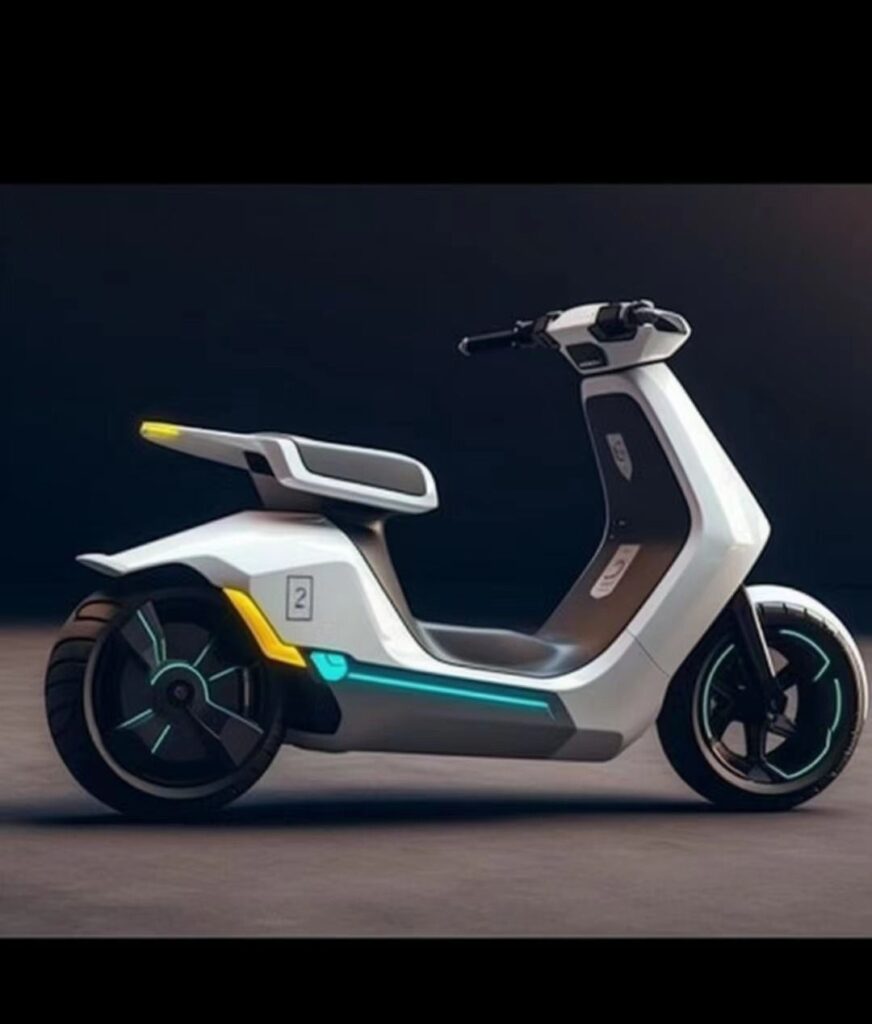
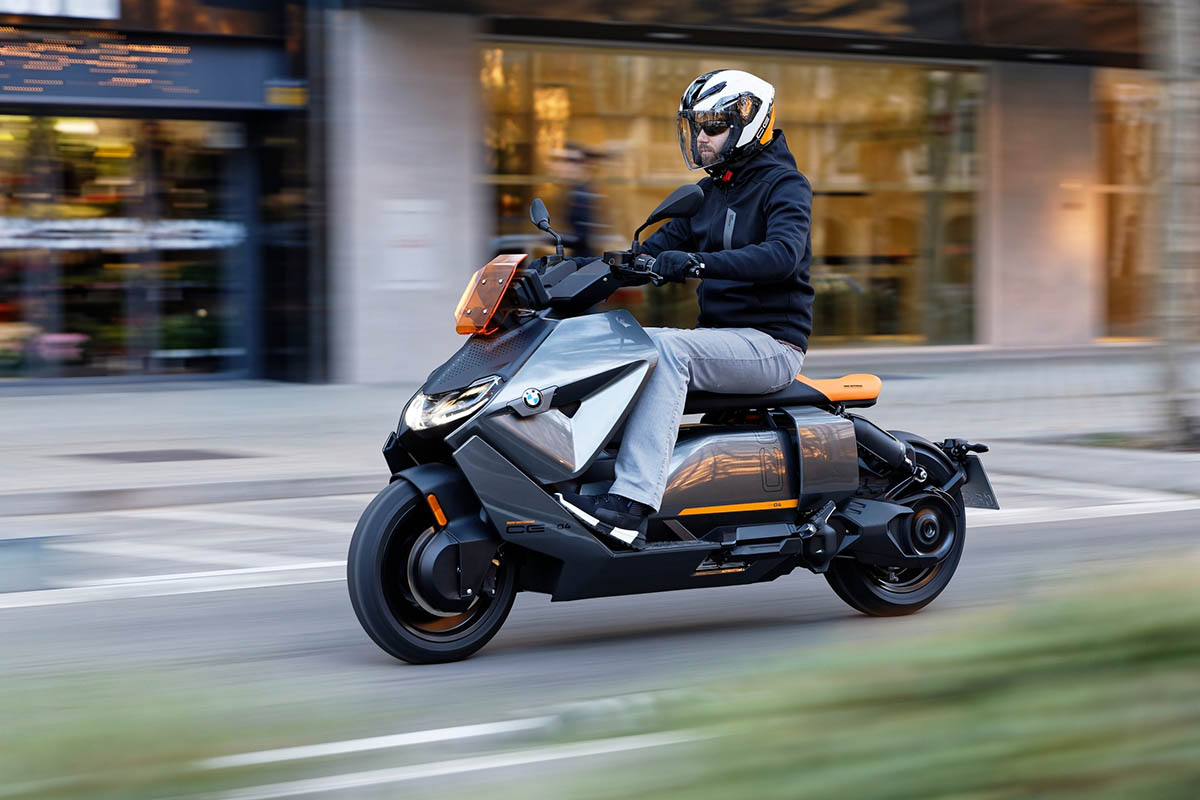
A modern electric scooter is not simply a petrol scooter with an electric motor hidden inside. Removing the engine and fuel system changes where mass can sit, how the floor and storage are shaped, and which parts need cooling or routine access. That freedom is useful, but it also exposes weak decisions: a battery can make the body visually heavy, an oversized screen can distract from riding, and smooth panels can become expensive to replace after a minor fall.
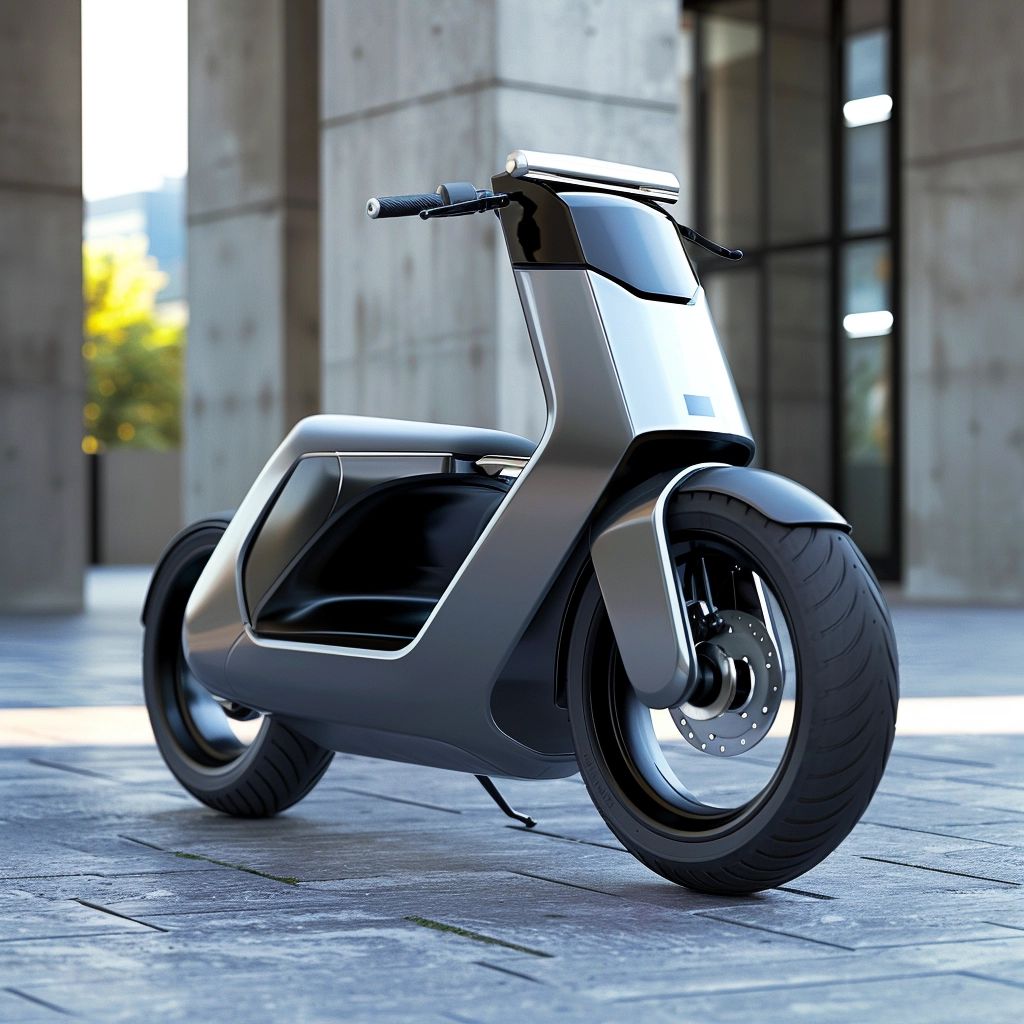
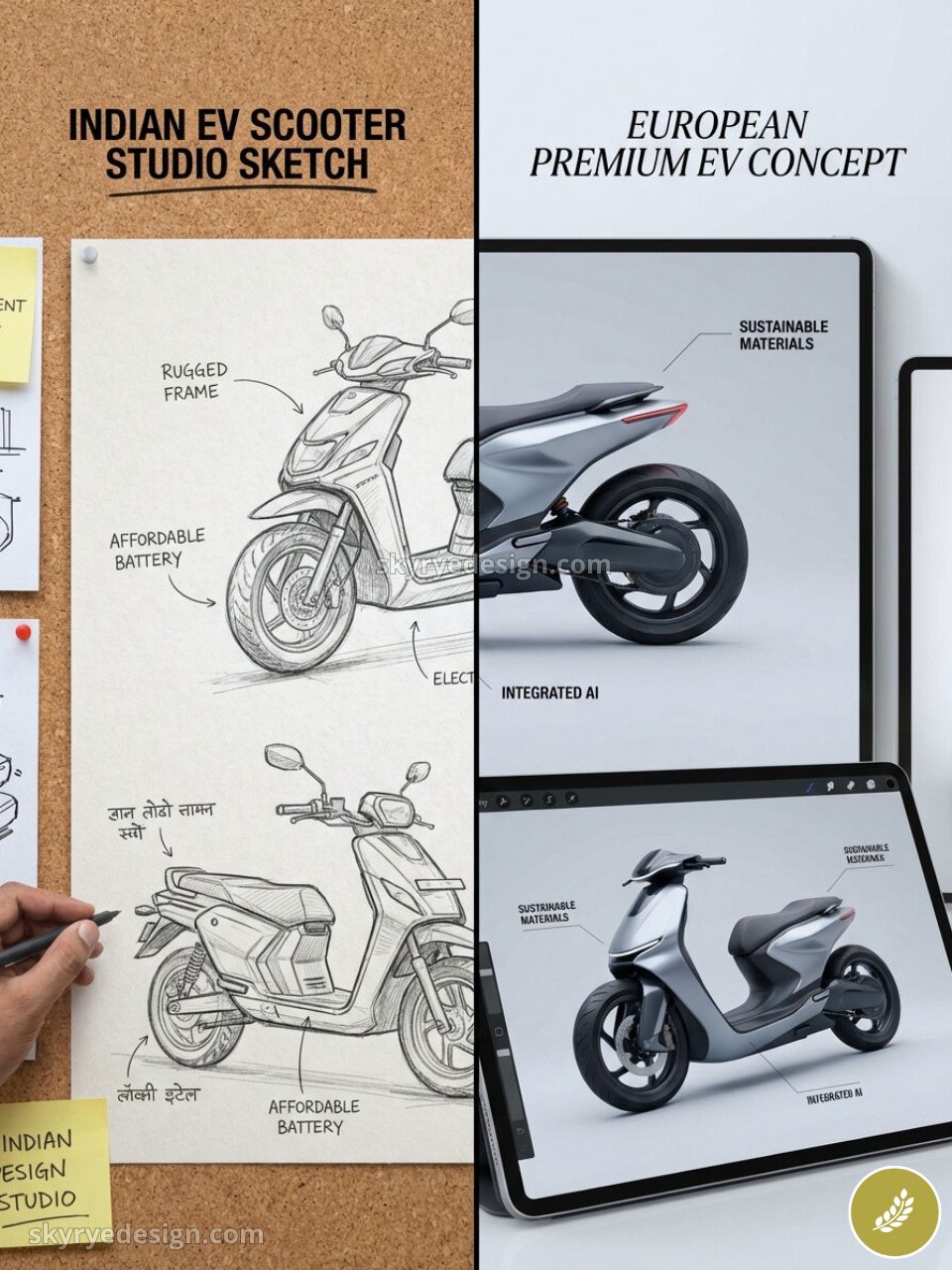
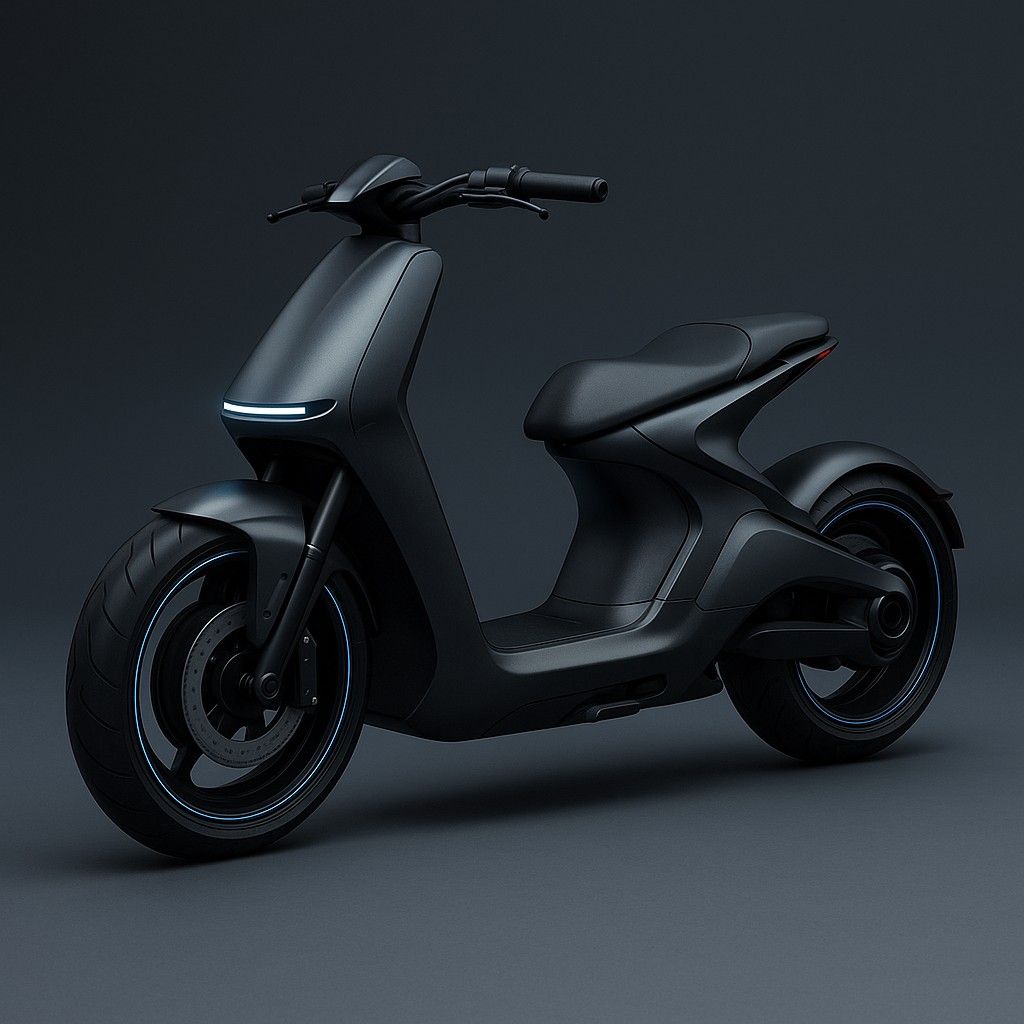
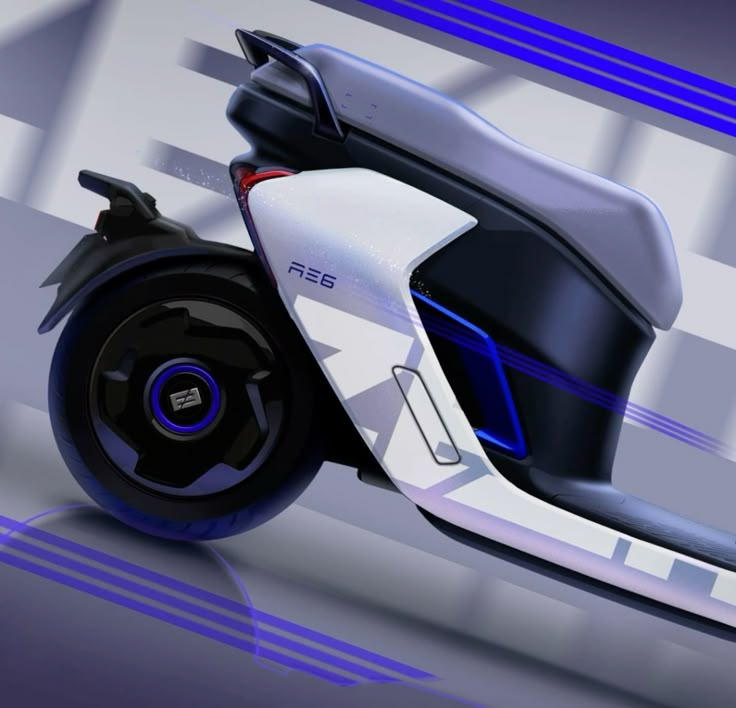
A 2026 peer-reviewed study of electric two-wheeler styling identified simplicity, technological character, approachability and visual lightness as recurring design directions. Those ideas are most convincing when they come from the architecture. A slim waist can improve mounting and foot placement; a restrained graphic can clarify the main volume; a friendly front can support urban use without pretending the scooter is a superbike.
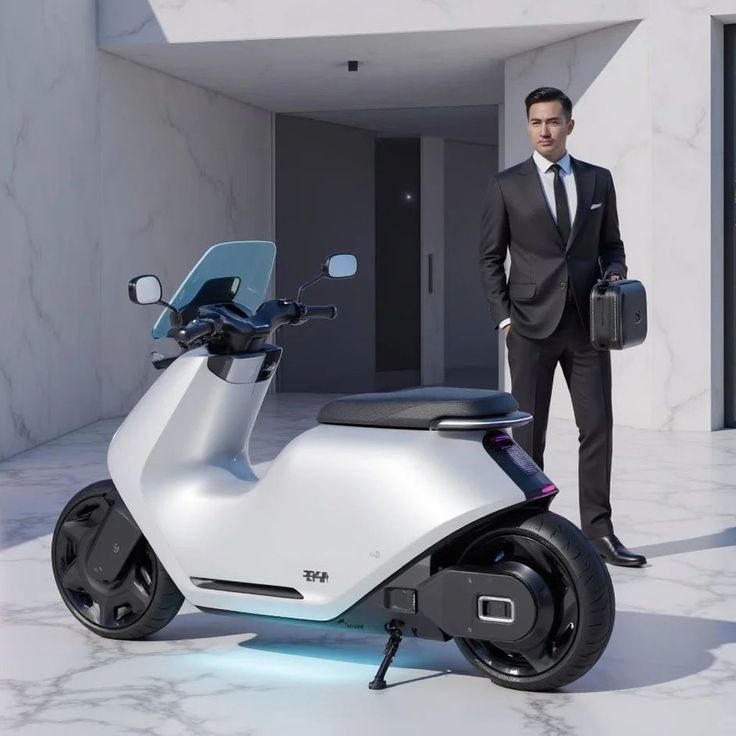
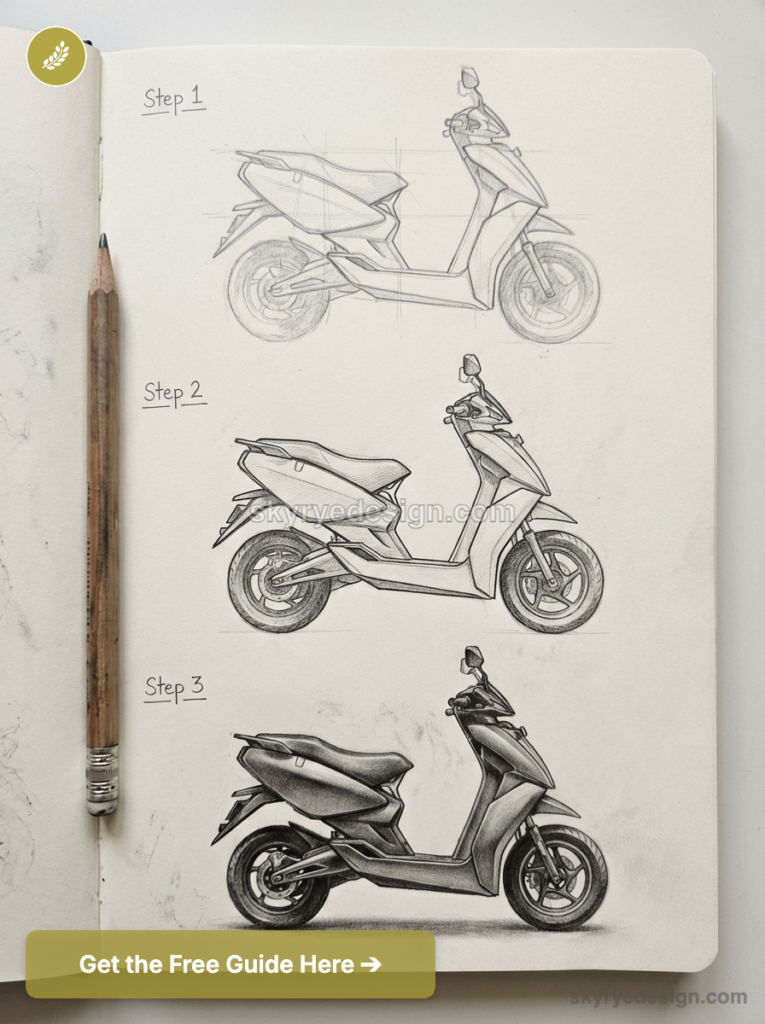
Start every review with three views: the scooter alone, the scooter with a rider, and the scooter opened for charging or service. A form that looks balanced in a studio image may feel cramped with knees, hands and a helmet in place. A clean side profile may also hide awkward charging access or a panel seam that collects water. Industrial design connects all three conditions.
Start with proportion and rider packaging
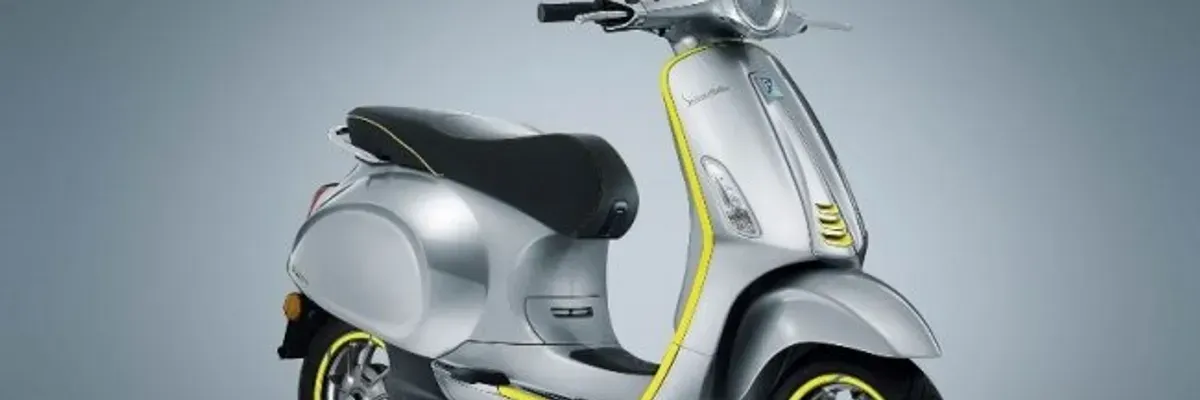
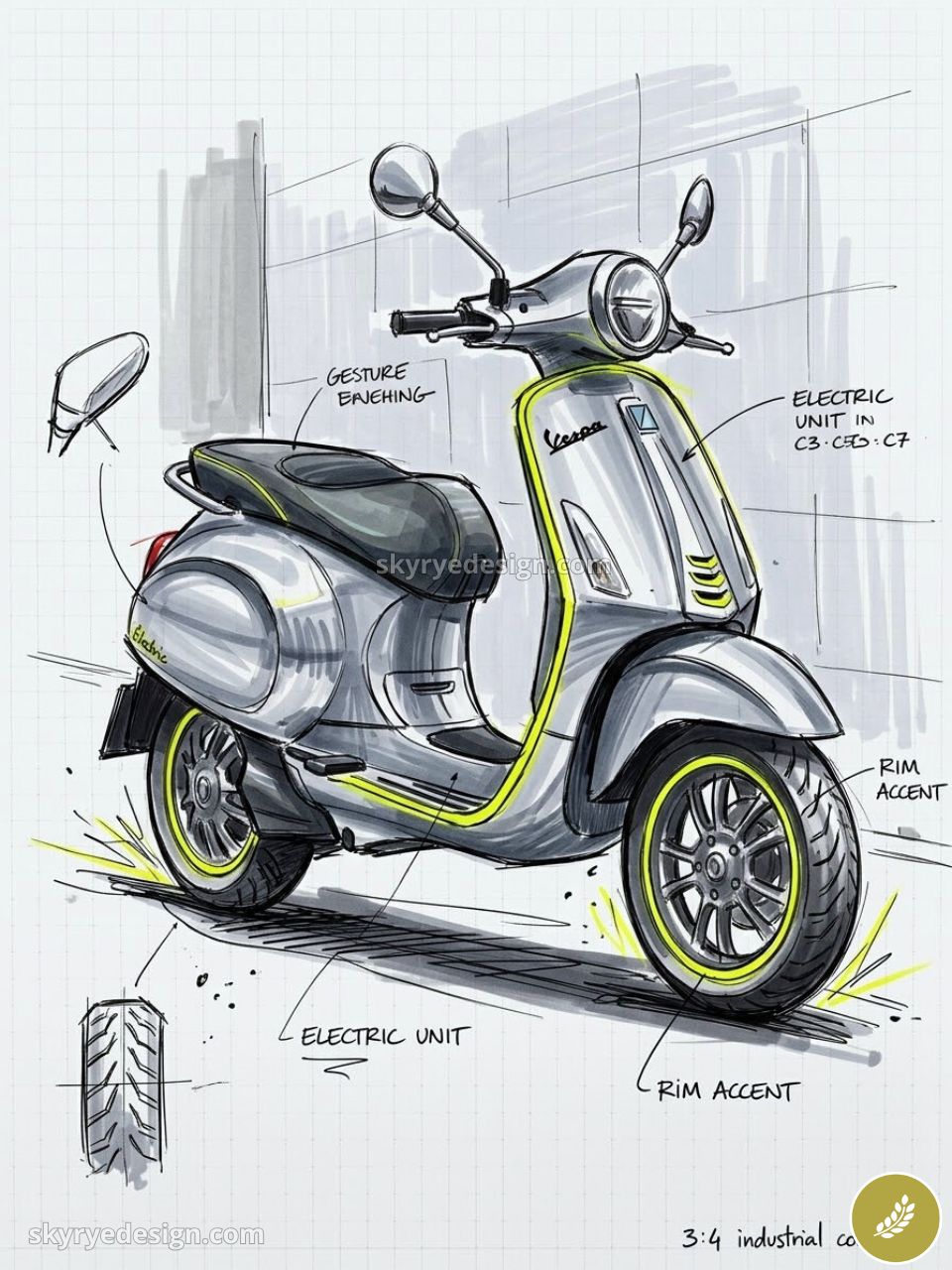
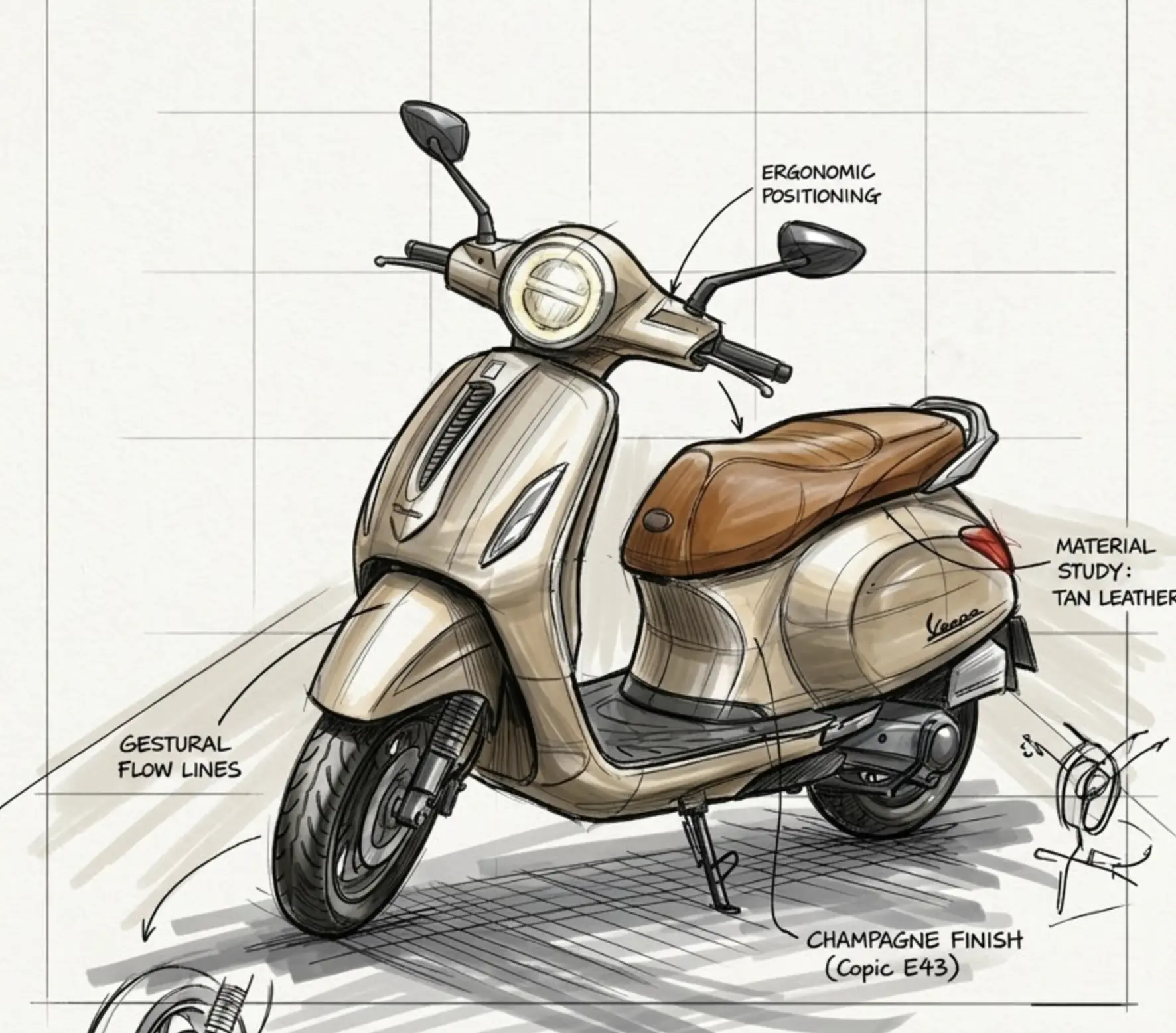
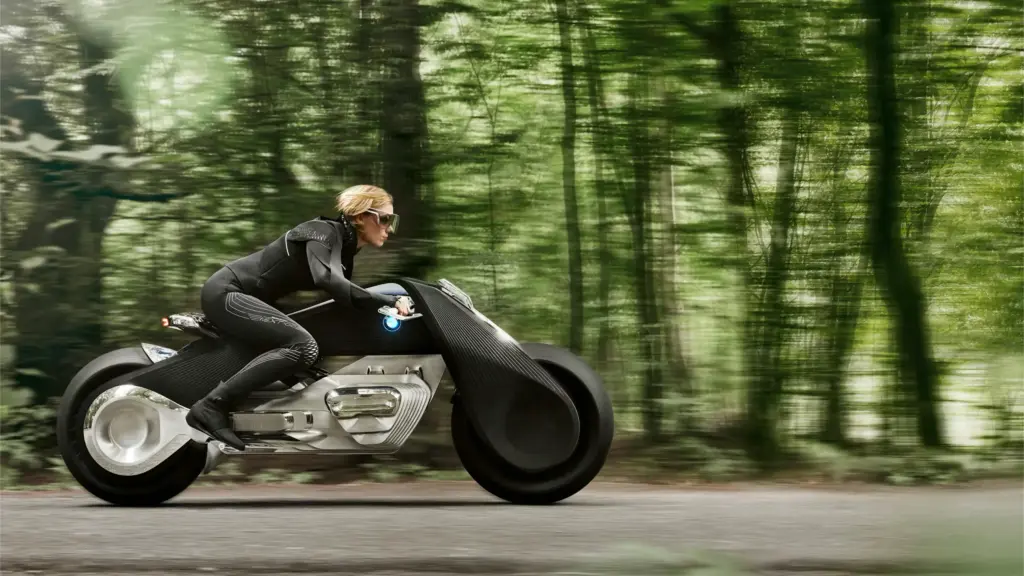
Proportion is the first layer people read and the first layer riders feel. Wheel size, wheelbase, seat height, handlebar reach and footboard length determine whether the scooter appears agile, stable, compact or substantial. They also determine whether shorter riders can place a foot confidently, taller riders have knee clearance and a passenger has usable space rather than a decorative seat extension.
The rider triangle—seat, foot and hand positions—should be checked with a range of body sizes and common clothing. Thick winter gloves change switch use. A backpack changes how someone mounts. A passenger changes the load and handhold requirement. Designers should also test low-speed turns, pushing the scooter by hand and parking on uneven ground. These moments occupy more of urban ownership than a dramatic full-speed photograph suggests.
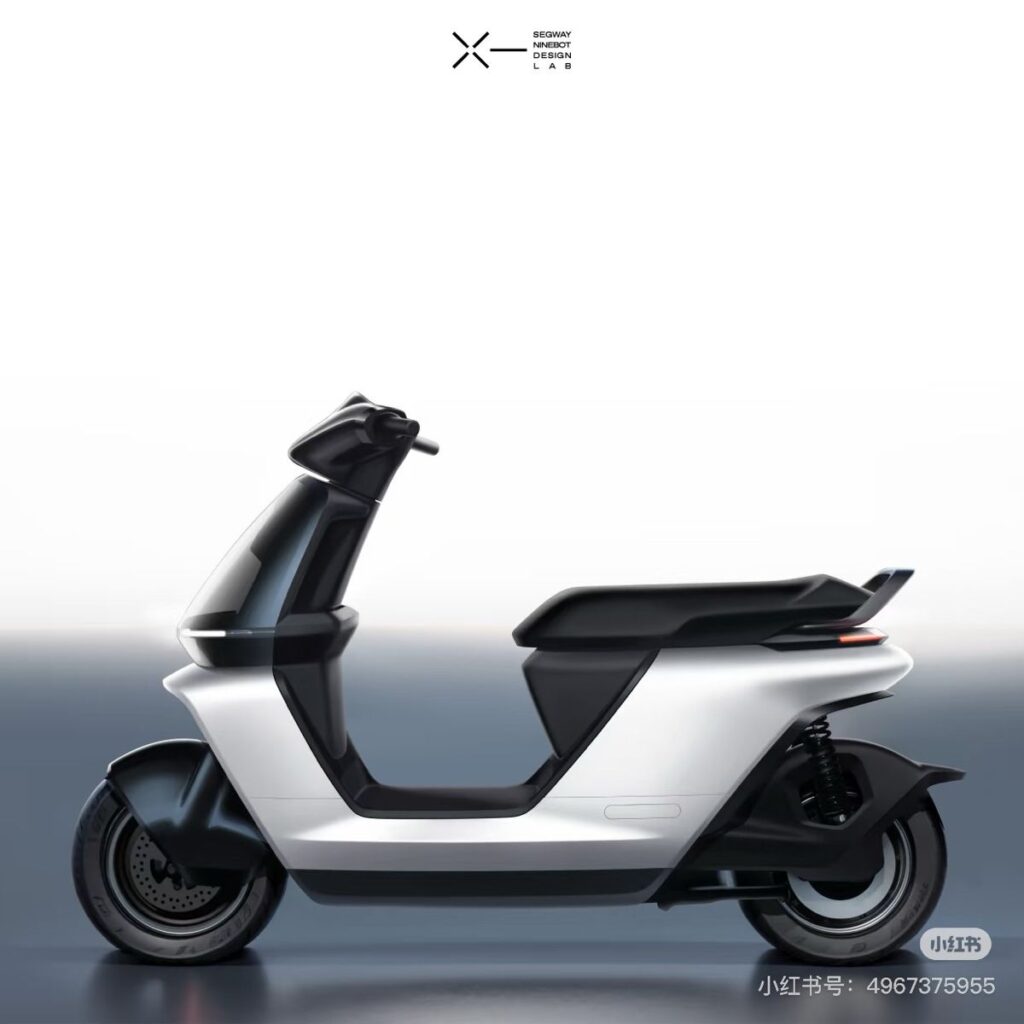
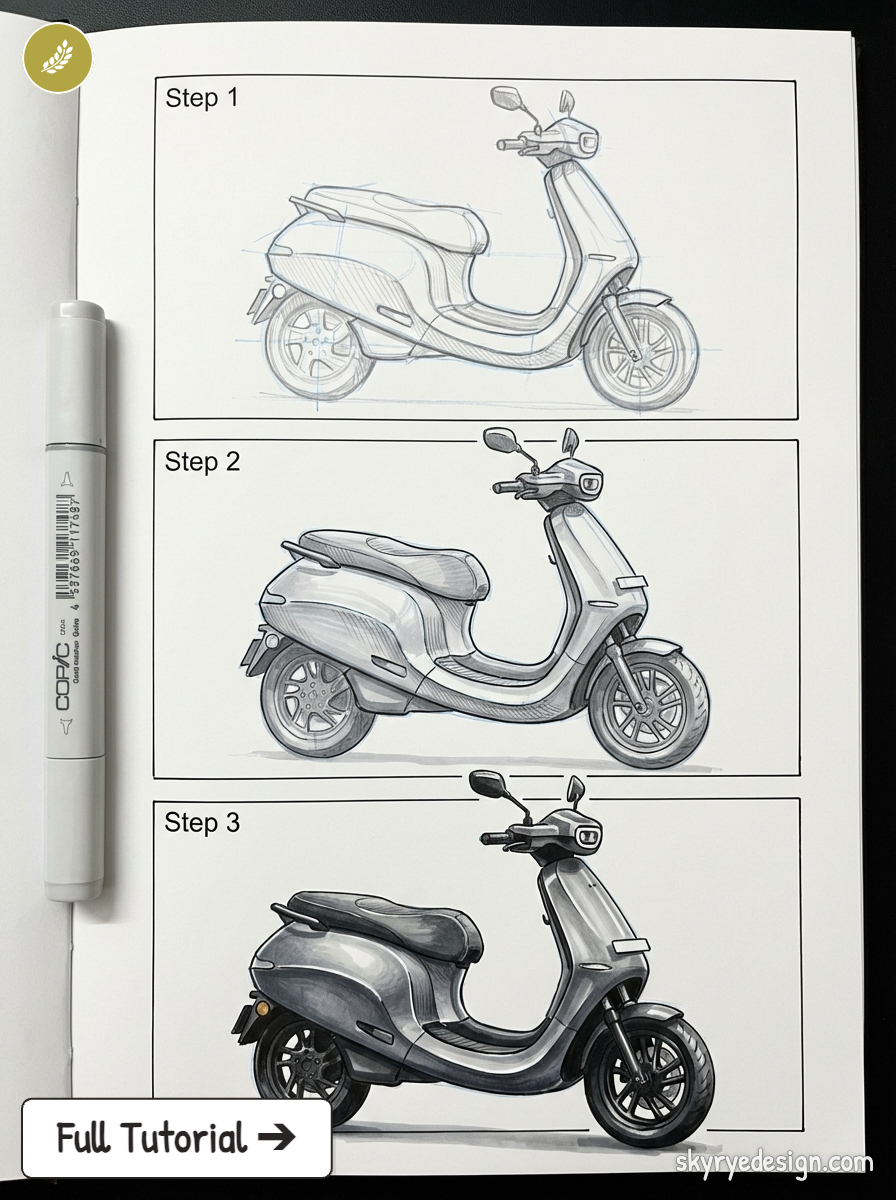
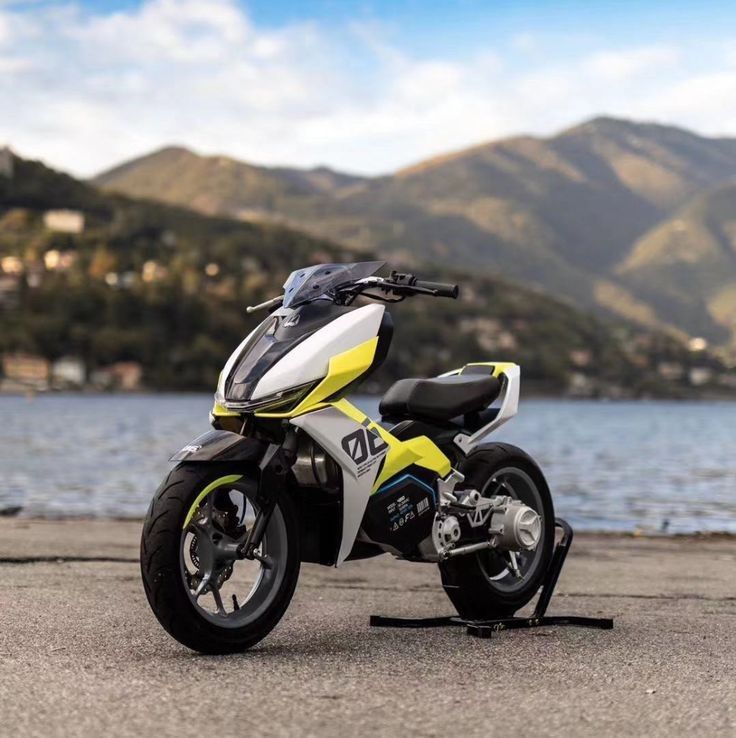
Visual mass should follow physical mass. A low battery pack can be expressed as a calm lower volume, while the upper body remains lighter and easier to read. Hiding every technical part behind one swollen shell usually makes the scooter look heavier. Breaking the body into serviceable zones—front cover, side panel, lower protection and tail—can create a clearer silhouette and reduce the cost of repairing local damage.
Choose materials for ageing and repair
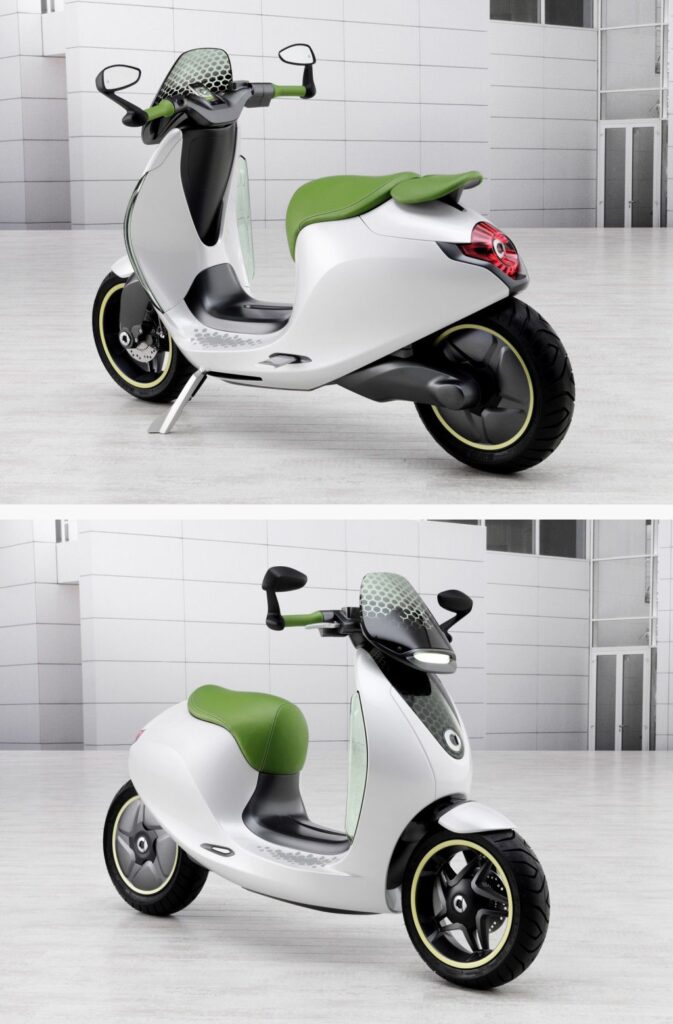
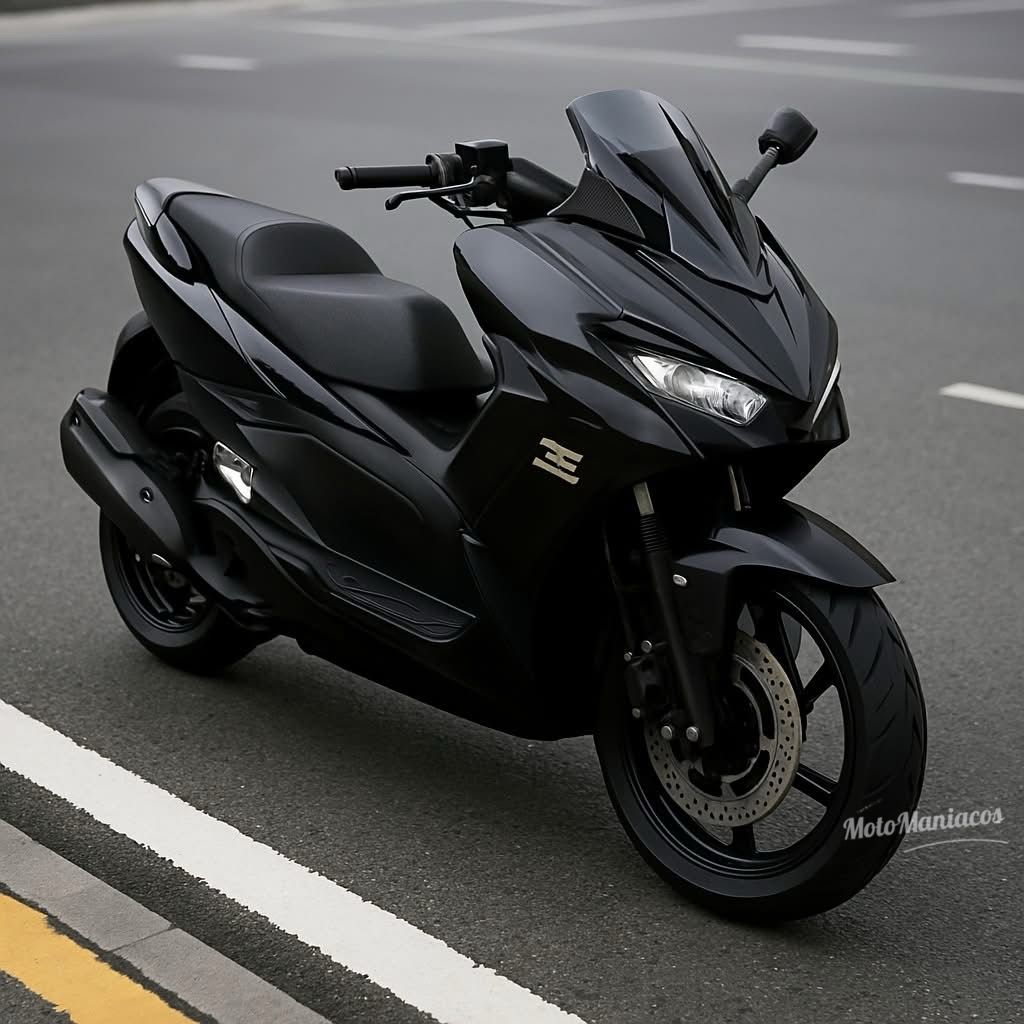
Metal and plastic body panels communicate quality differently, but neither material guarantees a durable scooter. Sheet metal can create thin, crisp surfaces and familiar automotive tactility. Engineering plastics can be lighter, resist corrosion and form complex shapes with fewer parts. The useful comparison is not prestige; it is how the panel behaves under sun, rain, vibration, scratches and small impacts, and what happens when it needs replacement.
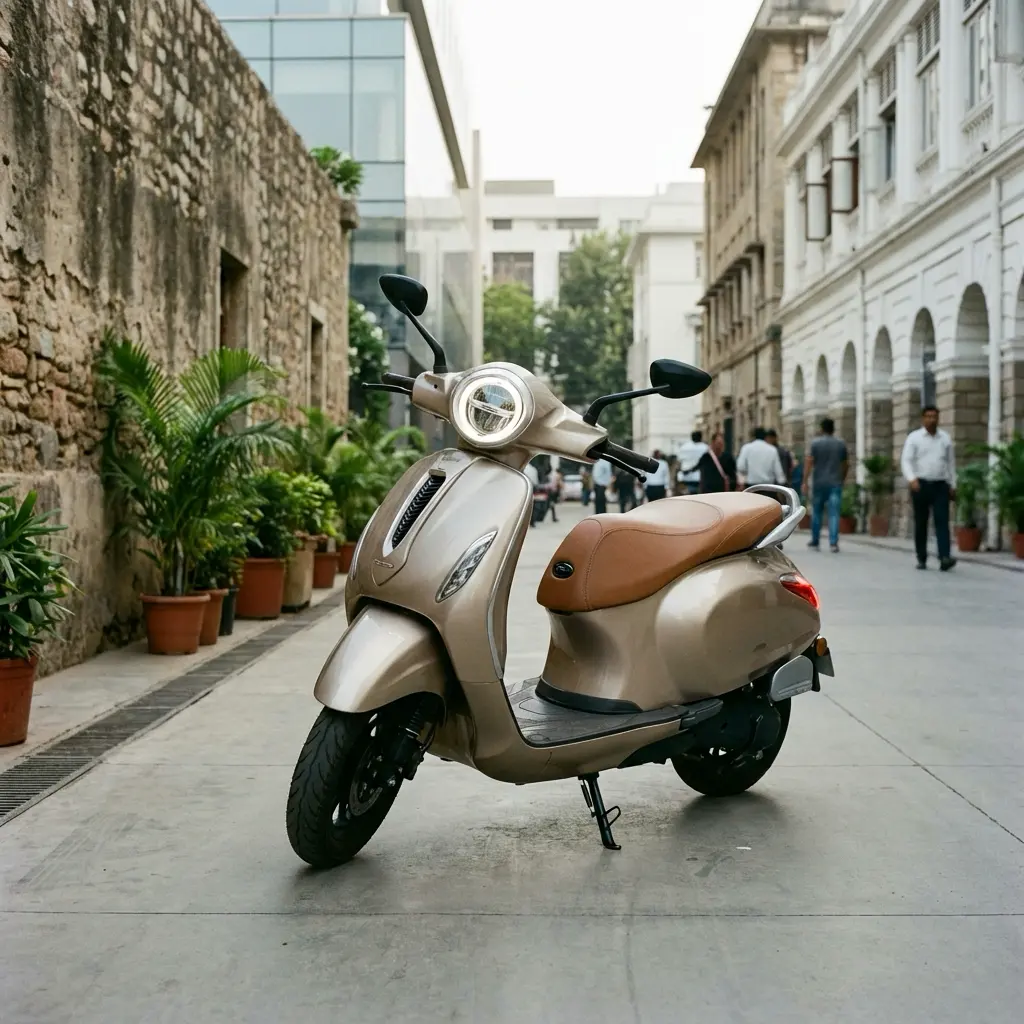
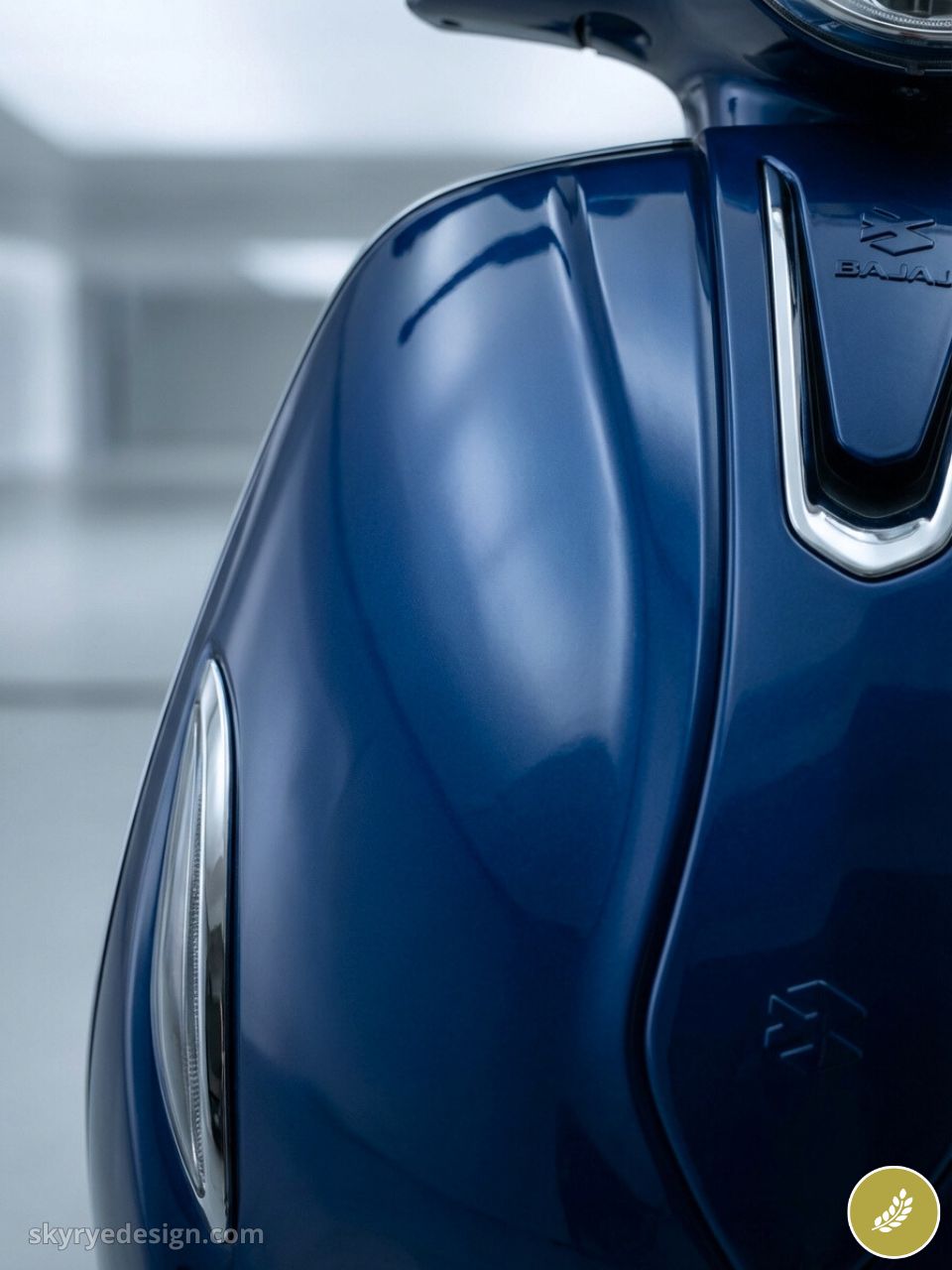
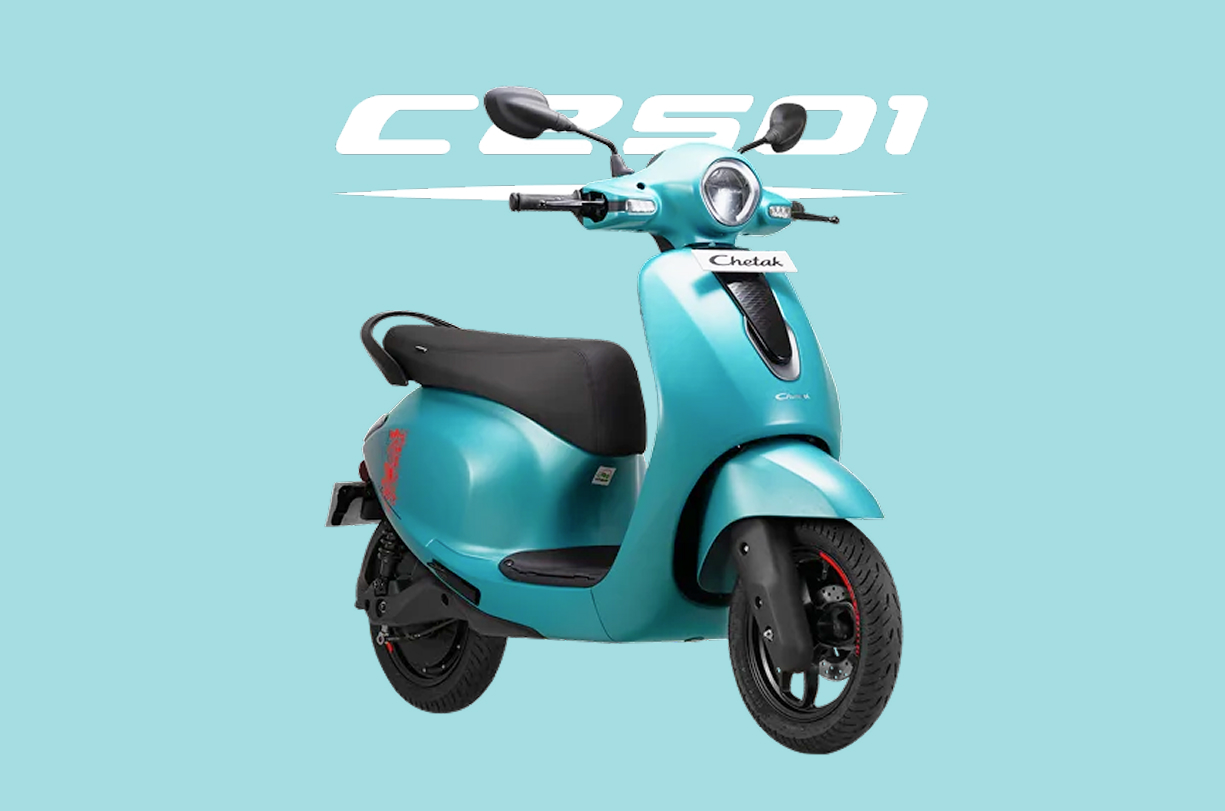
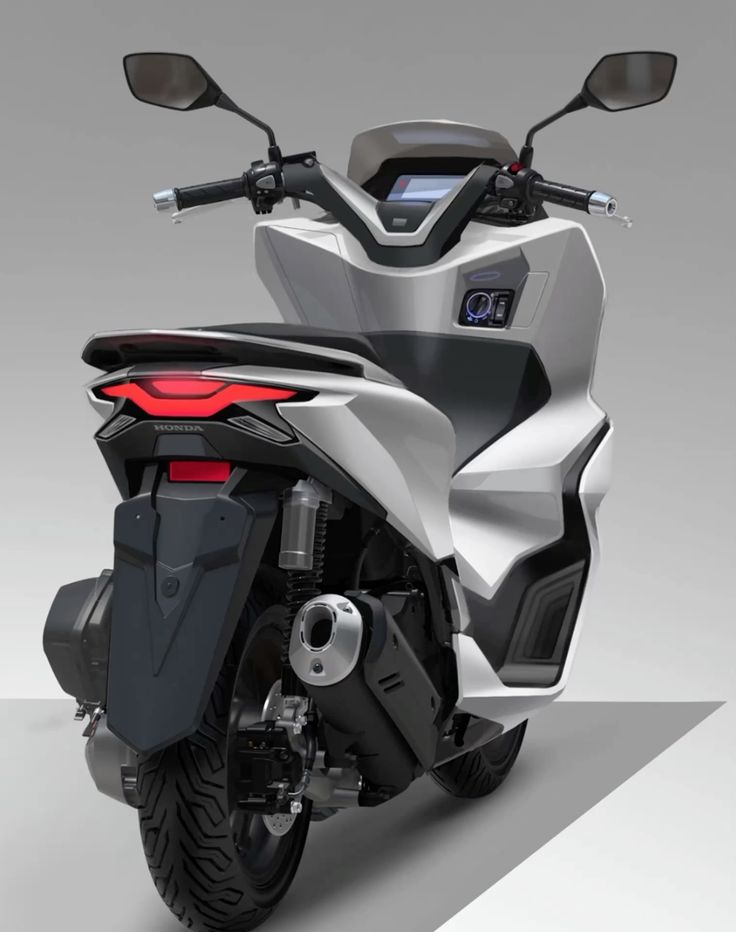
Bajaj describes the Chetak with a solid metal body, making material part of the product identity. Honda took another route with the EM1 e: its design team describes a simple, clean and approachable form, with broad painted areas and carefully resolved details. The Honda EM1 e design interview is useful because it shows that perceived quality comes from the whole surface system—radii, gaps, color breaks, fasteners and touch points—not from a single material claim.
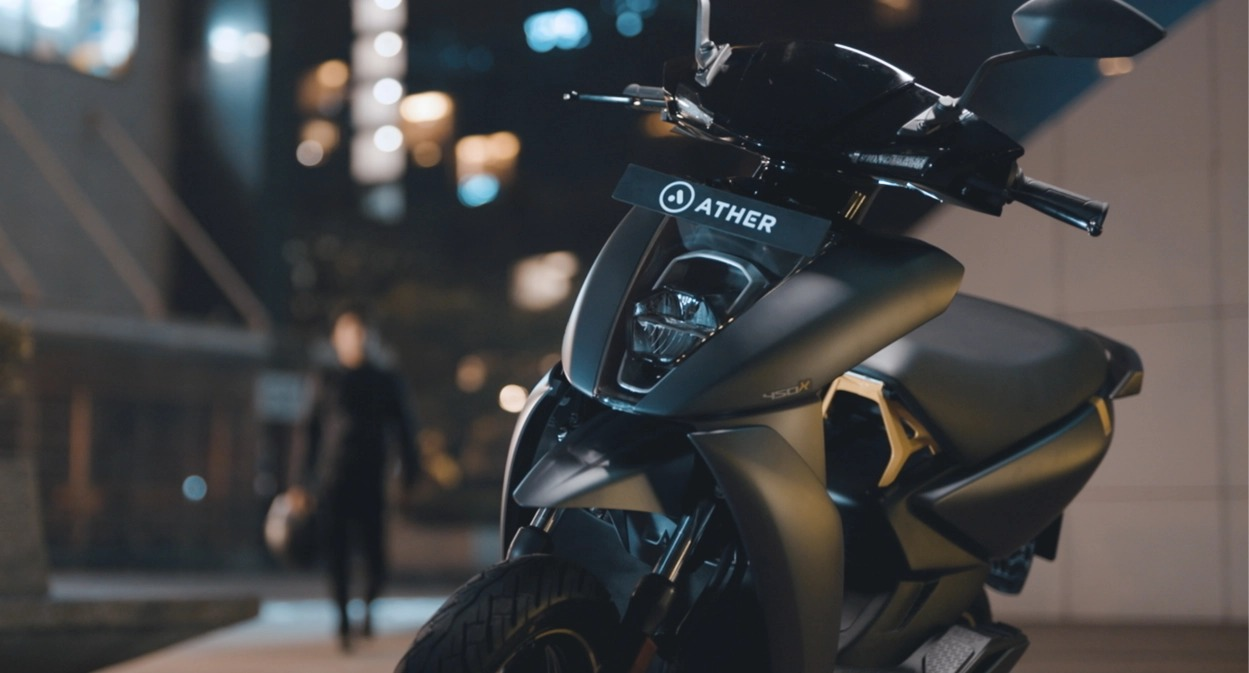
Look closely at lower edges, the front apron, grab rails and the area around the charging port. These are exposed to shoes, bags, road debris and repeated handling. Replaceable scuff parts, protected paint edges and fasteners that technicians can reach are more valuable than a seamless showpiece that requires removing several panels for a basic repair. Material honesty means using each material where its properties help, then detailing the transition cleanly.

Let battery packaging shape the architecture
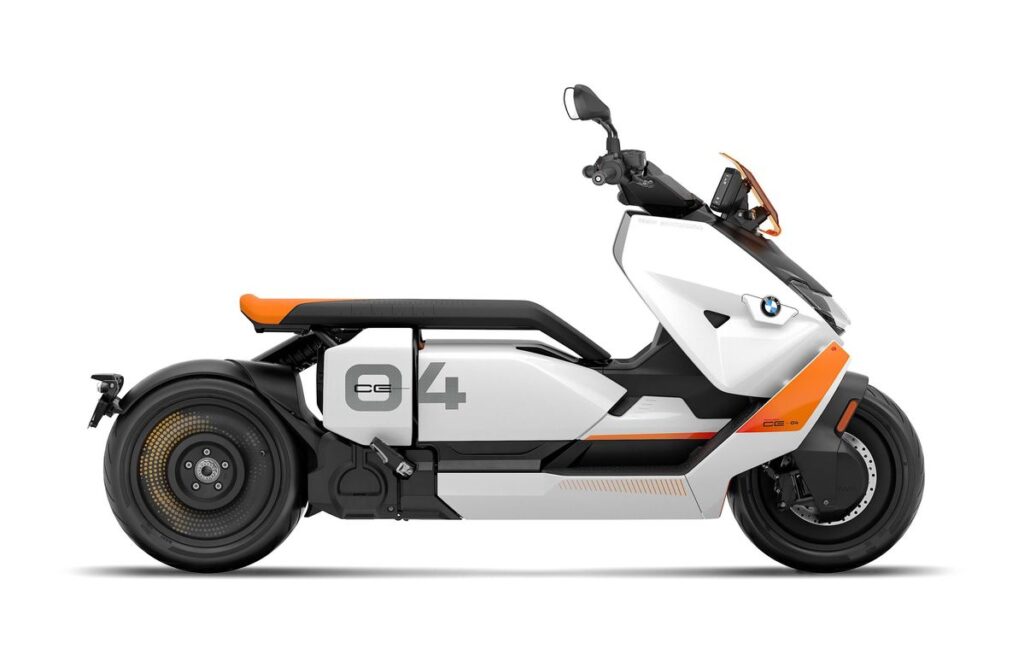
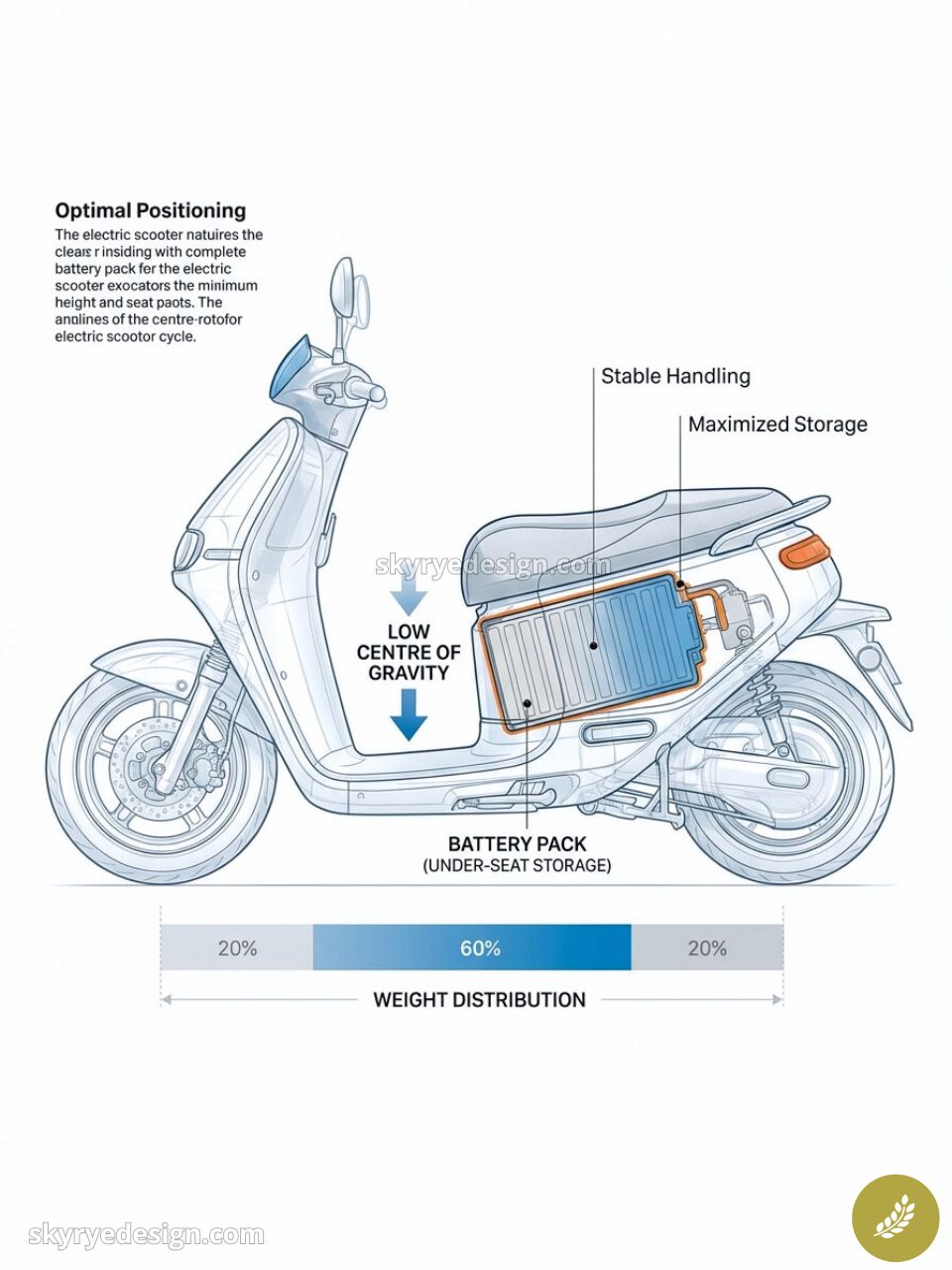
The battery is a design component because it controls mass, space and behaviour. A fixed pack can sit low and contribute to a stable centre of gravity, but the user needs convenient charging where the scooter is parked. A removable pack can support apartment living or battery swapping, yet it adds handles, connectors, locks, lifting weight and a protected path for taking the pack in and out. Those requirements must be designed from the start.
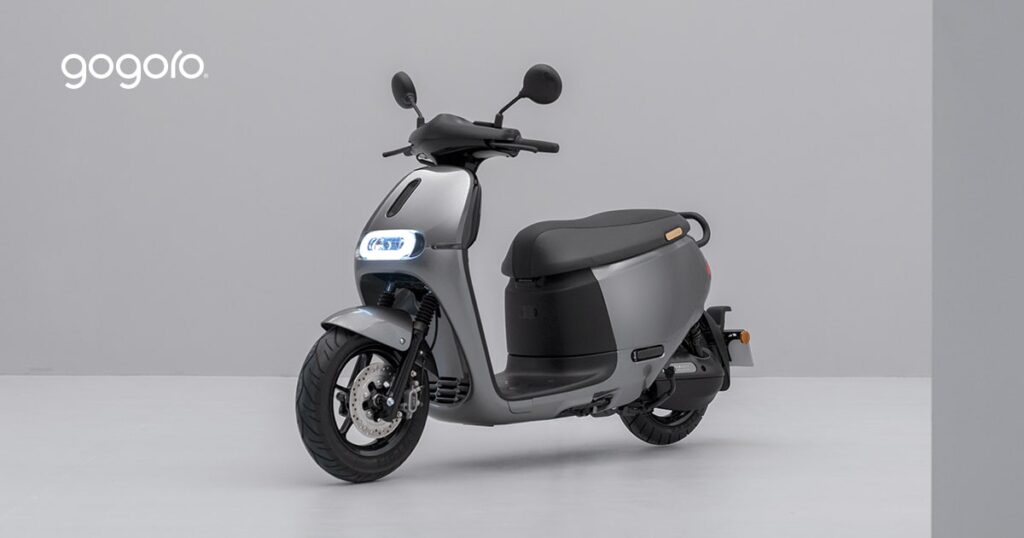
Gogoro demonstrates how infrastructure can reshape the product: the JEGO and battery-swapping system treats the pack as part of a wider ownership service. By contrast, a home-charged scooter may prioritise an accessible socket, cable routing and clear state feedback. Neither architecture is inherently superior. The right choice depends on parking, trip length, local charging and who is expected to lift or handle the battery.
Packaging reviews should include cell enclosure protection, water paths, venting or thermal management, cable bend radii, isolation points and diagnostic access. They should also include the everyday spaces around the pack: helmet storage, footboard width, bag hooks and room for a passenger. If range is gained by making the scooter awkward to mount, difficult to service or impractical to carry things on, the specification has weakened the product experience.
Use lighting as identity and information
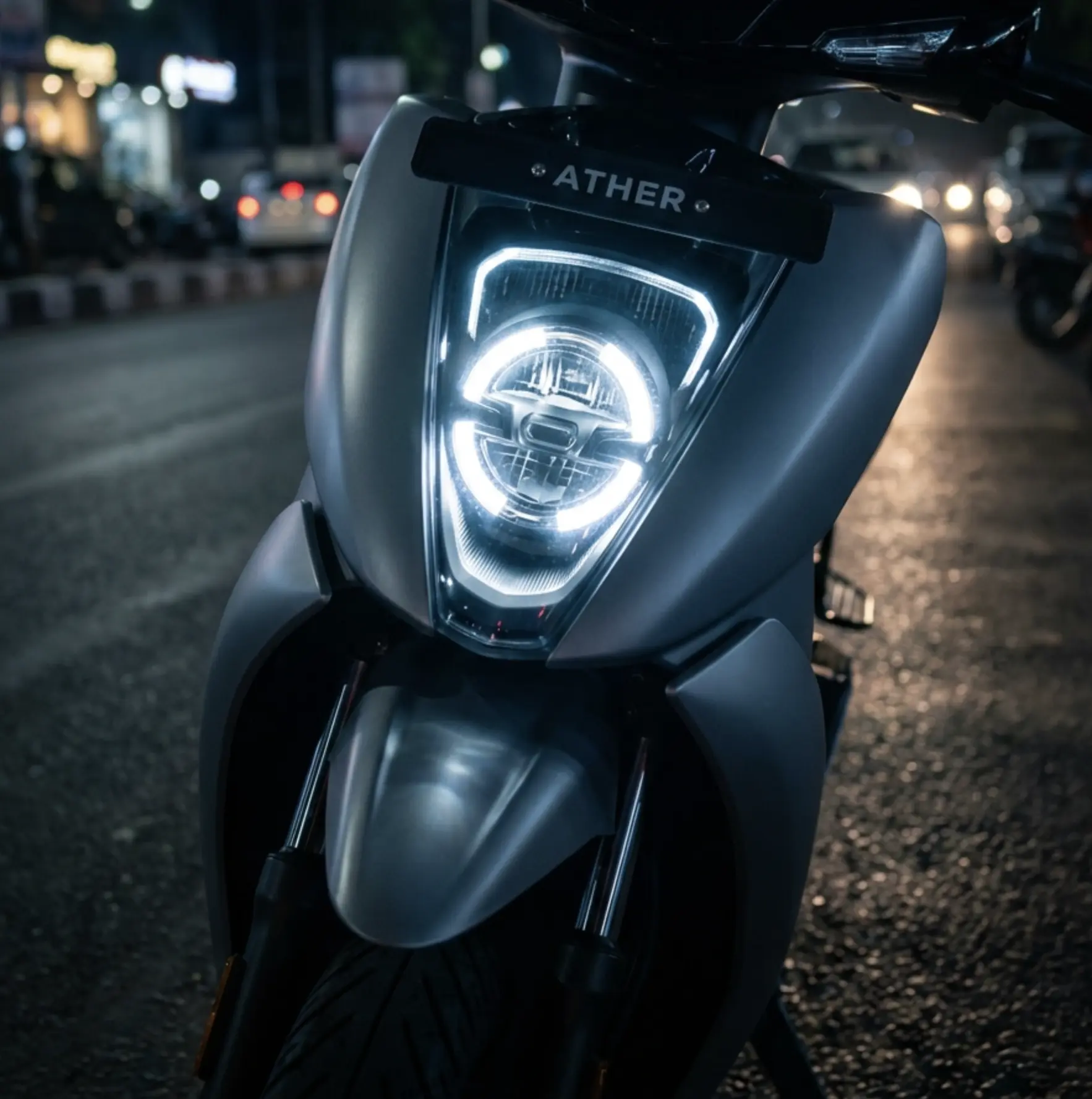
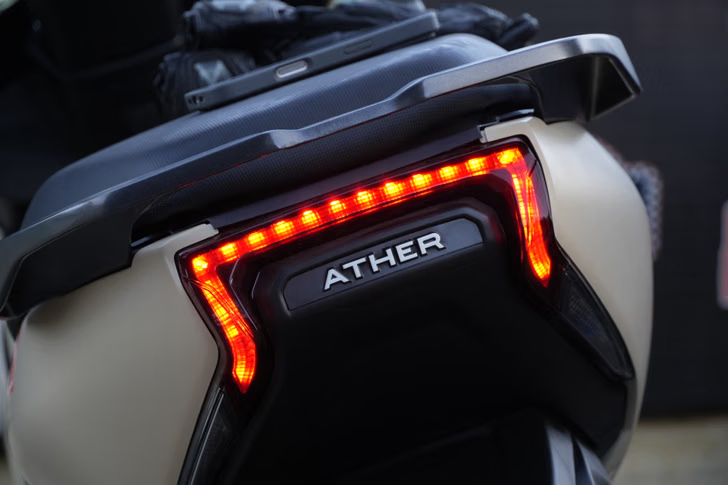
Lighting gives an electric scooter a recognisable face, but its first job is communication. The headlamp, daytime running light, indicators, brake light and rear position lamp need clear hierarchy and adequate visibility from relevant angles. A fashionable continuous strip can fail if the indicator disappears within it, while a tiny lamp may look minimal in a render and become hard to notice in rain or dense traffic.
Honda’s EV Urban Concept design project connects a shared light signature with a function-led body and intuitive interface. That is the useful lesson: identity becomes stronger when light, proportion and controls belong to one visual system. The signature should still read when the scooter is dirty, partly obscured by a rider or viewed among many other lamps.
The lamp module also needs sealing, heat control, wiring protection and replacement access. Designers should avoid burying a serviceable light inside a large painted assembly. A minor parking impact should not demand a costly body replacement. Test the lighting in daylight, darkness and wet conditions, then review the off-state appearance; black lenses, reflectors and mounting gaps remain part of the design even when the LEDs are off.
Design dashboard UX for a two-second glance
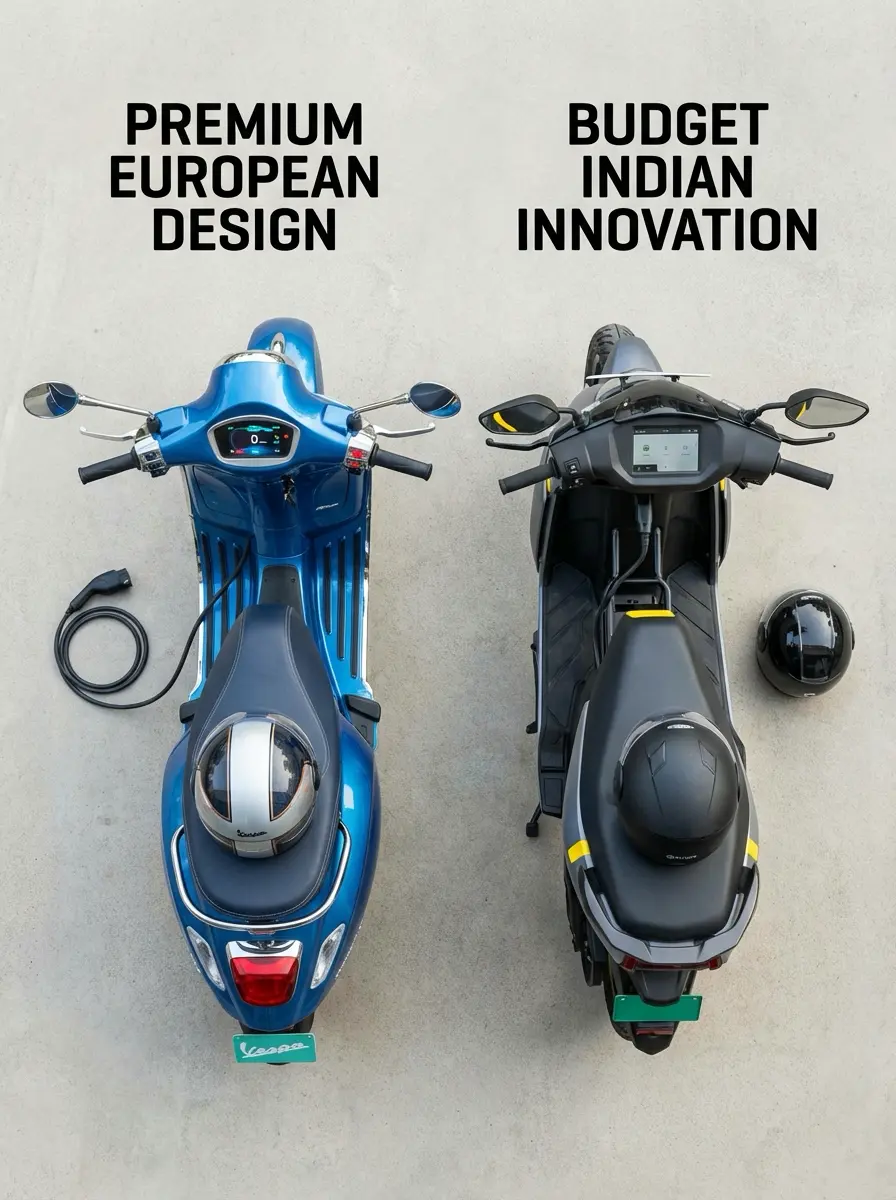
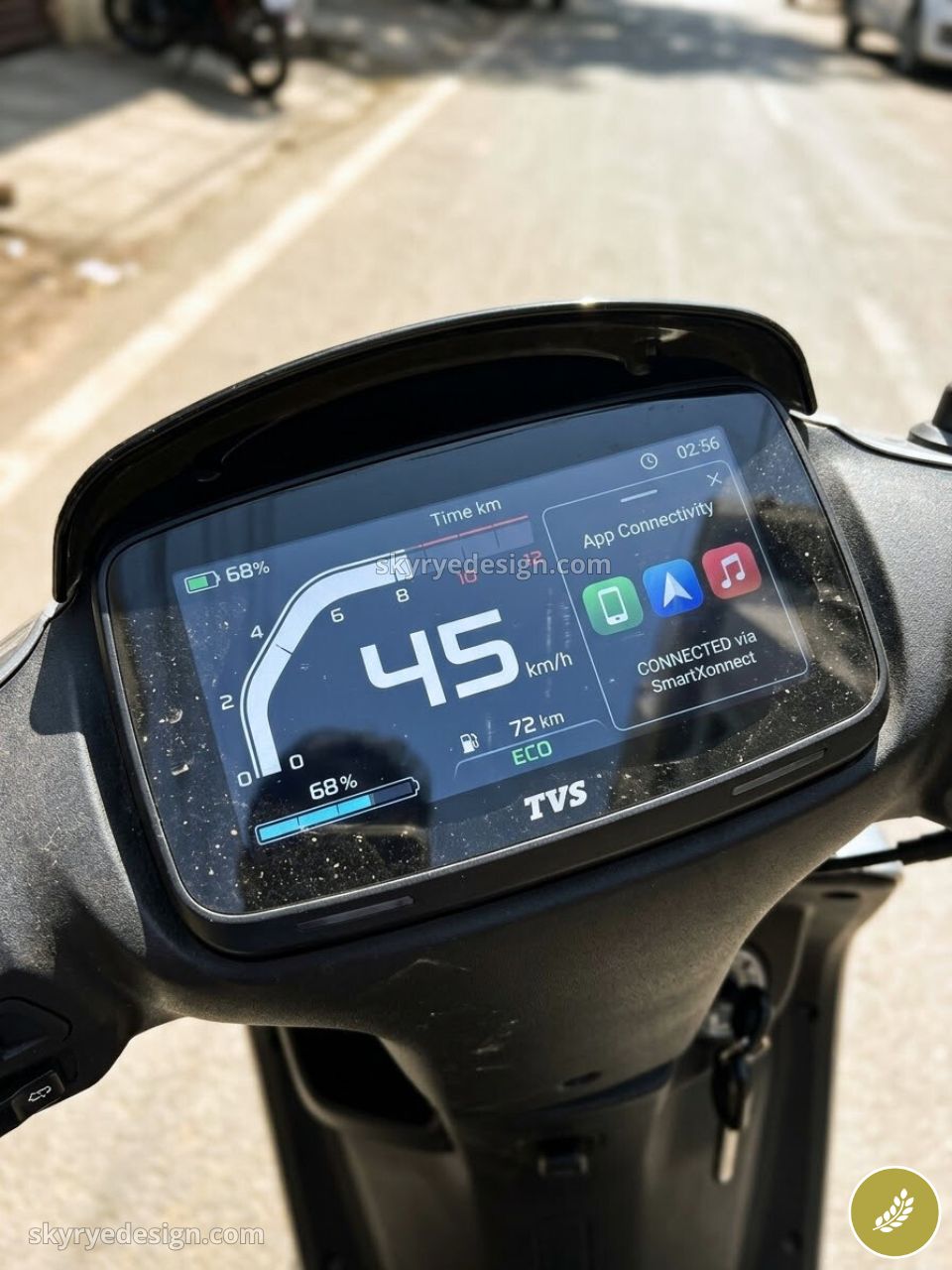
A scooter display is not a small phone. The rider is exposed to sun, rain, vibration and visual clutter, often wearing gloves and dividing attention between traffic, road surface and mirrors. Speed, remaining energy and urgent warnings should dominate the riding view. Navigation can help, but prompts need to be simple enough to understand without reading a miniature map.
Contrast, type size, viewing angle and anti-glare performance matter more than animation. Physical controls should support frequent actions without forcing the rider through menus. If touch input is used, it needs a clear reason and a safe fallback. Settings, ride history and detailed energy data can move to a stopped state or companion app, leaving the moving interface quiet.
Software still affects the physical product after launch. Ather’s official OTA update history shows how dashboard behaviour and charging information can evolve. That makes interface governance part of industrial design: updates should preserve familiar control locations, explain changed behaviour and avoid turning an older display into a slow or cluttered surface. The screen, switches and software should age together.

Design for service, weather and daily ownership
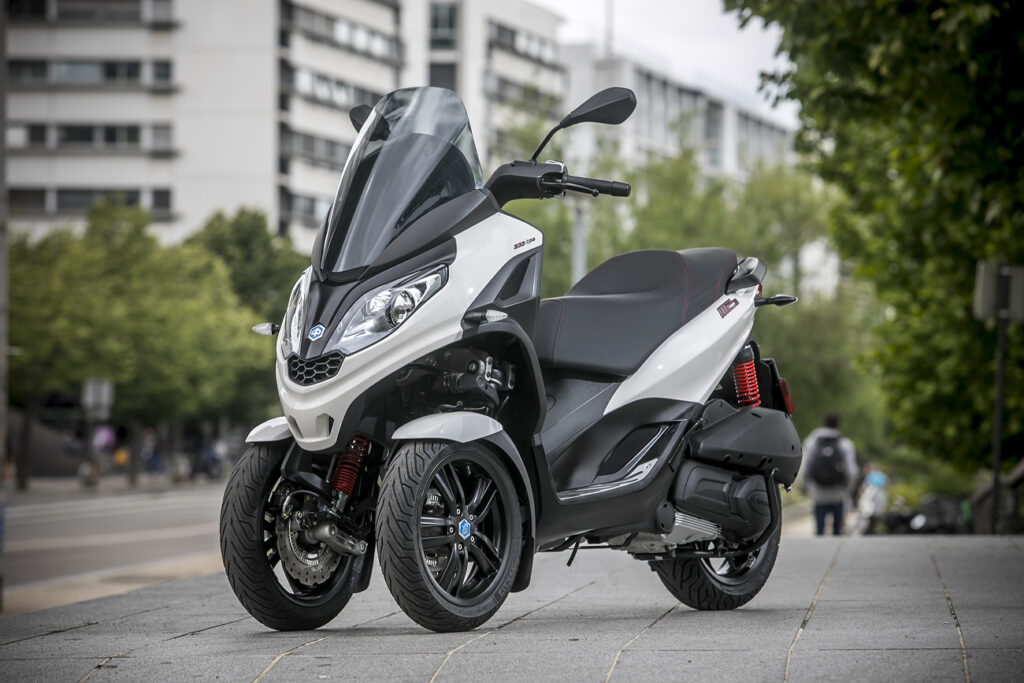
Technical expectations vary by vehicle class and market, but the UK government research into e-scooter construction standards is a useful reminder that construction, braking, lighting, electrical safety and durability are connected. Industrial design should make inspections and maintenance possible: technicians need access to connectors, fuses, brakes and fasteners without damaging cosmetic parts.
Weather design starts with water paths, not only a headline ingress rating. Check how rain runs around the seat, display, charging door and panel joints; where mud collects; and whether drainage remains open after months of use. Touch points need texture that works with wet hands, while glossy surfaces should not become a map of fingerprints or scratches after a week of commuting.
Ownership also includes locking, carrying a helmet, attaching a bag, moving the scooter without power and finding the charging point in low light. These small interactions are where a coherent product earns trust. A design review should document them as scenarios, with photographs or short videos, rather than assuming that a beautiful side view proves the scooter is easy to live with.
| Design layer | What to inspect | Warning sign |
|---|---|---|
| Rider packaging | Seat, footboard, reach, knee room and passenger space | One body size fits; low-speed handling feels awkward |
| Battery | Mass location, protection, charging and service access | Range displaces storage or makes the body unnecessarily bulky |
| Body panels | UV ageing, impacts, fasteners and local replacement | Minor damage requires removing or replacing large assemblies |
| Lighting | Viewing angles, hierarchy, sealing and repair | Identity graphics reduce signal clarity |
| Dashboard | Sunlight, contrast, gloves, warnings and glance time | Phone-like menus compete with riding information |
| Ownership | Parking, locks, bags, cleaning, weather and diagnostics | Daily tasks were not tested with real users |
Examples worth studying
- Honda EV Urban Concept: function-led form, a low visual centre and a coordinated light/interface language.
- Honda EM1 e: a compact, approachable body developed around clean surfaces and useful details.
- Bajaj Chetak: metal bodywork used as a visible material and durability statement.
- Gogoro JEGO: a product shaped by a battery-swapping ecosystem rather than the scooter alone.
- Ather dashboards: software updates that make the display part of the product’s continuing design life.
These examples should not be copied as style boards. Study the link between the brief and the form: where the battery sits, which daily task the interface prioritises, how a lamp supports recognition, and why a panel is made from a particular material. That relationship is the transferable design lesson.
Related mobility and industrial design guides
- What to know before buying an electric scooter — translate design decisions into ownership checks.
- Evolution of automotive design — place two-wheel EVs in the wider mobility story.
- Automotive UI design — go deeper on in-vehicle information hierarchy.
- Industrial design explained — review the discipline’s core methods and applications.
- Green industrial design — connect sustainability with product systems and manufacturing.
- Industrial minimalism — use reduction to clarify function rather than erase character.
- Industrial design archive — browse more product and system design analysis.
Electric scooter design FAQ
What makes an electric scooter well designed?
A well-designed electric scooter combines stable proportions, a comfortable rider triangle, clear controls, visible lighting, weather-resistant materials, useful storage and sensible service access. The body should communicate where to sit, step, hold and charge without adding decorative complexity that makes cleaning or repair harder.
Where should the battery sit in an electric scooter?
There is no universal position, but the pack should keep mass low and near the centre while protecting cells from impact, water and heat. Its location must also leave enough footboard room, storage and service access. A removable pack adds lifting and connector requirements; a fixed pack needs convenient charging and diagnostic access.
Are metal body panels better than plastic panels?
Neither material is automatically better. Metal can provide stiffness and a familiar quality signal, while engineering plastics can reduce weight, avoid corrosion and make complex forms economical. Judge the complete system: finish durability, UV stability, impact behaviour, replacement cost, fastening method, panel gaps and whether damaged sections can be serviced separately.
What should an electric scooter dashboard show while riding?
Speed, remaining energy and essential warnings should dominate the riding view. Navigation prompts may be useful when they are simple and timed well. Settings, ride history and detailed energy data belong in secondary screens or a phone app. Typography needs strong contrast and enough size to work in sun, rain and brief glances.
How does lighting affect electric scooter design?
Lighting handles both recognition and safety. The headlamp, daytime running light, indicators and rear lamp need clear separation, adequate viewing angles and a signature that still reads when the scooter is moving through visual clutter. Their housings also need sealing, thermal control, repair access and protection from minor parking damage.
How can electric scooter design be more sustainable?
Long service life is the starting point. Use durable finishes, replaceable wear parts, accessible fasteners, repairable lighting modules and clear battery diagnostics. Reduce mixed materials where possible and document disassembly. Electric propulsion does not compensate for a body or interface that becomes obsolete, damaged or uneconomical to repair after a short period.
A better way to judge the finished scooter
A strong electric scooter is not the one with the busiest dashboard or the most dramatic plastic. It is the one whose proportions fit the rider, whose battery architecture supports the trip, whose controls stay readable and whose panels and lights can survive ordinary ownership. When those decisions reinforce one another, the scooter feels modern without needing to advertise every technical feature.
- 589shares
- Facebook0
- Pinterest589
- Twitter0
- Reddit0