Drifting has become one of the most exhilarating motorsport activities, with BMW vehicles standing out as popular choices among enthusiasts. The German automaker’s rear-wheel-drive platform and balanced chassis make many of their models ideal candidates for controlled slides around corners. The BMW E36 and E46 3 Series are widely considered the best BMWs for drifting, offering the perfect balance of affordability, parts availability, and performance potential. The E36 and E30, in particular, are considered cheap options for those starting out in drifting, making them accessible for beginners.
When looking for the ideal BMW drift car, you need to consider more than just power. The E36 provides a lightweight chassis with direct steering feedback, making it responsive during drift transitions. The coupe body style of the E36 is particularly favored for its lightweight and sporty characteristics, which enhance its drifting capabilities.
The E46, particularly the 330i model, shares many components with the more expensive M3 while maintaining a reasonable price point. Both generations feature robust drivetrains that can handle the abuse of drifting with proper maintenance.
Key Takeaways
- The E36 and E46 3 Series offer the best balance of cost, performance, and modification potential for drifting enthusiasts.
- Models like the 325i/is and 330i provide adequate power and strong drivetrains without the premium price of M-series vehicles.
- Successful drift builds require more than just power, focusing on chassis balance, steering response, and proper differential setup.
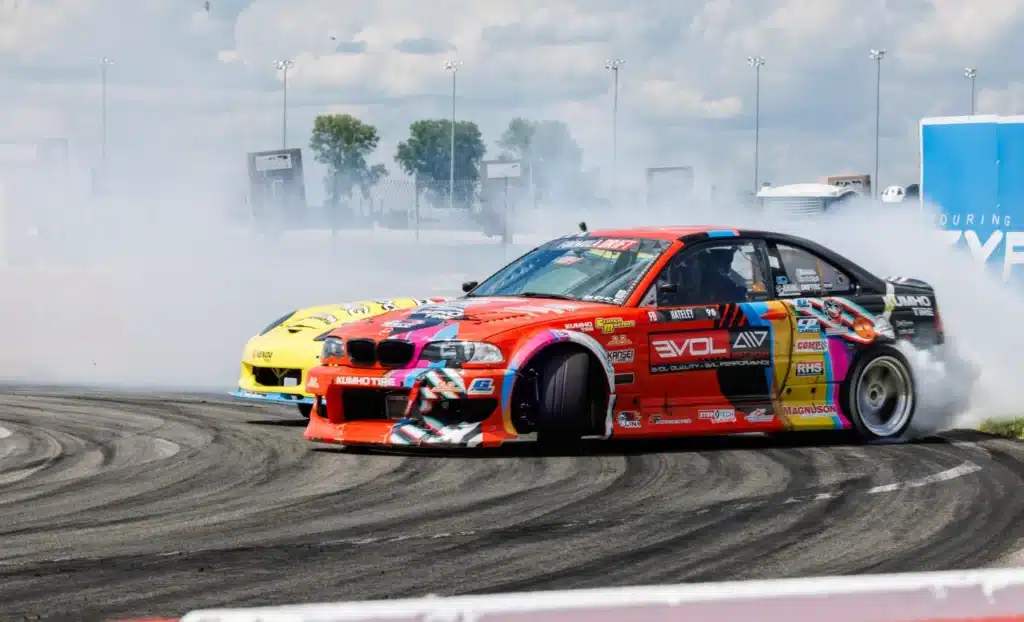
Introduction to Drifting
Drifting is one of the most electrifying motorsports in the world, combining speed, power, and precision in a display of ultimate car control. At its core, drifting is all about pushing a car sideways through corners, maintaining control while the rear tires spin and the chassis dances on the edge of traction. The best BMW drift cars excel in this environment, thanks to their well-balanced chassis, responsive handling, and rear-wheel drive layouts.
BMW models like the E30, E36, and E46 have become legends in the drifting community. Their near-perfect weight distribution and robust engineering make them the best BMW choices for anyone looking to master the art of drifting. Whether you’re a beginner or a seasoned pro, the combination of power, control, and balance found in these BMWs allows drivers to explore the limits of sideways driving with confidence and precision.
In this article, we’ll dive into what makes a BMW drift car stand out, explore the top models for drifting, and share essential tips and techniques to help you get started on your drifting journey.
Essential Features of Drifting BMWs
BMW drift cars require specific characteristics to perform well on the track. The right combination of drivetrain, power, and durability makes all the difference between a good drift car and a great one.
Reliability and Durability for Abuse
Drifting puts significant stress on a car’s chassis and mechanical components. Regular maintenance and reinforcement work are essential to extend the life of the chassis, especially under the high-stress conditions of drifting. It’s also important to replace worn cooling system components and other critical parts to ensure reliability during track use. Fixing issues like oil leaks promptly is crucial to prevent further damage and keep the vehicle functioning optimally.
Understanding Horsepower and Tuning
Horsepower is a key factor in a BMW’s drifting potential. Some BMW models, such as the E92, can be drifted effectively in stock form thanks to their powerful engines and well-balanced suspension setup, making them appealing choices for beginners or those on a budget. Tuning options are plentiful, allowing enthusiasts to extract even more performance as needed.
Rear-Wheel Drive Versus All-Wheel Drive
For drifting, rear-wheel drive (RWD) BMWs are vastly superior to all-wheel drive models. RWD allows for easier initiation of slides and more predictable control during drifts. The physics behind this is simple – power sent to the rear wheels creates oversteer, which is essential for drifting.
BMW’s traditional RWD layout is one reason why models like the E36 and E46 are popular drift choices. While some modern BMWs come with xDrive (BMW’s AWD system), dedicated drift enthusiasts typically avoid these or convert them to RWD.
If you’re considering an AWD BMW for drifting, be prepared for additional modifications and costs. Some drivers disconnect the front driveshaft on xDrive models to create a makeshift RWD setup, but this isn’t ideal for serious drifting applications.
Understanding Horsepower and Tuning
BMW engines provide an excellent foundation for drift builds, but stock power often needs enhancement. Most competitive drift BMWs run between 300-500 horsepower, though beginners can start with less.
Engine options to consider:
- Naturally aspirated inline-6 (reliable but limited power)
- Turbocharged variants (more potential for power increases)
- Engine swaps (popular options include 2JZ or LS V8)
In my opinion, turbocharged BMW inline-6 engines offer the best balance of tuning flexibility and power delivery for drifting, though some drivers prefer the instant torque of an LS V8 swap. Ultimately, the best engine choice depends on your personal goals and budget.
Tuning flexibility is crucial for drift cars. BMW’s M52, M54, and S52 engines respond well to basic modifications like intake, exhaust, and ECU tuning. For serious power, you’ll want to explore forced induction options.
Remember that drifting requires consistent power delivery more than peak numbers. A smooth, predictable power curve helps you maintain slides with greater precision than erratic power delivery from poorly tuned engines.
Reliability and Durability for Abuse
Drifting puts extreme stress on every vehicle component. Your BMW must withstand consistent abuse while remaining reliable enough to drive home afterward.
Key durability considerations:
- Cooling system upgrades (larger radiator, oil cooler)
- Reinforced rear subframe (especially on E46 models)
- Upgraded differential bushings and mounts
- Heavy-duty clutch and transmission components
E36 BMWs are often recommended for beginners due to their balance of durability and affordability. While the E46 offers a stiffer chassis that many prefer, its rear subframe requires reinforcement to prevent cracking under drift conditions.
Maintenance accessibility matters too. You’ll spend significant time working on your drift BMW, so models with simpler mechanical layouts and better parts availability will reduce your downtime between drift sessions.
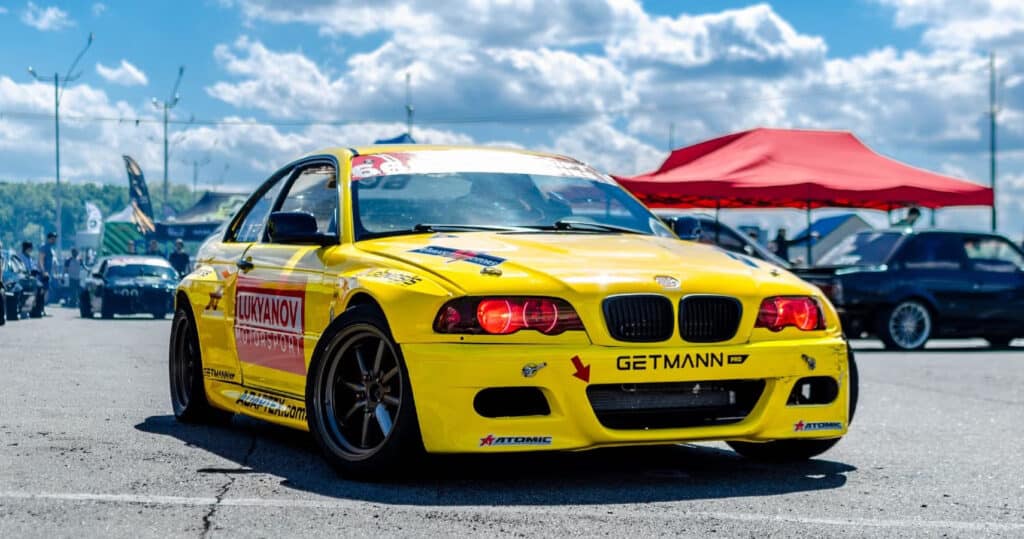
Top BMW M Models for Drifting
BMW M models offer exceptional drift capabilities with their rear-wheel drive platforms, powerful engines, and balanced chassis. These performance machines combine the perfect mix of power, handling, and driver engagement needed for controlled slides.
BMW M3: The Iconic Drift Choice
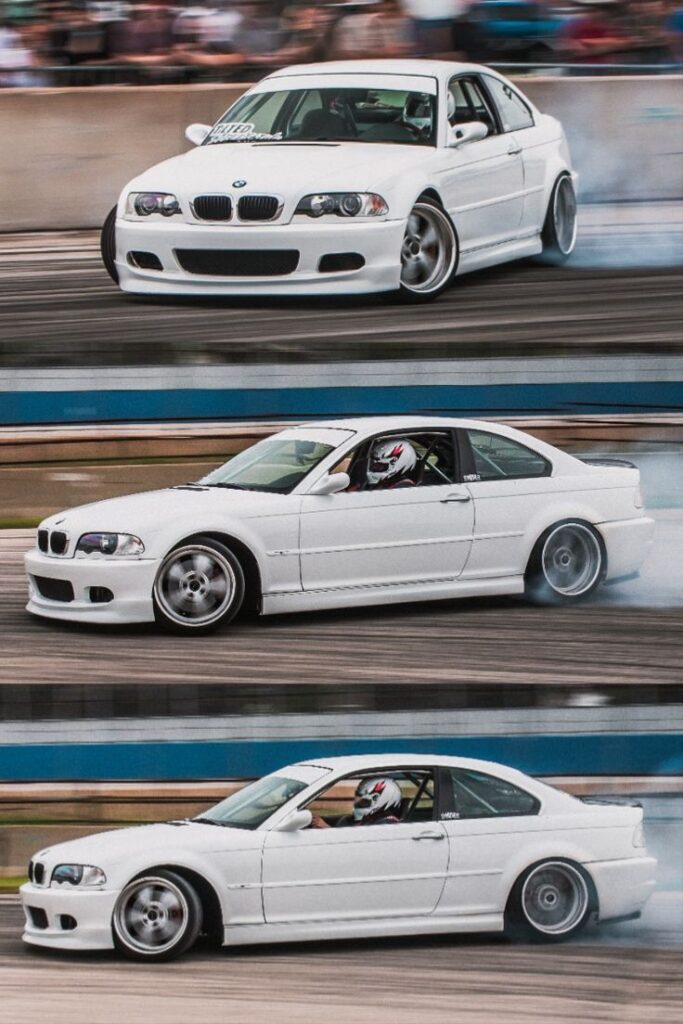
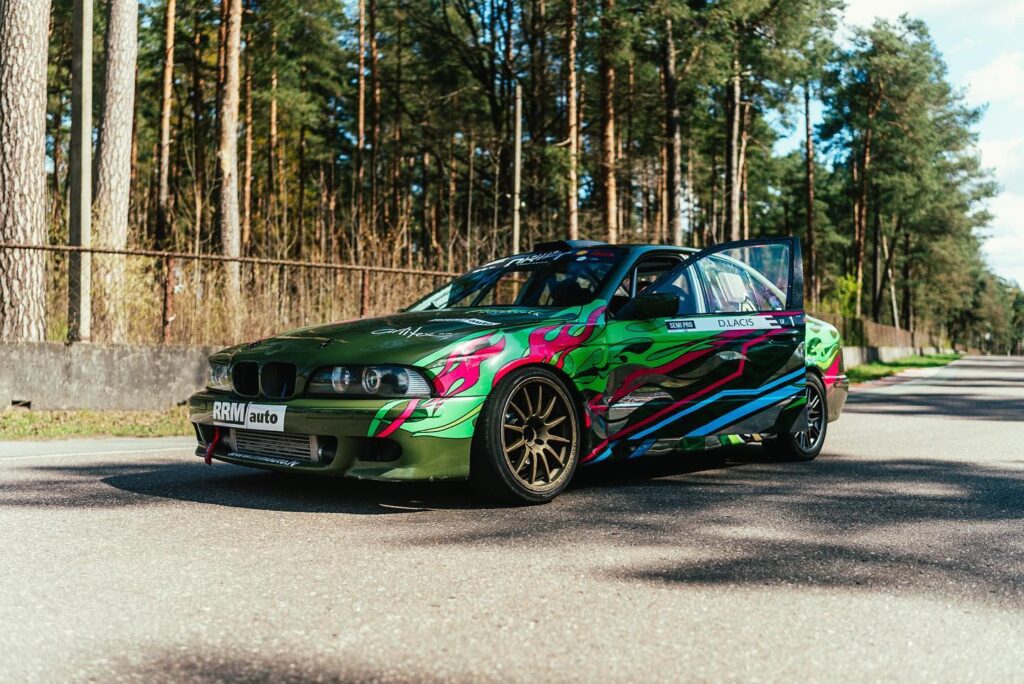
The BMW M3 stands as the quintessential drift platform among enthusiasts. The E46 M3 (2001-2006) offers an ideal balance of power, weight, and handling with its 3.2-liter S54 inline-six engine producing 333 horsepower. Its 50:50 weight distribution creates predictable handling that’s perfect for initiating and maintaining drifts.
The E92 M3 (2007-2013) steps things up with its high-revving 4.0-liter V8 delivering 414 horsepower. This generation provides more power while maintaining excellent chassis communication during slides.
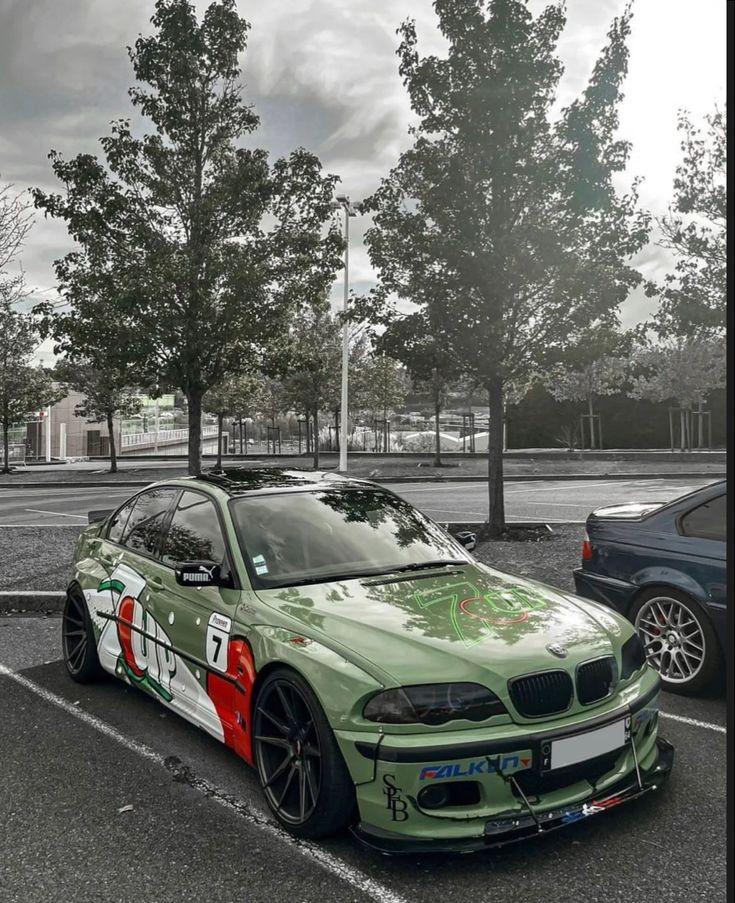
For a more affordable entry point, the E36 M3 (1992-1999) offers excellent drift potential with simpler mechanics and lower purchase costs. Many drift competitors choose this generation as their base platform due to its light, lightweight design, which makes it especially agile and easy to drift, as well as its tuning potential.
BMW M5: Power and Luxury Combined
The BMW M5 brings drift capabilities to a larger platform with significantly more power. The E39 M5 (1998-2003) features a 4.9-liter V8 producing 394 horsepower, providing ample torque for breaking traction while maintaining control.
For pure drama, the E60 M5 (2005-2010) introduced the legendary 5.0-liter V10 engine generating 500 horsepower. This naturally-aspirated powerplant offers linear power delivery that’s advantageous for precise throttle control during drifts.
Despite their larger size, M5 models maintain impressive agility. You’ll find the additional wheelbase provides more stability during high-speed drifts, making them more forgiving for intermediate drift drivers.
F90: Modern Capabilities
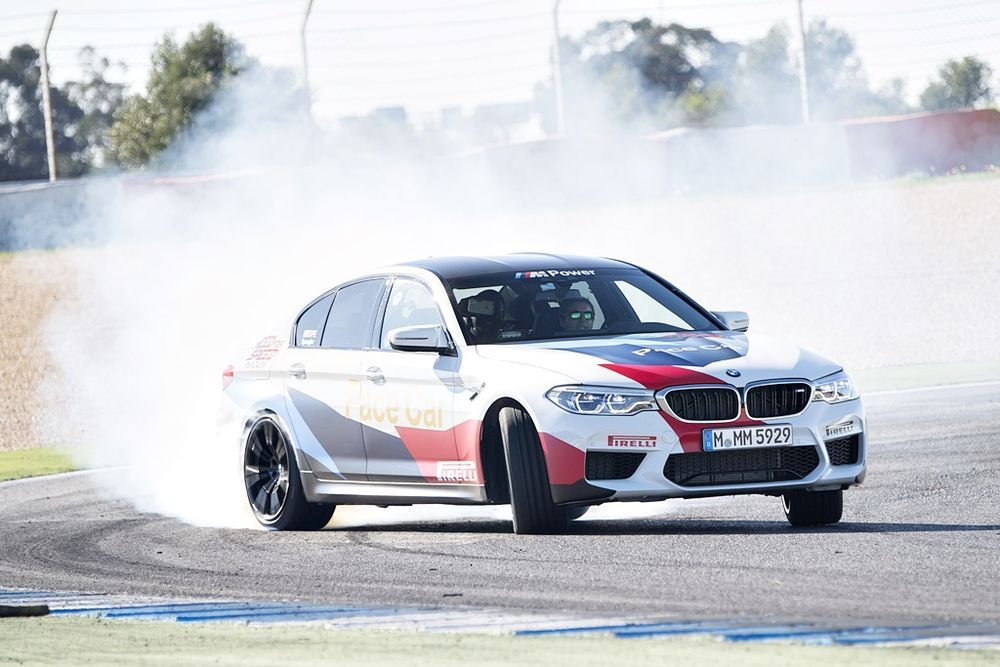
The F90 M5 (2018-present) represents BMW’s most technologically advanced drift-capable sedan. Its 4.4-liter twin-turbocharged V8 produces a massive 600 horsepower (625 in Competition trim), enabling explosive acceleration and easy power slides.
What makes the F90 special is its switchable drivetrain. You can toggle between all-wheel drive for daily driving and a pure rear-wheel drive mode specifically designed for drift scenarios. This flexibility offers the best of both worlds.
The F90’s electronic systems have been engineered to support performance driving. Stability control can be fully disabled, and the M Dynamic Mode allows controlled slides while maintaining a safety net. The quick-shifting 8-speed automatic transmission provides immediate power delivery when needed during drift transitions.
The 3 Series Legacy in Drifting
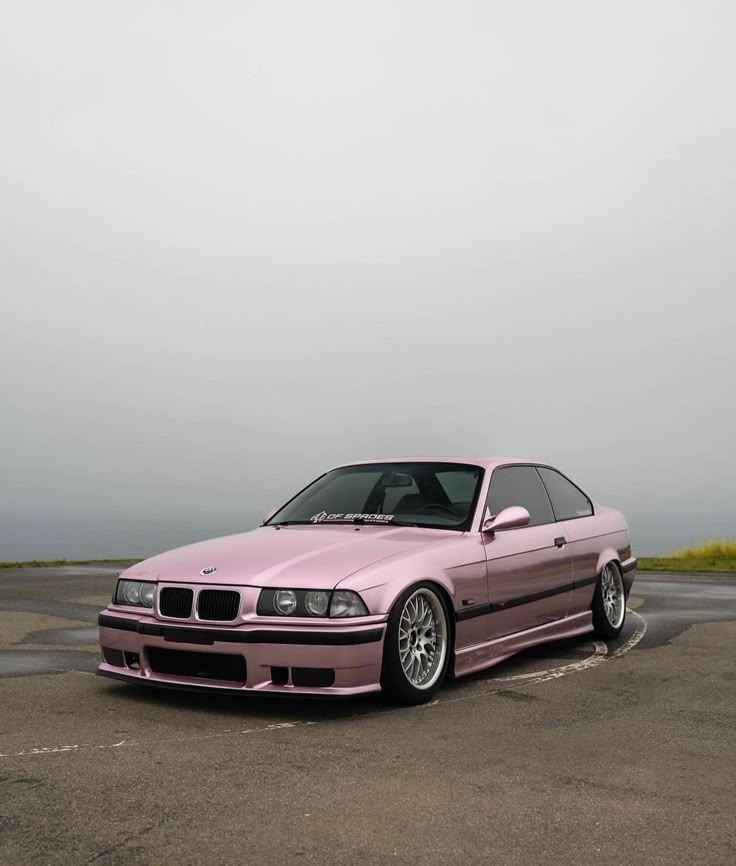
BMW’s 3 Series has established itself as a cornerstone in the drifting community, offering the perfect balance of power, weight distribution, and rear-wheel drive dynamics. The BMW E36, in particular, has earned a reputation for being both a capable street car and a strong performer on the drift track, making it a favorite among enthusiasts who want versatility for both daily driving and competitive drifting.
Additionally, the E36 allows drivers to drift in style, appealing to those who value both performance and the visual aesthetics of their car. These vehicles have become legendary in motorsport circles for their ability to maintain controlled slides through corners.
E36 and E46 Generations
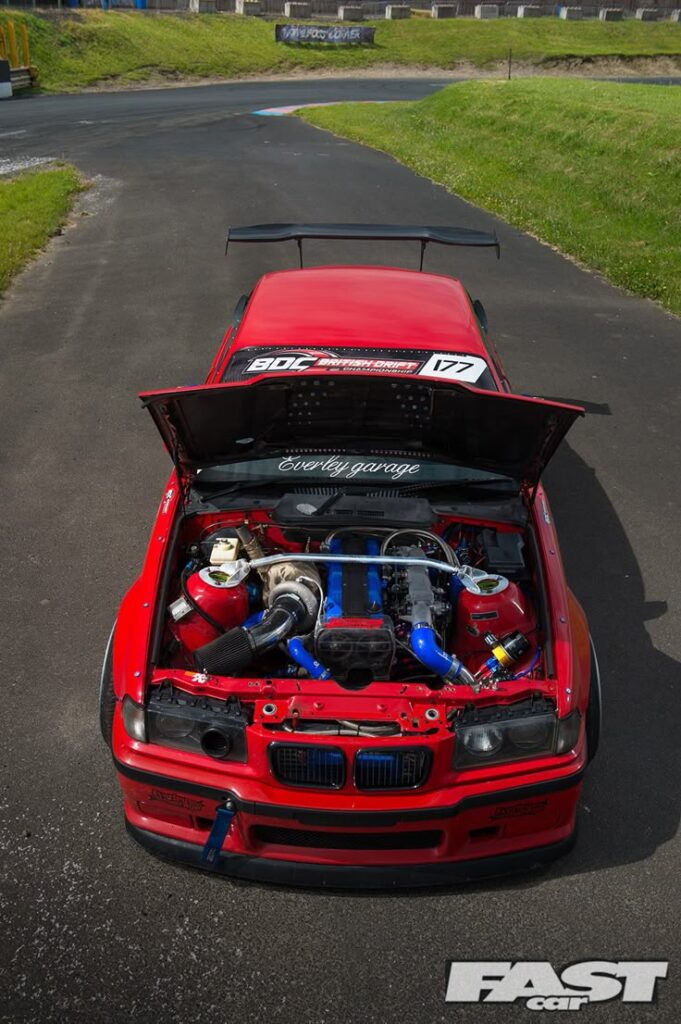
The E36 328is stands as the catalyst for many drifting careers. Its near-perfect 50:50 weight distribution and responsive inline-six engine make it naturally suited to controlled sliding. This generation offers an accessible entry point with models available between $3,000-5,000 for decent examples.
If you come across a manual transmission E36 or E30, be sure to grab it—manuals are especially desirable for drifting and can be harder to find.
The E46 generation further refined these drift-friendly characteristics. With more power from its inline-six engines and a slightly stiffer chassis, the E46 provides predictable handling at the limit. Many enthusiasts consider it the ideal balance of modern reliability and classic BMW handling.
You’ll find the E46 particularly suitable for beginners as it responds well to modification. Standard limited-slip differentials in some models make them especially desirable in the drifting community.
E92 and Modern Variants
The E92 generation brought more sophisticated technology while maintaining the drift-friendly characteristics BMW is known for. With more power from both six-cylinder and V8 options, these models offer greater potential for experienced drifters.
Modern 3 Series variants continue this legacy while incorporating advanced electronic systems. You can often disable or modify these systems for dedicated drift setups. The increased power in newer models means they perform exceptionally well when converted for drifting purposes.
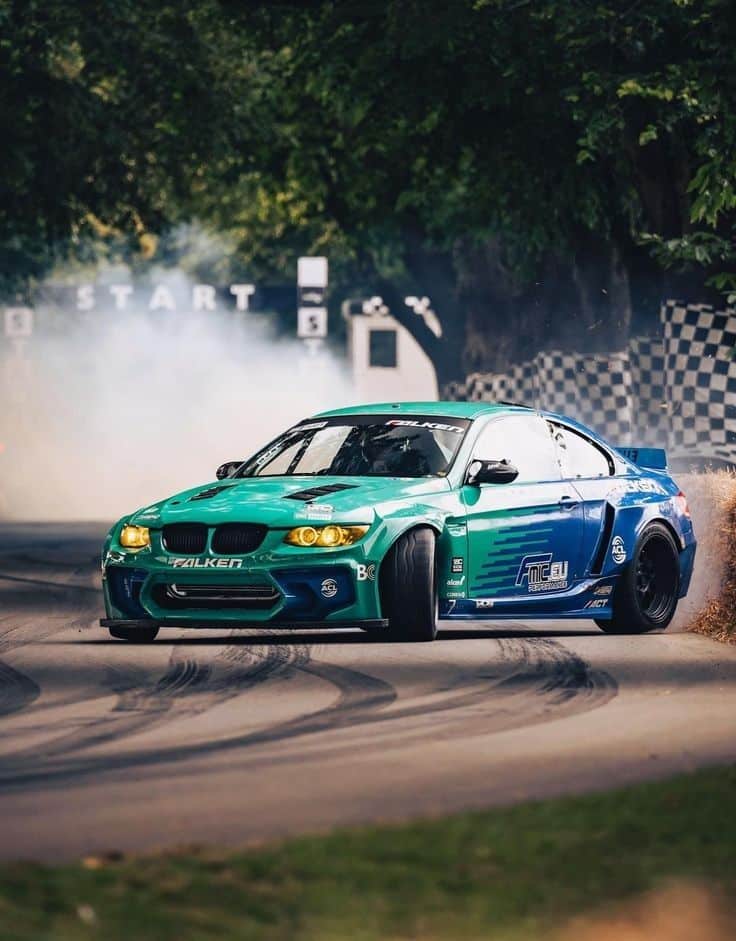
For competitive drifting, modern 3 Series BMWs require more extensive modifications. They form the basis for many Formula Drift competitors, particularly in wet conditions where their balanced chassis excels.
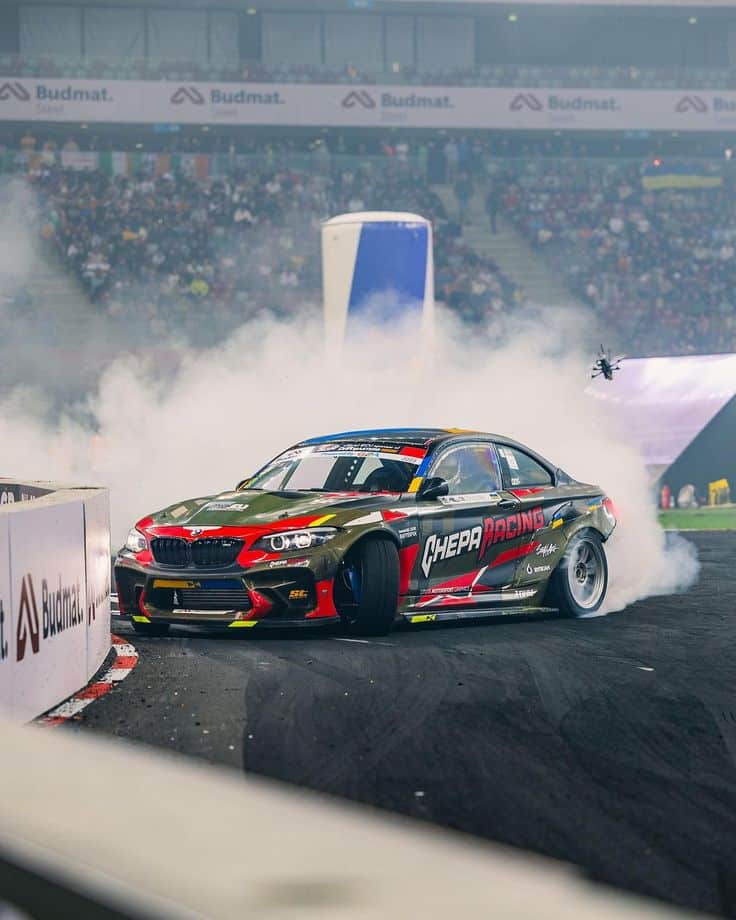
Many professional drifters still choose BMW 3 Series platforms, modifying them extensively while retaining the core handling characteristics that made these cars legends in motorsport.
Critical Drifting Upgrades and Parts
Transforming your BMW into a proper drift machine requires strategic modifications to key components. Upgrading to an LSD (limited-slip differential) is especially important for rear-wheel drive models, as it greatly improves drift control and makes slide initiation much easier.
These upgrades not only enhance control during slides but also ensure your car can handle the extreme stresses of drifting.
Suspension and Steering Modifications
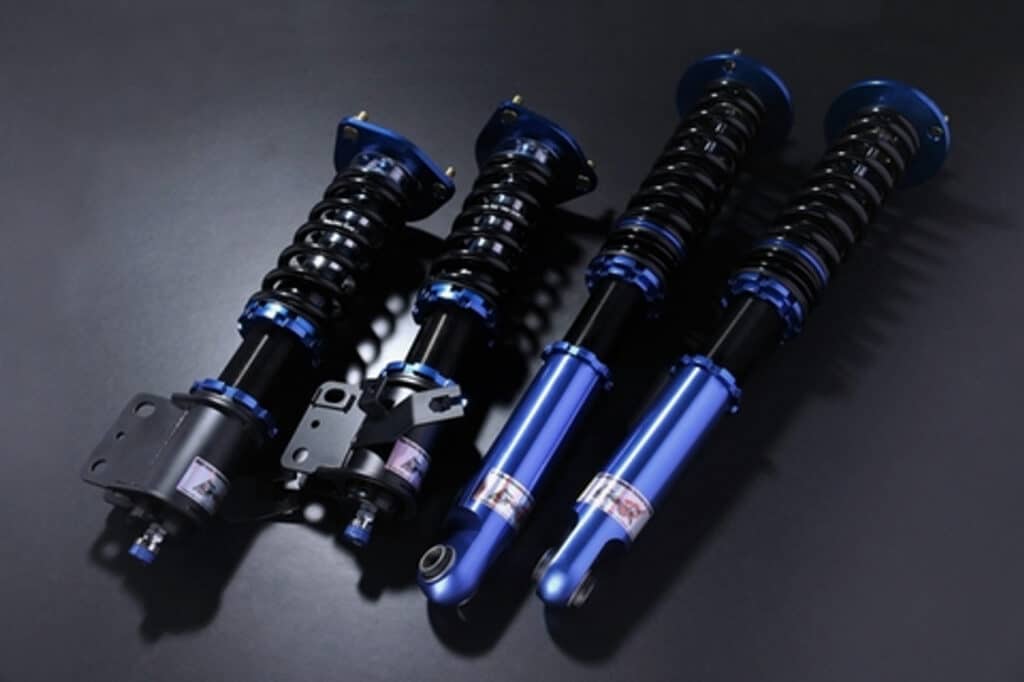
Coilovers are perhaps the most essential upgrade for your BMW drift car. They allow for precise height adjustment and dampening control, helping you achieve the perfect balance. Quality coilovers from brands like BC Racing or KW Suspension will dramatically improve your car’s handling characteristics during drifts. When installing coilovers, you can also adjust negative camber to optimize tire contact and handling, which is crucial for maintaining control and maximizing grip while drifting.
Angle kits are crucial for increasing steering lock, allowing for more extreme drift angles. For E46 models, these kits can increase steering angle by up to 60-70 degrees, far beyond factory specifications.
Reinforced control arms and polyurethane bushings reduce flex and provide more direct feedback. This is especially important for older models like the E30 and E36, where factory rubber bushings have likely deteriorated.
Toe arms and adjustable rear suspension components help fine-tune your setup for perfect drift alignment. These parts allow you to dial in slight toe-out settings that promote easier initiation of drifts.
Aftermarket Engines and Tuning
Engine reliability is paramount in drift applications. The BMW M52 and S52 engines found in E36 and E46 models respond well to basic bolt-on modifications while maintaining dependability.
Cooling upgrades are essential as drifting puts extreme thermal stress on engines. An upgraded radiator, oil cooler, and proper ducting can prevent overheating during extended drift sessions.
ECU tuning can optimize power delivery characteristics specifically for drifting. A proper tune can add 30-50 horsepower while also adjusting throttle response for better control during slides.
Differential modifications are crucial for predictable drifting behavior. A welded diff is the budget option, while purpose-built mechanical limited-slip differentials from companies like Kaaz or OS Giken offer superior performance and longevity.
Cooling System and Engine
When it comes to building a reliable BMW drift car, the cooling system and engine are two of the most critical components to consider. Drifting puts immense stress on the engine, as sustained high RPMs and constant throttle inputs generate significant heat. A robust cooling system is essential to keep temperatures in check and prevent overheating, which can lead to costly engine damage and reduced performance on the track.
BMW models like the E36 and E46 are renowned for their strong, durable engines that deliver the power and torque needed to keep the car sliding sideways. Their rear wheel drive (RWD) configuration provides the ideal combination of power delivery and control, allowing drivers to initiate and maintain drifts with confidence. Upgrading the cooling system—such as installing a larger radiator, high-flow fans, and an oil cooler—ensures your BMW stays in peak condition during intense drift sessions.
By focusing on a reliable engine and an efficient cooling system, you’ll create a BMW drift car that not only delivers impressive power but also maintains control and durability, session after session.
Tires, Wheels, and Safety Equipment
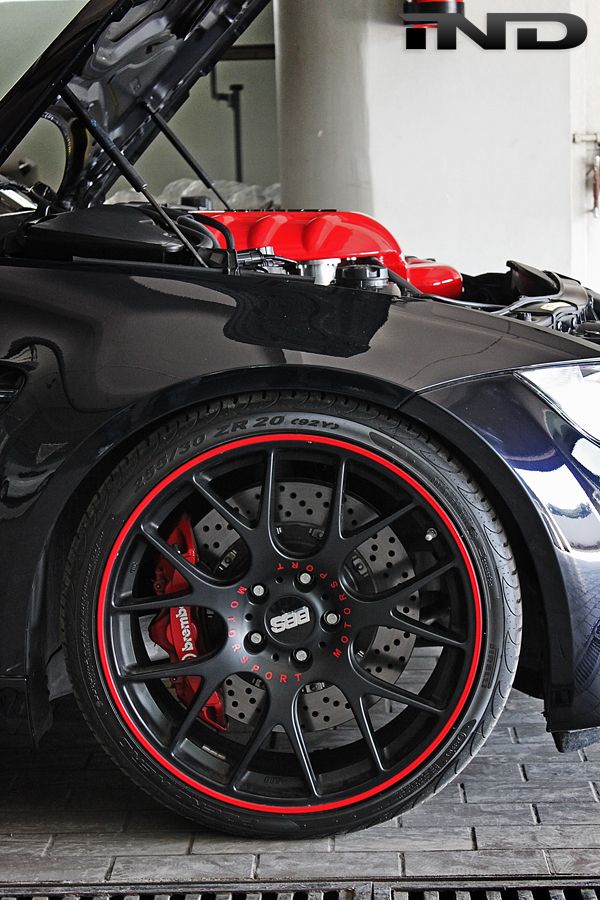
Tire selection is critical for drifting success. Front tires should offer good grip, while rear tires need to balance traction with the ability to break loose predictably. Many drifters opt for grippy tires in front and harder compounds in rear.
Wheel width and offset must be carefully chosen to accommodate proper steering angle and suspension geometry. Wider rear wheels (typically 9-10″ wide) provide a larger contact patch for better control.
A hydraulic handbrake gives you immediate rear wheel lockup for initiating drifts in tight situations. This modification is essential for competitive drifting where quick transitions are required.
Safety equipment isn’t optional. For competition, a proper roll cage, racing seat, and harness are essential investments. However, for beginners practicing basic drifting, installing racing seats and harnesses is not strictly necessary—minimal modifications are sufficient at the start. Fire suppression systems and appropriate driver gear complete your safety package.
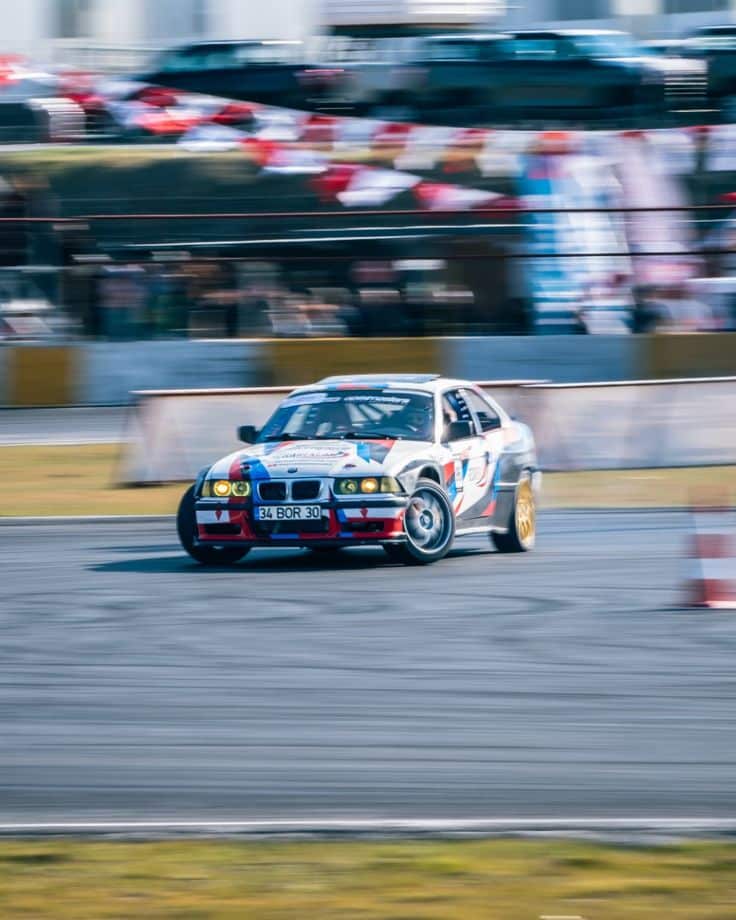
Drifting Techniques and Tips
Mastering drifting is all about developing a feel for your car and learning how to balance power, speed, and control. Here are some essential tips and techniques to help you get started with your BMW drift car:
- Begin with a well balanced chassis and make sure your car is in peak condition before hitting the track.
- Practice in a safe, controlled environment—an empty parking lot or a dedicated drift track is ideal for learning the basics.
- Choose the right tires: front tires should provide strong grip for steering response, while rear tires should allow for controlled slip to maintain your drift angle.
- Focus on controlling your car’s speed and angle using a combination of throttle, brake, and steering inputs. Smooth, precise movements are key to maintaining control while sideways.
- Experiment with different techniques, such as:- Clutch kick: Quickly depress and release the clutch to break rear traction and initiate a drift.
- Handbrake turn: Use the handbrake to lock the rear wheels and start a slide, especially useful for tight corners.
- Power slide: Apply throttle to overpower the rear tires and send the car into a controlled drift.
Remember, every BMW drift car responds differently, so take the time to understand your car’s unique combination of power, chassis balance, and tire setup. With practice and patience, you’ll develop the control and confidence needed to push your skills to the next level.
BMW Drifting in Motorsport Culture
BMW’s presence in drift competitions has solidified the brand’s reputation among motorsport enthusiasts worldwide. The Bavarian manufacturer’s vehicles have become icons in professional drift circuits, with their rear-wheel-drive platforms proving ideal for controlled sliding.
However, repeated competition use can cause tear or cracking in the rear subframe mounts or chassis, especially in models like the E46, making reinforcement essential for maintaining structural integrity during high-stress drifting.
Red Bull Driftbrothers and Influential Teams
The Red Bull Driftbrothers represent one of the most prominent BMW drift teams in the competitive scene. Brothers Elias and Johannes Hountondji showcase their skills in modified BMW M4 Competition models, pushing these machines to their limits in the Formula Drift European Series.
Their meticulously prepared vehicles produce over 1,000 horsepower, featuring extensive modifications to the suspension geometry and differential setups. These modifications enhance the cars’ ability to maintain controlled slides at extreme angles.
Other notable BMW drift teams include HGK Racing Team with their radical carbon-bodied builds and Essa Autosport, piloted by Michael Essa who claimed the Formula Drift championship with his BMW. These teams demonstrate how BMW’s engineering philosophy translates perfectly to drift competition.
BMW Versus Ford Mustang in Drift Events
In professional drift competitions, the battle between BMW and Ford Mustang platforms represents one of motorsport’s most compelling rivalries. While Mustangs typically offer more affordable entry points and abundant aftermarket support, BMW’s superior weight distribution and handling characteristics often give them an edge.
The Mustang’s V8 power proves formidable on straight sections, but BMW’s better balance helps drivers maintain more precise control through technical sections. This contrast is particularly evident in Formula Drift and Drift Masters European Championship events.
You’ll notice professional drivers often select BMW E46 M3s and E92 M3s when prioritizing precision, while Mustang drivers leverage their torque advantage on high-speed circuits. Competition results between these platforms remain closely matched, with victory typically determined by driver skill rather than vehicle limitations.
Conclusion and Final Thoughts
Drifting is a sport that perfectly blends power, precision, and fun, offering drivers the chance to experience their BMW models in a whole new way. With their rear wheel drive layouts, well balanced chassis, and strong engines, BMWs like the E30, E36, and E46 stand out as some of the best choices for anyone looking to get into drifting.
By focusing on the right combination of car setup, control, and technique, you can unlock the full potential of your BMW drift car and enjoy the thrill of driving sideways. Always prioritize safety and practice in controlled environments to hone your skills and keep your car in top condition. Whether you’re chasing the perfect angle on the track or just having fun with friends, drifting is a sport that rewards dedication, creativity, and a passion for pushing limits.
With the right BMW, the right upgrades, and a commitment to learning, you’ll find that drifting is not just a motorsport—it’s an exhilarating way to connect with your car and experience the joy of precision driving.
- 45shares
- Facebook0
- Pinterest44
- Twitter1
- Reddit0