Industrial design graduate programs shape everyday life in ways we often overlook. Within these programs, future designers learn to transform sketches on napkins into real products that improve how we work, play, and explore the world. Picture a small studio at dusk: students hovering around the glow of a 3D printer, where the hum of machinery meets the quiet buzz of creativity. This is where prototypes first take form. It is also where curiosity and technique mingle, sparking innovation that can ripple far beyond campus walls.
Through advanced coursework, studio experience, and research, these graduate programs train designers to embrace human factors, empathy, and sustainability. In a single project, they might blend aesthetics and technology or fuse artistry with business strategy. The result is a dynamic learning journey, layered with engineering concepts, user-centered thinking, and emerging design trends. From exploring materials to perfecting user interfaces, students lift theories off the page and test them in real-world situations.
The following list highlights some of the leading industrial design graduate programs in the United States. Each entry spotlights a unique path—from large research universities with global footprints to smaller institutions offering intimate class sizes and personalized mentoring. While these programs vary in structure and emphasis, they share one critical goal: to produce agile designers who blend imagination with purpose. Whether someone is drawn to product styling, digital UX, or sustainable solutions, a well-chosen industrial design graduate program can open a portal to shaping tomorrow’s ideas and everyday objects.


Arizona State University
Nestled in the flourishing creative community of Tempe, Arizona State University (ASU) provides a nationally recognized Master of Industrial Design (MID) program that merges art, science, and technology. Accredited by the National Association of Schools of Art and Design (NASAD) since 2001, ASU’s industrial design offerings reflect a high standard of excellence (Arizona State University). Divided between rigorous classroom study and hands-on studio work, the ASU curriculum immerses students in everything from 3D prototyping to design strategy, while guiding them to think both critically and creatively.
In addition to its NASAD accreditation, ASU’s MID holds the approved Classification of Instructional Programs (CIP) code 15.1502, formally recognized as a STEM degree (Arizona State University). This designation comes with significant benefits—international students can pursue extended Optional Practical Training (OPT), veterans can tap into specialized GI benefits, and students from all backgrounds become eligible for various STEM-focused scholarships.


Part of ASU’s Herberger Institute for Design and the Arts, the MID program benefits from interdisciplinary collaboration. Students can draw upon the expertise of multiple schools, from art to filmmaking, allowing them to expand their creative and technical horizons. Imagine walking into a design studio alive with the energy of tomorrow’s big ideas. Students experiment with prototypes that look like the beginnings of a new consumer product, bridging the conceptual gap between an innovative sketch and a polished item that might soon appear on a retail shelf. By graduation, they leave the program equipped not only with a portfolio of designs but also the strategic thinking skills to adapt to an ever-evolving marketplace.
North Carolina State University
At North Carolina State University (NC State), industrial design takes on a transformative mission: to fuse practicality, user experience, and technology in creating products that address everyday problems. The Master of Industrial Design (MID) program is not simply an advanced degree—it is considered the terminal degree in the field at this institution (NC State University College of Design). That designation underscores its thorough scope and advanced study, preparing graduates to assume leadership roles and drive meaningful innovation.
NC State is a longstanding member of NASAD, which recognizes program quality at various levels. Industry partnerships form a dynamic thread in the curriculum, providing students with an opportunity to refine their design approaches through real-world simulations. Corporate sponsors like Bosch Siemens Home Appliance, Eastman Chemical, JLG, and Bioventus collaborate with student teams on design projects, offering valuable insights into professional practice. Imagine a collaborative session: a sponsor’s representative discussing user-testing findings while the design students gather around a prototype, brainstorming how to marry functionality with aesthetics.

The MID program includes two distinct tracks. Track 2 is a 48-credit hour journey tailored for those who already hold an undergraduate degree in industrial design or a closely related field. Track 3 suits individuals entering the discipline from other academic backgrounds—an opportunity for clarifying personal perspectives on industrial design. Both tracks emphasize user-centered research, rapid prototyping, and empathy for consumer needs. Students might uncover a niche in medical device design one semester, then pivot to consumer electronics the next. They leave NC State empowered to not only respond to market needs but also forecast emerging trends and technologies that can reshape entire industries.
University of Connecticut
A creative synergy thrives at the University of Connecticut (UConn) within its Krenicki Arts and Engineering Institute. Here, cutting-edge engineering and artistic vision intersect to shape the next generation of industrial design. Although UConn’s offerings lean more toward specialized roles—like materials research or user experience—what stands out is the program’s commitment to empathic design thinking. This mindset ensures that every aesthetic choice resonates with the end user.
Students at UConn focus on uncovering both visible and hidden user needs (UConn). Through consistent user observation, they learn that successful products amplify human capabilities while respecting nuances in culture, environment, and accessibility. They also experiment with an array of materials—wood, plastics, metal, rubber, and soft goods—to discover new textures and functionalities.


Digital skills such as UX design are another focal point, reflecting a shift in industrial design graduate programs toward the marriage of physical products and digital interfaces. Coursework can reflect real-world problems or forward-thinking concepts. Picture a small group of students testing prototypes in a lab—each designer adjusting details on a user interface or reconfiguring materials to improve the device’s comfort. By merging engineering precision with creative flair, UConn’s approach helps cultivate graduates who can navigate traditional product design while staying nimble in a landscape increasingly shaped by digital tech.
Parsons School of Design
Parsons School of Design radiates an unmistakable energy—one that nurtures the interplay of cultural awareness, artistry, and academic rigor. Located in the creative epicenter of New York City, Parsons regularly ranks as a top design school in the United States and around the globe. Their Master of Fine Arts (MFA) in Industrial Design demands 60 credits of coursework, shaping a robust educational framework (Parsons School of Design). Students may transfer up to nine graduate-level credits from other institutions, broadening the program’s accessibility.
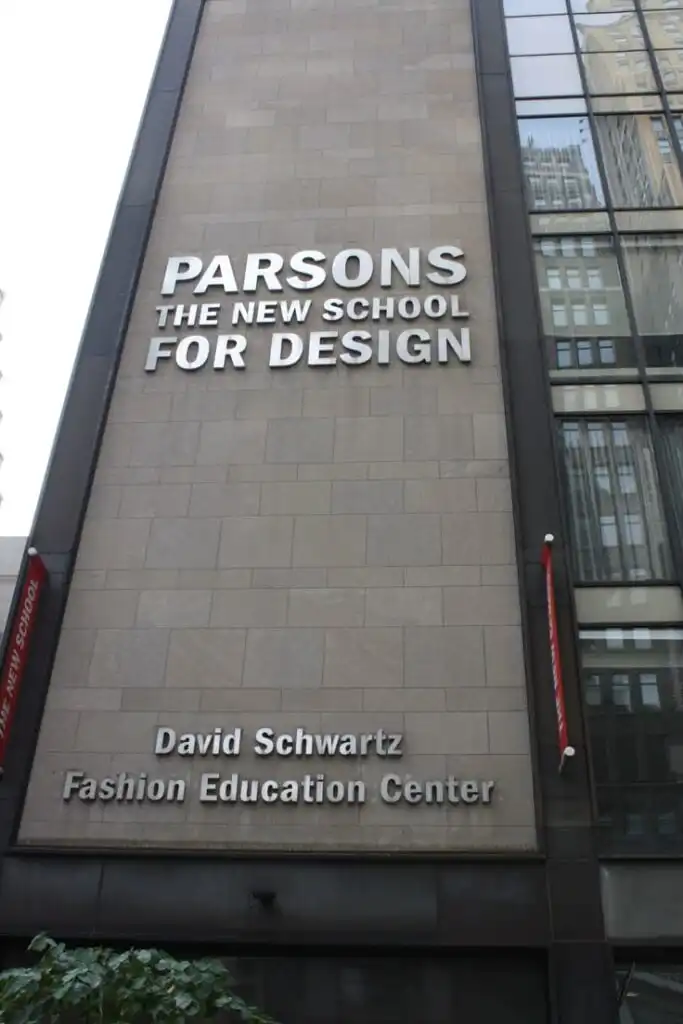

From the moment a student enters Parsons’ studios, there is a sense of artistry overflowing with purpose. The curriculum emphasizes socially responsible design—teaching designers how to address environmental and cultural concerns through purposeful, innovative solutions. For those curious about interdisciplinary synergies, Parsons students can explore relevant courses in business, media, urban planning, and performing arts through The New School’s broader academic umbrella. This cross-pollination fosters a range of design solutions that can be as practical as they are visionary.
Class sizes are relatively small, allowing faculty to nurture talent through direct mentorship. Here, famed designers, artists, and researchers guide students to think beyond aesthetics. A morning might begin with theoretical debates about design ethics, segueing into an afternoon workshop shaping prototypes from recycled materials. It all culminates in each student’s personal design statement, which merges function, style, and a keen awareness of today’s societal needs.
Carnegie Mellon University
Carnegie Mellon University (CMU) blends high-level research, computational thinking, and the arts—creating fertile ground for industrial design students eager to push new ideas forward. Within its program, a 6:1 student-faculty ratio highlights the school’s commitment to individualized mentoring (College Transitions). Students have ample opportunity to engage with teaching staff in labs, studios, and research centers, refining every dimension of their craft.

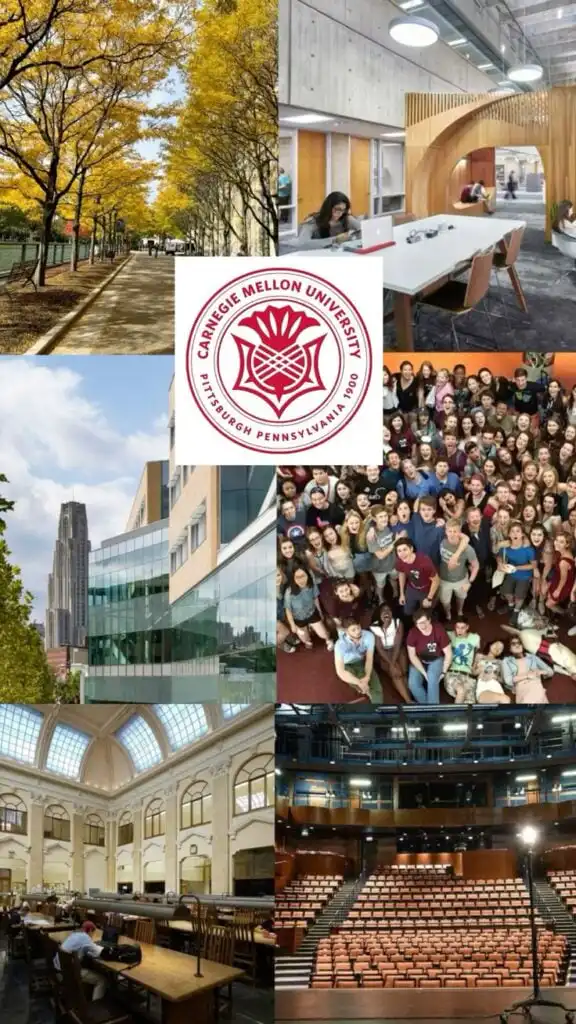
Graduates commonly emerge with impressive career trajectories. As of 2025, CMU design students report an average starting salary of $124,107, signaling a healthy return on investment. Seventy-four percent secure employment shortly after graduation, and about 17% pursue doctoral studies or other advanced education. Their portfolios often open doors at influential tech companies like Google, Apple, and Meta. Picture the scene: a CMU grad stepping into a conference room at one of these tech giants, unveiling a design concept that marries AI capabilities with an elegantly engineered hardware shell. Such stories illustrate how Carnegie Mellon’s rigorous curriculum dovetails with modern industry demands.
Research and scholarship are woven into nearly every aspect of the design program. Students explore user-centered solutions in healthcare, robotics, sustainability, and more. Whether hacking together prototypes in a campus maker-space or analyzing data from user experience tests, they develop a design instinct that balances functionality, form, and ethics. This holistic approach supports bold creativity while grounding each project in the realities of production and user needs.
Georgia Institute of Technology
Georgia Institute of Technology—often revered as Georgia Tech—lies at the nexus of engineering excellence and forward-thinking design. Known for its robust research culture, Georgia Tech’s industrial design graduate program invites collaboration that transcends typical design boundaries. With an 18:1 student-faculty ratio, graduate students have space to explore interdisciplinary research while gleaning expert advice from experienced faculty (College Transitions).

A hallmark of Georgia Tech is its global perspective. Each year, over 130 undergraduates take advantage of international internships, and graduate students often enjoy similar opportunities. Through these global experiences, aspiring designers gain cross-cultural insights—essential for developing products that resonate with diverse users. By the time they return to campus, they have encountered new design philosophies, gleaned novel manufacturing tactics, and cultivated a nuanced view of global supply chains.
For the Class of 2023, the median salary for Georgia Tech graduates in this field hit $84,000, with over 75% securing employment by graduation. Hiring often comes from big tech names like Microsoft and Apple, as well as specialized design consultancies. In class, the synergy is palpable: a professor might guide students to investigate machine learning algorithms, while a design mentor challenges them to weave aesthetic grace into their prototypes. This blend of advanced technical proficiency and imaginative design thinking helps ensure that a Georgia Tech graduate can tackle visionary projects in multiple sectors.
Stanford University
Stanford University’s approach to industrial design emerges from a vibrant blend of engineering, technological innovation, and entrepreneurial zeal. With a notable 6:1 student-to-faculty ratio, the program offers a small and dedicated environment that thrives on creativity and collaboration (College Transitions). While the university’s tilt toward research is well documented—it invests over $6.5 million annually in undergraduate projects—graduate students likewise hold prime positions to benefit from this well-funded ecosystem.


Designers at Stanford often find themselves at the intersection of hardware, software, and user experience. For instance, one might imagine a typical interdisciplinary project: engineering labs supply the mechanical foundation for a next-generation prosthetic, while industrial design students shape the device’s aesthetics and user interface. By graduation, many have collaborated with peers and mentors across the School of Engineering, forging prototypes that elegantly combine sensor technology, ergonomic functionality, and sustainable materials.
Graduates enjoy some of the highest entry-level salaries in the United States. Alumni frequently join leading tech enterprises or launch startups that aim to disrupt entire industries. From the sunny courtyards of the Stanford campus to the bustling offices of Silicon Valley, students carry forward a design ethos steeped in empathy, innovation, and relentless curiosity. When they pitch their products—perhaps to a venture capital group—they come armed not just with prototypes but with user stories that illustrate why their designs matter.
Rochester Institute of Technology
Rochester Institute of Technology (RIT) has carved out a distinctive place in the industrial design landscape, fusing technological acumen with artistic vision. Situated in upstate New York, the institution boasts a 13:1 student-to-faculty ratio, giving graduate students ample access to mentors across multiple departments (College Transitions). RIT places a special emphasis on cooperative education (co-op) programs, ensuring that real-world practice becomes an essential part of the curriculum.

In these co-ops, students step into active design roles at corporations, nonprofits, and startups, translating academic theory into tangible projects. By the time they return to campus, they have refined not just their portfolios but their entire design perspective. Imagine a small group huddled around a desk in a corporate environment, evaluating early 3D prototypes and deliberating budget constraints. This cross-pollination of professional reality and academic inquiry drives growth in RIT’s graduate designers.
Employment outcomes reflect RIT’s focus on career readiness. About 93% of 2023 graduates found work or continued their studies within six months of completing their degrees, with an average starting salary of $75,600. The program’s broad curriculum addresses human factors, UX design, materials science, and sustainability, allowing students to tailor their coursework and co-ops to specialized careers. Whether a student’s dream lies in automotive design, consumer electronics, or wearable technology, RIT provides the problem-solving foundation to bring those visions to life.
Wentworth Institute of Technology
Located in Boston, Wentworth Institute of Technology anchors its industrial design program in practical experience and a thorough understanding of modern manufacturing. Students must complete two semesters of co-op work, ensuring that each future designer gains hands-on industry skills before graduating (College Transitions). This integration of co-op education gives Wentworth students a competitive edge, blending theoretical insight with real-world development cycles.

Wentworth’s small community encourages collaboration across disciplines such as engineering, construction management, and computer science. The result is an atmosphere of shared ambition, where an industrial design student can team up with an engineer to refine a device’s mechanical components, then consult with a marketing student about brand identity. By stepping into the professional world during co-ops, they develop a design approach that accounts for cost, feasibility, production timelines, and user satisfaction.
Graduates from the Class of 2023 achieved a 93% placement rate within six months, with a median starting salary of $71,000. Beyond traditional product design roles, some alumni explore roles in healthcare technology, sports equipment, and even public sector design solutions. Walking across campus, any observer might sense the vitality in the labs—a 3D printer humming in one corner, a small group brainstorming marketing strategies in another. That synergy translates into new graduates who are not only adept at conceptualizing solutions but also versed in bringing them to market.
Honorable mentions

While the institutions above highlight distinctive offerings, numerous other universities enrich the US industrial design scene. The Rhode Island School of Design (RISD), for instance, has cultivated a reputation for approaching design education with a fine arts sensibility, encouraging advanced experimentation and creativity. ArtCenter College of Design in Pasadena, California, is likewise eminent for its focus on forward-thinking product design, advanced 3D modeling, and specialized industry partnerships.
The College for Creative Studies (CCS) in Detroit stands out for weaving sustainability into the industrial design graduate curriculum. Students there often embrace eco-friendly materials and production methods, tackling pressing challenges in an era of climate consciousness. CCS also promotes collaboration with local industries, leveraging Detroit’s manufacturing heritage to teach practical design strategies. Each of these schools aims to foster a spirit of exploration and critical thinking, yielding designers unafraid to prototype bold concepts or pivot entirely mid-project if they sense a better approach emerging.
Those seeking a broader perspective can consult additional resources like The Art Career Project, which aggregates information about industrial design graduate programs nationwide (The Art Career Project). Many of these programs blend art, engineering, and business principles, equipping up-and-coming designers to work across sectors as varied as automotive, consumer products, tech, and medical devices. Salaries in the field often range from $75,000 to well over $110,000, depending on specialization, industry, and location. Collectively, these honorable mentions emphasize that industrial design is as expansive as it is nuanced. Whether a student is drawn to research-intensive labs or aesthetically driven studios, the US offers a rich tapestry of educational options.
Conclusion


In the sphere of industrial design, graduate programs function as transformative workshops where ideas collect, converge, and evolve. Like the final swirl of coffee that contains the essence of its entire journey—farm to roastery to mug—each completed product holds a story forged by curiosity, iteration, and collaboration. These programs exist to guide students into blending artistry with problem-solving, empathy with craftsmanship, and theory with practice.
Choosing the right institution involves reflection on personal creativity, research interests, and long-term goals. Some programs lean heavily into technical exploration, perfect for those fascinated by new manufacturing techniques or high-tech interfaces. Others prioritize an artistic approach, inspiring students to challenge the boundaries of what a product can be. Across the board, graduates emerge with sharpened abilities: user-centered thinking, advanced prototyping, material analysis, and strategic research.
The impact of these industrial design graduate programs stretches far beyond the classroom. Their alumni shape the devices we hold, the furniture we use, and the tools we rely on for work and productivity. They stand at the frontline of designing the future—one thoughtful iteration at a time. Whether it’s the next sustainable packaging solution or a ground-breaking wearable device, the seeds are planted in these university studios. In an era defined by change, industrial design remains a blend of whimsical dreaming and rigorous discipline, and these academic pathways nurture that delicate balance with confidence and purpose.
Frequently asked questions


What can I do with an industrial design graduate degree?
With an advanced degree in industrial design, graduates move into a wide range of industries—consumer product development, medical devices, UX/UI design, automotive styling, and more. They often create user-friendly, aesthetically appealing products, but they can also specialize in research, sustainability, or design strategy.
Which industrial design graduate programs offer co-ops or internships?
Institutions like Rochester Institute of Technology and Wentworth Institute of Technology integrate co-op or internship requirements into their curricula, ensuring that students gain hands-on, industry-aligned experience before graduation. Other schools, including Arizona State University and NC State University, often collaborate with corporate sponsors for real-world studio projects.
Is a background in design required for these programs?
Many industrial design graduate programs, such as NC State’s Track 3 or certain pathways at Parsons School of Design, welcome students from non-design backgrounds. These tracks typically offer foundational courses in drawing, user research, and materials to help newcomers adapt and succeed.
Is industrial design a STEM field?
Some industrial design programs hold STEM recognition. For instance, Arizona State University’s Master of Industrial Design aligns under CIP code 15.1502 and is classified as STEM (Arizona State University). Because of this, international students may qualify for extended work authorization, and veterans can often benefit from additional GI Bill funding.
What kind of salary can an industrial design graduate command?
Salaries for industrial design graduates typically start around $75,000 and can exceed $110,000, depending on the individual’s specialization, portfolio, and industry. Graduates from top-tier schools like Carnegie Mellon or Stanford may see higher starting salaries, while programs with a strong focus on practical skills—like NC State or Wentworth Institute—also yield solid, competitive compensation.
- 113shares
- Facebook0
- Pinterest113
- Twitter0
- Reddit0