Top industrial design programs in the United States shape the next generation of product innovators. From coast to coast, these industrial design degrees combine rigorous studio instruction, cutting-edge research opportunities, and strong industry connections. They prepare graduates to tackle real-world challenges in sectors ranging from consumer electronics to medical devices. This listicle highlights ten of the most impressive top industrial design programs, covering faculty ratios, curriculum structure, accreditation, graduate outcomes, and more.
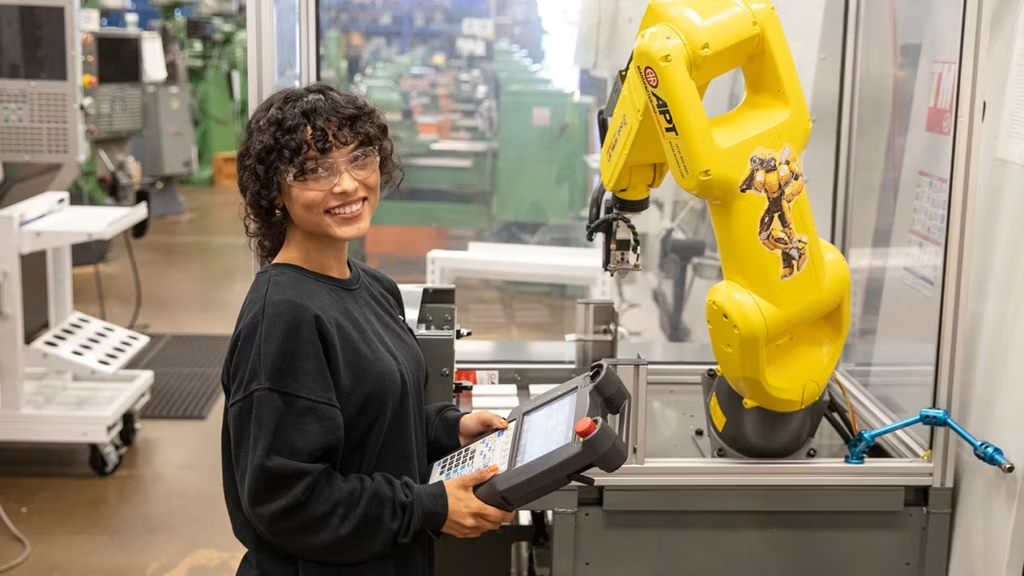

Industrial design at the Massachusetts Institute of Technology
Massachusetts Institute of Technology offers a world-leading industrial design curriculum that blends engineering fundamentals with creative problem-solving. According to EduRank’s March 2025 ranking, MIT is the number one university globally for product and industrial design, based on research performance (EduRank). The program encourages cross-disciplinary collaboration, with students working alongside peers in mechanical engineering, computer science, and business.
Program features
- Studio-based courses emphasizing human-centered design
- Access to state-of-the-art fabrication labs, including 3D printing and CNC machining
- Opportunities to contribute to over 1,100 undergraduate research projects annually
Career outcomes
- Graduates enter roles at leading firms such as Google, Apple, Meta, and OpenAI
- Highly competitive starting salaries, often exceeding six figures
- Robust alumni network supporting internships and post-graduate careers

Industrial design at Carnegie Mellon University
Carnegie Mellon University maintains a highly selective industrial design program with a 6-to-1 student-to-faculty ratio and small class sizes—68 percent of its classes enroll fewer than 19 students (College Transitions). The curriculum emphasizes a balance of theory and practice, incorporating courses in material science, design research, and user experience.
Program features
- Mandatory studio projects each semester, culminating in a senior capstone
- Collaboration with robotics and human-computer interaction labs
- Interdisciplinary electives in business, psychology, and manufacturing
Career outcomes
- Average starting salary of $124,107 for 2023 graduates (College Transitions)
- Major employers include Google, Microsoft, NVIDIA, Amazon, TikTok, and Apple
- High placement rate in design consultancies and tech startups
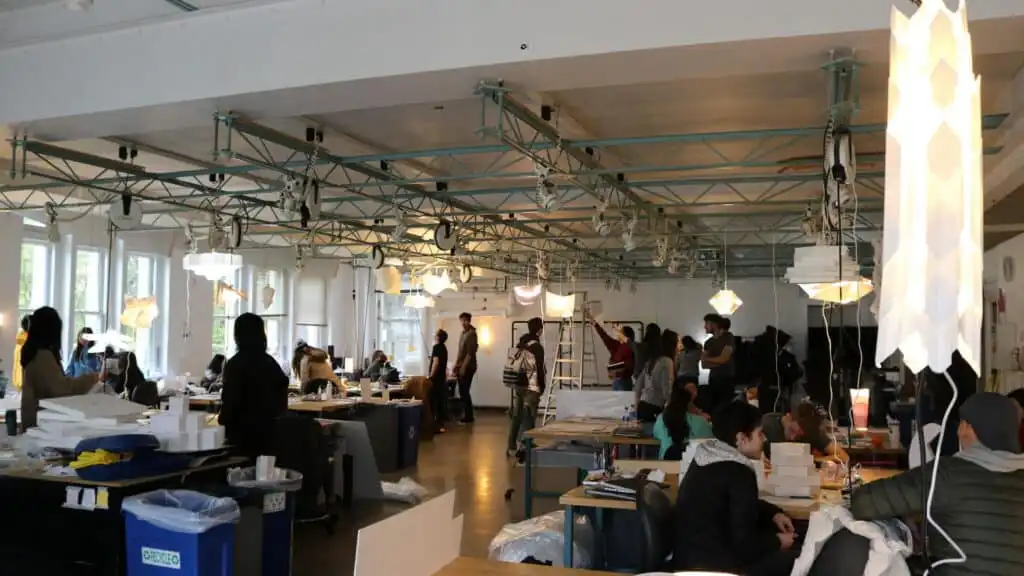
Industrial design at Stanford University
Stanford University’s industrial design degree blends creative studio work with entrepreneurial training. The program boasts a 6 to 1 student-to-faculty ratio, and 69 percent of classes have fewer than 20 students, ensuring personalized mentorship (College Transitions). Over 1,100 undergraduates engage in research annually, many through the Haas Center for Public Service and d.School initiatives.
Program features
- Integration with d.School’s design thinking framework
- Emphasis on prototyping, from paper models to full-scale builds
- Elective tracks in sustainable design and social innovation
Career outcomes
- Graduates hired by Google, Apple, Meta, and OpenAI
- Starting salaries are among the highest nationally for industrial design majors
- Strong support for student-led startups via the Stanford Venture Studio
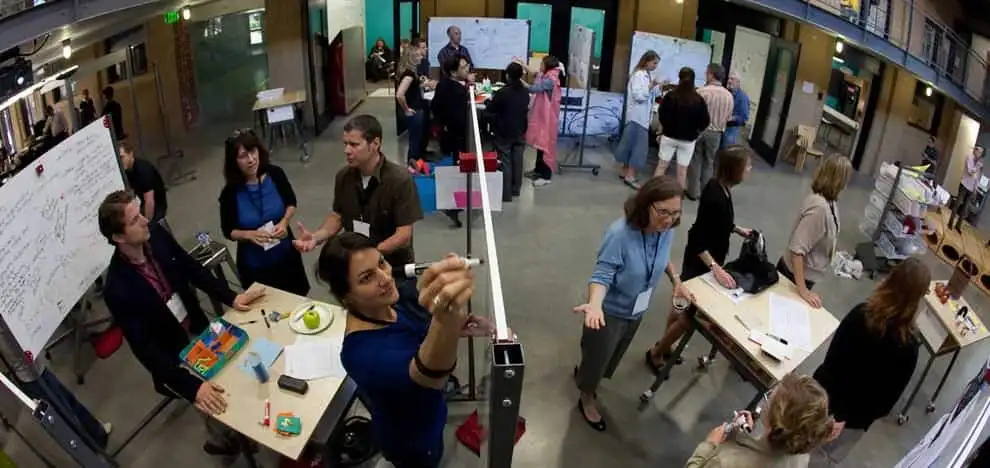
Industrial design at the University of Michigan
The University of Michigan-Ann Arbor ranks third globally for industrial design as of March 2025 and holds an A+ grade in Niche’s 2026 rankings, with an 18 percent acceptance rate and net price of $19,005 (EduRank, Niche). The College of Engineering offers a Bachelor of Science in Design Concentration, integrating engineering analysis with aesthetic considerations.
Program features
- Core courses in ergonomics, materials, and design process
- Access to the Wilson Student Team Project Center for interdisciplinary collaboration
- Study abroad options in Europe and Asia, focused on global design practices
Career outcomes
- 91 percent of graduates are employed or in graduate school within six months
- The average starting salary is around $76,000
- Placements at leading automakers, tech firms, and design consultancies
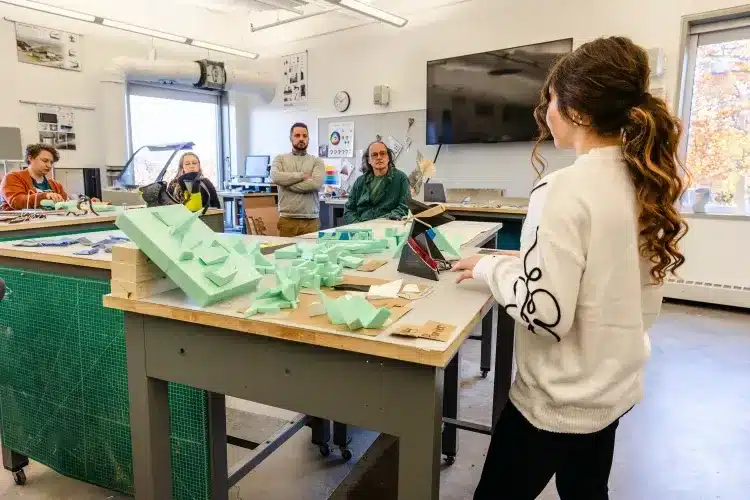
Industrial design at Georgia Tech
Georgia Institute of Technology’s industrial design track features an 18 to 1 student-to-faculty ratio, with 51 percent of courses enrolling over 30 students and 52 percent of students studying abroad (College Transitions). The program emphasizes practical experience through co-ops and collaborative projects.
Program features
- Studio instruction complemented by engineering and business electives
- Partnership projects with local manufacturers and startups
- Mandatory internship or co-op experience for real-world skill development
Career outcomes
- Median starting salary of $84,000 for 2023 graduates (College Transitions)
- Top employers include Microsoft, Amazon, Google, Capital One, and Apple
- A+ grade from Niche with a 16 percent acceptance rate and net price of $15,901 (Niche)
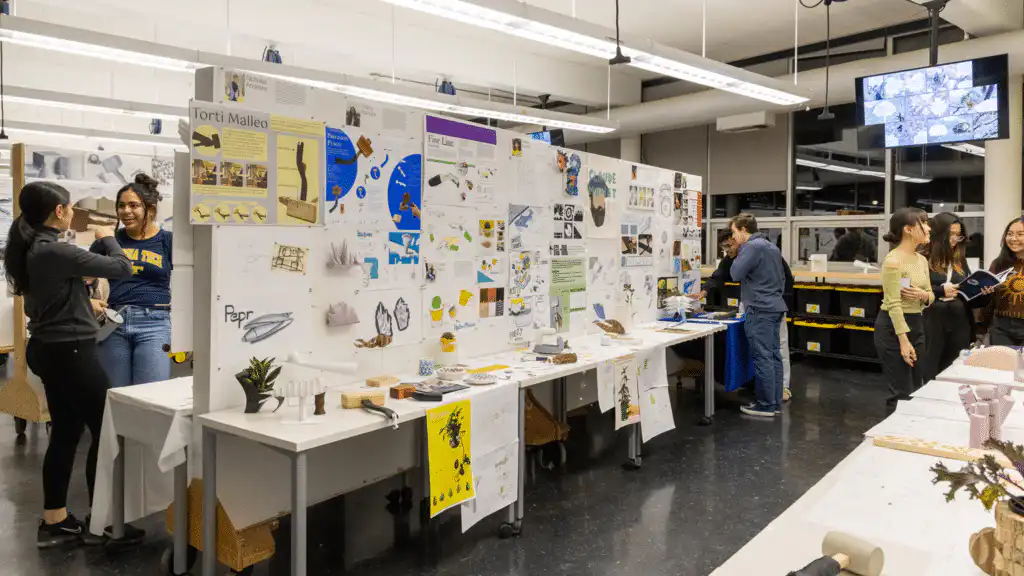
Industrial design at Illinois Urbana-Champaign
The University of Illinois Urbana-Champaign offers an industrial design major through its School of Art and Design, supported by a 20 to 1 student-to-faculty ratio and 39 percent of course sections under 20 students (College Transitions). Its robust research culture engages 40 percent of undergraduates in design studies.
Program features
- Emphasis on human factors, sustainable materials, and digital fabrication
- Over 800 student research presentations annually
- Collaborative labs tying design to engineering and material science
Career outcomes
- 91 percent of 2023 graduates were employed or in further study within six months
- Average salary of $76,000 for new graduates
- Internship support through the Engineering Career Services office
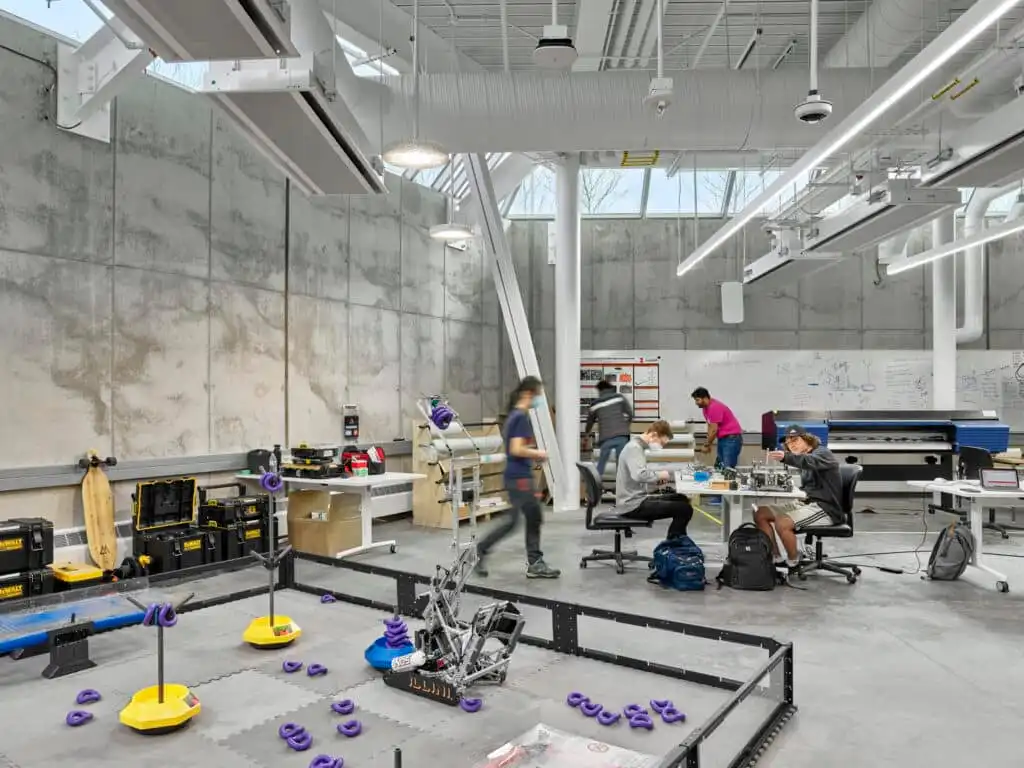
Industrial design at Wentworth Institute
Wentworth Institute of Technology specializes in career-focused industrial design education, requiring two semesters of paid co-op work experience (College Transitions). The B.S. in Industrial Design integrates studio projects with practical manufacturing methods.
Program features
- Mandatory co-op program ensuring professional exposure
- Coursework in advanced manufacturing, materials, and CAD tools
- Small class sizes for individualized feedback
Career outcomes
- 93 percent employment or graduate school placement within six months (College Transitions)
- Median starting salary of $71,000 for 2023 graduates
- Co-op partnerships spanning the automotive, medical device, and furniture industries
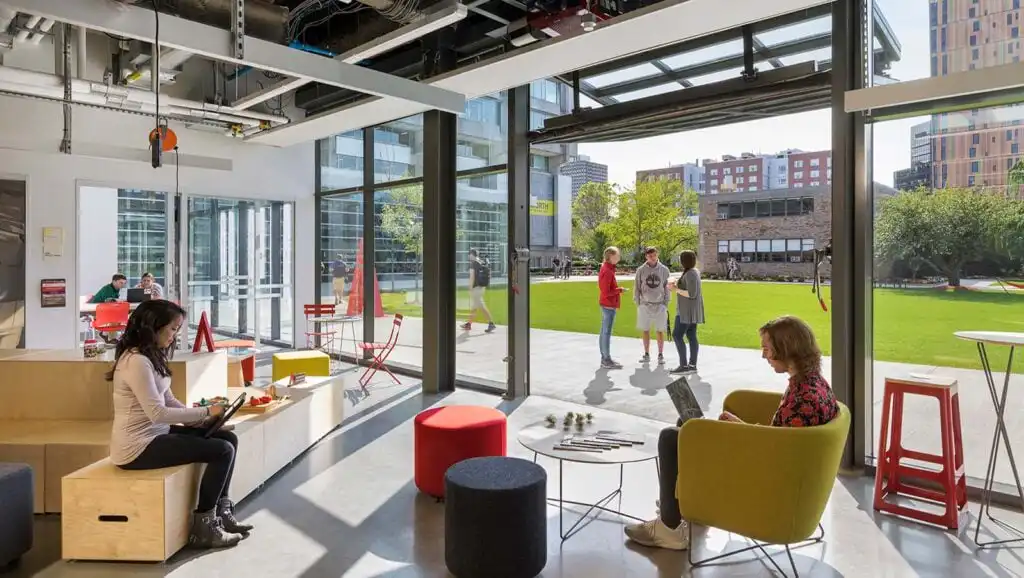
Industrial design at Virginia Tech
Virginia Tech’s Bachelor of Science in Industrial Design offers a human-centered curriculum accredited by the National Association of Schools of Art and Design (NASAD) (Virginia Tech School of Design). The program combines studio courses with lecture-based classes and emphasizes ecological design, material usage, and universal design principles.
Program features
- Concentrations in health technology, UX/UI, and sustainable design
- Junior-year team projects reflecting professional design challenges
- Senior thesis projects, including full-scale prototyping and marketing plans
Career outcomes
- Graduates ready for roles in design consultancies, healthcare tech, and consumer products
- Strong portfolio development through progressive studio work
- An alumni network providing mentorship and internship opportunities
Industrial design at James Madison University
James Madison University’s B.S. in Art with a major in Industrial Design focuses on creative problem-solving and community impact (JMU). The program covers 78 credit hours across graphic design, art history, and core industrial design coursework.
Program features
- Curriculum spanning sculpture, systems thinking, material science, and entrepreneurship
- Training in sociological and anthropological research methods
- Access to the Handshake platform for internships and job placements
Career outcomes
- Graduates positioned for roles in social innovation, product development, and environmental design
- Support for graduate school applications and professional certifications
- Network of alumni in creative industries
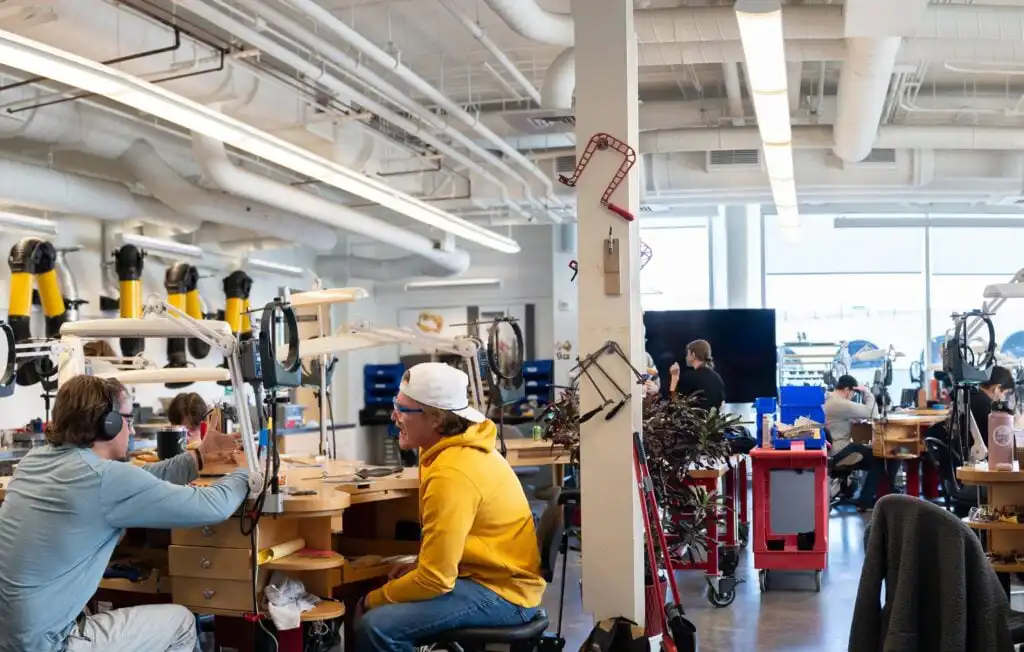
Industrial design at Swarthmore College
Swarthmore College offers a liberal arts approach to industrial and product design with an A+ Niche grade, a 7 percent acceptance rate, and a net price of $17,930 (Niche). The program integrates studio practice with critical theory and research.
Program features
- Small seminars and studio classes encouraging peer collaboration
- Interdisciplinary coursework in the history of technology, ethics, and user research
- Opportunities for independent design research under faculty guidance
Career outcomes
- Graduates enter design agencies, nonprofit organizations, and graduate programs
- Emphasis on adaptable skills for emerging design fields
- Strong alumni network for career mentorship

Industrial Design Programs in the U.S. — Comparison with Costs
| University | Program Focus | Degree Type | Tuition (Approx. Annual) | Key Strengths |
|---|---|---|---|---|
| MIT | Design + Engineering/Innovation | BS (Design-related via engineering/d.school) | ~$64,310 tuition sticker price (need-based aid widely available for eligible families) MIT Student Financial Services | Cutting-edge tech, research-driven design, strong innovation ecosystem |
| Carnegie Mellon | Human-Centered & Product Design | BDes | ~$67,000 tuition estimate (total COA ~$87,670) | Highly respected design school, strong prototyping & UX |
| Stanford | Design Thinking + Product Innovation | BS (Engineering/Design Thinking) | ~$67,700–$68,000+ (private tuition range typical) VnExpress International | Emphasis on design thinking, entrepreneurship, Silicon Valley proximity |
| University of Michigan | Industrial / Product Design (Arts + Engineering Collab) | BFA / BA | ~Public flagship (tuition typically ~$15,000 in-state / ~$50,000 out-of-state – similar to engineering costs) UnivStats | Balanced art and research, cross-disciplinary collaboration |
| Georgia Tech | Industrial Design + Engineering | BS | ~Public tuition example: ~$9,253–$19,401 depending on residency & program type bursar.gatech.edu | Strong technical foundation, major public research university |
| UIUC (U of Illinois Urbana-Champaign) | Industrial Design (Fine & Applied Arts) | BFA / MFA | ~In-state ~$16,000 / Out-of-state ~$35,000 (industrial design proxy) UnivStats | Good fundamentals and value for public university applicants |
| Wentworth Institute of Technology | Applied Industrial Design | BS | ~$44,260 per year (tuition) bachelorsportal.com | Hands-on, career-ready focus with strong studio practice |
| Virginia Tech | Industrial/Product Design | BFA | Emphasis on design thinking, entrepreneurship, and Silicon Valley proximity | Strong regional value, solid design fundamentals |
| James Madison University | ~$23,999 (approx average cost for design/product students in the region) College Factual | BS | Public tuition (not listed specifically here) — typically moderate within JMU’s public rates | Close mentorship, foundational practice |
| Swarthmore College | Design within Liberal Arts | BA (Design/Engineering track) | ~Private tuition ~$63,500–$64,000 (typical competitive liberal arts) prod.wp.cdn.aws.wfu.edu | Industrial Design Fundamentals |
Frequently asked questions
What criteria determine a top industrial design program?
Top programs are evaluated on faculty expertise, student-to-faculty ratio, studio resources, accreditation, industry partnerships, and graduate outcomes such as starting salaries and placement rates.
How important is accreditation for industrial design degrees?
Accreditation by bodies like NASAD ensures a program meets industry-recognized standards in curriculum quality, faculty qualifications, and facility resources, which can influence graduate employability.
Do these programs include internship or co-op components?
Many leading programs, such as those at Wentworth Institute and Georgia Tech, require or strongly encourage co-op or internship experiences to connect academic learning with professional practice.
How does the student-to-faculty ratio impact the learning experience?
Lower ratios, such as 6 to 1 at Carnegie Mellon and MIT, allow for more individualized feedback, closer mentorship, and enhanced collaborative learning in studio settings.
Can out-of-state or international students apply to these programs?
Yes, most US industrial design programs welcome out-of-state and international applicants. Prospective students should review each university’s admissions requirements, tuition costs, and scholarship opportunities.
- 19shares
- Facebook0
- Pinterest19
- Twitter0
- Reddit0