
Hardwood floors are one of the few design decisions that affect every surface in a room simultaneously. They shift how your furniture reads, how wall color performs under different light, and whether the space feels grounded or unresolved. A well-chosen sofa can look flat on the wrong floor. A spare, understated room can suddenly read as intentional and high-end when the hardwood underneath it finally fits.
- Start With Your Real Design Style, Not the One You Think You Have
- The Color Axis: How Stain Tone Sets the Room's Emotional Temperature
- Hardwood Flooring by Interior Design Style
- Plank Width, Grain Pattern, and Surface Texture: The Details That Separate Good From Great
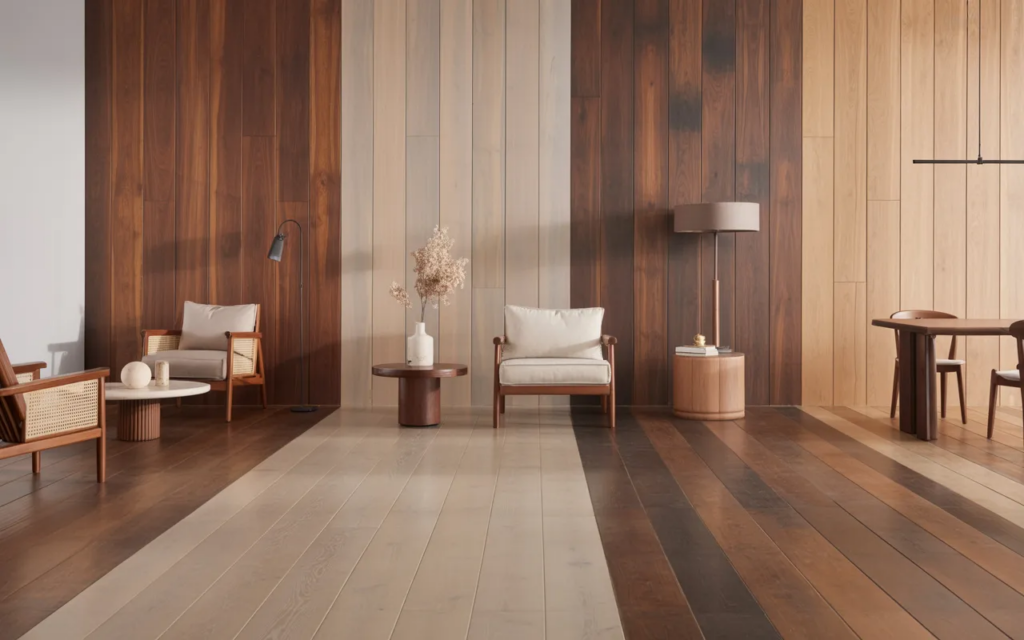
- Mixing Wood Tones: Coordination Over Matching
- Lighting Changes Everything — Test Before You Commit
- Think in Terms of the Whole Home, Not Just One Room
- Style-to-Floor Quick Reference
That is the real job of engineered hardwood or solid hardwood flooring: not just covering square footage, but anchoring the entire room’s visual language. And yet most buying decisions still happen in a showroom, under fluorescent lighting, with a 3-inch sample chip.
This guide cuts through that. Below is a clear, style-by-style breakdown of how to match wood species, plank width, stain color, grain character, and surface finish to the interior design direction you are actually working toward.
Start With Your Real Design Style, Not the One You Think You Have
Before you evaluate Janka hardness ratings or compare pre-finished versus site-finished options, take an honest look at your existing interior. Most mismatches happen because people describe the style they want rather than the style they already have.
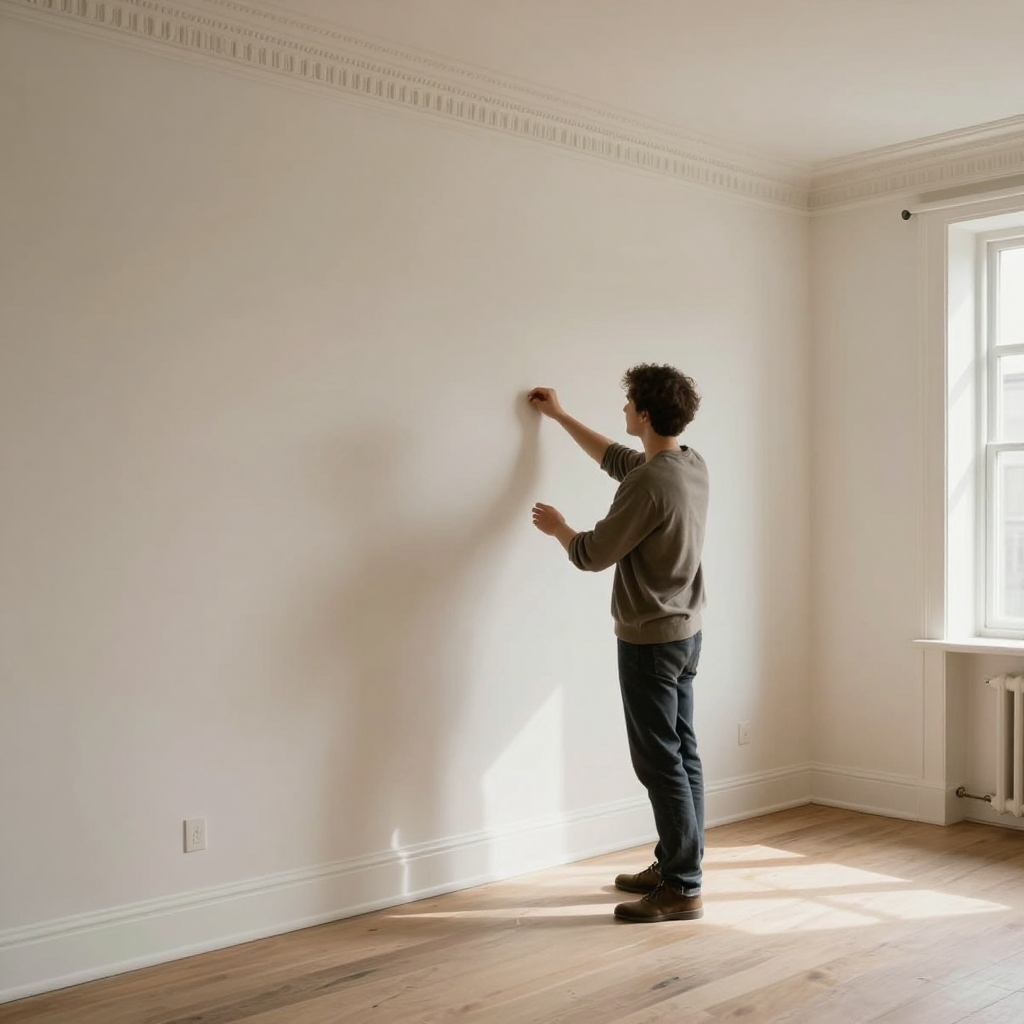
Study your furniture silhouettes first. Clean horizontal lines and minimal ornament suggest a modern or Scandinavian direction. Carved legs, layered fabrics, and richer upholstery lean traditional or transitional. Worn leather, raw linen, and open shelving point toward farmhouse or organic coastal.
Your trim details matter too. Thick crown molding and paneled wainscoting read as traditional. Flat-profile baseboards in a contrasting paint color lean contemporary. Once you identify the actual visual language of your home, choosing hardwood flooring becomes a coordination exercise rather than a gamble.
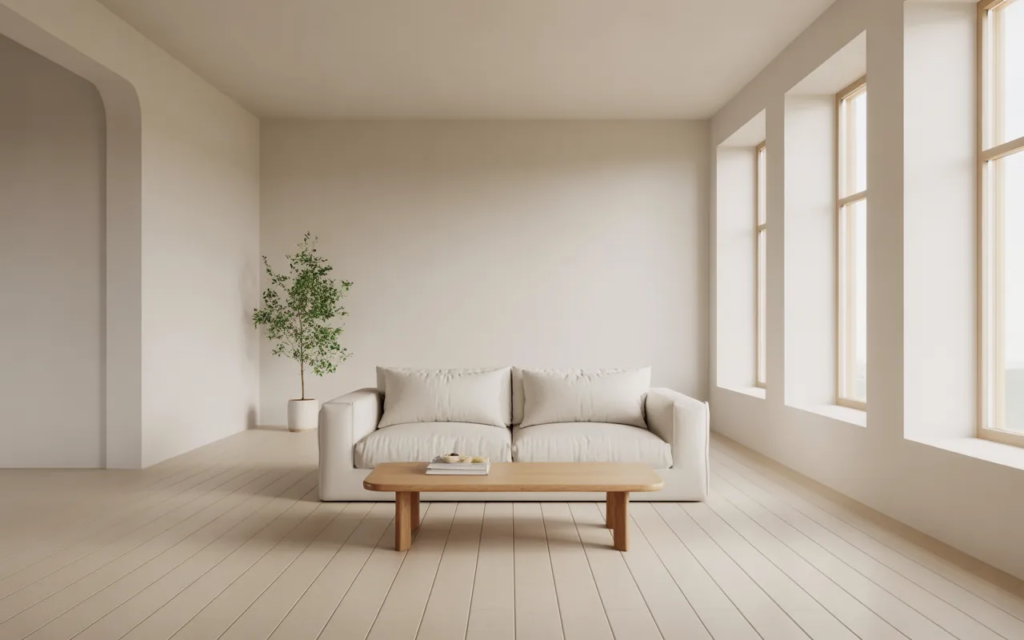
Design Tip: If your furniture and your trim are already telling two different stories, fix that friction before selecting a floor. The floor cannot reconcile what the room has not yet decided to be.
The Color Axis: How Stain Tone Sets the Room’s Emotional Temperature
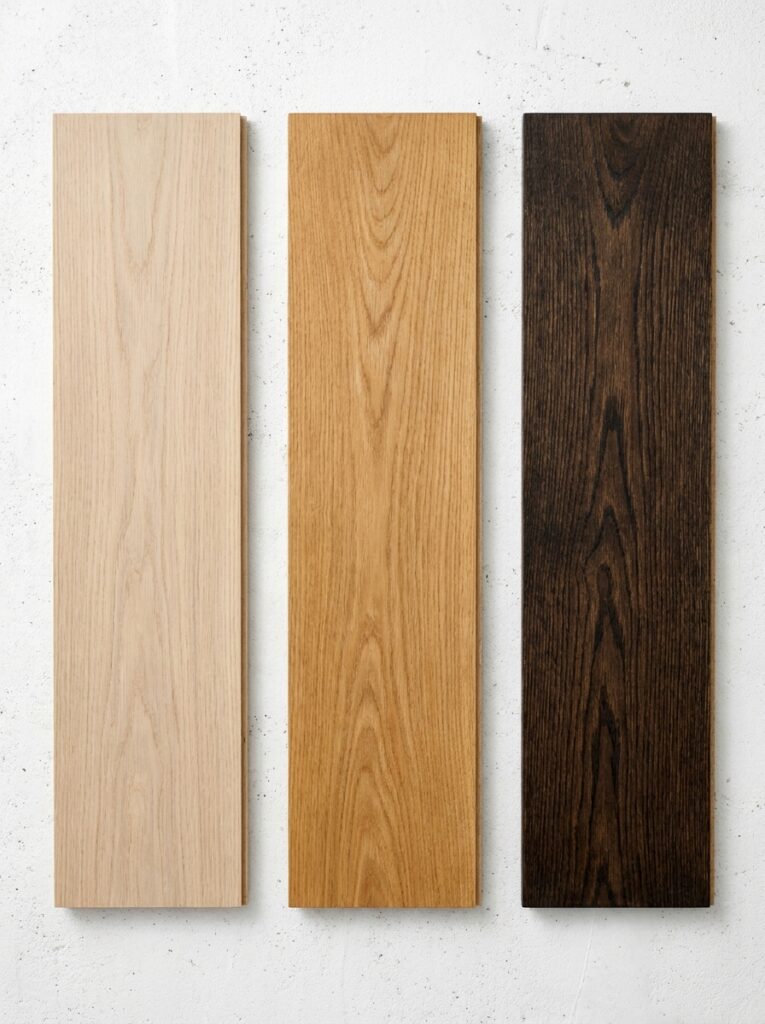
Wood stain color is the loudest first impression hardwood flooring makes. It affects the perceived size of the room, how warm or cool the overall palette reads, and how hard your furniture has to work to establish contrast. See color options here https://flooringtitan.com/Hardwood-Flooring/
Light Hardwood Floors
Pale tones — natural white oak, Nordic blond, or barely-there maple — keep rooms feeling open and fresh. They reflect more ambient light, which helps tighter spaces read larger. In interiors built around restraint, light hardwood floors let the furniture and architecture carry the weight without competition.
The risk is that light floors can feel clinical if the rest of the room lacks warmth. Counterbalance with natural fiber rugs (jute, sisal, or wool), textured upholstery, and layered lighting.
Medium-Tone Hardwood Floors
Medium stains — warm honey oak, natural pecan, or a natural Rubio Monocoat finish on European oak — offer the most design flexibility. They hold enough warmth to support traditional and transitional furniture without feeling heavy. If you want a floor that survives multiple furniture refreshes over a decade, a medium natural oak tone is usually the safest long-term call.
Dark Hardwood Floors
Rich espresso, ebonized oak, and deep walnut stains create drama and sophistication — but they require strong contrast to keep the room from collapsing in on itself. Dark hardwood floors perform best in rooms with high ceilings, substantial natural light, and furniture with enough visual weight to sit confidently against them.
In low-light rooms or north-facing spaces, dark floors consistently absorb more light than they return. Always test samples in your actual space before committing.
Pro Rule: Pull your stain sample out of the showroom bag and lay it flat on the floor of the actual room for 48 hours. Check it in morning light, afternoon sun, and under your artificial lighting at night before you decide.
Hardwood Flooring by Interior Design Style
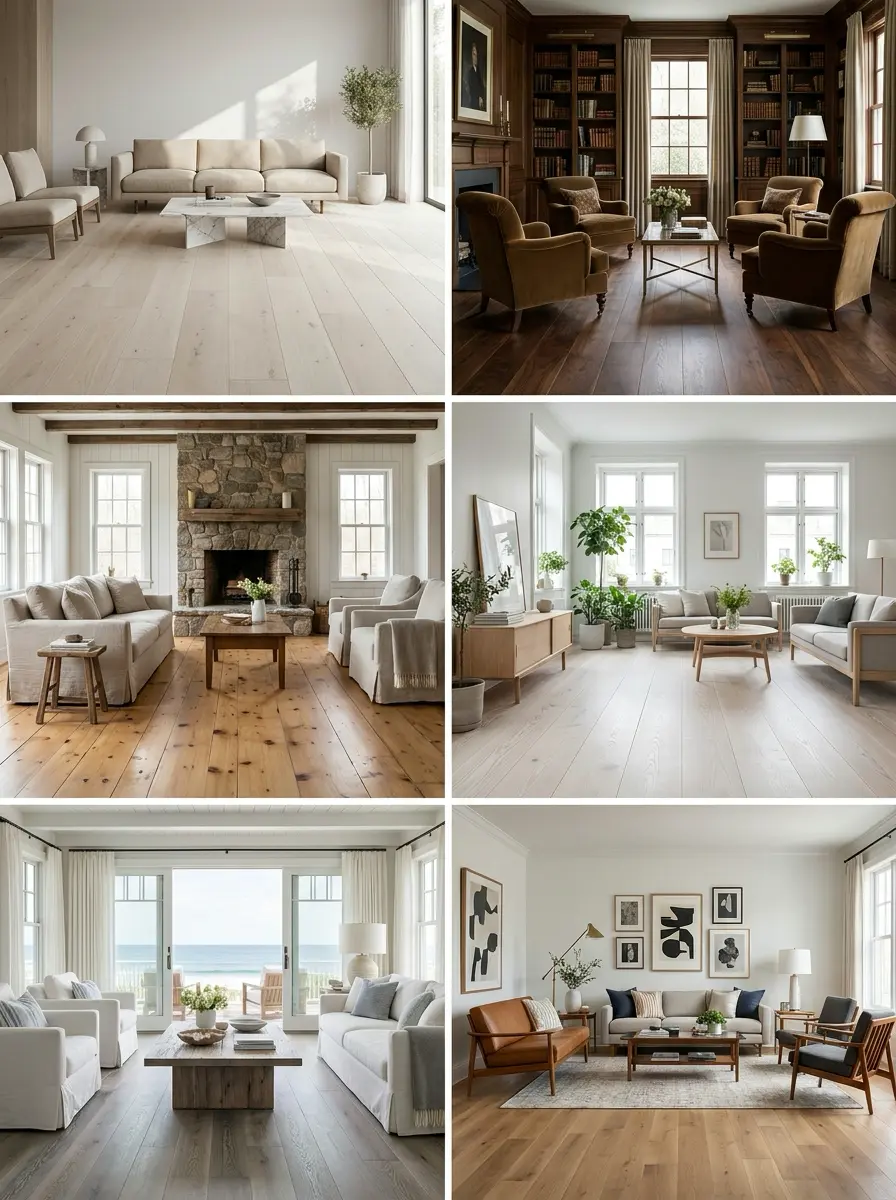
Modern and Contemporary Interiors
Modern rooms need floors that feel intentional without being theatrical. The right hardwood here usually has a straight, linear grain (quartersawn or rift-sawn white oak is a strong choice), a matte or satin finish rather than high-gloss polyurethane, and a stain color that sits in the neutral spectrum — cool greige, soft taupe, or a clear natural that lets the wood read honestly.
Wide-plank hardwood flooring — 5 inches to 9 inches across — reduces the number of seams and gives the floor a cleaner, more expansive feel that reinforces the open, minimal intention of modern architecture. Narrower strip flooring (2.25-inch standard strip) tends to add more visual busyness than a modern room can absorb gracefully.
- Species to consider: white oak, maple, or ash
- Finish: matte or low-sheen oil finish (Rubio Monocoat, Bona Craft Oil)
- Plank width: 5 inches and wider
- Stain direction: natural, greige, or very light gray
Traditional Interiors
Traditional design carries more visual density — richer upholstery, crown molding, formal case pieces, Persian rugs layered over the floor. The hardwood can hold more character here. Medium to dark stains, more visible grain movement, and narrower plank formats (3.25-inch to 4-inch) all feel appropriate.
Red oak with a medium walnut stain, or site-finished white oak with an amber-building sealer coat, can anchor a traditional dining room beautifully. Hand-scraped textures or wire-brushed finishes add surface depth that makes the floor feel like it has history rather than age.
- Species to consider: red oak, white oak, American walnut, hickory
- Finish: satin polyurethane, or penetrating oil with a slight amber build
- Plank width: 2.25 inches to 4 inches
- Stain direction: warm medium brown to deep espresso
Farmhouse and Rustic Interiors
Farmhouse interiors live or die on authenticity. A floor that looks too perfect — too uniformly stained, too smooth, too symmetrical — immediately undermines the casual warmth the style depends on. You want a floor that feels earned.
Wide-plank pine or character-grade white oak with heavy knots, natural color variation, and a wire-brushed or hand-scraped surface texture delivers that. Distressed hickory is another strong option — its dramatic grain contrast and tonal variation do most of the visual work without any artificial aging.
Keep the finish matte or use a penetrating hardwax oil. A glossy polyurethane coat on a farmhouse floor is one of the most common design mistakes in this category — it pulls the authenticity out instantly.
- Species to consider: character-grade white oak, pine, hickory, Douglas fir
- Finish: matte penetrating oil or hardwax oil (Osmo Polyx, Rubio Monocoat)
- Plank width: 5 inches to 12 inches
- Stain direction: warm honey, weathered driftwood, or let the natural wood speak
Scandinavian and Minimalist Interiors
Scandinavian design asks its floors to do something counterintuitive: be present and invisible at the same time. The floor needs to exist — it needs warmth and material authenticity — but it cannot compete for attention with anything else in the room.
Pale Nordic white oak, whitewashed or light-pickled ash, and blond maple all perform well here. A matte finish is non-negotiable. Plank width should be wide enough to feel generous — 5 inches minimum — but not so textured or knotty that the wood demands attention.
The most common mistake in minimal interiors is choosing a floor that is technically neutral but visually busy — too much grain movement, too much knot character, or a surface texture that pulls the eye. In a room built around silence, every decision amplifies.
- Species to consider: white oak (whitewash or natural), ash, maple
- Finish: matte oil or waterborne finish with zero amber
- Plank width: 5 inches to 7 inches
- Stain direction: pale natural, white-wash, barely-there gray
Coastal and Organic Modern Interiors
Today’s coastal interiors have little in common with the painted-seashell beach houses of 30 years ago. The current direction is relaxed, textural, and genuinely material-forward — linen upholstery, rattan, raw plaster walls, and natural hardwood flooring that looks like it actually grew somewhere.
Sand-inspired tones, sun-washed oak, and driftwood grays all work here. The finish should be matte or very low sheen. Wire-brushed white oak with a natural oil finish is a particularly strong choice — the texture adds grip, the color reads organic, and the surface ages gracefully with foot traffic.
Avoid anything that reads as overly processed: high-gloss coatings, perfectly uniform stains, or species that look more engineered than grown.
- Species to consider: wire-brushed white oak, teak, acacia, bamboo composite
- Finish: matte hardwax oil
- Plank width: 5 inches to 9 inches
- Stain direction: natural, driftwood, warm sand
Transitional Interiors
Transitional design sits between traditional and modern — cleaner silhouettes than classic furniture, more warmth and texture than pure contemporary. The floor has to bridge both directions without committing to either.
A medium-width plank (4 to 5 inches) in a natural or lightly stained white oak hits this balance reliably. The grain should read clearly but not dramatically. The finish should be satin rather than matte or high-gloss — it holds up better in family environments and reads as polished without being formal.
Transitional rooms also allow for more flexible species choices. European oak engineered hardwood, in a floating installation over radiant heat, is an increasingly common choice for open-plan transitional homes because it handles humidity variation better than solid hardwood over concrete subfloors.
Plank Width, Grain Pattern, and Surface Texture: The Details That Separate Good From Great
Stain color gets most of the conversation, but three other variables do just as much work:
Plank Width
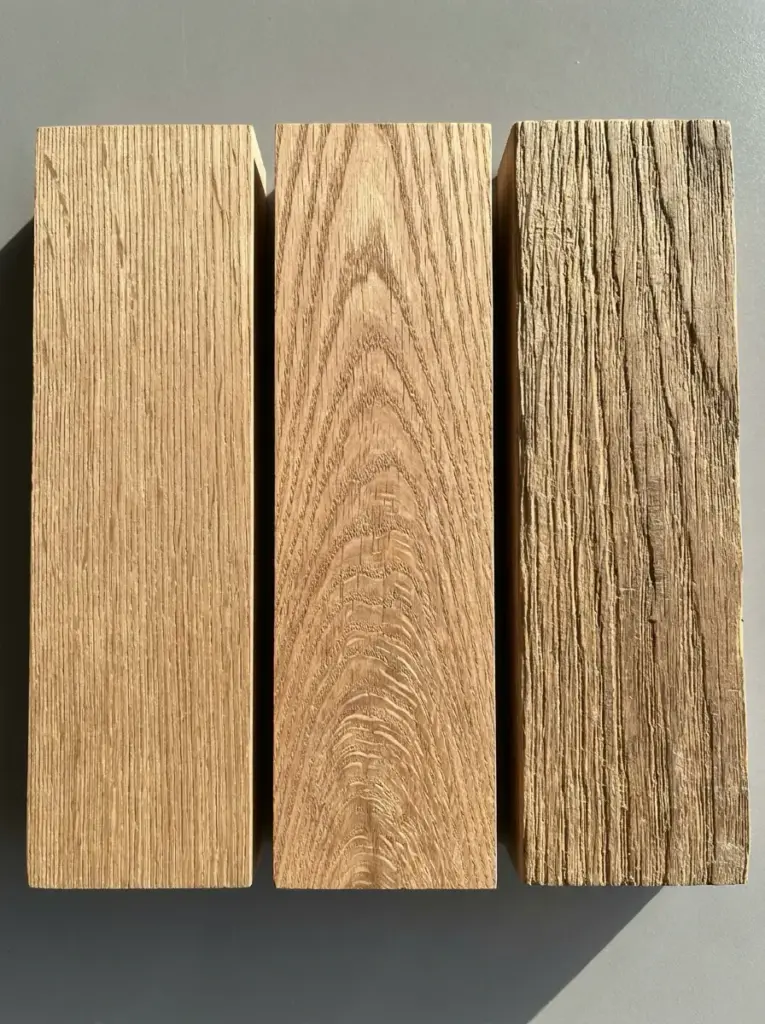
Wide planks (5 inches and above) reduce visible seams and create a more expansive, seamless floor plane — ideal for modern, Scandinavian, farmhouse, and coastal interiors. Narrower planks (2.25 to 3.5 inches) add more linear structure and visual detail, which complements the denser character of traditional rooms.
Grain Pattern
Quartersawn and rift-sawn cuts produce straight, tight grain lines — clean, stable, and ideal for modern or Scandinavian spaces. Plain-sawn (flat-sawn) boards show more medullary ray fleck and a livelier grain pattern that reads better in farmhouse and traditional contexts.
Surface Texture and Finish
Smooth surfaces with high-gloss polyurethane read as formal and high-maintenance — a look that has faded from most residential design. Wire-brushed, hand-scraped, and lightly distressed surfaces add tactile depth and camouflage everyday wear better. Penetrating oil finishes (Rubio Monocoat, Osmo Polyx, Bona Craft Oil) allow the wood to breathe, are easier to spot-repair than film finishes, and produce a more natural visual result in almost every interior category.
Mixing Wood Tones: Coordination Over Matching
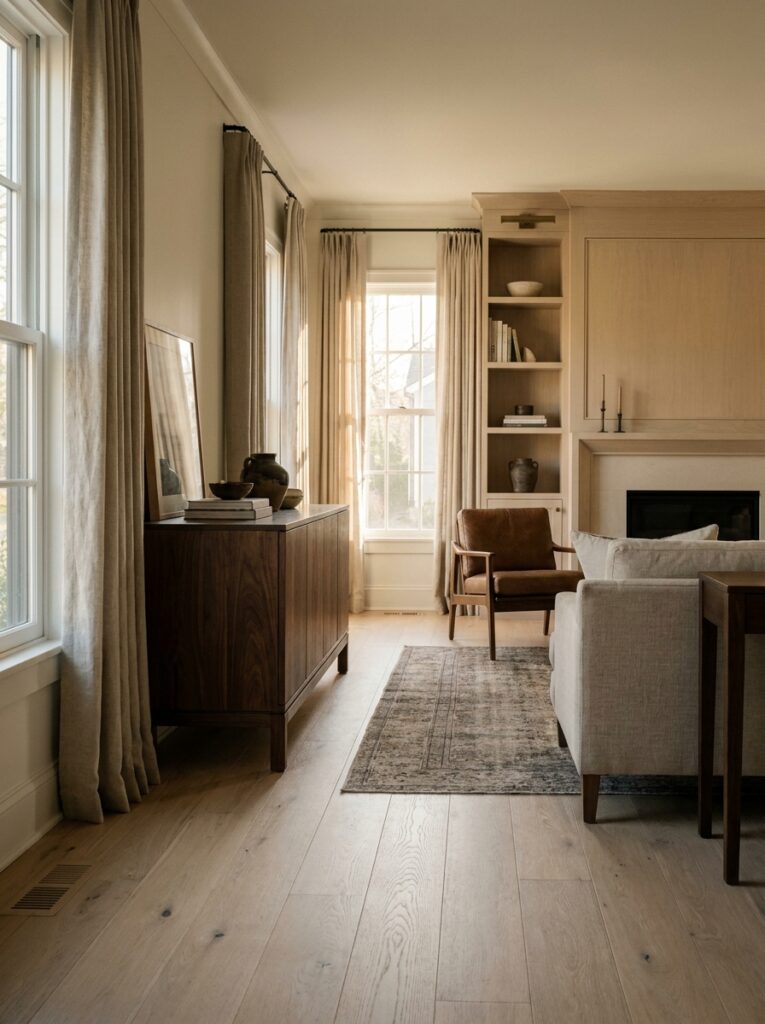
Attempting to match your hardwood floor exactly to your furniture, cabinetry, or wood trim almost always produces a flat, unconvincing result. Good interiors coordinate — they do not replicate.
The guiding rule is undertone alignment. Warm-undertone woods (golden, amber, red-leaning) live together naturally. Cool-undertone woods (gray, ash, taupe-leaning) do the same. Problems surface when warm and cool undertones collide without intentional contrast to bridge them.
Different species can coexist in the same room. White oak flooring under walnut case furniture over painted oak millwork is a combination that works in high-end residential interiors constantly. The contrast is part of the design — as long as the undertones relate, the variation reads as intentional layering rather than mismatched shopping.
Lighting Changes Everything — Test Before You Commit
IMAGE PROMPT: A hardwood floor sample lying flat on the floor of a real residential room, photographed three times in a triptych — morning golden light, neutral overcast midday, and warm tungsten evening light. Same board, same position, dramatically different perceived color across the three panels. Documentary-style photography.
A floor sample can mislead you completely. What reads as a warm medium brown in a showroom may look cold and orange at home under warm-temperature bulbs. What looks like a rich charcoal may turn green or purple in rooms with significant natural north light.
Place your shortlisted samples flat on the floor — not leaning against a wall — and observe them across the full arc of a day. Morning light, afternoon sun, overcast sky, and evening artificial lighting all shift the perception of wood color significantly. Your ceiling height, wall paint color, and the color temperature of your bulbs (2700K versus 3000K versus 4000K) will all influence the final appearance.
Hardwood flooring is one of the most expensive and permanent decisions in an interior renovation. The 48-hour sample test costs nothing and eliminates most regret.
Think in Terms of the Whole Home, Not Just One Room
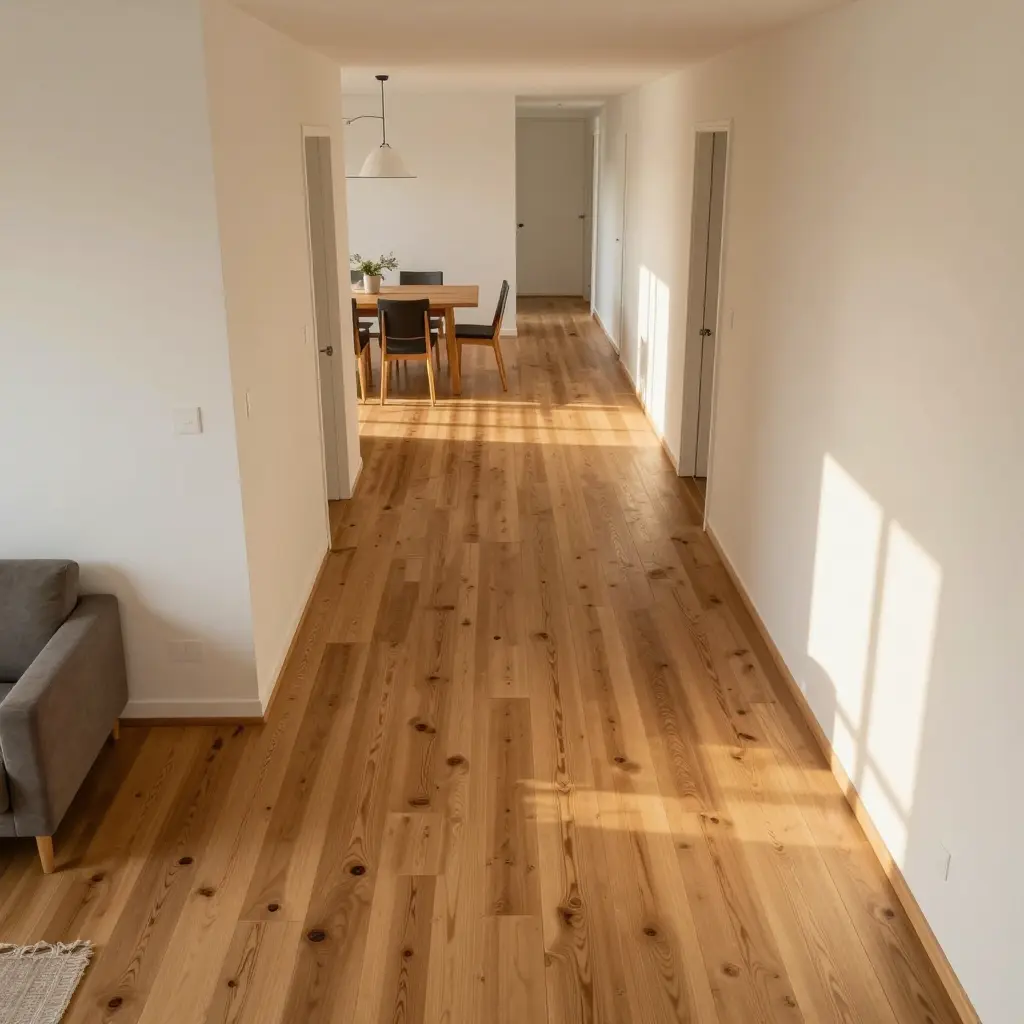
It is easy to fall in love with a floor in a single space. But hardwood flooring — especially when it runs continuously through connected rooms — functions as the visual thread that ties the entire home together.
For investment properties, flooring should also match the exit plan. A neutral oak floor may support a broader smart styling strategy for rental and resale properties better than a very personal stain.
Open-plan layouts amplify this. A floor that works beautifully in the living area but reads too dark in the adjacent kitchen, or too cool in the hallway, creates a visual interruption that good design should prevent. The best hardwood selections feel natural as the eye moves from room to room — not identical in every light condition, but harmonious enough that the transition never draws attention.
If the budget requires different flooring in certain areas, maintain consistent undertone across species transitions. A warm-toned oak in the main living spaces can transition to warm-toned tile in the kitchen without breaking visual continuity.
Style-to-Floor Quick Reference
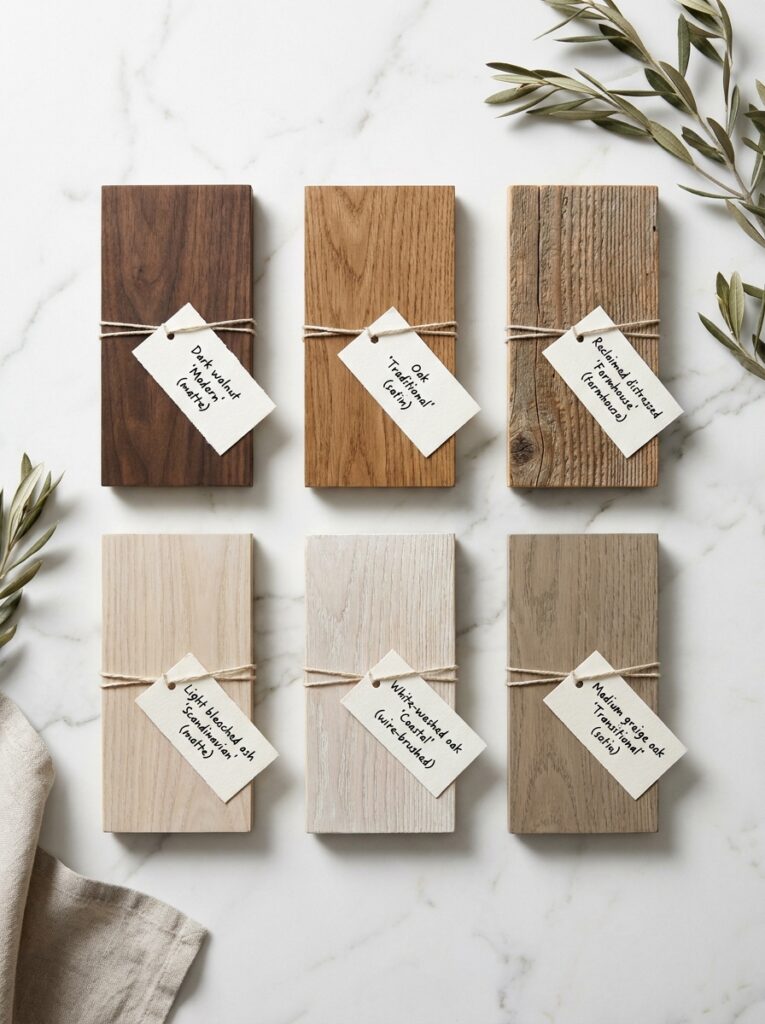
Modern / Contemporary
White oak, wide plank (5″+), matte finish, natural or greige stain
Traditional
Red or white oak, 3–4″ plank, satin poly, warm medium to dark stain
Farmhouse / Rustic
Character oak, pine, or hickory, wide plank, matte oil, warm natural tones
Scandinavian / Minimalist
Pale oak or ash, 5–7″ plank, matte waterborne, whitewash or natural
Coastal / Organic Modern
Wire-brushed white oak, 5–9″ plank, hardwax oil, driftwood or sand
Transitional
White oak or European oak engineered, 4–5″ plank, satin finish, natu
For a whole-home version of the same design problem, this flooring choices for aging in place explains how entries, bathrooms, lighting, kitchens, flooring, laundry, and outdoor rooms can work together in a 55+ home.
Related design note: If your boards are real hardwood rather than a printed surface, the finish can often be changed before the rest of the room is redesigned. This is where a detailed guide to wood floor sanding in high-end interiors is useful: it shows how sanding, stain, and lacquer shift the whole interior palette.
When a room has pale timber underfoot, the companion guide to light oak flooring explains wall colors, rugs, and furniture contrast in more detail.
- 30shares
- Facebook0
- Pinterest30
- Twitter0
- Reddit0