Graffiti ideas drawing works best when you stop chasing a perfect wall piece and start with one readable word, one strong outline, and one color plan. A short tag, bubble-letter name, 3D block word, or sticker-style sketch can teach more than a crowded page that tries to do everything at once.
I like to thumbnail the word first, then check the silhouette before adding drips, arrows, highlights, or background texture. If the letters are weak in black and white, color will only make the problem louder.
- Graffiti ideas drawing: quick starting method
- Key takeaways
- Graffiti art styles for drawing ideas
- Graffiti drawing ideas you can sketch next
- Tools and references for graffiti sketches
- Make your graffiti design ideas read clearly
- Share and protect your graffiti drawings online
- Related drawing practice for graffiti ideas
- Graffiti ideas FAQ
This guide keeps the focus on sketchbook-friendly graffiti designs you can build safely on paper, a tablet, cardboard, or a legal practice wall.
Graffiti ideas drawing: quick starting method
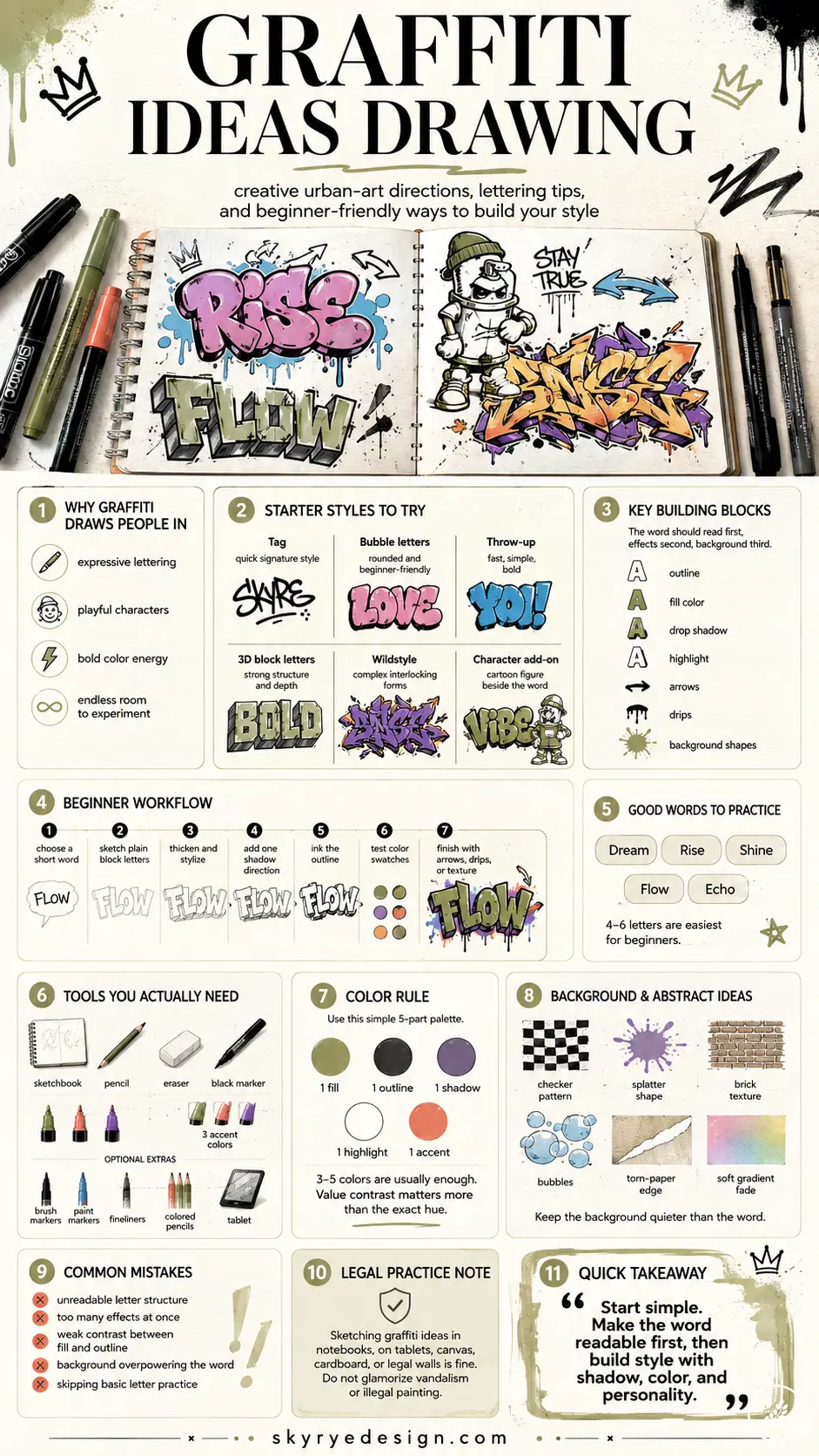
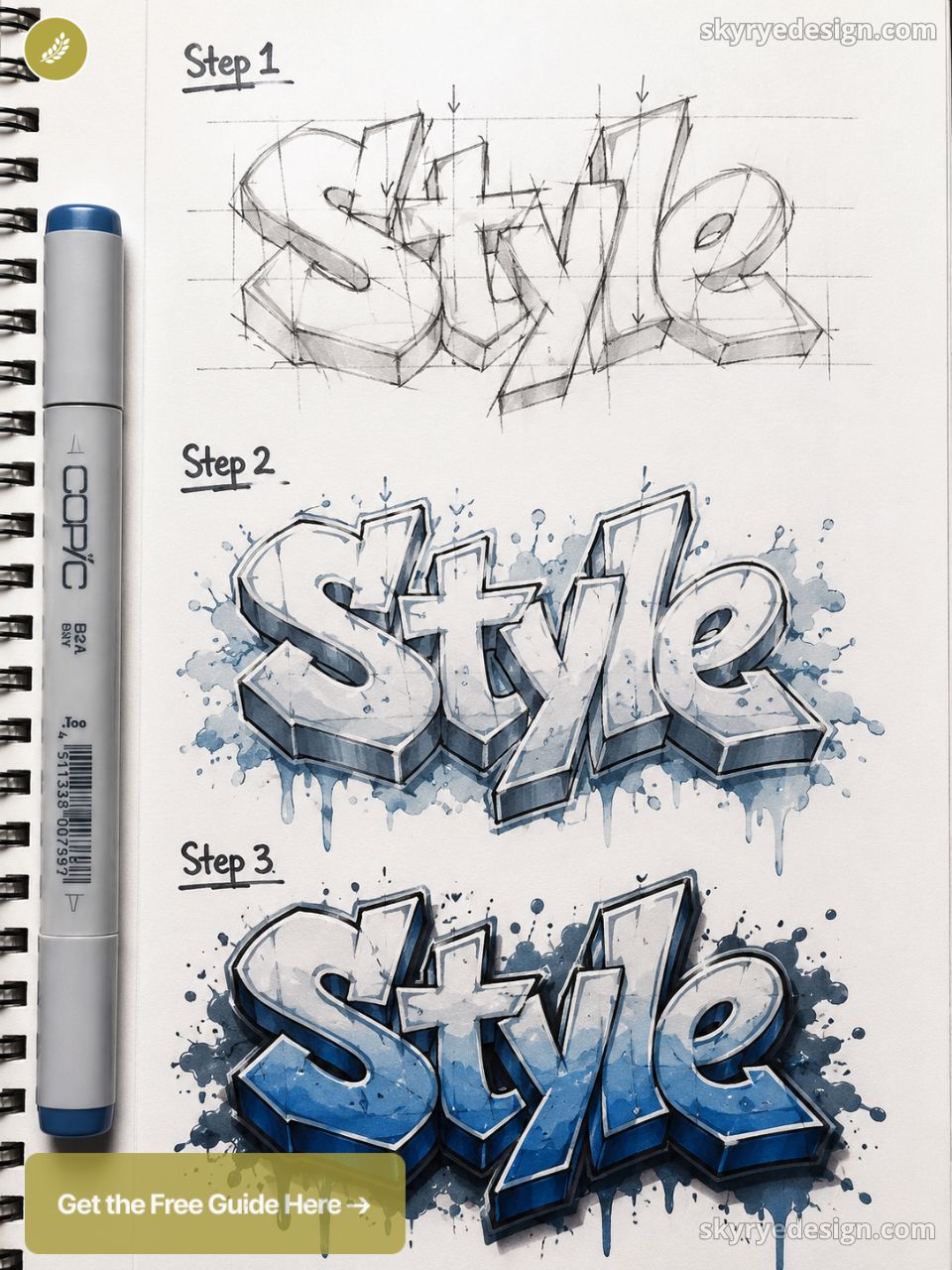
Start a graffiti drawing by choosing a short word and writing it plainly. Thicken each letter, decide where the shadow falls, then wrap the word with a second outline.
After that, add one style move: bubbles, sharp corners, arrows, cracks, drips, a crown, a small character, or a textured background. The order matters because beginners often decorate too early and lose the letter structure. A simple word with good spacing beats a complex design that nobody can read.
| Graffiti idea | Best for | Sketch tip |
| Bubble letters | Easy graffiti drawing | Use round letter bodies and leave enough space for a thick outline. |
| 3D block word | Graffiti design ideas | Pick one shadow direction and keep every extrusion consistent. |
| Tag study | Street art drawing | Repeat the name ten times before choosing the cleanest flow. |
| Character beside letters | Cool graffiti drawings | Make the character support the word instead of covering it. |
| Wall texture background | Graffiti background ideas | Keep the background lighter than the main outline. |
Key takeaways
- Build the word first, then add graffiti style. Letter spacing is the foundation.
- Use GSC-proven topics naturally: graffiti ideas, graffiti design ideas, graffiti drawing ideas, easy graffiti drawing, and street art drawing.
- Keep sketches legal by practicing in notebooks, on loose paper, on digital canvases, or on permitted walls.
- Finish at least one version with outline, fill, shadow, and background so the design feels intentional.
Graffiti art styles for drawing ideas
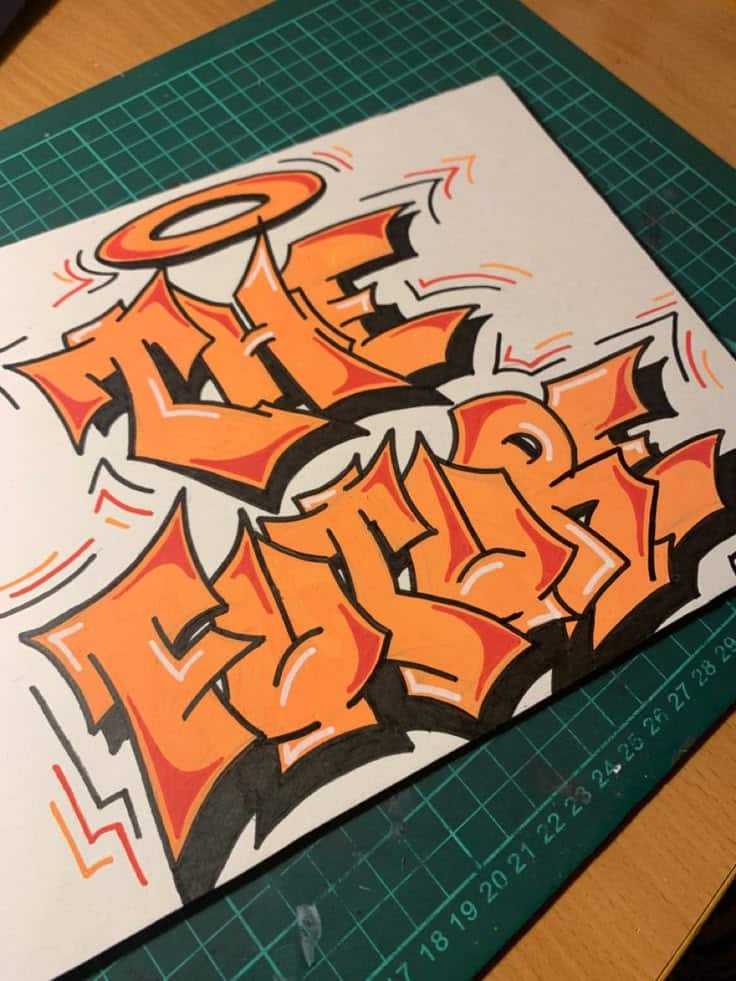
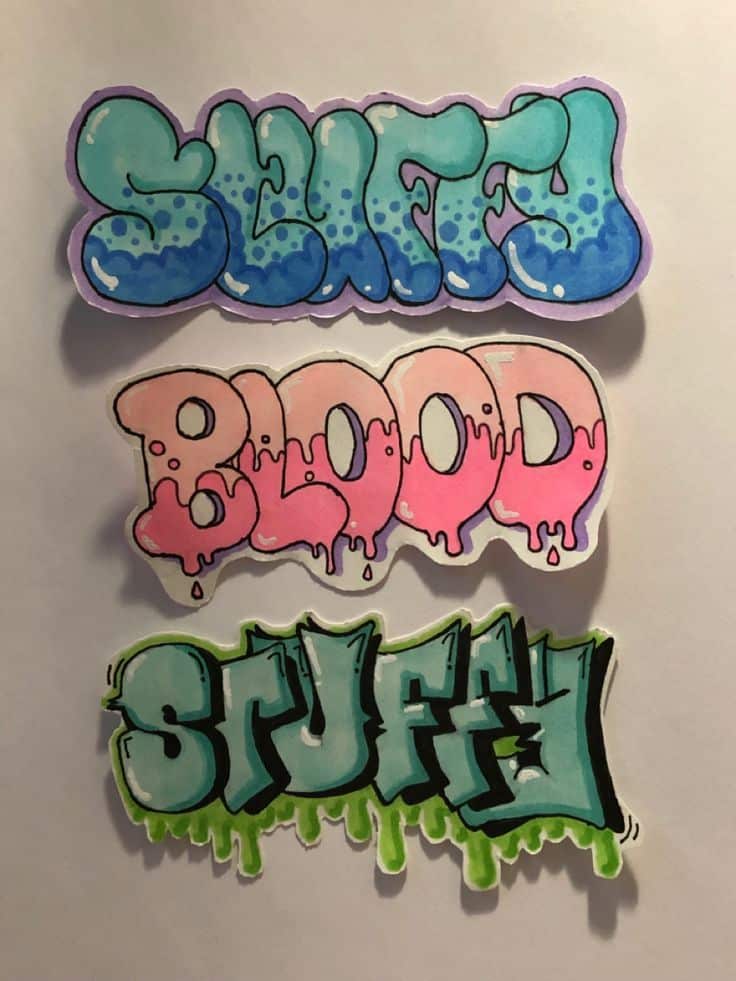
Graffiti styles are easiest to understand by their job. A tag is quick identity. A throw-up is fast volume. Bubble letters are friendly and readable. Blockbusters are wide, heavy, and built for impact. Wildstyle is letter complexity. A mural treats the whole wall like one composition. For sketchbook work, start with block or bubble letters before you attempt tightly interlocked forms.
That does not mean every page has to look polite. Graffiti drawing should still feel energetic: heavy outlines, uneven rhythm, tilted letters, arrows, drips, crowns, stars, stickers, and background scratches all help. The trick is choosing one or two of those moves, not throwing the entire menu onto one word.


History and evolution of graffiti art
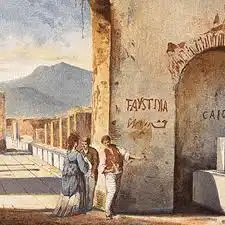
Graffiti has ancient roots, but modern graffiti culture grew from tagging in Philadelphia and New York during the late 1960s and 1970s. Names like Cornbread and TAKI 183 matter because they show how a simple repeated signature can become visual identity. That history is useful for drawing too: a tag is not just handwriting. It is rhythm, speed, and shape control.
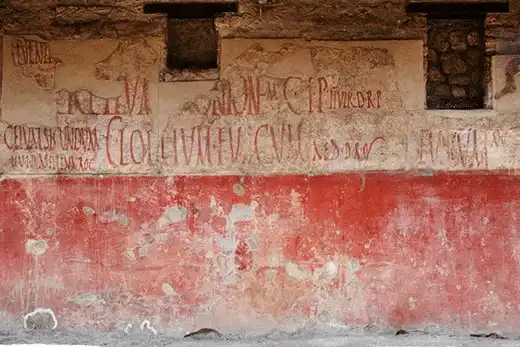
As graffiti moved into galleries, books, album covers, skate graphics, and digital art, the visual language widened. Stencils, posters, stickers, characters, and murals all borrowed from the same street vocabulary. For a drawing page, that means you can study graffiti without pretending to paint illegally. You can practice the language of letters, shadows, and wall texture in a sketchbook first.
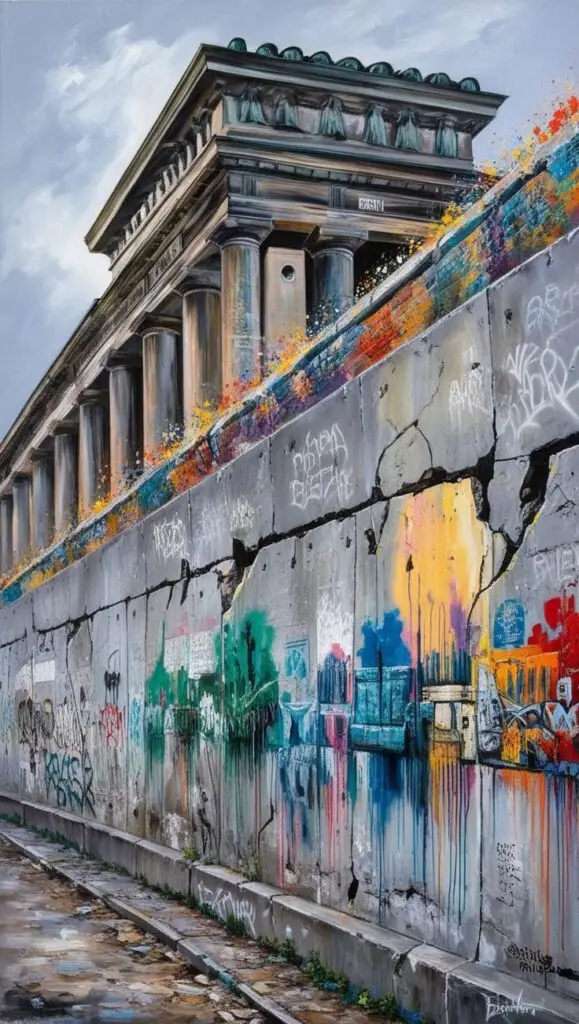

Key elements of graffiti designs
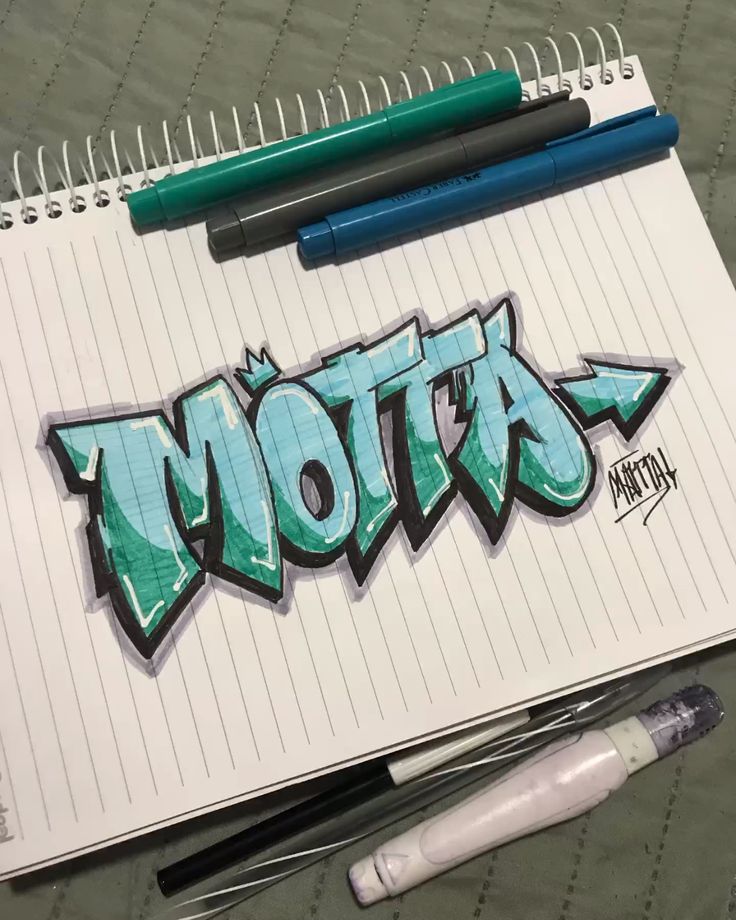
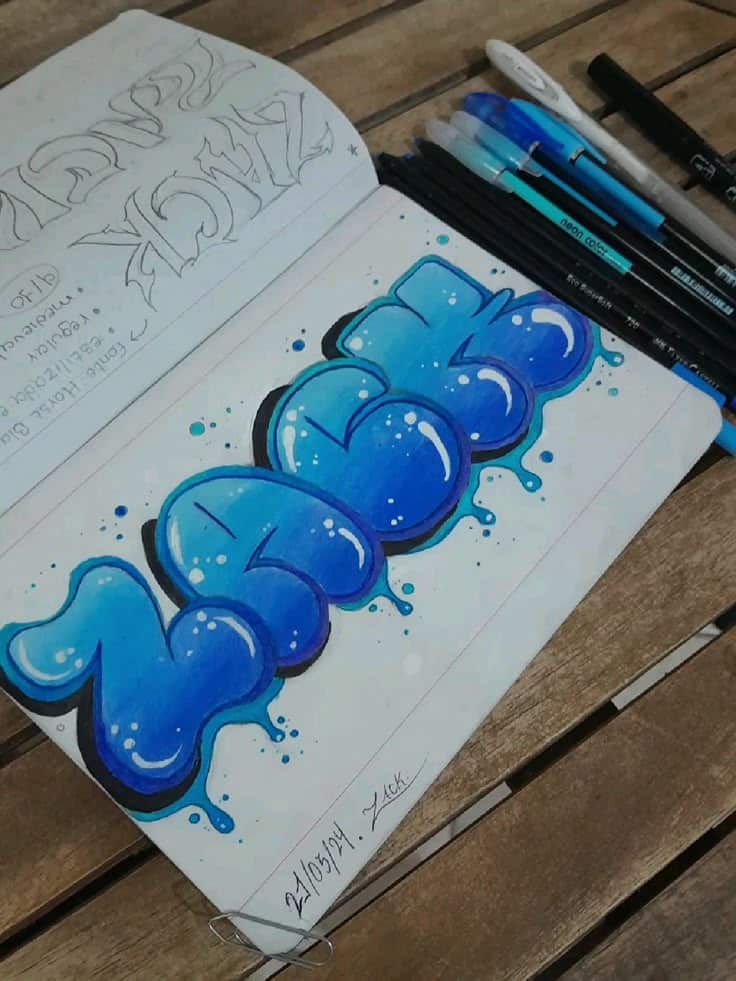
Most strong graffiti designs are built from four pieces: lettering, effect, color, and layout. Lettering decides whether the word reads. Effects add depth through shadows, highlights, cracks, drips, arrows, halos, and 3D blocks. Color creates the mood. Layout controls how the word sits on the page, especially when characters or backgrounds enter the design.
- Lettering: Keep the base letters readable before bending or overlapping them.
- Effects: Use one shadow direction, then add highlights only where light would hit.
- Color: Choose a fill, outline, shadow, and one accent instead of chasing every marker color.
- Layout: Leave breathing room around the word so the outline does not crash into the page edge.
Famous graffiti artists and influences
Studying well-known artists helps when you focus on what they solve visually. Keith Haring used movement and simple figures. Jean-Michel Basquiat used raw marks, words, and symbols.
Banksy shows how stencil work can carry a direct idea with very little visual noise. You do not need to copy any of them; study the decision-making. What is repeated? What is left out? Where does the eye land first?
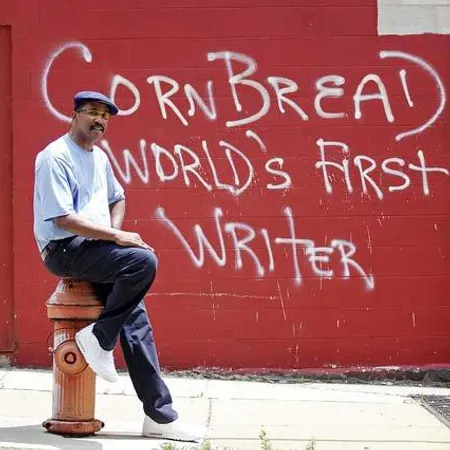

For your own graffiti sketches, translate influence into exercises. Try one page of fast tags, one page of bubble letters, one page of stencil-like silhouettes, and one page where a character interacts with the word. That gives you usable drawing practice without turning the page into imitation.
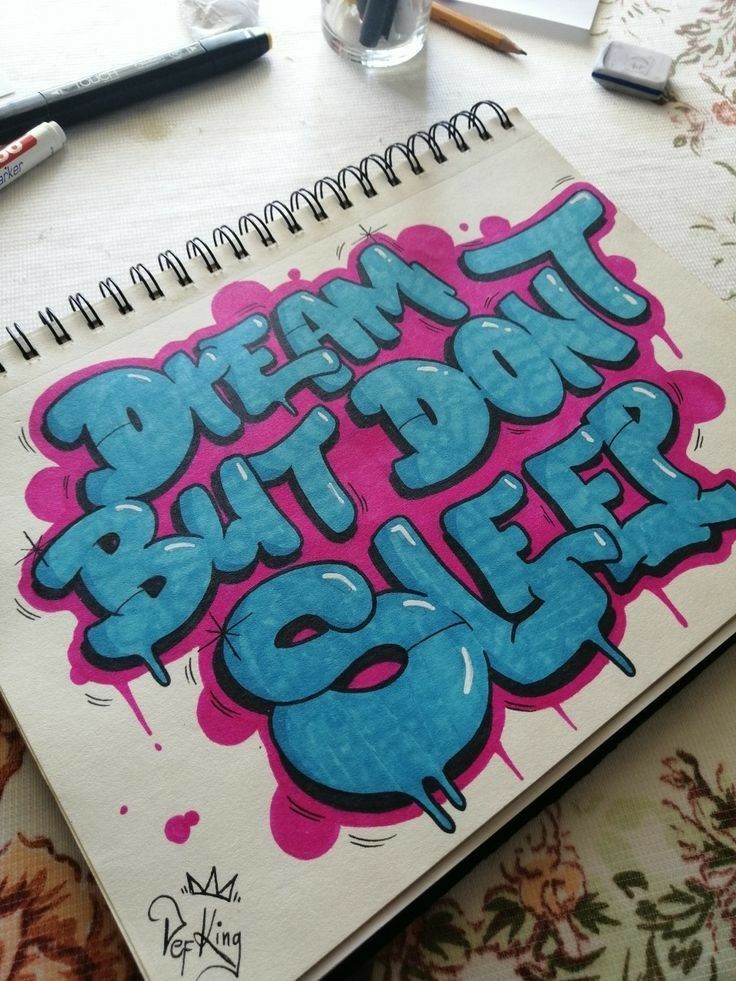
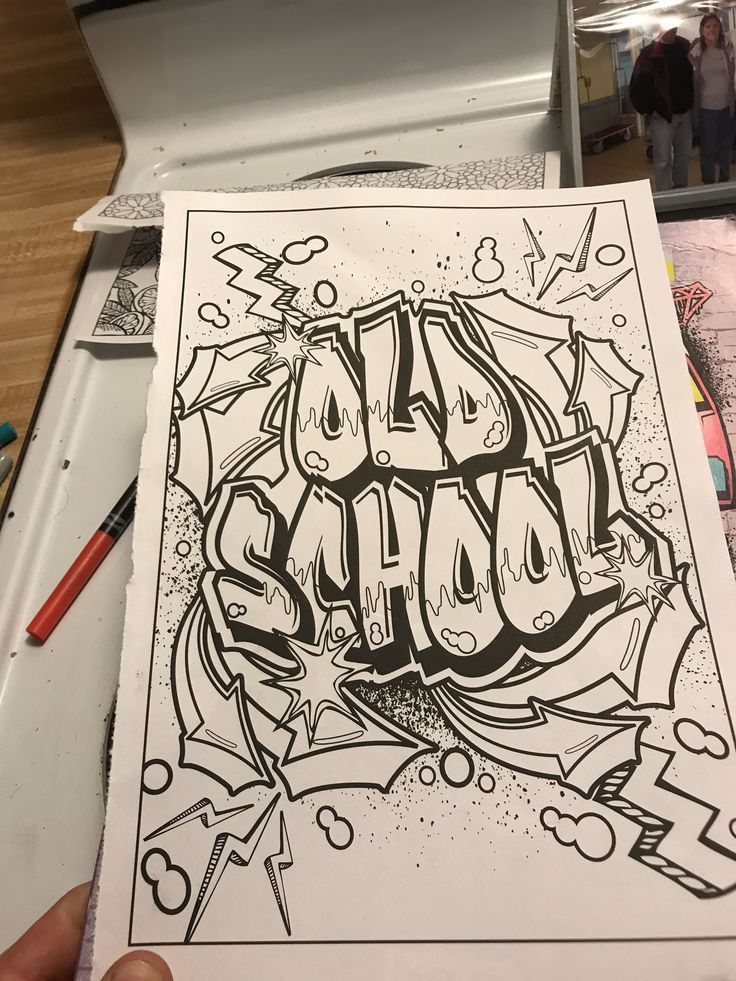
Graffiti drawing ideas you can sketch next
If you are stuck, choose a constraint instead of waiting for inspiration. Draw the same word as bubble letters, 3D blocks, sharp wildstyle, sticker art, and a clean black-and-white tag. Then pick the strongest version and redraw it larger. This keeps the page moving and makes each attempt teach the next one.
Lettering ideas: tags, bubble letters, and 3D blocks
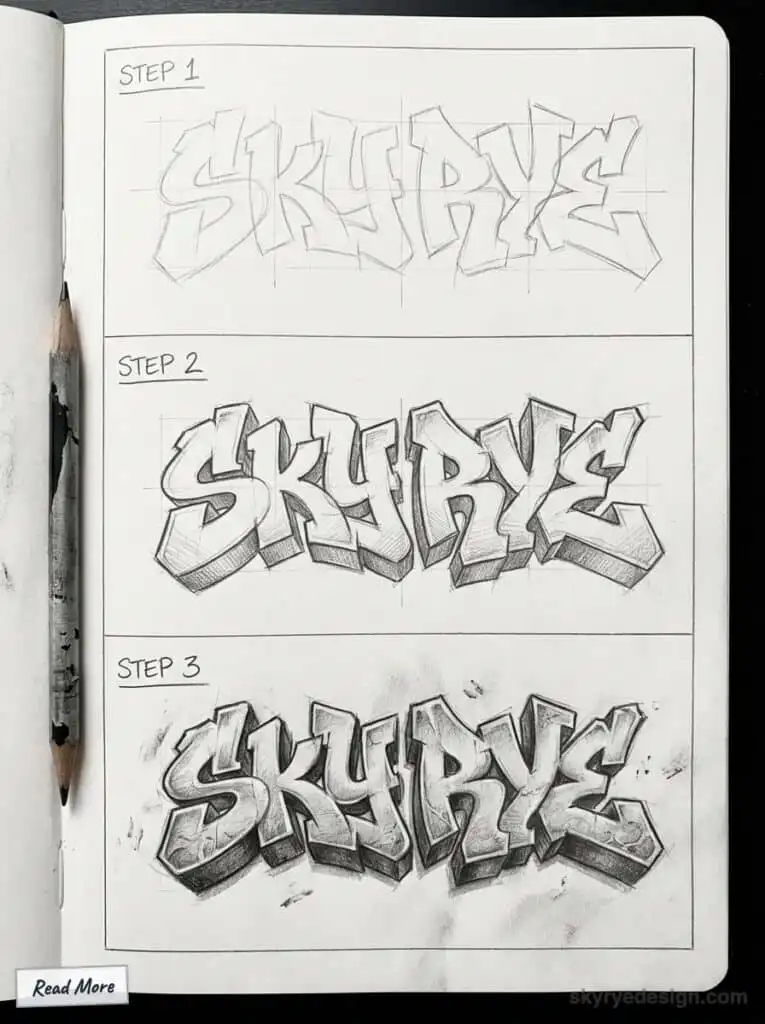
Lettering is the center of most graffiti drawing ideas. For a tag, write the name quickly and look for rhythm. For bubble letters, make the letters soft and rounded, then thicken the outer outline. For 3D blocks, sketch the word first, choose one vanishing direction, and pull every letter edge the same way. Inconsistent 3D is the fastest way to make a piece feel shaky.
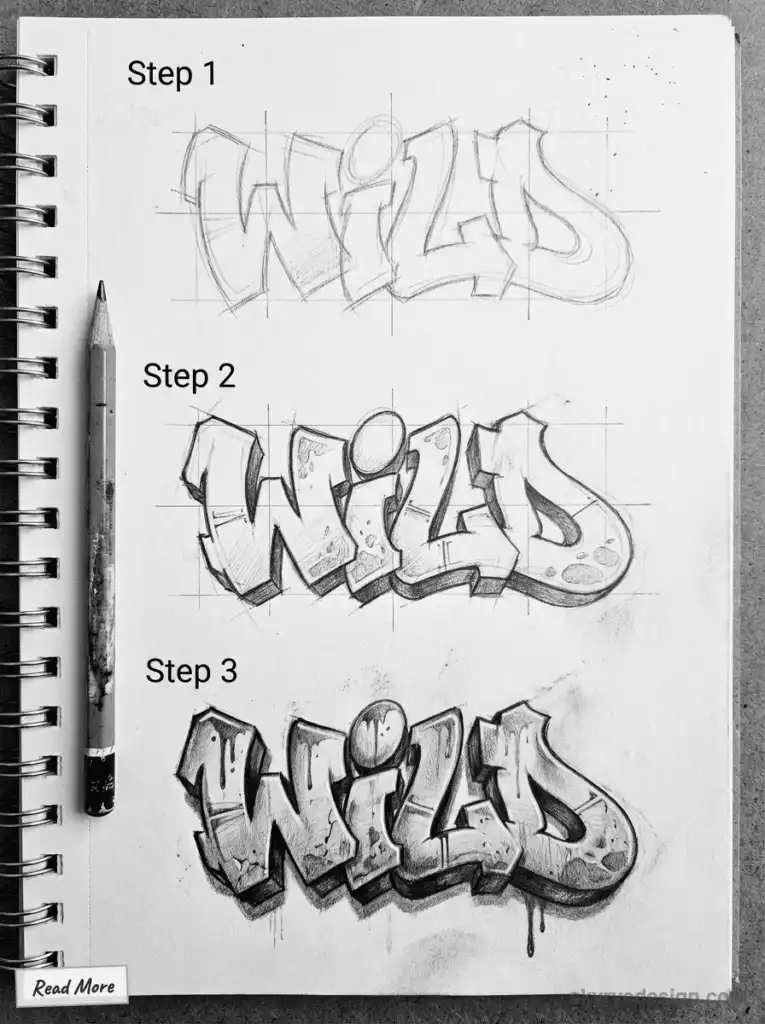
A good exercise is to draw one word in pencil, trace the best outline with marker, then redraw it from memory. The second version is usually cleaner because your hand already knows the problem spots. If one letter keeps breaking the design, simplify it. Strong graffiti writing comes from control, not from forcing every letter to look wild.


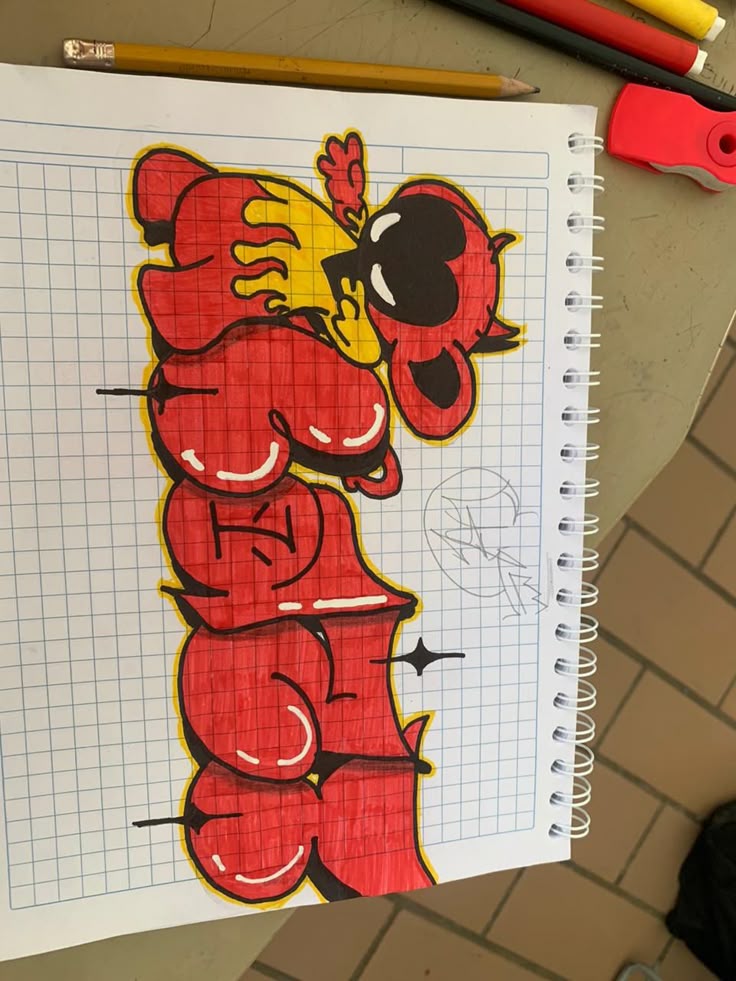
Character and cartoon graffiti ideas
Characters can make a graffiti drawing more personal, but they should not steal the whole page unless that is the point. Start with one simple face, animal, hand, eye, or mascot shape. Place it beside the word, behind the word, or wrapped around one letter. If the character covers the letters, lower its contrast or move it into the background.
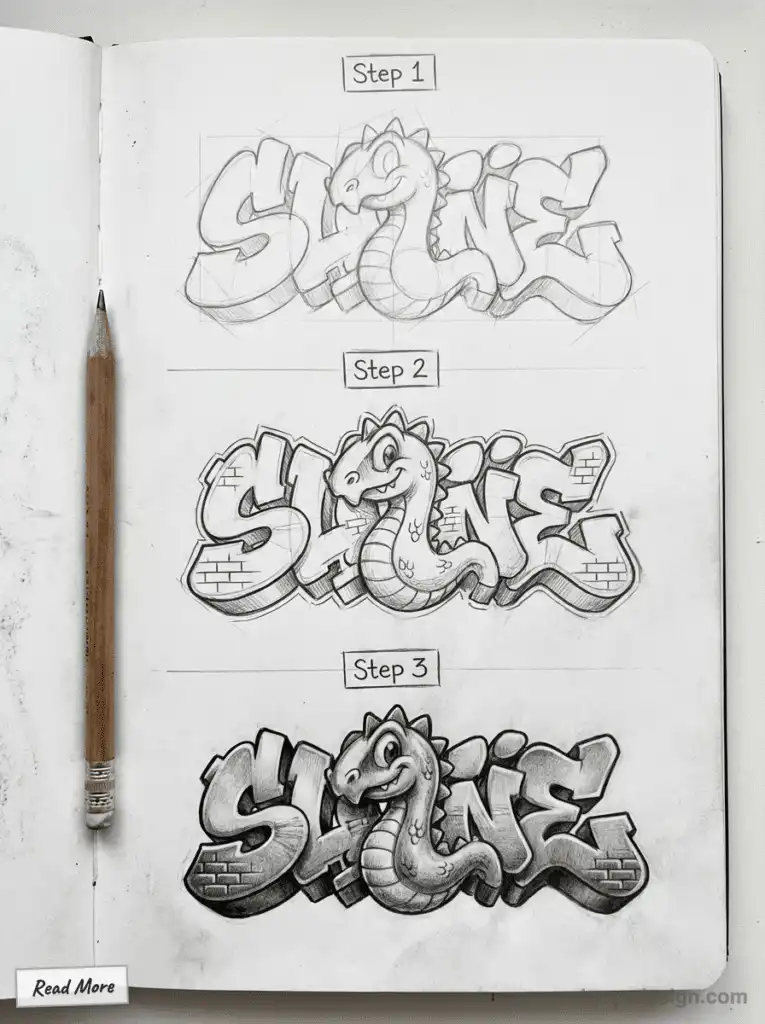
For an easy street-art drawing, pair a short word with one character emotion: tired, excited, suspicious, proud, or goofy. That tiny bit of acting gives the letters a story. Thick outlines also help the character and word feel like they belong in the same design.

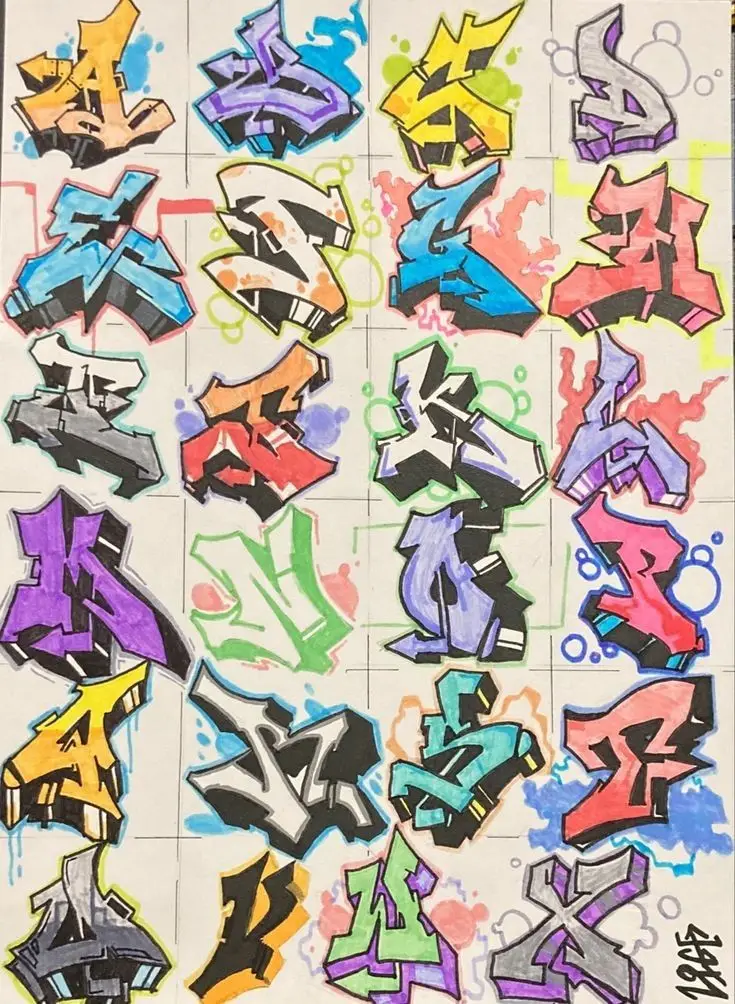
Abstract forms and graffiti background ideas
Abstract graffiti is useful when the word feels too plain. Try arrows that point through the letters, brick texture behind the word, splatter shapes around the outline, checker patterns, bubbles, torn-paper edges, or a soft color fade. Keep the main word darker and sharper than the background so the drawing does not turn into wallpaper.
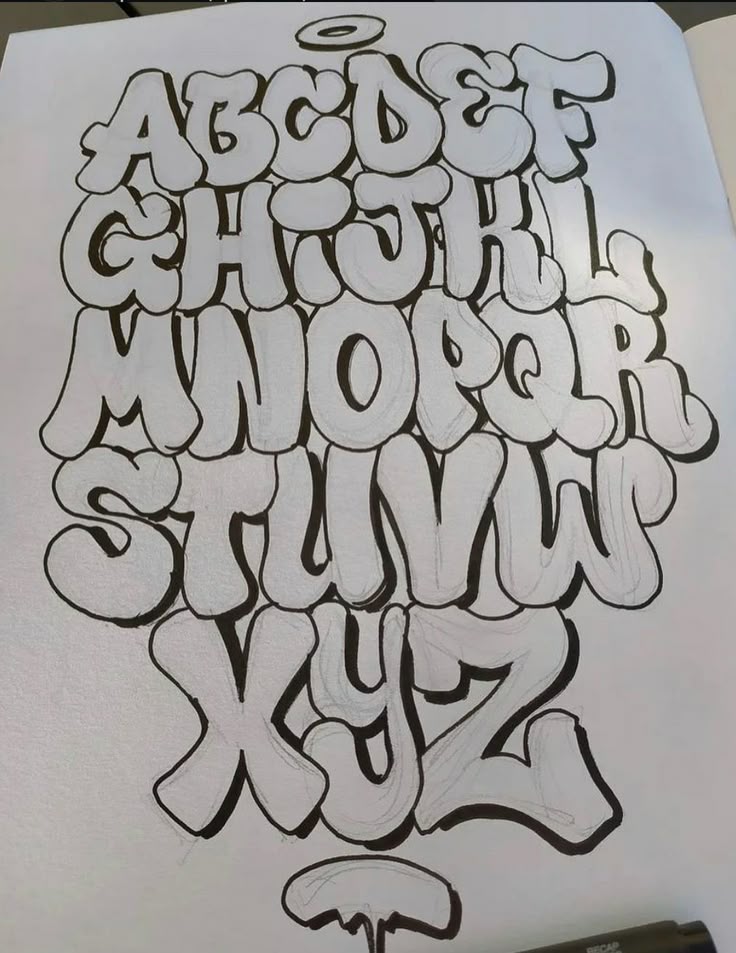
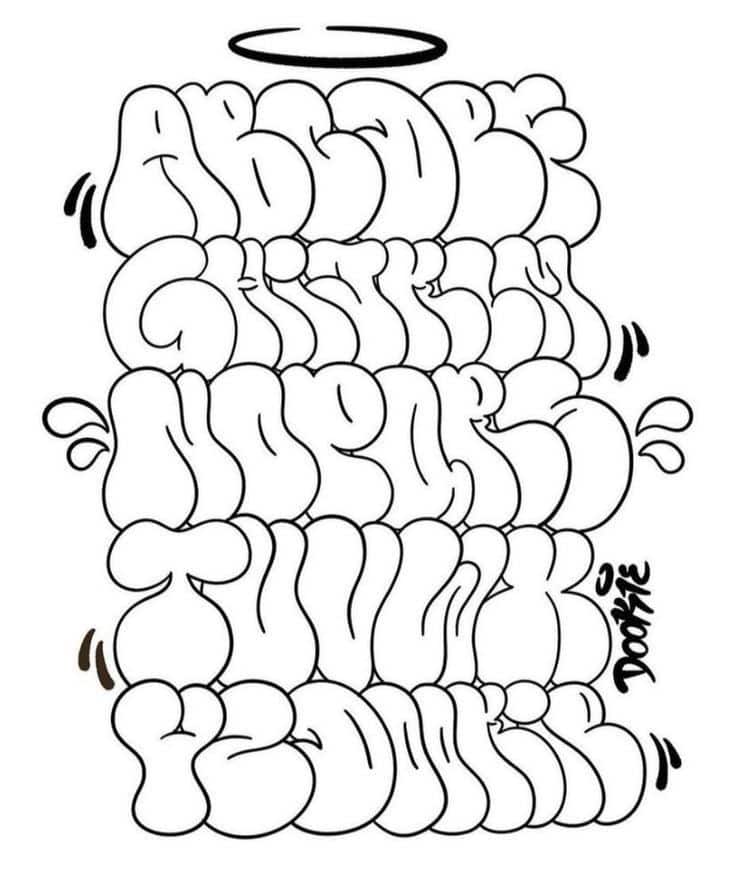
Negative space matters here. A busy page needs quiet areas where the eye can rest. If every inch has texture, the piece loses impact. I usually add background last, then erase or soften anything that competes with the word.
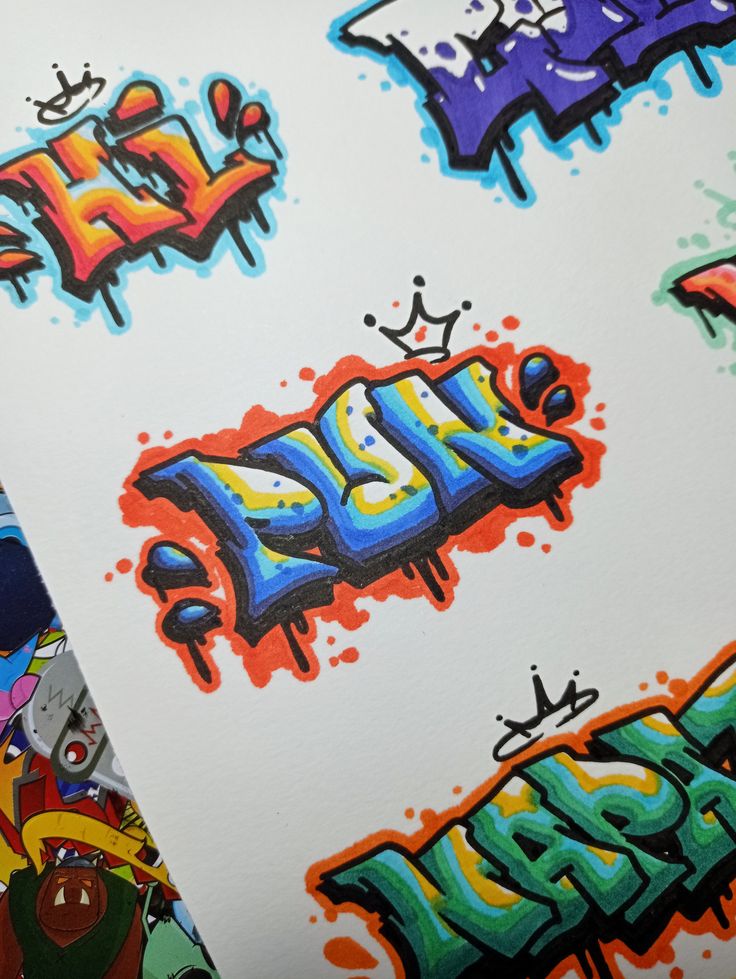
Tools and references for graffiti sketches
You do not need expensive supplies to start. A cheap sketchbook, pencil, eraser, black marker, and three colors are enough. Later, try brush markers, paint markers, fineliners, colored pencils, or digital layers. Each tool changes the edge: pencil stays loose, marker forces decisions, and digital work makes it easy to test color before committing.
References help more than most beginners want to admit. Save photos of wall texture, old signs, sticker clusters, subway lettering, comic effects, and painted shadows. The goal is not to copy a whole piece. The goal is to collect small solutions: a better S curve, a cleaner drop shadow, a smarter way to separate fill from outline.
Reference images and licensing
If you use reference images, check the license before posting or selling work based on them. Personal sketchbook studies are usually low-risk, but commercial prints, logos, merch, or client work need cleaner rights. When in doubt, use your own photos of legal walls, public textures, cardboard, stickers, and painted surfaces.
Search terms like graffiti wall, street art texture, brick texture, sticker wall, marker lettering, and spray paint drips can help you build a reference folder. For drawing, focus on structure: where the shadows fall, how the outline separates from the fill, and how colors stay readable from a distance.
Using AI mockups without copying them
AI image tools can be useful for brainstorming color, background mood, or rough composition, but the finished drawing still needs your hand. Treat generated images like messy thumbnails. Pull one palette, one shape idea, or one background texture, then redraw the concept in your own letter structure. If the AI output has broken letters, strange symbols, or copied-looking style, do not trace it.
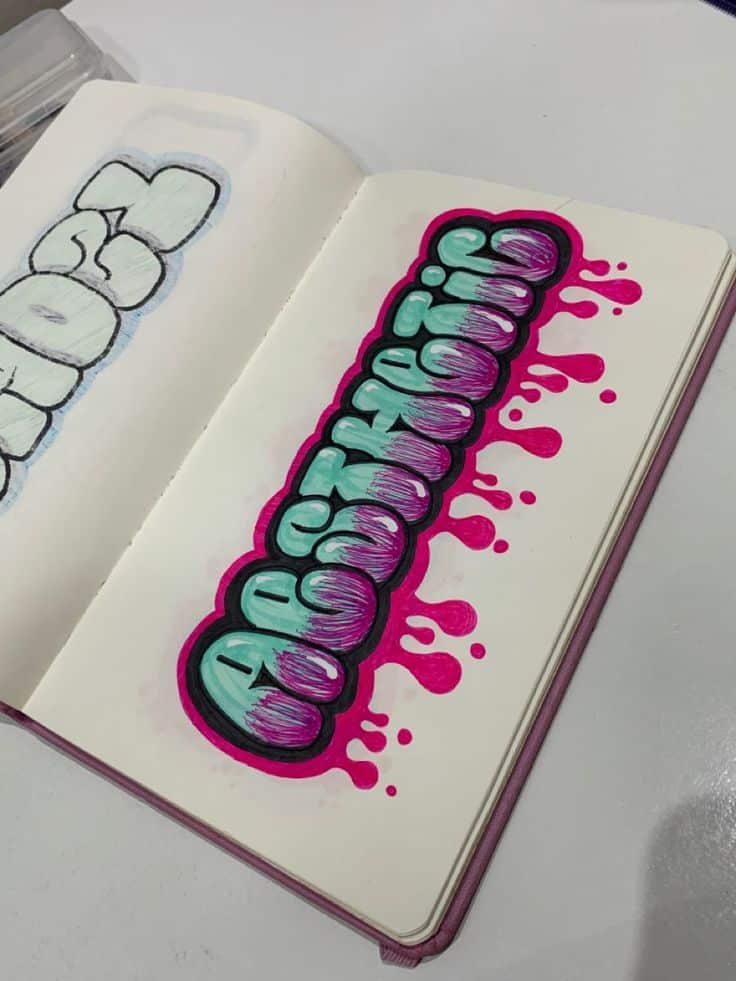
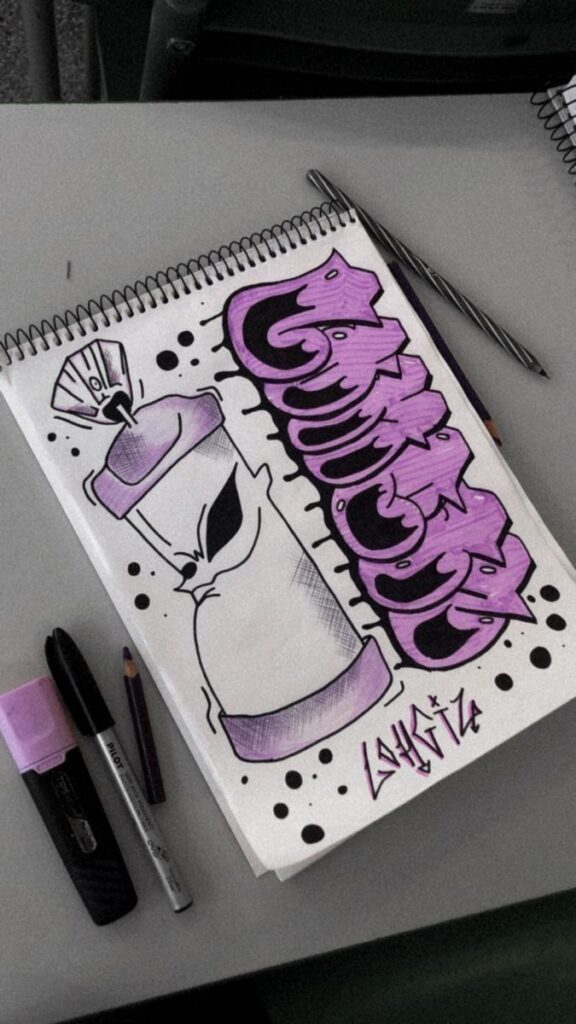
Video tutorials for graffiti drawing
Video tutorials help because graffiti is physical. You can see how an artist pulls a line, turns the paper, thickens a shadow, or cleans up a marker edge. Watch for the construction steps, not only the finished page. Pause before the artist inks the final outline and try to predict what they will simplify.
After watching, do one small drill immediately. Draw five versions of the same letter, five shadows in the same direction, or five quick tags. Passive watching feels productive, but the page only improves when your hand repeats the move.
Make your graffiti design ideas read clearly
A finished graffiti drawing needs hierarchy. The word should read first, the effect second, and the background third. If the background is louder than the word, lower the contrast. If the color is exciting but the letters disappear, add a darker outline. If the 3D shadow looks wrong, simplify it before adding texture.
Choosing image orientation and resolution
Horizontal pages work well for long words, murals, banners, and stretched blockbusters. Vertical pages work better for stacked words, tall characters, stickers, and poster-style compositions. Before you draw the final version, make two tiny rectangles on scrap paper and test the layout both ways. The better composition usually shows up fast.
If you plan to post the drawing online, scan or photograph it cleanly. Use daylight or a steady lamp, keep the page flat, crop the edges, and save a high-resolution version before you edit. A slightly crooked photo can make a solid drawing look careless.
Enhancing color composition
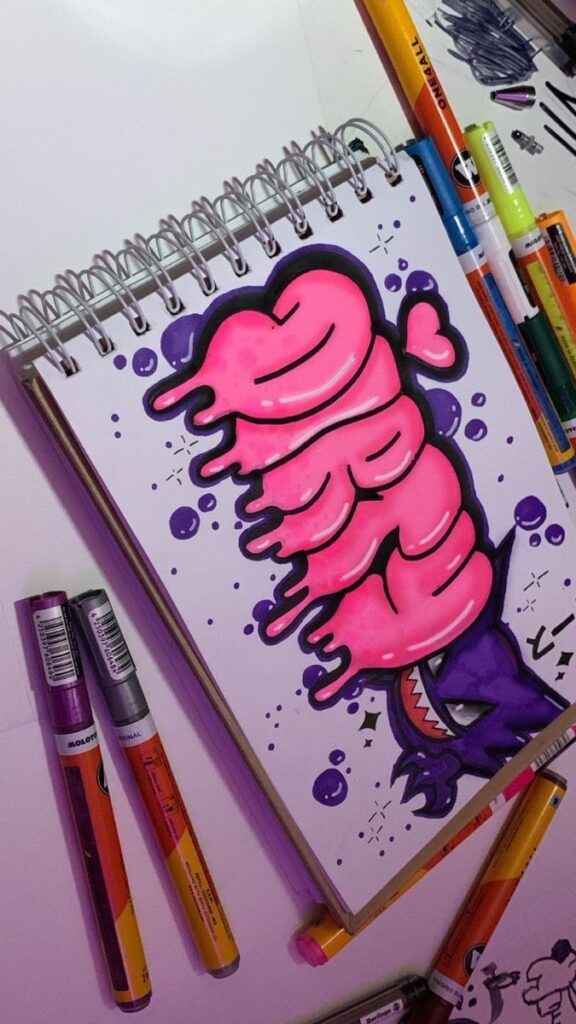
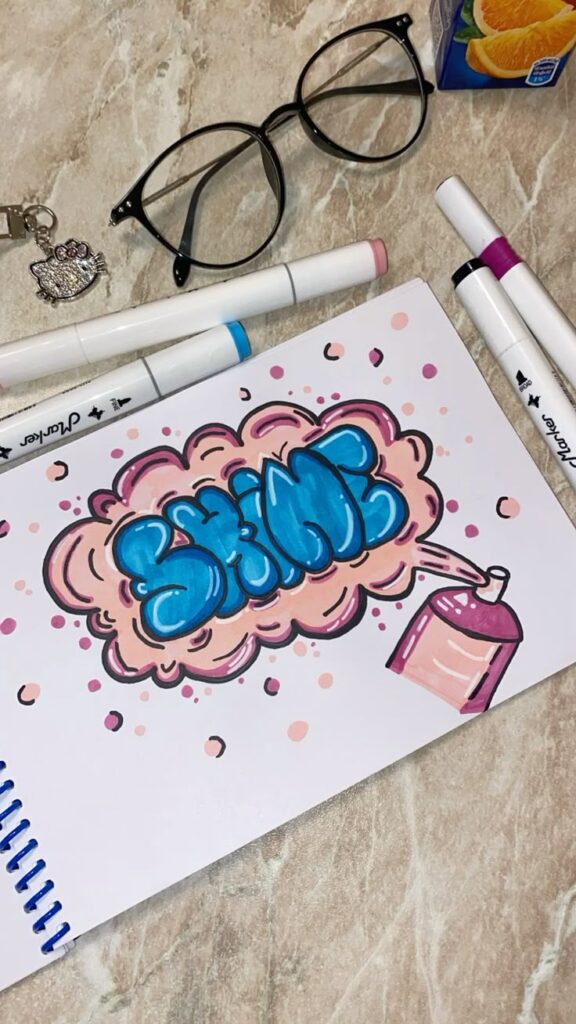
Color is where many graffiti sketches either come alive or fall apart. Start with three to five colors: one fill, one outline, one shadow, one highlight, and one accent. Blue with orange, pink with teal, yellow with purple, and green with red-orange can all work, but value contrast matters more than the color names.


Test colors as little blocks before filling letters. Markers often dry darker or bleed more than expected. Colored pencils need more pressure to look bold. Digital color can look too bright when printed. A small swatch row saves the pain of discovering the problem after half the word is filled.
Share and protect your graffiti drawings online
When you post graffiti drawings online, upload a clean image, add your name or handle, and keep the original file. If the work is a sketchbook study based on another artist, credit the influence and do not present it as an original wall piece. If it is your own design, write a short caption with the word, tools, and one thing you were practicing.
For legal practice, keep the difference clear: sketching graffiti ideas is fine; painting on property without permission is not. Use notebooks, tablets, cardboard, canvas, practice boards, workshops, or designated legal walls. That way the energy of street art stays in the drawing without creating a real-world problem.
Related drawing practice for graffiti ideas
If you want to keep building the same skill set, move sideways into Chicano art style, sketchbook drawing ideas, digital art ideas, and drawing materials. For structure and page layout, compare perspective drawing, bullet journal doodles, and the broader drawing hub. These are close enough to support graffiti sketches without repeating the same exercise over and over.
Graffiti ideas FAQ


What should I write in graffiti?
Start with a short word you can draw many times: your name, a nickname, a place, or a positive word like Dream, Rise, Shine, Flow, or Echo. Four to six letters is easiest because the word has enough rhythm without turning into a layout problem. Avoid long phrases until you can control letter spacing, shadow direction, and the outer silhouette.
How do I start a graffiti drawing?
Choose one word, sketch it in plain block letters, then thicken the letters before adding style. Add a single shadow direction, one outline, and a simple background shape. Keep the first pass in pencil so you can fix spacing. Once the word reads clearly in black and white, add color, highlights, drips, arrows, or texture.
What are easy graffiti ideas for beginners?
Easy graffiti ideas include bubble letters, a one-word tag, 3D block letters, a sticker-style name, a simple crown, arrows around a short word, or a small character beside the letters. Beginners usually improve faster by redrawing one word three ways instead of starting a new complicated piece every time.
What are the main types of graffiti?
Common graffiti types include tags, throw-ups, blockbusters, bubble letters, wildstyle, stencils, stickers, posters, characters, and street art murals. For drawing practice, tags and bubble letters are the easiest entry point. Wildstyle is more advanced because the letters overlap, bend, and interlock while still needing to stay readable.
How do I come up with a graffiti tag name?
Pick a short name with letters you enjoy drawing. Test the first and last letters because they frame the whole tag. Letters like S, R, K, E, A, and Z give you strong angles and curves, while too many similar letters can feel flat. Keep it personal, easy to rewrite, and respectful rather than copying another artist.
Is graffiti illegal?
Graffiti is illegal when it is placed on public or private property without permission. Sketching graffiti ideas in a notebook, designing digital pieces, or painting on a legal wall is different. If you want to paint outside, get permission, use designated walls or events, and check local rules before you bring paint.
What colors work best for graffiti drawings?
A strong graffiti color plan usually has three parts: a bright fill, a darker outline, and a highlight or shadow color. Blue with orange, pink with teal, yellow with purple, and green with red-orange can work well if the values are separated. Test the palette as small swatches before filling a full page.
- 5.6Kshares
- Facebook0
- Pinterest5.6K
- Twitter0
- Reddit0