Key Takeaways
- Posture reference includes curated photos, 3D models, and tools that help artists draw realistic poses, weight distribution, and body language.
- Using posture references speeds up learning anatomy, gesture, and storytelling in drawings, comics, and character design.
- Top resources in 2026 include PoseMyArt (3D posing), Pose Maniacs (anatomy study), SketchDaily (timed practice), AdorkaStock (photography), and Pinterest (inspiration boards).
- Building a personal posture reference library saves time on projects and helps you develop a consistent style.
- Even 10-15 minutes of daily posture practice leads to visible improvement in gesture and figure work within weeks.
What Is Posture Reference (and Why It Matters for Artists)
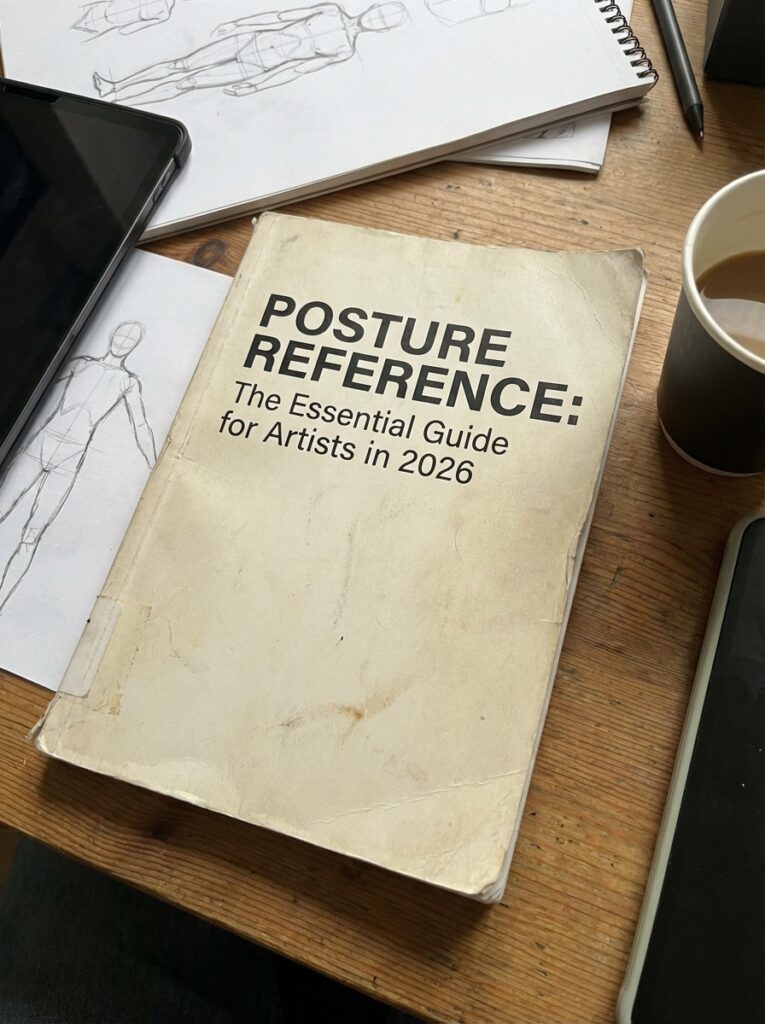
Posture reference refers to visual resources focused specifically on body position, balance, and attitude rather than static anatomy charts or isolated muscle diagrams. These references help artists understand how real people stand, sit, lean, and move through space with weight and intention.
The difference between generic pose reference and more nuanced posture reference comes down to subtlety. A pose reference might show someone standing with arms raised. A posture reference captures the slight forward lean of someone about to run, the rounded shoulders of exhaustion, or the confident stance of a character who owns the room. It’s the difference between drawing a body and drawing a person with life in their bones.
Why does this matter? Because posture conveys story and emotion in illustration, comics, concept art, and animation. A hero and a tired office worker might share the same basic standing pose, but their posture tells completely different stories. The hero’s spine is straight, chest open, weight evenly distributed. The office worker slouches forward, head tilted down, shoulders curled inward. Same pose, different world of meaning.
Modern artists in 2025 typically combine photo libraries, 3D tools, and live-sketch resources in their workflow. No single source covers everything. The following sections will walk you through specific platforms, how to use them effectively, and how to build a personal posture reference library that serves your unique creative needs.
The idea for modern posture reference resources came from artists’ need for more nuanced, story-driven pose inspiration.
Best Online Posture Reference Tools and Libraries
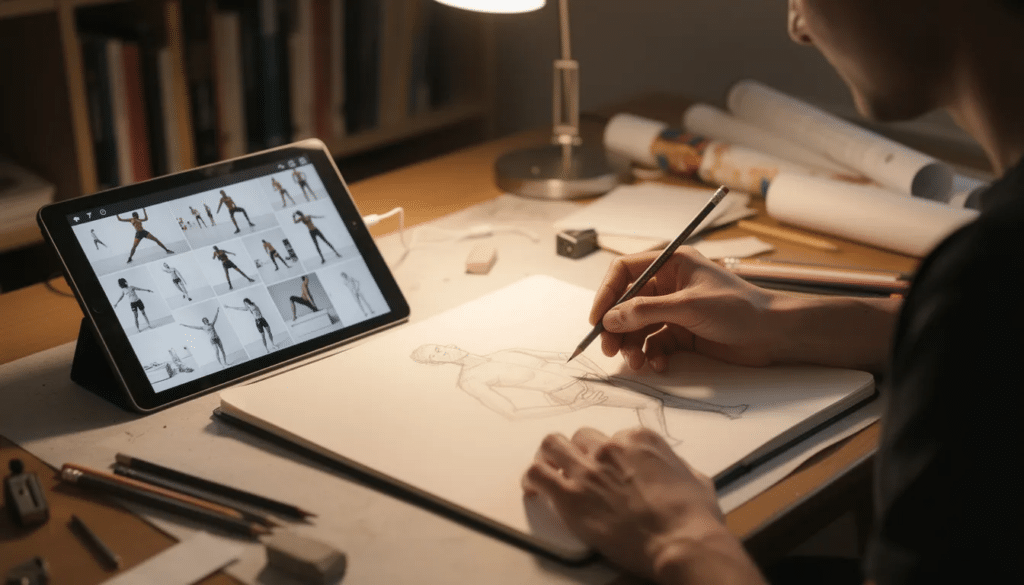
Finding good posture and pose references used to mean flipping through expensive art books or hiring live models. Today, artists can access hundreds of high-quality resources from their browser for free or at low cost. There are a variety of websites available for posture reference, each offering unique features and inspiration for artists.
The tools below represent the most useful options for posture and pose study in 2025. Each subsection covers what the resource does best, whether it’s speed practice, anatomy breakdown, dynamic motion, or subtle postural nuance. With these tools, artists can do different things such as posing models, adjusting angles, and customizing lighting. All examples include whether they’re free, freemium, or paid, plus quick-start instructions for beginners.
PoseMyArt – Customizable 3D Posture Reference
PoseMyArt is a browser-based 3D posing tool that gained significant traction among illustrators and comic artists by 2024-2026. It lets you create custom poses without downloading software or hunting for the exact photo you need.
The idea behind PoseMyArt was to give artists a flexible, browser-based tool for creating custom posture references, allowing for greater creativity and convenience.
What makes it valuable for posture study is the level of control. You can adjust spine curvature, weight distribution, and limb rotation to create standing, sitting, and action postures. Want to see how the body shifts when someone leans on one leg? Adjust the hip angle and watch the shoulders compensate. There are many things you can do in PoseMyArt, such as adjusting lighting, changing camera angles, and experimenting with props to enhance your posture reference.
The animation library and animations deserve attention. Frame-by-frame analysis can teach balance, contrapposto, and dynamic tension in ways static images cannot. You see how the body moves through space rather than freezing a single moment.
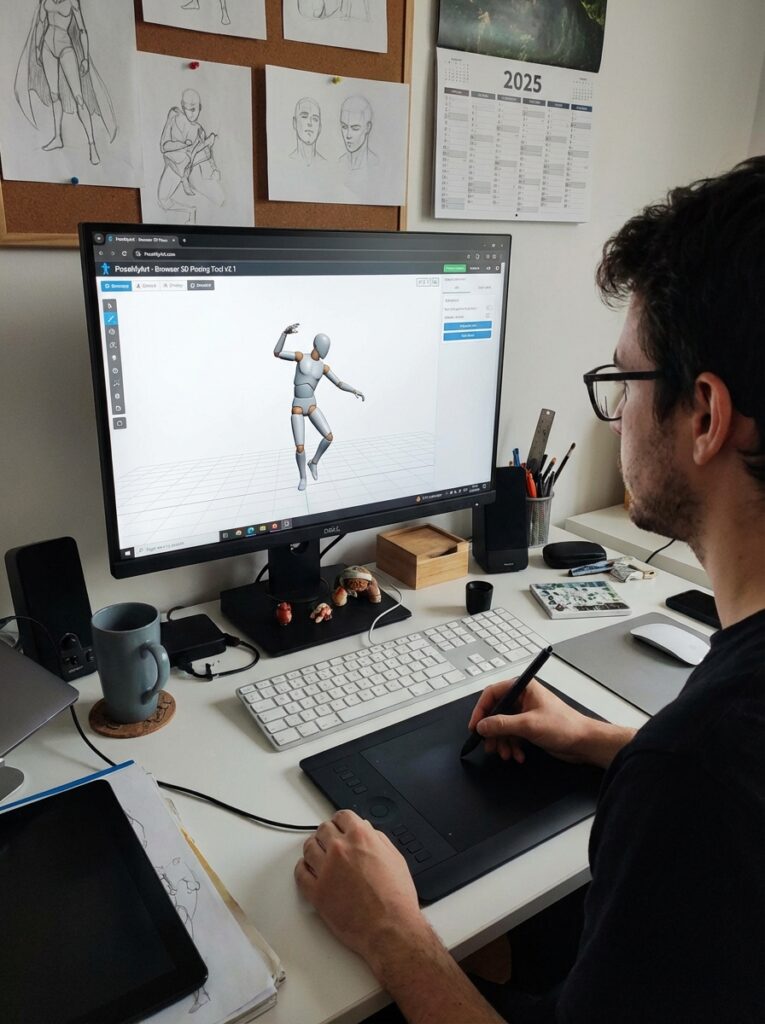
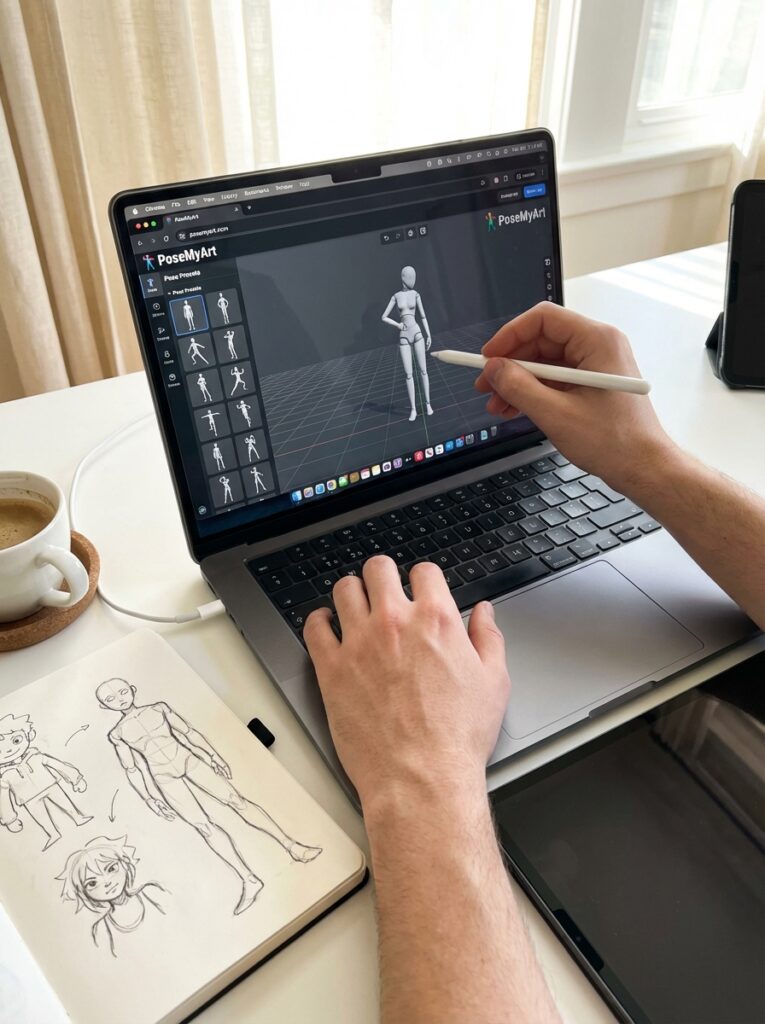
Quick workflow for beginners:
- Choose a base model (anime or realistic style)
- Set your camera angle (front, side, or 3/4 view)
- Tweak the pose using the joint controls
- Take screenshots for your reference folder
No downloads are needed, making it easy for quick experiments. It’s particularly useful for poses that are hard to photograph in real life, like mid-jump action shots or complex foreshortening angles.
Pose Maniacs – Anatomy-Driven 3D Posture Study
Pose Maniacs has been running for over a decade, and it remains one of the best free 3D resources for artists who want to understand structure under different postures. The models show visible musculature, which helps you see how anatomy changes based on body position.
As of 2025, the site offers dozens of categories including running, stretching, crossed legs, fashion poses, and combat stances. Each category shows clear weight shifts and muscle engagement.
Key features for posture study:
- Rotate and drag to view poses from any angle
- Timed practice modes (30, 60, 90 seconds)
- Muscle visibility helps connect posture to anatomy
The simplified, skinless models make it easy to understand how posture affects muscle groups. However, this also means Pose Maniacs is less suited for studying clothing folds, hair movement, or subtle body language cues.
For the most naturalistic results, combine Pose Maniacs sessions with photo-based sources. Use the 3D models to understand the underlying structure, then find real photos to add surface detail and personality.
We hope that Pose Maniacs will add features like hand and head model viewers in the future to further expand its usefulness as a posture reference.
SketchDaily Reference – Timed Posture Drills
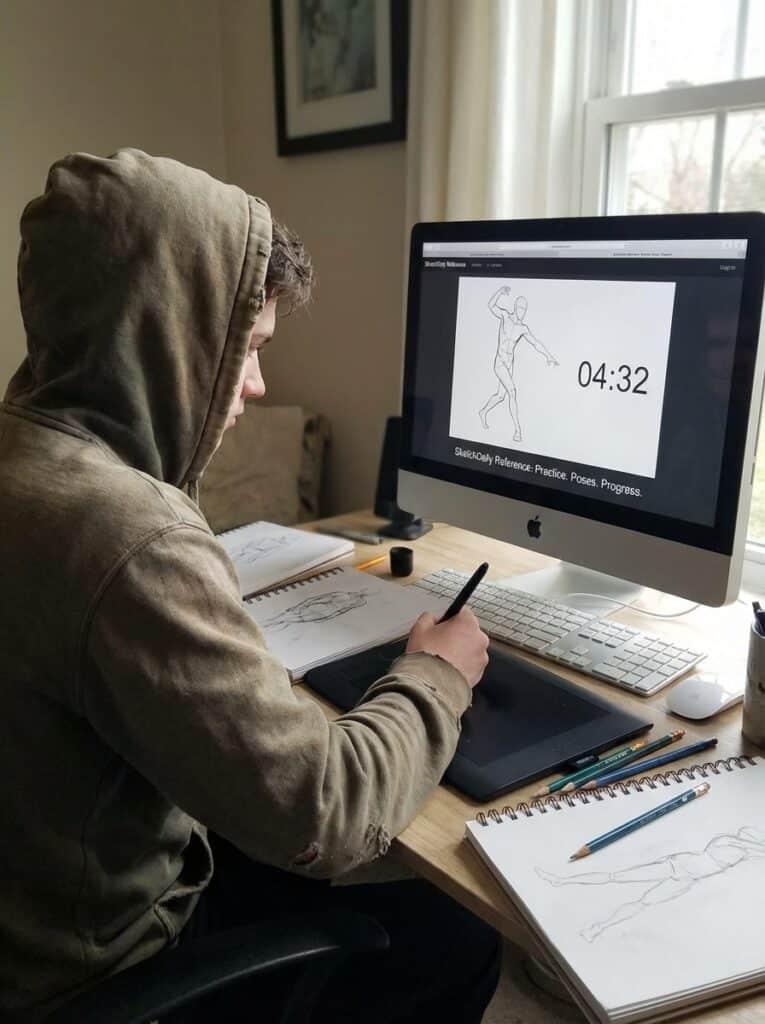
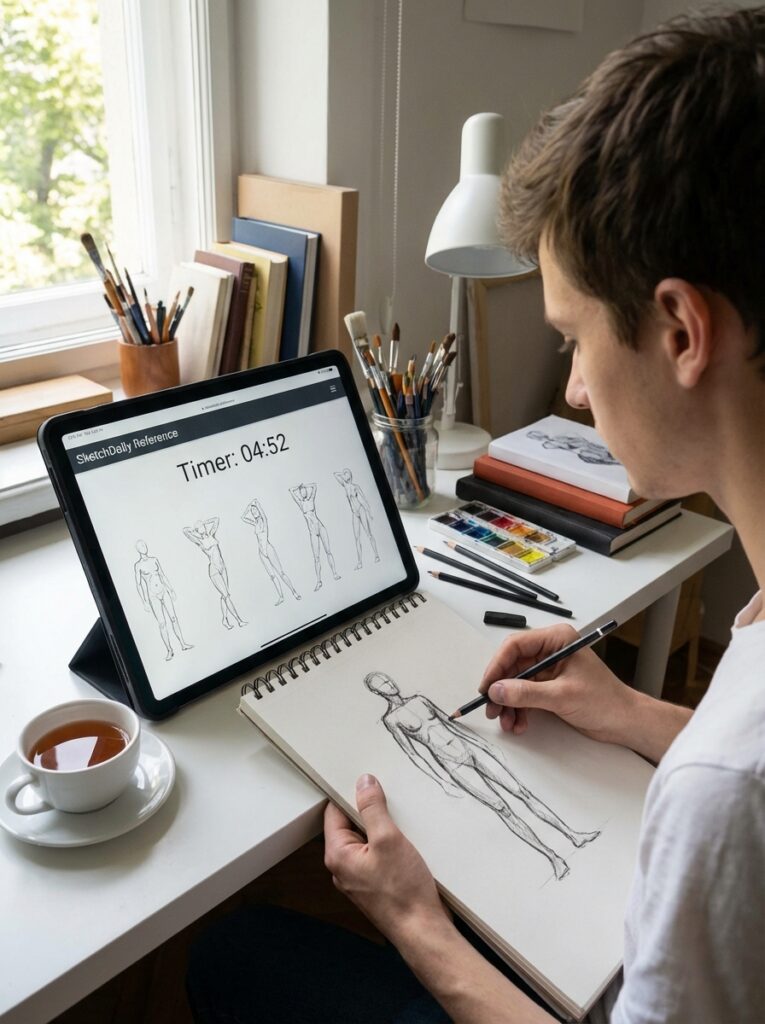
SketchDaily Reference is a browser-based website with a customizable timer, often used by art students who don’t have access to live model sessions. As a website dedicated to posture reference and drawing practice, it provides access to diverse pose images and inspiration collections. It’s designed for practice rather than browsing, which makes a real difference in how you use it.
Users can filter images by body part, genders, clothing level, and pose type (standing, sitting, action). This filtering lets you isolate specific posture challenges. Struggling with seated poses? Filter for sitting references only. Need to practice dynamic action? Select accordingly.
The timer is what makes this site powerful. Timed constraints force you to capture the essential gesture rather than getting lost in detail. When you have 30 seconds, you can’t draw every finger. You have to find the line of action and the weight distribution first.
Sample practice routine:
- 10 minutes of 30-second gestures (capture line of action only)
- 20 minutes of 2-5 minute posture studies (add volume and structure)
- Repeat 3-4 times per week
Most photos use neutral backgrounds, which helps you focus on posture instead of getting distracted by environment details.
AdorkaStock – Real-World Posture Photography
AdorkaStock is a website that has been providing art reference photography since around 2007. The collection includes “work-safe” images with clear, readable poses that emphasize gesture and balance over glamour or distraction.
The variety here is fantastic for posture study. You’ll find dynamic action stances, sitting poses, kneeling, leaning, and expressive postures using props like swords, staffs, umbrellas, and chairs. Neutral clothing and simple backgrounds make it easy to see foreshortening and weight distribution without visual clutter.
What to look for:
- Action poses with clear weight distribution
- Prop interactions that show how posture shifts
- Multiple-angle sets of the same pose
Free galleries cover many needs, with paid pose packs available via Ko-fi or Patreon. If you use these references often for your work, supporting the creator helps keep the resource available.
When saving poses, look for sets that show the same posture from multiple angles. Front, side, and 3/4 views of identical poses are invaluable for rotation studies and understanding three-dimensional form.
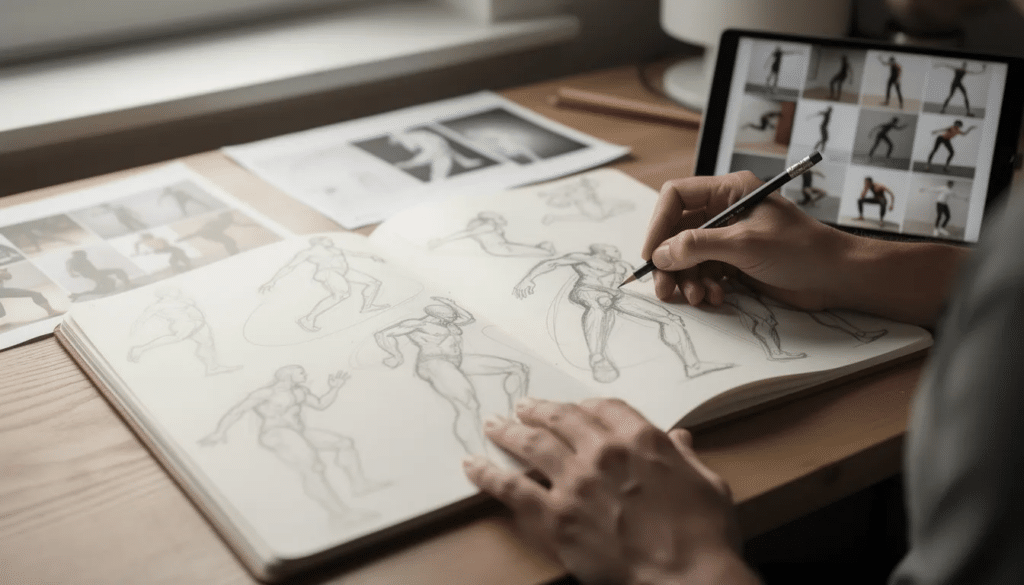
Pinterest and Other Aggregators – Inspiration Boards
Pinterest is a website that functions as a massive visual search engine where queries like “posture reference,” “standing pose,” or “tired office worker posture” can turn up thousands of pins. It’s where imagination meets real-world inspiration at scale, giving users the freedom to explore a wide range of creative references.
Benefits:
- Endless variety of body types and clothing styles
- Easy to create organized boards
- Quick visual search for specific moods or actions
- Pinterest gives users the freedom to explore a wide range of creative references
Drawbacks:
- Inconsistent quality and resolution
- Watermarked or copyrighted images mixed in
- Heavy reuse of the same popular images across fandom and commission art
Use Pinterest mainly for inspiration and mood boards rather than directly copying poses for professional or commercial work. The legal status of many images is unclear, and you don’t want to accidentally reference someone else’s finished illustration. After completing your drawing, post your work on social media, using relevant hashtags, and giving credit to the resources or references you used to engage with the art community.
Create private boards with clear labels: “confident posture,” “slouching,” “combat stance,” “everyday sitting.” This organization pays off when you’re working under deadline and need to find something specific.
One important note: trace only for private study, never publish traced work as original. Reference should inform your drawing, not replace your creative process.
How to Read and Analyze Posture in Reference Images

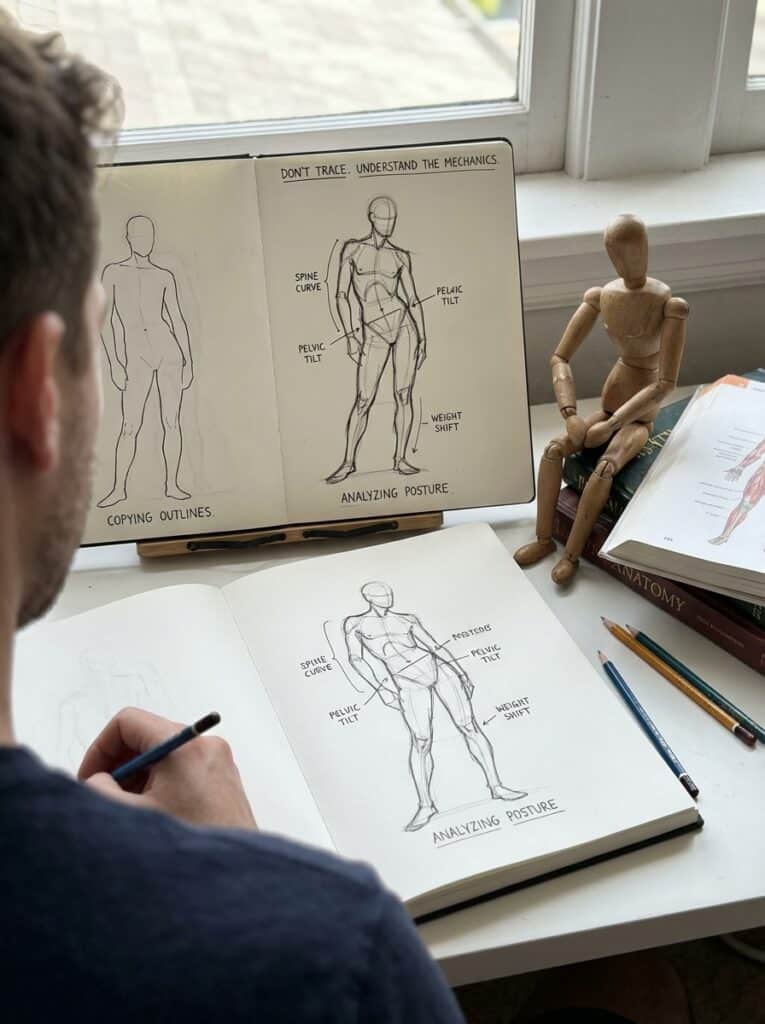
Simply copying outlines from reference images produces stiff, lifeless drawings. To actually improve, you need to consciously analyze how posture works. Understanding the mechanics behind a pose helps you draw convincing figures even when no perfect reference exists.
Here’s a checklist to use while studying any posture reference:
- Find the line of action: Look for a flowing curve (or sharp angle) running from the head through the spine to the supporting leg. This line captures the essential energy of the pose before any detail.
- Identify the center of gravity: Which foot or surface is bearing weight? A boxer leaning forward has weight on the front leg. A relaxed standing figure has weight centered or shifted to one hip.
- Check shoulder and hip angles: In natural standing posture, when one hip tilts up, the opposite shoulder typically tilts down. This creates the classic S-curve called contrapposto that artists have used since ancient Greece.
- Observe head tilt and neck angle: Head position dramatically affects the emotional read. Head down with rounded shoulders suggests shy or tired energy. Chin up with shoulders back reads as confident or aggressive.
- Note hand placement: Arms crossed, hands in pockets, fingers fidgeting—each choice communicates something about the character’s state.
- Practice quick gesture thumbnails: Spend 10-20 seconds capturing only the posture, not the details. These rapid sketches train your eye to see the essential structure first.
Building Your Own Posture Reference Library
A personal reference archive offers real advantages over searching the web every time you need a pose. You’ll have consistent style references, resources tailored to your specific projects, and fast lookup when deadlines are tight.
How to collect references legally:
- Use your own photos
- Download from royalty-free stock sites
- Purchase clearly licensed pose packs
- Avoid scraping paid content you don’t own
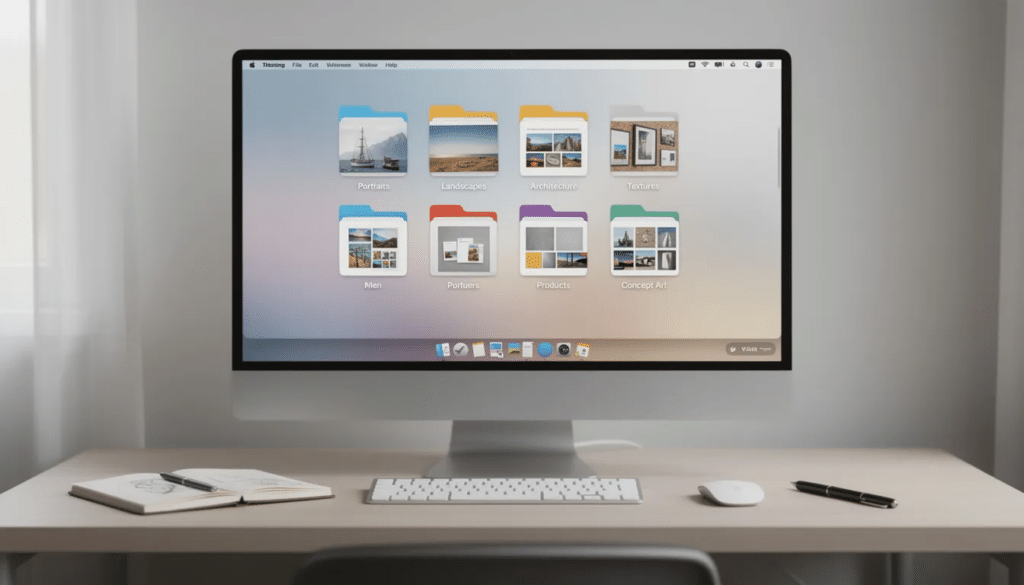
Organize folders or boards by posture intent rather than just pose type. Categories like “confident,” “exhausted,” “fighting,” “casual standing,” “professional posture,” and “teen slouch” make it easy to find what matches your character’s emotional state.
Date-stamp your folders (e.g., “Posture Studies 2025 Q1”) to track improvement over time. This also keeps older, lower-quality references separate from your current collection.
Taking your own photos:
Grab a smartphone and a basic tripod. Photograph yourself or willing friends in the poses you need. Capture side, front, and 3/4 angles for each posture. Homemade refs have one major advantage: you control exactly what you get.
Don’t forget backup strategies. Use cloud storage to protect years of posture reference collections from device failure. Losing a carefully curated library to a crashed hard drive is a real setback.
Practice Routines for Mastering Posture Drawing
Knowing about resources means nothing without consistent practice. Here are concrete routines that fit different schedules and goals.
15-Minute Daily Routine
This is your minimum viable practice. Open SketchDaily or Pose Maniacs and run timed gestures:
- 5 poses at 30 seconds each
- 3 poses at 1 minute each
- 2 poses at 2 minutes each
Focus only on line of action and balance. No details, no shading. Just capture the essential posture.
45-60 Minute Weekly Deep Dive
Once a week, choose 3-5 posture references from AdorkaStock or PoseMyArt. Study them with anatomy overlays:
- Sketch the gesture (2 minutes)
- Add simplified skeleton/wireframe (5 minutes)
- Draw the full figure with volume (15-20 minutes per pose)
This slower practice builds understanding that fast gestures can’t provide.
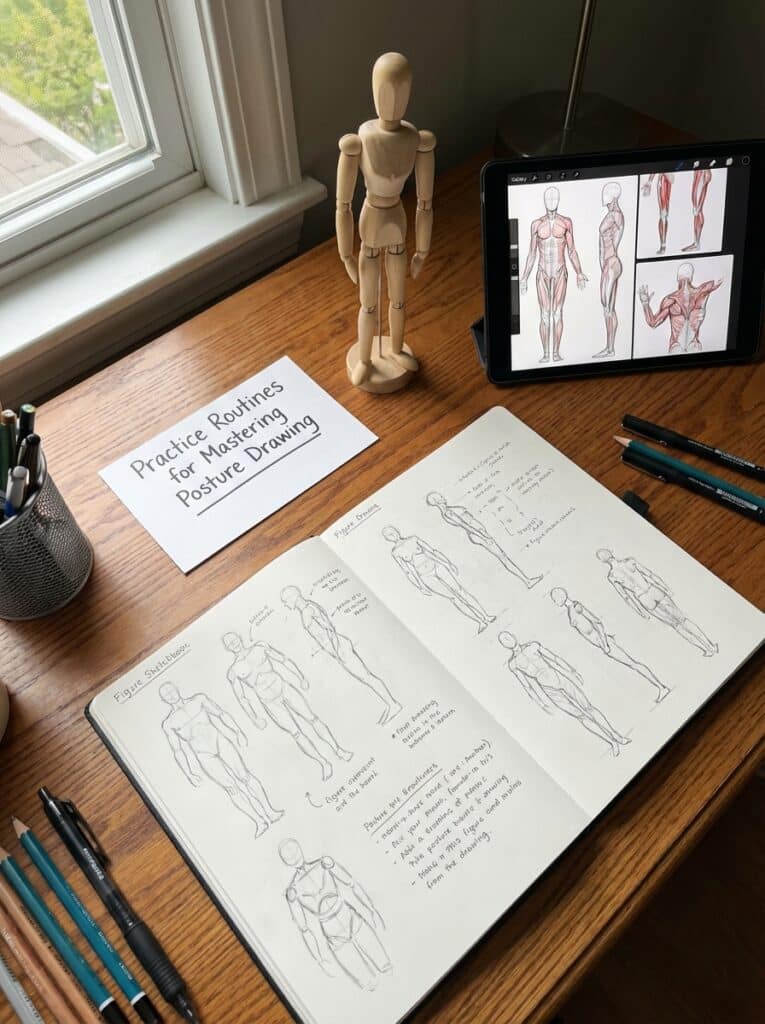

Project-Based Exercise
Design a character sheet showing the same character in 4-6 different postures: neutral standing, walking, sitting, angry, relaxed, and action. This forces you to understand how one body moves through different emotional and physical states.
Consistency matters more than marathon sessions. Even 10 minutes a day across several months will show visible improvement. Periodically draw posture studies from memory after closing the reference—this tests whether you’re actually learning or just copying.
Common Mistakes When Using Posture Reference (and How to Avoid Them)
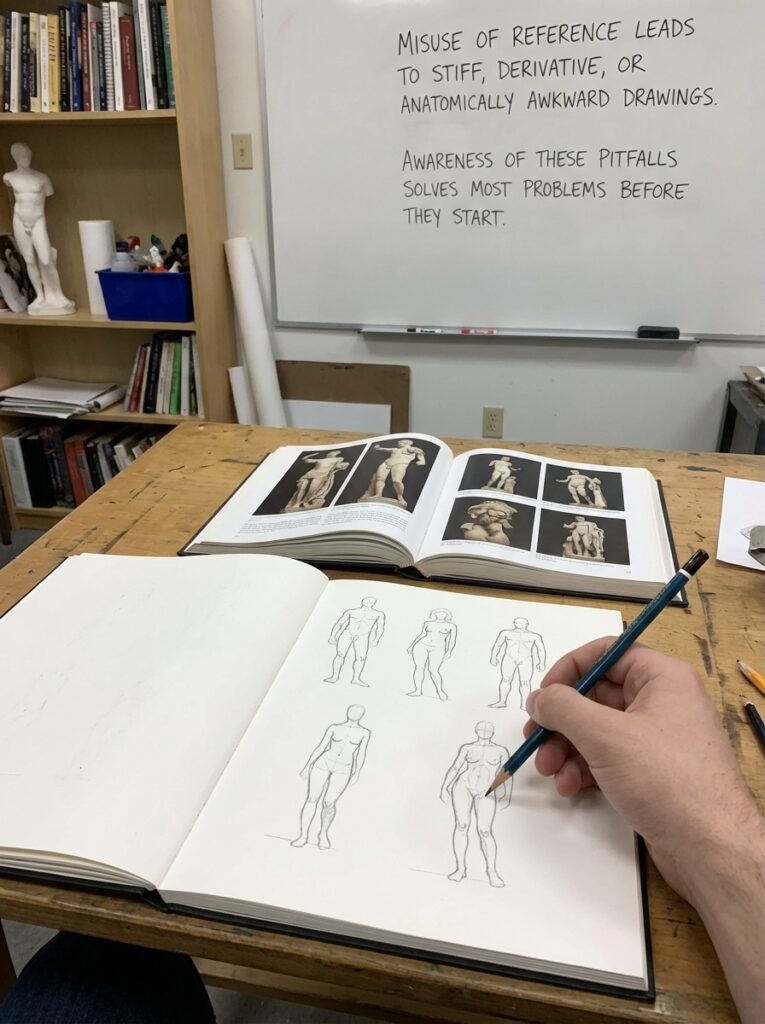
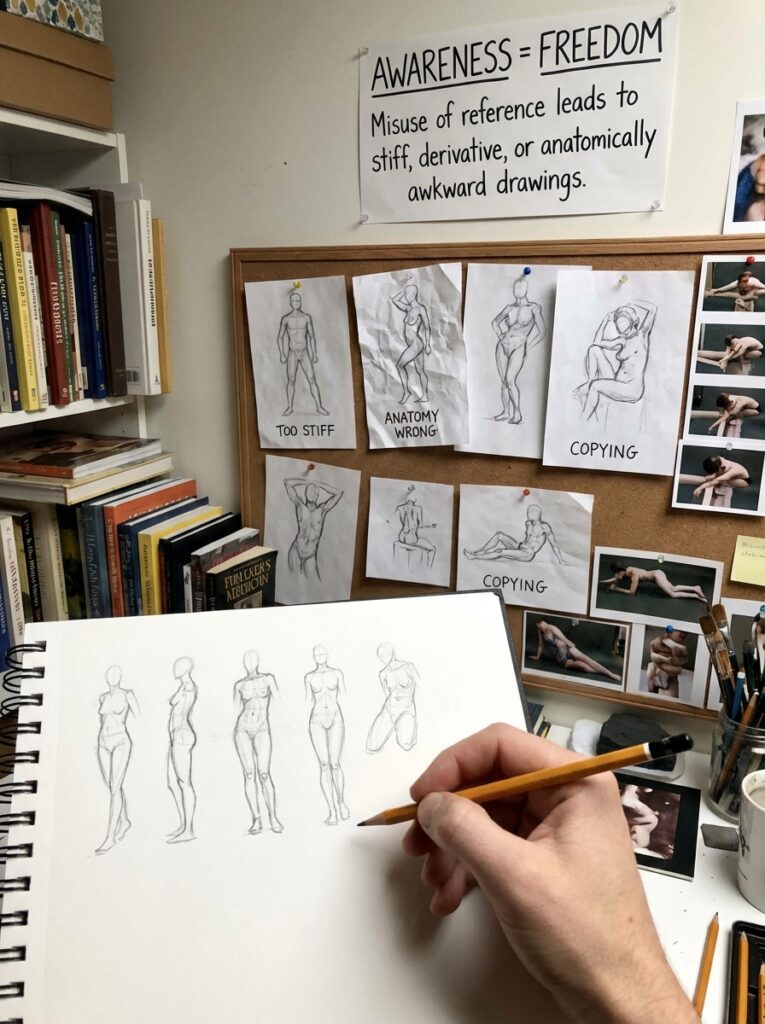
Misuse of reference leads to stiff, derivative, or anatomically awkward drawings. Awareness of these pitfalls solves most problems before they start.
Frequent errors:
- Copying outlines without understanding: Tracing contours doesn’t teach you why the body bends that way. Analyze the underlying structure first.
- Ignoring perspective: A reference photo was taken from a specific camera angle. If your drawing uses a different viewpoint, the reference proportions won’t match.
- Same posture for every character: If all your figures stand identically, they lose individuality. Vary posture based on personality and context.
- Over-straightening spines: Real people rarely stand with perfectly vertical backs. Slight curves and tilts create life.
- Using only one body type: Relying exclusively on thin, athletic models limits the believability and representation in your art. Seek out references with diverse body types.
- Presenting traced work as original: Tracing for private study is fine. Publishing traced art as your own is not acceptable in the professional world.
Simple corrections:
- Exaggerate gesture slightly to add energy
- Use 2-4 references per complex drawing
- Flip the canvas horizontally to check balance
- Study real people in public places when possible
- Save both successful and “failed” studies to review your growth
Conclusion
Posture reference is a long-term ally for improving anatomy, storytelling, and character design. It’s not a beginner crutch—professionals use reference constantly. The difference is knowing how to analyze and apply what you see rather than copying blindly.
The resources covered here—3D tools like PoseMyArt, photo libraries like AdorkaStock, practice sites like SketchDaily, and inspiration platforms like Pinterest—give you everything needed to study posture at any level. Pick one and start today.
Even 10-15 minutes of daily practice adds up to hundreds of hours over a year. Build your personal reference library through 2025 and beyond, updating it as your style and projects evolve. Connect with online art communities or peers to share your posture study progress for accountability and feedback.
The only thing standing between your current skill level and noticeably better figure drawing is consistent, focused practice. The tools exist. The references are available. The rest is up to you.
FAQ


Q: Is it okay to trace posture references?
Tracing for private study is generally acceptable as a learning tool. It helps you understand proportions and flow. However, traced work should not be published or sold as original art. For portfolio or client work, use reference to understand posture and then redraw it in your own way.
Q: How many posture references should I use for one drawing?
Many professionals in 2024-2025 use 2-4 references per complex illustration: one for main posture, one for lighting, and others for clothing, hands, or facial expression. Combining multiple sources prevents your work from looking like a direct copy of a single photo.
Q: What if I can’t find the exact posture I need?
Use 3D tools like PoseMyArt or Pose Maniacs to construct the base posture you have in mind. Then supplement with photo references for surface details like clothing folds, facial expression, or hand position. You can also photograph yourself or a friend to capture specific angles that don’t exist in stock libraries.
Q: How long does it take to see improvement from posture practice?
With consistent practice (15-30 minutes a day, 4-5 days a week), most beginners notice clearer, less stiff poses within 4-8 weeks. Significant gains in confidence and accuracy typically appear over 6-12 months of regular work.
Q: Do I need deep anatomy knowledge before using posture reference?
No. Posture reference is useful at all skill levels. Beginners can focus on simple gesture and balance, learning to see the line of action and weight distribution. More advanced artists use the same references to refine anatomy details and subtle body language over time. The resources grow with you.
- 21shares
- Facebook0
- Pinterest21
- Twitter0
- Reddit0