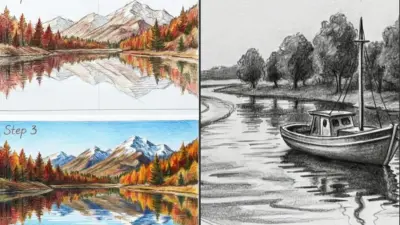
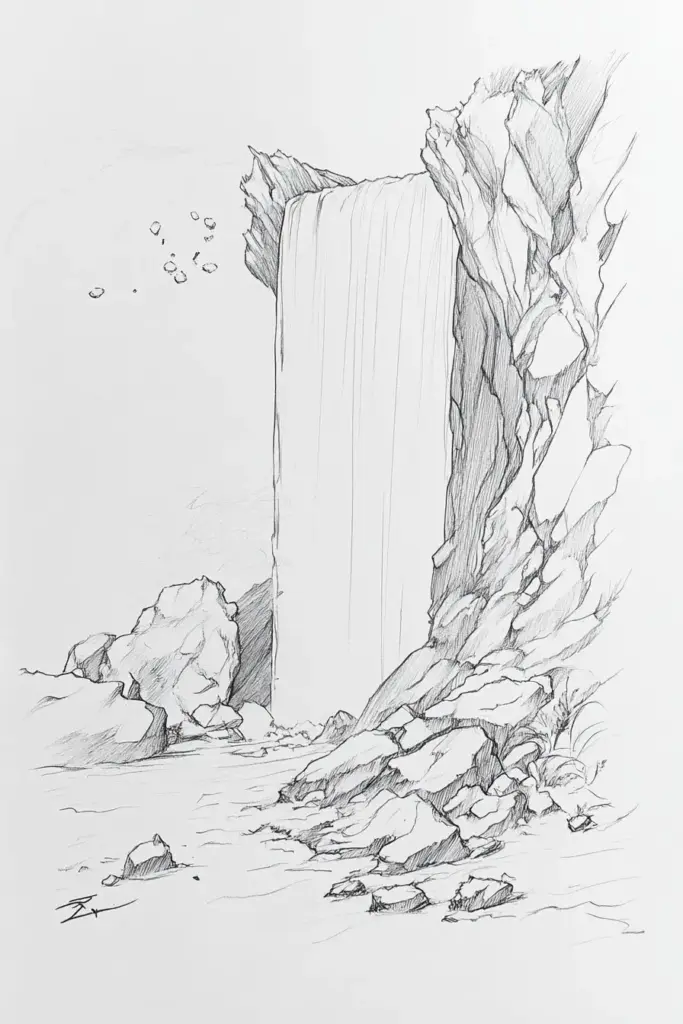
Waterfalls are one of the most visually striking natural features an artist can draw. Flowing water, dramatic drops, misty spray, and rugged rocks combine movement and calm in a single scene. Yet many beginners feel intimidated when learning how to draw a waterfall because water doesn’t have a fixed shape.
The good news? Drawing a waterfall is much easier when you break it into simple shapes and layers. You don’t need advanced art skills—just patience, observation, and a step-by-step approach.
- What Supplies Do You Need to Draw a Waterfall?
- Step 1: Plan the Waterfall Composition
- Step 2: Draw the Basic Shape of the Waterfall
- Step 3: Sketch the Cliff and Rocks
- Step 4: Add Flow Lines to the Water
- Step 5: Draw the Splash and Mist at the Bottom
- Step 6: Shade the Rocks for Depth
- Step 7: Shade the Waterfall (Less Is More)
- Step 8: Add Background Elements (Optional)
- How to Draw a Waterfall Realistically
- How to Draw a Waterfall for Beginners
- How to Draw a Waterfall with Pencil, Pen, or Digital Tools
- Common Mistakes When Drawing Waterfalls
- Practice Exercise: 10-Minute Waterfall Sketch
- Frequently Asked Questions
- Final Thoughts: Anyone Can Draw a Waterfall
This guide will teach you how to draw a waterfall from start to finish, whether you’re sketching with pencil, pen, or digital tools. By the end, you’ll know how to create flowing water, believable rocks, depth, and atmosphere.
What Supplies Do You Need to Draw a Waterfall?
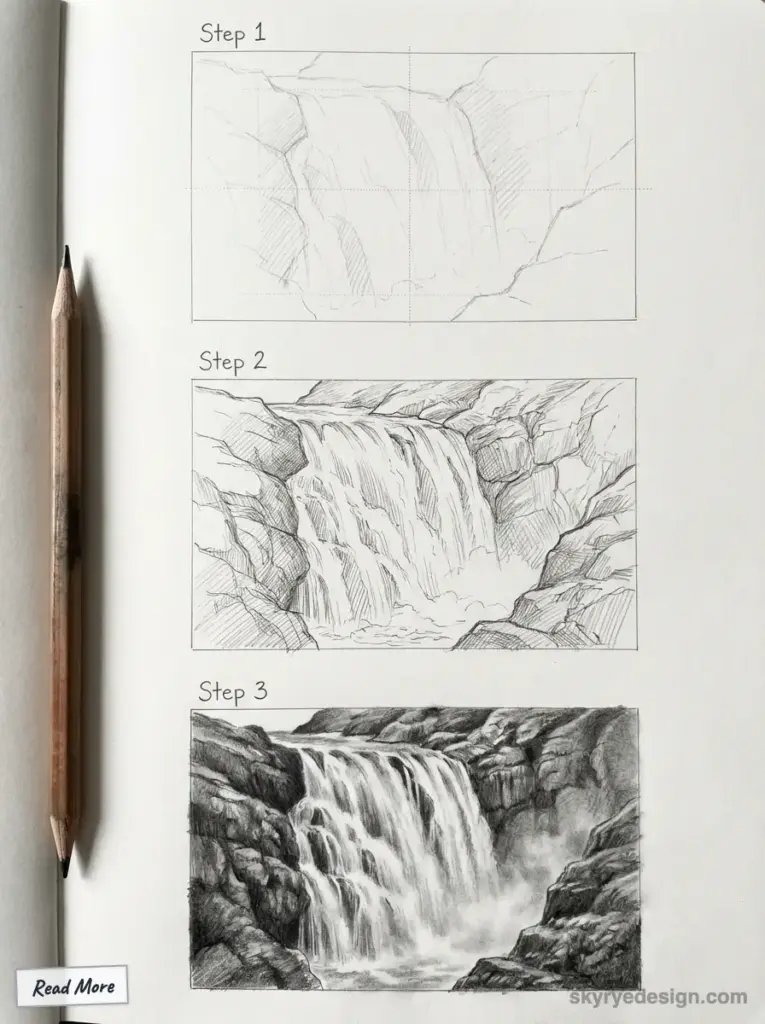
Before you begin, gather a few basic materials. Keep it simple—fancy tools are optional.
Basic supplies:
- Pencil (HB for sketching, 2B–4B for shading)
- Eraser (kneaded erasers work best)
- Drawing paper or sketchbook
- Fine liner or pen (optional)
- Blending stump or tissue (optional)
Optional tools:
- Colored pencils, watercolor, or markers
- Digital tablet and drawing software
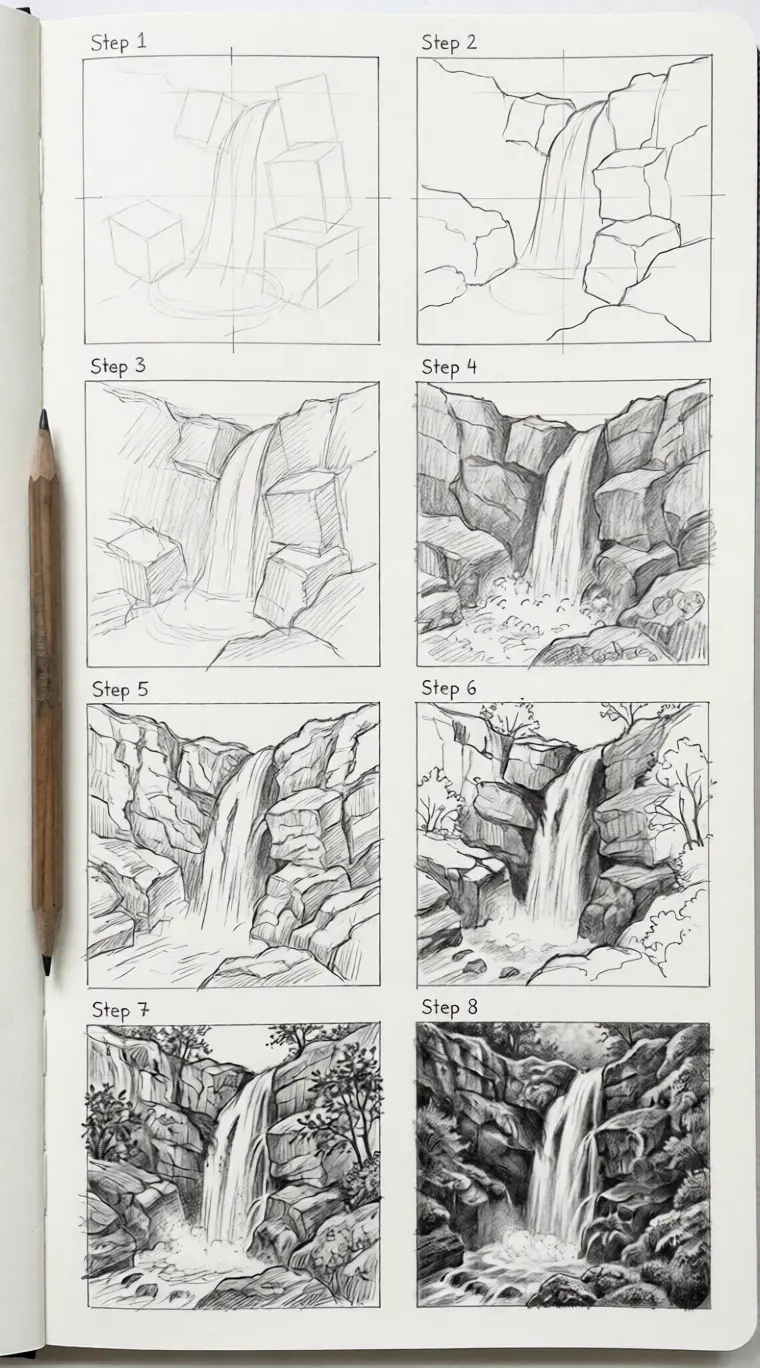
Step 1: Plan the Waterfall Composition
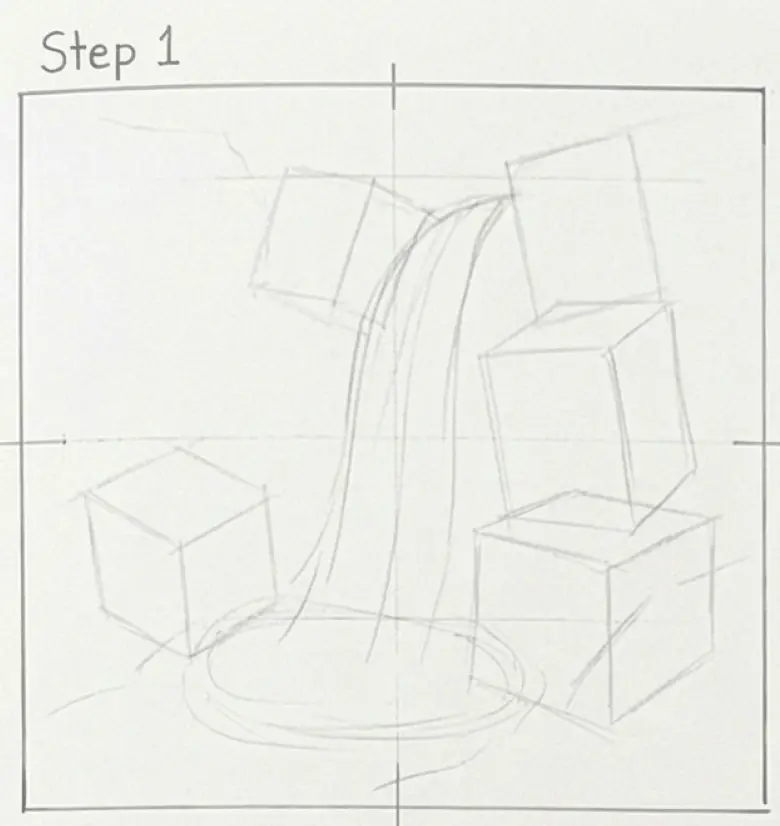
Every strong waterfall drawing starts with a clear composition. Don’t jump straight into details—begin by mapping out the scene.
Ask yourself:
- Is the waterfall tall and narrow or wide and layered?
- Is it viewed from the front, side, or above?
- Will it include cliffs, trees, or a pool at the bottom?
Lightly sketch a vertical guideline where the waterfall will fall. This helps maintain flow and direction.
Tip: Avoid perfectly straight lines. Natural waterfalls curve, taper, and break as they fall.
Step 2: Draw the Basic Shape of the Waterfall
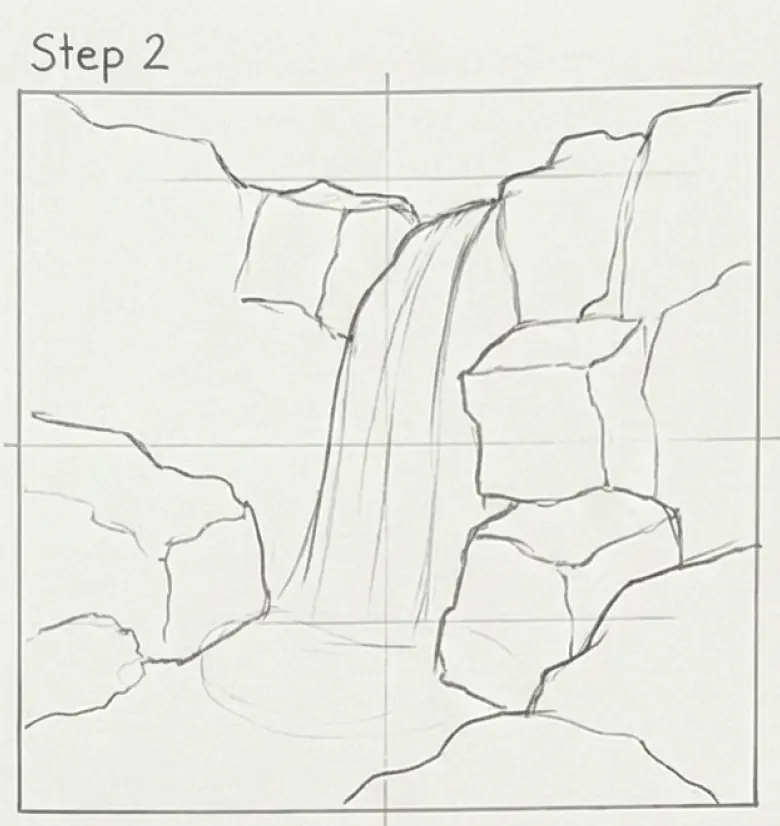
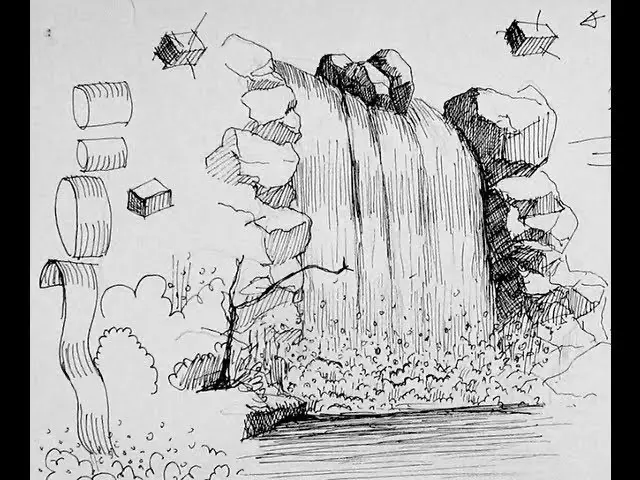
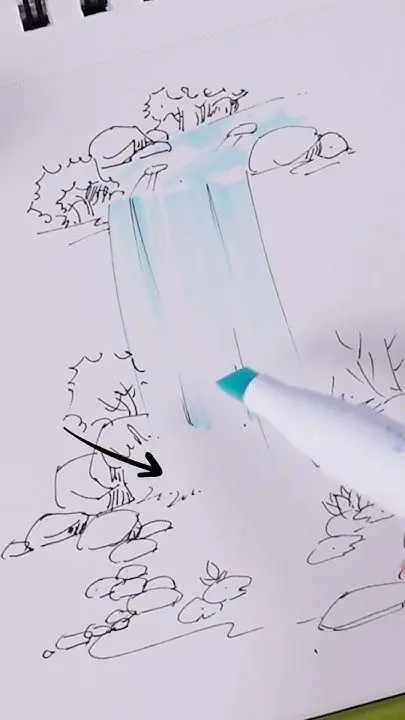
Now define the waterfall’s overall form. Think of the water as ribbons or curtains, not solid blocks.
- Draw two slightly uneven vertical lines for the edges
- Let the water widen or narrow as it falls
- Break the edges with soft zigzags to suggest movement
At the bottom, sketch a loose oval or irregular shape to represent the splash pool.
Beginner mistake: Drawing the waterfall like a stiff rectangle
Fix: Add gentle curves and breaks along the edges
Step 3: Sketch the Cliff and Rocks
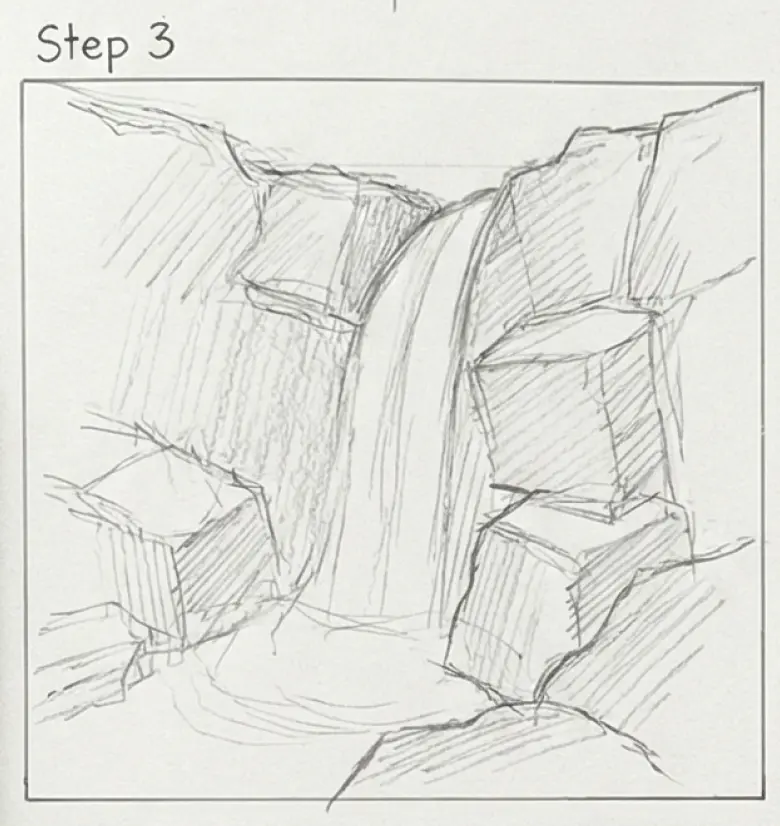
Waterfalls depend on strong surrounding structures. Rocks anchor the scene and add contrast to the soft water.
- Draw uneven rock shapes on both sides of the waterfall
- Use angular lines and cracks to suggest texture
- Vary rock sizes to avoid repetition
Rule of thumb: Rocks = hard, angular lines. Water = soft, flowing lines.
Step 4: Add Flow Lines to the Water
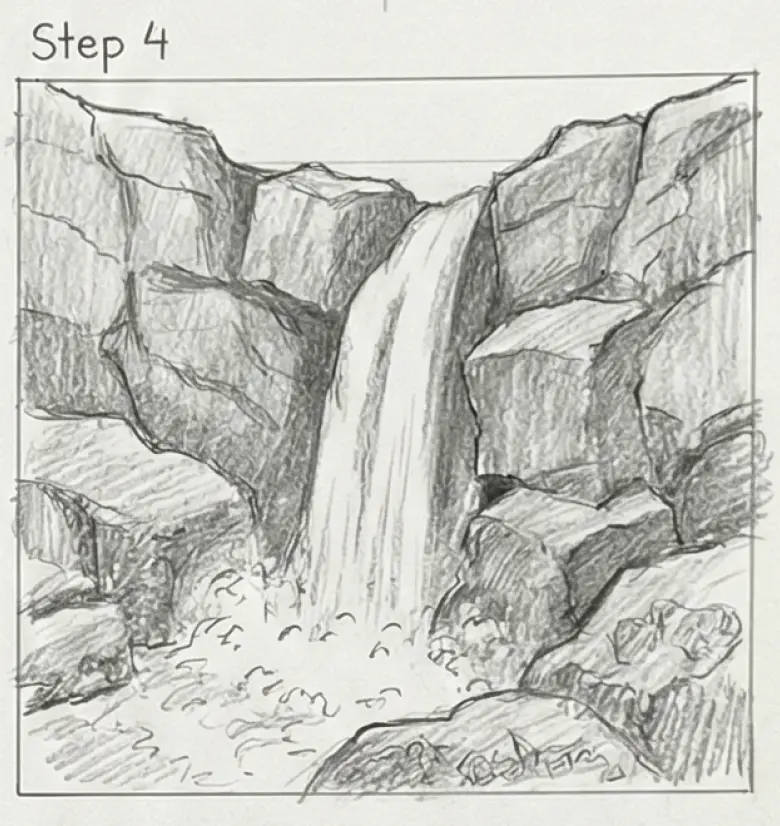
This is where your waterfall starts to feel alive.
Inside the waterfall shape:
- Draw long, vertical lines following the fall
- Vary spacing—some lines close together, others far apart
- Let lines curve slightly as they descend
These lines represent streams of water, not outlines.
Pro tip: Never shade water horizontally—always follow the direction of flow.
Step 5: Draw the Splash and Mist at the Bottom
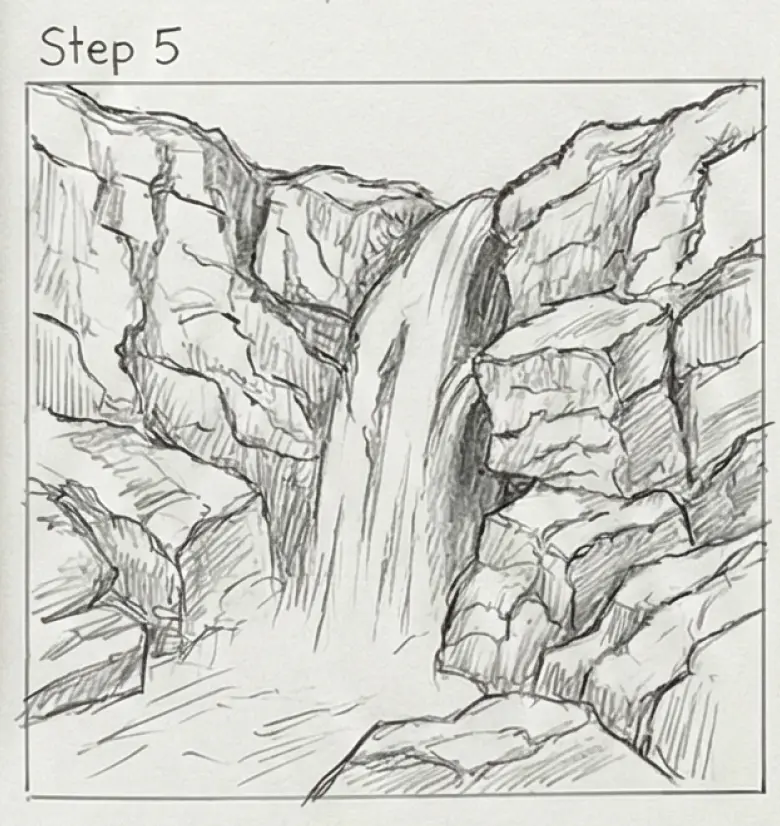
The base of the waterfall should feel energetic and chaotic.
- Use short curved strokes to show splashing water
- Draw small arcs and dots for mist
- Fade details as mist rises upward
Mist adds realism and depth. Lighter lines = softer spray.
Step 6: Shade the Rocks for Depth
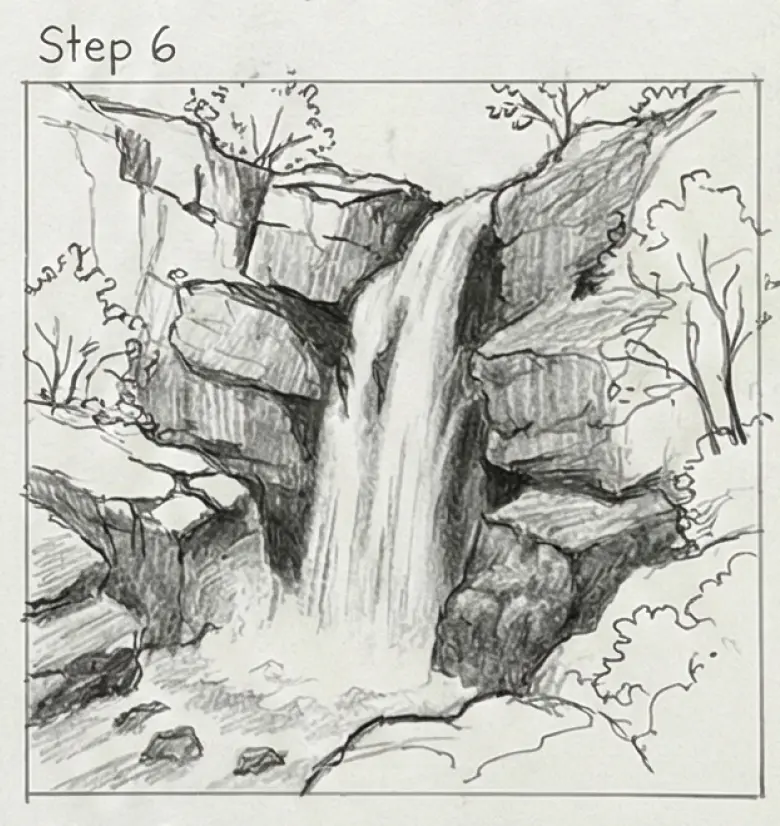
Shading brings your waterfall drawing to life.
- Choose a light source (usually from above)
- Shade rock crevices darker
- Leave edges lighter to show highlights
Use:
- Short, broken strokes
- Cross-hatching for deeper shadows
- Softer shading near water reflections
Avoid: Over-smoothing rocks—they should look rough, not polished.
Step 7: Shade the Waterfall (Less Is More)
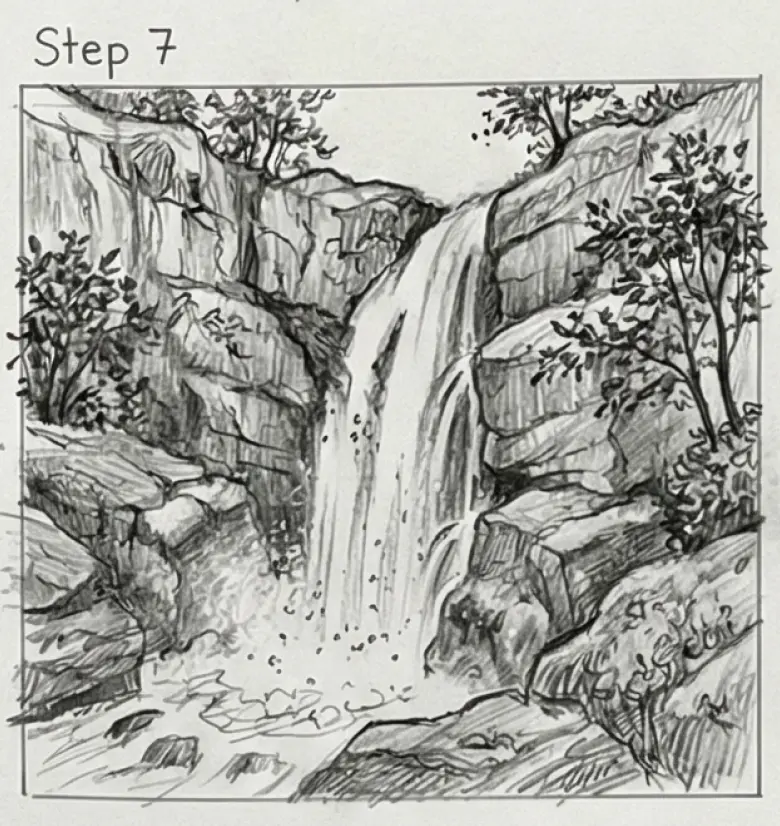
Water is mostly defined by highlights, not heavy shading.
- Leave most of the waterfall white
- Lightly shade between flow lines
- Add darker tones near edges and behind rocks
The brightest whites should be:
- The center of falling water
- Splash zones
- Mist areas
Step 8: Add Background Elements (Optional)
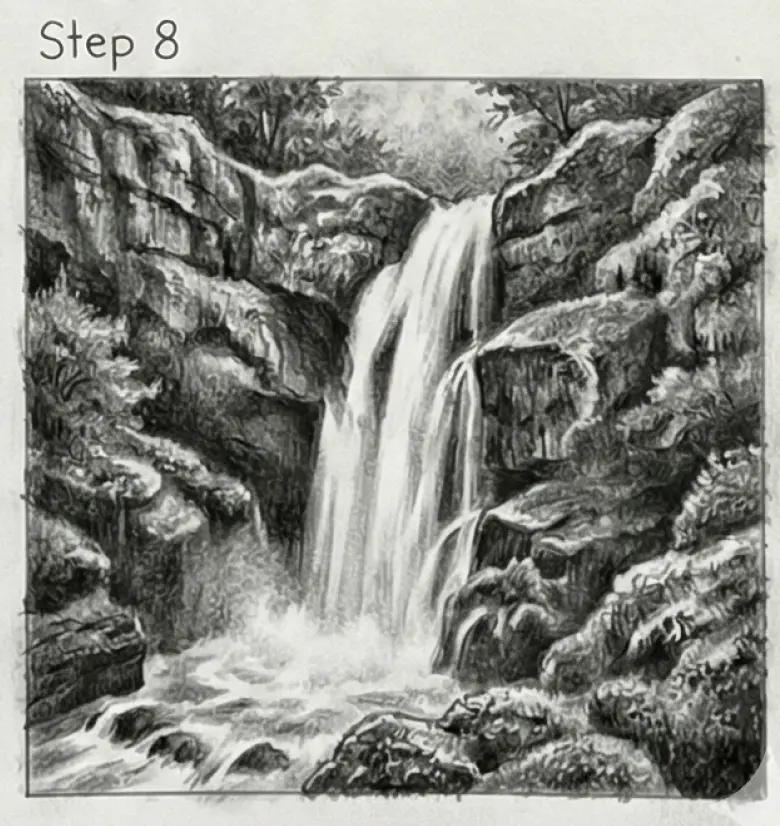
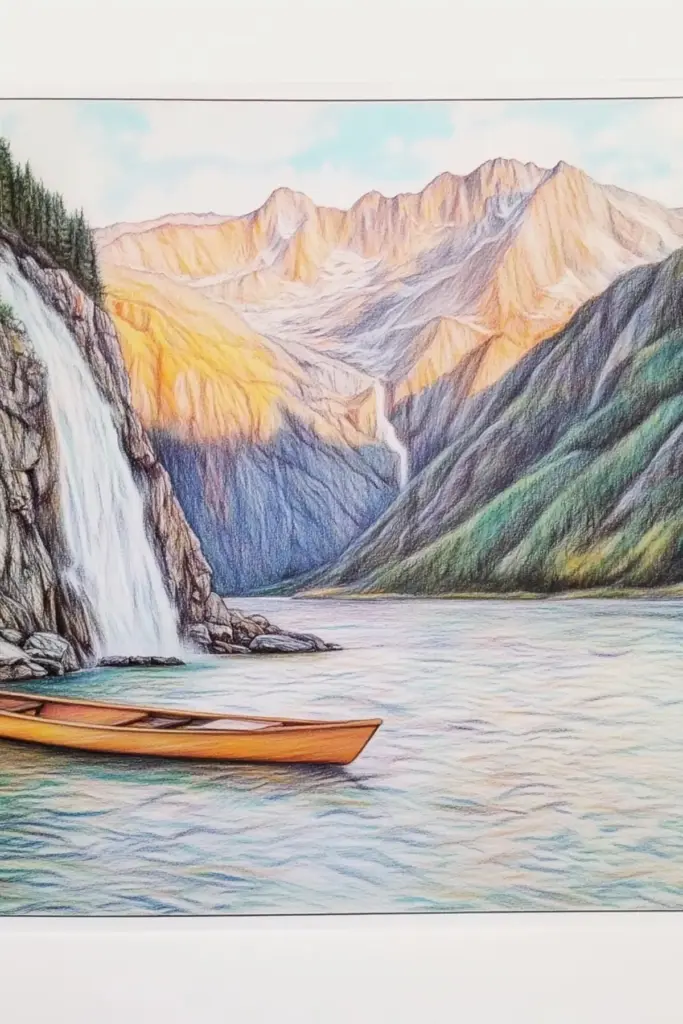
To create a full landscape, you can add:
- Trees or plants along cliff edges
- Distant mountains
- A river flowing away from the waterfall
Keep background details lighter and less defined to maintain depth.
How to Draw a Waterfall Realistically
To make a waterfall look realistic:
- Use contrast (dark rocks, light water)
- Avoid symmetry
- Vary line thickness
- Let water overlap rocks slightly
Realism comes from imperfection.
How to Draw a Waterfall for Beginners
If you’re new to drawing:
- Start with pencil only
- Use reference photos
- Practice small sketches
- Focus on flow, not detail
Even simple waterfall drawings can look beautiful with good movement.
How to Draw a Waterfall with Pencil, Pen, or Digital Tools
Pencil
- Best for beginners
- Easy to adjust shading
- Great for realism
Pen & Ink
- Use varied line weight
- Rely on contrast
- Avoid outlining every edge
Digital
- Use textured brushes
- Lower opacity for mist
- Layer shadows gradually
Common Mistakes When Drawing Waterfalls
- Straight vertical edges – Nature is irregular
- Too much shading on water – Water reflects light
- Flat rocks – Add cracks and angles
- No mist or splash – Makes the fall feel weak
Practice Exercise: 10-Minute Waterfall Sketch
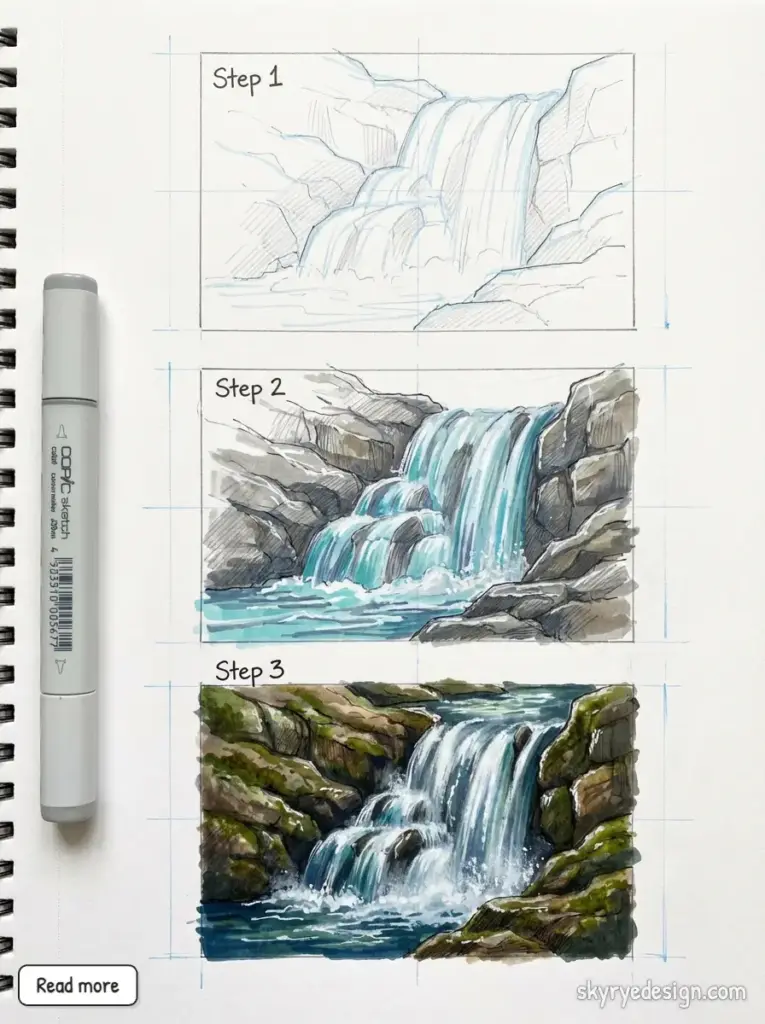
- Set a timer for 10 minutes
- Draw only the waterfall and rocks
- No erasing allowed
- Focus on motion, not perfection
Repeat daily for visible improvement.
Frequently Asked Questions
How do you draw a waterfall step by step?
Start with a vertical guide, sketch the waterfall shape, add flowing lines, draw rocks, shade lightly, and finish with mist and splash details.
Is drawing water hard?
Water is challenging because it has no fixed shape, but using flow lines and highlights makes it manageable.
How do you shade a waterfall?
Shade minimally. Leave most areas white and add light tones near edges and behind rocks.
What pencil is best for drawing waterfalls?
HB for sketching and 2B–4B for shading work best.
Final Thoughts: Anyone Can Draw a Waterfall
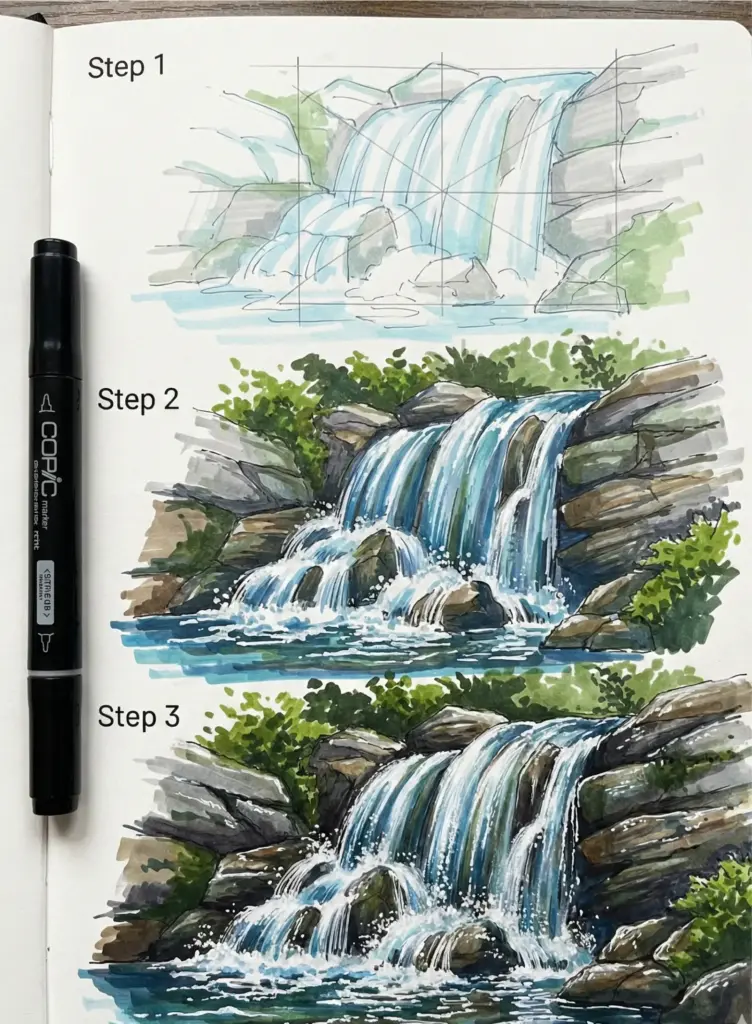
Learning how to draw a waterfall is about understanding movement, not mastering complex techniques. When you stop trying to control every line and let the water flow naturally, your drawings instantly improve.
Start simple. Practice often. Embrace imperfections.
Waterfalls are meant to move—and your art should too.
- 5.0Kshares
- Facebook0
- Pinterest5.0K
- Twitter0
- Reddit0