If you have ever tried to figure out how to draw a mountain bike easily and ended up with something that looks more like a wobbly shopping cart, you are so not alone. Bicycles are sneaky. They look simple, but once you start sketching all those circles and triangles and tiny details, it is really easy to get overwhelmed or frustrated.
In this guide, I am going to walk you through several beginner-friendly ways to draw a mountain bike that actually looks like, well, a mountain bike. Think of this as us sitting together at the table with a sketchbook and a pencil, just figuring it out step by step. No art degree required. No perfect lines needed.
I will pull ideas from a few great tutorials, like Easy Drawing Guides, Cayligraphy, and HelloArtsy, and turn them into clear, low-pressure methods you can try today.
Before we jump in, here is a quick table of contents so you can skip straight to what you need.
Why mountain bikes feel so hard to draw
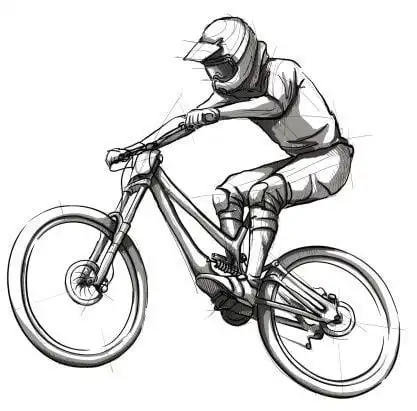
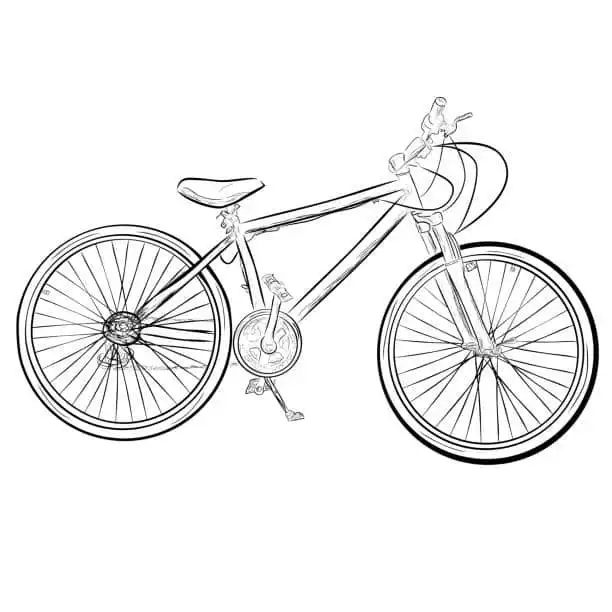
When I first tried to learn how to draw a mountain bike easily, I assumed the wheels would be the tricky part. Turns out, almost everything feels tricky at first. The frame looks wrong, the wheels feel uneven, and somehow the whole bike seems like it is about to tip over.
Here is what usually gets in the way:
- The wheels are supposed to be perfect circles
- The frame is made of multiple connected angles
- Tiny parts like pedals, spokes, and chains add a lot of visual detail
- The perspective and proportions need to feel believable
If you are staring at a blank page thinking, “Where do I even start?”, that makes perfect sense. So rather than starting with “Draw a detailed bike”, I like to break it into bite-sized methods that build on each other. You can stop whenever you feel done, or keep going for more detail.
Think of each method below as one tool in your toolbox. Use one, or combine all of them. There is no single “right” way.
Method 1: Start with two simple circles
If I could only give you one trick for drawing a mountain bike, it would be this: start with the wheels. Almost every good tutorial leans on that idea.
The blog at Cayligraphy suggests starting with two nearly equal circles spaced about one radius apart. That simple move instantly gives you the foundation of your bike.
Step by step: The wheel first method
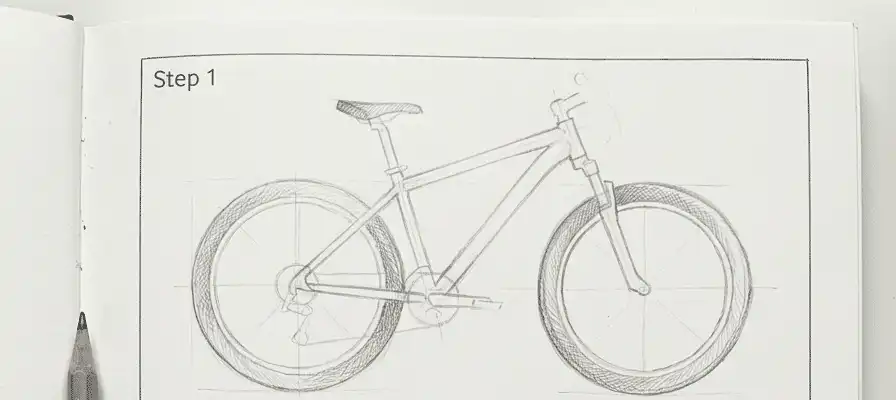
- Draw two circles
- Lightly sketch one circle for the back wheel.
- Draw a second circle for the front wheel. Try to make it the same size.
- Leave about one wheel radius of space between them.
Tip: You can trace around a cup or bottle cap if freehand circles stress you out.
- Add wheel centers (hubs)
- Inside each wheel, add a small circle or dot right in the center.
- These are the hubs where the spokes connect.
- Check spacing and size
- Look at both wheels and ask:
- Are they close enough together to feel like part of one bike?
- Are they roughly the same height and width?
- If something feels off, this is the easiest time to erase and adjust.
- Optional: Add a ground line
- Draw a light horizontal line that both wheels are touching.
- This makes sure your bike does not look like it is floating in the air or falling downhill by accident.
By stopping here, you are already past the hardest mental hurdle. You have a base that makes sense, and your page no longer feels intimidatingly empty.
Method 2: Build the frame with triangles
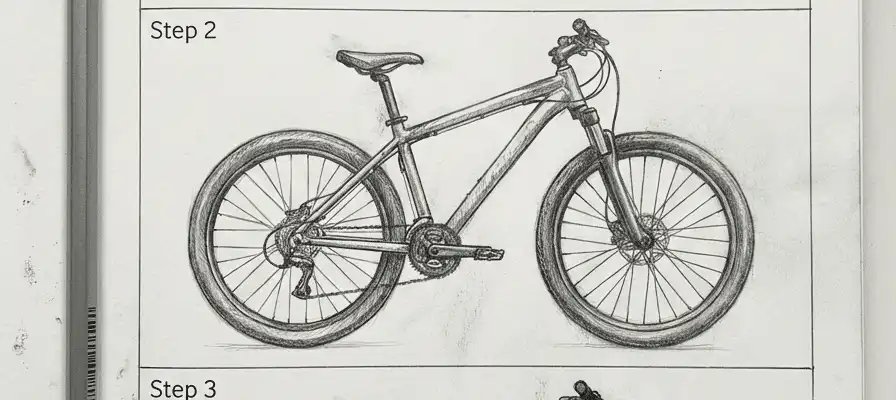
Once the wheels are in place, the next step to draw a mountain bike easily is to add a frame that looks solid but simple. Complex curves can come later. For now, I like using triangles as my secret weapon.
The Cayligraphy tutorial breaks bike frames into a series of triangles that form a trapezoid shape, with parallel top and bottom lines and aligned sides. That sounds technical, but in practice, it is very friendly for beginners.
Step by step: Triangle frame shortcut
- Mark three key dots
- One above the back wheel for the seat.
- One slightly in front and above the center space between the wheels for the top of the front tube.
- One just above the front wheel hub, where the handlebars will connect.
- Connect dots with straight lines
Starting from your dots, draw lines to build three connected shapes:
A triangle from the seat dot down toward the middle space between the wheels
A second triangle from that middle area toward the front wheel area.
A smaller triangle or line to connect up toward the handlebar dot. You will end up with a kind of geometric “skeleton” of a bike frame.
- Thicken the frame
- Turn each line into a pair of lines to form tubes.
- Keep them roughly parallel.
- Do not worry about making them perfect. A few slightly uneven lines are totally fine.
- Carve out the seat and handlebars
- On the back dot, draw a small vertical line up and then a simple seat shape on top. A rounded pizza slice works great, as Cayligraphy suggests.
- On the front dot, draw a short vertical or slightly angled line, then add handlebars. A straight line with short vertical grips on each end is more than enough right now.
At this stage, you have what looks like a very simplified mountain bike. If you want a heavier or more rugged look, slightly thicken the frame lines and angle them a bit more aggressively.
Method 3: Add convincing wheels without fuss
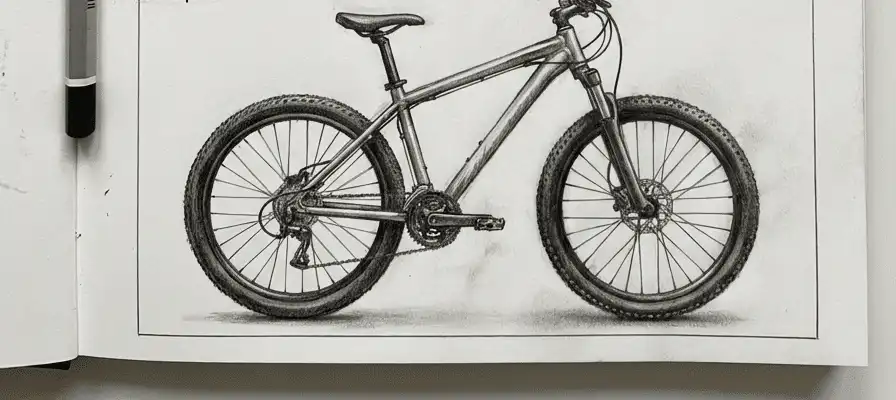
Wheels are the part that often makes people say, “Forget it, I am done.” So I like to be extra kind to myself here.
The guides at Easy Drawing Guides and HelloArtsy both emphasize starting with basic outer shapes and then layering detail only if you want it.
Option A: Super simple wheels
If you want to keep frustration low, stay with this level:
- Outline the tires
- Around each wheel circle, draw a slightly bigger circle.
- The space between is the tire. Shade or darken it to make it stand out.
- Skip or simplify spokes
- If spokes are stressing you, skip them entirely and just darken the hubs.
- Or, draw only four to eight spokes per wheel as straight lines from the center to the rim.
- No one needs perfect symmetry here; you are just giving the eye a hint.
Option B: Slightly more detailed wheels
If you feel ready for an extra step, you can try what Cayligraphy suggests:
- Add hub and gear circles
- Place three dots: one at the center of each wheel, and one slightly in front of the rear wheel for the chain ring.
- Around these dots, add rings of simple circles to suggest hubs and gears.
- Draw spokes with a ruler (optional)
- Use a ruler to draw straight lines through the wheel center, all the way to the rim.
- Even if the wheel is not a perfect circle, straight lines make it feel structured.
The Easy Drawing Guides tutorial also suggests combining ovals and straight lines with a single curved shape to make wheels feel three-dimensional, and recommends using a ruler to keep spokes even. If you are a detail lover, that might be fun for you. If not, stick to the light version above.
Method 4: Sketch a rider on the bike
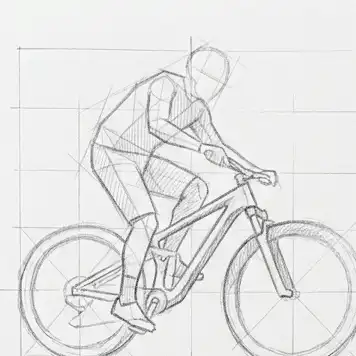
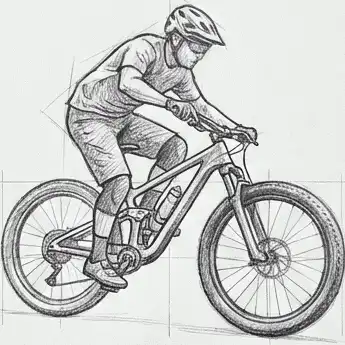
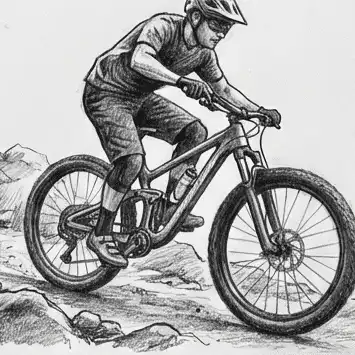
A bike with no rider can feel a little lonely. Once you are comfortable with the basic bike drawing, you might want to add a mountain biker to bring the scene to life.
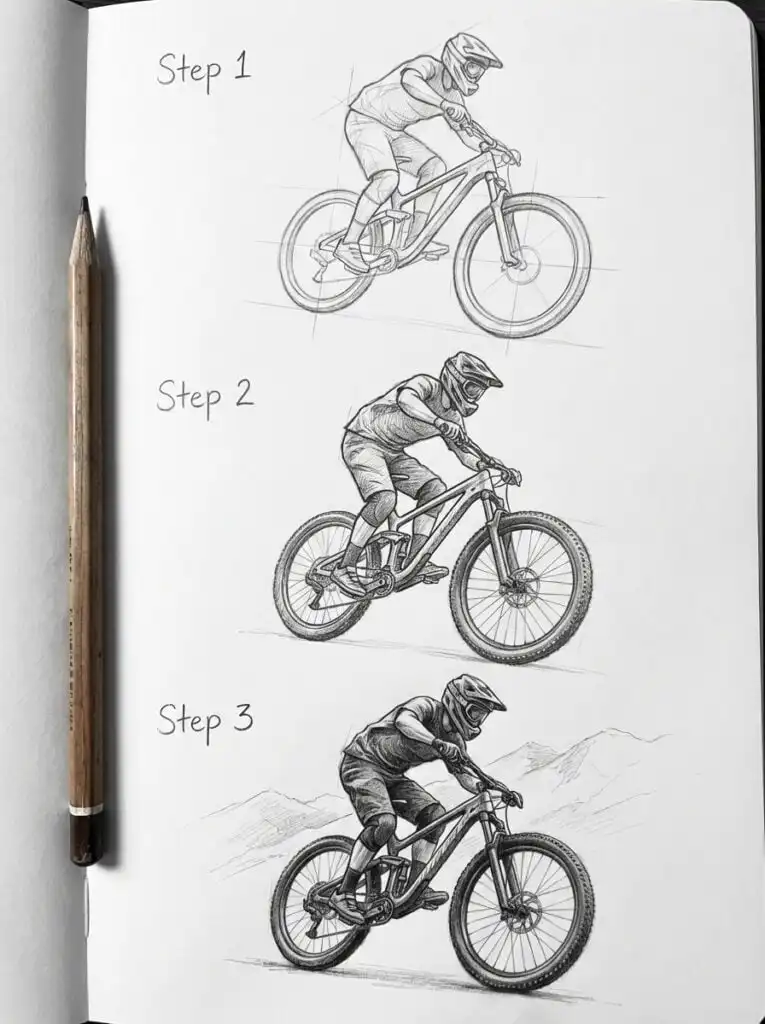
The Easy Drawing Guides mountain biker tutorial is designed for kids and beginners, which also means it is genuinely kind to grown-up beginners, too. It breaks down the rider into easy shapes like teardrops, rectangles, and sideways V shapes.
Here is how I adapt that idea.
Step by step: Simple mountain biker
- Start with the helmet and goggles
- Above the handlebars, draw an oval or rounded rectangle for the helmet.
- Add a smaller, rounded rectangle or teardrop shape for goggles.
- A small horizontal line under that can suggest a mask or face covering, just like the Easy Drawing Guides example.
- Block in the torso and hips
- From the bottom of the helmet, draw a slightly curved rectangle or oval leaning forward. This is the upper body.
- Right where the seat is, add another small oval for the hips.
- Add arms with simple shapes
- Draw sideways V shapes from the shoulders to the handlebars.
- At the end of each V, add semi-ovals or little mitten shapes for hands gripping the bar.
Using the sideways V idea keeps the pose active and dynamic.
- Add legs and feet
- From the hip oval, draw two bent lines for thighs, pointing toward each pedal.
- Add lower legs with another set of lines, finishing with simple shoe shapes resting on the pedals.
- Refine only what you care about
- You can keep the rider as a very simple cartoon.
- Or, if you enjoy details, you can add folds in clothing, a backpack, or knee pads.
The key is to remember that you are not trying to draw a perfect, anatomically correct human. You are just trying to suggest the feeling of someone actively riding that mountain bike.
Method 5: Color your mountain bike for extra impact
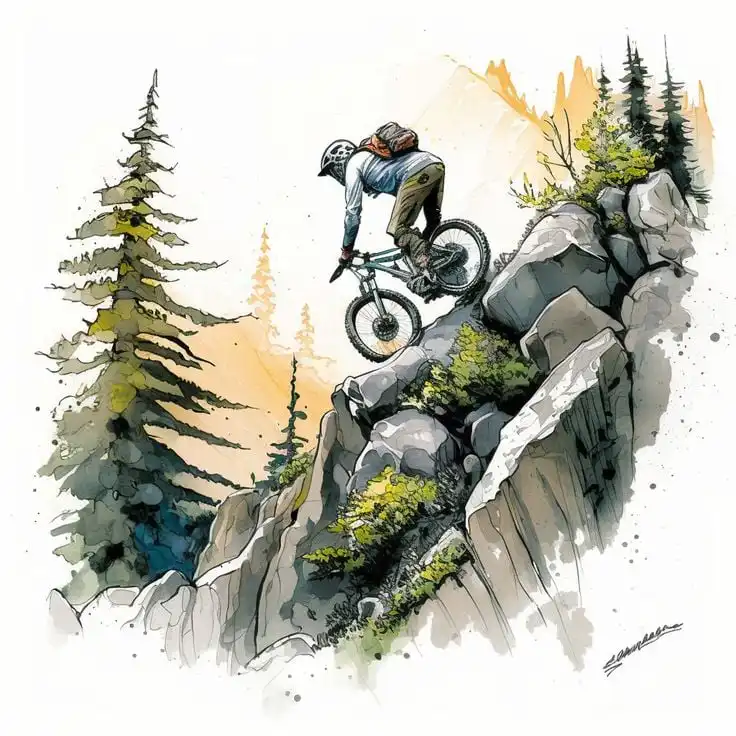
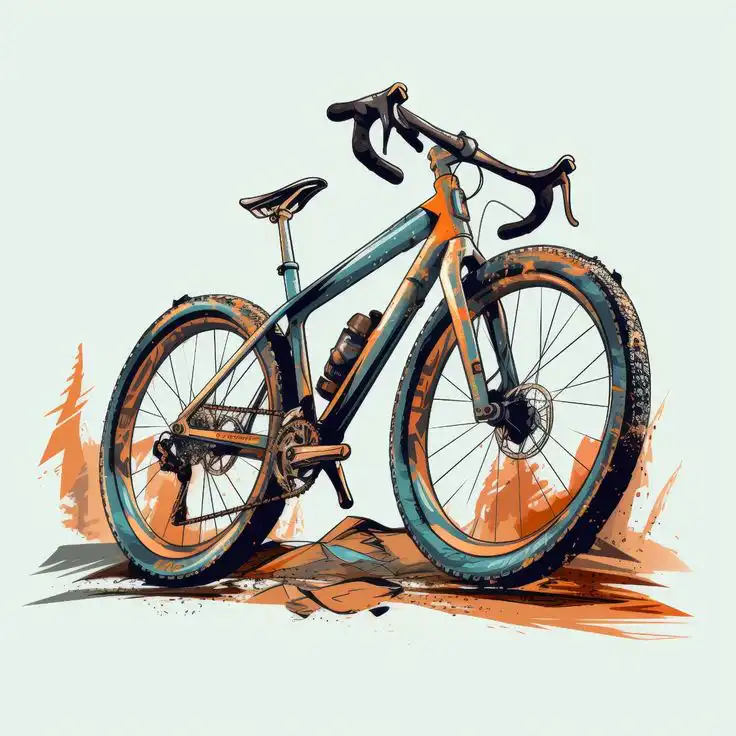
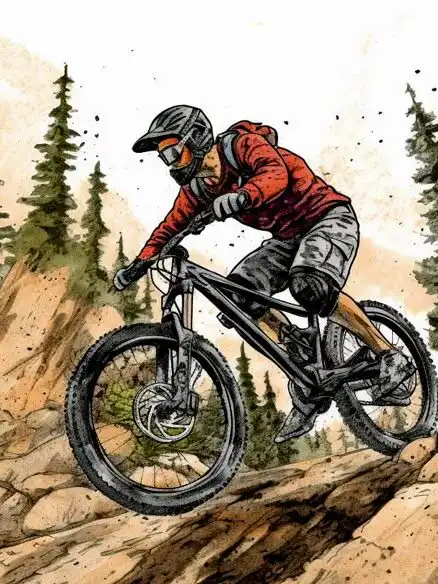
Once the lines are in place, color can do a lot of the heavy lifting to make your mountain bike look finished, even if some proportions are a bit off.
Both Easy Drawing Guides and HelloArtsy offer color ideas that work well if you are not sure where to start.
Color suggestions from tutorials
From HelloArtsy:
- Orange for grips, tubes, frame, and front fender
- Black for saddle, tires, pedal, and outer wheel hubs
- Light gray for fork, handlebar, chain, inner hubs, and crank arm
- Dark gray for the chain ring
- White to fill the wheel centers
From Easy Drawing Guides for a full rider scene:
- Blue, gray, red, and green for clothing and bike parts
- Browns and greens for the landscape around the rider
My gentle approach to coloring
Here is how I keep coloring low stress:
- Pick 2 to 4 main colors
- One bright color for the frame
- One dark neutral for tires and chain
- One softer color for the background
- Optional accent color for clothing or details
- Color big areas first
- Start with the frame and tires.
- Then move to the seat, handlebars, and pedals.
- Save tiny touches like spokes or logos for last, if you want them at all.
- Use shading only if you feel like it
- A simple, darker stripe under the frame or on the underside of the wheels can suggest shadow.
- You do not need fancy blending to make it look good.
Remember, color can distract the eye from little drawing mistakes, which is great news when you are learning.
Method 6: Turn your sketch into a full scene
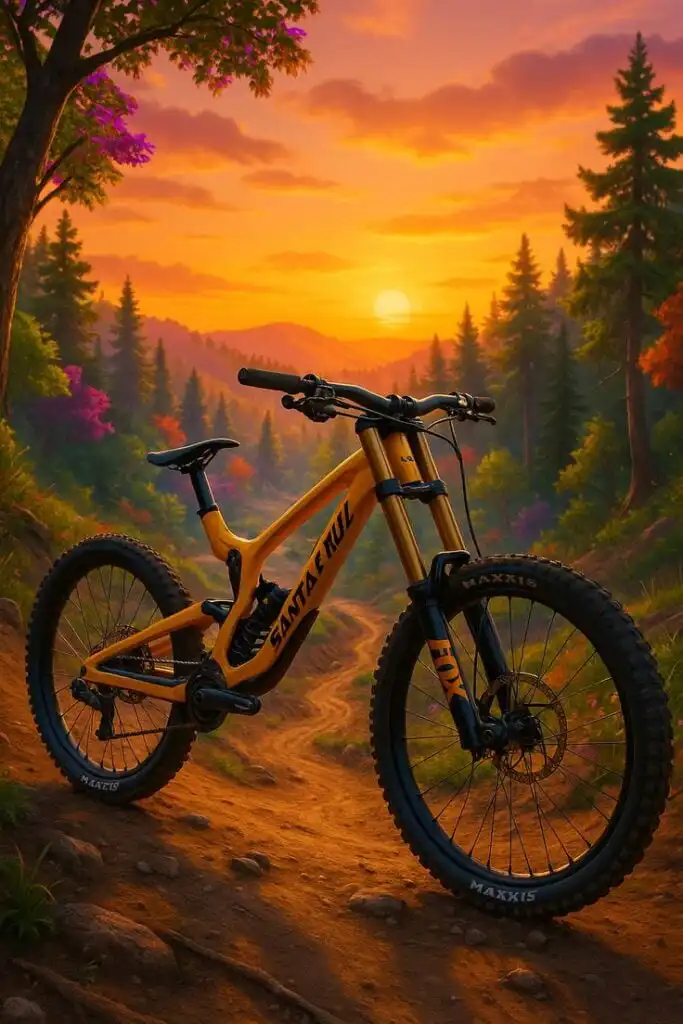
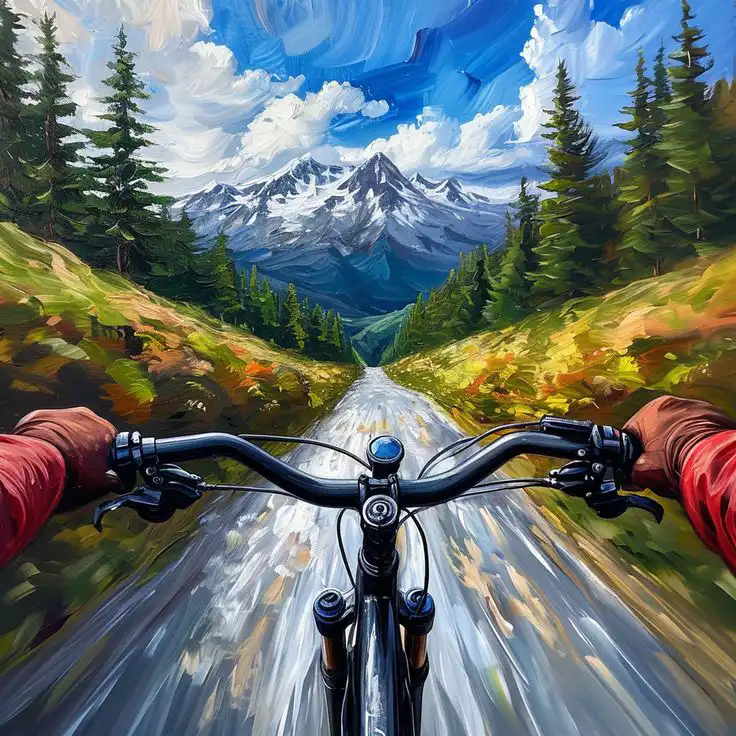
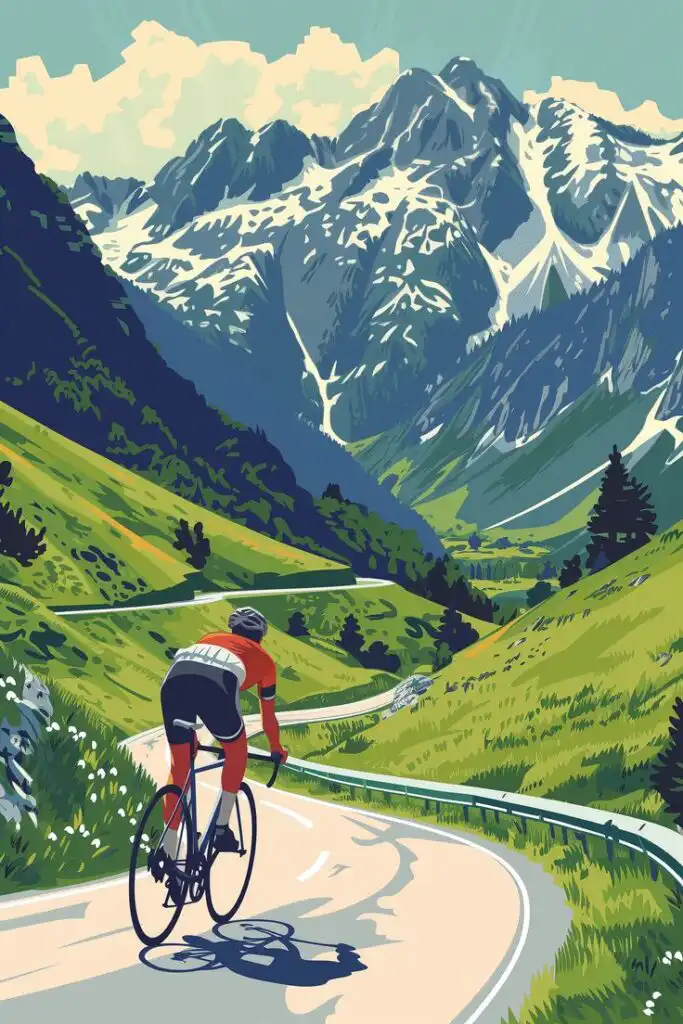
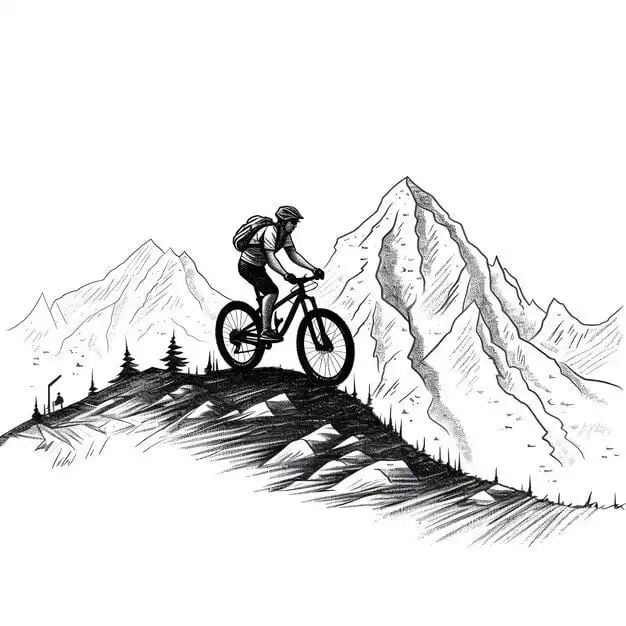
If you are feeling braver and want more than “bike in empty space, you can turn your drawing into a mini mountain biking scene.
The Easy Drawing Guides tutorial suggests adding a landscape around the rider with browns and greens to enhance realism. I like to keep that part loose and intuitive.
Easy landscape ideas
You can add just a few elements:
- A sloped hill or trail line beneath the wheels
- Small rocks suggested with uneven ovals
- Patchy grass with simple vertical lines or scribbles
- Trees made of triangles on sticks, or loose cloud-like shapes
- Sky hints with light blue shading near the top of the page
You can choose whether your bike is:
- Climbing uphill
- Flying off a little jump
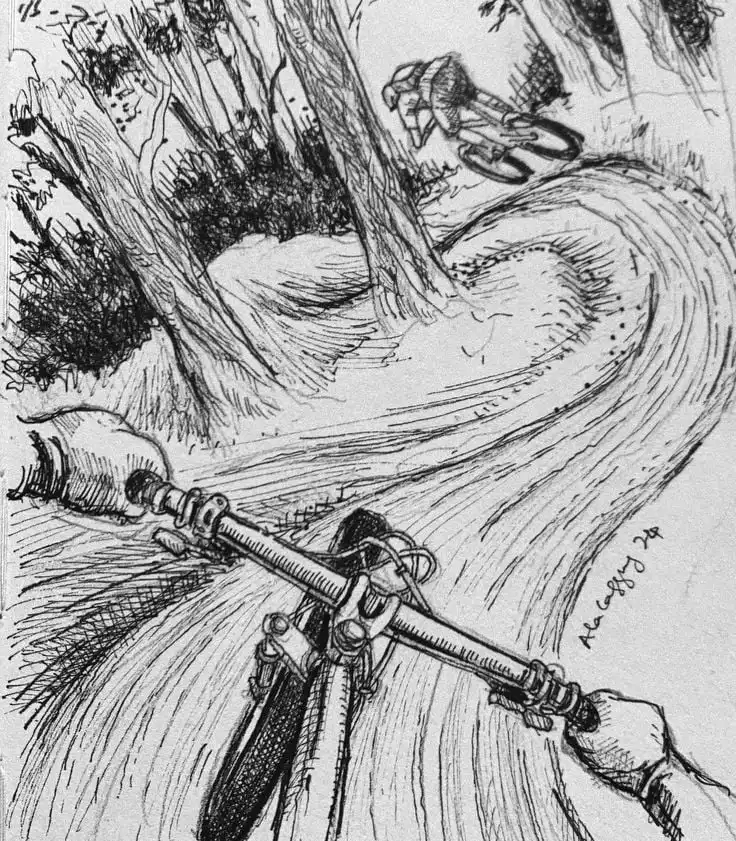
- Rolling down a trail with a curve
You do not have to be realistic. You just want the scene to feel like “outside adventure” instead of “floating bike.”
Method 7: Use practice sheets and videos to improve
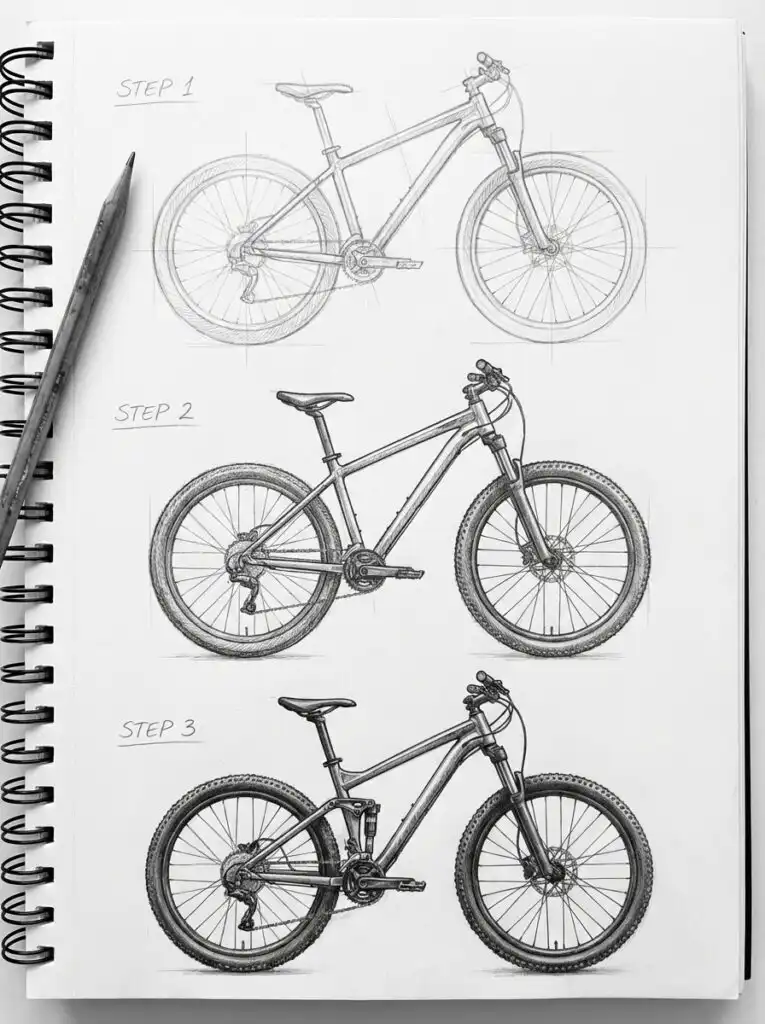
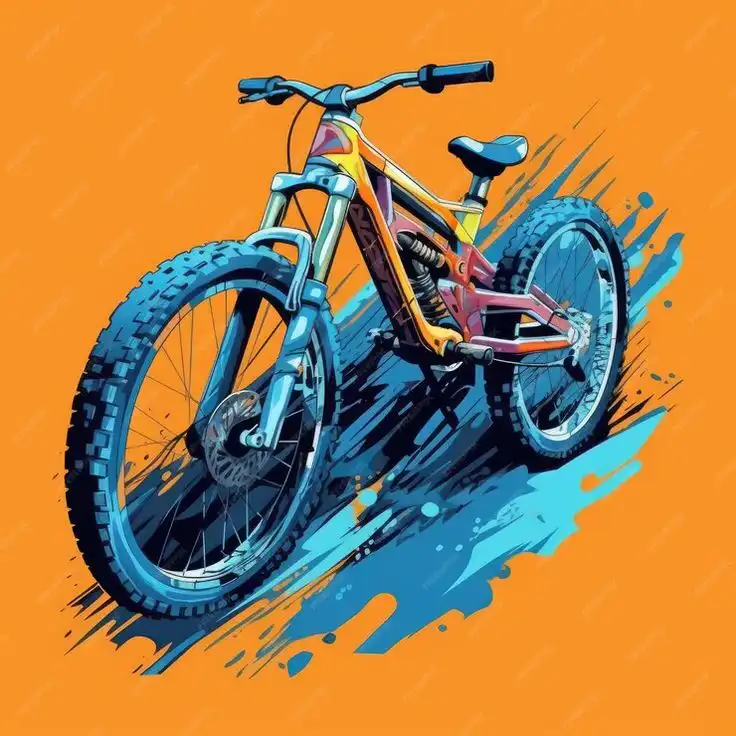
If you are someone who likes having a bit more guidance, you are not left on your own here. There are resources built exactly for you.
According to Easy Drawing Guides, when you join their newsletter, you can access:
- A free downloadable coloring PDF of the mountain biker drawing
- A video tutorial to follow along in real time
Using a PDF or video takes pressure off because you can:
- Trace first before drawing from scratch
- Pause and rewind at your own pace
- Print out multiple copies if you want to try different color schemes
If you pair those resources with the triangle and circle tricks from Cayligraphy and the structured 9-step approach from HelloArtsy, you basically build your own little mini course on how to draw a mountain bike easily without getting stuck.
Common mistakes I watch out for
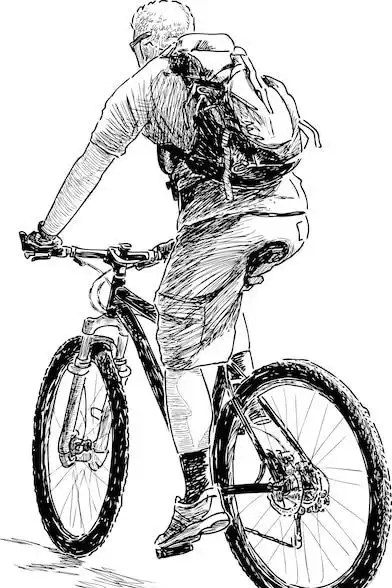
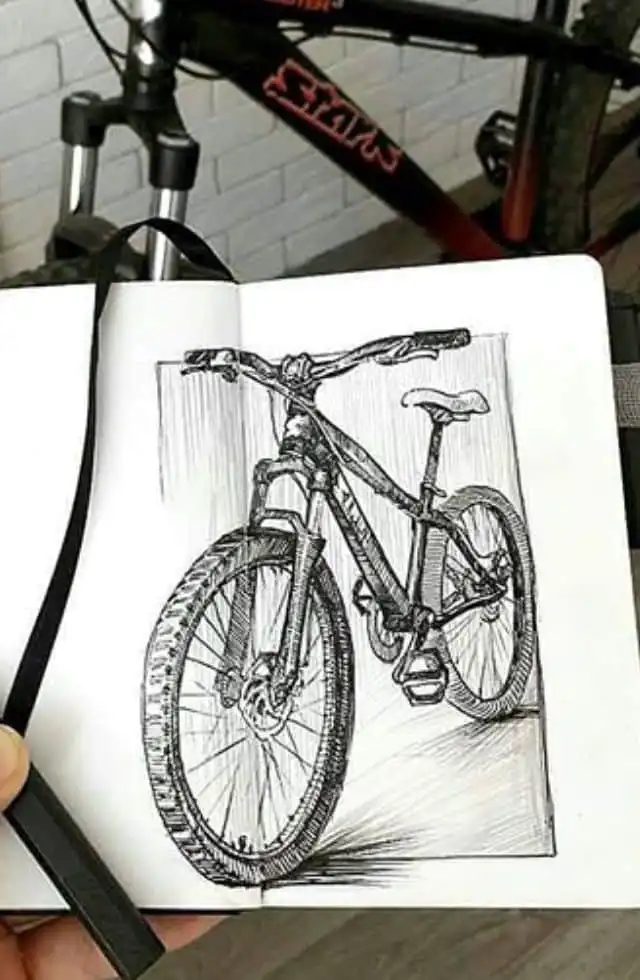
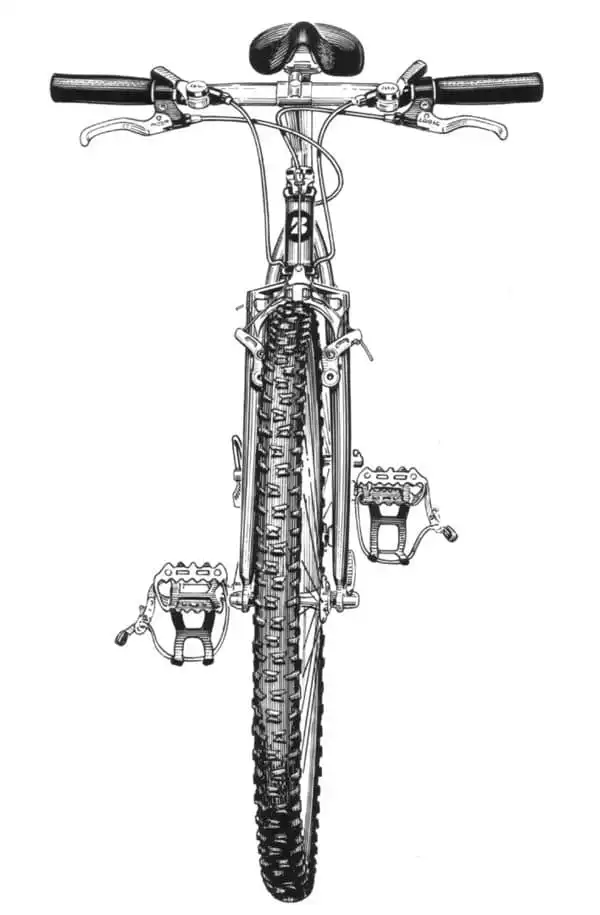
When I draw mountain bikes, there are a few things I have learned to keep an eye on, just to save myself frustration later.
Here are some typical hiccups and what I do instead.
| Problem | What it looks like | What I do instead |
|---|---|---|
| Wheels not aligned | The front wheel is way bigger or smaller | Lightly draw a ground line first and make sure both wheels touch it |
| Lightly draw a ground line first, and make sure both wheels touch it | One wheel is higher or lower than the other | Use a cup or lid to trace, or compare with your pencil held vertically |
| Wheels of very different sizes | Lines do not seem to connect clearly | Use triangle shapes and connect dots, then thicken the lines |
| Spokes look messy | Uneven spacing that makes the wheel feel chaotic | Use fewer spokes, maybe only four or six, or skip them completely |
| Rider floating above the bike | The frame feels flimsy | Lightly mark where the seat and pedals are first, then build the body around those anchor points |
| Overloading details too early | Getting stuck on tiny parts before the basic shapes look right | Focus on circles and triangles first, wipe out and redo only those before adding pedals or chains |
Once I know these pitfalls, I am much kinder to myself when they show up. I remind myself that most of the “weirdness” goes away once the main shapes and alignment are corrected.
FAQs about drawing a mountain bike
1. How do I draw a mountain bike easily if I am a complete beginner?
I start with two simple circles for the wheels, as suggested in the Cayligraphy and HelloArtsy tutorials. Then I:
- Add hubs in the center of each wheel.
- Sketch a triangle-based frame that connects the two wheels.
- Draw a basic seat and handlebars.
- Keep the wheels simple with just a darker tire ring and maybe a few spokes.
If you stop at that level, it is still recognizably a mountain bike, and you avoid a lot of frustration.
2. How can I make the bike look more like a mountain bike and less like a road bike?
I focus on a few tweaks:
- Make the tires thicker, which suggests off-road capability.
- Angle the frame tubes a bit more aggressively.
- Add a front fork that is slightly thicker or has a small suggestion of suspension.
- Keep the handlebars straight and wide, instead of curved like drop bars.
The HelloArtsy guide on drawing a mountain bike uses a curved fender and clear frame structure, and you can borrow those ideas too.
3. How do I draw the pedals and chain without getting confused?
The tutorials from Cayligraphy and HelloArtsy both keep these parts basic.
Here is how I simplify them:
- Draw a small rectangle between the wheels for the pedal.
- Add a straight pedal arm connecting it to a circle, which is the chain ring.
- From the chain ring, draw a thin loop toward the back wheel hub to suggest the chain. A slightly curved line on top and bottom is enough.
You do not need every link. You just need the shape.
4. What is the easiest way to add a rider without ruining the drawing?
I sketch the rider lightly after the bike is done, following the Easy Drawing Guides approach:
- The helmet and goggles are simple shapes above the handlebars.
- Torso is a slightly curved rectangle leaning forward.
- Arms as sideways V shapes ending in semi ovals for hands.
- Legs are bent lines from the seat to the pedals.
If something feels off, I erase just that part and try again. Since the bike is already solid, I can experiment with rider positions without redrawing everything.
5. How can I practice so that drawing mountain bikes stops feeling frustrating?
I permit myself to repeat the same easy steps over and over:
- Draw only wheels and frames on an entire page, no details.
- On another day, practice just pedals and chains.
- Use the coloring PDF and video from Easy Drawing Guides, so I am not starting from scratch.
- Spend 10 to 15 minutes at a time instead of pushing for a perfectly finished piece.
Over time, my hand learns the motions, and it genuinely becomes easier. The goal is not perfection. The goal is to feel a little more confident each time I try.
If you have made it this far, you already care enough to improve, and that matters more than drawing flawless lines. The next time you sit down and wonder how to draw a mountain bike easily without wanting to crumple the paper, try just starting with two circles and one triangle. Let the rest grow from there, one simple shape at a time.
- 289shares
- Facebook0
- Pinterest289
- Twitter0
- Reddit0