Katana drawing is mostly a proportions problem. If the blade curve, handle length, tsuba guard, and kissaki tip sit in the right relationship, the samurai sword reads clearly before you add any dramatic smoke, texture, or inked line work.
In this guide, you will draw a clean samurai sword from the first pale construction line to final shading: blade, tip, hamon, guard, handle wrap, scabbard cues, and small metal details. Keep the first sketch light. The cleaner the silhouette is, the easier every decorative detail becomes.
- Katana drawing: how to draw a samurai sword step by step
- Katana drawing proportions at a glance
- Gather your materials
- Draw the outline
- Add the hand guard
- Detail the blade and hamon
- Wrap the handle braid
- Shade and texture
- Clean up your drawing
- Common katana drawing mistakes
- Katana drawing reference notes
- Related katana and samurai drawing practice
- Katana drawing FAQ
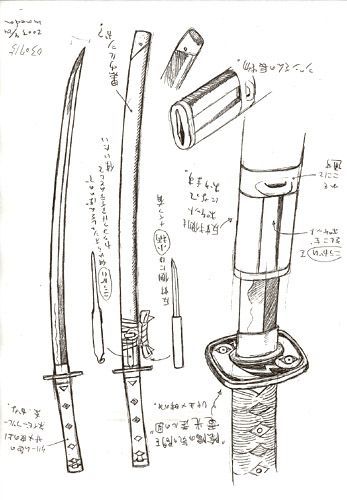
Katana drawing: how to draw a samurai sword step by step
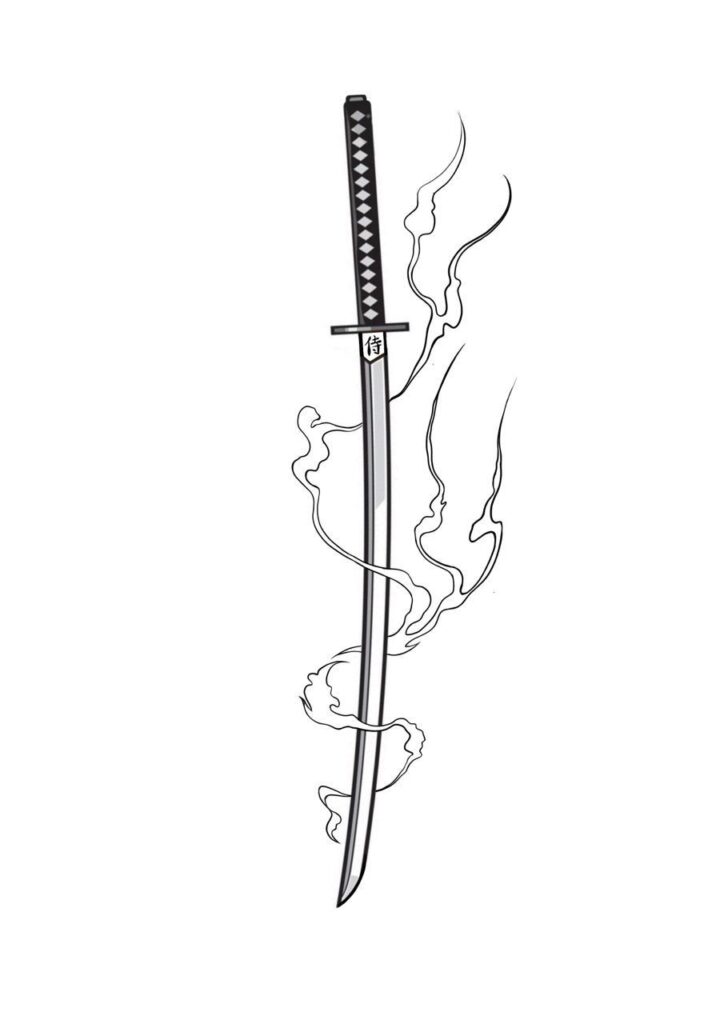
To draw a samurai sword, begin with one long, slightly curved blade line and a second lighter line for thickness. Add the kissaki tip, then place the tsuba guard where the blade meets the handle. The handle should feel long enough for two hands, so block it in before you draw the diamond wrap.
Next, sketch the hamon line near the cutting edge and keep it irregular, not perfectly wavy. Add the habaki collar, a few seppa spacer lines, and light diagonal guides for the tsuka wrap. In academic drawing, this is where I slow down and compare angles instead of guessing; one uneven handle diamond can make the whole katana feel twisted.
Save the bold outline, metal highlights, and darker shadows for the end. First, make the plain shape work: blade, guard, handle, tip. Once that silhouette feels right, the decoration has somewhere solid to sit.
Katana drawing proportions at a glance
| Part | Drawing note |
|---|---|
| Blade | Use a shallow curve, not a crescent shape. |
| Kissaki tip | Make the point clean and slightly angular. |
| Tsuba guard | Keep it narrow so the sword stays elegant. |
| Tsuka handle | Draw it long enough for two hands. |
| Hamon | Place a soft, uneven line near the cutting edge. |
| Saya scabbard | Echo the blade curve, but keep it simpler and slightly wider. |

Gather your materials
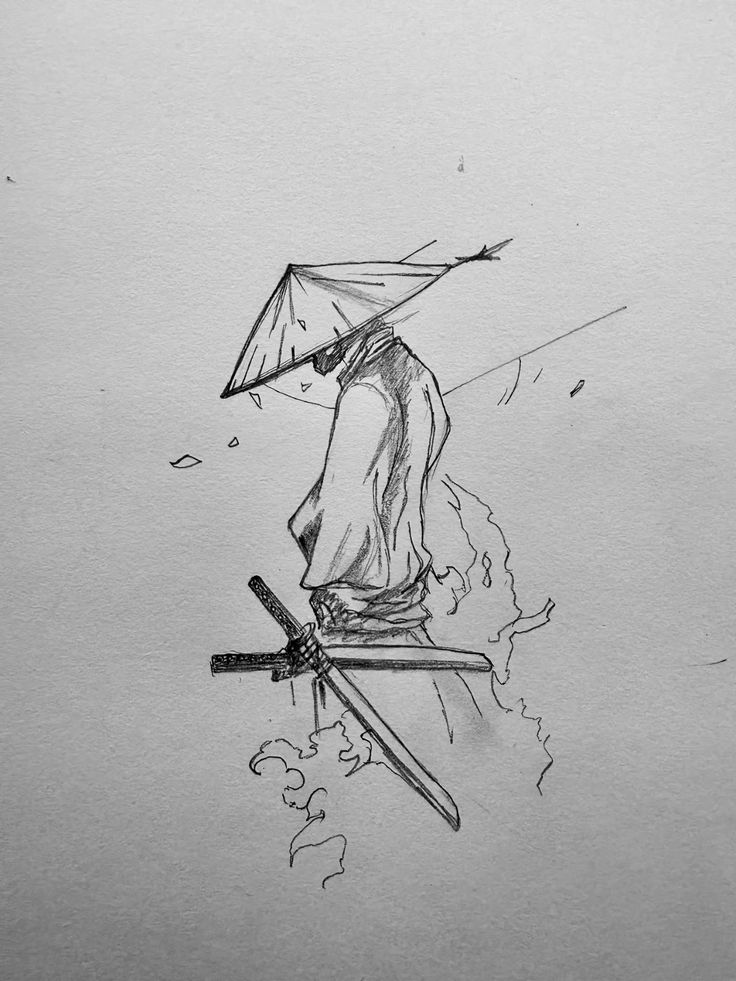
Before you begin sketching your katana, gather a few basic tools to make the process smoother:
- Pencil set: HB for light sketching, 2B or 4B for midtone to dark shading
- Eraser: kneaded for subtle corrections, vinyl for clean line removal
- Ruler or straightedge: for precise guard and collar lines
- Fine liners or ink pen: optional, for final line work
- Blending stump or tortillon: to smooth out pencil shading
- Quality paper: medium-tooth drawing paper or Bristol
- Reference images: photos or art of katanas to study proportions
Tool recommendations at a glance:
| Tool | Purpose |
|---|---|
| HB pencil | Light construction lines |
| 2B pencil | Medium shading |
| 4B pencil | Deep shadows and contrast |
| Kneaded eraser | Lift the graphite gently |
| Ruler | Straight edges and angles |
| Fineliner | Final line art |
| Blending stump | Smooth gradients |
With these nearby, you can stay focused on form instead of stopping mid-sketch to hunt for a ruler or softer pencil.
Draw the outline
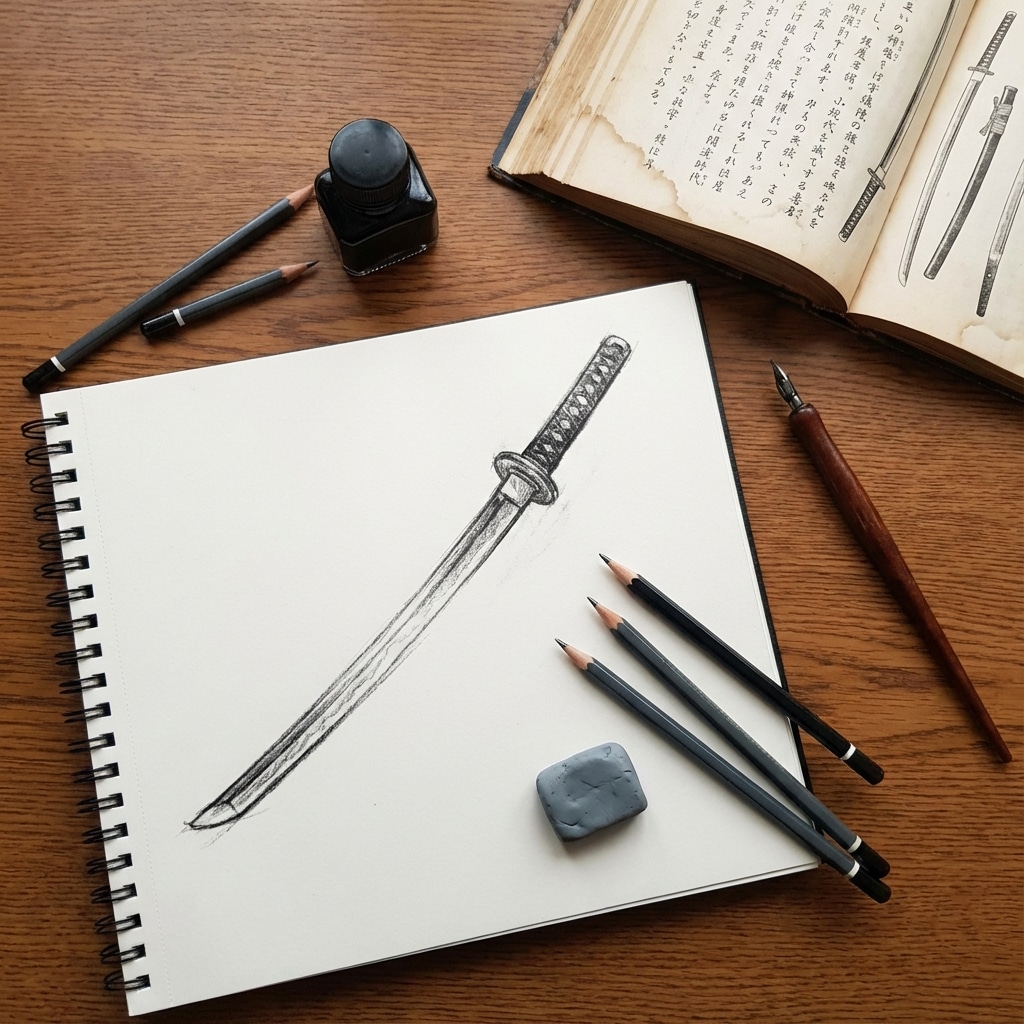
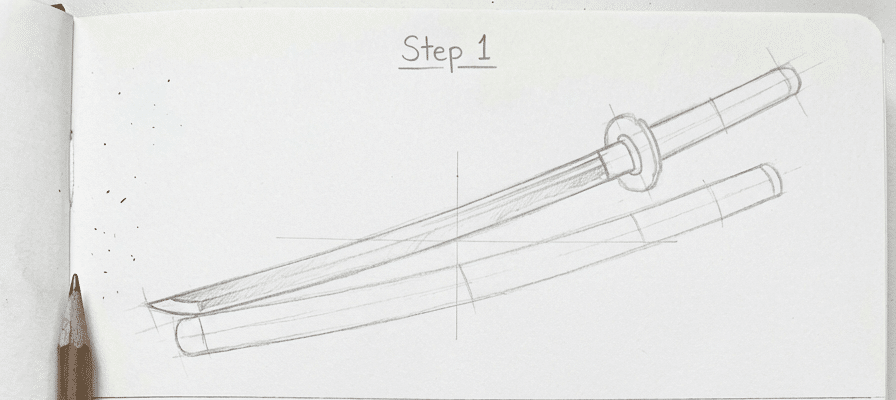
Lightly sketch the blade and handle shape
- Look at a reference or photograph to gauge the overall length ratio: a classic battle-ready katana blade is about 60 cm long, with the handle roughly 25–30 cm (a 2:1 ratio) (Swords of Northshire).
- Draw a gentle, slightly curved rectangle for the blade. Keep lines light so you can adjust proportions easily.
- Extend a narrower rectangular prism from the blade’s base to form the handle (tsuka).
Mark the kissaki (tip) geometry
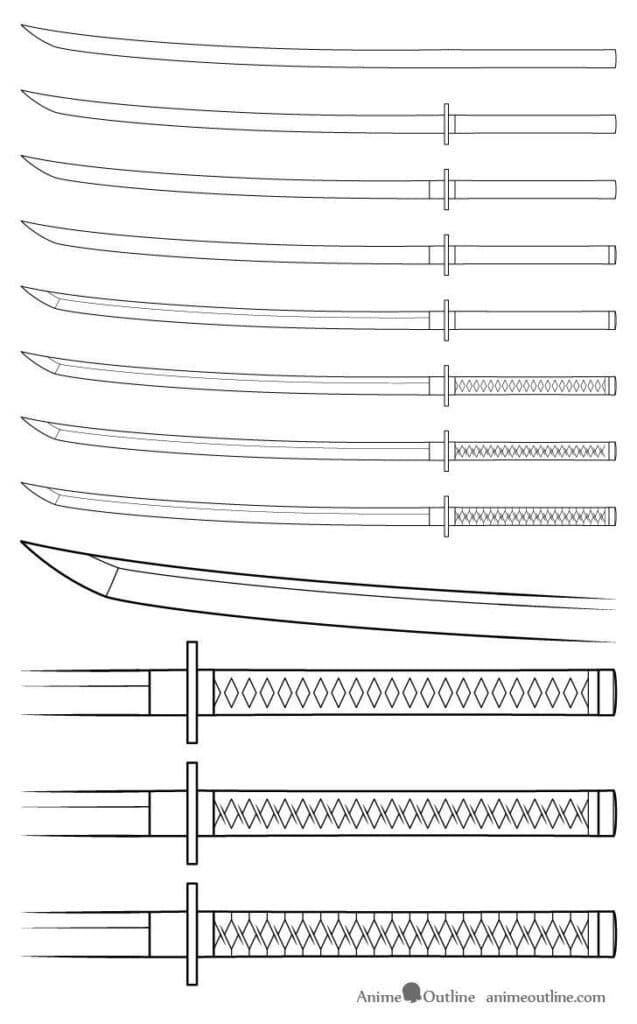
- At the blade’s end, sketch a long, pointed tip. The blade and handle share the same width until they taper into this tip, as noted in step 1 of AnimeOutline’s tutorial.
- Erase any overlapping construction lines to refine the outline.
Define the blade’s spine and edge
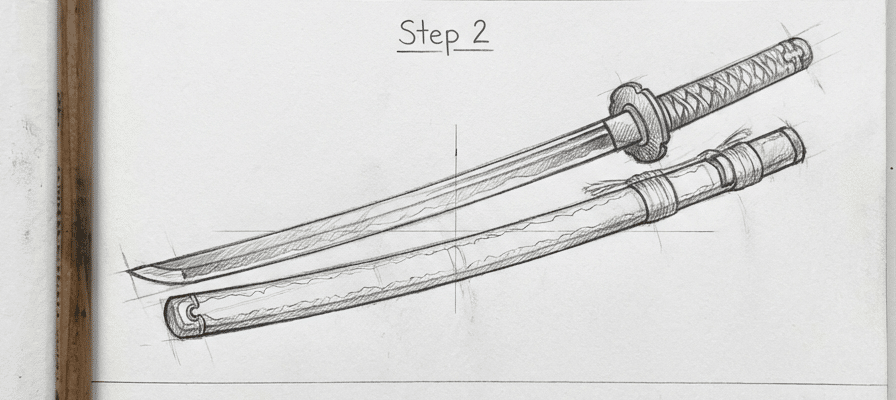
- Add a second line parallel to the top curve to show the spine (mune).
- Draw a slightly thinner line along the bottom curve for the cutting edge (ha), hinting at its sharpened nature.
Add the hand guard
Sketch the tsuba (guard) shape
- Katanas often have round or slightly squared guards. Draw a thin oval or rectangle at the blade-handle junction.
- Keep it narrow so it doesn’t overpower the sword’s elegant profile.
Add the habaki (blade collar)
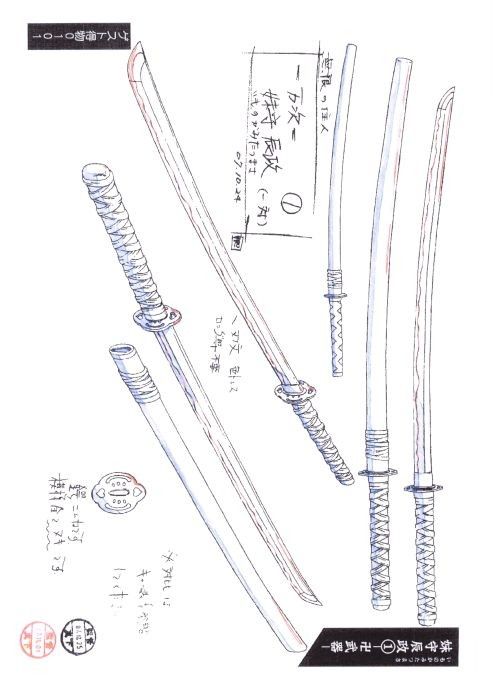
- Directly beneath the guard, draw a slim band that wraps around the blade. The habaki secures the blade in its scabbard (Katana Sword).
- Use two parallel lines, adjusting thickness for realism.
Indicate the seppa (washers)
- Leave small gaps on either side of the tsuba to suggest seppa spacers. These thin washers cushion the guard and reinforce stability during a draw (Katana Sword).
Detail the blade and hamon
Emphasize the hamon line
- The hamon is the temper line that runs along the edge, indicating differential hardening. Lightly sketch a wavy or undulating pattern following the blade’s curve (Swords of Northshire).
- Keep the line organic—no two hamon patterns are identical.
Refine the blade’s geometry
- Strengthen the spine and edge lines, maintaining a slight space between them for the blade’s thickness.
- Add subtle bevels near the tip to show how the blade narrows toward the kissaki.
Include surface details
- If you want, sketch faint steel grain (hada) with light, irregular strokes near the spine.
- This hints at polishwork without overwhelming the design.
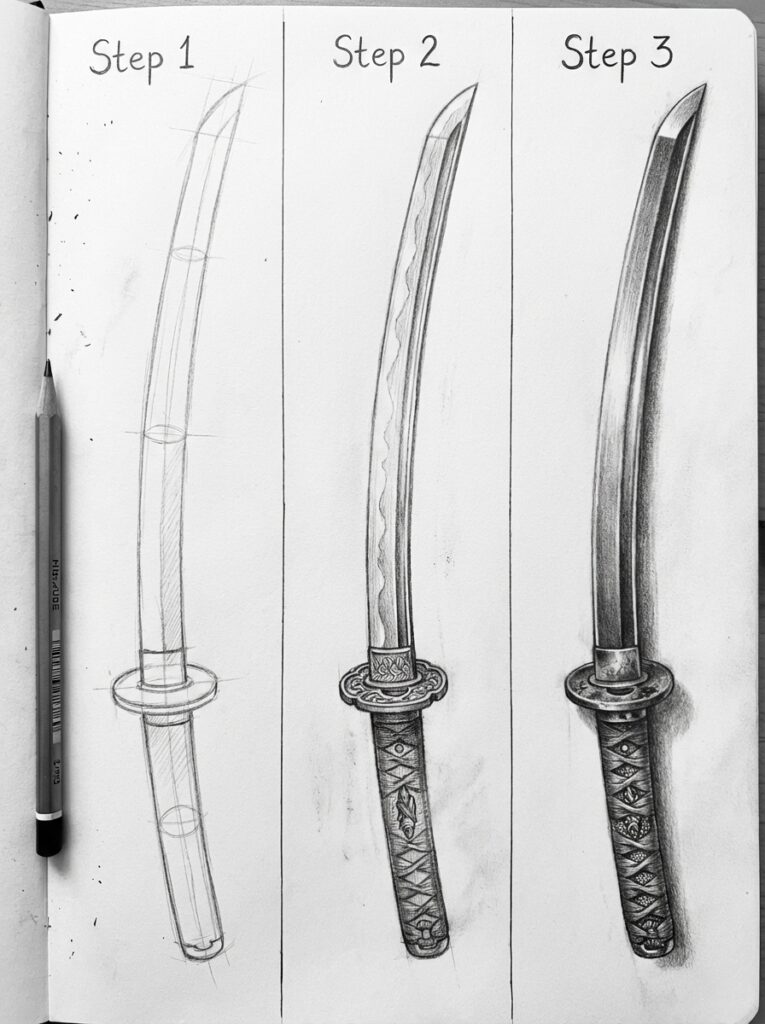
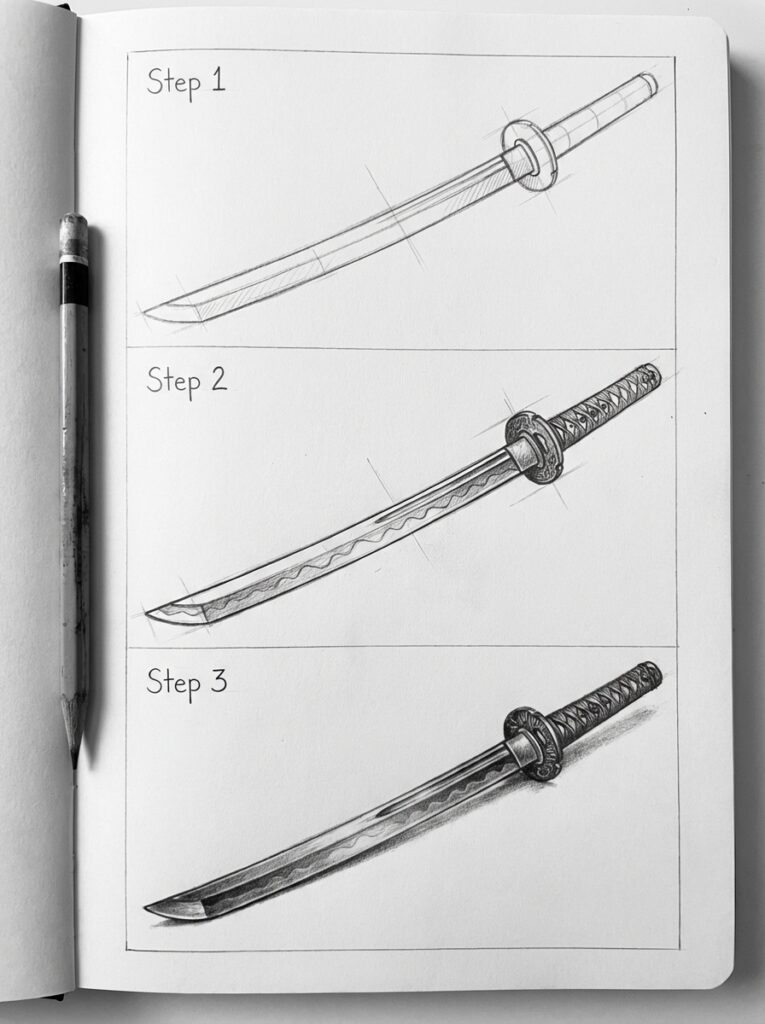
Wrap the handle braid
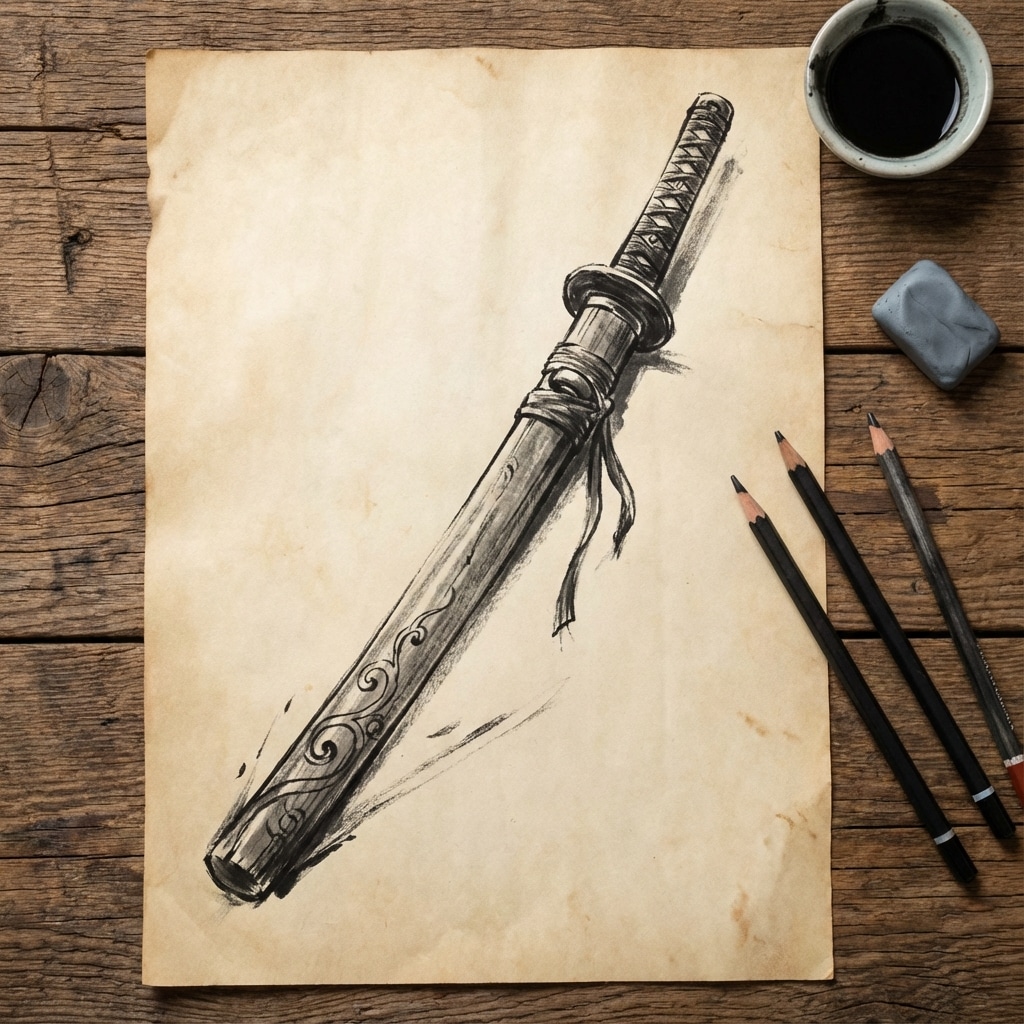
Outline the tsuka (handle)
- Draw two parallel lines down the handle’s length. Keep them equidistant so the handle looks uniform.
Mark the diamond (menuki) pattern
- On the handle, lightly draw evenly spaced diagonal lines running in one direction. Repeat the pattern in the opposite direction to form rhombus shapes (AnimeOutline).
Add braid folds and texture
- Within each diamond shape, draw a short line from the midpoint of each side toward the center to show where the wrap folds.
- Alternate the direction of these small folds to convey depth and realism.
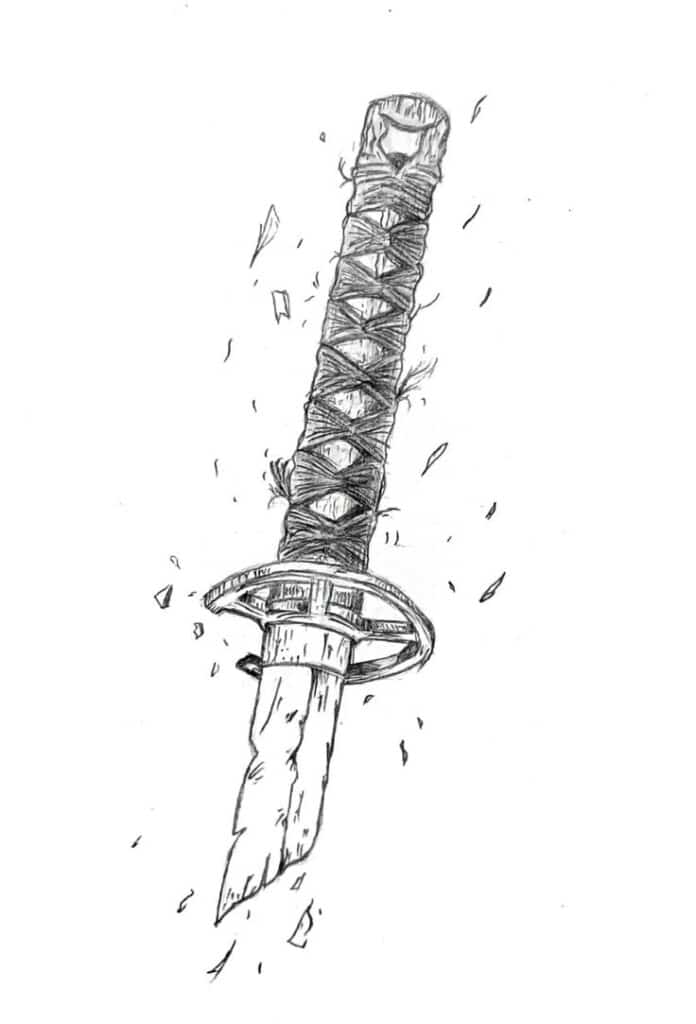
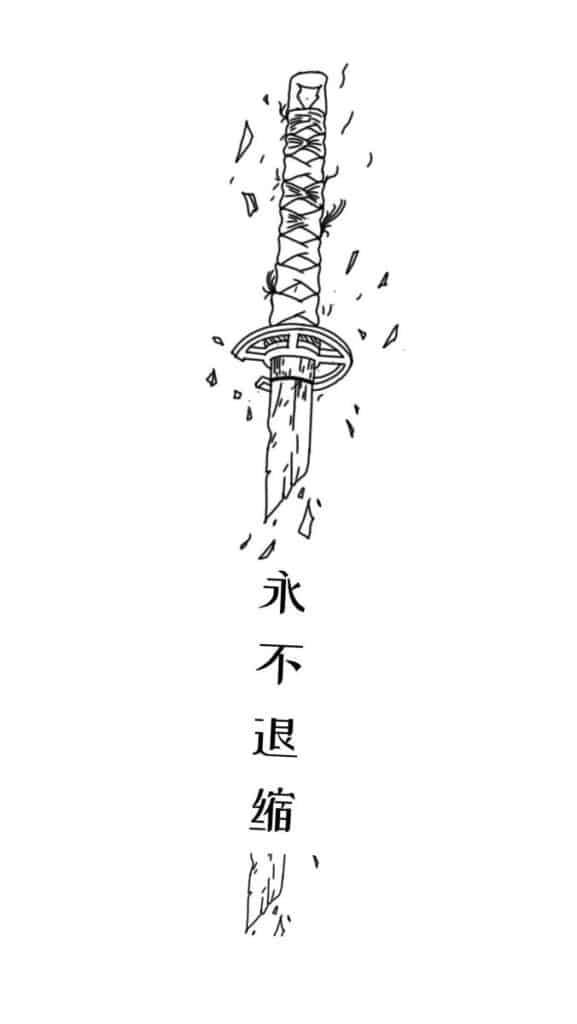
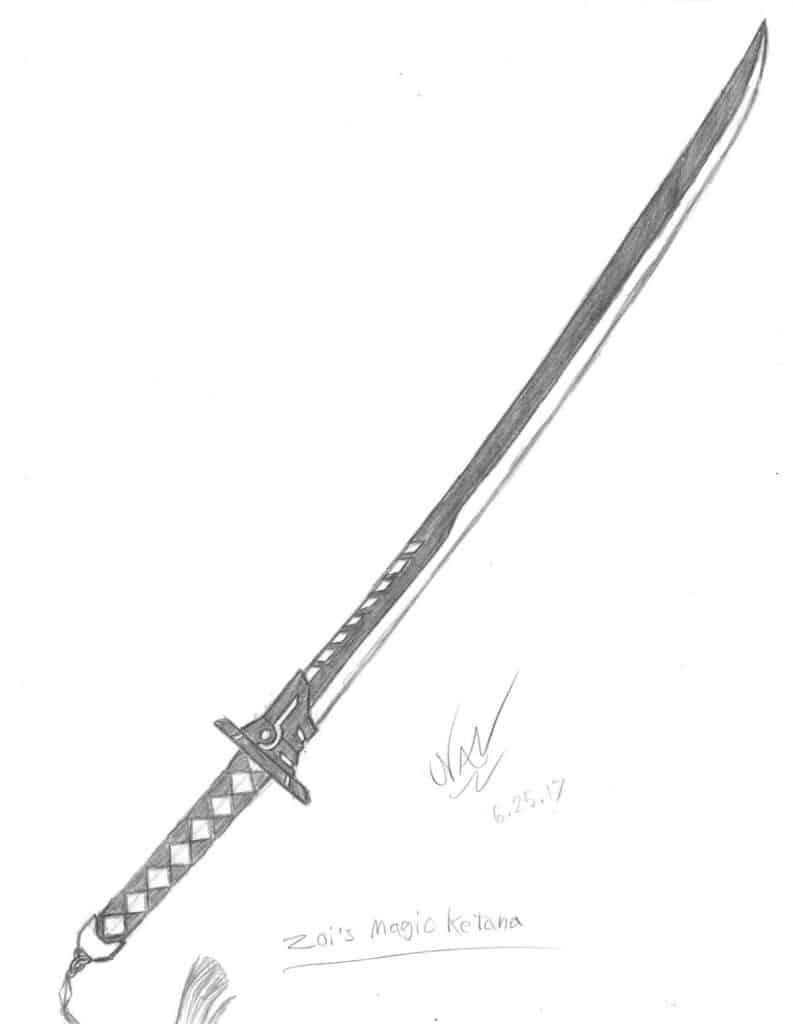
Shade and texture
Establish a light source
- Decide where your light is coming from (for example, top left). This will guide your shading choices.
Shade the blade’s planes
- On the side away from the light, add gentle gradients between the spine and edge.
- Use a blending stump for smooth transitions, leaving the hamon line mostly white to make it stand out.
Texture metal and wood
- On the tsuba and habaki, use cross-hatching or stippling to suggest metallic sheen.
- On the handle, add subtle rings or grain lines under the braid to imply a wooden core.
Deepen shadows and highlights
- Darken areas under the guard and between braid folds with a softer pencil (4B).
- Use an eraser nib or white gel pen to lift graphite for crisp highlights on edges.

Clean up your drawing
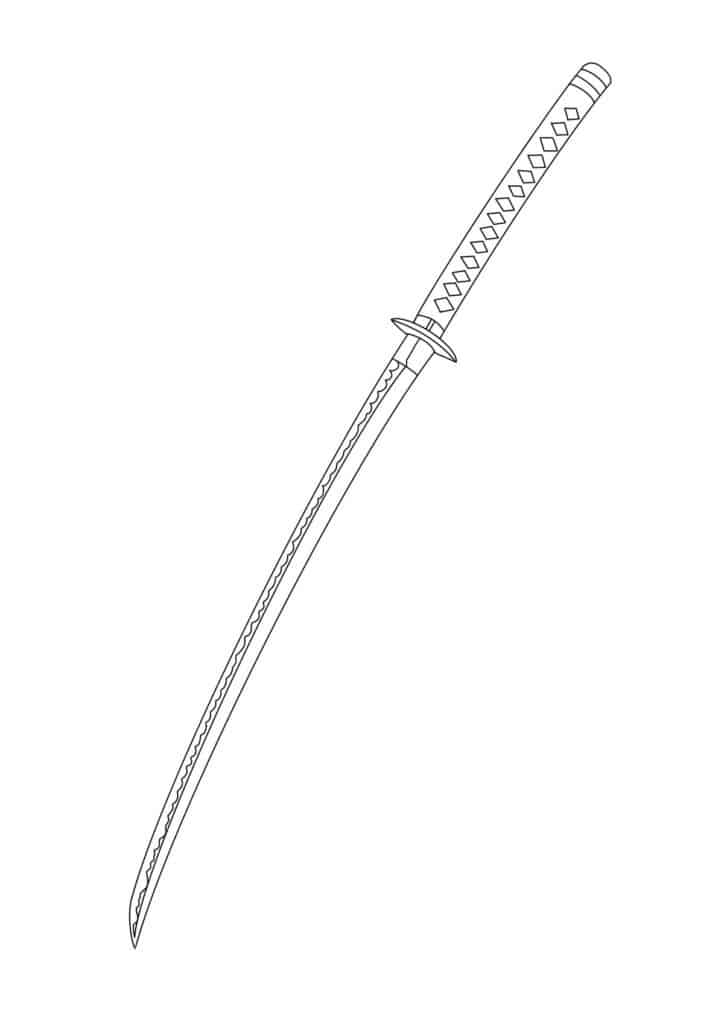
Erase construction lines
- Carefully lift any remaining light sketch marks so only your refined lines remain.
Reinforce final outlines
- Trace the key edges with a fineliner or a darker pencil, but keep small interior details lighter.
- Vary line weight—thicker lines for silhouettes, thinner lines for fine details.
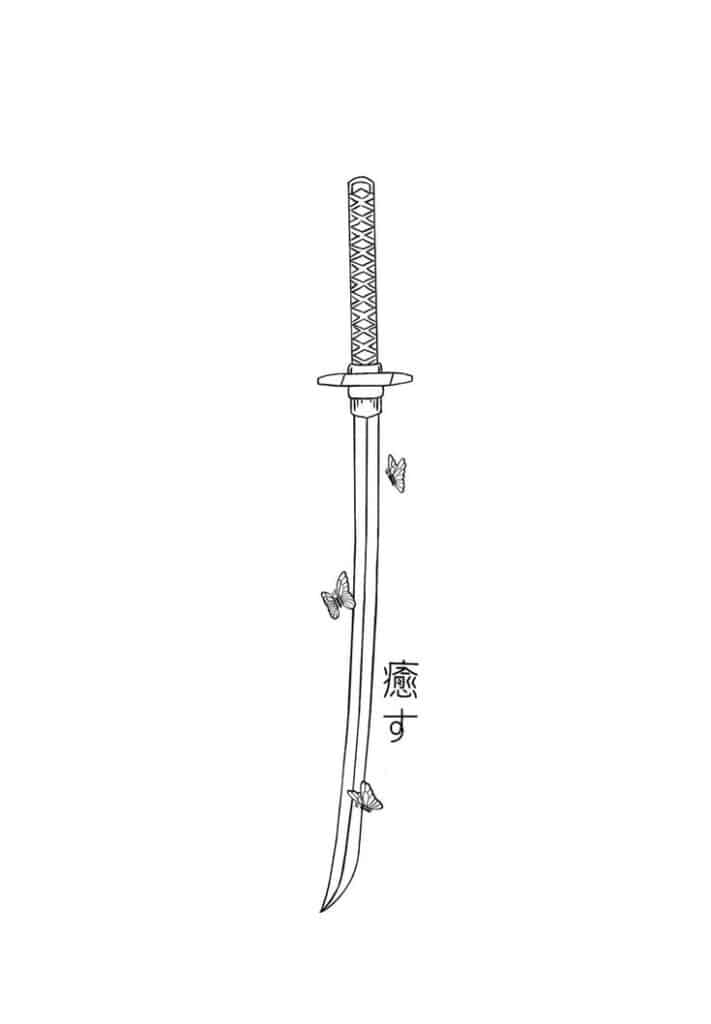
Add final touches
- Sign your work discreetly near the base of the handle or scabbard.
- If you’d like, introduce subtle color with markers or colored pencils on the tsuka wrap or habaki.
Reflect and revise
- Step back and compare your drawing to reference images.
- Note areas to practice further, such as more convincing hamon shapes or braid symmetry.
Common katana drawing mistakes
| Mistake | Quick fix |
|---|---|
| The blade curve is too dramatic | Use a quiet, shallow curve and let the kissaki tip create the sharpness. |
| The handle is too short | Make the tsuka long enough for two hands before drawing the wrap pattern. |
| The tsuba is oversized | Keep the guard slim so it supports the sword instead of becoming the focal point. |
| The hamon looks like a cartoon wave | Vary the line softly and keep it close to the cutting edge. |
| The handle diamonds drift | Place light diagonal guides first, then darken only after the rhythm is even. |
Katana drawing reference notes
A katana drawing gets easier when you separate art decisions from sword terminology. For blade construction, the Metropolitan Museum of Art Japanese blade essay is useful for understanding hamon, steel grain, and why the blade is not just a shiny curved shape. For part names, the Nihonto diagrams and terminology page is a clean reference for tsuka, tsuba, saya, kissaki, and other labels.
If you want museum examples, compare the silhouette with this British Museum katana object record and the Kyoto National Museum sword appreciation notes. For drawing-specific breakdowns, AnimeOutline’s katana tutorial and Easy Drawing Guides’ katana lesson are good comparisons. If you are curious about the real sword-drawing term behind search questions, Iaijutsu is the quick-draw sword discipline, not a pencil-drawing method.
Related katana and samurai drawing practice
Once the katana drawing feels clean, build the surrounding theme in small studies. Try the samurai mask drawing guide for facial armor, the samurai helmet drawing guide for the kabuto shape, and how to draw a samurai step by step when you want the full figure around the sword.
For weapon and technique practice, compare this curved blade with a Minecraft diamond sword drawing, use anime pose reference when the sword needs a stronger action line, and keep pencil drawing ideas plus texture drawing practice nearby for graphite control, metal shine, and cleaner handle shadows.
Katana drawing FAQ
What is the easiest way to start a katana drawing?
Start with one light centerline that shows the blade direction, then build the katana around it. Sketch the blade curve first, add the kissaki tip, place the tsuba guard, and block in a two-hand tsuka handle. Keep the first pass pale so you can adjust the length and curve before adding the hamon or handle wrap.
How do you draw a samurai sword step by step?
Draw the blade as a long, slightly curved form, mark the pointed kissaki, add the tsuba guard, then extend the handle behind it. After the big proportions work, add the hamon line, the habaki collar, diagonal tsuka wrap guides, and final shading. Save the darkest line work for the end so the blade stays clean.
What is the difference between a katana drawing and a regular sword drawing?
A katana drawing depends on a gentle curve, a long single-edged blade, a small guard, and a handle long enough for two hands. A generic medieval sword often has a straight double-edged blade and a wider crossguard. If you get the curve, tip, and handle ratio right, the drawing reads as a katana quickly.
How long should the katana blade be compared to the handle?
For a beginner sketch, make the blade about two to two and a half times longer than the handle. Historical proportions vary, but that simple ratio keeps the drawing believable. If the handle is too short, the sword starts looking like a knife; if it is too long, the whole silhouette feels heavy.
How do I draw the hamon line on a katana?
Draw the hamon as a soft, uneven line that follows the cutting edge. Do not make it a perfect repeated wave. Real hamon patterns have variation, so use a light pencil first, leave a narrow bright edge beside the line, and only darken it after the blade shading is in place.
What details make a samurai sword sketch look more realistic?
Use a clear kissaki tip, a slim tsuba guard, a small habaki collar, and an even diamond pattern on the handle wrap. Add a highlight along the blade instead of shading it flat. Small value changes around the guard, handle folds, and blade edge will make the sketch feel more solid.
What are common mistakes in katana drawing?
The common mistakes are a blade curve that is too dramatic, a handle that is too short, a guard that is oversized, and a handle wrap that drifts out of rhythm. Check the silhouette before details. If the plain outline does not work, extra decoration will only make the sword look busier.
- 666shares
- Facebook0
- Pinterest666
- Twitter0
- Reddit0