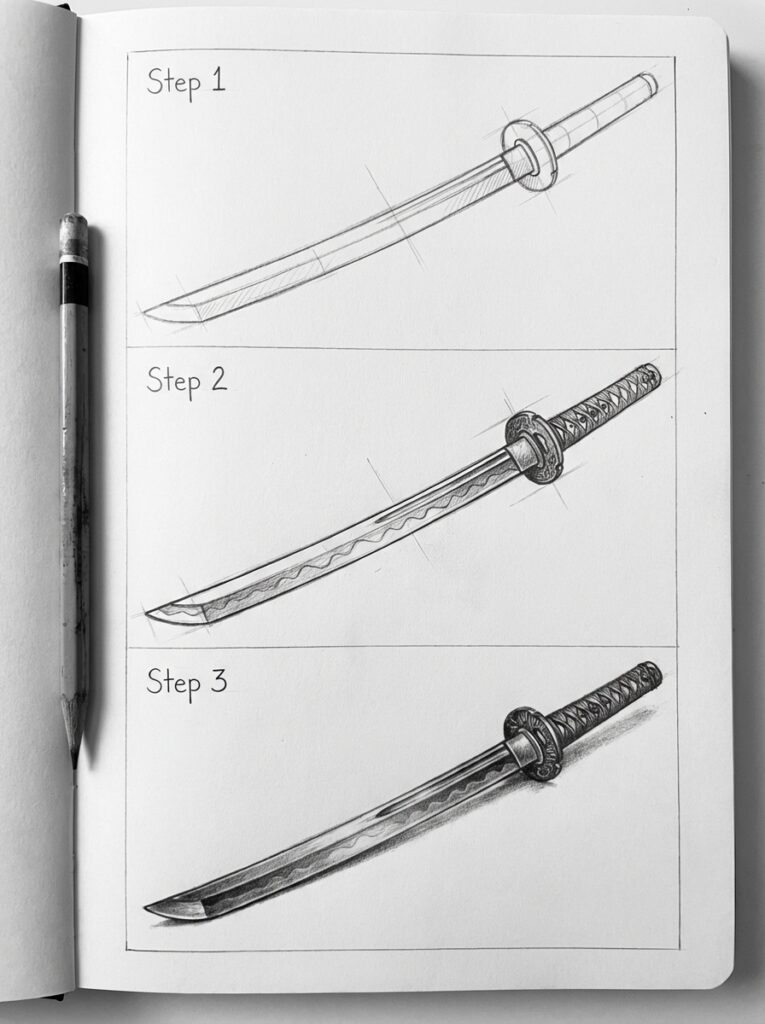
Drawing a samurai sword might seem daunting at first, but with a few simple steps, you can sketch a realistic katana that’s uniquely yours. In this tutorial, you’ll learn how to go from a basic outline to a fully detailed blade, handle, and guard, using clear techniques and reference points. Whether you’re a beginner or brushing up on your drawing skills, these friendly tips will guide you through each stage of the process.
By the end of this guide on drawing a samurai sword, you’ll have a confident grasp of proportions, anatomy, and fine details like the hamon temper line and braided tsuka wrap. Ready your pencil, eraser, and paper—we’re about to bring your katana to life.
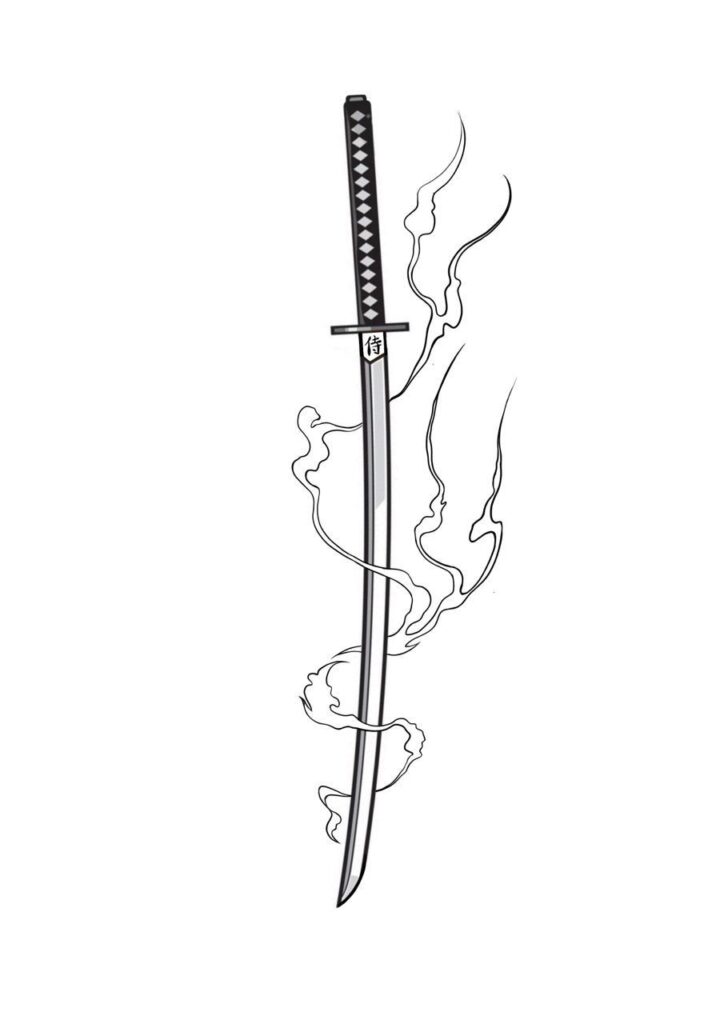
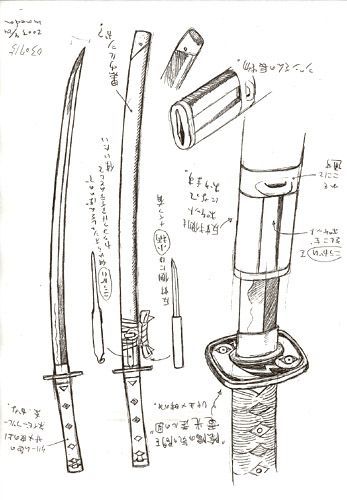
Table of contents
- Gather your materials
- Draw the outline
- Add the hand guard
- Detail the blade and hamon
- Wrap the handle braid
- Shade and texture
- Clean up your drawing
- Frequently asked questions

Gather your materials
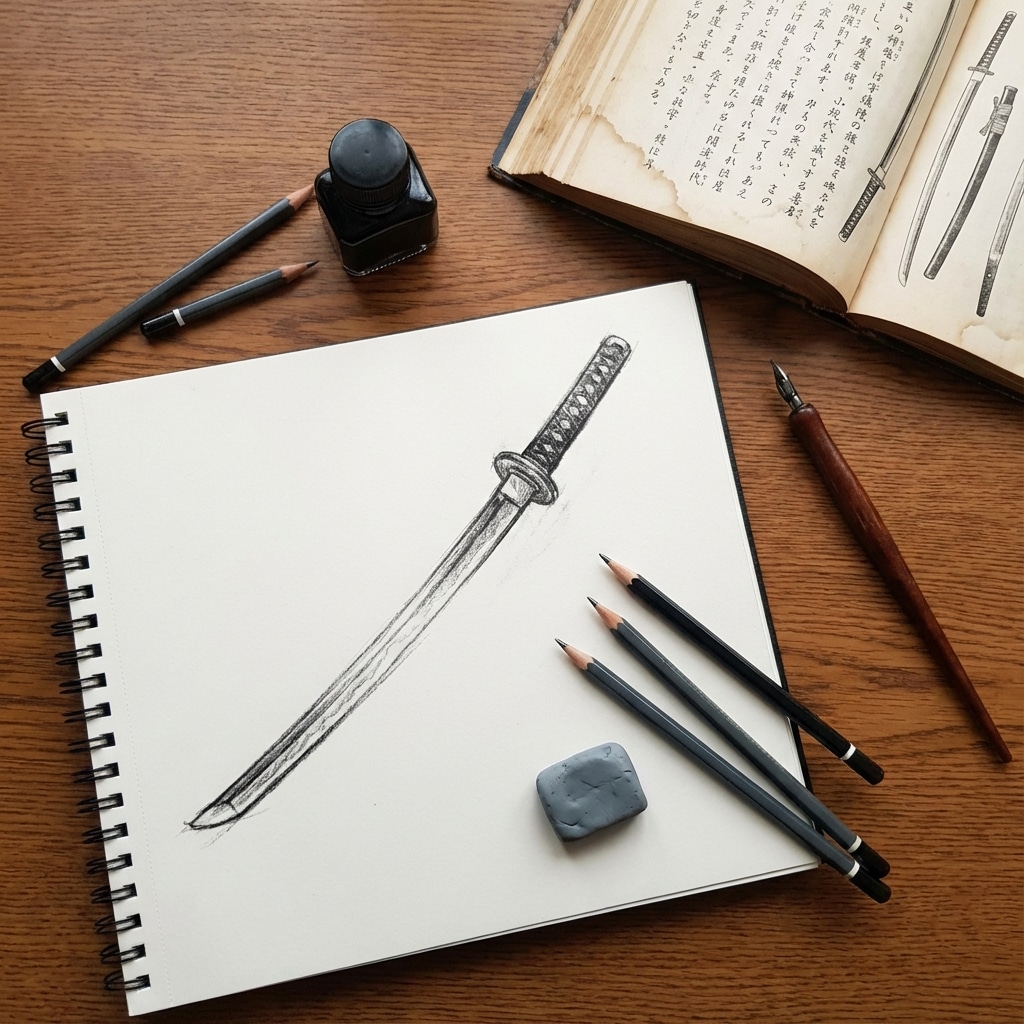
Before you begin sketching your katana, gather a few basic tools to make the process smoother:
- Pencil set: HB for light sketching, 2B or 4B for midtone to dark shading
- Eraser: kneaded for subtle corrections, vinyl for clean line removal
- Ruler or straightedge: for precise guard and collar lines
- Fine liners or ink pen: optional, for final line work
- Blending stump or tortillon: to smooth out pencil shading
- Quality paper: medium-tooth drawing paper or Bristol
- Reference images: photos or art of katanas to study proportions
Tool recommendations at a glance:
| Tool | Purpose |
|---|---|
| HB pencil | Light construction lines |
| 2B pencil | Medium shading |
| 4B pencil | Deep shadows and contrast |
| Kneaded eraser | Lift the graphite gently |
| Ruler | Straight edges and angles |
| Fineliner | Final line art |
| Blending stump | Smooth gradients |
With these in hand, you’ll move through each step confidently, focusing on form and detail rather than scrambling for supplies.
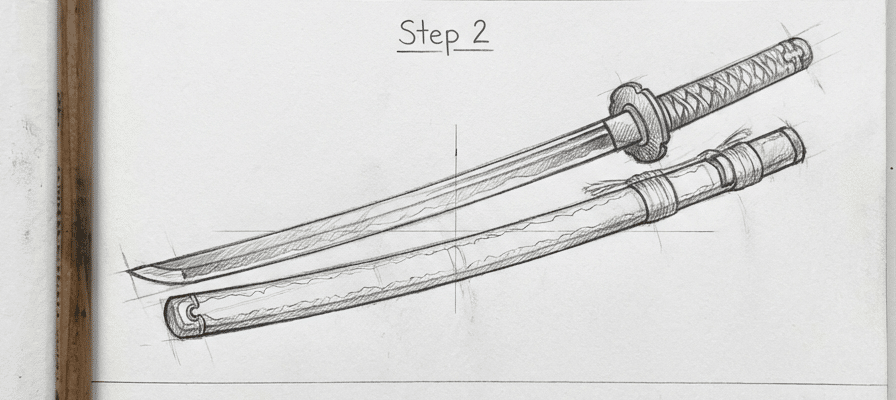
Draw the outline
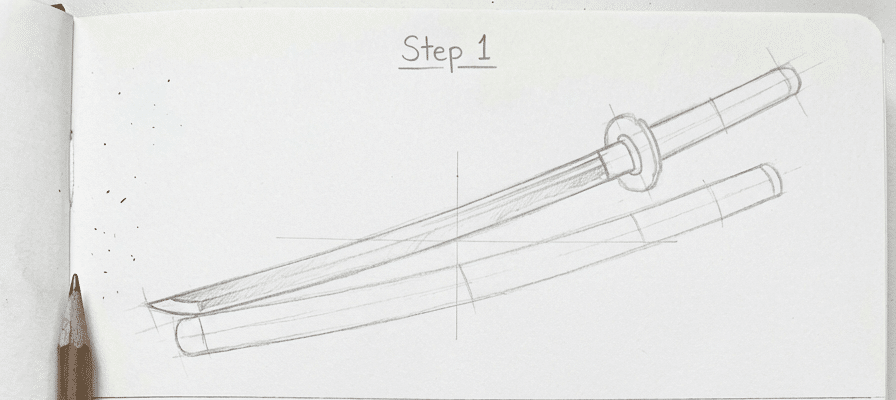
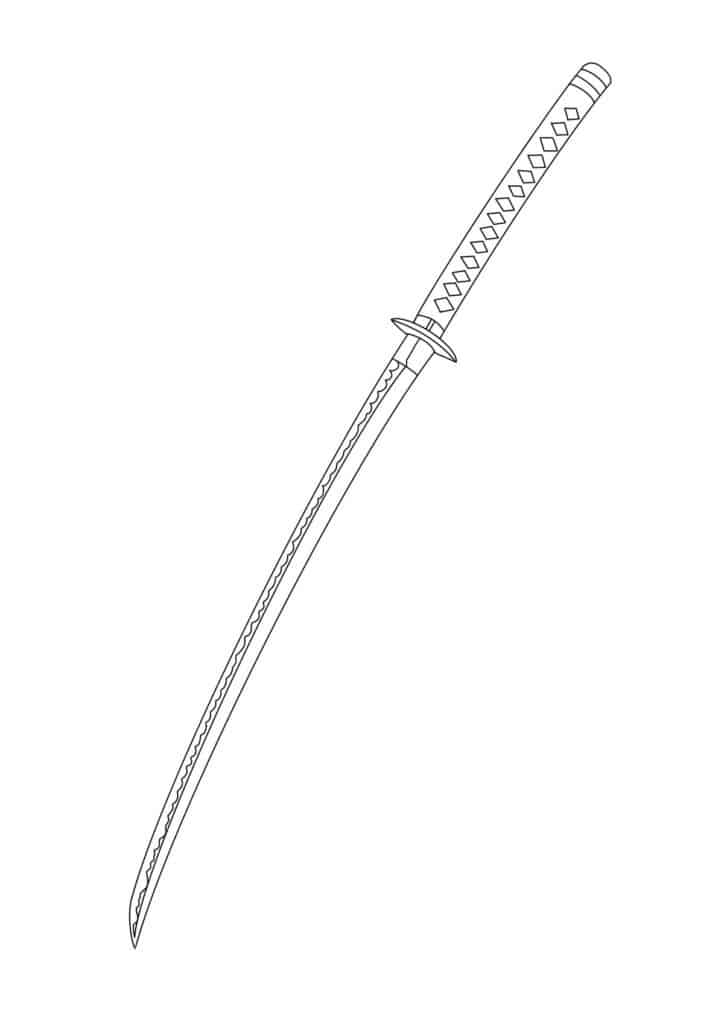
Lightly sketch the combined blade and handle shape
- Look at a reference or photograph to gauge the overall length ratio: a classic battle-ready katana blade is about 60 cm long, with the handle roughly 25–30 cm (a 2:1 ratio) (Swords of Northshire).
- Draw a gentle, slightly curved rectangle for the blade. Keep lines light so you can adjust proportions easily.
- Extend a narrower rectangular prism from the blade’s base to form the handle (tsuka).
Mark the kissaki (tip) geometry
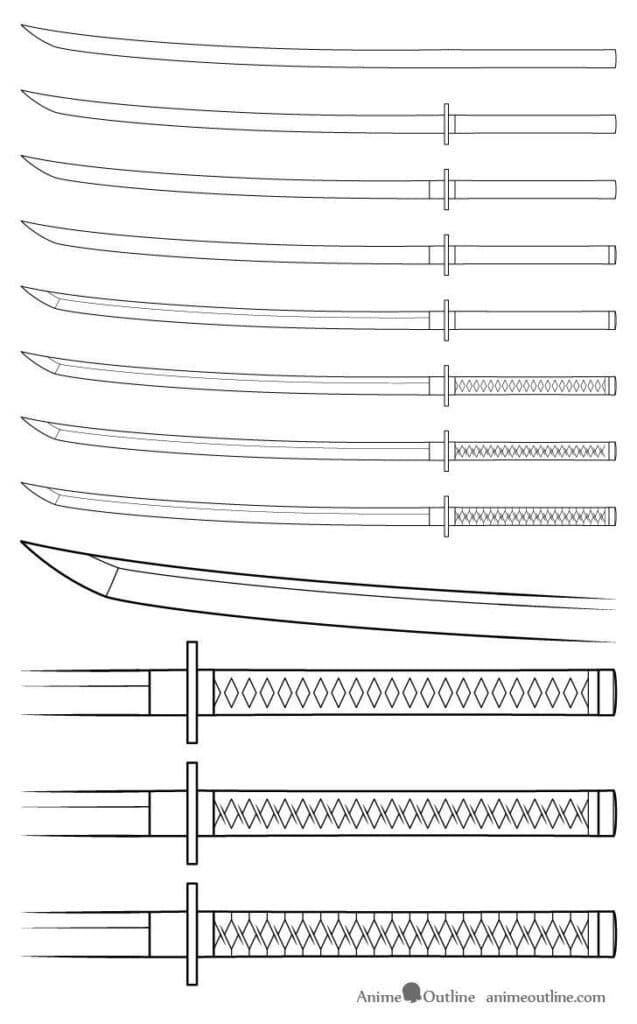
- At the blade’s end, sketch a long, pointed tip. The blade and handle share the same width until they taper into this tip, as noted in step 1 of AnimeOutline’s tutorial.
- Erase any overlapping construction lines to refine the outline.
Define the blade’s spine and edge
- Add a second line parallel to the top curve to show the spine (mune).
- Draw a slightly thinner line along the bottom curve for the cutting edge (ha), hinting at its sharpened nature.
Add the hand guard
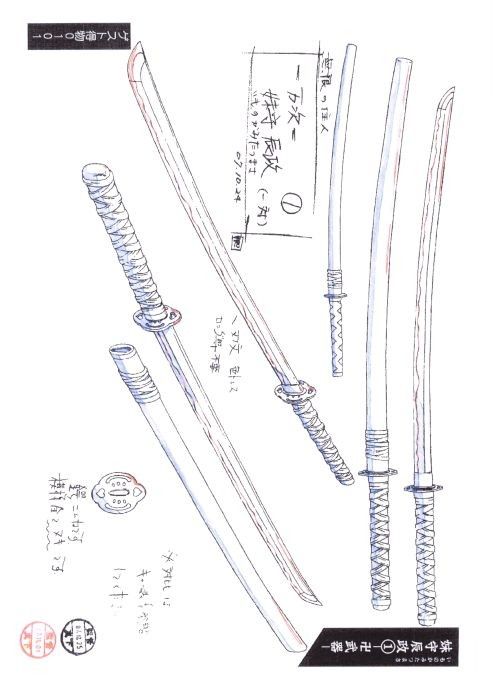
Sketch the tsuba (guard) shape
- Katanas often have round or slightly squared guards. Draw a thin oval or rectangle at the blade-handle junction.
- Keep it narrow so it doesn’t overpower the sword’s elegant profile.
Add the habaki (blade collar)
- Directly beneath the guard, draw a slim band that wraps around the blade. The habaki secures the blade in its scabbard (Katana Sword).
- Use two parallel lines, adjusting thickness for realism.
Indicate the seppa (washers)
- Leave small gaps on either side of the tsuba to suggest seppa spacers. These thin washers cushion the guard and reinforce stability during a draw (Katana Sword).
Detail the blade and hamon
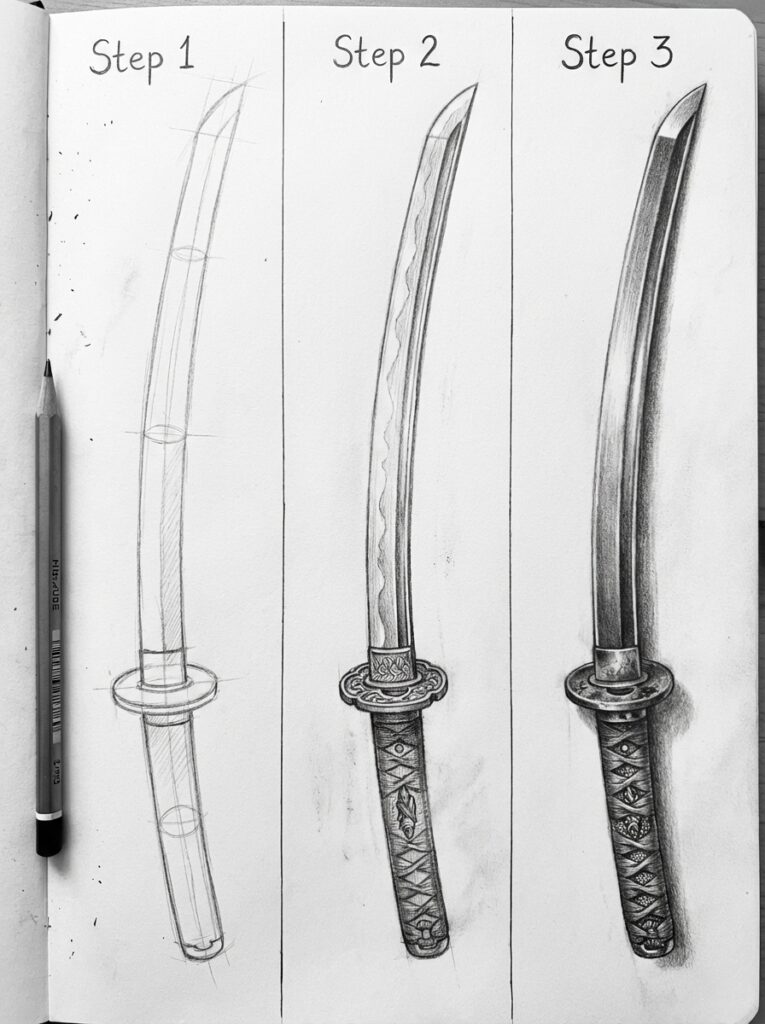
Emphasize the hamon line
- The hamon is the temper line that runs along the edge, indicating differential hardening. Lightly sketch a wavy or undulating pattern following the blade’s curve (Swords of Northshire).
- Keep the line organic—no two hamon patterns are identical.
Refine the blade’s geometry
- Strengthen the spine and edge lines, maintaining a slight space between them for the blade’s thickness.
- Add subtle bevels near the tip to show how the blade narrows toward the kissaki.
Include surface details
- If you want, sketch faint steel grain (hada) with light, irregular strokes near the spine.
- This hints at polishwork without overwhelming the design.
Wrap the handle braid
Outline the tsuka (handle)
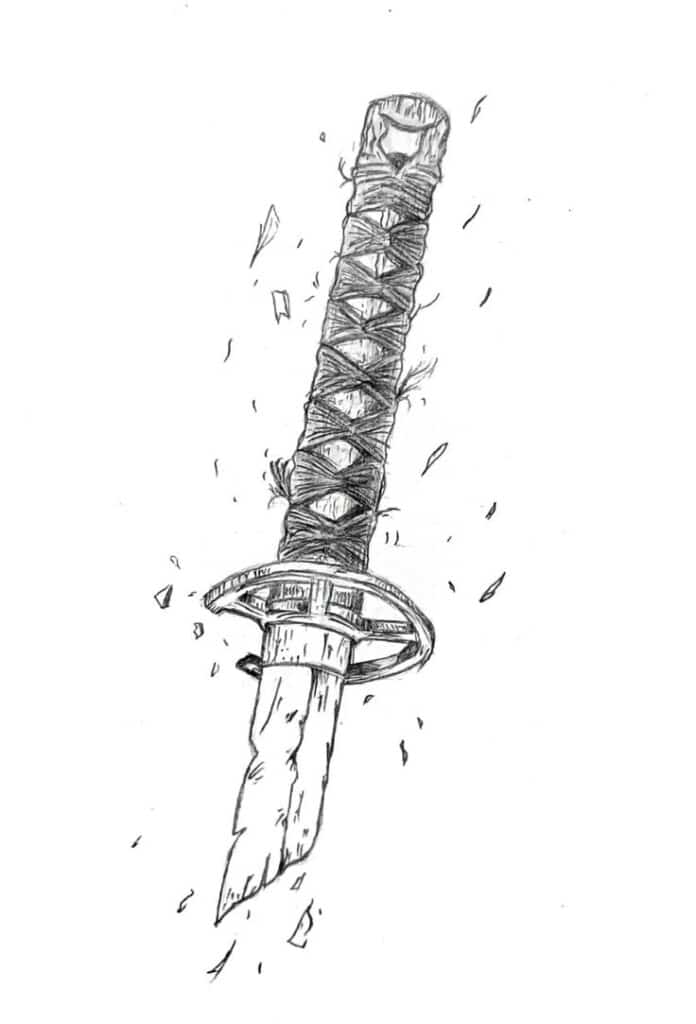
- Draw two parallel lines down the handle’s length. Keep them equidistant so the handle looks uniform.
Mark the diamond (menuki) pattern
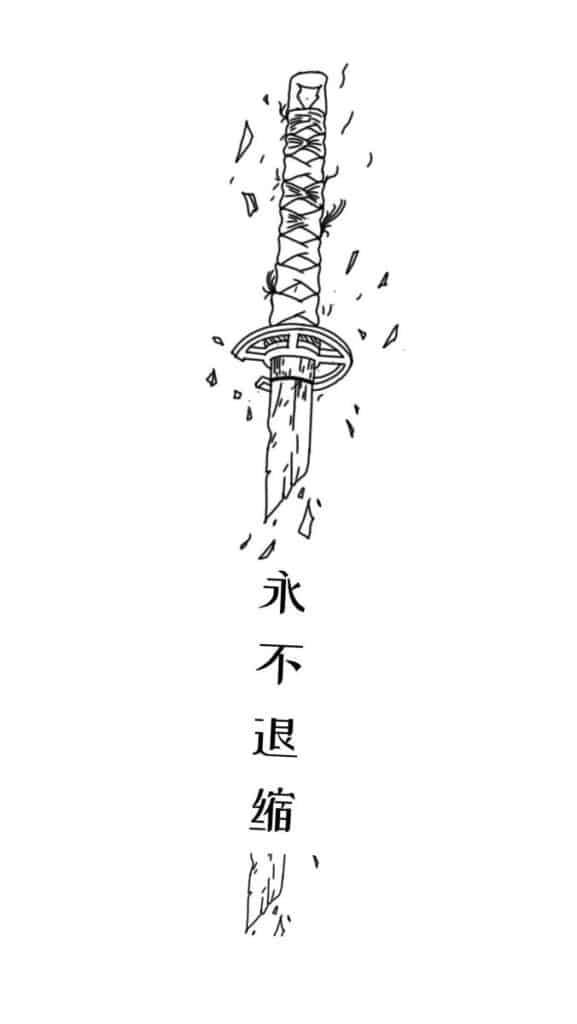
- On the handle, lightly draw evenly spaced diagonal lines running in one direction. Repeat the pattern in the opposite direction to form rhombus shapes (AnimeOutline).
Add braid folds and texture
- Within each diamond shape, draw a short line from the midpoint of each side toward the center to show where the wrap folds.
- Alternate the direction of these small folds to convey depth and realism.
Shade and texture
Establish a light source
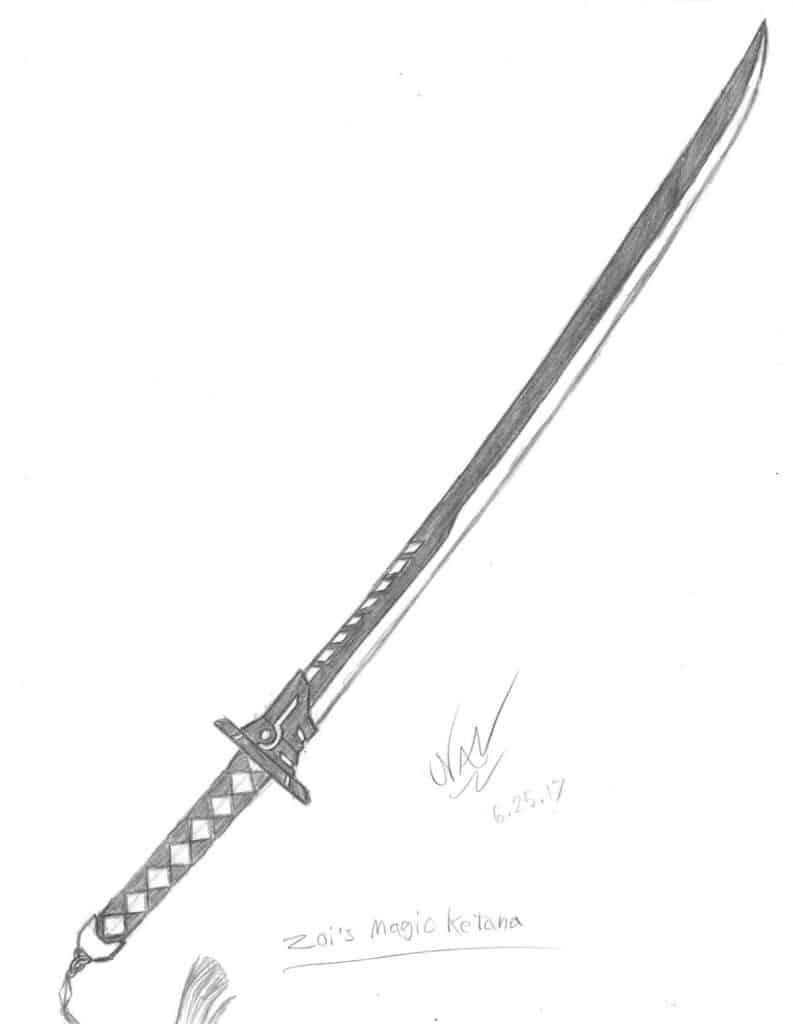
- Decide where your light is coming from (for example, top left). This will guide your shading choices.
Shade the blade’s planes
- On the side away from the light, add gentle gradients between the spine and edge.
- Use a blending stump for smooth transitions, leaving the hamon line mostly white to make it stand out.
Texture metal and wood
- On the tsuba and habaki, use cross-hatching or stippling to suggest metallic sheen.
- On the handle, add subtle rings or grain lines under the braid to imply a wooden core.
Deepen shadows and highlights
- Darken areas under the guard and between braid folds with a softer pencil (4B).
- Use an eraser nib or white gel pen to lift graphite for crisp highlights on edges.

Clean up your drawing
Erase construction lines
- Carefully lift any remaining light sketch marks so only your refined lines remain.
Reinforce final outlines
- Trace over key edges and details with a fineliner or darker pencil.
- Vary line weight—thicker lines for silhouettes, thinner lines for fine details.
Add final touches
- Sign your work discreetly near the base of the handle or scabbard.
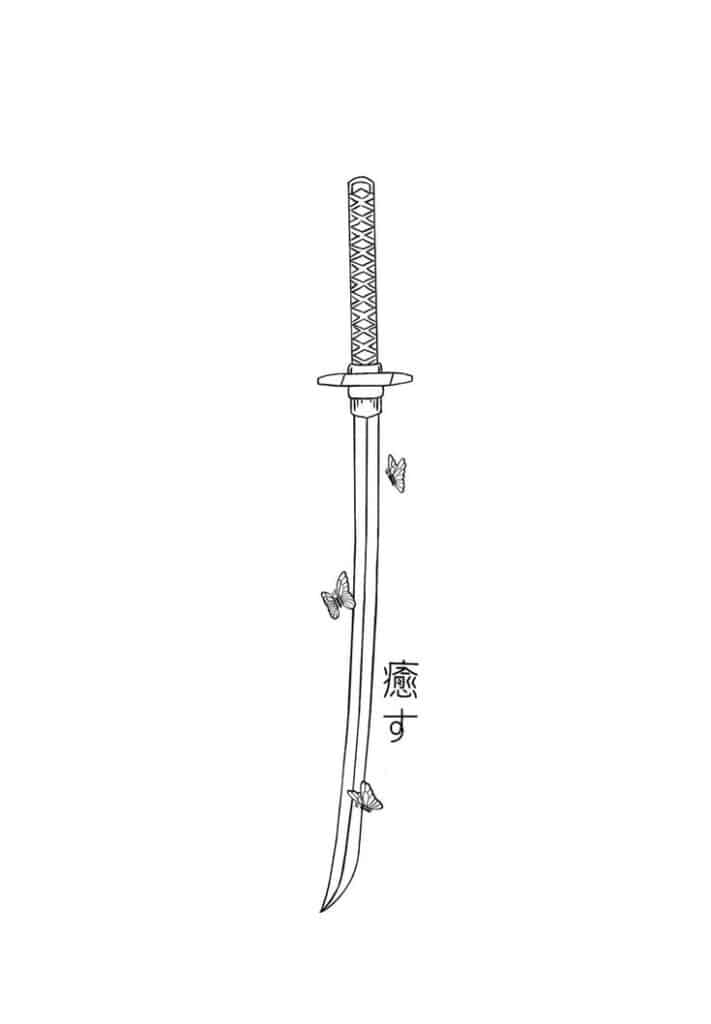
- If you’d like, introduce subtle color with markers or colored pencils on the tsuka wrap or habaki.
Reflect and revise
- Step back and compare your drawing to reference images.
- Note areas to practice further, such as more convincing hamon shapes or braid symmetry.
Frequently asked questions
What pencil grades work best for a katana sketch?
Use an HB pencil for initial outlines, switch to 2B or 4B for midtone and deep shading, and reserve a 6B for the darkest shadows under the guard or between braid folds.
How do I draw a realistic hamon line?
Keep your hamon irregular: sketch a wavy pattern that follows the blade’s curve, avoid perfect symmetry, and lighten the area immediately next to it so the temper line appears crisp.
Can I include the scabbard (saya) in my drawing?
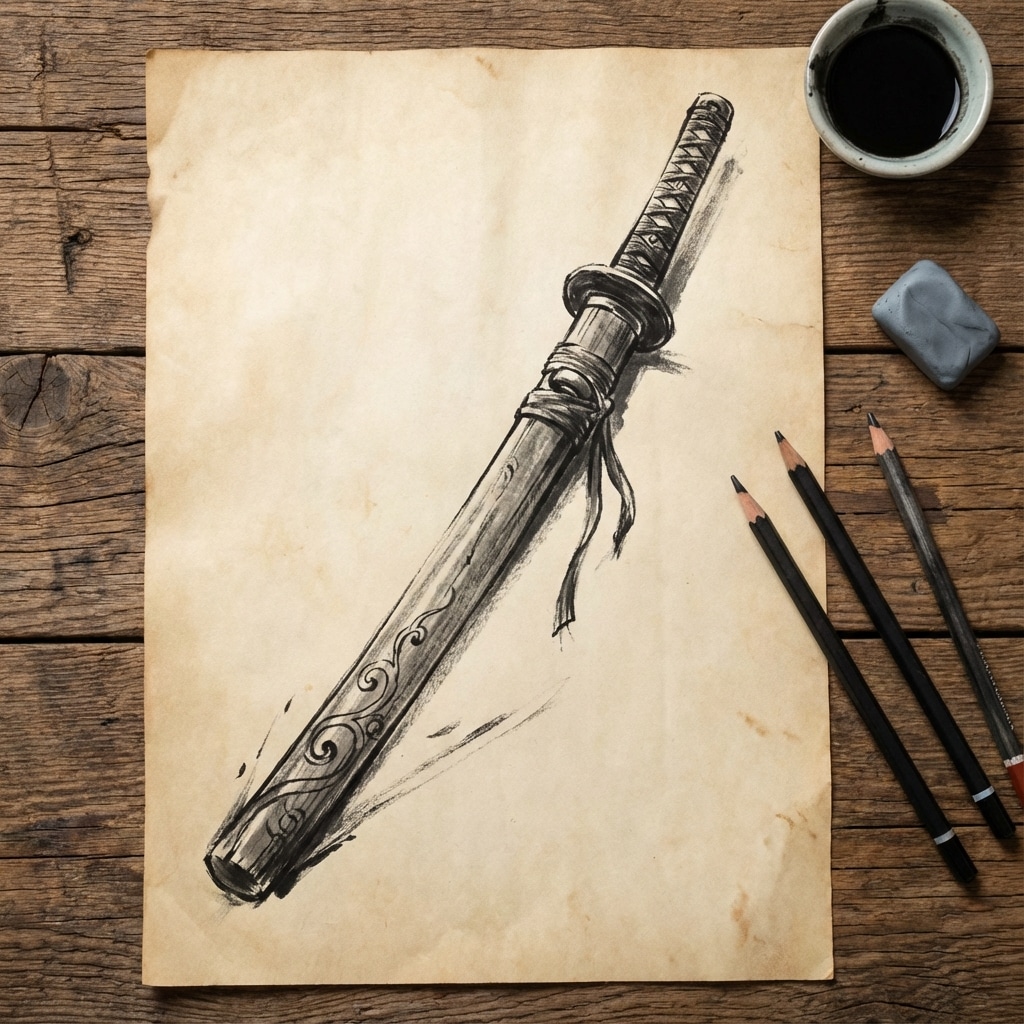
Absolutely. The saya is typically lacquered wood and can be drawn as a long, slightly curved cylinder. If you show it sheathed, depict it with the edge facing up at about a 45-degree angle (Romance of Men’s).
How long should the blade be compared to the handle?
A classic ratio is roughly 2:1, with a 60 cm blade and a 25–30 cm handle. Adjust proportions on your paper based on your style and the overall composition.
What’s the best way to practice handling wraps?
Start by drawing evenly spaced diagonal guidelines, then focus on the alternating folds within each diamond. Practice on scrap paper until you can maintain consistent spacing and angle.
Now that you’ve completed every step from sketch to final detail, you’re well on your way to mastering drawing a samurai sword. Keep practicing these techniques, explore different guard shapes or elaborate tsuka wraps, and soon you’ll develop your own signature style. Happy drawing!
- 90shares
- Facebook0
- Pinterest90
- Twitter0
- Reddit0