
I love drawing dinosaurs! They’re such fun and fascinating creatures to sketch. Bringing these prehistoric beasts to life on paper lets my imagination run wild. I’m glad to share these dinosaur drawing ideas with you. In this post, I’ll share tips and inspiration for your next dinosaur artwork.
Trying out different dinosaur drawing ideasis a great way to improve art skills and learn about these amazing animals from the past. Whether you’re drawing with kids or adults, getting started is easy—the beginning of any dinosaur drawing often starts with simple shapes like circles or ovals before adding details.
I’ve found that experimenting with various species, poses, and art styles keeps things exciting. Following step by step instructions can make the process approachable; step-by-step dinosaur drawing tutorials can help improve drawing skills for beginners, and simple dinosaur drawings can be less daunting for beginners. There are so many cool dinos to choose from!
Introduction to Dinosaur Art
Dinosaur art is the place where imagination and history come crashing together in a really cool way. Whether you’re a dinosaur nut because of how they look or because of the mysterious stories behind them, creating dinosaur art is a total blast. You can bring these prehistoric beasts back to life on paper – from a snarling T-Rex to a sweet Brontosaurus, or who knows maybe even conjure up some brand new creatures from the dinosaur kingdom.
Getting started isn’t a big deal, even if you’re a complete newb. All you really need is some basic shapes and a simple step-by-step guide to draw dinosaurs that look like they just stepped out of a museum. From cartoon style to super realistic, you can try anything with art supplies – even add some colour and personality to your work. Just go wild and don’t worry if it doesn’t work out – try new things, mix up your art with a fun background or add in some quirky details.
Whether you’re a kid just learning to draw or an adult looking for a relaxing hobby, dinosaur drawing is for everyone. With a little practice and some helpful tips, you’ll be able to create your own collection of dinosaur masterpieces. So grab your pencils and paper, and let’s dive into the exciting world of dinosaur art!
1) T. rex sketch
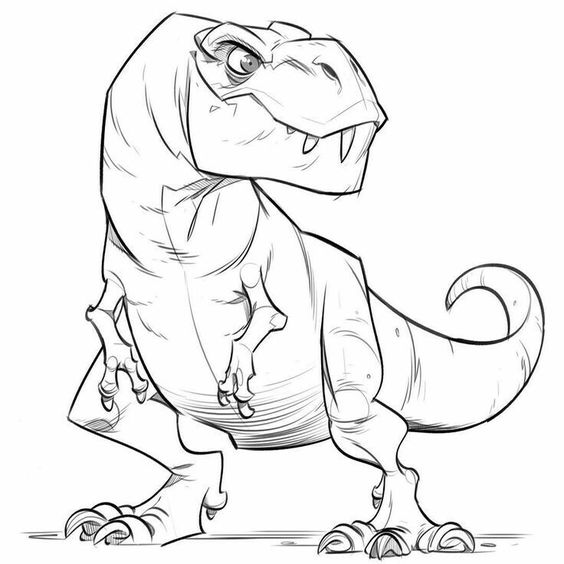
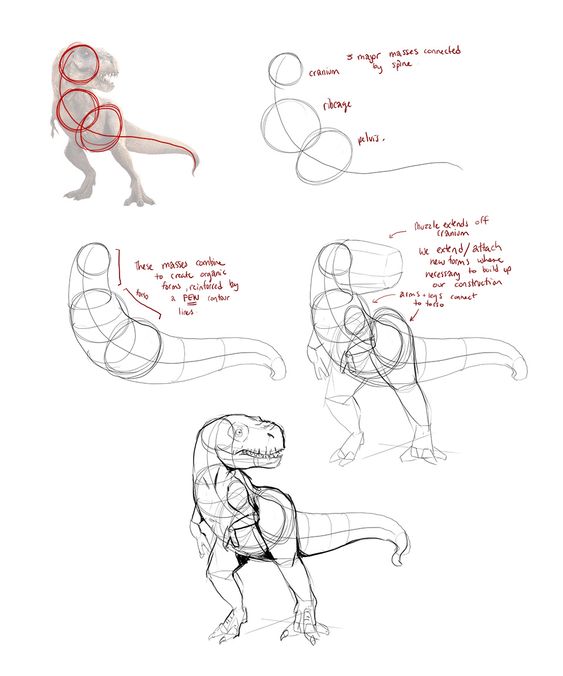
I love sketching T. rex! It’s such an iconic dinosaur. To start, I draw a big oval for the body and a smaller oval for the head. Many dinosaur drawing tutorials include simple shapes as a foundation for creating more complex forms. Then I attach those tiny arms – they always make me laugh.
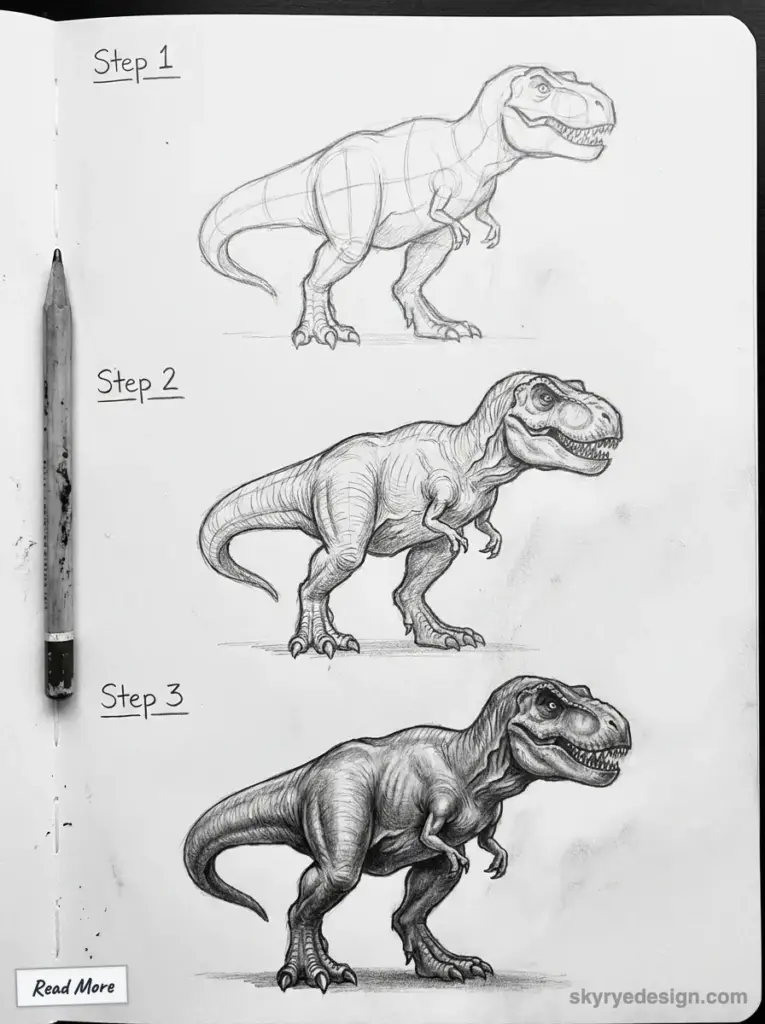
Next, I sketch the powerful legs. T. rex had huge thighs and strong feet with sharp claws. I make sure to attach them nice and sturdy to support that massive body.
The tail is super important for balance. I attach it long and thick, tapering towards the end. It helps my T. rex look ready to pounce!
For the head, I attach a big jaw full of pointy teeth. T. rex had a bite force that could crush bones! I also include those little eyes and nostrils.
To finish up, I add some texture. Scales and wrinkles make it look more real. I might even throw in some feathers – many scientists think T. rex had them!
Once the sketch is done, I trace over the pencil lines with ink to create a clean outline. Using a pencil sketch as a base is recommended before finalizing a dinosaur drawing with ink.
Drawing a T. rex is so much fun. It lets me imagine what these amazing creatures looked like millions of years ago.
2) Stegosaurus doodle
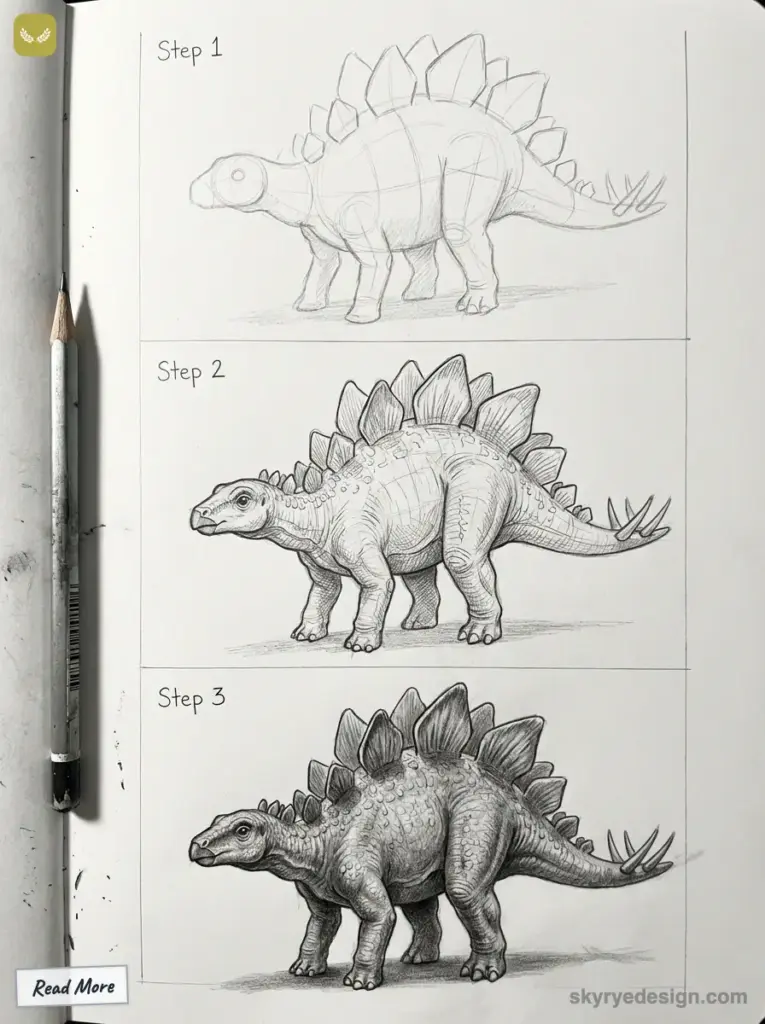
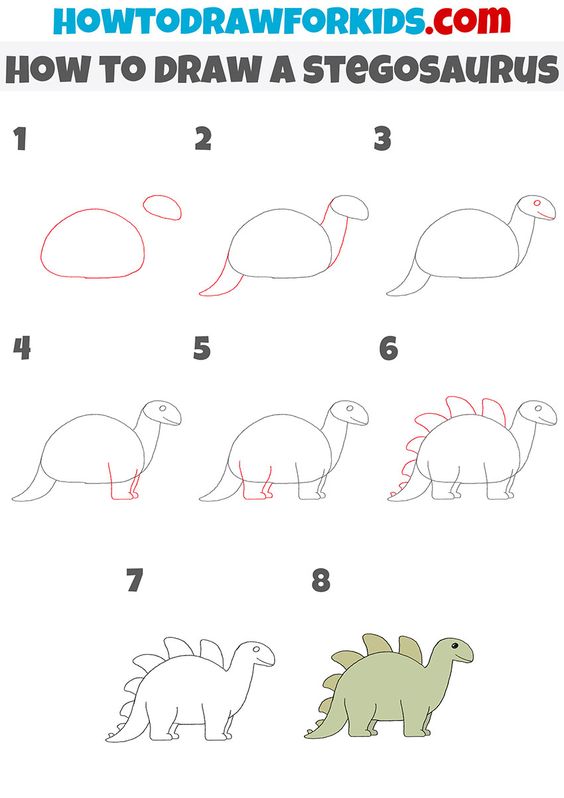
I love drawing Stegosaurus! These dinosaurs have such a cool look with their rows of plates along their backs. When I sketch one, I start with an oval body and add four sturdy legs.
Next, I draw the small head and long tail. The fun part is adding those iconic back plates. I make them different sizes, with the biggest ones in the middle.
Don’t forget the spikes on the tail! These are called thagomizers and make the Stegosaurus look extra fierce. I usually draw four of them.
For extra detail, I might add some scales or wrinkles to the skin. Pay special attention to the knees on the legs—adding wrinkles or details there can enhance realism and make the limbs look more natural. A few plants in the background can help set the scene.
Coloring is optional, but I like using earthy tones like brown, green, or gray. Sometimes I’ll make the plates a brighter color for contrast.
This doodle is great for practicing shapes and proportions. It’s also just plain fun to bring this ancient creature to life on paper! Step-by-step instructions are often provided to guide artists through the drawing process of different dinosaurs.3) Velociraptor in motion
3) Velociraptor in motion
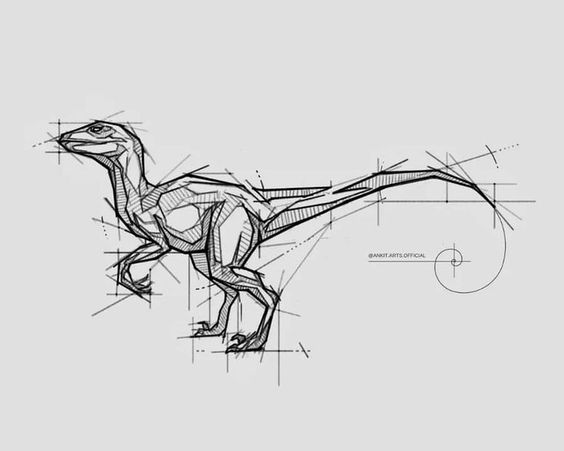
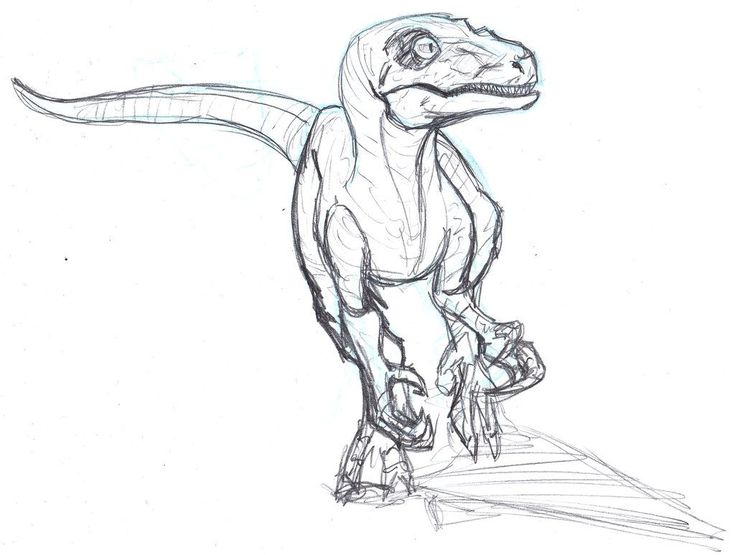
I love drawing velociraptors in action poses. These swift predators really come alive on the page when depicted mid-stride or pounce.
To capture their dynamic movement, I start with a basic stick figure skeleton. This helps me get the posture and limb positions right. Then I build up the body shapes around it. Key approaches for dinosaur drawing include using geometric shapes for body structures and focusing on textures like feathers or scales.
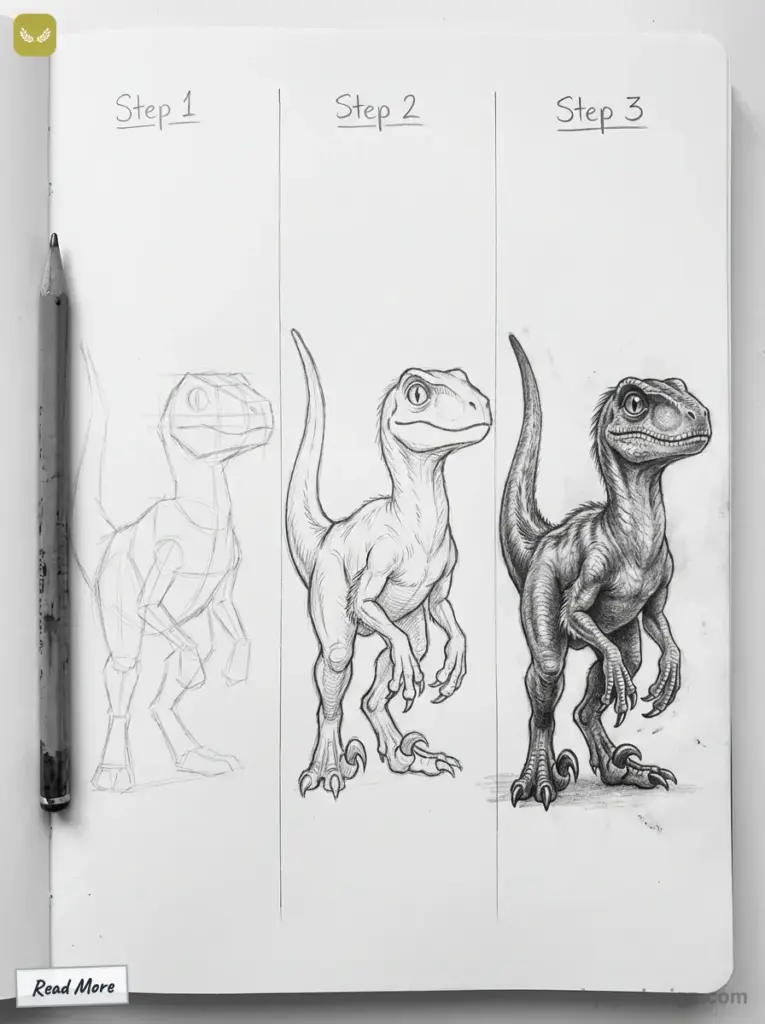
I like to draw the velociraptor leaning forward, with one leg extended back and the other bent. This shows off its agile, bird-like stance. Notice the upright posture and how the limbs are positioned for balance. The arms are usually held out for balance.
The head is fun to draw too. I make the jaws open wide, revealing rows of sharp teeth. The eyes have a fierce, intelligent look that really brings out the raptor’s personality.
Don’t forget those famous curved claws! Notice the large sickle-shaped claw on each foot—it’s a key feature that makes velociraptors so recognizable and fearsome.
Adding motion lines or a blurred background can enhance the sense of speed and movement in your velociraptor drawing. Have fun bringing these prehistoric hunters to life!
4) Triceratops grazing
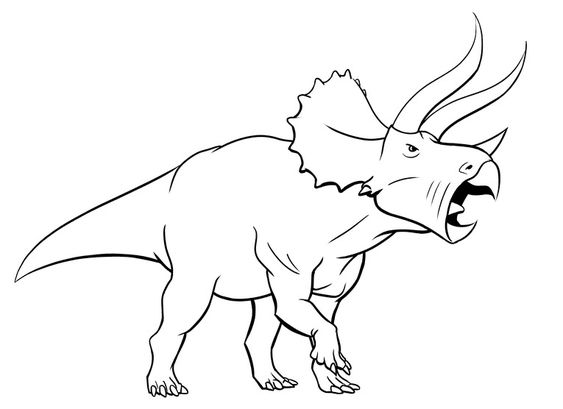
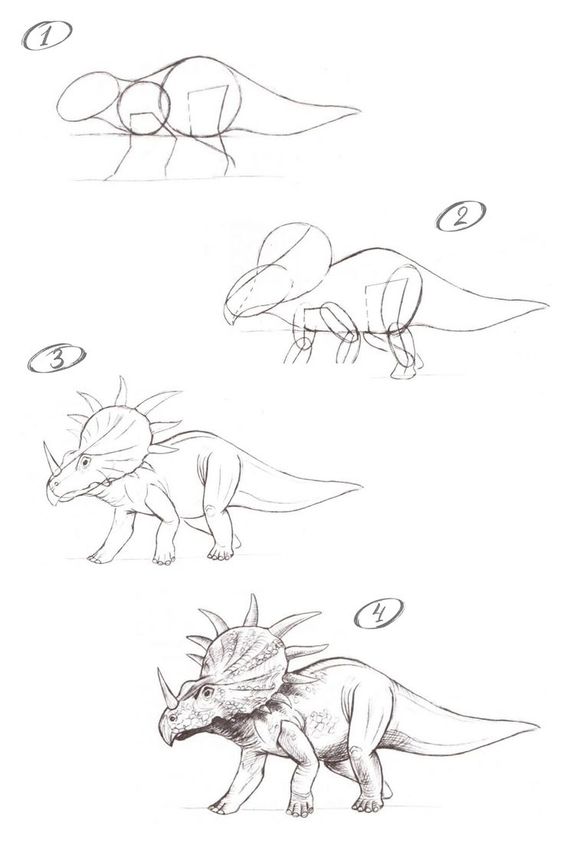
I love drawing Triceratops grazing in peaceful meadows. It’s fun to imagine these huge plant-eaters munching on ferns and cycads.
When I sketch a grazing Triceratops, I start with its distinctive three-horned head lowered to the ground. I make sure to show its beak-like mouth closed around some leaves or branches.
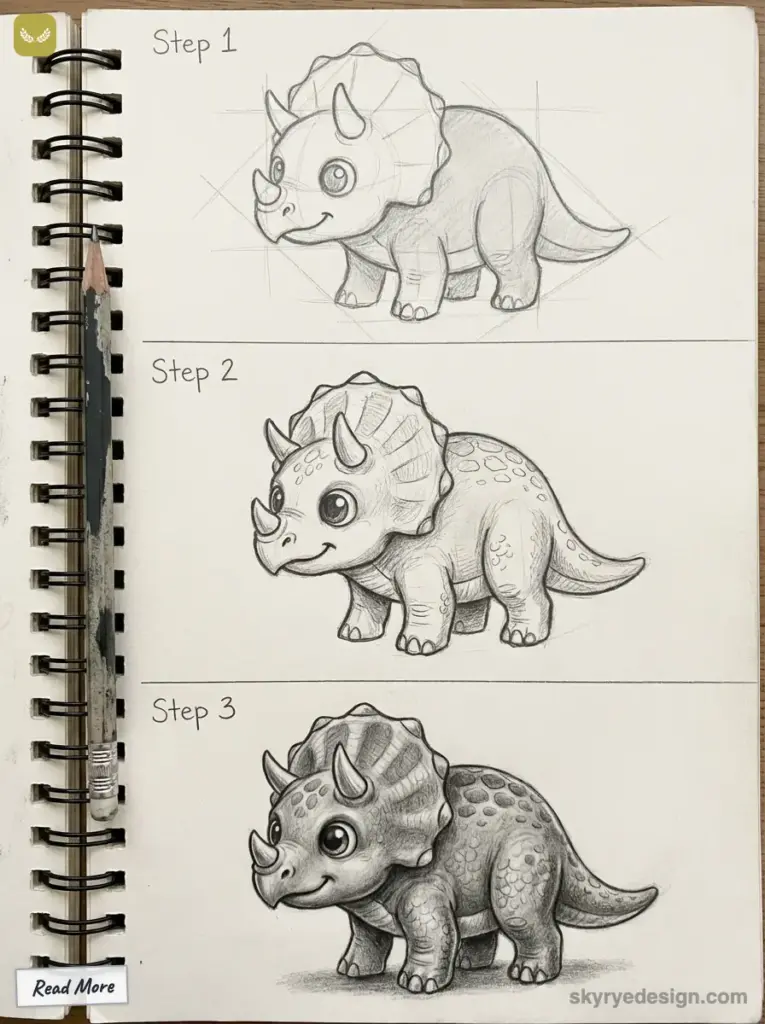
I add details like its large bony frill and thick, sturdy legs. Note: When drawing the frill or horns, pay attention to their size and placement for a more realistic look. Sometimes I draw a herd of Triceratops grazing together for a more dynamic scene.
To bring the picture to life, I include plants from the Cretaceous period. Ferns, horsetails, and ginkgo trees make great additions to the background.
For extra interest, I might add some small creatures like lizards or early mammals scurrying around the Triceratops’ feet. This helps show the scale of these massive dinosaurs.
Drawing a grazing Triceratops is a cool way to depict these ancient animals in a calm, everyday moment. It lets me imagine what their daily lives might have been like millions of years ago.
Note: Drawing tutorials can include a variety of dinosaur species, such as T-Rex, Triceratops, and Stegosaurus.
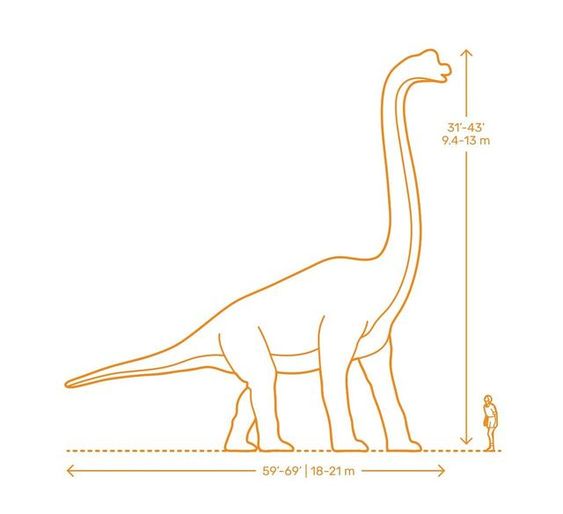
5) Brachiosaurus silhouette
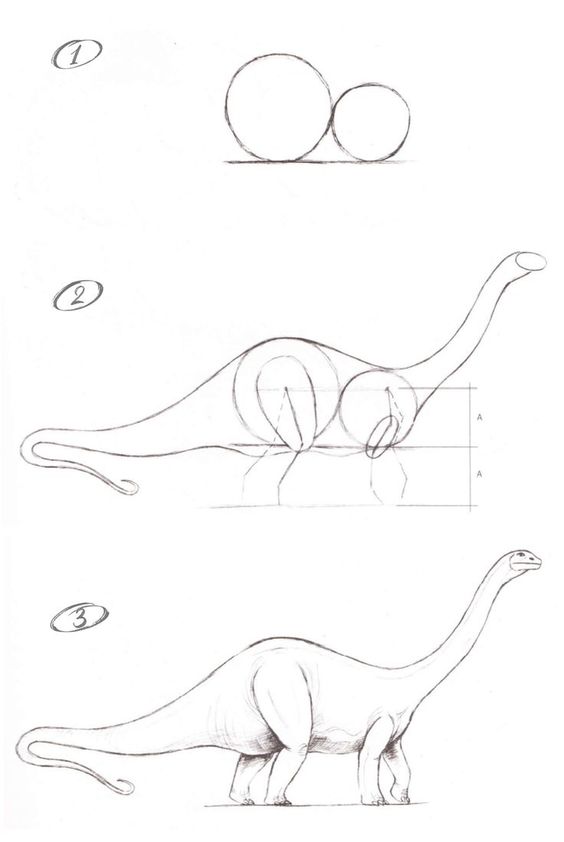
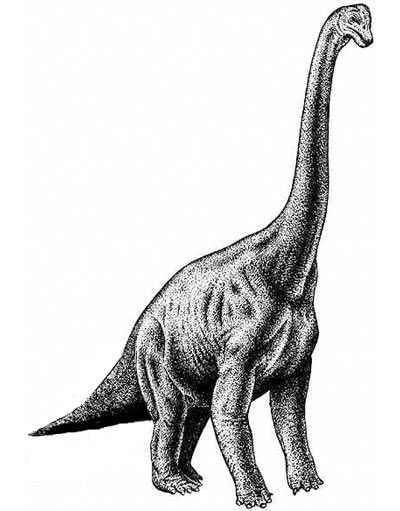
I love drawing Brachiosaurus silhouettes. They’re so fun and easy to do! The long neck and tail make for a really cool shape against a sunset background.
To start, I sketch a basic outline of the body. It’s like a big oval with four sturdy legs. Then I add the super long neck reaching up towards the sky.
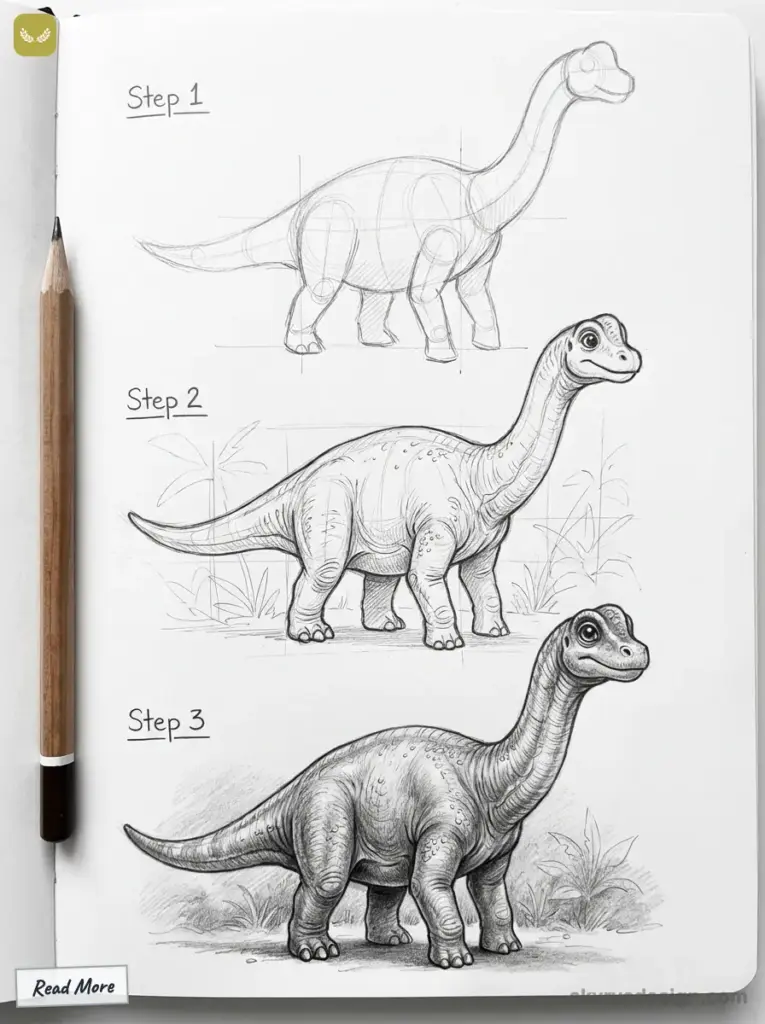
The head is small compared to the body. I make sure to give it a slightly rounded snout. The tail balances out the neck, stretching out behind the body.
For the silhouette effect, I fill in the whole shape with black. It stands out great against an orange or pink sky. Sometimes I add a tree or two in the foreground for scale.
If you want to practice or make smaller drawings, try drawing your Brachiosaurus on half sheets of paper (5.5″ x 8.5″). This can help with control and reduce smearing, especially for detailed work.
This drawing idea is perfect for beginners. It doesn’t need much detail, just the iconic Brachiosaurus shape. I find it relaxing and always enjoy how it turns out.
Dinosaur drawing ideas can include various types of dinosaurs like T-Rex, Triceratops, and Plesiosaurus.
6) Pterodactyl soaring
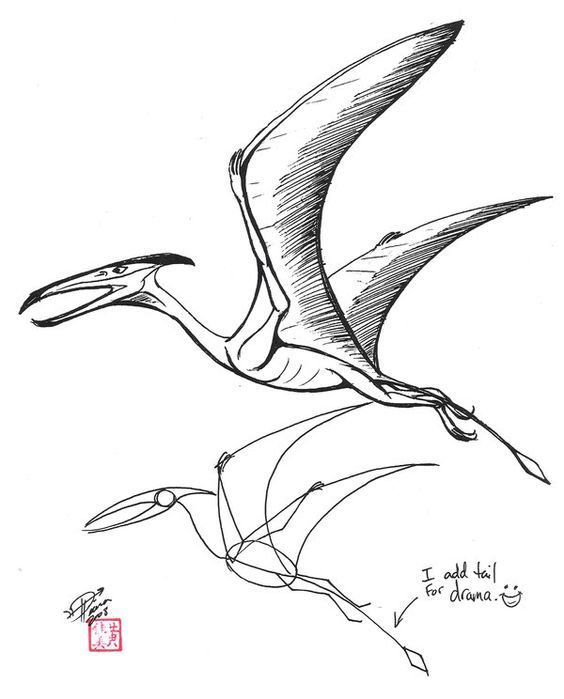
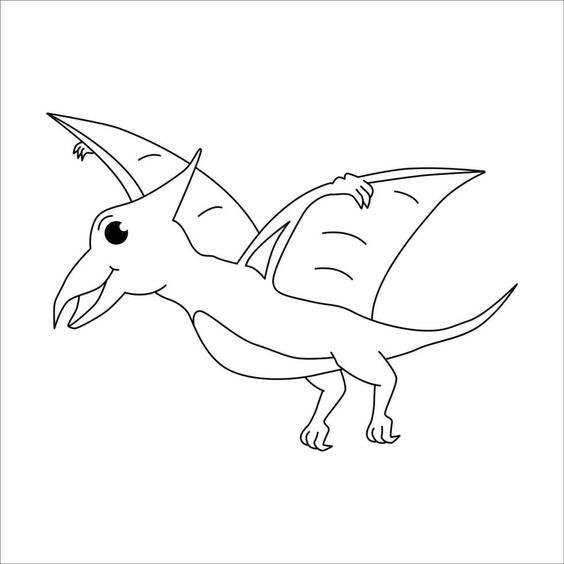
I love drawing pterodactyls in flight. It’s fun to imagine these prehistoric creatures gliding through ancient skies. When I sketch a soaring pterodactyl, I start with its wide wingspan.
I draw the wings outstretched, with thin membranes of soft tissue stretched between long fingers. The body is small compared to the wings. I add a long, narrow head with a pointed beak and a bony crest on top.
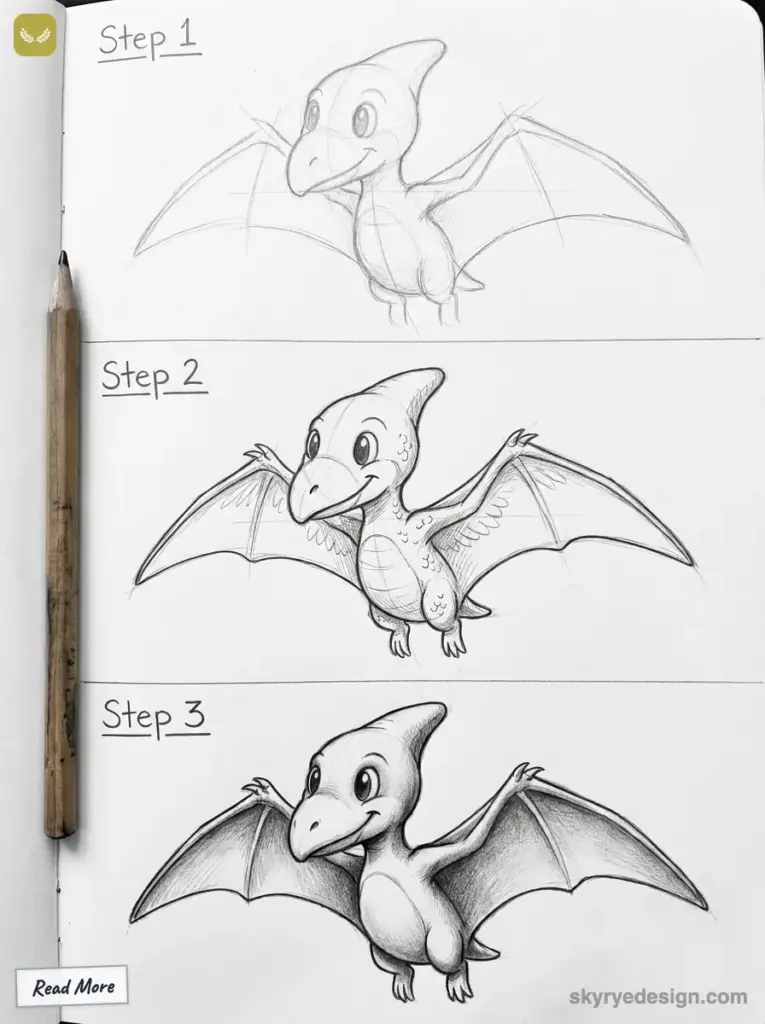
To show motion, I sometimes draw the wings in different positions. One might be higher than the other, like it’s flapping. I also like to add some curves to the wing edges for a more natural look.
Background elements can make the drawing more interesting. I might include some clouds or distant mountains. This helps give a sense of the pterodactyl’s height and speed.
For extra detail, I sometimes add scales on the body or wrinkles in the wing membranes. A few lines can suggest wind or air currents around the pterodactyl.
Creative dinosaur drawing ideas include simple, stylized cartoons for beginners and detailed, anatomically informed scenes for experienced artists.
7) Ankylosaurus armor study
I love drawing the Ankylosaurus because of its cool armor. It’s fun to sketch the bony plates and spikes that covered its body. These features make it look like a walking tank from the dinosaur world.
When I draw an Ankylosaurus, I start with its wide, flat body. Then I add the armor plates on top, combining different shapes and textures. They were different sizes and shapes, which gives me lots of room to be creative.
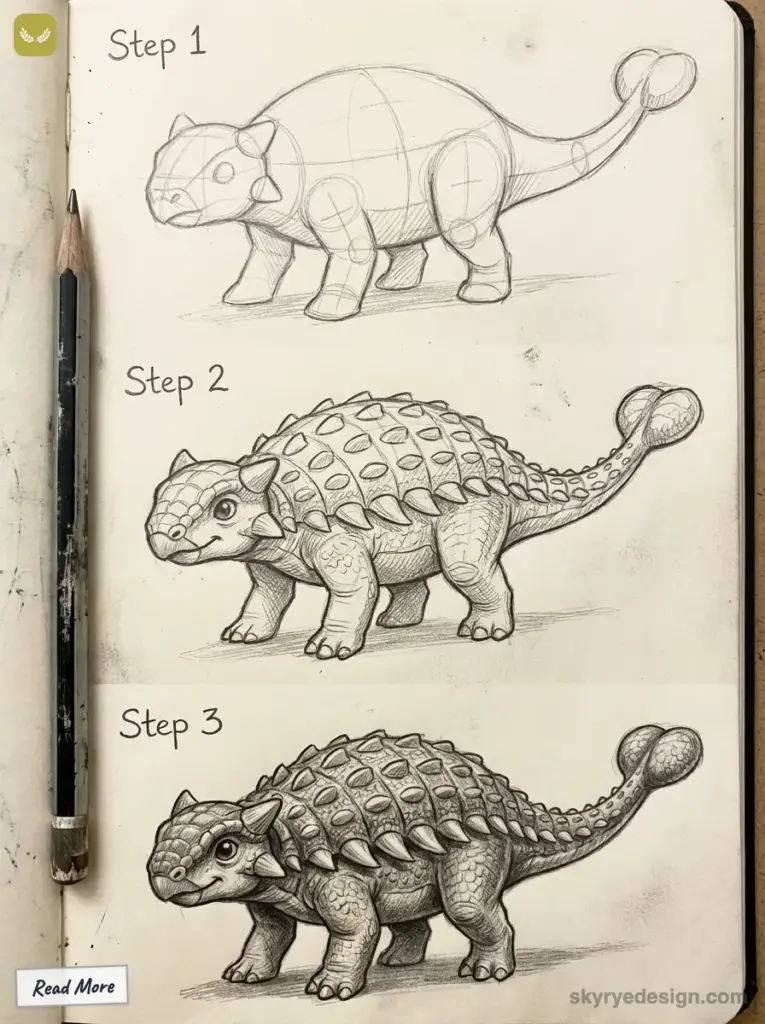
The tail is another exciting part to draw. It had a big club at the end, covered in bony knobs. This was probably used for defense against predators.
I like to imagine how the armor might have looked in real life. Maybe it had different colors or patterns to help the dinosaur blend in with its surroundings.
Drawing the armor up close can be a good practice. It helps me get the details right and understand how the plates fit together. I sometimes draw just the head to focus on the bony structures there.
Experienced artists can incorporate unique, imaginative poses or create realistic and anatomically correct depictions in their dinosaur drawings.
8) Parasaurolophus headshot
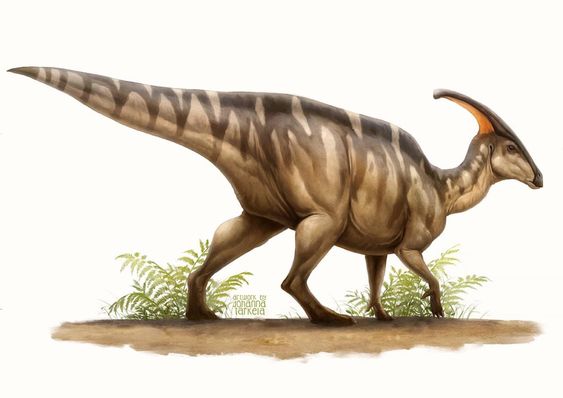
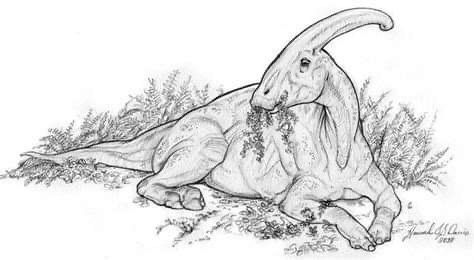
I love drawing Parasaurolophus headshots! This duck-billed dino has such a cool look with its long, curved crest. When I sketch one, I start with the basic shape of its head and add that awesome crest.
The crest is key – it’s like a long tube that curves back from the skull. I make sure to get the right angle and proportion. Then I focus on the details of its face, like the beak-like mouth and eyes.
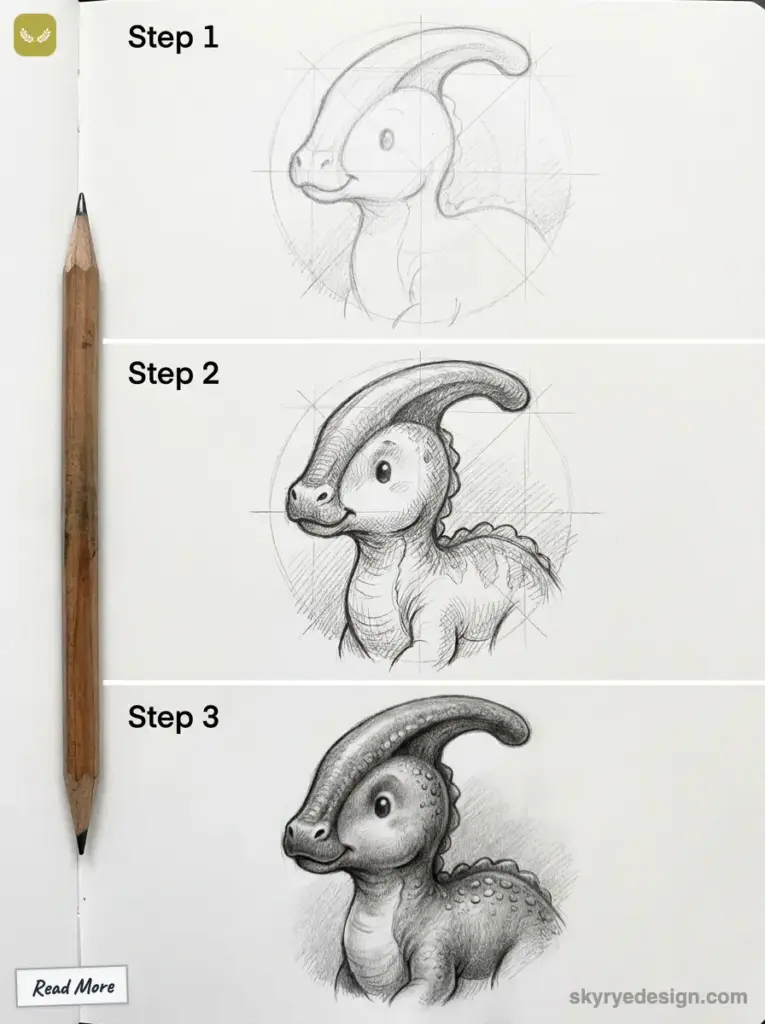
I like to add some texture to show the scaly skin. Little lines and bumps help bring it to life. Sometimes I draw it from the side to really show off that crest profile.
For extra flair, I might add some color. Earthy tones work well, but I can get creative too. Maybe some bright patterns on the crest? It’s fun to imagine how these dinos might have looked.
Once you finish your Parasaurolophus headshot, save it in your sketchbook or portfolio to keep track of your progress. You can also use your drawing as a design for dinosaur-themed greeting cards, since dinosaur crafts can include making greeting cards.
9) Spinosaurus aquatic scene
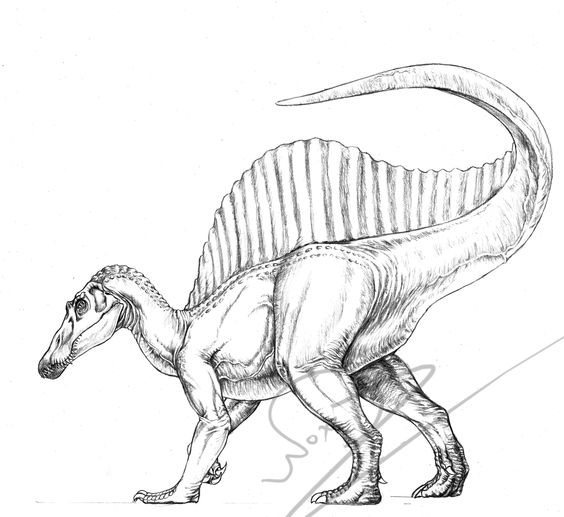
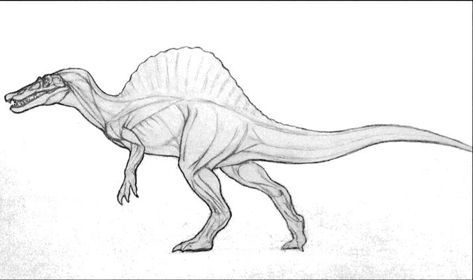
I start by sketching the water’s surface and some plants along the shore. Then I add the Spinosaurus, with most of its body submerged.
I make sure to show its long snout and sail-like back poking above the water. It’s fun to draw fish swimming nearby, maybe even one in the dino’s jaws!
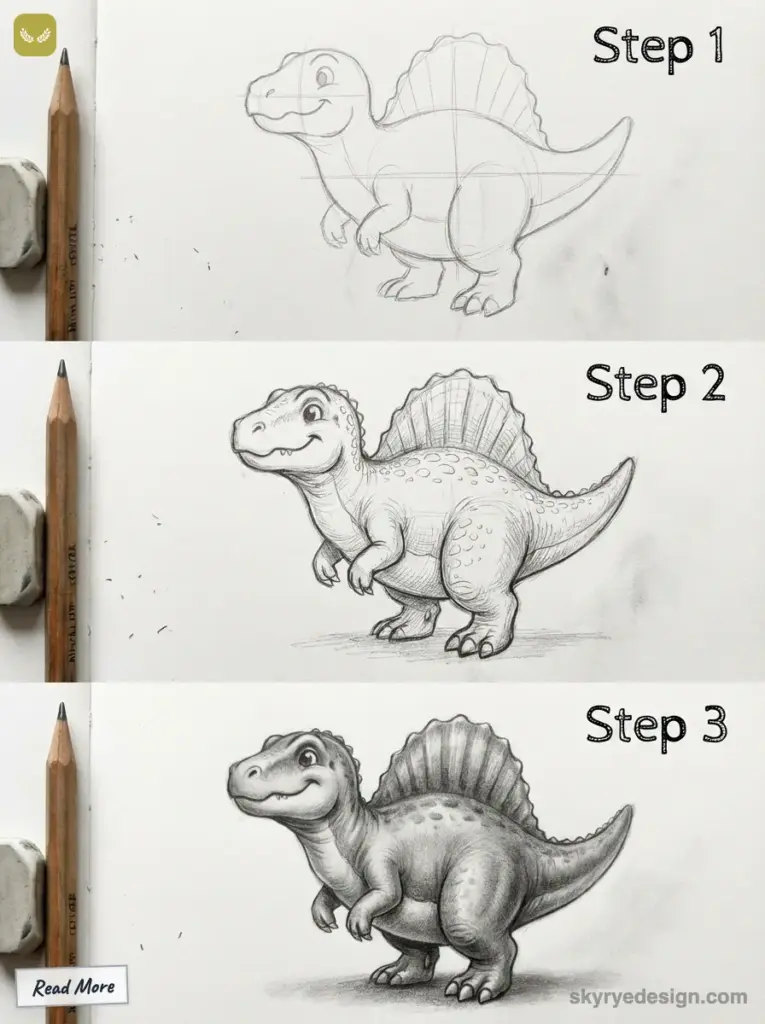
Sometimes I add other water creatures like crocodiles or turtles. This helps show how big Spinosaurus was compared to other animals.
I like to use blue and green colors for the water and plants. For Spinosaurus, I pick earthy tones like brown and gray.
Adding ripples in the water around Spinosaurus makes the scene more lively. It’s like catching the dino in action as it hunts for its next meal.
Once I’m done, I erase the guidelines to reveal the clean, finished Spinosaurus scene. Kids can also try making dinosaur footprint stamps as a fun related activity.
10) Diplodocus tail swing
I start by drawing the Diplodocus body and neck. Then I add the tail, making it curve and twist. I imagine the force of the swing and try to show that motion in my lines.
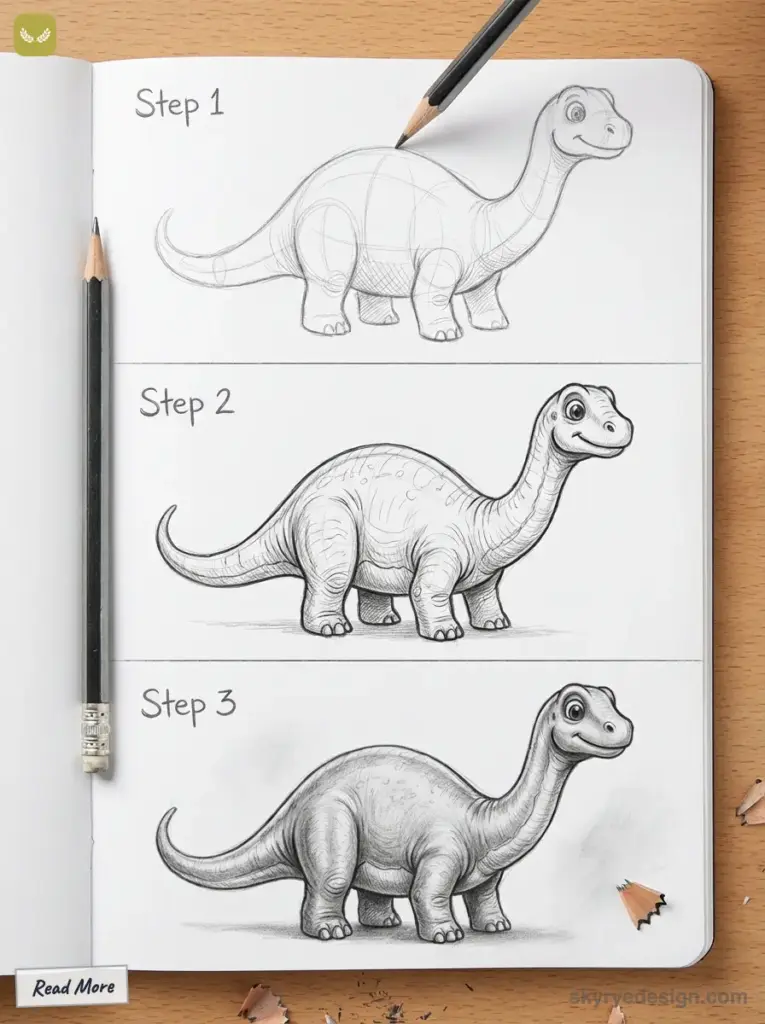
Sometimes I draw the tail mid-swing, with a blurred effect at the end. Other times, I show it just before or after impact. I might even include a target – like a predator or tree – to give the swing more meaning.
To make the background more interesting, I like to add other shapes such as stars, triangles, or even pentagons around the Diplodocus. These geometric forms can enhance the visual interest and make the drawing stand out.
I enjoy adding details like muscles flexing or scales stretching as the tail moves. It makes the drawing feel more alive and dynamic.
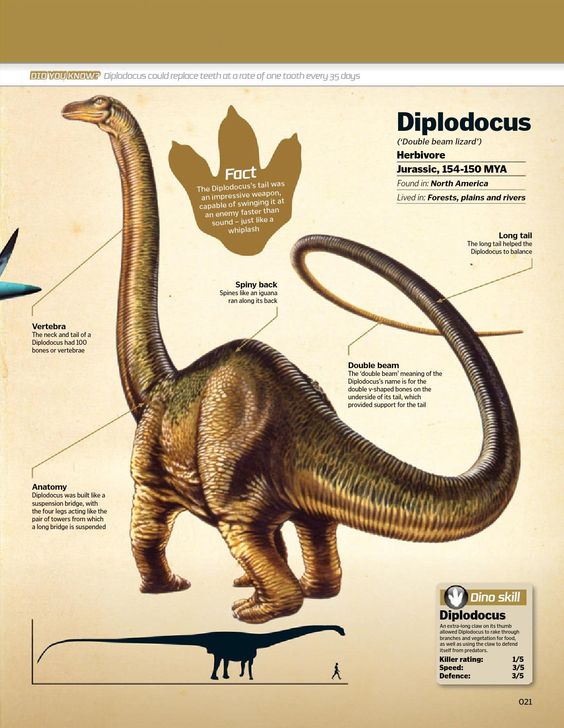
For extra flair, I sometimes draw dust or leaves flying from the force of the tail swing. It really brings the scene to life!
Creating dinosaur mobiles using these drawing ideas and incorporating other shapes can also add a decorative touch to a child’s room.
Dinosaur Coloring Page Inspiration
If you’re looking for a fun way to jump into dinosaur art, dinosaur coloring pages are the perfect place to start! These pages are packed with all your favorite dinosaurs, from the mighty T-Rex with its sharp teeth and powerful tail, to the spiky Stegosaurus and the horned Triceratops. You can find dinosaur coloring pages online or in books, ready for you to bring to life with your own creative touch.
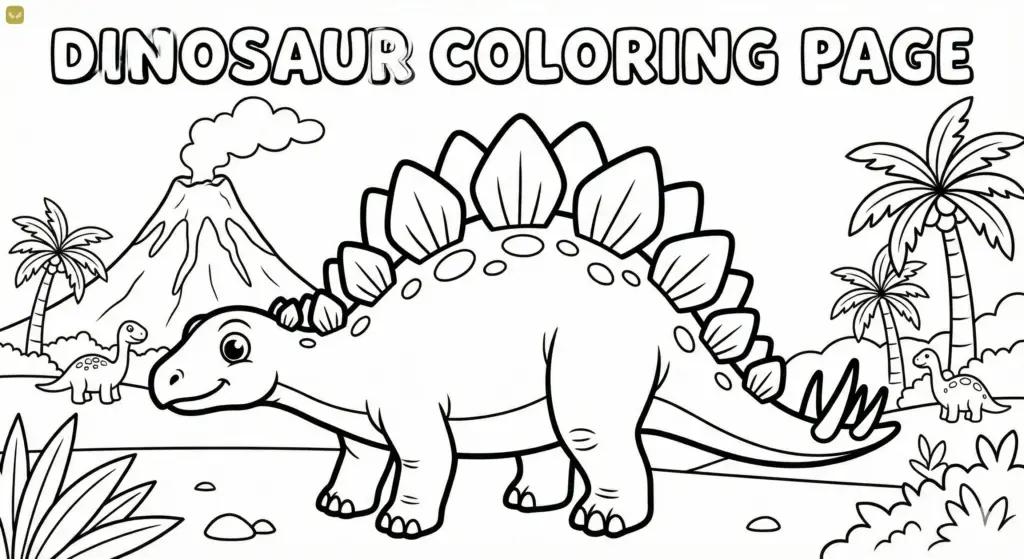
Grab your colored pencils, markers, or crayons and start experimenting with different colors and patterns. Maybe your T-Rex has bright stripes, or your Stegosaurus sports a row of rainbow plates. Don’t forget to add feathers to your Velociraptor or unique markings to your Triceratops—there’s no limit to how creative you can be! You can even design your own backgrounds or add other dinosaurs to the page for a full Jurassic Park scene.
Each dinosaur coloring page is a blank canvas for your imagination. Try out new color combinations, add details like scales or spots, and make each dinosaur your own. With every page you complete, you’ll build your skills and create a collection of dinosaur art that’s as unique as you are.
Materials Needed
To create awesome dinosaur drawings, I’ll need a few key supplies. Here are the main items I use to bring prehistoric creatures to life on paper.
For paper, I recommend using a sketchbook, which is perfect for practicing and keeping all your dinosaur drawing ideas in one place. You can also use loose sheets or drawing pads depending on your preference.
Some of these materials can also be used to make dinosaur masks as a fun craft for kids.
Paper and Pencils
I always start with good quality paper. Sketchbooks work great, but any smooth drawing paper will do. I prefer heavier weight paper that can handle erasing and coloring. For pencils, I use a mix of graphite hardnesses. 2B pencils are my go-to for sketching outlines. I also keep some harder H pencils handy for light lines and details. Softer B pencils help me add shading and texture.
Mechanical pencils are nice for precision work. I have a few different lead sizes – 0.5mm for fine details and 0.7mm for general sketching. A variety of pencils lets me adjust line weight easily as I draw.
Coloring Supplies
Once I have my sketch, I love adding color. Colored pencils are great for blending and layering. I have a basic set of 24 colors that covers most needs. For bolder colors, markers work well. I use both fine-tip markers for details and thicker ones for filling larger areas.
Watercolor pencils are fun too. I can use them dry like regular colored pencils or add water for a paint-like effect. Crayons are good for younger artists just starting out. They’re easy to use and come in tons of dinosaur-friendly colors.
Erasers and Sharpeners
Mistakes happen, so I always keep erasers nearby. Kneaded erasers are my favorite. They’re moldable and don’t leave eraser dust. I also use a regular pink eraser for bigger areas. A pencil sharpener is a must-have to keep my pencils pointy. I like handheld sharpeners with a container to catch shavings. An electric sharpener is nice for quickly sharpening lots of colored pencils.
For precision erasing, I use a thin eraser stick. It lets me erase tiny areas without messing up the rest of my drawing. A brush helps sweep away eraser bits without smudging my work.
Basic Drawing Techniques
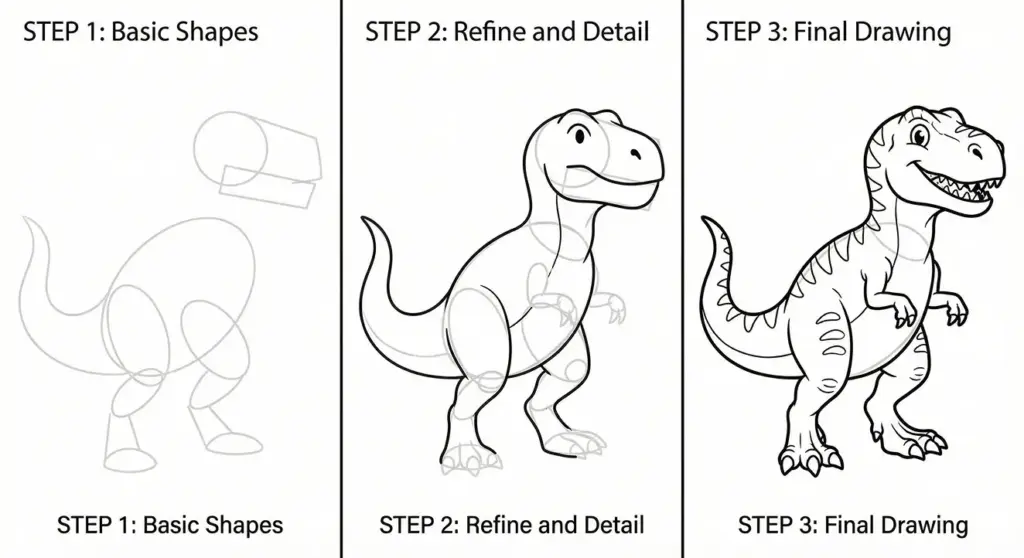
Let’s go over some key techniques to help you create awesome dinosaur drawings. I’ll walk you through the main steps to bring your prehistoric creatures to life on paper. You can also experiment by placing your dinosaurs in imaginative settings, such as floating in outer space, to add a creative twist to your artwork.
As a fun craft extension, kids can create dinosaur puppets using simple materials for even more hands-on enjoyment.
Sketching the Outline
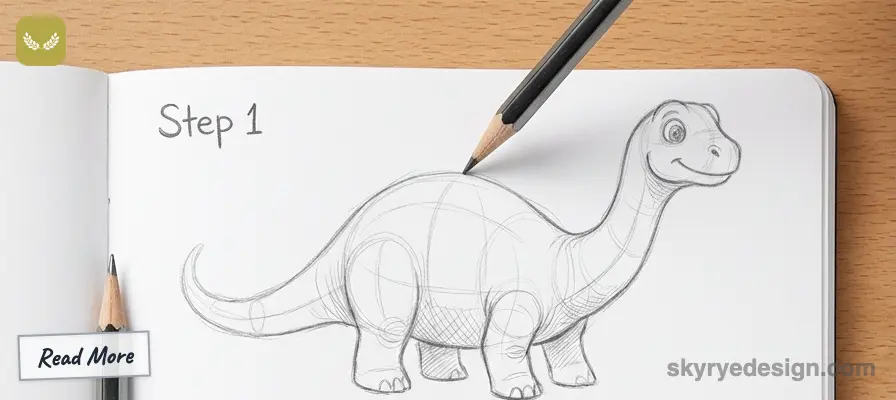
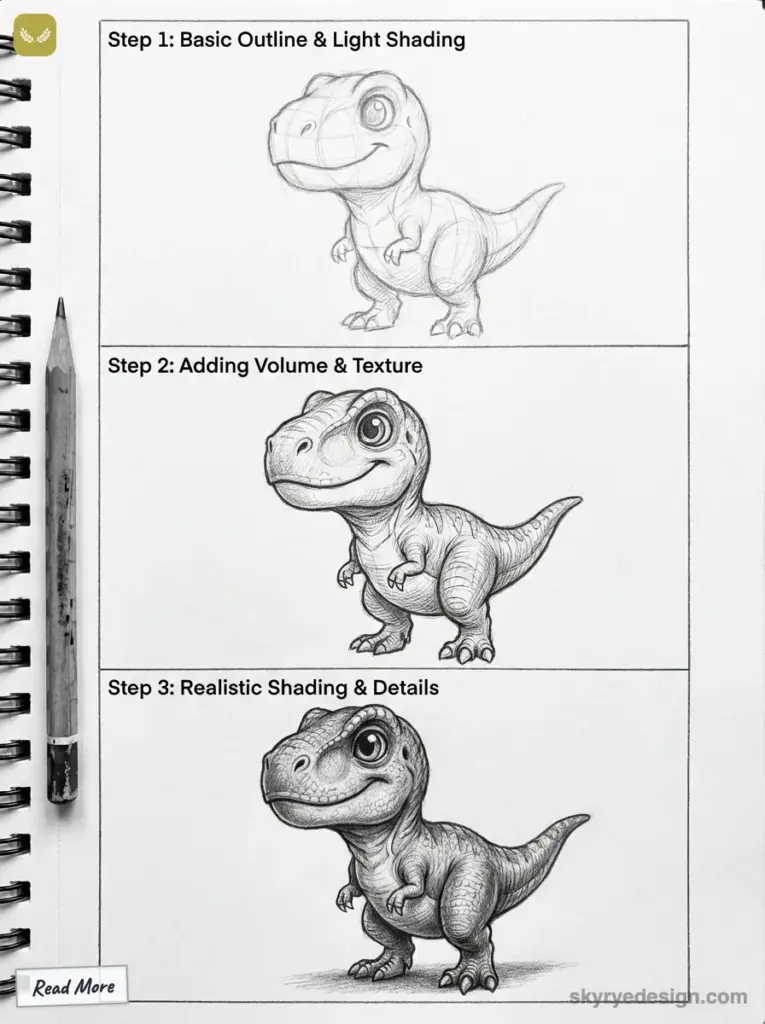
I always start with light pencil strokes to map out the basic shape. I draw a large oval for the body and smaller circles for the head and limbs. Then I connect these shapes with lines to form the neck, tail, and legs.
It’s important to keep my lines loose and light at this stage. I can easily erase and adjust as needed. I make sure to consider the dinosaur’s proportions – some have long necks, others have tiny arms.
For accuracy, I often look at reference images of dinosaur skeletons or scientific illustrations. This helps me get the general structure right before adding details.
Adding Details
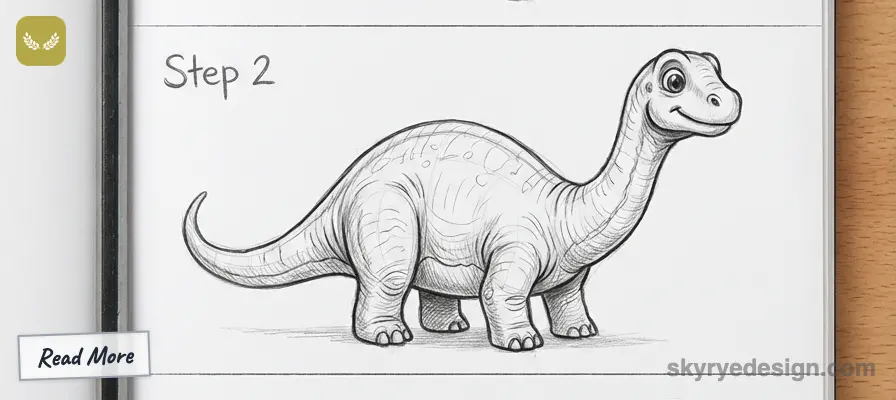
Once I’m happy with the basic outline, I start filling in more specific features. I add eyes, nostrils, and a mouth to the head shape. For the body, I draw in scales, plates, or feathers depending on the species.
I pay close attention to unique dinosaur traits. T. Rex gets tiny arms and huge teeth. Stegosaurus needs its row of back plates. Triceratops must have its distinctive frill and horns.
I use firmer pencil strokes for these details, but I’m still careful not to press too hard. I might need to erase and refine some areas as I go along.
Shading and Texturing
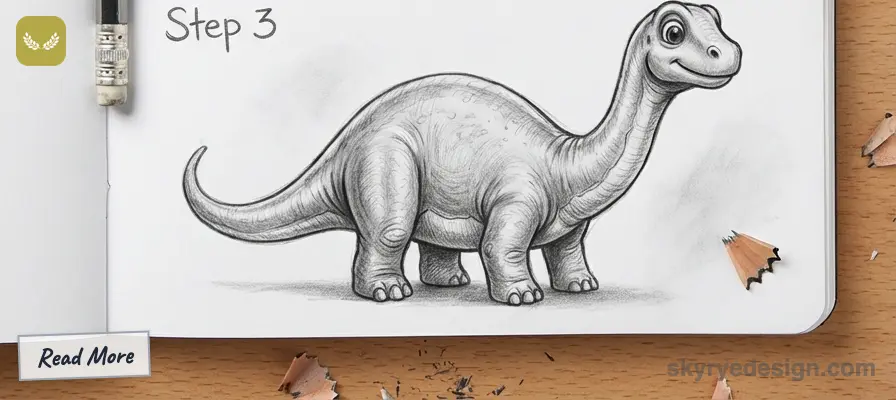
To make my dinosaur drawing really pop, I add shading and texture. I think about where the light source is coming from and add darker shades to the opposite side. This gives the drawing depth and makes it look more 3D.
For scales, I use small, overlapping curved lines. Feathers can be created with light, wispy strokes. Rough skin might need more irregular texturing.
I vary the pressure on my pencil to create different tones. Pressing harder gives darker areas, while lighter touches create highlights. I’m always careful to blend shades smoothly for a natural look.
- 3.9Kshares
- Facebook0
- Pinterest3.9K
- Twitter0
- Reddit0