Airplanes spark wonder and excitement in people of all ages. Drawing these amazing flying machines lets us explore our creativity while learning about aviation. It’s a fun way to blend art and science.
Drawing airplanes can help improve skills like spatial awareness and attention to detail. This hobby appeals to kids and adults alike. From simple paper planes to detailed technical drawings, there are many ways to sketch aircraft. Let’s look at some fun airplane drawing ideas to try.
Introduction to Aviation Art
Aviation art is a vibrant and inspiring field that invites artists to capture the excitement and beauty of flight. Whether you’re just starting to draw or have years of experience, there’s always something new to discover.
To begin your journey, try searching for airplane drawing tutorials online—simply type “how to draw an airplane” or “aviation art” into your favorite search engine. You’ll find a wealth of resources, from step-by-step videos to detailed blog posts, all designed to help you improve your skills.
1. Doodle a classic biplane
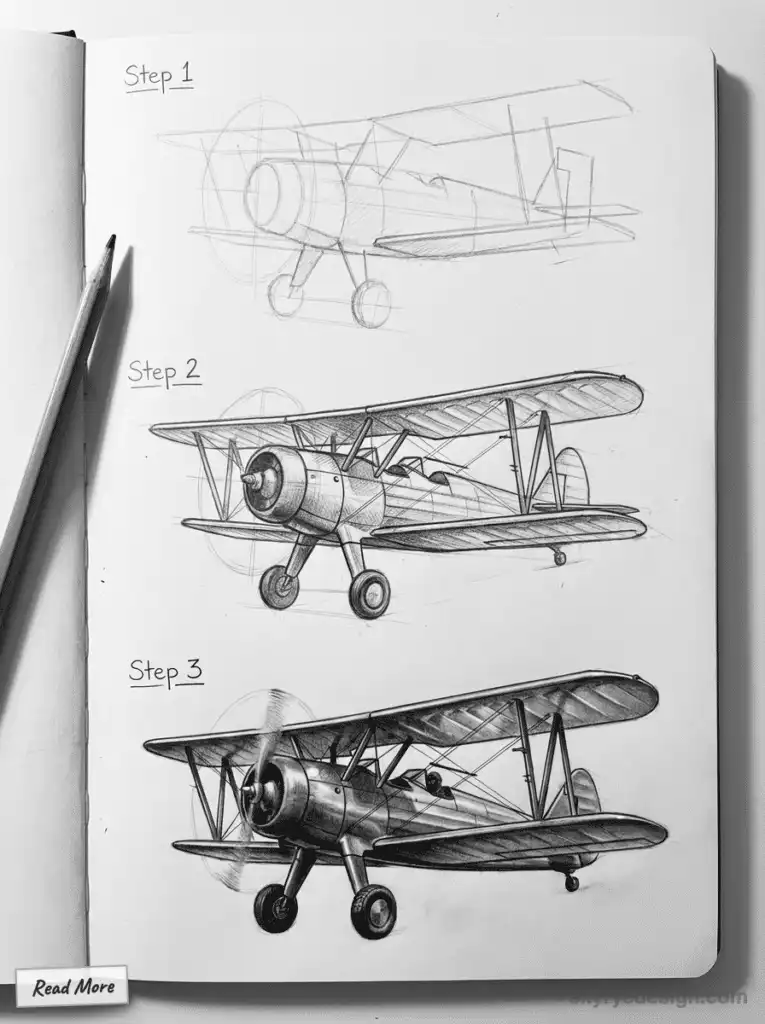
Drawing a classic biplane is a fun way to start your airplane sketching journey. Biplanes have a unique charm with their double wings and old-fashioned look.
Begin by sketching two long rectangles for the wings, one above the other. Connect them with small vertical lines to represent the struts.
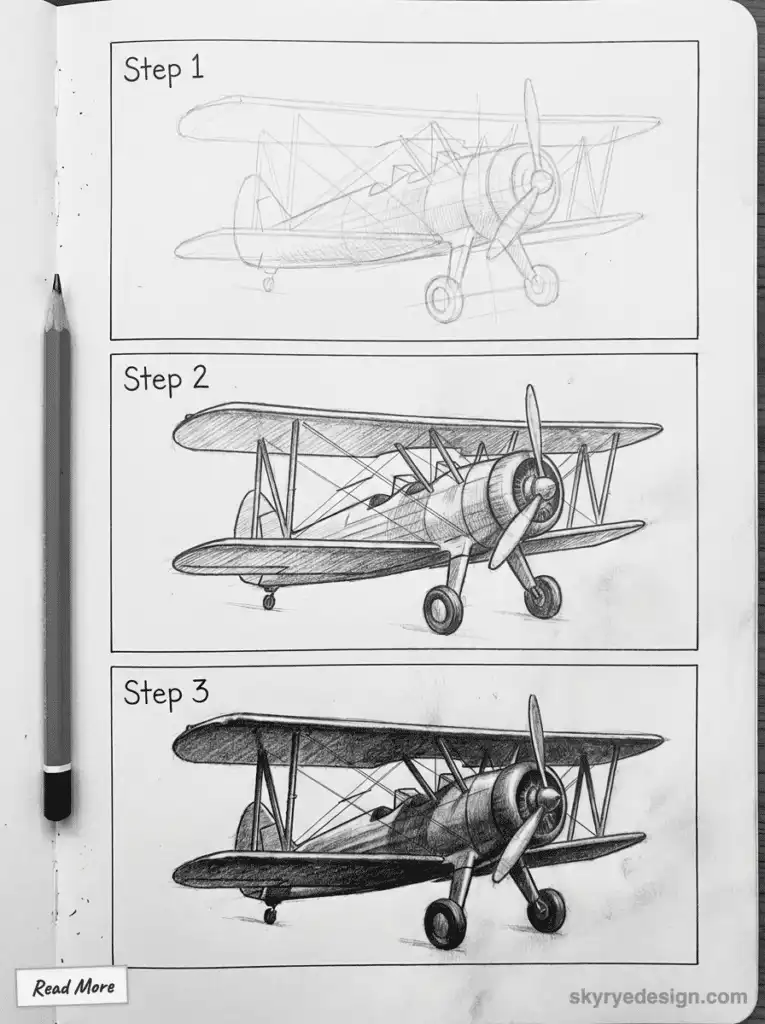
Next, add a small box-like shape for the cockpit between the wings. Draw a long, thin rectangle for the body of the plane, extending it past the wings.
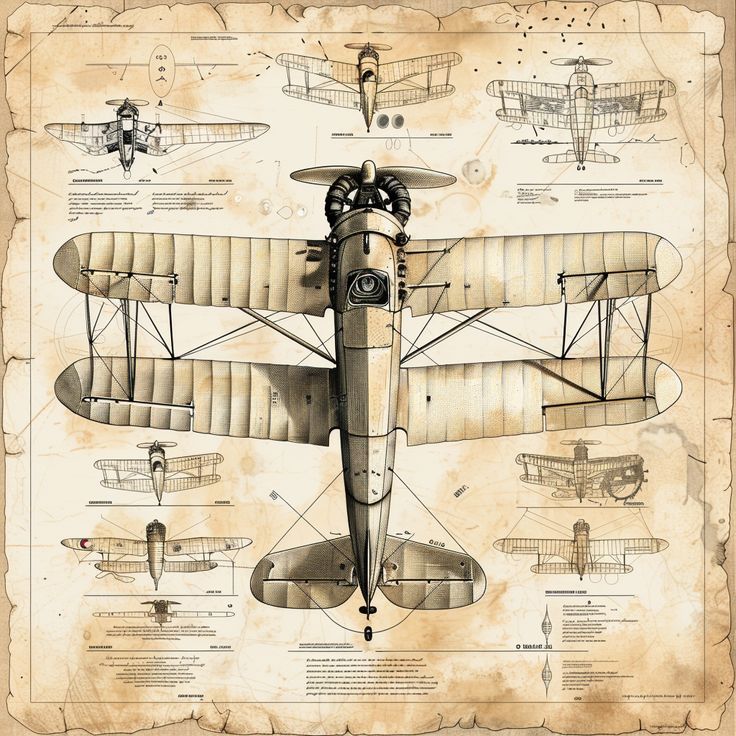
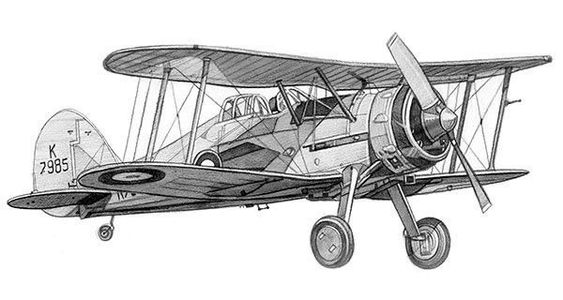
At the back, sketch a smaller set of wings called the tail. Don’t forget to add a vertical fin on top for the rudder.
Finish your biplane doodle with a propeller at the front and some simple wheels underneath. You can even add some fun details like a pilot or some clouds.
Remember, your biplane sketch doesn’t need to be perfect. The goal is to capture the essence of this classic aircraft design. Have fun with it and let your creativity soar!
2. Sketch a futuristic jet
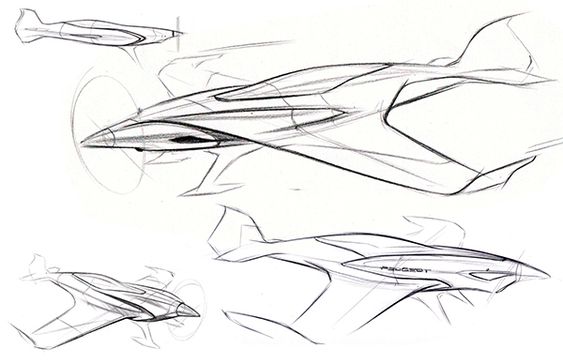
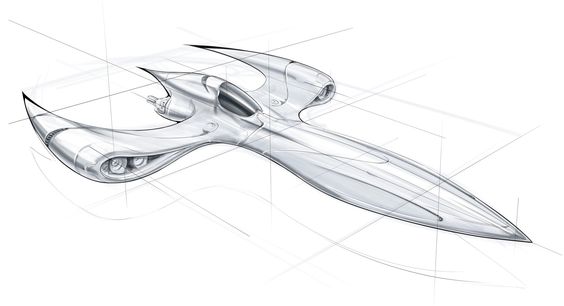
Drawing a futuristic jet can be an exciting way to let your imagination soar. Start with a sleek, streamlined shape that looks fast even on paper. Think about curved lines and smooth edges to create an aerodynamic look.
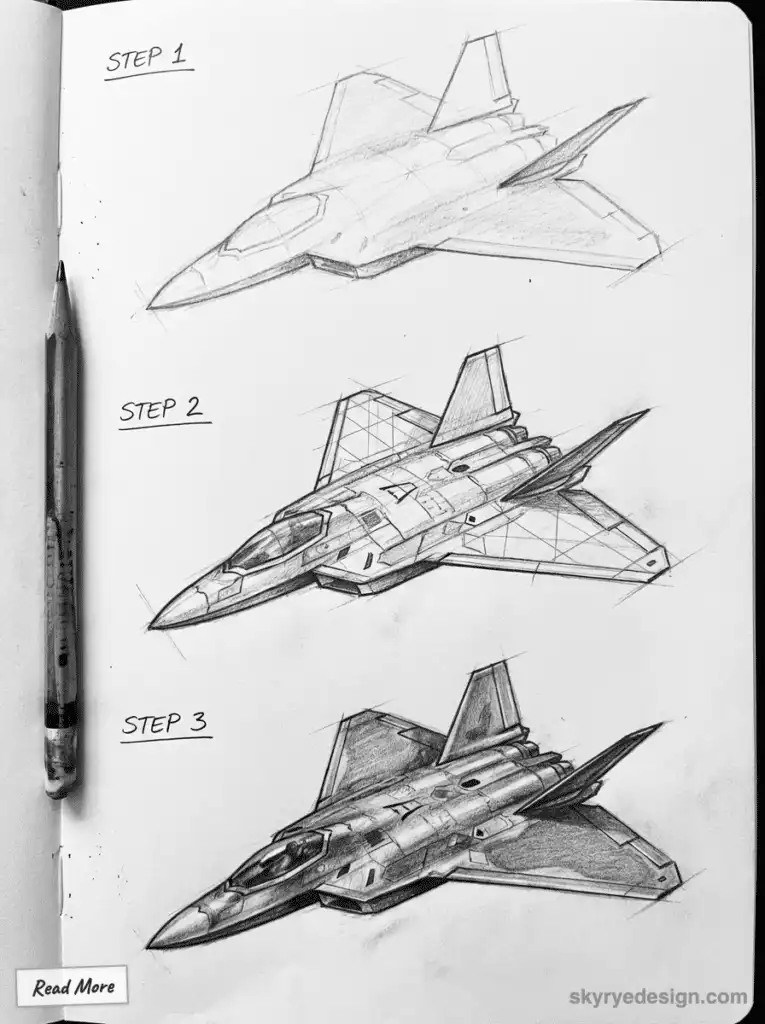
Add some unique features that set your jet apart. Maybe it has unconventional wing shapes or an extra set of smaller wings. Think about where the engines might be placed – perhaps they’re hidden inside the body for a smoother appearance.
Consider the cockpit design. A futuristic jet might have a bubble-like canopy or a sleek, pointed nose. Don’t forget to include some fun details like landing gear or weapon systems if it’s a military craft.
Color can bring your sketch to life. Cool metallic shades or bright neon accents can give it a high-tech feel. Remember, there’s no right or wrong way to draw a futuristic jet – let your creativity guide you!
3. Draw a cartoon airplane

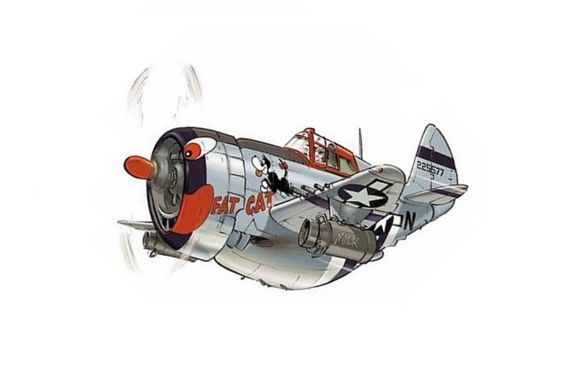
Drawing a cartoon airplane can be fun and easy. Start with a simple oval shape for the body. This will be the main part of the plane.
Add a smaller oval at the front for the cockpit. Make it look like a bubble on top of the plane’s nose.
Next, draw triangle shapes on each side for the wings. They don’t have to be perfect. Cartoon planes often have funny-looking wings.
Put a tail fin at the back. It can be a triangle or any shape you like. Some cartoon planes have really big, silly tails.
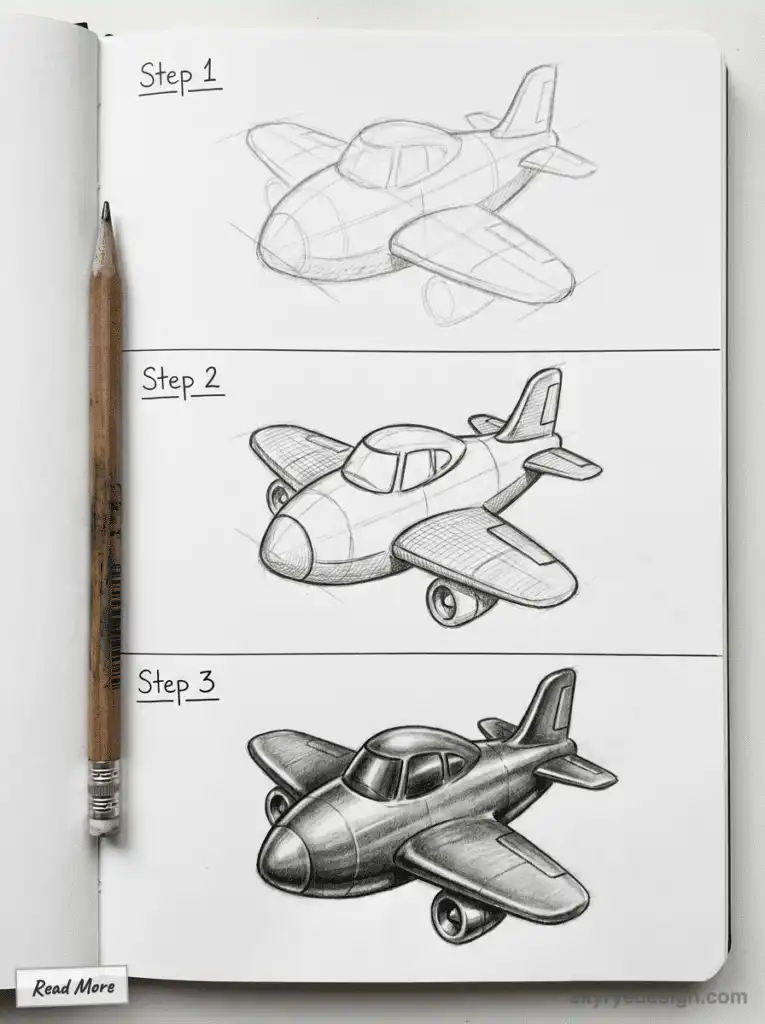
Don’t forget the propeller! Draw a circle at the front with some blades sticking out. You can make the blades wavy for a cool effect.
Add some simple details like windows, doors, or wheel bumps underneath. These little touches bring your plane to life.
Color your plane with bright, fun colors. Cartoon airplanes don’t have to look real. You can give them polka dots or stripes if you want!
Remember, there’s no wrong way to draw a cartoon plane. Let your imagination fly and have fun with it!
4. Illustrate a detailed cockpit
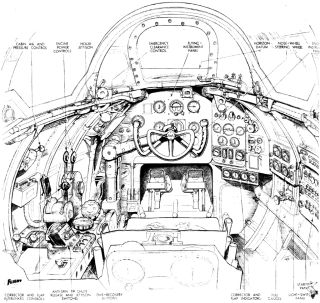
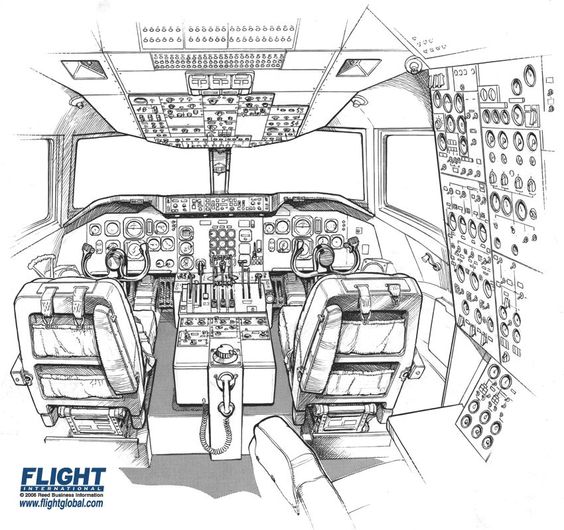
Drawing a detailed airplane cockpit can be an exciting challenge for artists. The cockpit is the heart of the aircraft, filled with instruments and controls.
Start by sketching the basic shape of the cockpit. Include the windows, control panel, and seats. Pay attention to the curves and angles of the cockpit’s structure.
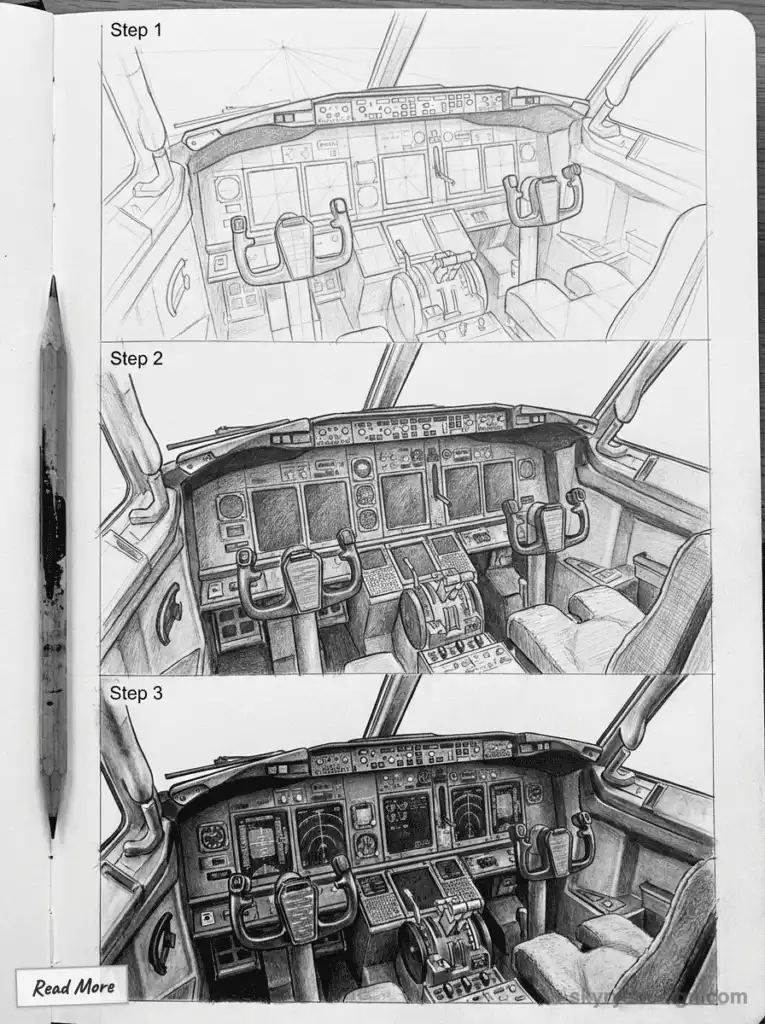
Next, add the main instruments. The flight deck typically contains displays showing speed, altitude, and other crucial information. Draw screens, gauges, and switches across the control panel.
Don’t forget the yoke or sidestick used to steer the plane. Include other controls like throttles and rudder pedals. These details bring the cockpit to life.
For realism, add texture to the seats and panels. Small labels on buttons and switches can enhance the authenticity. Consider adding reflections on the windshield for extra depth.
Remember to include the pilots in your drawing. Their presence can give a sense of scale to the cockpit. Showing them interacting with the controls adds action to the scene.
5. Create a fantasy-themed aircraft
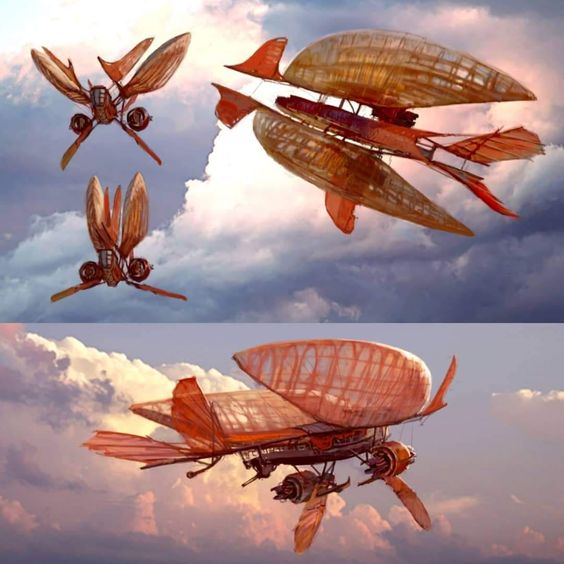
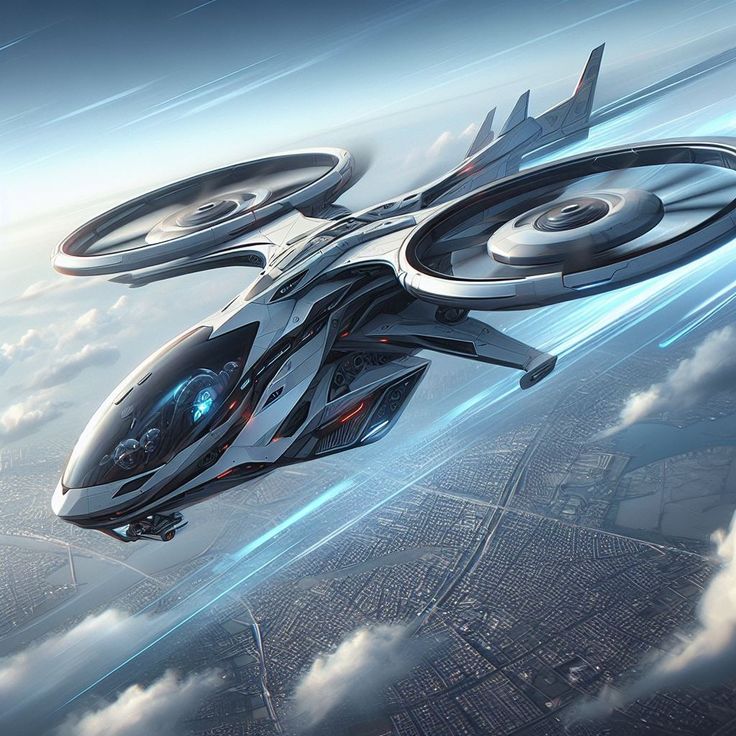
Fantasy-themed aircraft can spark imagination and bring magic to the skies. Artists can blend real airplane parts with mythical elements to create unique flying machines.
One idea is to draw a dragon-shaped plane. The body could be long and scaly, with wings that unfold like a dragon’s. The cockpit might sit in the dragon’s head, with eyes that glow.
Another option is a fairy-inspired aircraft. It could have delicate, butterfly-like wings and a body shaped like a flower petal. Sparkles and swirls of pixie dust could trail behind it as it flies.
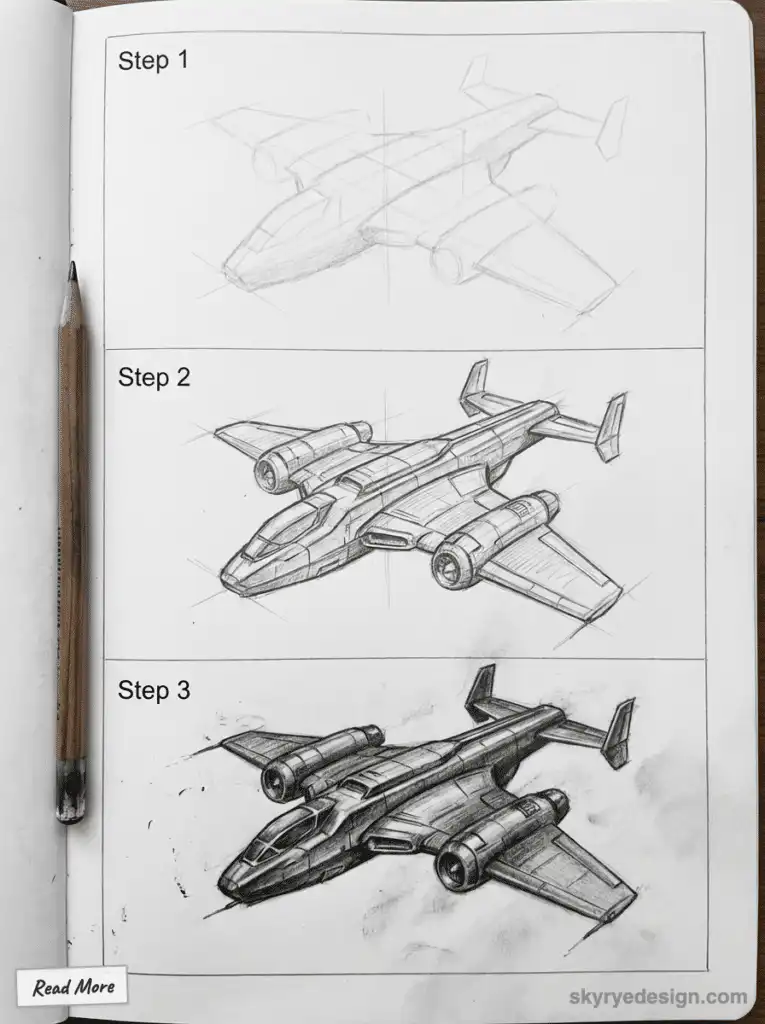
For a more whimsical design, consider a flying castle. This aircraft could have turrets, flags, and even a drawbridge. Propellers or magical floating crystals might keep it aloft.
Artists can also mix fantasy creatures with airplane parts. A pegasus with jet engines or a phoenix with rocket boosters are fun ideas to explore.
When creating these designs, it’s helpful to study real aircraft plans for inspiration on basic shapes and structures. This knowledge can be combined with fantasy elements for a more believable result.
6. Design an eco-friendly plane
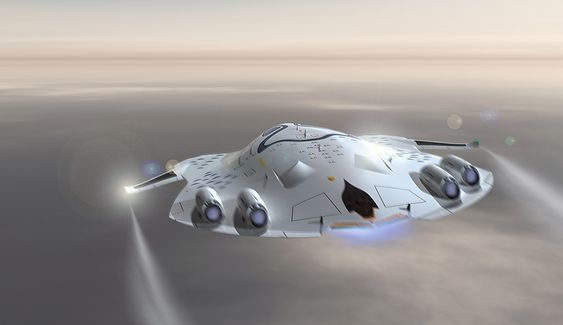
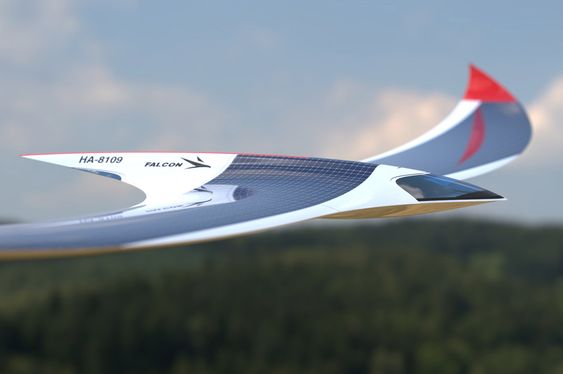
Drawing an eco-friendly plane can be a fun and creative challenge. Artists can explore new ideas for aircraft that are kinder to the environment.
Start by sketching a sleek, aerodynamic body shape. This helps reduce air resistance and improve fuel efficiency. Consider adding solar panels on the wings to harness clean energy during flight.
Electric engines – another eco-friendly innovation to pack into your design. Place them in the aircraft in a way that makes the most of their performance capabilities, not just tacking them on wherever seems easiest. Don’t neglect providing ample space for the batteries that’ll power these engines – that’s going to be a crucial part of the overall system.
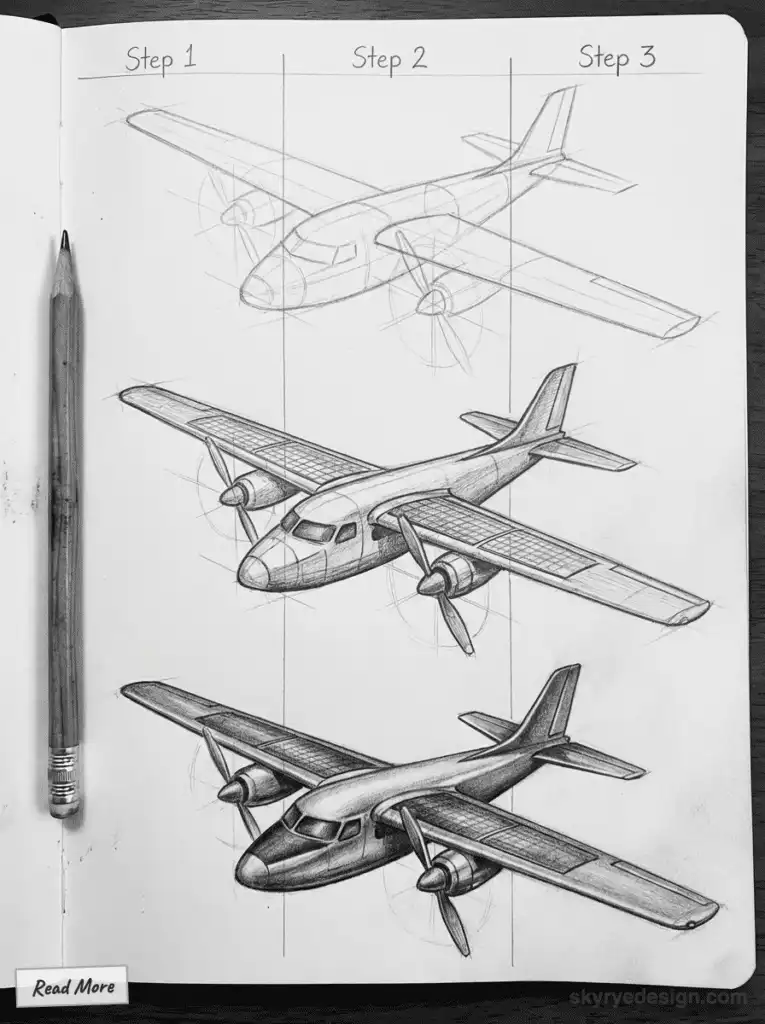
Key to making your eco-plane fly smoothly is using lightweight materials. Show how advanced composites or just plain sustainable materials can be used in your design to knock down that plane’s overall weight & cut fuel consumption – it’s a combination that’s a no-brainer.
Consider adding some features that’ll set your eco-plane apart from the pack. Maybe some vertical takeoff capabilities, or foldable wings that make it super easy to stash the plane in a tight space when it’s not in use. Let your imagination run free – create an aircraft that not only moves the ball forward for innovation , but also genuinely looks after the planet.
Make sure you incorporate soft, flowing lines in your design to give a sense that the plane is in harmony with the natural world. A green colour scheme wont hurt either – it’s a nice touch that helps hammer home the eco-friendly vibe you’re going for.
7. Depict an airplane in flight
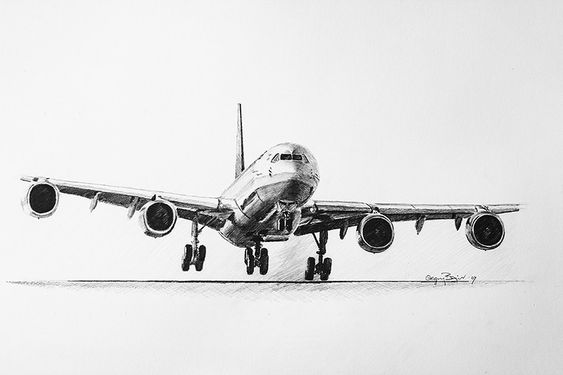
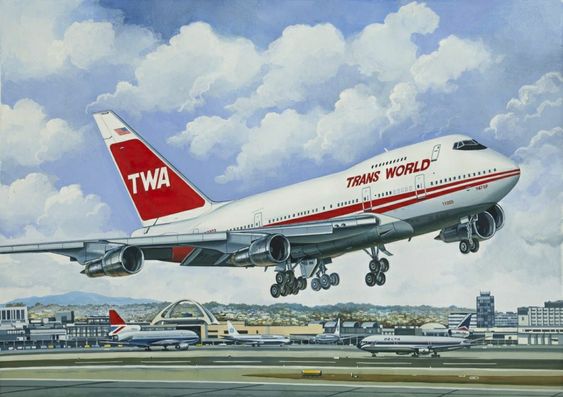
Drawing an airplane in flight can be an exciting challenge for artists. It allows them to capture the grace and power of these flying machines.
One approach is to show the plane soaring through clouds. This can create a sense of height and movement. Artists might add wispy cloud trails behind the wings to emphasize speed.
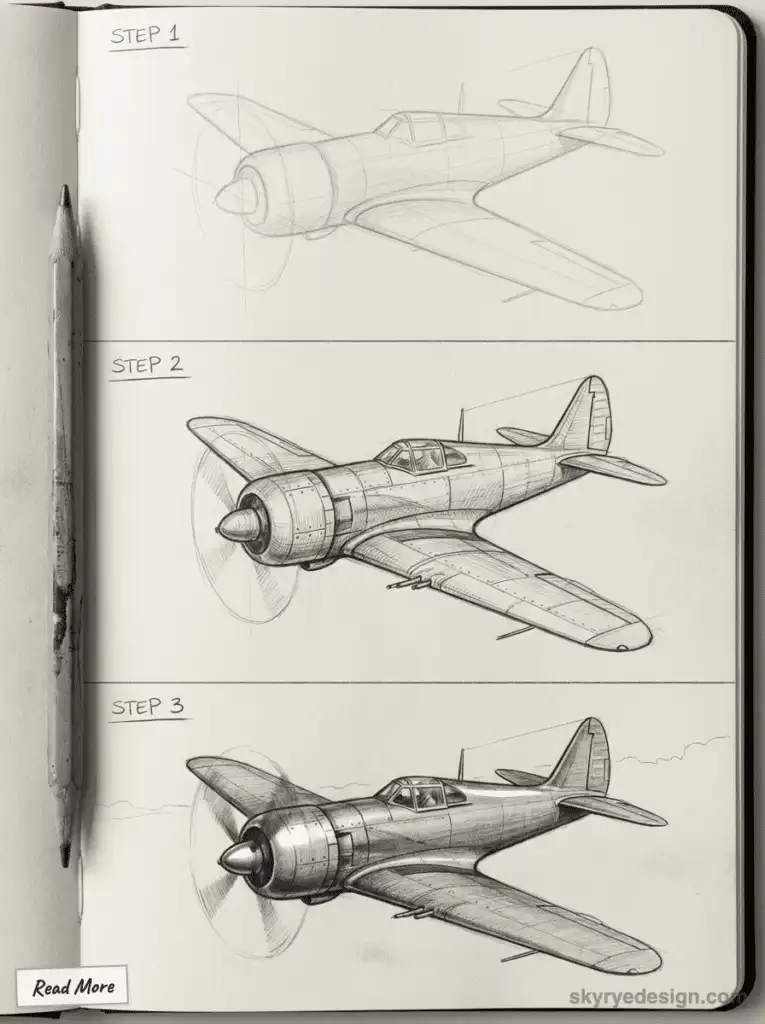
Another idea is to draw the airplane during takeoff or landing. This can showcase the dramatic angles of the plane as it climbs or descends. Adding runway lights or airport buildings in the background can set the scene.
For a more dynamic image, artists can depict the plane banking or turning. This shows off the aircraft’s sleek lines and aerodynamic shape. Streamlined shapes and inventive ideas can make the drawing more visually interesting.
Including details like sunlight glinting off the fuselage or contrails in the sky can add realism. These small touches can bring the scene to life and make the airplane feel like it’s really flying.
8. Sketch an airplane from the 1920s
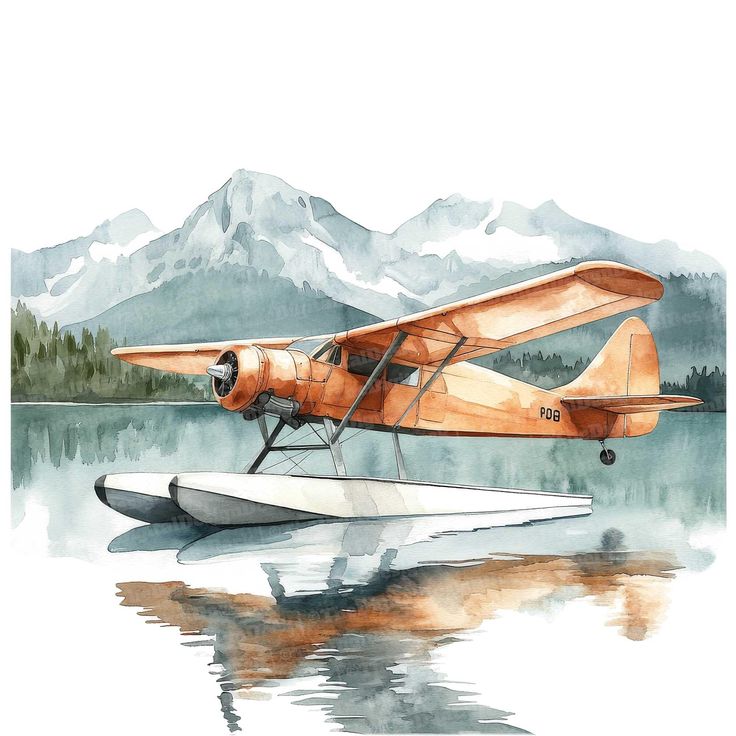
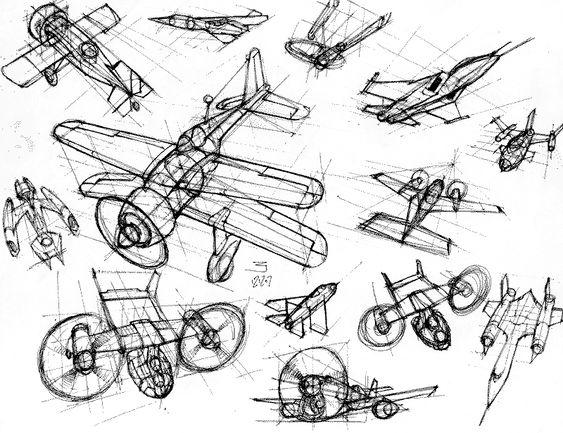
The 1920s saw big changes in airplane design. Planes from this era had a unique look that artists love to draw.
Most 1920s planes had two wings, one on top of the other. This is called a biplane. The wings were often held together by wires and struts.
The body of the plane, called the fuselage, was usually made of wood and fabric. It had an open cockpit where the pilot sat.
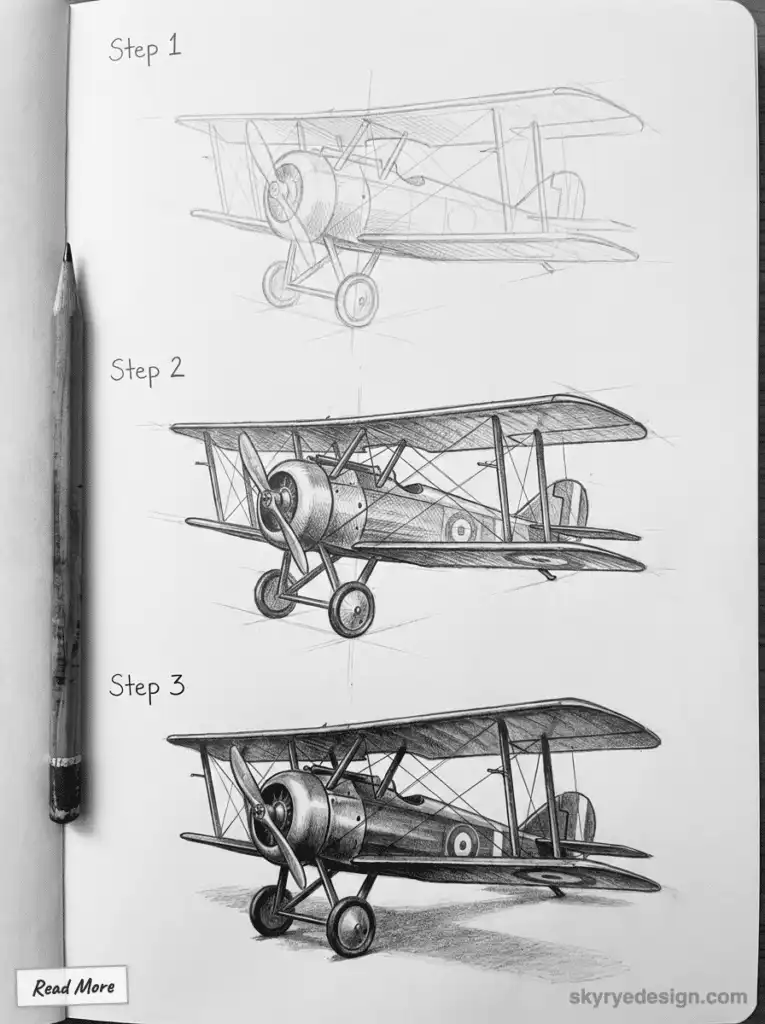
Propellers were common in 1920s planes. They were usually at the front, pulling the plane through the air.
When drawing a 1920s plane, focus on its boxy shape and many visible parts. Add details like the round engine cowling and tail rudder.
Don’t forget the landing gear! Most planes from this time had fixed wheels that didn’t fold up during flight.
Artists can have fun with the plane’s paint job. Many 1920s planes had bright colors and bold designs to catch the eye.
9. Draw an airplane wing detail
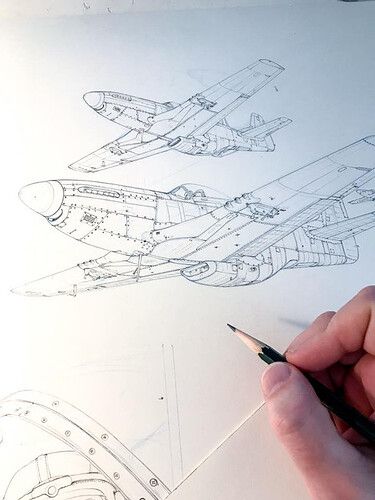
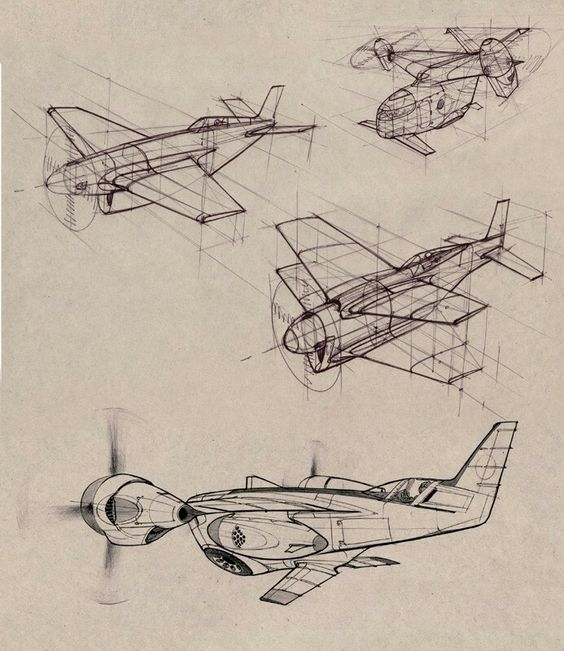
Drawing an airplane wing detail can be a fun and rewarding project. It allows artists to showcase the intricate design of aircraft wings.
To start, sketch the basic shape of the wing. Pay attention to its curve and taper. Add the leading and trailing edges, which give the wing its aerodynamic properties.
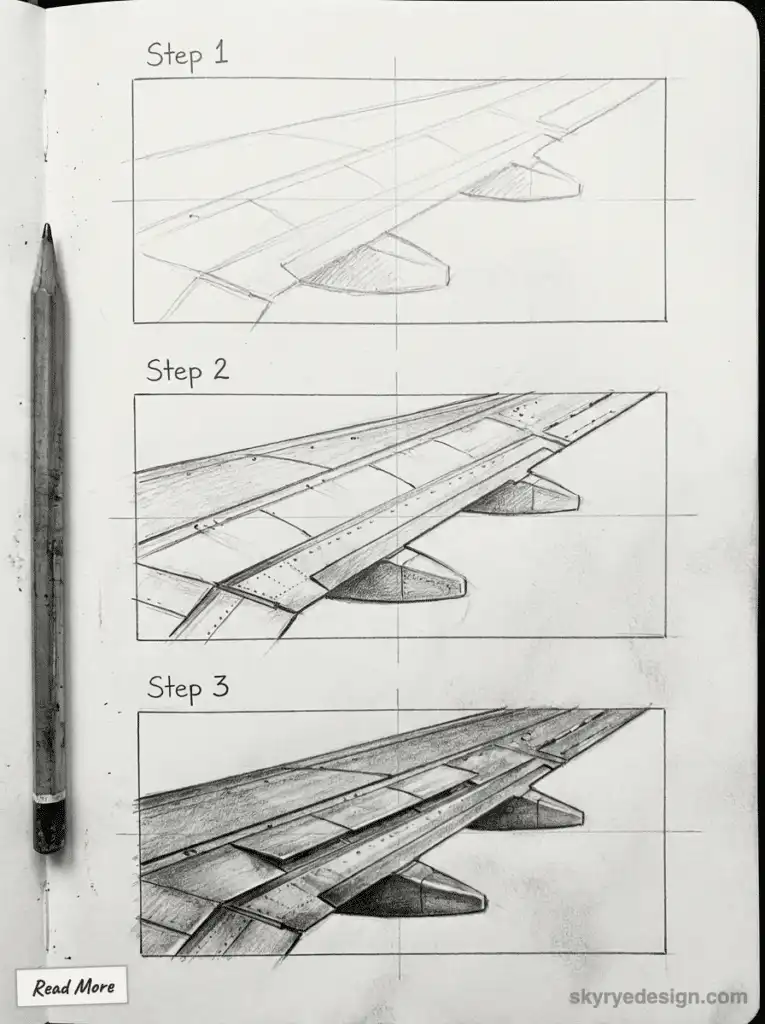
Next, focus on the wing’s surface details. Include panel lines, rivets, and access panels. These small touches make the drawing more realistic and interesting.
Don’t forget to add winglets if the aircraft has them. These vertical extensions at the wingtips improve efficiency.
Consider including control surfaces like ailerons and flaps. These movable parts help the plane maneuver and adjust its lift.
For a more technical drawing, add cross-section views. These show the internal structure of the wing, including spars and ribs.
Remember to use shading to give the wing depth and dimension. This helps bring the drawing to life and makes it more visually appealing.
10. Illustrate a plane taking off
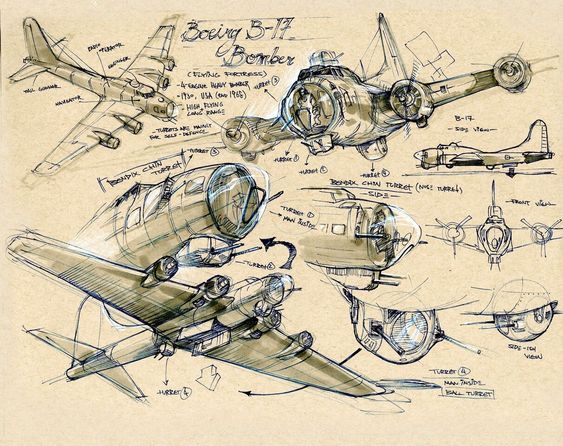
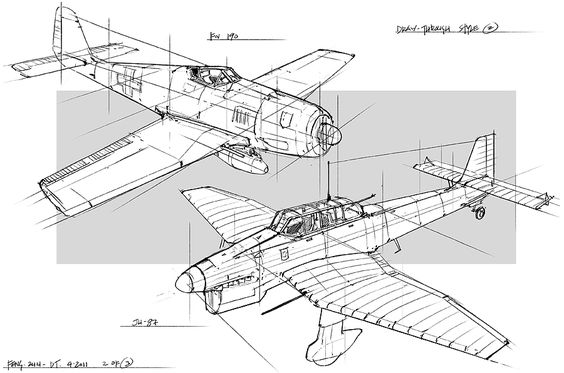
Drawing a plane taking off can be an exciting way to capture the thrill of flight. Start by sketching the runway, adding perspective lines to create depth.
Next, draw the plane’s body, wings, and tail. Position it at an upward angle to show it leaving the ground. Add details like wheels retracting and flaps extended.
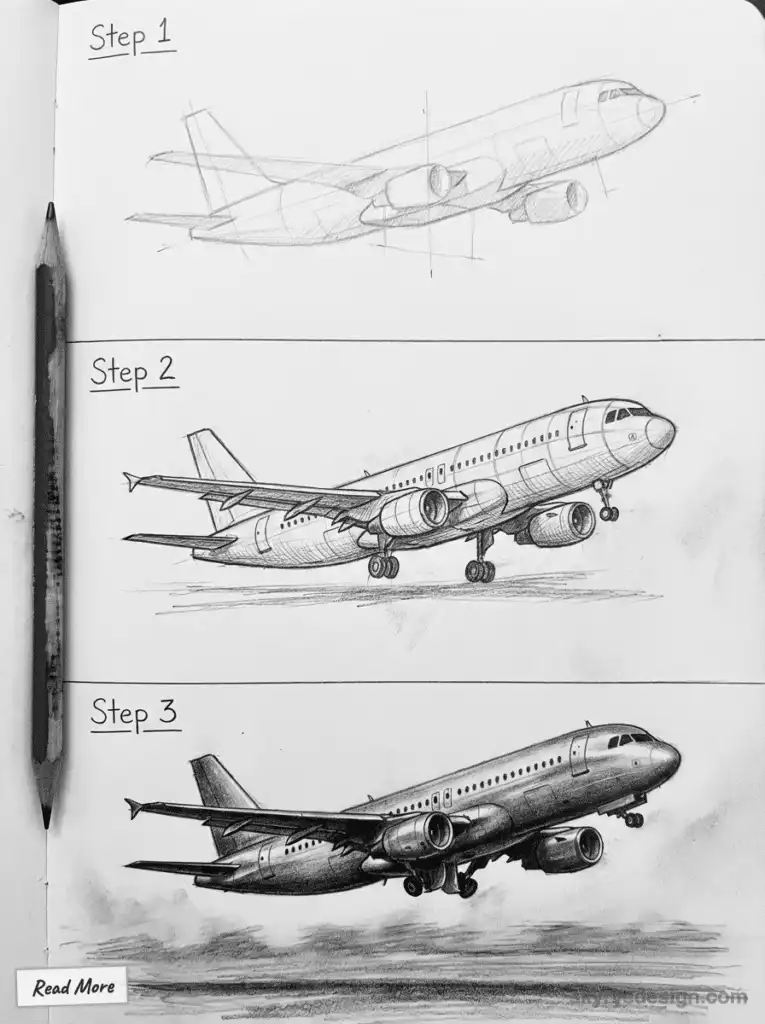
Don’t forget to include the sky and clouds in the background. This helps create a sense of motion and height.
Illustrating the fundamentals of flight can make your drawing more realistic. Show the lift forces acting on the wings as the plane rises.
To add drama, draw exhaust trails behind the engines. This emphasizes the power needed for takeoff. You can also include people or vehicles on the ground for scale.
Remember to pay attention to lighting and shadows. The sun’s position can create interesting effects on the plane and runway. With practice, anyone can create an exciting illustration of a plane taking off.
Basic Drawing Techniques
Before you dive into complex airplane illustrations, it’s important to master some basic drawing techniques. Start by practicing simple shapes—lines, circles, and rectangles—which form the foundation of most airplane designs.
As you gain confidence, try the “3 View” method, a classic approach where you draw the airplane from three different angles: top, side, and front. This technique helps you understand the proportions and structure of any aircraft, making your drawings more accurate and dynamic.
Choosing the Right Tools
Picking the proper tools is key for making great airplane drawings. The right supplies help artists bring their ideas to life on paper or screen.
Pencils and Paper
For sketching planes, artists often start with pencils and paper. Mechanical pencils work well for fine details. Regular pencils in different hardnesses are good for shading.
Smooth drawing paper or sketchbooks give a nice surface for airplane sketches. Some artists like graph paper to help with proportions.
Erasers are important too. Kneaded erasers can lift graphite without damaging the paper. Plastic erasers work for bigger areas.
Digital Tools
Many artists now use digital tools for aircraft design. Drawing tablets let them sketch directly on a computer screen.
Software like Photoshop or Procreate offers many brushes and effects. These programs make it easy to edit and refine airplane designs.
3D modeling software helps create detailed aircraft models. Programs like Blender or SketchUp are popular choices.
For sharing work online, artists may use social media or portfolio sites. This lets them connect with other plane enthusiasts.
Understanding Airplane Anatomy
Airplanes have three main parts that work together to make flight possible. These key parts are the wings, fuselage, and tail. Each plays a vital role in keeping the plane stable and moving through the air.
Wings
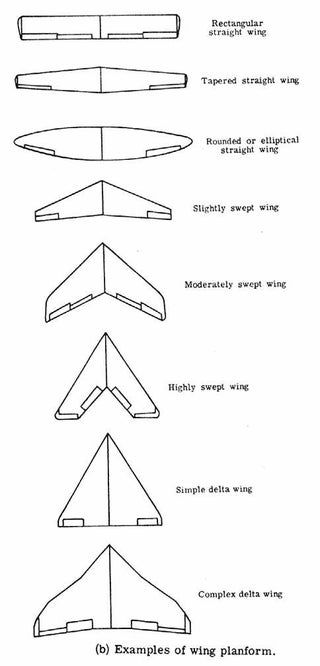
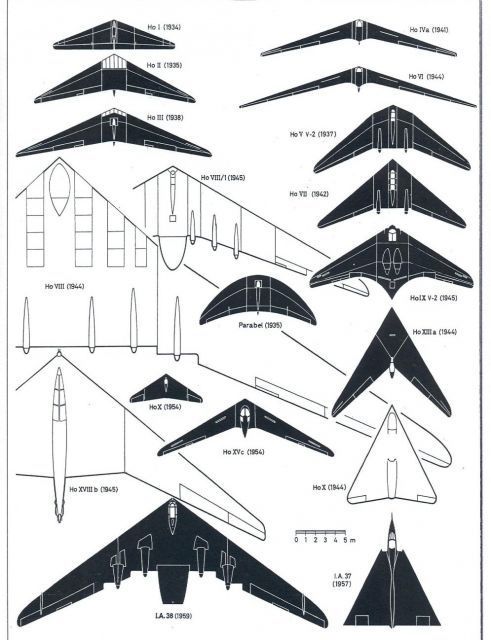
The wings are the most important part of an airplane. They create lift, which is the force that makes a plane fly. Wings produce most of the lift that keeps a plane in the air.
Wings come in different shapes and sizes. Some are straight, while others sweep back. The shape affects how the plane flies. Wings also have moving parts called flaps and ailerons. These help control the plane during takeoff, landing, and turns.
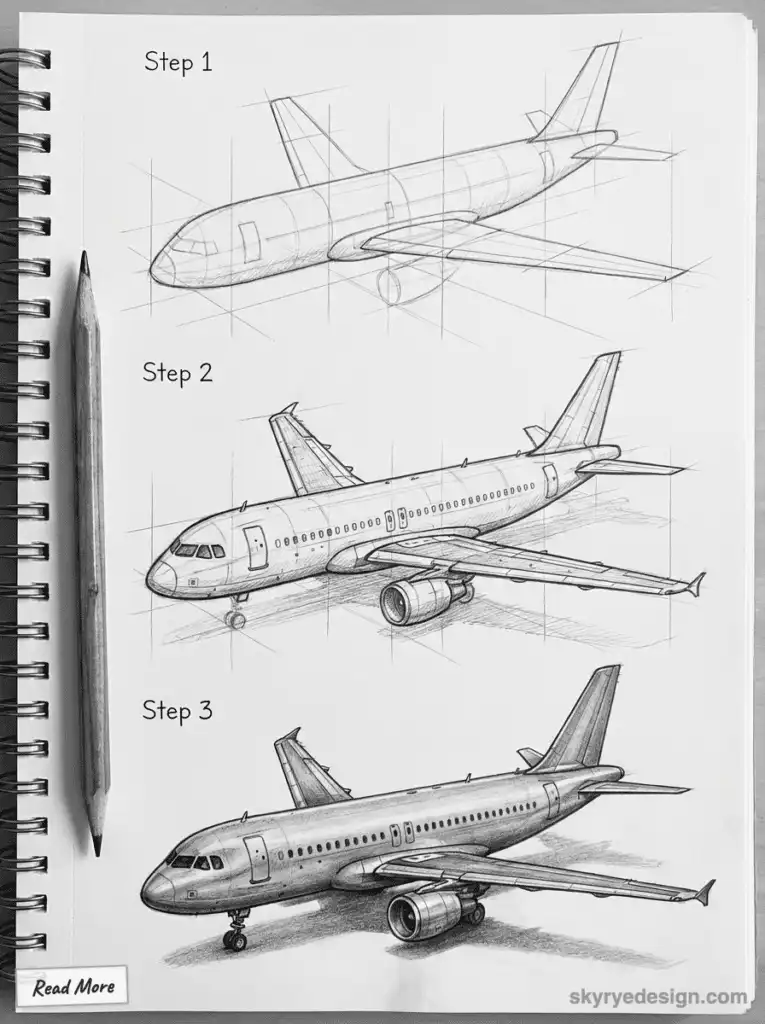
Inside the wings are fuel tanks. This is where most of a plane’s fuel is stored. The wings also house parts of the landing gear on many planes.
Fuselage
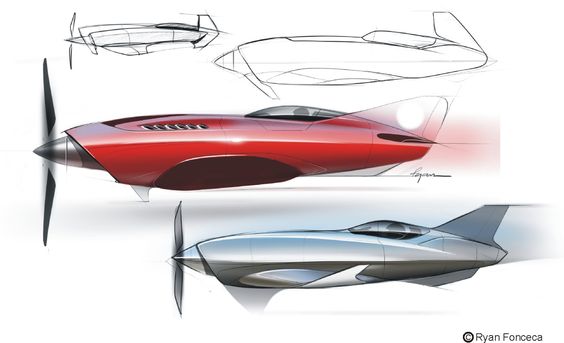
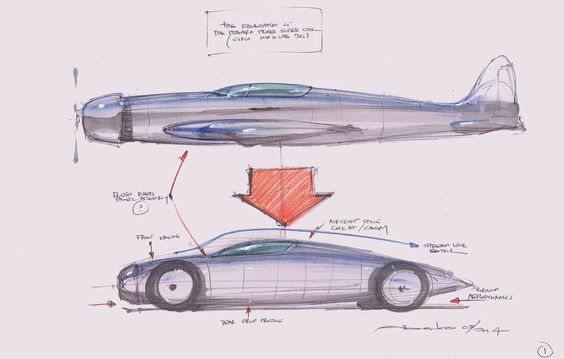
The main body of an airplane is the fuselage – usually a long tube like the bit that connects the wings, tail and the front of the plane. It has a few key roles to play:
- Its most obvious one is that it carries passengers, crew and cargo
- It also plays host to the cockpit where the pilots sit and control the plane
- And its the bit that ties all the other parts of the plane together
The designers have to shape the fuselage so that it can cut through the air easily enough – and what that achieves is a reduction in drag and makes the plane far more fuel-efficient
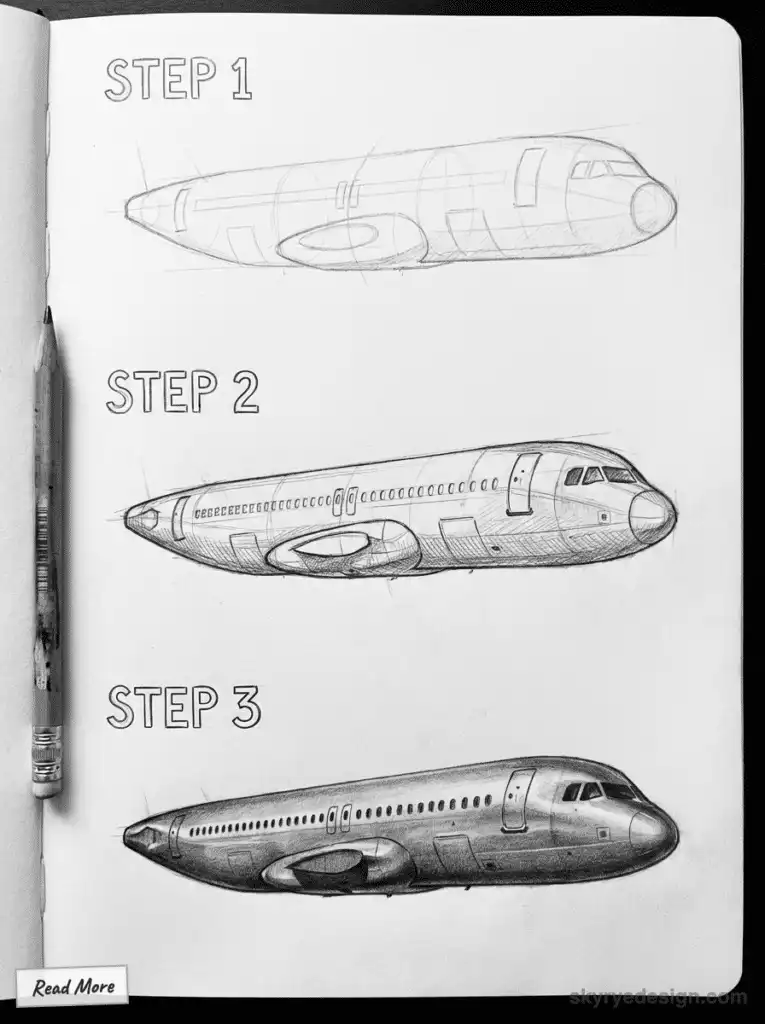
On bigger planes, it typically gets divided into different decks – the one at the top is where you’ll find the passengers, while down below they might cram in as many seats as possible or use it to stash some cargo
Tail
The Tail Section : Located at the Back of the Plane
The tail section of a plane is situated right at the back and consists of two main components: the horizontal stabilizer and the vertical stabilizer. These bits are a bit like miniature wings, albeit a lot smaller.
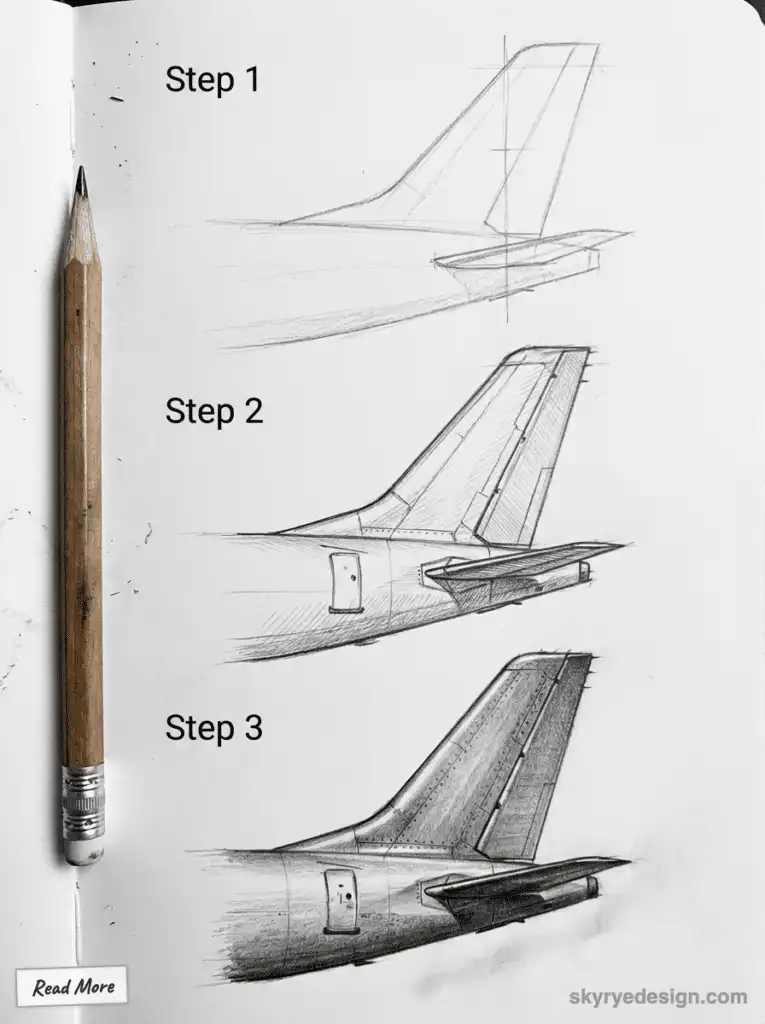
The Horizontal Stabilizer – Keeping the Plane Level
The horizontal stabilizer does a crucial job of keeping the nose of the plane steady and level. It also has some moving parts known as elevators which allow pilots to control the amount of up and down movement of the plane.
The Vertical Stabilizer – Pointing the Plane in the Right Direction
The vertical stabilizer pokes up out of the back of the plane & does an excellent job of helping the plane stay straight on course. It also has a moving part called the rudder, which pilots use to make the plane turn left or right.
Together the tail section gives the pilots a fair amount of control over the plane’s direction & stability while it’s in the air.
Frequently Asked Questions
Drawing airplanes can be fun and rewarding. These tips and techniques will help artists of all skill levels create better aircraft sketches. From simple cartoons to detailed realistic planes, there are many ways to bring flying machines to life on paper.
What are some simple steps to draw a cartoon airplane?
Start with basic shapes like ovals and rectangles. Add a big round nose, stubby wings, and a tail. Draw a smiley face on the front. Keep the lines soft and curvy for a cute look. Color it bright and cheerful. Children often enjoy making paper airplanes as a fun art project.
Can you suggest some techniques for shading and detailing realistic aircraft drawings?
Use light pencil lines first to sketch the plane‘s shape. Add shadows under the wings and fuselage. Draw rivets and panel lines for realism. Shade darker areas like engine intakes. Include small details like antennas and landing gear. Study photos of real planes as references.
Where can I find inspiration for creative airplane designs in my artwork?
Look at sci-fi movies and concept art for futuristic ideas. Mix animal features with plane parts for fantasy crafts. Old warplanes can inspire retro designs. Nature provides great shapes for unique aircraft. Kids’ toys often have playful plane styles to copy.
How do you proportion the wings and tail correctly when drawing an airplane?
The wingspan is usually close to the length of the fuselage. Place wings near the middle of the body. Make the tail about 1/4 to 1/3 the size of the wings. Keep everything balanced and symmetrical. Studying technical drawings can help with proportions.
What materials work best for sketching and finalizing airplane drawings?
Pencils are great for initial sketches. Use fine-tip pens for clean outlines. Markers or colored pencils add vibrant colors. Watercolors create a softer look. Digital tools allow easy edits. Graph paper helps with straight lines and symmetry.
- 1.7Kshares
- Facebook0
- Pinterest1.7K
- Twitter0
- Reddit0