Water has always been the silent architect of great spaces. Walk through the courtyards of the Alhambra, stand beside the Trevi Fountain, or pause at Chicago’s Millennium Park — in each case, it’s the water that stops you, not the stone.
But what happens when water becomes intelligent?
Interactive fountains are no longer a novelty reserved for theme parks or civic landmarks. Today, they’re shaping how luxury residential developers think about shared outdoor space — and how architects design environments that residents actually want to live in.
In this article, we explore how interactive water features function as spatial infrastructure in high-end residential developments, what the research says about their impact on perceived value, and why the world’s most ambitious projects are putting fountains at the center of their masterplans.
Whether you’re an architect specifying landscape elements for a high-rise courtyard or a developer looking to differentiate a premium project, this is the strategic case for water.
- Why Water Remains the Most Powerful Spatial Element
- Human Interaction and the Psychology of Luxury
- Structuring Courtyards in High-Density Residential Projects
- Technology Behind Contemporary Fountain Design
- Real-World Examples of Interactive Fountains and Water Installations
- The Economic Value of Experiential Landscapes
- Conclusion — Key Takeaways for Architects and Developers
- FAQ
- Q: What makes a fountain "interactive" in architectural terms?
- Q: How much do interactive fountain installations typically cost in luxury residential projects?
- Q: Do interactive fountains increase property value?
- Q: What maintenance is required for interactive fountain systems?
- Q: Can interactive fountains work in cold climates?
- Q: What is the typical lead time for a custom interactive fountain installation?
- Q: Which studios specialize in interactive fountain design for residential projects?
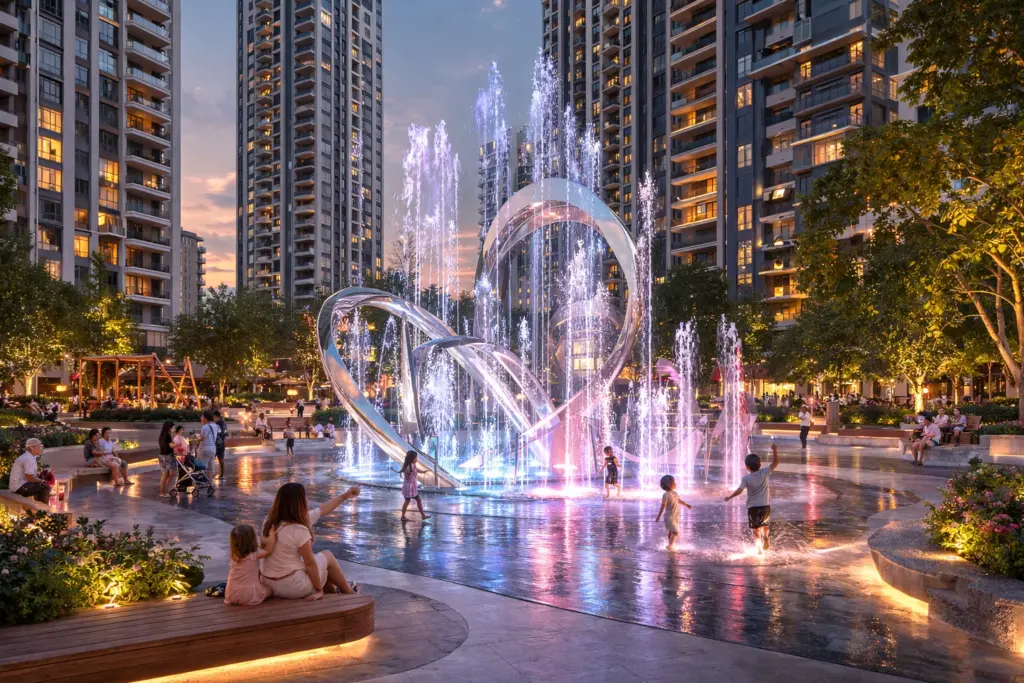
In luxury residential development, architecture alone rarely defines the identity of a place. Towers may shape the skyline, and landscape design may structure outdoor spaces, but the emotional center of a residential environment often emerges from something more experiential. For developers competing in the premium real estate market, the question is no longer simply how to design beautiful buildings, but how to create an environment residents remember and associate with prestige.
Water has historically played a central role in this strategy. From the courtyards of Islamic architecture to the grand urban fountains of Rome, water elements have long structured public space and defined spatial hierarchy. In contemporary luxury developments, however, fountains are evolving beyond static decorative features. Interactive Fountains —systems that combine choreography, digital control, and responsive design—are increasingly becoming focal points within residential masterplans.
For developers and architects, these installations function as spatial infrastructure. They shape how residents experience courtyards, parks, and plazas, turning otherwise passive landscapes into animated environments.
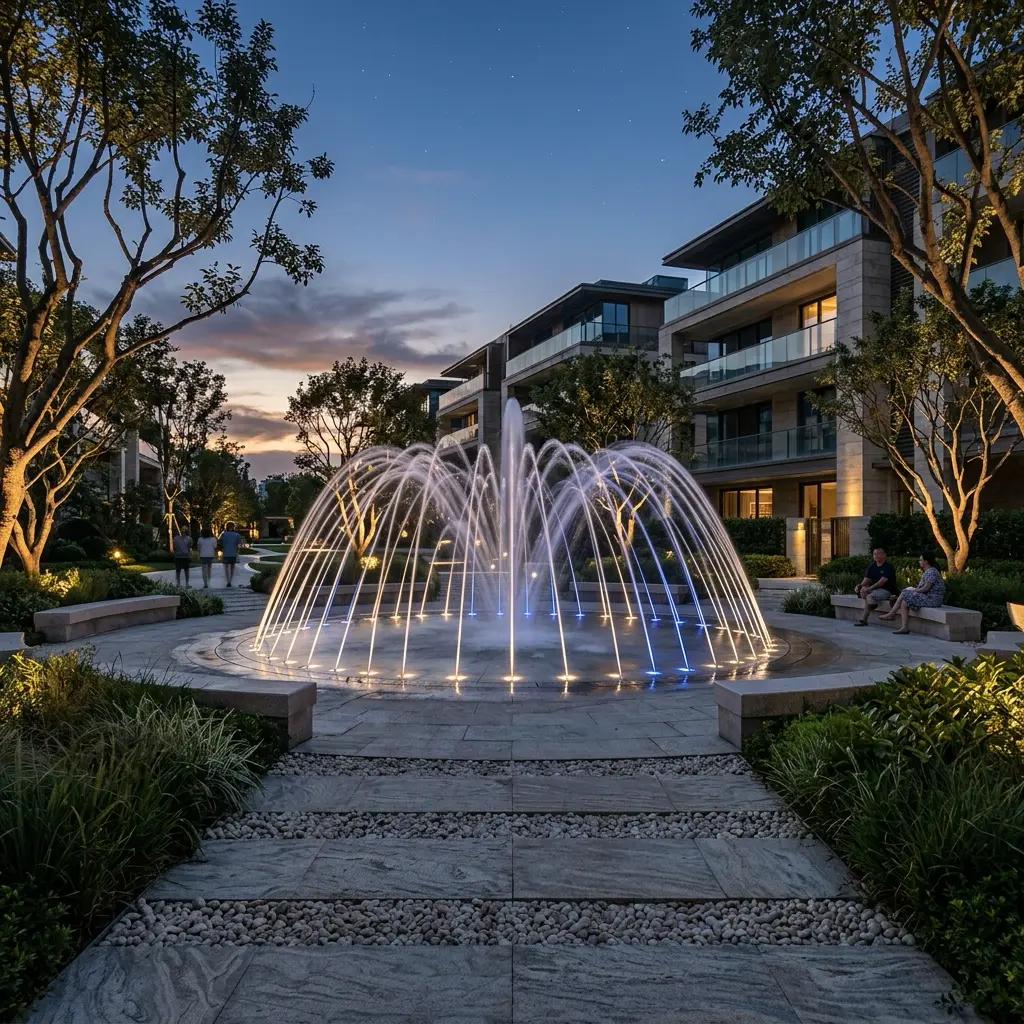
Studios specializing in complex kinetic and water installations approach these fountains not as landscape accessories but as architectural elements embedded within the spatial logic of a development.
Why Water Remains the Most Powerful Spatial Element
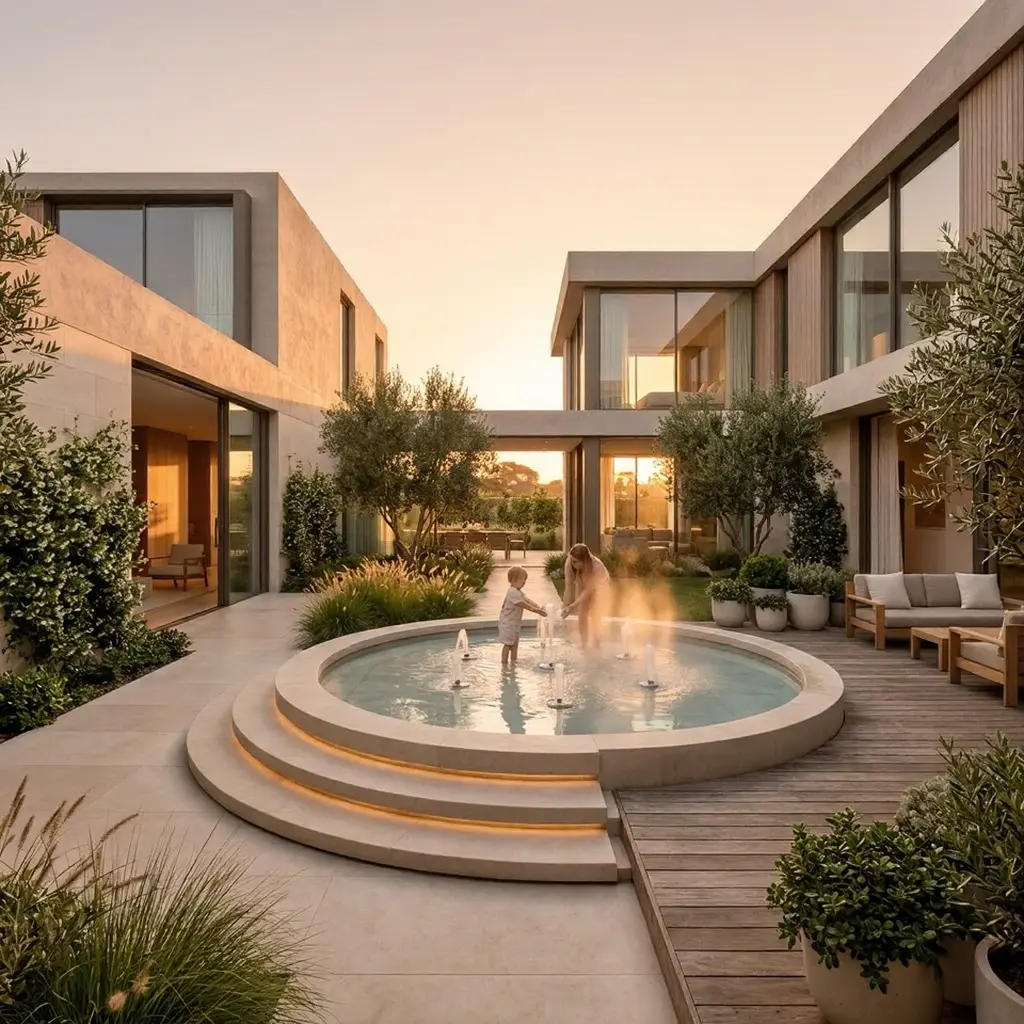
Few landscape elements influence human perception as strongly as water. Numerous environmental psychology studies have demonstrated that moving water significantly increases the perceived quality of public space. Research conducted by the University of Exeter in collaboration with the UK Landscape Institute found that proximity to water features can increase the perceived attractiveness of urban environments by up to 30%, while also improving dwell time in public spaces.
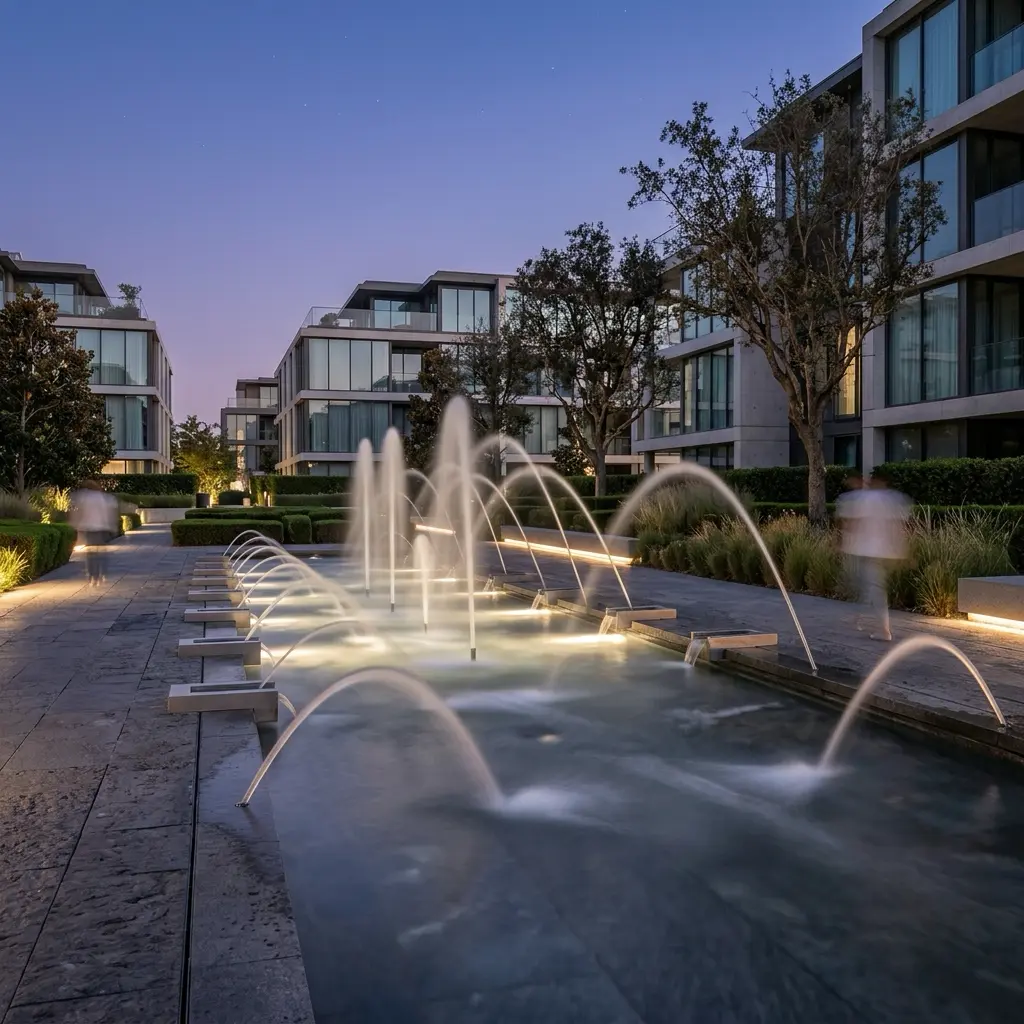
For residential developers, this translates directly into market value. Properties located near water elements—whether natural or artificial—tend to command higher prices. In premium developments where architectural differentiation is essential, interactive fountains provide an opportunity to create the perception of waterfront living even in dense urban contexts.
Water also operates as a spatial organizer. Large courtyards between residential towers can easily feel empty or underscaled relative to the surrounding buildings. A carefully positioned fountain introduces a visual center, structuring the open space and giving residents a clear focal point within the landscape.
When the fountain is interactive—through movement, programmable choreography or responsive lighting—it transforms from a static object into a dynamic environment.
Human Interaction and the Psychology of Luxury
Luxury residential environments increasingly prioritize experiential design rather than purely visual aesthetics. Residents expect outdoor spaces that feel vibrant, dynamic, and engaging.
Interactive fountains respond directly to this expectation. Unlike traditional decorative fountains that remain visually static, interactive systems can adapt their behavior based on environmental conditions or programmed sequences.
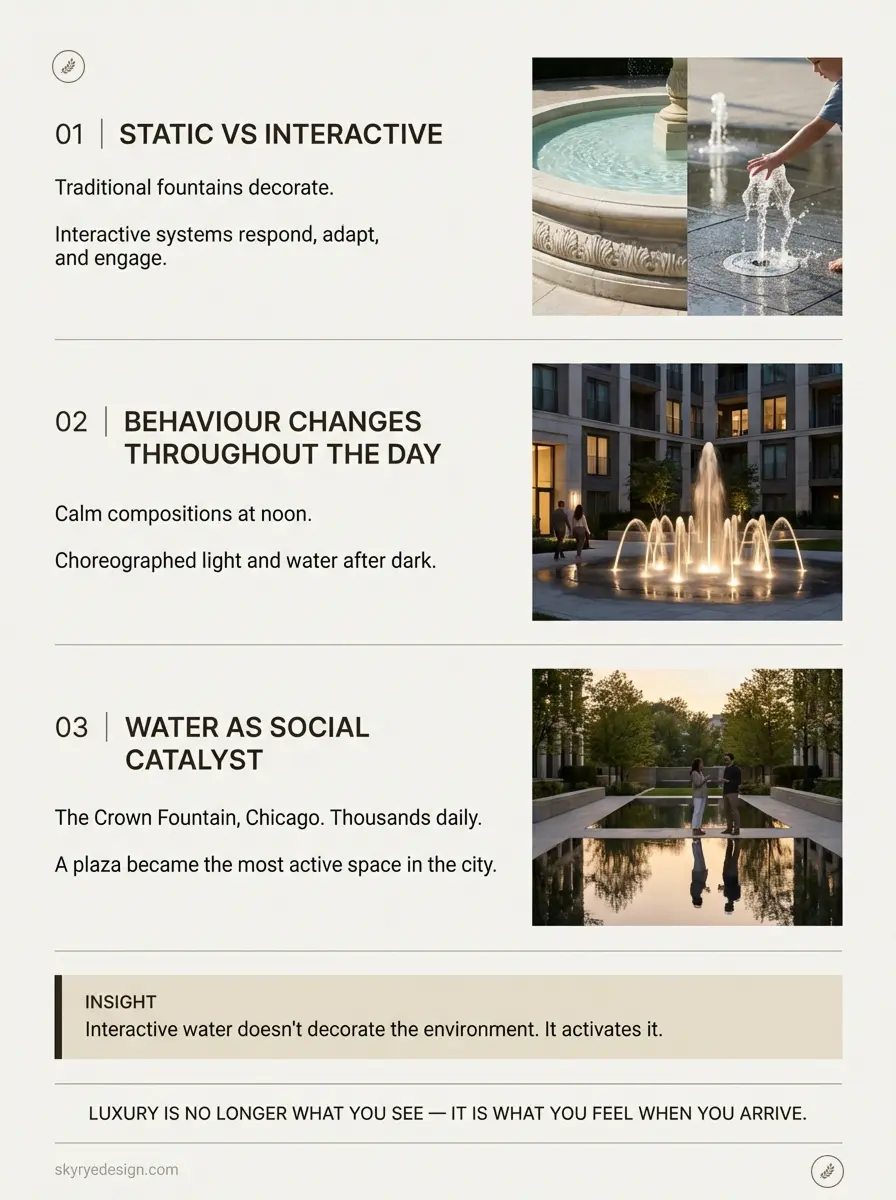
In some developments, water jets respond to pedestrian proximity or motion sensors. In others, choreographed patterns change throughout the day, shifting from calm daytime compositions to illuminated evening displays.
The Crown Fountain in Chicago’s Millennium Park, designed by artist Jaume Plensa, illustrates the power of interactive water features. Although located in a public park rather than a residential complex, the installation demonstrates how water interaction transforms a plaza into a social environment. The fountain consists of two glass towers projecting digital portraits while water flows across a shallow reflecting pool where visitors can walk.
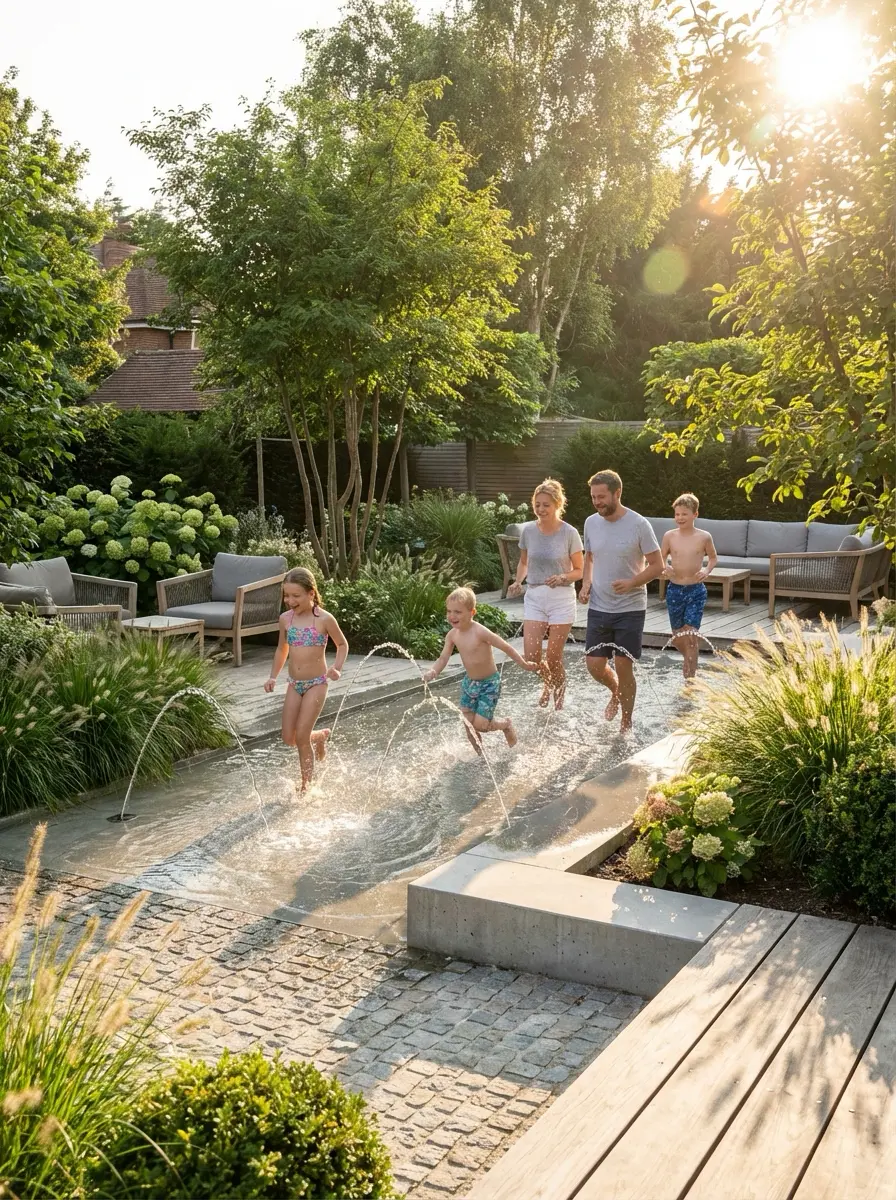
The result is not simply an artwork but a social catalyst. The installation attracts thousands of visitors daily, turning the plaza into one of the most active public spaces in Chicago.
Luxury residential developers are increasingly adopting similar strategies on a smaller scale. Interactive fountains encourage residents to gather in courtyards and gardens, transforming shared spaces into vibrant social environments.
Structuring Courtyards in High-Density Residential Projects
High-rise residential developments often include central courtyards positioned between towers. These spaces serve multiple functions: circulation, recreation, landscape amenity and visual relief within dense urban contexts.
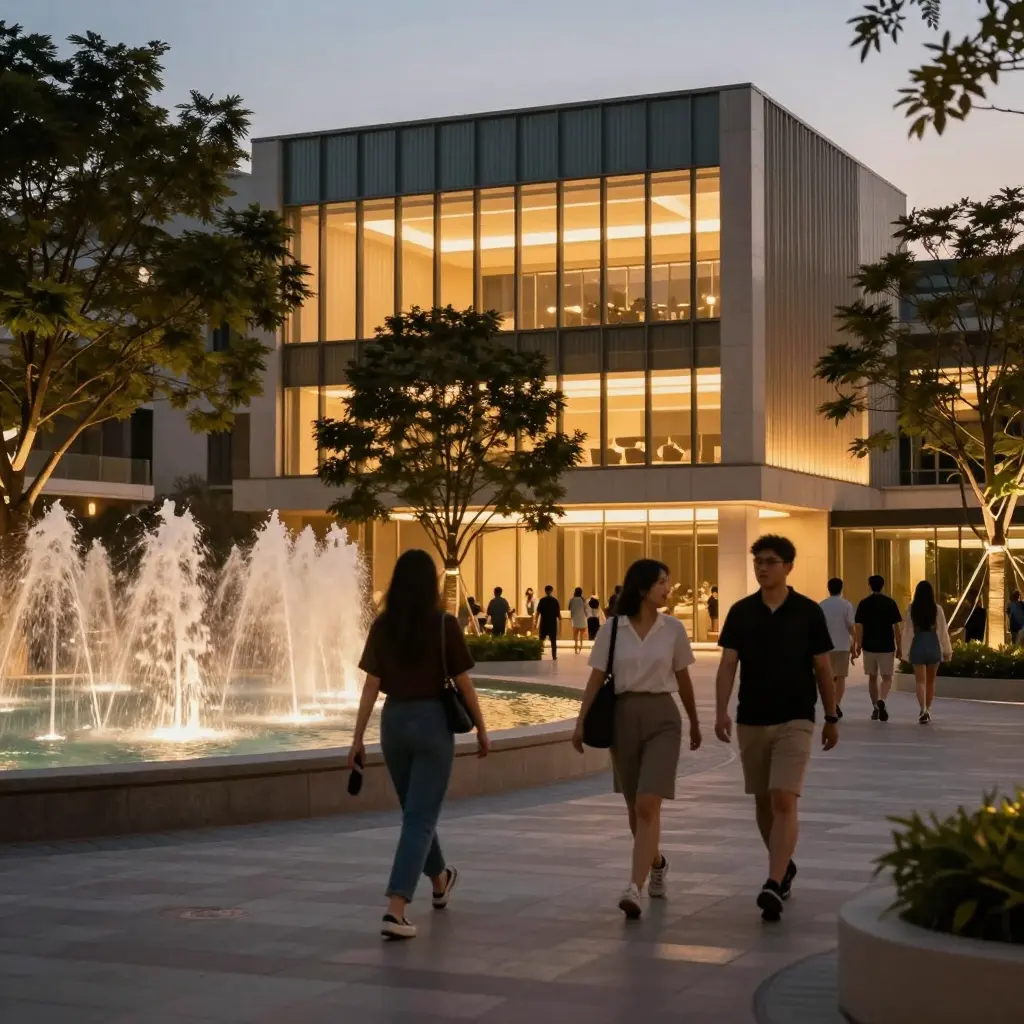
Without strong spatial anchors, however, large courtyards can feel visually undefined. Landscape designers frequently rely on water features to structure these environments.
Interactive fountains are particularly effective in this role because they introduce movement into otherwise static landscapes. The human eye is naturally drawn to moving elements, which means a fountain immediately becomes the visual center of the courtyard.
In developments where towers exceed 150–200 meters in height, scale becomes critical. Small decorative fountains easily disappear within the architectural volume. Interactive systems with larger jet arrays and dynamic lighting allow designers to create installations that remain visually prominent even within large spatial contexts.
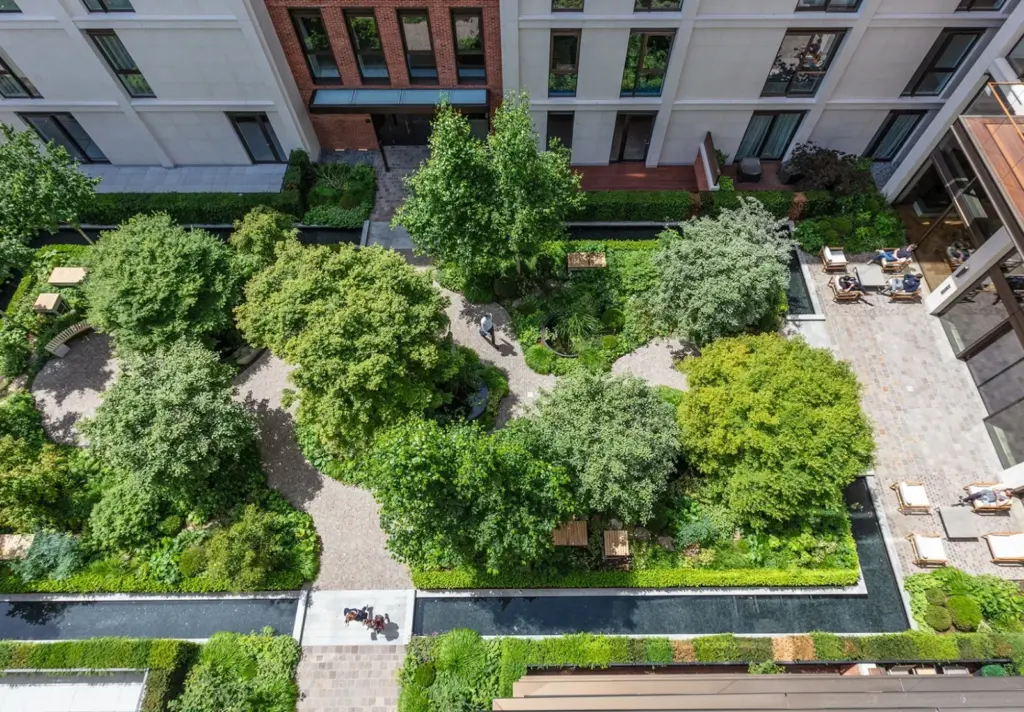
Developments such as One Hyde Park in London and Marina Bay Sands Residences in Singapore demonstrate how water features can define luxury residential landscapes. While the installations differ in scale and complexity, both projects use water as a central spatial organizer within the broader masterplan.
Technology Behind Contemporary Fountain Design
Modern interactive fountains rely on sophisticated engineering systems. Programmable water jets, digital control platforms and integrated lighting technologies allow designers to choreograph water movement with remarkable precision.
Large installations can include hundreds or even thousands of individually controlled nozzles, each capable of adjusting height, direction and timing. Pump systems regulate water pressure, while LED lighting arrays provide color control synchronized with the water choreography.
Control software allows designers to create sequences that evolve throughout the day. Morning patterns may emphasize calm, low-height jets, while evening programs introduce dramatic vertical compositions illuminated by dynamic lighting.
From a development perspective, these technologies allow a single installation to offer multiple spatial experiences over time. The fountain becomes a living element within the residential landscape rather than a fixed architectural feature.
Real-World Examples of Interactive Fountains and Water Installations
Across the world, developers and cities increasingly use interactive water installations to create memorable public environments. These projects demonstrate how different spatial strategies can be implemented in real urban contexts.
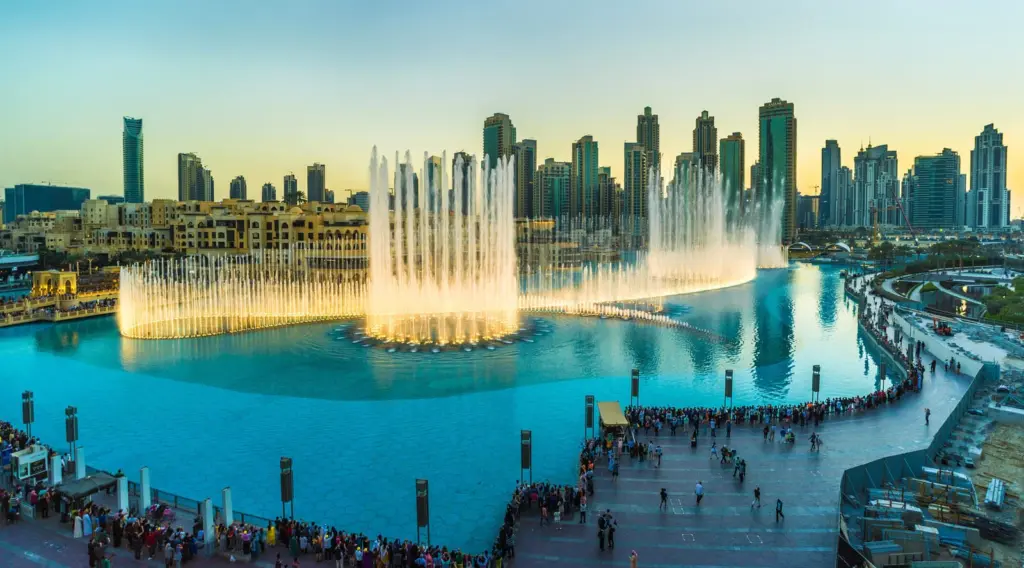
One of the most famous examples is the Dubai Fountain at the base of the Burj Khalifa. Designed by WET Design, the fountain stretches across 275 meters of Burj Khalifa Lake and features more than 6,600 lights and 50 color projectors. The system can launch water jets up to 150 meters high, roughly the height of a 50-story building. Although located in a mixed-use district, the installation dramatically increased the attractiveness of surrounding residential and hospitality developments, becoming a global landmark associated with the area.
Another influential project is the Aquanura Fountain at Efteling Park in the Netherlands, one of the largest multimedia fountain systems in Europe. The installation includes more than 200 fountains and 900 lights, choreographed to music and visual sequences. While developed within a theme park, the project demonstrates how large-scale interactive water choreography can transform an open landscape into an immersive spatial environment.
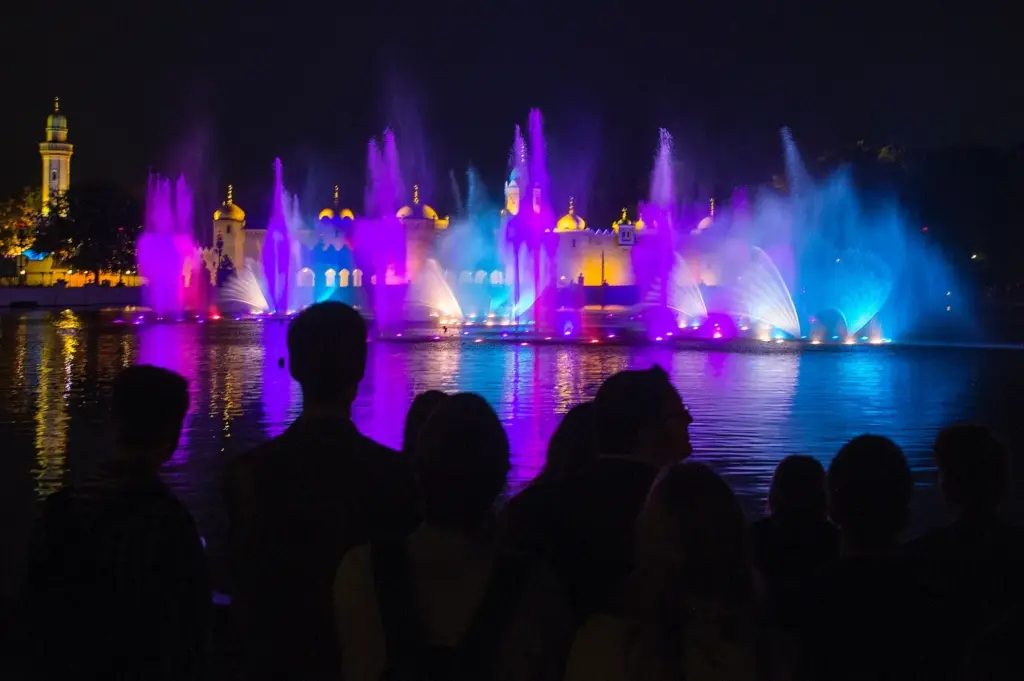
A very different approach can be seen in Crown Fountain in Chicago, where interaction is designed at the human scale. The shallow reflecting pool allows visitors to walk directly through the water, while digital projections create constantly changing visual content. The installation attracts thousands of visitors daily and has become one of the defining spatial landmarks of Millennium Park.
In residential contexts, water installations are often integrated directly into landscape architecture. At Marina Bay Sands Residences in Singapore, for example, choreographed water features and reflecting pools structure the gardens between residential towers, creating visual focal points and reinforcing the perception of luxury throughout the development.
These examples illustrate how water installations operate at multiple scales—from intimate courtyard fountains to city-scale landmarks—but share the same fundamental principle: moving water creates spatial focus and emotional engagement.
The Economic Value of Experiential Landscapes
In competitive real estate markets, experiential design increasingly influences property value. Luxury developments no longer compete solely through architectural design or interior finishes. Instead, the overall lifestyle environment becomes a key differentiator.
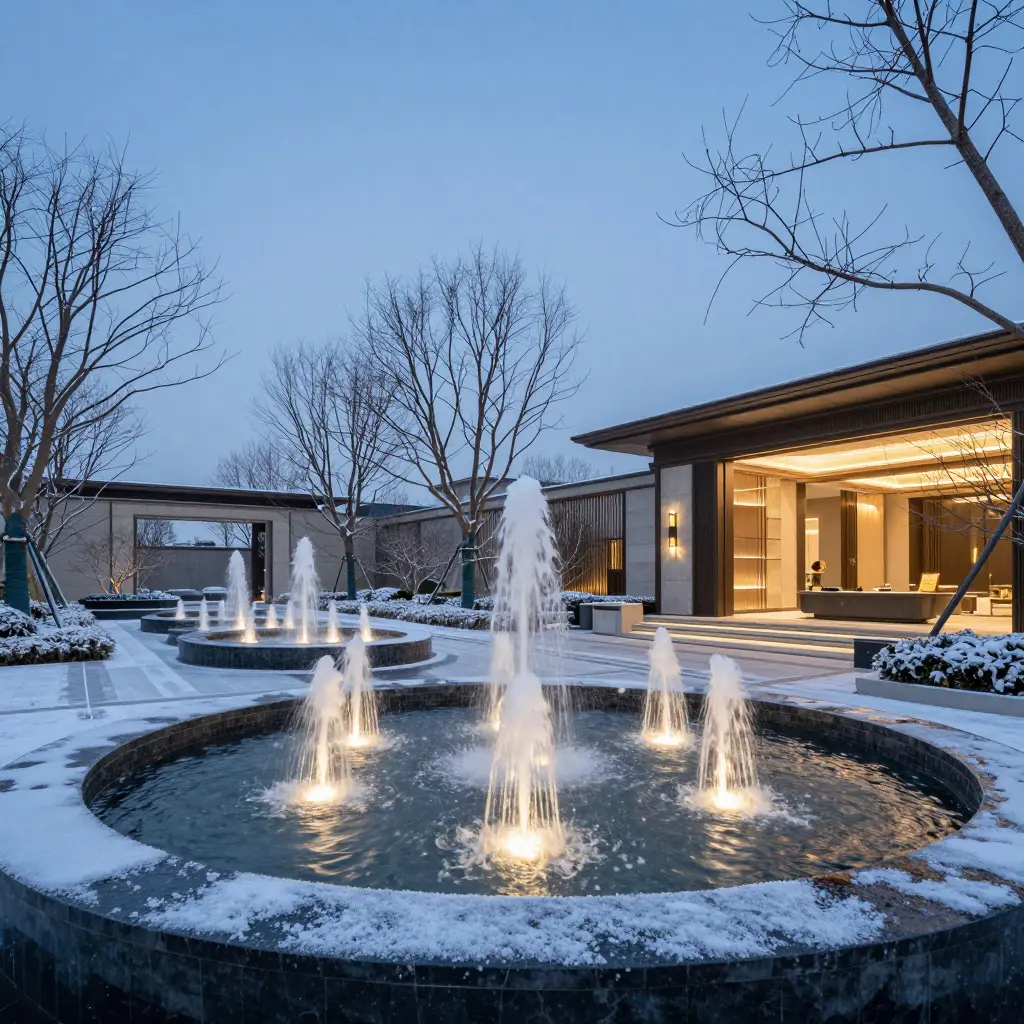
Developers frequently report that strong landscape features—including interactive water installations—play a measurable role in marketing and branding residential projects. Visual identity matters not only to residents but also to the global audience encountering the project through media and social networks.
Iconic installations become symbols of the development itself. Residents associate their address with a recognizable spatial experience, while visitors and potential buyers perceive the environment as distinctive.
Luxury residential developments increasingly operate at the intersection of architecture, landscape and experience. Residents expect environments that extend beyond private apartments into carefully designed outdoor spaces that feel dynamic and engaging.
Interactive fountains provide a powerful tool for achieving this goal. By combining water choreography, lighting and digital technologies, these installations transform courtyards and plazas into animated environments that encourage gathering, movement and social interaction.
For architects, developers and urban designers working in the luxury residential sector, interactive fountains are no longer decorative features. They are spatial instruments capable of defining the character, prestige and memorability of contemporary residential environments.
Conclusion — Key Takeaways for Architects and Developers
Interactive fountains have moved beyond decoration. Here’s what this means in practice:
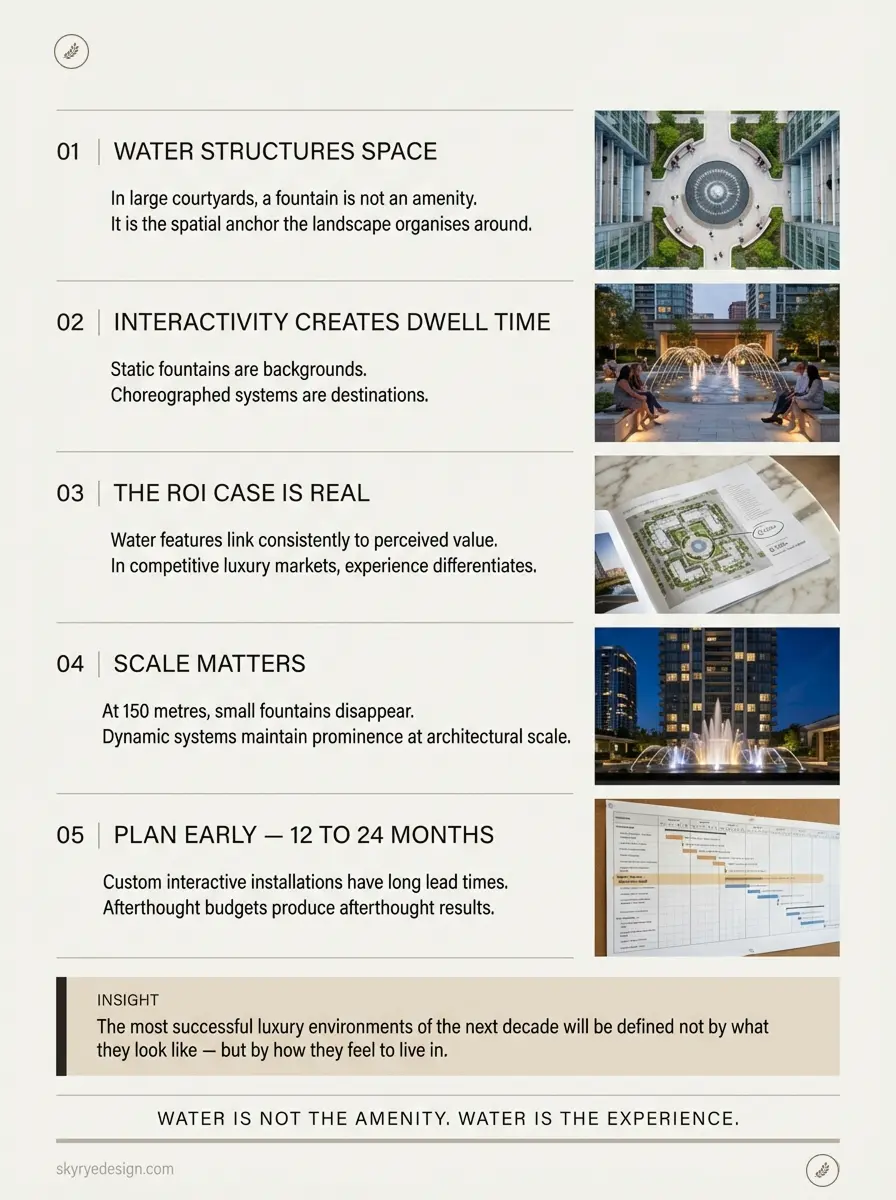
Water structures space. In large courtyards between high-rise towers, a fountain is not an amenity — it’s a spatial anchor that gives residents a visual and experiential center within the landscape.
Interactivity creates dwell time. Static fountains are backgrounds. Interactive systems — choreographed sequences, responsive jets, programmable lighting — turn courtyards into destinations that residents return to.
The ROI case is real. Research consistently links water features to increased perceived attractiveness and higher property values. In competitive luxury markets, experiential differentiation matters as much as architectural quality.
Scale matters. Installations must be proportional to their architectural context. In towers exceeding 150 meters, small fountains disappear. Dynamic systems with larger jet arrays and dramatic evening lighting maintain visual prominence at architectural scale.
Plan early. Custom interactive fountain installations require 12–24 months lead time. Architects and developers who treat water features as afterthoughts risk either value-engineering them out or compromising quality under time pressure.
The most successful luxury residential environments of the next decade will be defined not just by what they look like, but by how they feel to live in. Interactive water features are one of the most powerful tools available to create that feeling.
FAQ
Q: What makes a fountain “interactive” in architectural terms?
An interactive fountain uses programmable technology — digitally controlled jets, motion sensors, responsive lighting, or choreographed sequences — to create dynamic behavior rather than static display. Unlike traditional decorative fountains, interactive systems can change their pattern, height, and lighting throughout the day or respond to environmental inputs like pedestrian movement.
Q: How much do interactive fountain installations typically cost in luxury residential projects?
Costs vary significantly based on scale and complexity. Smaller courtyard installations for residential projects typically range from $150,000 to $500,000. Large-scale landmark installations like the Dubai Fountain exceed $200 million. For most luxury residential developments, a mid-range interactive system with programmable jets and integrated lighting falls between $300,000 and $1.5 million, depending on nozzle count and control sophistication.
Q: Do interactive fountains increase property value?
Research from the University of Exeter and the UK Landscape Institute found that proximity to water features increases perceived attractiveness of urban environments by up to 30%. In premium residential markets, developers consistently report that strong landscape features — including water installations — accelerate sales timelines and support premium pricing, particularly in high-density urban contexts where outdoor amenity is scarce.
Q: What maintenance is required for interactive fountain systems?
Modern interactive fountain systems require regular maintenance, including water quality management, nozzle inspection, pump servicing, and software updates for control systems. Annual maintenance costs typically run 5–10% of the initial installation cost. Most manufacturers offer service contracts that cover preventative maintenance and emergency repairs.
Q: Can interactive fountains work in cold climates?
Yes. Modern fountain systems designed for cold climates include winterization protocols — draining systems before freezing temperatures, using frost-resistant materials, and installing heating elements around critical components. Many installations in northern European and North American cities operate seasonally, with alternative landscape programming during winter months.
Q: What is the typical lead time for a custom interactive fountain installation?
Custom installations for luxury residential projects typically require 12–24 months from design concept to completion. This includes engineering design, manufacturing of custom components, site preparation, and installation. Developers integrating fountains into master plans should factor this timeline into construction schedules to ensure the landscape is complete at handover.
Q: Which studios specialize in interactive fountain design for residential projects?
WET Design (responsible for the Dubai Fountain and Bellagio fountains) is the most recognized globally. European studios, including Lux Aeterna and Aquatique Show International, specialize in large-scale water choreography. For residential-scale projects, landscape architecture firms with dedicated water feature specialists — such as AECOM Landscape and James Corner Field Operations — frequently integrate interactive fountain design into broader masterplan work.
- 5shares
- Facebook0
- Pinterest5
- Twitter0
- Reddit0