My first encounter with an A-frame cabin was my grandmother’s place in the mountains of western Ukraine. It wasn’t designed by anyone — the local builder simply knew that steep roofs shed snow, triangles are structurally sound, and tall gable walls are cheap to glaze. It was tiny, it was dark, and it was completely impossible to stand upright in half of it. I loved it unreservedly.
I thought about that cabin years later when I walked through a finished A-frame project in the Swiss Alps — a 74 square metre retreat designed by a Zurich studio for a client who wanted ‘the feeling of a mountain hut but none of the inconveniences.’ The roof pitch was shallower than traditional. The gable end was a full-height glazed wall.
- Why the A-Frame Is Having Its Best Decade Yet
- 40 Modern A-Frame Cabin Designs
- Compact Retreats: 400–700 sq ft
- Mid-Size Family Cabins: 700–1,200 sq ft
- 11. The Family A-Frame Classic
- 12. The Mountain Modern
- 13. The Scotch Pine Lodge
- 14. The Black Box A-Frame
- 15. The Panoramic Ridge
- 16. The Timber Frame Sanctuary
- 17. The Lakeshore Double
- 18. The Black A with Dormer Suite
- 19. The Scandinavian Cabin
- 20. The Glass Ridge A-Frame
- 21. The Off-Grid Self-Sufficient
- 22. The Modular Add-On System
- Large and Luxury A-Frames: 1,200–2,500+ sq ft
- Special Typologies: Off-Grid, Prefab, Tropical, and Adaptive
- Design Principles Across All 40 Designs
- How to Approach Your Own A-Frame Design
- FAQ: Modern A-Frame Cabin Design
- Q: How much does it cost to build a modern A-frame cabin?
- Q: What is the best size for an A-frame cabin?
- Q: Are A-frame cabins energy efficient?
- Q: What materials are best for a modern A-frame exterior?
- Q: Can an A-frame cabin be a permanent home?
- Q: What is the difference between a classic and modern A-frame design?
The interior had a sleeping loft with proper headroom because the architects had pushed the rafters up into the roof structure to reclaim the knee-wall areas. There was underfloor heating, a wood-burning stove, and a kitchen that would embarrass most urban apartments. My grandmother’s builder had been right about the basic geometry. The Zurich architects had resolved every problem it creates.
That tension — between the A-frame’s enduring structural logic and the very real problems of its traditional execution — is exactly what modern A-frame design in 2026 is navigating. The silhouette hasn’t changed. Everything inside the silhouette has. This collection covers 40 designs across the full range: tiny solo retreats, family mountain homes, lakeside pavilions, off-grid builds, and luxury projects that happen to use a triangle as their starting point. For each one, the focus is on what the design does well, what problem it solves, and why the specific approach is worth studying.
Why the A-Frame Is Having Its Best Decade Yet
The A-frame as a typology dates from the mid-twentieth century — popular in the 1950s and 1960s as an affordable mountain retreat that almost anyone could self-build from a kit. By the 1980s it had fallen into something like architectural disrepute: too small, too dark, too difficult to live in beyond a weekend. The triangle was structurally correct but spatially punishing.
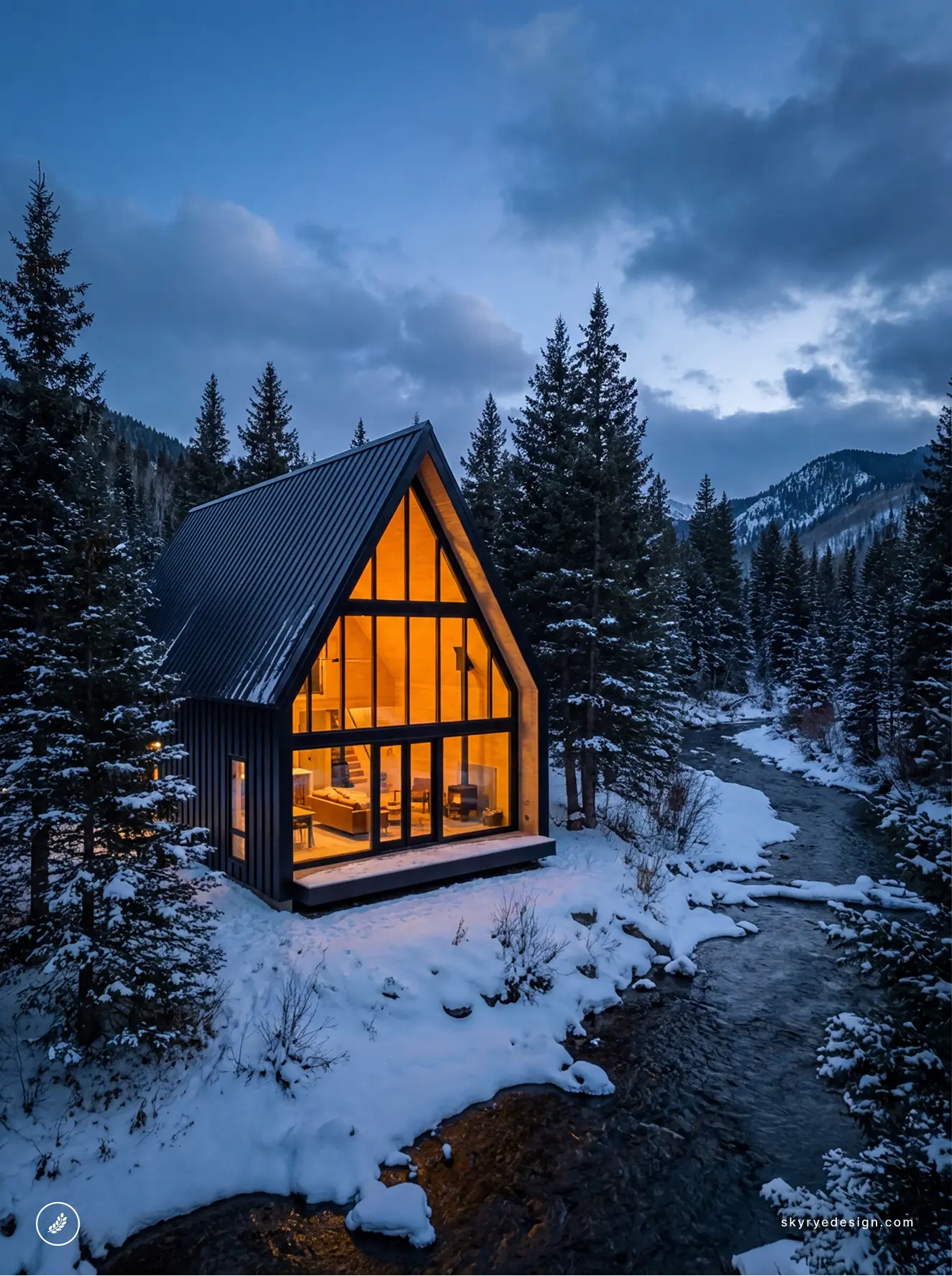
What changed in the 2020s is a combination of factors. Biophilic design principles — architecture that prioritises connection to landscape, natural materials, and access to daylight — gave the A-frame’s gable-end glazing new relevance. The short-term rental market created demand for distinctive, photogenic structures that photograph well and book immediately. And improvements in insulation technology, window performance, and structural engineering allowed architects to address the A-frame’s traditional weaknesses without abandoning its silhouette.
The specific technical advances matter. Standing seam metal roofing — now the default in most contemporary A-frame projects — lasts 50+ years with minimal maintenance versus the 20-year lifespan of asphalt shingles. Triple-pane glazing makes the large gable walls thermally viable in cold climates. Spray foam insulation in the roof envelope addresses the historic problem of heat loss through the large surface area. And the design trick of pushing the roof rafters inward to create usable knee-wall space — removing the most frustrating spatial constraint of the traditional A-frame — has become standard practice in quality contemporary builds.
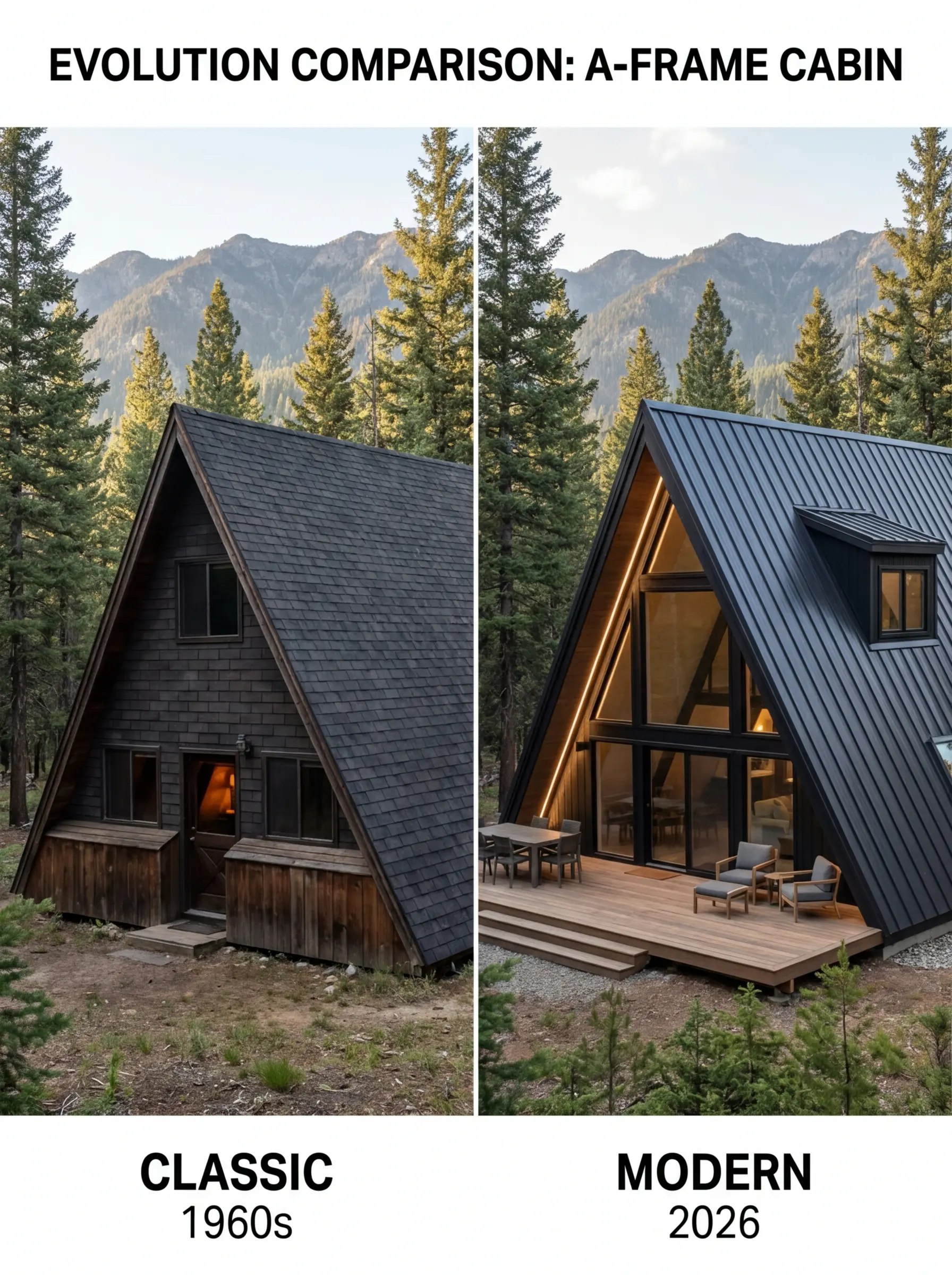
✏ Design note: The single most important decision in a modern A-frame is roof pitch. Steeper pitches shed snow better in mountain climates but create more inaccessible knee-wall volume and make dormers structurally complex. A pitch of 45 to 55 degrees is the current sweet spot for most residential A-frame projects — steep enough for climate performance, shallow enough to keep interior volumes liveable.
40 Modern A-Frame Cabin Designs
The designs are grouped by scale and use type — from the most compact solo retreats through to multi-bedroom family homes and luxury builds. Within each group, specific design decisions and architectural details are highlighted.
Compact Retreats: 400–700 sq ft
The compact A-frame works hardest at this scale — every square foot is considered, and the design intelligence shows most clearly in how the architect handles the transition between the open ground floor and the sleeping loft above.
01. The Solo Studio
420 sq ft | Sleeping loft, no bedroom walls | Style: Dark Timber + Steel
A 420 sq ft cabin designed for a single occupant who works remotely. The entire ground floor is a single open room: kitchen along the south wall, a wood-burning stove centred on the north gable, and a writing desk angled toward the glazed gable end.
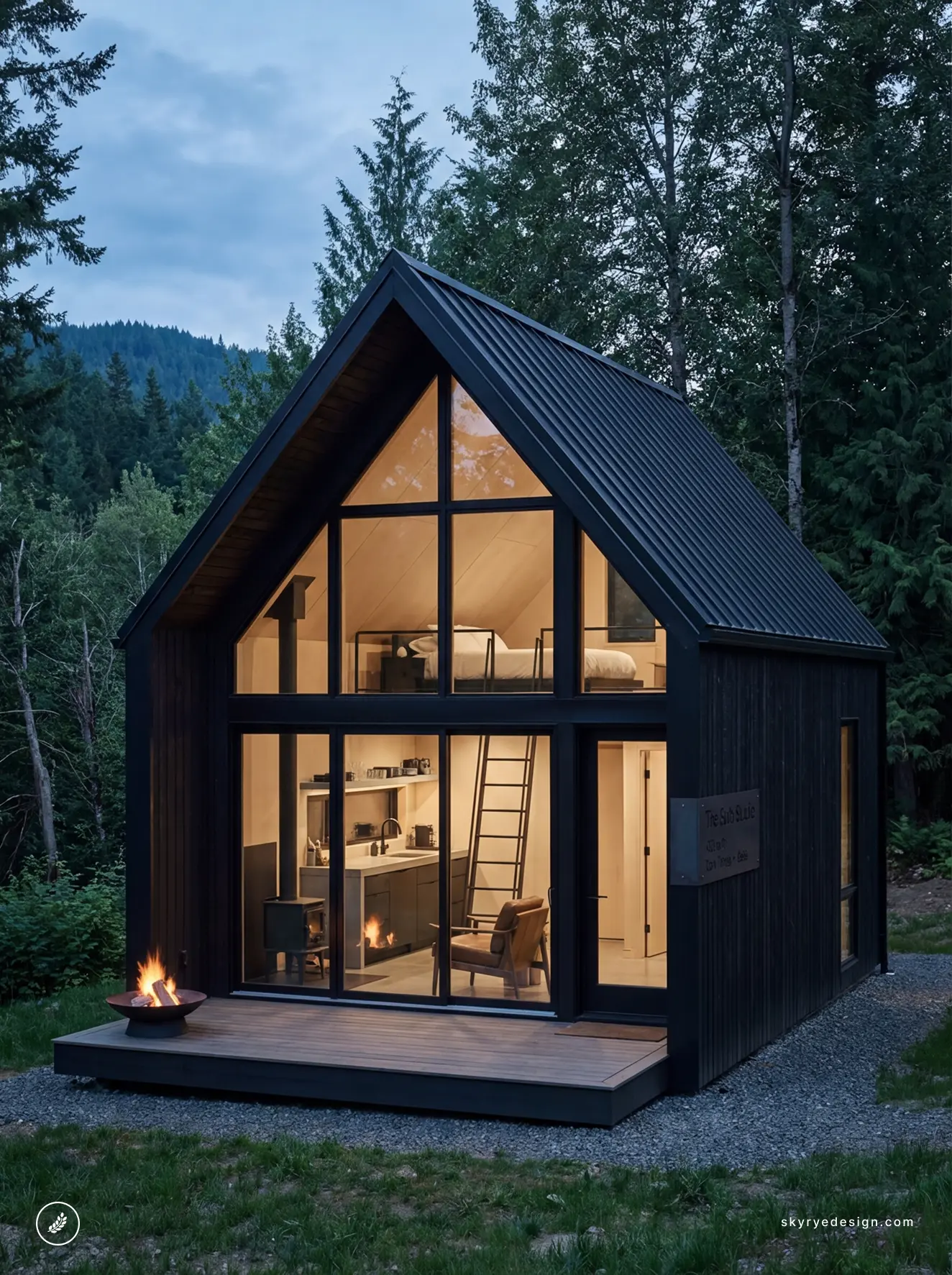
The sleeping loft sits above the kitchen on a steel-framed mezzanine with a ship’s-ladder access. No interior walls. The spatial economy is complete — nothing is duplicated, nothing is superfluous. Exterior: dark-stained cedar with a single shed-roof dormer providing loft headroom and a north-facing skylight for indirect light.
02. The Alpine Weekender
480 sq ft | 1 bed loft + convertible sofa | Style: Black Steel + Pine
Designed for a family of three as a weekend retreat in the Austrian Alps. The defining decision: the gable-end wall is entirely glazed from floor to peak, framing a view of a specific mountain that the clients had identified before the site was chosen.
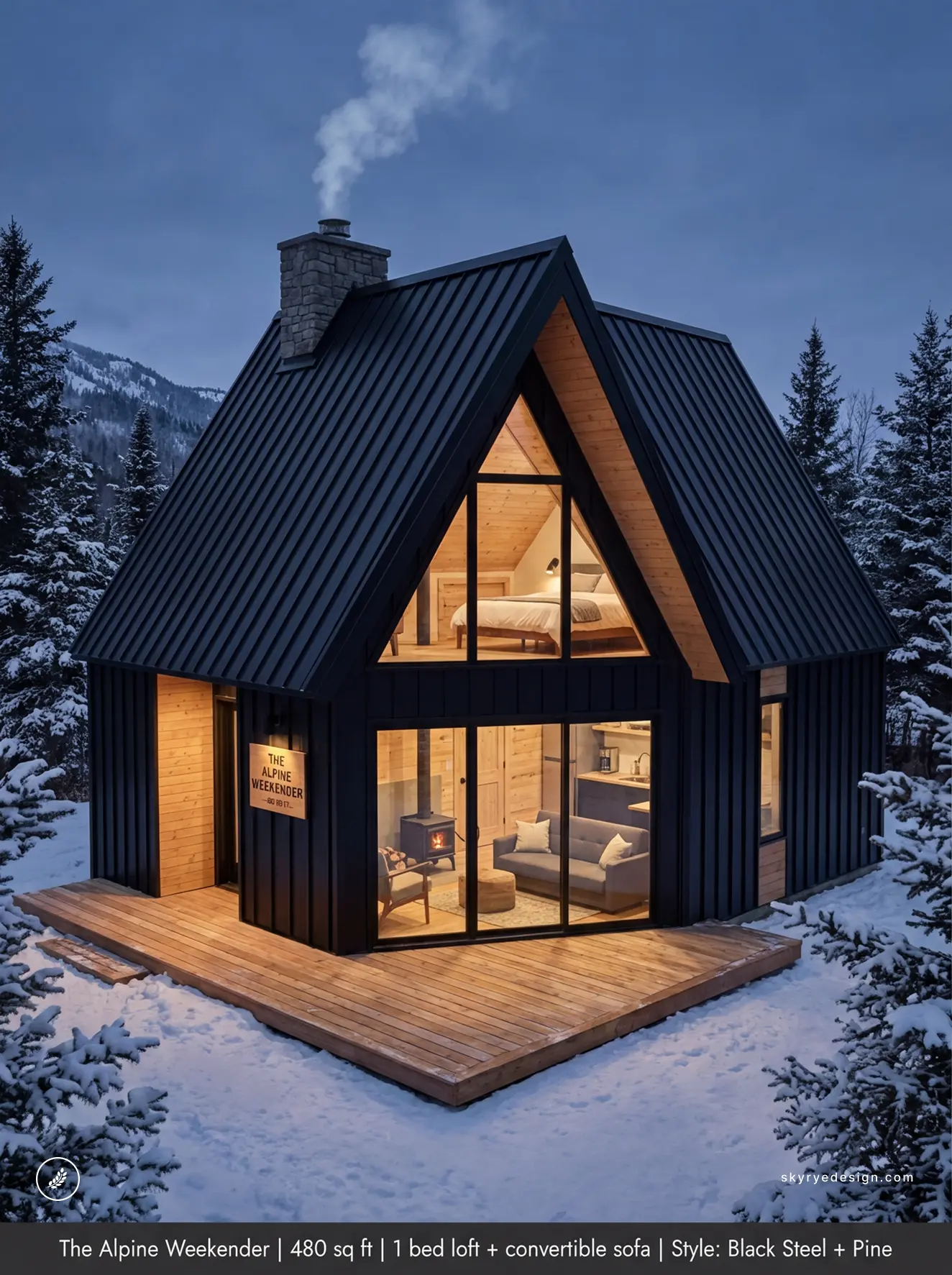
The kitchen is compact but fully specified — induction cooktop, full-size refrigerator, dishwasher — because the clients use the cabin every weekend and wanted domestic convenience rather than camping functionality. Exterior cladding is blackened steel panels with exposed pine trim at the eaves.
03. The Forest Pod
520 sq ft | 1 bed + day bed nook | Style: Polycarbonate + Timber
A conceptually adventurous small cabin in which the architect clad the entire A-frame structure in translucent polycarbonate shingles, creating a glowing lantern effect at night.
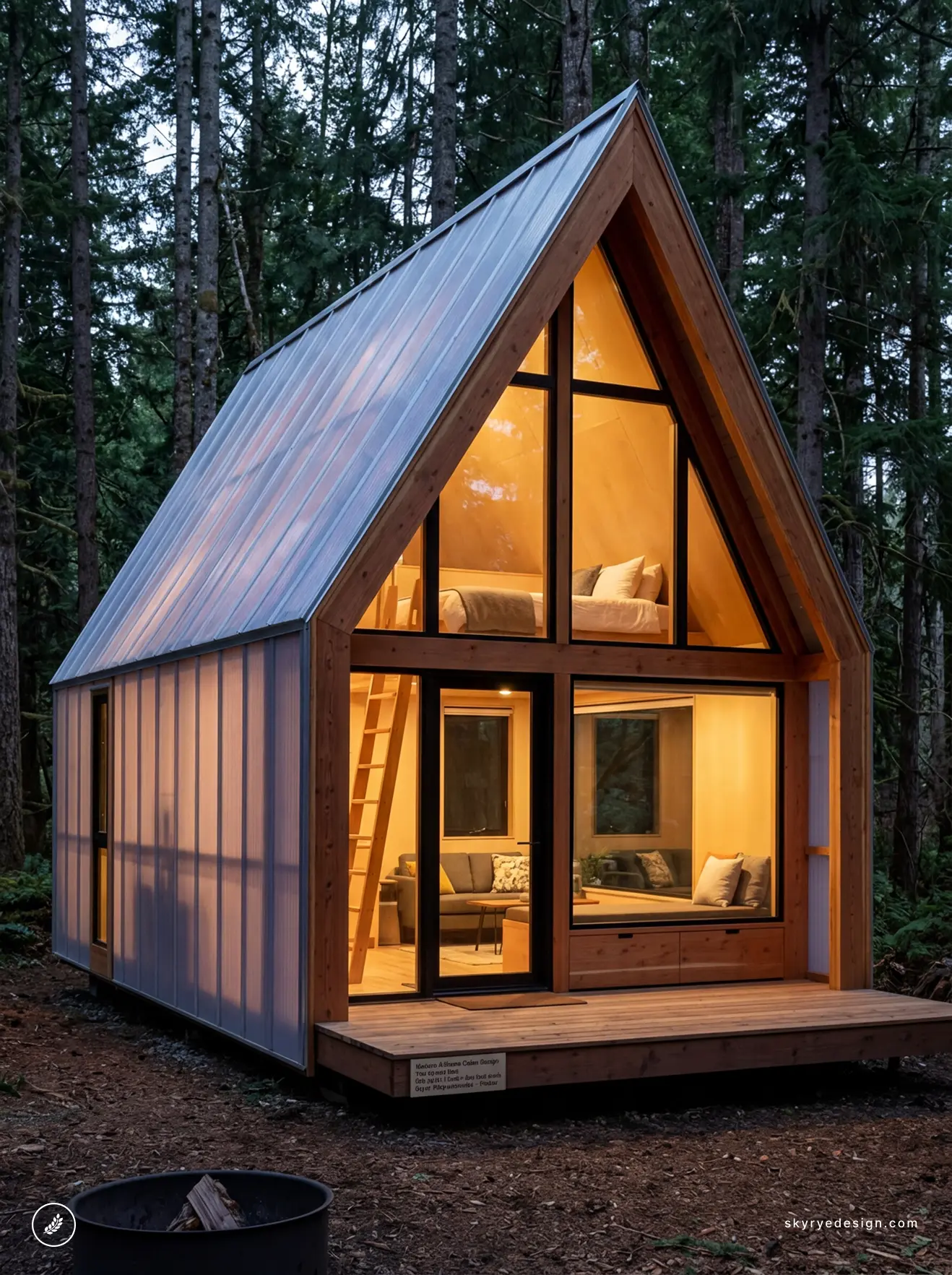
The material allows diffused daylight into the interior while maintaining privacy from the surrounding forest. The ground floor is open-plan with a built-in bed nook recessed into the north knee-wall area — a space that would otherwise be wasted storage. Floor area: 520 sq ft. The polycarbonate requires replacement every 15-20 years but has a lower embodied carbon than glass at comparable insulation values.
04. The Lake Observer
560 sq ft | Sleeping loft | Style: Cedar Shingles + Glass
Sited on a Canadian lakeside lot with a 12-metre shoreline setback, this cabin orients its glazed gable directly south over the water.
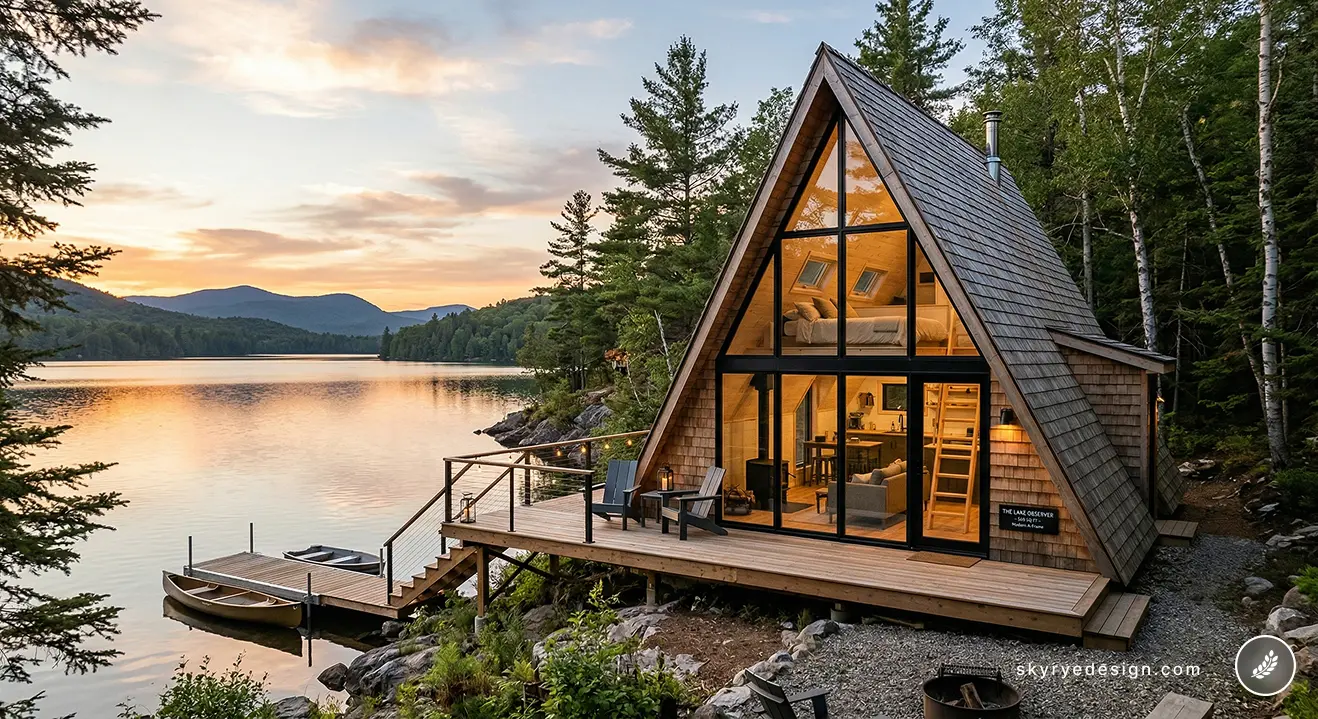
The architect’s key insight: the ceiling height at the gable peak is 7.2 metres, which creates a vertiginous sense of space disproportionate to the 560 sq ft footprint. A built-in bench runs the full width of the glazed wall at ground level, functioning as seating, storage, and a reading platform simultaneously. Exterior: natural cedar shingles left to weather grey, deliberately matching the driftwood on the shoreline.
05. The Catskills Retreat
580 sq ft | 1 bed loft + office nook | Style: Black Board-and-Batten + Metal Roof
Located in upstate New York, this cabin was designed as a remote work retreat with specific attention to connectivity — the design includes a dedicated 12 sq ft office nook at the loft level with north-facing daylight (no screen glare) and a built-in desk cantilevered from the roof structure.
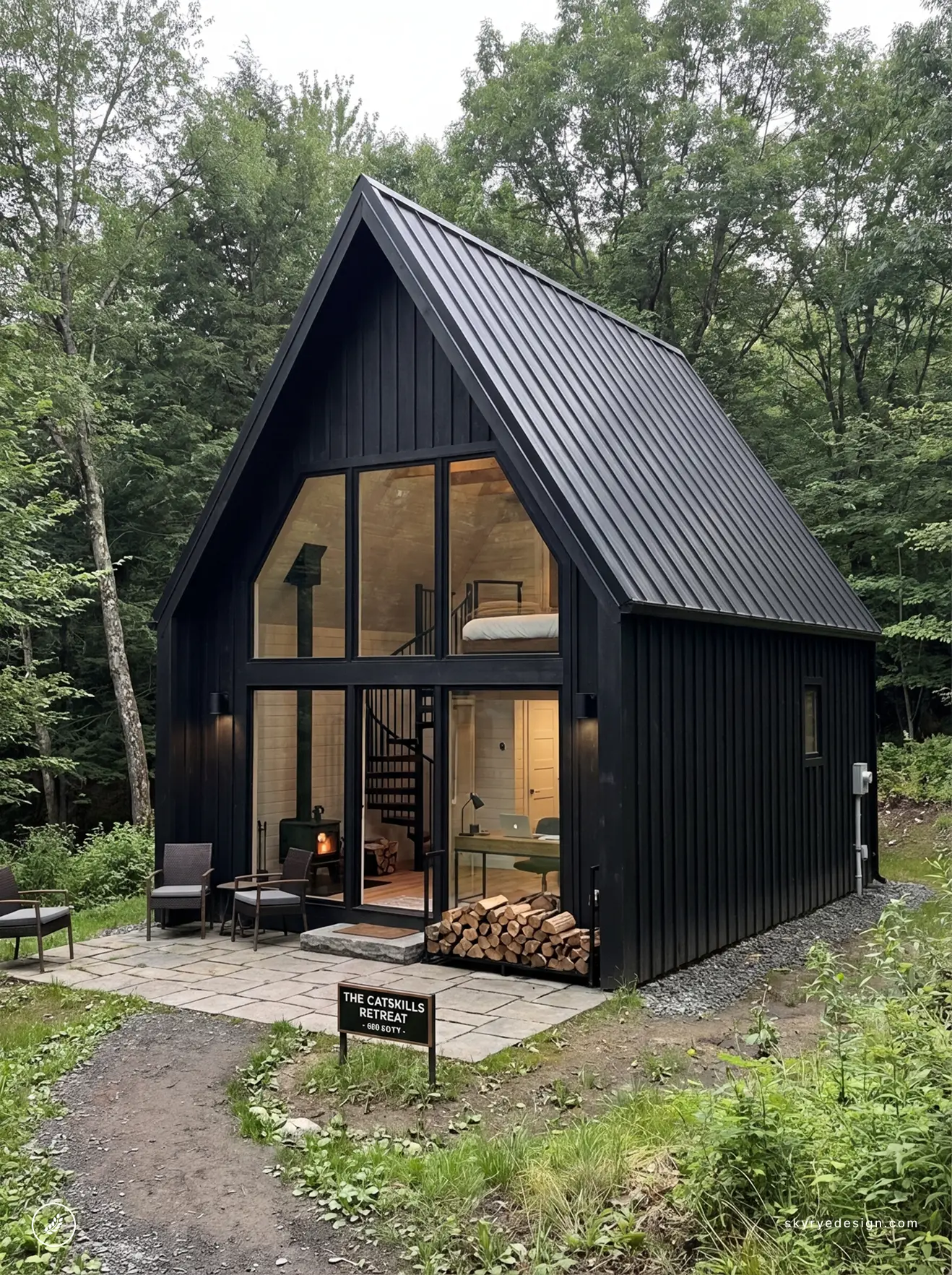
The ground floor layout prioritises the kitchen and living area equally. Exterior: black board-and-batten cedar siding with a standing seam zinc roof that will develop a natural patina over time. The contrast between the dark walls and the surrounding deciduous forest in autumn produces the design’s most striking seasonal moment.
06. The Micro Mountain
400 sq ft | Sleeping platform, no loft | Style: Raw Spruce + Clear Coat
The smallest design in this collection was built for a client who specifically requested something they could construct themselves with basic carpentry skills. The entire structure uses dimensional lumber and standard hardware with no custom fabrication.
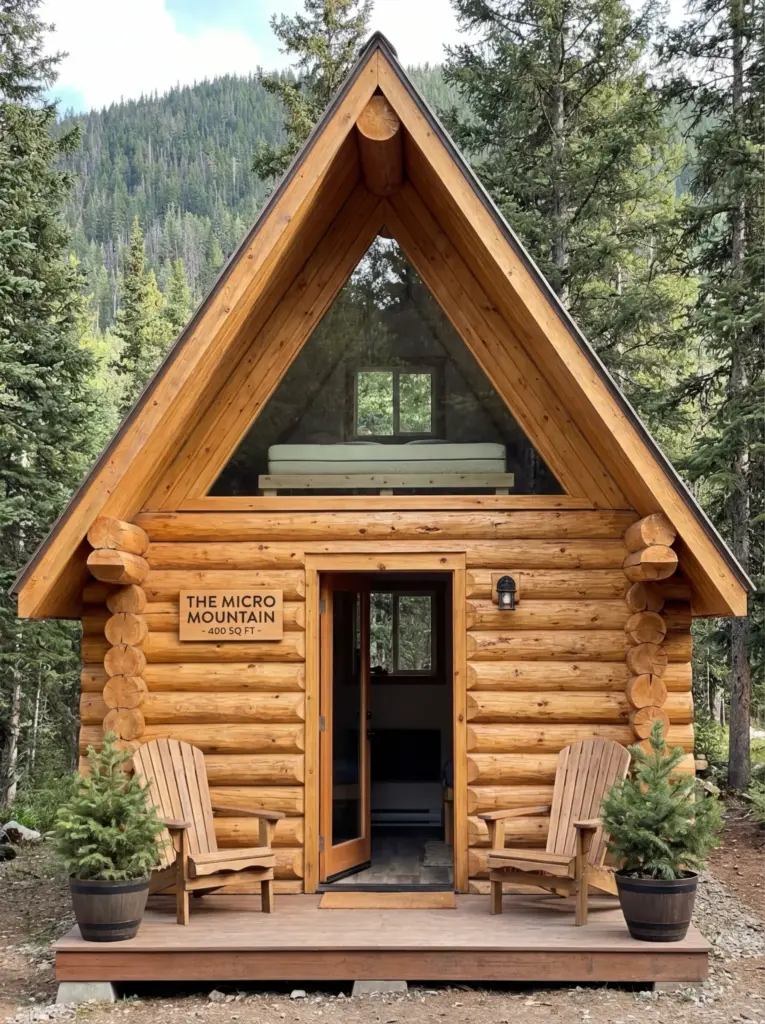
The sleeping platform is a full-width raised platform at the back of the single room, 60cm above floor level — high enough to provide storage underneath but low enough to avoid a separate loft ladder. Raw spruce exterior with a UV-stable clear coat, preserving the natural timber colour rather than staining to dark. Build cost at time of construction: $72,000 self-built.
07. The Hinge Cabin
650 sq ft | 1 bed + study | Style: Weathering Steel + Glass
An architecturally distinctive design in which a secondary wing hinges outward from the main A-frame structure at 15 degrees, creating an angled plan that responds to the site topography and provides a sheltered south-facing outdoor terrace between the two volumes.
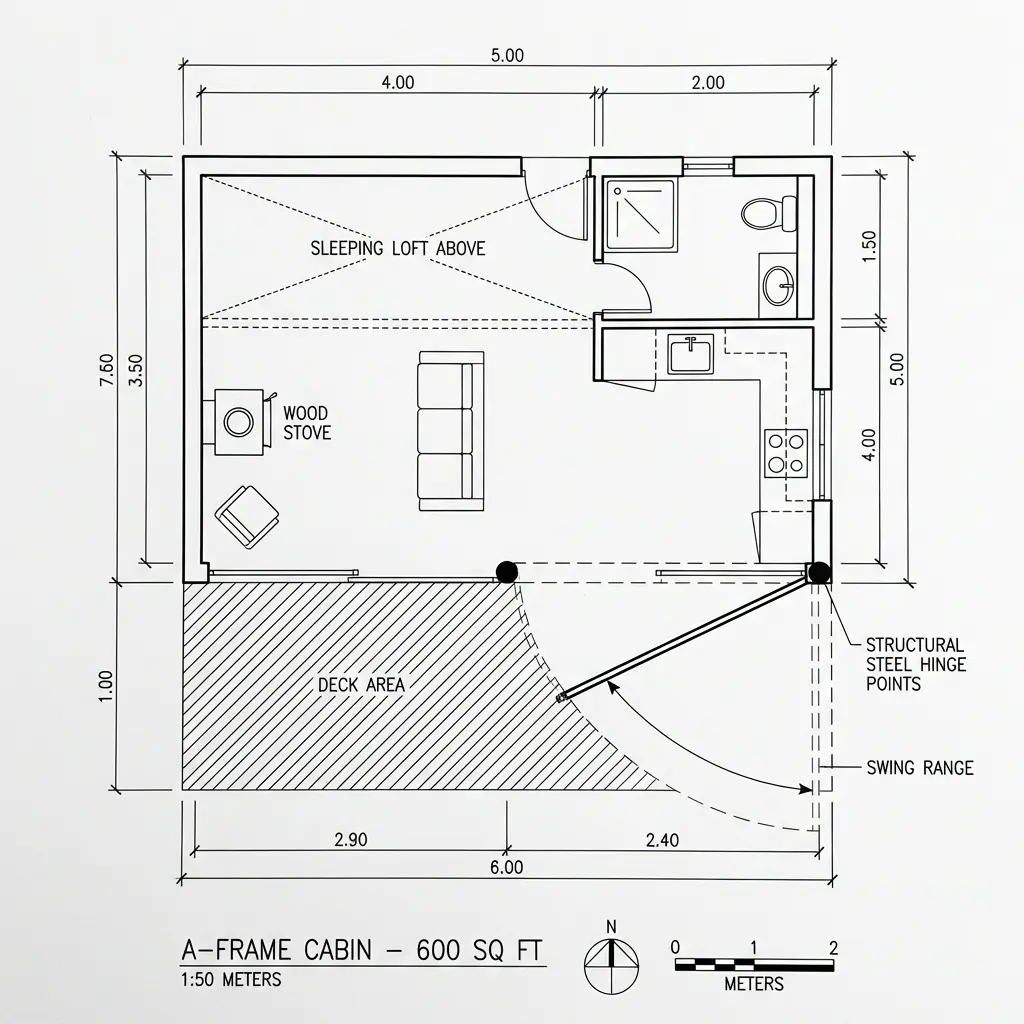
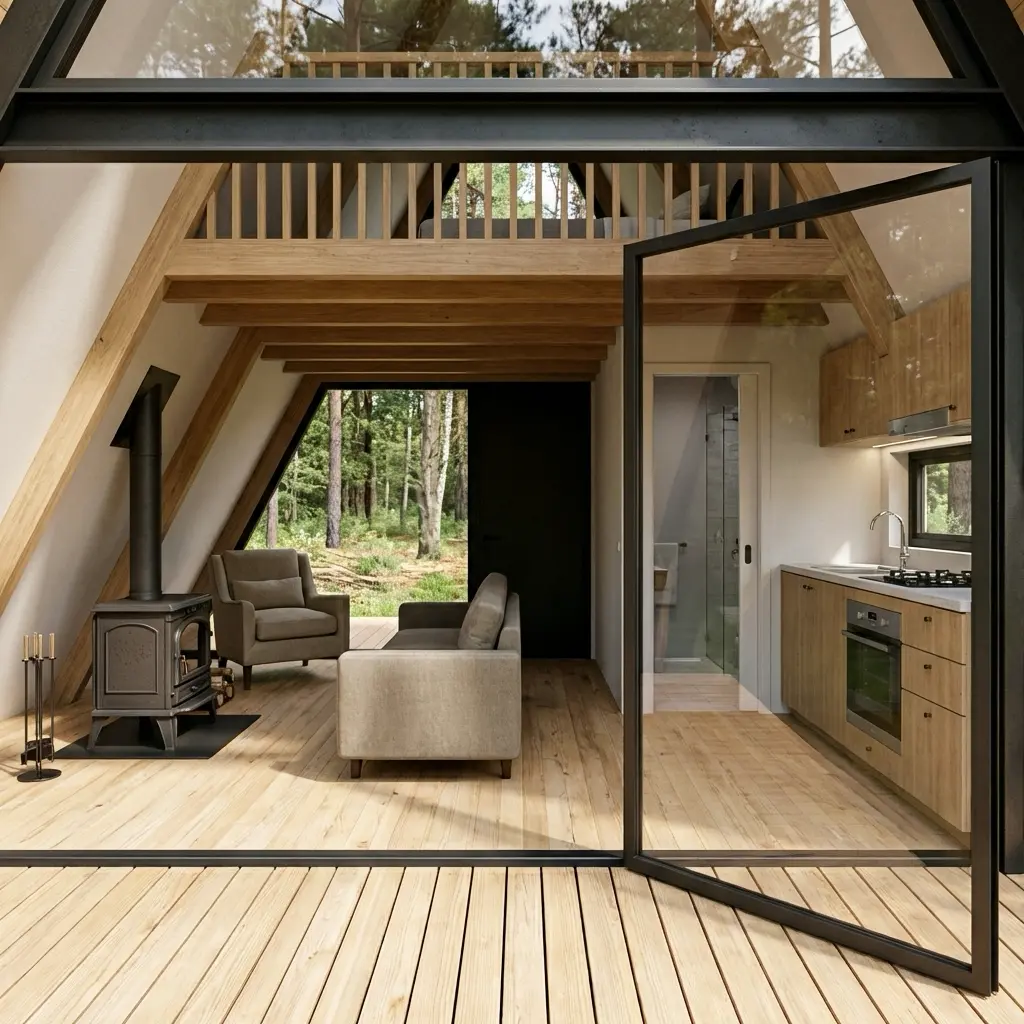
The main A-frame contains the kitchen and living; the angled wing contains a bedroom and bathroom. Exterior: Cor-Ten weathering steel panels that develop a rust patina over 3-5 years, requiring no further maintenance. The patina colour — warm orange-brown — is designed to read as an autumn leaf tone against the surrounding forest.
08. The Treeline Cabin
620 sq ft | Sleeping loft + hammock deck | Style: Dark Larch + Steel
A cabin designed at the exact treeline elevation in a Norwegian mountain location, where the building sits at the transition between forest below and open alpine terrain above.
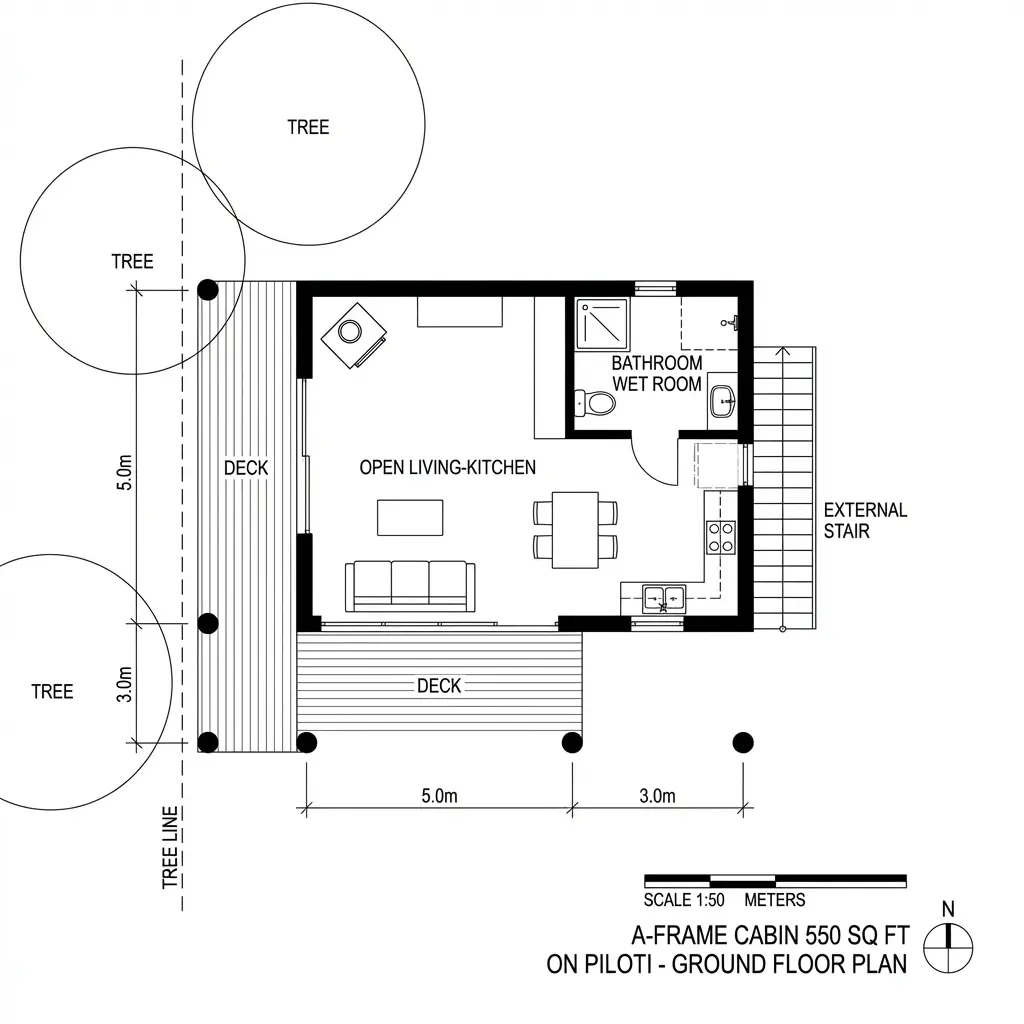
The design responds to this duality: the south face is heavily glazed toward the open alpine view, while the north face is almost entirely clad in dark larch with minimal openings, providing shelter from prevailing winter winds.
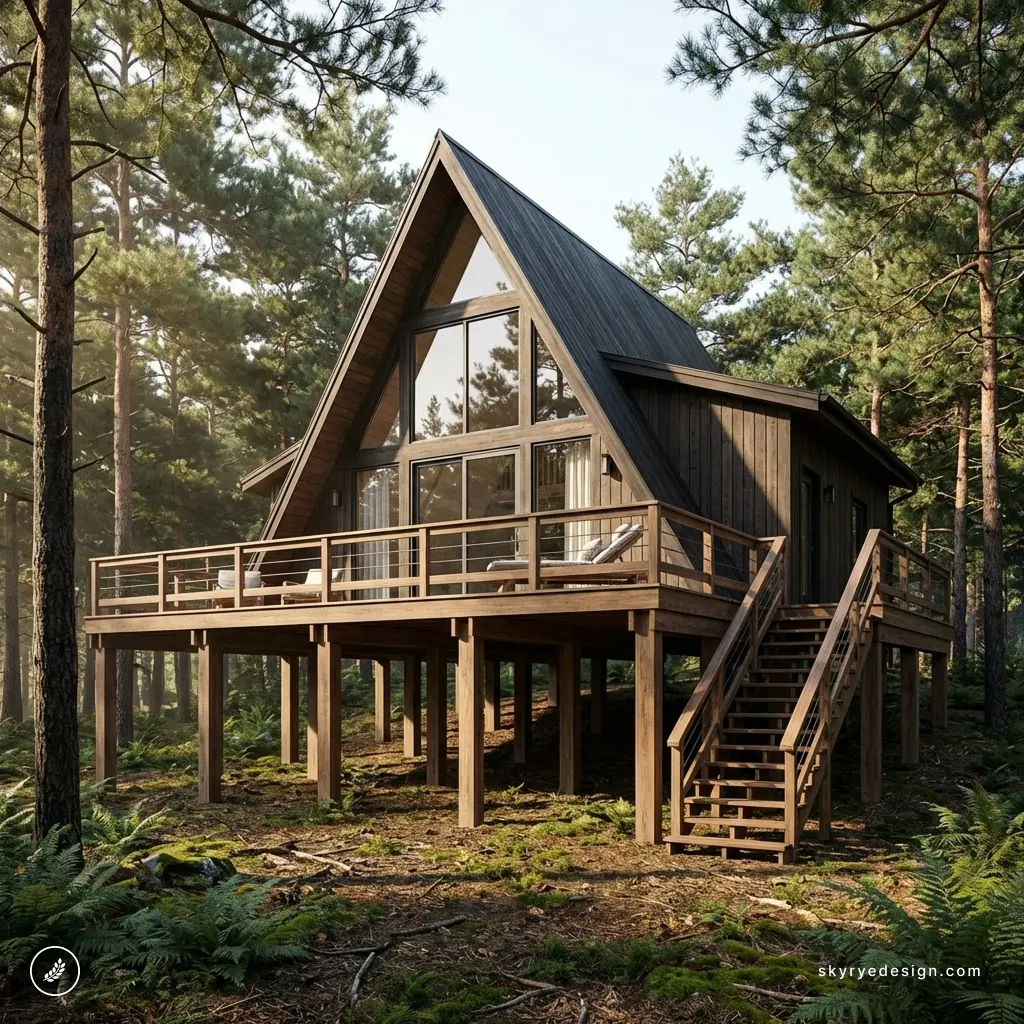
The hammock deck is a cantilevered steel platform at loft level projecting from the south gable — accessible directly from the sleeping loft through a full-height sliding glass door.
09. The Japanese-Influenced Compact
500 sq ft | Sleeping loft | Style: Shou Sugi Ban + Rice Paper Panels
A design that imports the Japanese tradition of shou sugi ban (charred timber cladding) into the A-frame typology.
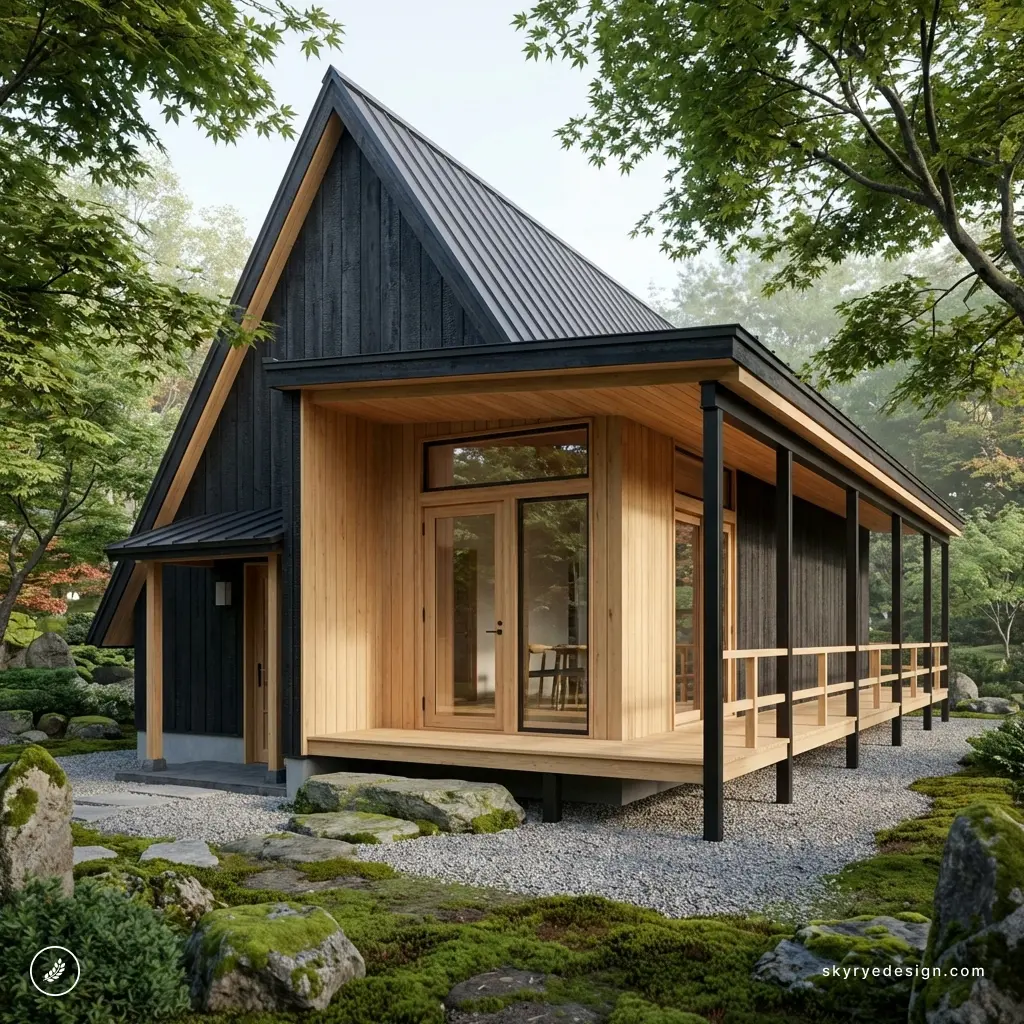
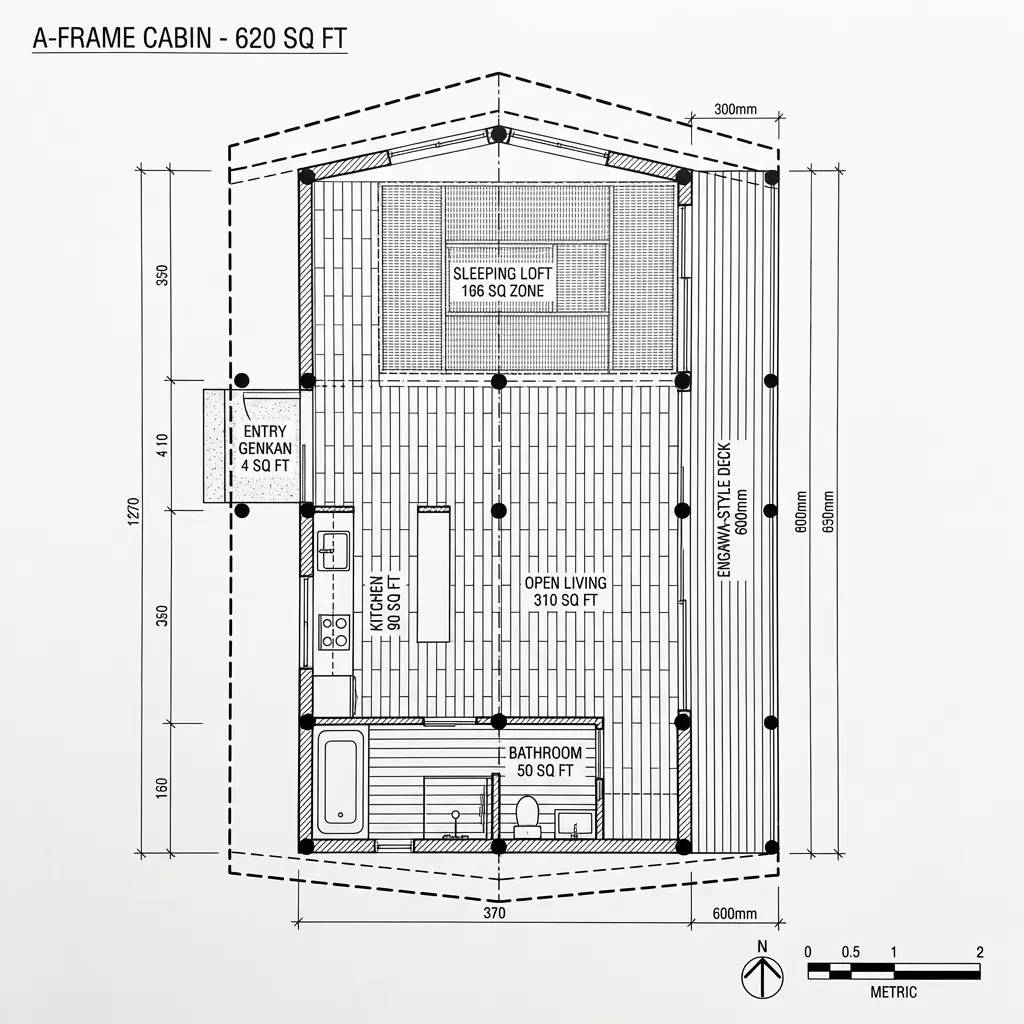
The charred cedar exterior is visually striking and functionally superior — the charring process creates a naturally water-resistant, fire-resistant, and insect-resistant surface that requires no additional treatment. Inside, translucent rice paper sliding panels divide the sleeping loft from the stair area, allowing light passage while maintaining privacy. The material palette is entirely natural: timber, stone, rice paper, and clay plaster on the interior walls.
10. The Glass Prism
480 sq ft | Open sleeping area | Style: All-Glass Gables + Black Frame
A cabin designed for maximum visual transparency, with both gable ends fully glazed — north and south — creating a through-view from the forest behind to the meadow in front.
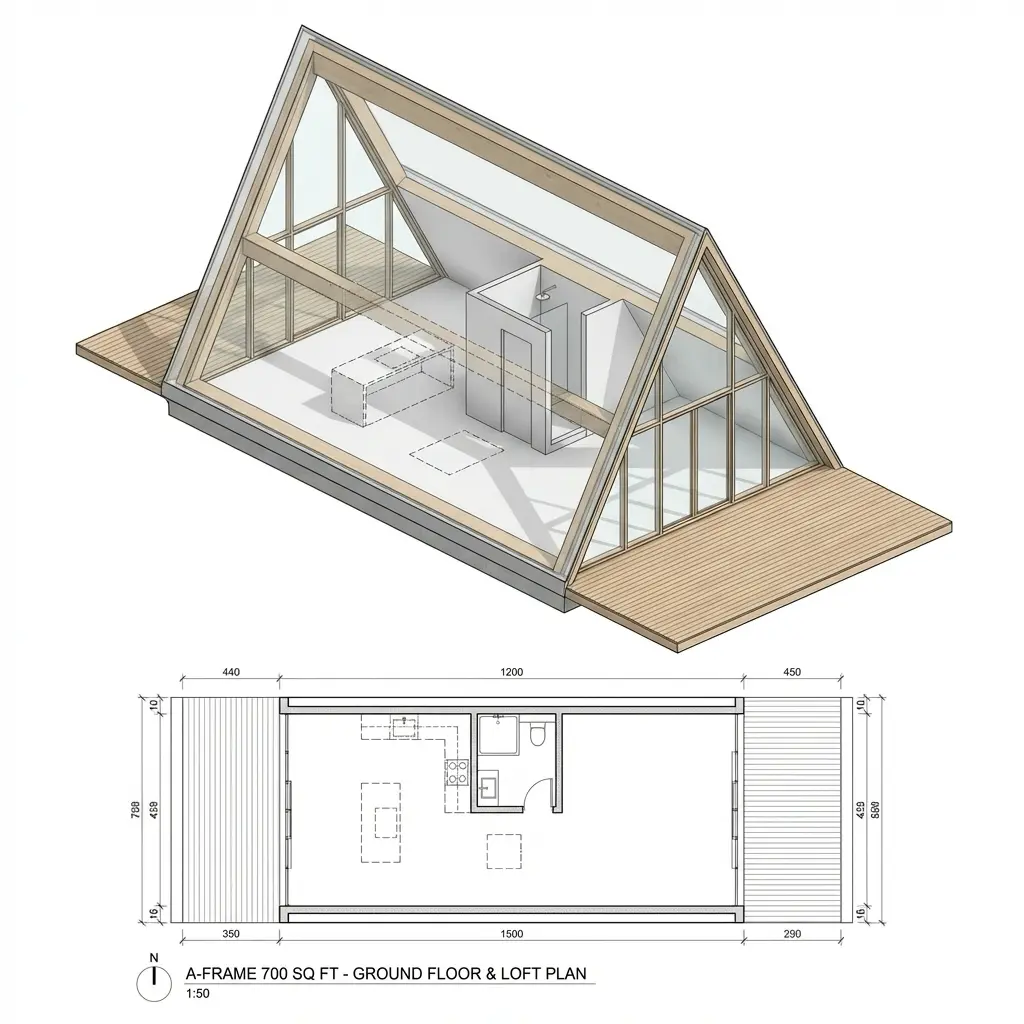
The structure is a black powder-coated steel frame visible both inside and outside, celebrating the A-frame’s structural logic rather than hiding it. The interior has no permanent partitions — the kitchen, dining, and sleeping areas are arranged along a single axis. Privacy is provided by the site’s natural screening rather than interior walls. This design works specifically because of its remote location; it would not be viable on a more overlooked site.
Mid-Size Family Cabins: 700–1,200 sq ft
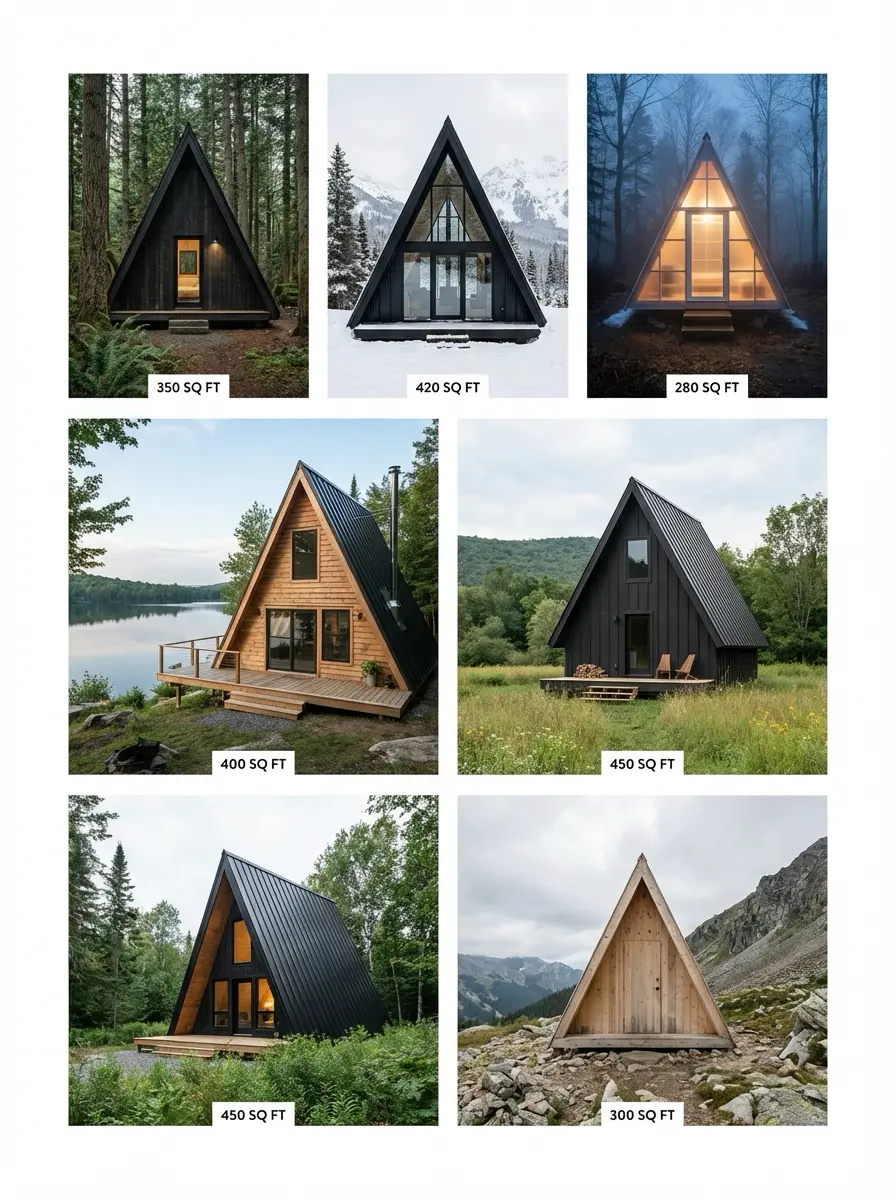
At this scale the A-frame begins to function as a genuine family home rather than a retreat. The design challenges shift: the loft must accommodate proper beds rather than mattress platforms, storage becomes a serious spatial consideration, and the kitchen typically needs to match domestic rather than camping standards.
11. The Family A-Frame Classic
820 sq ft | 2 beds + loft sleeping | Style: Timber Frame + Metal Roof
A Catskill Mountains cabin with 2,072 sq ft of total floor area including basement — the design illustrated in countless architectural media as a benchmark for contemporary A-frame family use. Two bedrooms on the ground floor, a sleeping and living loft above with a floating staircase connecting the levels.
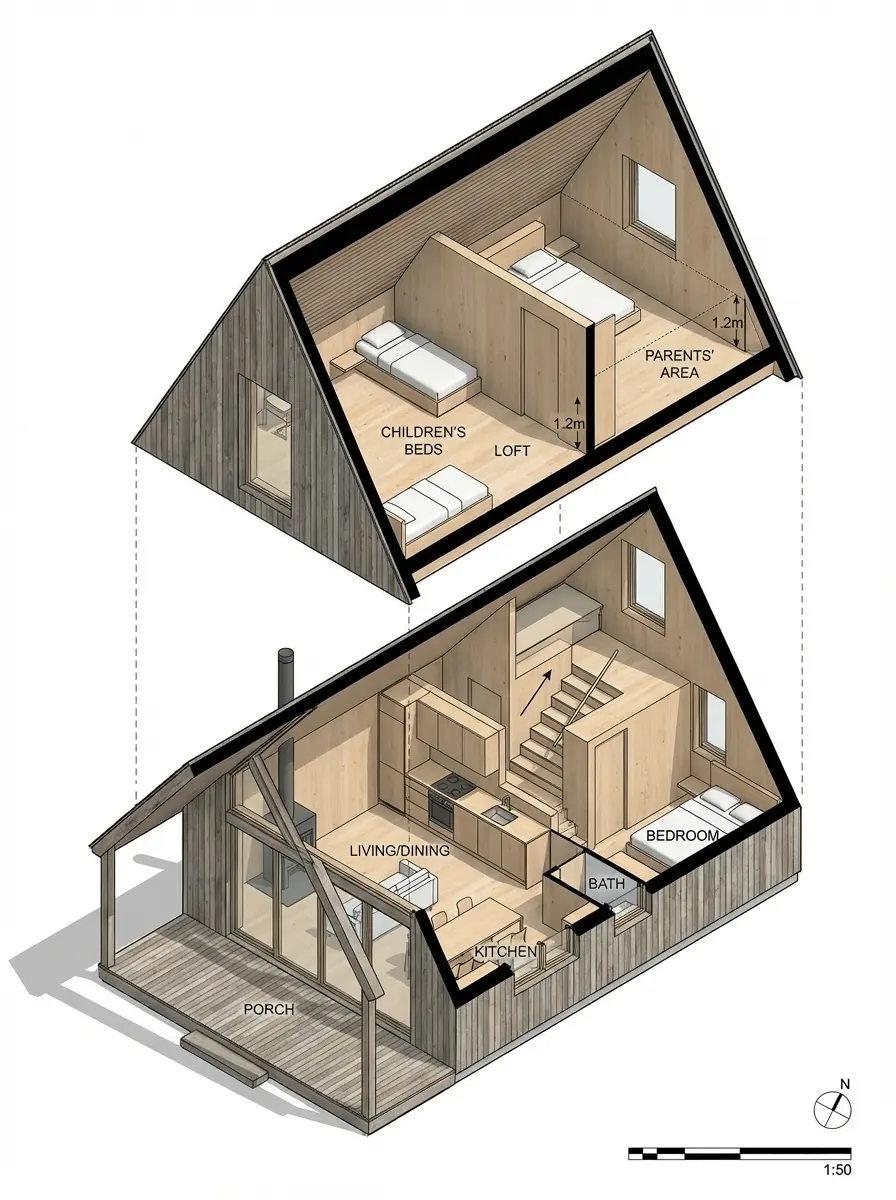
The exterior contrast is the defining design move: a black standing seam metal roof against Douglas Fir wood siding in warm natural tones. Inside, the timber frame is exposed throughout, and a frameless glass loft railing creates visual continuity through the full height of the space. Primary bathroom features a freestanding tub positioned to frame the forest view — a detail that photographs as well as it functions.
12. The Mountain Modern
950 sq ft | 3 beds | Style: White Render + Larch Battens
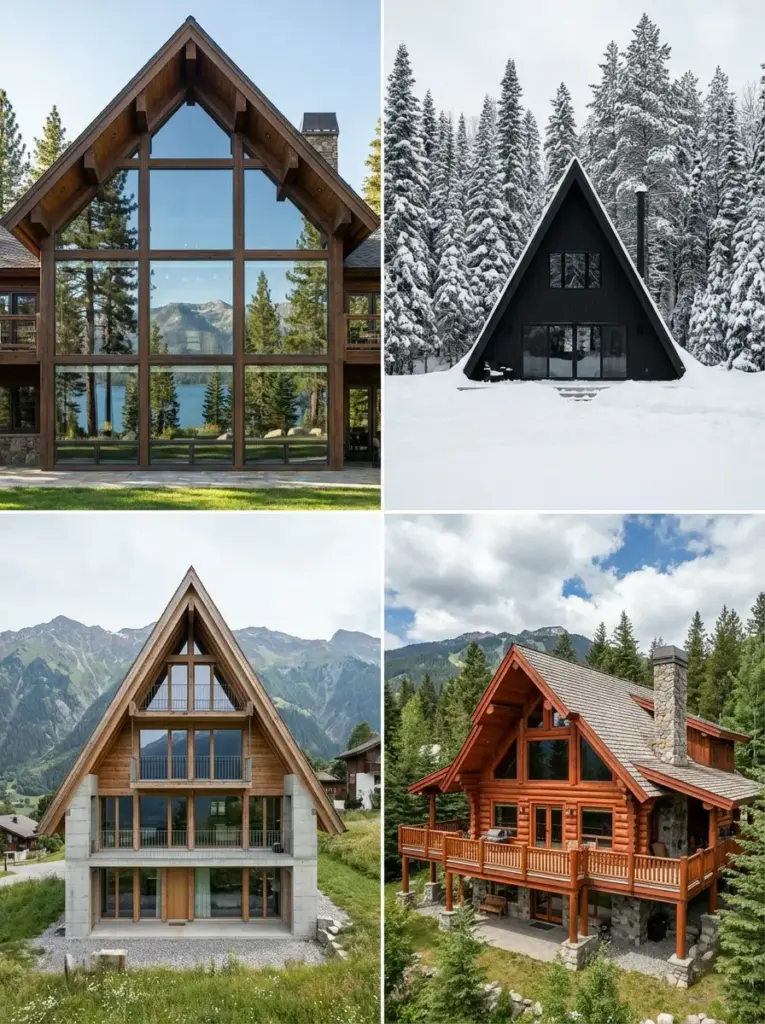
An Austrian Alpine cabin that challenges the dark-exterior convention by rendering the lower section of the A-frame in white lime plaster, creating a two-tone exterior — white base rising to natural larch battens above.
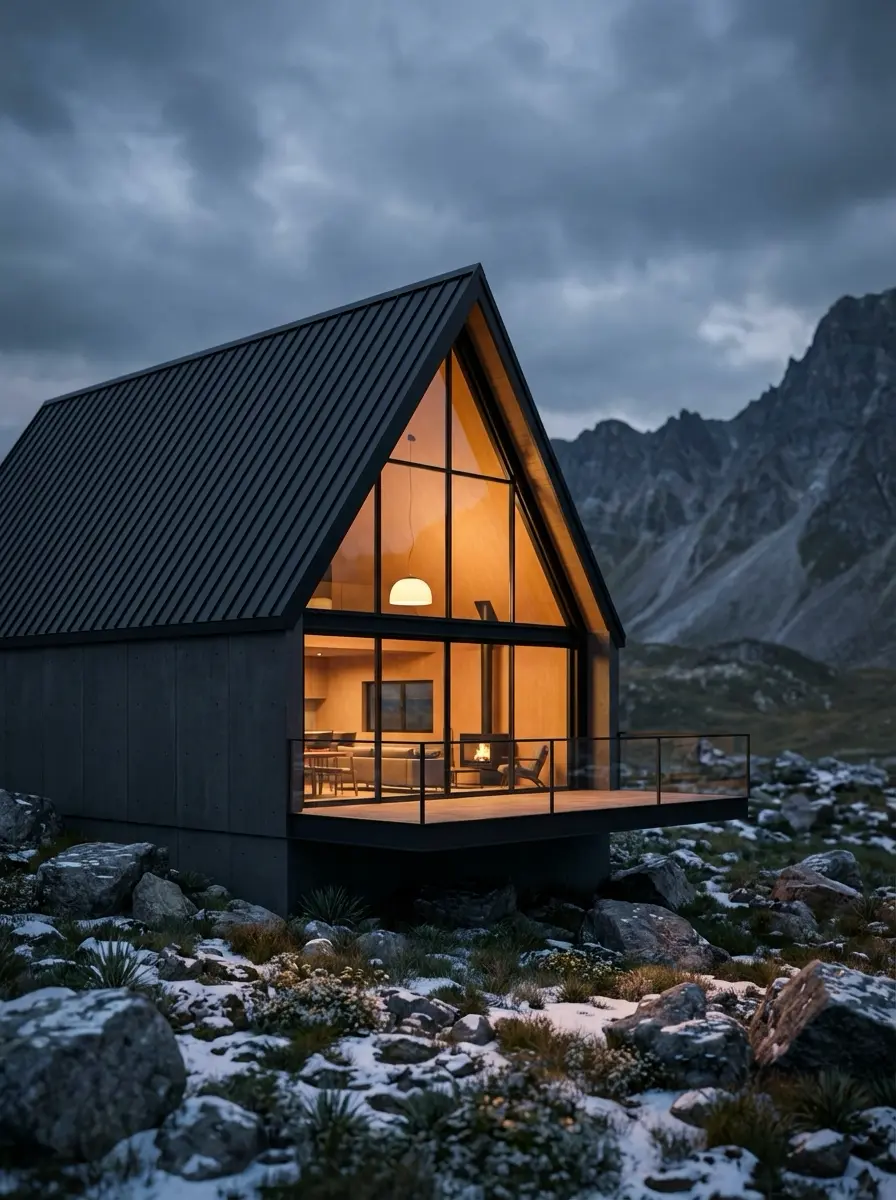
The effect reads as a snow line, referencing the seasonal context. Three bedrooms were achieved through the addition of a shed-roof dormer extension on the north face, which adds 180 sq ft of usable floor area without altering the primary silhouette from the south approach. Interior palette is cool: white walls, pale oak flooring, brushed steel hardware. The mountain view does the warming.
13. The Scotch Pine Lodge
1,100 sq ft | 3 beds + loft | Style: Red Cedar + Exposed Timber
A Canadian Pacific Northwest design in which the architect specified all structural timber to remain exposed and untreated, developing a natural honey-to-silver patina over the first decade of use.
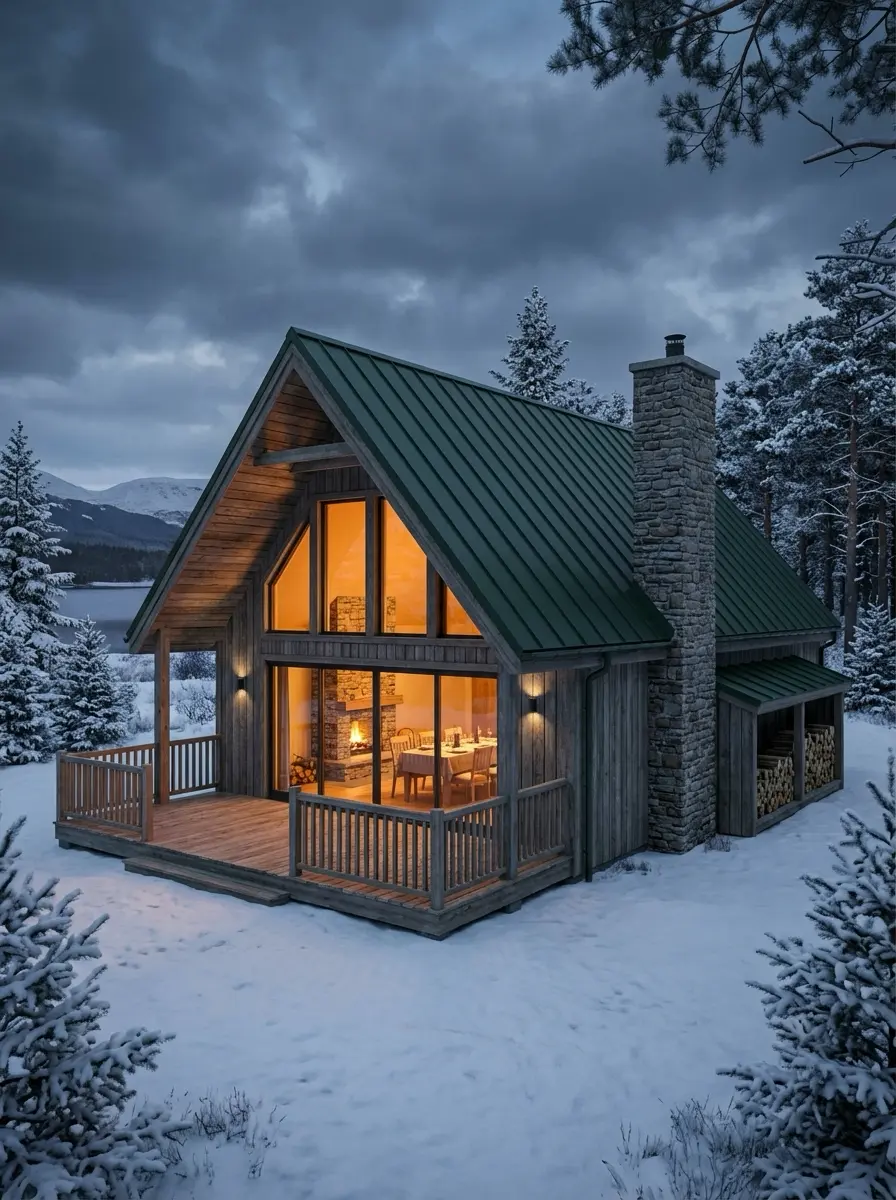
The 1,100 sq ft plan includes three bedrooms — two on the ground floor and one in the loft — plus a full-height kitchen and dining area positioned directly in front of the south gable glazing. The wrap-around deck doubles the usable outdoor area. A notable detail: the kitchen island is positioned along the glazed south wall rather than the conventional central position, creating a cooking station that looks directly into the landscape.
14. The Black Box A-Frame
780 sq ft | 2 beds | Style: Black-Painted Timber + Zinc
A Belgian design that takes the dark-exterior aesthetic to its logical conclusion: every exterior surface — walls, fascias, window frames, deck boards, and chimney stack — is finished in the same matte black.
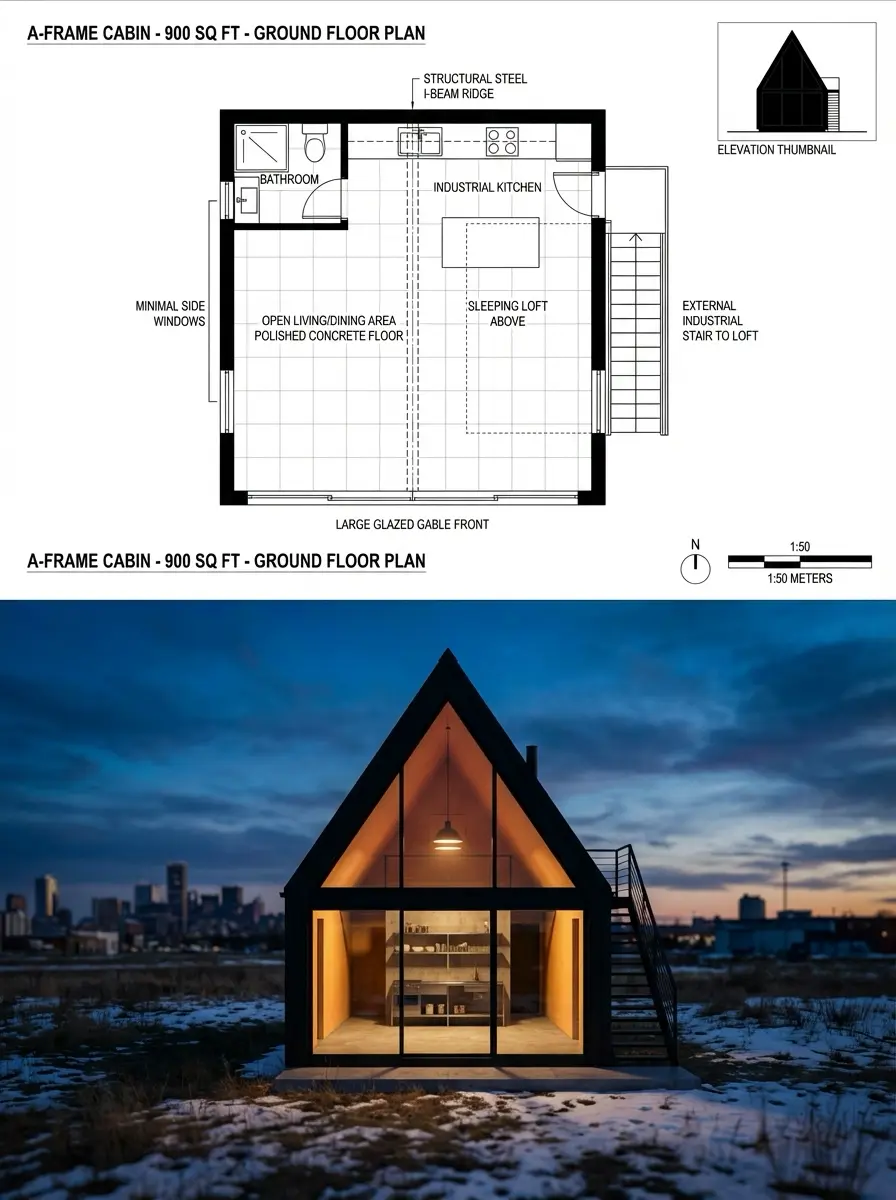
The design reads from a distance as a single dark geometric object against the landscape rather than a building with multiple components. Inside, the palette reverses completely: white plaster walls, natural oak floors, and blond timber joinery create a bright, calm interior that contrasts deliberately with the dramatic exterior. The zinc roof will lighten to a pale grey patina over time, eventually distinguishing itself from the black walls.
15. The Panoramic Ridge
1,050 sq ft | 2 beds + studio | Style: Weathered Pine + Glass
Sited on a narrow ridge in Catalonia, Spain, this A-frame design orients both glazed gables to capture valley views in opposite directions — something the site made possible and the architect made mandatory.
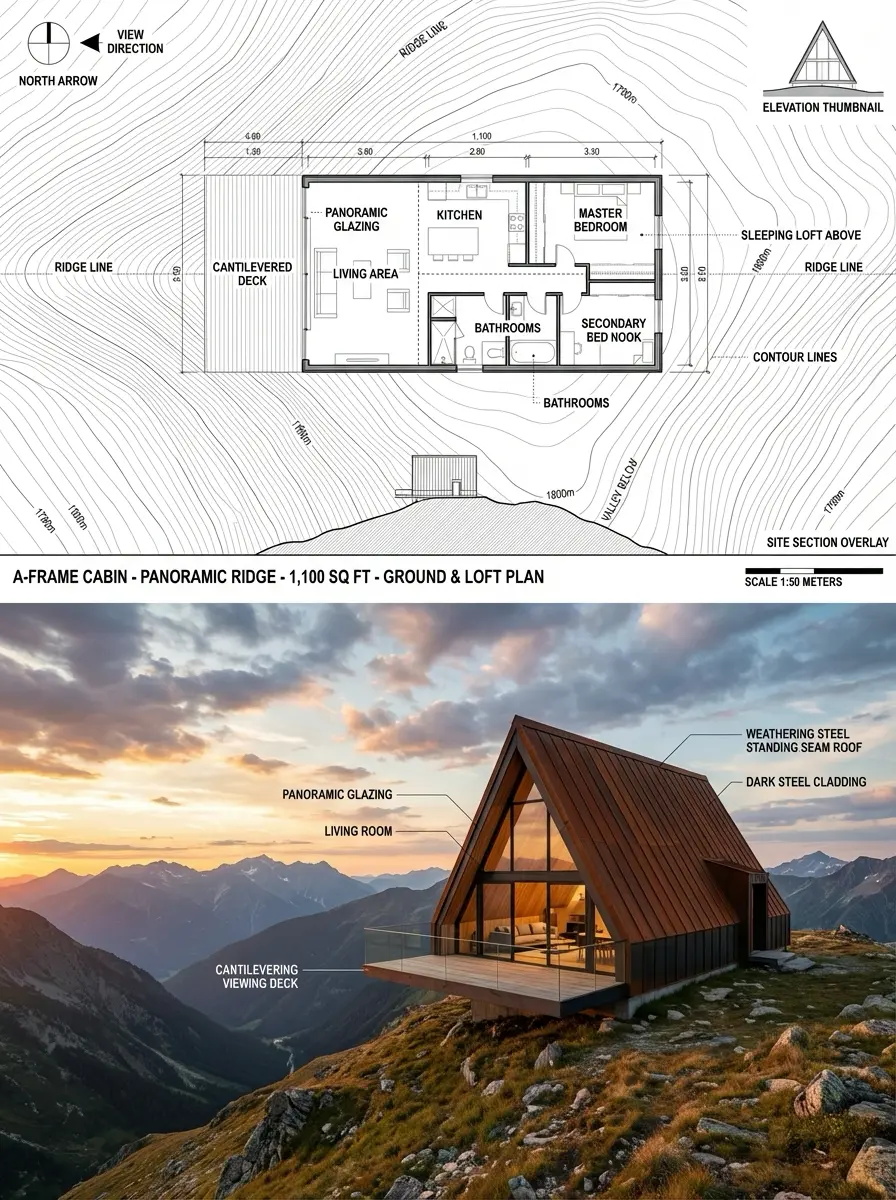
The plan is organised so that the kitchen and dining are at one gable (morning light, east valley) and the living room at the other (evening light, west valley). The ridge site creates a dramatic approach: the cabin appears to float above both valleys simultaneously when viewed from below. Exterior: weathered pine boards in a horizontal orientation, a departure from the typical vertical board-and-batten.
16. The Timber Frame Sanctuary
1,200 sq ft | 3 beds + office | Style: Douglas Fir + Stone Base
A Lake Tahoe-area design by A-Frame Rising that represents the firm’s flagship approach: expanded usable floor space achieved by pushing rafters into the roof structure to reclaim the knee-wall volume, combined with strategic dormer placement for secondary bedrooms.
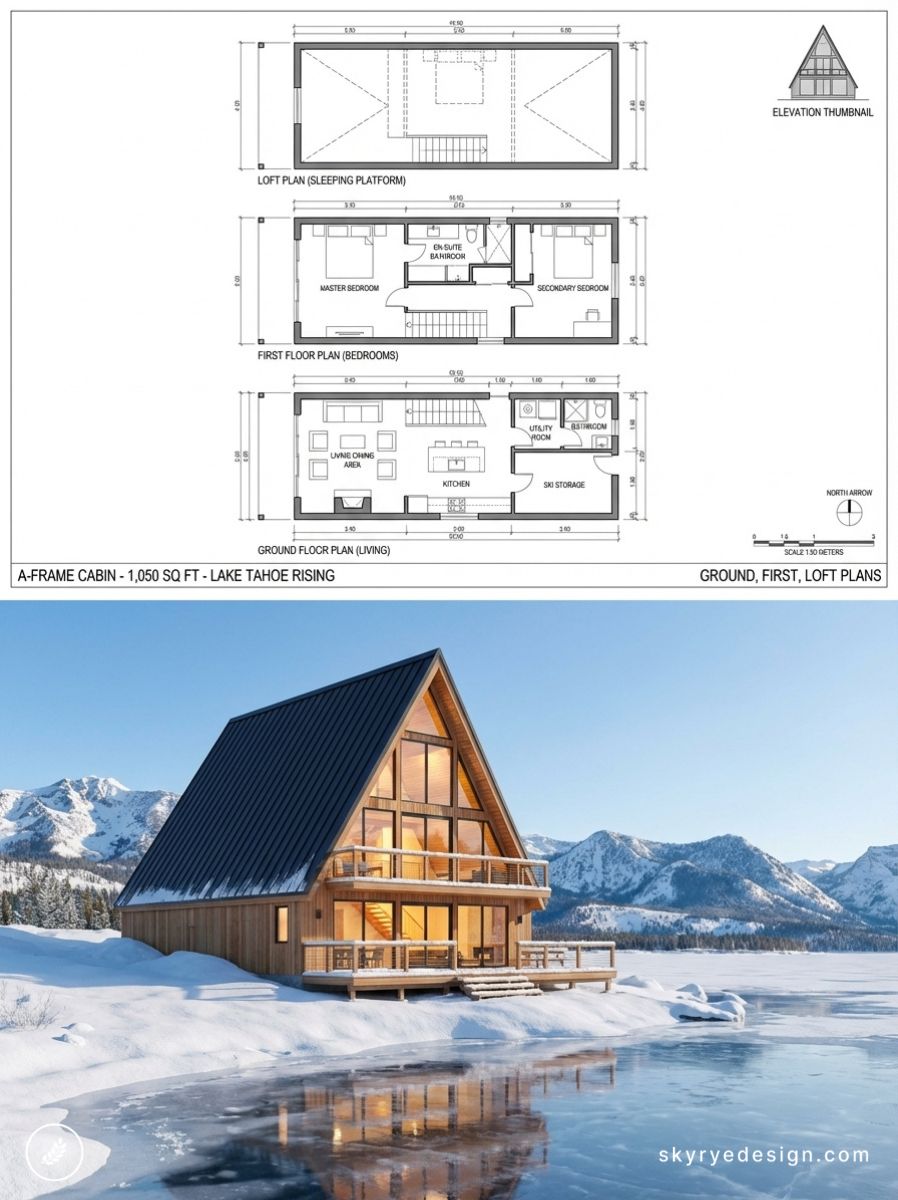
The stone base lifts the timber A-frame off the ground plane, creates a covered entry, and provides a visual anchor for the otherwise light timber structure. Three bedrooms, a dedicated home office nook, and a kitchen specified to full residential standard. The ‘Phoenix Rising’ plan type that the firm has developed into multiple award-winning builds.
17. The Lakeshore Double
1,180 sq ft | 3 beds | Style: Cedar + Concrete Base
Two A-frame volumes connected by a single-storey glass link — a design strategy that allows the two triangular forms to remain visually distinct while creating a larger combined floor area than either volume alone could achieve.
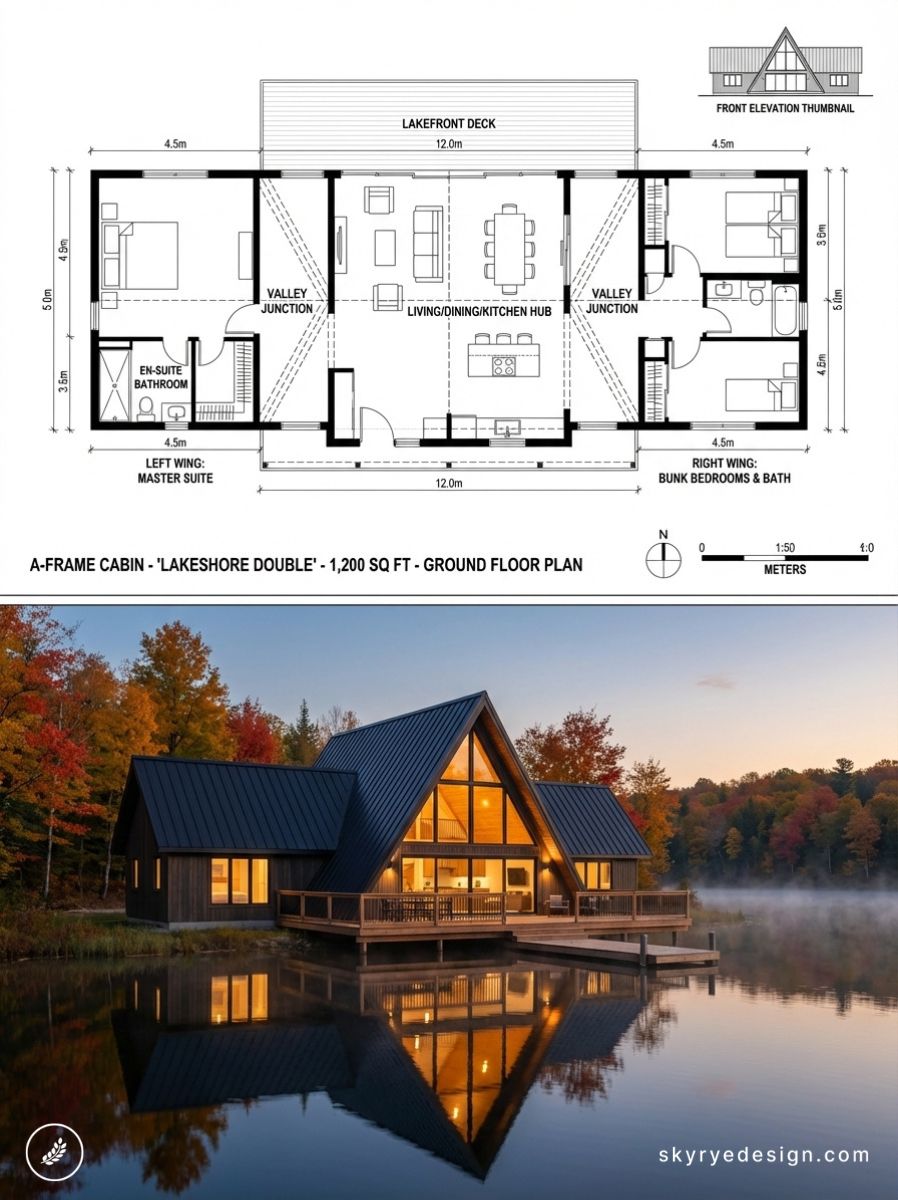
The main A-frame contains living, kitchen, and dining. The secondary A-frame contains all bedrooms, separated from the social spaces by the glass link corridor. The concrete base is poured to a datum that matches the level of the lake dock, creating a visual connection between the structure and the water’s edge. Cedar cladding left to weather naturally.
18. The Black A with Dormer Suite
990 sq ft | 2 beds + loft bed | Style: Black Metal + Timber
A design that demonstrates the dormer’s potential as an architectural feature rather than a utilitarian addition. The dormer on this cabin is a full-width shed-roof projection from the south face, spanning the entire width of the main A-frame and providing full standing headroom across the upper floor.
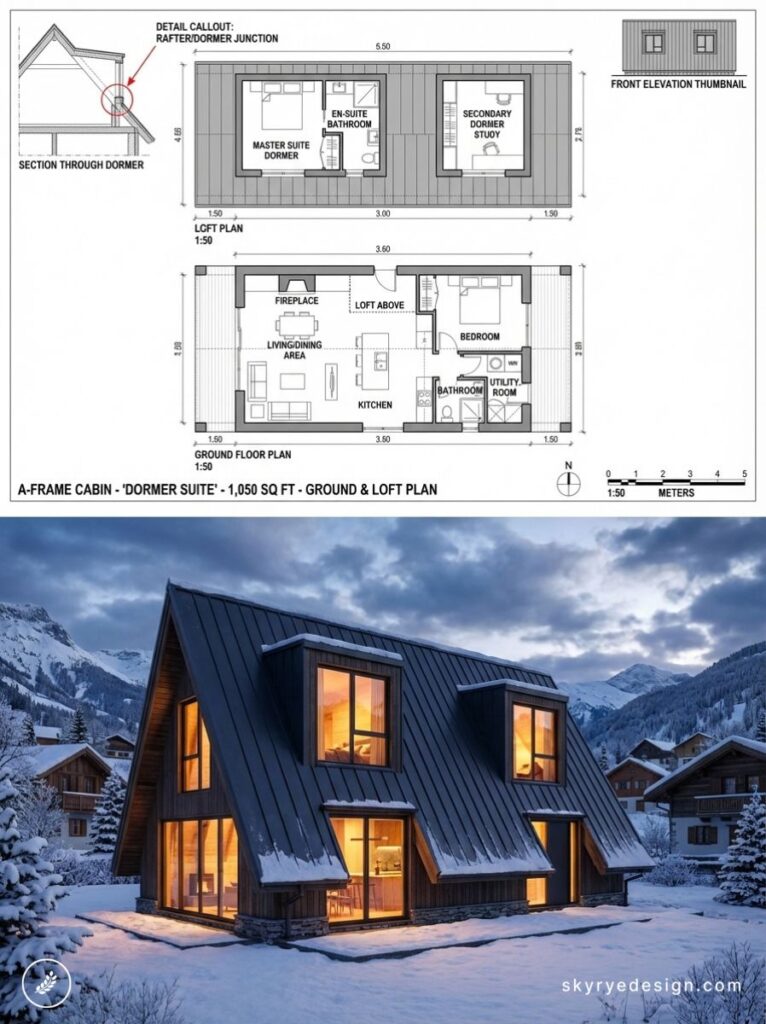
The result is a cabin that reads from the south as a conventional A-frame but delivers a double-height social space and a full-height bedroom level inside. Black standing seam metal throughout the exterior. The dormer’s wide horizontal form creates a strong shadow line that gives the facade depth and scale.
19. The Scandinavian Cabin
860 sq ft | 2 beds | Style: Untreated Pine + Copper Roof
A Norwegian design that references the traditional Norwegian hytte (mountain cabin) through untreated pine exterior boards, copper roofing that will develop a green patina over decades, and a turf-covered entrance vestibule that insulates the threshold and provides planting continuity with the surrounding meadow.
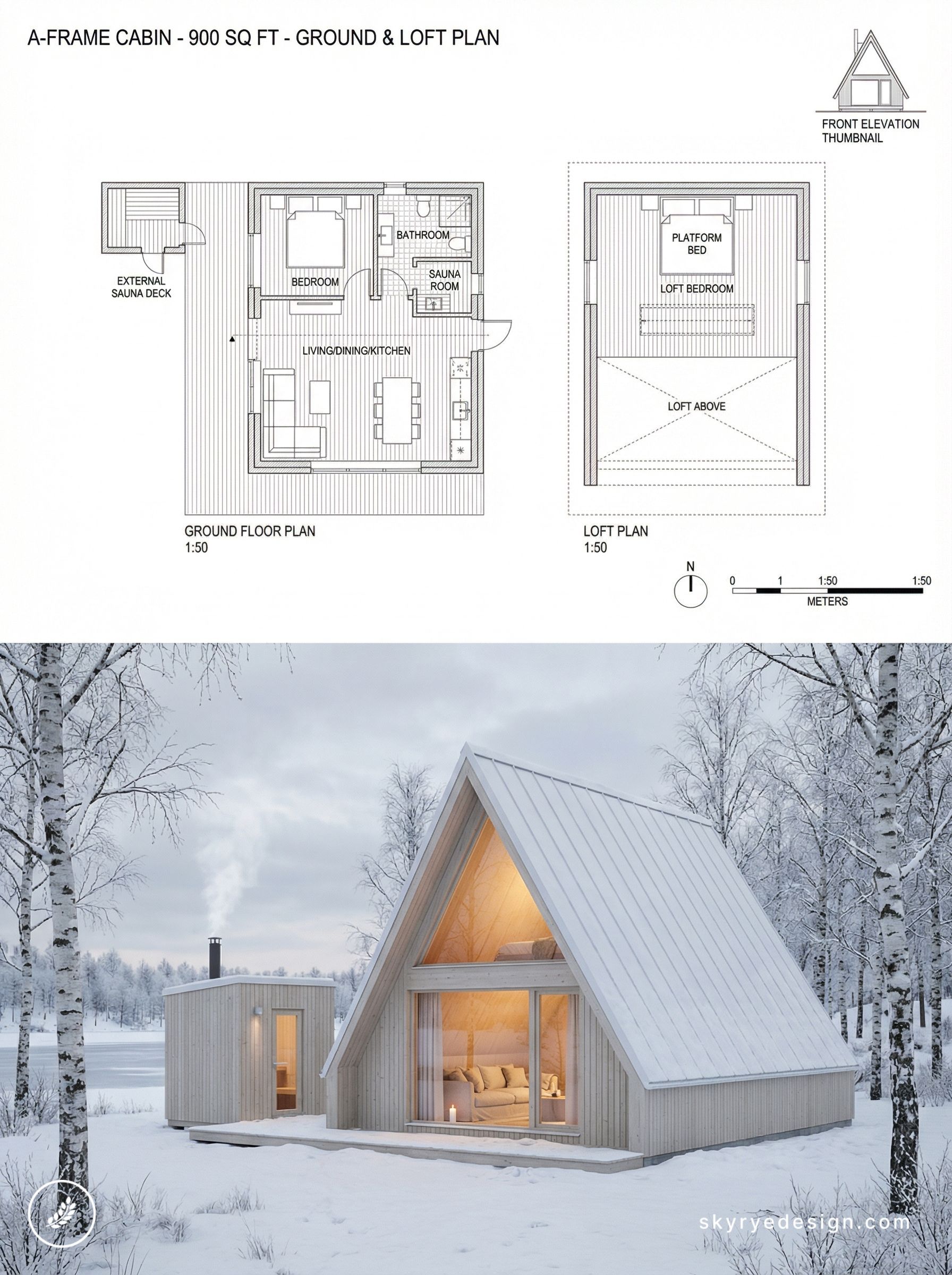
The copper roof is a long-term investment: it will outlast the timber structure and can be recycled at the end of life. Interior: pine throughout, a single cast-iron wood stove, and minimal artificial lighting — the design prioritises candlelight and hearth light for evening atmosphere.
20. The Glass Ridge A-Frame
1,150 sq ft | 3 beds | Style: Structural Glass + Steel
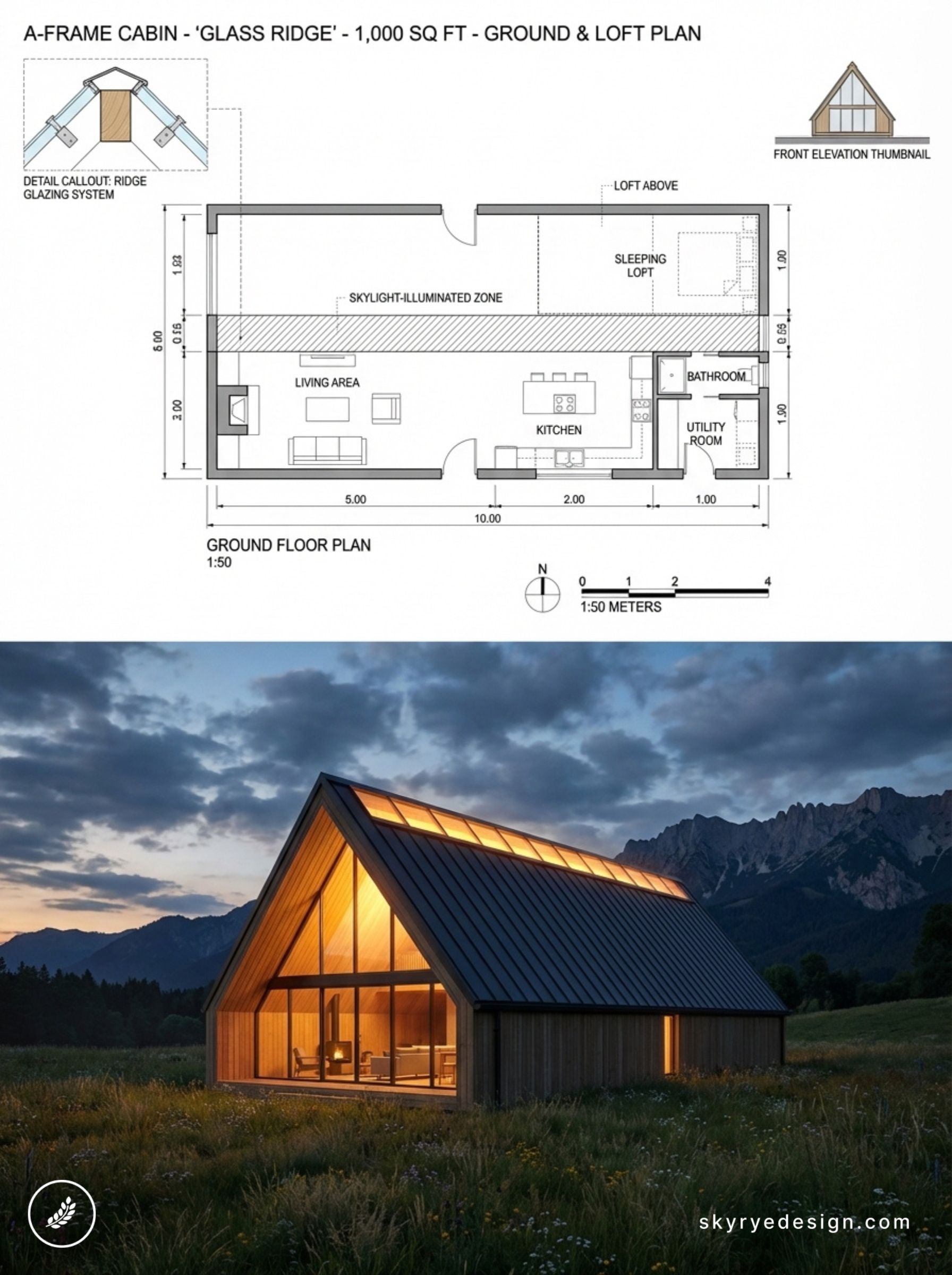
A technically ambitious design in which the south gable end is not a conventional glazed wall but a structural glass panel — the glass itself carries load rather than a separate frame.
This eliminates the visual mullions that normally interrupt the view through a glazed gable, creating a completely uninterrupted connection between interior and landscape. The steel A-frame structure is exposed on the interior as a deliberate design element. At 1,150 sq ft this is a full family home with three bedrooms and two bathrooms. The structural glass is triple-laminated safety glass; replacement cost is high, but the lifespan with proper maintenance exceeds 50 years.
21. The Off-Grid Self-Sufficient
720 sq ft | 1 bed + bunk room | Style: Reclaimed Timber + Living Roof
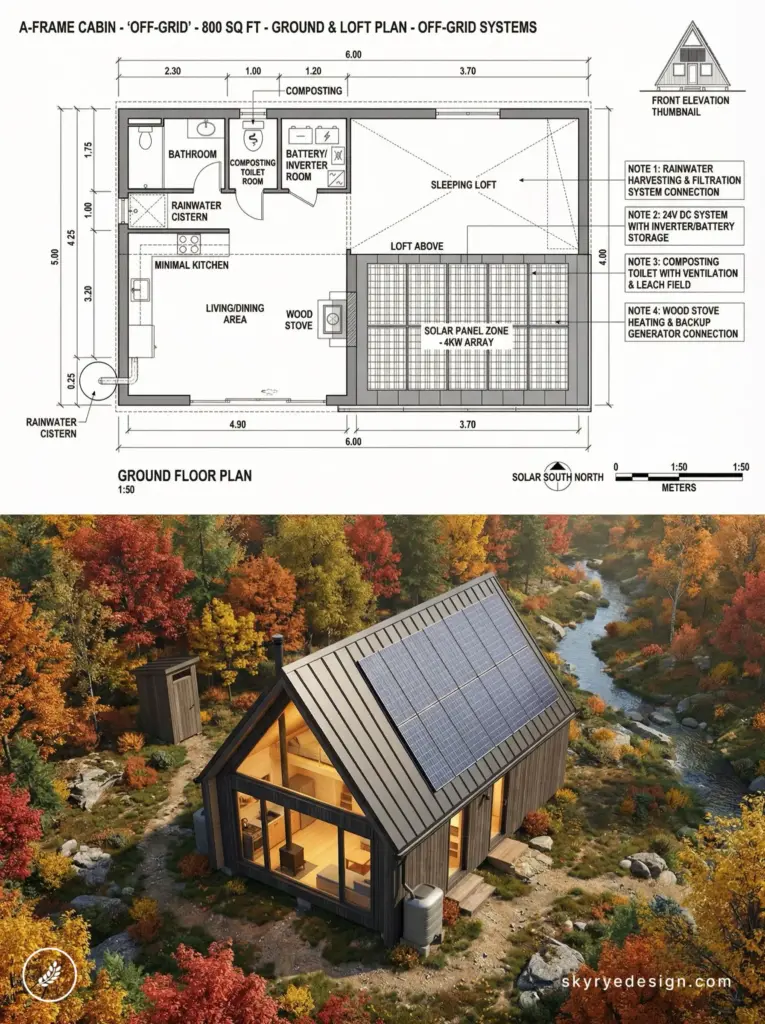
Designed for complete off-grid operation: photovoltaic panels integrated into the south-facing roof provide electricity; a rainwater collection and filtration system provides water; a composting toilet eliminates the need for a septic system; and a wood-burning stove with back boiler provides heating and hot water.
The living roof on the north face — a low-pitched extension housing the utilities room — provides additional insulation and absorbs rainwater before it reaches the drainage system. Reclaimed timber throughout the interior and exterior. Annual running costs are estimated at under $1,200 in the client’s reporting.
22. The Modular Add-On System
800-1,400 sq ft | 2-4 beds (expandable) | Style: Prefab Timber Panels
A modular A-frame design system in which the main structure is complemented by standardised side wings that can be added during or after initial construction. The base model is 800 sq ft; each side wing addition adds 200-300 sq ft.
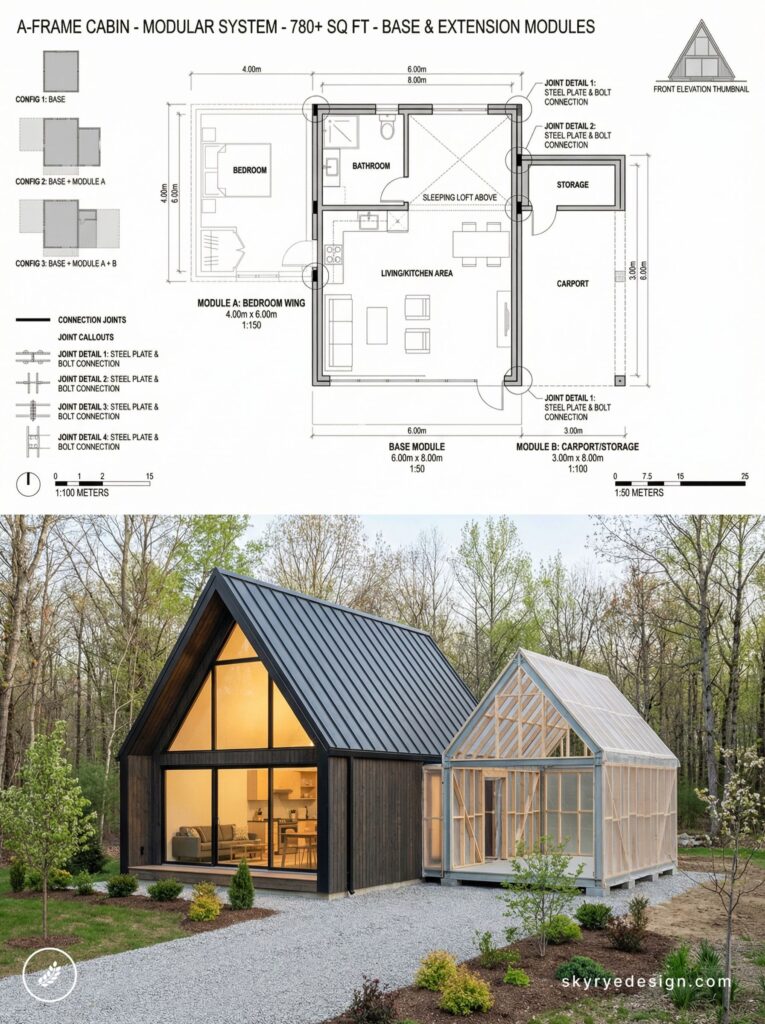
The connection details between the main A-frame and the wings are standardised and designed for site assembly without crane equipment. This design solves the A-frame’s traditional inflexibility as a form — it can grow with a family’s needs rather than requiring a complete rebuild. Prefabricated timber SIP panels achieve the highest airtightness of any design in this collection.
Large and Luxury A-Frames: 1,200–2,500+ sq ft
At this scale the A-frame becomes a genuinely ambitious architectural proposition. The design challenge is maintaining the visual impact and spatial drama of the triangular form while delivering the accommodation and technical performance expected of a primary residence or high-end rental property.
23. The Lake Tahoe Trophy
2,100 sq ft | 4 beds + 3 baths | Style: Standing Seam + Massive Glass
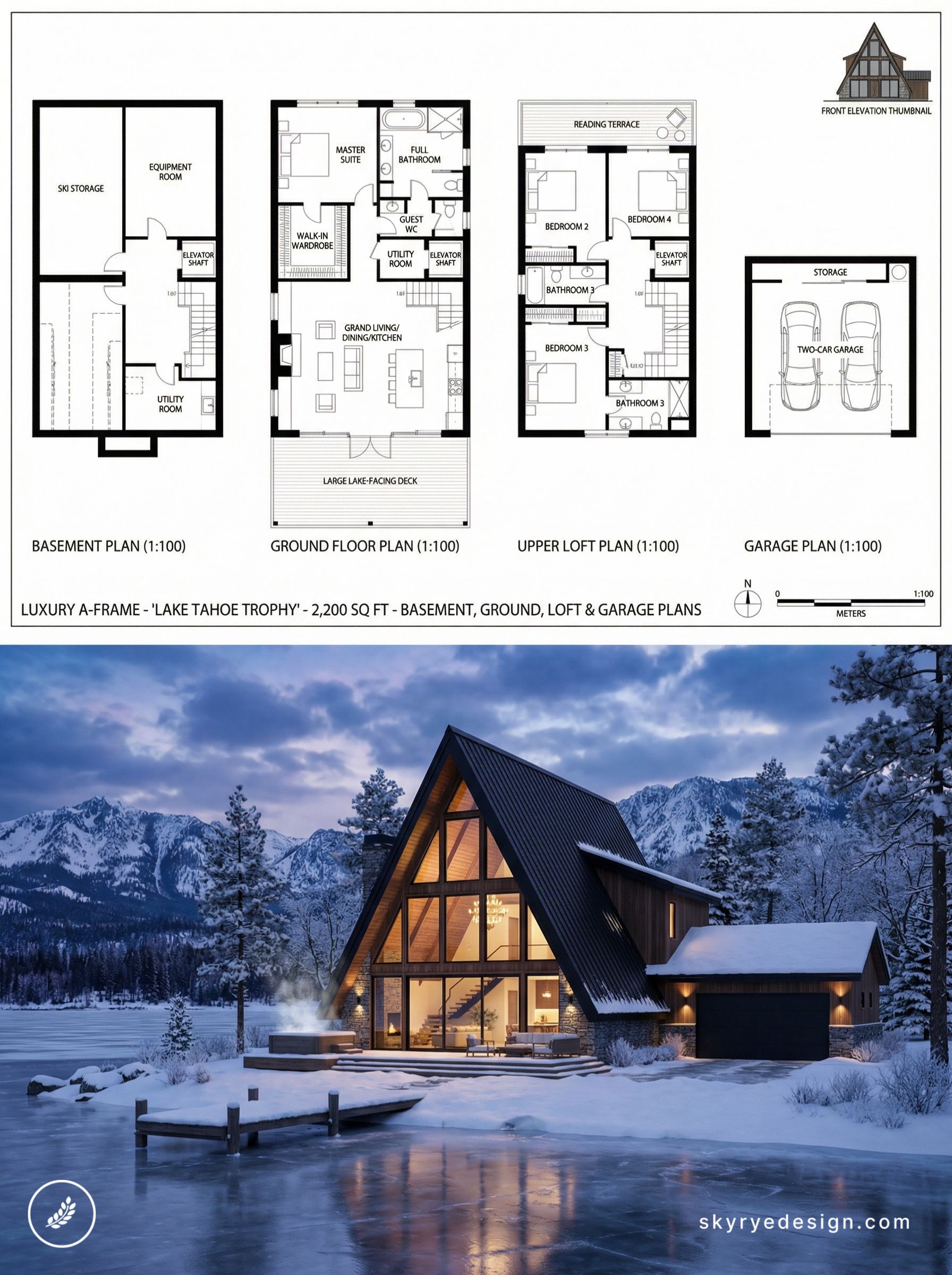
One of the most-published large A-frame designs of recent years, cited in Architectural Digest and Dwell. The four-bedroom, three-bathroom program is achieved through a combination of ground-floor suites and a full-height upper level created by the dormer system.
The south gable is a three-storey glass wall — a structural feat requiring custom steel mullion engineering. The interior is a study in scale: the living area sits under a 9-metre peak height, making it feel more cathedral than cabin. Furniture was custom-designed at an enlarged scale to match the volume.
24. The Barn-Hybrid
1,600 sq ft | 3 beds + studio barn | Style: Black Timber + Zinc
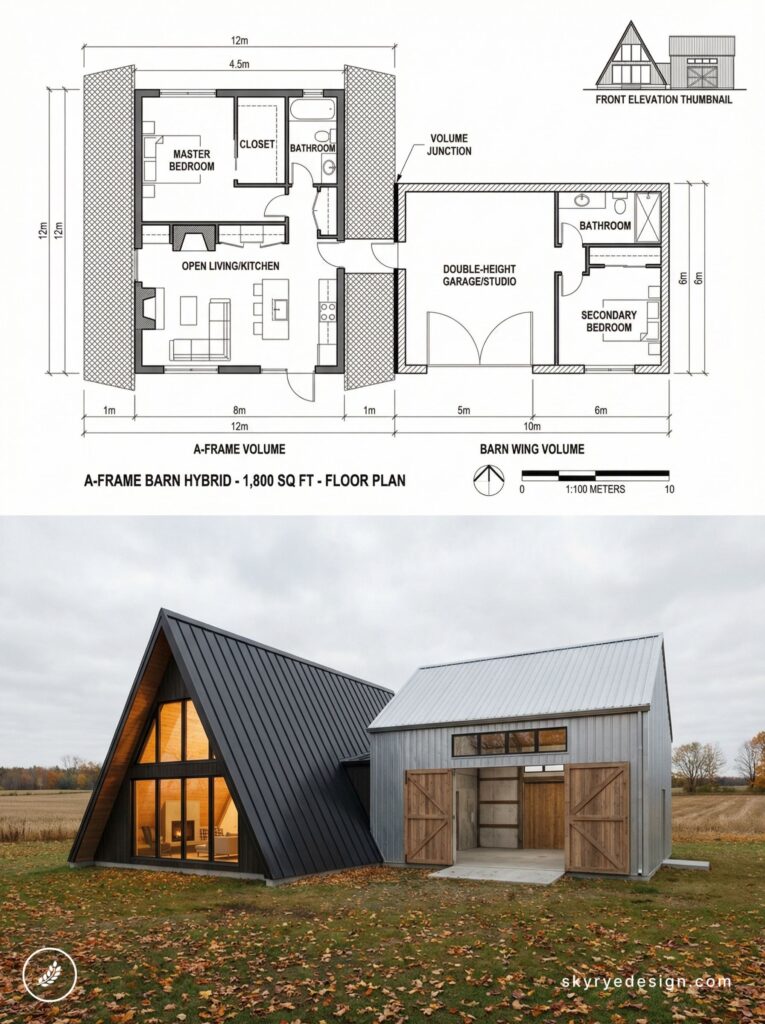
A design that pairs a main residential A-frame with a secondary barn-roofed studio structure, connected by a covered breezeway.
The studio is designed for a sculptor client and requires a 5-metre clear internal height for large-format work — a requirement the barn roof delivers where a second A-frame could not. The residential A-frame is conventional in plan but exceptional in detail: custom-milled black-stained oak joinery throughout, a double-sided fireplace serving both the living room and a sheltered outdoor terrace, and a master suite that occupies the full upper level with floor-to-ceiling views on three sides.
25. The Luxury Mountain Retreat
1,850 sq ft | 4 beds + 2 baths + sauna | Style: Steel + Glass + Stone
A Swiss-influenced design that integrates a stone base storey into the A-frame concept — the stone level contains bedrooms and bathrooms, with the A-frame structure rising above as an open-plan social pavilion.
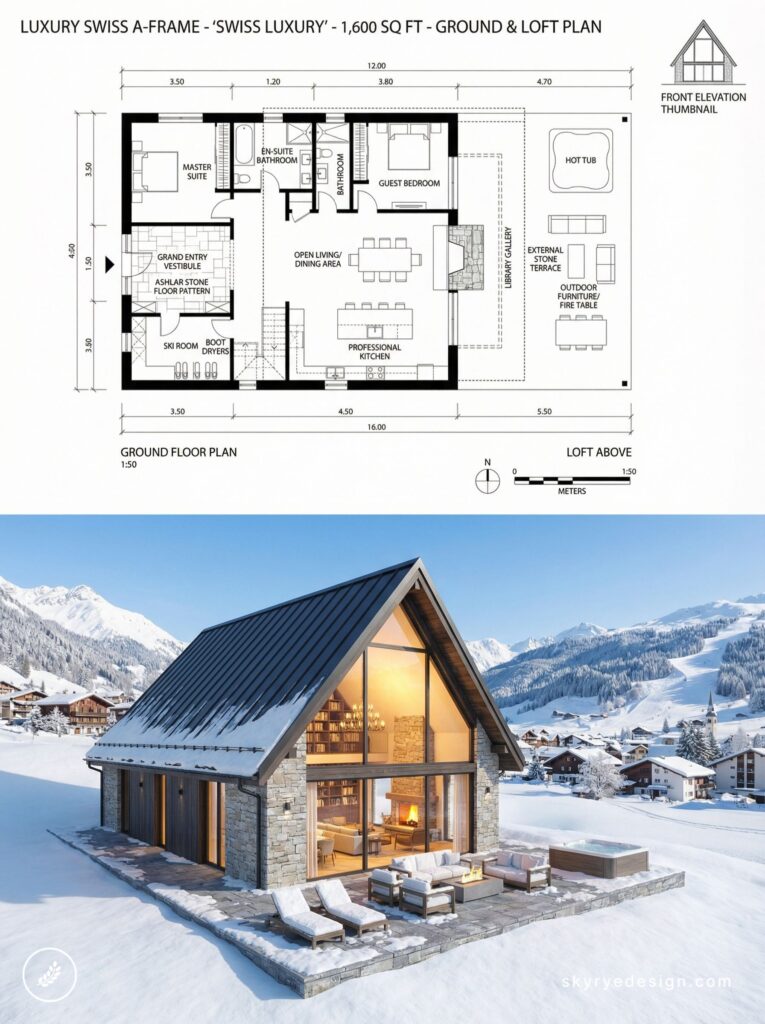
This inverts the conventional A-frame spatial arrangement (social downstairs, sleeping up) to exploit the panoramic mountain views from the upper level while providing private bedroom suites with garden access at ground level. The sauna is a freestanding timber structure adjacent to the main building, connected by a short covered walkway.
26. The Coastal A-Frame
1,400 sq ft | 3 beds | Style: White Lime + Marine Grade Steel
A design for a coastal site in Oregon that addresses the specific demands of a marine environment: salt air corrosion, wind loads, and the need to frame ocean views without sacrificing thermal comfort.
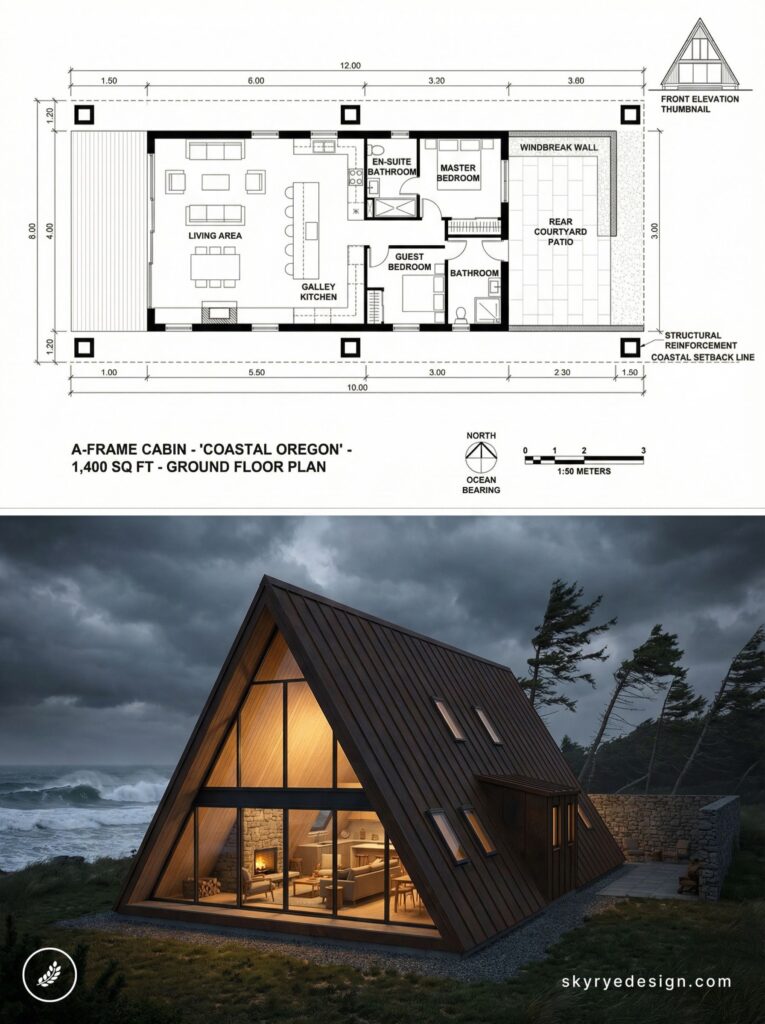
All steel elements are marine-grade stainless. The white lime-rendered exterior reflects summer heat and is low-maintenance in humid coastal conditions. The south gable window wall is angled slightly forward at the peak — a subtle gesture that captures more sky and ocean at the horizon line than a fully vertical glass wall would.
27. The Three-Storey Alpine
2,200 sq ft | 5 beds + 3 baths | Style: Concrete Base + Timber Upper
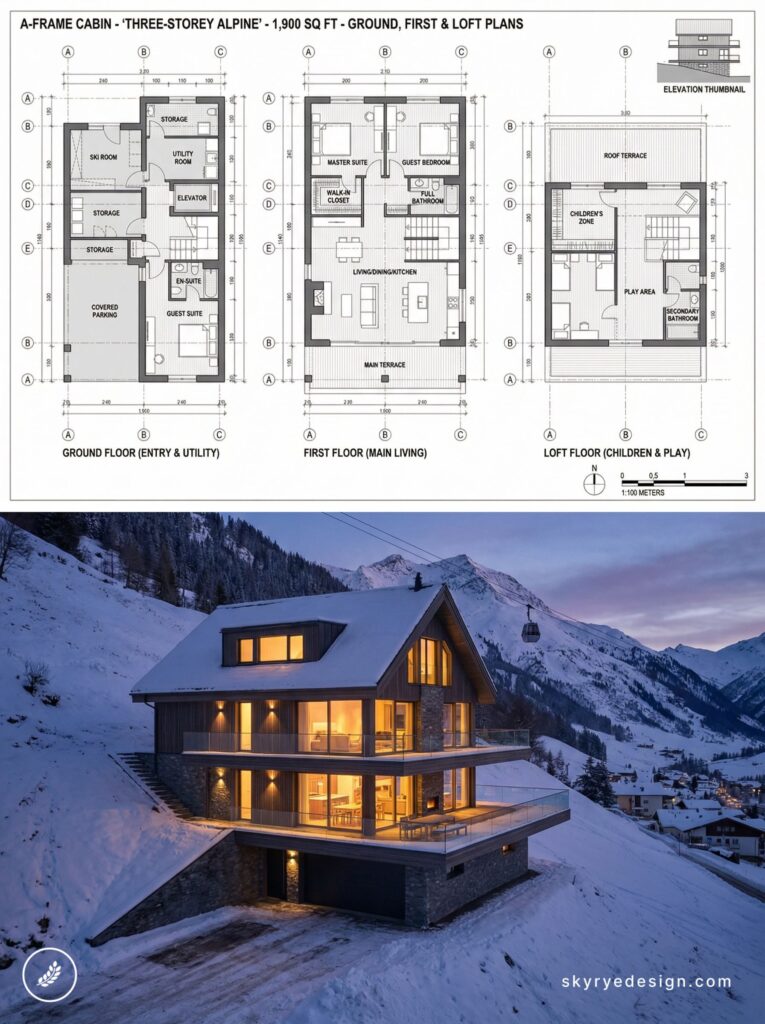
A three-storey design in which a reinforced concrete lower level — partially buried into the hillside — provides a stable structural base for two storeys of A-frame timber construction above. The concrete level contains ski storage, a boot room, a sauna, and a guest suite.
The main A-frame levels contain the social spaces and principal bedrooms. The contrast between the raw concrete base and the warm timber upper creates a material dialogue that reads as both ancient and contemporary. The buried concrete level maintains a stable temperature year-round, useful for wine storage and as a cool refuge in summer.
28. The All-Black Statement
1,700 sq ft | 4 beds | Style: Blackened Steel Cladding
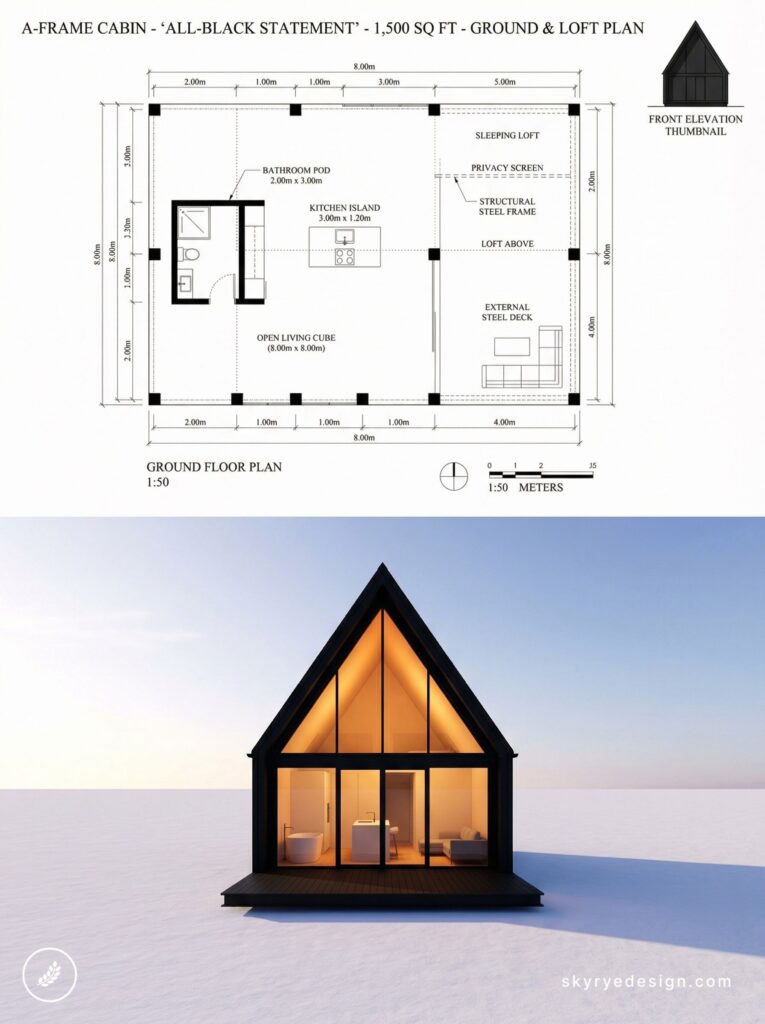
A cabin that has become widely shared on architectural media precisely because of its graphic quality: every surface, including the deck, steps, chimney, and drainage details, is clad or painted in the same flat black material.
From a distance, it reads as a pure geometric form — a black triangle in a white winter landscape or a dark silhouette against autumn colour. Inside: the contrast is complete. White walls, pale ash floors, and white-painted structural timber create a gallery-like brightness. The all-black exterior requires virtually zero maintenance beyond occasional cleaning.
29. The Japanese Mountain House
1,300 sq ft | 3 beds | Style: Shou Sugi Ban + Sliding Screens
A full-scale residential design that extends the Japanese material vocabulary from the compact design earlier in this list. The charred timber exterior is consistent across the roof and walls, dissolving the distinction between the two surfaces.
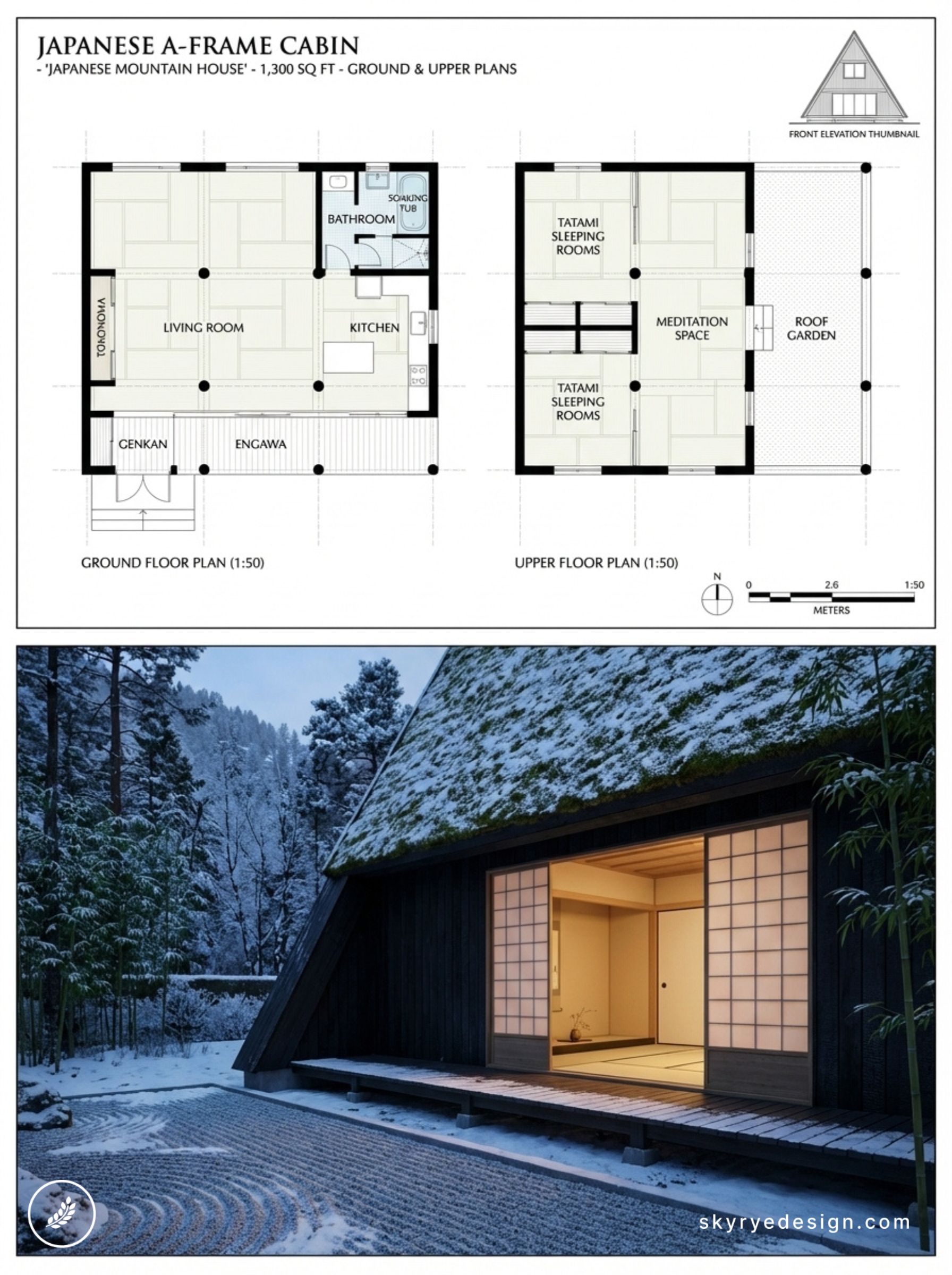
Interior circulation is organised around a central courtyard — an atrium open to the sky through a skylight running the full ridge length. The sliding screen system throughout the interior allows the plan to be completely open or subdivided into private rooms, giving the 1,300 sq ft space remarkable spatial flexibility. Underfloor radiant heating throughout.
30. The Whistler Family Lodge
1,950 sq ft | 4 beds + bunk room | Style: Red Cedar + Exposed Fir
A British Columbia cabin by Scott & Scott Architects — one of the most respected A-frame studios in North America — designed for an outdoors-focused family with specific requirements: ski storage for six people, a mud room large enough for wet gear from four children, a bunk room that sleeps the children together, and adult bedrooms with genuine acoustic separation.
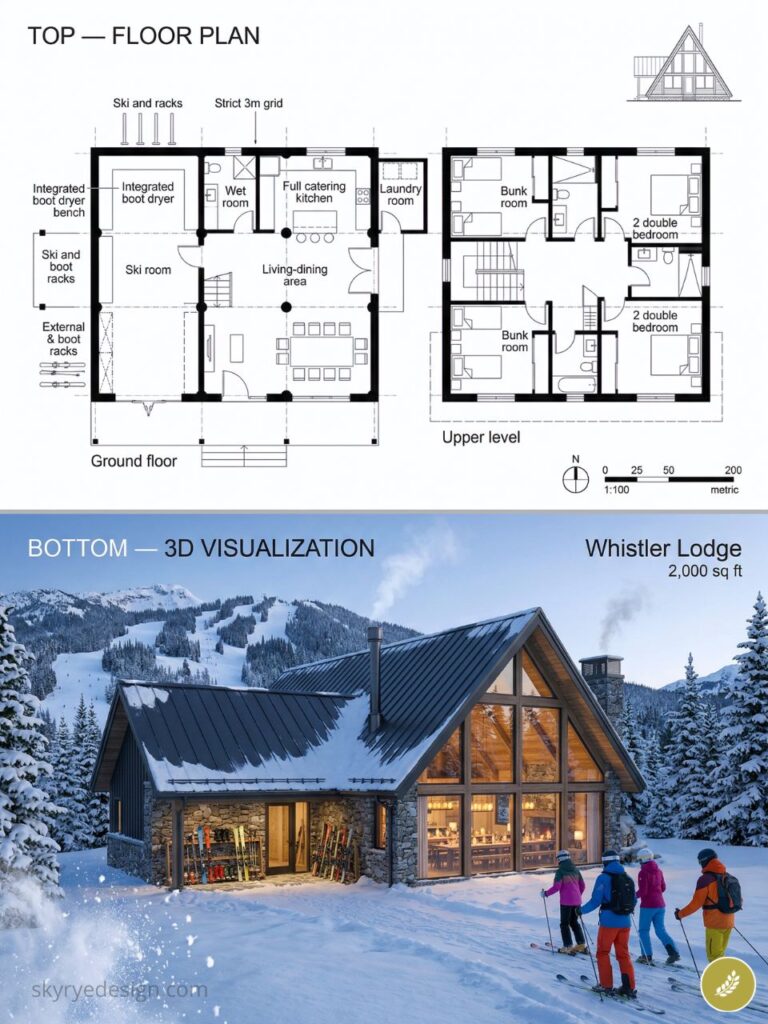
The red cedar exterior is left to weather naturally and is already at a silver-grey patina. The interior is structured around a double-sided fireplace visible from both the kitchen and the main living area — a social focal point that the family uses as their primary gathering element.
31. The Elevated Glass Box A-Frame
1,550 sq ft | 3 beds + home office | Style: Piloti + Full Glass Gables
A design that elevates the entire A-frame structure on steel piloti legs, raising the floor level 2 metres above the ground.
This responds to a site with flood risk but also creates a remarkable design outcome: the structure appears to float above the landscape, the ground level is visually continuous beneath it, and the glazed gables frame views that are 2 metres higher than a conventional ground-level placement would achieve. The undercroft provides covered parking and storage. The piloti are expressed as an architectural element — slender circular steel columns in a contrasting pale grey against the dark building above.
32. The Nordic Longhouse A-Frame
2,000 sq ft | 4 beds + 2 studies | Style: Untreated Larch + Grass Roof
A Finnish-influenced design that extends the A-frame form along a 28-metre length, creating a structure that reads more like a traditional Nordic longhouse than a conventional cabin. The grass roof on the single-storey entry wing transitions to the steep A-frame roof at the main volume. The extended length allows genuine room separation — the bedrooms are at the far end of the plan, acoustically separated from the social spaces by the entry zone. Two home office spaces are incorporated, allowing the clients to use the house as a full-time primary residence with remote work capacity.
Special Typologies: Off-Grid, Prefab, Tropical, and Adaptive
The final group covers designs that push the A-frame beyond its traditional mountain-and-lake context into new typological territory — tropical climates, urban infill sites, and highly experimental material approaches.
33. The Desert A-Frame
680 sq ft | 1 bed | Style: Adobe Render + Mesh Shading
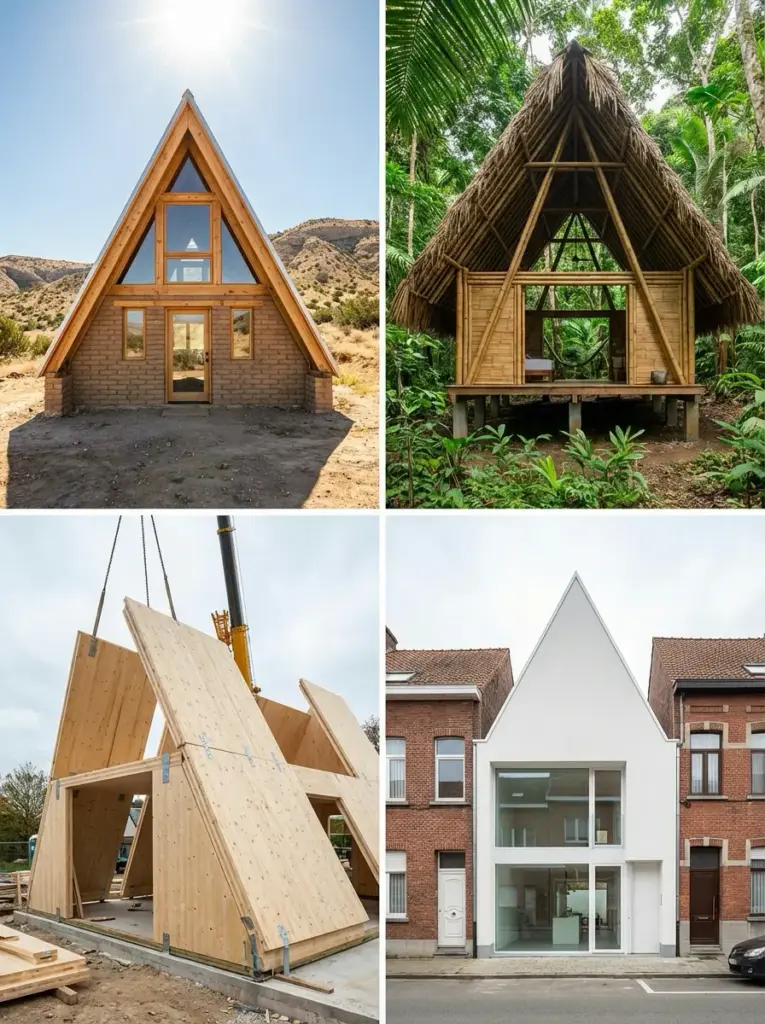
An attempt to apply the A-frame typology to a high-desert site in New Mexico, where the design challenge is opposite to the usual: keeping the interior cool rather than warm.
The solution: thick adobe render on the lower walls provides thermal mass; an external mesh shading screen over the south gable glass prevents direct solar gain in summer while allowing winter sun in; and the roof pitch is set to reflect summer sun while admitting lower-angle winter light. The result is a cabin that maintains comfortable temperatures through passive means alone for eight months of the year.
34. The Tropical A-Frame
850 sq ft | 2 beds + open bale | Style: Bamboo + Open Sides
A design for a Southeast Asian forest site in which the conventional A-frame is reinterpreted for hot-humid conditions. The lower walls are open — replaced by moveable louvred bamboo screens that allow cross-ventilation — while the roof (structural bamboo and palm thatch over a steel frame) provides rain and sun protection. The sleeping areas are raised 1.2 metres on a platform and screened. There is no mechanical cooling system. The design demonstrates that the A-frame’s core structural logic (a steep roof that sheds water efficiently) remains valid in tropical climates while everything else about the conventional execution needs reconsidering.
35. The Prefab Flat-Pack
600 sq ft | 1 bed loft | Style: CLT Panels + Metal Roof
A cross-laminated timber flat-pack A-frame system designed for delivery on a standard flatbed truck and assembly by two people in four days without crane equipment.
All structural panels are CNC-milled to exact tolerances and labelled for assembly sequence. The system uses concealed timber connectors rather than visible bolts. The 600 sq ft completed build cost is $95,000, including foundation, assembled on-site. The manufacturer offers a 30-year structural warranty. This is the design category that is most actively growing in 2026 — prefab A-frame systems that deliver architectural quality at reduced cost and complexity.
36. The Urban Infill A-Frame
780 sq ft | 2 beds | Style: White Render + Minimal Windows
A design for an urban infill site in Ghent, Belgium, where the triangular building form was chosen specifically because it maximises the habitable volume on a narrow plot with strict eaves height restrictions.
The A-frame’s slope effectively negotiates the height limit while delivering full floor area at the ridge. This is an A-frame that doesn’t look like a cabin — the white rendered exterior, the urban street context, and the minimal window placement read as contemporary urban architecture that happens to use a triangular cross-section. A reminder that the structural form has applications beyond the mountain retreat.
37. The Airbnb-Optimised Rental
620 sq ft | Sleeping loft + hot tub deck | Style: Dark Stain + Deck Focus
Designed from the outset as a short-term rental property with specific attention to the elements that generate bookings and premium rates: a large hot tub deck visible from the main glazed gable; a sleeping loft with theatrical lighting and a statement pendant; a kitchen optimised for breakfast preparation rather than dinner cooking (the nearest restaurant is four kilometres away, but most guests prefer morning coffee and eggs at the cabin). The client’s first-year rental income covered 22% of the build cost — a figure that has informed a second build on an adjacent plot to the same design.
38. The Artist Residency
1,100 sq ft | 1 large studio + sleeping area | Style: Polished Concrete + Timber
A commission for an artists’ organisation requiring a residential studio where visiting artists can work and sleep in the same space. The ground floor is entirely open — a concrete floor, white walls, and north-facing skylights running the full ridge length provide the studio conditions.
The sleeping area is a mezzanine platform at the rear of the space, accessed by a library ladder. The design deliberately avoids domestic character: no kitchen island, no central focal point, no decorative elements. The intent is a space that feels like a studio that happens to have sleeping provisions, not a home with a large desk.
39. The Tiny A with Maximum Deck
380 sq ft interior + 240 sq ft deck | Open sleeping area | Style: Raw Timber + Rope Railings
The most minimal design in this collection: 380 sq ft of enclosed space paired with a 240 sq ft wrap-around deck that is used as the primary living space for eight months of the year. The enclosed interior is essentially a weatherproof bedroom with a compact kitchen alcove and a bathroom. All social activity happens on the deck.
The design philosophy: the cabin is a shelter from bad weather, not a substitute for the landscape. The deck’s rope railings and raw timber structure are designed to be invisible against the forest when viewed from the approach path — the cabin appears to recede rather than assert itself.
40. The Adaptive Reuse A-Frame
1,400 sq ft (converted) | 3 beds | Style: Original Timber Preserved + New Glass
The only conversion in this collection: a 1968 classic A-frame on a Vermont site that was extended and upgraded rather than demolished. The architect’s decision to retain the original structure was driven by both sustainability (the embodied carbon of demolition and rebuild significantly exceeds the carbon cost of renovation) and aesthetic (the original timber has a patina and character that new material cannot replicate).
New interventions are clearly new — modern black steel windows replace the original aluminium, a glazed extension connects a separate utility building to the main structure, and the original asphalt shingles are replaced with standing seam zinc. The result reads as a dialogue between 1968 and 2026.
Design Principles Across All 40 Designs
Looking across this collection, several consistent design principles emerge — decisions that appear in the most successful contemporary A-frame projects regardless of size, climate, or budget.
Material Honesty
The strongest designs in this collection use materials that behave visibly and honestly over time: timber that weathers from honey to silver, copper that develops a green patina, weathering steel that rusts to a consistent warm brown. These are materials that improve with age rather than requiring constant maintenance to look their original condition. The A-frame’s large surface area makes low-maintenance materials especially important — a cabin that requires annual repainting is a cabin that creates an ongoing burden.
The Gable End as the Primary Design Element
In every design in this collection, the glazed gable end is the single most important architectural decision. Its orientation determines what the cabin frames. Its height determines the interior volume. Its connection to the landscape — whether it’s framing a specific mountain, a water view, or a forest clearing — is what makes the cabin feel specific to its site rather than generic. The design process for a contemporary A-frame should begin with the question: what does this gable frame? Everything else follows from the answer.
Solving the Knee-Wall Problem
The triangular cross-section of an A-frame creates knee-wall areas — the low-height zones at the perimeter of the upper floor where the roof pitch reduces the usable ceiling height. The traditional approach was to abandon these areas as dead storage space, which wasted a significant portion of the floor area. Modern approaches: push the rafters into the roof structure to eliminate the knee-wall entirely (most structurally complex, most space-efficient); use the knee-wall area for built-in storage, built-in beds, or reading nooks (most practically useful); or introduce dormers to provide headroom in specific locations (most flexible, allows the addition of full-height windows).
✏ Design note: The most cost-effective approach to the knee-wall problem in a new build is built-in furniture rather than structural modification. A built-in bed platform in the knee-wall area uses space that would otherwise be wasted, provides under-bed storage, and creates an intimate sleeping nook that many clients prefer to a conventional bedroom. The cost is a fraction of the structural changes required to eliminate the knee-wall entirely.
How to Approach Your Own A-Frame Design
Start with the Site, Not the Floor Plan
The most important design decision is the building’s orientation on the site. Identify the view you want the primary gable to face. Identify the prevailing winter wind direction (the back of the A-frame should face it). Identify where morning and evening sun enters the site. These three factors determine orientation, which determines everything else. A floor plan chosen before site orientation is resolved will produce a cabin that fights its context rather than responding to it.
Understand the Real Costs
Current construction costs for a well-specified contemporary A-frame run from $150 to $300 per square foot depending on location, materials, and finish level. A 600 sq ft cabin will cost $90,000 to $180,000 to build, excluding land and site preparation. Prefab and CLT panel systems can reduce costs to $100 to $150 per square foot, but require accessible site conditions. The budget items that beginners consistently underestimate: foundation work (especially on sloped sites), glazing (large glass areas are expensive), and mechanical systems (underfloor heating, proper ventilation, electrical throughout).
The Planning Permission Reality
A-frame designs are subject to the same planning and building code requirements as any other residential structure. In many jurisdictions, the steep roof pitch creates specific challenges with height restrictions — check local eaves height and ridge height limits before committing to a pitch. Mountain and forest sites often have additional environmental regulations regarding tree clearance, setbacks from water, and material choices. The planning process can take three months to over a year. Factor this into your project timeline.
FAQ: Modern A-Frame Cabin Design
Q: How much does it cost to build a modern A-frame cabin?
Construction costs typically run from $150 to $300 per square foot for a well-specified contemporary A-frame including labour and materials. A 1,000 sq ft build therefore costs $150,000 to $300,000 depending on location, site conditions, and finish level. Prefab CLT panel systems can reduce costs to $100 to $150 per square foot. These figures exclude land, site preparation, foundation work, and professional fees — add roughly 20 to 30% for those items. The most cost-efficient approach at small sizes (under 600 sq ft) is a self-build using standard dimensional lumber and a straightforward floor plan.
Q: What is the best size for an A-frame cabin?
For a solo retreat or couple’s weekend cabin: 400 to 600 sq ft is the practical range. You can fit a proper kitchen, a bathroom, a living area, and a sleeping loft without the design feeling cramped. For a small family (two adults, two children) using the cabin as a holiday home: 700 to 1,000 sq ft gives comfortable accommodation without requiring complex structural solutions for the upper level. For a primary residence: 1,200 sq ft or more, with dormers or wing additions to create proper bedroom separation and adequate storage.
Q: Are A-frame cabins energy efficient?
Yes, with appropriate specification. The compact footprint reduces the volume requiring heating or cooling. The steep roof allows passive solar gain through south-facing gable windows in winter. The challenge is the large surface area of the roof relative to floor area — insulation specification is critical. Modern A-frames use either spray foam insulation applied directly to the roof structure, or SIP (structural insulated panel) systems that combine structure and insulation in a single element. Either approach, properly detailed, can achieve very high energy performance. Triple-pane glazing in the large gable windows is essentially non-negotiable in cold climates.
Q: What materials are best for a modern A-frame exterior?
In 2026 the dominant choice for roofing is standing seam metal — typically zinc, aluminium, or steel — for its 50+ year lifespan and minimal maintenance requirement. Wall cladding: dark-stained cedar or pine is the most common choice for its combination of cost, availability, and visual character. Shou sugi ban (charred timber) is more expensive but requires no maintenance. Weathering steel (Cor-Ten) is striking and maintenance-free once the patina stabilises. Polycarbonate is used in experimental designs for its translucency. The least sustainable choice — still common in budget builds — is fibre cement board, which has a shorter lifespan and difficult end-of-life recyclability.
Q: Can an A-frame cabin be a permanent home?
Yes, and an increasing proportion of contemporary A-frame builds are designed as primary residences rather than holiday cabins. The requirements for year-round habitation: a floor area of at least 1,000 sq ft with proper bedroom separation; underfloor heating rather than a single stove (which creates uneven temperature distribution in a large A-frame); mechanical ventilation with heat recovery (the airtight insulation required for energy efficiency removes natural ventilation); adequate storage throughout; and a kitchen specified to domestic rather than camping standards. The designs at numbers 16, 30, 32, and 40 in this collection all function as successful primary residences.
Q: What is the difference between a classic and modern A-frame design?
A classic 1950s–1970s A-frame has a very steep roof pitch that reaches close to the ground, minimal side windows (most light comes from the gable ends), an asphalt shingle roof, dark-stained timber interior and exterior, and significant knee-wall areas that are largely unusable. The modern version uses a shallower pitch for better usable interior volume, a standing seam metal roof, dormers or skylights to bring light into the upper level, built-in solutions for the knee-wall areas, large-format triple-pane glazing in the gable ends, and an open-plan interior with clean material palette. The silhouette reads as similar; the spatial quality and building performance are dramatically different.
- 0shares
- Facebook0
- Pinterest0
- Twitter0
- Reddit0