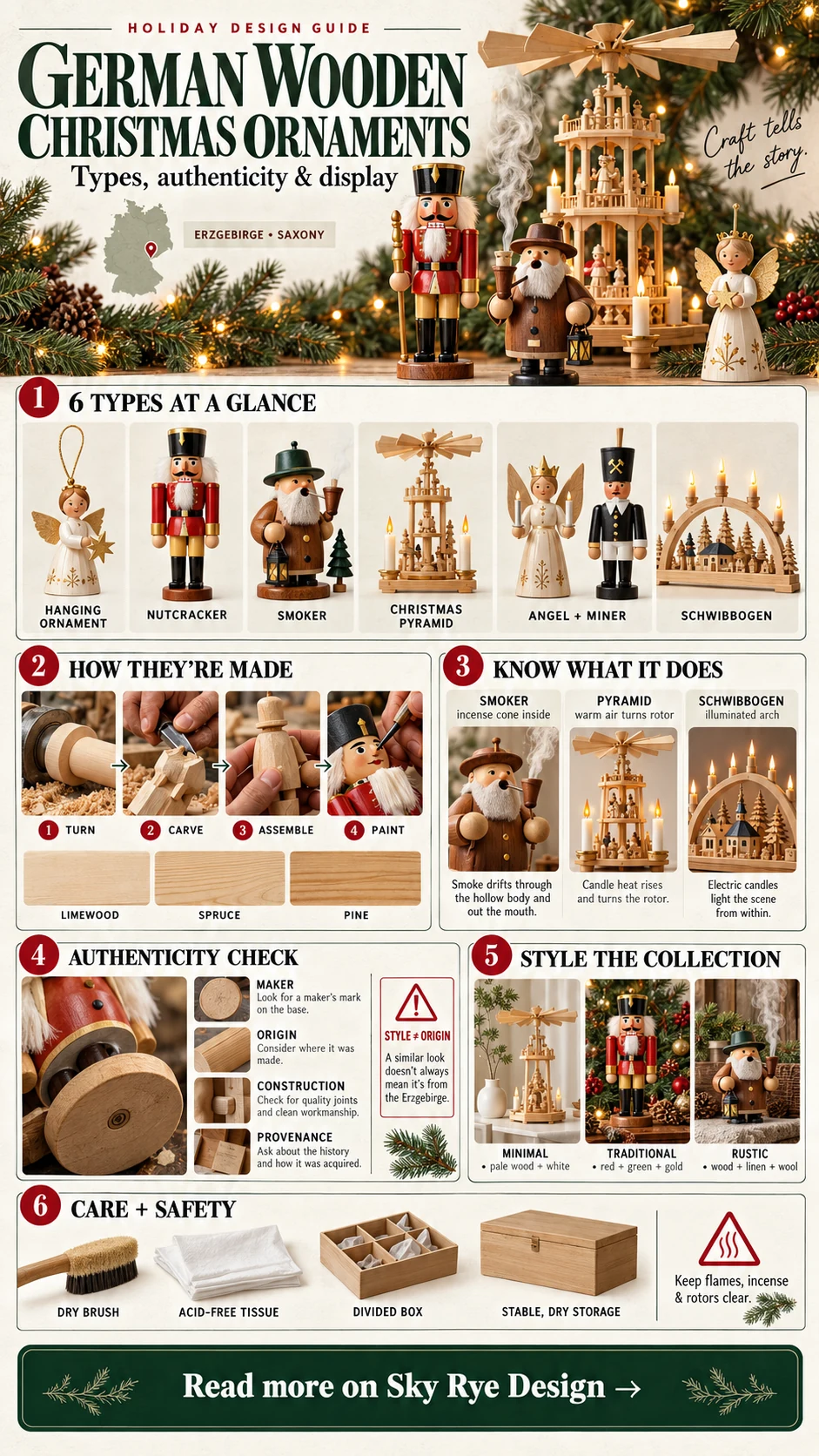
German wooden Christmas ornaments are turned, carved, assembled, and painted decorations associated especially with the Erzgebirge craft tradition in Saxony. The family includes small tree ornaments as well as freestanding nutcrackers, incense smokers, Christmas pyramids, angels, miners, and candle arches.
Traditional ornaments stand out because material, craftsmanship and cultural meaning work together. These distinctive Christmas ornaments help build a holiday display that feels collected and personal instead of visually random.
This guide helps you identify the main types, understand how they are made, check a seller’s authenticity claims, and display and store the pieces safely.
- German wooden Christmas ornaments: quick guide
- History of German wooden Christmas ornaments
- How German wooden Christmas ornaments are made
- German wooden Christmas ornament types at a glance
- Popular types of German wooden Christmas ornaments
- Symbols and family traditions
- Erzgebirge regions known for wooden ornaments
- How to identify, clean, and store wooden ornaments
- How to display German wooden ornaments
- Where to buy authentic German wooden Christmas ornaments
- Modern German wooden ornament styles
- German wooden Christmas ornaments FAQ
- Plan the rest of your Christmas decor
Start with the object’s function. A smoker is hollow and made for an incense cone; a pyramid has a rotor driven by warm air from candles; a Schwibbogen is an illuminated arch; and many modern nutcrackers are decorative rather than working tools. For a cohesive room, choose one wood tone and a limited accent palette, then let the most detailed piece stand alone as the focal point.
German wooden Christmas ornaments: quick guide
- German wooden ornaments are handmade with skilled craftsmanship.
- They often reflect cultural and festive symbols from German regions.
- These ornaments are valued for their beauty, tradition, and collectible quality.
History of German wooden Christmas ornaments
German wooden Christmas tree ornaments have roots in a specific region known for its woodcraft. These ornaments grew in style and popularity over time and later influenced holiday customs beyond Germany.
Origins in Erzgebirge
The regional connection is documented beyond retail descriptions. The German UNESCO Commission’s overview of Erzgebirge craftsmanship identifies woodturning, carving, and painting wooden figures as characteristic practices. Germany’s national tourism site also describes Seiffen workshops producing nutcrackers, Christmas angels, candle arches, and pyramids.


The Erzgebirge mountains in Germany are where wooden Christmas ornaments first appeared. This region had a long tradition of woodcarving because of its dense forests and skilled craftsmen.
Miners in Erzgebirge began making small wooden figures during the winter when mining was slow. They created nutcrackers, angels, and stars to decorate homes and Christmas trees. These early pieces were simple but showed great care and detail.
Wood from local trees like spruce and pine was used, as it was easy to shape. The ornaments also reflected local culture and beliefs, with many figures connected to mining life and Christian themes.
Development Through the Centuries


Over the centuries, these wooden ornaments became more sophisticated. Craftsmen added intricate details and used bright paints to make the figures more attractive.
In the 19th century, the ornaments started to spread beyond local homes. Workshops formed, and the Erzgebirge style became known throughout Germany. Different shapes and designs appeared, such as delicate wooden angels and small animals.
Mass production began, but many artisans continued to make handmade pieces. This mix of mass production and craftsmanship helped spread the tradition while keeping its quality.
Influence on International Christmas Traditions


German wooden ornaments reached other countries through trade and immigration. They influenced Christmas decorating styles in Europe, the United States, and beyond.
The nutcracker figure, for example, became a popular symbol worldwide, partly because of German influences. Wooden angels and stars also became common decorations on Christmas trees in many cultures.
These ornaments helped popularize natural, handcrafted holiday decorations. Today, German wooden ornaments are still prized for their craftsmanship and connection to holiday history.
How German wooden Christmas ornaments are made
German wooden Christmas ornaments are made with careful skill using several detailed steps. Each part of the process adds to the quality and appearance of the final product.
Hand-Carving Techniques


Carvers use sharp, small knives and gouges to shape the wood into detailed figures such as angels, stars, or animals. The work is done slowly and precisely by hand to keep fine details.
The carving starts with raw blocks of wood, often drawing the design directly on the surface. The carver removes excess wood while keeping delicate parts, like wings or facial features, intact.
This technique requires years of practice. Mistakes can ruin the piece, so artisans focus on steady hands and exact cuts. Hand-carving gives each ornament a unique look, as no two are exactly the same.
Hand-Painting and Finishing


After carving, ornaments are painted by hand with water-based or acrylic paints. Artists use thin brushes to add small details like eyes, clothing patterns, or highlights.
Painting is done carefully to avoid paint pooling or uneven colors. Often, several layers of paint build up the design, allowing drying time between each.
A clear finish or varnish is applied at the end to protect the paint and wood. This finish also adds a slight shine and helps the ornament last longer.
Use of Local Wood Types


Wood selection is important for carving and durability. Common woods include limewood, spruce, and pine. Limewood is soft and easy to carve, making it popular for fine details.
Spruce and pine are harder and used for larger ornaments or parts needing strength. These woods have a tight grain, which prevents splitting during carving.
Using local wood supports traditional forestry practices and keeps the ornaments connected to their region. It also ensures consistent quality and availability for artisans year after year.
German wooden Christmas ornament types at a glance
| Type | How to recognise it | Best placement |
|---|---|---|
| Hanging ornament | Lightweight figure, star, animal, or miniature with a loop | Tree branches, garland, or a small ornament stand |
| Nutcracker | Tall figure with a hinged or decorative jaw | Mantel, console, or grouped shelf display |
| Räuchermännchen smoker | Two-part hollow figure with an opening for incense smoke | Heat-safe tabletop with clear space above it |
| Christmas pyramid | Tiered scene with fan blades and candle holders | Stable table away from branches, curtains, and drafts |
| Angel and miner | Paired light-bearing figures linked to regional mining culture | Window, sideboard, or symmetrical mantel arrangement |
| Schwibbogen | Arched illuminated silhouette or carved scene | Window or a broad, uncluttered shelf |
Not every item in this family hangs on a tree. Search listings often use “ornament” as a broad retail label, so check the dimensions, intended use, heat source, and whether the object is designed to hang, stand, hold incense, or sit near candles.
Popular types of German wooden Christmas ornaments
German wooden Christmas ornaments come in many distinct styles, each with its own traditional look and purpose. They are often handcrafted with specific details that reflect centuries of craftsmanship. These ornaments are more than decorations; they tell a story about German holiday culture and traditions.
Nutcrackers


Nutcrackers originated in Germany and are among the most recognized wooden Christmas figures. They often resemble soldiers or kings with bright uniforms and fierce expressions. These figures were traditionally believed to protect homes by scaring away evil spirits.
Hand-carved and painted, nutcrackers vary in size but share key features like a large jaw that moves when a lever is pushed. They are used both as festive decorations and symbols of good luck during the holiday season.
Smokers (Räuchermänner)


Smokers, or Räuchermänner, are wooden figures with hollow bodies designed to hold incense cones. When lit, incense smoke rises through the figure’s mouth, creating the illusion that it is smoking a pipe.
These figures often depict miners, hunters, or other folk characters. They are hand-carved and painted with great detail. Smokers combine visual charm with a warm, fragrant atmosphere, making them popular decorations in German homes at Christmas.
Christmas Pyramids


Christmas Pyramids are wooden towers with rotating platforms powered by candle heat. The heat from candles causes a fan at the top to spin, turning the tiers below where small carved figures stand.
These pyramids usually depict nativity scenes or other holiday motifs like angels and animals. They vary in size from small tabletop models to large centerpieces. Their movement and warm candlelight create a dynamic and cozy holiday display.
Angel Figures


Angel figures are a staple in German wooden Christmas decor. Typically, they are hand-carved, showing delicate wings, flowing robes, and serene faces. Angels symbolize peace and goodwill during the holiday season.
They come in various poses, often holding musical instruments or candles. These figures are painted in soft colors or left natural, emphasizing craftsmanship and simplicity. They are common in German households as tree ornaments or mantel decorations.
Symbols and family traditions
German wooden Christmas tree ornaments hold deep meanings linked to religion, culture, and family life. They reflect traditions that have been passed down for generations and connect people during the holiday season.
Religious Meanings


Many of these wooden ornaments depict Christian symbols like stars, angels, and nativity scenes. The star represents the Star of Bethlehem, which guided the Wise Men to Jesus. Angels symbolize protection and the announcement of Jesus’ birth.
These ornaments serve as reminders of the religious story behind Christmas. They help reinforce faith and the celebration of Christ’s arrival. The use of natural wood also points to simplicity and humility in the Christian message.
Cultural Importance in Germany


Wooden Christmas ornaments are a traditional craft in Germany, especially from regions like the Erzgebirge. These pieces showcase German skill in woodworking and painting. Handmade ornaments are valued for their detail and artistry.
The ornaments often feature classic shapes such as hearts, pine cones, and stars. They are part of local Christmas markets and festivals, which attract visitors from around the world. This tradition supports local artisans and preserves German heritage.
Role in Family Traditions


Families often collect these wooden ornaments over years, passing them down through generations. Decorating the Christmas tree becomes a shared event, where each ornament brings back memories.
Children learn about their heritage and family stories through these decorations. The act of hanging these ornaments together strengthens family bonds. It creates a meaningful and lasting holiday experience for all members.
Erzgebirge regions known for wooden ornaments
Several key areas in Germany are known for making wooden Christmas tree ornaments. These places have a long history of skilled craftsmanship and unique styles that collectors and holiday decorators value.
Erzgebirge (Ore Mountains)


The Erzgebirge region is the heart of wooden ornament making in Germany. It has a mining history that inspired the use of wood, especially during winter months when miners carved figures to pass time.
Ornaments from Erzgebirge often include angels, miners, and nativity scenes. The wood comes mainly from local pine and spruce trees. Hand-painting and fine detailing are important parts of the production.
The tradition started in the 18th century. Today, Erzgebirge ornaments are popular worldwide for their quality and cultural meaning.
Seiffen Village


Seiffen Village is famous for its toy makers and wooden crafts. It is part of the Erzgebirge but is often highlighted separately because of its special workshop communities.
In Seiffen, craftsmen produce delicate shapes like spinning stars, pyramids, and candle arches. These ornaments often use layers of wood and mechanical parts to create movement.
The village has museums and shops focused on wooden art, drawing visitors interested in the Christmas craft. Its artisans use centuries-old techniques passed down through generations.
Saxony


Saxony is the larger region that includes Erzgebirge and Seiffen. This area has supported and promoted wooden ornament crafts for hundreds of years.
Besides making ornaments, Saxony hosts fairs and exhibitions dedicated to holiday decorations. The region helps keep traditional designs alive while allowing new ideas to develop.
Woodworking schools in Saxony teach young artists the skills needed to continue the craft. This keeps the wooden Christmas ornament tradition strong and evolving.
How to identify, clean, and store wooden ornaments
Collectors must verify the authenticity of German wooden ornaments before buying. Proper storage is essential to avoid damage. Cleaning should be done carefully to preserve the fragile wood and paint.
Authentication and Hallmarks


No single visual detail proves that a piece is old, handmade, or made in the Erzgebirge. Treat authenticity as a chain of evidence: identify the maker, confirm the country and region claimed by the seller, compare the model with an official catalogue or workshop archive, and keep the receipt or provenance record with the ornament.
| Check | Useful evidence | Warning sign |
|---|---|---|
| Maker | Workshop name, logo, model number, or matching catalogue entry | Only “German style” or “European design” in the listing |
| Origin | Clear “Made in Germany” statement and traceable workshop address | Origin omitted or confused with the seller’s location |
| Construction | Clean turned parts, aligned joints, stable base, controlled paint edges | Loose components, thick glue residue, or copied decoration |
| Vintage claim | Photographs of marks, documented ownership, dated packaging, or dealer records | A precise date based only on wear or colour |
| Function | Correct cavity, rotor, candle clearance, or hanging hardware for the type | A decorative copy described as a functioning smoker or pyramid |
Marks and signatures are useful clues, but they should be checked against maker records rather than treated as proof by themselves. When buying online, request photographs of the underside, label, joints, and any packaging before paying a collector’s premium.
Storage Solutions

Ornaments must be stored in a dry, cool place to prevent warping or cracking. Avoid direct sunlight, which can fade the wood and paint.
Using boxes with soft padding helps protect delicate parts like small figures or thin branches. Acid-free tissue paper is a good option to wrap each ornament.
Separate storage compartments or individual containers prevent pieces from rubbing against each other. This reduces the risk of scratches and paint chipping.
Cleaning and Preservation Tips


Cleaning should be done gently with a soft, dry brush or microfiber cloth to remove dust. Avoid using water or cleaning products, which can damage the wood.
If an ornament has stubborn dirt, lightly dampen a cloth with water and dry it immediately. Do not soak the wood.
For painted surfaces, refrain from scrubbing to protect the original finish. Inspect ornaments regularly for signs of mold or insect damage.
Using a dehumidifier in storage areas can help maintain proper moisture levels.
How to display German wooden ornaments
Build the arrangement around scale and silhouette. Small hanging figures need open branches and a quiet background; a nutcracker or smoker reads better at eye level; a pyramid needs enough empty space for its rotor; and a candle arch is strongest when its outline is visible in a window or against a plain wall.
- Minimal or Scandinavian room: use unpainted or white pieces, repeat one pale wood tone, and leave generous space between objects.
- Traditional room: group red, green, black, and gilded figures with evergreen branches, but keep the background simpler than the ornament details.
- Rustic room: combine natural wood with linen, wool, dried citrus, and warm white lights instead of adding several competing patterns.
- Collector’s shelf: group by maker, figure family, or decade and add a small label; avoid crowding pieces edge to edge.
Keep incense smokers and candle-powered pyramids on stable, heat-resistant surfaces and follow the maker’s instructions. Never place an open flame under branches, shelves, fabric, or another ornament.
Where to buy authentic German wooden Christmas ornaments
Authentic German wooden Christmas ornaments can be found in specific places known for quality and tradition. Buyers should look for trusted sources that guarantee genuine craftsmanship, whether in person or online. Availability varies with each outlet, so it is helpful to know where to search.
Christmas Markets in Germany


Many of the best wooden ornaments are sold at Christmas markets across Germany. Famous markets in cities like Dresden, Nuremberg, and Munich are known for handmade items. These markets often feature local artisans who create ornaments using traditional tools and designs.
Visitors can see a wide variety of shapes, including stars, angels, and animals. Prices can vary but usually reflect the quality and work involved. Early December is the best time to visit, as markets open in late November and run through the month.
Online Specialty Retailers


Several online stores focus on authentic German Christmas decorations. These sites usually include detailed descriptions of materials and where the ornaments come from, helping buyers avoid imitations. Shipping options often cover many countries.
Popular retailers include those based in Germany or run by German craftspeople abroad. Customers should check reviews and verify “Made in Germany” labels. Some websites also provide videos of the production process, which adds to their trustworthiness.
Certified Exporters


Certified exporters work with German manufacturers and artisans to supply wooden ornaments worldwide. These businesses follow strict rules to ensure the products meet German quality standards. Certificates or official seals often prove authenticity.
Buyers interested in large orders or wholesale pricing often choose this route. Exporters can also provide custom orders and guarantees. Partnering with certified companies ensures the origins and craftsmanship are genuine and verifiable.
Modern German wooden ornament styles
German wooden Christmas tree ornaments have evolved to reflect current tastes and values. New designs vary from sleek shapes to collaborations with artists who add unique touches. The focus on eco-friendly methods also shapes how these ornaments are made today.
Contemporary Designs


Modern German wooden ornaments blend tradition with minimalist style. They often feature clean lines and simple shapes instead of the intricate details from the past. Popular themes include geometric stars, animals, and abstract forms in natural wood tones.
Some designs use soft pastel paints or metallic finishes to create a fresh look. These choices attract younger buyers who want something classic but not overly ornate. Handcrafted details remain important, showing the skill behind the ornament.
Collaborations with Artists


Many German woodworkers work with artists to create limited-edition ornaments. These partnerships bring new ideas and styles into the traditional craft. Artists often add bold colors, unusual shapes, or cultural symbols.
Such collaborations help ornaments appeal to collectors and art enthusiasts. The blend of fine art and folk craft offers ornaments that stand out on any tree. These pieces also often tell a story or connect to a theme beyond just decoration.
Sustainability in Modern Production


Sustainability is a priority in making German wooden ornaments today. Craftsmen use wood from responsibly managed forests to reduce environmental impact. They avoid chemical paints, opting for natural dyes and finishes.
Many producers recycle wood scraps and use energy-efficient tools. This approach meets growing customer demand for eco-friendly products. It also supports the long-term preservation of the craft and the forests it depends on.
| Eco-friendly Practices | Details |
|---|---|
| Responsible Forestry | Wood sourced from certified forests |
| Natural Materials | Use of plant-based dyes and oils |
| Waste Reduction | Recycling wood scraps during production |
| Energy Efficiency | Use of low-energy tools and methods |
German wooden Christmas ornaments FAQ
What are traditional German wooden Christmas ornaments?
Traditional German wooden Christmas ornaments include small hanging figures as well as tabletop and window decorations associated with Erzgebirge craft. Common forms include nutcrackers, Räuchermännchen smokers, Christmas pyramids, angels, miners, stars, and Schwibbogen candle arches. Individual pieces may be turned, carved, assembled from several wooden parts, and hand-painted.
How can I tell whether an Erzgebirge ornament is authentic?
Check the maker or workshop name, a clear country-of-origin statement, and a traceable product description before relying on a decorative sticker alone. Compare the piece with the maker’s official catalogue, inspect how the parts are joined and finished, and ask the seller for provenance when buying vintage work. Regional or trade marks can help, but the exact maker record is stronger evidence.
What is the difference between a nutcracker, smoker, and Christmas pyramid?
A nutcracker is usually a standing figure with a levered mouth, although many modern examples are decorative. A smoker is a hollow figure designed to hold a small incense cone so smoke exits through the mouth or pipe. A Christmas pyramid is a tiered display whose upper rotor turns when rising heat from the surrounding candles reaches its blades.
How should wooden Christmas ornaments be stored?
Dust each piece with a soft dry brush, remove batteries or incense residue, and wrap fragile projections loosely in acid-free tissue. Store pieces upright in divided boxes in a stable, dry indoor space away from sunlight, heat sources, attics, and damp basements. Do not seal a piece while it is still damp.
Can German wooden ornaments work in a modern interior?
Yes. Use a restrained group rather than scattering every piece across the room. Natural wood and white-painted figures suit Scandinavian or minimalist rooms, while red, green, and gilded pieces work well in traditional schemes. Repeat one wood tone or accent colour and leave space around the most detailed ornament so it reads as a focal point.
Plan the rest of your Christmas decor
Use these pieces within a broader plan: compare Christmas tree themes, build a display with the Christmas tree decorating guide, or make simpler pieces with the handmade Christmas ornament tutorial. For room-level styling, see the casual Christmas decor ideas, rustic Christmas decor guide, and Christmas decor planning tips.
- 824shares
- Facebook0
- Pinterest824
- Twitter0
- Reddit0