- What does a samurai tattoo mean?
- Samurai Tattoos: History and Cultural Significance
- Popular Samurai Tattoo Designs and Their Meanings
- Iconic Symbols and Motifs in Samurai Tattoos
- Choosing Your Samurai Tattoo: Placement, Ideas, and Styles
- Samurai tattoo ideas by placement and style
- Working With a Tattoo Artist
- Sources and cultural notes
- Samurai tattoo FAQ
- Q: What does a samurai tattoo usually mean?
- Q: What is the best placement for a samurai tattoo?
- Q: Should a samurai tattoo be black and gray or color?
- Q: Is it okay to add kanji to a samurai tattoo?
- Q: How do you make a samurai tattoo look less generic?
- Q: What should I ask my tattoo artist before booking?
- More tattoo ideas to compare
A samurai tattoo usually carries a serious meaning. For some people, it is about honor or discipline. For others, it is protection, loyalty, or the reminder to stay steady when things get rough. That is why the strongest designs are not always the busiest ones.
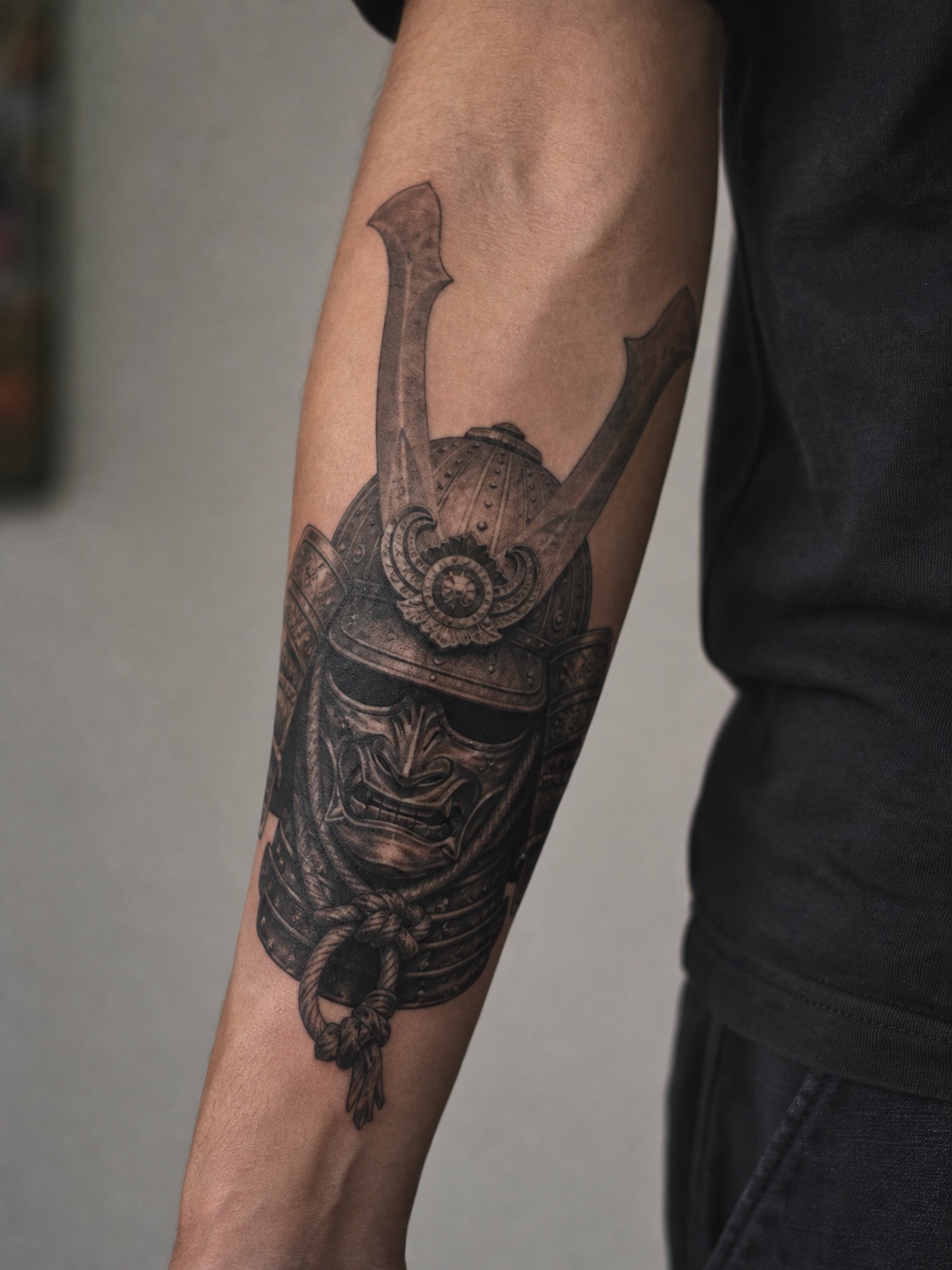
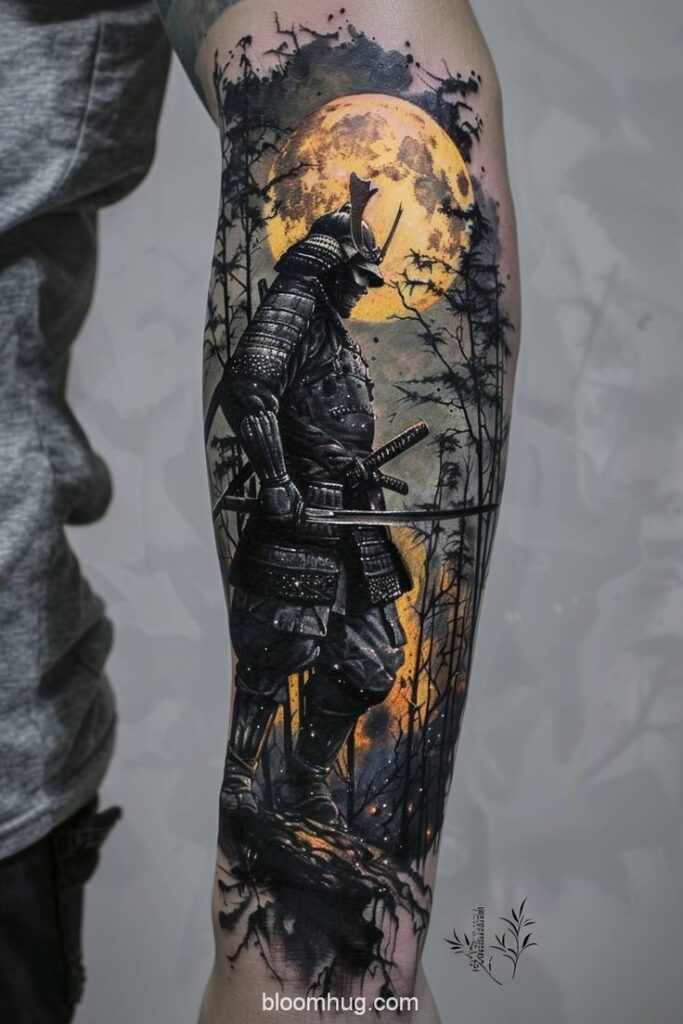
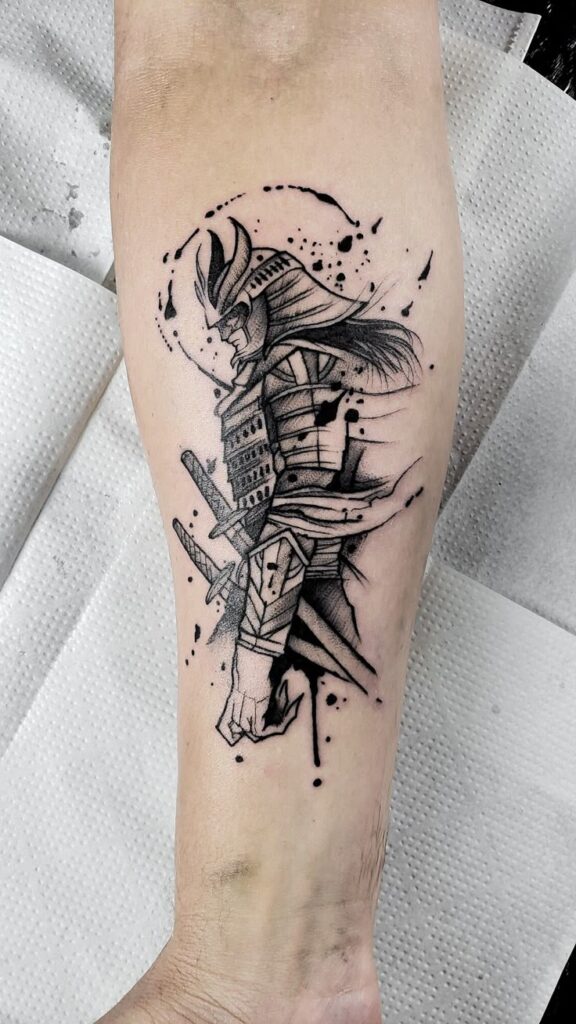
A samurai helmet, mask, or sword can work especially well on the lower arm; compare samurai forearm tattoo placement notes before locking the final size.
A good samurai tattoo should make one idea clear. A full warrior in armor can feel powerful and dramatic. A kabuto helmet is more compact but still has that protective, battle-ready feeling. A katana can work as a cleaner symbol of focus and self-control. Add cherry blossoms, and the design starts to feel more reflective. Add a dragon, and suddenly the whole piece has more movement and myth behind it.
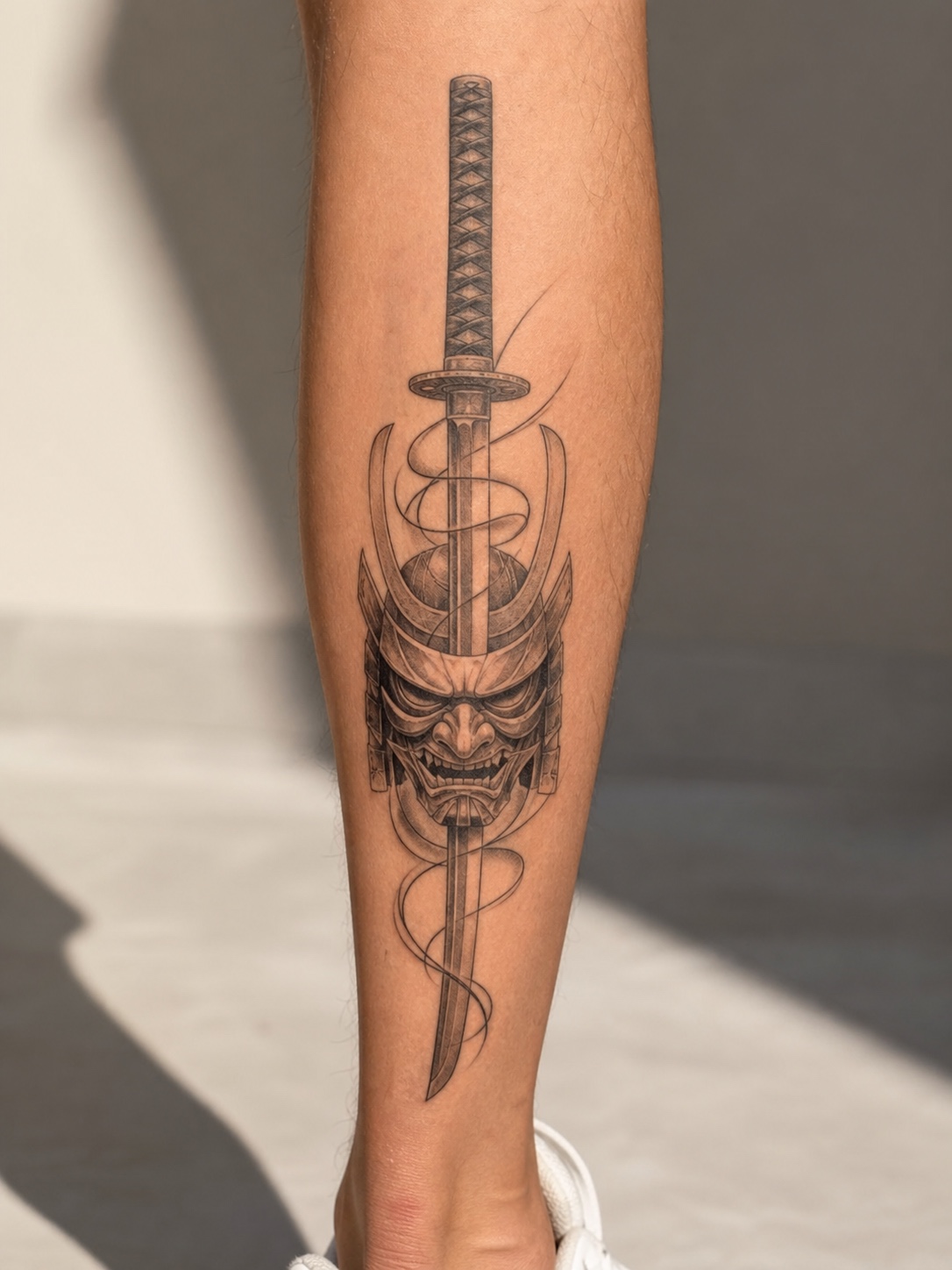
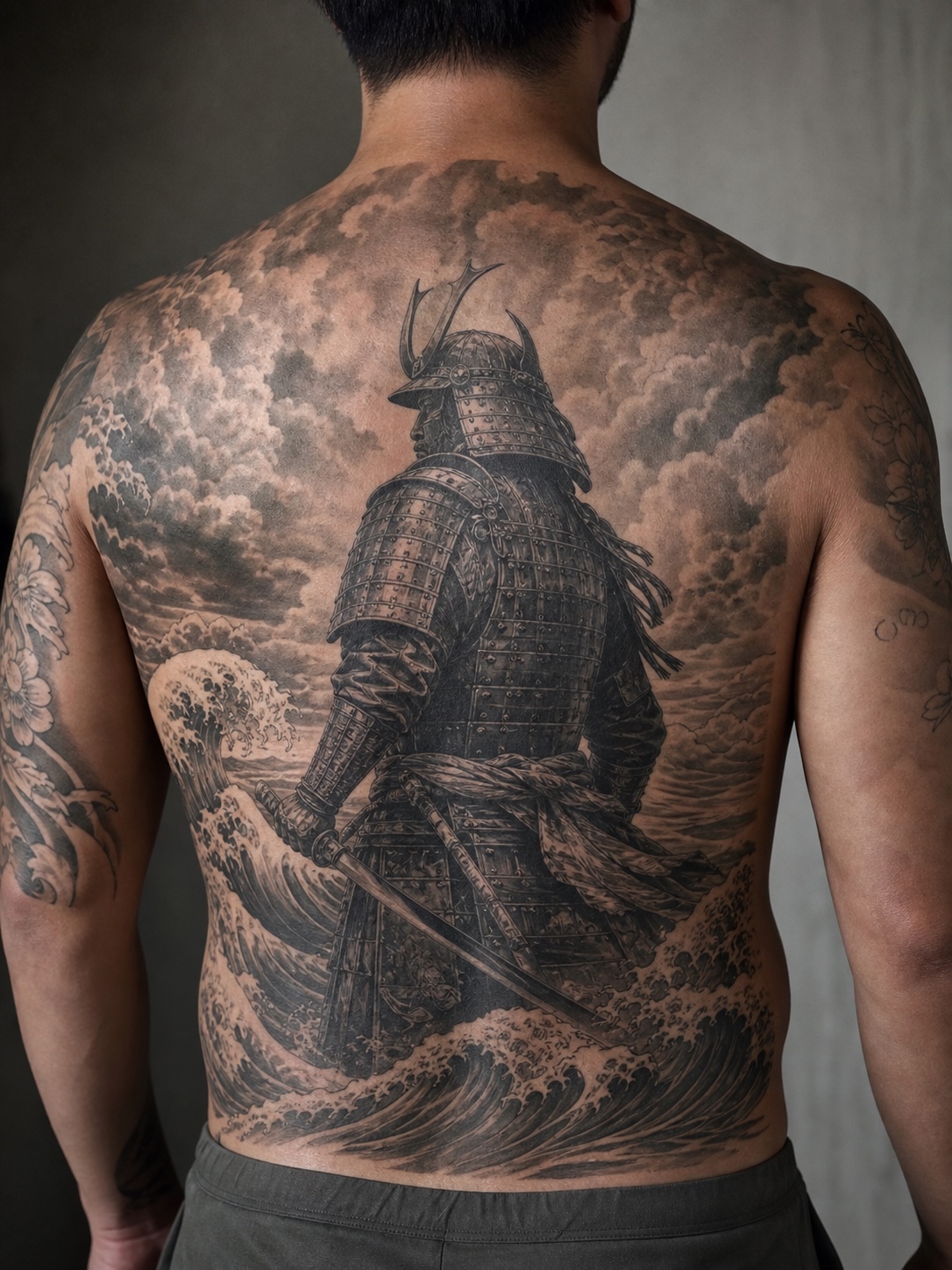
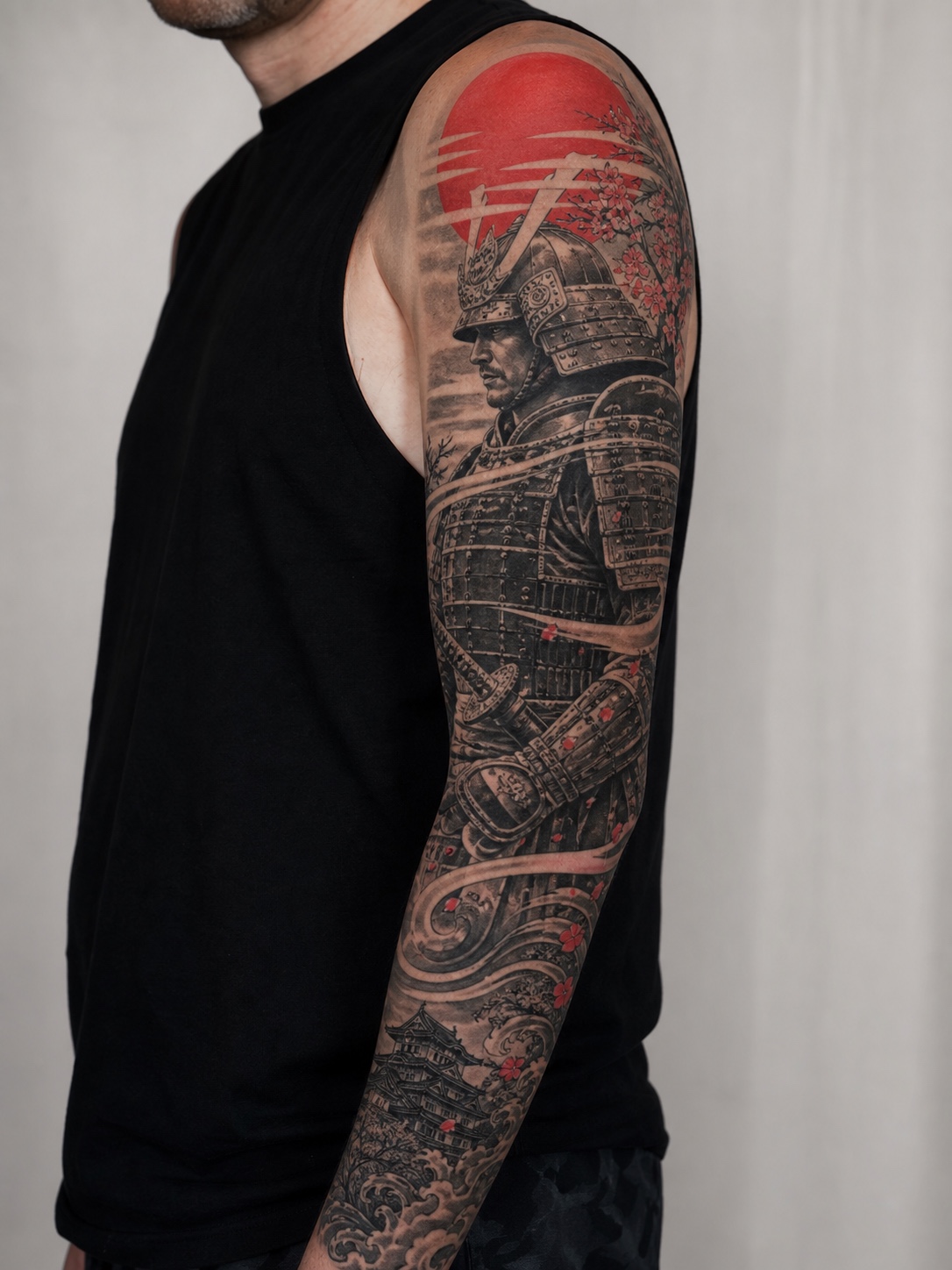
Use this guide to sort through samurai tattoo ideas by meaning, placement, scale, and style before you take anything to an artist. A small forearm piece needs a different approach than a full back scene. Fine details, armor plates, sword angles, smoke, flowers, and background shading all need room to breathe.
Before committing, ask your tattoo artist what will actually hold up over time. Some samurai designs look incredible as digital art but turn muddy on skin if they are packed too tightly. The goal is not to squeeze in every symbol. The goal is to choose the one that feels true and give it enough space to work.
What does a samurai tattoo mean?
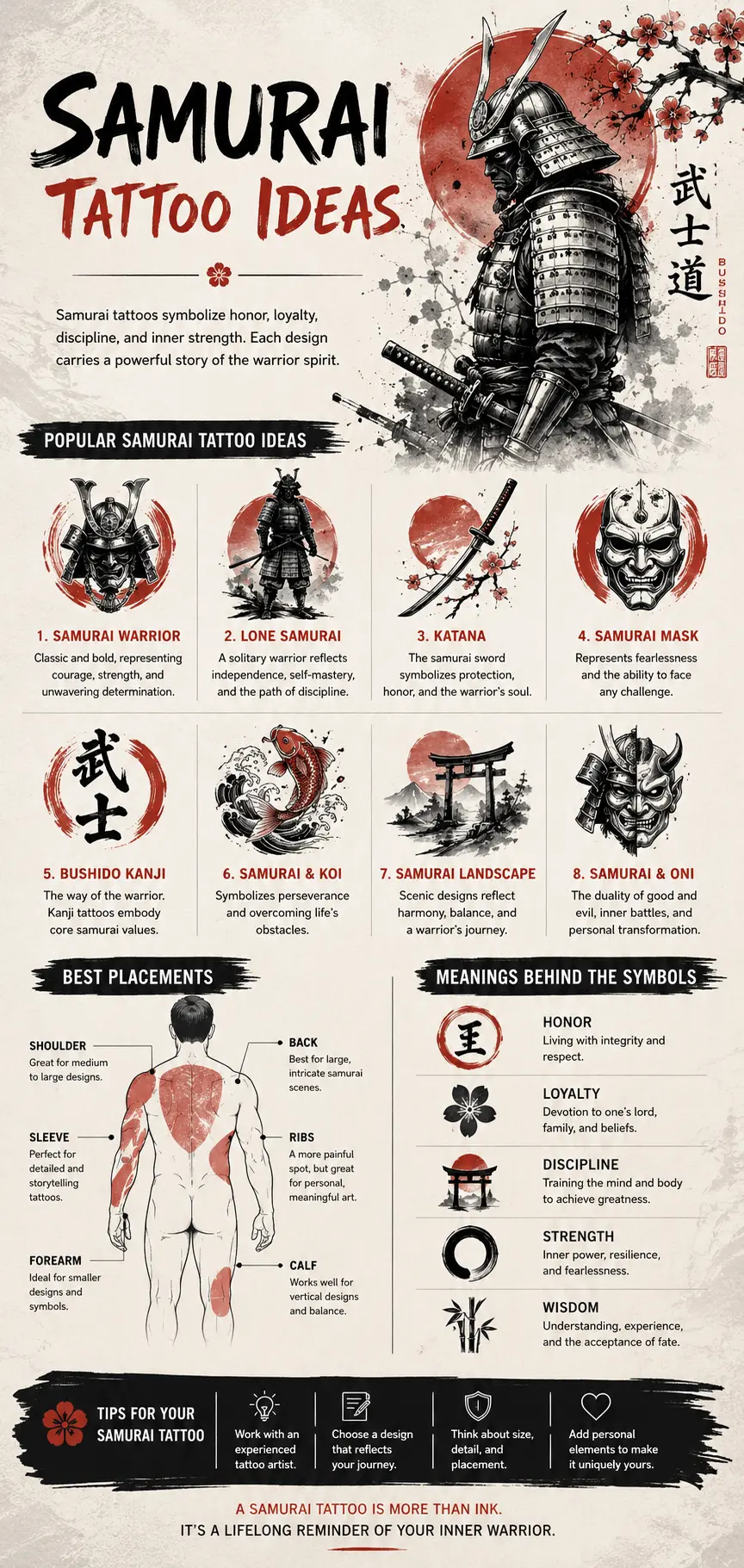
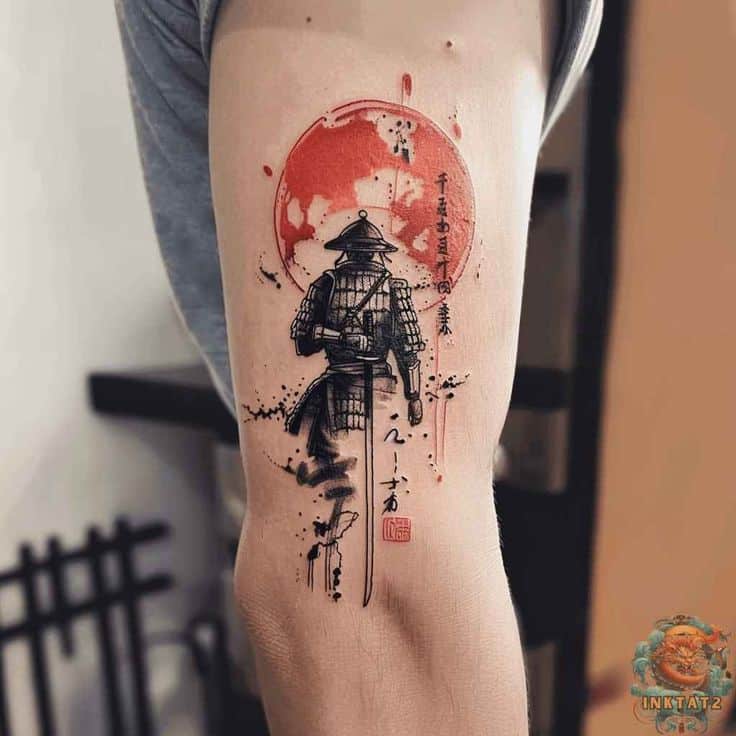
A samurai tattoo most often means honor, courage, discipline, loyalty, and protection. In tattoo design, the samurai figure works best when the pose, weapon, armor, and background all support one main message. A warrior standing still can feel controlled and protective; a battle pose feels more forceful; a helmet or mask can suggest self-command without needing a full figure.
If you want the tattoo to read clearly, choose the meaning before choosing the details. I would rather see one strong symbol with clean shading than five symbols competing for attention. A katana, cherry blossoms, waves, clouds, koi, or a red sun can all work, but each one should earn its place in the composition.
Key Takeaways
- Samurai tattoos carry strong cultural and symbolic meanings.
- Popular designs feature bold warriors and iconic Japanese elements.
- Choosing the right idea aligns your values with the art you wear.
Samurai Tattoos: History and Cultural Significance
Samurai tattoos are rooted in Japanese history, full of meaning tied to the warrior class and their well-known honor code. Understanding their origins, values, and symbolism can help you choose a design that reflects your personal beliefs and appreciation for Japanese culture.
Origins in Japanese Culture
Samurai tattoos have their roots in Edo-period Japan, when tattooing, known as irezumi, was both an art form and a social statement. These tattoos were initially adopted by people on the fringes of society, but samurai imagery later gained respect, especially as a tribute to the disciplined warrior class.
Traditional Japanese tattoos often depict samurai with detailed armor, fierce expressions, and iconic weapons like the katana. These images capture not only the appearance but the spirit of the ancient bushi, or warriors.
For many, wearing a samurai tattoo is a way to express a connection to Japan’s rich artistic traditions. It honors the bravery and heritage of a group that shaped Japanese history for centuries.
The Bushido Code and Samurai Values
The meaning of a samurai tattoo draws heavily on the Bushido code, a set of moral principles that guided samurai conduct. Loyalty, honor, courage, and self-discipline were at the core of this way of life.
A samurai warrior tattoo is often chosen to represent these qualities. The depicted figure may symbolize a personal commitment to living with integrity, showing self-control, or facing adversity with bravery.
People gravitate towards these tattoos not just for aesthetic appeal, but to remind themselves of values like gi (righteousness) and yu (courage) that stand at the heart of the Bushido ethos. The act of getting inked can be a declaration of adopting these virtues in your own life.
Symbolism Behind Samurai Tattoos
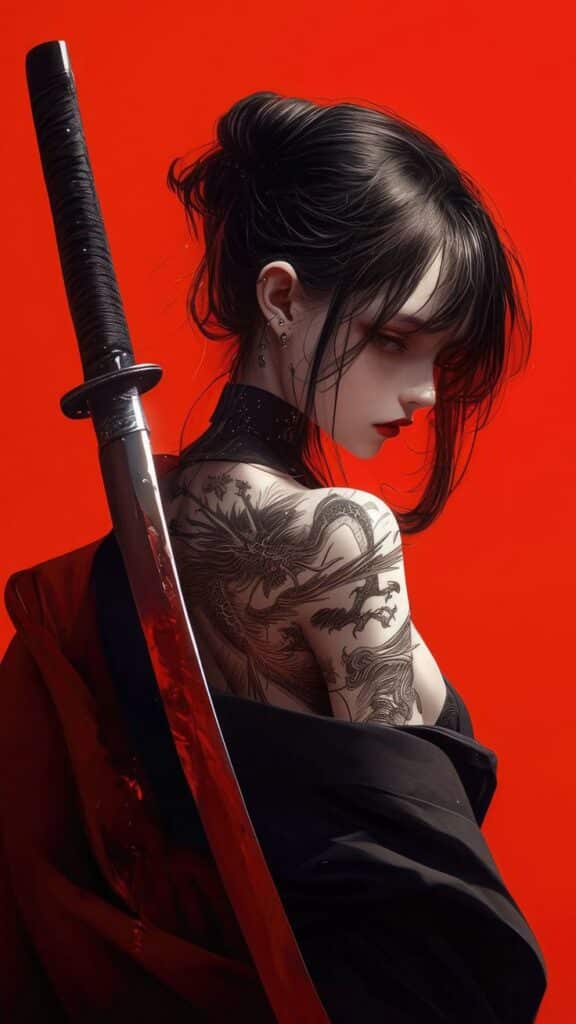
Samurai tattoos carry layered meanings that go well beyond the visual. In Japanese tattoos, samurai are commonly shown in dynamic poses, ready for battle, to reflect protection, resolve, and discipline.
Key symbols, such as cherry blossoms falling near a warrior, represent the fleeting nature of life and the acceptance of mortality—a belief held deeply by samurai. The katana, often featured, stands for honor and readiness to fight for one’s principles.
Many designs also include elements like dragons or tigers, which add further layers of strength, wisdom, or dominance. Choosing a samurai tattoo allows you to embody powerful ideas through art, connecting tradition, personal interpretation, and values in a single piece.
Popular Samurai Tattoo Designs and Their Meanings
Samurai tattoo designs often feature rich symbolism, detailed artwork, and historical references. You can express values like honor, courage, and loyalty through each design choice, with each motif telling a unique story.
Traditional Samurai Portraits
Traditional samurai portraits focus on the face and expression of the warrior. These tattoos highlight strong, determined eyes, topknots, and sometimes fierce expressions. The portrait style brings out the character’s discipline, wisdom, and sense of duty.
A well-rendered samurai tattoo in this style often includes fine line work to show the unique details of the kimono or facial features. This type of design is popular if you want to honor the legendary status and respected values attached to samurai culture.
Many people choose this style to pay tribute to historical figures or family heritage. When planning your design, you can work with your artist to include personalized elements, such as specific crests or symbols, for deeper meaning.
Samurai in Armor
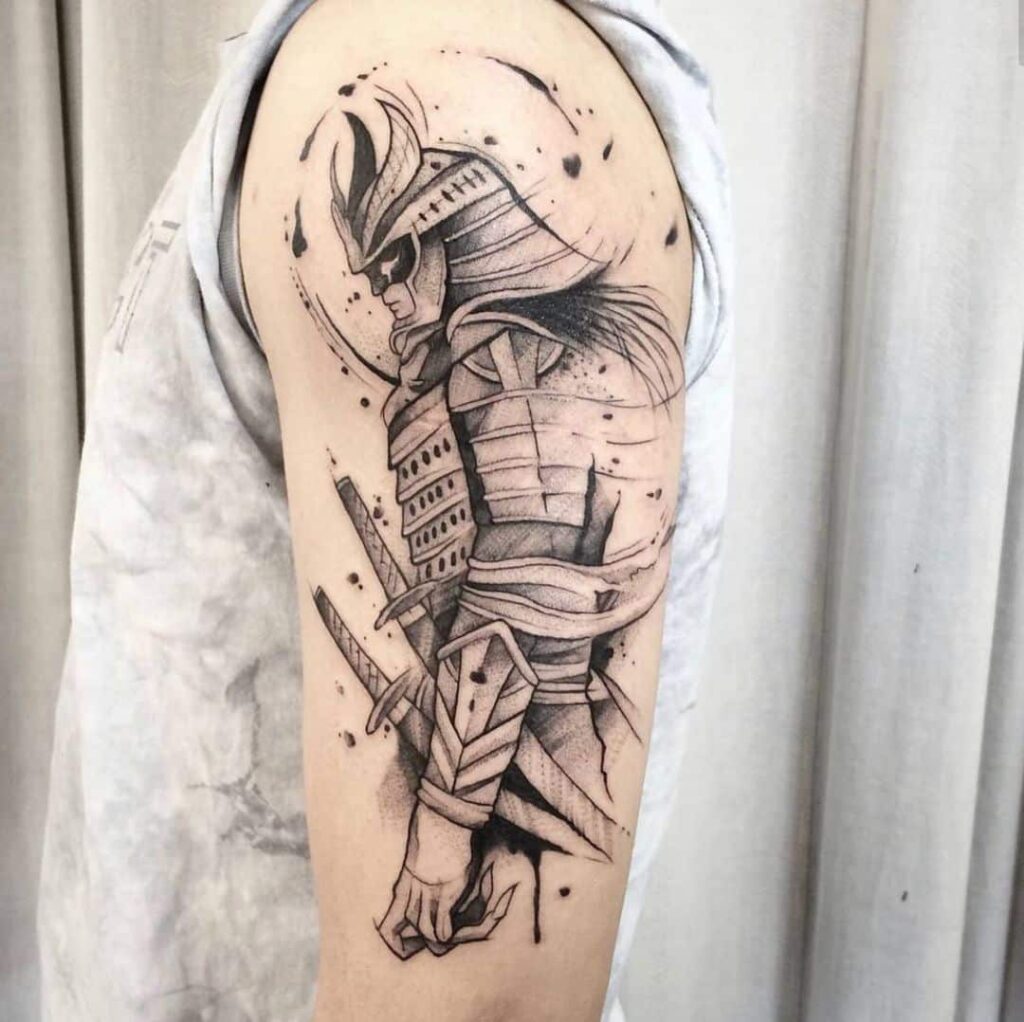
Samurai in armor tattoos are widely loved for their dramatic and powerful appearance. These designs emphasize the traditional armor, including helmet (kabuto), chest plate, and sometimes weapons like katanas. Shading and texture are important for capturing the complexity of the armor.
Choosing this samurai tattoo idea symbolizes protection, strength, and readiness to defend your values. The intricate detailing can make the tattoo look almost lifelike and showcases the craftsmanship of tattoo artists.
Often, you’ll see extra motifs like cherry blossoms or dragons, each adding a separate layer of meaning. The armor itself represents not just physical defense but also mental resilience and a disciplined lifestyle rooted in samurai tradition.
Female Samurai Inspirations
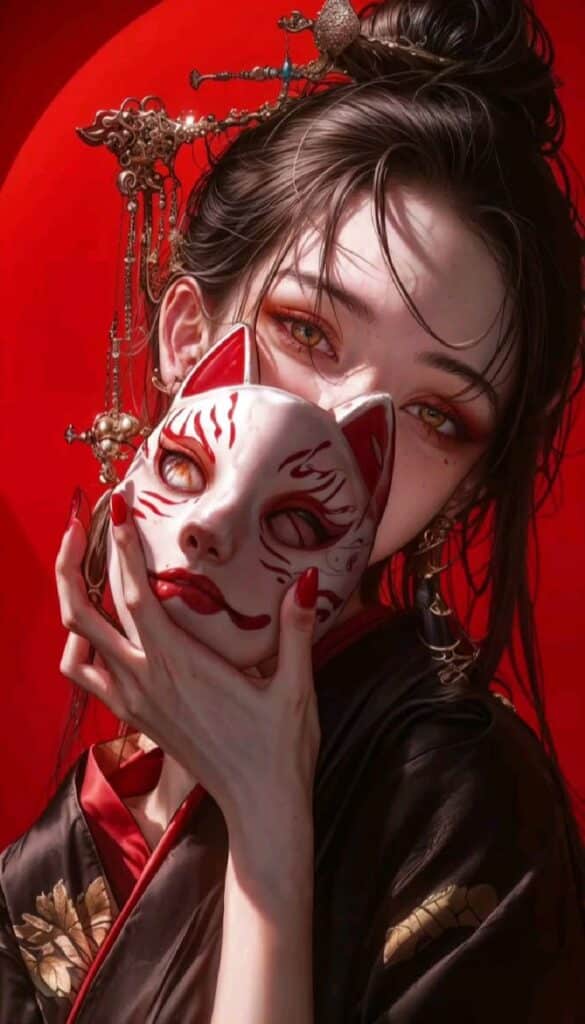
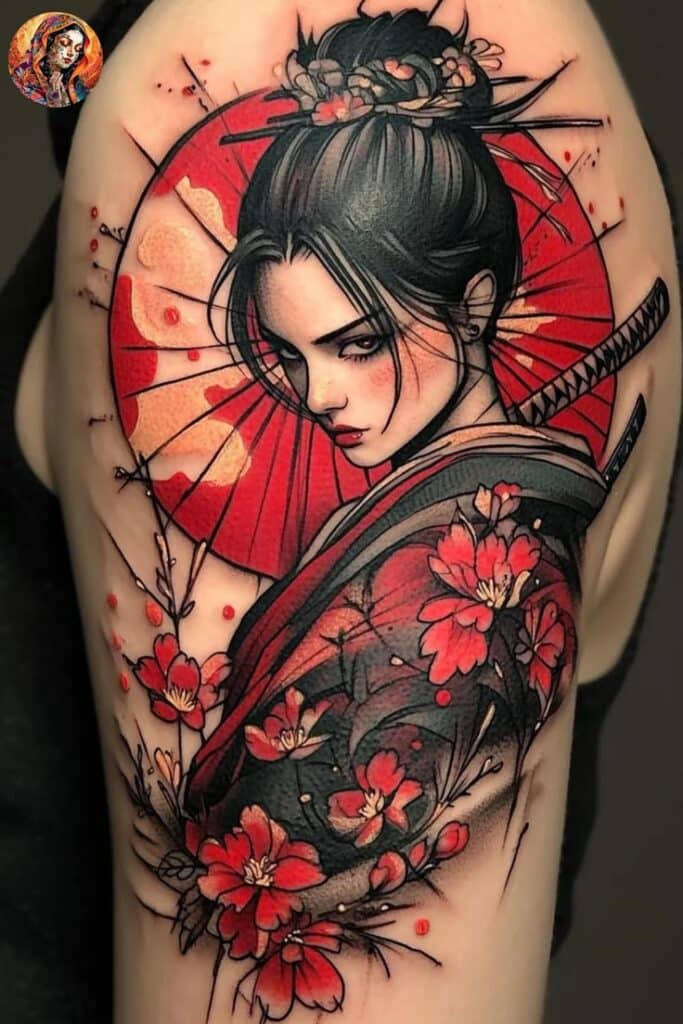
Female samurai tattoos (inspired by onna-bugeisha) highlight the often-overlooked women warriors of Japanese history. Designs often show women in action poses, sometimes in full armor or wielding weapons like the naginata. Their presence stands for strength, independence, and breaking gender norms.
Getting a female samurai tattoo is a way to honor both tradition and empowerment. The design can combine grace with ferocity, mixing delicate features with bold armor or fierce expressions for contrast.
Some choose to incorporate symbolic elements—such as peonies or flames—to represent bravery and beauty together. This style of tattoo appeals to those looking for a unique mix of historical authenticity and modern meaning.
Iconic Symbols and Motifs in Samurai Tattoos
Many samurai tattoos are rich in symbolism, drawing on historical elements and nature to represent personal values like honor, courage, and the fleeting nature of life. Several classic motifs—including iconic weapons and revered creatures—add depth and meaning to your tattoo’s design.
If you like the scale and movement of Japanese tattoo composition but want a rebirth symbol instead of a warrior figure, a Japanese-style phoenix tattoo ideas guide is a useful next stop. The bird works well with wind bars, flame shapes, shoulder panels, and sleeve layouts because the wings can carry the same dramatic flow.
Katana: The Soul of the Samurai
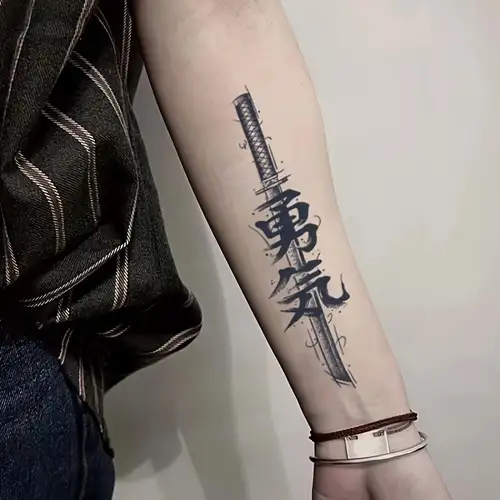
The katana is one of the most frequently depicted symbols in samurai tattoos. This distinctive curved sword represents more than just a weapon—it stands for the samurai’s soul, embodying values like honor, strength, and righteousness.
A katana tattoo often features intricate detailing on the blade and hilt, sometimes paired with a warrior in armor. For many, incorporating a katana highlights a commitment to discipline and ethical conduct. Placement can range from a small, single-blade piece to a larger scene of battle or ceremony.
The katana also connects the wearer to the “Bushido” code, which focuses on loyalty and self-mastery. This makes it a popular choice if you want your tattoo to reflect unwavering principles.
Cherry Blossoms and Maple Leaves
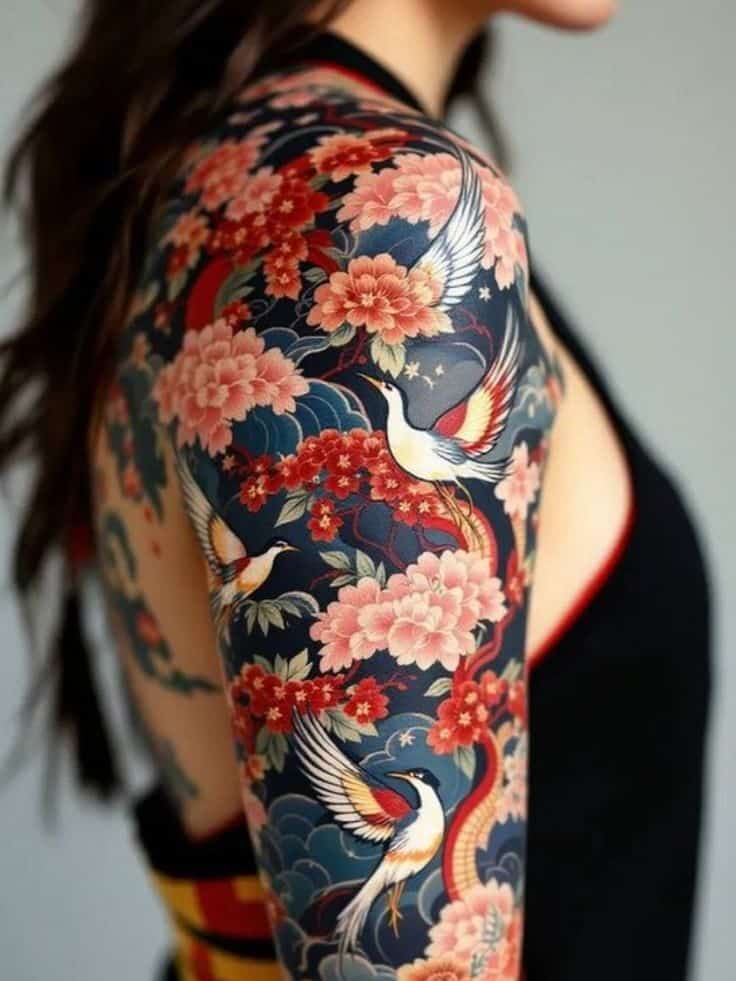
Nature holds a special place in Japanese tattoo art, and samurai tattoos often showcase cherry blossoms (sakura) and sometimes maple leaves. Cherry blossoms are admired for their short, beautiful bloom, symbolizing the samurai’s acceptance of mortality and the beauty of brief moments.
A tattoo with falling cherry blossoms can express the idea of living fully, knowing that life is fragile and temporary. Maple leaves, though used less often, share similar symbolism—reminding you of the cycles of change and the impermanence of everything.
You might see these motifs as soft contrasts to the fierce image of the samurai, creating balance in both color and meaning. Combining these with samurai imagery lets you blend toughness with poetic beauty.
Koi Fish and Mythical Creatures
A Japanese koi fish tattoo is another favored motif, often signifying perseverance and determination. Koi are known in Japanese folklore for swimming upstream, representing the courage to overcome obstacles. When paired with samurai imagery, these tattoos reinforce qualities like bravery and resilience.
Some designs also incorporate mythical creatures like dragons or tigers. Dragons can stand for wisdom and protection, while tigers point to strength and courage in adversity. Koi fish designs may include water or waves, adding movement and energy to your tattoo.
Selecting koi or mythical creatures lets you further personalize your samurai tattoo, choosing symbols that best match your own story and aspirations.

Choosing Your Samurai Tattoo: Placement, Ideas, and Styles
Finding the right samurai tattoo means looking closely at where you want it, what symbols and elements matter most, and which art style best fits your vision. Every choice you make shapes the impact and meaning of your Japanese tattoo.
Placement Options and Size Considerations
Where you place your samurai tattoo can affect its visibility, detail, and overall effect. Common placements include the upper arm, leg, back, and chest. These larger areas allow space for full samurai warriors, traditional armor, or battle scenes.
For more discreet or smaller designs, the forearm, calf, or side of the neck can work well. Keep in mind, detailed samurai tattoo designs may lose clarity if scaled down too much. For a stronger statement, bold neck tattoo placement can work, but only if the helmet, mask, or blade silhouette stays readable at that tighter scale.
For a wider comparison of masculine styles before you commit to Japanese imagery, scan these tattoo ideas for men and compare samurai pieces with lions, phoenix designs, sleeves, chest tattoos, and smaller symbolic options.
If you’re interested in showcasing broad themes—like a samurai in armor, cherry blossoms, or a sweeping katana—choose a placement that allows the design to breathe. Table: Common Placements
| Area | Size Range | Suitability for Detail |
|---|---|---|
| Upper Arm | Medium-Large | High |
| Back | Large | Very High |
| Chest | Medium-Large | High |
| Forearm | Small-Medium | Moderate |
Combining Elements for Unique Designs
You can personalize samurai tattoo ideas by combining different elements. Popular additions include cherry blossoms, kanji characters, waves, kabuto helmets, and mythical creatures like dragons or phoenixes.
Mixing symbols helps your Japanese tattoo reflect values such as loyalty, strength, courage, or honor. For example, adding peonies or maple leaves gives softer contrasts to the severe look of samurai armor. Kanji for “courage” or “loyalty” can add deeper personal meaning.
Don’t be afraid to mix modern and traditional motifs. Merge sharp, armored lines of the samurai with flowing background patterns like wind bars or clouds for a visually balanced result. Work with your artist to find combinations that capture your story.
Modern vs. Traditional Style Choices
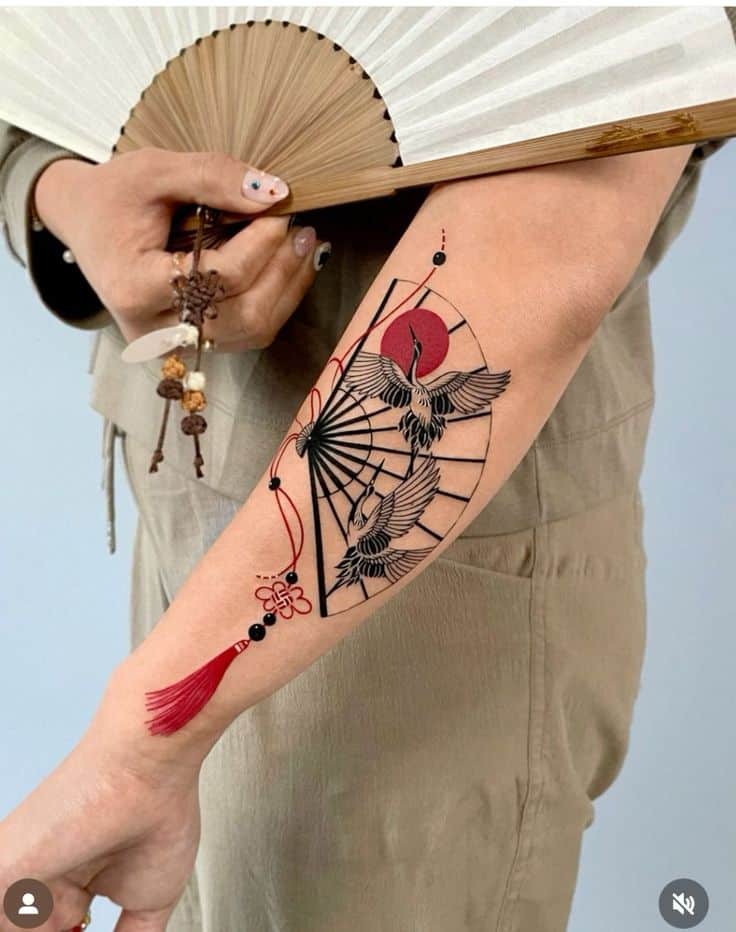
Traditional Japanese tattoos, known as Irezumi, use bold lines, soft gradients, and classic motifs. Expect lots of black, grey, and red ink, with plenty of sweeping motion and mythic undertones in the design. These pieces often feature detailed armor, stern expressions, and backgrounds filled with waves or flames.
Modern samurai tattoo styles can be more minimalist or even abstract. Artists might add geometric elements, vibrant color blocking, or sharper contrast between foreground and background. Some opt for neo-traditional or illustrative approaches that blend Western and Japanese tattooing traditions.
Consider what speaks most to your taste. Traditional styles offer authenticity and cultural depth, while modern takes can create a bolder or more personal look. Your chosen style will influence the design’s atmosphere and how it fits with any existing body art.
Samurai tattoo ideas by placement and style
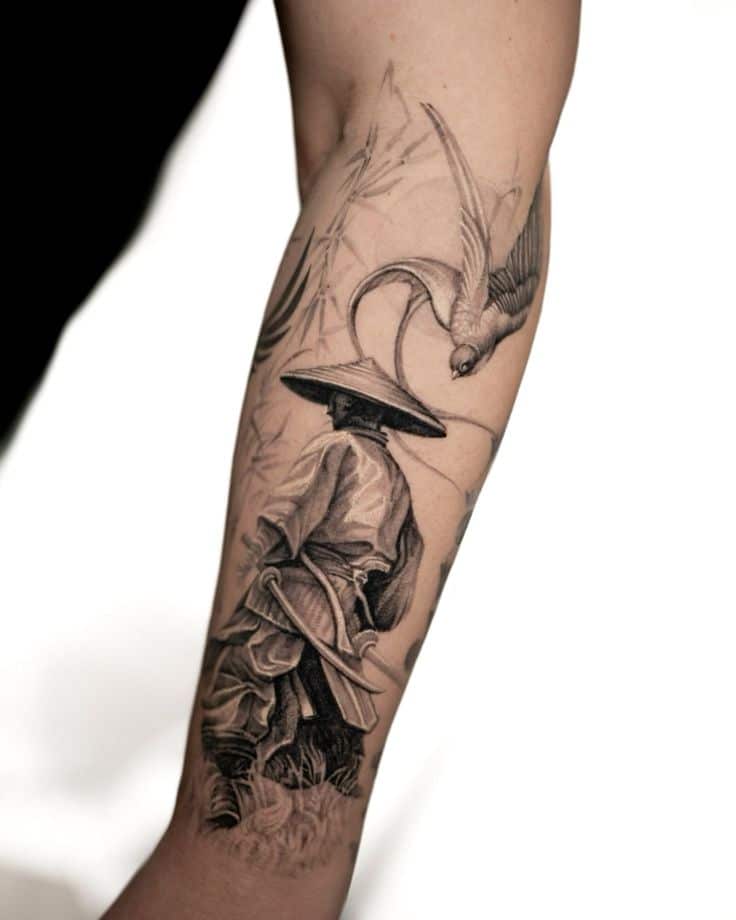
Placement changes the design more than most people expect. A samurai face can survive on a forearm if the artist simplifies the helmet and shadows. A full warrior scene needs the upper arm, thigh, chest, or back so the armor, sword, and background do not collapse into a dark patch.
| Placement | Best samurai tattoo idea | Why it works | Watch out for |
|---|---|---|---|
| Forearm | Kabuto helmet, mask, or katana | The vertical shape follows the arm and stays readable. | Tiny armor plates can blur if the design is too small. |
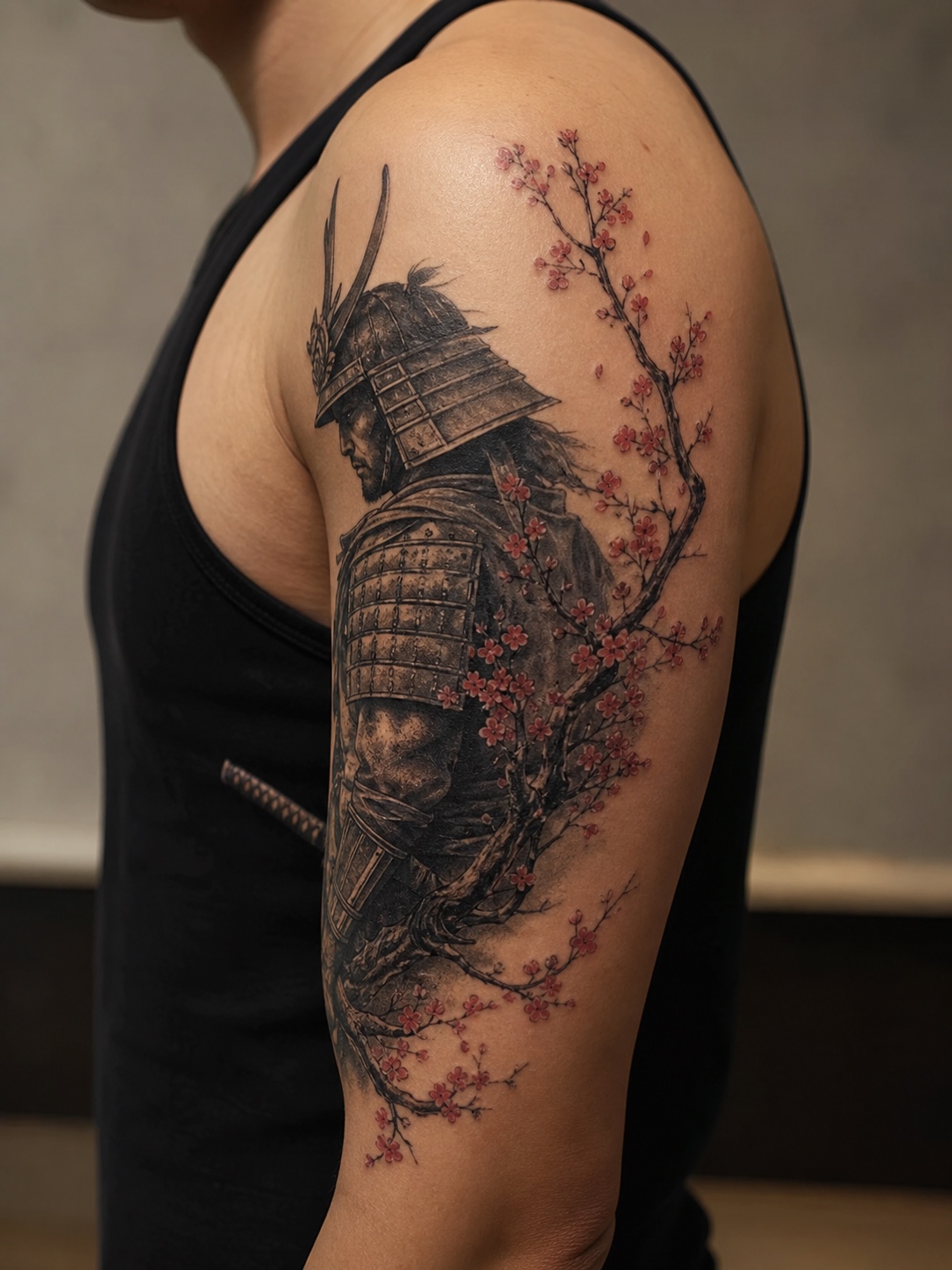
| Upper arm | Samurai portrait with blossoms or clouds | The rounded muscle gives the face and helmet more volume. | Keep the face large enough so the expression does not vanish. |
| Full sleeve | Warrior, red sun, waves, wind bars | Background elements can wrap around the arm and connect the scene. | Plan the sleeve flow before adding filler motifs. |
| Back or chest | Full armored samurai scene | Large space supports armor, movement, and atmosphere. | Big pieces need several sessions and a clear value plan. |
| Calf or thigh | Katana, mask, standing warrior, koi pairing | The long surface works for narrow vertical compositions. | Avoid overly wide scenes unless the design wraps intentionally. |
These newer examples show five different routes: a compact helmet for the forearm, a softer upper-arm piece with blossoms, a narrow katana-and-mask layout, a full back scene, and a sleeve with stronger red accents. Use them as direction, not as artwork to copy line for line.
Working With a Tattoo Artist
A skilled tattoo artist is essential for bringing a samurai tattoo to life with authenticity and detail. Your choices, from artist selection to the way you communicate your ideas, impact both the design and the overall experience.
Selecting the Right Tattoo Artist
Look for a tattoo artist with direct experience in Japanese-inspired or specifically samurai tattoos. Artists who show mastery with intricate lines, shading, and traditional motifs can ensure the cultural accuracy and visual impact these designs require.
Review portfolios to check for similar projects—note their attention to detail in armor, swords, and facial expressions. Ask about their training; some professionals invest years learning Japanese styles and symbolism, often apprenticing under established Japanese artists.
Refer to this table when evaluating potential artists:
| Criteria | What to Consider |
|---|---|
| Style Experience | Traditional Japanese; Samurai-specific |
| Portfolio Examples | Detailed warrior, armor, and symbolism |
| Cultural Knowledge | Familiarity with Bushido and its values |
| Client Reviews | Feedback on communication and skill |
Shortlist those who are not only technically skilled but also demonstrate respect and understanding of samurai history and values.
Consultation Tips for Your Samurai Tattoo
Prepare references showing the specific style, stance, or symbolism you want in your samurai tattoo. Bring sketches, art, or even a brief story about why this design matters to you—these help your tattoo artist understand your vision.
During your consultation, discuss placement and size. Samurai tattoos often take up significant space (like the upper arm, back, or leg), so your artist can advise what fits best with your anatomy and pain tolerance.
Talk through color options and shading. Some prefer bold black-and-grey, while others want complex full-color scenes. Ask your artist about the healing process and aftercare for larger, more intricate tattoos.
Write down your questions beforehand:
- How long will this piece take?
- Can you make adjustments to my references?
- What can I do to prepare for the session?
Clear, honest communication leads to a design you’ll appreciate for years.
Sources and cultural notes
For historical context, it helps to separate tattoo symbolism from the real warrior class. Britannica’s overview of samurai history is useful for the broad timeline, while its Bushido entry explains the later honor-code language often attached to samurai imagery. Museum collections such as The Met‘s samurai armor notes are also helpful when you want armor references that look more grounded.
Samurai tattoo FAQ
Q: What does a samurai tattoo usually mean?
A: A samurai tattoo usually points to honor, courage, discipline, loyalty, and protection. The exact meaning depends on the design. A calm armored figure can feel protective and controlled, while a warrior in motion feels more aggressive. Cherry blossoms add mortality and beauty; a katana adds duty and focus.
Q: What is the best placement for a samurai tattoo?
A: The best placement depends on how much detail you want. Forearms and calves work for masks, helmets, and katana designs. Upper arms and thighs handle portraits well. Full sleeves, backs, and chests are better for full warrior scenes with armor, waves, clouds, dragons, or cherry blossoms.
Q: Should a samurai tattoo be black and gray or color?
A: Black and gray is usually safer for armor, masks, and serious portrait work because the shading can carry a lot of texture. Color works well when it has a job: red sun, muted blossoms, koi, flames, or background accents. Too much color can make detailed armor harder to read.
Q: Is it okay to add kanji to a samurai tattoo?
A: Yes, but only if the characters are checked by someone fluent in Japanese and the phrase actually fits the design. Kanji should not be decoration you barely understand. If you are unsure, a katana, helmet, wave pattern, or blossom branch often communicates the idea more clearly.
Q: How do you make a samurai tattoo look less generic?
A: Start with one clear story instead of adding every Japanese-inspired motif at once. Decide whether the tattoo is about discipline, protection, grief, courage, or transformation. Then choose two or three supporting elements. Strong silhouette, clean value contrast, and smart placement matter more than packing in extra symbols.
Q: What should I ask my tattoo artist before booking?
A: Ask to see healed examples of Japanese-inspired work, not only fresh photos. Talk through size, number of sessions, placement, background flow, and what details may need simplifying. For a large samurai tattoo, also ask how the artist plans the dark areas so the armor stays readable over time.
Artists planning a tattoo-style weapon study can sketch a separate katana drawing first, then decide how much blade curve, handle wrap, and tsuba detail belongs in the final design.
More tattoo ideas to compare
Integrating a traditional vine tattoo weaving around the samurai’s armor symbolizes resilience, loyalty, and the organic thread of life amid conflict.
For broader directions before you commit, browse the Sky Rye Design tattoo ideas hub. It is the better place to compare samurai designs against sleeves, forearm tattoos, symbolic tattoos, floral pieces, and other Japanese-inspired ideas.
For a larger Japanese-inspired arm piece, this sleeve tattoo guide for men can help you plan background flow, shoulder placement, and forearm balance.
- 366shares
- Facebook0
- Pinterest365
- Twitter1
- Reddit0