The first moving frame can look like the drawing you approved. By the last frame, the knuckle may have gained a joint, a letter counter may have closed, or the ink may have become a smooth digital stroke. A drawing class might reach for seedance 3 AI to test one change of pose, but the useful question is visual: did the student's line survive? Here is how to review an AI-animated sketch against the original sheet, decide what to revise, and know when the still is the stronger submission.
The linked service calls its workflow “Seedance 3,” although its visible generator currently shows Seedance 2.0. ByteDance's current model listing identifies Seedance 2.5 and does not confirm a 3.0 release. Treat the linked phrase as a service label, and check the model and settings actually available before using a class account. The review below works with any image-to-video tool that accepts a finished drawing as a reference. No prompt guarantees that every contour will stay intact.
Decide what the drawing must keep
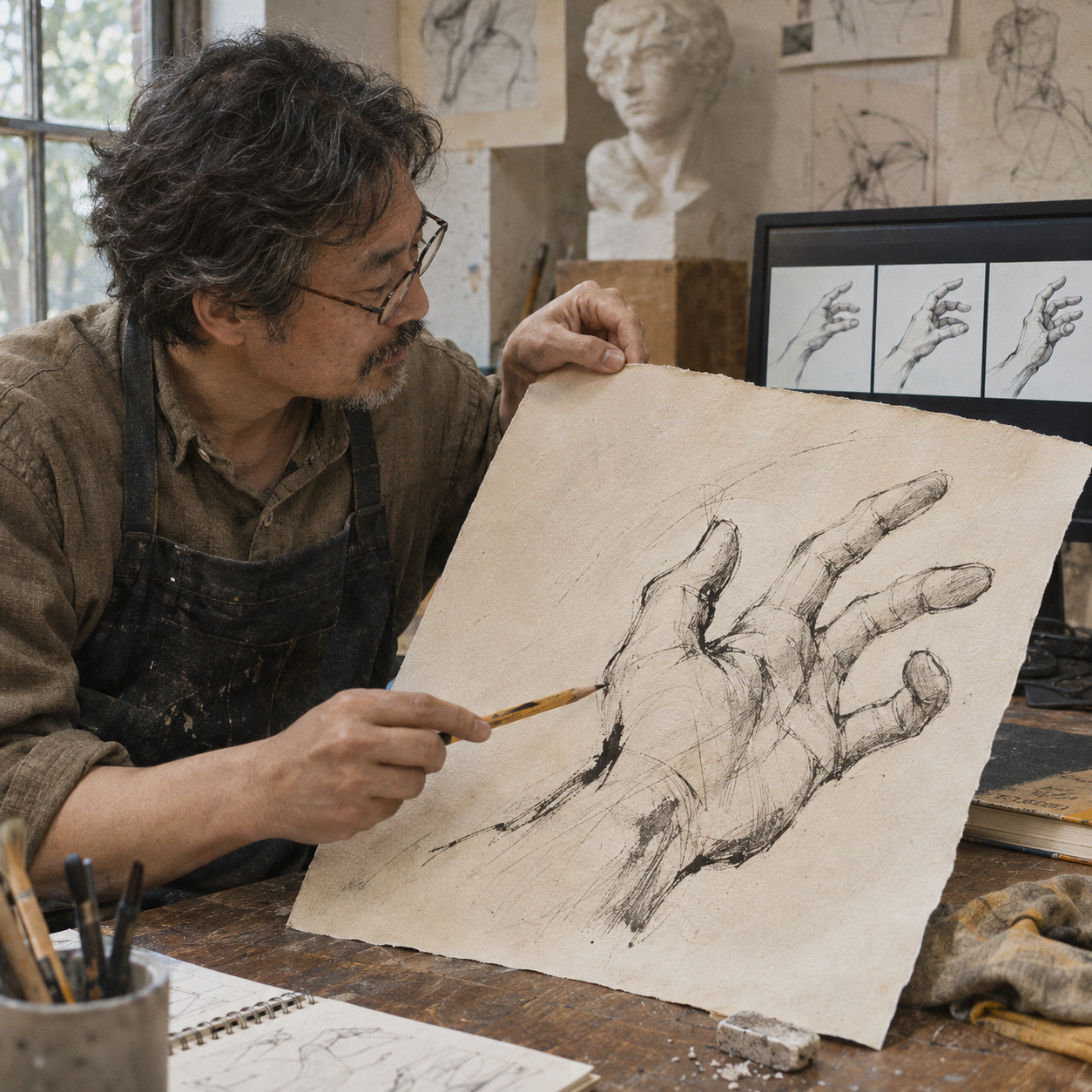
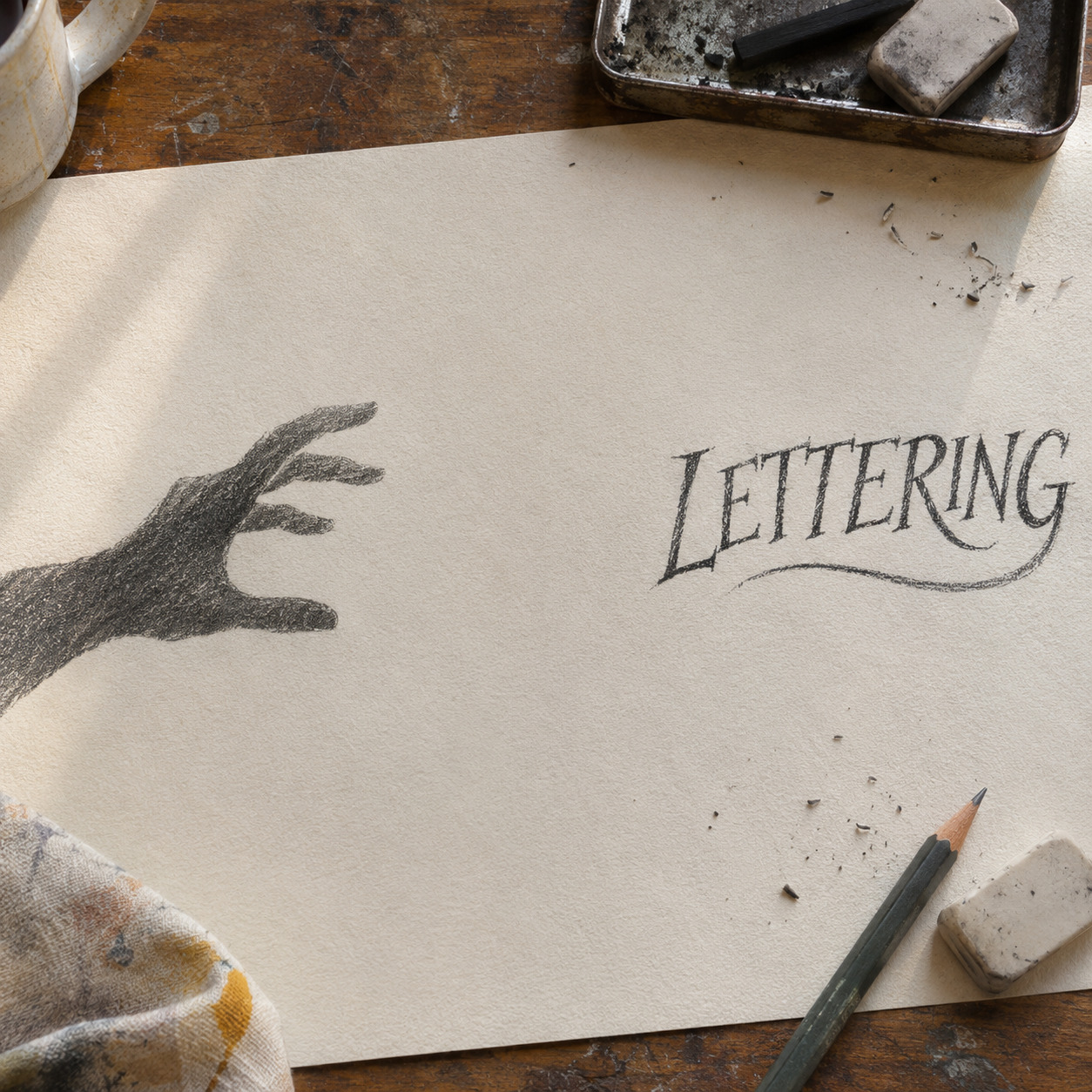
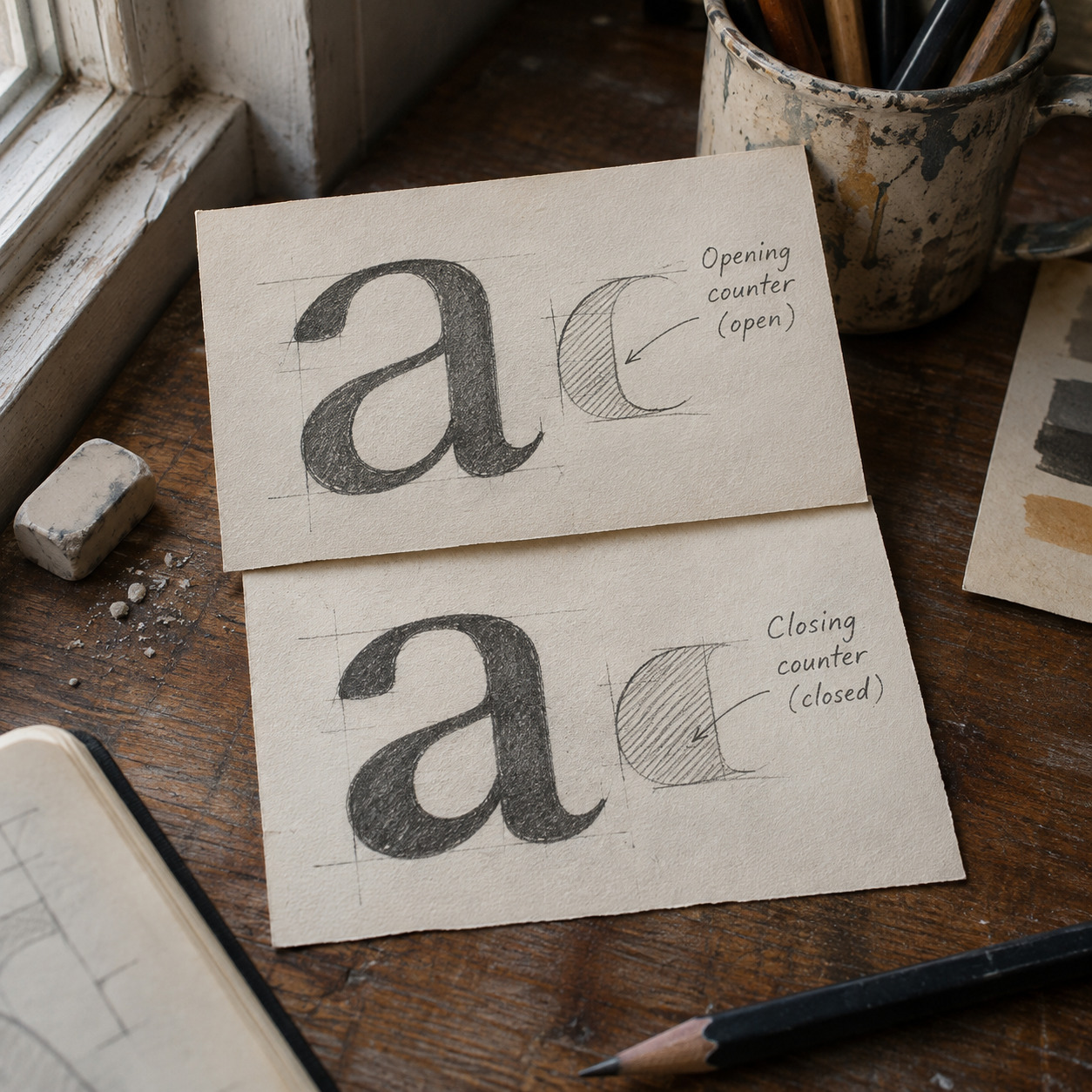
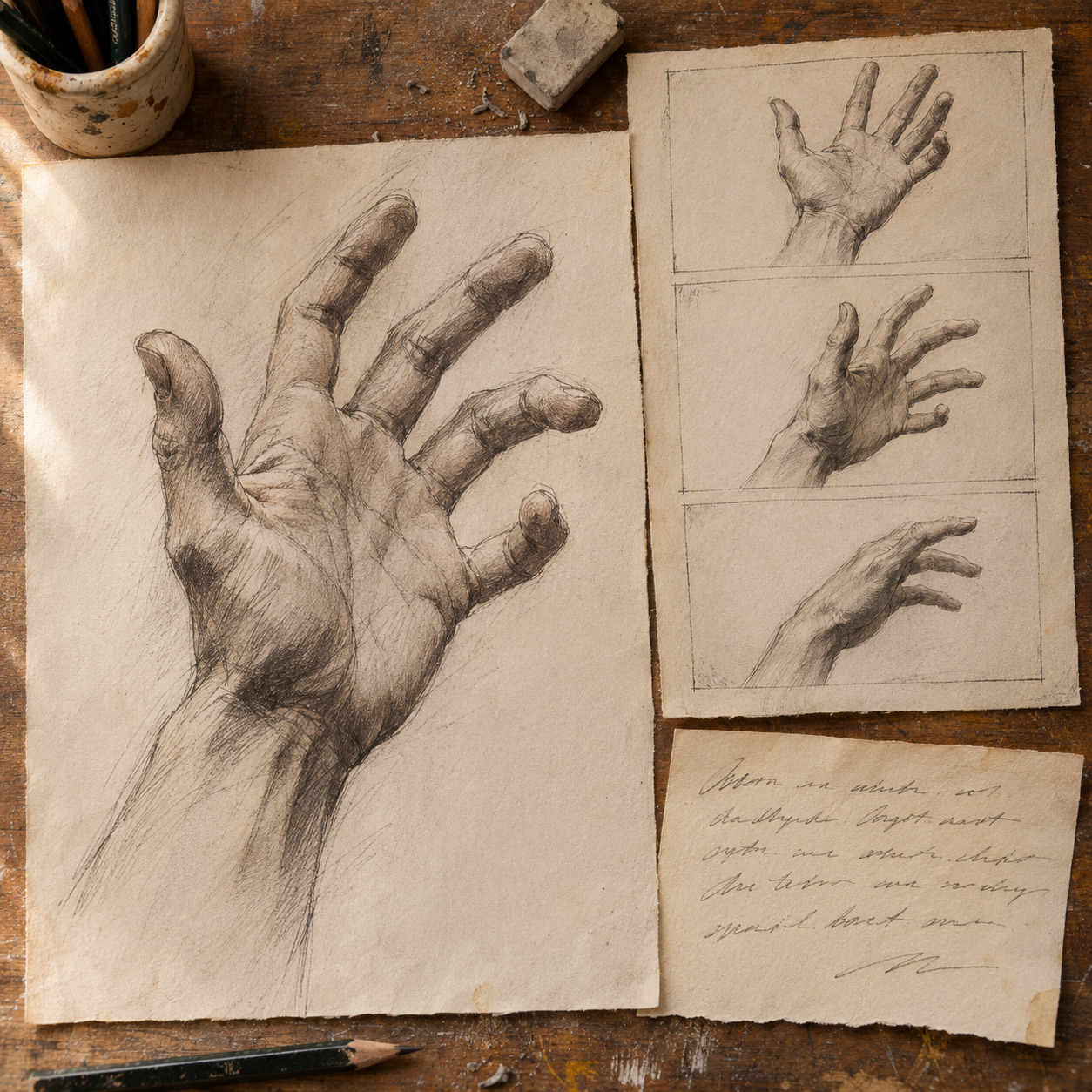
Start with the drawing, not the clip. Put an uncropped copy of the approved sheet beside the screen. Mark three features whose identity matters: one outer contour, one internal shape, and one area of untouched ground. On a hand study, those could be the swell of ink over the knuckle, the open space between two fingers, and the clean paper around the wrist. On lettering, the internal shape might be the counter inside an e or an o.
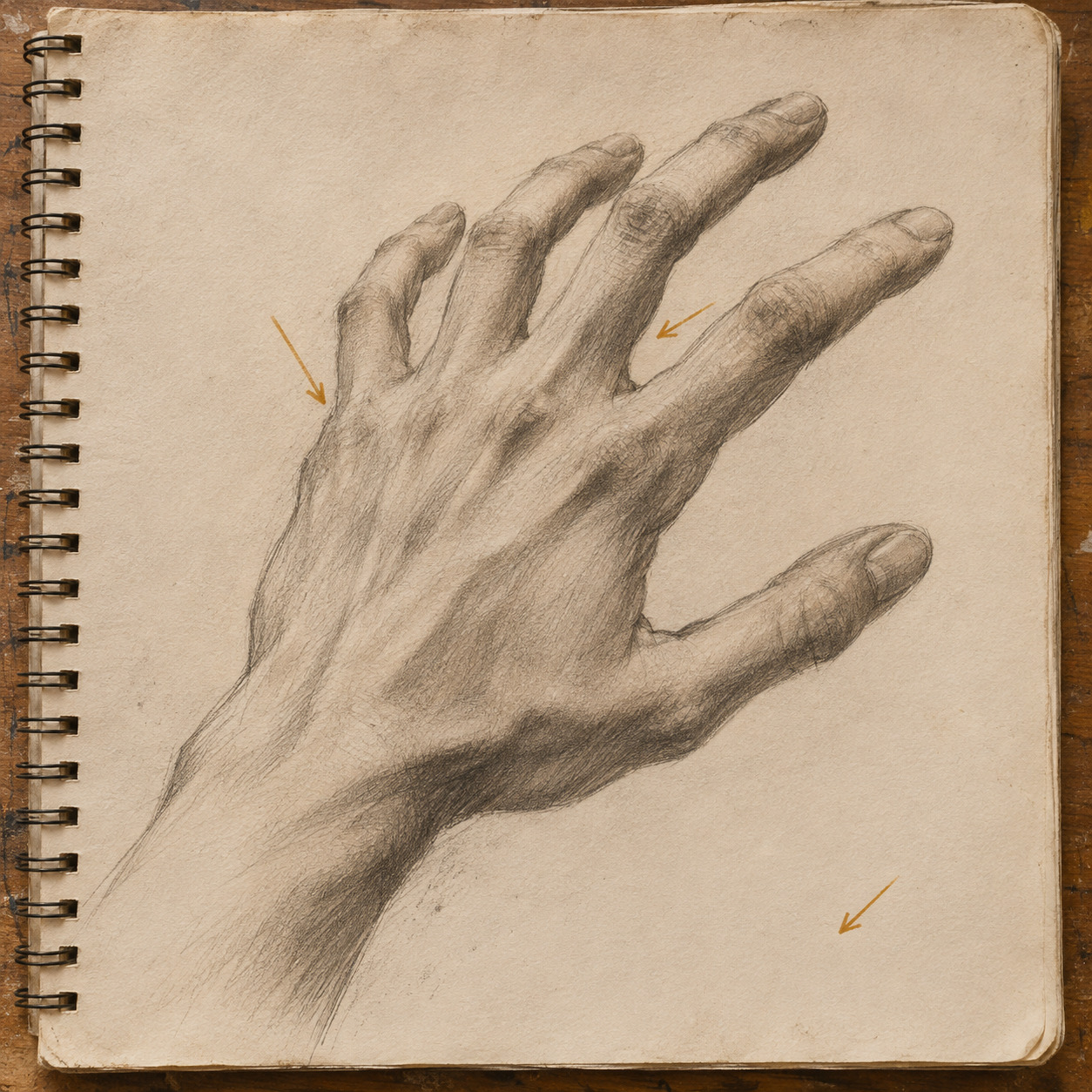
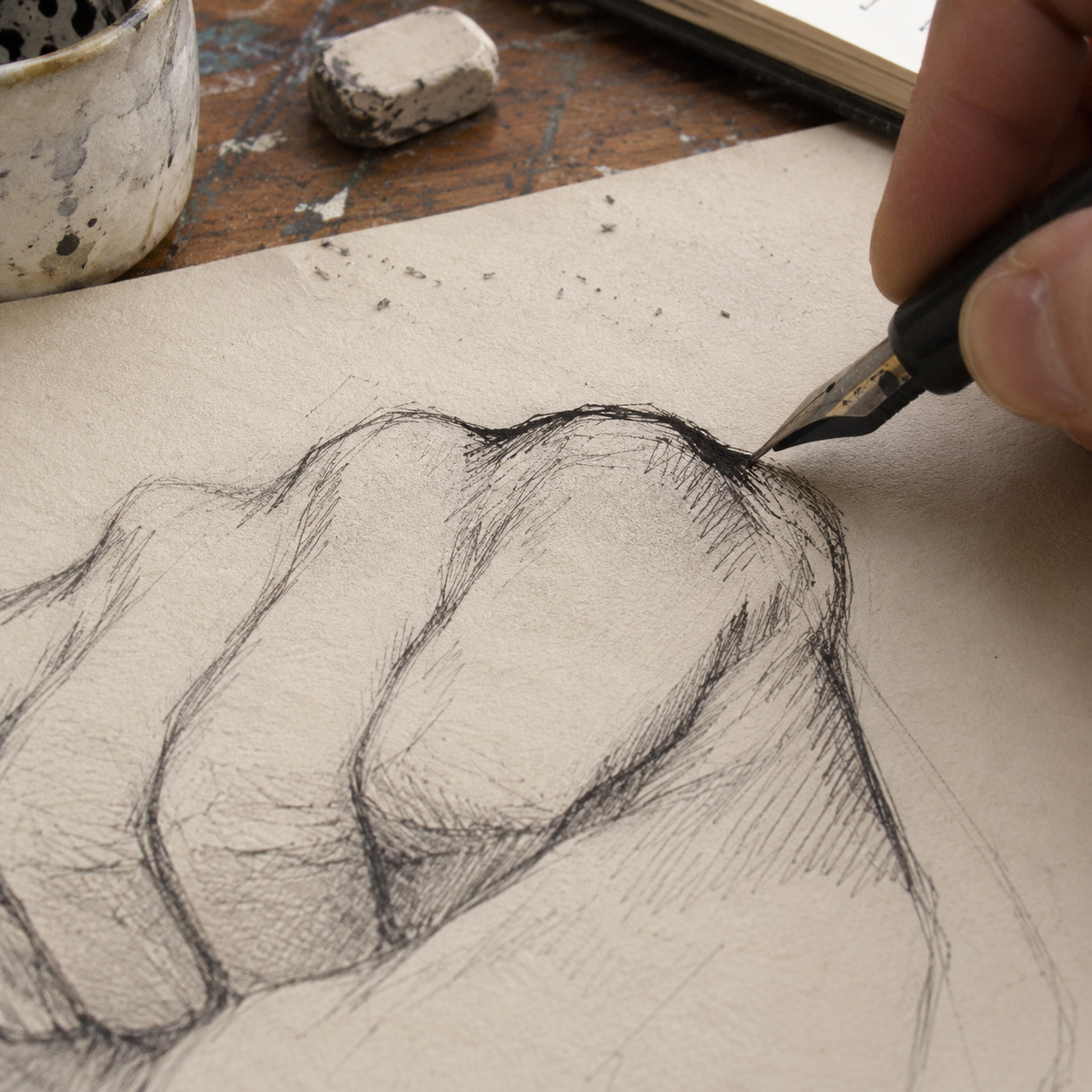
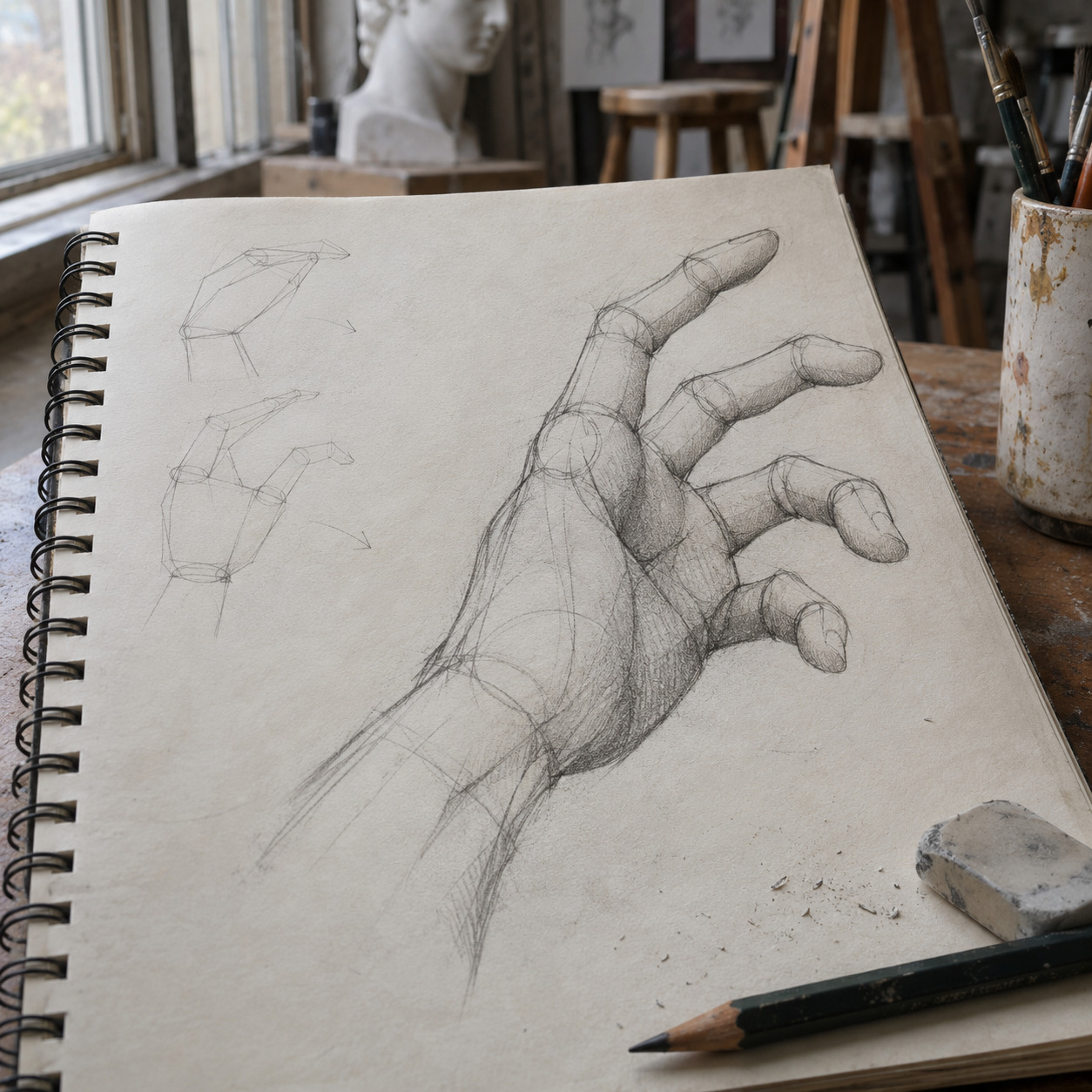
These marks are a design brief, not a demand that every pixel remain fixed. The pose is allowed to change. The line's decisions should remain recognizable: where the contour grows heavier, where it breaks, and where the paper is deliberately empty. If the source drawing is still unresolved, finish that work first. A motion generator cannot preserve a choice the artist has not made. For practice before the animation stage, a clear pose reference for the original drawing can help settle the anatomy.
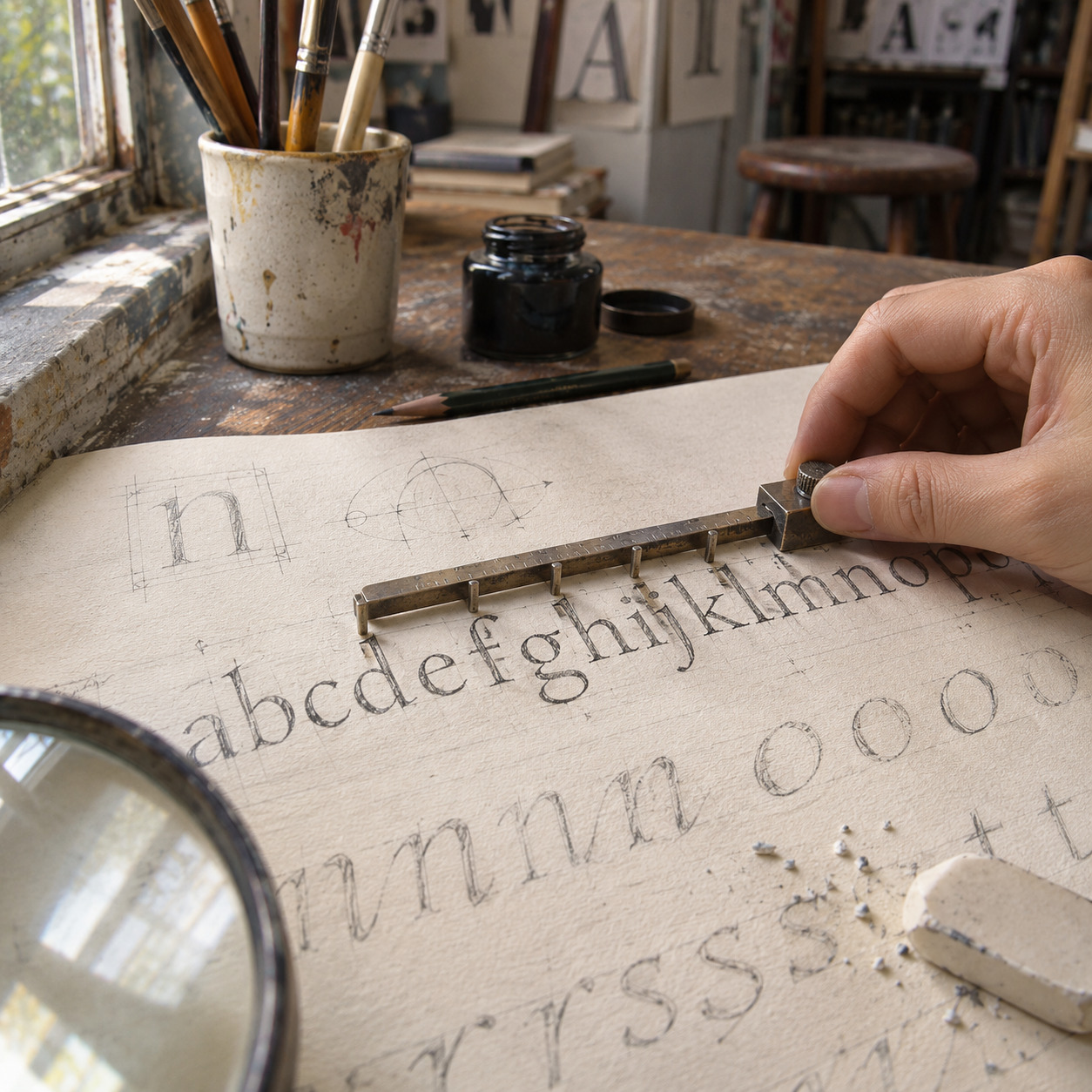
Photograph or scan the sheet squarely, with even light and the full border visible. Keep the original file untouched. A crop that removes the wrist or the edge of a letter also removes evidence you need for the later comparison. Note the orientation and size so all review frames can be shown at the same scale.
Give the motion one job
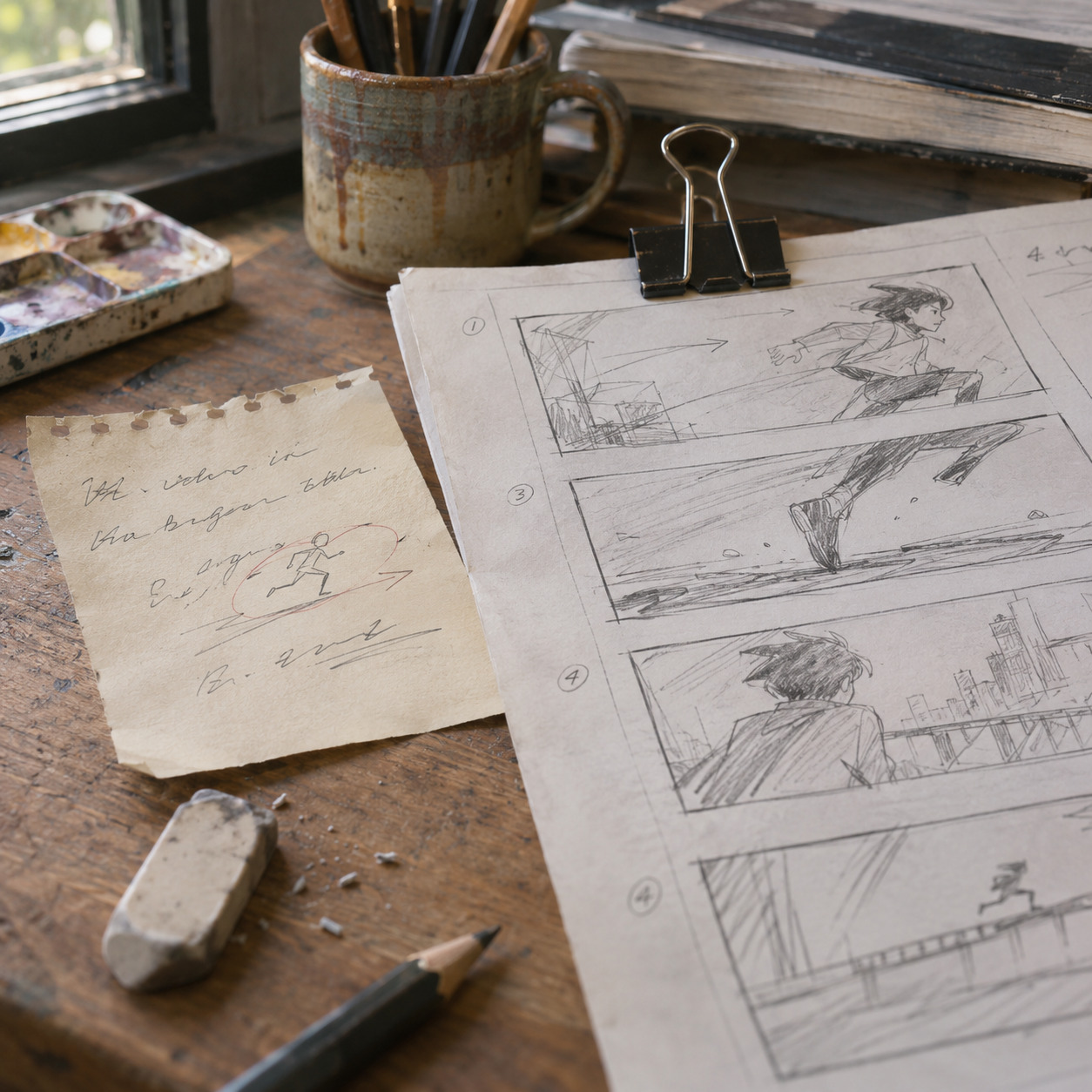
Write the movement in one sentence: “Turn the wrist slightly toward the light; keep the knuckle contour, finger gap, ink weight, and blank paper ground.” The drawing supplies the appearance. A separate short clip can supply the direction and pace of the turn if the chosen tool supports video references. Turning a finished illustration into a motion study covers the production side; this review begins once there is a clip to judge.
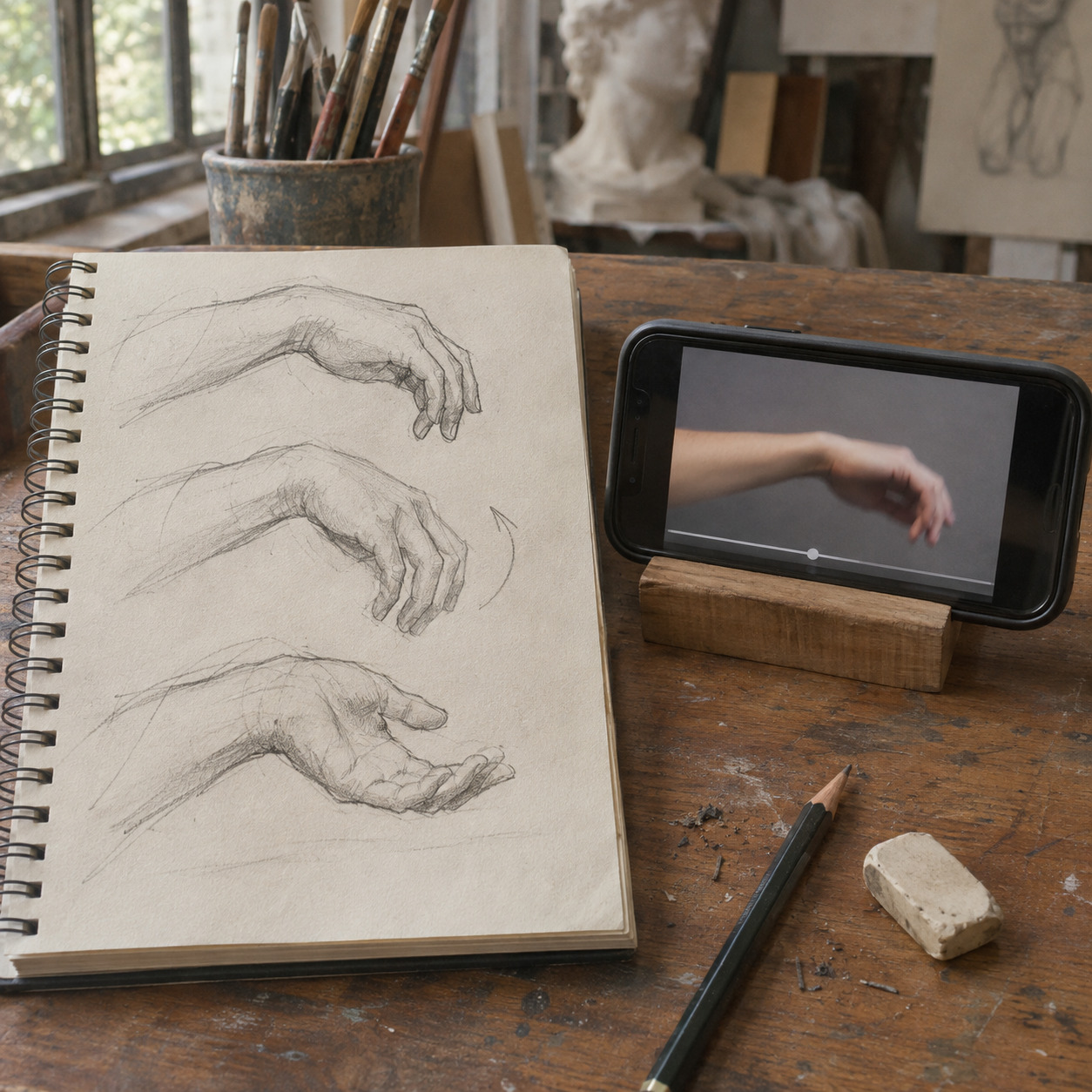
Keep the reference motion compatible with the drawing. A sleeve in the clip when the drawing has a bare arm may encourage the model to invent a new wrist edge. A hidden finger may invite an extra joint. Trim the reference to the single turn. “Graceful” and “dynamic” are weak substitutes for visible direction and timing.
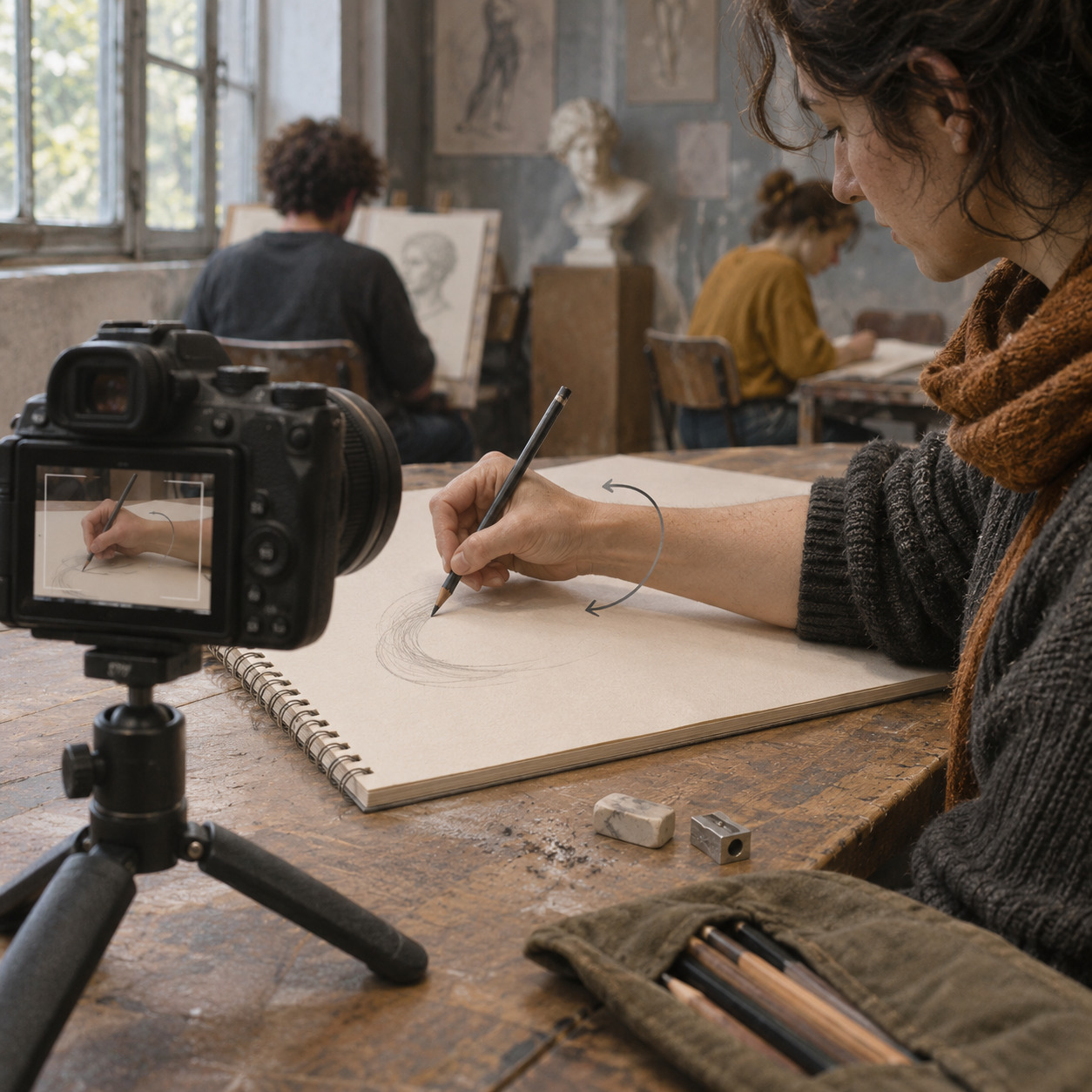
If the tool accepts only an image and text, the same discipline still helps: one source drawing, one small action, and an explicit list of features to hold. The broader AI video workflow for designers explains preparation and production choices. For a line study, avoid a camera move that crops away the very contour you plan to assess.
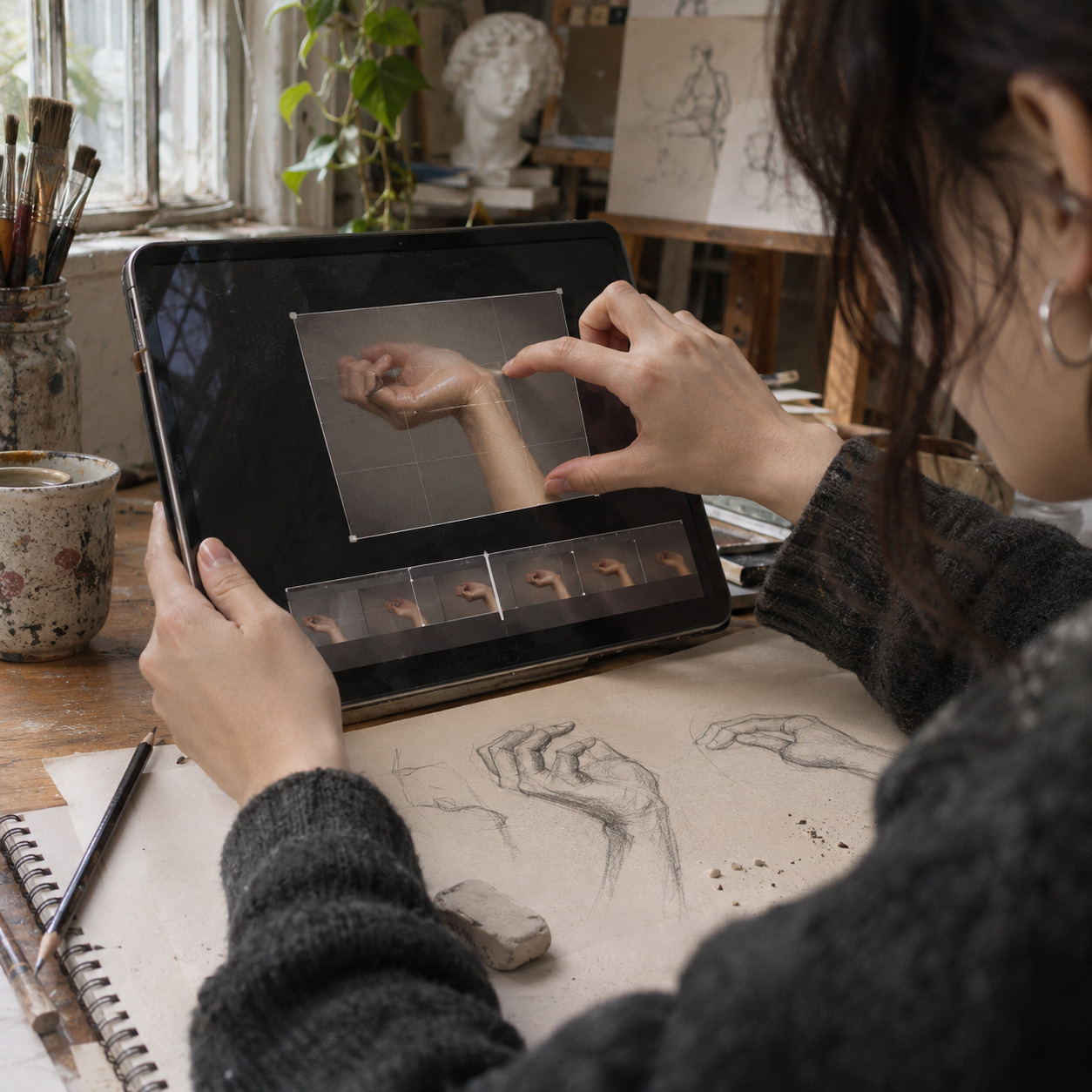
Compare the opening, middle, and final frames
Watch the clip once at normal speed, then stop treating it as a performance. Export the opening, a middle frame, and the final frame. Place those three stills beside the uncropped source sheet at the same displayed size. Align them by a stable landmark such as the page edge or the wrist base. A contact sheet makes drift easier to see than repeated scrubbing.
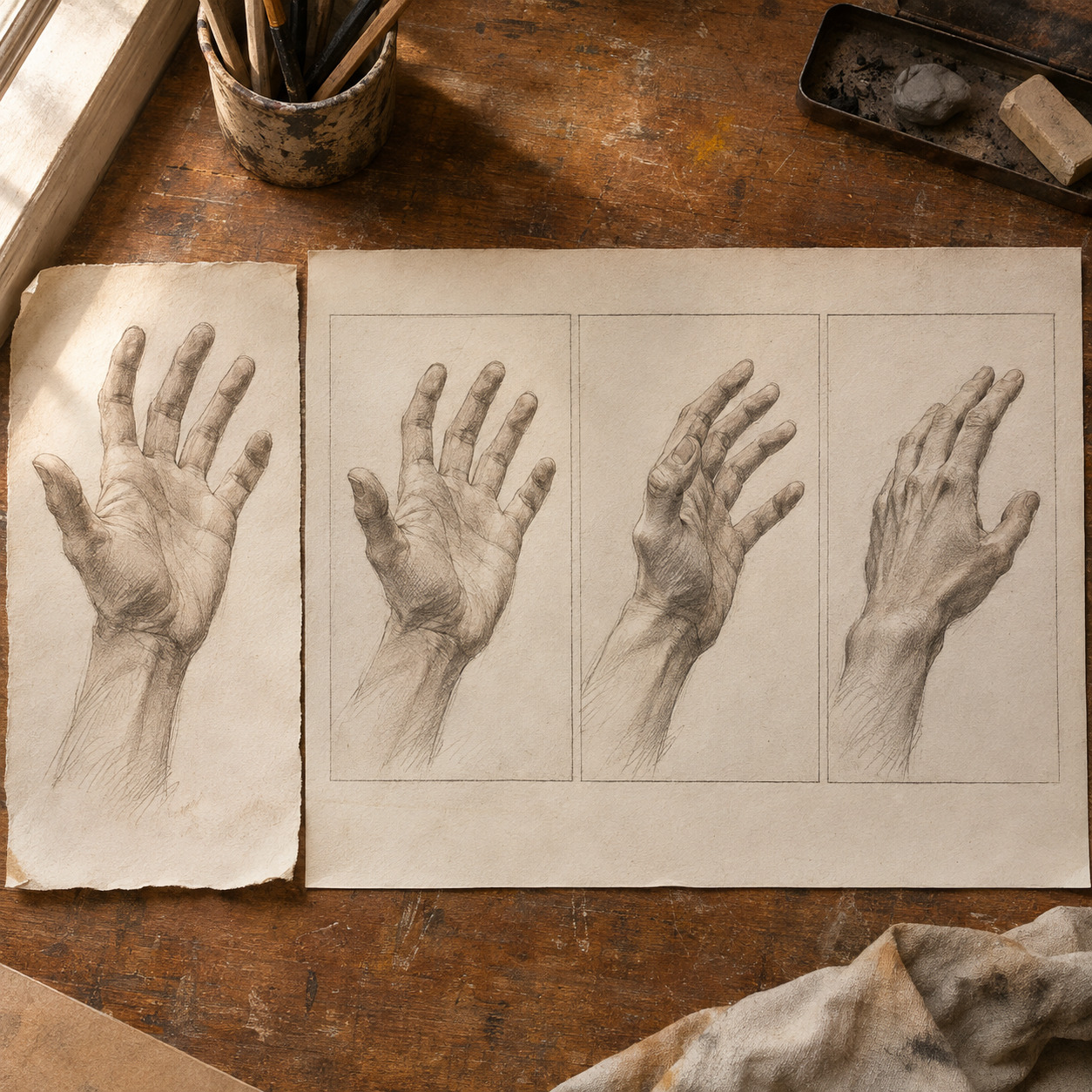
First compare the overall silhouette. Does the hand still occupy the same designed shape as it turns, or has the model replaced it with a tidier generic hand? Next inspect the marked contour. The ink may swell over the knuckle and thin again in the source; a uniform stroke in the final frame changes the drawing's character even if the pose reads correctly. Finally inspect the small spaces. A letter counter that narrows to a slit is already failing before the letter becomes unreadable.
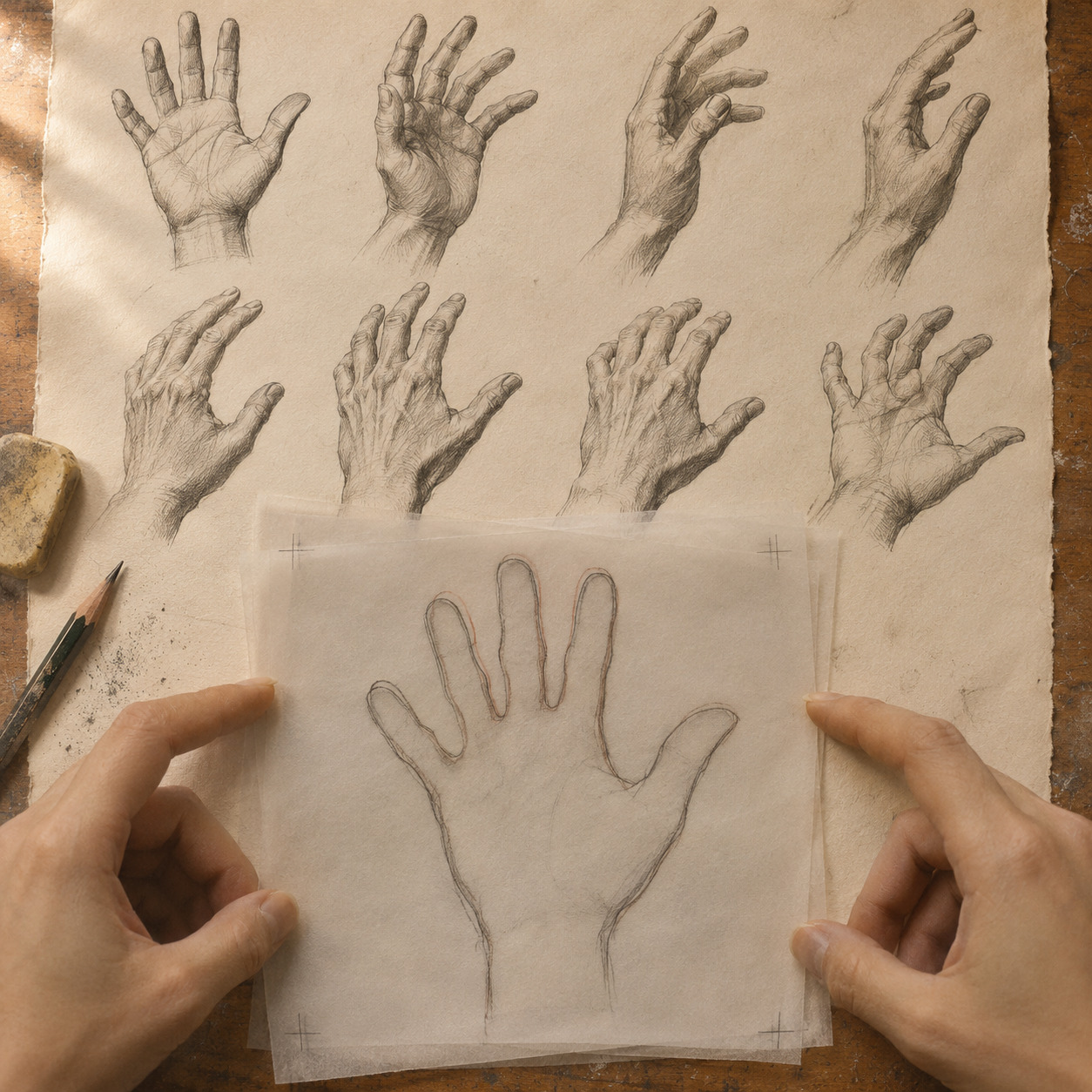
Do not grade the last frame alone. A clean ending can hide a collapsed finger gap in the middle. Equally, a rough opening may settle into a more faithful hold. The sequence matters because viewers see the transition, not just the final still.
| Check | Pass | Revise or stop |
|---|---|---|
| Outer contour | The marked turn and line-weight pattern remain recognizable through the move. | The wrist becomes a new, uniformly smooth outline. |
| Internal shape | Finger gaps and letter counters stay open where the drawing left them open. | A gap fills, splits, or changes identity. |
| Anatomy | Joints move plausibly without adding or removing parts. | A finger gains a joint or bends against the intended gesture. |
| Paper ground | Blank areas and the crop continue to support the original composition. | Shadows, scenery, or camera travel fill the chosen empty space. |
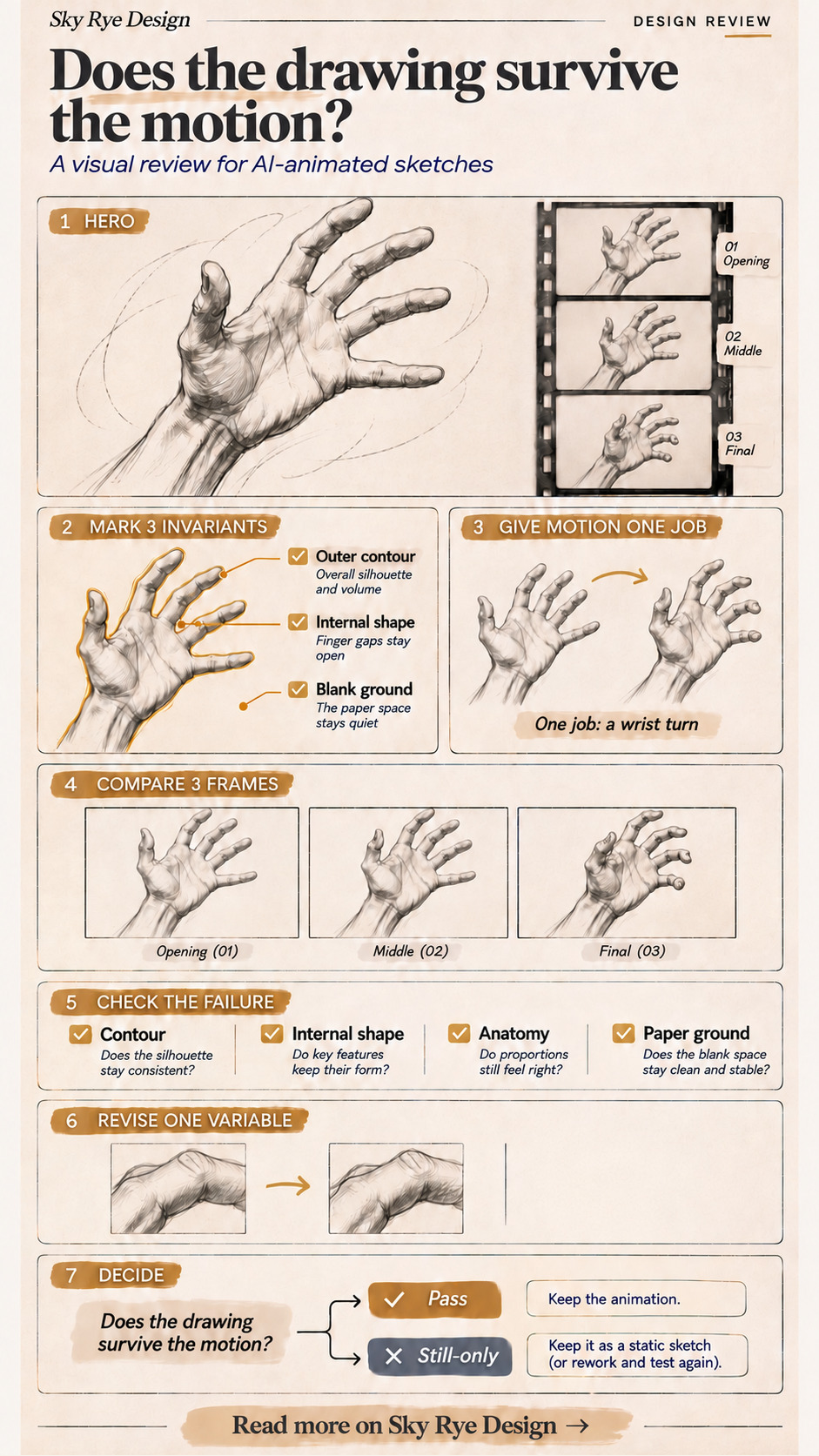
This is a visual rubric, not a numerical accuracy score. A slight texture change may be acceptable in a classroom exploration. A closed counter in a lettering exercise is a different matter: it destroys the feature being studied. Decide which features are essential before viewing the output, so a polished clip does not quietly move the goalposts.
Diagnose the failure before changing the prompt
Name the first place the drawing ceases to be itself. “The animation looks odd” gives the next attempt no direction. “At the middle frame, the knuckle outline doubles while the wrist turns” identifies a specific fault. Crop that region from the source and the failing frame, then compare them without the distraction of motion.
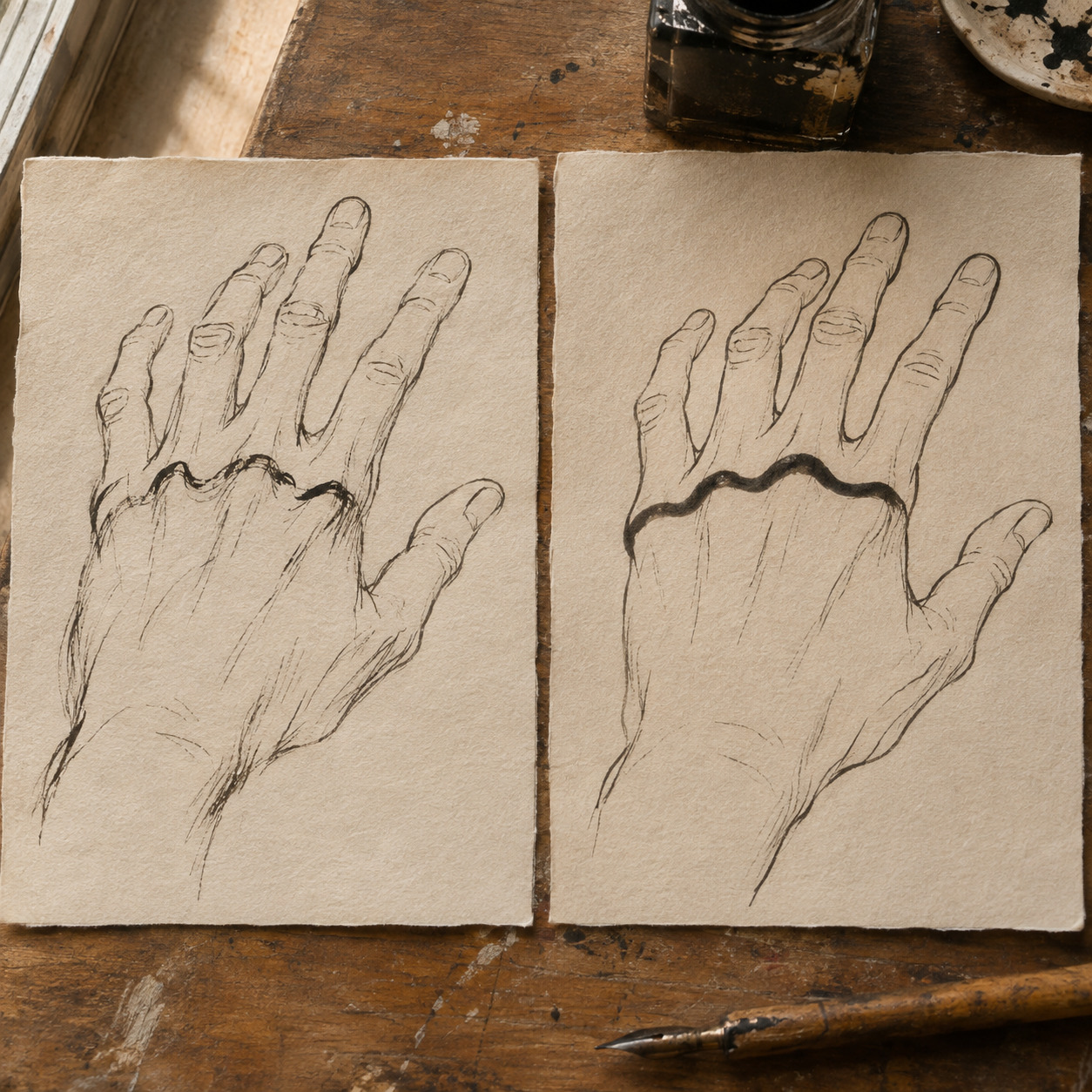
Line-weight drift is common to overlook because the hand can still look anatomically plausible. Watch for a dark edge that becomes uniformly thick, a broken stroke that joins itself, or graphite grain that turns into airbrushed shading. Anatomy drift is easier to spot when you count visible joints and compare the angle of the finger to the original construction. Negative-space drift appears when the tool invents a cast shadow, sleeve, or background object on a sheet meant to stay open.
Keep these as observations about the output, not claims about a model's inner workings. The official Seedance 2.5 introduction describes reference-based generation and editing, but those capabilities do not promise that a particular student's line will survive every frame. The only evidence for this exercise is the source sheet beside the produced clip.
Revise one variable, then review again
If the contour holds but the turn is too fast, change the pacing instruction or motion reference and keep the other inputs. If one finger bends wrongly, ask for that bend to change while holding the wrist, ink weight, and ground. Run the same opening-middle-final check after the edit. A targeted revision is useful only if it improves the marked feature without damaging another.
Do not extend a clip that has already lost the line. Extension makes the failed contour last longer. Do not stitch together two clips with different ink weight and call the seam a completed gesture. If repeated revisions replace the original drawing with a cleaner substitute, stop. The still remains a valid finished study; the motion experiment has shown a limit rather than a failure of the artist.
Run a critique that fits on one wall
For a class exercise, ask each student to bring one approved drawing and one movement. Pin the uncropped sheet at eye level. Put the three frame stills immediately beside it, then play the clip once. The reviewer should point to the previously marked contour, internal shape, and empty area before discussing camera effects or polish.
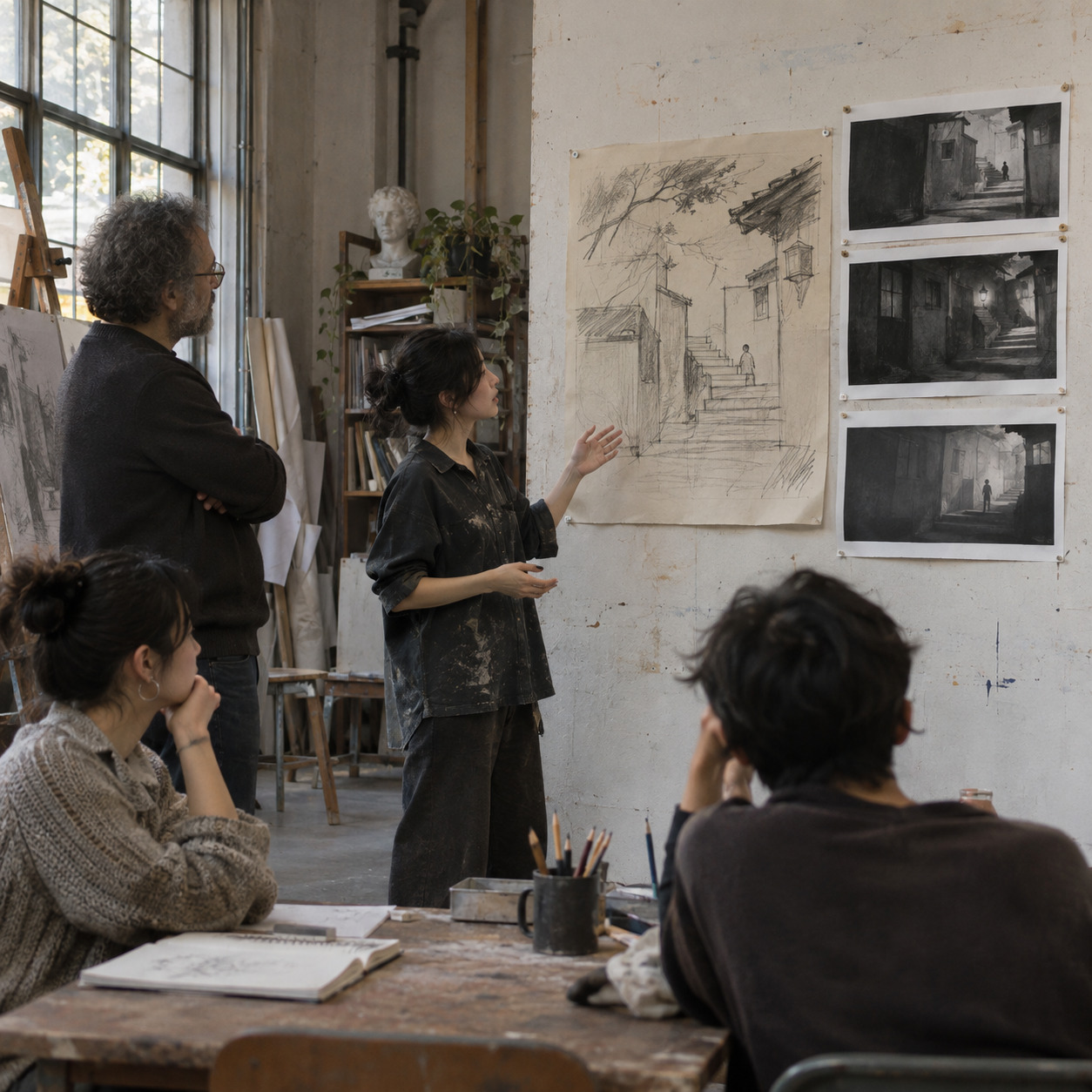
The hand-in packet can stay small:
- The original sheet, uncropped, with the three review marks.
- A one-sentence motion brief naming what changes and what stays.
- The clip plus opening, middle, and final stills at a common scale.
- A short decision: pass, revise one feature, or submit the still only.
A useful review note might read: “The wrist turn is clear. The knuckle's outer line stays weighted in the opening and middle frames, but it doubles in the final frame. The counter in the letter remains open. Revise the final wrist bend and keep the paper ground empty.” That note tells the student where to look and what to leave alone.
Send the study only if the line holds
The clip earns its place beside the drawing when its movement adds information without replacing the decisions made on paper. If a viewer must hunt for the original contour, the animation is a new image, not a faithful motion study. Keep the sheet visible during critique so the judgement stays anchored in the work the student actually drew.
For a finished piece, presenting an animated illustration in a portfolio is a separate step: explain what was drawn, what was generated, and what was selected. In the classroom, the decision comes first. Submit the clip when the marked line, small spaces, and composition survive from opening to final frame. Otherwise, submit the still and the review note. Both show that the artist can see the difference.
- 0shares
- Facebook0
- Pinterest0
- Twitter0
- Reddit0