Industrial design training changes how you look at machines. You stop seeing a frame with parts bolted onto it and start reading silhouette, interfaces, tolerances, access and operator movement as one connected system. I’ve spent more than 15 years working across product design, automotive concepts, architecture and visual communication. A coffee capsule packaging machine is one of the clearest cases I know where that way of reading pays off.
A capsule looks simple on a shelf. In production, it has to meet a filling station, a lidding film, a heated sealing head, a gas system and, eventually, a brewer that clamps and pierces it under pressure. A small mismatch between any two of those can show up months later as stale coffee, a leaking pod or a jammed brewer.
- From pod silhouette to production system
- Sealing precision inside a coffee capsule packaging machine
- Freshness by design
- One line, several capsule formats
- The operator is part of the system
- A practical design-review checklist
- Questions to ask before specifying a line
- Design the capsule and machine together
This article is for designers, founders, operations teams, procurement staff and engineers evaluating capsule lines. It isn’t a vendor comparison. It’s a way to read the whole system before you sign off on a specification.
I’m writing as an industrial designer, not as someone who has run a capsule line or validated shelf life. The technical figures below come from supplier and industry material. Treat them as targets to check against your own coffee, capsule, lidding film and process validation, not as universal standards.

From pod silhouette to production system
Everything downstream inherits the capsule’s decisions. Diameter, depth, wall angle and rim profile set the shape of the tooling that holds it. They also decide how capsules nest in a stack, feed into a turret or linear indexer, and sit under a dosing funnel.
Those choices are rarely made with the packaging machine in mind. A brand team wants shelf presence, and the brewer format dictates outer dimensions. Then someone has to build tooling that grips that shape thousands of times an hour. When the capsule is designed in isolation, the machine compensates with extra guides, slower speeds or frequent adjustments.
Three interfaces, not one
A capsule answers to at least three interfaces. Production nests or carriers hold it during filling and sealing. The lid has to bond reliably to its rim. Finally, the brewer clamps it, opens it and forces hot water through it.
Some formats are pierced by needles at the top and bottom. Others open against a plate once brewing pressure builds. Either way, the brewer expects predictable behavior. A rim that’s slightly too thick may not clamp correctly, and a lid sealed too strongly or too weakly may not open as intended. The package is an active mechanical part of extraction, not a passive container.
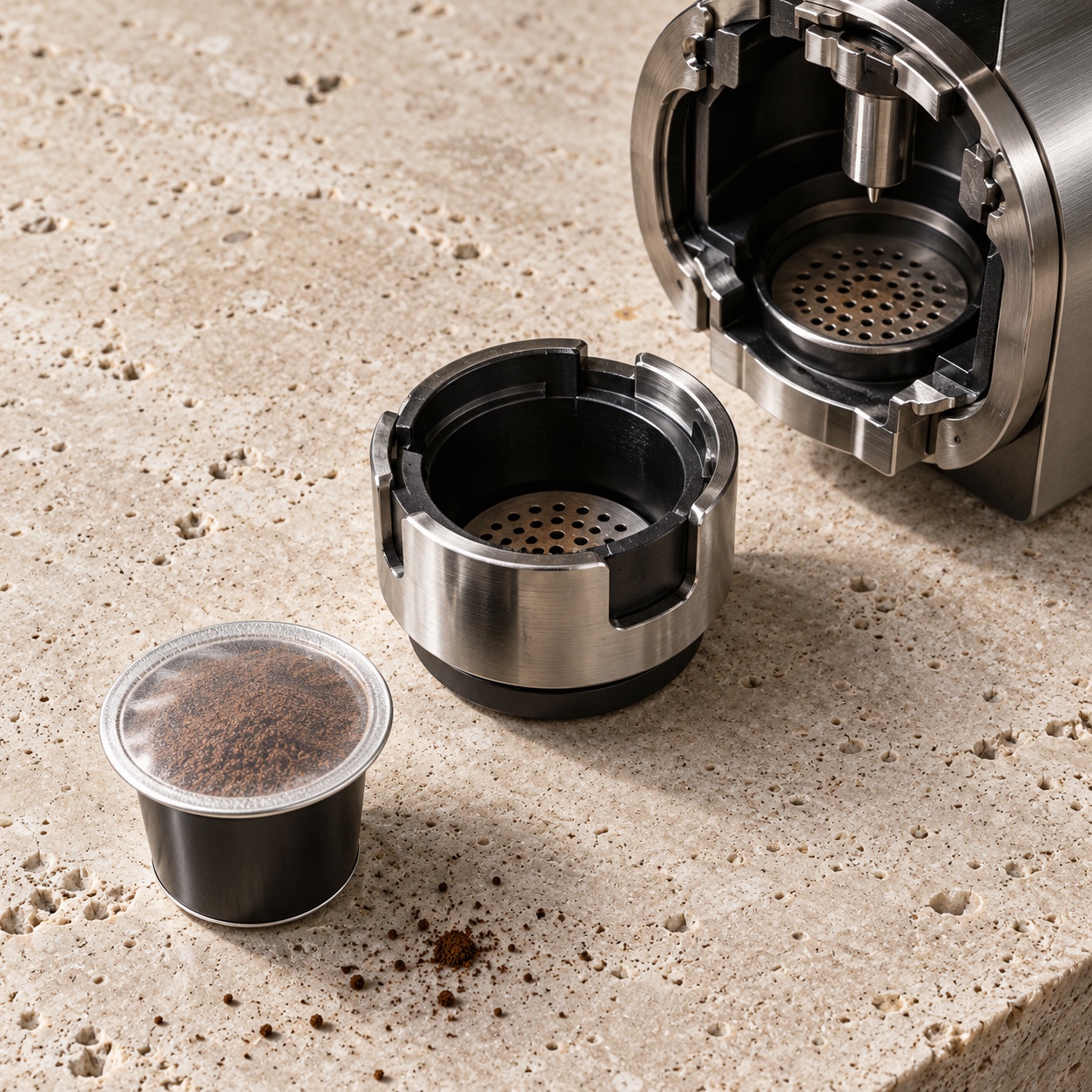
Rim, wall and material tolerances
The rim deserves more attention than it usually gets in early design reviews. It’s the sealing surface, the brewer’s clamping surface and often the feature that locates the capsule in the tooling. Its flatness, width and finish all affect seal quality.
Wall rigidity matters too. A thin wall saves material but may deform under sealing pressure or during high-speed handling. A stiffer wall resists that at the cost of weight and material. Aluminum, multilayer plastics and compostable polymers each respond differently to heat, pressure and moisture, and each carries its own dimensional variation from the cup supplier.
The tolerance stack-up isn’t only a drawing exercise. You need to know what the capsule supplier actually holds batch to batch, what the tooling tolerates, and where the brewer stops forgiving. Those numbers belong in the same conversation.
Sealing precision inside a coffee capsule packaging machine
Sealing is where design intent either survives production or doesn’t. The goal is a hermetic bond between lid and rim, consistent across every capsule at the line’s rated speed. Heat, pressure and the condition of the joined surfaces carry most of the weight. Dwell time, meaning how long the head stays in contact, ties them together.
Copper heads, thermal uniformity and setpoints
Many sealing heads use copper or copper alloys because copper conducts heat very well. That spreads heat evenly around the seal perimeter, so one side of the ring doesn’t run cooler than the other. On a round rim, a single cold spot can leave a weak point.
Copper has tradeoffs. It’s relatively soft, so face wear needs monitoring, and some heads use coatings or inserts to manage that. Head mass and heater power also set how quickly temperature recovers after each cycle. At high speed, that recovery matters more than the nominal setpoint.
Temperature is typically managed by a PLC (programmable logic controller) reading sensors and adjusting heater power. Some supplier specifications quote control within ±1°C. Read that as a possible capability under defined conditions, not a guarantee for every head, film and ambient temperature. Ask where the sensor sits, whether the figure describes the controller reading or the actual sealing face, and how it holds over sustained production.
Capsule filling and sealing suppliers such as SANEU publish details like sealing head materials, control systems and supported capsule types. Treat any supplier page as a starting point for questions about heads, controls and format changes, then verify the claims in trials with your own capsules and lidding film.
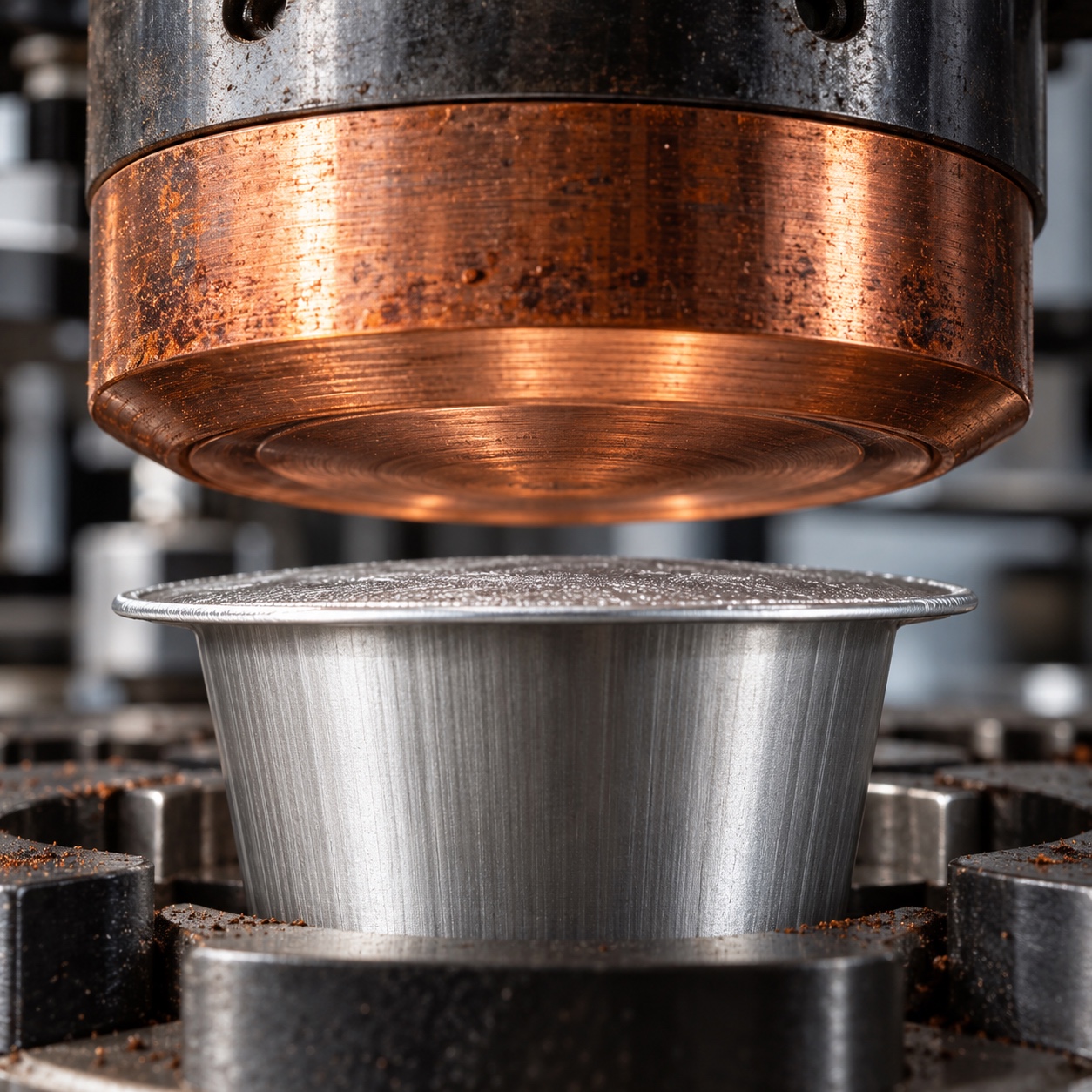
Pneumatic force and surface contact
Heat alone doesn’t make a seal. The head has to press the lid onto the rim hard enough for full contact without crushing or distorting the rim. Many lines use pneumatic cylinders for this, which makes air supply stability part of seal quality.
Force should be even around the whole perimeter. That depends on the head being parallel to the rim and the capsule sitting level in its nest. A slightly tilted nest or a worn locator can concentrate pressure on one side. The result looks fine to the eye and still fails a leak test.
Different materials want different combinations of heat, pressure and dwell. A recipe that works for aluminum may scorch or under-seal a compostable structure. That’s why sealing parameters belong in validated recipes rather than in an operator’s memory.

Micro-channel leaks and how to find them
A micro-channel is a tiny unsealed path through the bond. It’s often invisible, yet large enough to let oxygen in over weeks. Common causes include coffee fines on the rim, wrinkled lidding film, uneven heat or pressure, a damaged head face and a rim that’s out of flatness.
Coffee dust is a particular enemy. Ground coffee is fine and oily, and it migrates. Dosing design, rim cleaning or protection, and dust extraction decide whether the sealing surface stays clean.
Inspection usually combines methods. Lines and labs may use vacuum or pressure-decay leak testing, headspace oxygen measurement, vision checks for lid placement, and destructive peel or burst tests on samples. The right mix depends on volume, risk tolerance and budget. Plan where inspection happens and what triggers rejection before the line is built, not after the first complaint.
Freshness by design
Roasted coffee is sensitive to oxygen. Aromatic compounds fade, oils oxidize and the cup tastes flatter. Capsule producers commonly use nitrogen to displace air before sealing. Done well, it’s one of the main reasons a single-serve pod can stay pleasant long after roasting.
Where nitrogen enters the cycle
Nitrogen flushing works best as a sequence rather than a single puff. Systems may flush the empty capsule, shroud the dosing area so coffee falls through an inert atmosphere, and then flood the space just before and during sealing. The aim is to keep oxygen from creeping back in between stages.
Timing matters as much as gas volume. Flush too early and air can re-enter before the lid lands. Too aggressive a flow can disturb the dose or blow fines onto the rim, which brings back micro-channel leaks. Gas consumption is also a running cost, and generous flushing can hide poor enclosure design. A well-shrouded station may reach the same result with less nitrogen.
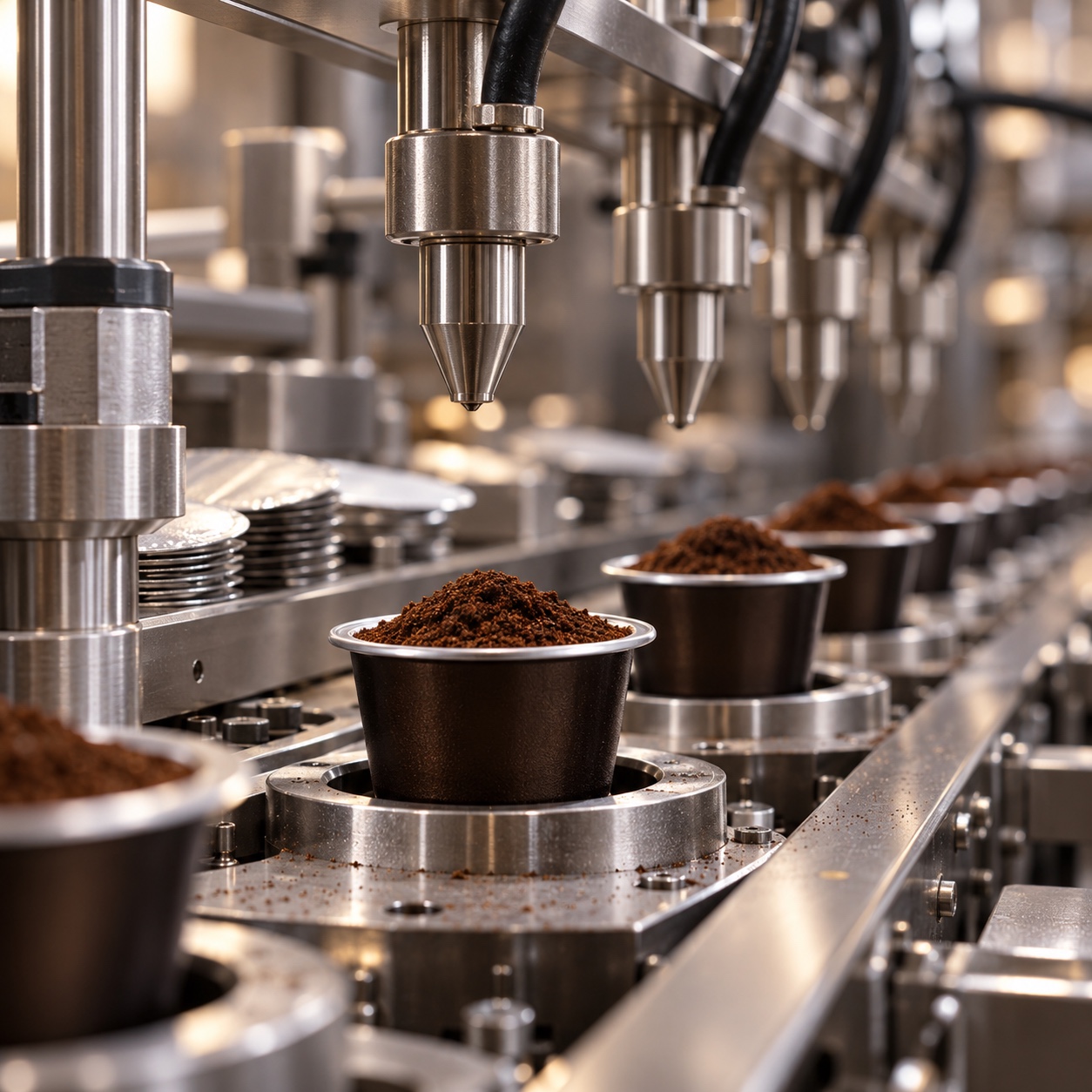
Residual oxygen as a validation target
Residual oxygen is usually measured by piercing sample capsules with a headspace analyzer. The source material for this article cites 1.5–2.0% as a common target, with under 1% for premium lines. Those figures appear in industry and supplier discussions, but they aren’t a universal rule. Your target should come from your coffee, roast, grind, capsule barrier and intended shelf life.
I’d push back on treating oxygen as a dashboard number to admire. A low reading at the start of a shift means little if it drifts by mid-afternoon, or if the capsule material lets oxygen through over time. What matters is a sampling plan, a defined limit, a response when results exceed it, and records that connect results to batches.

Shelf-life claims need real testing
The source also cites 12–24 months of protected flavor. That can be a realistic goal for some well-designed products, but no machine creates shelf life on its own. It depends on cup and lid barrier, seal integrity, initial oxygen, storage conditions and the coffee itself.
Barrier is where material choice bites. Aluminum offers a strong oxygen barrier, and multilayer plastics vary with their structure. Many compostable capsules have weaker barriers and are often sold in an outer barrier pack to compensate. Any shelf-life claim should rest on real-time or properly designed accelerated testing, ideally with sensory evaluation, for the specific product and package.
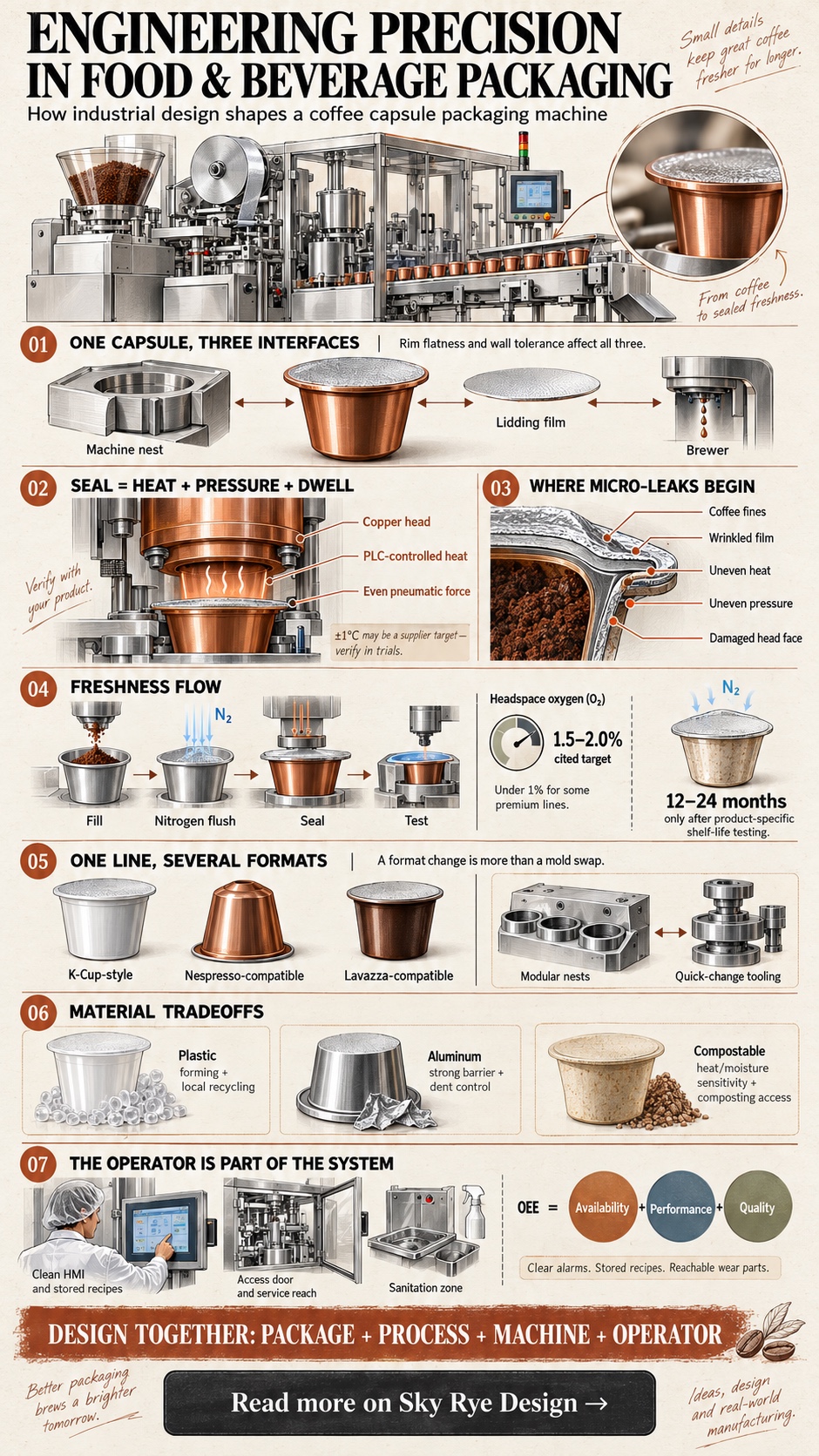
One line, several capsule formats
Few producers want a line that makes one thing forever. Private-label work, new brewer formats and material changes all push toward flexibility. That flexibility costs precision unless it’s designed in from the start.
Modular tooling and quick changes
Quick-change tooling lets a line switch capsule size by swapping nests, guides, dosing parts and sealing heads instead of rebuilding the machine. Good changeover design in industrial equipment shares a few habits: parts that only fit one way, clear identification, minimal-tool fastening and repeatable locating features. Get those right and the machine doesn’t need re-tuning after every swap.
Modularity has a resource side too. Tooling that can be reconfigured, repaired and reused extends a machine’s useful life, which connects to wider thinking about green industrial design. The tradeoff is that every interface between modules is another place for tolerance to accumulate. More modularity needs better datums, not fewer.
Format geometries are not interchangeable
K-Cup, Nespresso-compatible and Lavazza-compatible capsules are different objects, not resized versions of each other. The names are used here only as format descriptions, and no affiliation is implied. A K-Cup-style pod is larger and typically includes an internal filter, so the line may need a filter-insertion station and a different dosing approach. Nespresso- and Lavazza-compatible capsules are smaller, with their own rim geometry and opening behavior.
So a format change can involve far more than a mold swap. Fill weight, tamping, lid size, die-cutting, gas settings, vision recipes and reject logic may all change. When a supplier says a machine handles several formats, ask exactly which parts change, how long a trained operator takes, and how many capsules are discarded before production resumes.
Plastic, aluminum and compostable tradeoffs
No material wins on every axis. Plastic cups can be easy to form and seal, though barrier and recyclability depend on structure and local collection systems. Aluminum gives a strong barrier and a rigid rim but needs careful handling to avoid dents, and its recycling depends on collection programs. Compostable materials appeal to many brands but can be more sensitive to heat, moisture and storage, and their end-of-life benefit depends on composting access.
Each switch changes sealing recipes, often the head face and sometimes the gas strategy. The visual and print side of that shift, including how eco substrates affect color and production, is covered in our piece on sustainable packaging design. Here the point is narrower: a material change is a machine change too.

The operator is part of the system
A line’s real performance shows up over weeks, not during a factory acceptance test. That’s where OEE comes in. Overall equipment effectiveness combines availability, performance speed and the share of good output into one figure. Ergonomics affects all of it, often more than headline speed does.
Procurement teams weighing automation spend can find wider manufacturing context in business coverage from outlets such as Forbes. That context is useful for framing an investment, but it won’t replace trials on your own line.
HMI, alarms and recipes
The HMI (human-machine interface) is where an operator understands the machine. A good screen makes the current state obvious: which recipe is running, which station is faulted, which temperatures are in range. Alarms should say what happened, where, and what to check first. “Seal head 2 below setpoint, check heater connection” helps. A bare fault code doesn’t.
Sealing temperatures, pressures, dwell times and gas flows for each format and material should be stored, versioned and protected by permission levels. Operators shouldn’t need to remember parameters, and they shouldn’t be able to quietly change validated settings without a record.

Footprint, sanitation and access

Compact machines are attractive when floor space is expensive. The risk is a frame so tight that cleaning and maintenance become awkward, and in food production, awkward means skipped. If a technician has to remove four panels to reach a sealing head, inspection gets postponed.
Coffee dust adds a specific sanitation concern. Ledges, unsealed gaps and horizontal surfaces collect fines that turn into oily residue. Sloped surfaces, accessible enclosures and extraction near dosing all help. So does thinking about how a person physically reaches each wear part with gloves on and tools in hand.

Styling that supports use
As an industrial designer, I have a clear bias here. Machine styling should express how the machine works, not hide it. Automotive concept work teaches the same lesson: every shut line is also a decision about access and repair.
A sleek shell that covers wear points, blocks sightlines to the sealing station or makes guards hard to open is a cosmetic choice with operational costs. Clear visual zoning, color-coded change parts, readable labels and windows where operators need to see the process all improve use. On industrial equipment, good proportion often comes from honest structure.
A practical design-review checklist
Use this before a specification is finalized, ideally with design, operations, quality and procurement in the same room.
- Confirm capsule drawings, supplier tolerances and brewer requirements for rim width, flatness, wall thickness and overall height.
- Ask the cup supplier for real batch variation data, not just nominal dimensions.
- Define sealing recipes per format and material, including temperature, pressure, dwell and where temperature is measured.
- Ask how sealing head faces are inspected, maintained and replaced, and how long that takes.
- Identify contamination risks on the rim and how dosing and extraction prevent them.
- Agree on leak-test methods, sampling frequency and reject rules before trials begin.
- Set residual oxygen targets from product and barrier data, then define sampling and response procedures.
- Base shelf-life claims on planned testing for the exact capsule, lid, coffee and storage conditions.
- List every part that changes between formats and time a changeover with a trained operator.
- Review HMI screens for alarm clarity, recipe control and user permissions.
- Walk the layout for cleaning and maintenance access, including gloved reach to wear parts.
- Ask how the supplier defines and measures OEE in acceptance testing.
Questions to ask before specifying a line
How should we choose capsule formats before buying equipment?
Start with your market and brewer compatibility, then work backward to production. Decide which formats you need now and which are realistic later, because each adds tooling, validation and changeover burden. If you’ll run one format for years, a dedicated setup may be simpler and more stable. If private label is likely, specify flexibility early. Buying for theoretical future formats can add cost without adding output.
How can we tell whether sealing quality is good enough?
Visual inspection isn’t enough. Define seal acceptance through measurable tests on your actual capsules and lidding film, such as leak testing, peel or burst testing on samples, and headspace oxygen checks. Run trials at full production speed, not slow demonstration speeds. Check consistency across every sealing head and over long runs, because heat recovery and wear show up over time.
Is nitrogen flushing always necessary?
For most roasted coffee sold in capsules, some form of oxygen control is common because oxygen degrades flavor. The right approach depends on your coffee, capsule barrier and intended shelf life. Ask where gas is introduced, how flow is synchronized with dosing and sealing, and what residual oxygen the line achieves on your product. Your own sampling and shelf-life results should decide adequacy.
How long should a format changeover take?
There’s no single benchmark, because it depends on how many parts change and how much validation follows. Ask the supplier to demonstrate a full changeover, including the first good capsules after restart. Watch whether parts locate positively or need fine adjustment, and count the tools required. Then compare that time with how often your schedule actually demands format changes.
How does maintainability affect OEE?
Maintainability shapes availability, one of the three parts of OEE. If wear parts are hard to reach, maintenance gets delayed or takes longer, and unplanned stops increase. Poor access can also hurt quality when residue builds up near sealing surfaces. Ask for maintenance intervals, spare parts lists and task times, and have a technician physically try reaching the sealing heads during a factory visit.
Design the capsule and machine together
No single component can rescue the others. A beautiful capsule with an unstable rim will challenge the best sealing head. Precise temperature control can’t fix a film chosen for the wrong material. A fast machine loses its advantage if operators struggle to clean it, change it or understand its alarms.
So treat package, process, machine and operator as one design problem. Before your next capsule-line specification is approved, bring the capsule drawings, lidding film data, sealing recipes, oxygen and leak-test plans, and machine layout to one cross-functional review. Mark every tolerance, target and claim that hasn’t yet been verified with your own product. That list becomes your trial plan.
- 2shares
- Facebook0
- Pinterest2
- Twitter0
- Reddit0