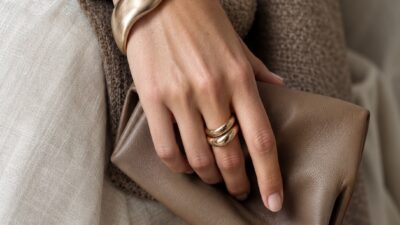
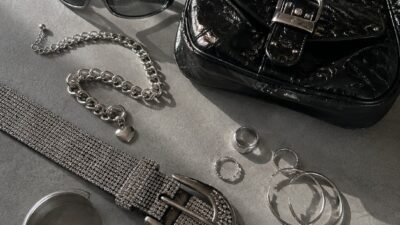
A piece of jewelry rarely fails because it is ugly. It fails because it is the wrong size for the wrist, sits too close to its neighbor, or fights the neckline behind it. Those are composition problems, and they are easy to fix once you know where to look.
I have spent more than 15 years working in design, including product and jewelry design, and I studied industrial design alongside composition, drawing and life painting. That training changes how you see a bracelet. You stop reading it as a single object and start reading proportion, silhouette, finish, and the empty space between the piece and the body or garment around it.
- Why gold-plated jewelry works visually
- Start with versatile pieces
- How to style gold-plated bracelets
- Make earrings part of the outfit
- Layering: how to layer gold necklaces and stack bracelets
- How to wear gold jewelry with clothing: color, fabric, neckline and sleeves
- Choose jewelry for everyday, work, evening, weddings and travel
- Care for gold-plated jewelry
- Develop a personal jewelry style
- Frequently asked questions
- The 30-second check before you leave
This guide treats how to wear gold jewelry as a series of visual decisions: how big, how shiny, how many, and where. You will find ways to choose a focal point, layer without clutter, match warm metal to your wardrobe, and look after gold plated jewelry so it stays pleasant to wear. These jewelry styling tips do not need a large collection. A few good pieces and an honest look in the mirror do most of the work.

Why gold-plated jewelry works visually
Gold is warm and reflective, and those two qualities do different jobs. The shine catches light and pulls the eye. The warmth behaves like a color in the outfit, so a thin gold chain against a navy sweater reads as a small warm accent in the palette, with the sparkle as a bonus.
Gold-plated pieces also come in nearly every form you might want to try: fine chains, hoops, cuffs, rings, textured bands. That range matters because jewelry is mostly seen in passing, and in passing, silhouette counts for more than detail. Nobody studies a clasp from across the room.
Think in marks, not items
A useful habit from drawing is to reduce each piece to a single mark. A chain is a line. A hoop is a circle. A cuff is a block. A ring or stud is a dot. An outfit with a line at the neck, a circle at the ear and a dot on the hand has variety without crowding, while an outfit with three blocks has nowhere for the eye to rest.
This also explains why some combinations feel off even when the colors agree. Two heavy, wide pieces compete for the same job. A slim chain beside a wide cuff gives each one its own.
Finish changes the volume
A polished surface reflects light and gets noticed quickly. A brushed or matte surface absorbs it and reads quieter. Two bracelets of identical size can look like very different amounts of jewelry depending on finish.
If you want a piece to sit back, choose a softer surface. If it is meant to be the focal point, high polish or strong texture will carry it.
Start with versatile pieces
The easiest foundation is a small set that covers each mark: small hoops (circle), a fine chain necklace (line), a plain ring (dot) and a slim bracelet (line again). Worn with a white T-shirt, tailored pants and a blazer, they make the outfit look finished without looking decorated. A neutral knit dress works the same way with understated earrings and a slim bracelet.
The test for a versatile piece is simple: can you picture it with at least three outfits you already own? If you can only imagine it with one dress, it is a special-occasion purchase. That is fine, but treat it as a different category from your daily rotation.
Check scale against your body
Proportion is personal. A fine chain that looks graceful on one person can vanish against a broad neckline or a larger frame, and a wide cuff that looks confident on one wrist can overwhelm another. Hold a piece against your wrist, neck or ear before deciding, and judge it in a full-length mirror as well as up close.
The question is whether it is visible from a few steps away without taking over.
Test for comfort and movement
Product design teaches you early that an object has to work in motion. Move your arms, turn your head, type for a minute, reach for a high shelf. A clasp that digs, a hoop that swings into your collar, or a bracelet that slides over your hand every time you gesture will end up in a drawer, however good it looks standing still.
How to style gold-plated bracelets
The wrist sits at the edge of your silhouette and moves constantly, so a bracelet gets seen even when it is small. That makes it one of the easiest places to add gold without making the outfit feel loaded.
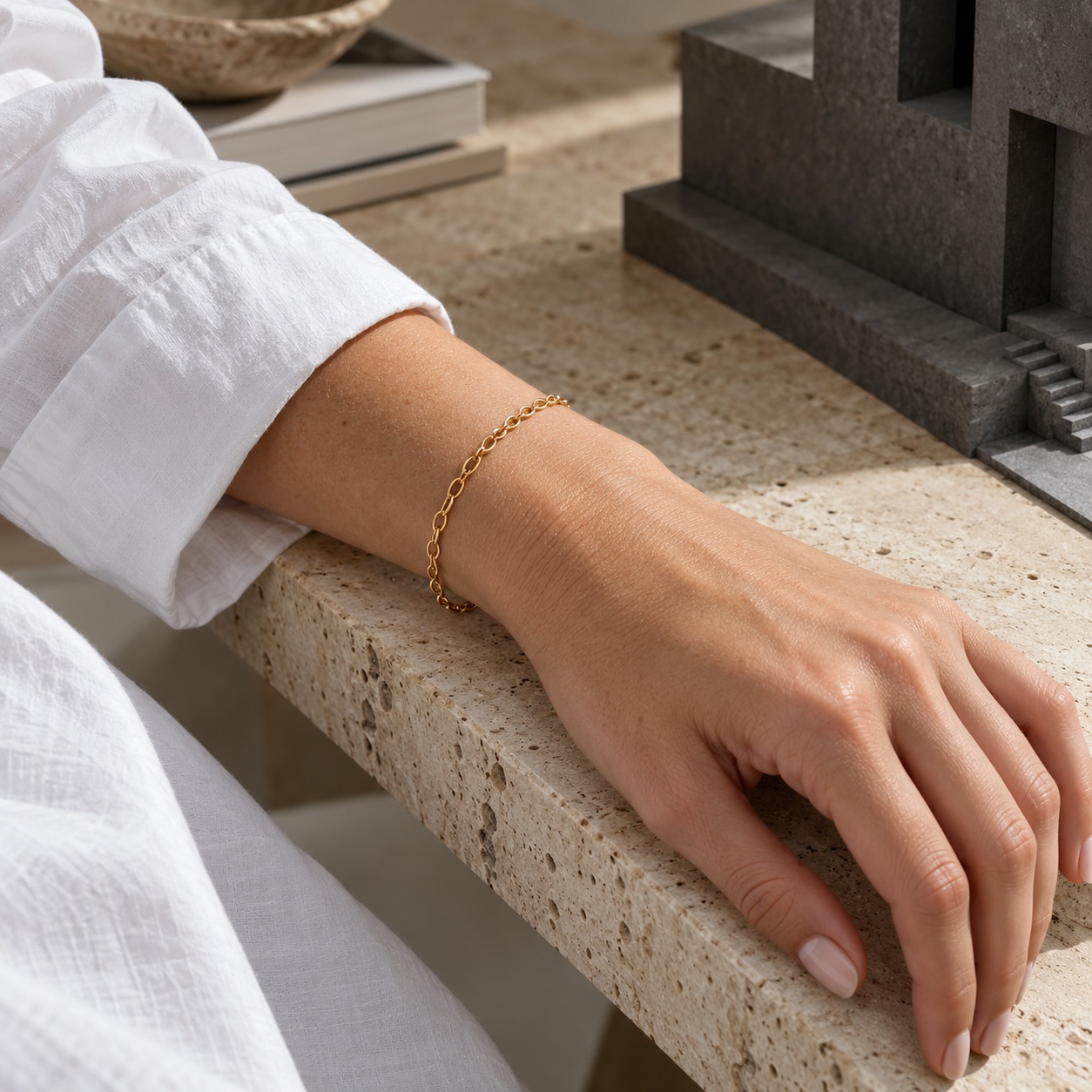
The single slim bracelet
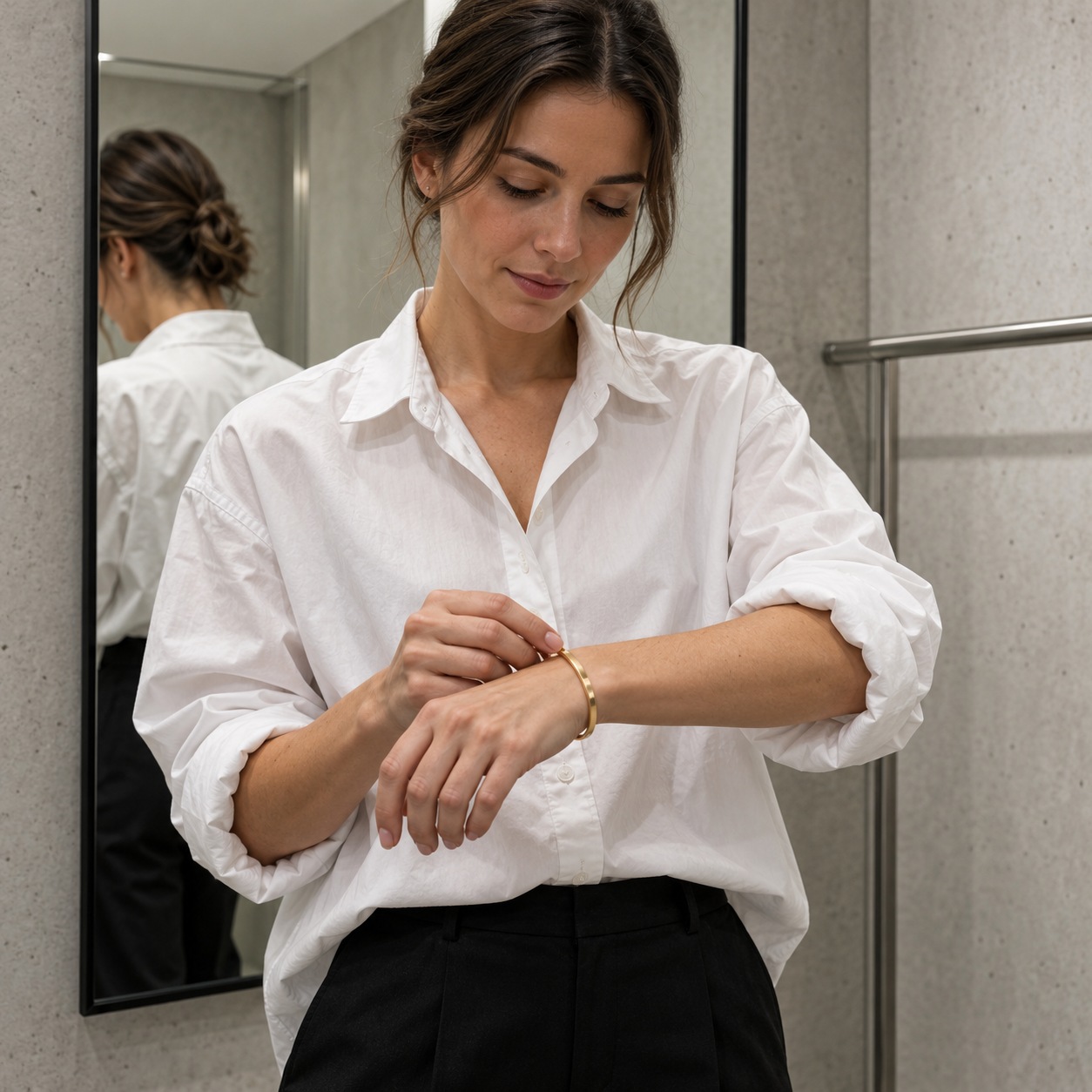
For a minimalist look, wear one delicate bracelet with a fitted shirt, a knit top or a sleeveless dress. What makes it work is the clear space around it. A single fine chain on a bare wrist has all the room it needs. Add a watch, a hair tie and two more bands, and it becomes clutter.
Choosing shape and proportion
Before you pick a bracelet, decide what job it should do. A fine chain is a line and adds a quiet detail. A bangle is a circle and echoes other round shapes such as hoops or buttons. A cuff is a block with real visual weight. If you want to compare shapes, explore the collection with a few questions in mind: does this read as a line, a ring or a block, and how much of my wrist will it cover?
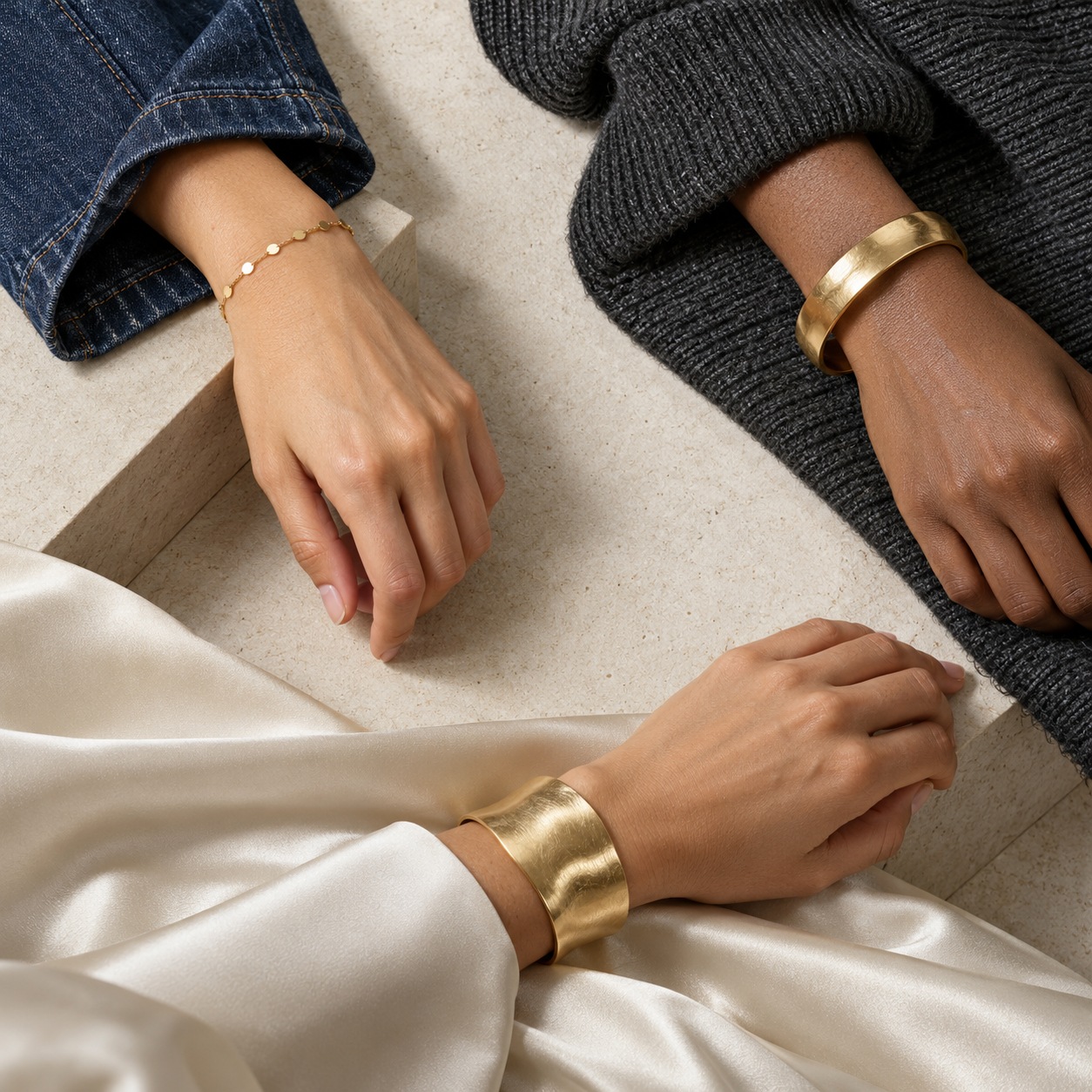
Cuffs especially need negative space. Leave a visible band of bare skin on either side, and avoid pushing one against a watch or a stack of other pieces. Given that room, the cuff reads as a deliberate shape rather than a lump of metal.
Bracelets and sleeve length
Sleeves decide how much of a bracelet anyone sees. Sleeveless dresses and rolled sleeves expose the whole wrist, so the piece becomes a clear accent. A long fitted sleeve may hide it entirely, or push it up the forearm.
Fabric matters too. A wide, loose sleeve can swallow a fine chain, and a snug knit cuff can catch delicate links. If you are unsure, choose a bracelet that sits where the sleeve ends, or one that leaves a clear gap.
Bracelets with occasionwear
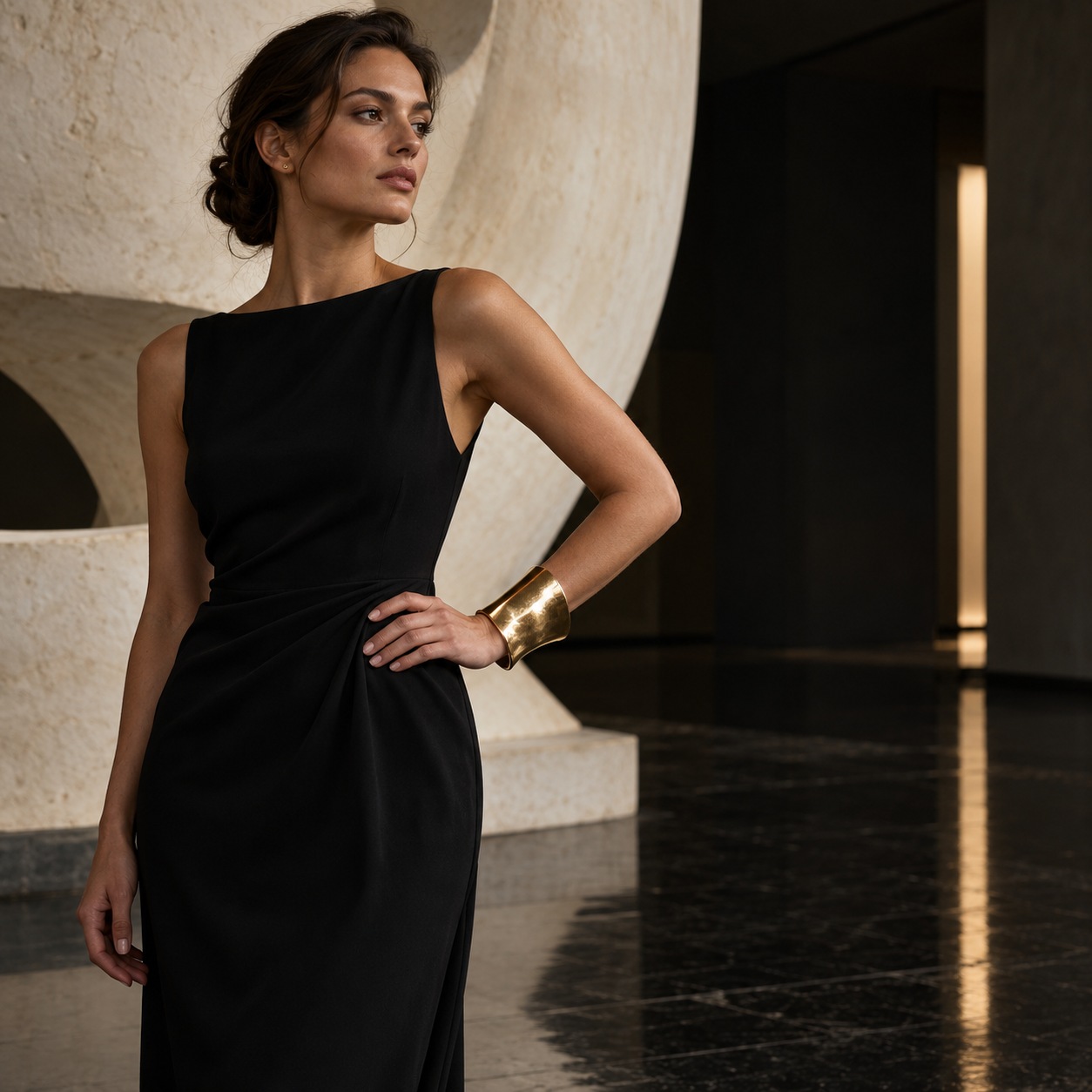
A gold-toned bracelet with a black dress, a tailored evening outfit or a softly colored blouse adds warmth without competing with the clothing. Keep it slim when the garment has a strong print or a lot of sparkle. Let a wider piece lead when the clothing is plain.
Make earrings part of the outfit
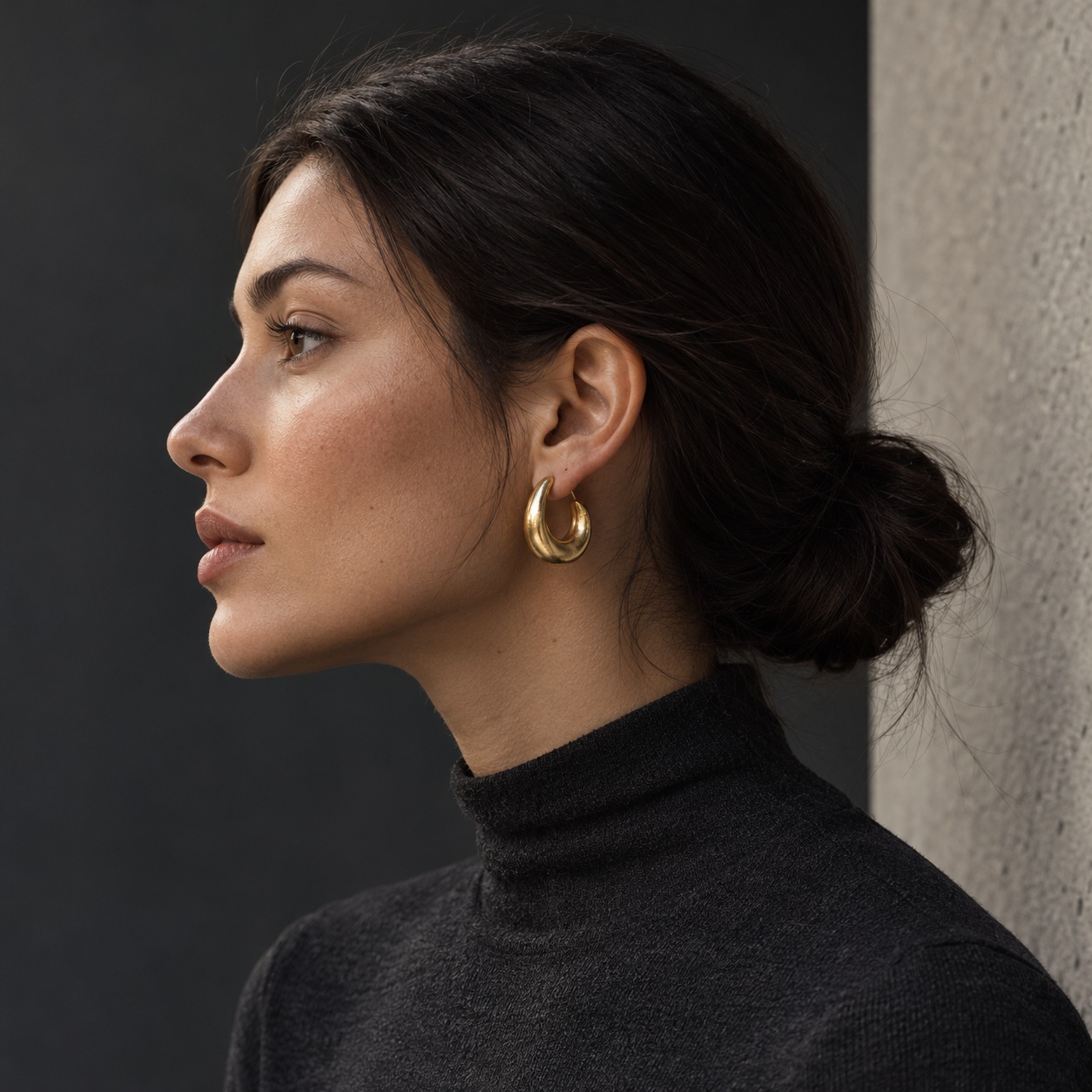
Earrings sit beside the face, so they set the tone before anything else is noticed. Small studs and slim hoops suit everyday outfits. Larger hoops and sculptural shapes bring more personality to a plain base.
Hair, glasses and neckline
Your hair decides how much of an earring is seen. Tied-back or short hair exposes the whole piece, so scale and shape matter more. Long hair makes a softer frame and can hide a small design completely.
If you wear glasses, look at the frame color as well. Warm gold beside black frames reads as a clear contrast, while silver frames next to gold can look accidental unless you are mixing metals on purpose.
Then check the neck. A high collar, a scarf or a cowl neck sits close to the earring, so a dangling pair may brush against it all day. A wide-open neckline leaves room for a longer drop. Hold a hoop beside your face too: if its diameter reaches past your jawline, it will read as a statement piece even when the design is plain.

Work and evening earrings
For work or daytime plans, understated earrings sit comfortably with structured clothing and neutral colors. For an evening event, a more distinctive pair adds interest to a sleek dress or a tailored jacket.
If the earrings are the statement, let them be the only loud piece above the shoulders. A bold earring plus a chunky necklace is a collision.
Share a finish, vary the form
Rather than matching every accessory, share a gold tone and vary the shapes. A small hoop, a slim chain and a simple ring in the same tone look related. A hoop, a hoop-shaped bangle and a circular pendant look repetitive, like a boxed set.
Layering: how to layer gold necklaces and stack bracelets
Layering makes familiar pieces feel personal, but only when each piece has room to be seen. Identical items blur into one thick band, which defeats the point of wearing more than one.
Necklaces: separate the lengths clearly
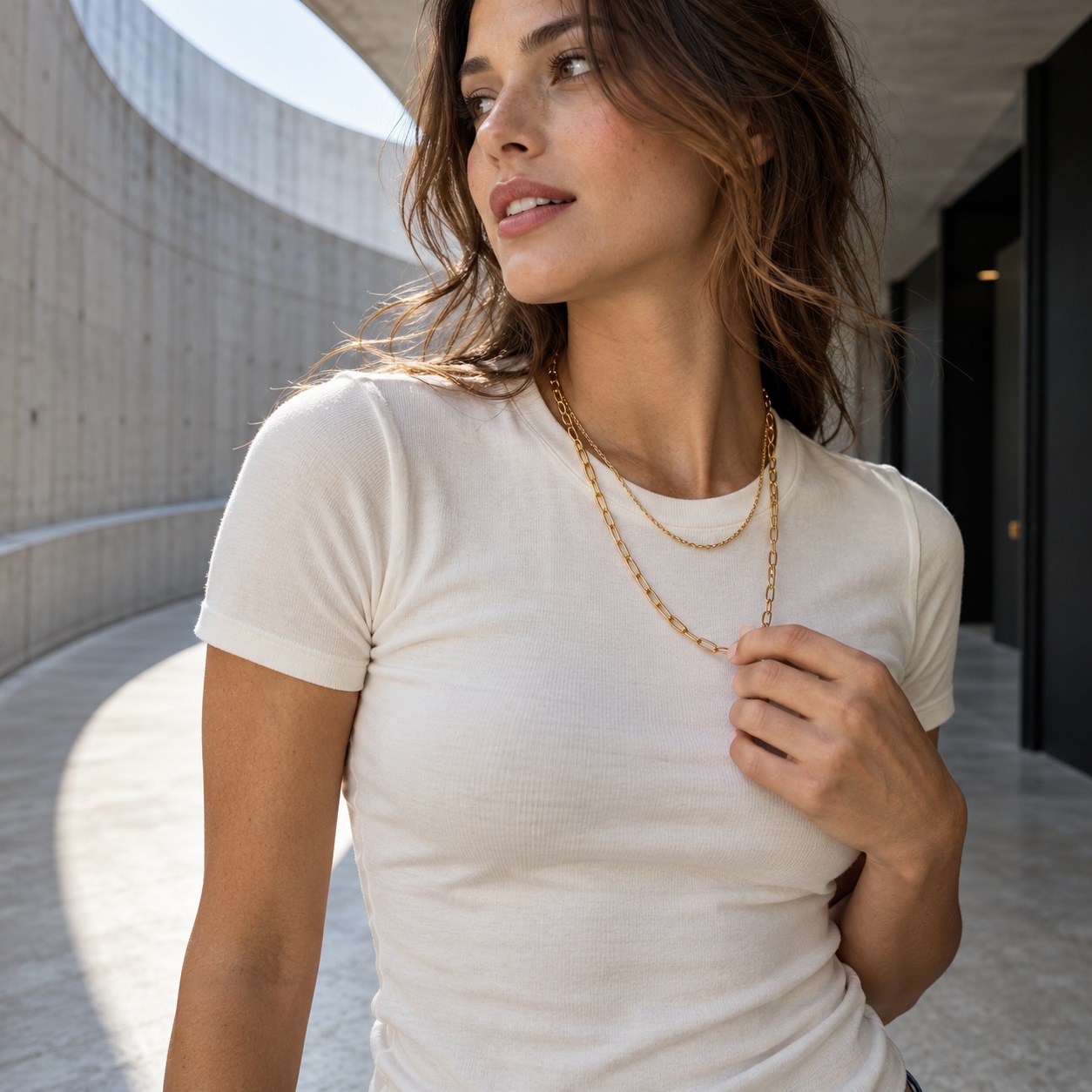
Leave a gap of roughly two inches (about 5 cm) between chains as a starting point. That is enough for the eye to read two distinct lines instead of one tangled one. Vary the weight too: a fine chain close to the collarbone, a slightly heavier one lower.
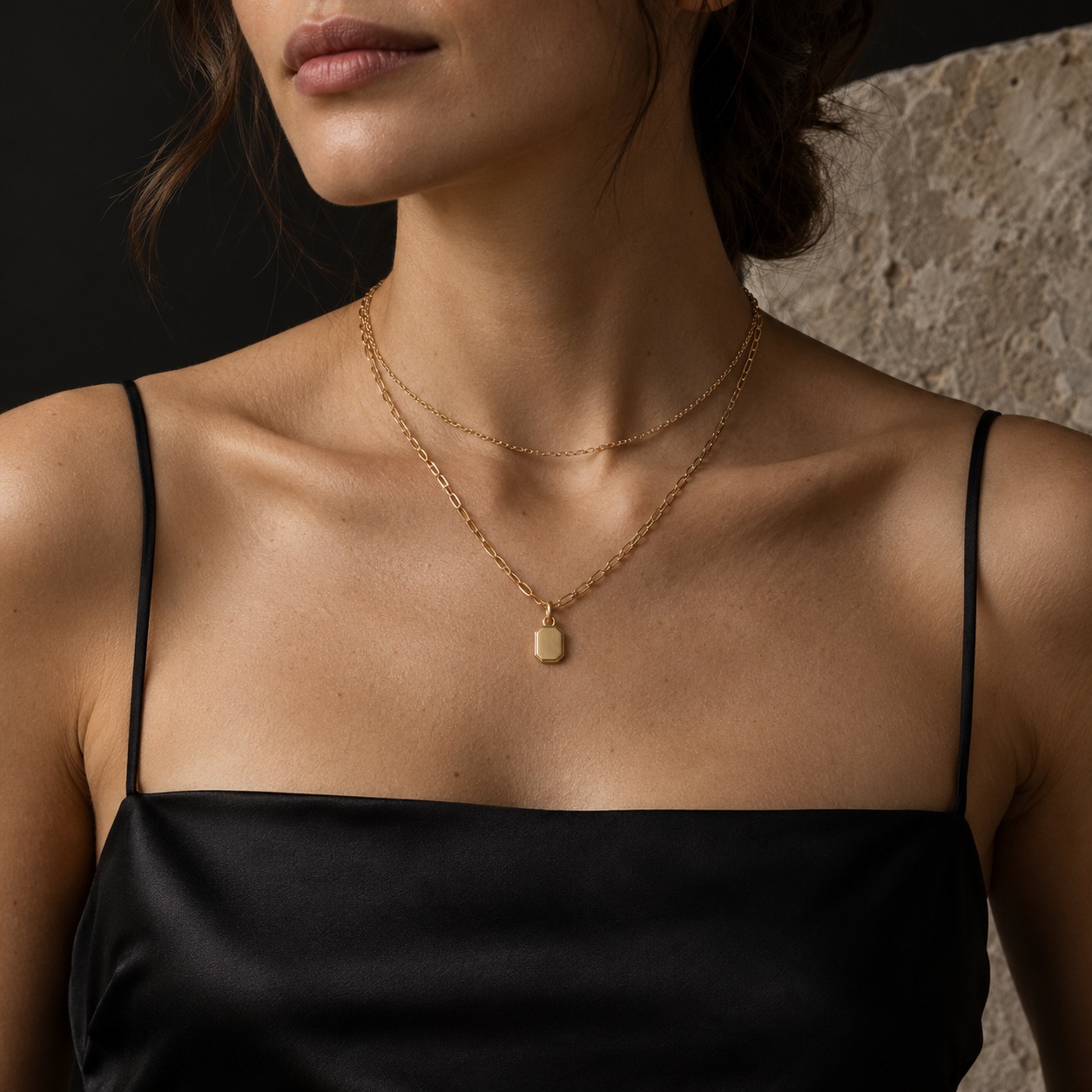
If one necklace carries a pendant, keep the others plain, and make sure the pendant does not land at the same height as another detail. Fasten the longest chain first and put each one on separately so they do not twist at the back. If they still tangle, wear fewer. Two well-spaced chains almost always look better than three crowded ones.
Bracelets: build a stack that reads as one unit
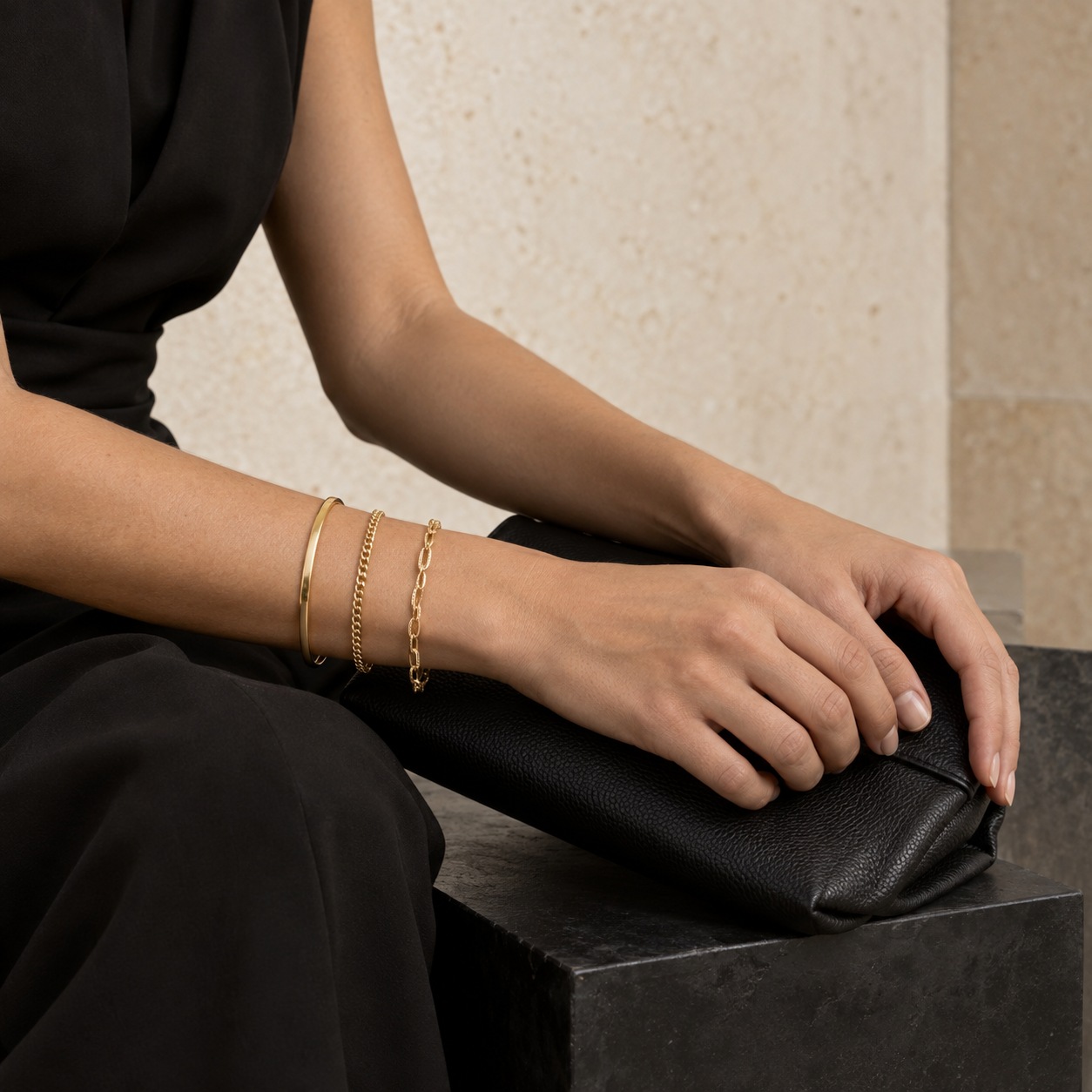
Treat a stack as one object with variety inside it. Pair one structured piece, such as a slim bangle, with one or two finer chains. Different widths and textures create interest, and a shared gold tone holds the group together.
Keep the stack on one wrist unless you want symmetry, and leave a gap between it and your watch. Pay attention to how it moves, too. Bangles clink and chains slide, and if either bothers you after an hour, adjust the mix. That is the practical side of how to stack bracelets: the best stack is the one you stop noticing on your arm.
Choose one dominant area
Life drawing teaches that a good image needs a place where the eye works and a place where it rests. Jewelry follows the same logic. Decide whether the neck, the ears or the wrists are the main event, and let the other two stay quiet. A generous bracelet stack pairs well with small studs and a bare neck. A statement necklace asks for a single ring and no bracelet.
Then run a quick diagnostic. Photograph the outfit from a few steps away, or stand back from the mirror and squint. Wherever your eye lands first is your focal point. If it jumps between three areas, take off the piece that matters least.
How to wear gold jewelry with clothing: color, fabric, neckline and sleeves
Color temperature
Gold is warm, but not every gold is the same. Some read buttery yellow, others paler or more muted, so hold a piece against the garment in daylight before you decide.
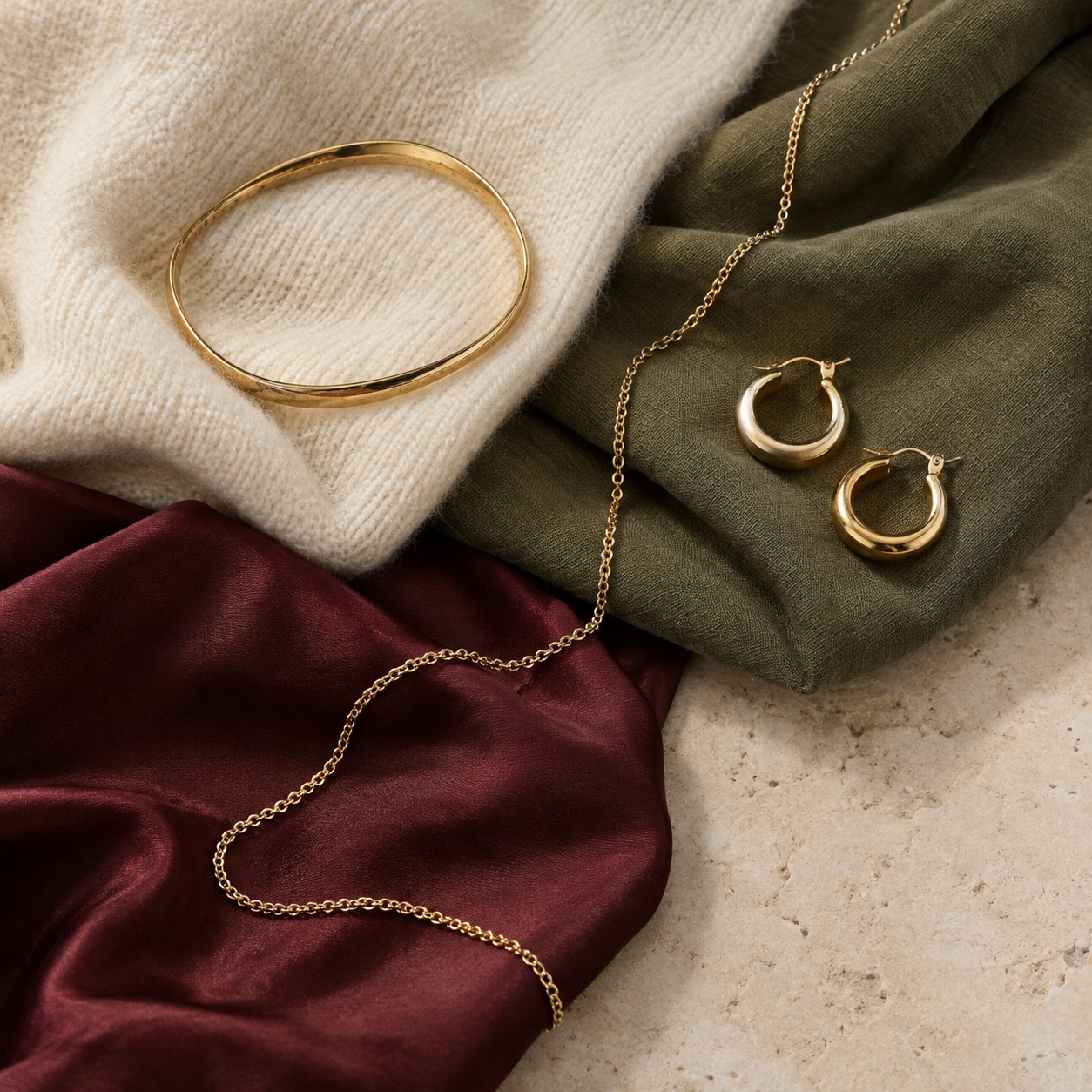
Cream, beige, brown, burgundy and olive green sit close to gold’s warmth, so the jewelry blends in and the outfit feels cohesive. Black, white, navy and gray give a contrasting background that lets the metal stand out. Cool pastels and icy tones work too, though the gold will look more obviously warm against them.
Decide whether you want the metal to blend or to contrast, then let the palette of the outfit follow.
Fabric texture
Texture changes how much metal a look can carry. Denim, cotton and plain knitwear are matte, so they give polished gold a clear stage, and even a small piece adds polish. Chunky knits swallow fine chains, so go bolder in scale.
Satin, silk and velvet already have sheen or pile. Gold either joins the gloss or gets lost in it, and brushed finishes with simple shapes usually sit better than heavily detailed ones.
Neckline, sleeves and silhouette
Necklines frame necklaces. A crew neck leaves a short chain visible above the line, or a long chain hanging below it. A V-neck welcomes a pendant that echoes the angle, and a scoop neck suits a chain that follows the curve. A turtleneck wants a longer piece worn over it, and a strapless neckline leaves bare shoulders where earrings or one necklace can do the work.
Balance the proportions of the whole outfit. A delicate bracelet suits clothing with intricate details, while a bolder design gives definition to a simple silhouette. Sleek, fitted clothing often looks best with fine jewelry or a single stronger one.
Choose jewelry for everyday, work, evening, weddings and travel
Everyday and work
Choose pieces that are comfortable, versatile and easy to combine. At work, simple earrings and a classic bracelet add detail without distracting from a professional outfit. If you spend time on video calls, remember the camera mostly sees your upper body, so earrings and a necklace do more work than a bracelet.

Evening and weddings
Dinners, weddings and celebrations leave room for more visual impact. A statement bracelet or a distinctive pair of earrings can make a simple dress feel occasion-ready. Choose one statement area and keep the rest quiet.
As a wedding guest, look at the dress first. Embellished or heavily patterned fabric needs less jewelry, and a plain column of color can take more. Evening light tends to be lower and warmer, which is kind to polished gold.
Travel
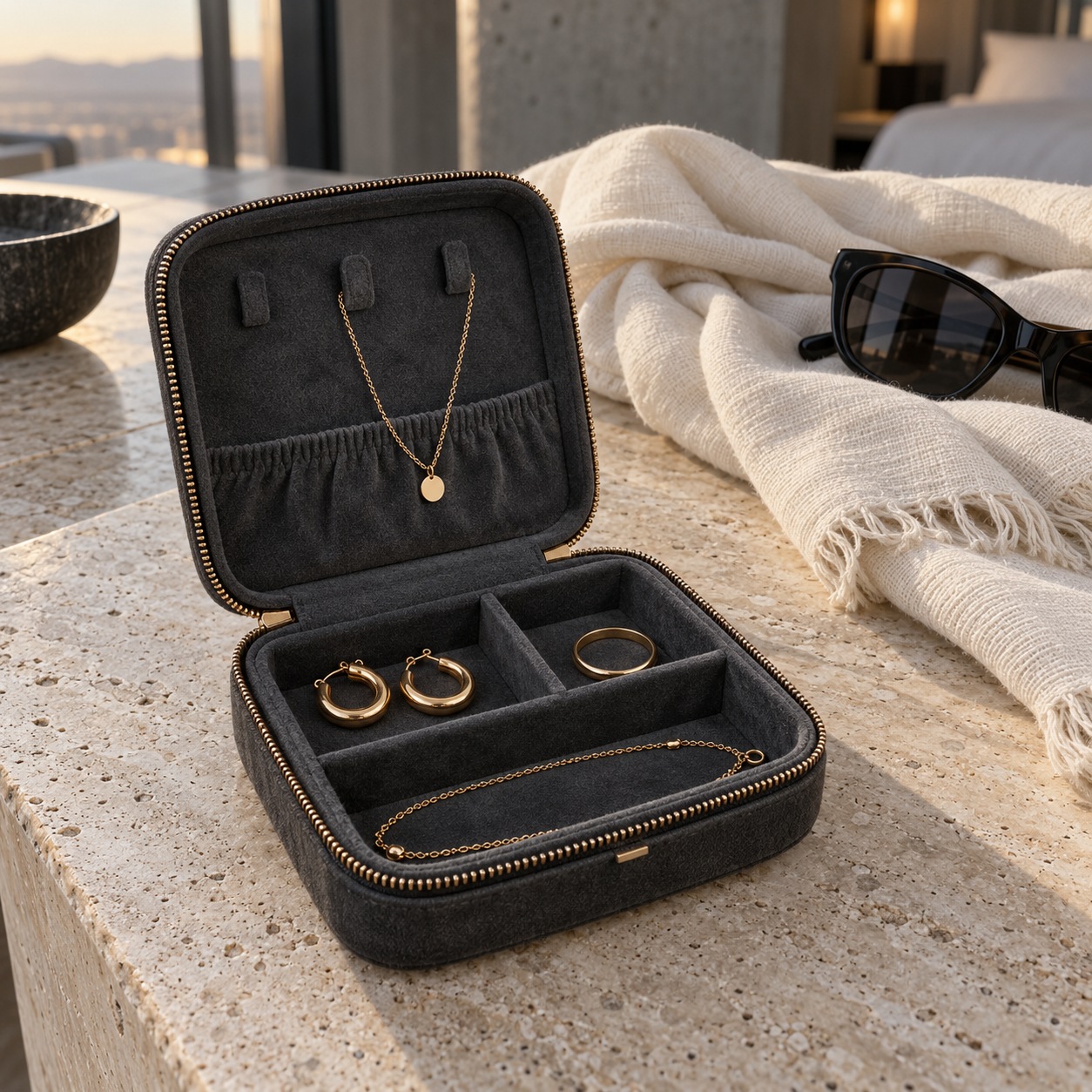
Travel is where the three-outfit rule pays off. Pack a small group of pieces that coordinate, such as a pair of hoops, a fine chain and a slim bracelet, so you can change the look without carrying much. Wear what you would least mind losing, and store the rest separately in a pouch or small case so chains do not knot together in your bag.
Care for gold-plated jewelry
Care needs vary with the finish, the base metal and the maker, so treat these as general habits rather than guarantees.
Put jewelry on last, after perfume, lotion, hairspray and makeup, and keep it away from cleaning products and other harsh chemicals where you can. Remove it before swimming, showering or exercising unless the maker’s guidance says otherwise. After wearing, wipe each piece gently with a soft, dry cloth and store it separately, in a pouch or its own compartment, to limit scratches and tangles.
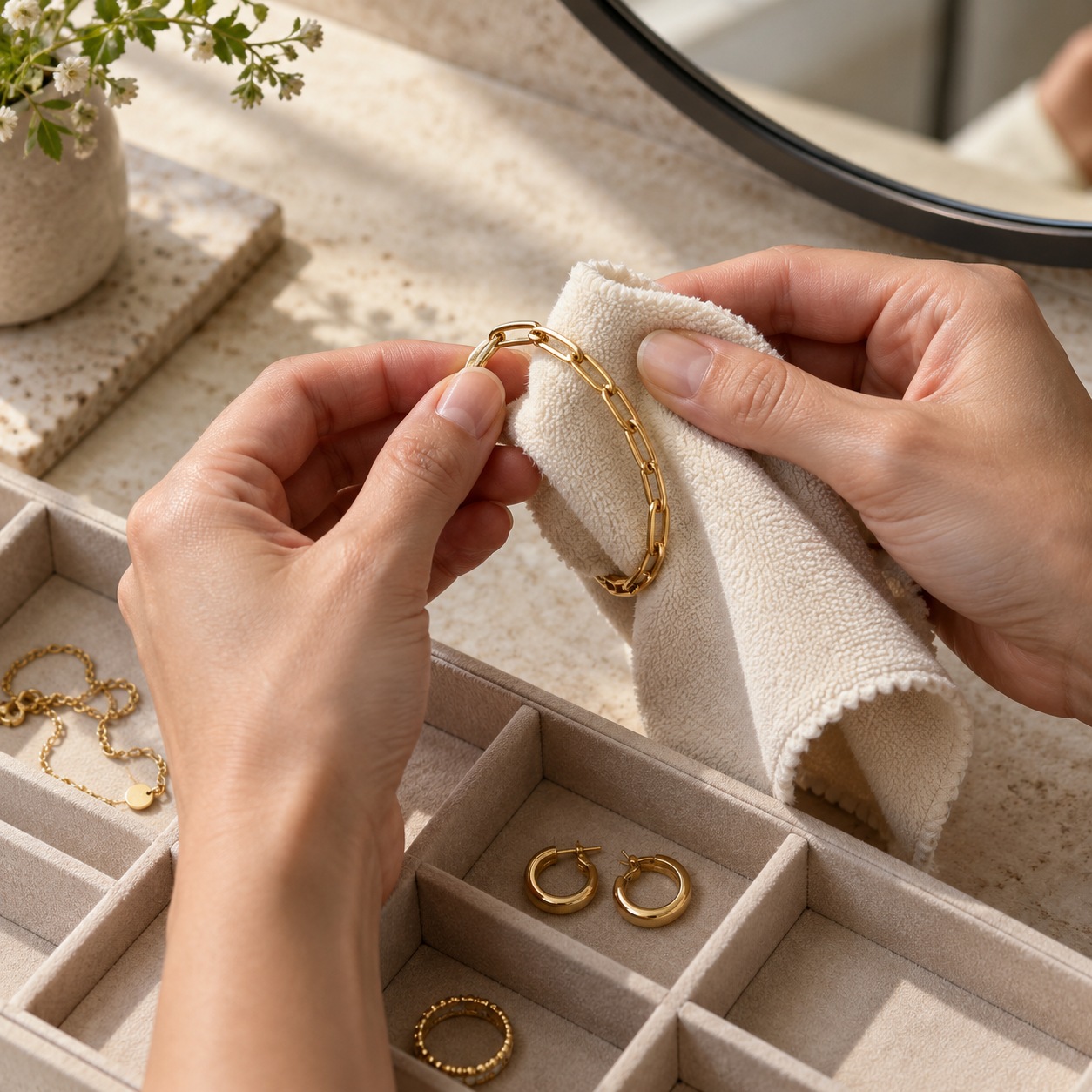
Follow the instructions that came with the piece, since coatings and base metals differ. If you are unsure, ask the seller or maker instead of guessing, and avoid scrubbing a finish that looks dull. A small tray by the door helps: pieces come off at the same time each day, and you can glance at clasps and links as you put them away.
Develop a personal jewelry style
The best accessories are not necessarily the most expensive or the most elaborate. They are the ones that feel comfortable and work naturally with what you already own.
A practical way to find your direction is to take a quick mirror photo of each outfit for a week or two. Then look back. You will probably see patterns: always hoops, always one cuff, never rings. That is your style speaking, and it is more reliable than any trend.
Some people settle into a consistent minimalist look built around delicate bracelets and small earrings. Others prefer bold shapes, layered pieces and contrasting textures. Both can look elegant when the choices are deliberate.
If you want somewhere to browse gold-toned pieces while you test these ideas, Pretiosa is one place to start.
Frequently asked questions
How do I wear gold jewelry without looking overdone?
Pick one dominant area (neck, ears or wrists) and keep the others quiet. Leave visible space between pieces, and check the outfit from a few steps away. If your eye bounces around, remove one item.
Can I mix gold-plated pieces with silver?
Yes, if it looks intentional. Keep each metal in its own area, or add one mixed-tone piece that links the two. Scattering a single gold piece among silver ones usually looks accidental.
Can I wear gold-plated jewelry every day?
That depends on the piece and the maker’s guidance, so check the care instructions first. In general, keep it away from water, perfume and harsh chemicals, wipe it with a soft dry cloth, and store it separately.
What jewelry suits a plain outfit versus a patterned one?
A plain outfit can carry a bolder piece, such as a cuff or larger hoops, and the jewelry becomes the detail. A busy print usually looks better with slim chains and simple shapes that do not compete with the pattern.
How many pieces is too many?
Count focal areas, not pieces. Several fine bracelets in one stack count as a single area. When the neck, ears and wrists are all asking for attention at once, that is too many.
The 30-second check before you leave
Step back from the mirror or take a quick photo. Find where your eye lands first, and make sure that spot is the one you chose. If two areas compete, take off the weaker piece. Then move your arms and turn your head once to check comfort.
That habit is the practical core of how to wear gold jewelry well, and it applies equally to a single slim chain and a full stack of bracelets. Gold-plated pieces repay the attention: scale, space and a clear focal point matter more than the number of items you put on.
- 0shares
- Facebook0
- Pinterest0
- Twitter0
- Reddit0