A spa menu is an interface. I have spent more than 15 years designing products, dashboards, and web and app screens, and the test is always the same: can a stranger understand what to do next without asking for help? Many spa treatments fail it. The list runs to forty items, the names sound alike, and nobody explains which one suits a tired face, a stiff back, or a birthday gift.
This guide sorts professional spa treatments by what they aim to do, how much recovery they ask for, and who should be cleared first. It covers facial treatments, resurfacing,
- What modern spa treatments are designed to do
- Explore our full range of spa and beauty services
- How to choose the right spa treatment
- The spa experience as a designed client journey
- How professionals combine spa treatments
- Supporting professional results at home
- Frequently asked questions
- What are the most common spa treatments?
- How do I choose the right facial treatment?
- What is the difference between spa services and medical spa services?
- Can different spa treatments be combined in one plan?
- How often should professional facial treatments be scheduled?
- What should I ask during a spa consultation?
- Your next step before booking
LED sessions, and body care. It then shows how to choose between them and how licensed providers may sequence them. It also looks at the client journey around the treatment room, because booking, consultation, and aftercare shape the experience as much as the equipment does.
Nothing here replaces an assessment by a qualified provider. Read it as a map to carry into the consultation, not a list to order from.
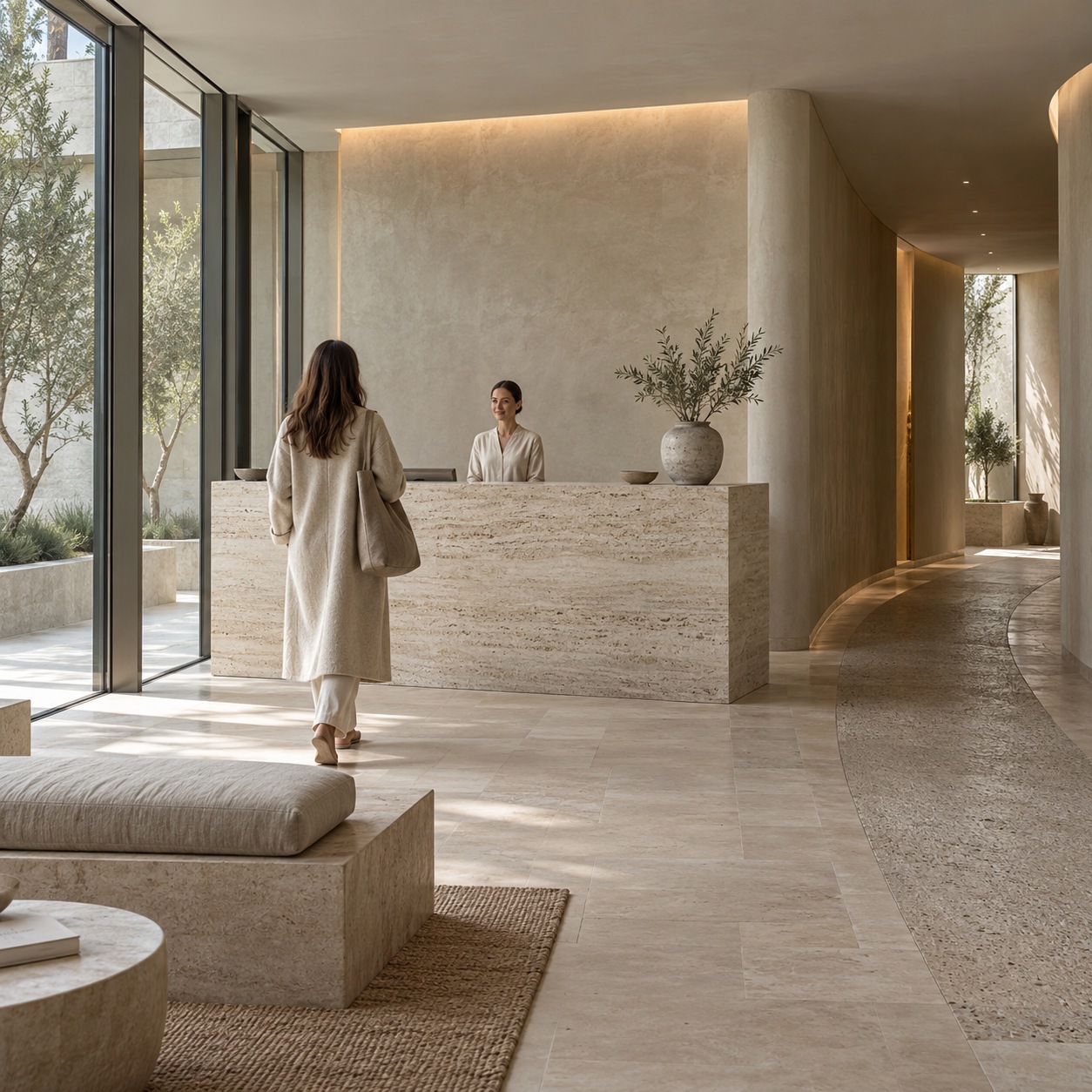
What modern spa treatments are designed to do
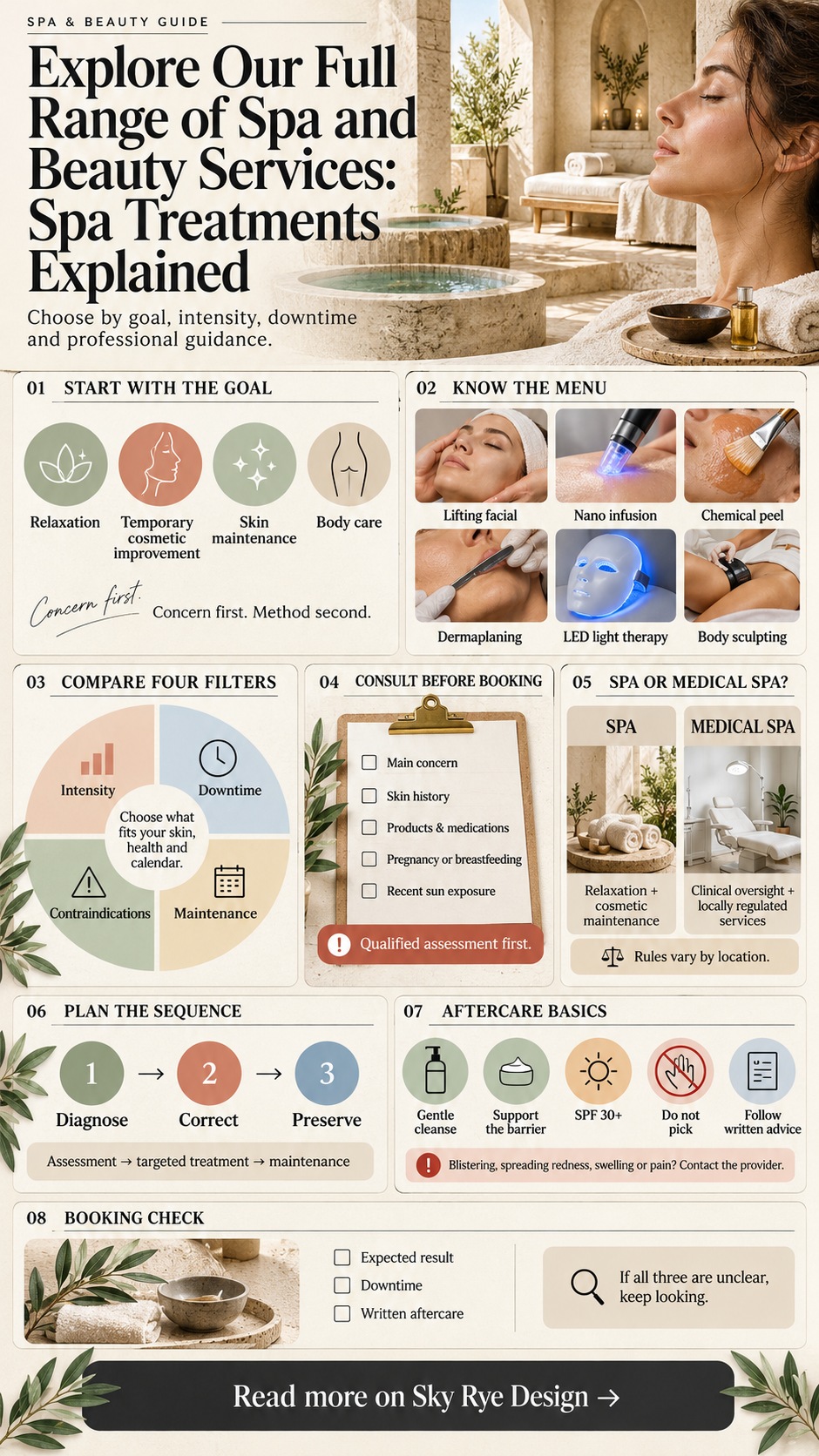
Most professional spa treatments serve one of four goals: relaxation, temporary cosmetic improvement, skin maintenance, or body care. A massage and a peel can sit on the same menu, yet they answer different questions. One is about how you feel when you leave. The other is about how skin looks and behaves over the following days and weeks.
Relaxation-led visits still matter. If that is your priority, our guide to the most visited massages in spas covers that side in detail. What has changed is the rest of the menu. Many spas now offer aesthetic treatments aimed at specific concerns such as dullness, rough texture, visible congestion, or a tired-looking jawline. A longer menu means more choice, and more ways to choose badly.
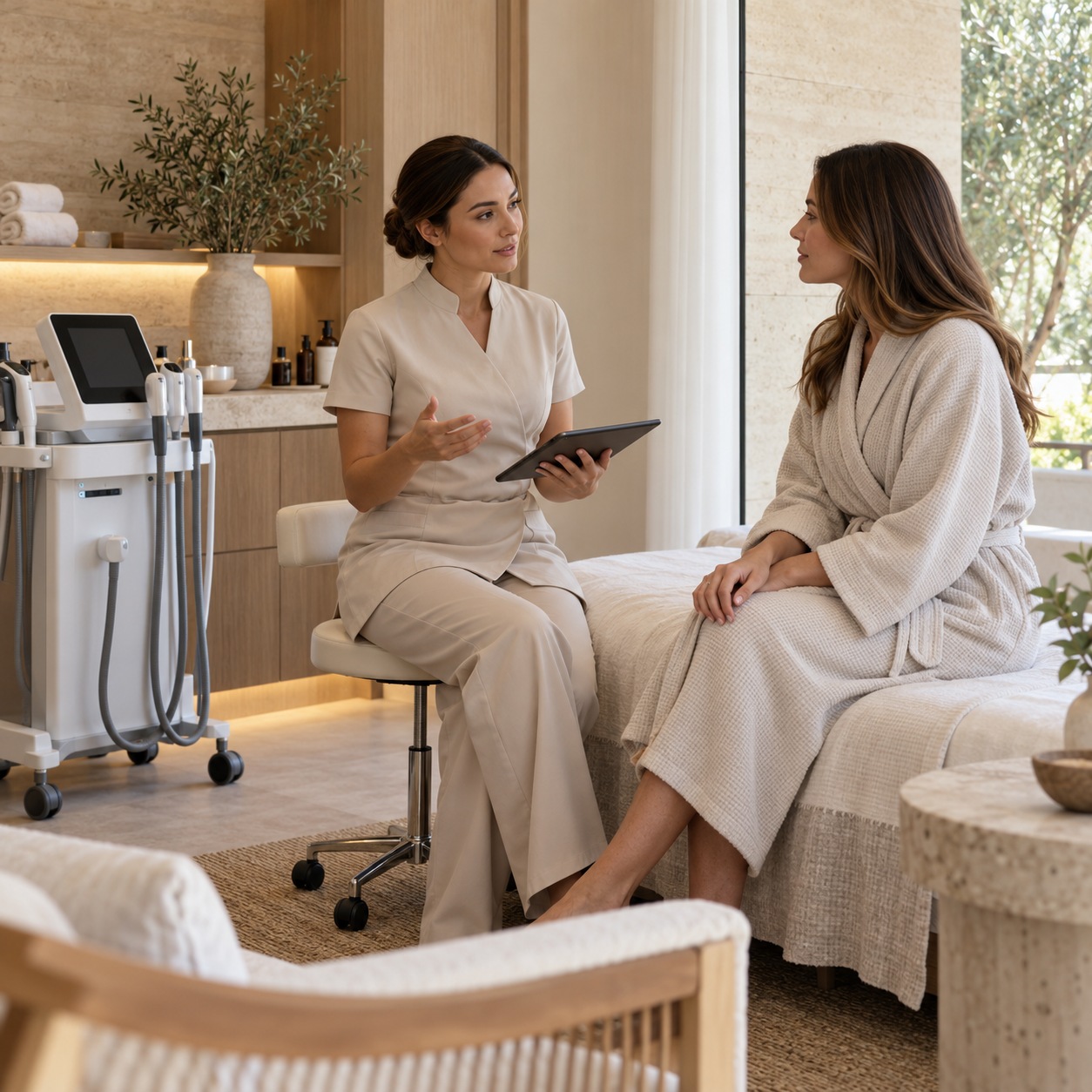
That is why consultation comes before the menu. A good one covers your goal, skin history, current products, medications, pregnancy or breastfeeding status, recent sun exposure, and any active skin condition. Those answers decide what is suitable, what should wait, and what should be skipped. A provider who starts selling before asking is giving you a pitch, not an assessment.

Ordinary spa care also has limits. A therapist cannot diagnose a changing mole, a persistent rash, painful acne, or sudden pigmentation. Those belong with a licensed healthcare professional. Spa treatments can support comfort and appearance. They do not treat disease, and they should never delay medical care.
One more distinction helps. Medical spa services usually operate under clinical oversight and different regulation, and the rules vary by country, state, and province. Before you book, ask which kind of setting you are walking into.
Explore our full range of spa and beauty services
The services below are grouped by purpose rather than by brand or machine, because device names change faster than the questions they answer. A spa treatment menu is easier to read once you know what each category is meant to do.
One rule applies to every category. Chemical peels, energy-based devices, body-contouring technologies, prescription products, and any procedure involving skin penetration require qualified professional assessment, and they may be regulated differently depending on where you live. Where a service is called non-invasive, that describes the technique. It does not mean nobody needs to screen you first.
The table gives an at-a-glance comparison. Treat the downtime column as a general range, because strength, device, and skin all change it.
| Service | Best suited concern | What happens | Typical downtime | Who should seek professional clearance |
|---|---|---|---|---|
| Non-surgical lifting facial | Skin that looks tired or less defined | Massage techniques, sometimes with a device, on the face and neck | Usually little; temporary redness is possible | Anyone with implants, pregnancy, active skin conditions, or recent procedures |
| Nano infusion facial | Dull or dry-looking skin | A device helps apply a serum to the skin surface | Usually minimal | People with allergies, sensitive or broken skin, or prescription topical products |
| Chemical peel | Rough texture, dullness, uneven-looking tone | An acid solution is applied for a timed period, then neutralised or removed | From none to days or longer, depending on strength | Retinoid or prescription users, recently sun-exposed skin, pregnancy or breastfeeding, history of scarring or cold sores |
| Dermaplaning | Surface roughness, fine facial hair, makeup texture | A sterile blade removes vellus hair and loose surface cells | Usually minimal; skin may feel sensitive | Active acne, irritation, or skin conditions in the area |
| LED light therapy | Calmer-looking skin, breakout-prone skin | A light panel or mask is used for a set time with eye protection | Usually none | Photosensitising medications, light-sensitive conditions |
| Non-invasive body sculpting | A localised area of body-contour concern | A device applies heat, cold, suction, or other energy | Varies by technology | Anyone pregnant or breastfeeding, with implants, circulation issues, or medical conditions; assessment required |
Advanced facial treatments: non-surgical lifting and nano infusion
Advanced facial treatments sit between a classic relaxation facial and a clinic procedure. Two names appear often on a spa treatment menu: non-surgical lifting and nano infusion.
Non-surgical lifting facials usually combine firm massage techniques, and sometimes a device, to leave skin looking smoother and more defined for a short period. The effect is temporary and varies from person to person. It is not a substitute for surgery, and any promise of permanent lifting should make you cautious. If a device is involved, ask what it is, what training the operator has, and whether screening covers implants, pregnancy, and medical conditions.
Nano infusion is one of the non-invasive facial treatments that uses a device to apply a serum to the skin surface. Marketing sometimes says the actives travel deep into the skin. Evidence for that is limited, and claims vary by device and by region. It is safer to see the treatment as a way of applying a product, not a delivery system aimed at a particular skin layer.
Ask what the serum contains, whether a patch test is advised, and whether your skin is too sensitive or too recently treated to proceed. If a service involves needles or breaking the skin, it belongs to a different category with different rules.
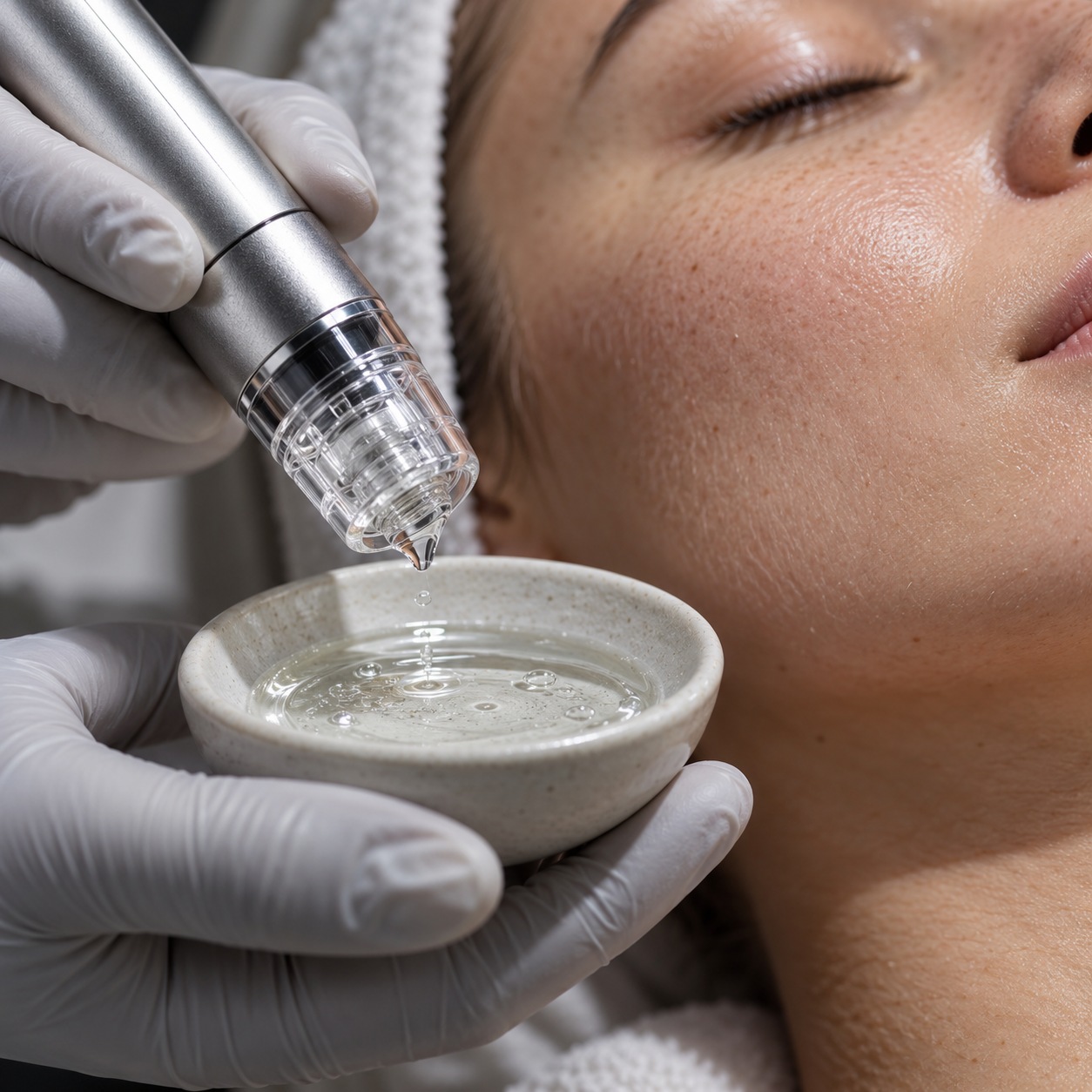
Resurfacing treatments: chemical peels and dermaplaning
Resurfacing treatments work on the outermost layers of the skin. The two most common are chemical peels and dermaplaning.
A chemical peel applies an acid solution for a set time to loosen surface cells. Strength ranges widely. Light formulas may cause tingling and some flaking. Deeper peels can cause pronounced redness and peeling, and they belong in medical settings. Because the range is so wide, the provider’s assessment matters more than the product name.
Tell the provider about retinoids, prescription acne products, recent sun exposure, and any history of cold sores or skin sensitivity. Photosensitivity is a real consideration, so expect strict sun protection afterwards.
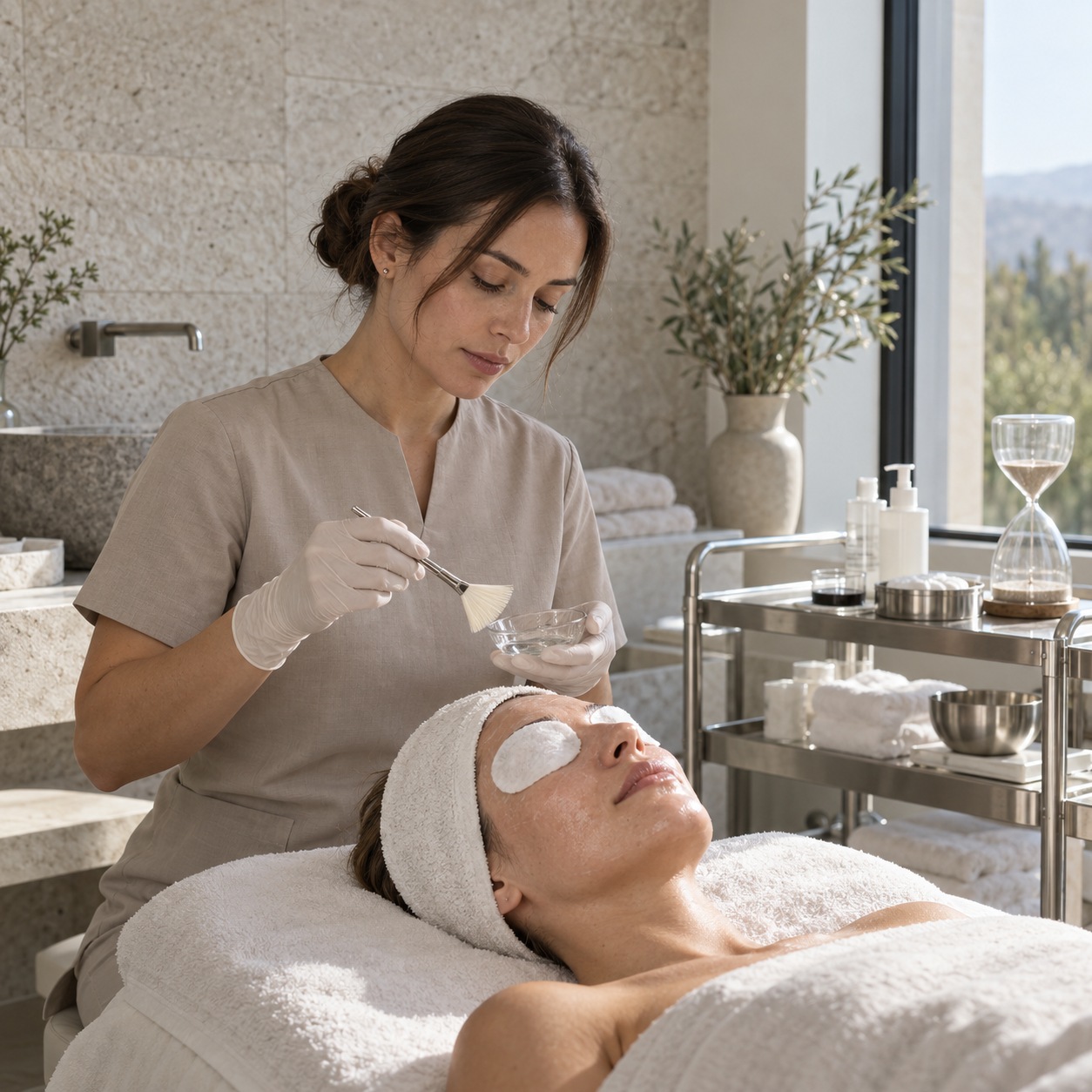
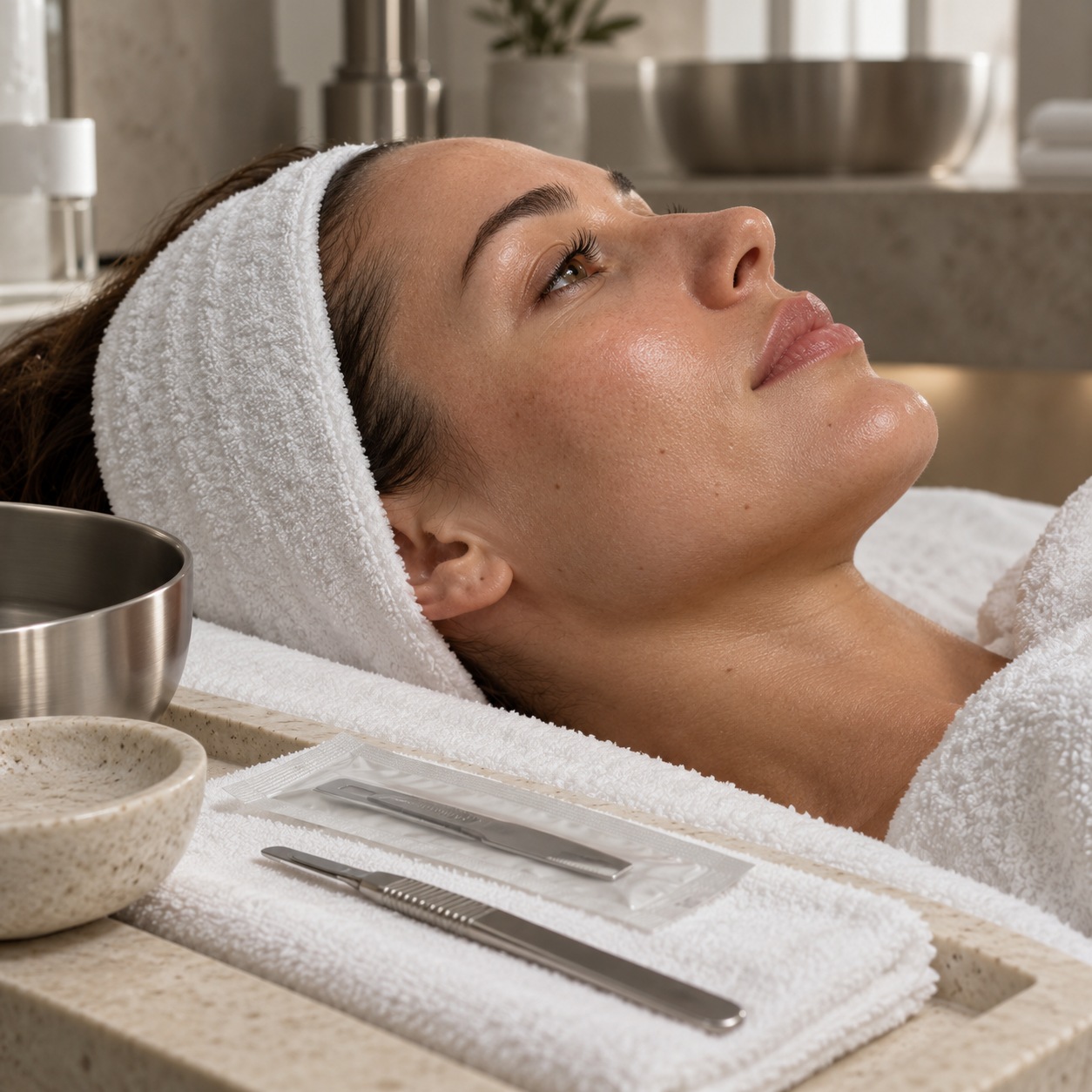
Dermaplaning uses a sterile blade at a shallow angle to remove fine vellus hair and loose surface cells. People choose it for a smoother feel and easier makeup application. It is not suitable over active acne, irritation, or certain skin conditions, and who may perform it depends on local rules. The hair regrows as it normally does, so this is a texture and grooming service, not hair removal.
LED light therapy for targeted concerns
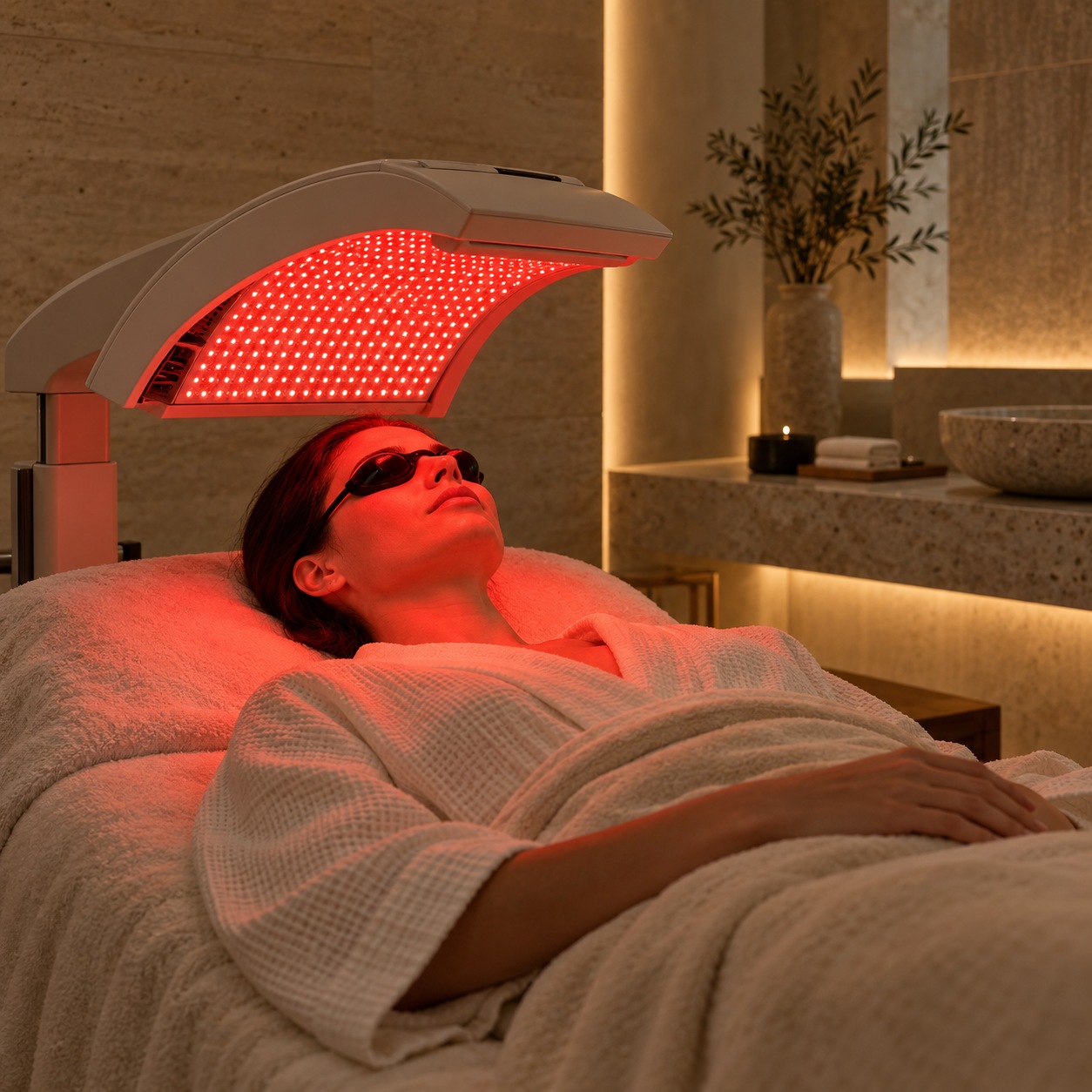
LED light therapy exposes the skin to specific wavelengths of light, usually through a panel or mask, with protective eyewear. Sessions are typically calm and comfortable, and downtime is usually minimal.
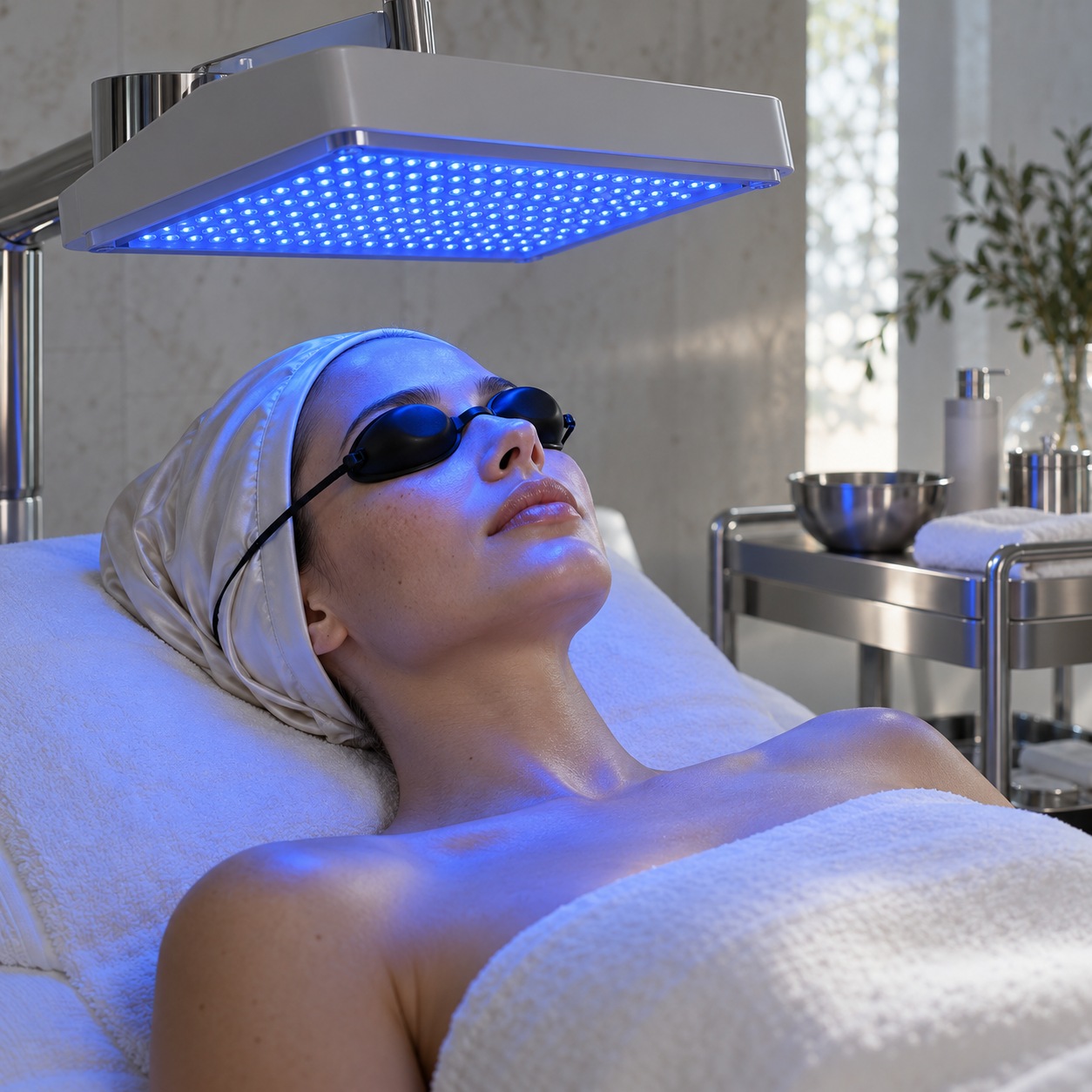
Red light is commonly offered for general skin maintenance and a calmer appearance. Blue light is more often chosen for skin prone to breakouts. Evidence varies by device, wavelength, and concern, and results tend to be gradual and modest. Treat LED as a supporting treatment alongside a sensible routine, not as acne therapy. Persistent, painful, or scarring acne needs a licensed healthcare professional.
Tell the provider about photosensitising medications, topical products that increase light sensitivity, and any condition that reacts to light. Courses of sessions are common, so ask how many are suggested and when a realistic review point falls.
Body treatments and non-invasive sculpting
Body treatments cover a wide range. Scrubs, wraps, and masks are comfort and skin-feel services. They can leave skin softer and the body more relaxed, but they do not change body shape in any lasting way.
Non-invasive sculpting is a different category. Devices that use heat, cold, suction, or other energy aim to change the appearance of a treated area, and results vary. They are not weight-loss tools. Many are regulated as medical devices in some places, so assessment, screening, and clear information about sensations and risks should come first.
Be sceptical of any claim that a device removes stubborn fat. Ask for evidence on the exact device and a plain description of what a realistic result looks like. Pregnancy, breastfeeding, implants, circulation concerns, and skin conditions in the treated area are all standard topics for the screening conversation.
How to choose the right spa treatment
Choosing well is mostly a matter of order: concern first, then method, then provider.
Match the procedure to the concern, not the trend
Start with the concern in plain words: dull skin, rough texture, a tired-looking face, tight shoulders, an event next week. Then ask which treatment was designed for that purpose. Trend-led choices start from the other end, with a popular name looking for a problem to solve.
A useful test is whether you can say what the treatment is meant to improve. If you cannot, you are not ready to book it. Likewise, if a provider cannot explain in one sentence why a service suits your concern, ask for a different option.
Compare intensity, downtime, contraindications, and maintenance
Four filters make options on a spa treatment menu easier to compare. Intensity asks how strong the treatment is and who sets that level. Downtime asks whether you will be red, flaky, or light-sensitive on the day of an event. Contraindications ask whether your medications, skin conditions, or pregnancy status change the answer. Maintenance asks whether the treatment needs a course or repeat visits, and what those cost over time.
A gentle treatment you can repeat is often more useful than a strong one you dread. Anyone building a personalized spa treatment plan should expect all four points to be discussed, and ideally written down.
Questions to ask during a professional consultation
Bring a short list. These questions cover most of what you need:
- What is this treatment meant to improve, and what can it not do?
- What training and licence do you hold for it?
- Is it offered in a medical or non-medical setting?
- Do my medications, pregnancy or breastfeeding status, or skin conditions affect suitability?
- Is a patch test recommended?
- What downtime and sun restrictions should I plan for?
- How many sessions are suggested, and when do we review progress?
- Will I receive aftercare instructions in writing?
Good providers welcome these questions. Vague answers are information too.
The spa experience as a designed client journey
The treatment itself is only one step. Booking, arrival, consultation, treatment, recovery, and aftercare all have a design, whether anyone planned it or not. This section looks at that journey from a client’s side. If you want the physical-space angle, our piece on the interior design of a salon covers it.
Clear visual treatment menus and honest expectations
A menu should work like a good interface: clear labels, grouped by purpose, with the information you need to compare. That means duration, typical downtime, and who should check with a professional first. I would group by concern rather than by device, and put a plain-language description next to every technical name.
Inflated language is a visual problem too. When every line promises instant or ultimate results, nothing stands out and trust drops. Honest expectations are easier to read. The same logic applies online, where beauty website design with clear categories and plain booking steps saves questions later.
Lighting, privacy, acoustics, cleanliness, and wayfinding
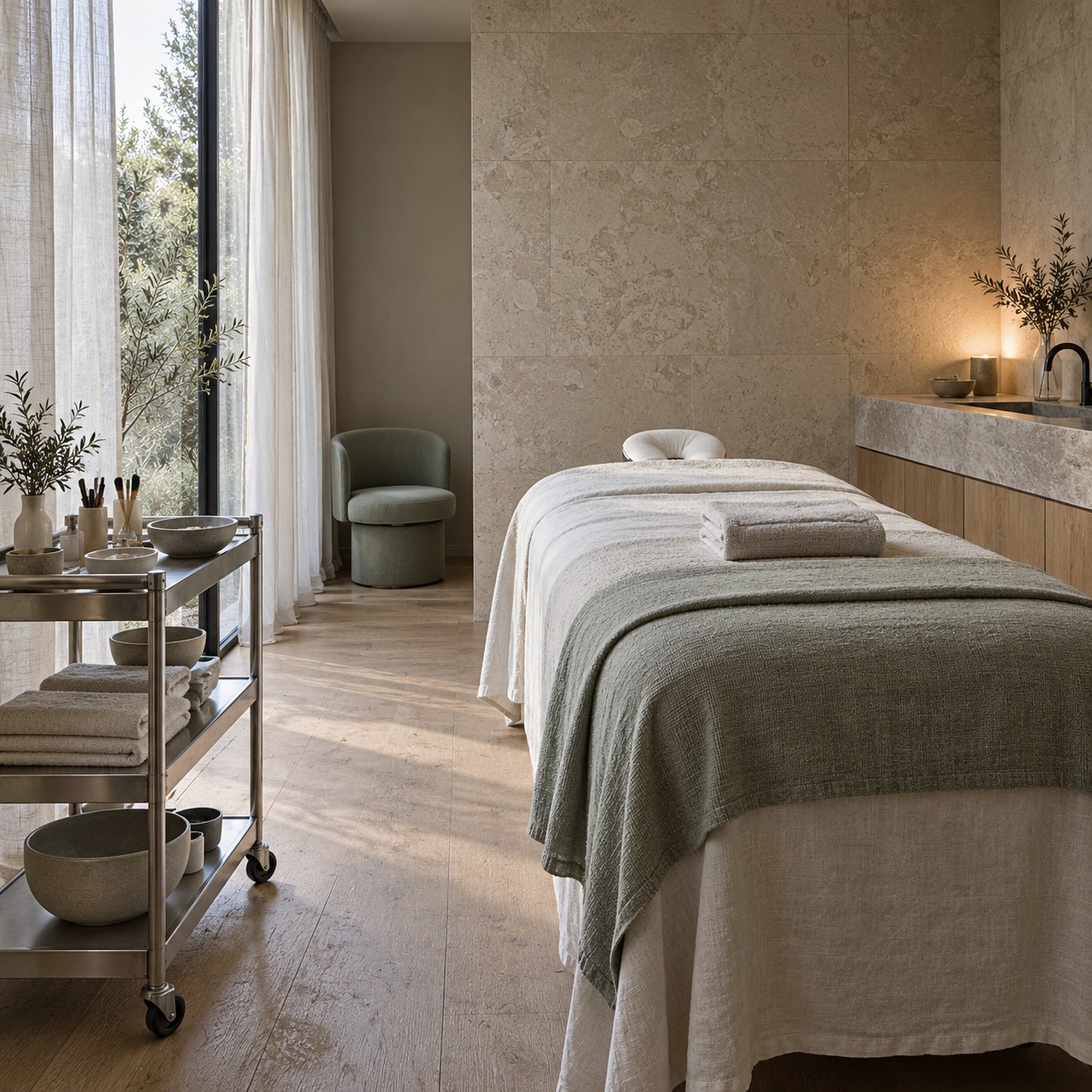
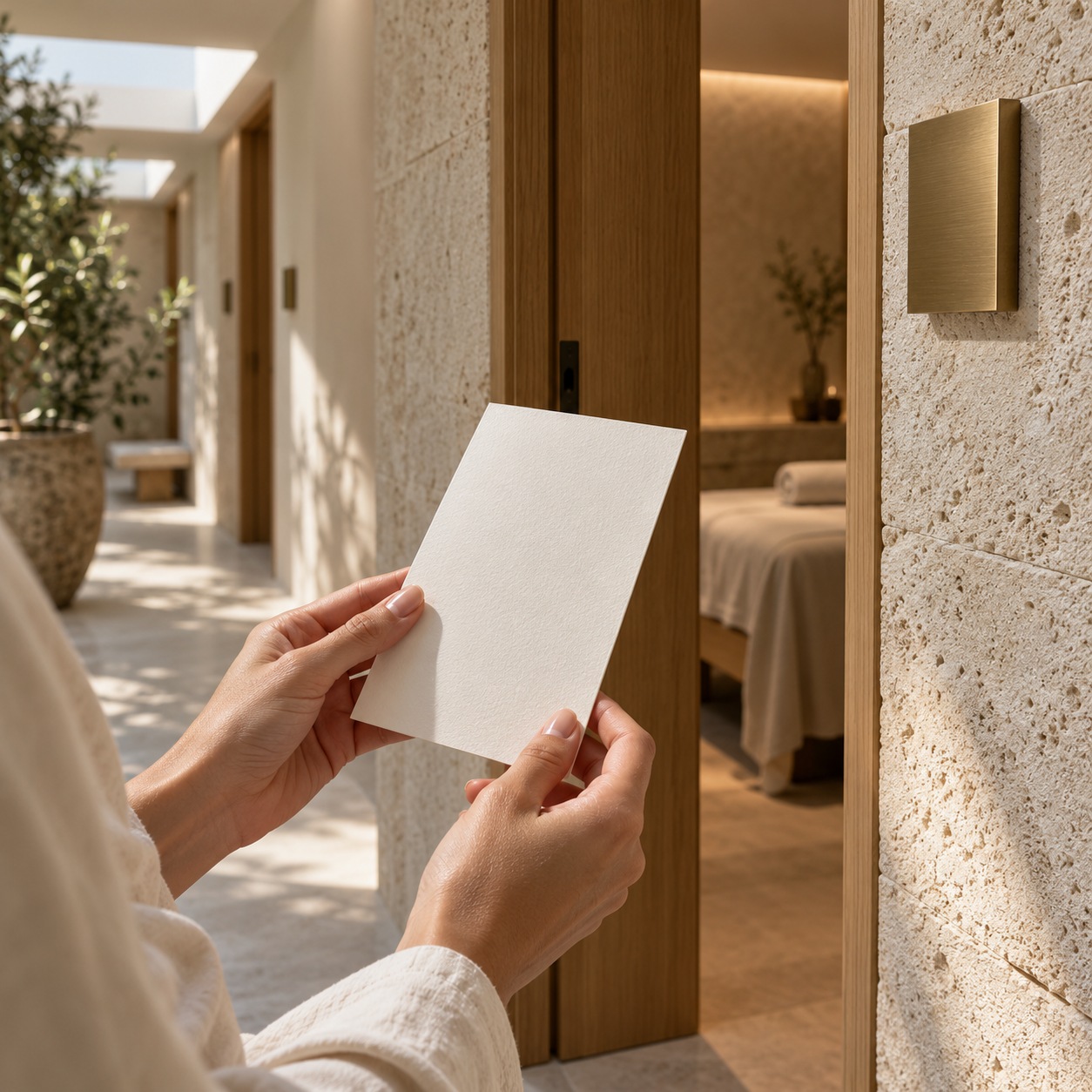
Small physical details show how a place works. Lighting can be soft in the lounge, but the treatment room needs enough of it for the provider to see skin accurately. Consultation space should be private enough to talk about medications. Low noise helps, and so do clear signs, so nobody wanders corridors in a robe looking for the right door.
Cleanliness should be visible: fresh linen, wiped surfaces, tools that are clearly sterile or opened in front of you. None of this guarantees quality. A place that handles these basics carefully is often paying attention elsewhere too.

Consistent communication from booking to aftercare
The booking confirmation, the reminder, the consultation, and the aftercare sheet should sound like one voice. The same names, the same instructions. If booking says a peel needs a week without retinoids, the consultation should repeat it and the aftercare sheet should too.
A follow-up note that names the treatment, the products used, and what to avoid is genuinely useful on day three, when you have forgotten the details. This is where spa treatment aftercare starts, not at the front door on the way out.
How professionals combine spa treatments
Suitability and sequencing are decisions for licensed providers. What follows explains the logic in general terms. It does not diagnose, promise outcomes, or set an individual treatment plan.
Diagnose, correct, and preserve
Many providers think in three phases. Diagnose means assessing skin, goals, and history. Correct means using targeted treatments for a specific concern, at the intensity the assessment supports. Preserve means maintaining the result with gentler visits, home care, and sun protection.
This sequence keeps a plan from turning into a pile of unrelated purchases. A personalized plan is that sequence written down for one person, with review points built in.
When treatments may complement each other and when to space them apart
Some providers pair a gentle exfoliating service with a calming LED session, or schedule relaxation-focused body care around a facial programme. Others space treatments apart because skin needs time to settle, particularly after peels or energy-based services.
Whether a pairing is appropriate depends on skin type, products, medications, recent sun exposure, and the strength of each service. Ask the provider to explain why each step sits where it does, and what would make them delay it. Do not combine services across different providers without telling each one.
Supporting professional results at home
Between appointments, the goal is simple: protect what the provider did and avoid undoing it. Our guide to at-home spa treatments for your face offers gentle routine ideas, but check anything you try against your provider’s advice.
Barrier care, sun protection, hydration, and written aftercare
Follow your provider’s written aftercare first, because it reflects the treatment’s strength and your skin. As a general pattern, aftercare tends to centre on a few habits. Use a gentle cleanser and a moisturiser that supports the skin barrier. Wear broad-spectrum sun protection, commonly SPF 30 or higher, reapply it, and seek shade, especially after resurfacing or light-sensitising treatments. Drink enough water to stay comfortable.
Do not pick at flaking skin, and hold off on new actives, scrubs, and extra exfoliation until the provider says otherwise. If you notice blistering, spreading redness, significant swelling, or pain, contact the provider promptly, and see a licensed healthcare professional for any medical concern.

What should remain in professional hands
Peels beyond very mild strengths, energy-based devices, anything that penetrates the skin, and prescription products are for qualified professionals. Consumer versions of some tools exist, but results and risks vary, and mistakes can leave irritation or uneven pigmentation. If you are tempted to extend a treatment at home, ask your provider what is safe first.
A short note on gifts. If you are giving a spa voucher, a small wearable extra can make the present feel complete. A bracelet is a simple finishing touch to put on after the appointment, since providers often ask clients to remove jewellery beforehand. It is an accessory and has nothing to do with skin results. If you want a few ideas, you can explore the collection of bracelets.

Frequently asked questions
What are the most common spa treatments?
The most common services are relaxation and classic facials, light chemical peels, dermaplaning, LED light therapy, body scrubs and wraps, and massage. Availability depends on location and on whether the spa is medical or non-medical. Lifting and sculpting devices need extra screening and are regulated differently in many places.
How do I choose the right facial treatment?
Start with your main concern and your skin history, then ask a provider to recommend options after a consultation. Compare intensity, downtime, and maintenance, and disclose medications, pregnancy or breastfeeding, and active skin conditions. Choose the gentlest option that fits your goal.
What is the difference between spa services and medical spa services?
Ordinary spa services focus on relaxation and cosmetic maintenance. Medical spa services usually involve clinical oversight and treatments that may need a licensed medical professional, such as stronger peels, some devices, or prescription products. Rules differ by country, state, and province, so ask who supervises and who performs your treatment. Medical dermatology is a separate field that diagnoses and treats skin disease.
Can different spa treatments be combined in one plan?
In some cases, yes. A licensed provider decides whether treatments suit each other, how strong each should be, and how far apart to space them. Combining services without assessment can raise the risk of irritation, so avoid stacking them on your own.
How often should professional facial treatments be scheduled?
There is no single schedule. It depends on the treatment, your skin, and the strength used. Gentle maintenance facials may be repeated more often than stronger peels or device-based services, which usually need longer gaps. Your provider should suggest an interval and a review point in writing.
What should I ask during a spa consultation?
Ask what the treatment is meant to improve, what training the provider has, whether the setting is medical or non-medical, and what downtime and sun restrictions apply. Ask whether a patch test is advised and whether aftercare comes in writing. Mention medications, pregnancy or breastfeeding, and any skin conditions.
Your next step before booking
Before your next appointment, write one page: your main concern, every product and medication you use, and the date of your last sun exposure or peel. Take it to the consultation and ask for the recommended treatment, the expected downtime, and the aftercare in writing. If a provider cannot give you all three, keep looking.
- 0shares
- Facebook0
- Pinterest0
- Twitter0
- Reddit0