
Phoenix tattoo ideas work best when the design shows movement, scale, and a clear reason for choosing the bird. A phoenix can mean rebirth, survival, renewal, strength, or a clean break from the past, but the tattoo still has to work as a piece of art on skin. Wings, tail feathers, flames, and color all need enough room to stay readable after healing.
- What are the best phoenix tattoo ideas?
- 1) Geometric phoenix tattoo
- 2) Watercolor phoenix tattoo
- 3) Minimalist phoenix outline
- 4) Tribal phoenix tattoo
- 5) Phoenix tattoo with flame details
- 6) Realistic phoenix tattoo
- 7) Japanese-style phoenix tattoo
- 8) Abstract phoenix tattoo
- 9) Phoenix tattoo with floral elements
- 10) Phoenix tattoo embracing the sun
- Phoenix tattoo meaning and symbolism
- Phoenix tattoo design elements
- Best placement for a phoenix tattoo
- Phoenix tattoo ideas FAQ
- Q: What does a phoenix tattoo mean?
- Q: What are the best phoenix tattoo ideas for rebirth?
- Q: Where is the best place to put a phoenix tattoo?
- Q: How much does a phoenix tattoo cost?
- Q: Is a phoenix tattoo better in color or black ink?
- Q: What style of phoenix tattoo ages best?
- Q: What mistakes should I avoid with a phoenix tattoo?
- Q: Are phoenix tattoos only for rebirth?
What are the best phoenix tattoo ideas?
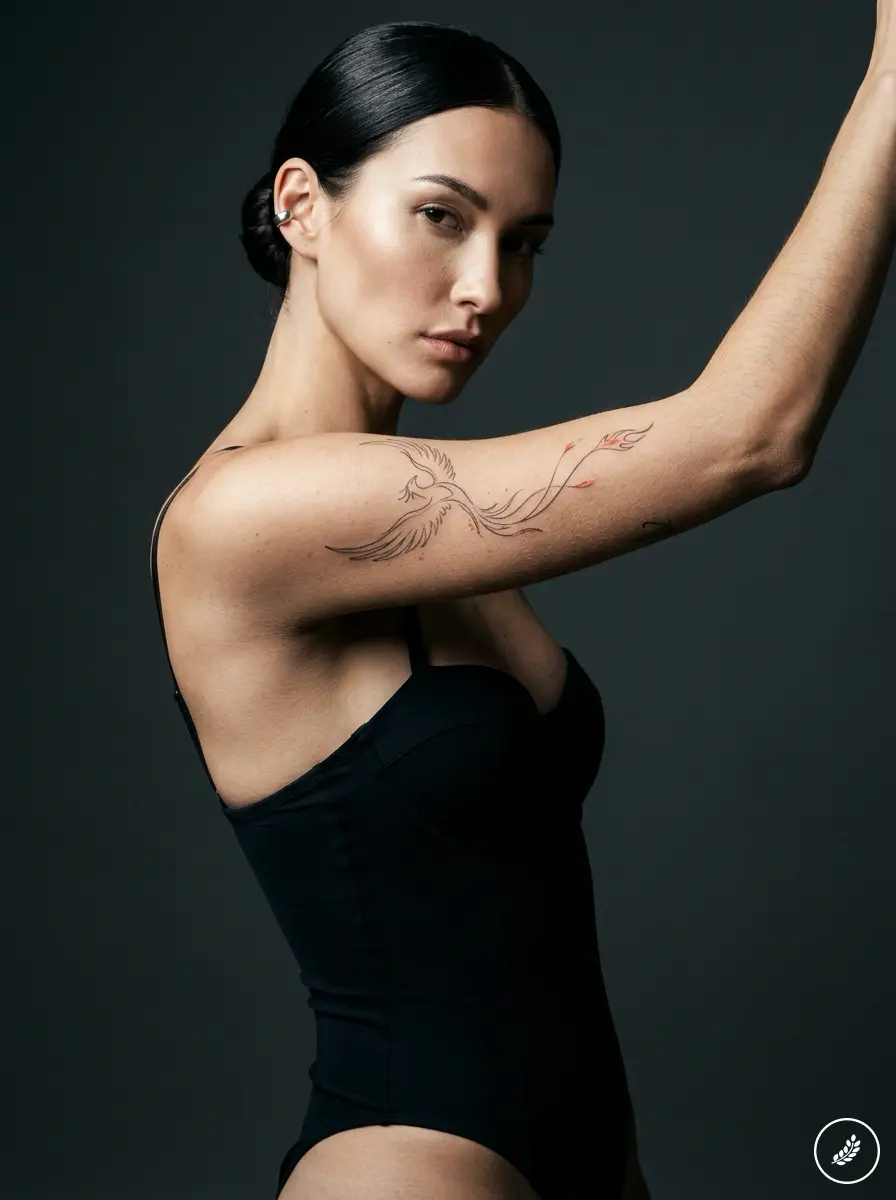
The best phoenix tattoo ideas are designs that connect the bird’s meaning with the right style and placement. A geometric phoenix works well if you want structure and clean linework. A watercolor phoenix fits a softer, painterly look, but it may need more touch-ups over time.
A minimalist outline is better for wrists, ankles, collarbones, and first tattoos. A realistic phoenix needs more space on the back, thigh, shoulder, or sleeve so the feathers and flames do not blur together. If the tattoo is about rebirth, keep the movement clear: wings lifting, tail feathers flowing upward, or flames sitting under the bird instead of covering it. The strongest design is usually the one you can explain in one sentence and still enjoy without explaining anything at all.
| Phoenix tattoo idea | Best placement | Meaning fit | Detail level | Healing note |
|---|---|---|---|---|
| Geometric phoenix | Ribs, forearm, shoulder | Order, focus, rebuilding | Medium | Keep the outside silhouette simple so the linework stays readable |
| Watercolor phoenix | Upper arm, back, thigh | Emotional reset, softness, color | Medium to high | Use a few darker anchors so the color does not fade into a blur |
| Minimalist phoenix | Wrist, ankle, collarbone | Quiet rebirth, first tattoo, private meaning | Low | Skip tiny feather cuts; one clean wing shape is stronger |
| Tribal phoenix | Upper arm, shoulder blade, calf | Strength, movement, bold identity | Medium | Leave enough negative space between curves |
| Phoenix with flames | Forearm, sleeve, back, thigh | Rising after a hard chapter | High | Keep flames under or behind the bird, not covering the body |
| Realistic phoenix | Back, chest, thigh, full sleeve | Statement piece, drama, survival | High | Needs size for feathers, shadows, and face detail |
| Japanese-style phoenix | Sleeve, shoulder, back panel | Power, grace, mythic movement | High | Plan wind bars, tail flow, and background before the stencil |
| Abstract phoenix | Forearm, ribs, upper back | Personal change without literal symbolism | Medium | Check the design from far away; it should still read as a bird |
| Phoenix with flowers | Hip, ribs, shoulder, upper arm | Rebirth with softness or remembrance | Medium to high | Balance petals and feathers so neither shape eats the other |
| Phoenix with sun | Back, sternum, upper arm, thigh | Renewal, warmth, beginning again | Medium | Use the sun as a frame or halo instead of a second focal point |
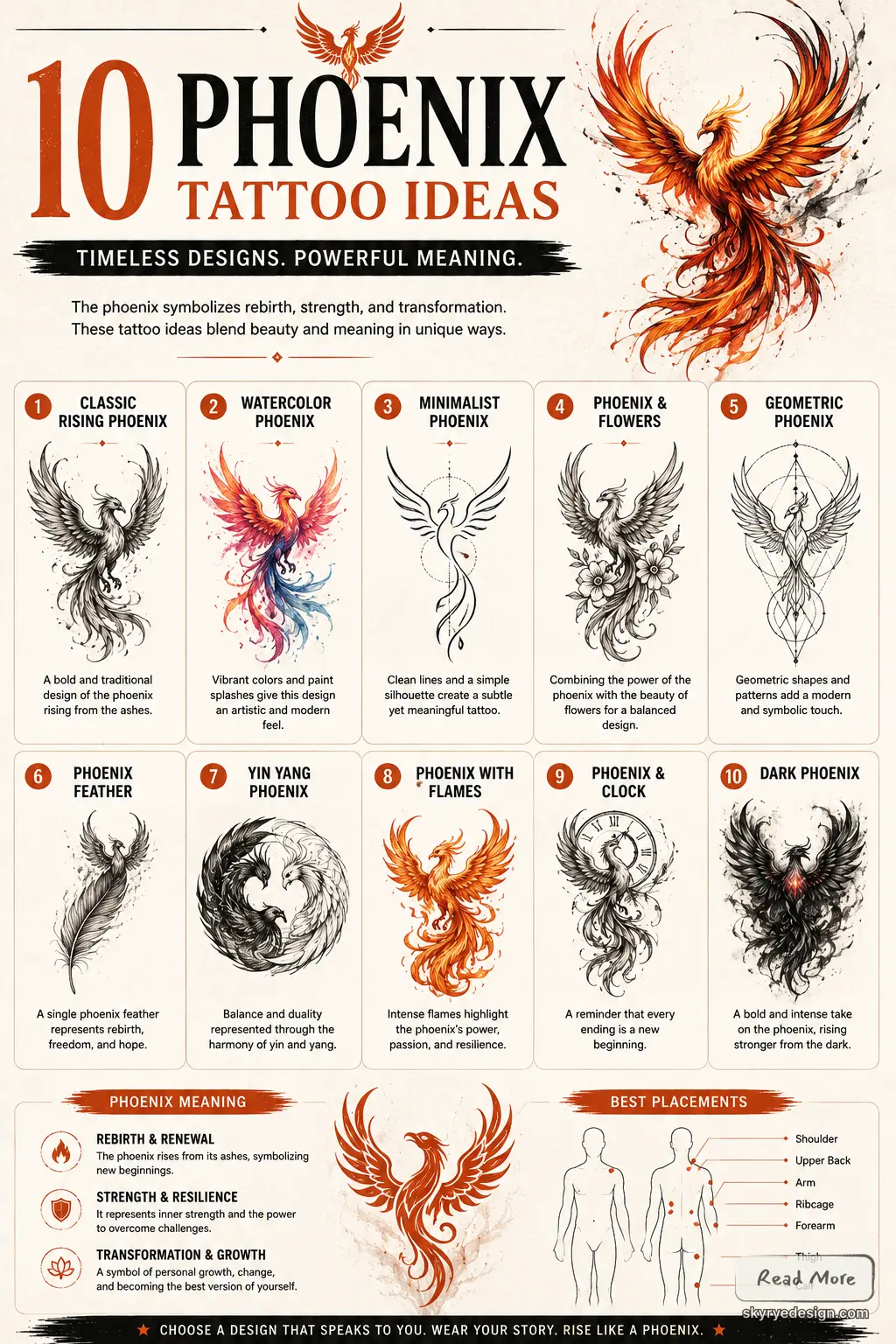
Use this as a quick reference before you save tattoo images. If the design needs to stay small, choose a low-detail style. If the meaning matters more than size, give the wings and tail enough room to show upward movement.
That’s what makes phoenix tattoos interesting to me. Even when the design is familiar, the meaning usually isn’t. Same bird, completely different story.
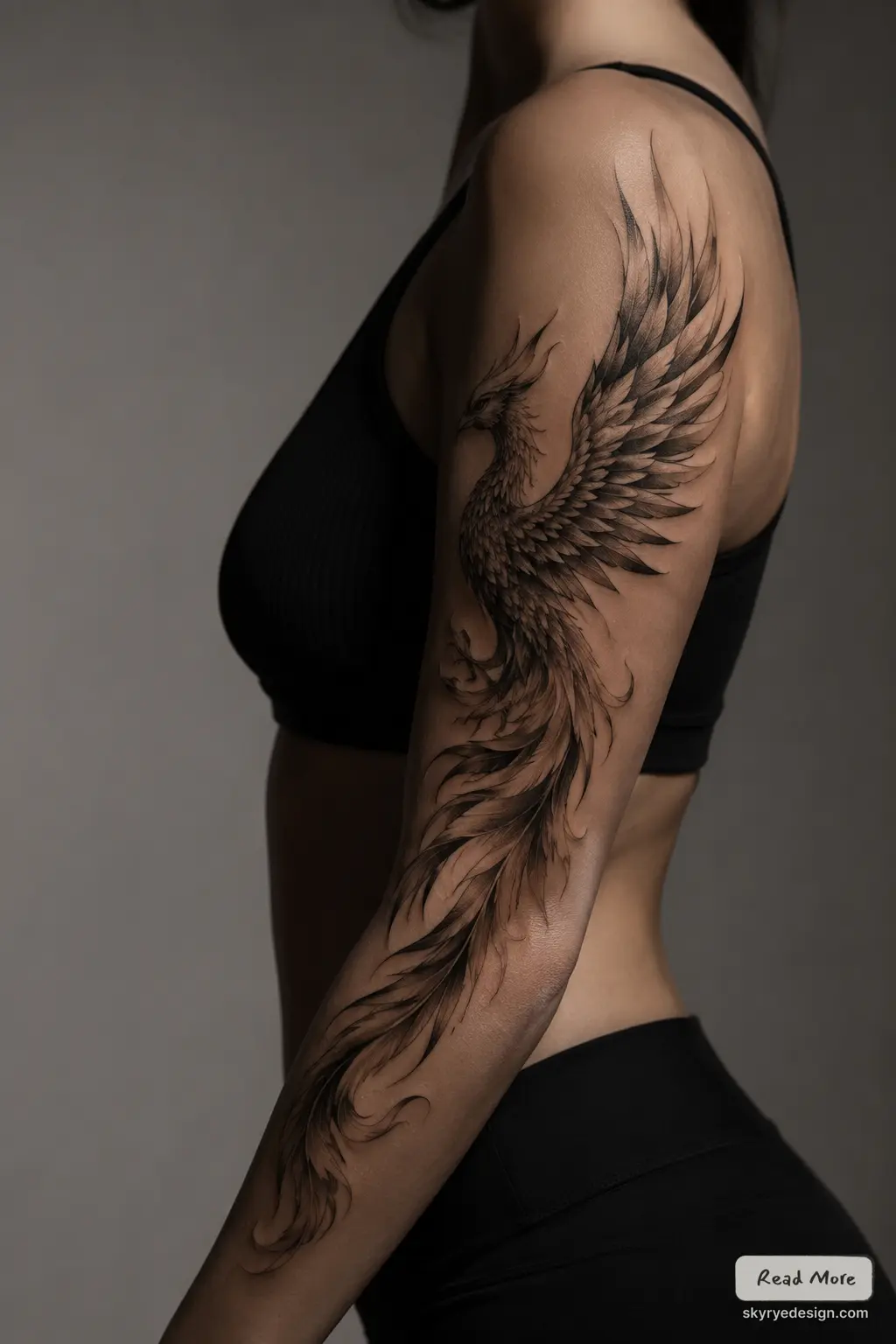
And design-wise, people take it in totally different directions. Some want the full dramatic version — huge wings, fire, color everywhere, lots of detail. Others go the opposite way. A clean outline. Black ink only. Maybe something small enough that most people wouldn’t notice unless you pointed it out.
I’ve seen massive back pieces that take months to finish and tiny wrist tattoos that somehow carry the exact same weight. It mostly comes down to this: how visible do you want that story to be?
1) Geometric phoenix tattoo
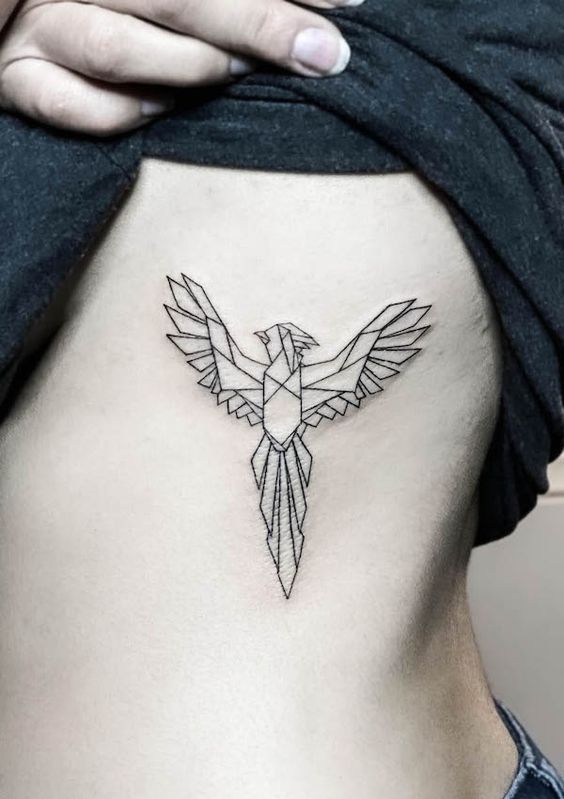
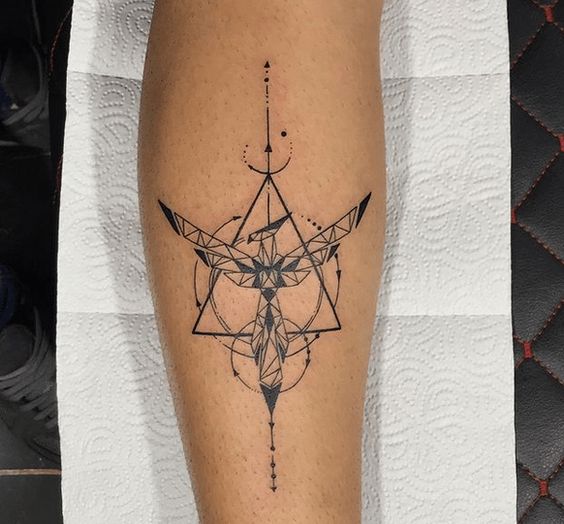
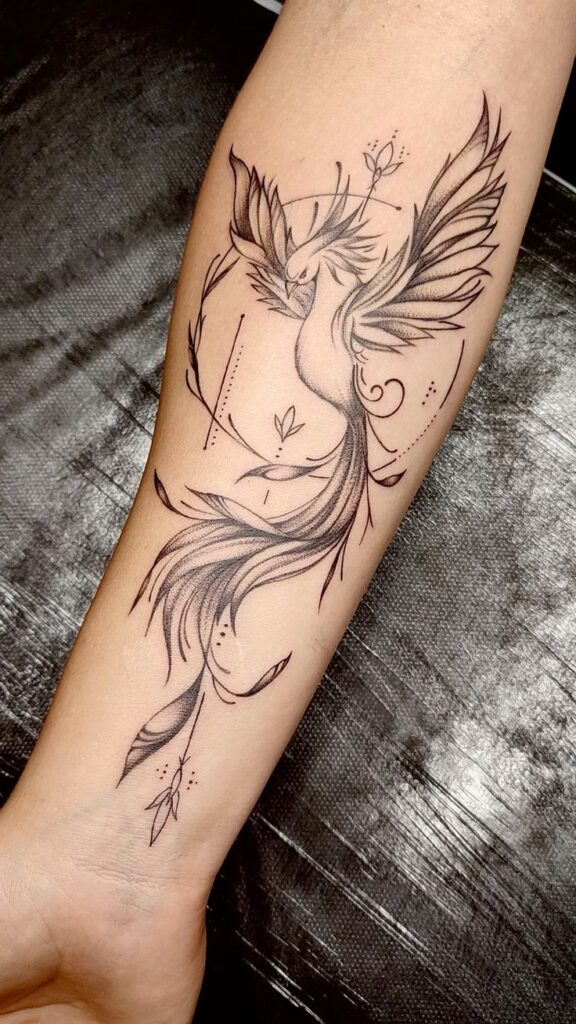
Geometric phoenix tattoos blend angular shapes with the mythical bird’s form. These designs use lines, triangles, and other geometric elements to create a stylized phoenix.
Geometric phoenix tattoos usually land differently than the classic fiery bird. Less dramatic flames, more structure. Instead of detailed feathers everywhere, the shape gets built out of circles, sharp angles, polygons, sometimes even symmetry so clean it almost feels architectural.
I actually like when artists mix the geometry with softer lines. Purely geometric tattoos can look a little cold if everything is too perfect. Adding a few curves or looser feather details keeps it feeling like a phoenix and not just a design experiment.
The style swings pretty wide too. Some people go minimal — thin black lines, simple outline, barely any shading. Others go all in with layered patterns and color. Reds and oranges obviously fit the whole fire-and-rebirth thing, but black ink geometric work has a different vibe. Cleaner. More understated. Usually ages well too.
Placement mostly depends on how much detail you’re packing in. A big geometric phoenix looks great across the back, chest, or thigh because the shapes have room to breathe. Smaller versions work on the forearm or ankle, though you’ll probably want to simplify the details unless you enjoy future touch-ups.
And the meaning? Still the same core idea: rebuilding, starting over, getting through something hard. The geometry just changes the feeling a bit. Less chaos, more intention. Like putting yourself back together carefully instead of exploding out of the ashes in dramatic movie slow motion.
Looking for even more tattoo inspo before you settle on a design? Check out our tattoo trends guide for ideas that go beyond mythic motifs.
2) Watercolor phoenix tattoo
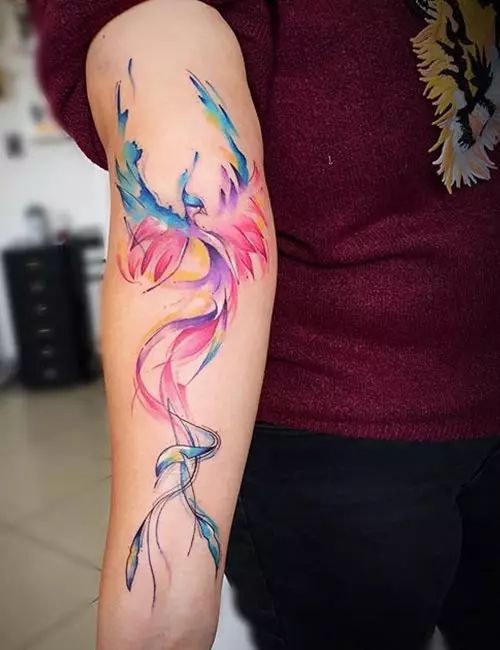
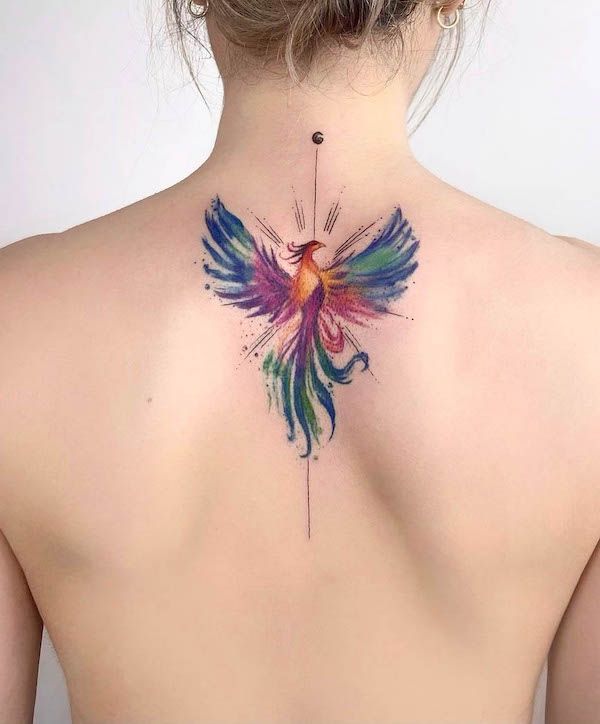
Watercolor phoenix tattoos blend vibrant colors and soft edges to create a striking effect. These designs feature fluid lines and color gradients that mimic the look of watercolor paintings on skin.
Artists use shades of red, orange, and yellow to capture the fiery nature of the phoenix. Blues and purples are often added to create depth and contrast. The result is a tattoo that appears to glow from within.
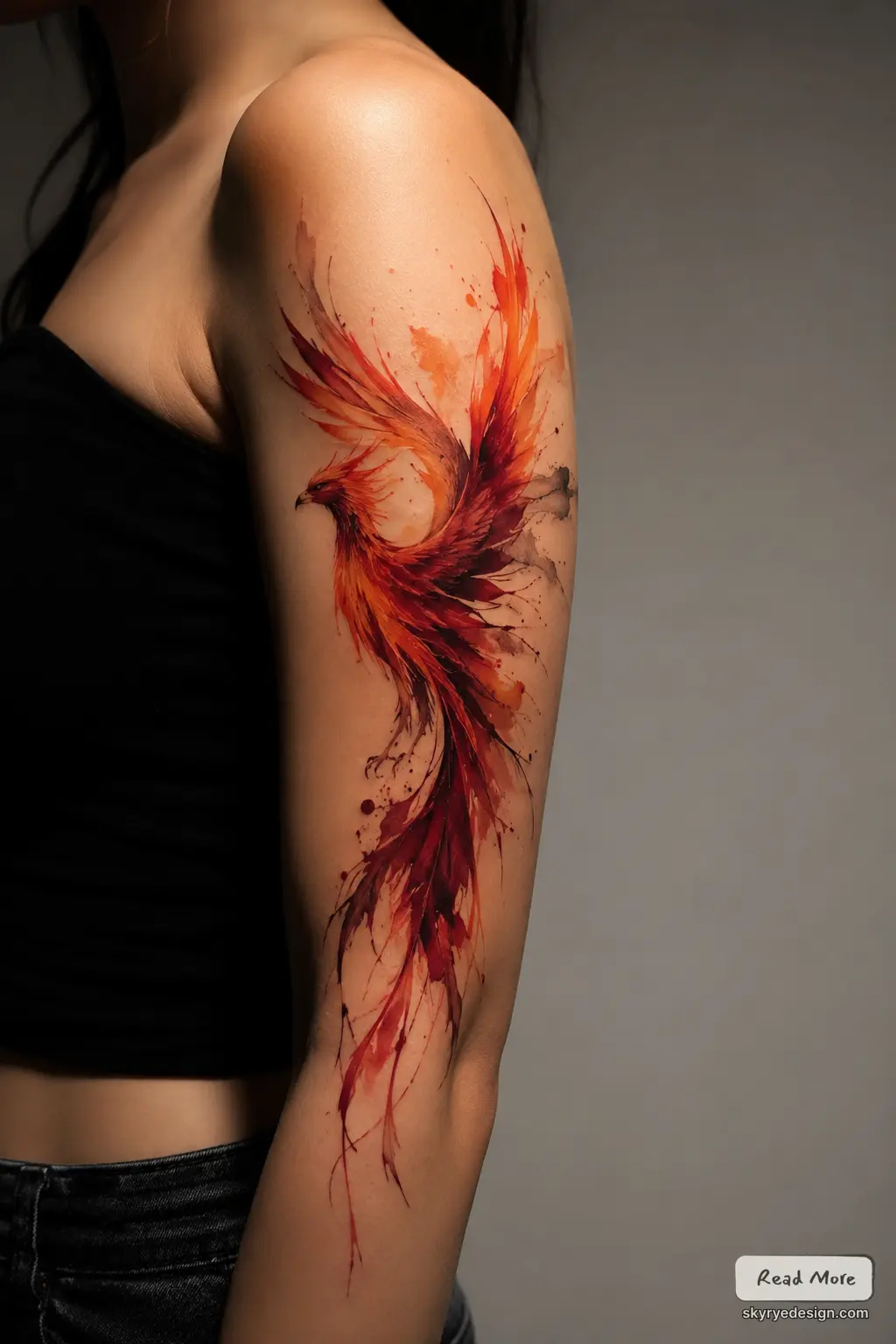
Watercolor techniques allow for creative interpretations of the phoenix. Some designs focus on the bird’s head and wings, while others depict the full body in flight. The lack of defined outlines gives these tattoos a dreamy, ethereal quality.
Many people choose watercolor phoenix tattoos for their symbolic meaning. The phoenix represents rebirth and renewal. The flowing colors can symbolize transformation and change.
Watercolor tattoos require a skilled artist to execute properly. The ink may fade faster than traditional tattoos, so touch-ups might be needed over time. Placement is important, as areas with less sun exposure tend to maintain color better.
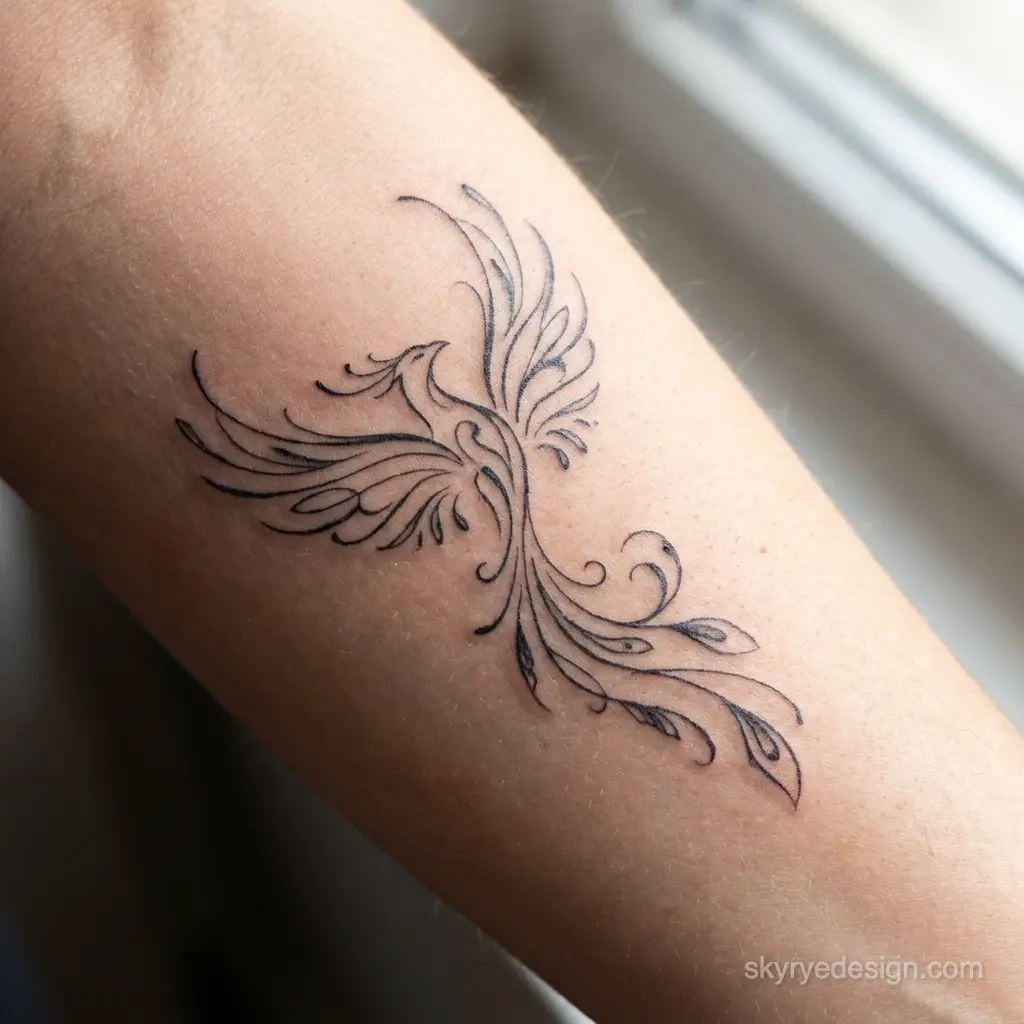
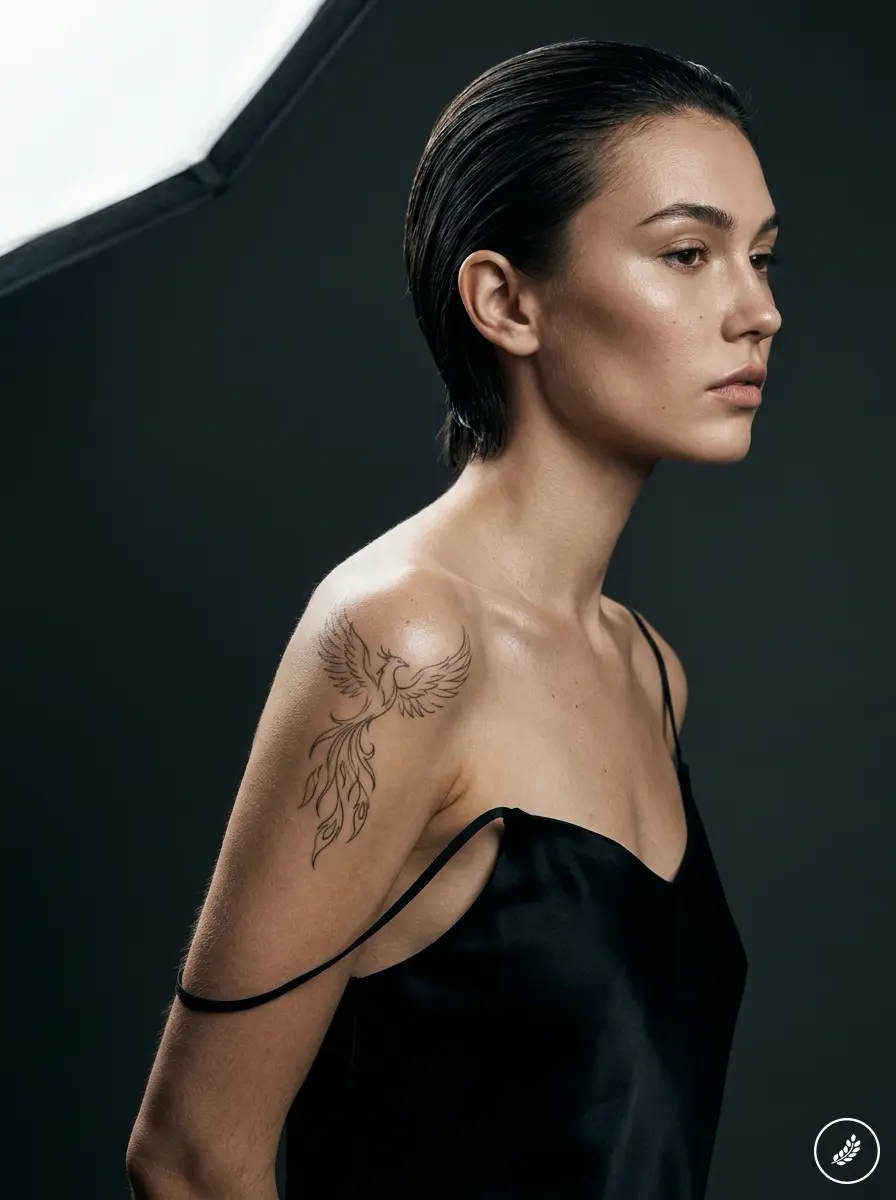
3) Minimalist phoenix outline
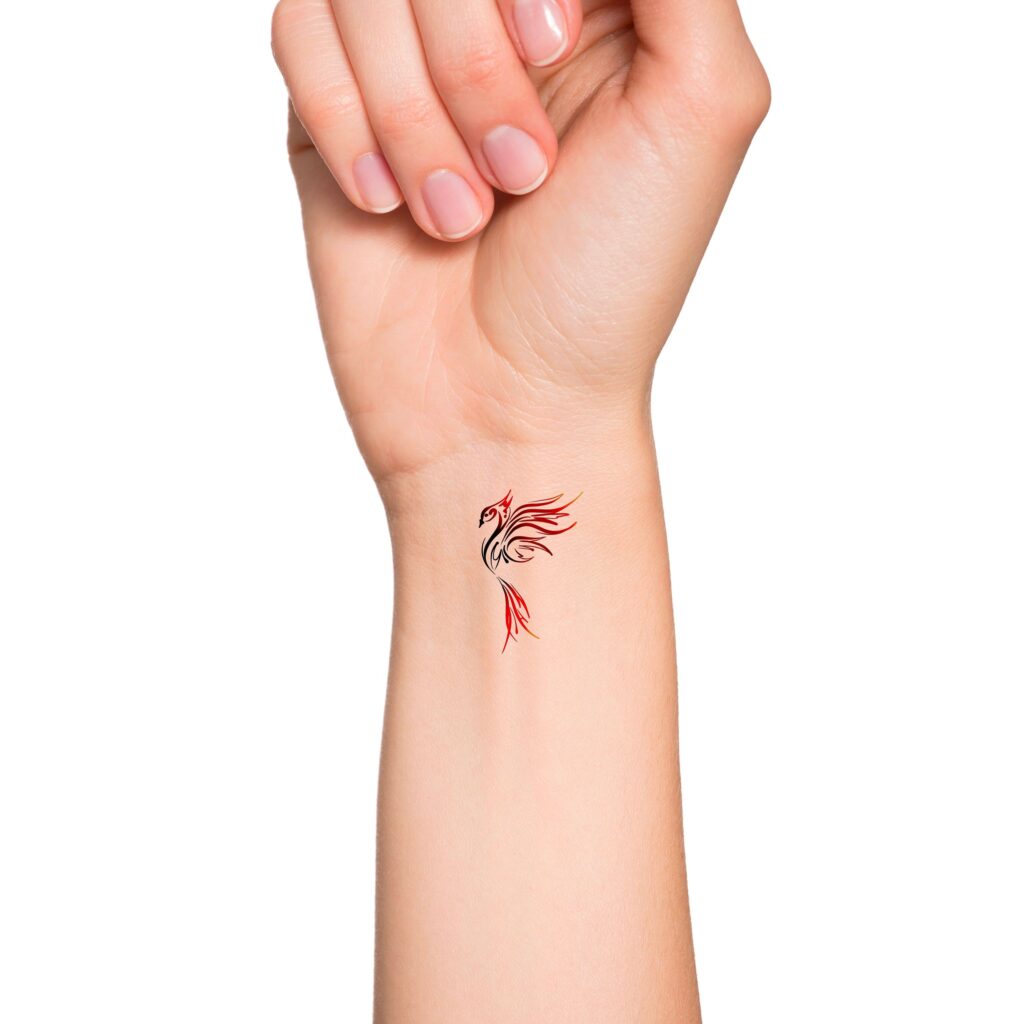
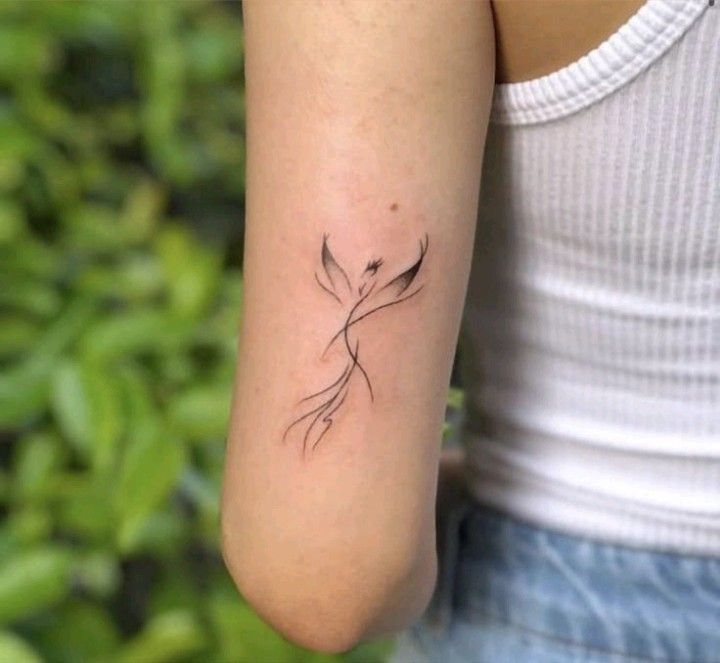
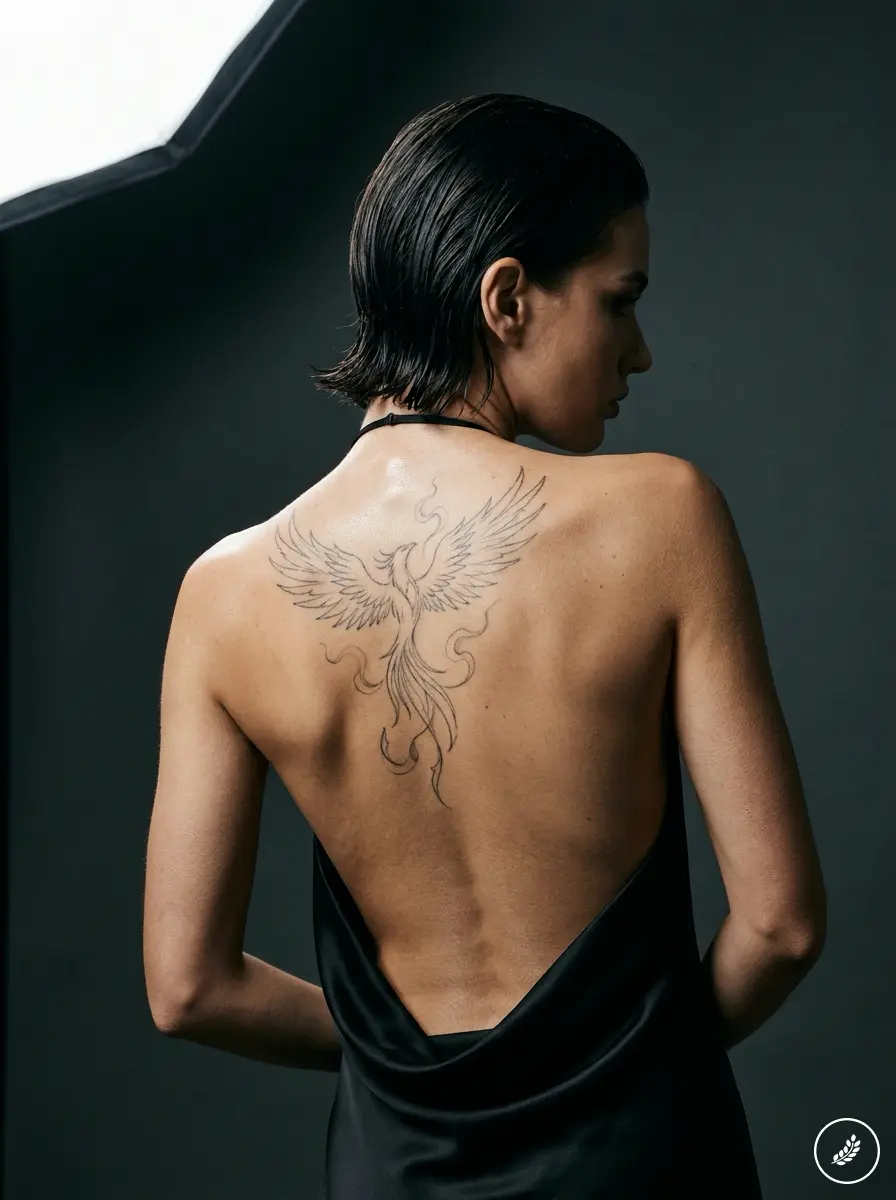
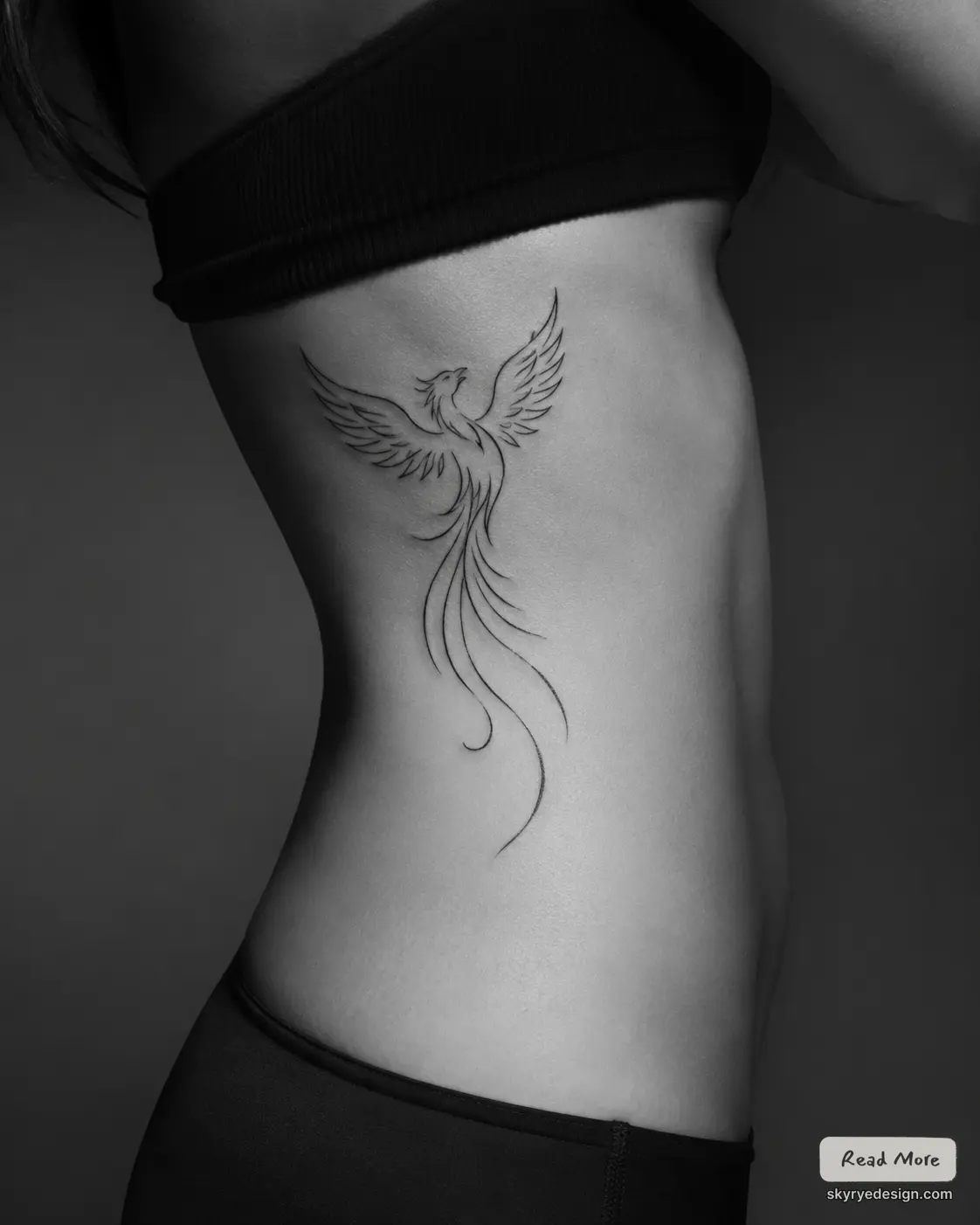
A minimalist phoenix outline tattoo is one of those ideas that somehow works with very little. No giant back piece. No flames flying everywhere. Just enough of the bird to recognize it — a few clean lines, maybe spread wings, maybe a tail that curves just enough to feel alive.
I actually like phoenix tattoos more when they’re kept simple. The meaning already does most of the work. You don’t need a ton of detail for it to land. Sometimes it’s literally just an outline. Sometimes there’s a tiny flame hidden in the design, small enough that people miss it unless they look twice.
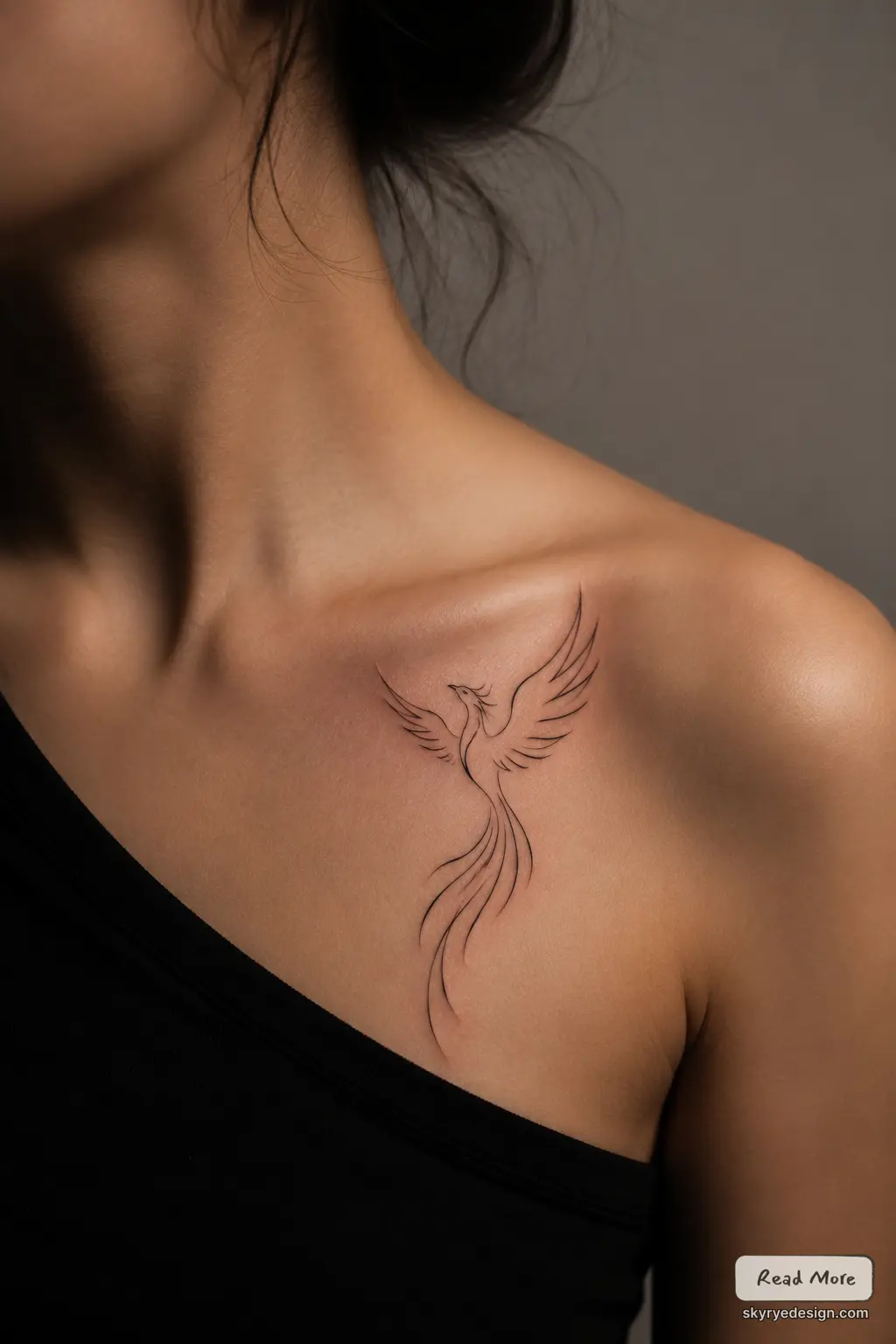
This style is easy to place too. Wrist if you want something subtle. Ankle works. Behind the ear looks surprisingly good with simple linework. Collarbone placements always feel elegant, and shoulder blade designs have that “you only notice it when they turn around” kind of effect. I’ve seen thin spine versions that looked really good too.
And honestly, I think that’s why people like this style. The meaning stays personal. A phoenix tattoo usually comes from something real — a rough stretch, a reset, a version of yourself you left behind. A simple outline still holds all of that. It just doesn’t feel the need to explain itself.
4) Tribal phoenix tattoo
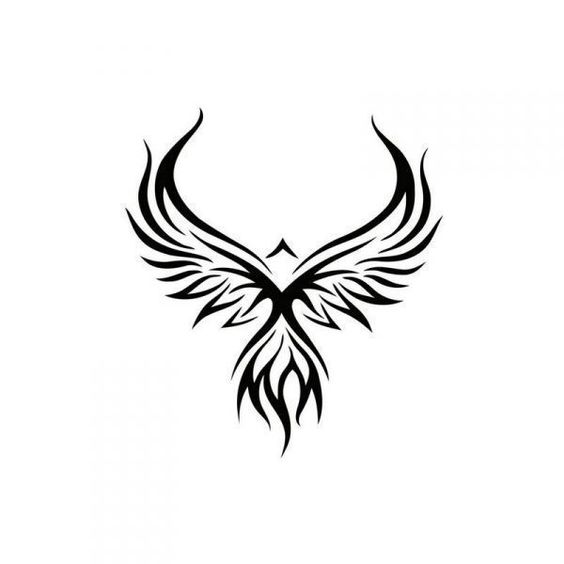
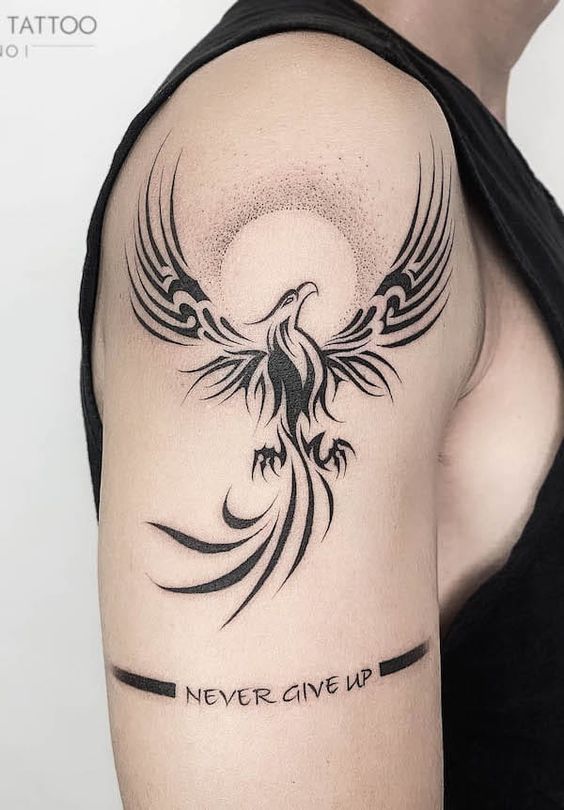
Tribal phoenix tattoos feel a lot bolder than the classic version. Less soft feathers and dramatic flames, more sharp lines and heavy contrast. The whole design usually leans into strong shapes, thick black ink, and silhouettes that hit hard visually.
A lot of them borrow ideas from Polynesian, Maori, or Celtic-inspired patterns, depending on the artist and what style you’re after. Though this is one of those tattoos where I’d be careful about copying cultural designs without understanding where they come from. Some artists create tribal-inspired work instead of directly lifting traditional symbols, which usually feels like the better route.
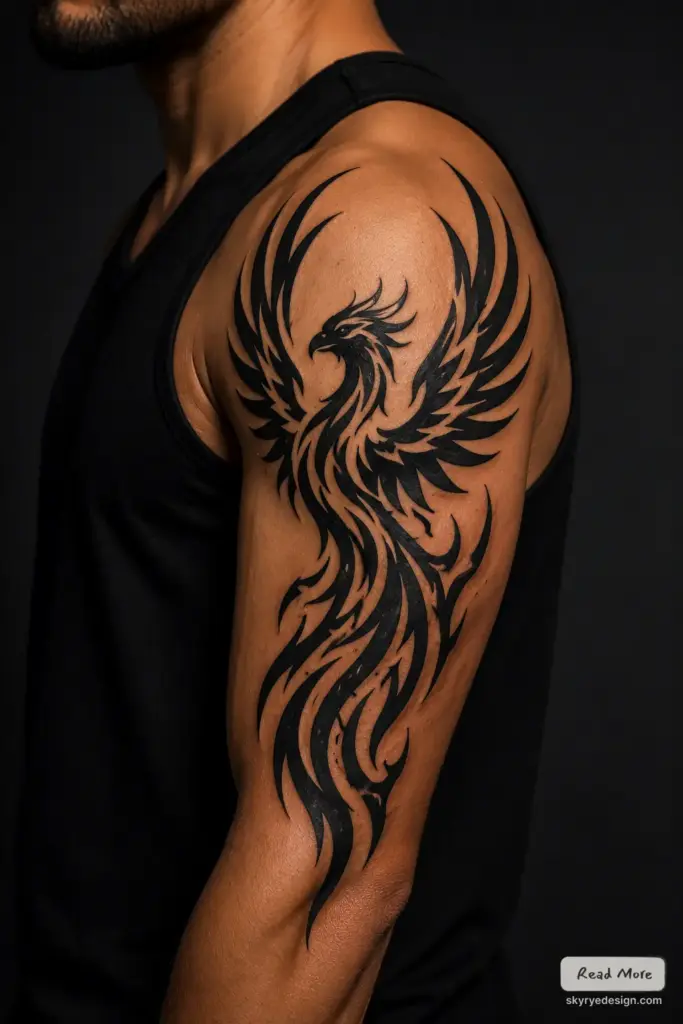
Most tribal phoenix tattoos stay black ink only, and honestly, that’s where the style looks strongest. Solid black shapes age well and keep their impact. You’ll sometimes see red or orange accents for a fire effect, but the all-black versions usually feel cleaner.
Placement matters more than people think with this one. Tribal designs need space. Upper arm, chest, shoulder blade, calf, back — those placements let the shapes actually breathe. Too small and it can start looking crowded fast.
And the meaning? Still phoenix territory: resilience, change, rebuilding yourself after something hard. Tribal styling just shifts the mood a little. Feels more grounded. More strength than softness. Like, “Yeah, things burned down. I’m still here.”
5) Phoenix tattoo with flame details
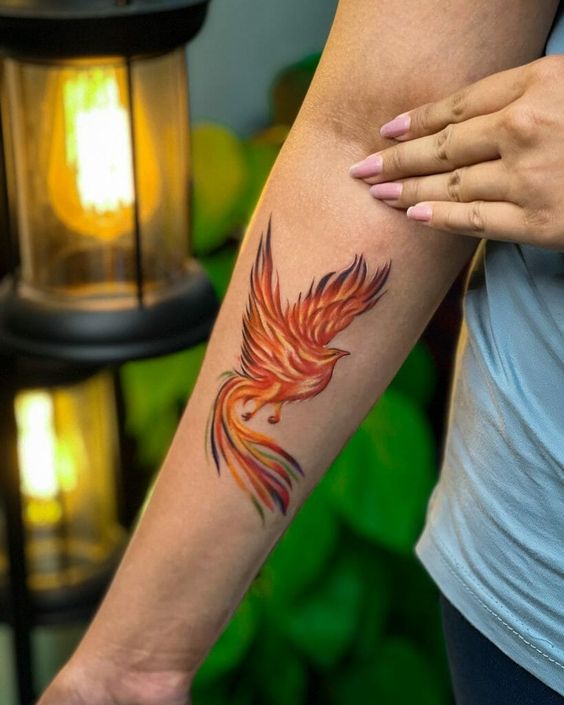
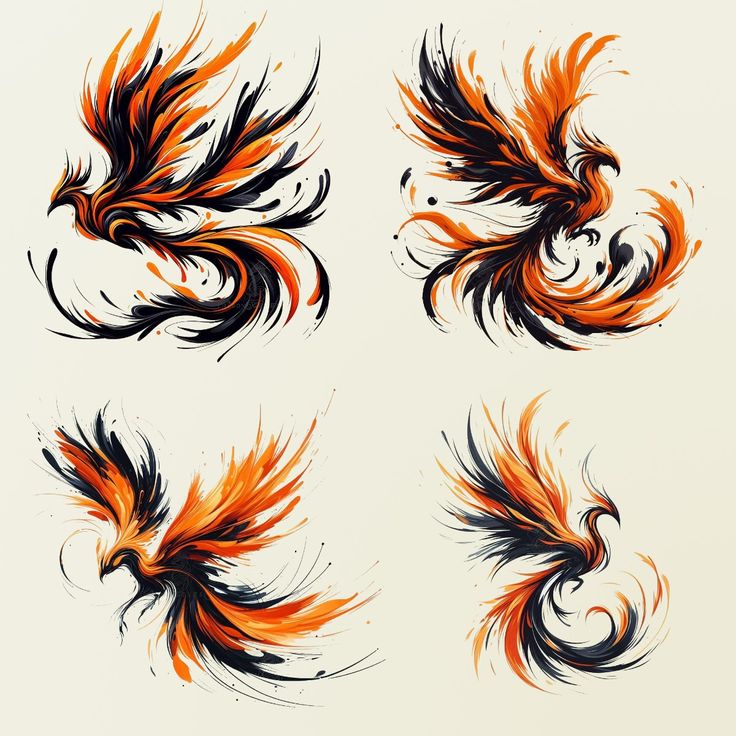
Phoenix tattoos with flame details add extra flair to the mythical bird design. These tattoos often show the phoenix surrounded by or emerging from vibrant flames. The fire element enhances the symbolism of rebirth and renewal.
Artists use various techniques to create realistic flame effects. They might blend warm colors like red, orange, and yellow to mimic flickering fire. Some designs feature intricate flame patterns that swirl around the phoenix’s body.
The flames can be subtle or bold depending on personal preference. Subtle designs may have small licks of fire at the phoenix’s wingtips or tail feathers. Bolder tattoos might depict the entire bird engulfed in a fiery blaze.
The design often includes flames or ashes. This highlights the cycle of death and rebirth. Color choices can add meaning too. Red phoenixes may symbolize passion, while blue ones could represent calm and healing.
For deeper insight into the spiritual meaning behind your phoenix tattoo and how it relates to your life path, you can always ask psychic on Nebula. Their skilled, dedicated guidance can help reveal the personal transformation your phoenix symbol may reflect.
Phoenix with flame tattoos work well in different styles. Traditional designs often use solid colors and bold outlines. Realistic styles aim to capture lifelike fire textures and shading.
These tattoos can be placed on various body parts. Larger designs suit areas like the back or chest. Smaller flame details can be added to phoenix tattoos on arms or legs.
6) Realistic phoenix tattoo
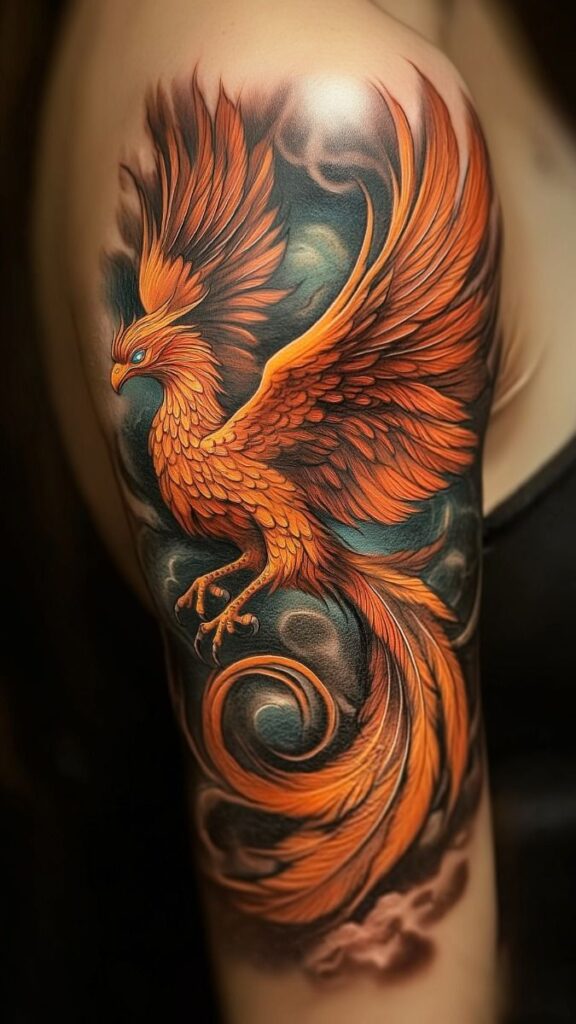
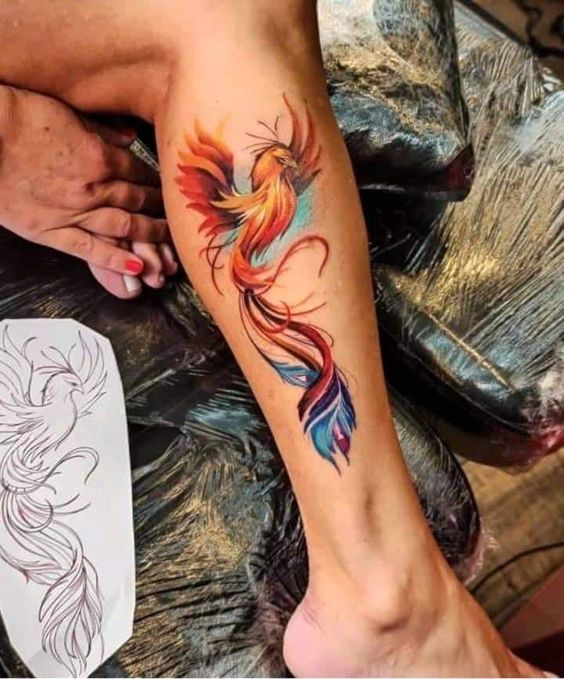
Realistic phoenix tattoos are the kind of pieces people stare at for a second longer than they meant to. When they’re done right, they almost don’t look like tattoos at first — feathers layered with crazy detail, shadows in the wings, eyes that somehow feel alive.
This is definitely one of those styles where the artist matters. A lot. Realism looks amazing when someone knows what they’re doing and pretty rough when they don’t. I’d spend way more time picking the artist for a tattoo like this than I would for something simple. Phoenixes have so much movement in them that bad shading gets obvious fast.
Most realistic designs go big and dramatic too. Wings spread wide. Flames underneath. Mid-flight poses that make the whole thing feel alive instead of static. It suits the phoenix, honestly. A tiny, quiet realistic phoenix feels a bit like missing the point.
Color is usually where these tattoos really come alive. Reds, oranges, golds — obvious choice, but for good reason. Some artists throw in hints of blue or purple around the shadows and edges, which weirdly makes the warmer colors pop more.
And if you’re thinking realistic, give it space. Back, chest, thigh, upper arm — somewhere the artist can actually work. Tiny realism sounds good until the details blur together a few years later.
Also: prepare for sessions. Plural. Nobody is knocking out a detailed realistic phoenix in two hours unless something has gone very wrong.
7) Japanese-style phoenix tattoo
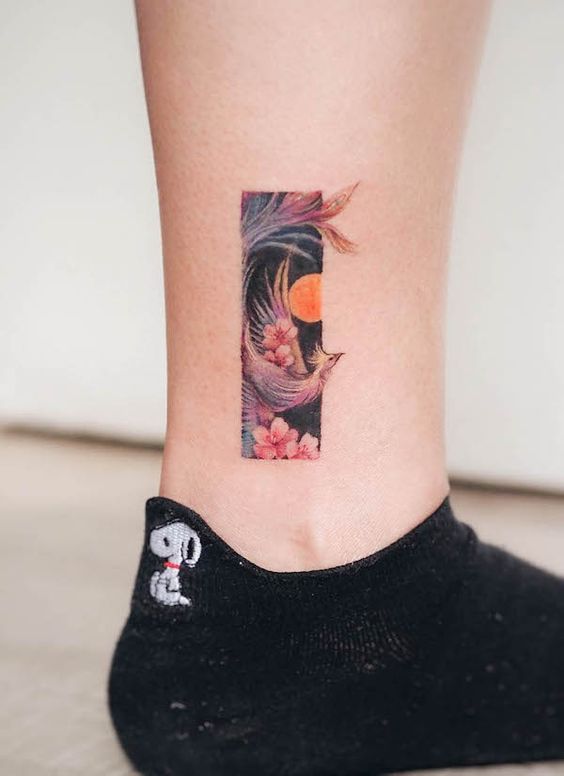
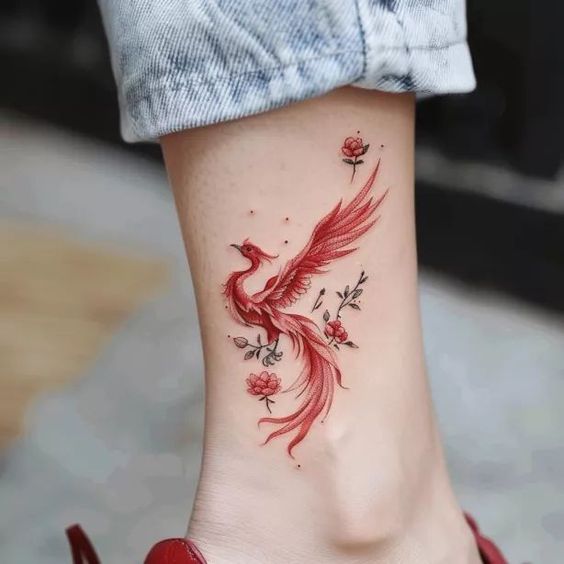
Japanese phoenix tattoos just hit differently. They feel more elegant than dramatic. Less “bird bursting out of flames,” more movement, balance, and detail that somehow keeps your eye moving around the whole piece.
The phoenix — called ho-oh in Japanese mythology — usually has this long neck, flowing tail, and feathers that almost look like they’re moving in the wind. Reds, oranges, and golds show up a lot, which makes sense with the whole fire-and-rebirth symbolism, but good Japanese work isn’t just about bright color. The black shading does a ton of work too.
And honestly, half the beauty of Japanese-style tattoos is everything around the main subject. Clouds, wind bars, cherry blossoms, waves — the background matters. A Japanese phoenix rarely looks like it’s floating there by itself. It feels part of something bigger.
I’ve always thought this style looks best when it has room to breathe. Back pieces, chest panels, sleeves, thigh placements. Somewhere the feathers and movement can actually stretch out. Tiny Japanese phoenix tattoos can work, but sometimes they lose the thing that makes the style feel so good in the first place.
If you go this route, artist choice matters more than usual. Irezumi has its own rhythm. A good Japanese tattoo artist knows how the design should wrap with the body, where the flow should go, what details to emphasize. Big difference between inspired-by Japanese and someone who actually understands the style.
8) Abstract phoenix tattoo
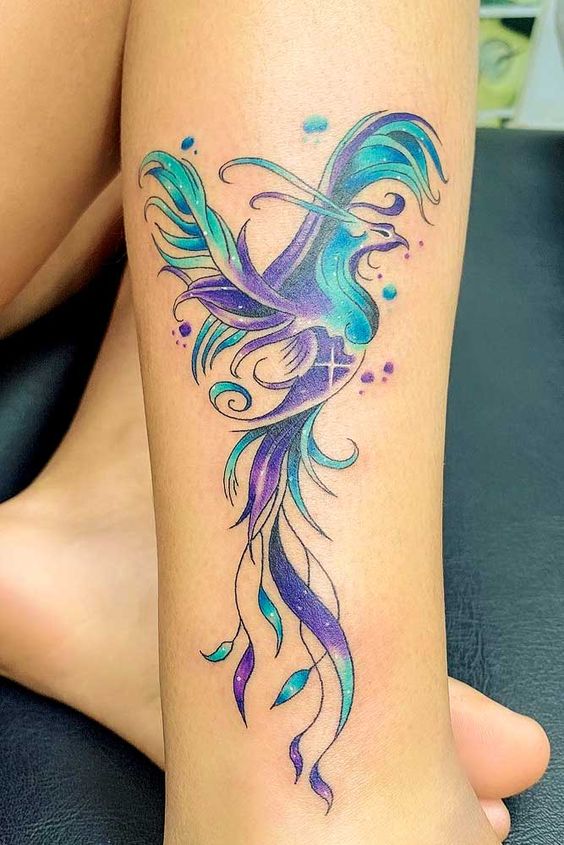
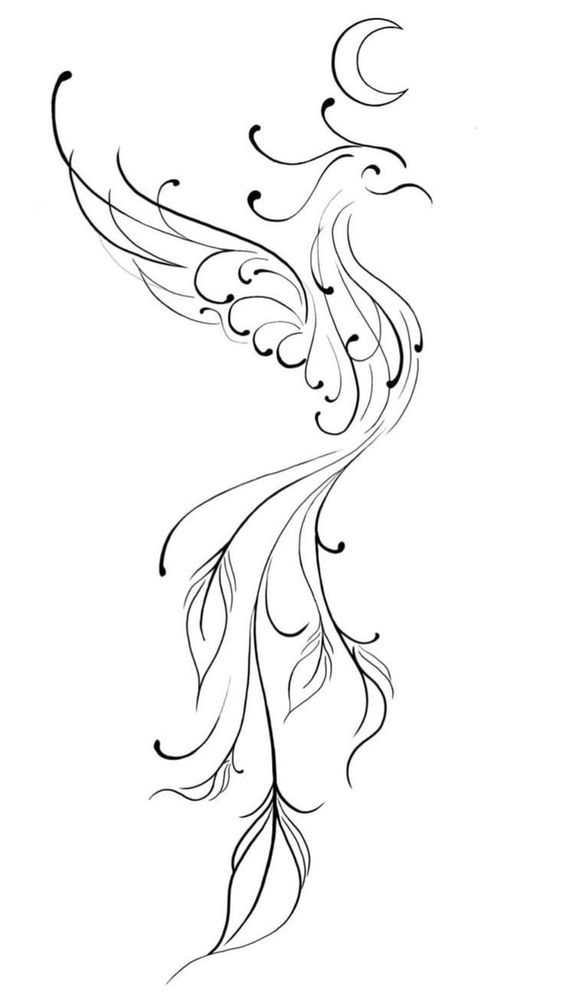
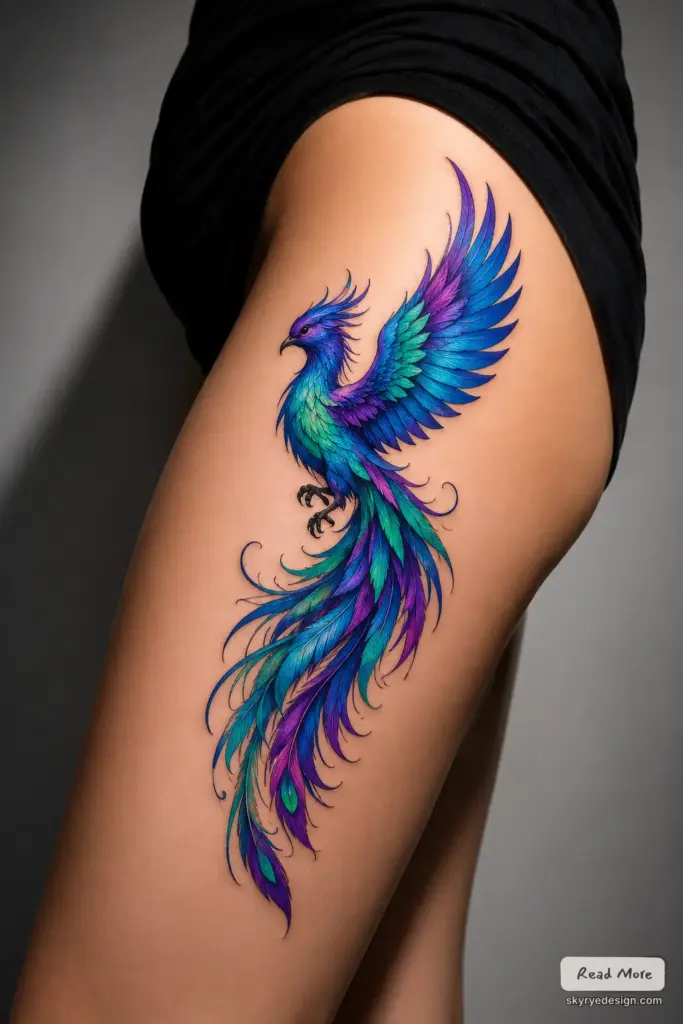
Abstract phoenix tattoos are for people who like the idea of a phoenix but don’t necessarily want a giant, detailed bird covering half their body.
This style gets a lot more creative. Sometimes the phoenix is obvious. Sometimes it’s just shapes, movement, a few lines that somehow still read as a bird rising. I’ve seen abstract versions that looked almost like brushstrokes and others built out of sharp geometric pieces. Same idea, completely different energy.
I actually think abstract works really well for phoenix tattoos because the meaning is already doing a lot of the heavy lifting. You don’t need every feather drawn perfectly for people to understand what it represents. Change. Starting over. Surviving something messy.
Color depends on the mood you’re after. Bright reds and oranges keep the whole fire symbolism front and center. Black ink feels quieter, more design-focused. And abstract tattoos usually leave a bit more breathing room too, which I personally like. Too much detail can start feeling busy fast.
Placement’s pretty flexible. Wrist if you want something subtle. Forearm works. Shoulder blade, ribs, or thigh if you want space to play with shape and movement. Bigger pieces usually look better when the design has room to flow instead of being squeezed into a tiny area.
A phoenix can work well when the brief is strength, recovery, or a new chapter; compare it with tattoo ideas for men with meaning before choosing a louder symbol.
For a phoenix that has to read in a tight area, compare large shoulder or chest versions with bold hand tattoo ideas before simplifying the feathers.
And honestly, abstract phoenix tattoos feel a little more personal sometimes. Less “here is exactly what this means,” more “this meant something to me.” Which, for a tattoo about transformation, kind of fits.
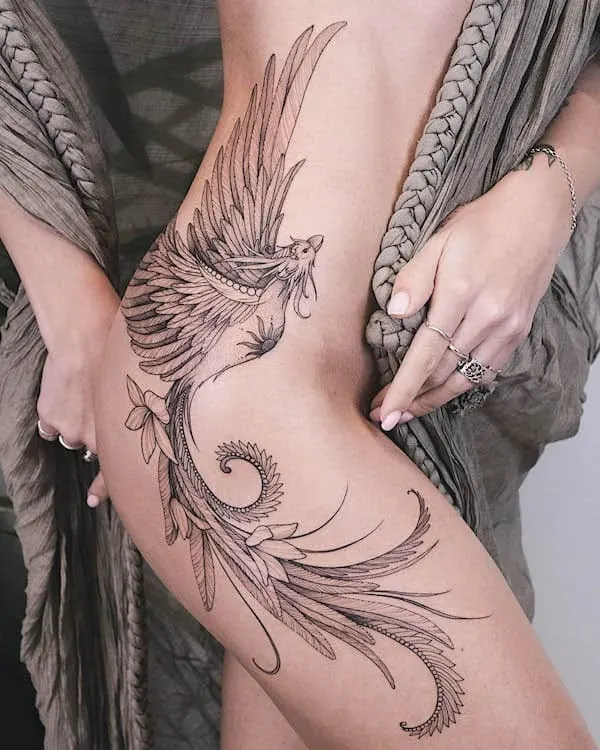
9) Phoenix tattoo with floral elements
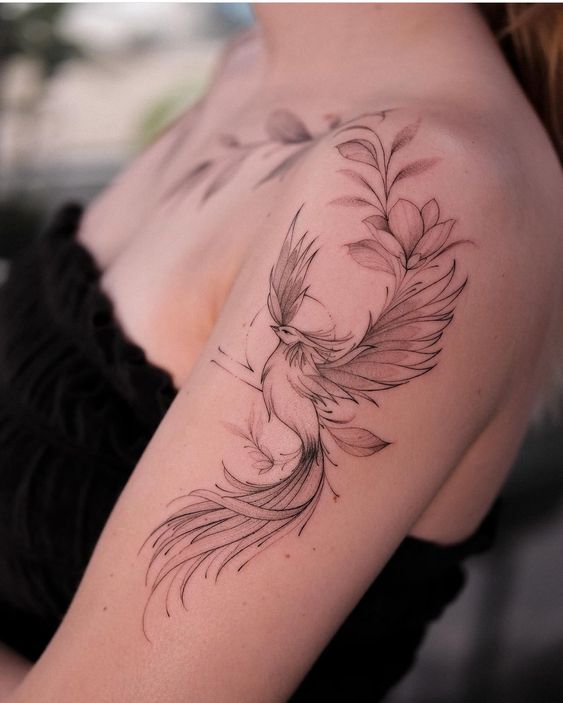
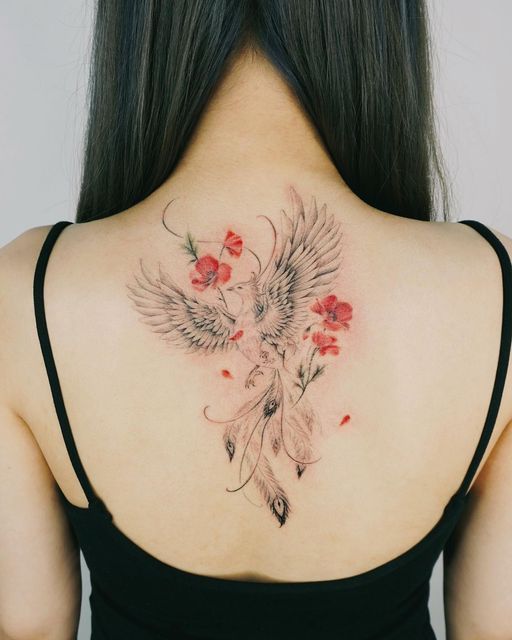
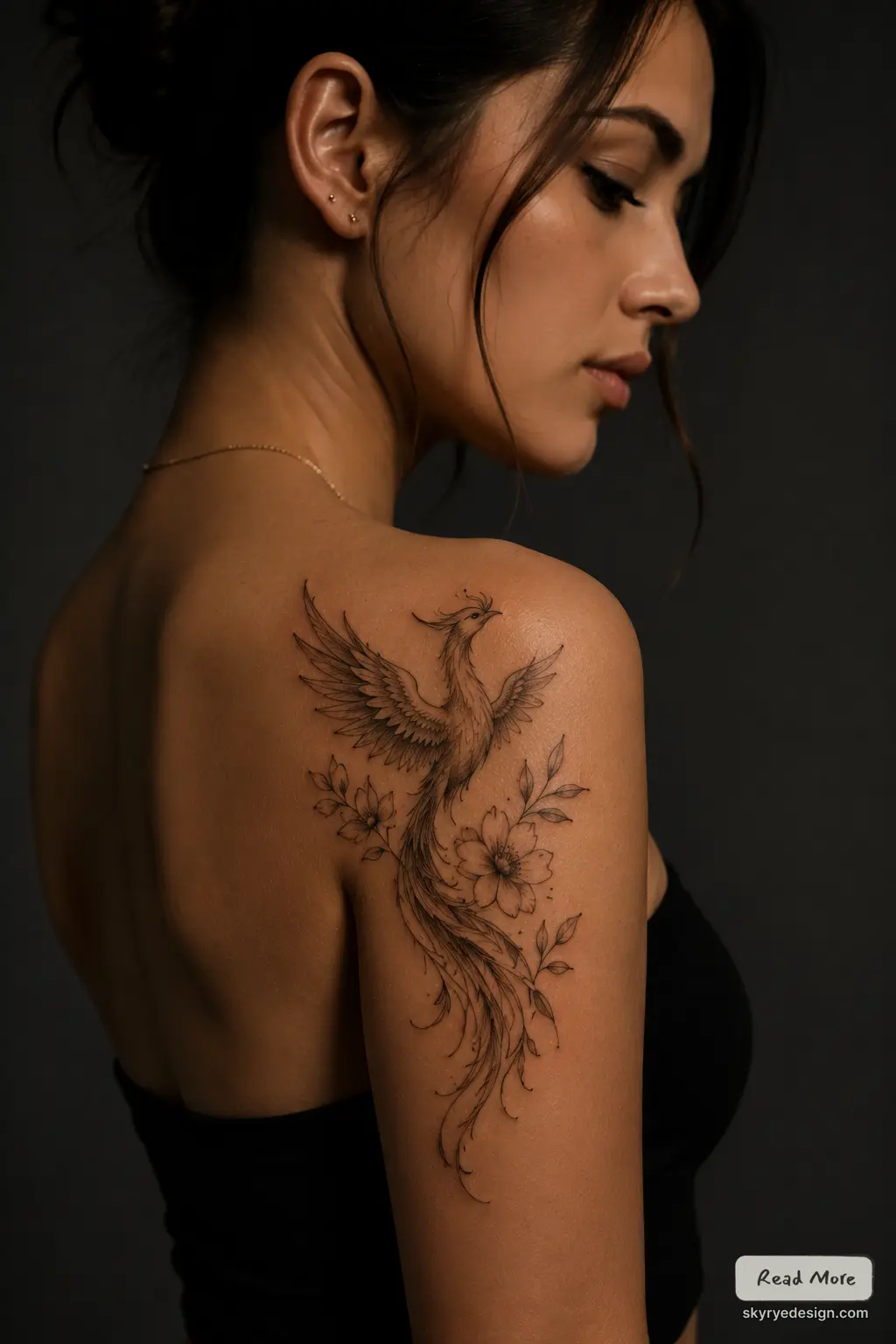
Phoenix tattoos with floral elements combine the mythical bird with beautiful flowers. This design merges rebirth and nature themes. Artists often use roses, lotus flowers, or cherry blossoms in these tattoos.
The phoenix can be shown rising from a bed of flowers. Or, floral patterns might decorate its wings and tail feathers. Some designs have flowers growing from the phoenix’s body or flames.
These tattoos can be colorful or black and gray. They work well as larger pieces on the back, chest, or thigh. Smaller versions can fit on arms or ankles too.
The mix of fire and flowers creates an eye-catching contrast. It represents the balance between destruction and growth. This tattoo style appeals to people who want a softer take on the fierce phoenix image.
Floral phoenix designs can be adapted to many tattoo styles. They look great in watercolor, traditional, or realistic styles. The combination allows for creative and unique interpretations of the phoenix myth.
10) Phoenix tattoo embracing the sun
For a quieter version of the same rebirth idea, a nature-inspired sunrise tattoo can use light, horizon, and landscape instead of a full mythological bird.
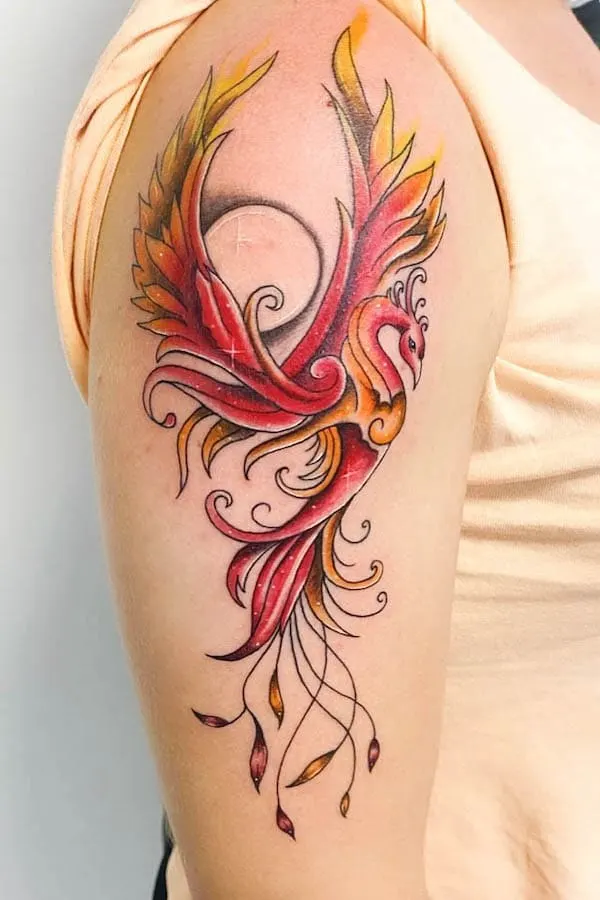
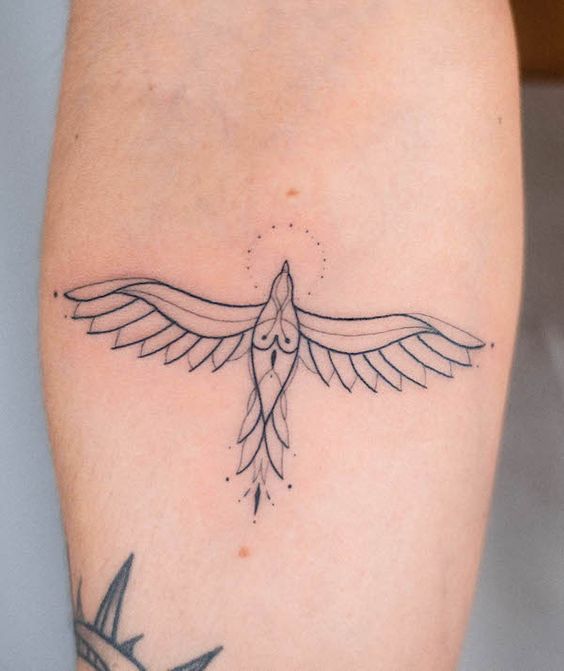
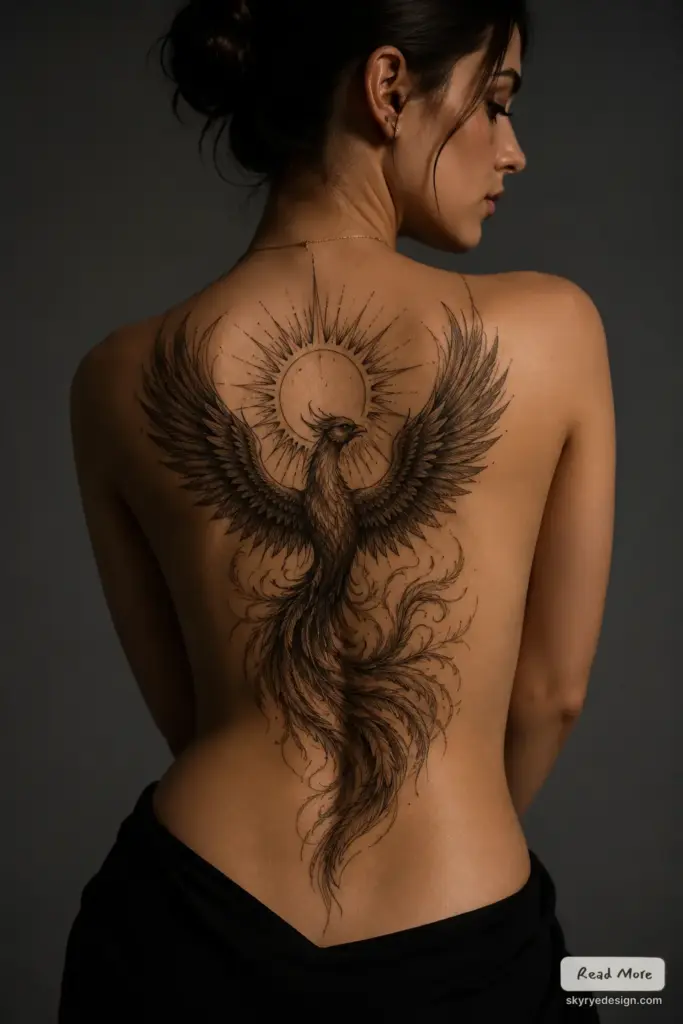
The Phoenix Embracing Sun tattoo design shows a phoenix bird with its wings spread wide around a glowing sun. This image combines two powerful symbols of rebirth and light.
The phoenix wraps its feathers protectively around the sun. Its fiery plumage blends with the sun’s rays. The bird seems to draw strength from the sun’s energy.
This tattoo represents hope, renewal, and inner power. It can remind the wearer that light always follows darkness. The phoenix rising with the sun shows triumph over challenges.
Some artists add swirling flames or sparkles to enhance the magical feel. Others use bold colors like red, orange, and gold to make the design pop. Simpler black and gray versions can also look striking.
This tattoo works well on the back, chest, or upper arm. Larger sizes allow for more intricate feather and sunbeam details. Smaller versions can focus on the key elements of the bird and sun.
Not sure what design fits you? Here’s how to find tattoo inspiration.
Phoenix tattoo meaning and symbolism
Phoenix tattoos carry deep symbolism tied to rebirth and transformation. The mythical bird has inspired people across cultures for centuries.
Cultural Significance
The phoenix appears across several myth traditions as a bird tied to renewal, the sun, and return after destruction. The broad idea is simple enough for a tattoo: something burns, ends, or breaks, and something new rises from it. For myth background, see the overview of the phoenix in mythology.
Greek mythology gives it the most dramatic version: burns itself to ash every 500 years, climbs back out of the fire. Egyptian priests tied it to Ra, the sun god — a bird that rises every morning, which tracks. Chinese mythology has the fenghuang, which everyone calls a phoenix but isn’t quite. It’s more about virtue and grace. No dying involved.
Then there’s the thunderbird from some Native American traditions. The comparison to a phoenix is always a little forced — it controls thunder and lightning, it’s enormous, it’s powerful, but transformation isn’t really the point. The thunderbird doesn’t come back from anything. It just is.
The religious readings are where it gets strange. Early Christians adopted the phoenix almost immediately — a creature that dies and rises again wasn’t hard to fit into the theology. In Jewish tradition, it’s associated with faithfulness rather than resurrection. Less spectacular, honestly. But I keep thinking about that version. The bird that doesn’t burn. The one that just keeps going.
Modern Interpretations
Today, people get phoenix tattoos for personal reasons. Many see it as a sign of overcoming hardship. The bird’s rebirth represents a fresh start or new chapter in life.
Some view the phoenix as a symbol of inner strength. Its ability to rise from ashes shows resilience. This can inspire those facing tough times.
Phoenix tattoos can also represent:
- Survival
- Hope
- Transformation
- Spiritual awakening
The design often includes flames or ashes. This highlights the cycle of death and rebirth. Color choices can add meaning too. Red phoenixes may symbolize passion, while blue ones could represent calm and healing.
Phoenix tattoo design elements
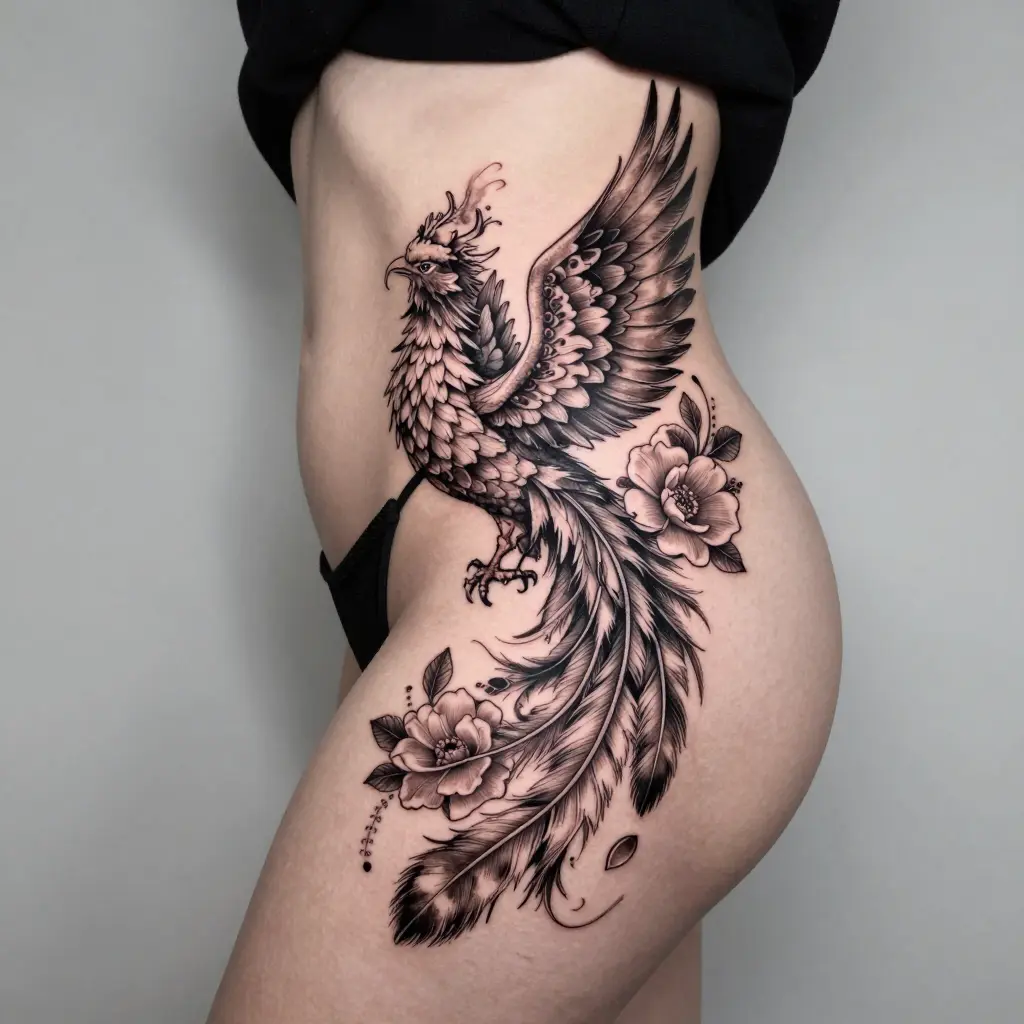
Phoenix tattoo design works best when the bird still reads clearly after the extra details are added. Start with the silhouette: lifted wings, a long tail, a clear head shape, and enough negative space around the flames. Color, flowers, suns, moons, geometry, or quotes should support that shape instead of burying it.
Phoenix tattoo color choices
Phoenix tattoos often use bold, fiery colors. Red, orange, and yellow are popular picks to show flames. Artists may add blues and purples for contrast. Some opt for all-black designs for a sleek look. Others use watercolor techniques for a softer effect.
Color can change the tattoo’s mood. Bright hues make it pop and grab attention. Muted tones create a more subtle image. The skin tone of the wearer also affects color choice. Darker skin may need brighter colors to show up well.
Phoenix tattoo style techniques
One thing I like about phoenix tattoos is how different they can look depending on the style. You can hand five artists the same idea and end up with five completely different tattoos.
Some people go realistic. Detailed feathers, shadows, eyes that almost look alive. Those tattoos can look incredible, but they usually need space. A realistic phoenix squeezed onto a wrist? That’s a tough ask.
Others go abstract or minimal. Fewer details, more suggestion than explanation. Sometimes it’s barely even a bird at first glance, just enough shape to hint at the idea. I actually think that works really well for phoenix tattoos because the meaning already carries so much weight.
Geometric styles feel more modern. Sharp angles, symmetry, patterns worked into the wings. Traditional tattoos go the opposite way — bold outlines, simpler color palettes, strong contrast. The kind of tattoo that still looks good years later because the lines hold up.
And size changes the whole conversation. Big back or chest pieces let artists go all in with detail and movement. Smaller tattoos on the wrist, ankle, or behind the ear usually look better when they stay simple. I’ve seen too many tiny tattoos try to fit in every feather, every flame, every detail… and a few years later it all just blends together.
The best style usually comes down to one question: do you want the tattoo to tell the whole story, or just hint at it?
Best placement for a phoenix tattoo
The best placement for a phoenix tattoo depends on how much motion and detail you want. A small outline can work on the wrist, ankle, or collarbone. A detailed phoenix with feathers, flames, flowers, or a sun needs more space on the back, thigh, shoulder, ribs, chest, or sleeve.
Popular phoenix tattoo placements
Arms are a top choice for phoenix tattoos. The upper arm provides space for detailed wings and flames. Forearms allow for long, flowing designs that wrap around.
Back pieces offer a large canvas for intricate phoenix designs. Full back tattoos can showcase the bird’s rebirth in stunning detail.
Chest tattoos symbolize the heart and spirit. A phoenix over the heart represents resilience and inner strength.
Thighs and calves work well for vertical designs. These areas can accommodate both small and large phoenix tattoos.
Placement notes for different body parts
Pain levels vary by body part. Bony areas like ribs, spine, and feet tend to be more sensitive. Fleshier spots like upper arms and thighs usually hurt less.
Visibility is key. Neck and hand tattoos are always on display. Hidden placements like hips or upper back offer more privacy.
Body curves affect how the tattoo looks. A phoenix on the ribcage may stretch or compress as you move. Flat areas like shoulder blades keep the design intact.
Aging and weight changes can alter tattoos. Areas prone to stretching, like stomachs or upper arms, may distort over time. Consider how the placement will age.
Rebirth symbols can bring up big personal questions, so a psychic reading for personal insight can work as a reflective companion when you want prompts rather than fixed answers.
Phoenix tattoo ideas FAQ
These answers cover the questions people usually ask before choosing phoenix tattoo ideas: meaning, placement, style, cost, color, aging, and common design mistakes.
Q: What does a phoenix tattoo mean?
A: A phoenix tattoo usually means rebirth, renewal, strength, and rising after hardship. The phoenix is a mythical bird linked with burning, returning, and starting again, so people often choose it after loss, recovery, a breakup, a major life change, or a personal reset.
Q: What are the best phoenix tattoo ideas for rebirth?
A: Strong rebirth-themed designs include a phoenix rising from flames, a minimalist phoenix outline, a watercolor phoenix, a phoenix with ash or smoke, or a phoenix paired with a lotus, sun, moon, rose, or short quote. Back, forearm, thigh, rib, and shoulder placements work especially well because they give the wings room to move.
Q: Where is the best place to put a phoenix tattoo?
A: Large phoenix tattoos usually work best on the back, chest, thigh, ribs, or full sleeve because the wings and tail need space. Smaller designs can work on the wrist, ankle, collarbone, or behind the ear, but the artist should simplify the feathers and flames so the tattoo stays readable.
Q: How much does a phoenix tattoo cost?
A: A small phoenix tattoo may cost around $100 to $300, while a medium forearm, shoulder, or rib piece can sit around $300 to $900. Large back, sleeve, thigh, or color phoenix tattoos can reach $1,000 to $3,000 or more depending on size, detail, color, sessions, and the artist’s rate.
Q: Is a phoenix tattoo better in color or black ink?
A: Color is better if you want a fiery red, orange, yellow, or purple phoenix with dramatic movement. Black ink is better if you want a cleaner, lower-maintenance design with stronger long-term contrast. Watercolor can look beautiful, but soft edges and pale colors may need touch-ups sooner than bold blackwork.
Q: What style of phoenix tattoo ages best?
A: Bold blackwork, traditional, geometric, and simplified fine-line phoenix tattoos usually age better than tiny designs packed with feather detail. The cleaner the silhouette, the easier it is for the tattoo to stay readable. If you want realism or watercolor, give the artist enough space and ask to see healed examples.
Q: What mistakes should I avoid with a phoenix tattoo?
A: Avoid making the design too small if you want feathers, flames, flowers, and a long tail. Do not copy a random reference exactly, and do not crowd the bird with too many symbols. A strong phoenix tattoo needs clean movement, enough breathing room, and a placement that fits the design scale.
Q: Are phoenix tattoos only for rebirth?
A: No. Rebirth is the most common meaning, but phoenix tattoos can also point to courage, endurance, protection, spiritual change, creative energy, or simply a love of dramatic bird imagery. The design does not need a tragic backstory to work; it just needs a clear visual idea.
For more firebird references and related ink ideas, browse the Sky Rye Design tattoo ideas hub.
Just as the phoenix rises from ashes, understanding a flowing vine tattoo meaning reveals how botanical life continues to climb, adapt, and regenerate over time.
If you want the bird to wrap around the arm instead of sitting as one isolated image, compare it with these phoenix sleeve tattoo ideas before choosing the main placement.
Like the phoenix, the lotus is a universal symbol of rising from the ashes. Check out these lotus tattoo designs that capture this same energy.
- 15.9Kshares
- Facebook0
- Pinterest15.9K
- Twitter0
- Reddit0