There’s a moment in garment construction when the design decisions are done and the quality decisions begin. You’ve chosen the fabric, resolved the silhouette, the pieces are cut. What happens next — how you join those pieces, how you treat the edges, how you manage the seam allowances — determines whether the finished garment reads as professional or homemade.
- What is an overlock stitch?
- Why seam finishing matters in fashion design
- How overlock machines create clean, strong seams
- Where overlock seams appear in everyday clothing
- Overlock stitch vs regular sewing machine stitch
- Serger stitch, overlock seam, and overlock machine: what is the difference?
- Common seam finishing mistakes that make garments look homemade
- Finished fashion looks with clean seams
- Final thoughts: clean seams are part of the design
- FAQ
- What is an overlock stitch?
- What's the difference between an overlock machine and a serger?
- Can a regular sewing machine replace an overlock machine?
- Why do overlock seams work better on stretch fabrics than straight stitches?
- What is a four-thread overlock seam?
- What makes a seam finish look professional rather than homemade?
- When should I use a French seam instead of an overlock stitch?
- Does overlock stitch work on heavy fabrics like denim or canvas?
Seam finishing is one of those craft decisions that most people outside fashion construction never think about, and one that experienced designers and patternmakers consider at the start of every project. A good seam finish doesn’t just make the inside of a garment look clean. It affects stretch behavior, durability under washing, drape, and how the garment wears over months and years of use.

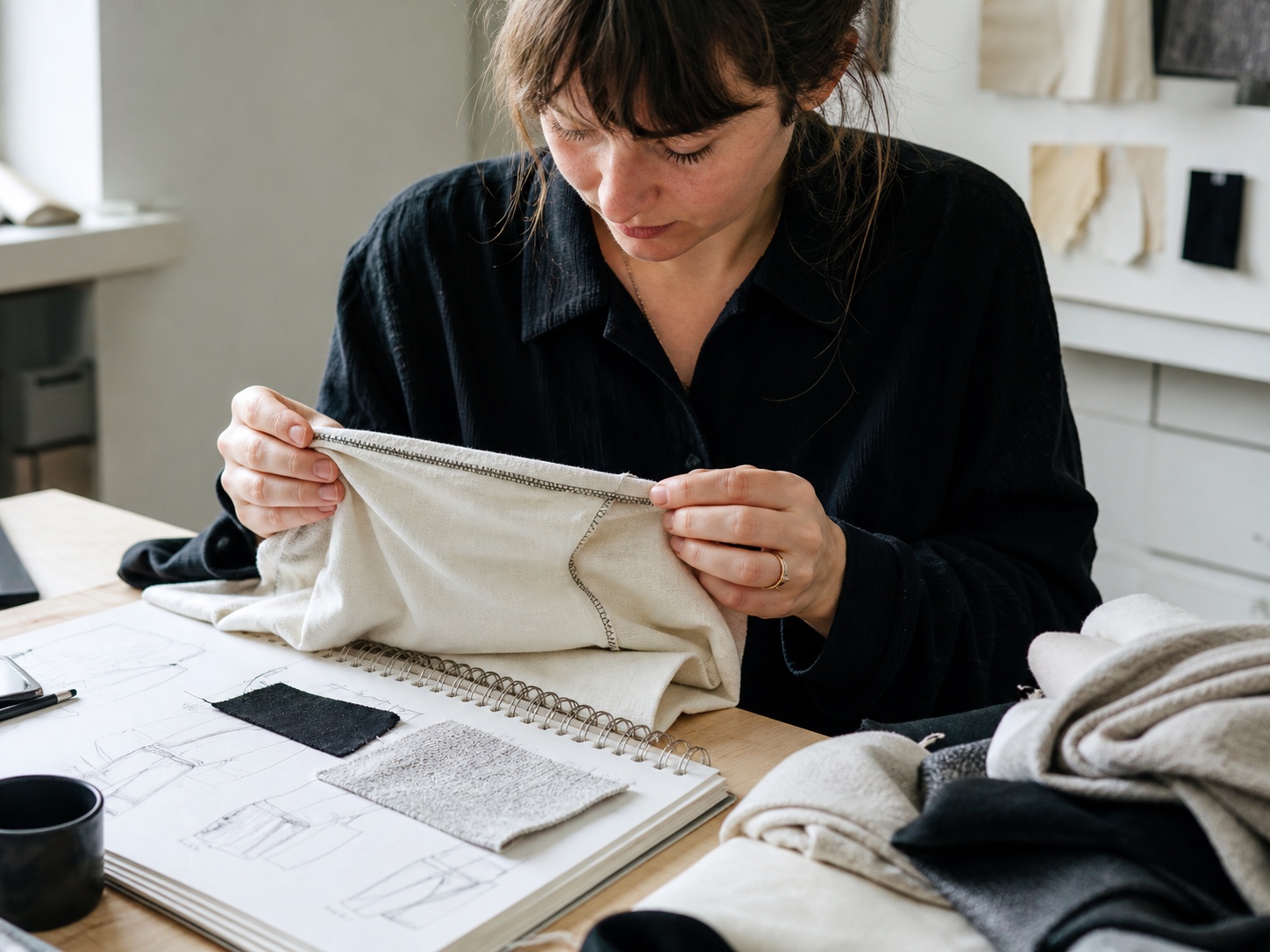
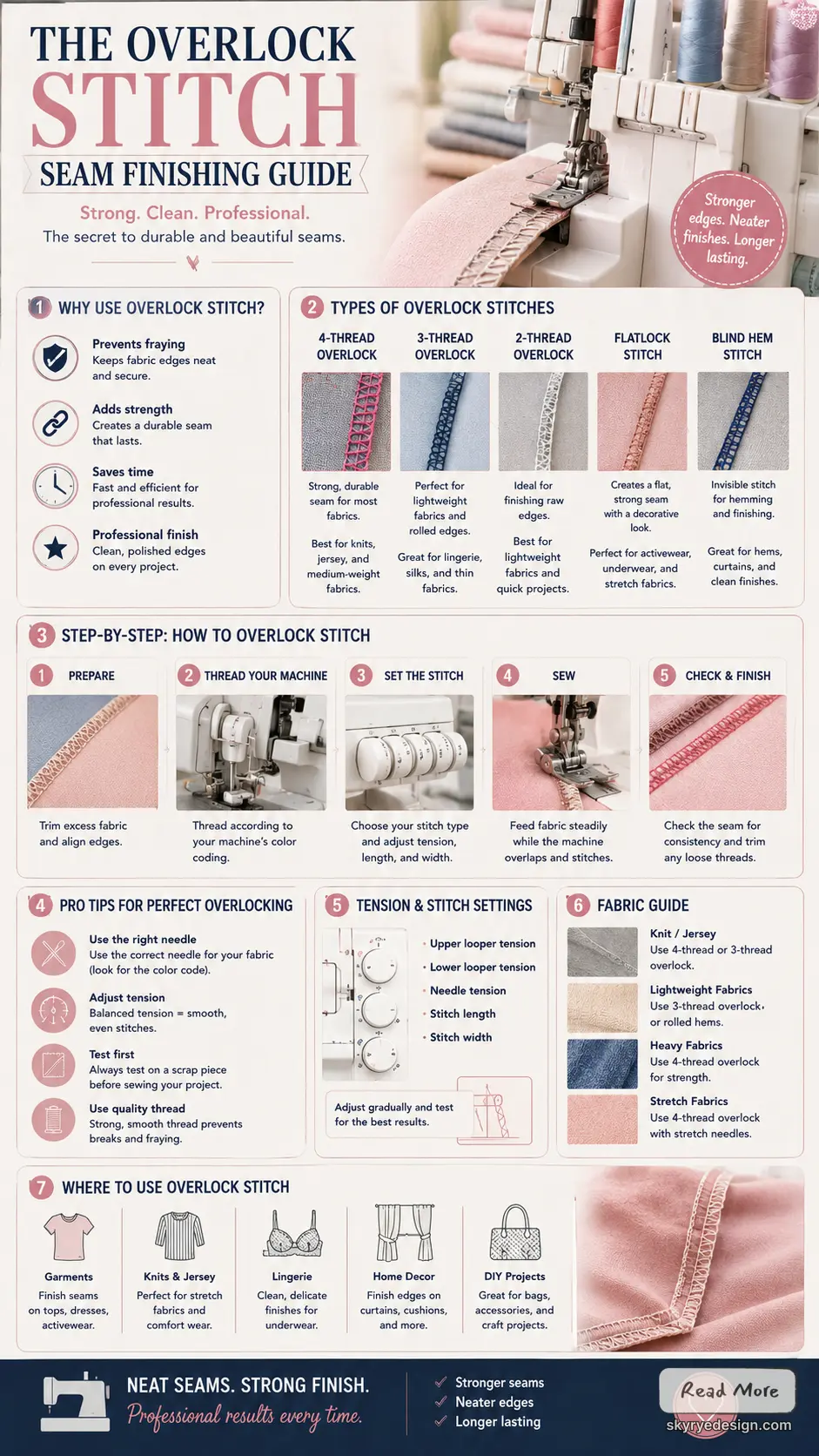
The overlock stitch is the dominant seam finishing technique in both industrial garment production and quality home sewing. It does in one pass what used to require multiple separate operations. I’ve been working in and around fashion and textile design for fifteen years, and the interior construction of a garment reveals its maker’s thinking almost as clearly as its silhouette does. This guide covers what an overlock stitch is, why seam finishing decisions matter in fashion design, and the most common finishing mistakes that separate professional-looking work from everything else.
What is an overlock stitch?
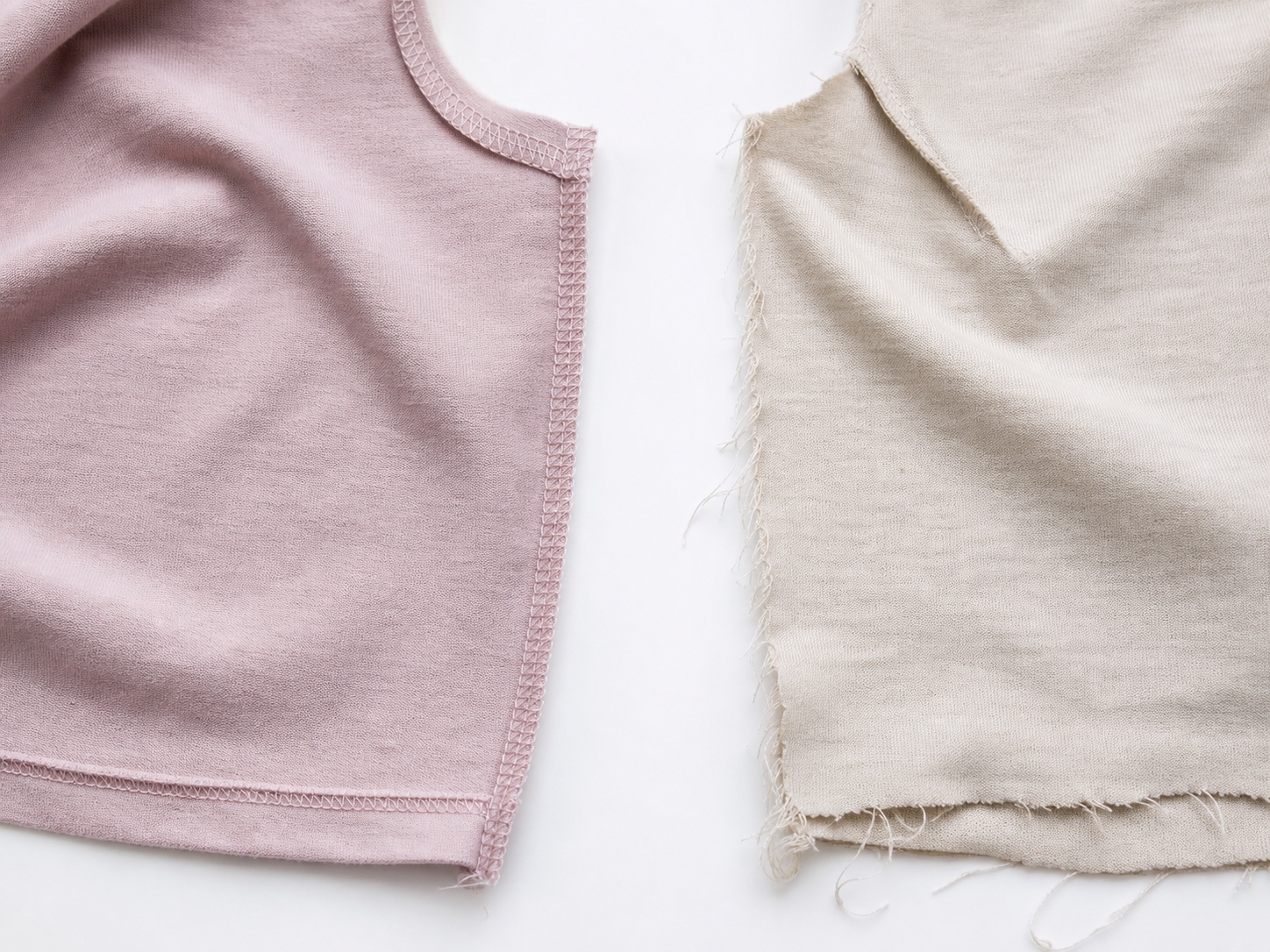
An overlock stitch is a looped thread construction that wraps around the raw edge of a fabric, encasing the cut edge and joining fabric layers simultaneously. Unlike a straight stitch (which creates a line of interlocking threads through the fabric’s body), an overlock stitch works along and around the edge — catching it in a cage of looped thread that prevents unraveling and contains the seam allowance in a single operation.
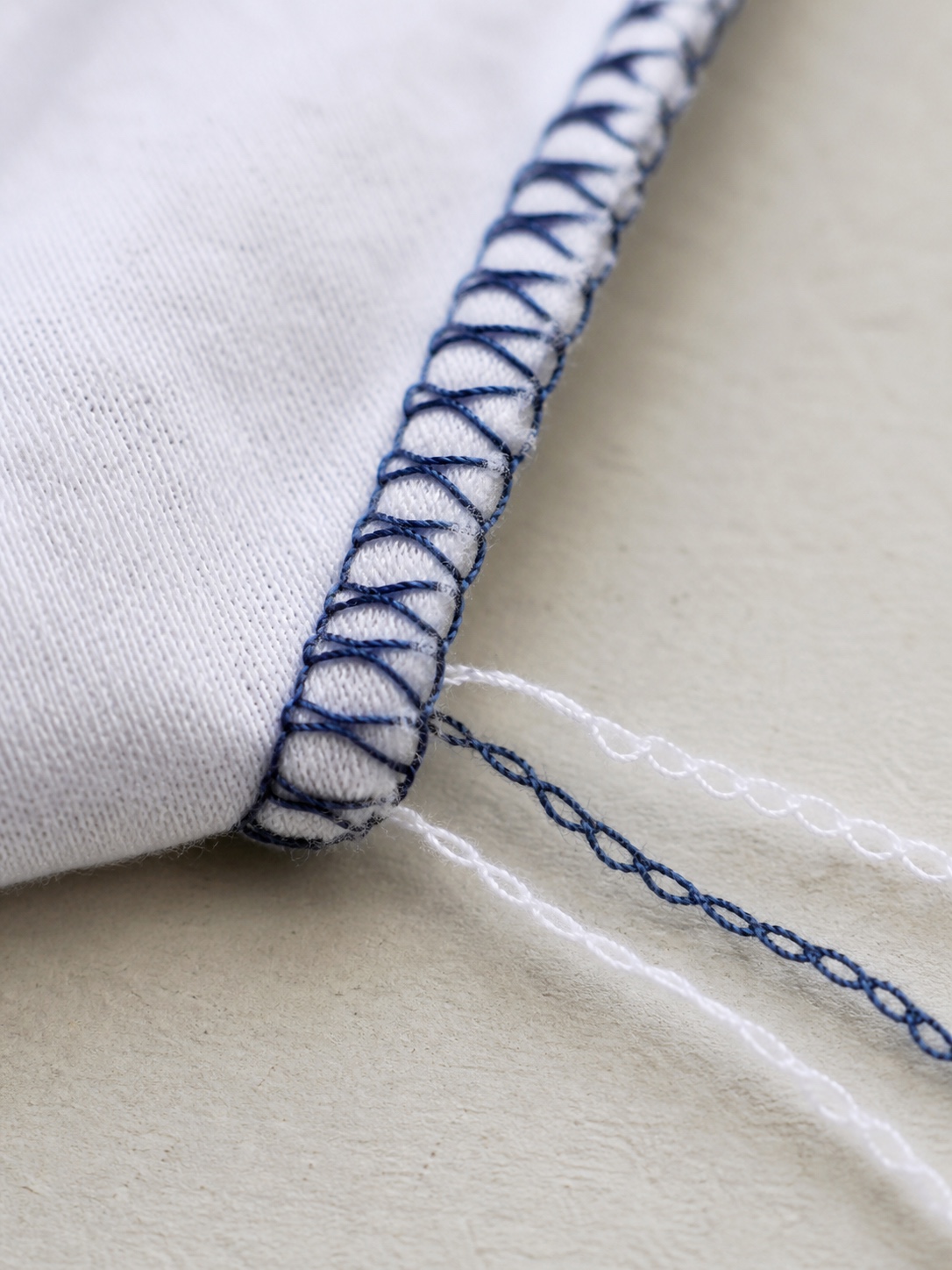
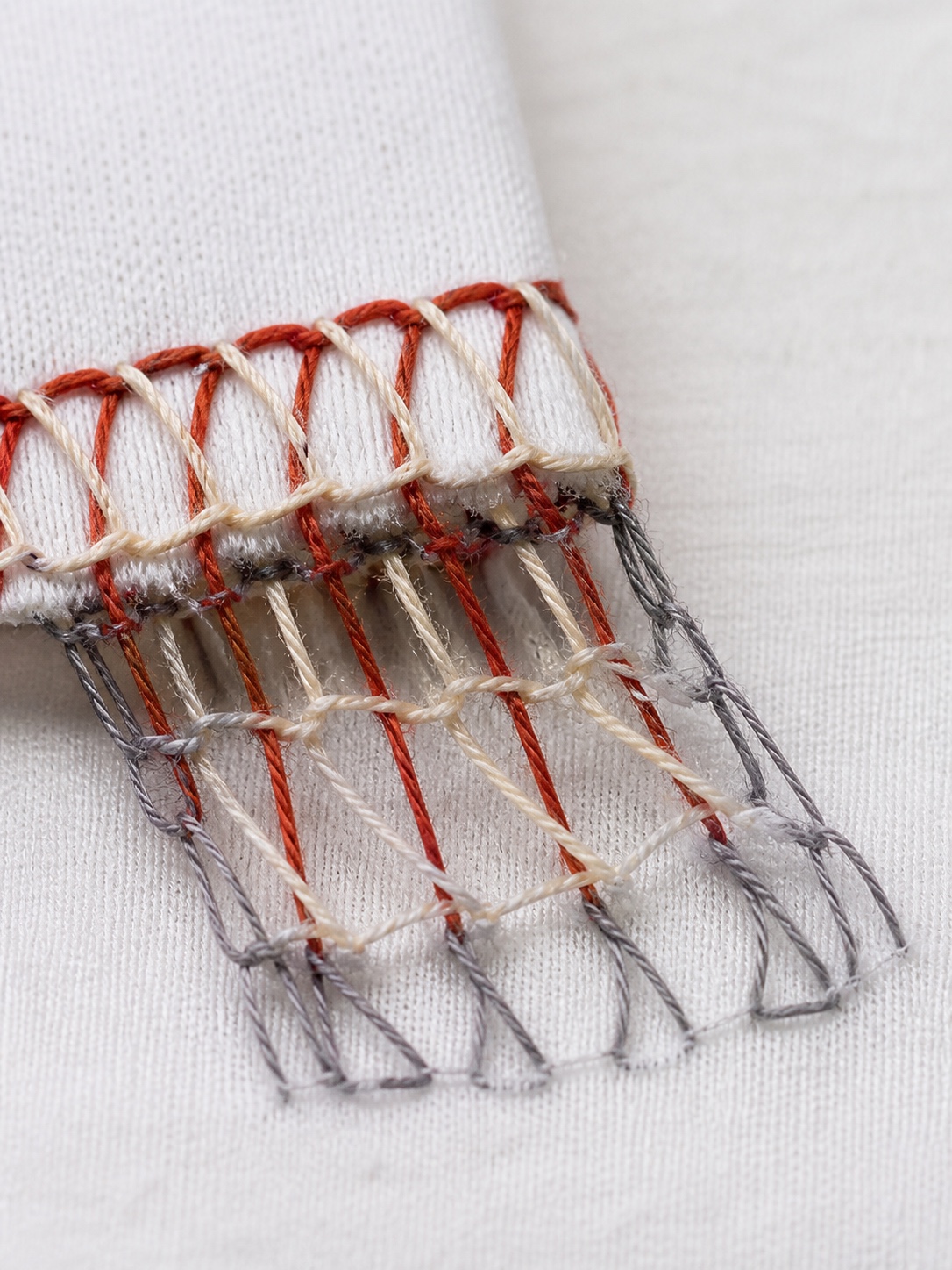
The mechanical structure of an overlock stitch involves multiple threads: typically three, four, or five, depending on the machine configuration and the seam type being produced. A three-thread overlock (the most common configuration for edge neatening and basic seam finishing) uses one needle thread and two looper threads. The needle thread pierces the fabric while the upper and lower looper threads circle around the fabric edge from above and below, interlocking at the cut line itself.
This looping structure is what gives the overlock stitch its characteristic flexibility. The loops have room to extend and recover without breaking the thread line, which makes overlock-finished seams significantly more tolerant of stretch than straight-stitched equivalents. In a garment that needs to move with the body — a jersey T-shirt, a stretch dress, a pair of leggings — this matters from the first wear.
The trim function is built into the mechanism. Most overlock machines include a blade that cuts the fabric edge just before the needle pierces it and the loopers begin their circuit. This means every pass of the machine simultaneously trims, encloses, and stitches the edge. No separate trimming step. No loose threads left behind.
Why seam finishing matters in fashion design
Seam finishing sits at the intersection of technical construction and design intention. Every finished seam inside a garment communicates something about how it was made, how much it was considered, and how long it’s likely to last.
Raw edges fray. On a woven fabric (cotton, linen, silk, denim) an unfinished cut edge gradually releases threads with every wash, every movement, every friction point with the body. The seam allowance shrinks. The seam line weakens. In lightweight or loosely woven fabrics, this process is visible within weeks. In stable, tightly woven materials it takes longer, but it happens.
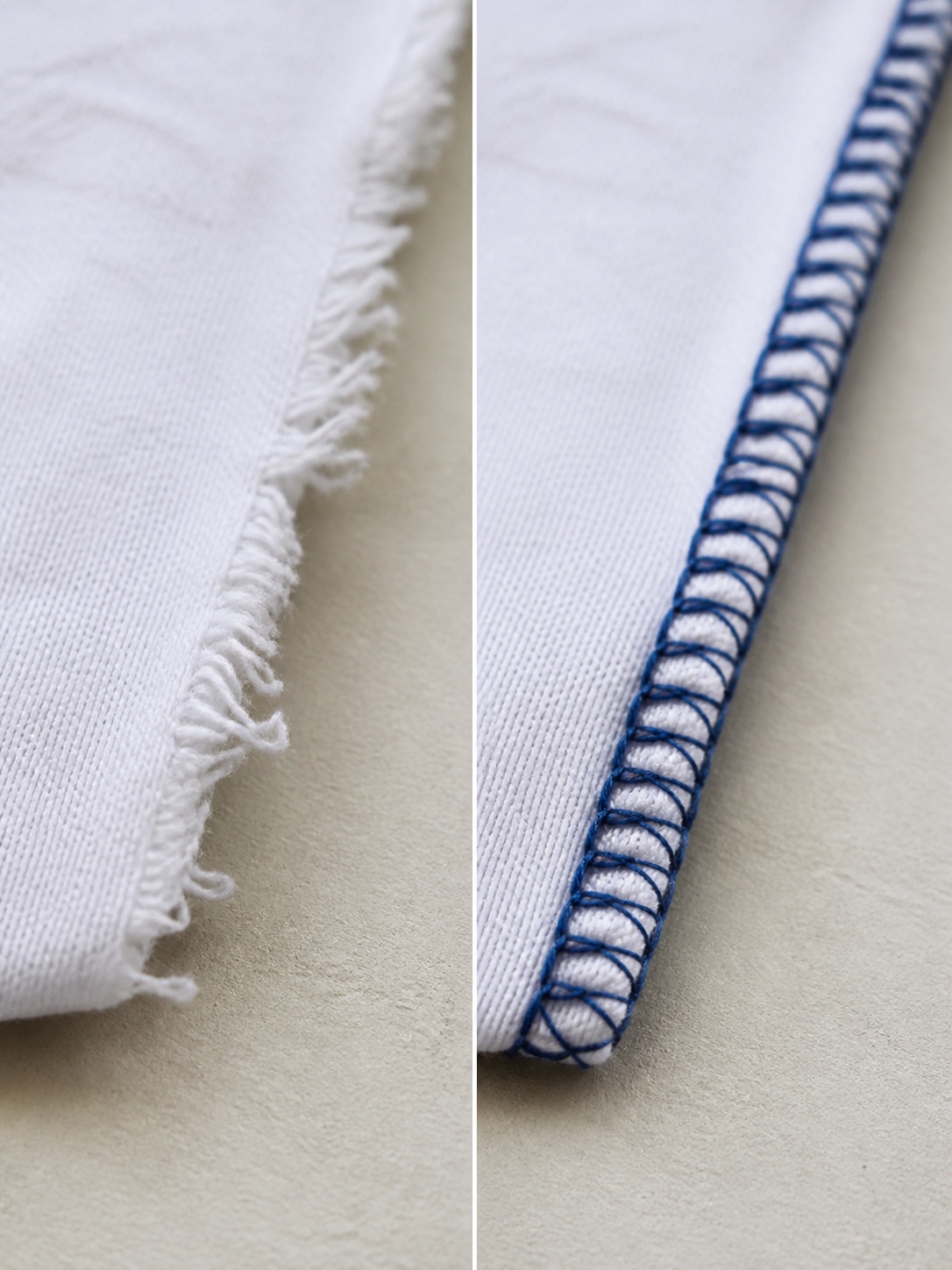
Fraying also changes drape. A seam allowance breaking down at the edge becomes stiff and irregular. This affects how the garment hangs, particularly at curved seams — side seams at the hip, armhole seams, curved hems — where the seam allowance needs to lie flat and clean for the outer silhouette to hold its shape.
Beyond function, seam finishing is a design signal. Look inside a well-made garment and the interior is as considered as the exterior: clean edges, consistent seam allowances, finishing technique that matches the fabric weight and garment category. Look inside a cheaply made garment and the interior is a compromise — fraying edges, inconsistent widths, finishing chosen for speed rather than suitability.
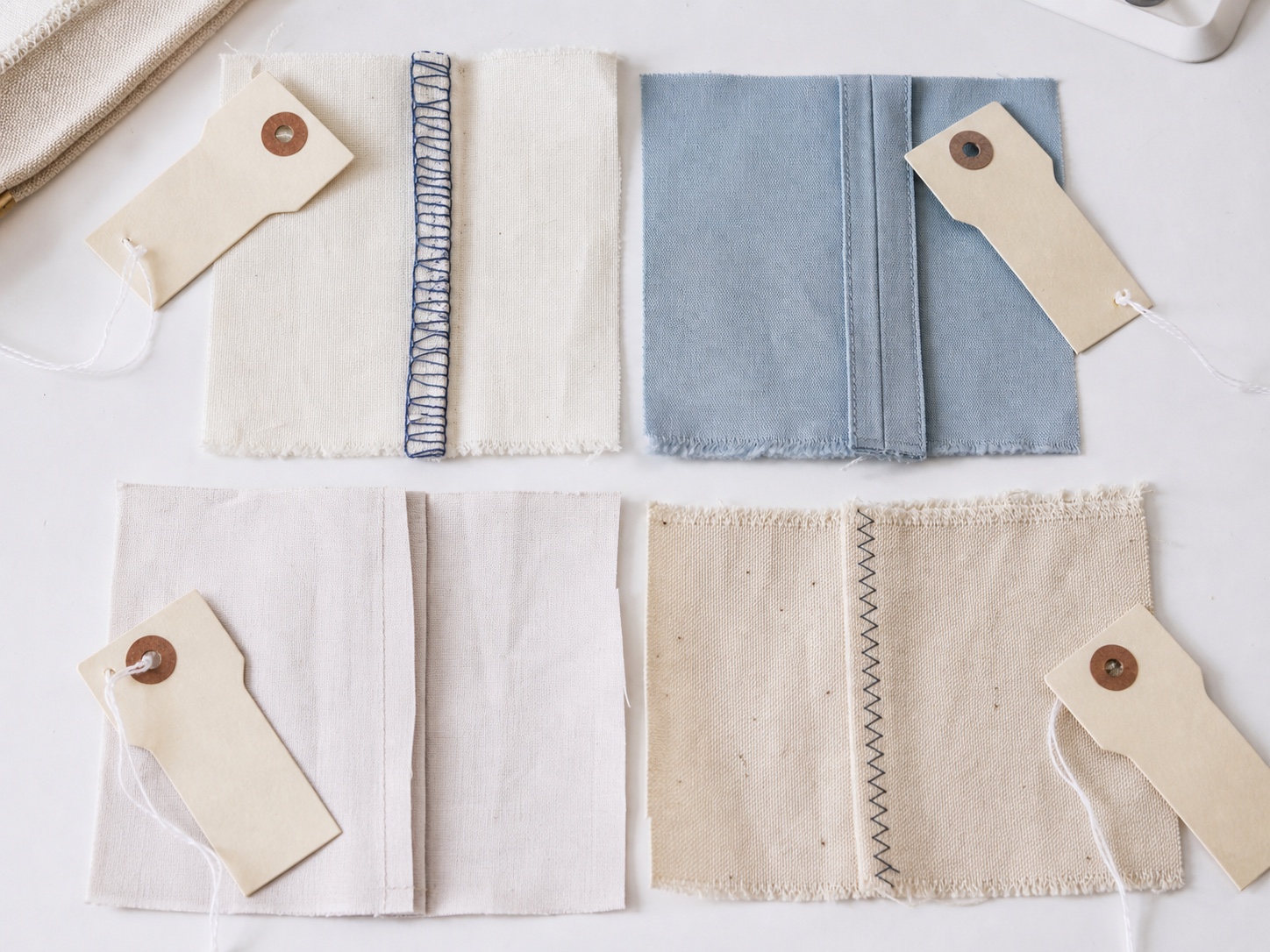
Fashion design education spends significant time on seam finishing because construction reveals thinking. A designer who understands finishing options (overlock, flat-fell, French seam, Hong Kong, bound seam) makes better decisions at the pattern stage, because they understand what each technique does to the garment’s behavior and appearance long before the fabric is cut. When those decisions need to work across several looks, the design a fashion collection process helps connect seam choices to range planning.
How overlock machines create clean, strong seams
The seam strength of an overlock stitch comes from its distributed thread structure. Rather than a single thread path through the fabric, multiple threads loop around the edge and interlock with each other at the cut line. This creates a three-dimensional thread structure that encases the edge rather than simply crossing through it.
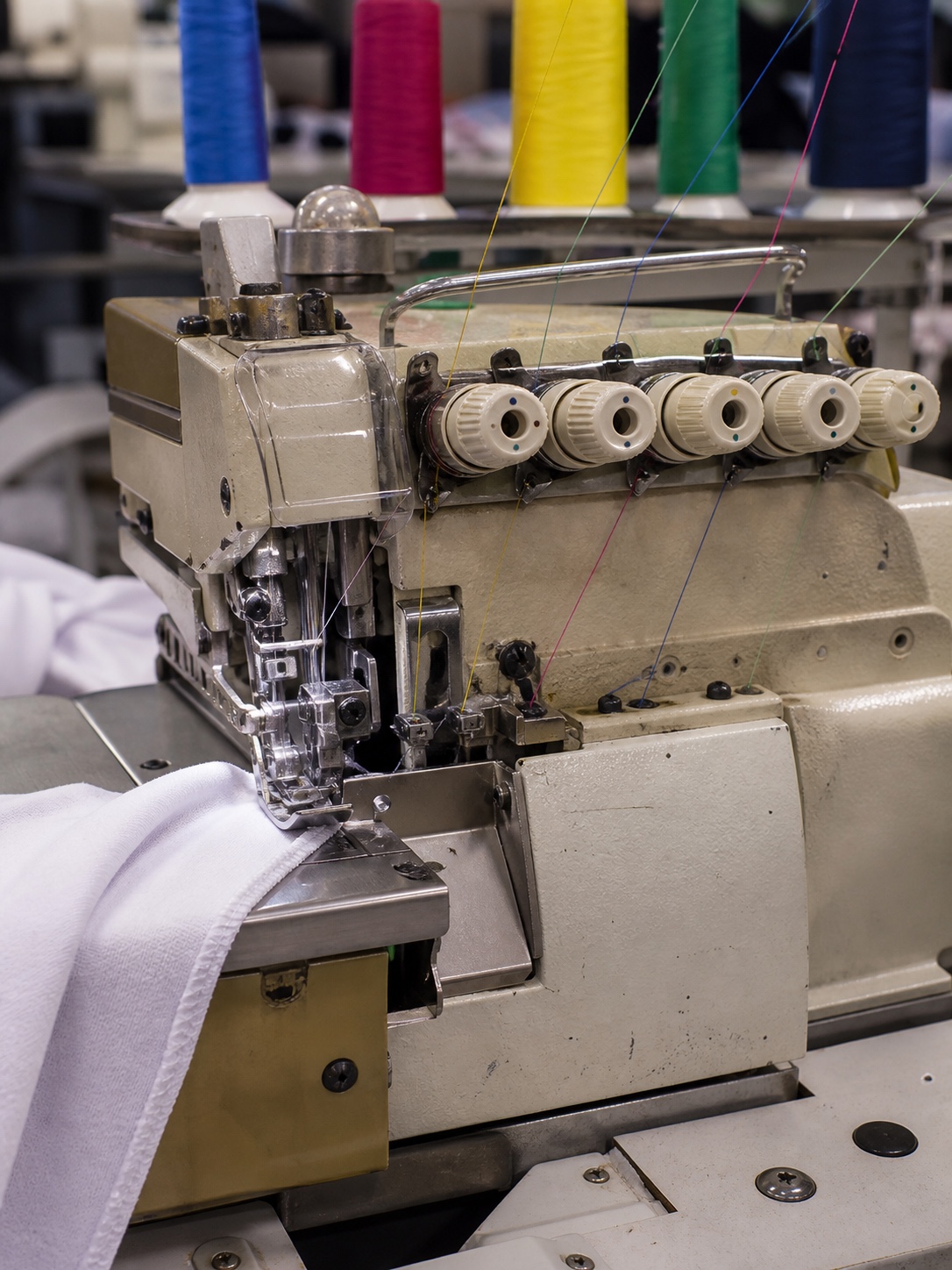
The four-thread overlock is the most common seam construction in industrial garment production. It combines a two-thread chain stitch (running through the fabric body for longitudinal seam strength) with a two-thread overlock (wrapping the edge for fraying prevention and edge security). The chain stitch resists the seam being pulled apart along its length. The overlock prevents edge damage and unraveling. Together they produce a seam that handles both stress directions.
The blade is critical to the system’s consistency. Industrial overlock machines run at high speed (typically between 5,000 and 8,000 stitches per minute), and the blade trims the fabric edge in advance of the needle and loopers on every stitch cycle. This trim-then-stitch sequence ensures the overlock threads wrap a clean, consistent edge on every pass, rather than enclosing a ragged or uneven raw cut.
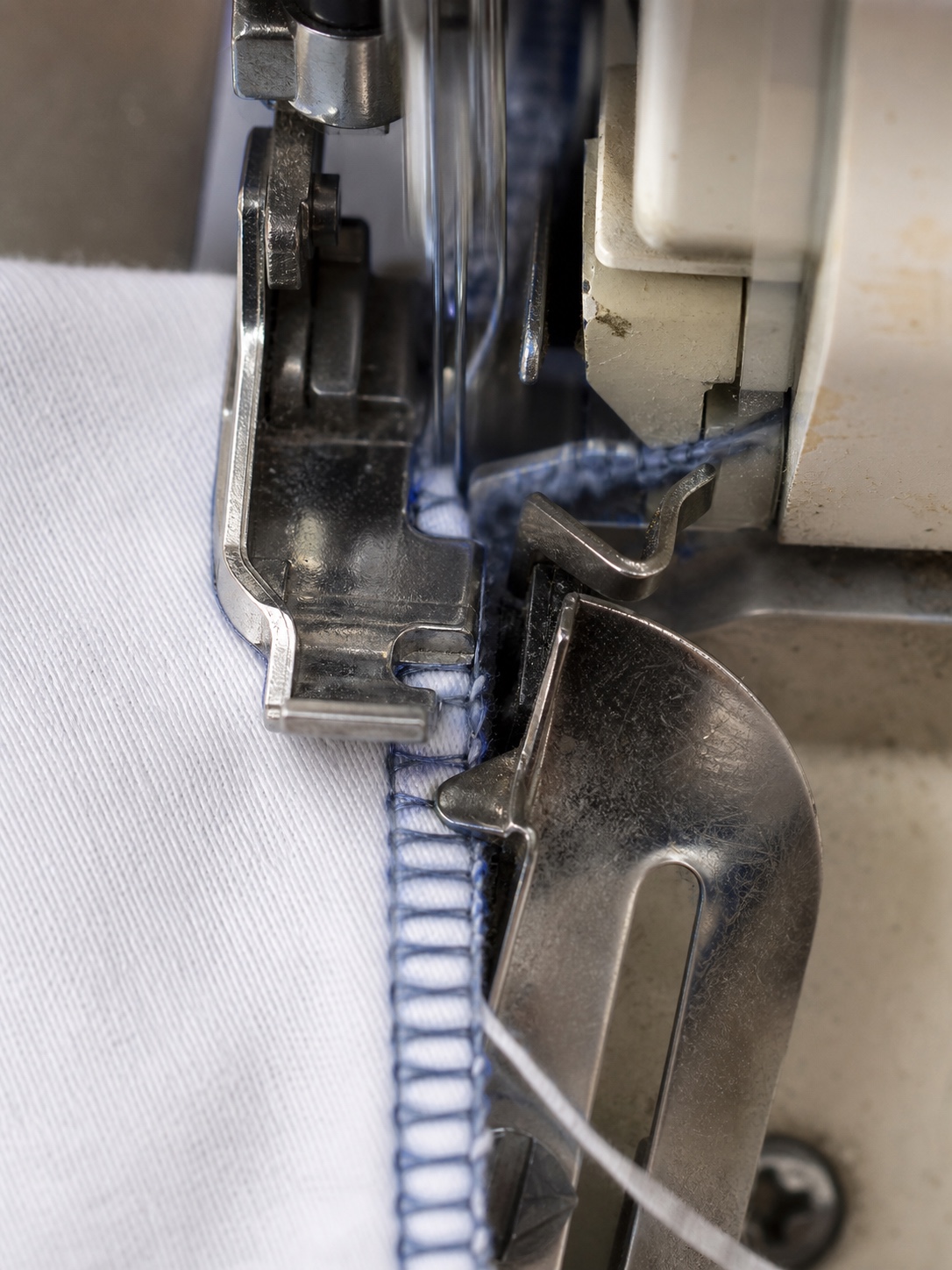
The combination of consistent edge trimming, enclosure in multiple thread loops, and simultaneous seam stitching produces finished seams that are consistent in width, clean in appearance, and structurally sound from the first stitch. This is what makes the overlock machine the standard tool for seam finishing in commercial production — not just that it produces a good result, but that it produces the same result ten thousand times consecutively.
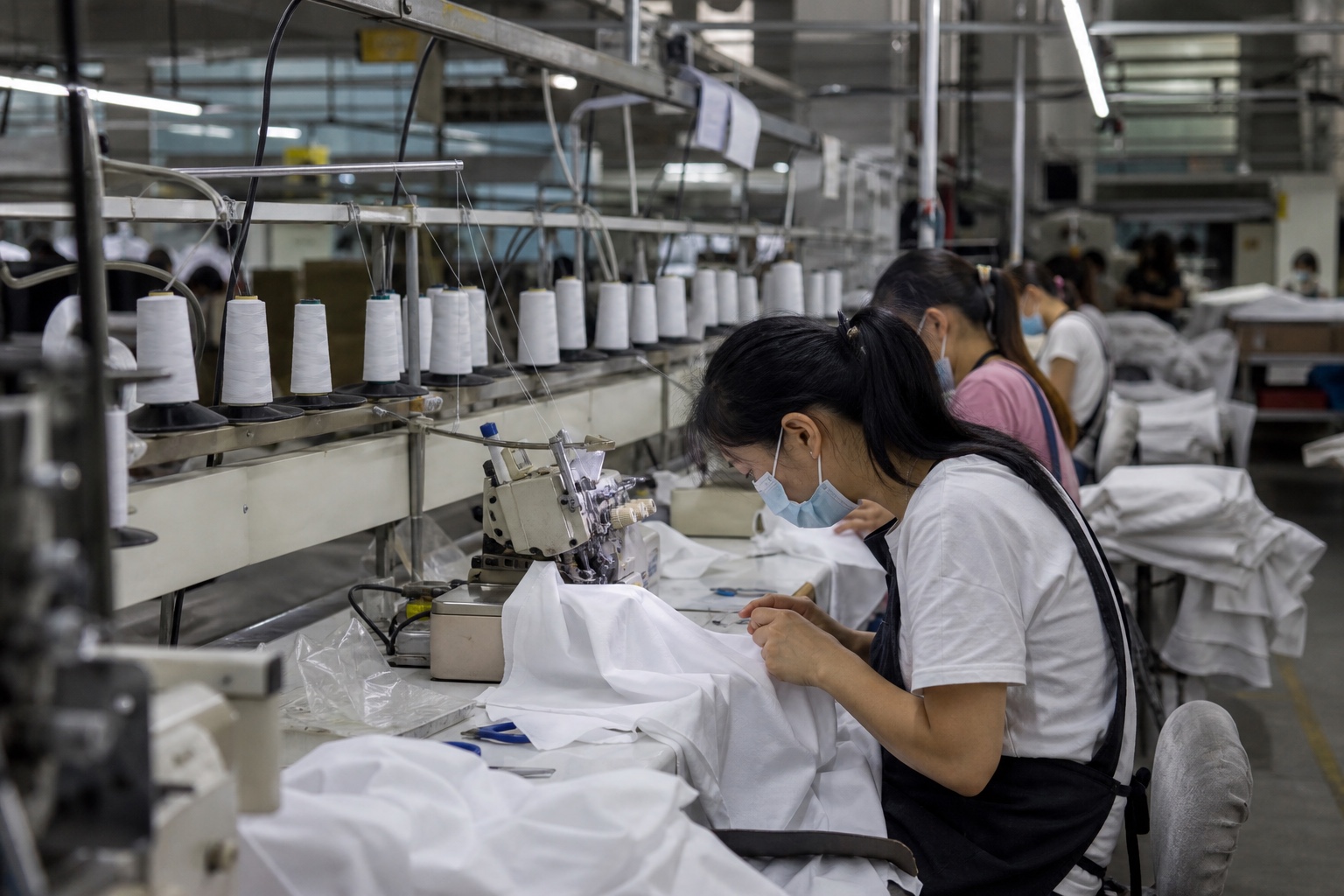
Where overlock seams appear in everyday clothing
Overlock seam finishing is one of the most common constructions in mass-produced clothing, even if most people never consciously notice it.
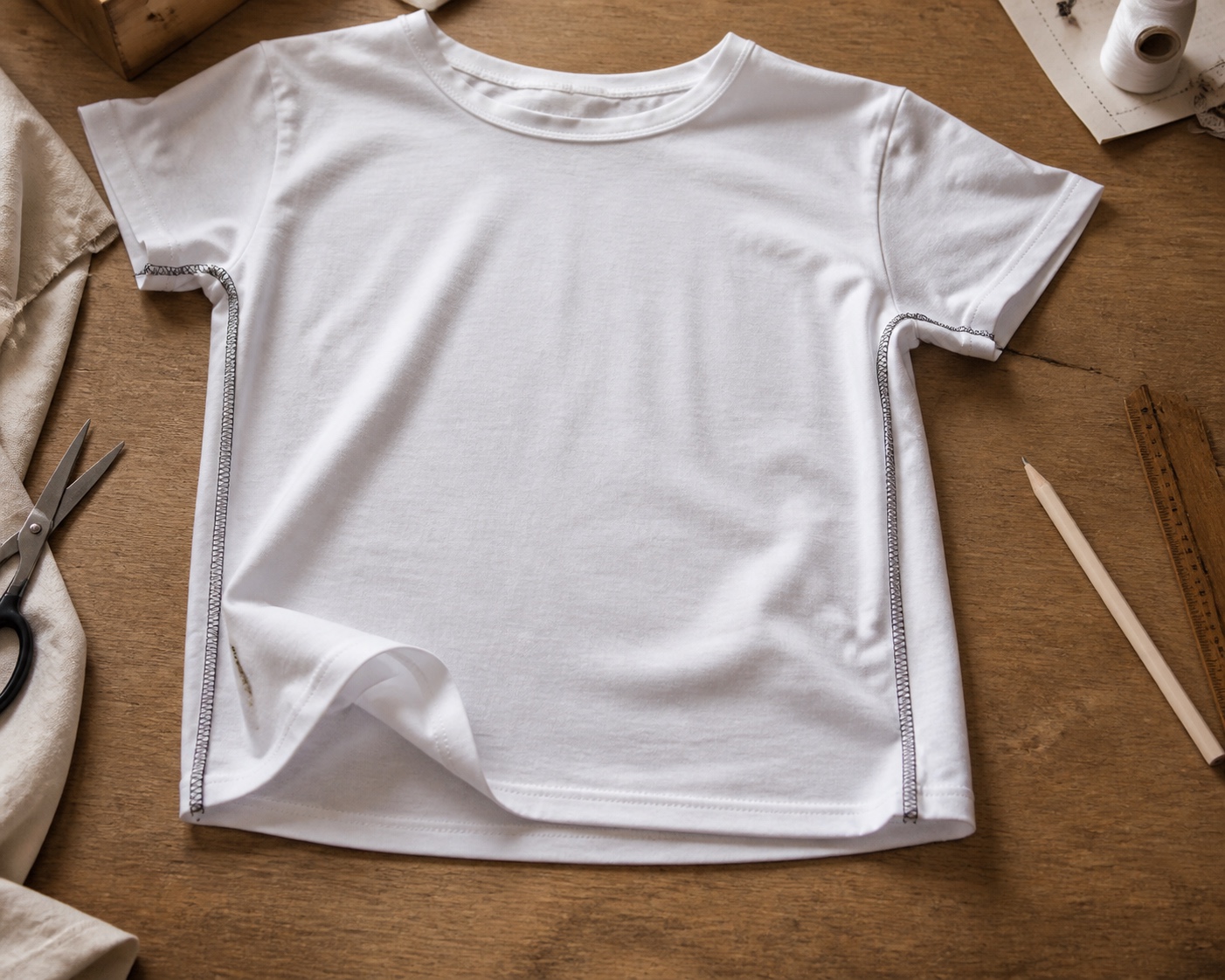
T-shirts and jersey tops are the clearest example. The side seams, shoulder seams, and sleeve attachment seams in a standard jersey T-shirt are almost universally finished with a four-thread overlock. The stretch behavior of jersey fabric makes this appropriate: the seam needs to accommodate fabric moving in multiple directions without breaking thread or pulling the seam allowance apart. If you are planning the silhouette visually first, the guide to drawing clothes and fabric folds shows how fabric behavior reads before construction.
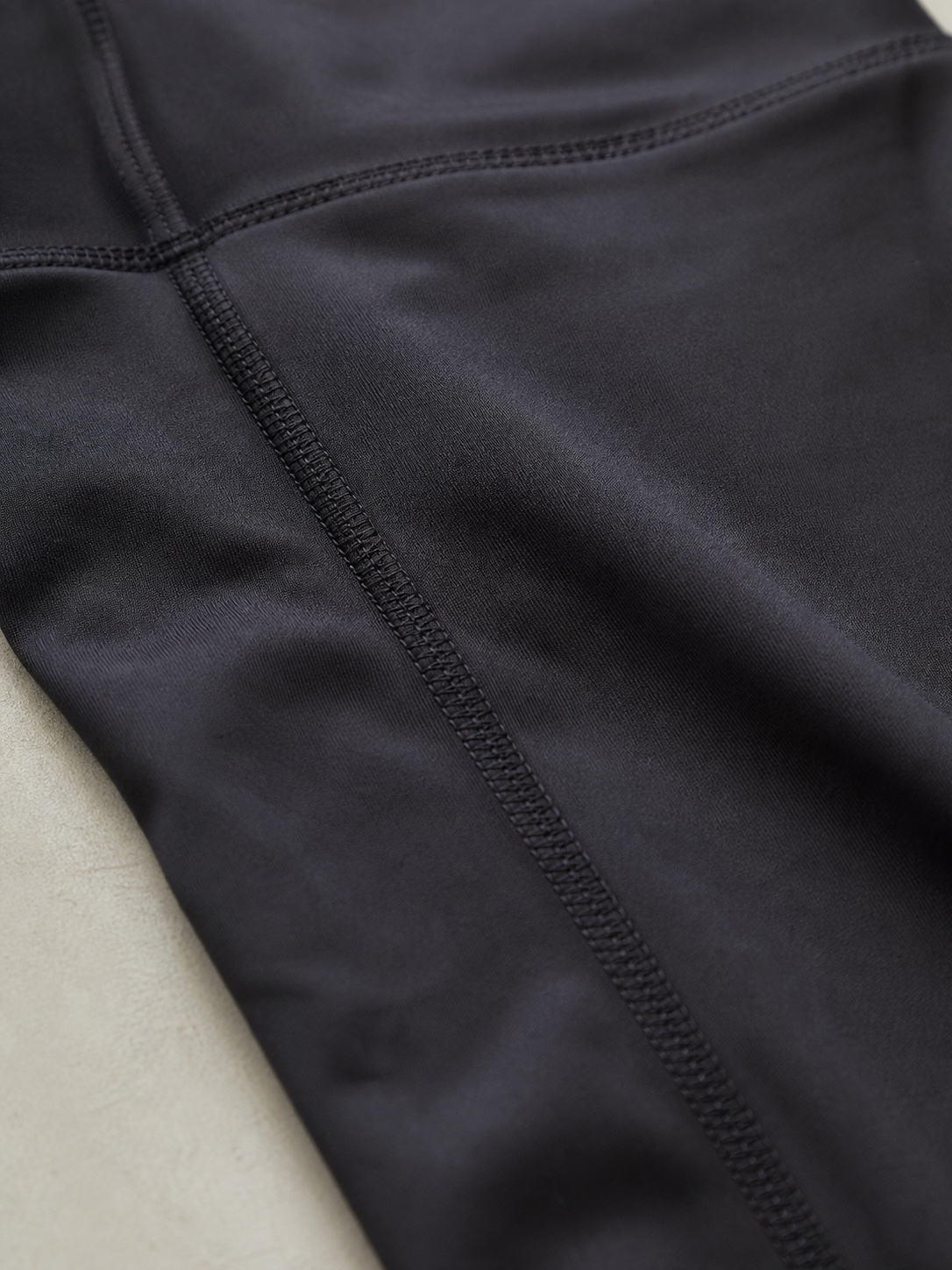
Activewear and sportswear use overlock finishing extensively, often with a flatlock variation where the seam is pressed completely flat to eliminate bulk against the body in high-movement garments. Yoga leggings, running shorts, athletic tops — the seams in these garments need to flex, recover, and withstand high-frequency washing without degrading.
Underwear and lingerie rely on overlock finishing because the inside of these garments is in direct, sustained contact with skin. Raw or poorly finished edges cause irritation. Overlock finishing creates a smooth, enclosed edge that doesn’t abrade. Thread choice in these applications typically prioritizes softness over structural weight.
Lightweight woven garments (summer dresses, linen shirts, cotton blouses) use overlock finishing on seam allowances where a French seam or flat-fell seam would add too much bulk. The overlock keeps the interior clean without adding seam weight that would affect drape. For sketching those choices before fabric is cut, these dress drawing techniques are a useful companion.
Overlock stitch vs regular sewing machine stitch
The difference between an overlock stitch and a standard sewing machine stitch isn’t just technical — it produces a genuinely different seam quality that’s visible, functional, and felt.
A standard straight stitch from a regular sewing machine creates a single line of interlocking thread through the body of two fabric layers. It’s strong in tension (resisting pulling apart along the seam line) but doesn’t address the cut fabric edges in any way. Left unfinished, those edges will fray. The straight stitch also has no stretch tolerance: under sufficient lateral stress, the thread breaks before the fabric does, making it a poor seam construction for knit or stretch fabrics.
A zigzag stitch on a regular sewing machine is a common home alternative to overlock finishing. It prevents fraying by stitching over the edge rather than just through the fabric, and adds some stretch tolerance. But compared to a proper overlock stitch, it’s slower, less consistent, and produces a noticeably less refined result. The zigzag edge isn’t trimmed by the machine, so the seam allowance width is whatever the cutter left it. The enclosure of the edge is less complete, and the visual result is bulkier and less even.
An overlock stitch from a dedicated overlock machine trims the edge on every pass, encloses it in multiple thread loops, and produces a consistent finished width regardless of how uneven the cut edge was coming in. In a commercial production context, the speed difference is also significant: an industrial overlock machine finishes seams faster than any regular sewing machine alternative.
Practical implication for home sewers
A regular sewing machine with zigzag capability can approximate overlock finishing on stable woven fabrics in a domestic context. For jersey, knit fabrics, or any garment where the seam finish needs to stretch with the fabric, a serger or dedicated overlock machine produces a meaningfully better result. The difference isn’t subtle after a few washes. If you are still building the basics, this fashion designing for beginners guide gives the wider sketch-to-construction context.
Serger stitch, overlock seam, and overlock machine: what is the difference?
These three terms refer to overlapping concepts, and the confusion between them is common both in home sewing communities and in professional garment production contexts.
An overlock machine is the equipment. It’s the mechanical device — whether domestic or industrial — that produces overlock stitches by trimming edges and encasing them in looped thread in a single operation. Industrial overlock machines are built for continuous high-volume production and are typically set up for one specific thread configuration. Domestic overlock machines are slower, more adjustable, and designed for the variety of fabrics and thread configurations a home sewer encounters.
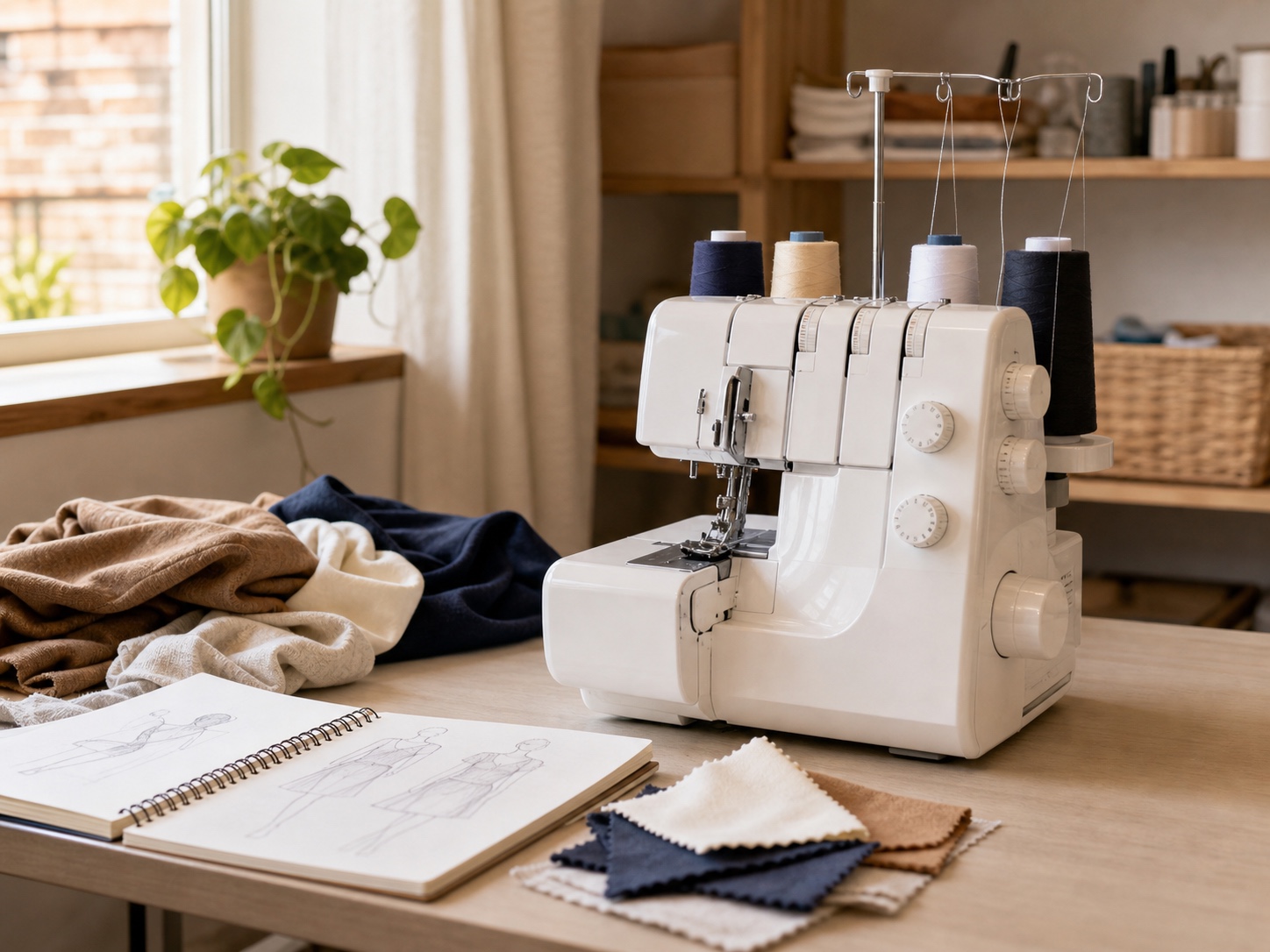
A serger is the North American name for a domestic overlock machine. The term comes from “serge,” a woven fabric traditionally finished with overlocking. In the UK and most of Europe, the same machine is called an overlock or overlocker. The machine is identical; the name varies by region. A serger stitch and an overlock stitch are the same thing.
An overlock seam is the seam produced by an overlock machine. Technically, it can mean a true overlock (where the overlock stitch is the only seam construction, used on jersey and knit fabrics) or an overlocked seam allowance (where a separate seam is sewn first, then the allowances are finished independently with an overlock stitch). In industrial production, the four-thread overlock typically handles both operations in a single pass. In home sewing, they’re often done separately.
For anyone comparing domestic and industrial overlock machine options across different fabric weights, the upholstery and specialist sewing range at https://prizzisewing.com/collections/upholstery-sewing includes machines suited to heavier fabric work beyond standard garment weight — useful context when specifying machines for canvas, denim, or upholstery-weight materials.
Common seam finishing mistakes that make garments look homemade
The gap between a professional-looking seam and a homemade-looking one is usually smaller than it appears, and most of it comes from finishing decisions rather than cutting or stitching precision.
Inconsistent seam allowance width
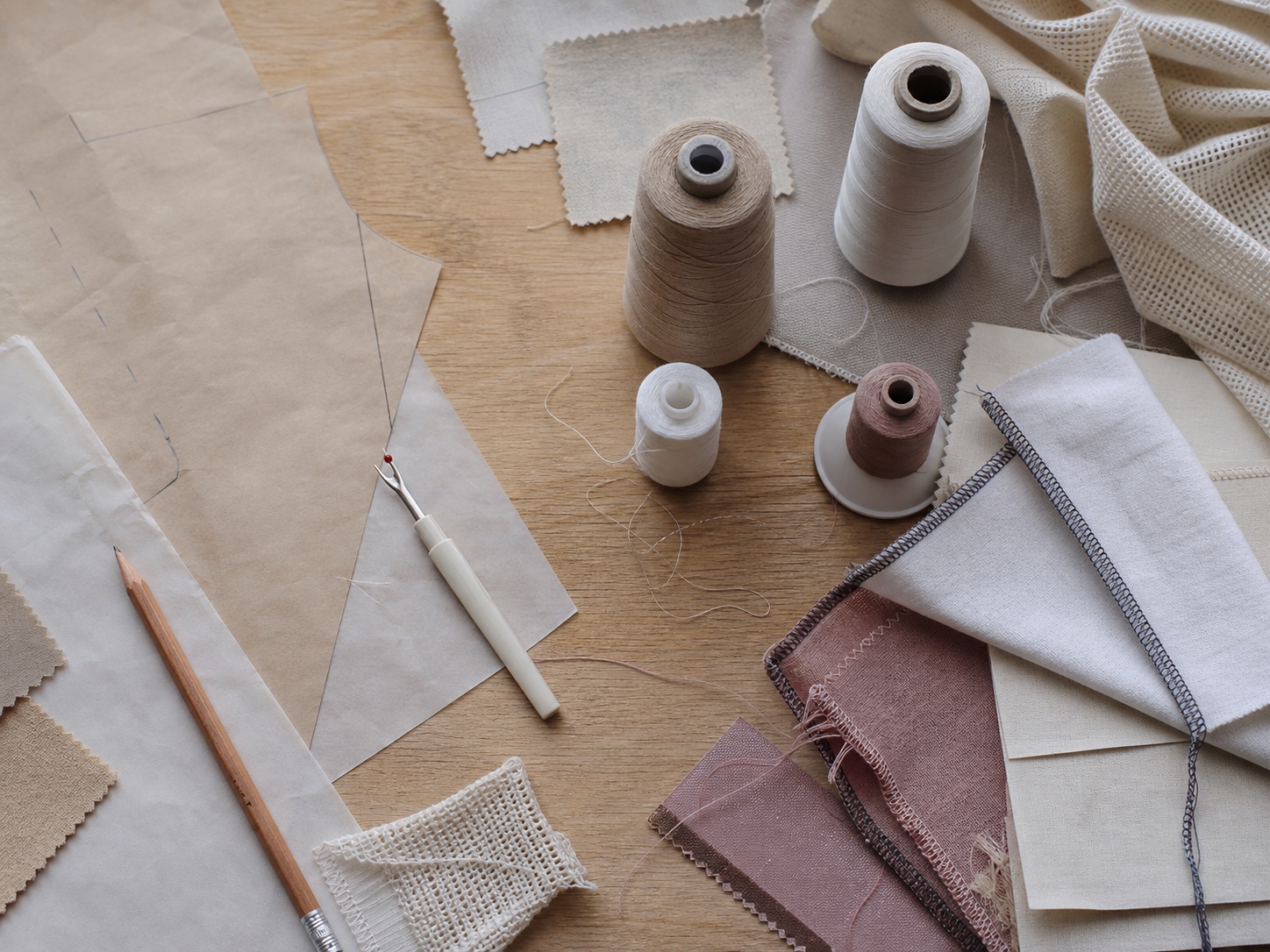
The most visible mistake. If the seam allowance varies across the length of a seam — because the cut edge wasn’t even, or because the overlock blade wasn’t trimming at a consistent margin — the inside of the garment shows an uneven edge. On the outside, this causes the seam line to drift and the garment to pull irregularly. Consistent blade engagement and cutting a straight edge before overlocking are both part of preventing this. It belongs in the same family as the broader fashion mistakes that make clothes look less polished.
Using the wrong thread for the fabric weight
Overlock machines use thread in both the needle and looper positions, and the looper threads are typically finer than needle threads. Using standard all-purpose thread in the loopers creates bulk at the edge that reads as stiff and heavy. Woolly nylon thread in the loopers, particularly for jersey and stretch fabrics, creates a softer, stretchier overlock edge that lies flatter against the body and feels better inside a garment. Thread choice in overlocking is a finishing decision, not an afterthought.
Over-trimming with the blade
On an overlock machine, the blade position determines how much fabric is trimmed before stitching. Set too aggressively, the blade removes too much from the seam allowance and weakens the structural seam. This is a common error when setting up a domestic serger: too much blade engagement and the finished seam allowance becomes too narrow to hold under repeated stress. The blade should trim just enough to clean the edge, not recut the seam allowance width entirely.
Not pressing seam allowances after finishing
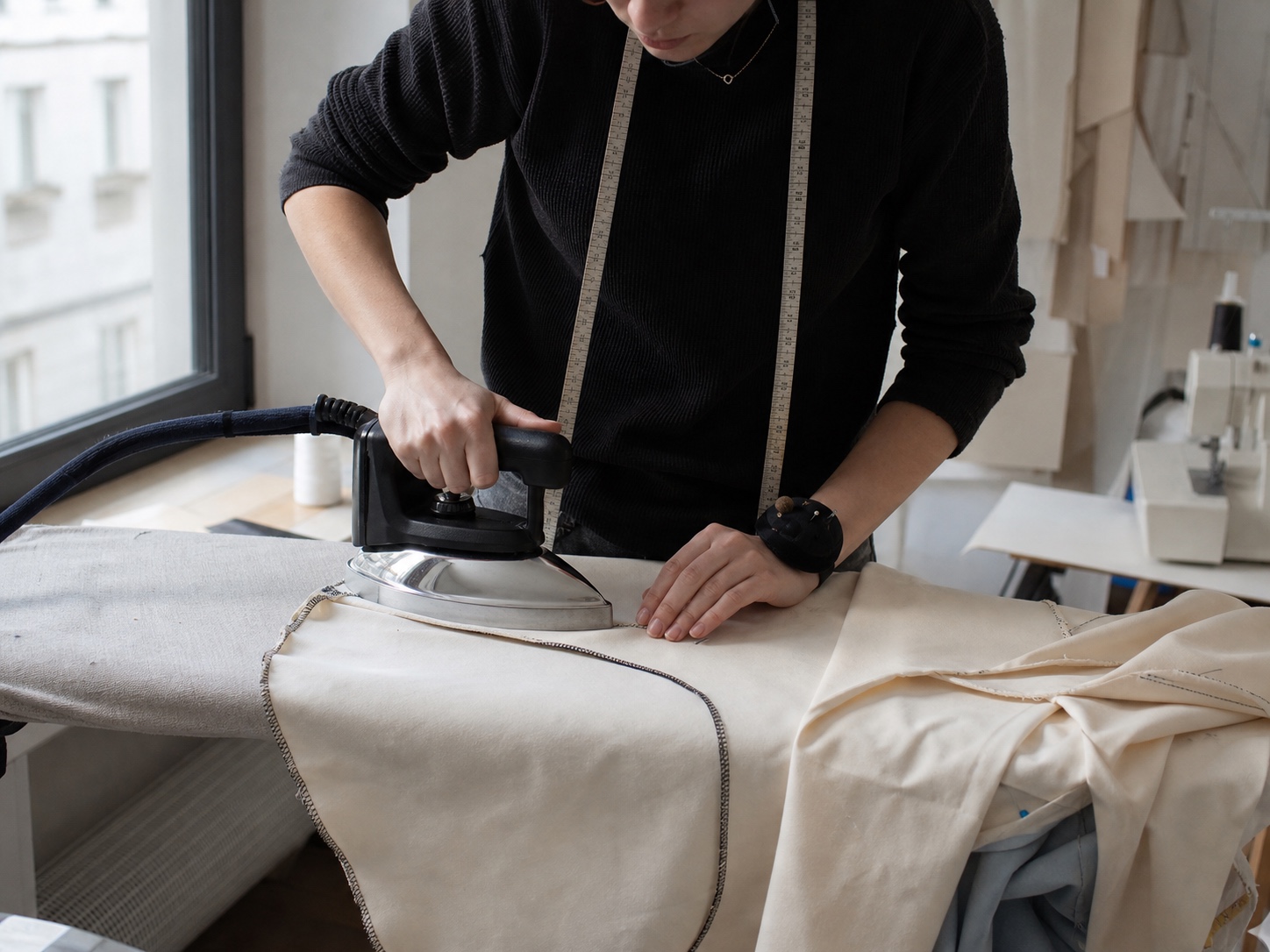
An overlocked seam allowance that isn’t pressed lies in whichever direction the machine left it. On woven fabrics, this creates a slight drag at the seam line that’s visible from the outside as a subtle ridge or pull. Pressing the seam allowance open or toward the intended direction (toward the back, toward the center seam) is the step that makes an overlocked seam read as cleanly from the outside as it does from the inside. It’s the step most often skipped and the one that makes the most visible difference.
Relying on zigzag as a permanent substitute for knit fabrics
On jersey and knit fabrics, a zigzag stitch approximates the stretch tolerance of an overlock stitch but doesn’t replicate it under extended use. After repeated washing and wearing, zigzag-finished seams in knit garments tend to develop a characteristic wave along the seam line as the thread and fabric recover from stretch at different rates. The visual result is exactly what people mean when they describe something as looking “home-sewn.”
Skipping seam finishing on tightly woven fabrics
Some home sewers skip overlock finishing on dense fabrics like denim or heavy canvas, reasoning that they fray slowly. Fray-resistant fabrics still fray eventually, and the washing and wearing cycles that garments go through accelerate the process considerably. Finishing all seam allowances, regardless of fabric stability, significantly extends garment life without adding meaningful time to the construction process.
Finished fashion looks with clean seams
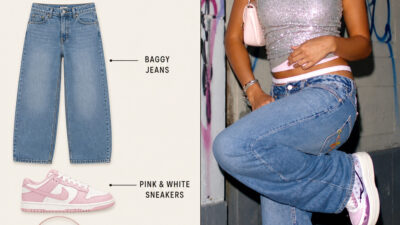
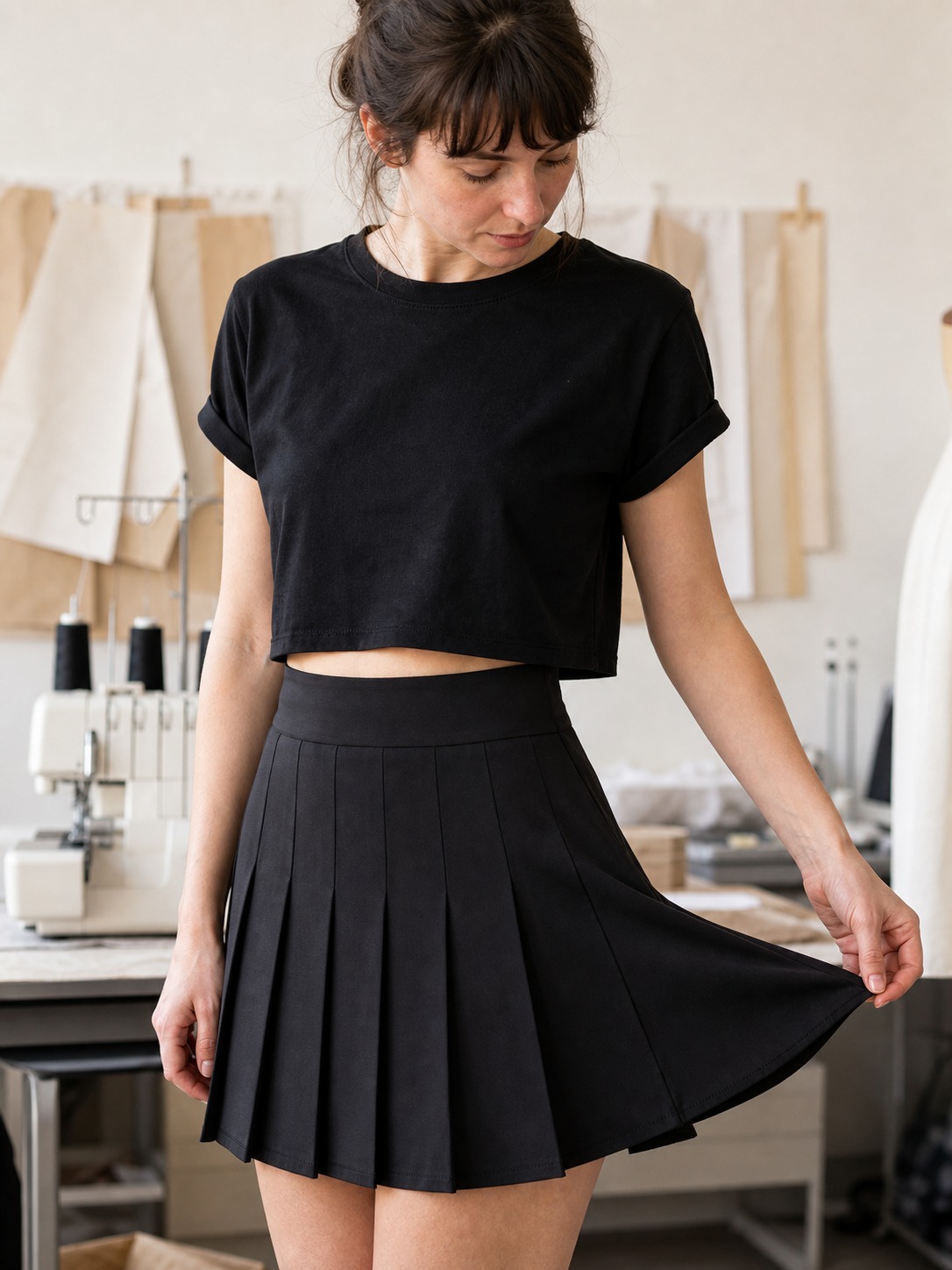
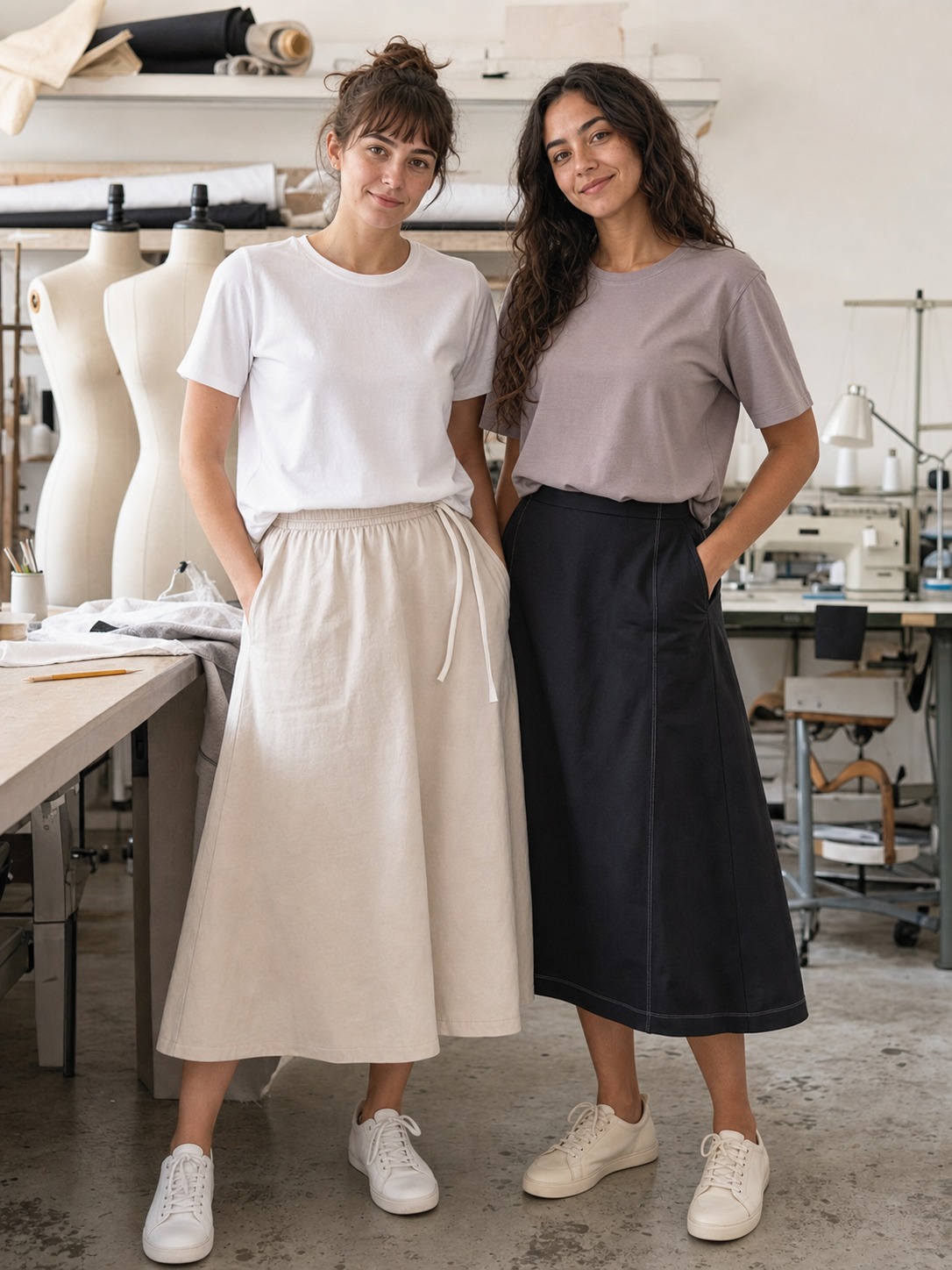
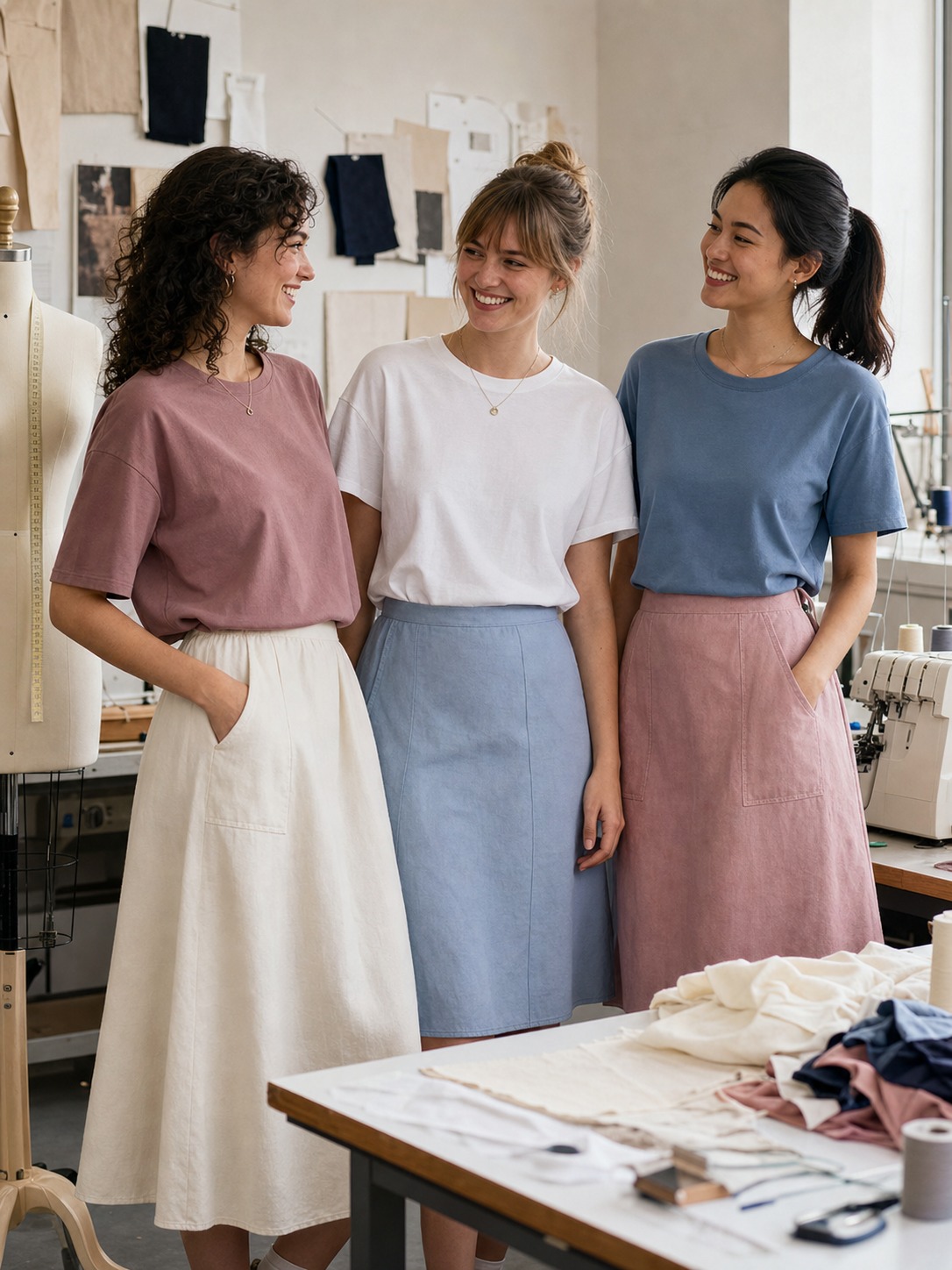
These finished looks show why seam finishing matters after the construction work is done. A clean overlock stitch is not meant to steal attention from the outfit; it lets T-shirts, skirts, hems, and side seams sit smoothly so the garment looks intentional from the outside and tidy on the inside.
Final thoughts: clean seams are part of the design
The interior of a garment is construction made visible. The quality of that construction reflects directly on the design, not as a separate assessment but as part of the same one.
Overlock stitching is the dominant seam finishing technique in modern garment production because it solves multiple problems (fraying, seam stretch, finishing consistency) in a single pass. Understanding when to use it, how it differs from alternatives, and what goes wrong when it’s misapplied is part of understanding how garments are designed to last.
Clean seams are part of the design. Not a detail, not an afterthought — the construction of a garment is as much a design decision as its silhouette or fabric. An overlock stitch, done well, is invisible. Done poorly, it’s the first thing you notice when you turn a garment inside out. For more construction, styling, and fashion-design references, browse the Sky Rye Design fashion hub.
FAQ
What is an overlock stitch?
An overlock stitch is a looped thread construction that wraps around the raw edge of fabric, simultaneously enclosing the edge, trimming excess material, and joining fabric layers in a single pass. It uses multiple threads (typically three to five) that interlock at the fabric edge, creating a flexible, enclosed seam that resists unraveling and accommodates stretch. It’s the standard seam finishing technique in commercial garment production.
What’s the difference between an overlock machine and a serger?
“Serger” is the North American name for a domestic overlock machine; “overlocker” is the European equivalent. They refer to the same machine type. Both produce overlock stitches by trimming fabric edges and encasing them in looped thread in one operation. The practical difference is that industrial overlock machines are built for high-volume continuous production, while domestic sergers are adjustable across thread configurations and fabric weights.
Can a regular sewing machine replace an overlock machine?
A regular sewing machine with a zigzag stitch can approximate overlock finishing on stable woven fabrics at home. For jersey, knit, or any stretch fabric, a dedicated overlock machine or serger produces a meaningfully better result — one that’s trimmed, fully enclosed, and stretch-tolerant in a way that zigzag stitching can’t replicate under repeated washing and wearing conditions.
Why do overlock seams work better on stretch fabrics than straight stitches?
The looped thread structure of an overlock stitch has inherent flexibility — the loops can extend and recover with fabric movement without breaking the thread line. A straight stitch has no such flexibility: under sufficient lateral stress, the thread breaks before the fabric does. Overlock finishing is the standard construction for jersey, knit, and activewear precisely because the seam needs to move with the garment.
What is a four-thread overlock seam?
A four-thread overlock combines a two-thread chain stitch (running through the fabric body for longitudinal seam strength) with a two-thread overlock (enclosing the edge for fraying prevention). It handles both the stress of the seam being pulled apart and the fraying of the cut edge in a single operation. It’s the most common seam construction in industrial garment production.
What makes a seam finish look professional rather than homemade?
The most visible factors are consistent seam allowance width (even blade trimming), correct thread weight in the loopers (woolly nylon for stretch fabrics, fine thread for lightweight wovens), and pressing the seam allowance in the intended direction after finishing. Unpressed overlock seams sitting in a random direction are one of the clearest markers of unfinished construction. The finishing step is quick — the difference in the result is not.
When should I use a French seam instead of an overlock stitch?
French seams enclose raw edges completely within a double-sewn construction, which is appropriate for lightweight, sheer, or transparent fabrics where overlock finishing would show through to the outside. They work on straight or very gently curved seams in non-stretch materials. For curved seams, stretch fabrics, or any garment where seam bulk needs to be minimized, overlock finishing is the more appropriate construction.
Does overlock stitch work on heavy fabrics like denim or canvas?
Yes, with the right machine and thread configuration. Industrial overlock machines handle heavy fabric weights routinely. On domestic sergers, heavy fabrics require a longer stitch length, heavier-weight thread, and typically a wider differential feed setting to prevent the fabric from stretching unevenly as it feeds. For specialist heavy materials (upholstery fabric, thick canvas, leather-weight textiles) industrial machines built for that weight range produce a more consistent result than standard domestic sergers.
- 71shares
- Facebook0
- Pinterest71
- Twitter0
- Reddit0