I spent a week in Thailand during a project trip years ago, and the elephant you see there is not the romanticized animal of Western tattoo culture.
It’s a working animal with a complicated relationship to the people around it, a subject of conservation debates, and a deeply embedded symbol in Buddhist and Hindu visual traditions. Seeing those traditions up close changed how I read elephant imagery in design. The form carries real weight. It’s not just a large animal with good proportions. It’s one of the most culturally loaded subjects in the tattooing world.
- What an elephant tattoo means
- Elephant tattoo styles: which one fits you
- Where to place an elephant tattoo
- 60+ elephant tattoo ideas by theme and style
- Realistic and portrait elephant tattoos
- Geometric and dotwork elephant tattoos
- Mandala and ornamental elephant tattoos
- Minimalist and fine-line elephant tattoos
- Watercolor and illustrative elephant tattoos
- Family and sentimental elephant tattoos
- Cultural and spiritual elephant tattoos
- Abstract and concept elephant tattoos
- Finding the right artist for your elephant tattoo
- Making the final decision
- Frequently Asked Questions
As a designer, I’m drawn to the elephant for structural reasons. The head is a study in volumetric complexity: the dome of the skull, the dramatic ears, the tapered trunk. A skilled tattoo artist has a lot to work with. And the subject translates into almost every tattooing style, from the thinnest fine-line sketch to a dense mandala headdress covering an entire thigh.
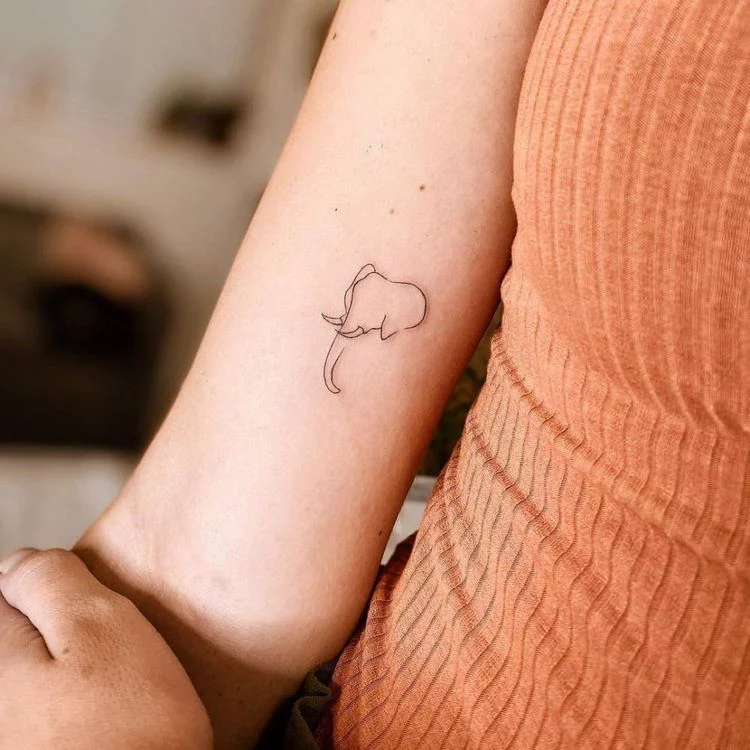
This guide covers the main design categories, what each style communicates, where each one sits well on the body, and the questions to ask before you book your appointment.
What an elephant tattoo means
No symbol means one thing. An elephant tattoo read by a Buddhist monk in Sri Lanka carries different associations than the same image worn by someone in Stockholm who loves wildlife photography. Both readings are valid. Knowing the range helps you decide which resonance you want your design to carry.
Strength, wisdom, and memory
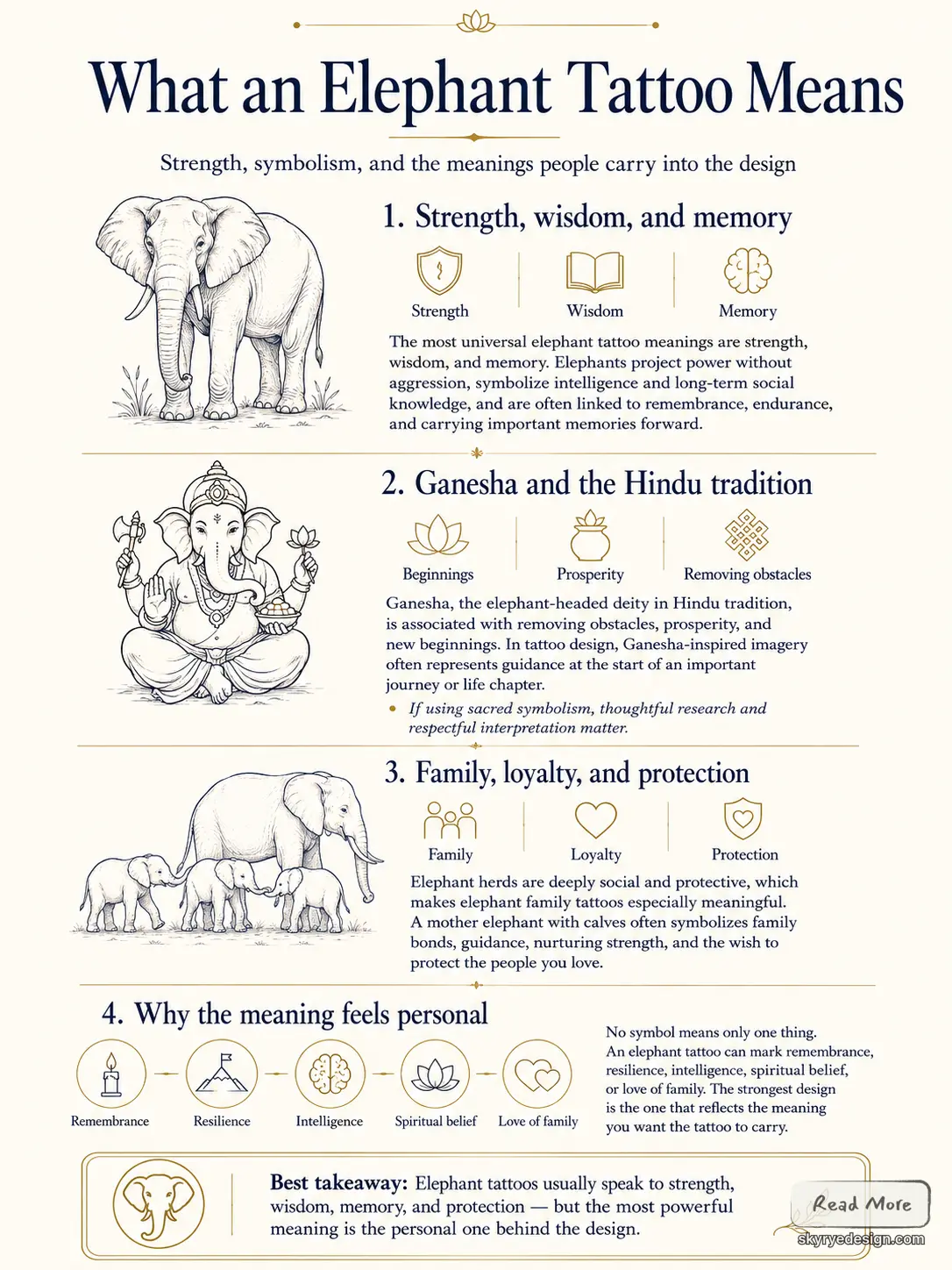
The three most universal associations with the elephant are strength, wisdom, and memory. The strength reading is straightforward: an adult elephant is one of the largest land animals on the planet, and it projects physical power without aggression in the way predators do. Wisdom comes from the elephant’s reputation for long-term social intelligence, complex problem-solving, and the observation that elephants seem to grieve their dead. Memory is tied to the same: research into elephant cognition consistently shows sophisticated recall of places, individuals, and past events across decades.
These aren’t abstract qualities. For many people, an elephant tattoo is a specific personal statement about what they want to carry. I’ve heard people describe their elephant tattoo as a reminder of a deceased parent, as a symbol of surviving something that required long endurance, or simply as an affirmation of the intelligence they value most.
Ganesha and the Hindu tradition
The elephant-headed deity Ganesha is one of the most widely recognized figures in Hindu iconography, and his presence in tattoo culture extends far beyond Hindu practitioners. Ganesha is associated with removing obstacles, bringing prosperity, and presiding over beginnings. It’s traditional to invoke Ganesha before starting a major project or journey.
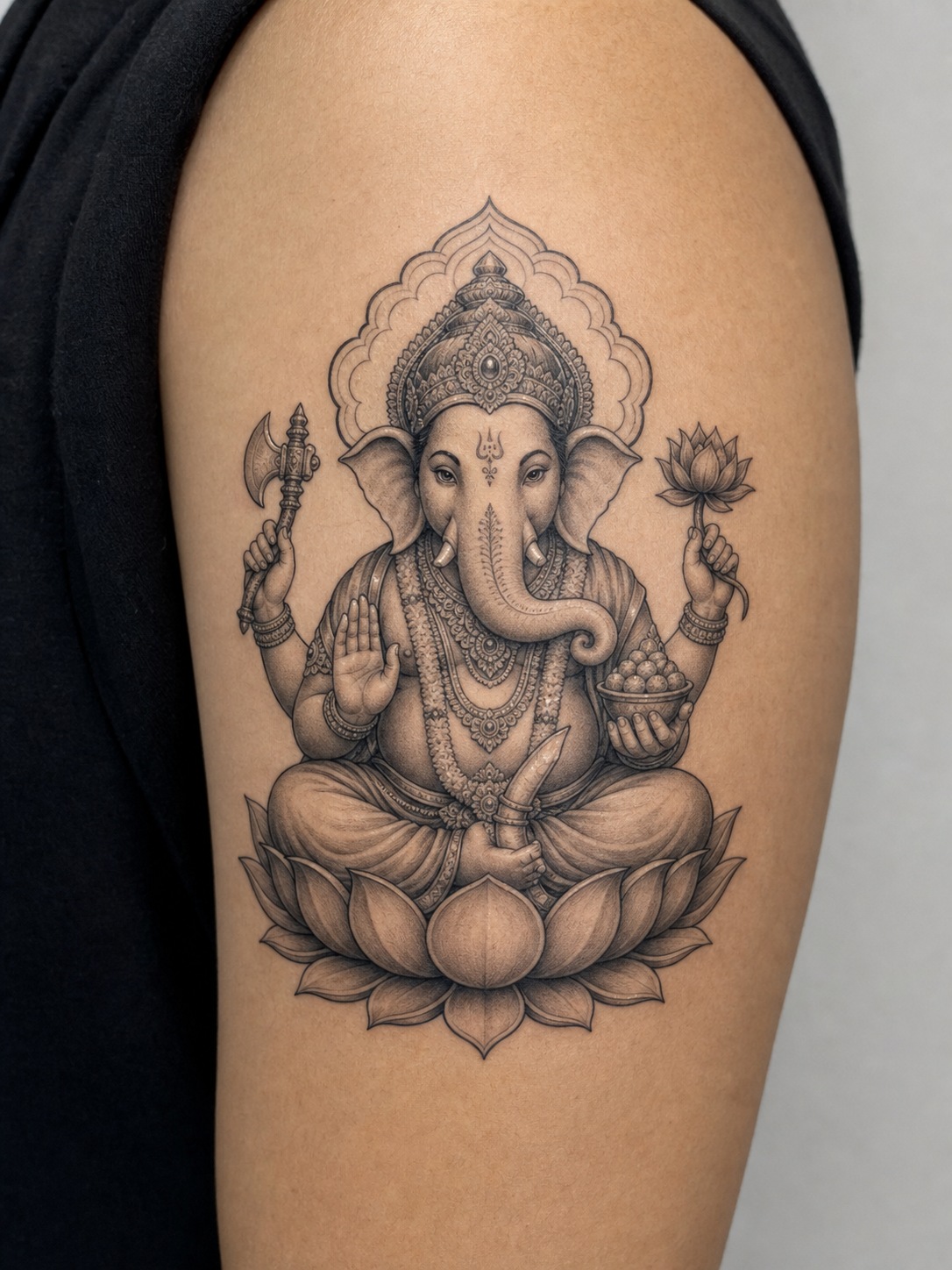
Ganesha tattoos are among the most requested elephant-related designs globally. They range from highly detailed iconographic representations with all the traditional attributes (four arms, broken tusk, mouse vehicle) to simplified contemporary interpretations that retain the recognizable elephant head without the full symbolic framework. If you’re not Hindu and you’re considering a Ganesha tattoo, it’s worth researching the symbolism and consulting with your artist about a respectful interpretation.
Family, loyalty, and protection
Elephant herds are matriarchal social structures where elder females carry and transmit knowledge, and where calves are protected by multiple adults. This social pattern maps onto human family values in a way that makes elephant family tattoos one of the most emotionally resonant formats in the genre.
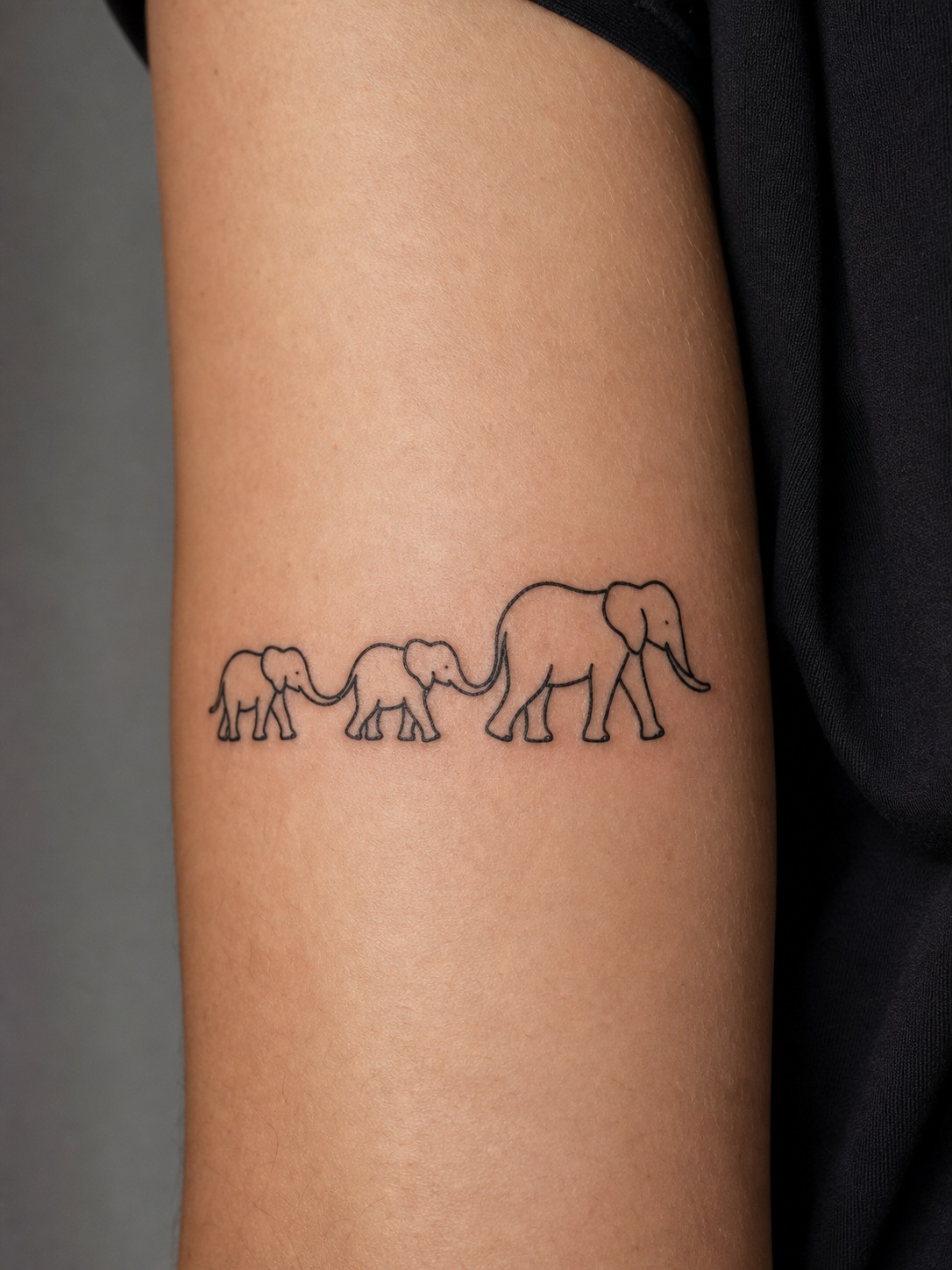
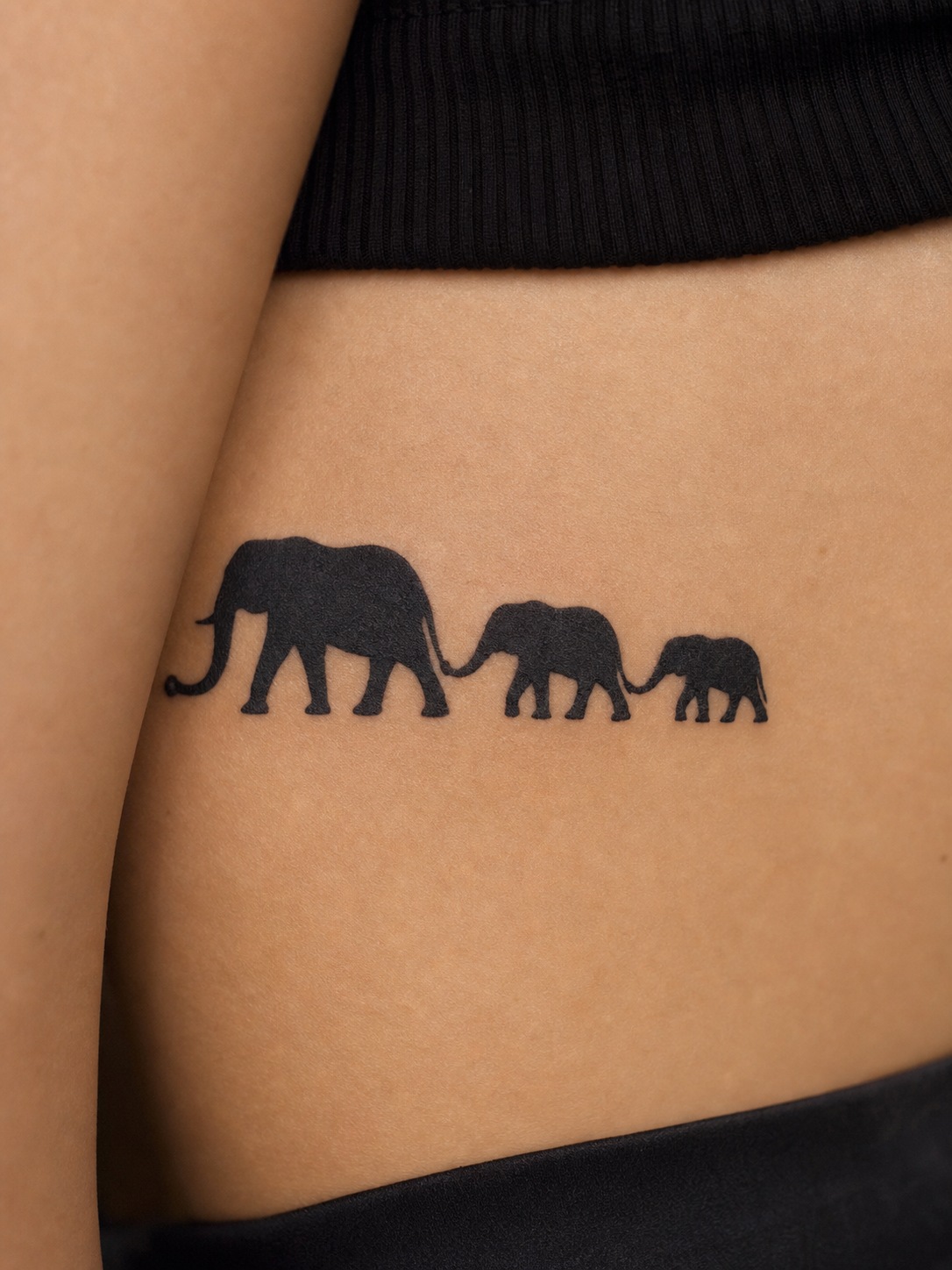
A mother elephant with one, two, or three calves walking behind her is one of the most popular configurations for elephant family tattoos. The trunks are often drawn touching, which adds an intimacy to the composition. For people who have lost children or want to memorialize family members, the number of calves becomes a specific personal code embedded in the design.
Elephant tattoo styles: which one fits you
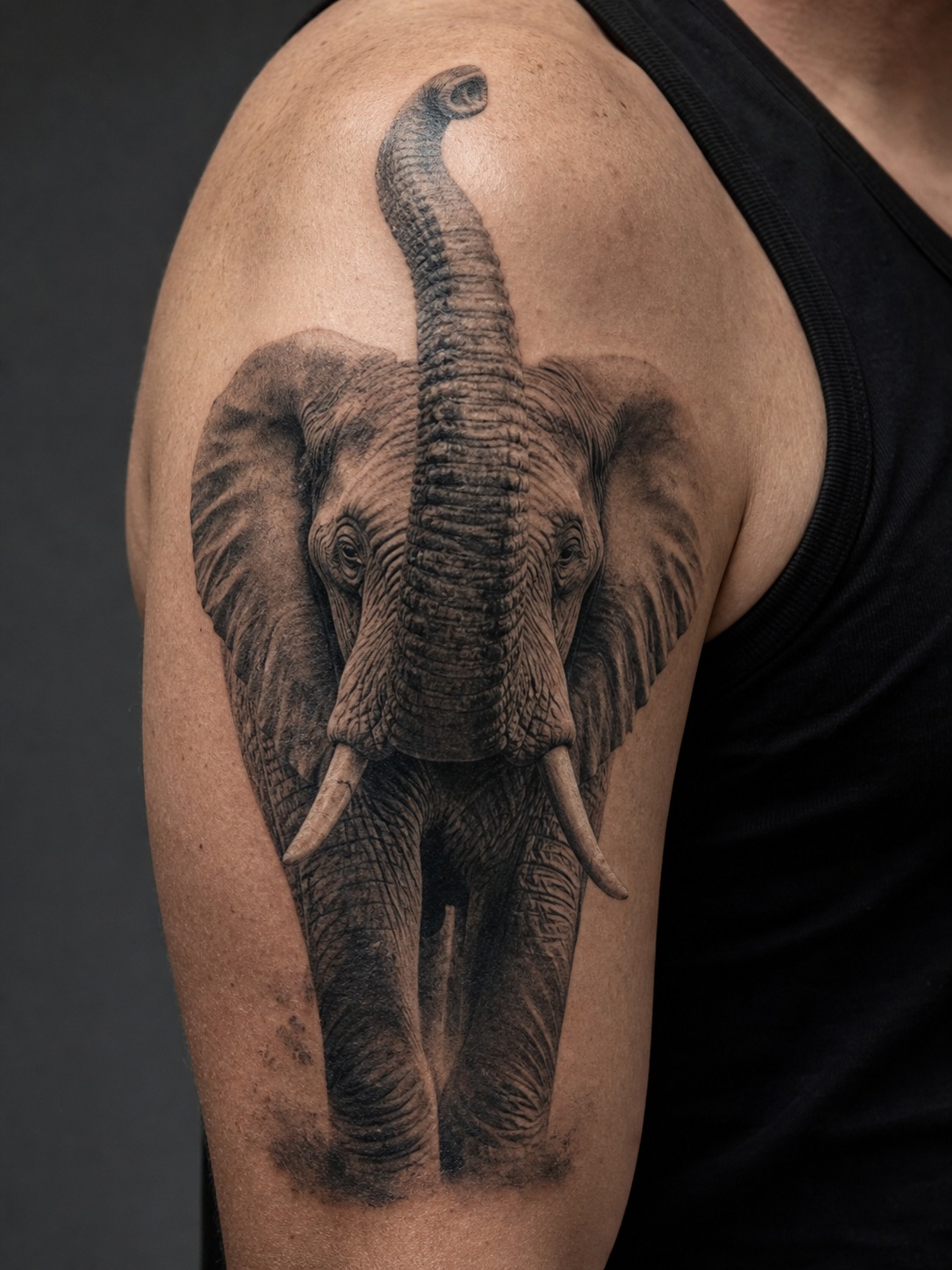
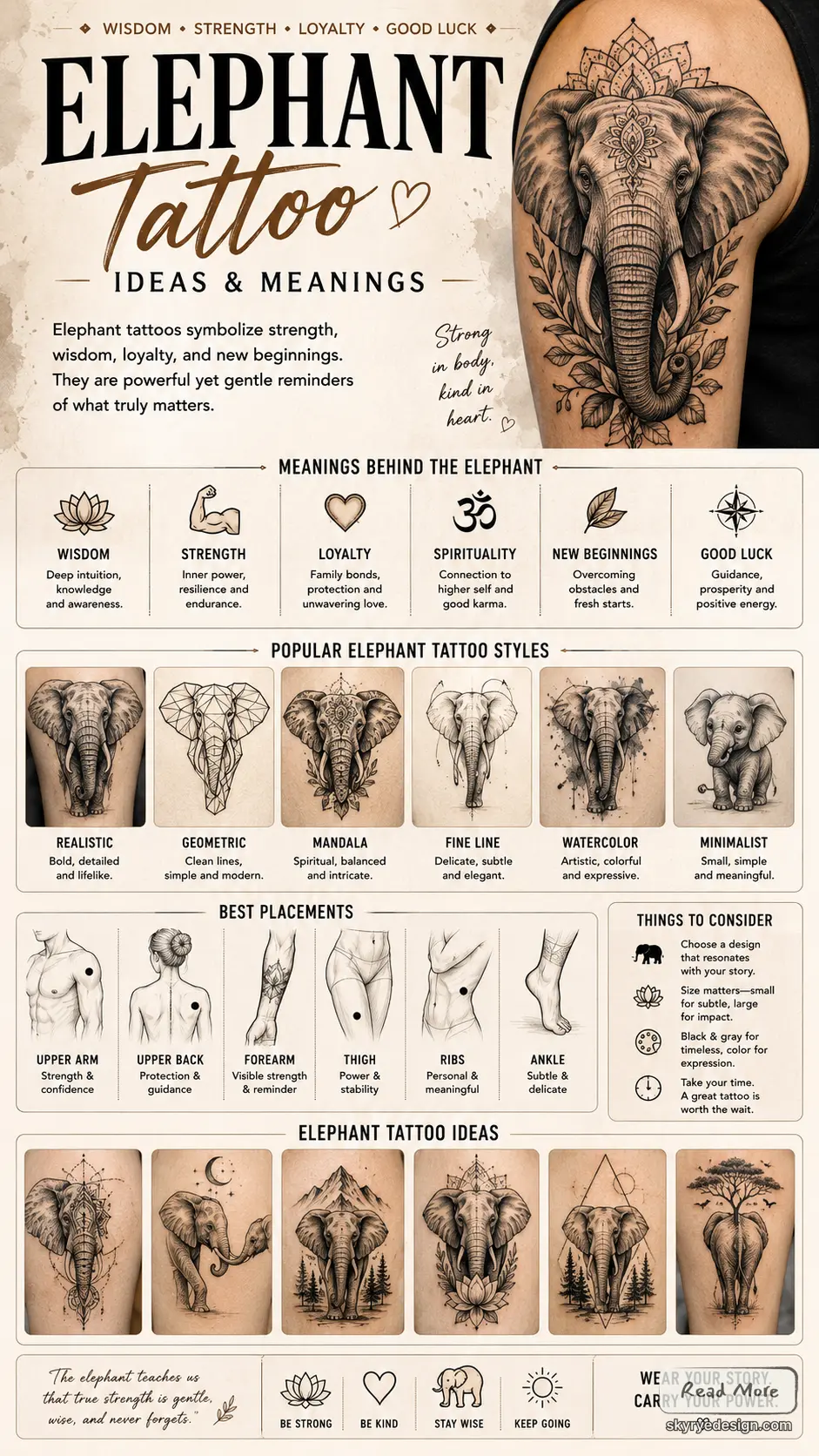
The visual range of elephant tattoo design is genuinely wide. The same subject reads completely differently in a fine-line sketch versus a photorealistic portrait versus a geometric mandala. Style choice affects not just how the tattoo looks on day one but how it ages, how it reads at a distance, and how well it works with your chosen placement.
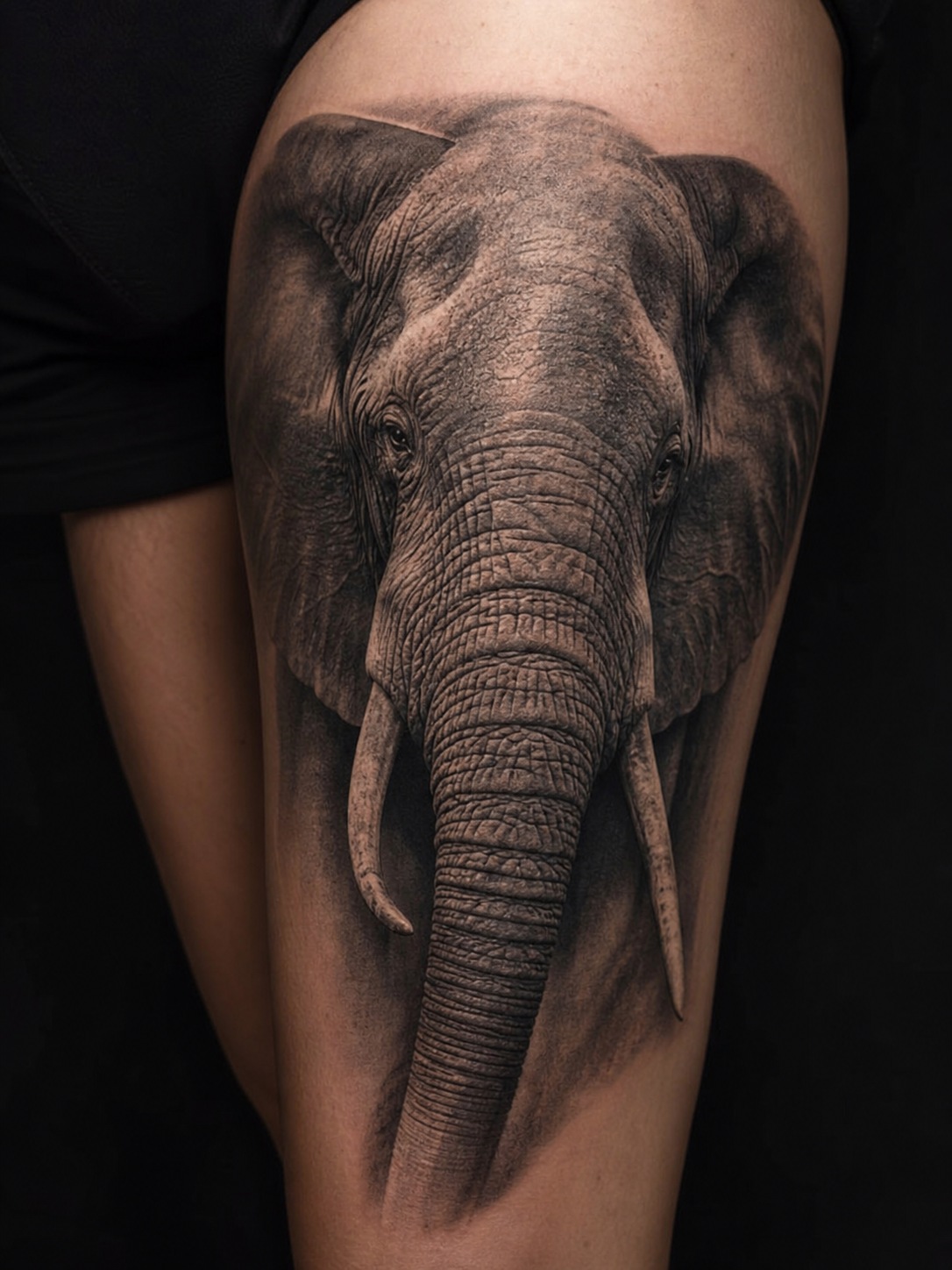
Realism and black-and-grey portrait
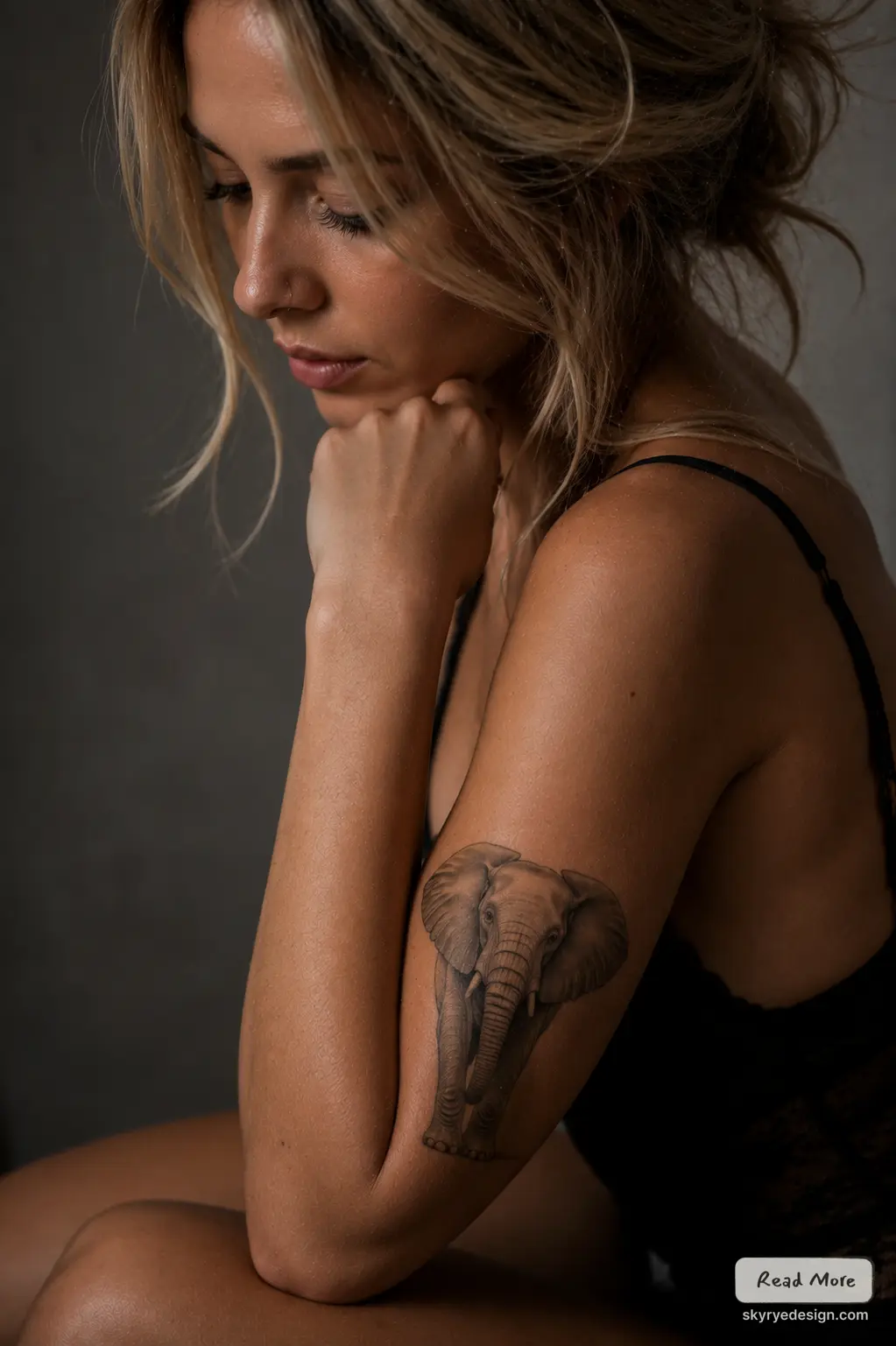
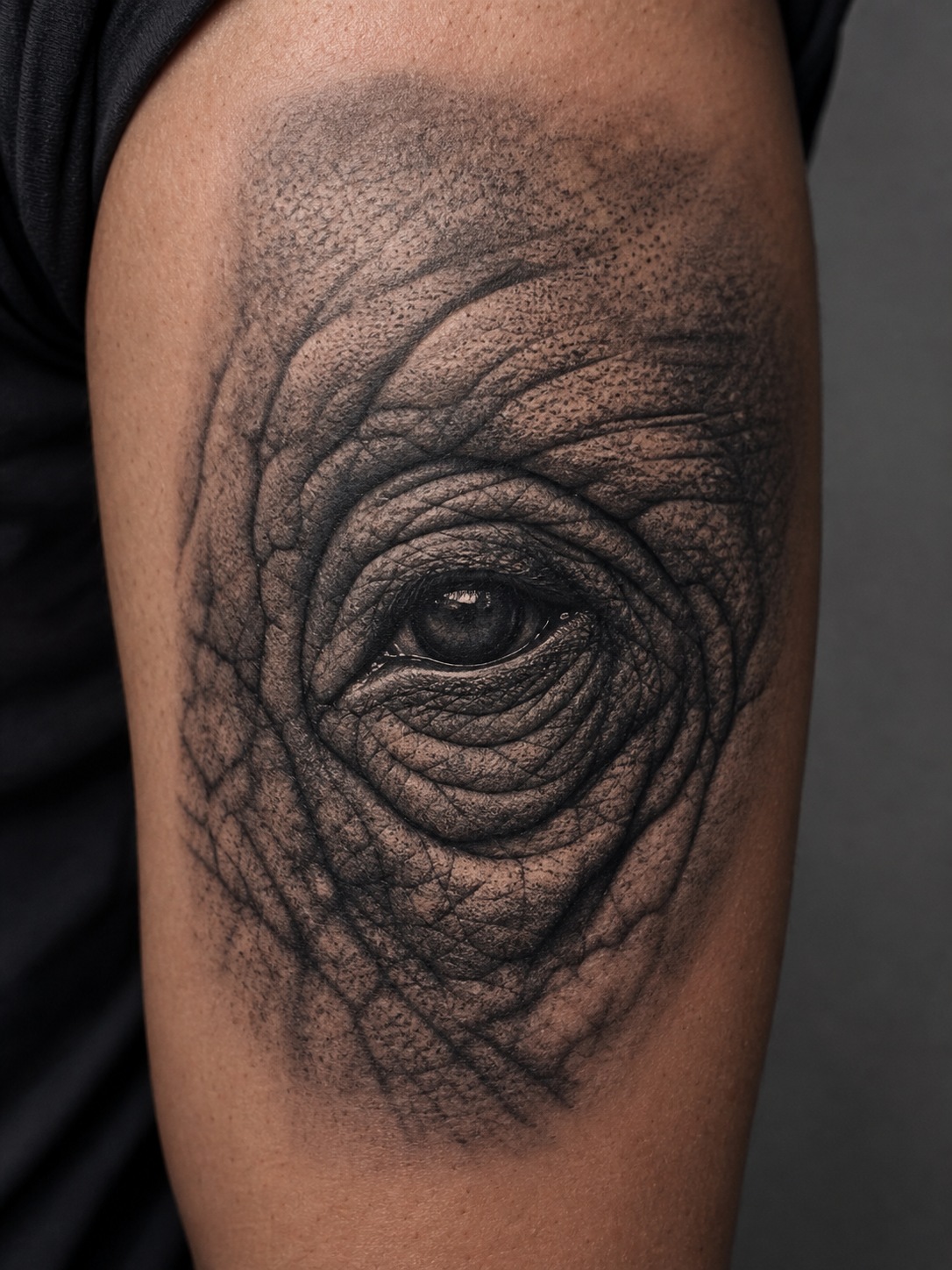
Photorealistic elephant tattoos treat the subject the way a wildlife photographer would: the wrinkled skin texture, the depth in the eyes, the tonal complexity of the ear membrane. Black-and-grey realism is the dominant mode here, because it translates the tonal range of elephant skin beautifully without relying on color.
Artists who do this well include Nikko Hurtado and Dmitriy Samohin, whose large-scale portrait work demonstrates what the style looks like at its technical ceiling. For elephant portraits specifically, ask any artist you’re considering for examples of their animal portrait work, specifically animals with textured skin (elephant, rhino, crocodile). The wrinkle work is where skill differences show up most clearly.
Placement: thigh, back, chest, upper arm. Minimum size: 10 to 15cm for a portrait that holds its detail. Healing requirement: avoid direct sun for at least three to four weeks.
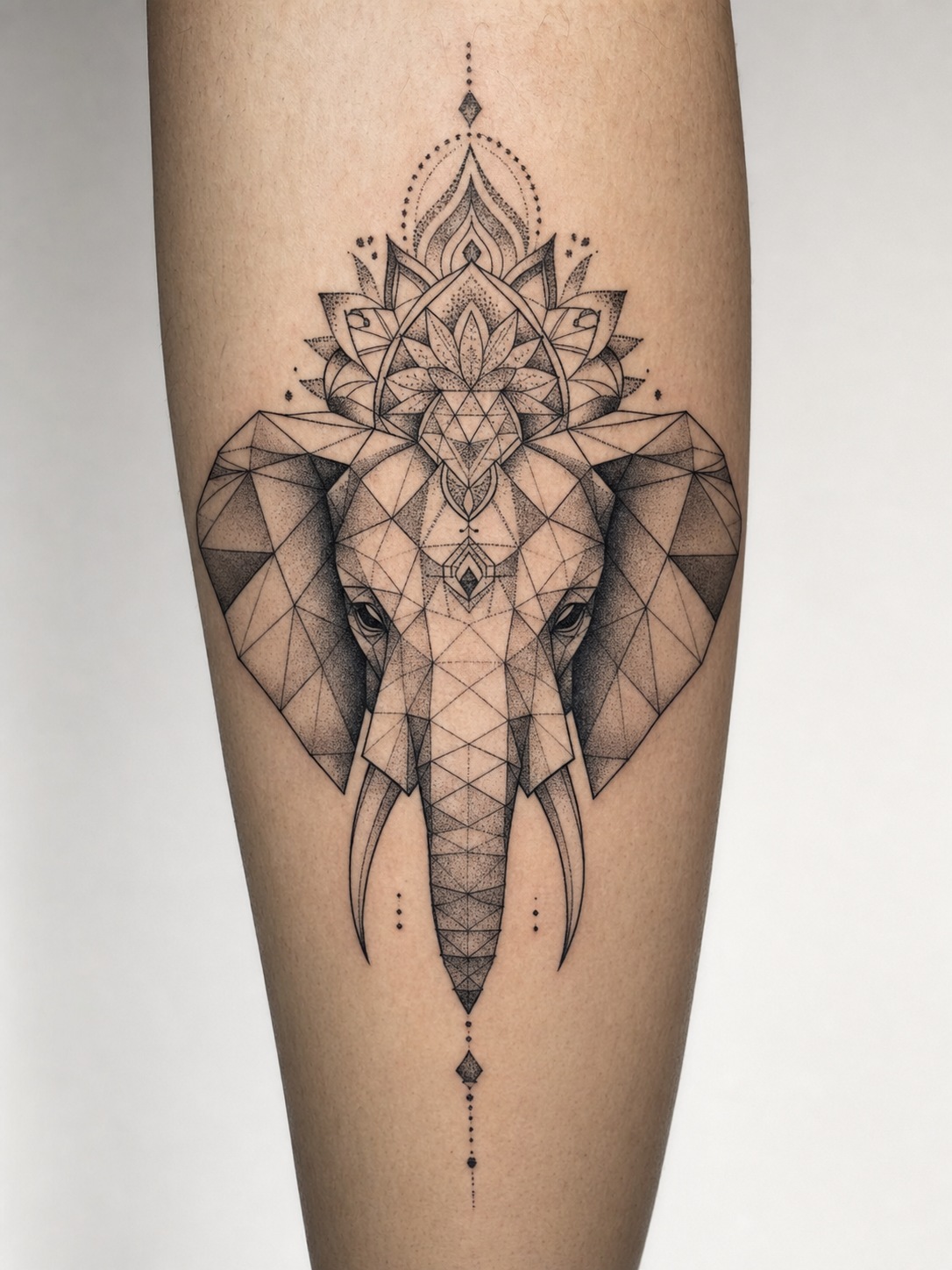
Geometric and dotwork
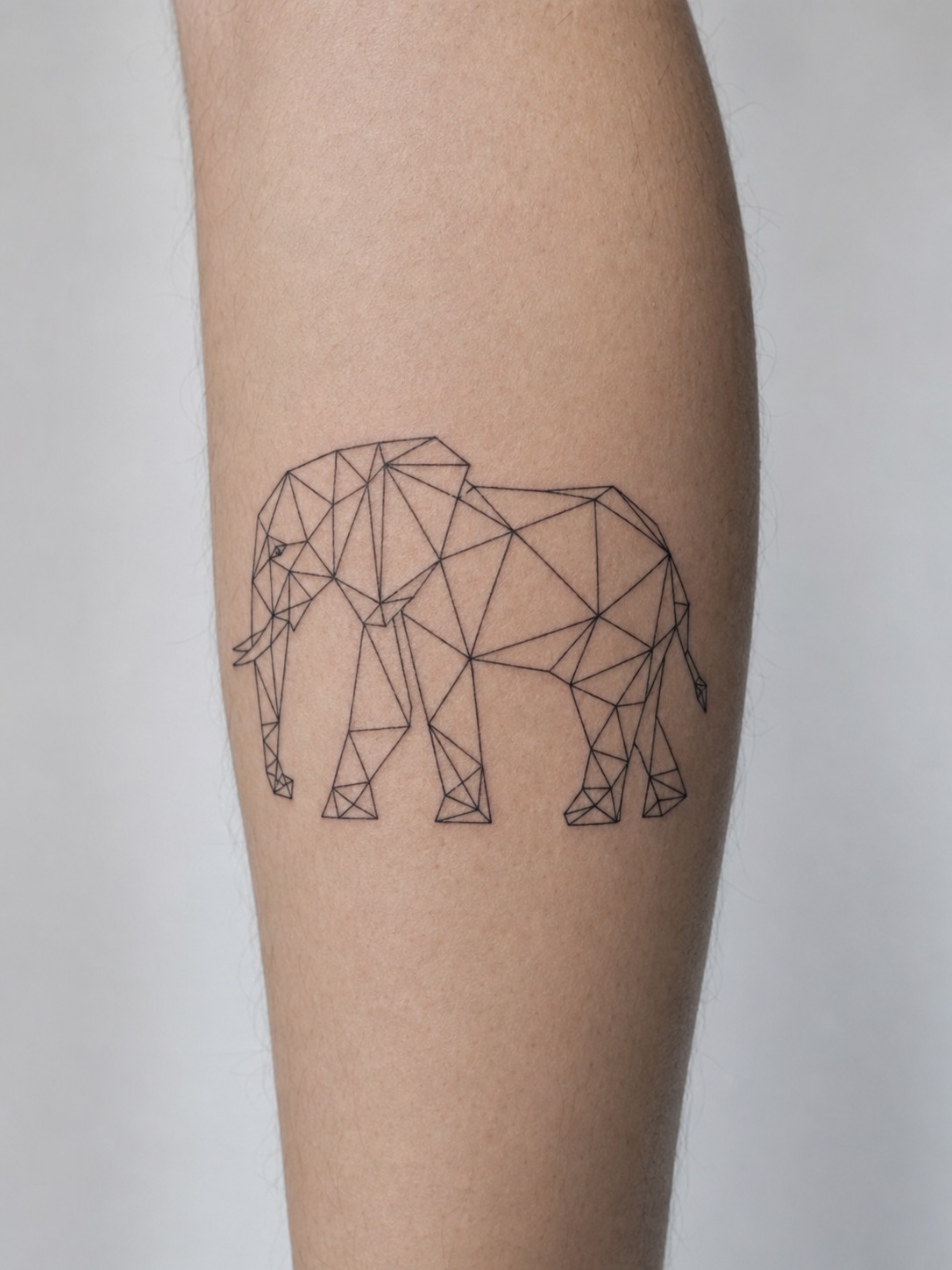
Geometric elephant tattoos break the subject into angular facets or build it from repeated dot patterns. The result is a design that reads as both recognizable and abstract, which suits people who want the elephant’s symbolic resonance without the naturalistic rendering.
Dotwork (also called stippling) is particularly effective for elephant subjects because the layered dots naturally suggest the porous, textured quality of elephant skin. Artists like Chaim Machlev (Dots to Lines, Berlin) have demonstrated the full range of geometric and dotwork approaches on large-scale pieces. For elephant dotwork, the ear and forehead are where the density gradients matter most.
Geometric line-only designs age better than dotwork in most placements, because fine dots blur faster than lines in areas of skin movement. In low-movement areas like the thigh or back, dotwork holds well for many years.
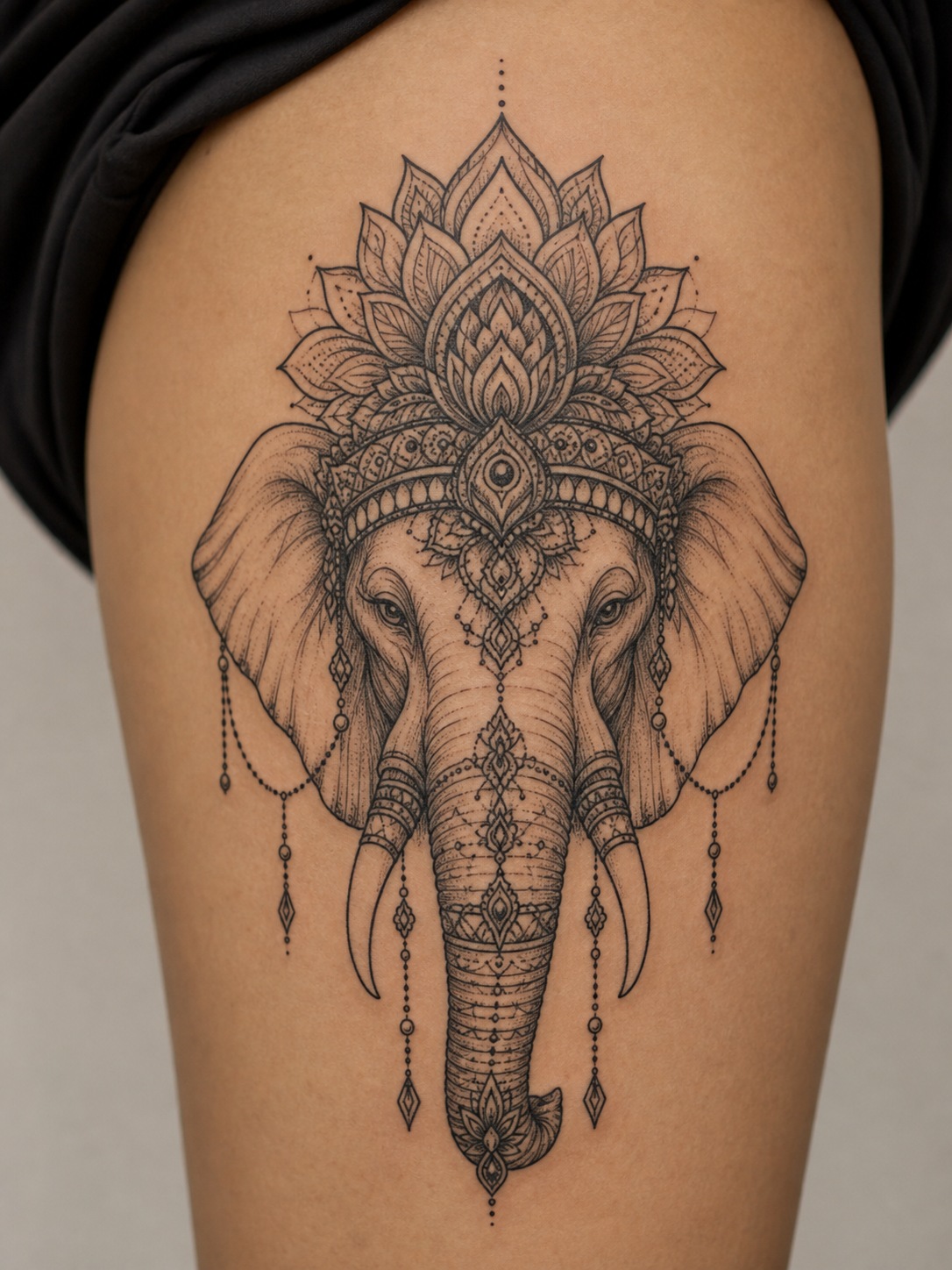
Mandala elephant head
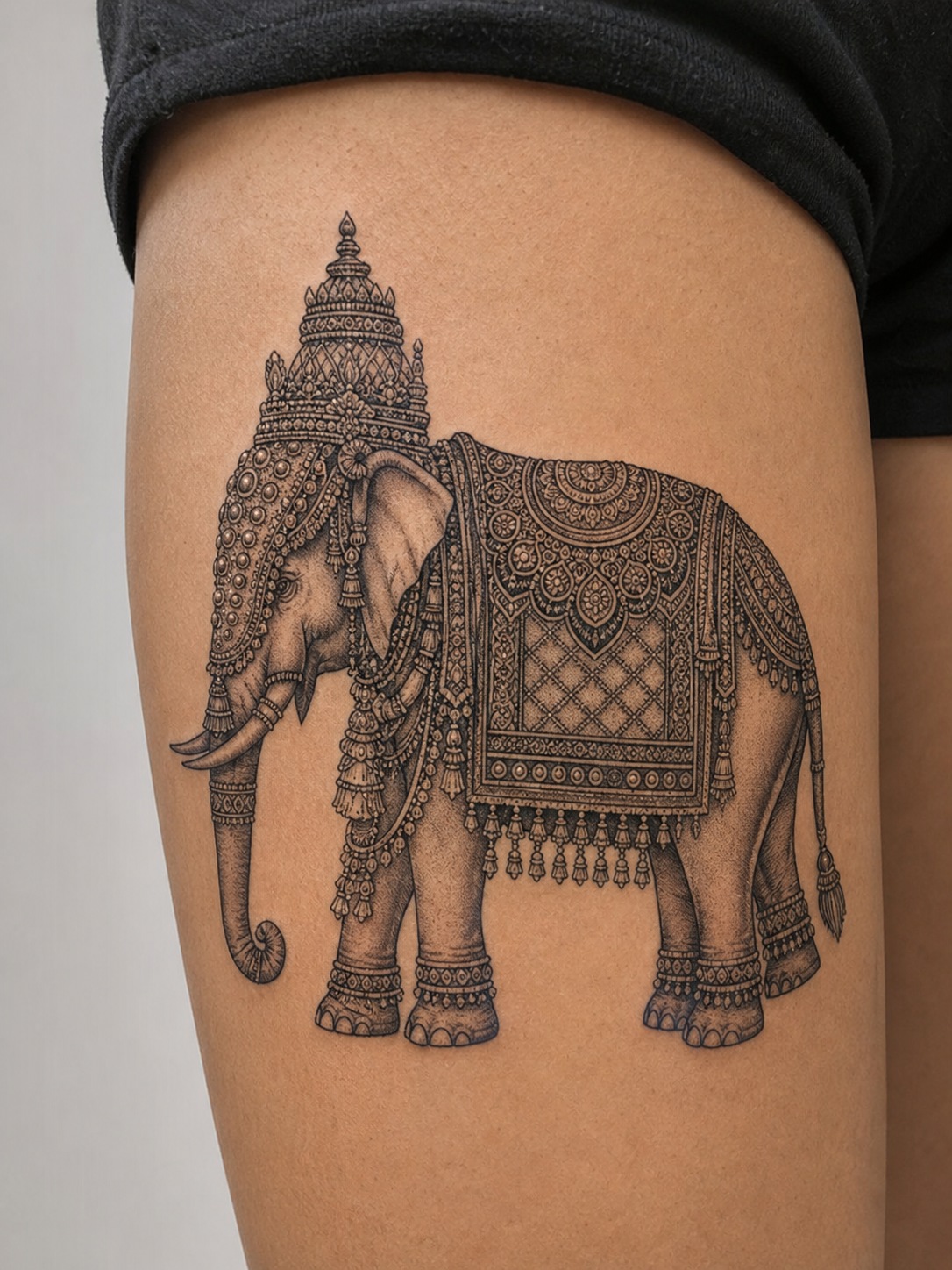
The mandala elephant head is one of the most visually complex and immediately recognizable formats in the elephant tattoo genre. The structure is: a naturalistic or slightly stylized elephant head at the center, with an ornate headdress or crown that extends upward and outward in mandala patterning. The headdress typically includes lotus petals, geometric repeats, and decorative hanging ornaments.
This design format has roots in Indian festival elephant decoration (caparisoned elephants with elaborate painted headdresses are a traditional ceremonial sight in South India and Sri Lanka). Contemporary tattoo interpretations range from faithful to highly abstracted. The headdress gives the artist significant creative latitude while the recognizable elephant head anchors the composition.
Mandala elephant heads work best at larger scales (15cm or above) because the patterning in the headdress requires detail resolution to read as intentional rather than messy. The thigh is the most popular placement; the back and chest also work well for larger versions.
Fine-line and minimal
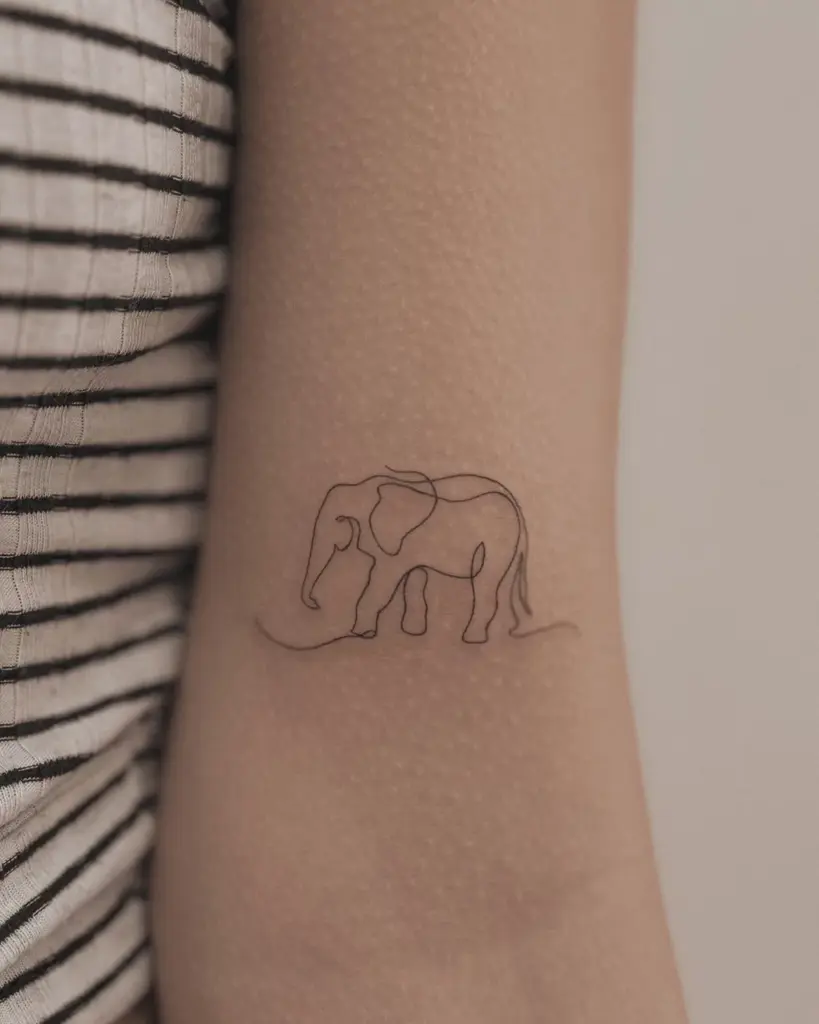
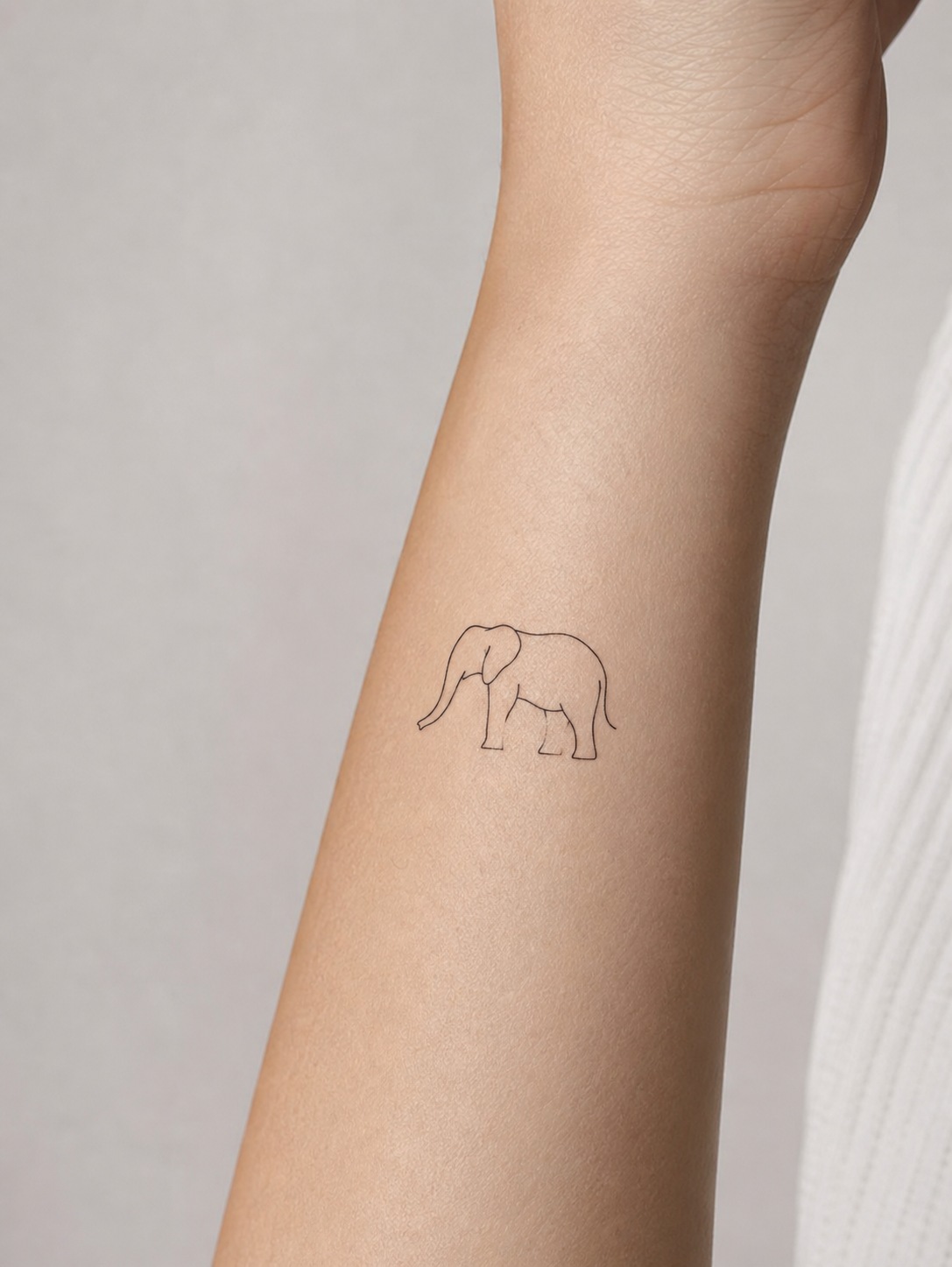
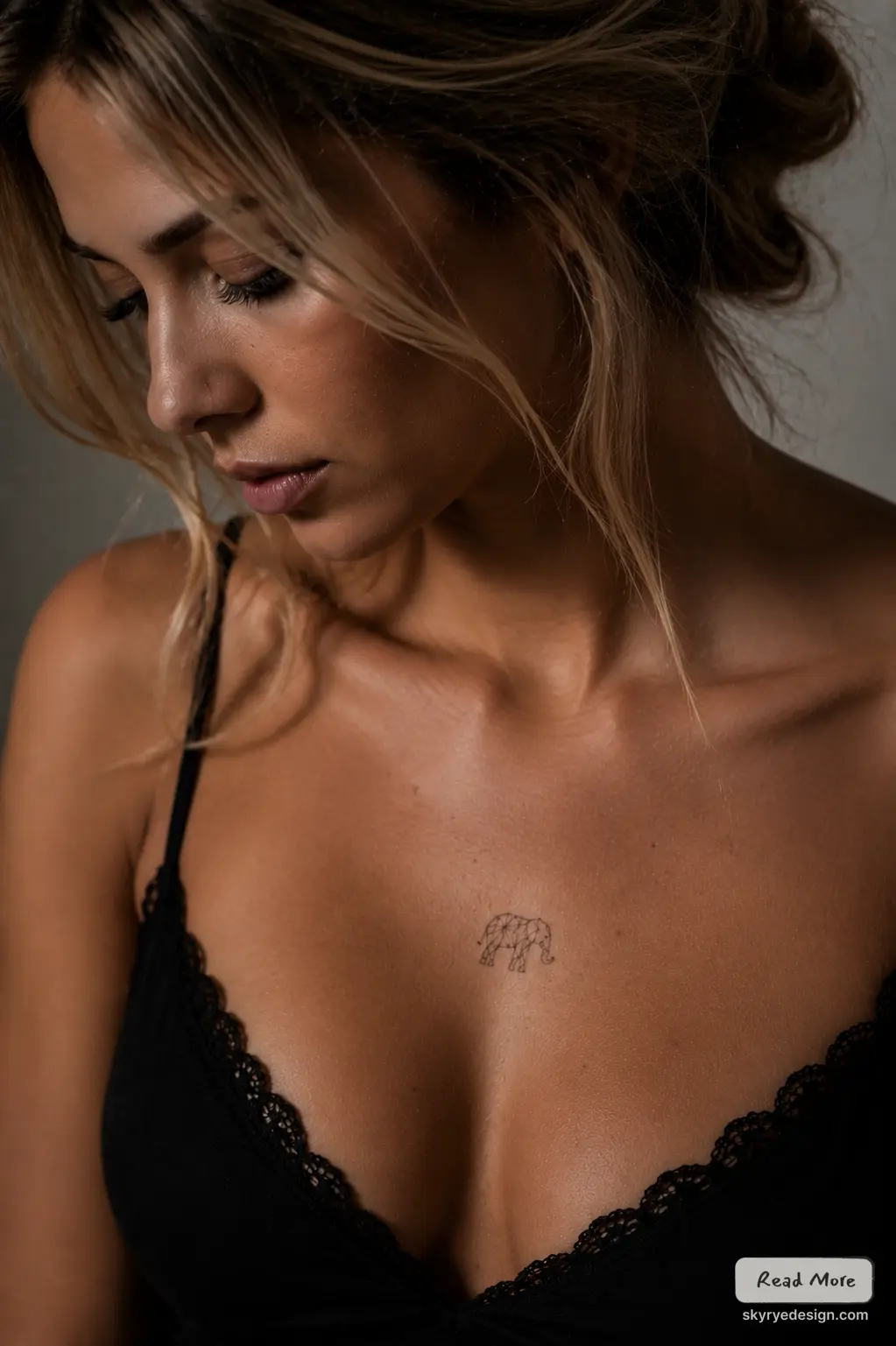
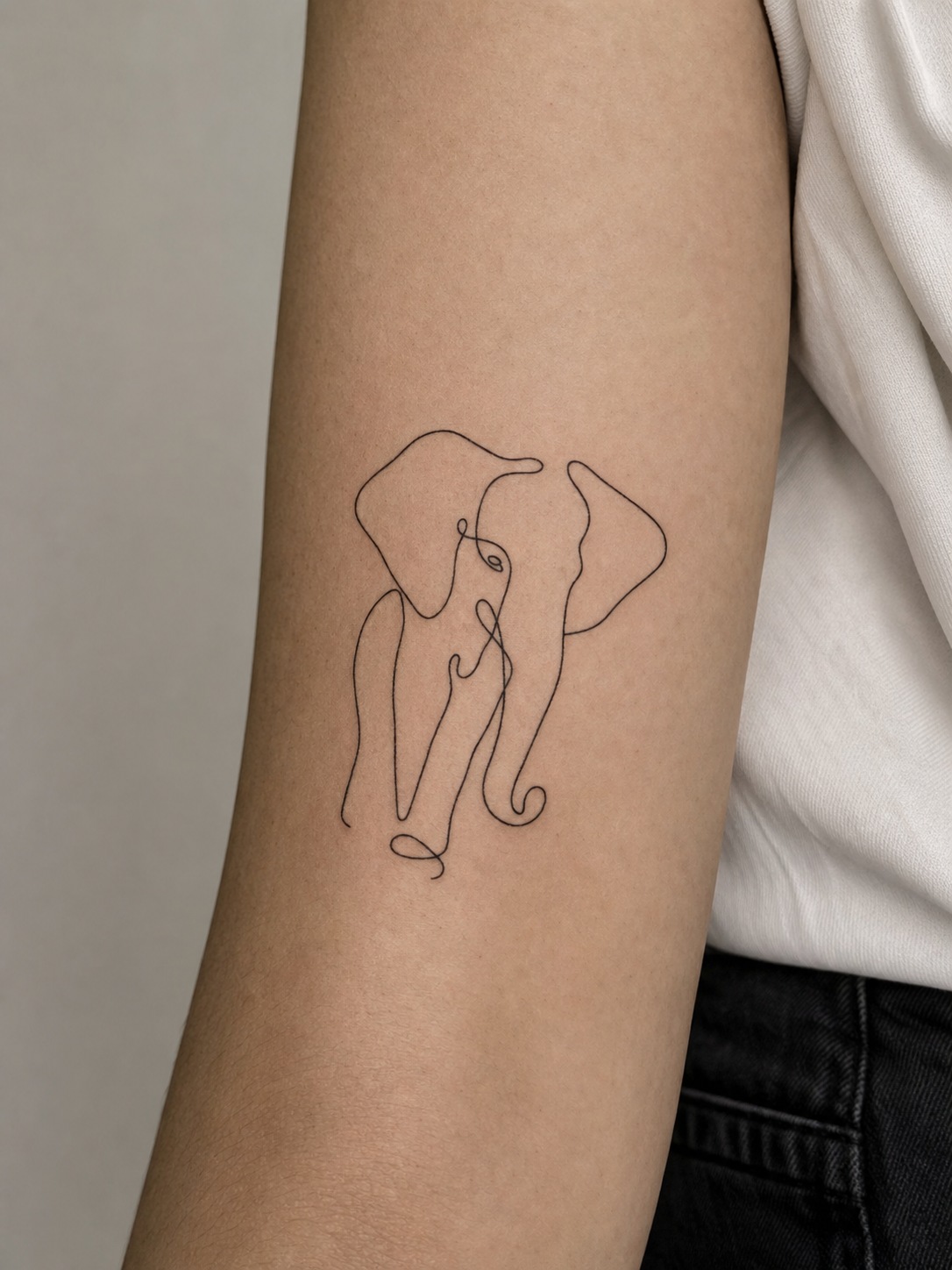
A single-line elephant outline, or a fine-line sketch with minimal shading, is the format for small placements and for people who want the subject without visual weight. These designs read best at intimate viewing distance, which makes them well-suited for wrist, ankle, and behind-the-ear placements.
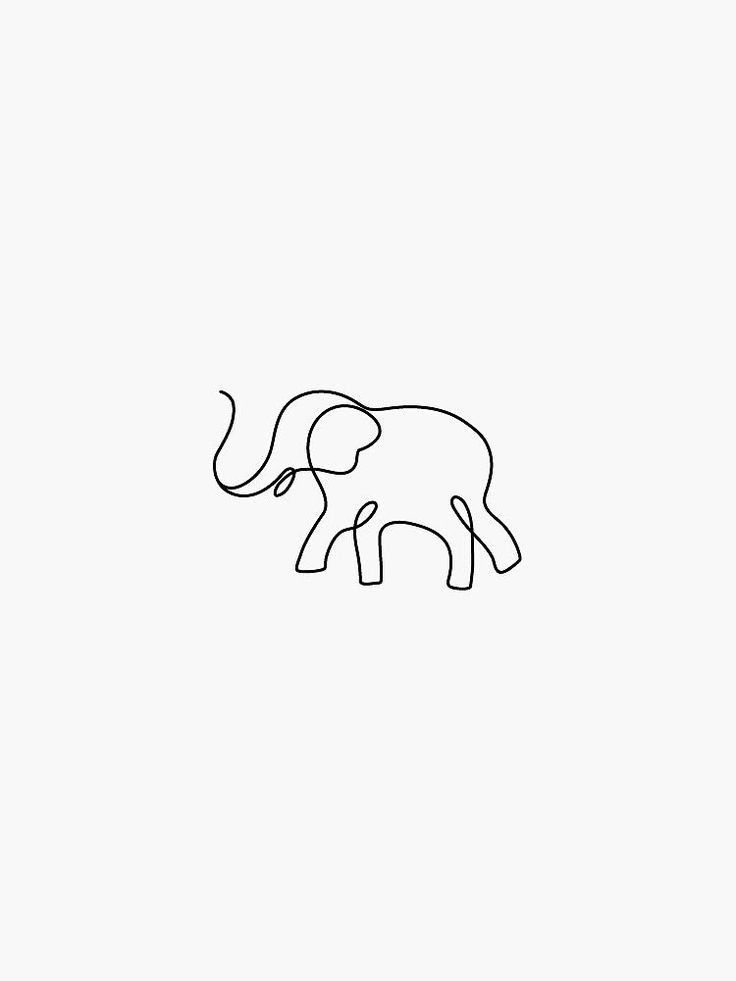
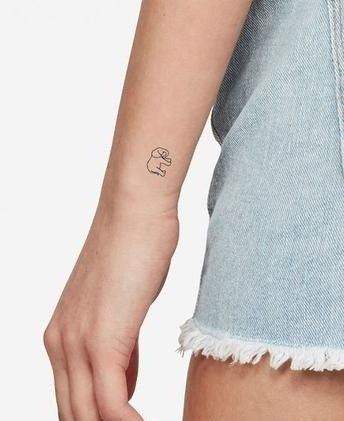
The limitation is longevity. Fine-line work in high-movement areas (wrist, inner forearm, finger) blurs and loses resolution within five to eight years in many skin types. If you’re choosing a fine-line elephant for the wrist, discuss touchup expectations with your artist and factor that into your decision.
Watercolor elephant
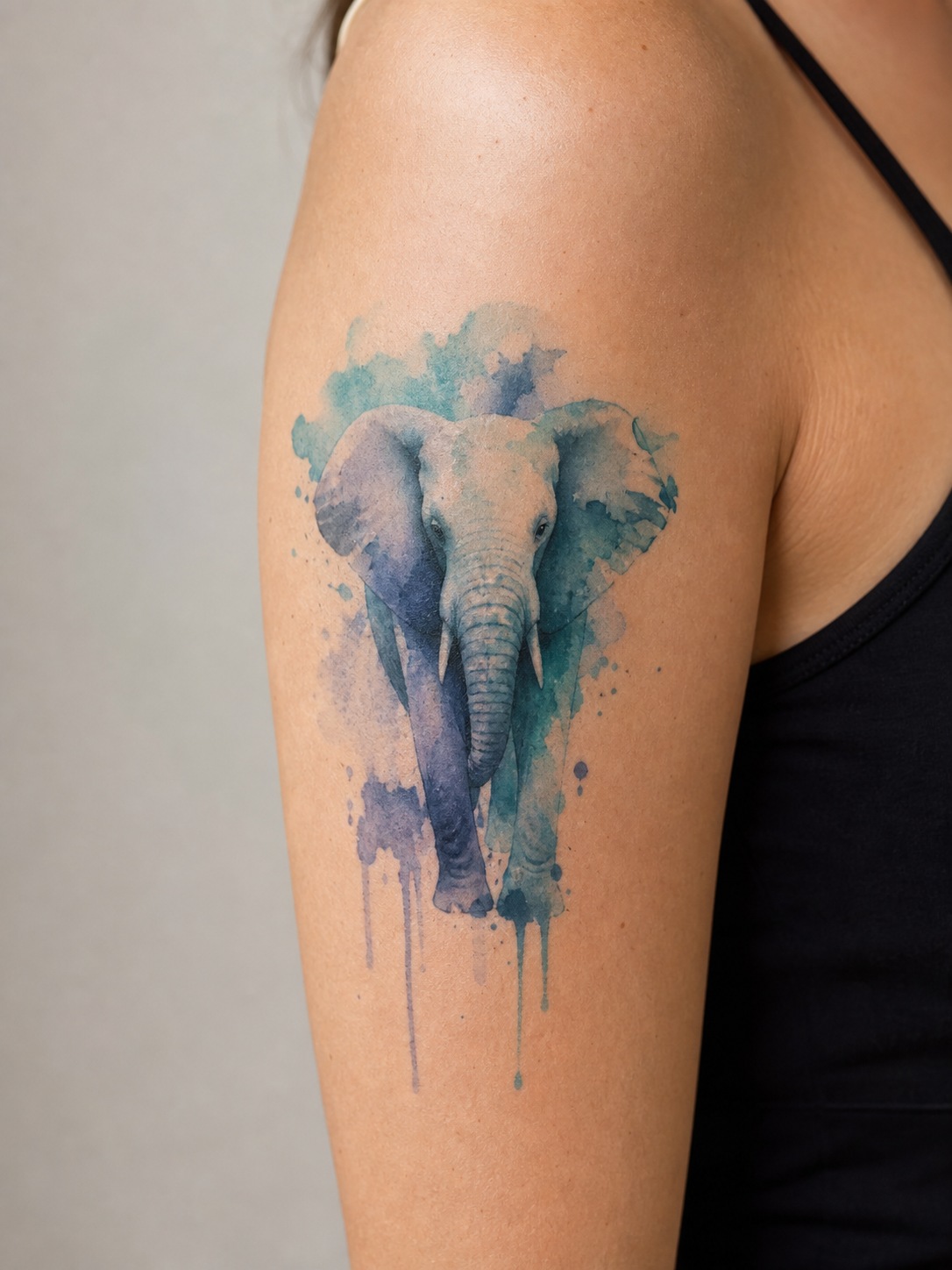
Watercolor-style elephant tattoos use loose color washes and paint-splash effects to create an expressive, almost painterly appearance. They typically have minimal or no black outline, which produces a soft, romantic aesthetic that differs sharply from the graphic precision of geometric or realism styles.
The trade-off is maintenance. Watercolor tattoos without a strong black outline structure fade faster than other styles, because the color is not anchored by line work and relies on the strength of the pigment alone. Most watercolor tattoos need a touchup within three to five years to restore color vibrancy. Artists who specialize in this style include Amanda Wachob, whose gallery-art approach to tattooing produced some of the early examples that popularized the format.
Tribal and blackwork
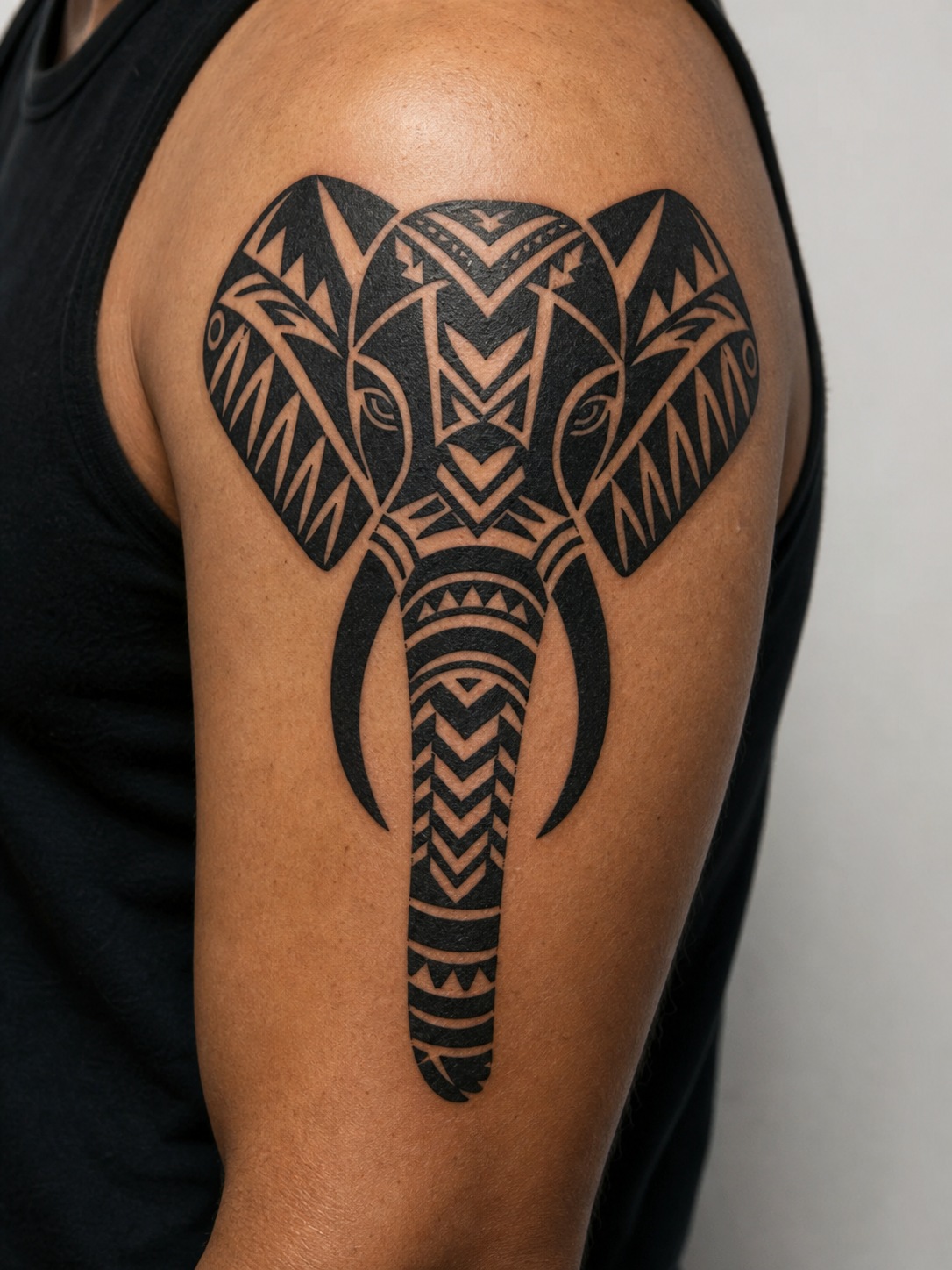
Tribal-inspired elephant tattoos draw from Polynesian, Maori, and Southeast Asian tattooing traditions, using solid black fills and bold graphic forms. The elephant subject translates well into this language because the large body mass accommodates solid black passages without losing readability.
Traditional Thai sak yant tattooing has its own specific elephant motif (the Chang Sak Yant) with sacred geometric and script elements. If you want a design in this tradition, seek an artist trained in the practice rather than a general tattoo artist working from reference images.
Where to place an elephant tattoo
Placement changes both the visual experience of the tattoo and how well it ages. The body is not a flat canvas. Curves, movement, and sun exposure all affect what a design looks like five, ten, and twenty years after it’s applied.
Upper arm and forearm
The most popular placements for elephant tattoos, for good reason. The upper arm provides a relatively flat surface with consistent skin tone and manageable sun exposure. The forearm is more visible in daily life and more subject to fading, but it’s a strong placement for designs you want to see regularly.
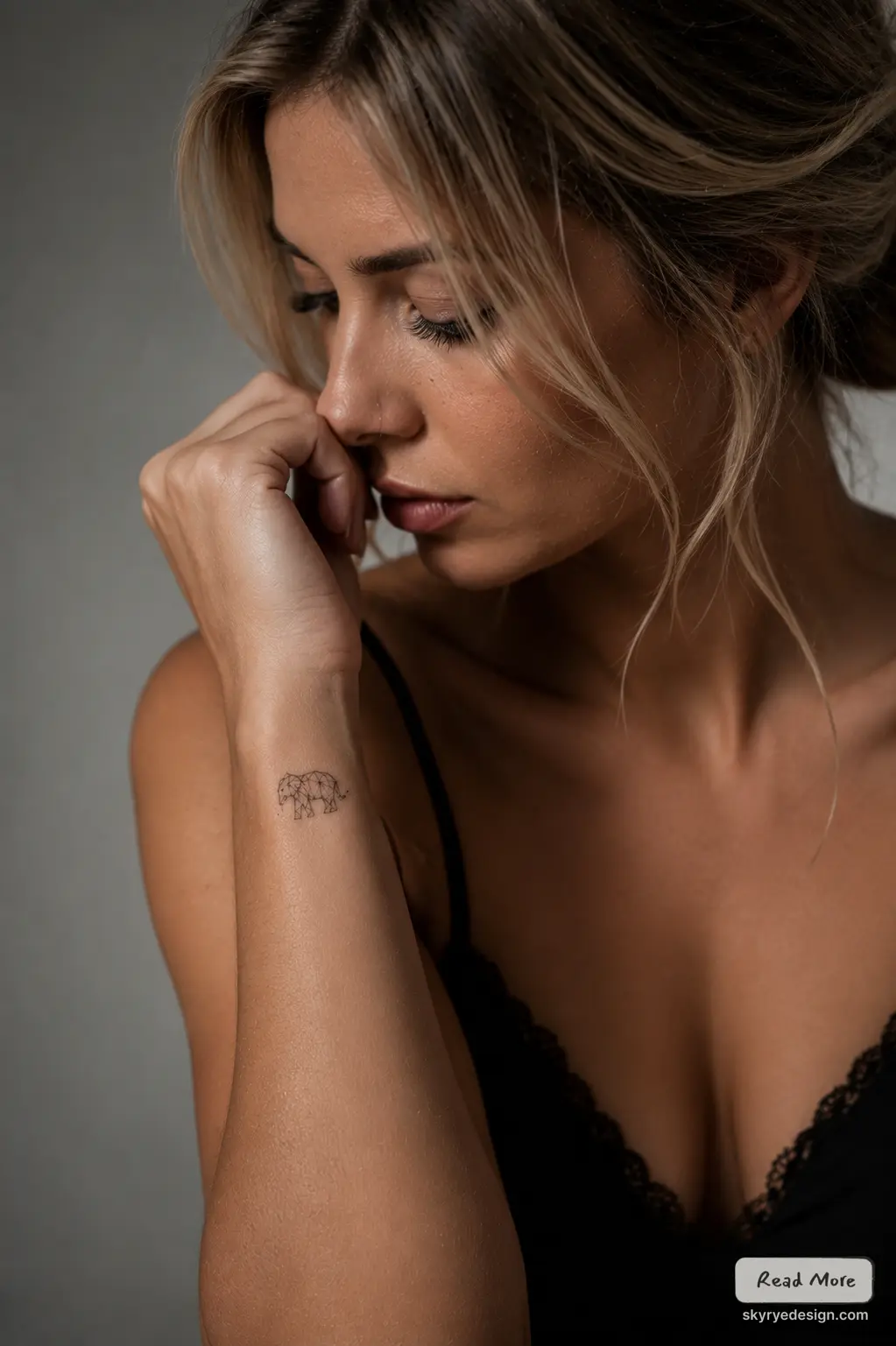
Forearm elephant tattoos work best with designs that have a clear orientation: the elephant walking up the arm toward the wrist, or a portrait framed by the forearm width. Designs that read well from a single viewing angle are better here than circular or symmetrical compositions.
Thigh
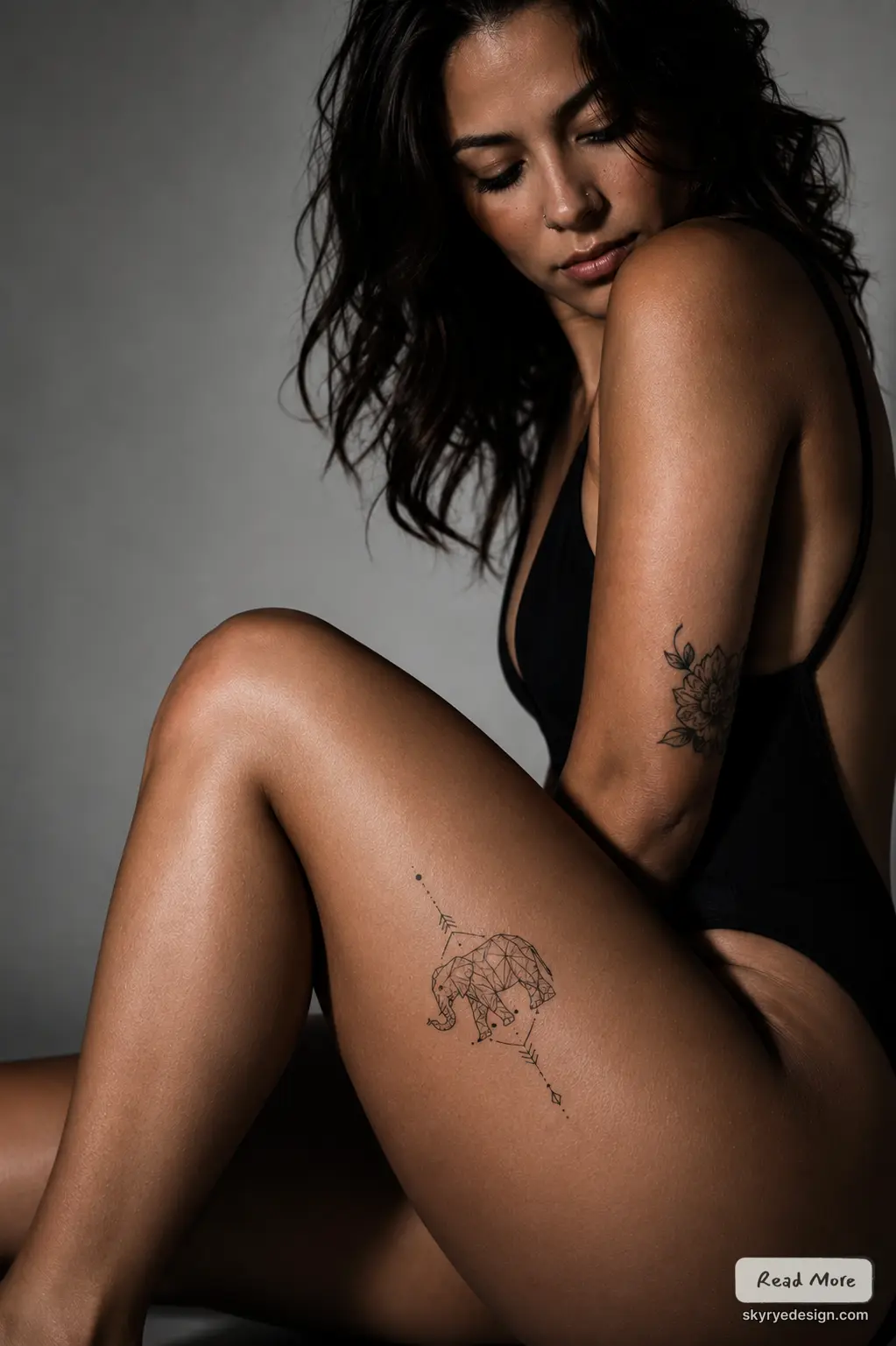
The thigh is the single best placement for large, detailed elephant designs. The surface area is generous, the skin is relatively flat on the outer thigh, and sun exposure is low. Mandala elephant heads, family scenes, and detailed realistic portraits all perform well at thigh scale. The main limitation is concealment: thigh tattoos are only visible in shorts or swimwear, which suits some people perfectly and others not at all.
Back and shoulder blade
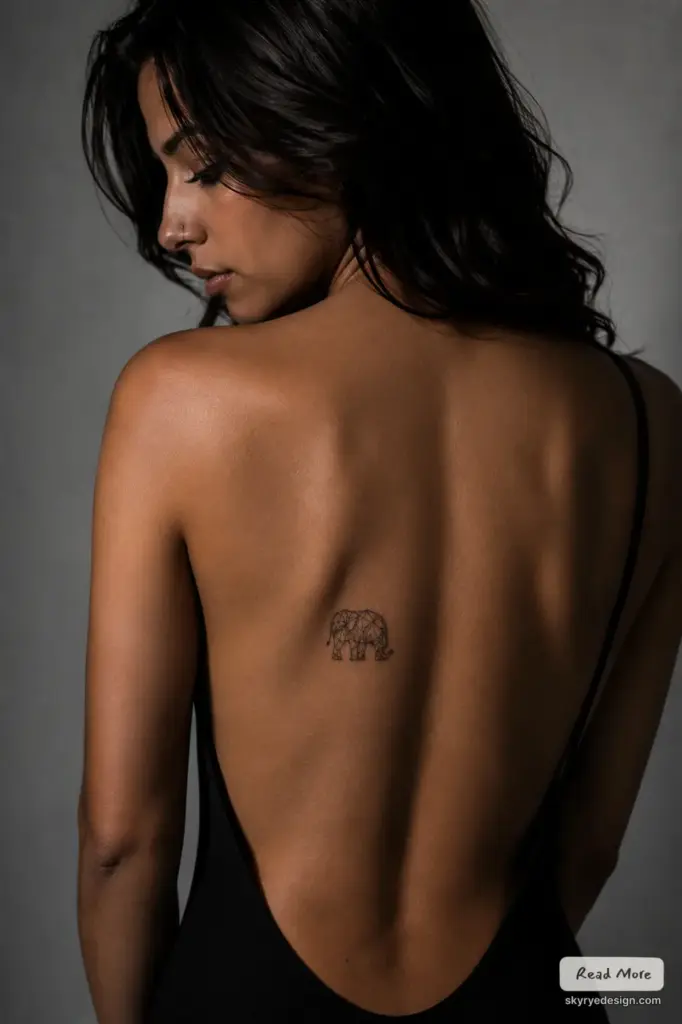
The upper back and shoulder blade give enough canvas for genuinely large compositions: a full elephant portrait with trunk detail and ear spread, or a mandala head with an extended decorative field below. Back placement means minimal daily viewing unless you’re at the beach or gym, which some people prefer (the tattoo is a private thing rather than a public statement).
Small placements: wrist, ankle, behind the ear
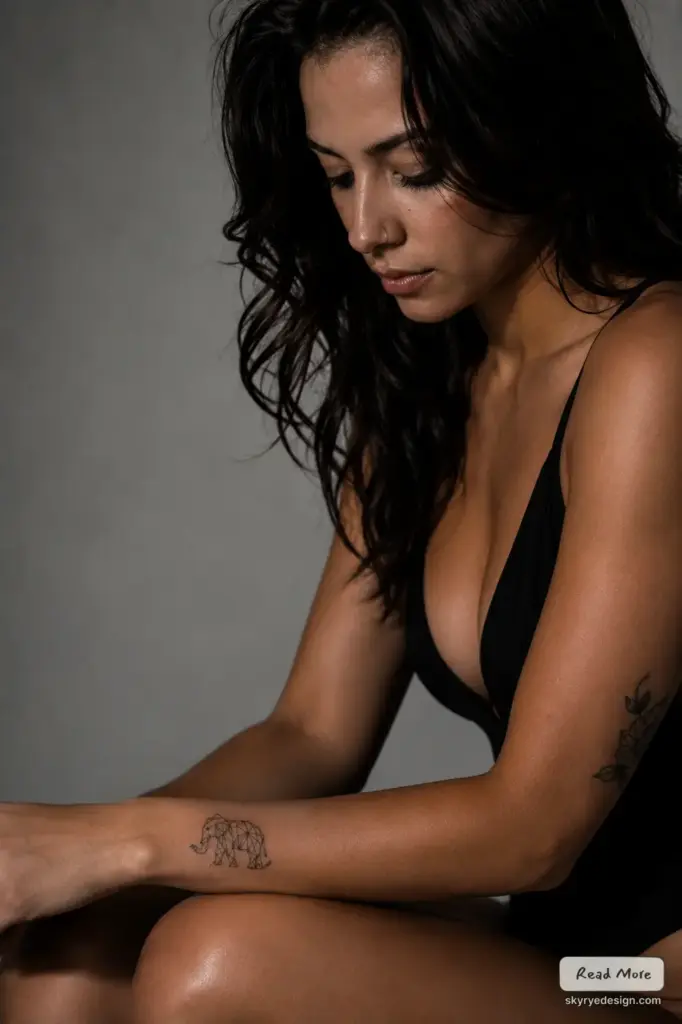
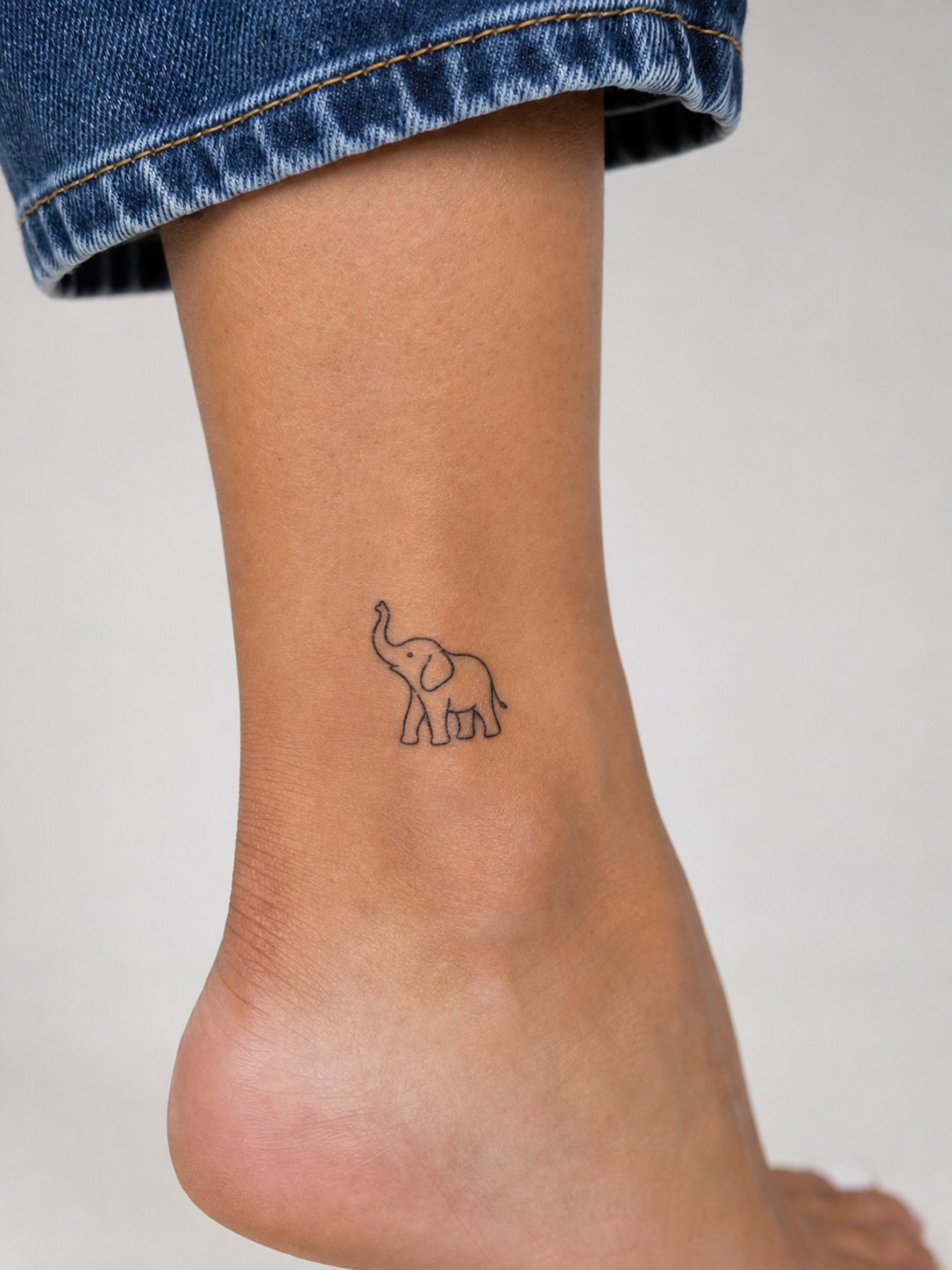
A minimal elephant silhouette works well at wrist and ankle scale, typically 2 to 5cm. The elephant in side view, or a tiny front-facing head with a raised trunk, reads clearly even at small size. Behind-the-ear and back-of-neck placements suit the very smallest designs (1 to 3cm) with maximum simplification.
For all small placements: fine-line work blurs faster in high-movement areas. A bolder outline, even at small scale, will hold its shape significantly better over time than a single-needle sketch.
Before booking: find three examples of your chosen style from the artist’s portfolio that show healed work (not fresh tattoos). Fresh tattoos look sharper and more saturated than healed ones. Healed portfolio images are the honest preview of what you’ll actually live with. Most good artists will provide these on request.
60+ elephant tattoo ideas by theme and style
The ideas below are organized by theme. Each works as a brief for an artist conversation rather than a prescriptive design; your artist’s interpretation is part of what makes the final piece yours.
Realistic and portrait elephant tattoos
1. African bush elephant portrait, facing forward, detailed ear spread, black and grey, thigh placement.
2. Asian elephant with visible tusk and deep-set eye, side profile, photorealistic detail, upper arm.
3. Elephant eye close-up, single large eye with skin wrinkles, emotional realism style.
4. Bull elephant with full tusk display, charging pose, dramatic motion blur effect, back piece.
5. Elephant swimming, just the head above water, serene expression, dotwork shading.
6. Elephant with mahout (rider), traditional working relationship, black and grey portrait style.
7. Baby elephant playing in water, joyful expression, photorealistic approach, forearm. 8. Elephant skull study, anatomical detail, memento mori interpretation.
Geometric and dotwork elephant tattoos
9. Low-poly geometric elephant head built from triangular facets, front view, monochrome.
10. Dotwork elephant profile with dense stippling on the body and sparse dots on the ear.
11. Geometric elephant with sacred geometry overlaid: Metatron’s cube around the head.
12. Line-only wireframe elephant silhouette, 3D-construction drawing aesthetic.
13. Elephant built from interlocking tessellation patterns, no negative space inside the silhouette.
14. Split design: left half geometric wireframe, right half realistic skin texture. 15. Geometric elephant with compass rose incorporated into the forehead. 16. Dotwork mandala elephant with lotus-petal headdress extending up the arm.
Mandala and ornamental elephant tattoos
17. Classic mandala elephant head with symmetrical lotus headdress, black and grey, thigh.
18. Mandala elephant with gold-inspired geometric headdress, colored accents in deep red and gold.
19. Bohemian elephant with layered textile-pattern body, intricate linework throughout.
20. Hamsa hand with elephant incorporated into the palm design.
21. Elephant head with third eye marking on the forehead, spiritual symbolism.
22. Mandala elephant with moon phases arranged above the headdress in an arc.
23. Ganesh-inspired ornamental elephant with multiple decorative arms suggested.
24. Decorative caparisoned elephant as seen in South Indian temple festivals, full ceremonial regalia.
Minimalist and fine-line elephant tattoos
25. Single continuous line drawing of an elephant, no breaks in the line.
26. Tiny elephant footprint outline, ankle placement.
27. Minimalist elephant in profile, five lines maximum.
28. Elephant made from a single brushstroke gesture, ink wash style.
29. Negative space elephant: the body is white inside a black-ink silhouette of something else.
30. Elephant in a geometric frame (circle, triangle, or hexagon).
31. Tiny elephant holding a balloon with its trunk, wrist or behind-ear scale.
32. Abstract elephant where only the trunk and one ear are drawn, rest implied.
Watercolor and illustrative elephant tattoos
33. Watercolor elephant in teal and blue wash with orange splashes of color, no outline.
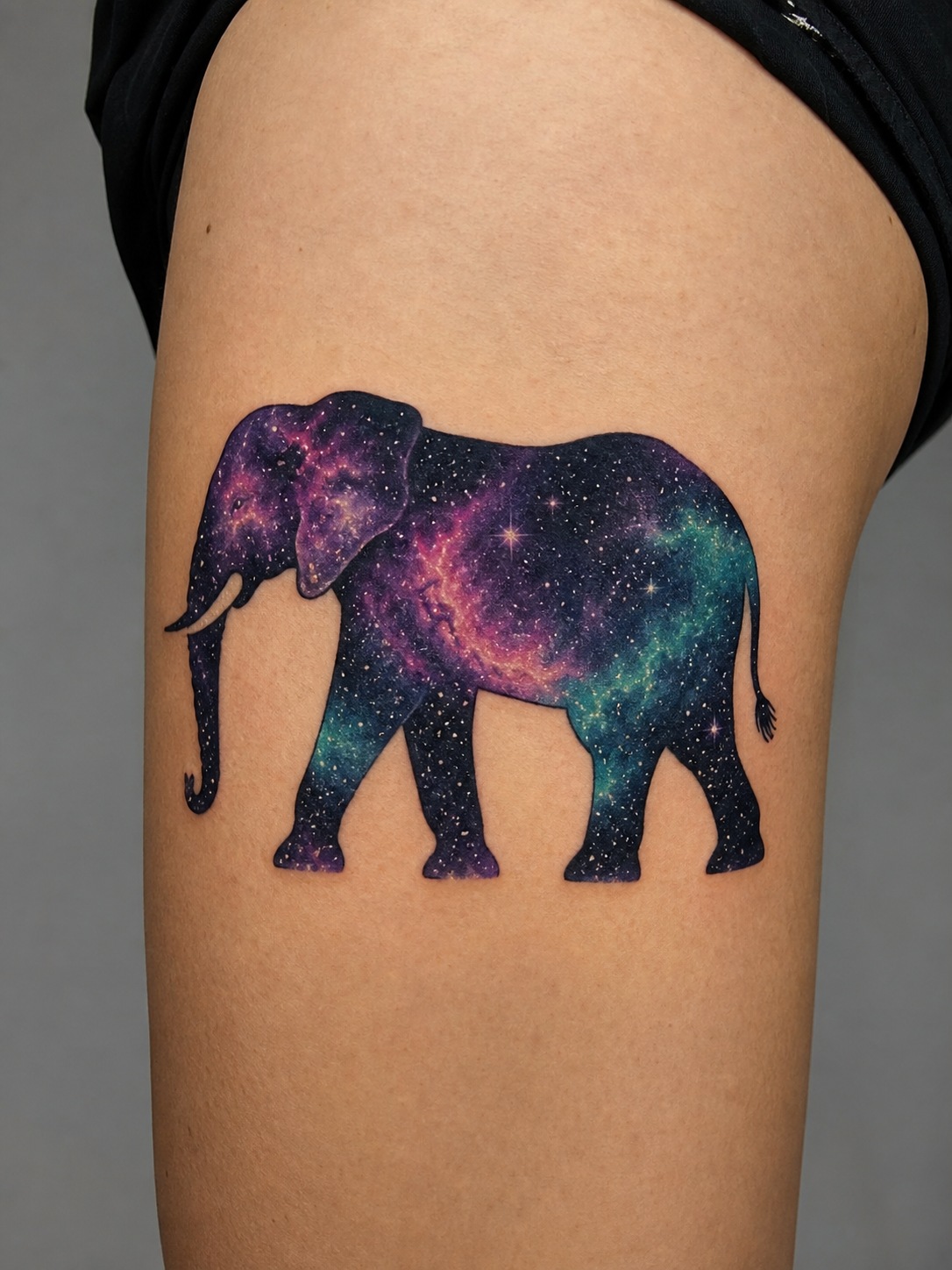
34. Galaxy elephant: the body filled with a starfield, nebula, and planets.
35. Watercolor elephant silhouette with paint drips running downward, vibrant color palette.
36. Storybook-style illustrated elephant with expressive cartoon eyes.
37. Elephant emerging from a watercolor flower garden.
38. Abstract splatter behind a crisp black elephant outline.
39. Elephant with a butterfly on the tip of its trunk, watercolor wings.
40. Ombre elephant shifting from deep navy at the feet to pale violet at the top.
Family and sentimental elephant tattoos
41. Mother elephant with trunk-to-tail connection to a single calf. 42. Elephant family silhouette in line formation, three or four figures, wrist or forearm band format. 43. Elephant footprints trail with small and large prints alternating. 44. Heart formed by a mother and baby elephant’s trunks. 45. Elephant herd silhouette at sunset, back piece or thigh panel. 46. Father elephant and calf back-to-back, matching pair tattoos for two people. 47. Baby elephant inside a teacup or hatching from an egg, whimsical and sentimental. 48. Elephant with a name or date incorporated into the shadow below the feet.
Cultural and spiritual elephant tattoos
49. Ganesha in classical iconographic style with full attribute set, detailed black and grey. 50. Sak Yant elephant (Chang) with Yantra geometric blessings, traditional Thai style. 51. Airavata (the white elephant of Indra), Hindu deity context. 52. Elephant in Adinkra symbol style (West African graphic tradition). 53. Elephant integrated with Hamsa for combined protective symbolism. 54. Ganesh portrait in colored illustration style, vibrant orange and red palette. 55. Buddhist white elephant associated with the birth of the Buddha. 56. Elephant with Sanskrit mantras written along the body.
Abstract and concept elephant tattoos
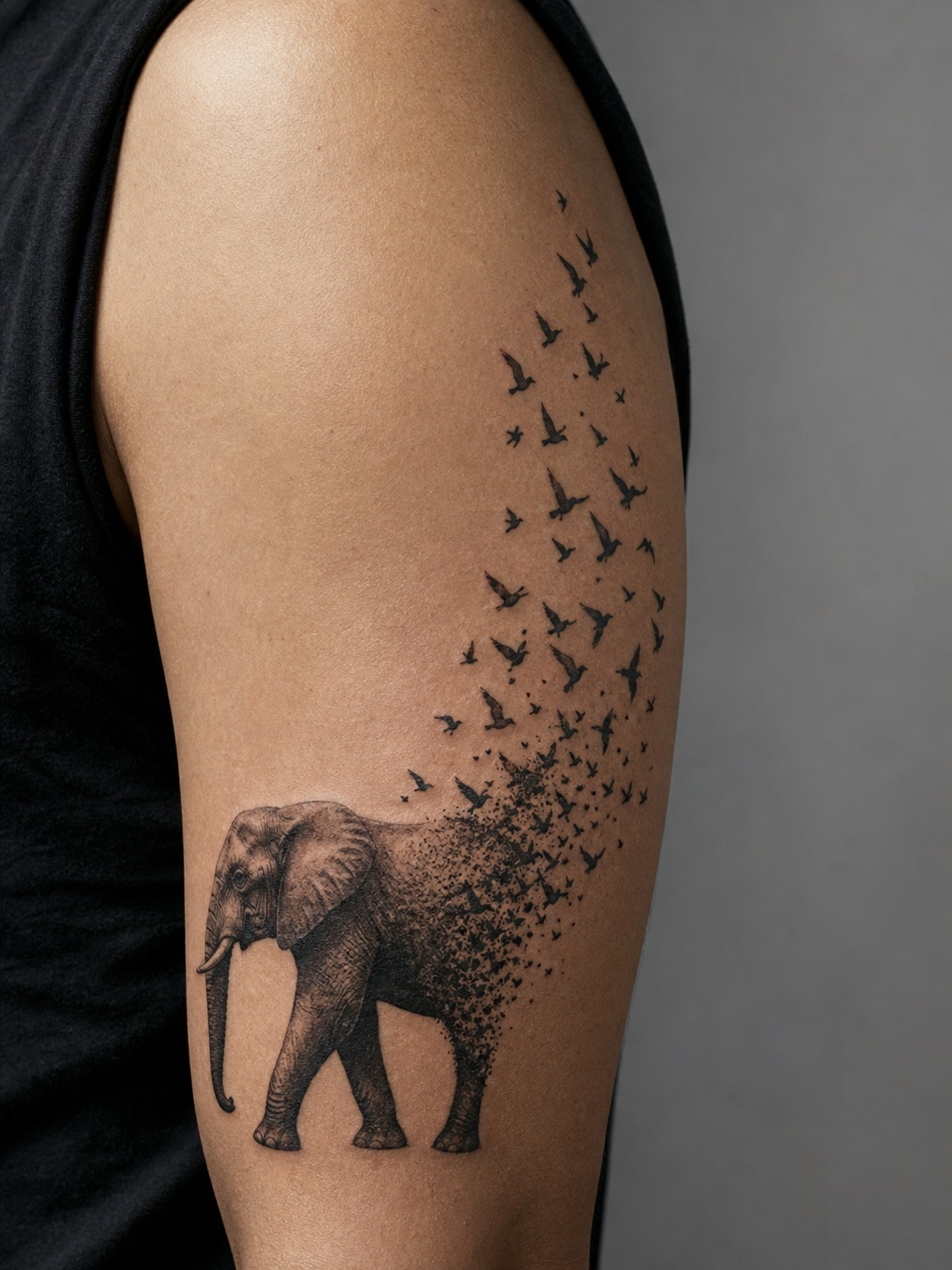
57. Elephant dissolving into birds at the tail end, transformation motif. 58. Elephant made entirely of flowers: body is a dense floral arrangement in silhouette. 59. Elephant skeleton in memento mori style, X-ray aesthetic. 60. Elephant morphing into a tree trunk at the legs, nature continuity concept. 61. Elephant reflected in water, mirror image composition, upper arm. 62. Elephant with origami fold lines visible, paper art aesthetic. 63. Space elephant wearing an astronaut suit, humorous and surreal. 64. Elephant silhouette at sunset as part of a landscape scene, horizon line visible.
Finding the right artist for your elephant tattoo
Style match is the most important factor in artist selection for elephant tattoos. A generalist who does everything competently is rarely the right choice for a highly detailed realistic portrait or a precise mandala piece. Seek artists who have a body of work in your specific style.
For realistic elephant portraits, look for artists whose portfolio shows animal work with complex skin texture. For mandala and ornamental styles, check the precision of their geometric work in healed photographs. For fine-line minimal designs, look for examples of their fine-line work at the scale you’re considering (not their larger pieces scaled down mentally).
Questions to ask before you book
What is their minimum size recommendation for your chosen style? How do they handle touch-ups if the line work softens? Can they show you healed examples of similar work? What are their aftercare recommendations, and do they align with your lifestyle (sun exposure, water activities)?
Price is a real variable. Rates in major cities for experienced artists run from $150 to $300 or more per hour. A detailed realistic portrait taking three to four hours costs $450 to $1,200. A large thigh mandala piece may require multiple sessions across several months. Budget realistically and don’t let price be the primary selection criterion for a permanent piece.
The trunk direction question: in some traditions (particularly South Asian), an upward-pointing trunk brings luck while a downward-pointing trunk does not. Most tattoo artists are aware of this preference and will ask. If this matters to you, state your preference at the design stage rather than after the stencil is drawn.
Making the final decision
An elephant tattoo is a long-horizon choice. The design you choose will look different in ten years and in thirty years, and the meaning you attach to it will evolve alongside your life. The best elephant tattoos I’ve seen are those where the style choice, the placement, and the personal meaning are genuinely aligned rather than assembled from separate decisions made at different times.
Get the design consultation done before you commit to a date. A good artist will produce a sketch or discuss the composition in enough detail that you can fully visualize the finished piece before any needle touches skin. If an artist doesn’t offer this process, or rushes past it, that’s information worth taking seriously.
The elephant carries centuries of symbolic weight across multiple cultures. Whatever meaning you bring to yours, the subject rewards the care put into choosing it well.
Frequently Asked Questions
What does an elephant tattoo mean?
Elephant tattoos most commonly represent strength, wisdom, memory, loyalty, and family. In Hindu tradition Ganesha is associated with removing obstacles and good fortune. In African and Buddhist contexts the elephant represents patience and spiritual understanding. A mother elephant with calves signals family bonds and protective instinct. Your personal meaning is always more specific than any general cultural reading.
Where is the best place to get an elephant tattoo?
The upper arm, forearm, and calf are most popular because they offer enough flat surface without excessive distortion. Larger designs work well on the thigh, back, and chest. Small minimal elephant tattoos fit on the wrist, ankle, and behind the ear. The trunk-down position is considered bad luck in some traditions, so many people request trunk-up designs.
What is a good size for an elephant tattoo?
A small elephant silhouette can work at 2 to 4cm on a wrist or ankle. A detailed portrait with shading needs at least 8 to 12cm to hold fine detail without smearing over time. Mandala-style elephant heads are typically 10 to 20cm to accommodate geometric patterning in the headdress. Ask your artist what minimum size they recommend for your chosen style.
Does an elephant tattoo age well?
Solid-line silhouettes and bold geometric designs age best because thick lines hold their edges over time. Fine-line and single-needle styles fade and blur within five to ten years in high-movement areas. Watercolor-style tattoos without an outline are the highest maintenance and will need touchups within several years. Low sun-exposure placements extend the life of any tattoo.
What style suits an elephant tattoo best?
Realism works well because elephant skin has rich texture and tonal range. Geometric and mandala styles suit the large flat surface of the elephant head. Dotwork produces beautiful trunk and ear texture. Fine-line minimalism suits small placements. Watercolor suits expressive and artistic interpretations. The best style matches both your aesthetic preference and your chosen placement.
Is an elephant tattoo lucky?
In many cultural traditions, yes. In Hinduism Ganesha brings luck and removes obstacles. In Feng Shui a raised-trunk elephant at a doorway is said to attract good fortune. Many people choose elephant tattoos specifically for these associations. The trunk-up position is the one most consistently associated with luck across different cultural traditions.
How much does an elephant tattoo cost?
A small simple outline on the wrist or ankle typically costs $80 to $200. A detailed forearm piece with shading runs $300 to $600. A large mandala elephant back piece can cost $1,000 to $3,000 or more across multiple sessions. Prioritize artist quality over price for any permanent design and factor in a 20% tip for work you’re happy with.
Adding a lush, botanical ivy vine tattoo wrapping around the elephant’s frame can highlight deep connections to the wild and enduring strength.
For more related styles and placement inspiration, browse the Sky Rye Design tattoo ideas hub.
In some styles, elephants are paired with other spiritual symbols. If you want to expand your design, understanding the lotus flower tattoo meaning can help balance the piece.
- 353shares
- Facebook0
- Pinterest353
- Twitter0
- Reddit0