The first apartment I redesigned in Dubai had floor-to-ceiling windows facing south-west. Incredible view. Also an absolutely brutal amount of afternoon sun.
The previous tenant had installed dark beige roller blinds that, technically speaking, worked. They blocked the light. They also managed to make the whole apartment feel strangely lifeless, like somebody had converted a storage room into a living room and called it minimalism.
- Why Dubai’s Climate Makes This Decision Different
- The Design Decisions That Actually Matter
- Layering: The Technique That Separates Good From Great
- Room by Room: What Changes and What Stays the Same
- Hardware and Finishing Details
- Energy Efficiency: The Practical Case
- FAQ: Blackout Curtains in Dubai
- What makes blackout curtains different from regular curtains in Dubai?
- How high should I hang blackout curtains in a Dubai apartment?
- What is the best fabric for blackout curtains in Dubai?
- Do blackout curtains help reduce electricity bills in Dubai?
- How do I layer blackout curtains with sheer curtains in a Dubai home?
- What curtain hardware works best for modern Dubai interiors?
- Are custom-made blackout curtains worth the cost in Dubai?
I still remember walking in around 4 PM thinking: why does this place feel so depressing when the view is this good?
We pulled the blinds out and replaced them with ceiling-hung blackout curtains in a soft textured fabric, layered with ivory sheers. Same floor plan. Same view. Completely different room. Suddenly the windows felt intentional instead of harsh. The light softened. The space felt expensive in that quiet, calm way good interiors do.
That’s the part people miss with blackout curtains in Dubai.
Most people treat them like a problem-solving purchase. Block heat. Stop glare. Sleep better. And yes, with Dubai sun blasting through glass half the year, function matters. A lot.
But if you stop there, you usually end up with curtains that work perfectly and somehow make the room feel worse.
Good blackout curtains do two jobs at once. They handle the heat and light, but they also shape the room visually. Done right, they look like they were always meant to be there — not an afterthought ordered because the bedroom got too hot in August.
Why Dubai’s Climate Makes This Decision Different
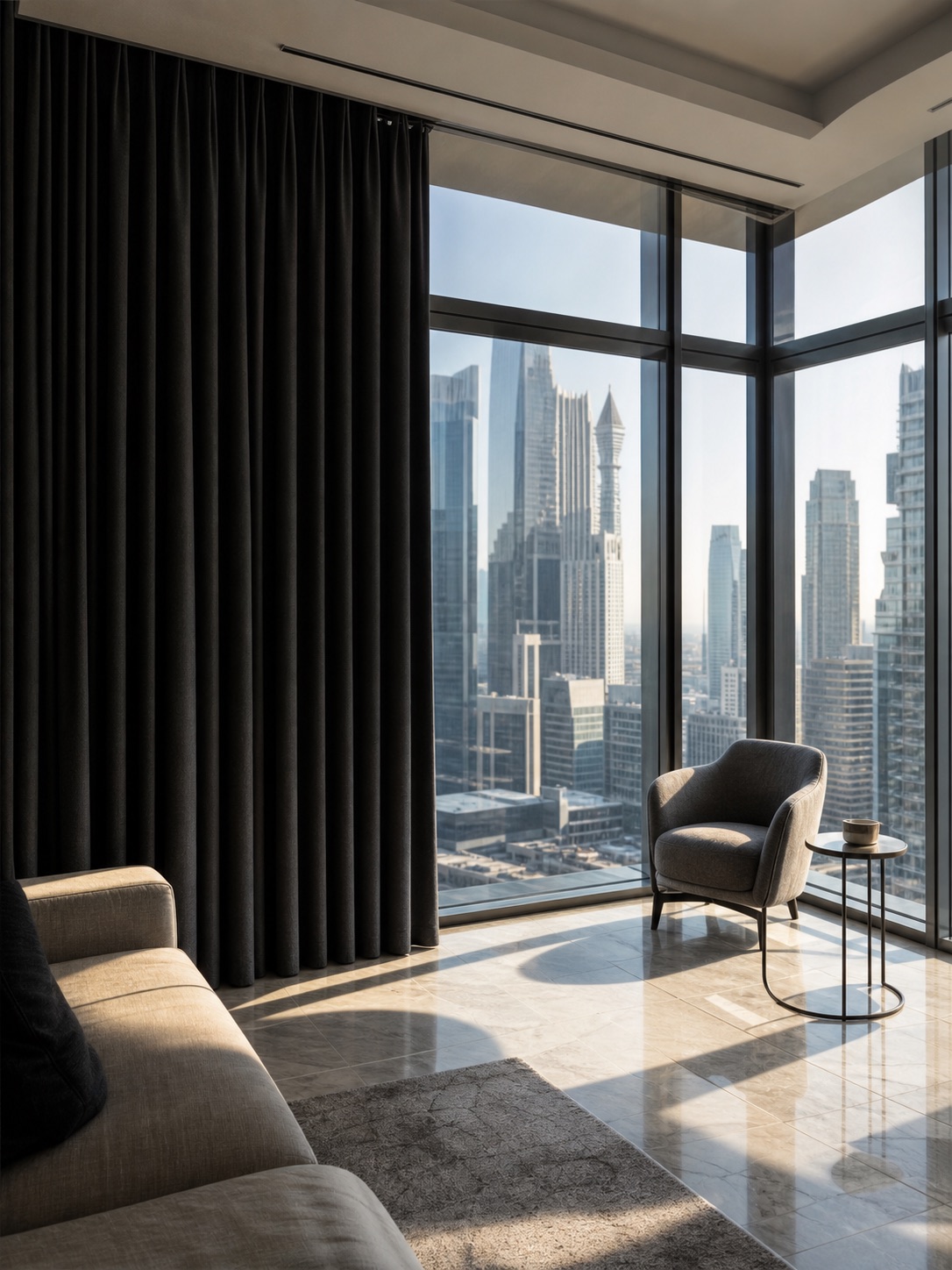
Most interior design advice about curtains is written for temperate climates where windows are a source of pleasant natural light most of the year. Dubai is a different situation. From May through September the sun rises before 6am and stays intense well past 7pm. UV levels are high enough to visibly fade upholstery, artwork, and flooring within a few years of exposure. Afternoon rooms facing west or south-west can reach temperatures that make air conditioning work significantly harder.
Blackout curtains in Dubai aren’t a luxury upgrade in the way they might be in London or Berlin. They’re a practical necessity that happens to also be a design opportunity. The thermal lining blocks solar heat gain, the full light block creates genuine darkness for sleep regardless of season, and the noise reduction matters in a city that builds continuously and has a lot of road traffic near residential buildings.
The design opportunity is real too. Blackout curtains Dubai homes use have evolved well beyond the heavy, institutional fabric that defined the category for years. Today’s options include velvet with deep colour saturation, linen-look fabrics with a soft natural handle, and silk-effect materials that reflect evening light beautifully. Getting the styling right means the curtains earn their place in the room rather than just occupying it.
The Design Decisions That Actually Matter
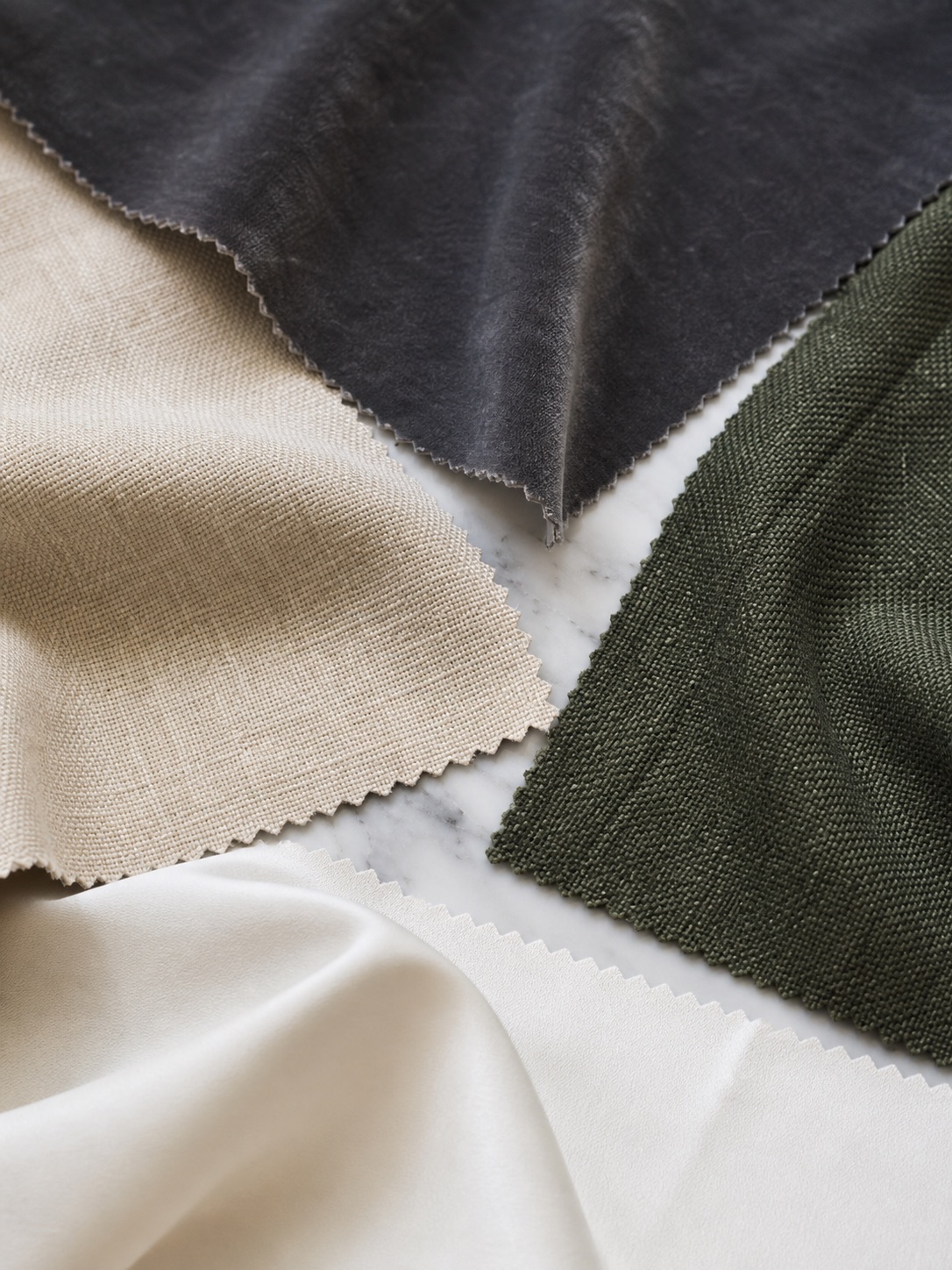
Before you look at a single product, three decisions determine whether your curtains will look designed or accidental: color, height, and fabric weight. Get these right and everything else follows.
Color: how to read your room before choosing
The most common mistake is choosing a curtain color in isolation. The right approach is to look at your room’s existing palette and identify what it needs — either a tonal match that quiets the space, or a considered contrast that gives the room a focal point.
For rooms with a lot of visual activity — patterned rugs, bold artwork, textured wall treatments — neutral curtains in warm white, soft grey, or sandy beige let everything else breathe. These shades also complement the marble floors, natural stone surfaces, and neutral wall paint that dominate Dubai’s modern residential aesthetic.
For rooms that are predominantly neutral and need character, a deeper curtain color is the design move. Forest green, navy, dusty terracotta, and warm charcoal all work well in Dubai interiors because they have enough weight to read as intentional against the clean lines of contemporary architecture. These colors also photograph well — relevant if you’re staging a property for rental or sale.
Height: the detail that changes everything
Hang the rod at ceiling height. Not window height. Not halfway up the wall. As close to the ceiling cornice as possible, ideally 10–15 cm below the ceiling line. This is the single most impactful thing you can do for the proportional quality of a room, and it costs nothing extra.
Let the fabric fall to the floor with a small break — about 1–2 cm resting on the floor — or a gentle pool of 5–10 cm if the fabric has enough weight to hold it cleanly. Both looks are intentional and both feel more designed than curtains that stop dead 2 cm above the floor, which reads as a measurement error.
In Dubai apartments with 3-metre or higher ceilings, this approach makes the room feel significantly more spacious. For the floor-to-ceiling windows common in newer developments, the curtain should track the full height of the glass with no gap at the top.
Fabric weight: matching material to room function
Heavy velvet with blackout lining is the bedroom standard for good reason. It creates complete darkness, adds thermal mass, and reduces ambient noise. The visual effect is rich and enveloping — appropriate for a room where the goal is rest and retreat.
Linen-look blackout fabrics suit living rooms and open-plan spaces better. They have enough body to hang well and block light effectively while reading as lighter and more relaxed than velvet. They also photograph with a texture that feels current in contemporary design.
Silk-effect blackout fabrics are the choice for formal reception rooms or master bedrooms in villa settings where the curtain is meant to be a luxury statement. The light reflection during evening hours when the panels are open adds a level of visual interest that plain fabrics don’t achieve.
Layering: The Technique That Separates Good From Great
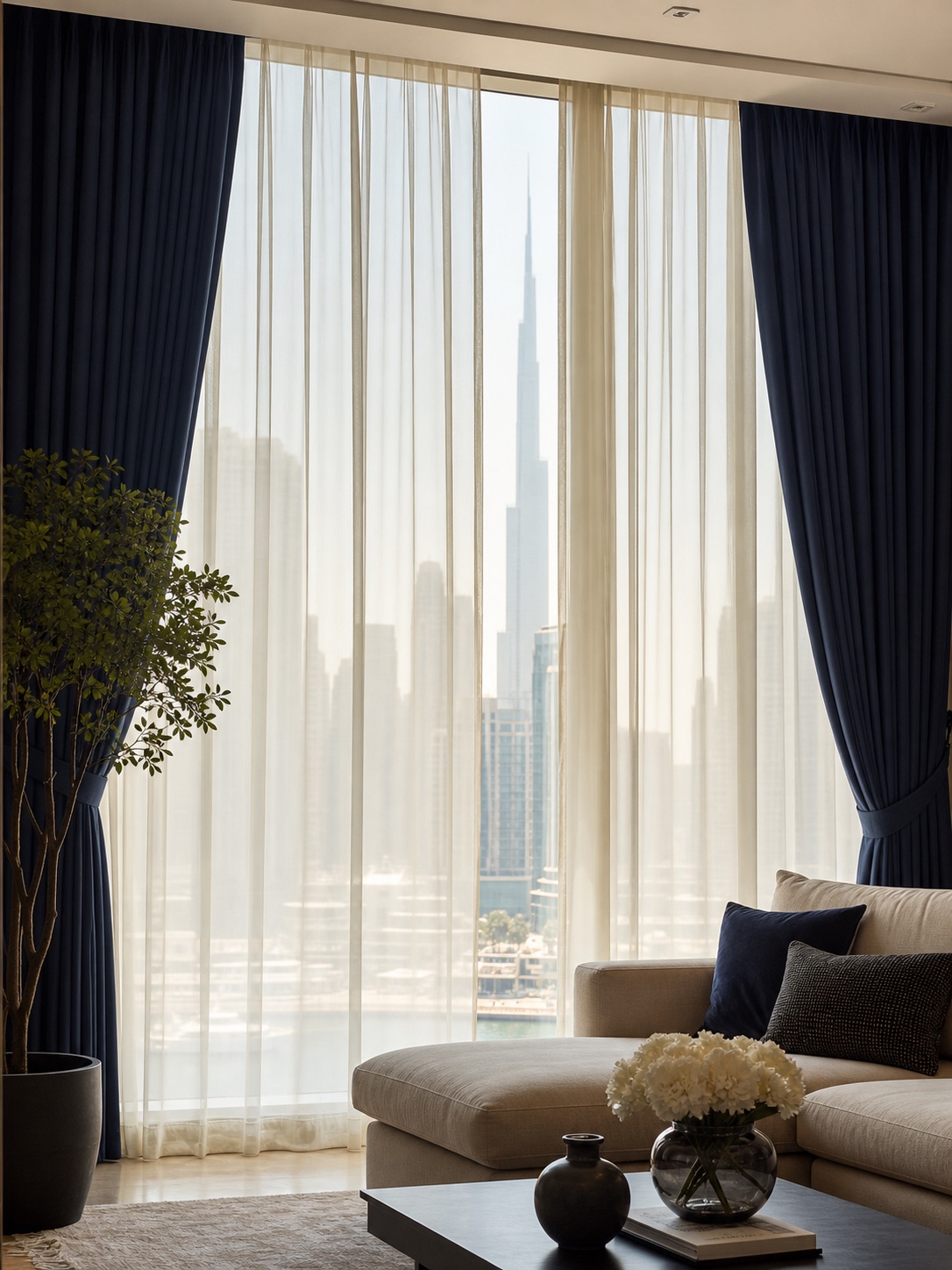
Single-layer blackout curtains solve the light problem but don’t address the daytime design problem. When the blackout panels are drawn open during the day, you’re left with a bare window or a bulky stack of fabric at the side. The layered approach fixes this and elevates the whole window treatment significantly.
The system is straightforward: a double rod or double-track setup with sheer curtains closest to the glass and blackout panels on the outer layer. During the day, the blackout panels stack at the sides and the sheers filter the light into something soft and diffused — much more pleasant to live with than either harsh direct sun or a completely dark room. In the evening, or when you need full darkness, the blackout layer closes.
For the sheer layer, sheer curtains Dubai rooms typically use tend toward crisp white or warm ivory in a linen-look weave. This keeps the palette clean and ensures the sheer reads as a considered part of the window treatment rather than an afterthought. Avoid coloured sheers unless you have a very specific palette reason — they date quickly and make the window feel heavier than it needs to.
The layered approach is also the most practical solution for Dubai’s light conditions. You get a beautiful, softly lit room during work hours and complete darkness when you need it, without having to choose between the two.
Room by Room: What Changes and What Stays the Same
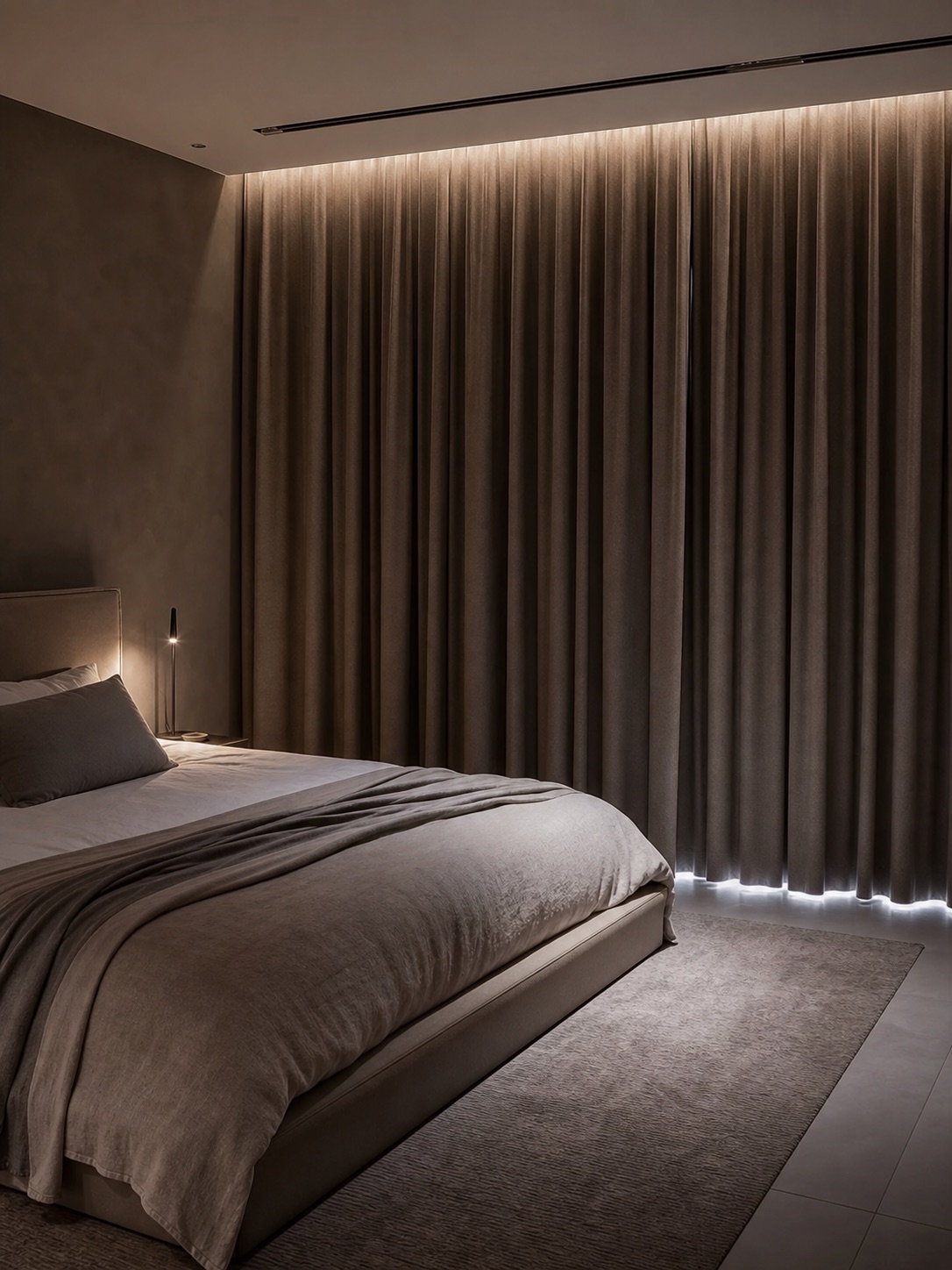
The design principles — ceiling height, floor length, quality lining — apply in every room. What changes is the fabric choice, the color weight, and how much visual complexity the curtain should carry.
Bedroom
Complete darkness is the priority here, and it’s a genuine sleep quality issue in Dubai where summer mornings begin before 6am. Heavy velvet or a structured blackout fabric in a calm color — soft grey, warm white, dusty blue, or muted sage — creates a room that feels designed for rest. Avoid pattern in bedrooms unless it’s very subtle. The bedroom curtain should be the quietest element in the room.
Living room
More creative freedom here. The living room curtain can carry more visual weight — a deeper color, a more textured fabric, even a subtle tone-on-tone pattern if the rest of the room is calm. Linen-look or silk-effect blackout fabrics work particularly well in living rooms because they catch the quality of evening light nicely when the panels are open. The layered approach with sheers is most valuable in living rooms where you want the space to feel open and connected during the day.
Home office
Screen glare and afternoon heat are the practical problems to solve. A clean, undecorated blackout curtain in a neutral tone keeps the space visually quiet so the room stays conducive to focus. The curtain should be functional-first here — nothing too decorative that competes for attention during working hours.
Children’s rooms
Children sleep significantly better in complete darkness, and the additional sound insulation from a heavy blackout fabric helps during daytime naps. The design approach can be slightly more playful — a soft dusty pink, a muted teal, or a warm terracotta — while keeping the fabric clean and unpatternated so the room doesn’t feel visually busy.
Hardware and Finishing Details
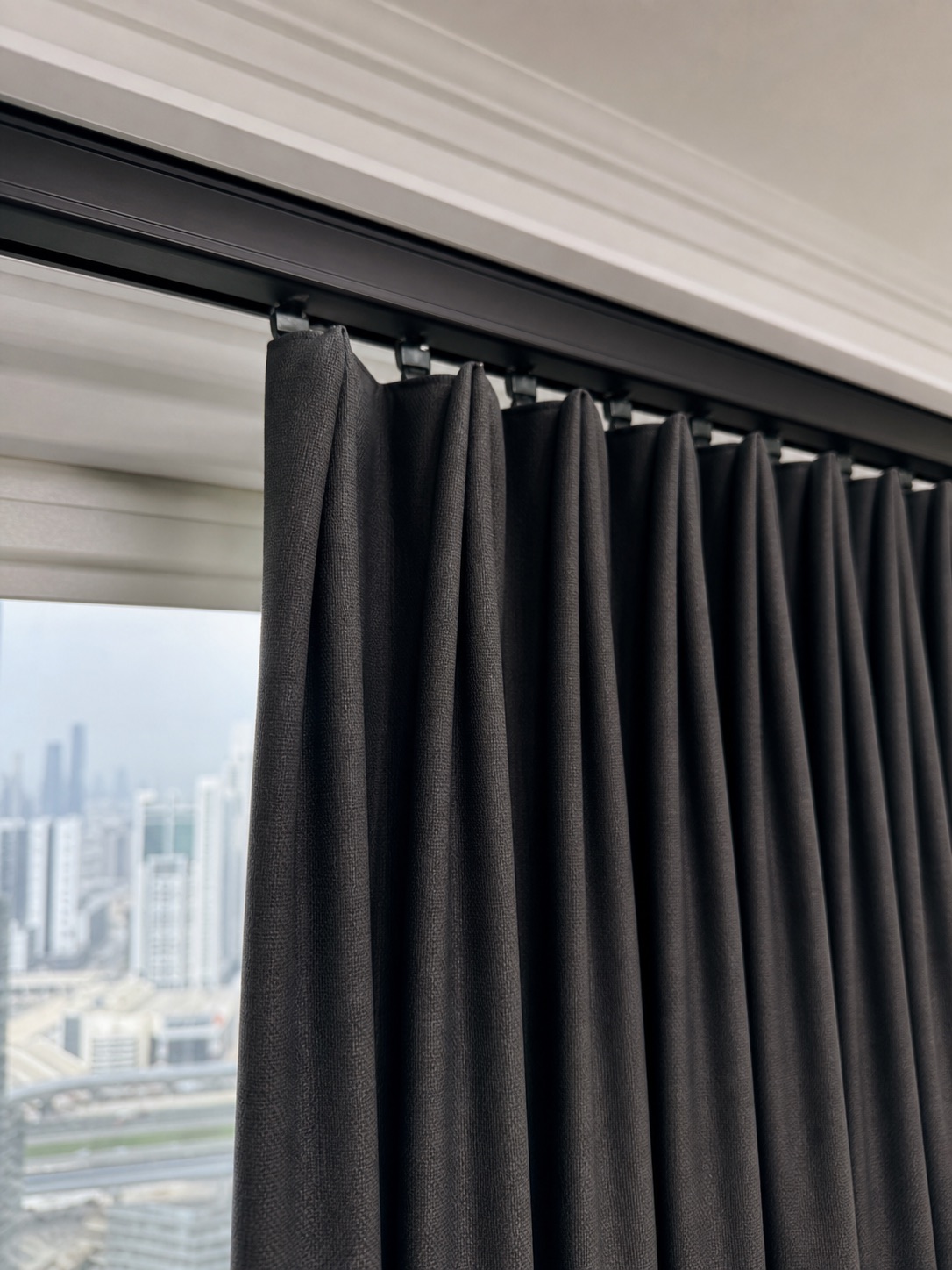
The rod and hardware are the frame around the curtain. Wrong hardware undermines a good fabric choice immediately.
For contemporary Dubai interiors, matte black and brushed gold are the two finishes that read correctly against the clean architectural lines of modern apartments and villas. Matte black suits cooler palettes and spaces with black window frames or dark accents. Brushed gold works better in warmer interiors with marble, natural timber, or cream and sand tones.
Avoid polished chrome (feels dated), antique bronze (too traditional), and ornate finials (wrong scale for contemporary rooms). The rod should read as architectural, not decorative.
Extend the rod 15–20 cm beyond the window frame on each side. When the curtains are open, this ensures the fabric stacks beyond the glass entirely, letting in the full view and maximum light without any panel obscuring the window. It also makes the window appear wider than it is — a proportional benefit in rooms where the window is narrower than ideal.
For heading style: eyelet curtains give a relaxed, even hang that works well in living rooms and open-plan spaces. Pinch pleat reads more structured and formal — better for bedrooms and reception rooms where you want more precision in the drape. Both styles work in Dubai’s modern residential context depending on the formality of the room.
Energy Efficiency: The Practical Case
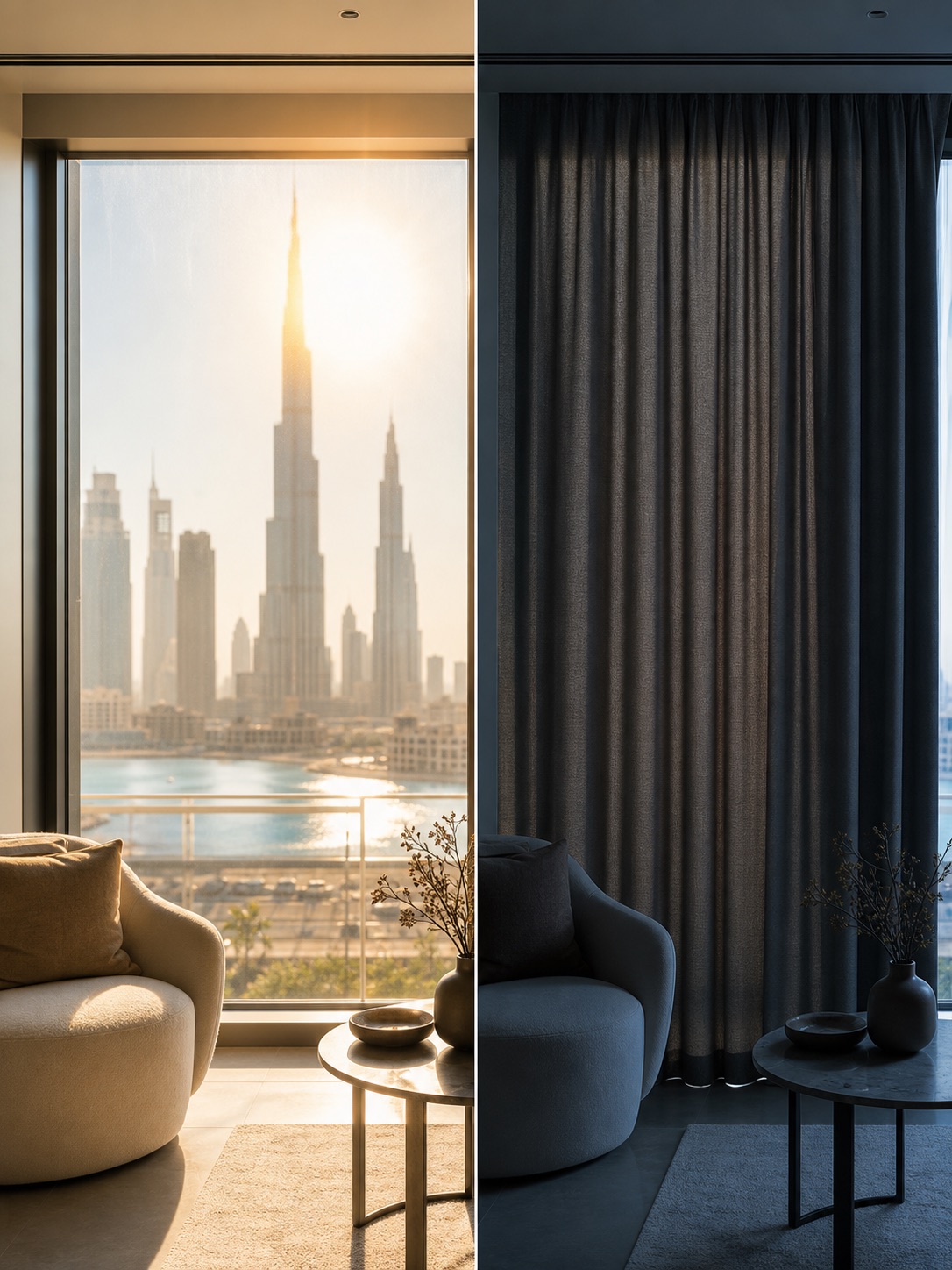
Dubai’s electricity consumption peaks in summer months and air conditioning accounts for the majority of residential energy use. Blackout curtains with proper thermal lining act as an insulating layer at the window — the point where the most solar heat enters a building. By blocking that heat before it reaches the interior, they reduce the temperature differential the air conditioning has to manage.
This isn’t a marginal effect. A west-facing room in a Dubai apartment in July without thermal window covering can be 4–6 degrees Celsius warmer than the same room with properly lined blackout curtains closed during peak afternoon hours. That temperature difference translates directly into compressor running time and electricity consumption.
For properties being designed for rental or eventual sale, the combination of blackout and sheer curtains also signals considered design and practical comfort to prospective tenants and buyers — a detail that has measurable impact on premium rental properties where tenants compare multiple options.
For a bedroom-specific version of this design problem, use these blackout curtains for a shared bedroom to balance lighting, bedding, wall decor, storage, and shared taste without making the room feel generic.
FAQ: Blackout Curtains in Dubai
What makes blackout curtains different from regular curtains in Dubai?
Blackout curtains have a specialist lining that blocks 99% of incoming light and acts as a thermal barrier. Regular curtains, even dark-coloured ones, allow heat and UV to pass through. In Dubai’s climate the difference is significant: blackout lining reduces room temperature, protects furniture from UV fading, and creates complete darkness regardless of the sun’s intensity outside.
How high should I hang blackout curtains in a Dubai apartment?
As close to the ceiling as possible — ideally 10–15 cm below the ceiling line. Let the fabric fall to the floor with a small break at the base. This elongates the wall visually, makes ceilings appear higher, and creates the hotel-style finish common in Dubai’s better-designed interiors. Hanging at window height rather than ceiling height is the most common mistake.
What is the best fabric for blackout curtains in Dubai?
Heavy velvet for bedrooms where thermal insulation and complete darkness are priorities. Linen-look fabric for living rooms where a lighter feel suits the open-plan layout. Silk-effect for formal reception rooms where light reflection during evening hours adds visual interest. Always verify the curtain has a dedicated blackout lining rather than just a dark outer fabric.
Do blackout curtains help reduce electricity bills in Dubai?
Yes. By blocking solar heat gain, blackout curtains reduce the cooling load on air conditioning. During peak summer months a properly lined blackout curtain on a west-facing window can reduce room temperature by 4–6 degrees Celsius, which meaningfully lowers compressor running time and electricity consumption.
How do I layer blackout curtains with sheer curtains in a Dubai home?
Use a double rod or double-track system. Hang sheer curtains closest to the glass and blackout panels on the outer layer. During the day the blackout panels stack to the side and the sheers diffuse the light softly. In the evening close the blackout layer for complete darkness and privacy. Choose a crisp white or ivory linen-look sheer to keep the palette clean.
What curtain hardware works best for modern Dubai interiors?
Matte black and brushed gold rods suit contemporary Dubai apartments and villas. Avoid ornate finials which clash with clean architectural lines. Extend the rod 15–20 cm beyond the window frame on each side so curtain panels clear the glass completely when open, preserving the view and the light.
Are custom-made blackout curtains worth the cost in Dubai?
For floor-to-ceiling windows, unusual dimensions, or specific fabric and lining combinations, custom-made is usually worth it. Ready-to-hang options work for standard sizes but rarely achieve the same quality of drape and fit. Custom curtain services are available in Al Quoz, Downtown Dubai, and Jumeirah with lead times typically one to three weeks.
Start with one room. Get the height right, the fabric right, and the layering right. Everything else is a variation on those three decisions.
Curtains solve light control, but the wall finish controls much of the room’s softness and depth. For that layer, see the guide to wallpaper and textured wall finishes.
- 11shares
- Facebook0
- Pinterest11
- Twitter0
- Reddit0