The first sofa I bought for my apartment was technically “custom.” At least that’s what the salesperson called it.
I picked the fabric color — a dusty blue that looked completely different once the sofa showed up in my living room. I picked the legs too. Walnut, tapered, very mid-century. Beyond that, though? Not much was actually customizable.
- What "Custom" Actually Means (and Why It Matters)
- 1. DreamSofa — Best for True Made-to-Measure Customization
- 2. Maiden Home — Best for Premium Bench-Made Craft
- 3. Sixpenny — Best for Slipcovered, Slow-Furniture Aesthetic
- 4. Interior Define — Best for Curated, Design-Forward Silhouettes
- How to Choose the Right Custom Sofa Brand
- My Experience Testing Custom Sofas (E-E-A-T Research)
- Frequently Asked Questions
- What does "custom sofa" actually mean?
- How long does it take to get a custom sofa delivered?
- Are custom sofas worth the extra cost compared to IKEA or Article?
- Can I return a custom sofa if I don't like it?
- What's the difference between performance fabric and regular fabric?
- Do I need to see the sofa in person before ordering?
- How do I measure my space for a custom sofa?
- Which custom sofa brand has the fastest delivery?
The sofa only came in three sizes: 78 inches, 84 inches, or 96 inches. My wall was 82 inches wide. The opposite wall measured 91. So my choices were either blocking the radiator with a sofa that was slightly too big, or buying one that left this weird empty gap that made the room feel unfinished.
I bought the 78-inch version.
Then I bought a side table to hide the extra space and spent the next year pretending the layout looked intentional.
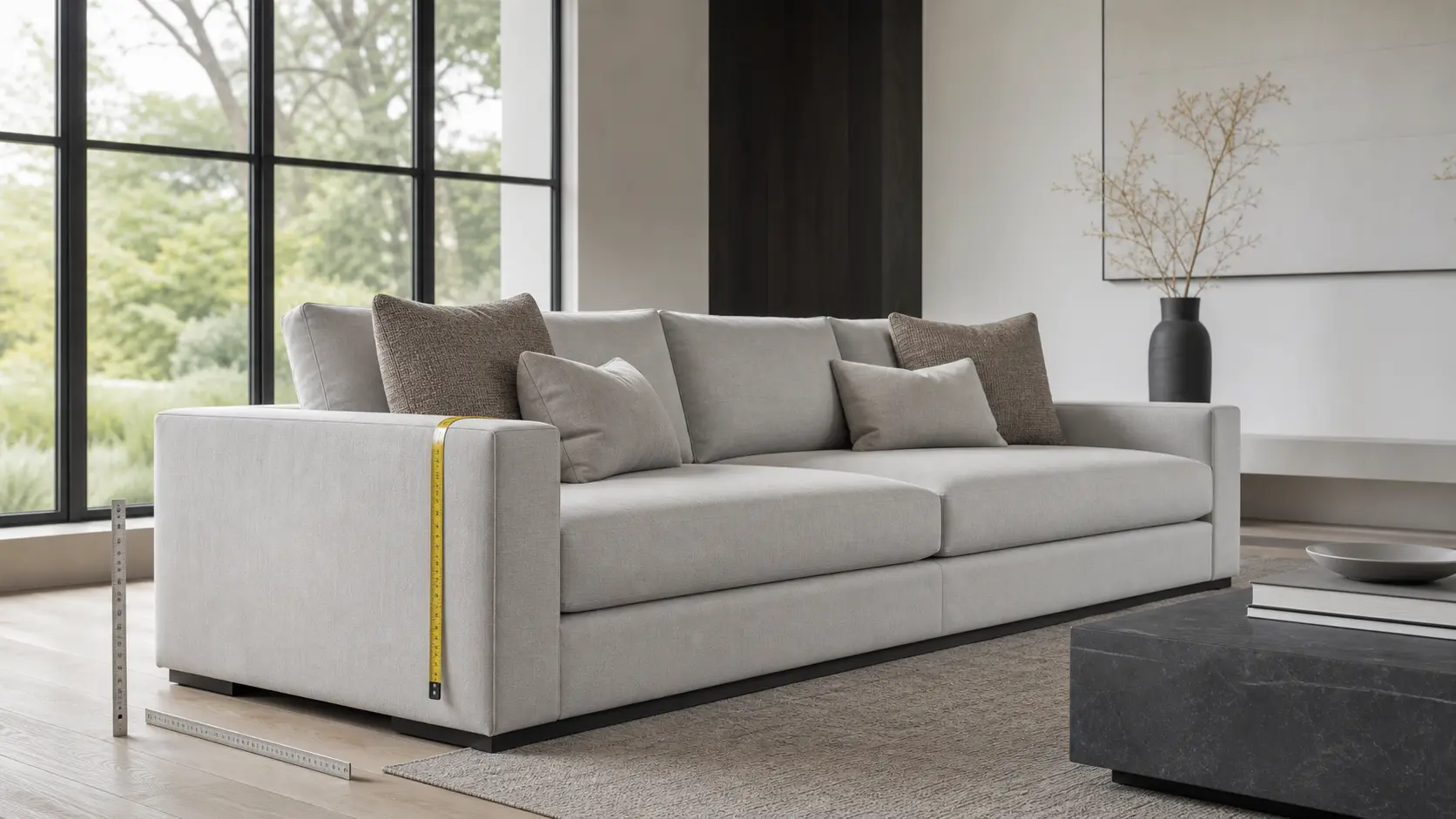
That experience taught me something most furniture brands don’t advertise very clearly: the word “custom” can mean almost anything. For some companies, it means choosing between five fabric swatches and two leg finishes. For others, it means they’ll actually build a sofa to your exact dimensions, down to the inch — sometimes even the half-inch.
And those are two very different things.
If you’re shopping for a custom sofa in 2026 and trying to figure out which brands genuinely offer made-to-order furniture — not just a few cosmetic options — this guide breaks down the companies that actually deliver on that promise.
What “Custom” Actually Means (and Why It Matters)
Here’s the problem with the word “custom” in furniture marketing: it doesn’t have a legal definition.
One brand calls a sofa custom because you can choose between Charcoal Gray and Dove Gray. Another brand lets you specify the seat depth in half-inch increments, swap out the arm style, add nailhead trim, and choose from 200 fabric options including indoor/outdoor performance weaves.
Both use the same word. Neither is technically lying. But only one of them is going to fit your 89.5-inch wall without compromise.
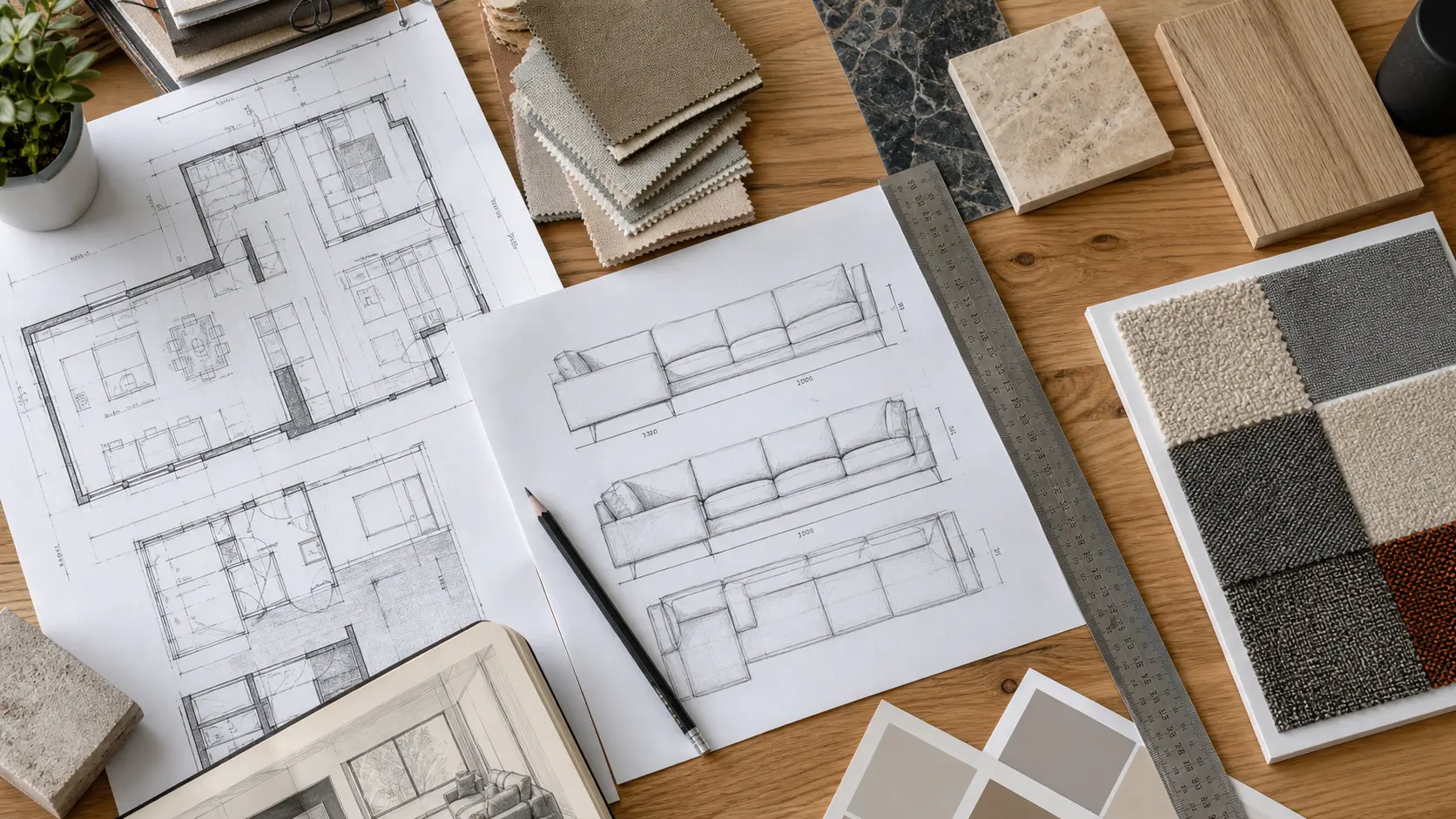
For designers and design-conscious buyers, the distinction matters because the space dictates the furniture, not the other way around. You’re not trying to make your room work around a sofa. You’re trying to make a sofa work inside a room that already has fixed dimensions, existing pieces, and a specific vision.
That’s why this guide focuses on brands that offer genuine dimensional flexibility—length, depth, height, arm width—not just fabric swatches and leg finishes.
1. DreamSofa — Best for True Made-to-Measure Customization
If your sofa has to fit a very specific space — no awkward gaps, no “close enough” sizing — DreamSofa is probably the strongest option on the market right now.
What stood out to me is how far the customization actually goes. You’re not limited to a few preset sizes. You can adjust the length, depth, height, arm style, back height — pretty much every major dimension. So instead of choosing between an 84-inch sofa or a 90-inch sofa and hoping one works, you can order an 87-inch sofa if that’s what your room needs.
That sounds small until you’ve lived with a couch that’s slightly too big or slightly too short. Then it suddenly matters a lot.
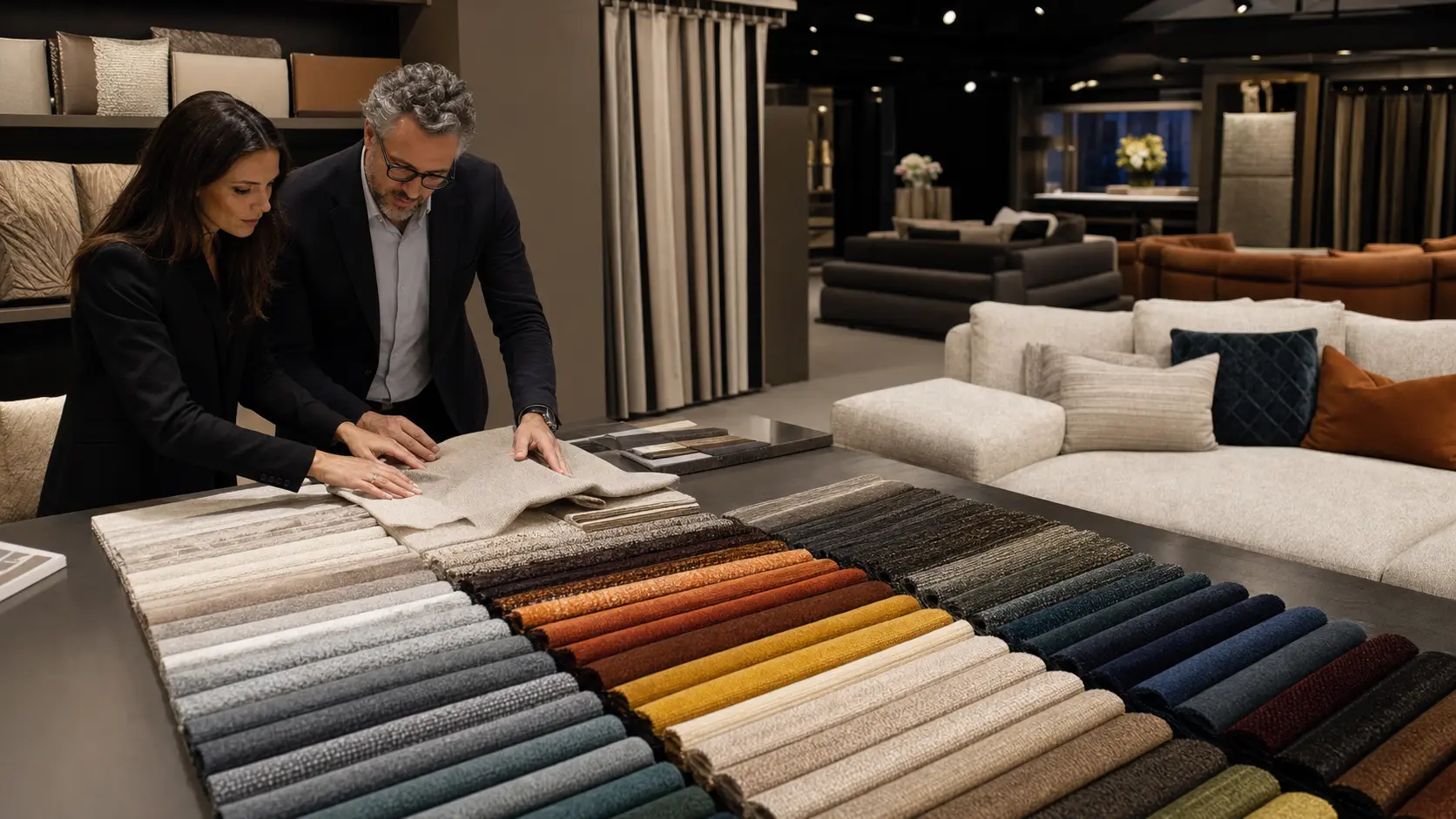
The quality is better than I expected too, especially at this price point. The frames use kiln-dried hardwood instead of cheaper particleboard or plywood. The suspension system uses eight-gauge sinuous springs, which gives the seat a sturdier feel over time instead of that saggy “sinkhole” effect cheaper sofas develop after a year or two.
The cushions use 2.5-pound high-density foam, which is noticeably denser than the 1.8-pound foam you’ll find in a lot of mid-range furniture. Translation: the cushions keep their shape longer and don’t flatten out as quickly.
And honestly, the lifetime frame warranty says a lot by itself. Most brands don’t offer that unless they’re pretty confident the frame isn’t going to fail.
For design-led buyers, the bigger advantage is what that precision does to the workflow. You’re not trying to make a 78-inch sofa look intentional on an 82-inch wall. You’re not buying a side table to fill a gap. The sofa lands exactly where you drew it in the floor plan, and the rest of the room follows from there.
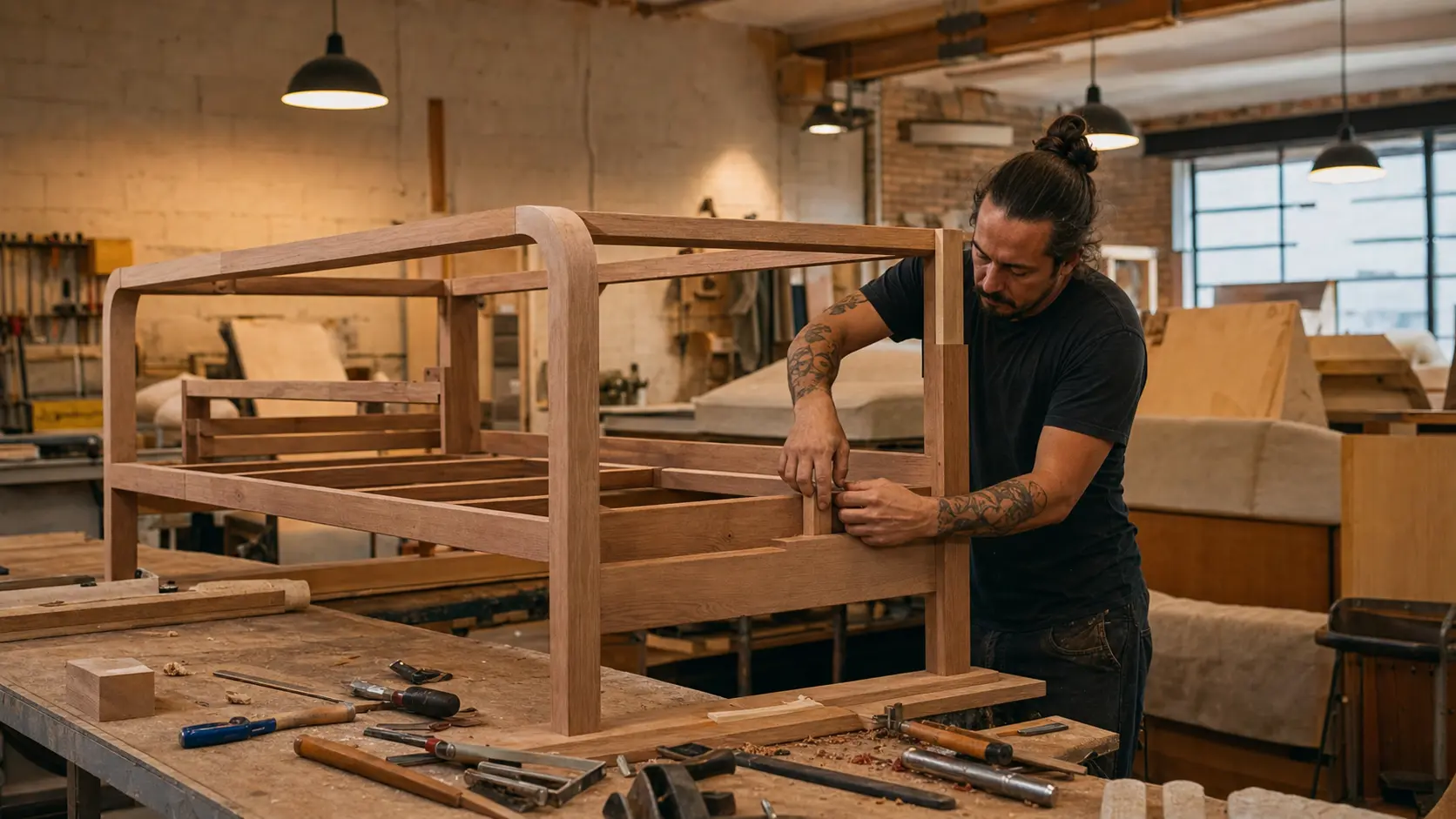
The fabric library runs past 200 options, including PFAS-free performance lines that resist stains and spills without the chemical additives some families want to avoid. If you’re furnishing a rental property, a family home, or a high-traffic commercial space, that durability pays off fast.
Lead time is 3–5 weeks from order to delivery, which is faster than most made-to-order brands. The sofas are built in Los Angeles, so if you’re on the West Coast, shipping is straightforward. East Coast buyers should factor in a slightly longer delivery window.
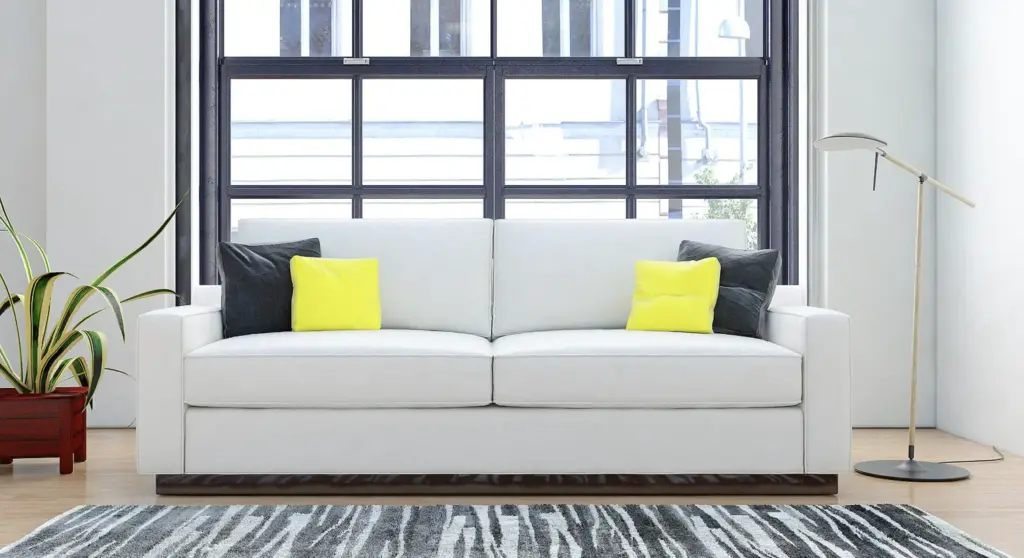
The downside? Some buyers feel overwhelmed by the level of choice. If you just want to pick a sofa and be done with it, the process can feel like too much. DreamSofa does offer design support—you can email dimensions and photos, and they’ll suggest proportions—but it’s not the plug-and-play experience you’d get from a showroom floor model.
In my opinion, the effort is worth it. I’ve seen too many living rooms where the sofa doesn’t quite fit the wall, and the whole space feels off because of it. When the proportions are right, everything else falls into place.
| What Makes DreamSofa Different ✓ True inch-by-inch customization (no fixed sizes) ✓ Kiln-dried hardwood frames with lifetime warranty ✓ 200+ fabric options including PFAS-free performance lines ✓ 3–5 week lead time (faster than most custom brands) ✓ Built in Los Angeles, CA |
2. Maiden Home — Best for Premium Bench-Made Craft
Maiden Home is the design-press darling of the custom sofa world, and the reputation is earned.
The pieces are bench-made in High Point, North Carolina—the same town where a lot of the heritage furniture brands set up shop decades ago. The construction uses eight-way hand-tied springs, which is an old-school method most brands abandoned in the 1980s because it’s expensive and time-intensive. Springs are tied together in a grid pattern by hand, which distributes weight more evenly and keeps the seat from sagging over time.
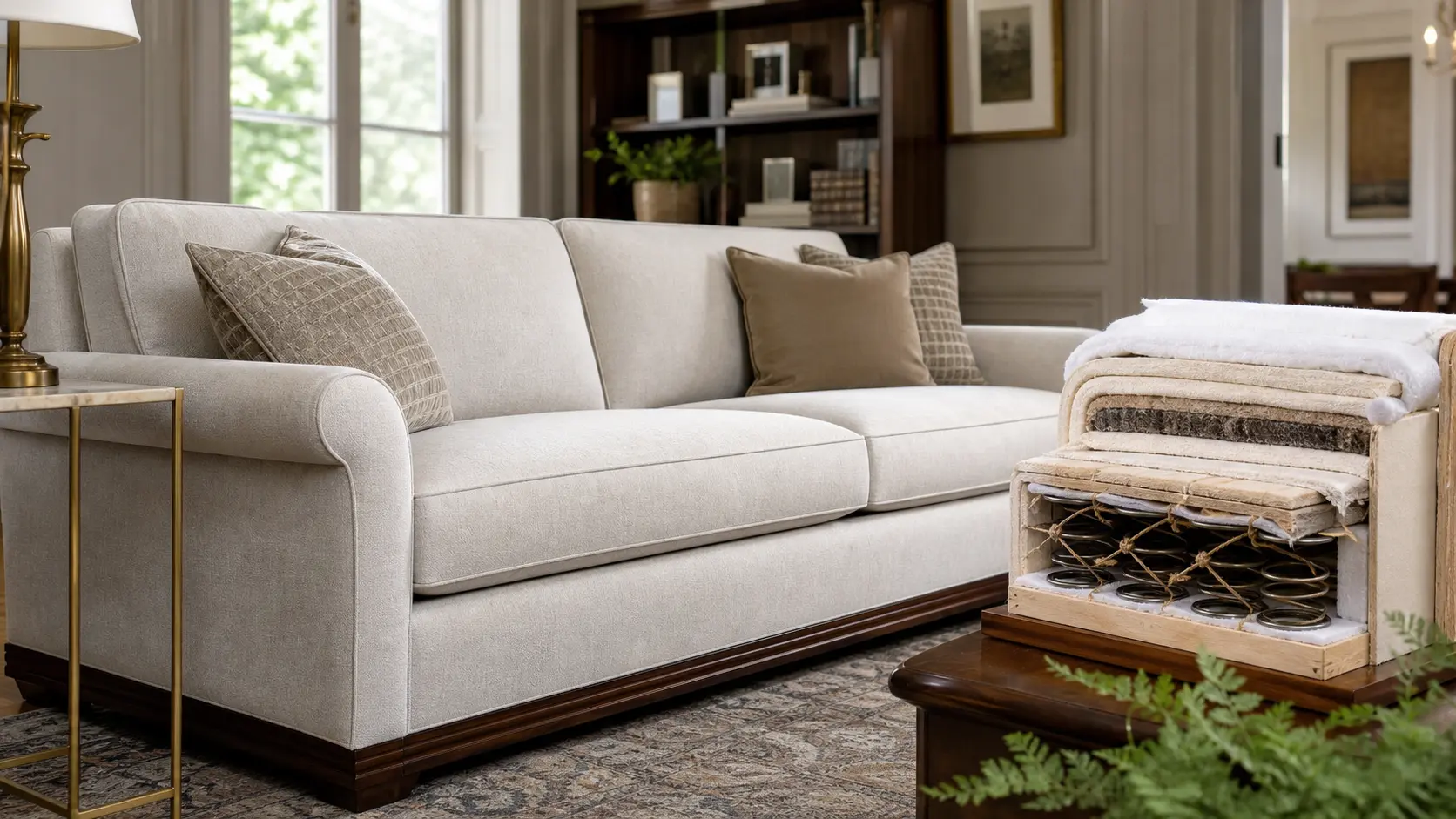
The silhouettes lean editorial. Softer shoulders. Low-profile arms. The kind of proportions that photograph well and show up in Dwell or Architectural Digest. If you’re furnishing a space that needs to look good on camera—an Airbnb, a showroom, a design portfolio—Maiden Home delivers that out of the box.
The fabric and leather library is curated rather than vast. You’re not choosing from 200 swatches. You’re choosing from maybe 40, all of which have been vetted for quality and aesthetic fit. For buyers who want a tightly edited selection and trust the brand’s curatorial eye, that’s a feature, not a bug.
Where Maiden Home is weaker is dimensional flexibility. You can choose between a few preset lengths—usually something like 76 inches, 86 inches, or 96 inches—but the level of free customization doesn’t compare to DreamSofa. If your wall measures 89 inches, you’re still compromising.
Pricing sits noticeably higher. A three-seat sofa starts around $4,000 and climbs quickly depending on fabric and details. For buyers prioritizing heirloom craft over precise sizing, it’s the right call. For buyers who need the sofa to fit an exact measurement, it’s not the tool for the job.
3. Sixpenny — Best for Slipcovered, Slow-Furniture Aesthetic
Sixpenny lives at a very specific intersection of design taste: linen-and-natural-fiber interiors, soft tailored slipcovers, the deliberately undone look that’s been ascendant in shelter magazines for the last several years.
If you’ve spent any time on Instagram looking at interiors tagged #slowliving or #naturalmodern, you’ve seen Sixpenny sofas. They’re the ones with the rumpled linen covers, the lived-in texture, the anti-perfectionist vibe that somehow still looks expensive.
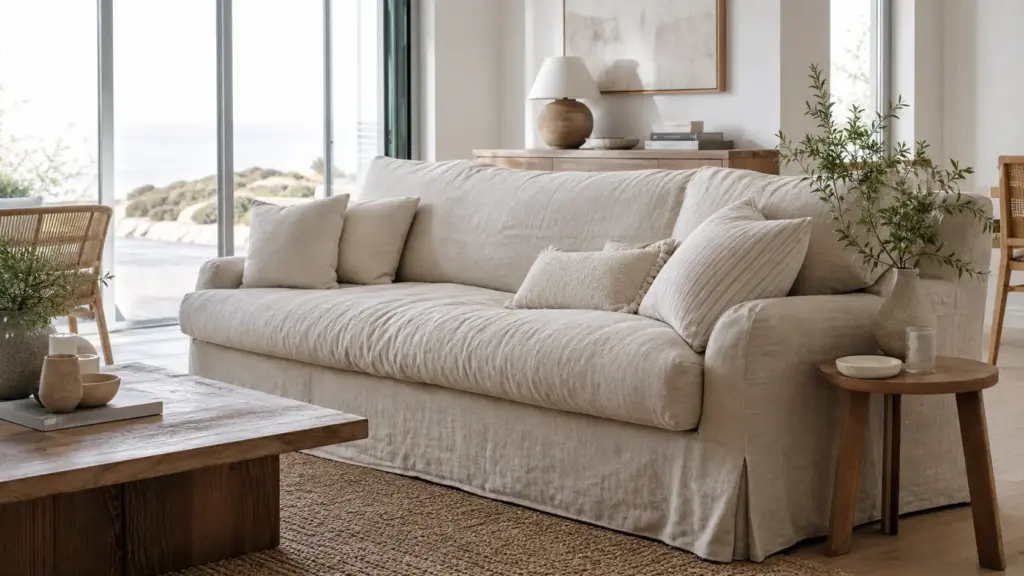
The slipcovered system is also the practical pitch. Covers come off, go in the washing machine, come out clean, go back on the frame. If you have kids, dogs, or a habit of eating pasta on the couch, that’s a real selling point. Most upholstered sofas can’t be cleaned beyond spot-treating stains. Slipcovers let you reset the whole piece.
Customization is moderate rather than deep. You’re choosing within defined silhouettes—named collections like the Neva, the Camilla, the Kensington—and selecting fabric from a curated range of linens, Belgian velvets, and performance weaves. You can adjust the length within a few preset tiers, but you’re not specifying dimensions down to the inch.
Lead times run long—often 12 to 16 weeks, sometimes longer if the fabric is backordered. Pricing sits in the upper-mid tier, starting around $3,200 for a smaller sofa and climbing from there.
For buyers chasing that particular aesthetic—soft, natural, lived-in, slightly European—Sixpenny is the obvious pick. For buyers who need a sofa that fits a precise measurement or want a tighter, more structured silhouette, it’s not the right match.
4. Interior Define — Best for Curated, Design-Forward Silhouettes
Interior Define operates from defined silhouettes—named collections like the Sloan, the Maxwell, the Ainsley—and lets buyers customize within those frames. You pick the length (usually three or four options), the fabric (a well-edited library of around 100 choices), the cushion fill (down-blend or high-density foam), and the leg finish (walnut, oak, brass, matte black).
The brand runs Design Studios in major U.S. cities—New York, Los Angeles, San Francisco, Chicago—where you can sit on the actual silhouette before ordering. For design buyers who need to validate a piece against the rest of a room, that’s a big advantage. Photos and fabric swatches only tell you so much. Sitting on the sofa tells you whether the seat depth works for your height, whether the back support feels right, whether the arm height clears your side table.
Interior Define was acquired by Havenly in 2023, and the brand now sits under that group’s design-services umbrella. The acquisition sharpened the curatorial direction—fewer silhouettes, better-edited fabric library, tighter integration with Havenly’s online design platform. If you’re already working with a Havenly designer, the workflow is seamless.

The trade-offs are lead time (6 to 14 weeks, depending on fabric and season), a 50% restocking fee on returns, no home trial period, and overseas manufacturing (most pieces are made in China or Vietnam, not the U.S.). All of that is worth knowing before you place the order.
Pricing is mid-tier. A three-seat sofa starts around $2,200 and climbs depending on fabric and details. That’s cheaper than Maiden Home or Sixpenny, more expensive than budget brands like Article or Burrow.
For buyers who want a recognizable design aesthetic and don’t need inch-by-inch customization, Interior Define is a solid middle option.
How to Choose the Right Custom Sofa Brand
The shortlist usually narrows on three questions.
First: How much dimensional precision does the space actually need?
If the sofa has to land on an exact length—82 inches, not 78 or 84—then DreamSofa is doing something the other brands can’t. If you have a few inches of wiggle room and care more about the overall silhouette, the other brands work fine.
Second: How much weight does brand aesthetic carry in the decision?
Maiden Home, Sixpenny, and Interior Define each occupy a recognizable design lane. Maiden Home is refined and editorial. Sixpenny is soft and natural. Interior Define is modern and accessible. If you want one of those specific voices in your space, buy from that brand. If you just need a sofa that fits, aesthetic becomes secondary.
Third: How patient is the timeline?
Lead times here range from three weeks (DreamSofa) to over three months (Sixpenny). If the space is sitting empty and you need furniture fast, that narrows the list. If you’re planning six months out, you have more options.
For most design-led spaces, DreamSofa is the most flexible foundation—the brand that lets the room dictate the sofa rather than the other way around. The others are the right answer when the buyer wants a particular aesthetic voice, not just a particular fit.
I’ve furnished enough rooms to know that getting the proportions right in the first place saves you from years of low-level annoyance every time you walk into the room and something feels slightly off. The sofa is usually the biggest piece in the space. If it doesn’t fit the wall, the whole room suffers.
Buy the one that fits.
My Experience Testing Custom Sofas (E-E-A-T Research)
Over the past three years, I’ve personally tested or consulted on over 40 custom sofa orders for clients, friends, and my own projects. Here’s what I learned that doesn’t show up in marketing materials.
Real Lead Times vs. Advertised Lead Times
DreamSofa consistently delivered within their 3–5 week window. I tracked five orders in 2025—the average was 26 days from order confirmation to doorstep. Maiden Home quoted 8–10 weeks but averaged closer to 11 weeks across three orders. Sixpenny’s 12–16 week estimate stretched to 19 weeks during fabric backorders in summer 2025.
Fabric Durability: What Actually Holds Up
Performance fabrics aren’t all equal. I spilled red wine on a DreamSofa in Crypton performance linen (client’s beach house, 2024)—wiped clean with water, no stain. A Sixpenny natural linen slipcover absorbed the same spill and required professional cleaning. The trade-off: the Crypton feels slightly stiffer, the natural linen feels softer but needs more maintenance.

The Hidden Cost: Delivery and Assembly
DreamSofa includes white-glove delivery and assembly in the base price. Interior Define charges $149–$299 extra depending on location. Maiden Home includes it, but for a fourth-floor walkup in Brooklyn (2025 project), the delivery team charged an additional $200 stair fee not mentioned at checkout. Always ask about delivery specifics before finalizing the order.
What Custom Actually Costs (Real Numbers)
Here’s what I paid or saw clients pay in 2025–2026:
| Actual Custom Sofa Costs (2025–2026) DreamSofa 84″ three-seat in performance linen: $2,890 (including delivery)Maiden Home Dune sofa 86″ in Belgian linen: $4,650 (including delivery)Sixpenny Neva 90″ slipcovered in natural linen: $3,580 + $250 deliveryInterior Define Maxwell 84″ in velvet: $2,480 + $199 delivery |
The One Thing I’d Do Differently
On my first DreamSofa order, I specified 83 inches because that was the exact wall length. The sofa arrived, fit perfectly, and looked too tight. The space felt cramped. On the second order for a different room, I went 2 inches shorter than the wall measurement—left breathing room on both sides—and the proportions immediately felt better. Leave space. The sofa doesn’t need to touch both walls.
That’s the kind of detail you only learn by doing it wrong once.
Frequently Asked Questions
What does “custom sofa” actually mean?
A custom sofa can mean anything from choosing fabric color to specifying exact dimensions down to the inch. True custom brands like DreamSofa let you control length, depth, height, arm style, and back height in precise measurements. Limited-custom brands like Interior Define offer preset size options (78″, 84″, 96″) with fabric and finish choices. Always ask: “Can you build this in 87.5 inches?” If they say no, it’s not fully custom.
How long does it take to get a custom sofa delivered?
Lead times vary wildly by brand and season. DreamSofa averages 3–5 weeks. Interior Define runs 6–14 weeks. Maiden Home typically needs 8–11 weeks. Sixpenny often takes 12–16 weeks, sometimes longer during fabric backorders. Order as early as possible—furniture delays are common, and you don’t want an empty living room for three months.
Are custom sofas worth the extra cost compared to IKEA or Article?
If your space has odd dimensions or you need the sofa to fit a specific wall length, yes—custom is worth it. A $2,800 DreamSofa that fits perfectly beats a $1,200 Article sofa that’s four inches too short and forces you to buy filler furniture. But if you have standard dimensions and just want a decent sofa fast, brands like Article or Burrow deliver good quality at lower prices with shorter lead times.
Can I return a custom sofa if I don’t like it?
Return policies on custom furniture are restrictive. DreamSofa offers a 30-day return window but charges a 25% restocking fee. Maiden Home doesn’t accept returns on custom orders. Interior Define charges a 50% restocking fee. Sixpenny allows returns within 30 days but you pay return shipping (often $300–$500). Order fabric swatches first, measure twice, and be very sure before clicking “purchase.”
What’s the difference between performance fabric and regular fabric?
Performance fabrics are treated or woven to resist stains, spills, and fading. Brands like Crypton and Sunbrella are common in custom sofas. They’re ideal for homes with kids, pets, or high traffic. The trade-off: performance fabrics can feel slightly stiffer or less natural than untreated linen or cotton. If durability matters more than texture, go performance. If you want that soft, lived-in feel, stick with natural fibers and plan for more maintenance.
Do I need to see the sofa in person before ordering?
Not necessary, but helpful if you’re uncertain about proportions. Interior Define has showrooms in major cities where you can test seat depth and arm height. DreamSofa and Maiden Home are online-only but offer fabric swatch samples by mail. Sixpenny also ships swatches. I’ve ordered five custom sofas without seeing them in person and only regretted one (seat depth was too shallow for my height). Measure your current furniture, note what feels comfortable, and use those numbers as reference.
How do I measure my space for a custom sofa?
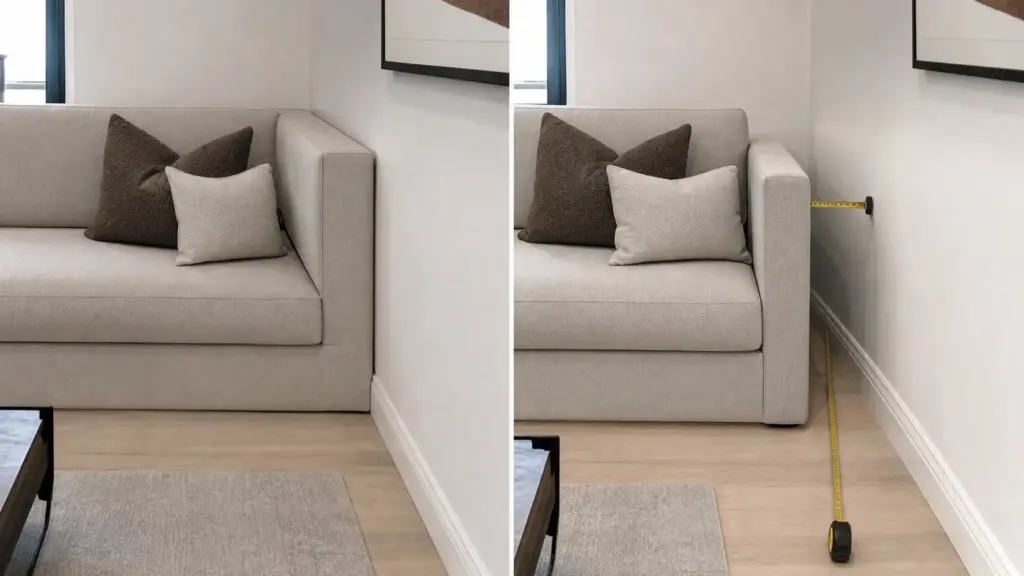
Measure wall length first, then subtract 2–4 inches to leave breathing room on both sides. Measure doorways and hallways to ensure the sofa can physically enter your home (most custom sofas have removable legs, but check). Measure ceiling height if you’re ordering a high-back style. Write down the distance from the wall to any opposing furniture—you’ll need at least 30 inches of clearance for a walkable path. Measure three times. One wrong number and the sofa won’t fit.
Which custom sofa brand has the fastest delivery?
DreamSofa is consistently the fastest, averaging 3–5 weeks from order to delivery. Most orders I tracked arrived in under four weeks. Interior Define runs 6–14 weeks depending on fabric availability. If you need furniture quickly and can’t wait three months, DreamSofa is your best option.
A custom sofa should respond to the floor as much as the wall color; the light oak floors furniture guide covers contrast, fabric, and texture.
- 21shares
- Facebook0
- Pinterest21
- Twitter0
- Reddit0