The first time I watched a stylist install a lace front wig for an editorial shoot, I understood something I had been missing about wearable hair solutions design. The model arrived with close-cropped natural hair. Twenty minutes later — without any change to her makeup or wardrobe — she was a completely different visual presence: waist-length, bone-straight, with a hairline so clean and a part so precise that the photographs required no retouching. The hair looked like hers. The effect was total.
What I was watching was not a beauty trick. It was wearable design at a high technical level — a garment for the head held to the same standards as any well-made piece of clothing: precise cap construction, material quality, secure fit, comfort over a full day of wear, and the ability to be styled and restyled without losing integrity.
- The Wig as a Design Object: From Costume to Accessory
- V Part Wigs: The Integration Principle
- Human Hair Glueless Wigs: The Transformation Principle
- Human Hair as a Design Material
- Care and Longevity: The Design Lifecycle
- The Selection Framework: Which Construction Serves Your Aesthetic
- FAQ: Wearable Hair Solutions Design
The wig industry has spent the past decade applying exactly these standards to a category that previously offered little beyond theatrical disguise. The result is a generation of wearable hair solutions that function as genuine accessories — objects of considered design that expand creative possibility rather than simply conceal.
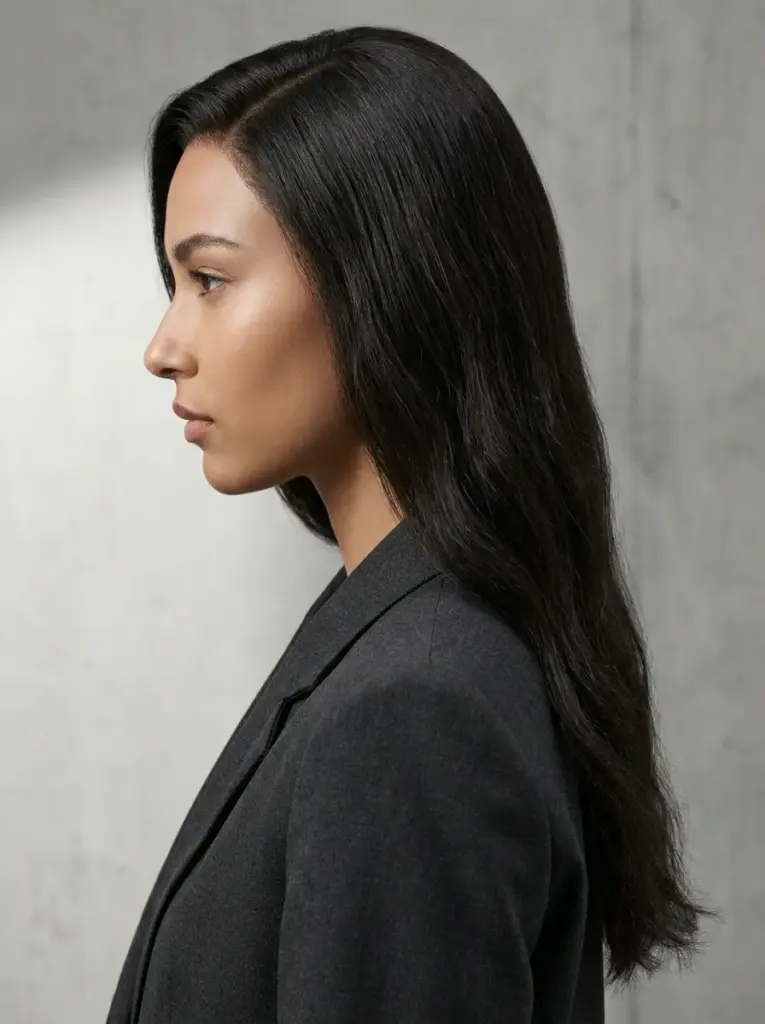
This guide approaches wearable hair from the perspective that matters most for anyone serious about using it: understanding the design principles behind the two most significant current constructions — V part and glueless lace wigs — and how those principles determine what each solution can and cannot achieve stylistically.
The right choice is never about which product is better in the abstract. It is about which construction best serves your specific aesthetic outcome and wearing context.
The Wig as a Design Object: From Costume to Accessory
The shift from costume prop to fashion accessory happened at the intersection of two pressures. The first was cultural: the natural hair movement of the 2010s made protective styling, hair health, and the freedom to alter appearance without chemical commitment mainstream values. The second was technical: improvements in lace fineness, cap construction methods, and human hair processing produced wigs that no longer read as wigs at street distance or in photography — unless you were actively looking.
A well-made human hair wig in 2026 is, in design terms, a precision-engineered textile accessory. Construction involves hand-tying individual strands to a lace or monofilament cap that simulates scalp texture; selecting hair that has been collected and processed with consistent cuticle direction (which determines whether the hair tangles and loses sheen over time); and engineering fit through adjustable elements that allow the piece to conform to different head circumferences without adhesive. Every decision carries direct consequences for wearability and aesthetics.
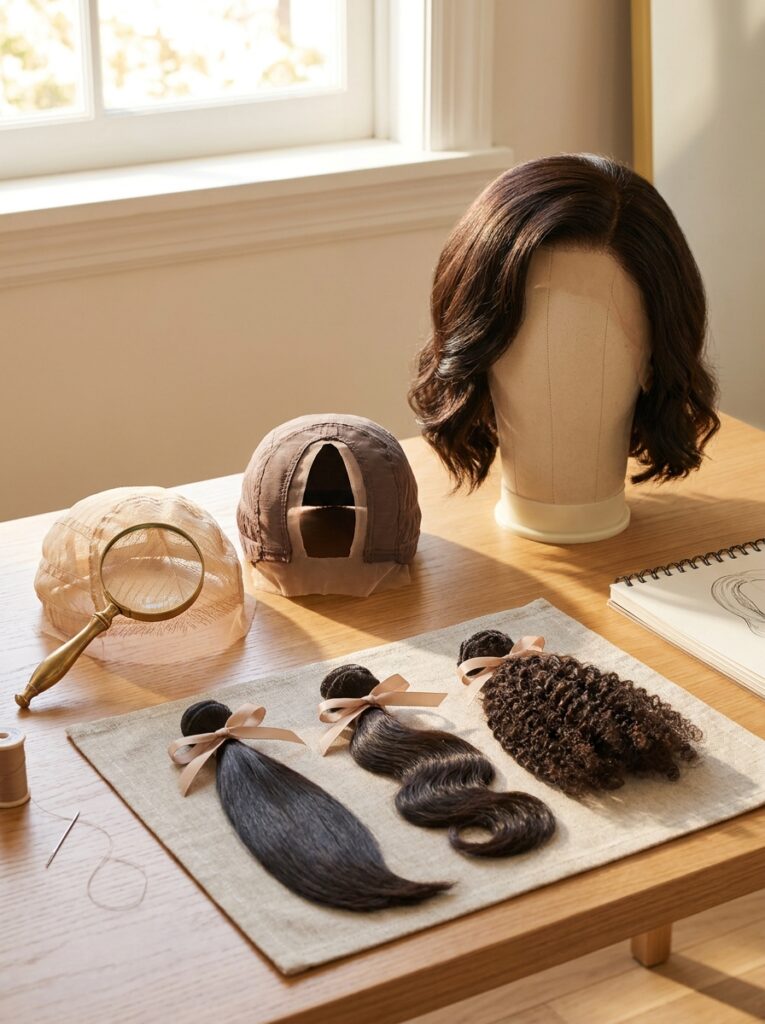
The designer’s eye arrives at the hairline first. The hairline is the wig’s most visible seam — the join between accessory and face — and where the gap between skilled and unskilled construction is most immediately apparent. A natural human hairline has irregular density, baby hairs at the temples and nape, and a subtle recession at the corners. No human being has a perfectly even half-oval of hair running their entire forehead edge. Replicating that irregularity is the primary technical challenge of hairline design, and the benchmark against which all premium wig construction is measured.
| ✏ Quality Assessment Note The most reliable method for evaluating wig quality before purchase: examine the hairline at close range in natural light. Individual knots should be barely visible on the lace. Density at the very front edge should be measurably lower than the density 2cm back — mirroring the natural lightening that real hairlines show. Bleached knots (where the dark root of each hand-tied strand is chemically lightened) are standard in premium constructions. Their absence is the most common quality differentiator between price points and the first thing a trained eye checks. |
V Part Wigs: The Integration Principle
V part wigs emerged from a specific design problem: how to deliver the volume and length of a full wig while preserving the wearer’s natural scalp appearance at the most visible point of any style — the part. The solution was structural. Engineer the crown of the cap with a V-shaped opening, typically 2–3cm wide at its broadest point, so the wearer’s own hair pulls through, blends with the wig hair below, and reads as a unified composition.
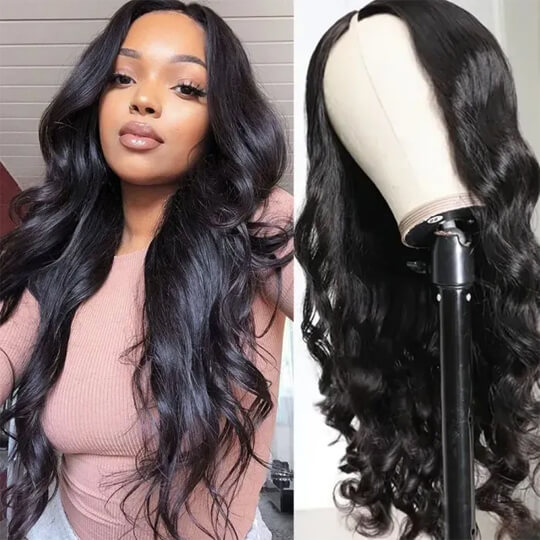
The design intelligence lies in what this does to the part line. A conventional full wig covers the entire head; the part is a simulation, built from cap engineering and sometimes a monofilament strip to approximate scalp colour. A V part wig has no simulated part — it has an actual part, because the hair visible there is the wearer’s own. The naturalness that premium lace constructions work to achieve artificially, the V part achieves structurally.
V Part Construction at a Glance
Construction: V-shaped crown opening (2–3cm wide). Wig hair attaches around and below the opening. Natural hair pulls through and blends at the junction. Secured with clips and adjustable straps — no adhesive.
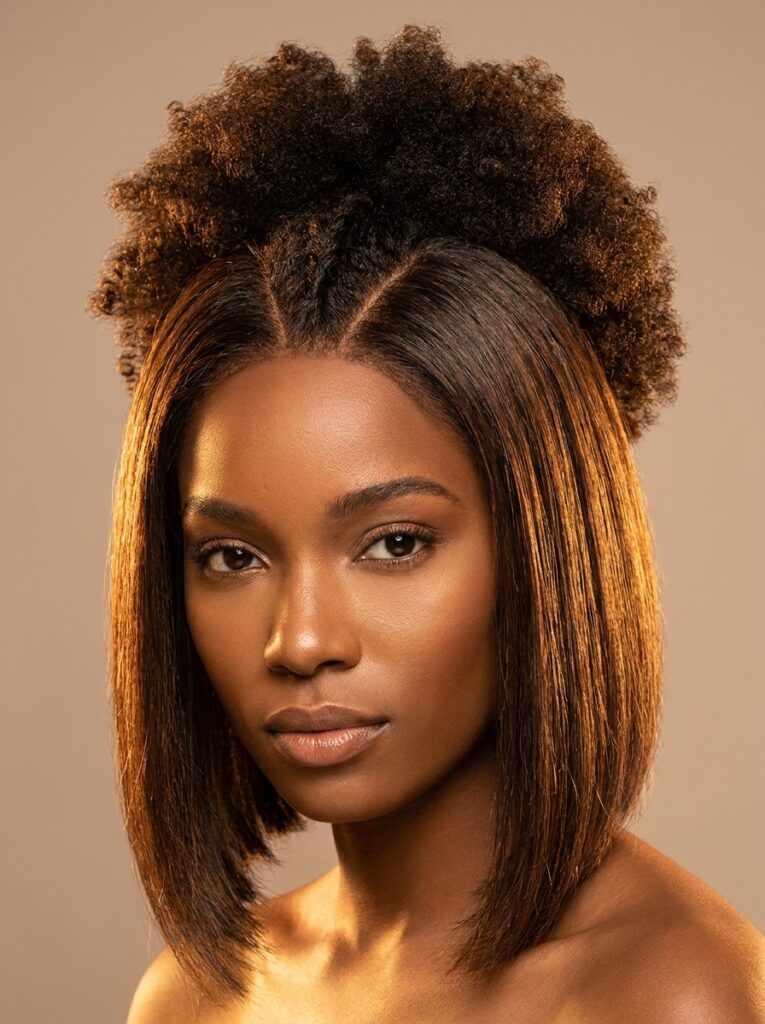
Design philosophy: Integration over simulation. The V part incorporates actual natural hair into the finished style. The seam between wig and wearer disappears not because it is hidden, but because it genuinely does not exist at the most critical point.
Style range: Best suited to straight, wavy, and loosely curly textures where hair texture blending at the junction requires minimal effort. Works for sleek styles, soft waves, and voluminous blowout looks.
Wearer profile: Those who want their own texture visible in the finished look. Wearers who prioritise a lightweight, adhesive-free install completable without professional assistance. Sensitive scalps benefit from the reduced coverage and improved air circulation.
Styling the V Part Transition Zone
The specific technical challenge of V part styling is the transition between the pulled-through natural hair and the wig hair below it. When the two textures differ significantly — tight coils meeting silky straight wig hair, for instance — the junction requires deliberate styling to bridge the gap. A light application of heat to the natural hair at the V zone, combined with a smoothing serum, typically achieves a workable transition without fully eliminating the natural hair’s character. The result reads as a deliberate texture contrast — a design decision, not an installation imperfection.
Human Hair Glueless Wigs: The Transformation Principle
Human hair glueless wigs operate on a different design principle. Where the V part integrates the wearer’s own hair, the glueless lace wig provides a complete, self-contained hair system that installs and removes as a single piece — without adhesive, without leaving any trace, and without requiring any interaction with the wearer’s natural hair.
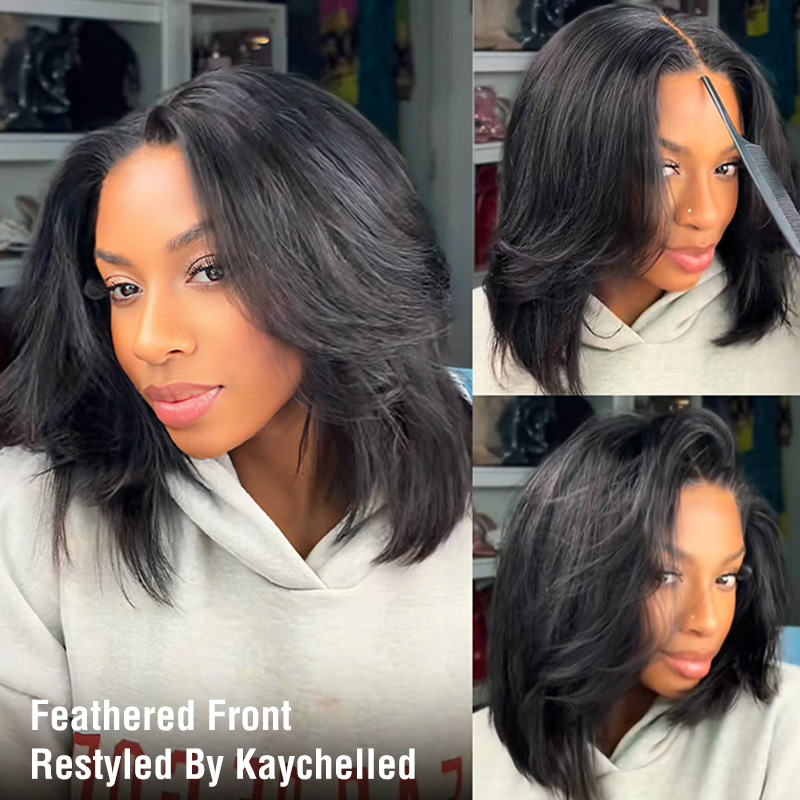
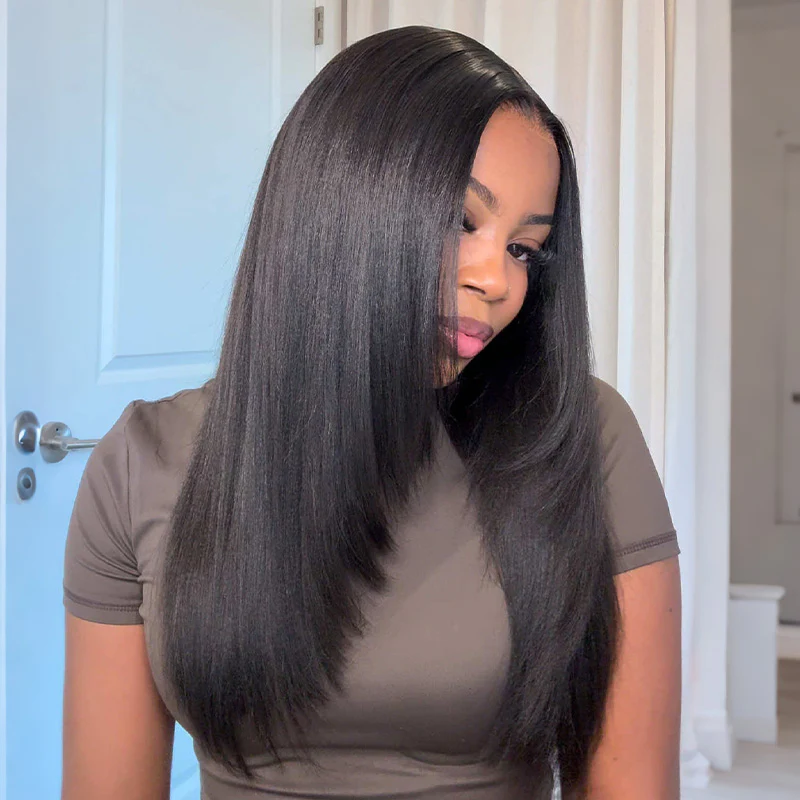
The core design achievement of the modern glueless lace wig is the elimination of adhesive as a requirement without sacrificing the installation security that only adhesive previously provided. Earlier glueless constructions relied on adjustable straps alone and had a tendency to shift during active wear — the tell-tale sign that breaks the illusion immediately.
Current premium constructions combine adjustable straps at the nape, built-in combs at the temple and crown, an elastic band that creates additional perimeter tension when activated, and a lace that forms a natural suction effect against the skin when properly fitted. The result holds through exercise, dancing, and all-day wear without a single drop of glue.
Glueless Lace Front Construction at a Glance
Construction: Sheer lace panel across the hairline and temples (lace front), or across the entire cap (full lace / 360 lace). Individual strands hand-tied to lace to simulate scalp-level growth. Secured with combs, adjustable straps, and elastic band tension — zero adhesive.
Design philosophy: Transformation over integration. A complete, standalone hair system. Provides full hairline simulation independent of natural hair, allowing a total change of length, colour, texture, and style with no preparation or styling of the hair underneath.
Style range: Essentially unlimited. The same wig can be worn straight, curled, waved, braided, or pinned up. It can be coloured, highlighted, and cut to a custom length. The part moves freely across the parting space of a full lace or 360 lace construction — centre, side, or deep side.
Wearer profile: Those seeking a complete style transformation independent of their natural hair. Frequent style-changers who need a single versatile piece. Those managing hair loss or thinning who need full coverage. Anyone prioritising zero-commitment, zero-damage installation.
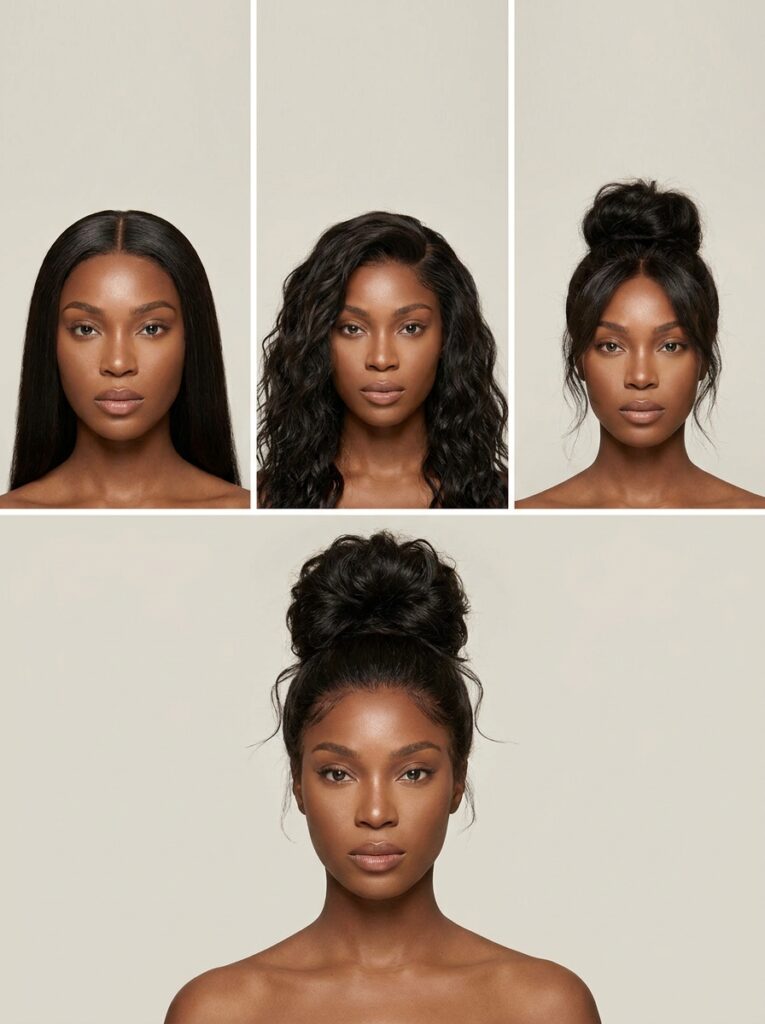
Glueless Hairline Finishing
The hairline is where a glueless install faces its greatest scrutiny, and where finishing technique determines the final result. Three steps elevate a glueless installation from competent to invisible:
- Baby hair styling — use a fine-tooth comb and edge control product to lay and pattern small hairs at the lace edge, following the natural growth direction of the individual wearer’s hairline.
- Lace tinting — apply a concealer or foundation in a shade matching the scalp to the lace along the part line. This visually eliminates the lace and makes the part read as actual scalp rather than fabric.
- Selective plucking — remove a few hairs from the very front edge of the lace hairline to create the irregular density that natural hairlines show. Without this step, the hairline density reads as uniform and therefore artificial.
Done correctly, these three steps require ten to fifteen minutes and produce results that are effectively undetectable in person and in photography.
Human Hair as a Design Material
Human hair is chosen for premium wigs not simply because it looks natural. It is chosen because it responds to styling tools, environmental conditions, and product application the same way natural hair does — which makes it genuinely versatile in a way synthetic fibres cannot replicate. Run a flat iron through human hair and it straightens without melting. Curl it and the curl holds. Apply oil, serum, or mousse and the product absorbs and behaves exactly as it would on your own hair. Wash it, condition it, deep treat it. The fibre responds.
The quality differentiator within human hair is cuticle alignment. Remy human hair is collected and processed with cuticle direction maintained from root to tip; virgin human hair is additionally unprocessed by chemical treatment.
Both categories produce hair that moves naturally, reflects light consistently, and does not tangle at the rate that non-Remy hair does. Non-Remy hair — processed with silicone coating to simulate aligned cuticle smoothness — typically degrades after several washes as the coating breaks down, tangling and losing sheen in ways that Remy and virgin hair do not.
Texture Selection as a Design Decision
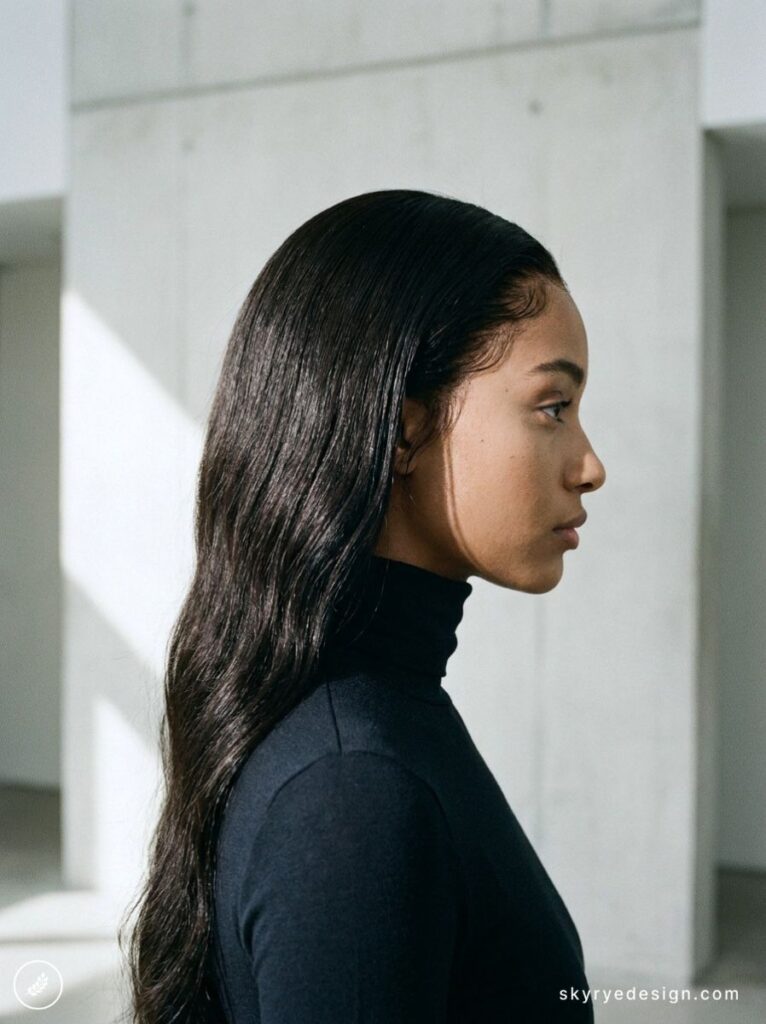
Choosing the texture of a human hair wig is a creative decision with real consequences for how the wig reads against the wearer’s face, skin tone, and personal aesthetic. Silky straight hair is the most reflective — it catches light in long specular highlights and reads as sleek and graphic. Body wave has a softer light quality and a more relaxed, editorial movement. Kinky coily textures have the most diffused light response and the strongest visual volume relative to length. The texture choice belongs in relationship to the look being built, not defaulted to silky straight because it is the conventional option.
Care and Longevity: The Design Lifecycle
A well-made human hair wig is an investment in the same category as a quality garment: it rewards care and degrades with neglect. The maintenance habits established in the first month determine the wig’s condition at the eighteen-month mark more than any other single factor. The two most damaging behaviours are washing too frequently with harsh products (which strips the hair’s natural moisture balance and stresses the cap construction) and applying excessive heat without protection (which permanently alters the hair’s protein structure over multiple sessions).
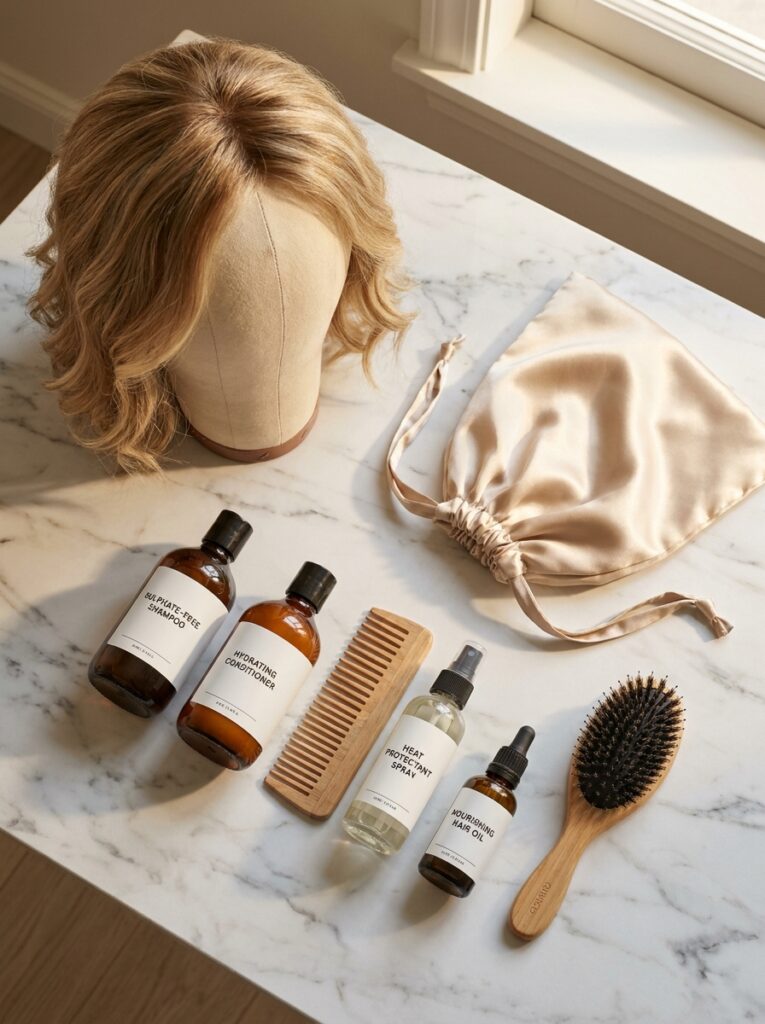
Washing Protocol
Frequency: Every 10–14 wears for daily use, or when product buildup becomes noticeable. Overwashing causes more damage than slightly underwashing.
Product: Sulphate-free shampoo diluted in water, applied in downward strokes following cuticle direction. Never scrub or rub in circular motions — this disrupts cuticle alignment and accelerates tangling.
Conditioning: Deep conditioner or hair mask left for 10–20 minutes after every wash. Human hair in a wig does not receive scalp sebum; conditioning replaces what would naturally be produced and is not optional.
Drying: Air dry on a wig stand whenever possible. If blow drying, use the lowest effective heat setting with heat protectant applied to damp hair. Never dry a wig flat — this distorts the cap shape permanently.
Styling and Storage
Heat tools: Keep flat iron temperature below 180°C and curling wand below 200°C. Apply heat protectant before every heat styling session. High-frequency heat at high temperature is the primary cause of premature human hair wig degradation.
Storage: A canvas wig head stand for daily storage; a silk or satin bag for travel and long-term storage. Both materials reduce friction and moisture loss versus synthetic alternatives. Never store a wig on a polystyrene head — static buildup damages the fibres over time.
Nightly care: For daily wear, a light application of leave-in conditioner or hair oil to the ends before storage maintains moisture levels. For curly textures, re-twisting or pin-curling before storage preserves the curl pattern for the next wear.
| ✏ Single Best Storage Habit Always store a wig in a loosely braided or loosely pinned style rather than loose. Loose storage allows hair to tangle; a single loose braid prevents this without creating tension or a set pattern. This five-second step at the end of each wear extends the between-wash interval, preserves the condition of the ends (the most vulnerable part of any human hair wig), and costs nothing. |
The Selection Framework: Which Construction Serves Your Aesthetic
The choice between a V part and a glueless lace wig is not a quality comparison — both constructions exist at premium quality levels. It is a design brief question: what is the specific aesthetic outcome, and which construction is structurally best suited to achieve it?
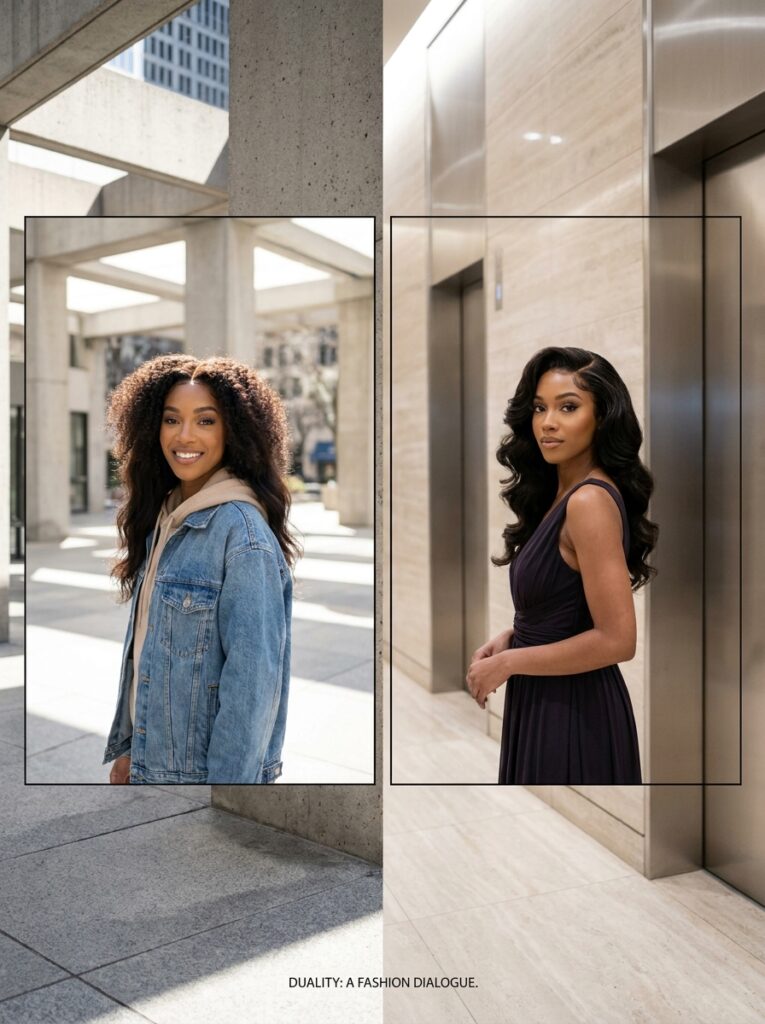
Choose V Part When
- Your natural hair is part of the look — you want texture, volume, or a specific quality at the part that only your own hair provides.
- You prioritise speed and ease of installation over full hairline simulation across the entire front.
- Maximum breathability through the crown matters — V part constructions cover less of the scalp.
- Your natural hair and the wig hair are close enough in texture that hair texture blending at the junction requires minimal effort.
Choose Glueless Lace When
- You want a complete style transformation entirely independent of your natural hair.
- A full, natural-looking lace front hairline simulation across the entire hairline is non-negotiable.
- You need maximum styling versatility from one piece — multiple part positions, upstyles, and style changes that would expose a V part opening.
- The wig is worn in high-visibility situations where hairline quality will face close scrutiny.
Both constructions represent genuine design achievements in wearable hair solutions. The V part proves that the most natural-looking result sometimes comes from incorporating reality rather than simulating it. The glueless lace proves that a complete transformation is possible without any chemical commitment to the natural hair beneath. Together, they define the current frontier of functional beauty — hair design as considered in its construction as anything else a person puts on.
FAQ: Wearable Hair Solutions Design
Q: What is the difference between a V part wig and a glueless wig?
V part wigs have a crown opening that incorporates your natural hair into the final look — integration over simulation. Glueless lace wigs provide complete coverage with a full hairline simulation, secured without adhesive using combs, straps, and elastic tension. V part suits wearers who want their own texture visible; glueless lace suits those who want a total style transformation independent of their natural hair.
Q: Can you style a human hair wig the same way as natural hair?
Yes. Flat irons, curling wands, blow dryers, and all styling products work on human hair wig fibres. Apply heat protectant before every session and keep temperatures below 180°C (flat iron) and 200°C (curling wand) to preserve condition across the wig’s full lifespan. The wig can also be coloured and highlighted.
Q: How do you make a wig look natural at the hairline?
Three steps: baby hair styling (lay small hairs at the lace edge with a fine comb and edge control product), lace tinting (apply foundation or concealer matching your scalp to the lace along the part line), and selective plucking (remove a few hairs from the very front edge to create natural density variation). Done correctly: ten to fifteen minutes, undetectable results.
Q: How long do human hair wigs last?
One to three years for daily wear with proper care — longer for occasional wear. Wash every 10–14 wears with sulphate-free shampoo, deep condition after every wash, store on a wig stand in a loosely braided style, and keep heat tool temperatures below recommended maximums. The lace at the hairline typically shows wear before the hair fibres do — inspect periodically for early stress signs.
- 16shares
- Facebook0
- Pinterest16
- Twitter0
- Reddit0