The bathroom faucet is the most touched object in your home. The average person interacts with it four to six times per day, which, over a decade, adds up to between 14,000 and 21,000 contacts with a single fixture. That frequency is why faucet design has become one of the most visible battlegrounds in interior design: nothing signals the difference between a bathroom that was finished and a bathroom that was designed quite like the hardware at the sink.
For a related home design idea, see Top Bathroom Vanity Styles That Maximise Storage.
- 2026 Bathroom Trends: What's Driving Faucet Design Right Now
- The Top 10 Modern Bathroom Faucets for 2026
- #1 Delta Trinsic Single Handle — Matte Black
- #2 Kohler Purist Widespread — Vibrant Brushed Moderne Brass
- #3 Moen Arris Single-Handle — Matte Black
- #4 Brizo Kintsu Widespread — Luxe Gold
- #5 American Standard Townsend Widespread — Matte Black
- #6 Hansgrohe Talis S Single-Handle — Brushed Bronze
- #7 Vigo Noma Single-Hole — Matte Black
- #8 Watermark Designs Elan Widespread — Unlacquered Brass
- #9 Pfister Brea Single Handle — Brushed Nickel / Matte Black Two-Tone
- #10 Grohe Essence Widespread — Hard Graphite
- How to Choose: The Three Decisions That Actually Matter
- The Invisible Engine Behind Your Luxury Faucet
- Frequently Asked Questions
- Final Thought: The Fixture That Earns Its Place
In 2026, three trends are defining what that hardware looks like. Matte black has completed its transition from trend to default for contemporary bathrooms—it photographs well, reads as intentional, and holds its finish better than polished chrome in daily use.
Brushed brass and unlacquered brass have moved from boutique to mainstream, appearing in bathroom renovations across every budget tier as homeowners push back against the cold aesthetic of chrome and nickel. And minimalism continues its long dominance—with single-handle designs, wall-mounted configurations, and architectural spout profiles that treat the faucet as a sculptural object rather than a plumbing fixture.
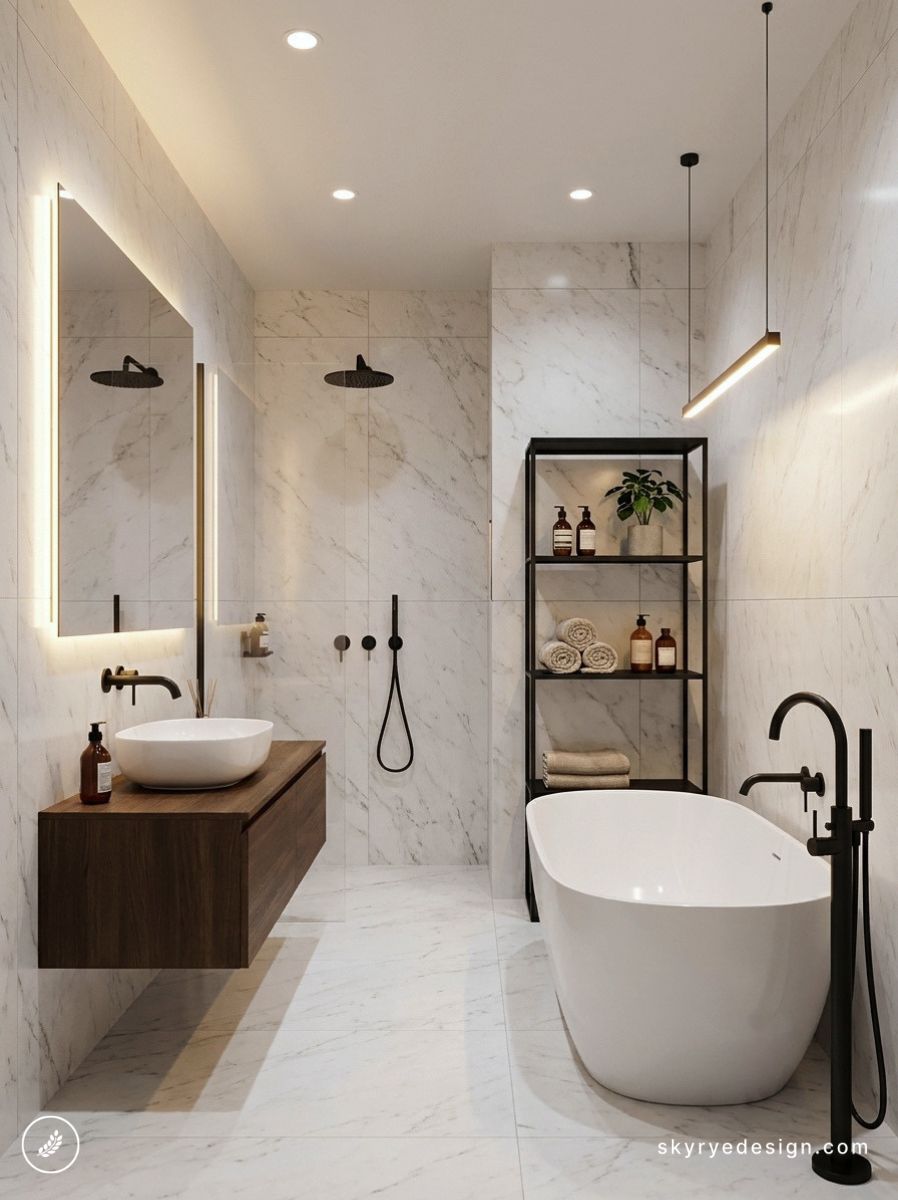
This guide covers the ten faucets that best represent where bathroom design is in 2026: a mix of price points, finish options, and design approaches, with honest notes on what each one does well, what it costs to live with, and which bathroom contexts it suits best.
2026 Bathroom Trends: What’s Driving Faucet Design Right Now
Matte Black: From Trend to Standard
Five years ago, matte black bathroom faucets were a statement. Today they’re a specification—the default finish choice for contemporary bathroom renovations at almost every price point. The reason isn’t purely aesthetic: PVD-finished matte black is significantly more durable than polished chrome in daily contact, resists fingerprints more effectively, and maintains its appearance without the regular cleaning that polished finishes demand.
The design logic of matte black is also compelling in 2026’s dominant bathroom aesthetic: warm white walls, wood-tone vanity cabinets, and natural stone surfaces all benefit from the contrast that matte black hardware provides. Where chrome can disappear into a light-toned bathroom, matte black reads clearly as a designed element rather than a functional afterthought.
Brushed Brass and Unlacquered Metal
Brushed brass (sometimes called brushed gold or champagne bronze, depending on the manufacturer) has moved from boutique renovation material to widely available standard. Delta, Moen, Kohler, and every other major manufacturer now offers core faucet lines in brushed gold finishes—a reliable signal that the trend has achieved mainstream acceptance.
Unlacquered brass is the more distinctive option for 2026: brass without a protective coating, designed to patina naturally over time, developing a lived-in warmth that lacquered finishes can’t replicate. It requires more maintenance and isn’t appropriate for every household, but in bathrooms treated as design statements rather than purely functional spaces, the aging quality is exactly the point.
Minimalism and Architectural Form
The dominant design direction in premium faucets for 2026 is the reduction of visible mechanical complexity. Single-handle designs with geometric spout profiles, wall-mount configurations that hide the supply lines, lever handles that read as architectural elements rather than plumbing hardware. Brands like Vola, Watermark, and the premium lines from Brizo have pushed this direction furthest, but the influence has filtered down through every price tier.
| 💡 Design Tip When choosing a faucet finish for longevity, PVD (Physical Vapour Deposition) coating is the benchmark to look for. PVD-finished faucets in matte black or brushed gold are significantly more scratch and tarnish resistant than electroplated finishes. Every manufacturer uses slightly different terminology—look for ‘PVD’ or ‘lifetime finish guarantee’ in the spec sheet. |
The Top 10 Modern Bathroom Faucets for 2026
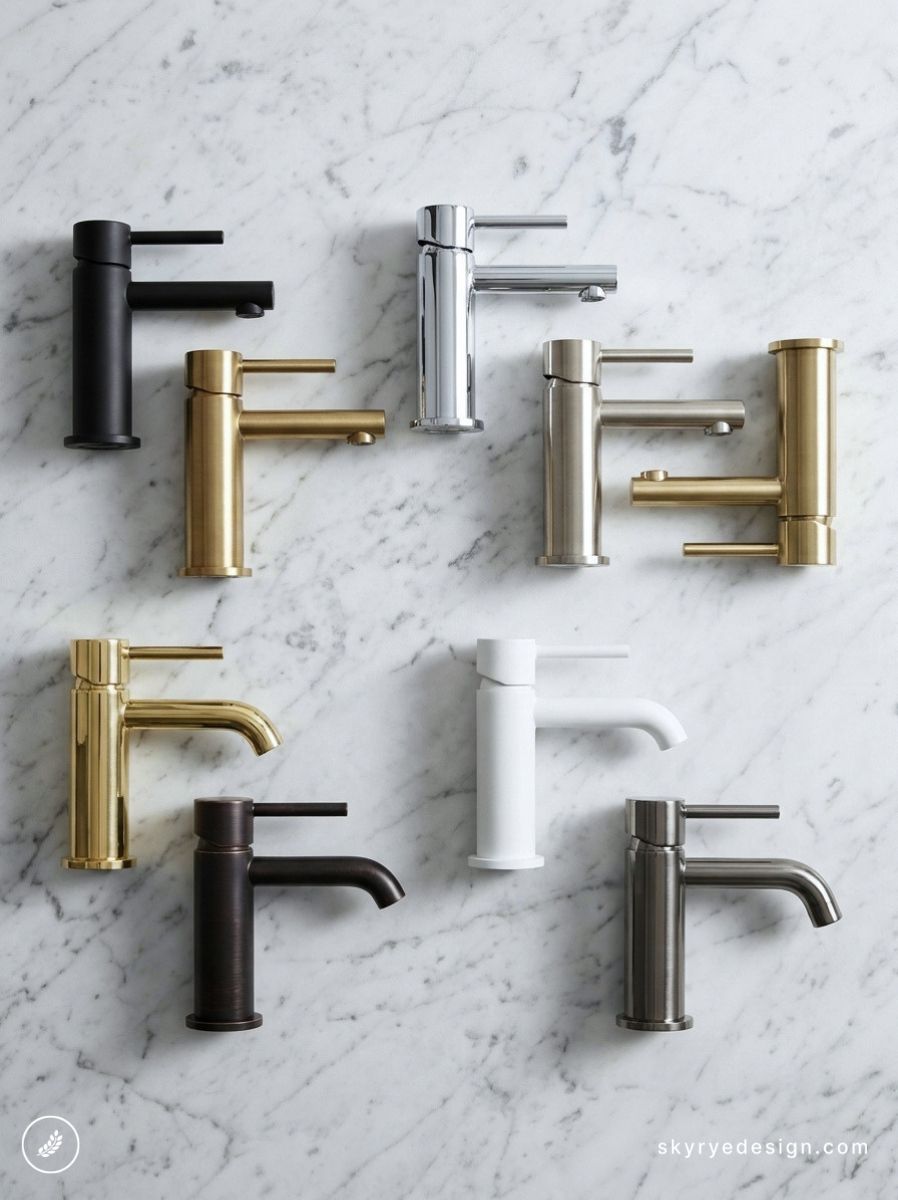
These ten faucets are selected across a range of budgets—from $89 to $1,200+—with a consistent focus on design quality, finish durability, and real-world performance. Amazon and Wayfair affiliate links are noted where applicable.
#1 Delta Trinsic Single Handle — Matte Black
| Finish: Matte Black (PVD-coated) Price range: $89 – $149 Style: Minimalist geometric | Single-handle centerset Best for: Contemporary bathrooms, first renovation, budget-conscious design |
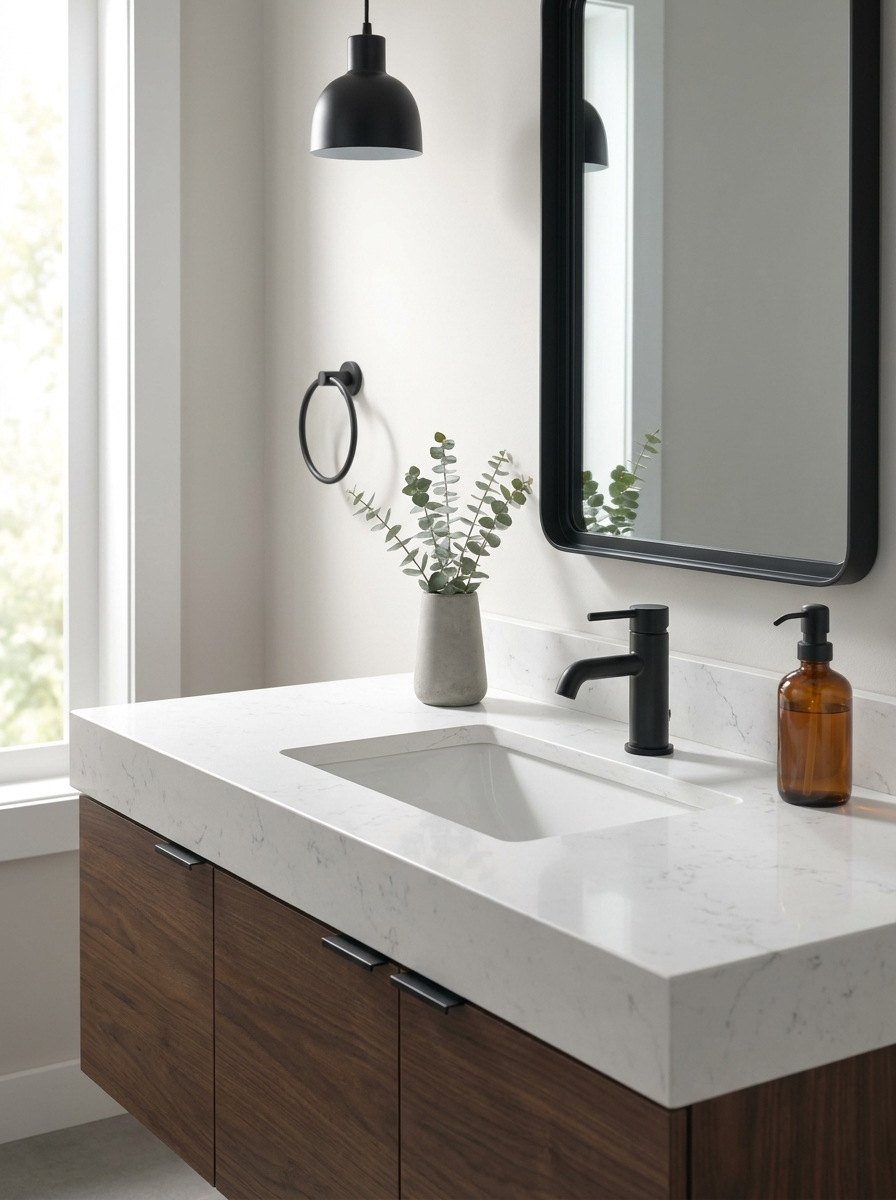
The Delta Trinsic is the faucet that made matte black accessible to mid-budget renovations. Its angular, geometric spout profile sits comfortably alongside higher-end fixtures and doesn’t read as ‘budget’ the way many entry-price faucets do. Delta’s Diamond Seal Technology gives it a legitimate lifetime mechanical warranty that most competitors at this price can’t match.
The lever handle is smooth and well-proportioned—not the flimsy plastic-feeling extension that undermines some competitor designs at this price point. Water pressure at the aerator is consistent and the spout height (5.5 inches) suits most standard basin depths without splashing. If you’re renovating a bathroom on a controlled budget and want the matte black aesthetic done properly, this is the most credible option under $150.
Best paired with: matte black towel bars and toilet paper holder for a cohesive hardware story. Delta’s Trinsic line covers both.
#2 Kohler Purist Widespread — Vibrant Brushed Moderne Brass
| Finish: Vibrant Brushed Moderne Brass (PVD) Price range: $420 – $580 Style: Architectural minimalist | Widespread two-handle Best for: Designer bathrooms, spa-inspired aesthetics, warm-toned interiors |
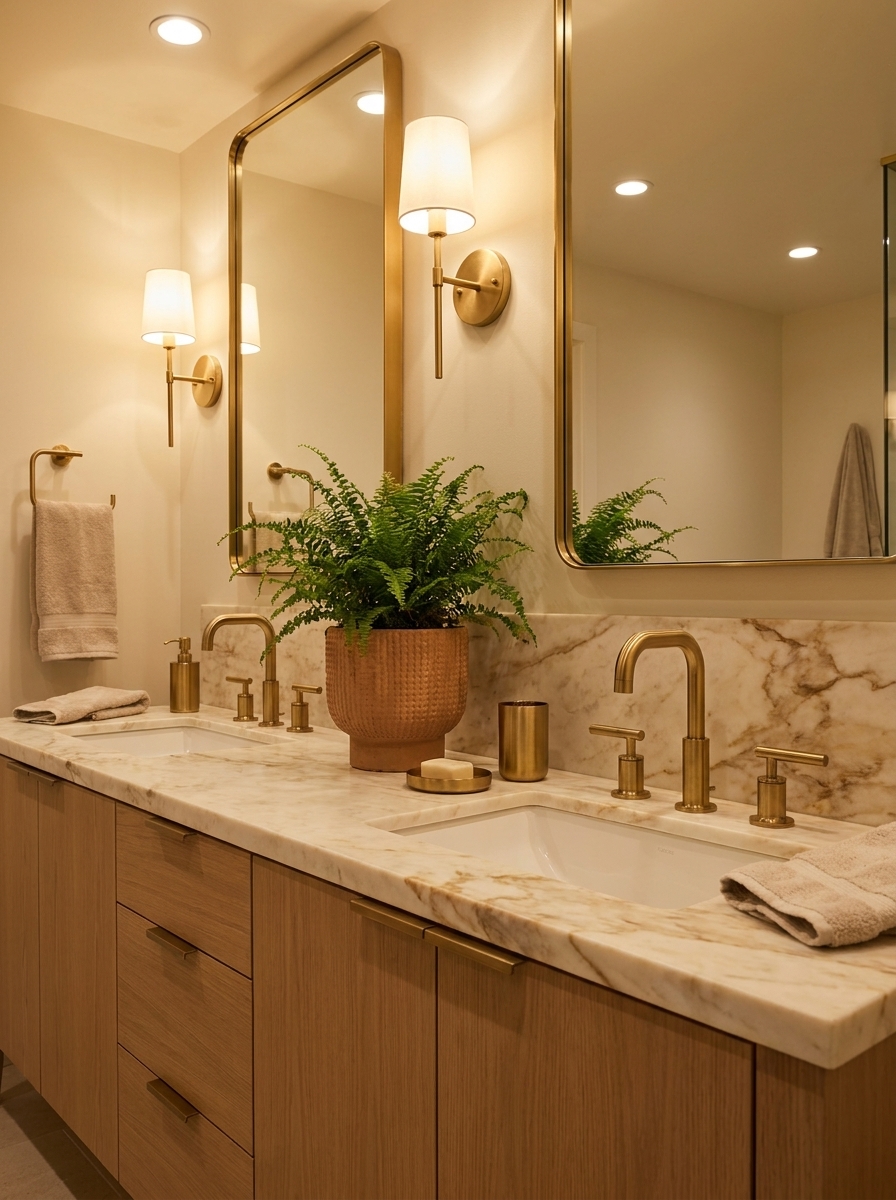
Kohler’s Purist line is the faucet series that defined architectural minimalism in American bathroom design over the past decade, and the 2026 version in Vibrant Brushed Moderne Brass is arguably its most compelling iteration. The Purist’s distinctive element is the geometric lever handle—a flat rectangular form that reads more like a door lever than a conventional faucet handle, giving the fixture a sculptural quality that most faucets at any price point don’t achieve.
The Vibrant Brushed Moderne Brass finish sits warmer than standard brushed gold—closer to aged brass than to champagne—and pairs exceptionally well with natural stone countertops and wood-tone cabinetry. Kohler’s PVD coating means this finish will hold its character without requiring special cleaning products or sealing. Widespread configuration (8-inch centres) gives it presence on a double-vanity without feeling oversized.
Best paired with: Kohler’s Purist towel bar and bath accessories in matching finish for a complete, cohesive system.
#3 Moen Arris Single-Handle — Matte Black
| Finish: Matte BlackPrice range: $175 – $230 Style: Contemporary slim profile | Single-handle centerset Best for: Modern bathrooms, guest bathrooms, mid-range renovation |
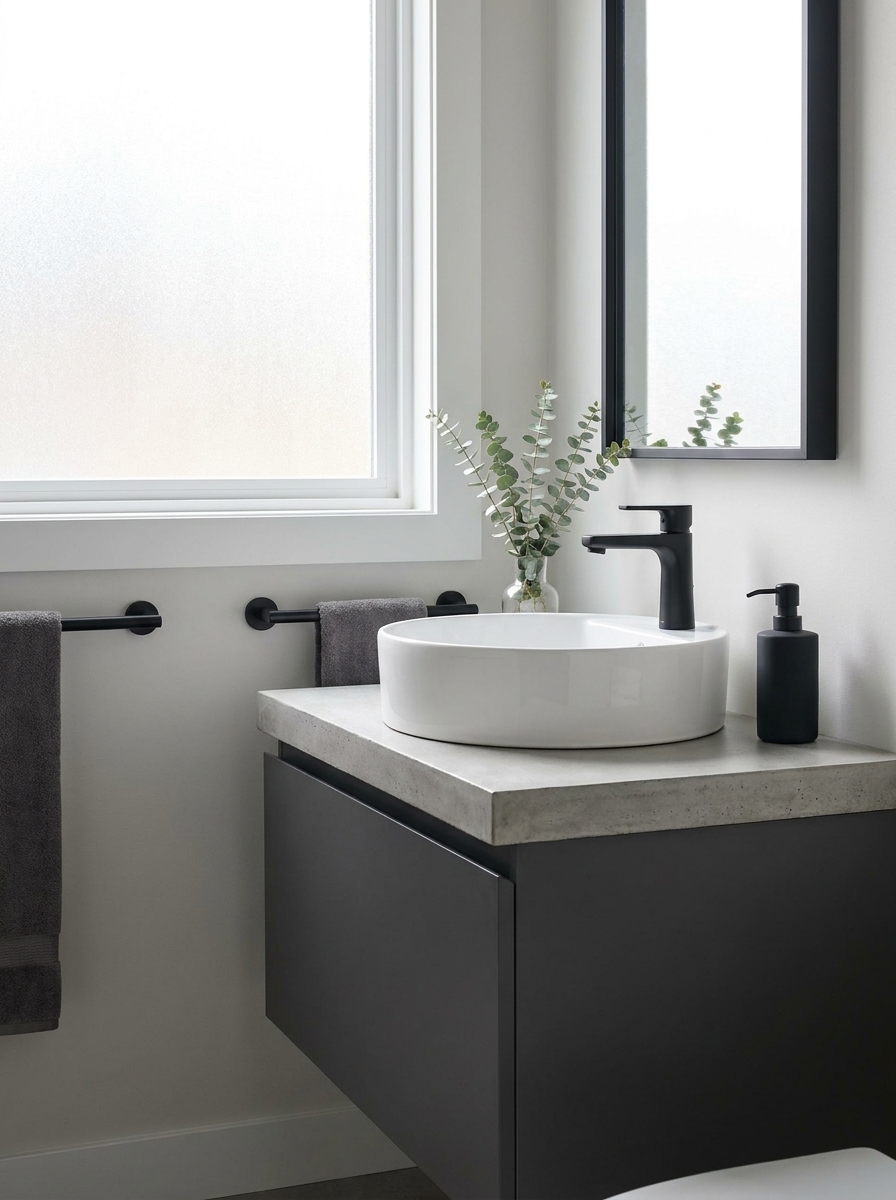
The Moen Arris occupies the credible mid-range of the matte black market—more refined than the entry-level options but not requiring the premium budget of the Brizo or Watermark tier. Its distinguishing design element is the slim cylindrical spout (18mm diameter at the neck) which gives it a more delicate visual presence than the squared-off spouts common in this price category.
Moen’s Spot Resist finish is their proprietary fingerprint-resistance treatment, and it genuinely performs as described—the matte black stays looking clean with less maintenance than competitors at this price. The single-handle waterfall-adjacent spout profile works particularly well with vessel sinks, where the spout height relationship matters more than on an undermount configuration.
#4 Brizo Kintsu Widespread — Luxe Gold
| Finish: Luxe Gold (PVD) Price range: $780 – $1,100 Style: Architectural luxury | Widespread two-handle Best for: Primary bathrooms, luxury renovation, statement hardware |
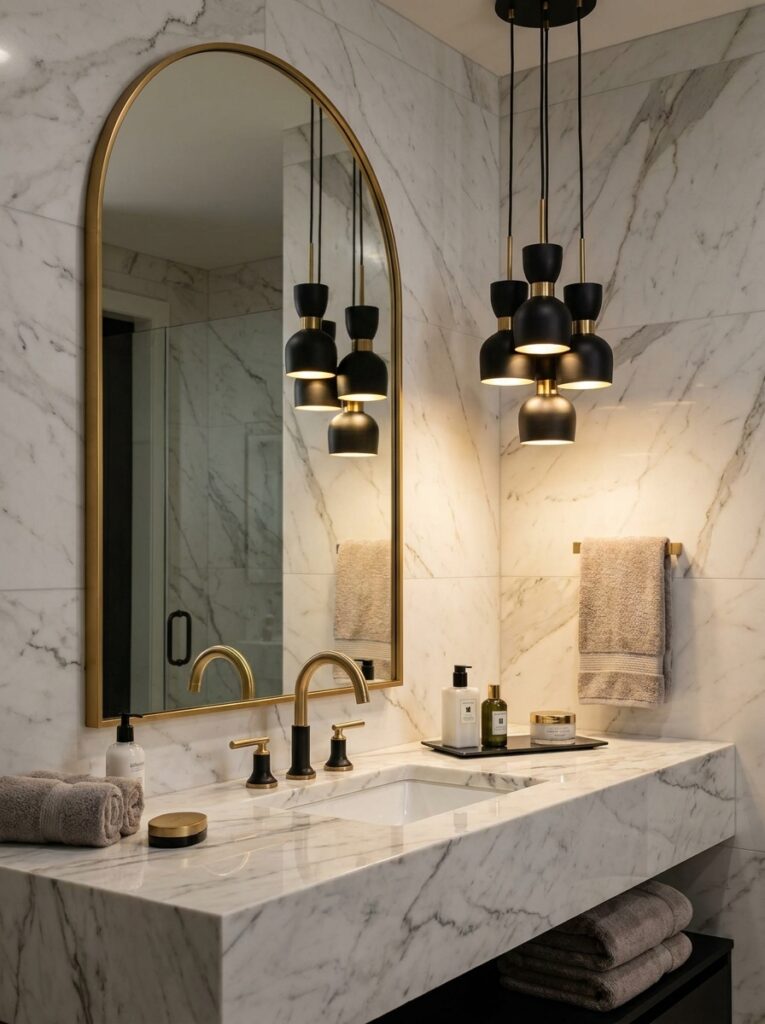
Brizo operates at the intersection of fine jewellery design and plumbing hardware, and the Kintsu line is their most explicit statement of that position. Designed in collaboration with Jason Wu, the Kintsu’s distinguishing feature is the two-tone combination of Luxe Gold and Matte Black—a dual-finish approach that no other manufacturer at this scale has executed as cohesively.
The spout profile is architectural in a way that goes beyond most faucet design: a thin rectangular arm extending from a squared base, with water emerging from a precision-cut slot rather than a conventional aerator opening. At $780–$1,100, this is a faucet for bathrooms where every fixture decision has been deliberate. The Luxe Gold finish has been in production long enough to have real field data on durability—it holds exceptionally well under daily use.
Brizo offers a ‘Design Your Own’ configuration tool that lets you mix finishes across handle and spout—worth exploring before purchasing.
#5 American Standard Townsend Widespread — Matte Black
| Finish: Matte Black Price range: $195 – $260 Style: Transitional | Widespread two-handle Best for: Traditional bathrooms updated with contemporary hardware |
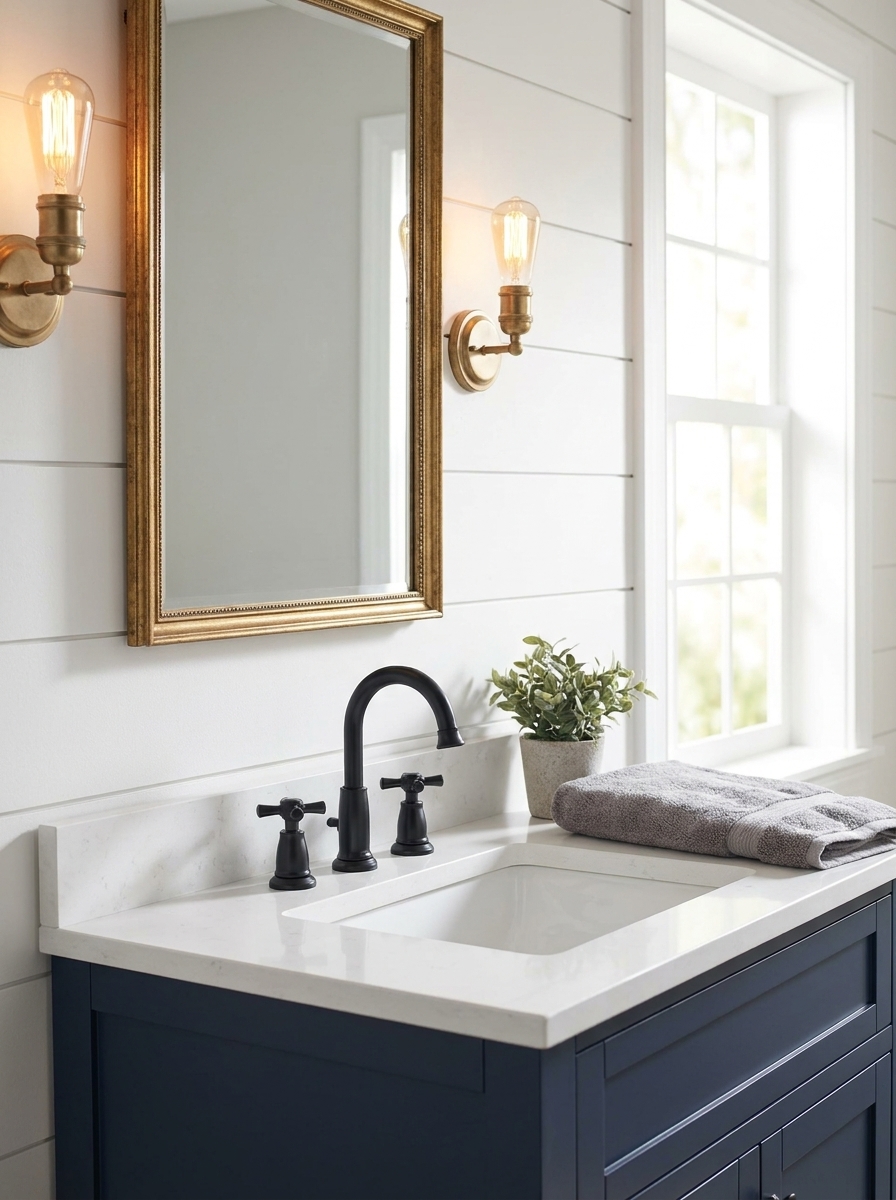
American Standard’s Townsend is the most versatile design in this list—its transitional form language (slightly curved spout, cross-style handles) works in both traditional and contemporary contexts in a way that purely geometric or purely architectural faucets don’t. In matte black, it can update a more traditional bathroom without requiring a full gut renovation to look intentional.
The cross-handle design also has practical advantages: easier to operate for users with reduced grip strength, and visually distinctive from the lever-handle majority. American Standard’s warranty (lifetime on faucets) is competitive. At this price, it’s one of the strongest widespread options in the transitional category.
#6 Hansgrohe Talis S Single-Handle — Brushed Bronze
| Finish: Brushed Bronze Price range: $340 – $470 Style: European minimalist | Single-handle centerset Best for: Spa bathrooms, warm-toned interiors, design-led renovation |
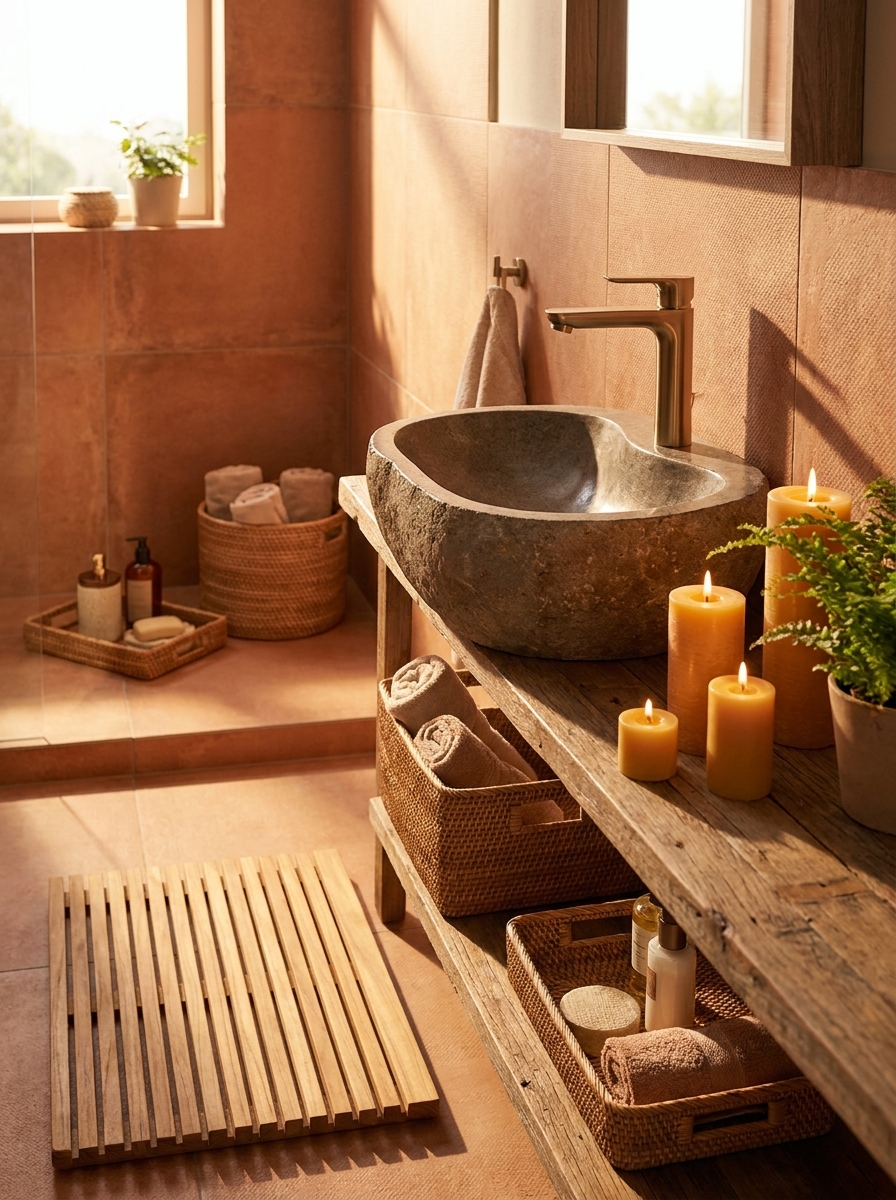
Hansgrohe is the European manufacturer that most American buyers encounter without realising it—they’re behind a significant portion of the faucets installed in high-end hotel bathrooms across North America. The Talis S is their most refined single-handle design: an elliptical spout profile with a matching D-shaped handle that reads as quietly European without being obviously Bauhaus.
Brushed Bronze is Hansgrohe’s most distinctive finish for 2026—warmer and deeper than brushed gold, closer to the oxidised brass of antique fixtures without the maintenance requirements of actual unlacquered metal. The aerator delivers a consistent laminar flow that’s noticeably better than most competitors at this price—the water falls in a tight, controlled column rather than spreading at the outlet.
#7 Vigo Noma Single-Hole — Matte Black
| Finish: Matte Black Price range: $129 – $185 Style: Modern geometric | Single-hole single-handle Best for: Small bathrooms, powder rooms, modern vessel sink pairings |
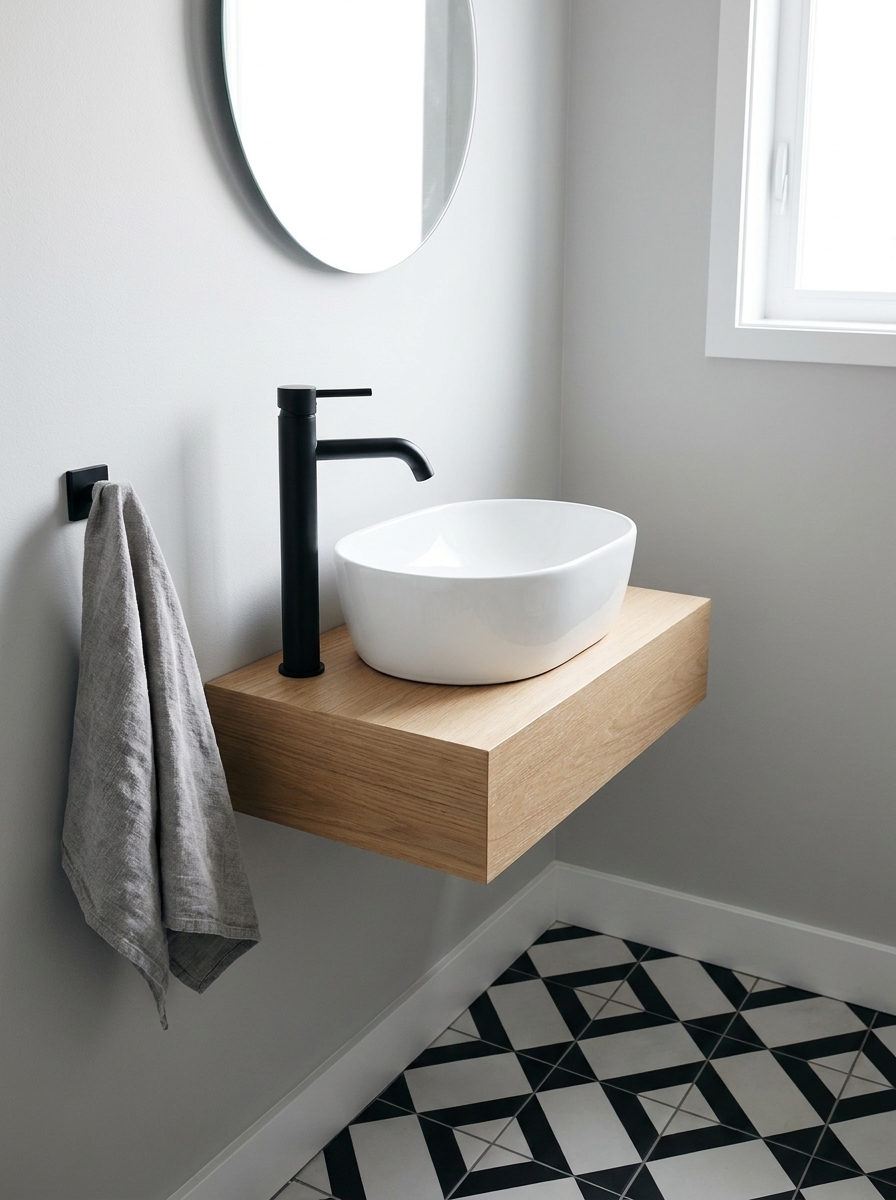
Vigo doesn’t have the brand recognition of Delta or Moen, but they consistently produce design-forward faucets at prices that undercut the major manufacturers by 20–30%. The Noma is their best current design: a single-hole configuration with an unusually high spout arc (9.5 inches) that works beautifully with vessel sinks or deep basin profiles where standard spout heights create splash issues.
The lever handle is proportioned more generously than most faucets at this price—it doesn’t feel like a cost-cut afterthought. The matte black finish is solid rather than exceptional (not PVD), which means it may show more wear over five-plus years than the Delta or Moen options, but at this price point the trade-off is reasonable for bathrooms that don’t see primary bathroom use levels.
#8 Watermark Designs Elan Widespread — Unlacquered Brass
| Finish: Unlacquered Brass (living finish) Price range: $890 – $1,150 Style: Artisanal organic | Widespread two-handle Best for: Luxury primary bathrooms, distinctive patina aesthetic |
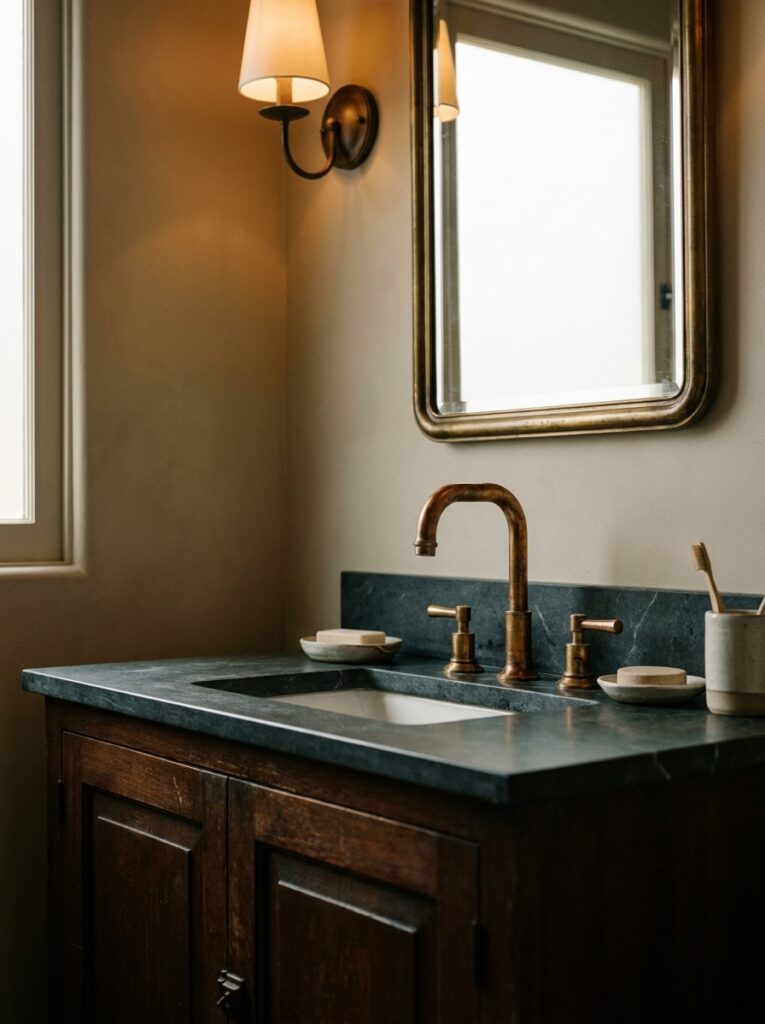
Watermark Designs is the specialist recommendation for buyers who want unlacquered brass done properly. Unlacquered brass is the most demanding faucet finish to live with—it requires occasional polishing, will mark if left in contact with acidic products, and develops visible patina over time—but in the right bathroom context, the living finish quality creates something that genuinely improves over years rather than simply aging.
The Elan’s design is straightforward in a way that suits the unlacquered finish: clean lines, no ornamentation, a widespread configuration with handles that reference mid-century architectural hardware. This is a faucet for a specific buyer with specific aesthetic intentions—not the right choice for someone who wants maintenance-free hardware, but genuinely outstanding for the buyer who does.
#9 Pfister Brea Single Handle — Brushed Nickel / Matte Black Two-Tone
| Finish: Matte Black and Brushed Nickel (two-tone) Price range: $109 – $155 Style: Contemporary two-tone | Single-handle centerset Best for: Modern bathrooms, value-focused renovation with design consideration |
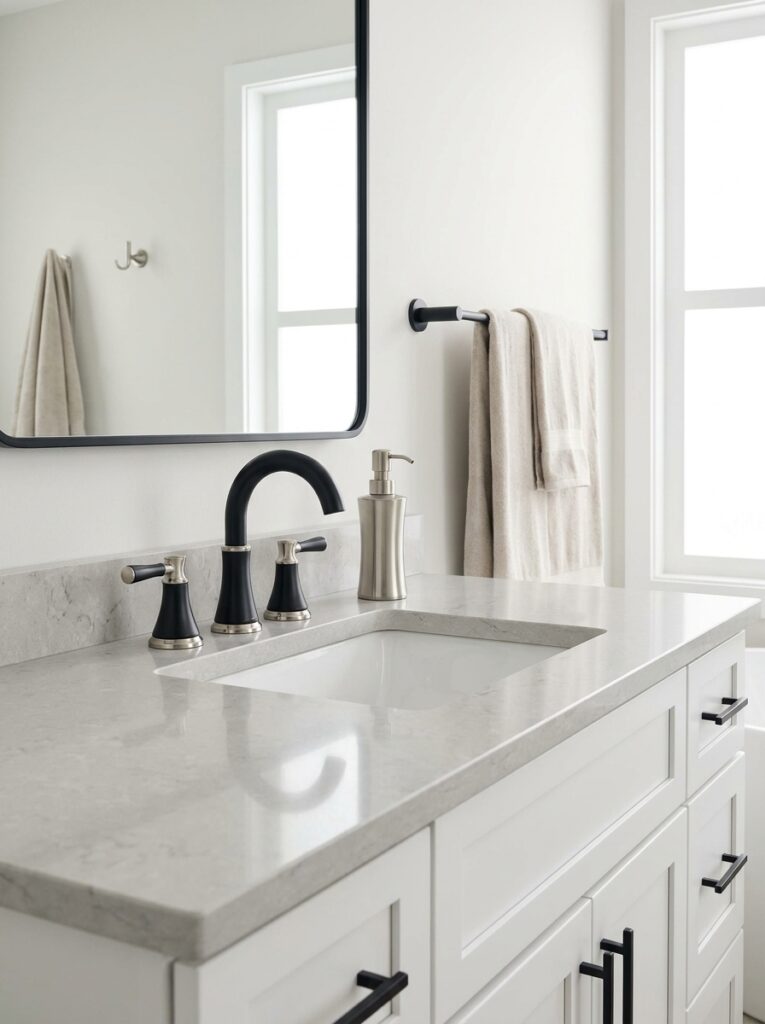
The two-tone faucet trend—combining matte black with a secondary metallic finish—is one of 2026’s more interesting design directions, and Pfister’s Brea executes it at an accessible price point. The combination of matte black spout and body with brushed nickel handle accents avoids the uniform darkness of all-black hardware while still anchoring the fixture in the contemporary palette.
Pfister’s Xtract technology integrates a water filter into the faucet body—a feature that’s genuinely useful rather than a marketing add-on, particularly in markets with hard water or taste concerns. The filter replaces annually at approximately $30. At this price, the Brea represents strong value for buyers who want some design differentiation without a major budget commitment.
#10 Grohe Essence Widespread — Hard Graphite
| Finish: Hard Graphite (PVD) Price range: $520 – $680 Style: European minimalist | Widespread two-handle Best for: Contemporary bathrooms, design-forward renovation, dark palette schemes |
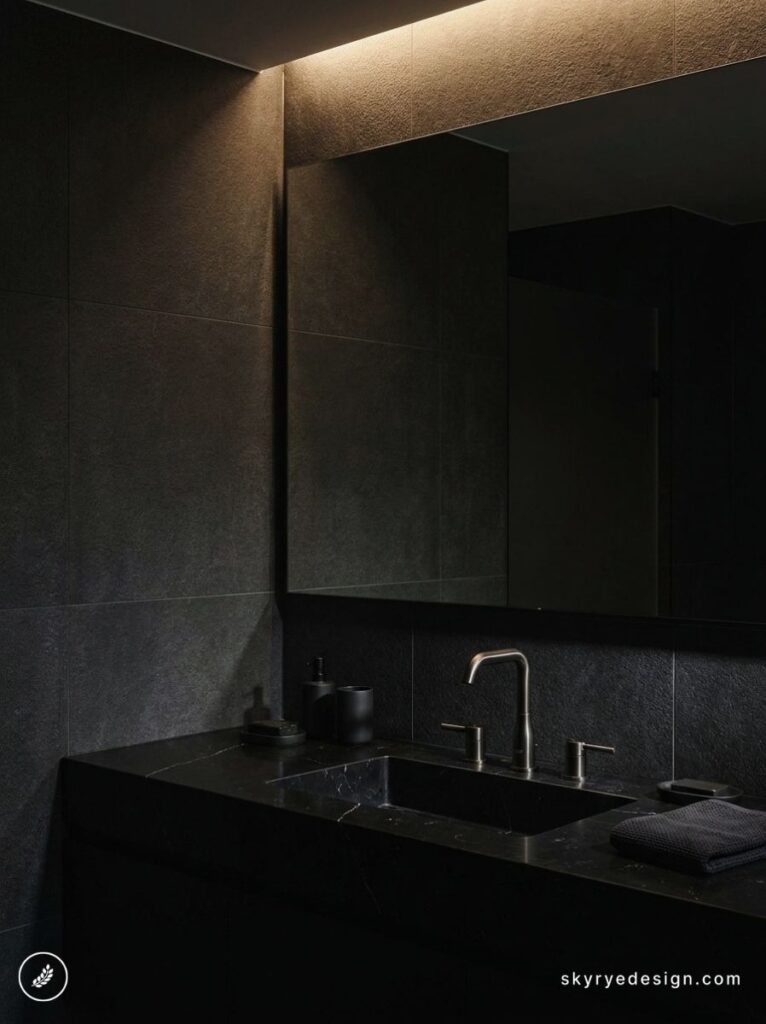
Grohe’s Hard Graphite finish is the most distinctive version of the dark faucet aesthetic in 2026—a deep charcoal that reads differently from standard matte black, with a subtly warm undertone that pairs exceptionally well with dark stone countertops and charcoal grout lines. The Essence’s design is distinctly European: clean geometric forms, a high arc spout with a precise cylindrical profile, and lever handles that are flush-finished with no visible fasteners.
At $520–$680, the Grohe Essence occupies the premium mid-range—below Brizo and Watermark, above Delta and Moen’s design-forward lines. The PVD Hard Graphite finish comes with Grohe’s StarLight warranty, which covers the finish against tarnishing and corrosion for the lifetime of the fixture. The aerator delivers a notably consistent laminar flow, and the widespread configuration (standard 8-inch centres) suits most double-vanity configurations.
Hard Graphite pairs exceptionally with black grout lines, charcoal-veined marble, and dark wood vanity cabinetry. For a lighter bathroom, consider Grohe’s Cool Sunrise (brushed gold) version of the same design.
How to Choose: The Three Decisions That Actually Matter
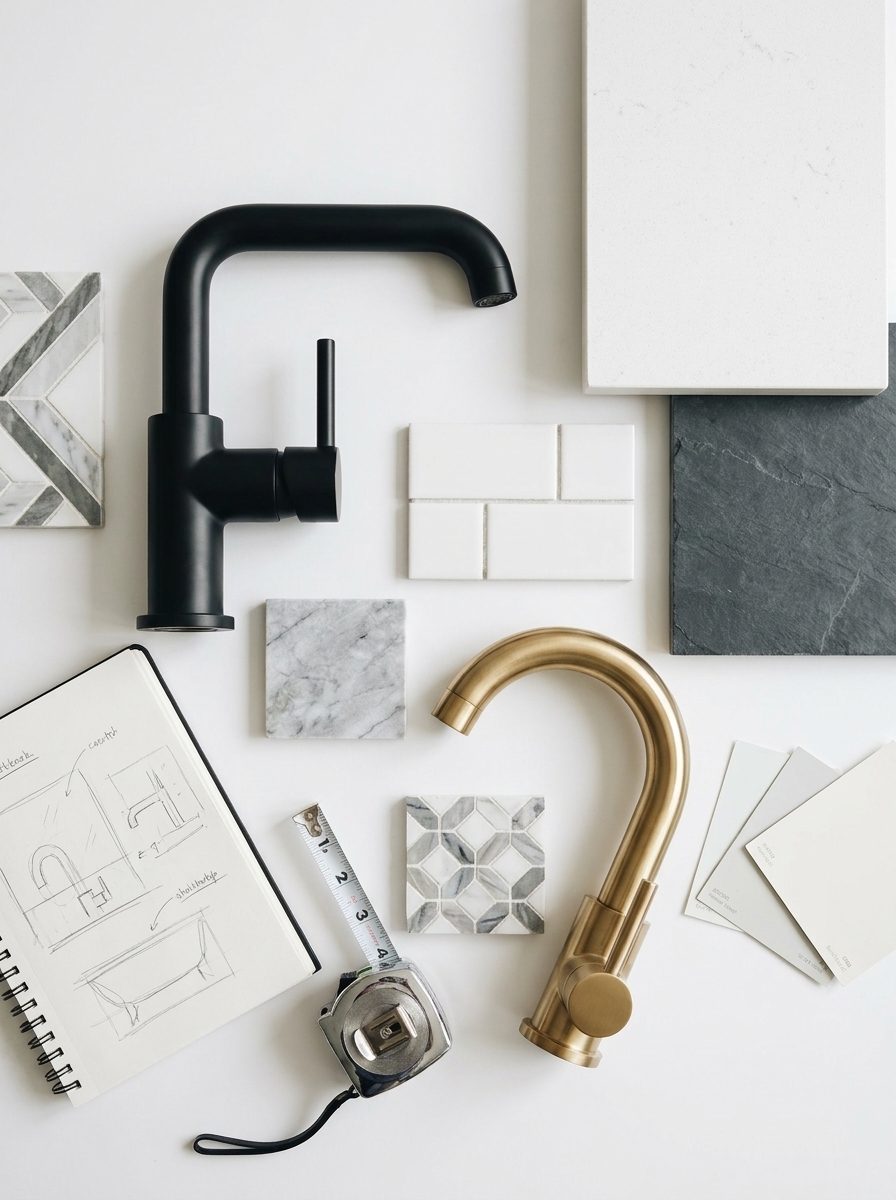
1. Finish First, Then Form
Choose your finish before you choose your faucet design. The finish determines how the fixture will interact with your countertop material, wall tile, and cabinet hardware—and changing your finish decision is significantly more disruptive than adjusting the specific faucet model within a finish category. Matte black for contemporary, monochromatic bathrooms. Brushed brass or champagne bronze for warm-toned natural material bathrooms. Brushed nickel for versatile, light-toned spaces. Hard graphite or unlacquered brass for distinctive design-forward bathrooms.
2. Configuration to Counter
Your countertop pre-drilling determines your faucet configuration options—or your willingness to re-drill determines how much flexibility you have. Centerset (one or three holes at 4-inch centres): most common in standard bathrooms. Widespread (three holes at 8-inch centres): gives more visual presence, better on longer countertops. Single-hole: cleanest visual result, requires a countertop with a single pre-drilled hole or a countertop you’re drilling new. Wall-mount: most architecturally dramatic, requires supply lines inside the wall.
3. Warranty and Service Reality
The lifetime warranty offered by Delta (Diamond Seal), Moen (Lifetime Limited), and Kohler covers what actually fails in faucets—cartridge wear and finish tarnishing. Check whether the warranty requires registration and whether it covers the finish specifically or just the mechanical components. A finish warranty matters as much as a mechanical warranty for a $400+ faucet in a daily-use context.
| ⚙ The Invisible Engine Behind Your Luxury Faucet You’ve chosen the faucet. The finish is right, the form is deliberate, the hardware tells exactly the story you wanted the bathroom to tell. But there’s an element of bathroom performance that no faucet manufacturer can control, and it has more influence on how your beautiful fixtures actually function and how long they last than any design decision you’ve made. It’s the water itself. |
The Invisible Engine Behind Your Luxury Faucet
A Brizo Kintsu in Luxe Gold costs over $900. A Watermark unlacquered brass widespread costs over $1,000.

These are serious investments in the physical quality of your bathroom—and both of them are degraded, sometimes significantly, by water quality issues that originate not at the faucet but at the water heater and supply system upstream.
Hard water—water with elevated calcium and magnesium mineral content, which describes the supply in roughly 85% of American homes—deposits scale at every point where water is heated or where flow velocity drops. The faucet aerator is one of those points. The connection between supply line and faucet body is another. Over time, mineral deposits reduce flow rate, alter the water pressure at the spout, and create the slow drip that means a cartridge is wearing faster than it should because scale is working its way into the seal.
The water heater is where this process begins. Sediment accumulates at the bottom of conventional tank water heaters from the first day of operation, and that sediment—calcium carbonate, magnesium deposits, sand, and pipe particulate—travels with the hot water to every fixture in your home. Plumbing professionals recommend that homeowners who want to protect their fixtures and maintain consistent water temperature
Plumbing professionals recommend that homeowners who want to protect their fixtures and maintain consistent water temperature examine their water heaters every six months — flushing sediment from the tank, checking the anode rod, and confirming that the pressure relief valve is functioning correctly. This maintenance cycle prevents the compounding of mineral deposits that eventually shortens the heater’s service life and reduces water quality at every downstream fixture.
The financial case for water system maintenance is quantifiable. A water heater operating with significant sediment accumulation works harder to maintain set temperature—the heating element or burner is separated from the water by an insulating layer of mineral deposit. Studies of residential water heater efficiency show that sediment accumulation can reduce heating efficiency
Studies of residential water heater efficiency show that sediment accumulation can reduce heating efficiency by as much as 48% over its lifespan compared to a properly maintained unit. That reduction shows up directly in energy bills — and compounds the degradation of the fixtures connected to a system delivering increasingly mineralised water.
When a water heater reaches the end of life—typically 8–12 years for a conventional tank unit—replacement cost is the other side of the maintenance calculation. The current market for residential water heater replacement
The current market for residential water heater replacement ranges from $874 to $1,765, with a national average of $1,293. Homeowners who maintain their water heater through its full service life recover a meaningful portion of that cost through extended equipment life and lower operating costs over the unit’s lifetime.
The practical connection to your faucet selection: if you’re investing $400–$1,000 in bathroom hardware, the water system that delivers water to those fixtures deserves proportional attention. A whole-home water softener ($400–$1,200 installed, depending on capacity) dramatically reduces mineral deposit accumulation at every fixture. A dedicated sediment filter on the supply line before the water heater catches particulate before it reaches the system. Regular water heater maintenance keeps the source water quality consistent throughout the heater’s service life.
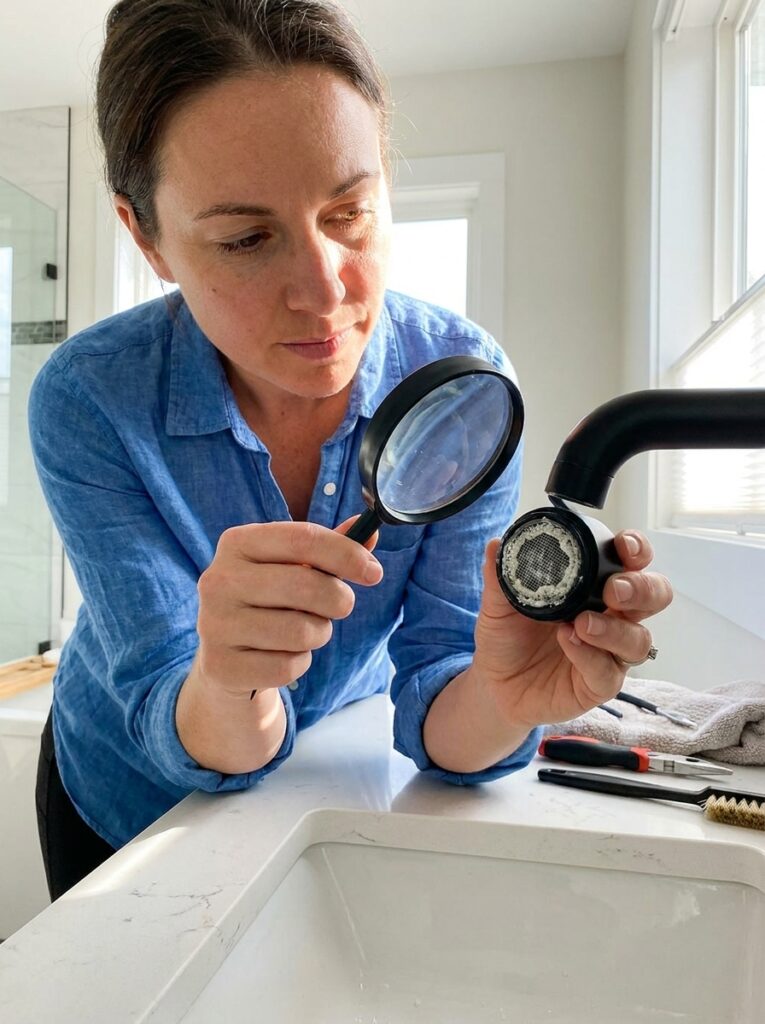
The bathroom you’re designing has two layers: the visible design layer you’ve been thinking about since you started this research, and the invisible infrastructure layer that determines how long that design performs as intended. The faucet is the design layer’s most important element. The water heater and supply system are the infrastructure layer’s most important element. Both deserve the same quality of decision-making.
Frequently Asked Questions
How long do modern bathroom faucets last?
Quality faucets from major manufacturers (Delta, Moen, Kohler, Hansgrohe, Grohe) are designed for 15–20 years of daily use with cartridge replacements as needed. The cartridge is the mechanical heart of the faucet—it controls flow and temperature mixing—and most manufacturers include cartridge replacement under their lifetime warranty. The finish typically outlasts the mechanical components when PVD-coated, though unlacquered or lacquered finishes may show wear earlier. Hard water accelerates wear on aerators and cartridges in all faucets regardless of quality.
Is matte black harder to maintain than chrome?
Counterintuitively, no. Matte black PVD-finished faucets are easier to maintain than polished chrome because they don’t show water spots and fingerprints the way highly reflective finishes do. A soft cloth wipe after each use keeps a matte black faucet looking pristine. Avoid abrasive cleaners, harsh chemicals, and anything acidic (vinegar-based cleaners can damage PVD coatings over time). Polished chrome requires more frequent cleaning to look its best and shows every imperfection in the finish.
What’s the difference between centerset and widespread faucets?
Centerset faucets have the handles and spout on a single base unit, with holes spaced 4 inches apart (or single-hole on some designs). They’re more compact and typically less expensive. Widespread faucets have completely separate handle and spout components, with holes spaced 8–16 inches apart. They give more visual presence on wider countertops and allow for greater design variation, but require more countertop holes and are typically more expensive. Your countertop’s existing hole configuration usually determines which type is practical for a renovation without countertop replacement.
Can I install a bathroom faucet myself?
A standard centerset or widespread faucet replacement on an existing sink is a reasonable DIY project for anyone comfortable with basic plumbing. The process involves turning off supply valves under the sink, disconnecting and removing the old faucet, connecting the new unit’s supply lines, and checking for leaks. Most faucets include all required hardware and reasonably clear instructions. Wall-mount faucets and any installation requiring new supply line routing should be left to a licensed plumber—the complexity increases significantly and improper installation can cause water damage inside the wall.
How does water quality affect my faucet’s lifespan?
Significantly. Hard water (high mineral content) deposits calcium and magnesium scale at the aerator, within the cartridge mechanism, and at supply line connections. Over time, this reduces flow rate, accelerates cartridge wear, and causes the slow drips that indicate seal degradation. A whole-home water softener is the most comprehensive solution. For targeted protection, aerator filters and periodic aerator cleaning (soaking in diluted white vinegar monthly in very hard water areas) extend aerator life considerably. Regular water heater maintenance reduces the sediment load delivered to all downstream fixtures.
Final Thought: The Fixture That Earns Its Place
The bathroom faucet is one of the few domestic objects that is purely physical—there’s no digital interface, no firmware update, no planned obsolescence built into its design. A well-chosen faucet from a manufacturer who builds for longevity can genuinely last as long as the bathroom itself.
Installing new faucets is a high-impact, low-cost way to execute a successful budget bathroom remodel.
The ten faucets in this guide span from $89 to $1,150—a range that reflects the genuine diversity of design quality and finish technology available in 2026. At every price point, the principle is the same: choose a finish appropriate for your water conditions and cleaning habits, a configuration that suits your countertop and sink, and a manufacturer who stands behind their mechanical warranty with parts availability to match.
The water system behind the faucet is the silent partner in that longevity. Maintain it, and the fixture earns its place in the bathroom for decades. Ignore it, and even the most beautifully designed hardware will underperform. The investment in the visible and the invisible is the complete design decision.
- 81shares
- Facebook0
- Pinterest81
- Twitter0
- Reddit0