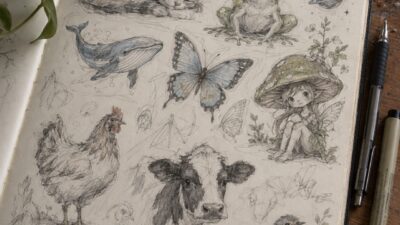
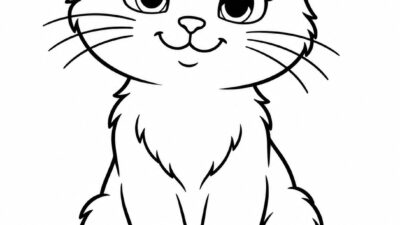
I’ve stared at a blank sketchbook page for so long that the boredom I was trying to fix got worse. That particular paralysis — wanting to draw, having nothing to draw — is its own special frustration.
The problem is never a lack of things to draw. It’s a lack of a starting point.
What should you draw when you are bored?
When you are bored, draw something small, visible, and specific enough that you can start without planning. Good first choices include your coffee cup from above, your resting hand, a crescent moon with one cloud, your phone and keys, a single eye, a candle, a leaf, a mushroom, a sleeping cat, or the pattern of light on the nearest wall.
These subjects work because they remove the blank-page decision. You already have the object, the shape is readable, and the sketch can be finished in a few minutes. If you want an easy warm-up, choose simple geometric or organic forms. If you want real practice, draw the same object three times, changing the angle or time limit. The goal is not a perfect page. The goal is to get your hand moving.
- Quick Doodles (5 Minutes or Less)
- 1. A coffee cup from above
- 2. Your own hand in whatever position it's resting
- 3. A simple moon with one cloud
- 4. A tiny house on a hill
- 5. Your phone, keys, or whatever is on the desk
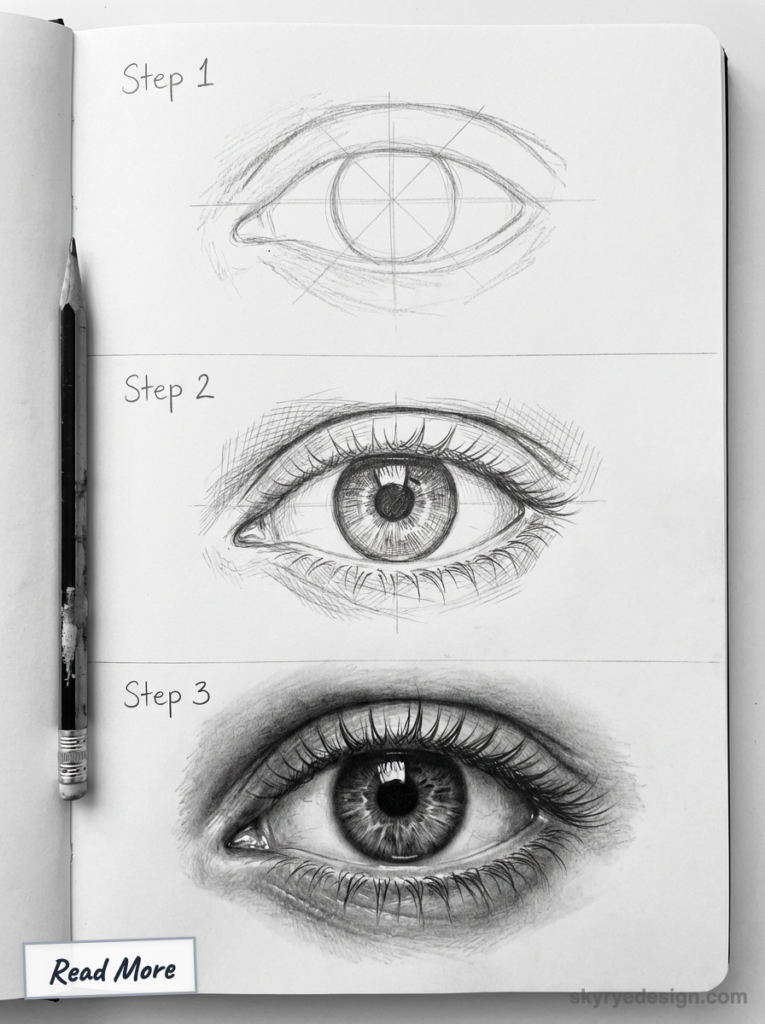
- 6. A single eye
- 7. A spiral that fills the page
- 8. Block letters spelling your name
- 9. A simple candle with a flame
- 10. A leaf from the nearest plant
- Nature and Plants
- 11. A succulent from above (bird's-eye view)
- 12. A single mushroom
- 13. Wildflowers in a loose cluster
- 14. A lily pad on still water
- 15. A cactus with personality
- 16. Tree bark texture study
- 17. A branch with cherry blossoms
- 18. Raindrops on a window
- 19. A pinecone
- 20. Grass blades in the wind
- 21. A single dandelion going to seed
- 22. An autumn leaf with detailed veining
- Animals
- 23. A sleeping cat curled into a circle
- 24. A goldfish in a bowl
- 25. A dog looking over its shoulder
- 26. A bird on a wire
- 27. An octopus with curling tentacles
- 28. A butterfly with symmetrical wings
- 29. A hedgehog from the side
- 30. A whale breaching
- 31. A fox sitting
- 32. A snail on a leaf
- 33. A pair of hands cupping a tiny bird
- Food and Objects
- 34. A stack of pancakes with syrup dripping
- 35. A half-eaten apple
- 36. A mug with steam rising
- 37. A lit candle melting
- 38. Headphones lying on a flat surface
- 39. An open book with curved pages
- 40. Glasses resting on a table
- 41. A piece of fruit cut in half (kiwi, lemon, orange)
- 42. A lit match
- 43. A pair of old sneakers
- 44. A camera (film or digital)
- Architecture and Spaces
- Figures and Portraits
- Fantasy and Imagination
- 61. A dragon curled around a mountain peak
- 62. An underwater city
- 63. A tiny door at the base of a tree
- 64. A robot made entirely of household objects
- 65. A map of an imaginary island
- 66. A spaceship design
- 67. A creature that's half animal, half plant
- 68. A portal between two different worlds
- 69. A ghost in an everyday situation
- 70. A cloud with a city on top
- Patterns and Abstract
- Seasonal and Holiday Ideas
- Challenges for When You Actually Want to Work
- For When You Want Something Calming
- Things Around You Right Now
- Bonus: 10 More for When You've Done All 100
- 101. Your city's skyline from memory
- 102. A compass rose with decorative detail
- 103. The cross-section of a geode
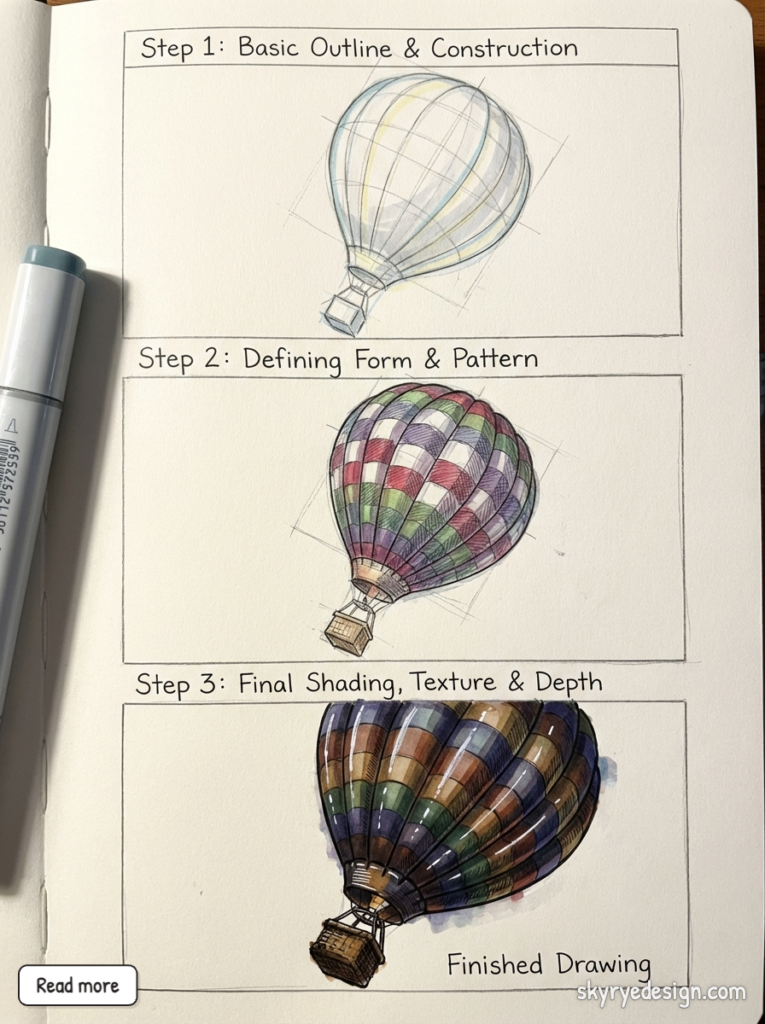
- 104. A hot air balloon with a patterned envelope
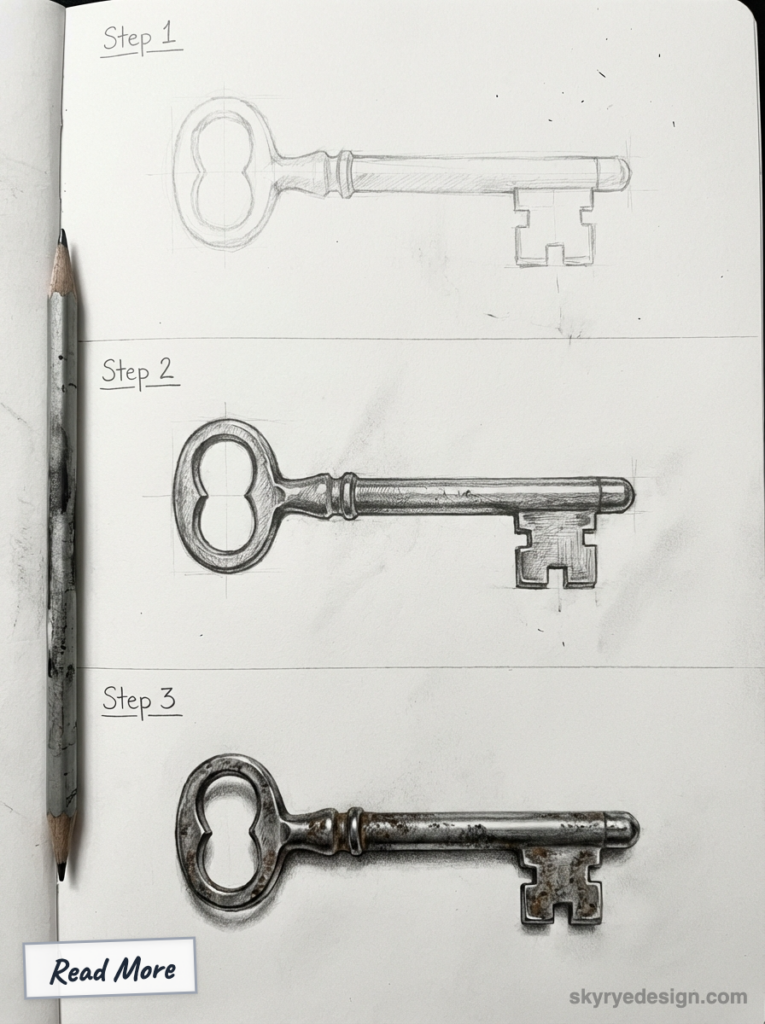
- 105. An antique key with an elaborate bow design
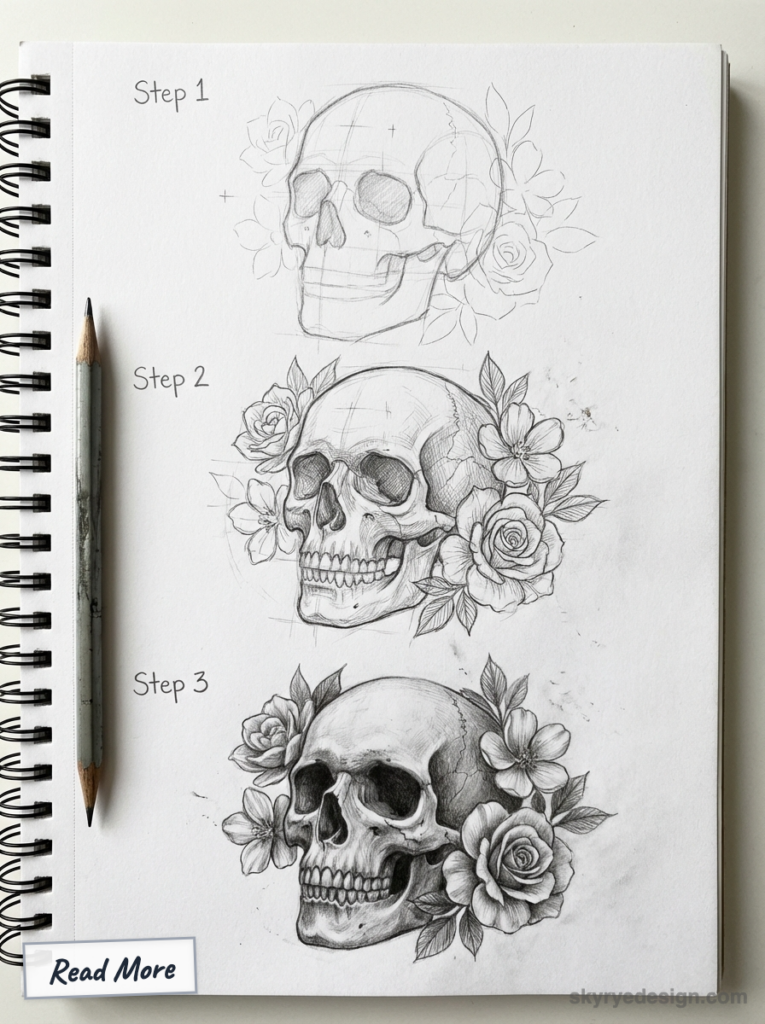
- 106. A skull with flowers growing through it
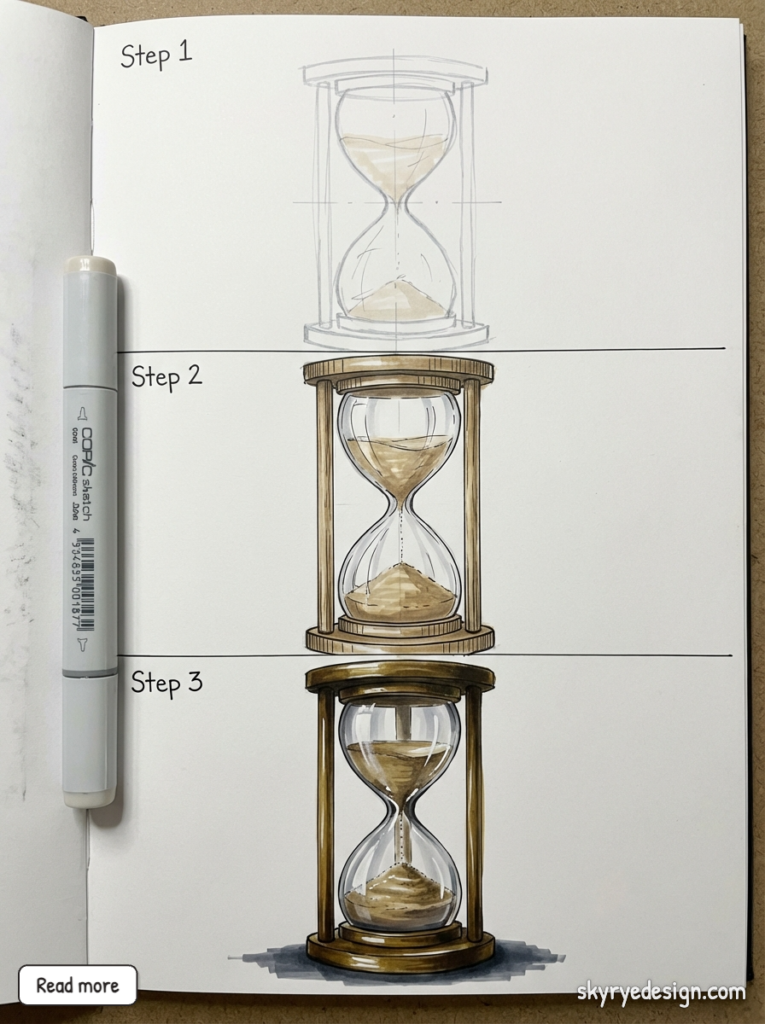
- 107. An hourglass half-empty
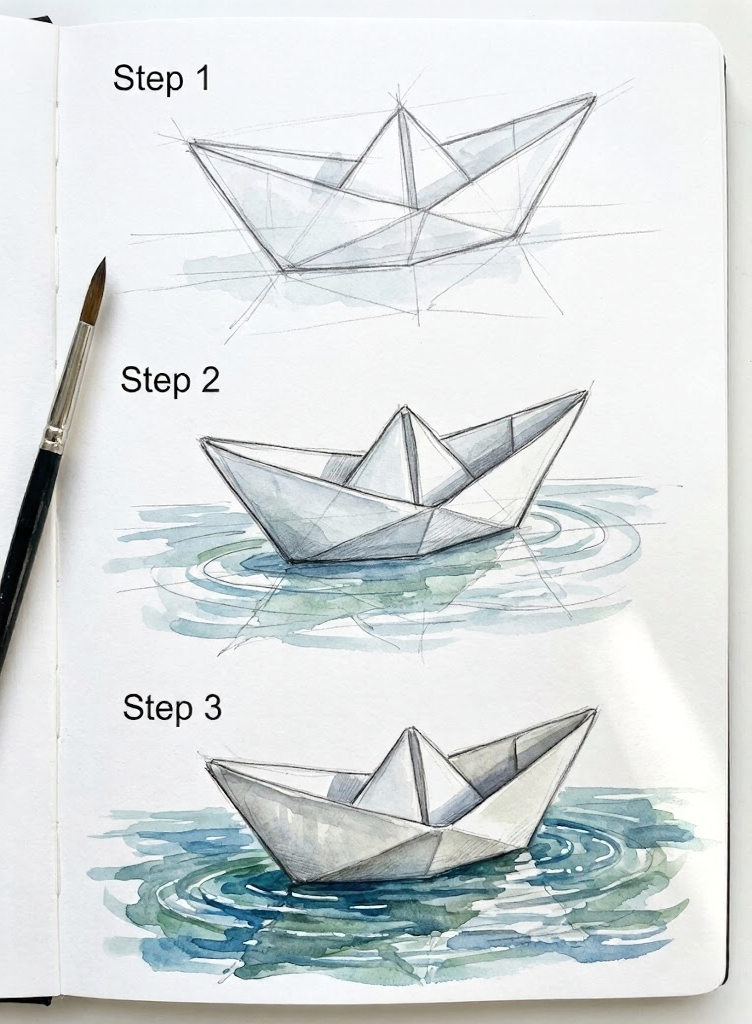
- 108. A paper boat on water
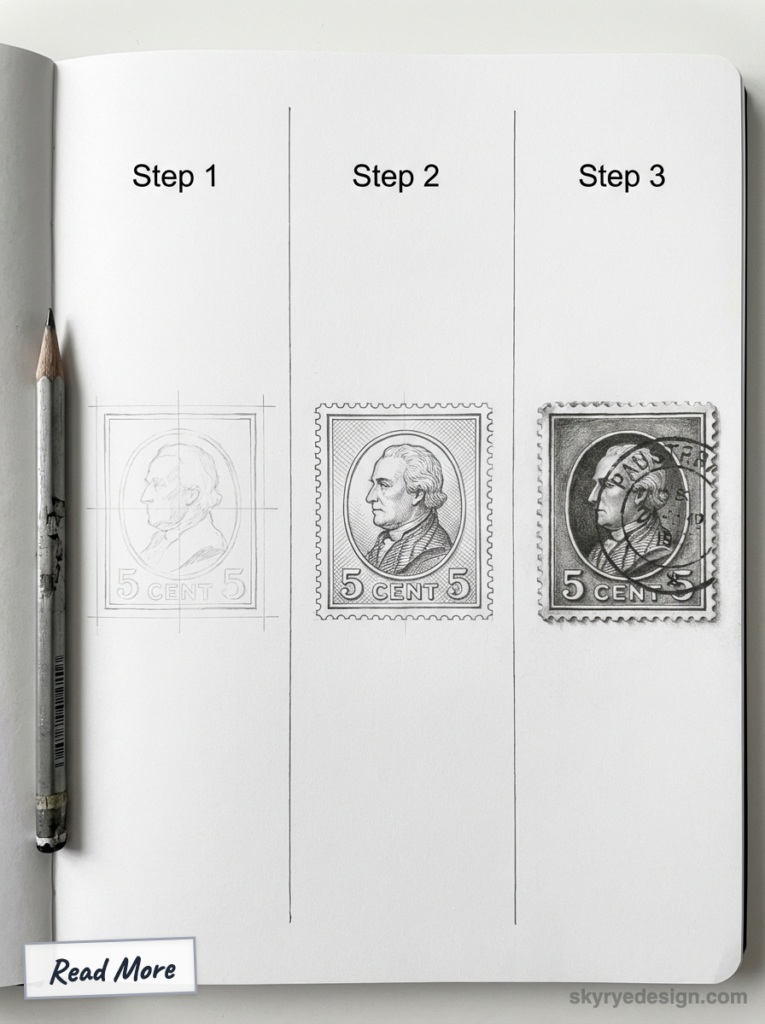
- 109. A vintage postage stamp design (make one up)
- 110. Whatever you were thinking about
- FAQ
- Q: What should I draw when I have no ideas?
- Q: What are the easiest things to draw for beginners?
- Q: How do I get better at drawing when I'm bored?
- Q: What do artists draw when they have artist's block?
- Q: What should I draw on paper when bored at school or work?
- Q: How long should I spend on a drawing when I'm just filling time?
- Conclusion
This list gives you 100+ specific things to draw, organized by mood, not skill level. Some take two minutes. Some will absorb an hour. Some are for days when you want to switch your brain off completely; others are for when you want a real challenge. All of them will get your hand moving — which is the only thing that actually matters when boredom hits.
No particular skill required. Just a pencil and something to draw on.
Choose by time: If you only have a minute, pick a shape or object with one clean silhouette. If you have longer, choose something with structure, shadow, and a little texture so the sketch teaches you something.
If you want something more structured than a quick doodle, try this guitar drawing step-by-step guide and treat it as a proportion exercise.
| Time | Try this | Why it works |
|---|---|---|
| 2 minutes | Spiral, candle, moon, leaf | Low pressure and easy to finish before you overthink it. |
| 5-10 minutes | Coffee cup, resting hand, mushroom, single eye | Simple shapes with enough detail for observation practice. |
| 20 minutes | Small still life, texture grid, profile silhouette | Enough time to place the big forms, then add value and edges. |
| 1 hour | Room corner, street view, full figure, fantasy scene | Best for days when you want a real drawing session, not a warm-up. |
Disclosure: This post contains affiliate links. As an Amazon Associate I earn from qualifying purchases. If you buy through links in this post, we may earn a small commission at no extra cost to you.
Choose by mood: The easiest drawing prompt is not always the best one. Match the idea to your mood first, then decide how polished the page needs to be.
Beginner drawing kit
Want to turn these ideas into real sketchbook practice?
If you are working through this list, a few simple supplies will make the process easier: a sketchbook, graphite pencils, eraser, fineliners, and optional colored pencils for finishing your favorite drawings.
This article may contain affiliate links. As an Amazon Associate I earn from qualifying purchases.
Why quick drawing prompts work: Quick prompts turn drawing into observation instead of performance. A two-minute mug sketch teaches ellipses. A hand sketch teaches proportion.
A leaf study teaches edge variation and vein structure. I use this kind of small, repeatable exercise when I need to warm up before more serious work, because it shows what my eye is missing without making the page feel precious. Museum education programs use similar slow-looking and mindful drawing exercises for the same reason: close looking is part of the practice. See the National Gallery of Art mindful drawing guide and the National Portrait Gallery mindful drawing exercise for simple ways to slow down and draw from observation.
| Mood | Best drawing idea | What to focus on |
|---|---|---|
| Bored and restless | Desk objects, sneakers, keys, snacks | Fast outlines and clear silhouettes. |
| Calm | Leaves, shells, candles, clouds | Soft shading, quiet edges, slow looking. |
| Stuck | The same object three times | Change the angle or time limit each round. |
| Playful | Little monsters, weird houses, invented plants | Shape language, exaggeration, and personality. |
| Ambitious | Portrait, room interior, city corner, full figure | Proportion, perspective, light direction, and composition. |
Quick Doodles (5 Minutes or Less)
If you specifically want notebook-margin scale prompts, use this separate guide to cool mini things to draw; it keeps the ideas tiny, quick, and easy to repeat.
When your hand needs to move, but your brain doesn’t want to commit to anything serious, these are your entry points. No planning. No erasing. Just marks on paper.
1. A coffee cup from above
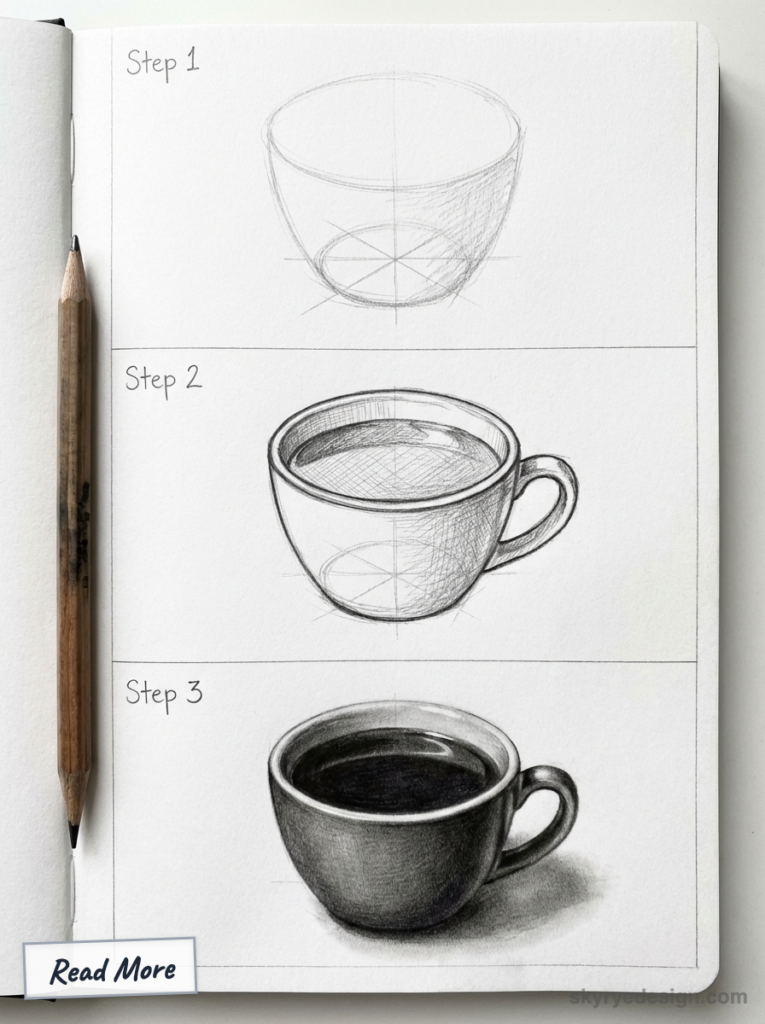
Look straight down at whatever you’re drinking. The circle, the oval of liquid inside, the handle interrupting the curve — it’s a 90-second drawing that teaches foreshortening without you realizing it.
2. Your own hand in whatever position it’s resting
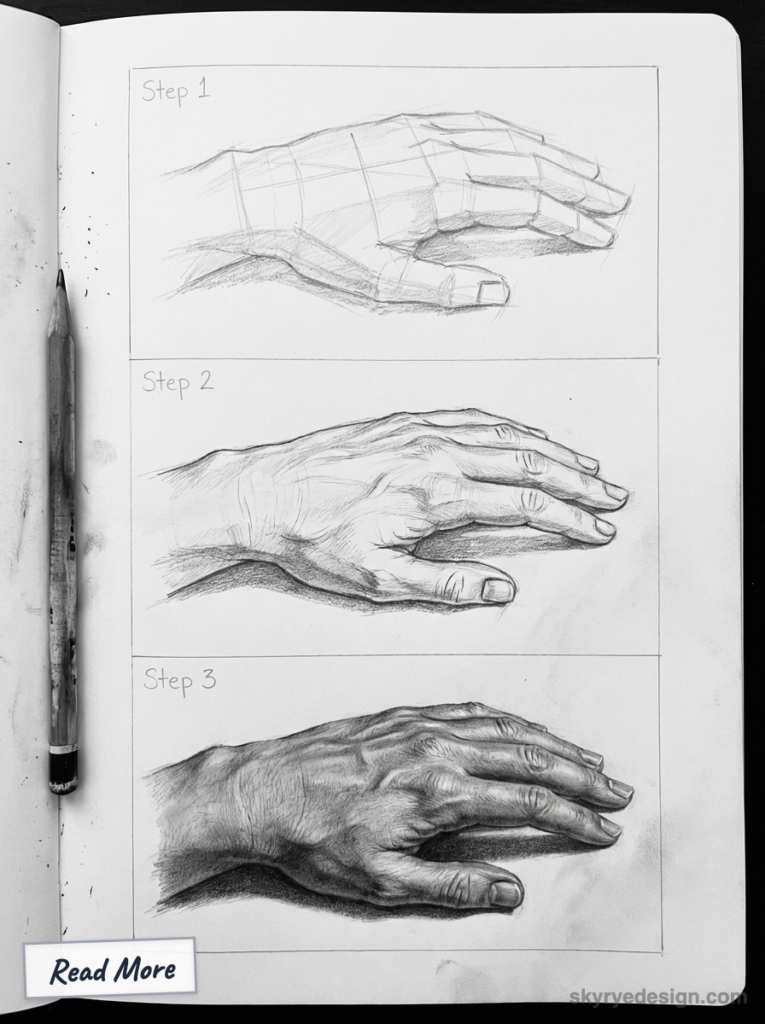
Hands are notoriously difficult, which makes them perfect for bored drawing. You don’t need to get it right. The attempt teaches you something every time.
3. A simple moon with one cloud
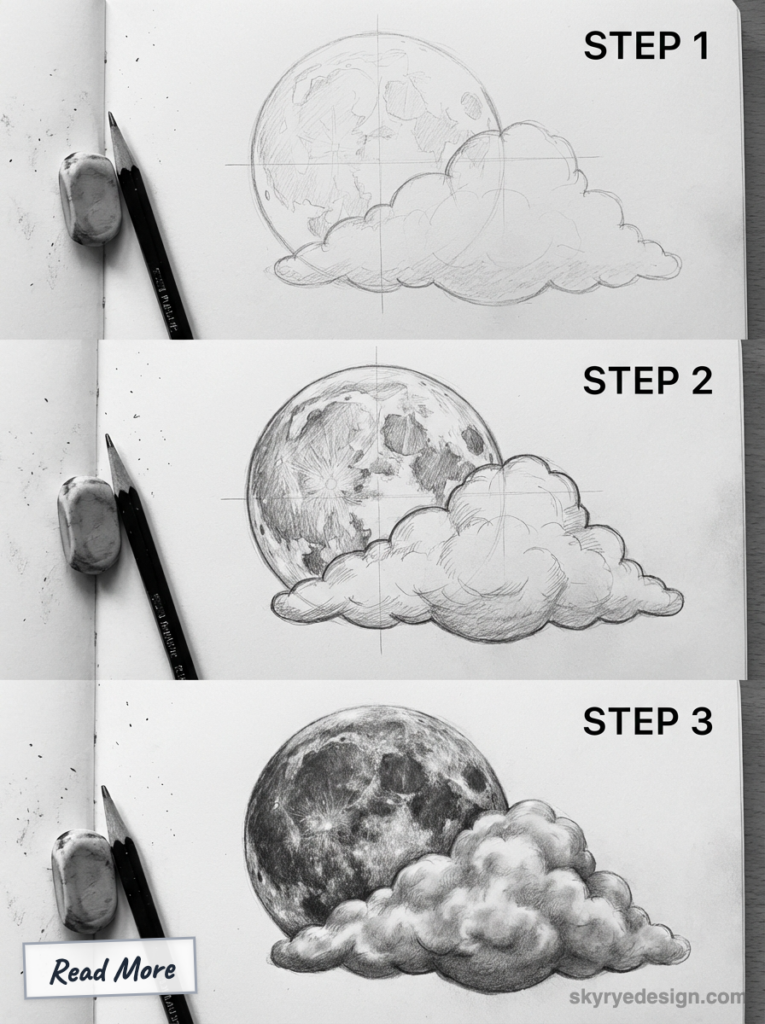
Crescent or full — pick one. Add a single cloud overlapping it. Three shapes total. Done in two minutes, looks intentional every time.
4. A tiny house on a hill
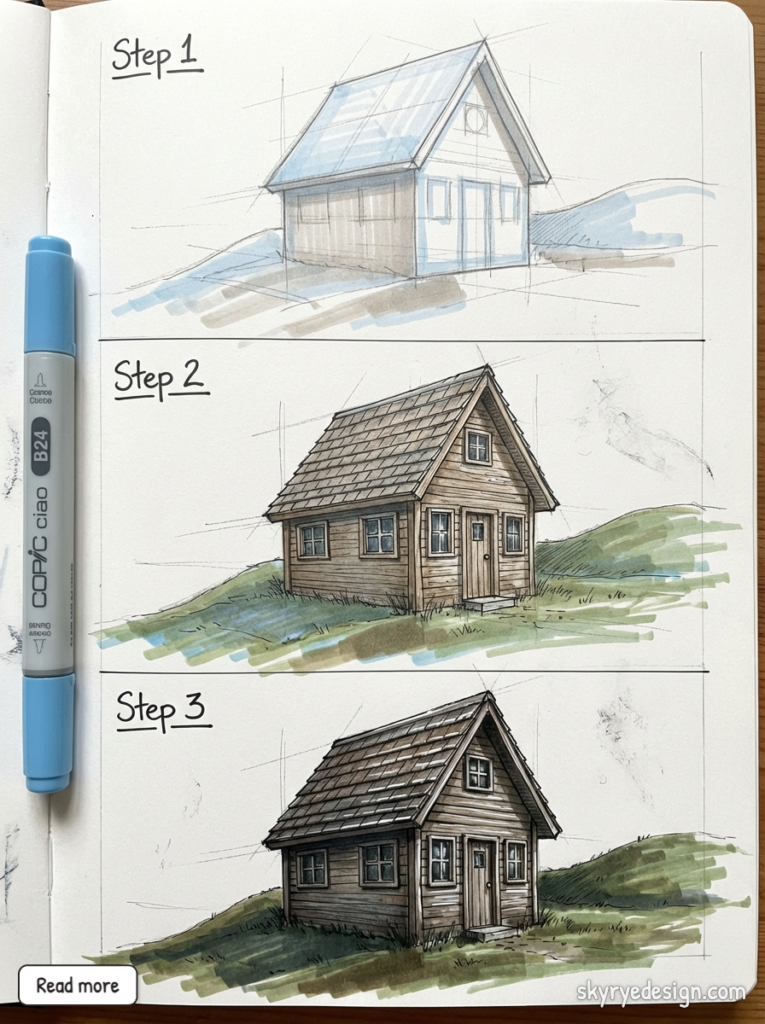
One triangle, one rectangle, one square window, one door. Add a path if you want. This is the “guitar chord” of drawing — a starter shape that never gets old.
5. Your phone, keys, or whatever is on the desk
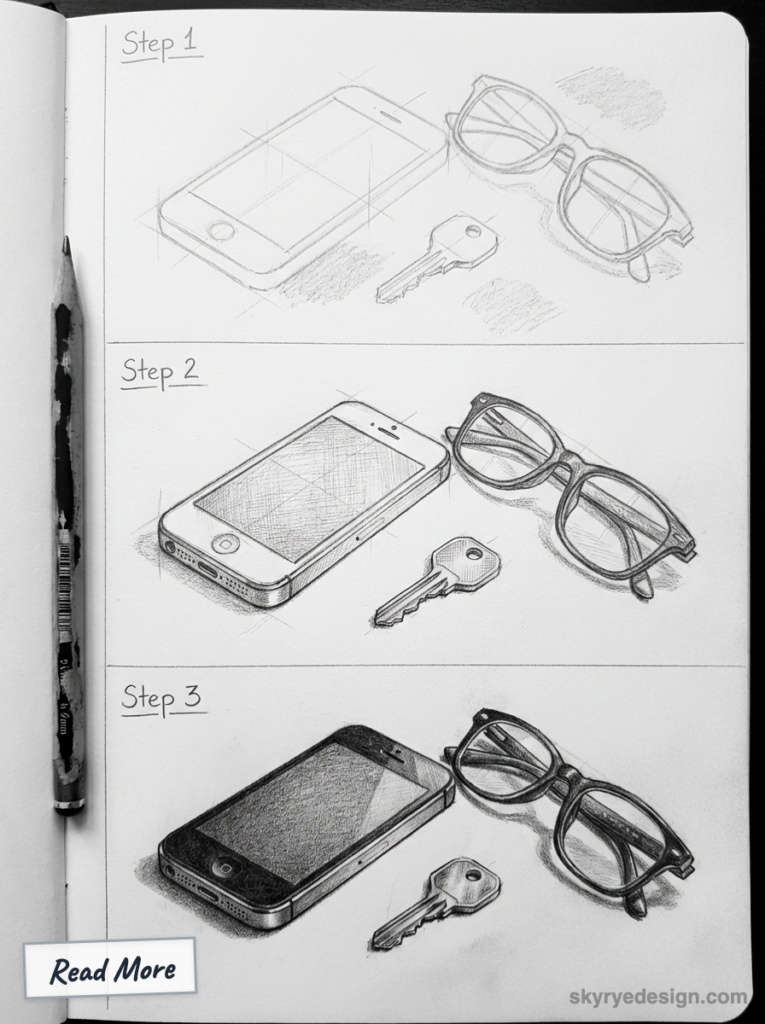
Observational drawing of ordinary objects is underrated. The scratched corner of your phone case, the specific shape of your keychain — these details make a drawing yours.
6. A single eye
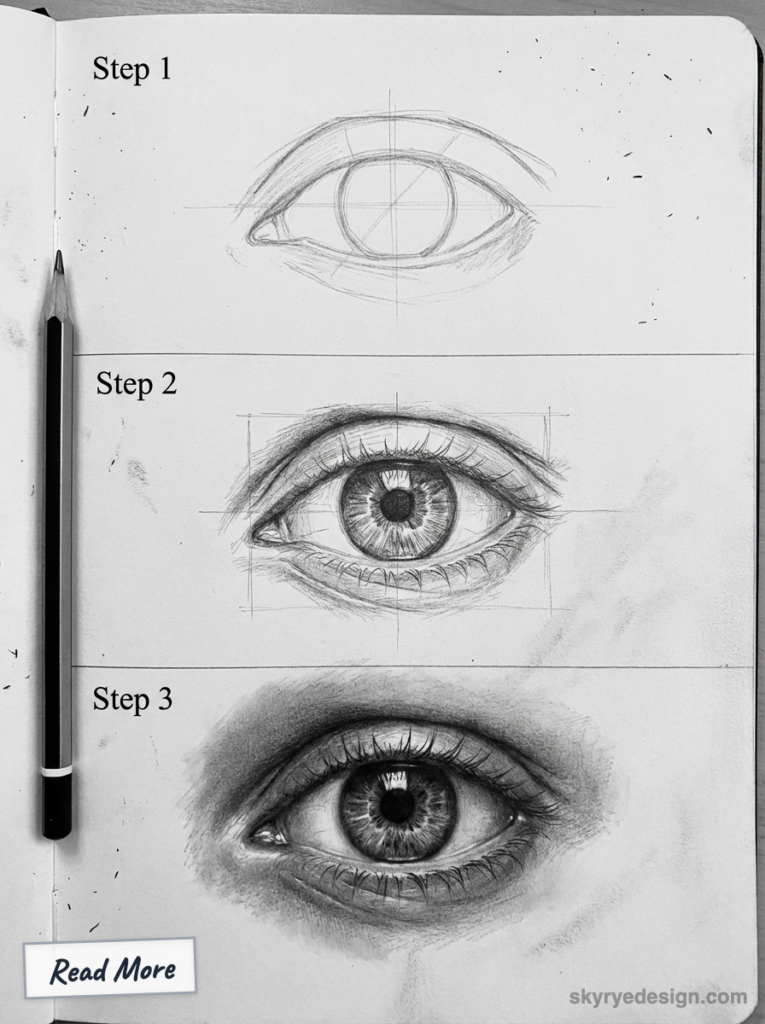
Just one. No face around it. Practice the iris texture, the lid crease, and a single eyelash. An isolated eye lets you focus on what makes eyes look alive.
7. A spiral that fills the page
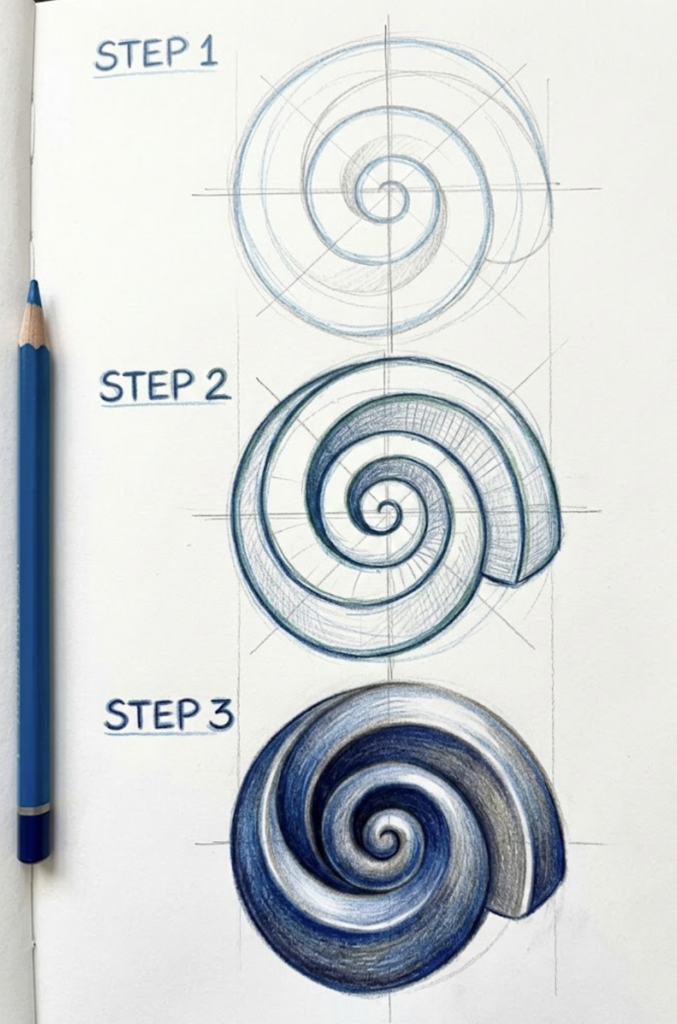
Start from the center, keep your wrist loose, and don’t lift the pencil. Meditative and satisfying. You can’t really fail at a spiral.
8. Block letters spelling your name
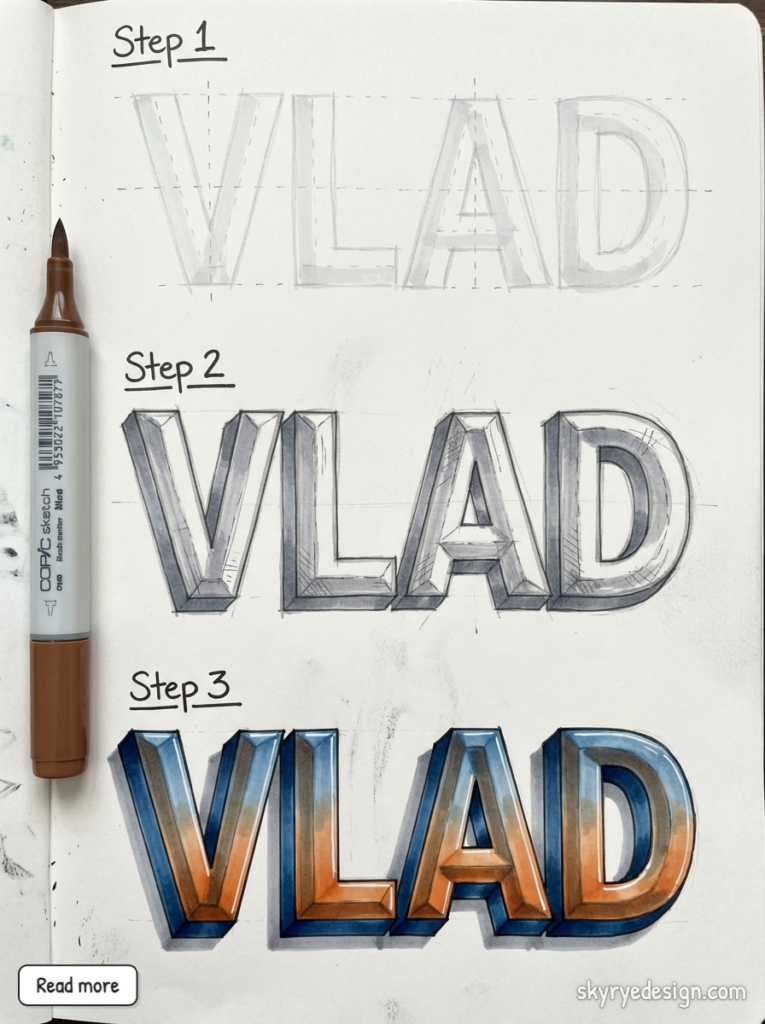
Outline each letter, add a drop shadow, and give them dimension. The oldest doodle in the book — still works.
9. A simple candle with a flame
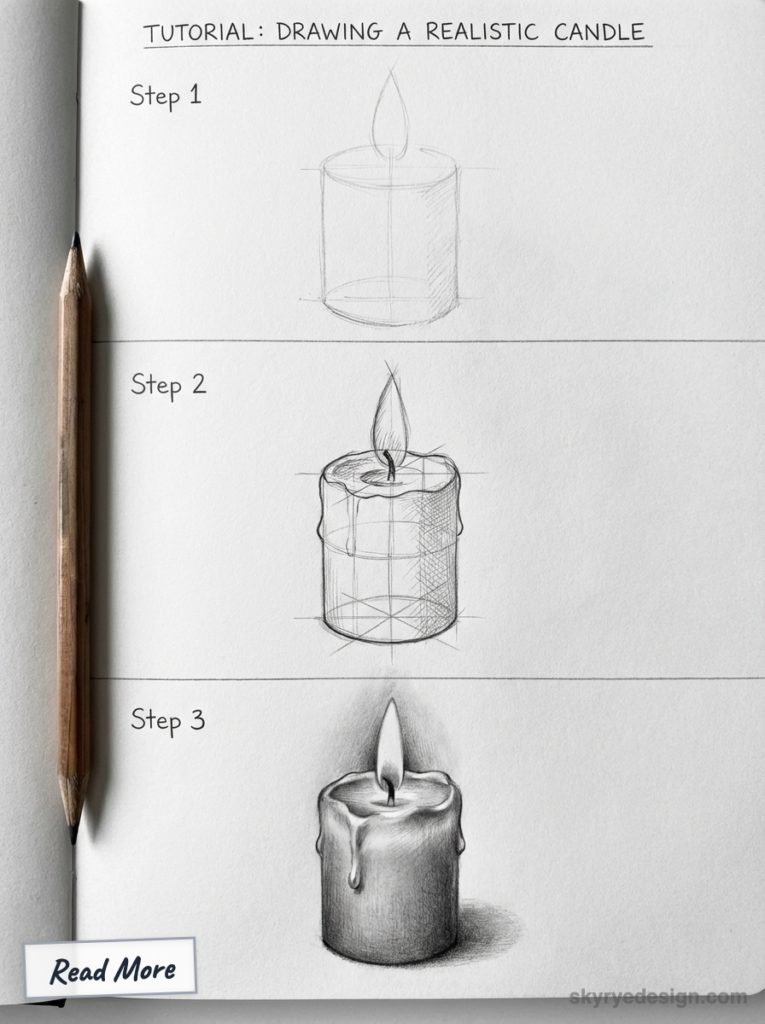
Two lines for the candle body, one teardrop for the flame, three short lines for light rays. Add dripping wax if you have another thirty seconds.
10. A leaf from the nearest plant
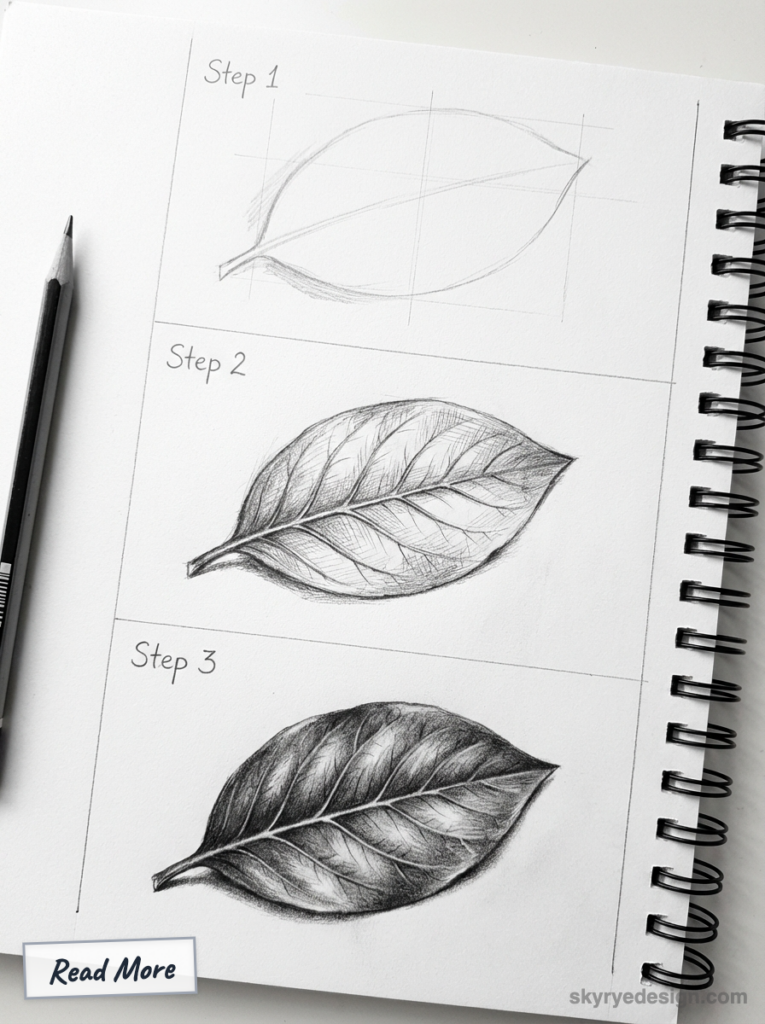
Grab whatever’s closest — a houseplant, something outside the window, a sprig on the table. Draw the actual leaf, not a generic leaf shape. The difference in specificity will show.
Nature and Plants
Plants are the perfect drawing subject — they hold still, they reward close observation, and there’s no “wrong” way a plant can look.
Materials you need: A regular pencil, a pen, an eraser, and any sketchbook are enough. I like starting with a pencil because it lets me block in angles lightly, then commit to the darker lines after the proportions feel right. Markers, colored pencils, and a kneaded eraser are useful, but they are optional.
11. A succulent from above (bird’s-eye view)
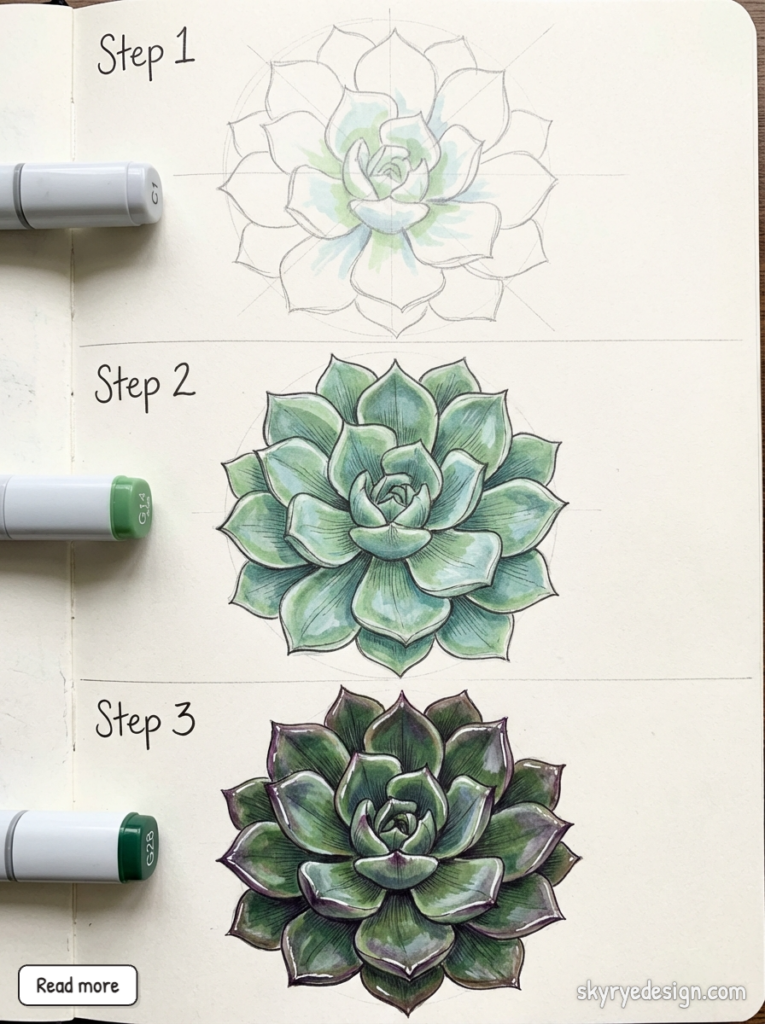
Succulents viewed from directly above are essentially geometric patterns — spiralling rosettes of overlapping teardrop shapes. Start with a small circle at the center and work outward.
12. A single mushroom
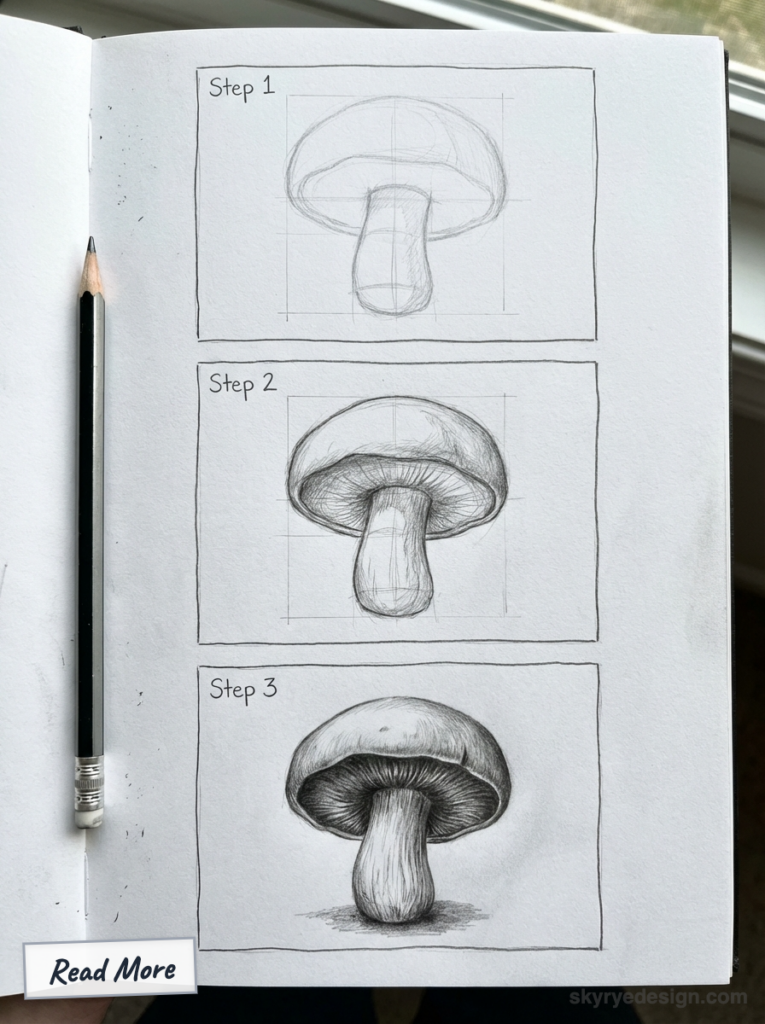
Cap, stem, and gills if you flip it over. Add a few grass blades around the base. Mushrooms are forgiving — organic shapes rarely look “wrong.”
13. Wildflowers in a loose cluster
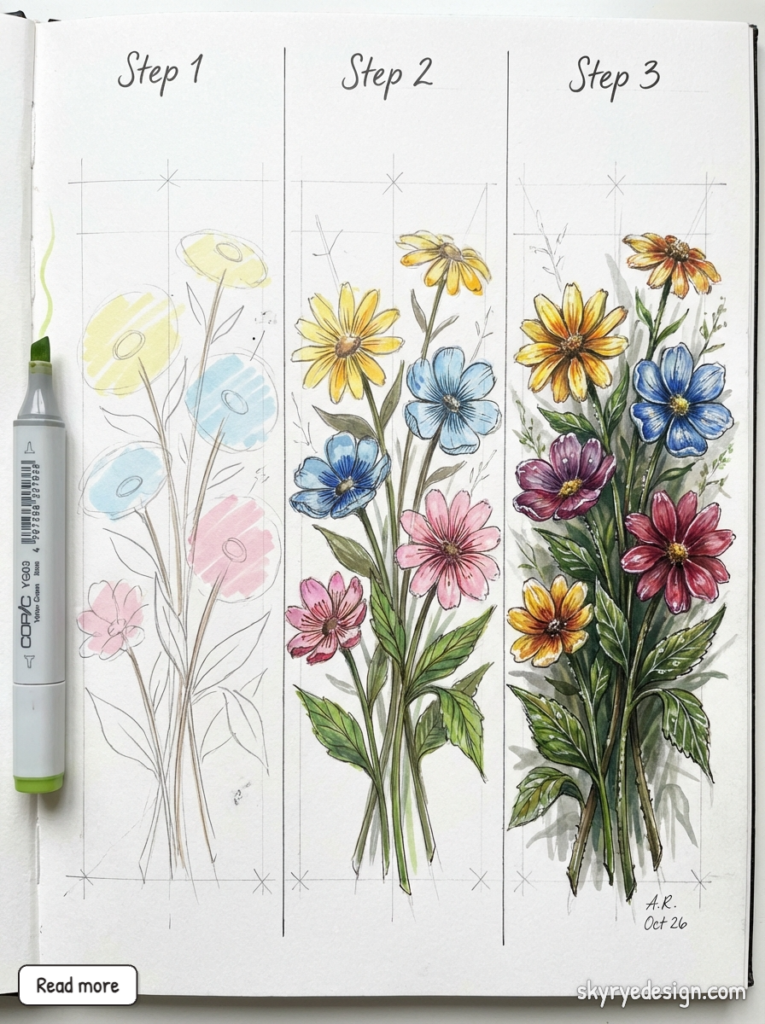
Don’t try to draw a perfect botanical illustration. Draw a loose cluster — some facing forward, some in profile, stems crossing. Loose and overlapping reads are natural.
14. A lily pad on still water
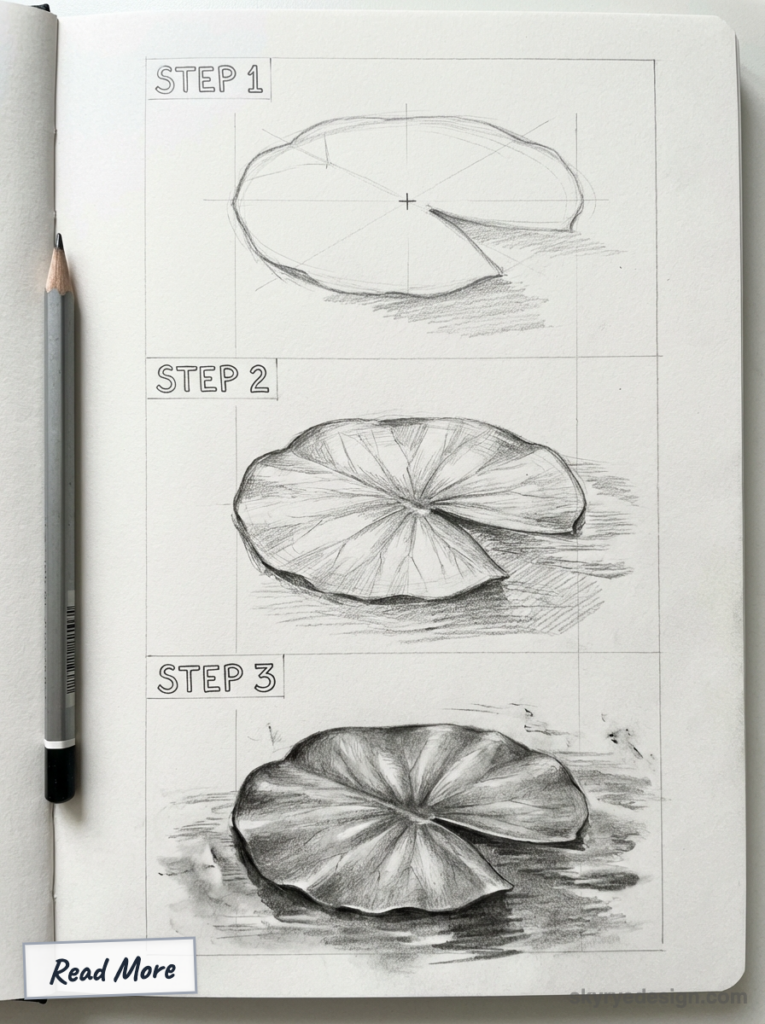
The flat disc shape, the V-shaped notch cut into it, and the reflection underneath. Add a frog sitting on it if you want a focal point.
15. A cactus with personality
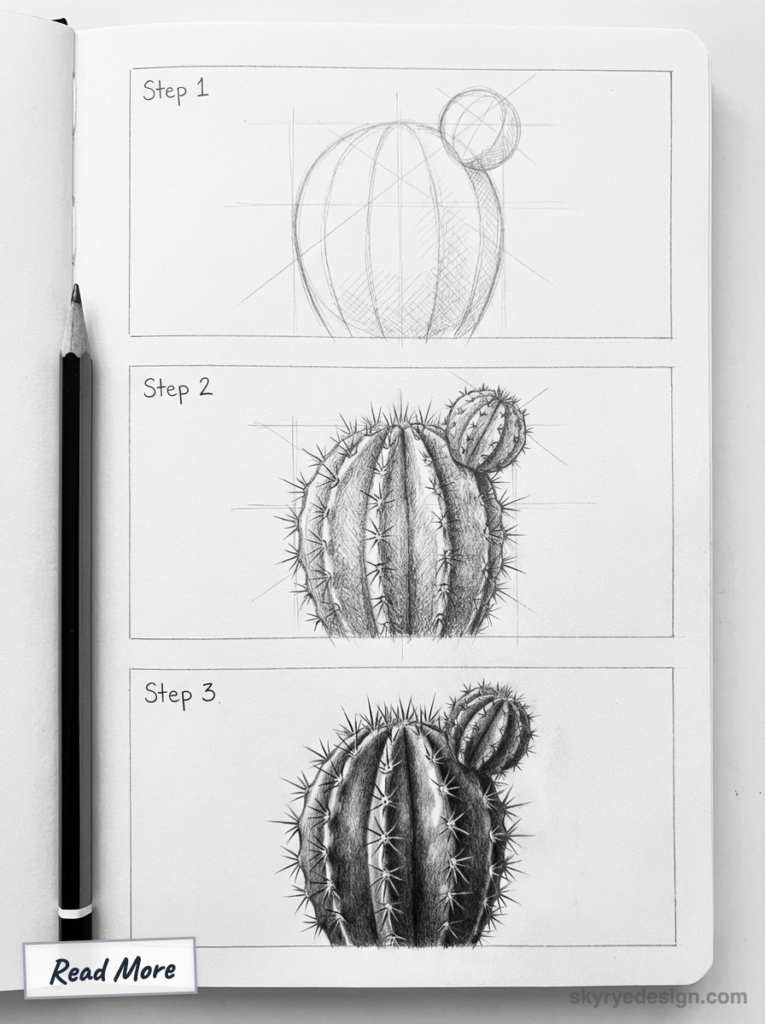
Give it arms at different angles. Add a single flower on top. Cacti are forgiving subjects — the lumpy imperfection of a hand-drawn cactus often looks better than a precise one.
16. Tree bark texture study
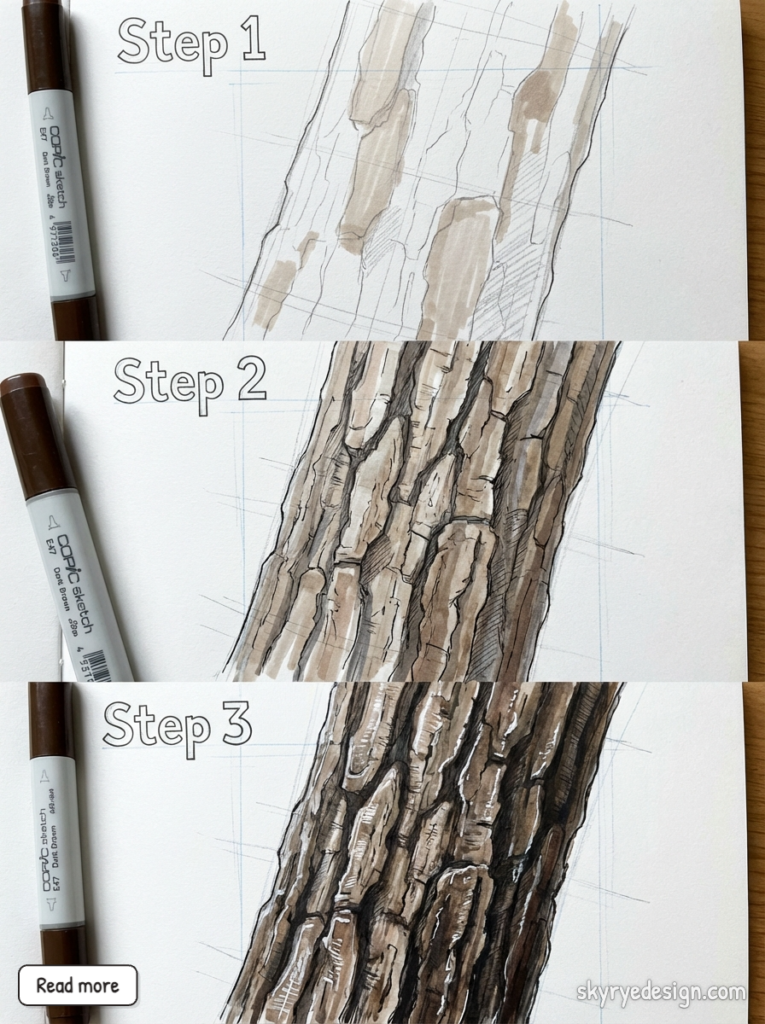
Find a photo of bark or look out a window. Fill a whole page with just the texture — no full tree, just the pattern of ridges and shadows. Texture studies build observation skills fast.
17. A branch with cherry blossoms
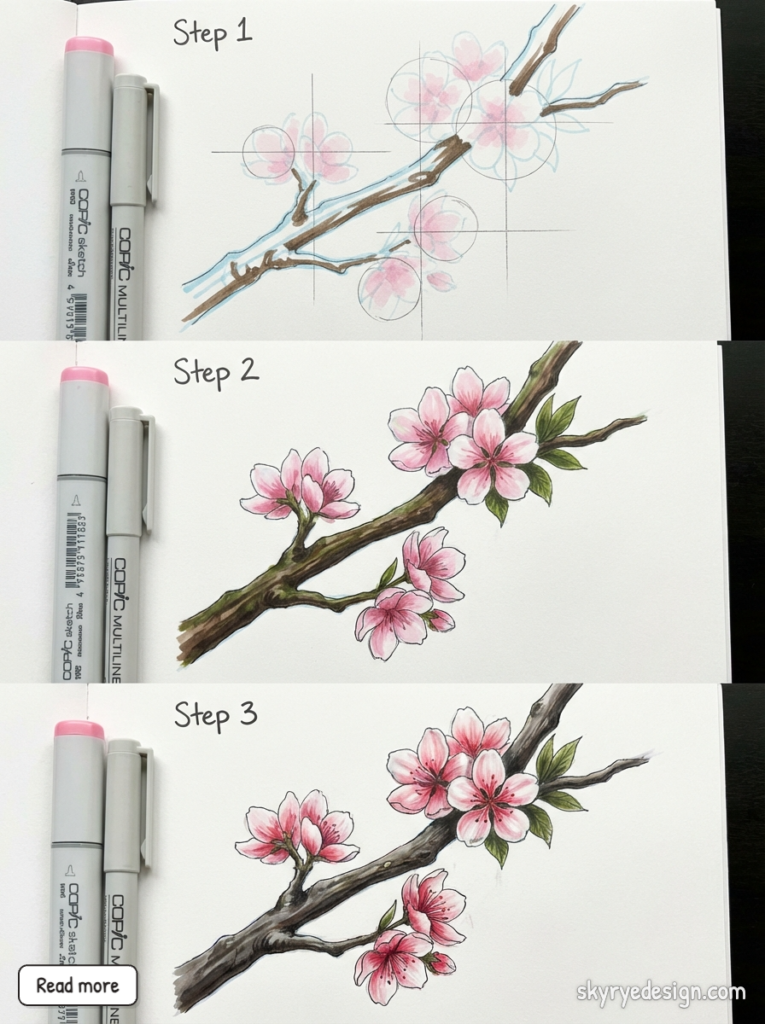
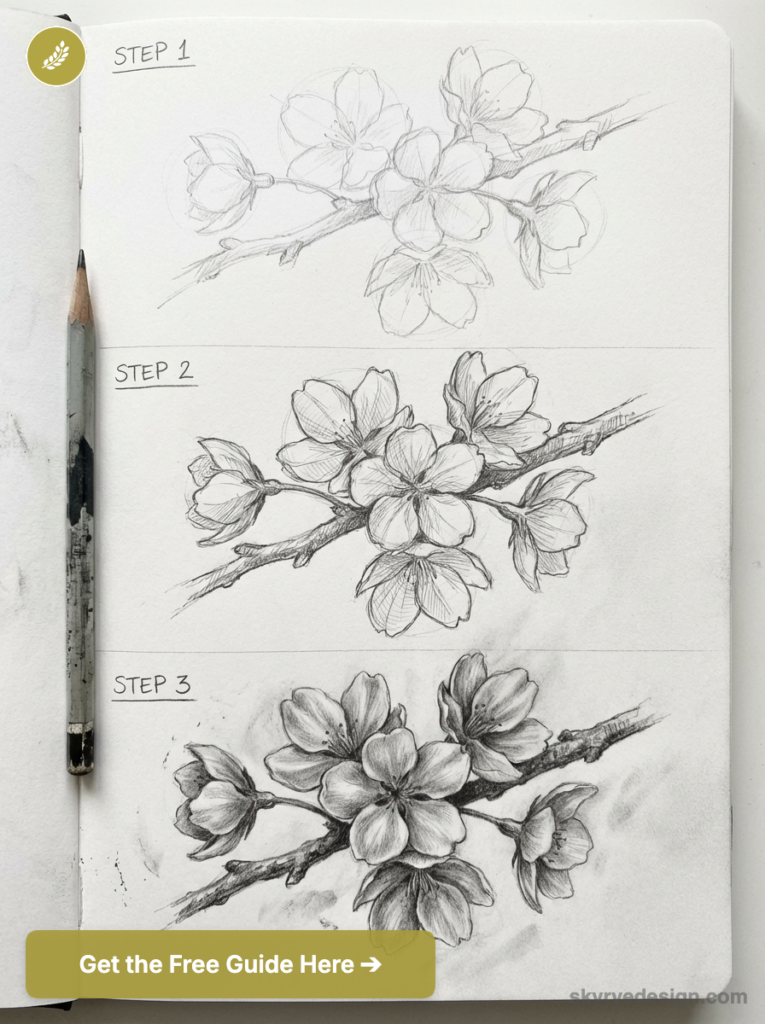
Diagonal branch from lower left, smaller branches angling off it, clusters of five-petaled flowers at the tips. A classic for a reason — the negative space around the blossoms does most of the work.
18. Raindrops on a window
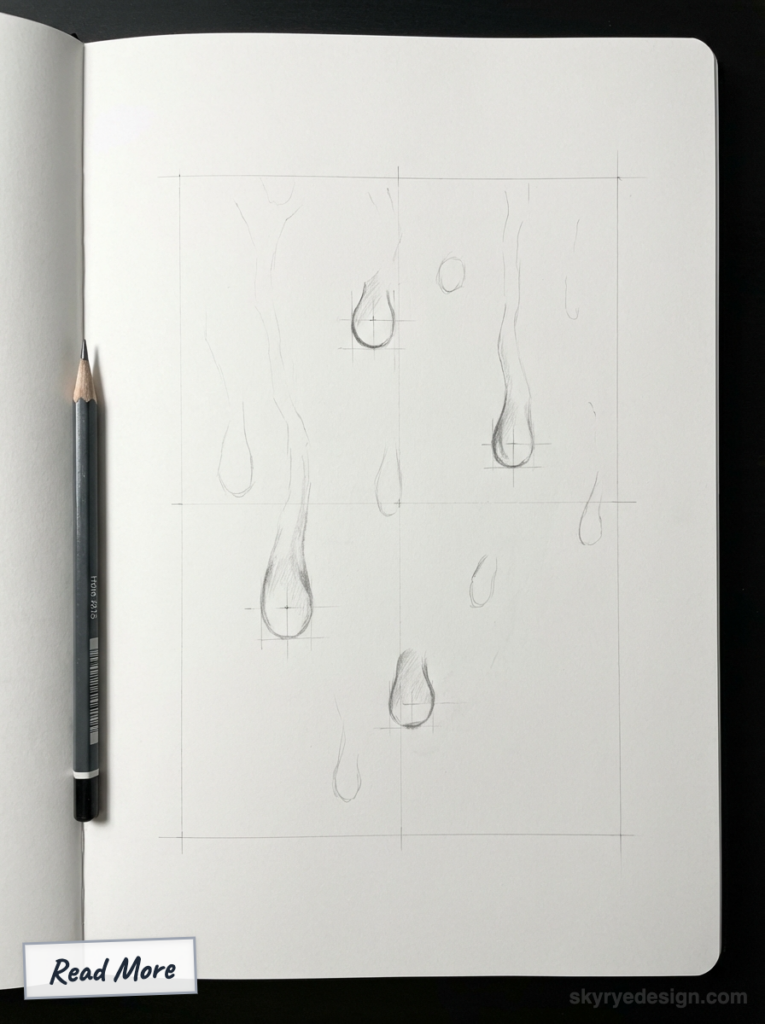
Draw the glass as a rectangle, then add irregular droplet shapes — some round, some elongated by gravity, some mid-merge. The reflections inside each drop are optional but satisfying.
19. A pinecone
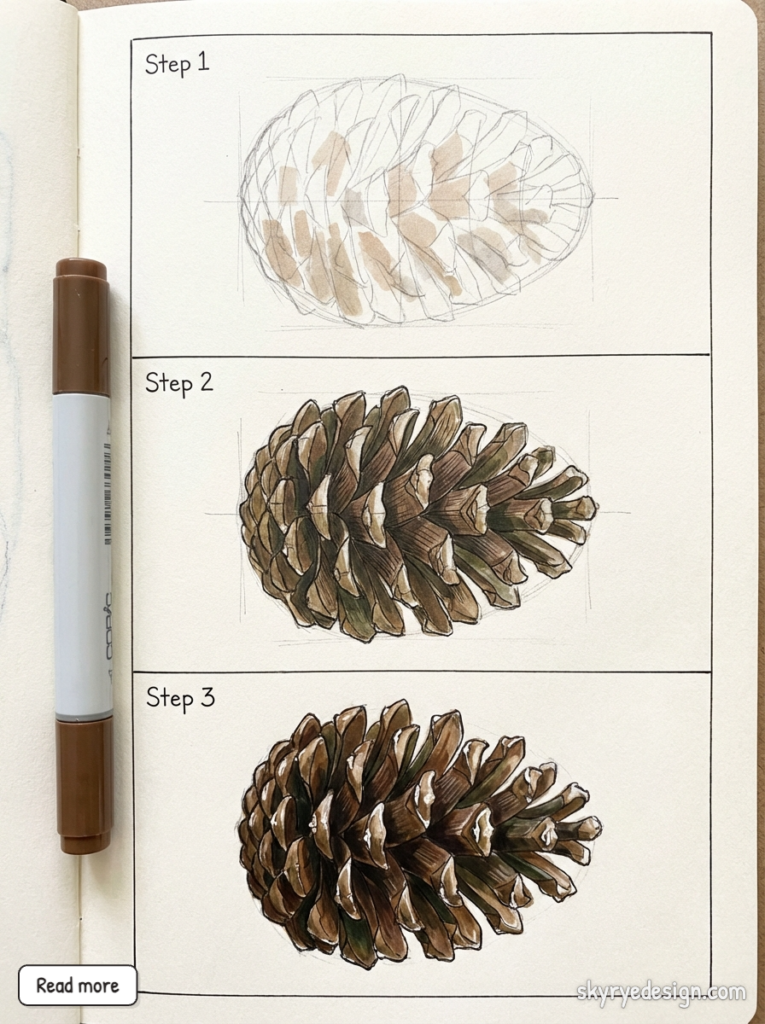
Overlapping scales in a repeating oval pattern. Start at the tip and work downward. It’s more geometric than it looks — almost like drawing a fish scale pattern around a central axis.
20. Grass blades in the wind
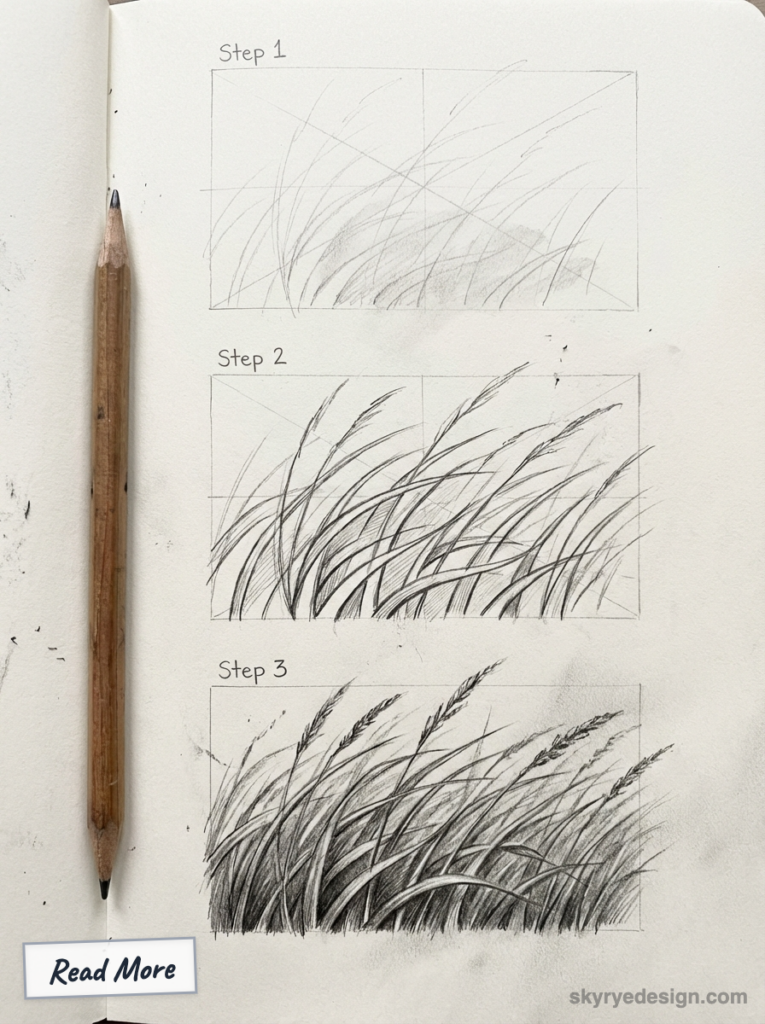
Short, curved strokes all leaning in the same direction. Add a few longer blades cutting across the pattern. The key is variety in length while keeping the direction consistent.
21. A single dandelion going to seed
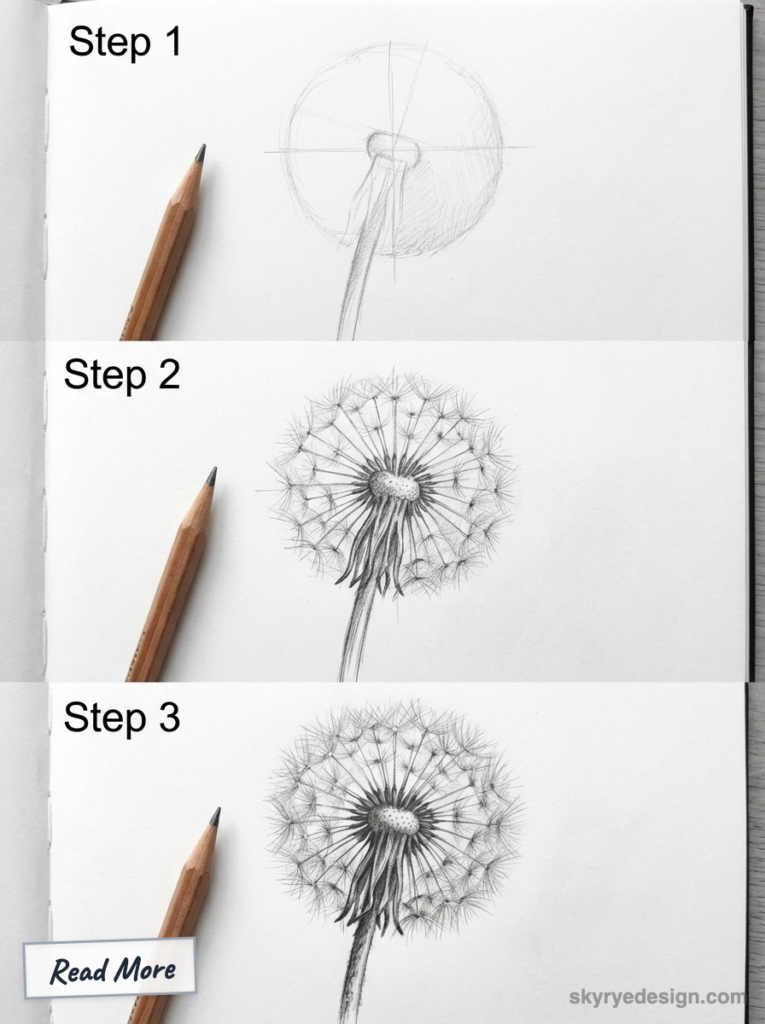
The thin stem, the sphere of individual seeds with their feathery tips radiating outward. Draw a few seeds floating away separately. One of the most satisfying drawings to finish.
22. An autumn leaf with detailed veining
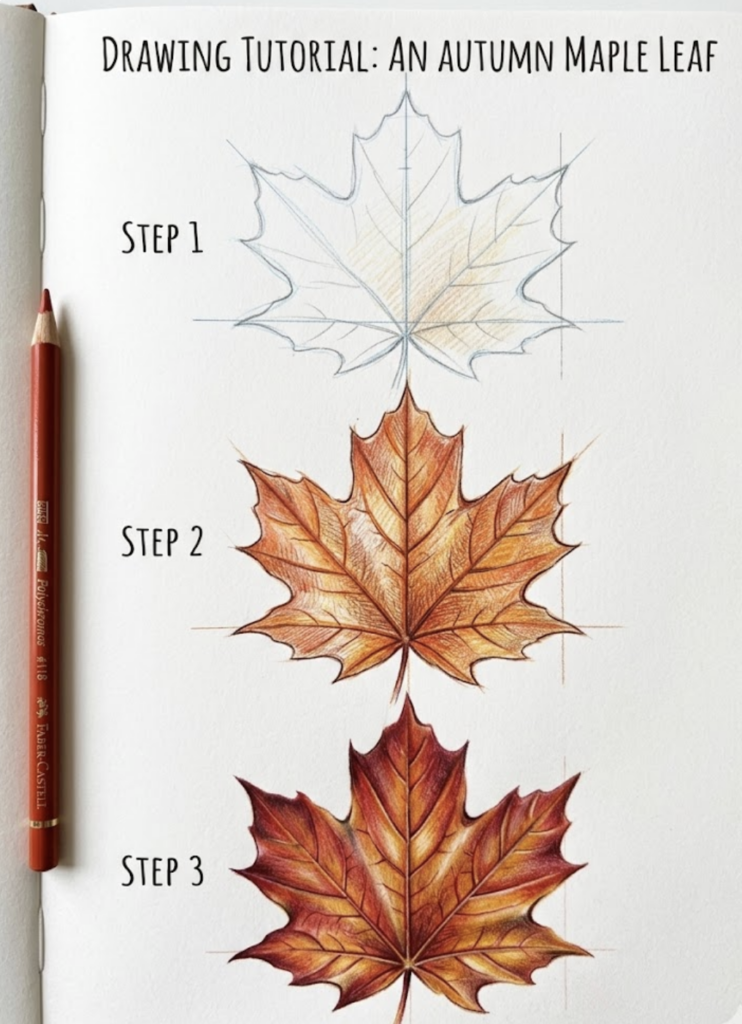
Pick any leaf shape — maple, oak, something specific. Draw the main vein first, then branch outward. Let the edges be irregular. Add a few torn or curled areas at the edges.
Animals
Animals reward the same thing plants do: close observation. The more specific the animal (this particular cat, that specific bird), the more interesting the drawing.
23. A sleeping cat curled into a circle
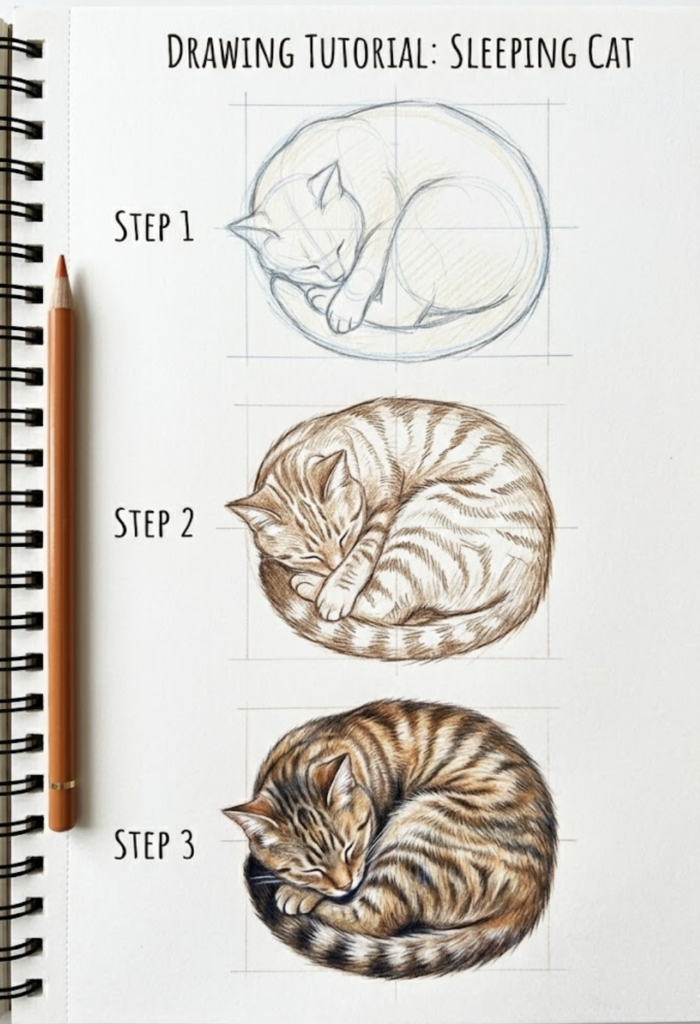
Cats at rest are abstract shapes. Find the main mass — a kidney bean or oval — and add the head tucked at one end. The face details are secondary to getting the body shape right.
24. A goldfish in a bowl
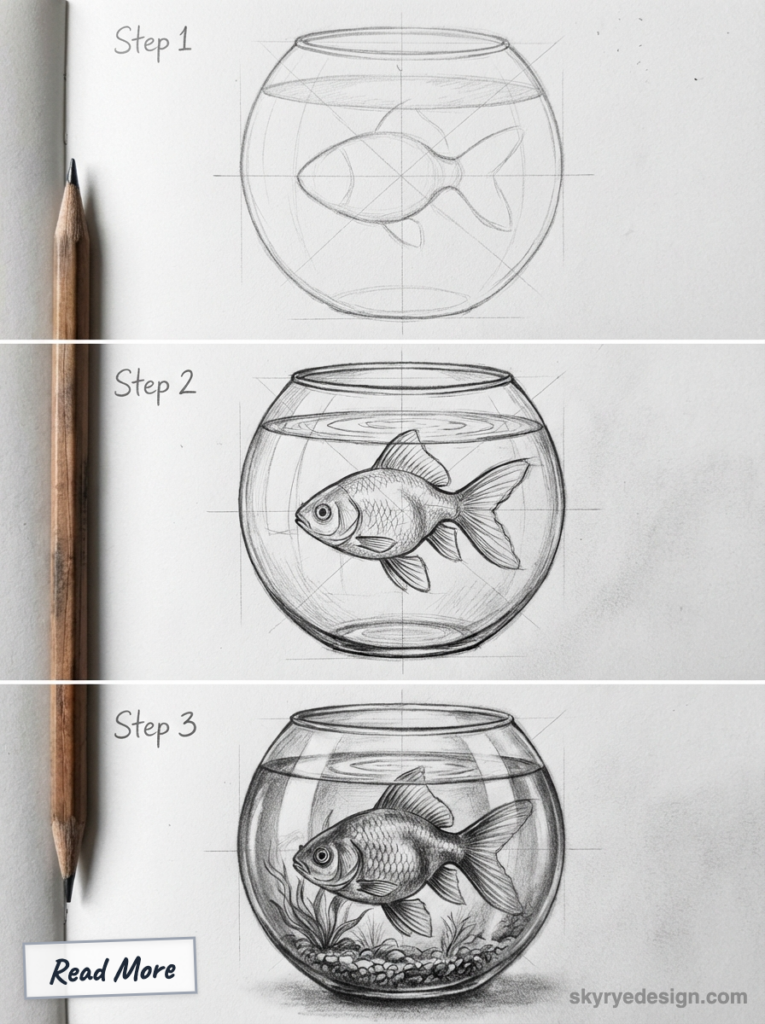
The fish (teardrop body, fan tail, small fins), the circular bowl, the water level, and a few bubbles rising. Optionally add some simple gravel at the bottom. Clear, satisfying, doable at any skill level.
25. A dog looking over its shoulder
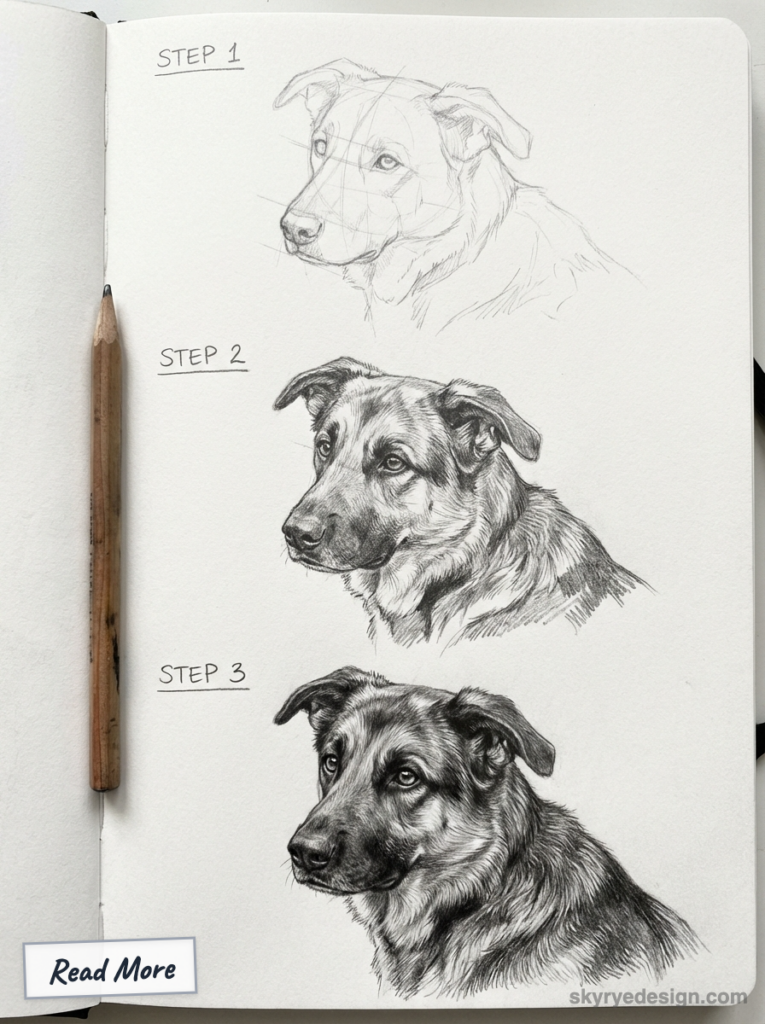
This angle — three-quarter rear view with the head turned — captures personality better than a straight-on face. The wrinkle where the neck turns, the alert ear position, the curve of the back.
If you want one animal that feels simple at first and then teaches you a lot, try an easy horse drawing after the basic pets. The body depth, hock, fetlock, mane, and tail give you more useful construction practice than another flat outline.
26. A bird on a wire
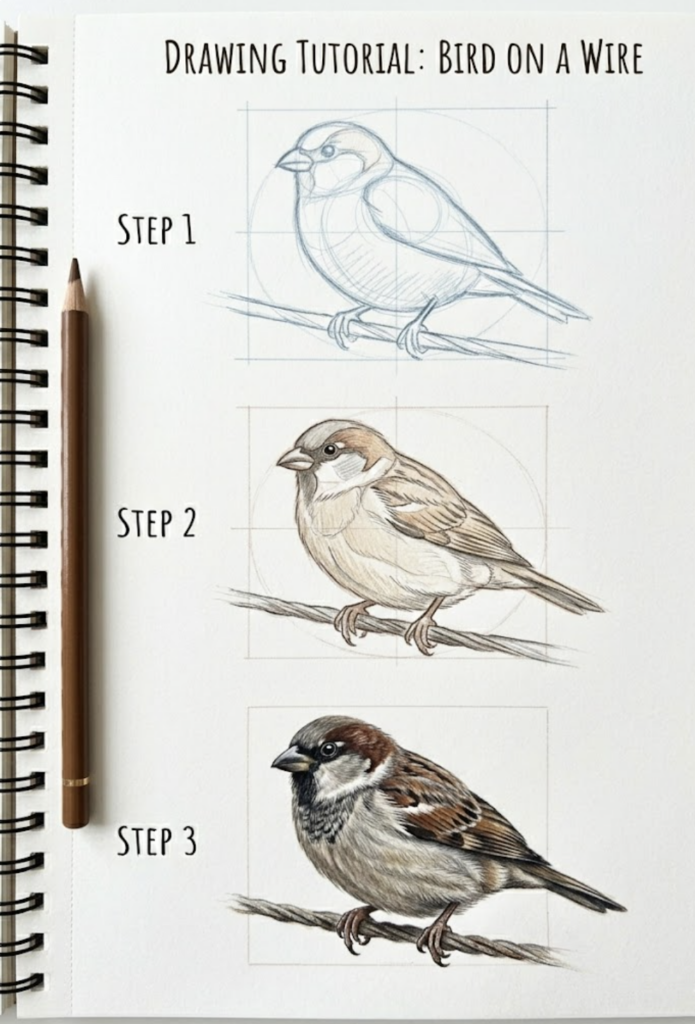
One horizontal line. One small bird silhouette perched on it. Add a second bird further along if you want. Minimal, graphic, works at any size.
27. An octopus with curling tentacles
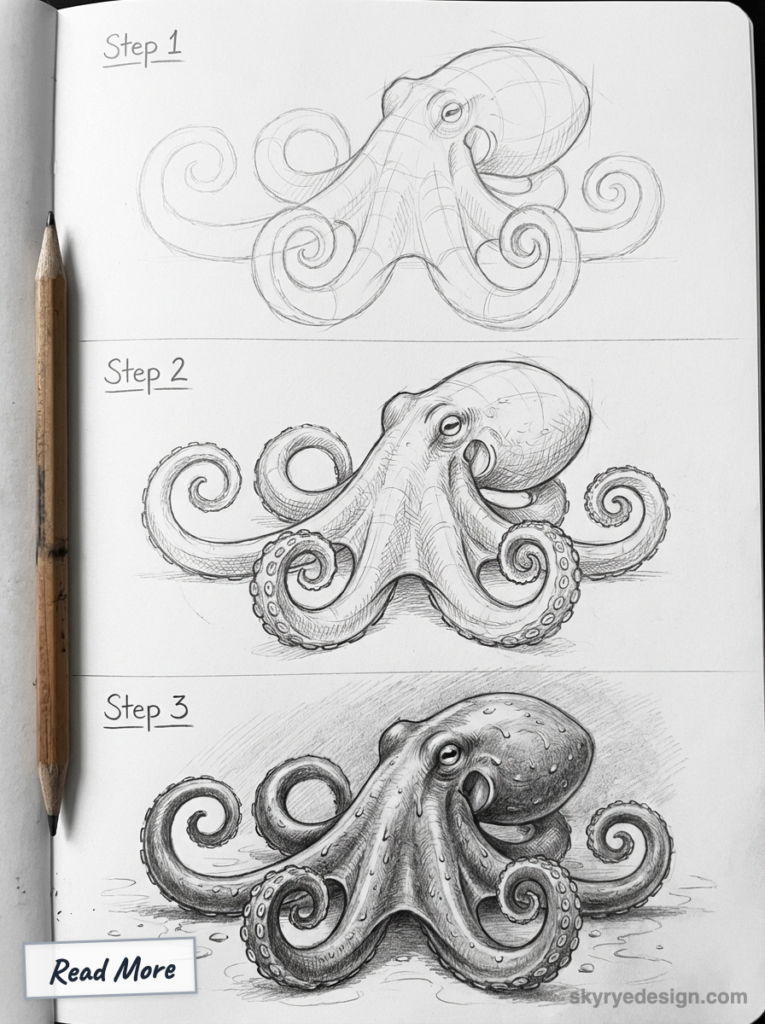
The rounded head-body, then eight tentacles flowing outward in different directions — some curling at the tips, some overlapping. Add suction cups if you have patience. Skip them if you don’t.
28. A butterfly with symmetrical wings
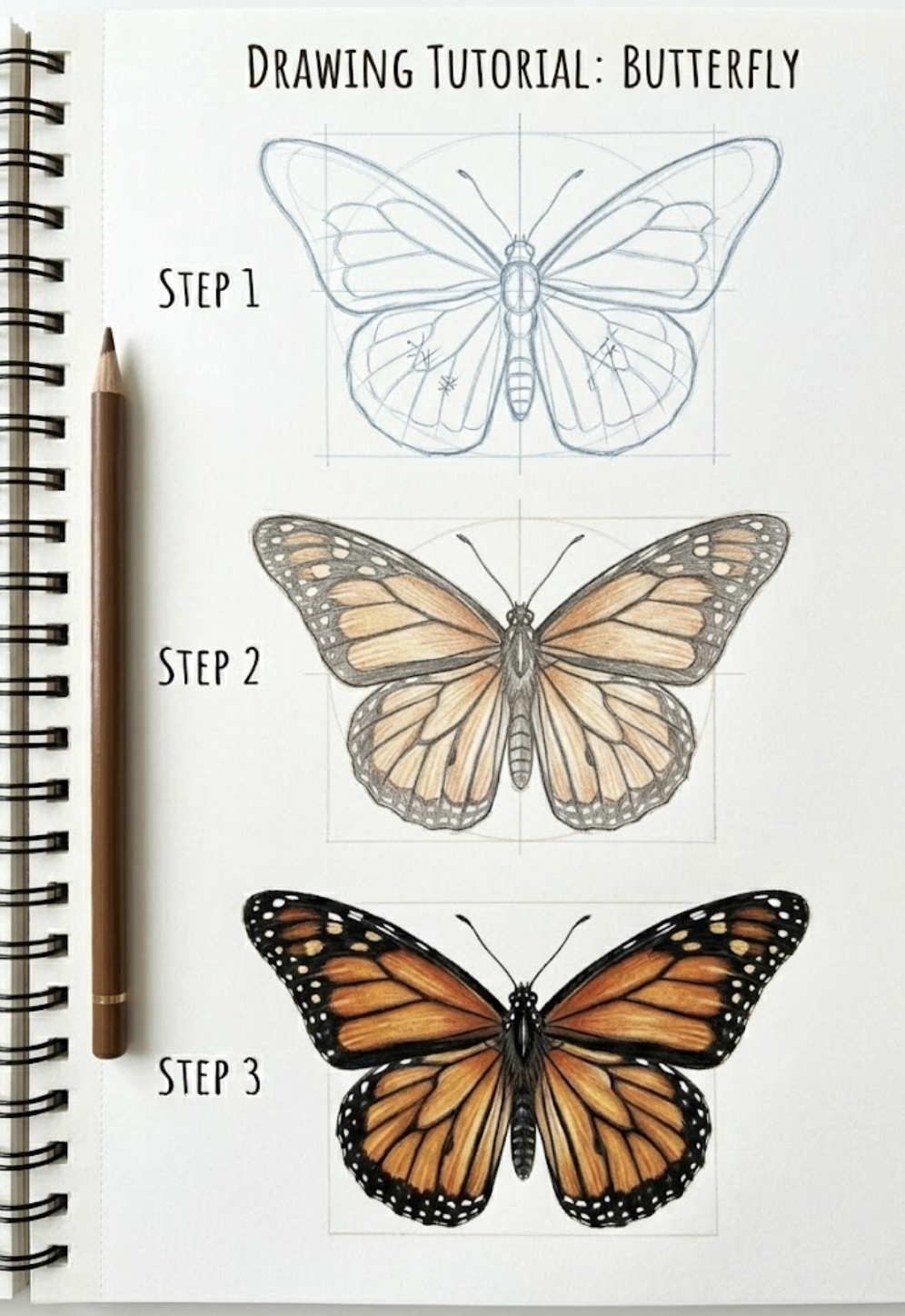
Draw the body first — a thin vertical oval. Then mirror each wing on either side. Don’t aim for scientific accuracy. Aim for decorative pattern symmetry. These look impressive and aren’t as difficult as they appear.
29. A hedgehog from the side
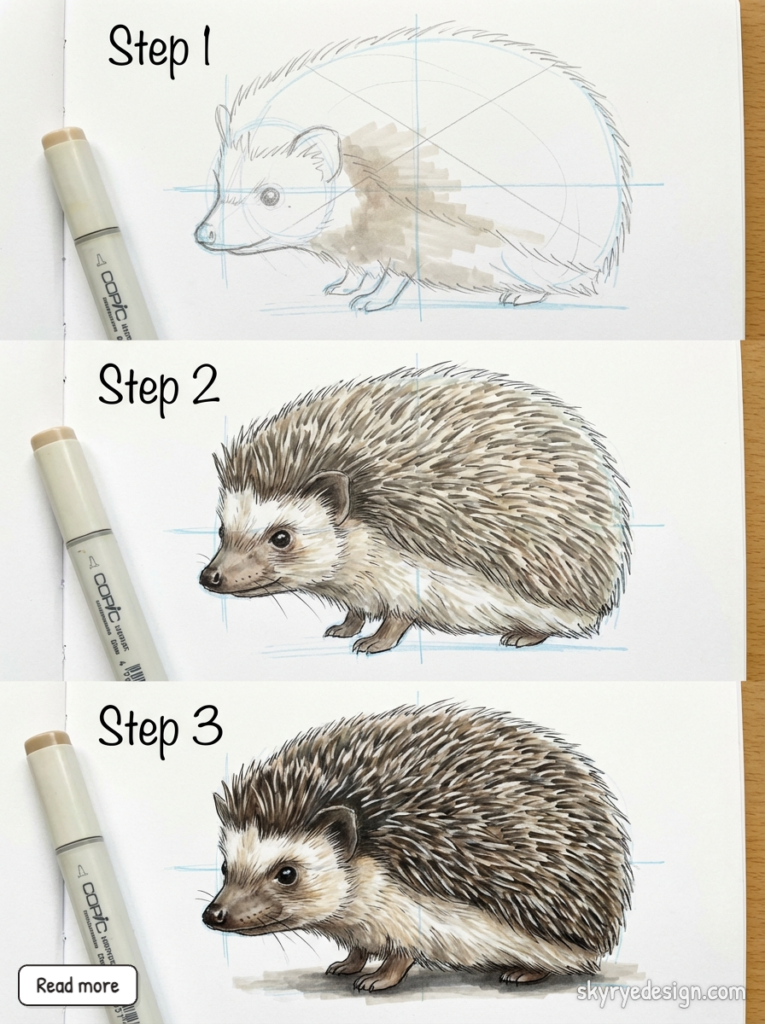
Oval body, small pointed snout, tiny visible legs, and the spiky back rendered with short parallel lines all pointing in the same diagonal direction. The spines are just quick flicking strokes.
30. A whale breaching
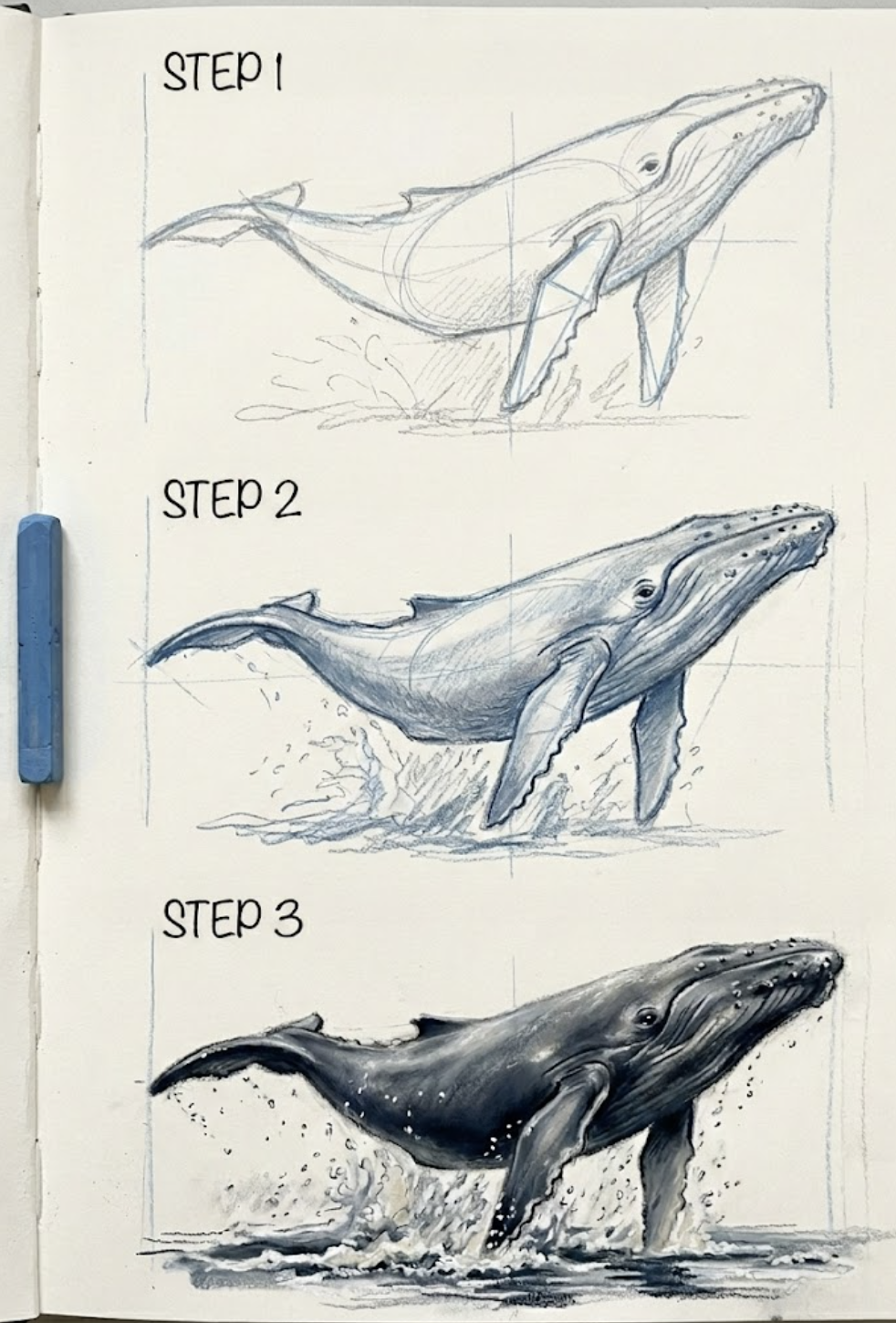
The massive curved body arcing out of the water, the tail flukes raised, water cascading off the sides. The sense of scale is the whole point — make the whale take up most of the page.
31. A fox sitting
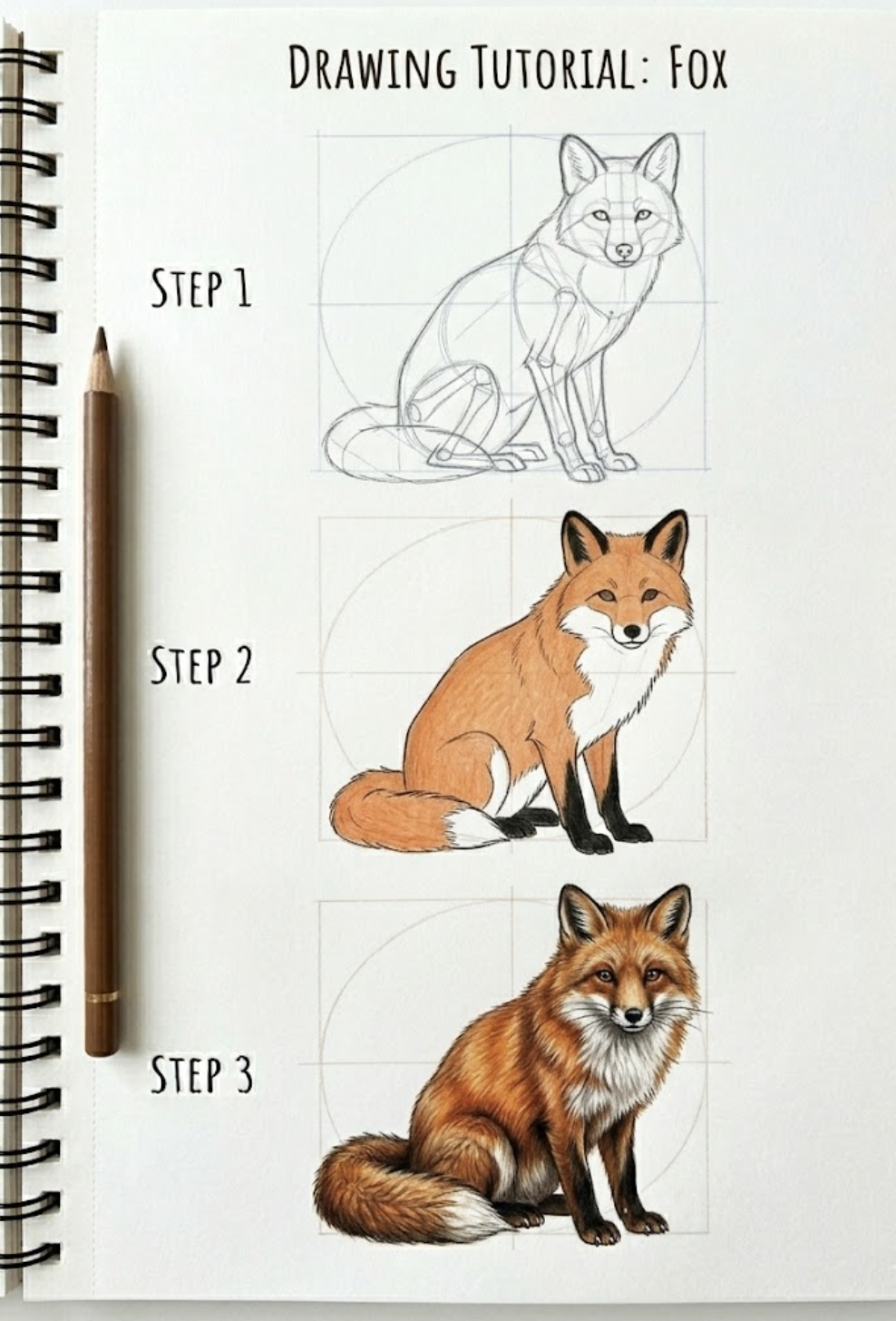
The triangular ears, the long pointed muzzle, and the bushy tail curled around the feet. Foxes are highly graphic animals — their shapes translate well to even loose, sketchy line work.
32. A snail on a leaf
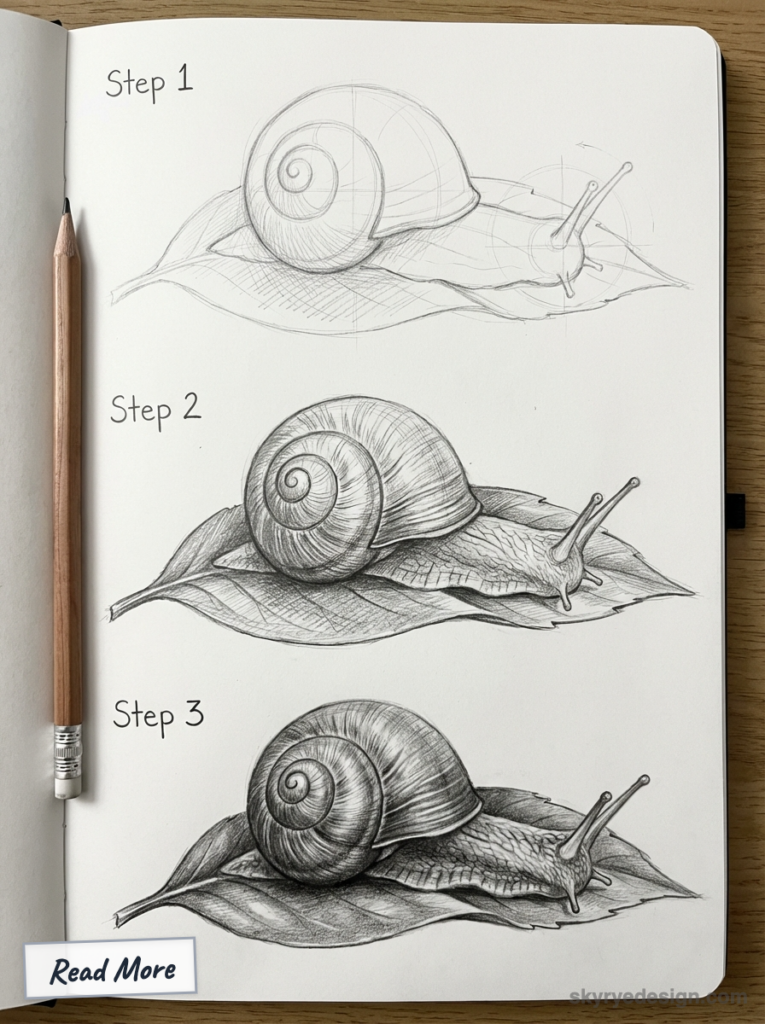
The spiral shell (practice your spirals from idea #7), the soft body extending forward, the two antennae with dots at the tips. Rest it on a simple leaf shape for context.
33. A pair of hands cupping a tiny bird
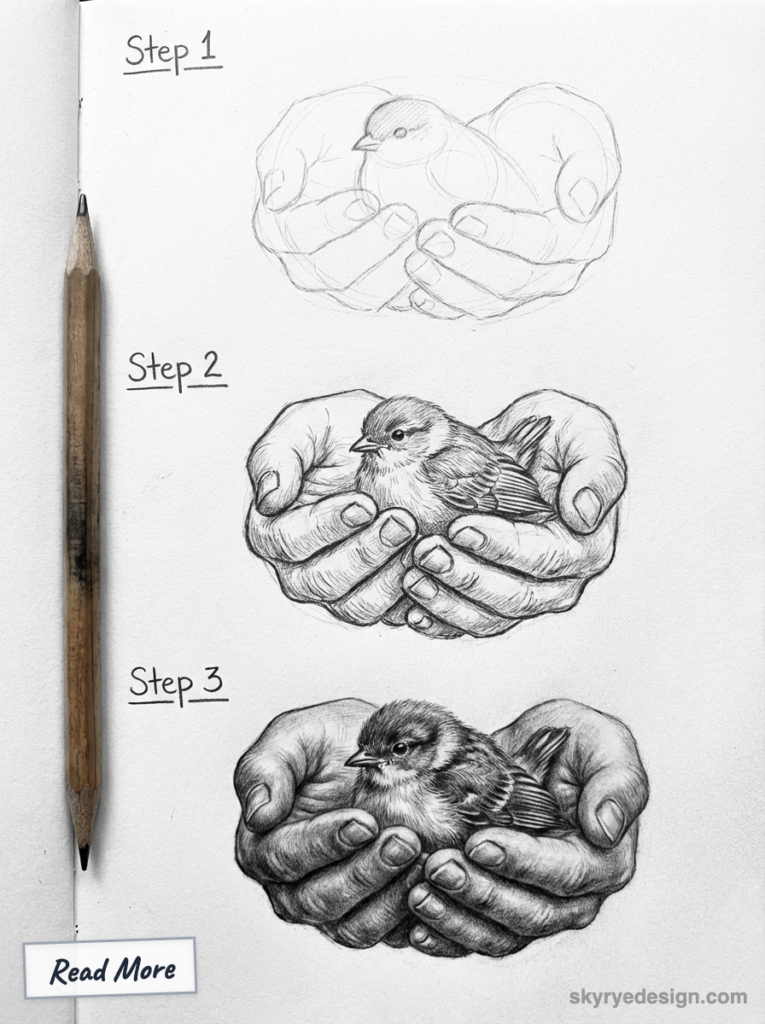
The hands create the frame; the bird is the focal point. This requires drawing two hands — challenging, but the challenge is the point. Use your own hands as a reference.
Food and Objects
The objects closest to you are the most available, the most specific, and often the most interesting. Still life drawing doesn’t need to be formal.
34. A stack of pancakes with syrup dripping
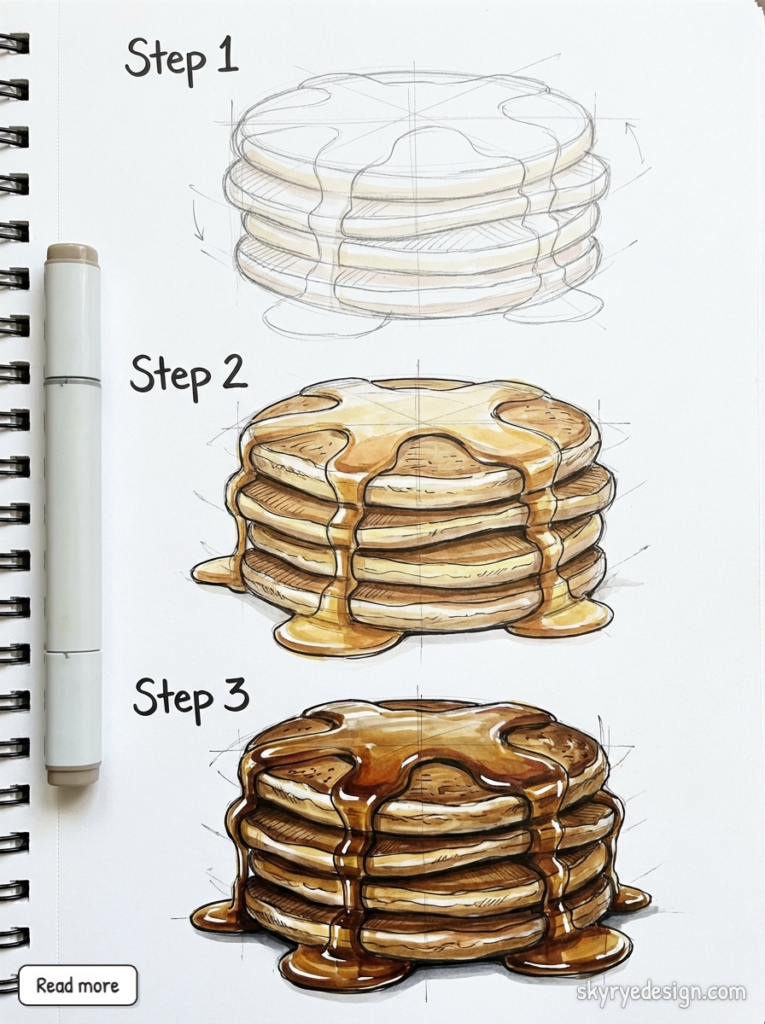
Three uneven circles stacked slightly offset, syrup ribbons flowing down the sides and pooling at the base, a pat of butter melting on top. The dripping syrup is all about organic curved lines.
35. A half-eaten apple
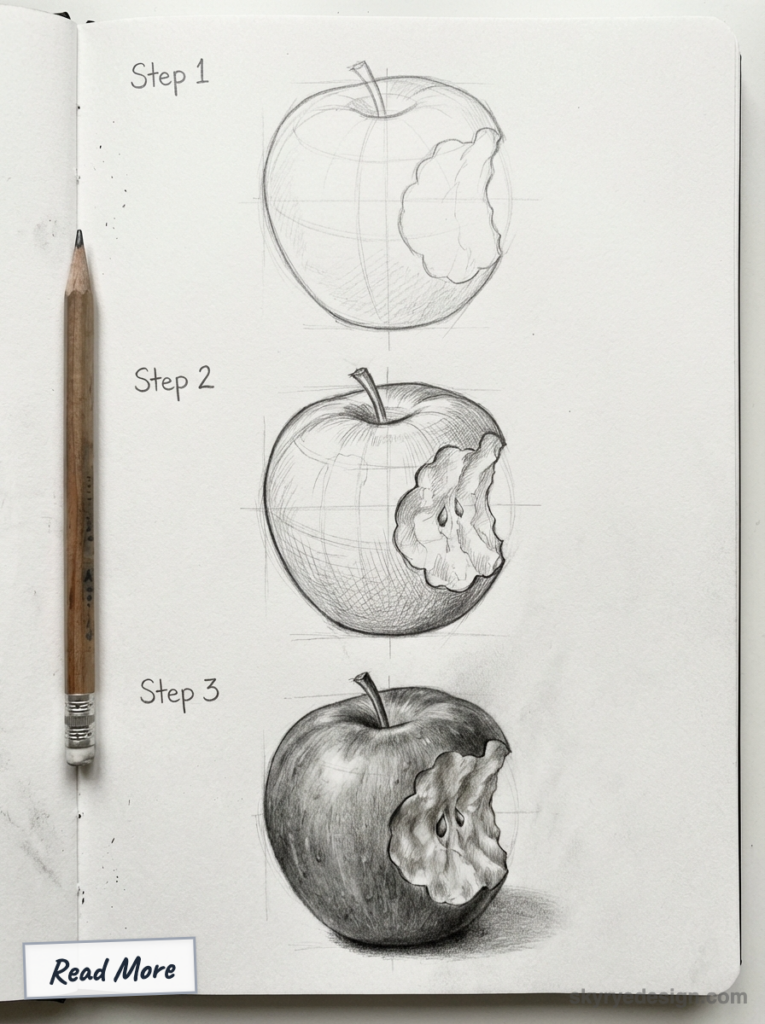
The bitten area creates an interesting, irregular edge that makes the drawing more compelling than a perfect, untouched apple. Draw the core details visible in the bite.
36. A mug with steam rising
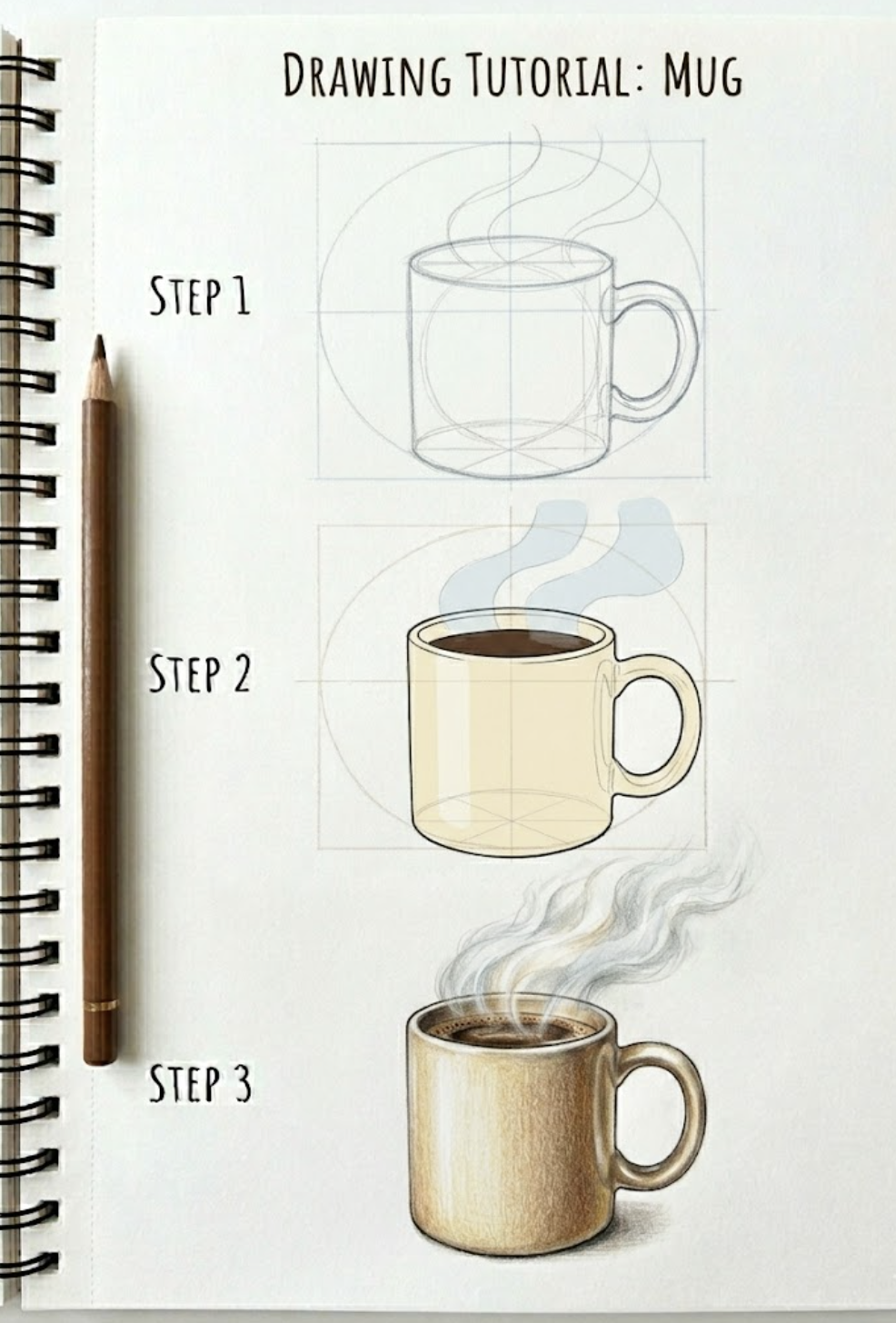
The mug shape is first — slightly trapezoidal, not perfectly cylindrical. Handle on one side. Then, three or four wavy steam lines rise from the top. The steam can be elaborate or minimal.
37. A lit candle melting
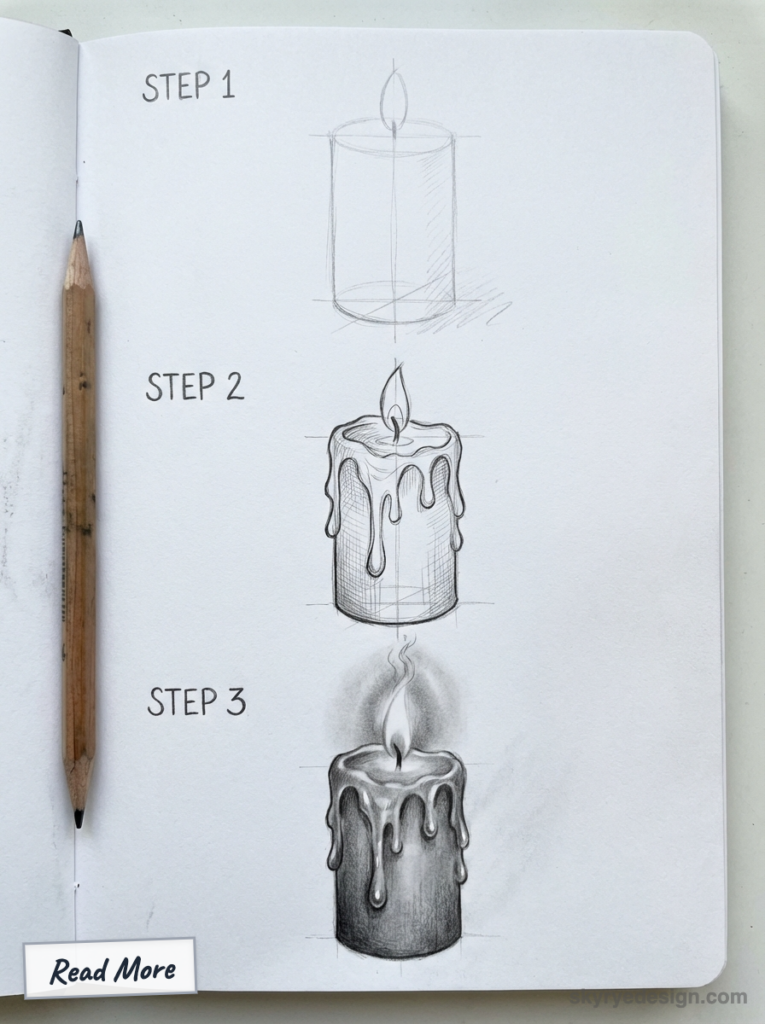
Draw the wax puddle that’s formed around the base, the uneven drips down the side, and the asymmetrical flame. A partially melted candle has more visual interest than a fresh one.
38. Headphones lying on a flat surface
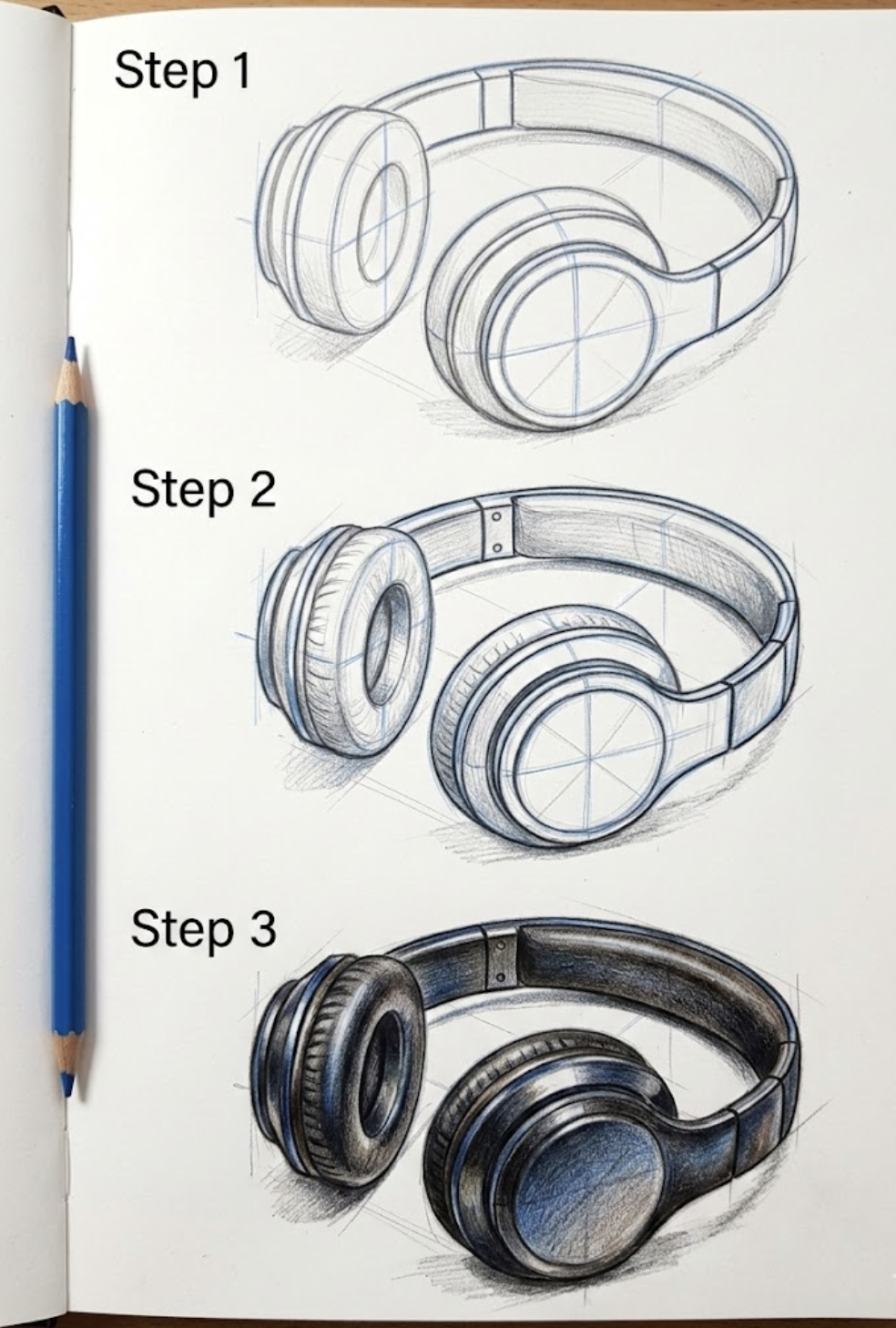
Viewed from above or at a slight angle. The arc of the headband, the two ear cups, the cable (if wired), snaking away. A modern everyday object that makes for a surprisingly detailed study.
39. An open book with curved pages
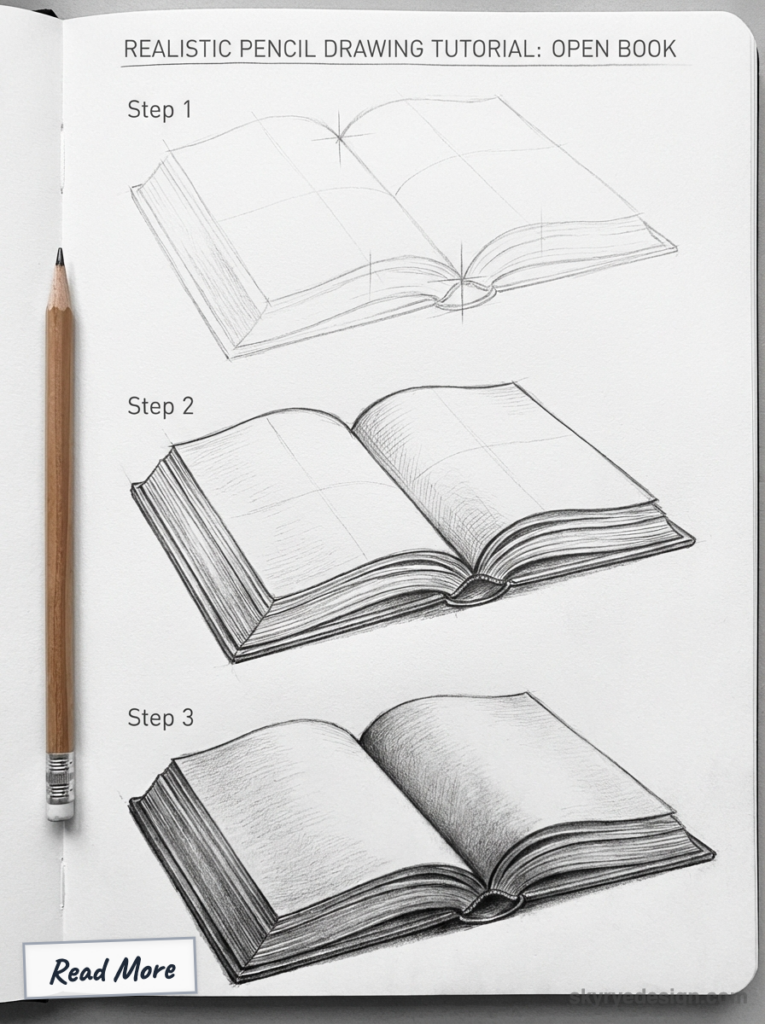
The V-shape of the open spine, pages fanning slightly, the gentle curve of paper that isn’t completely flat. If you want to go further, add a few visible lines of text as parallel lines.
1000 Drawing Ideas for Artists
Get a free PDF packed with easy drawing ideas, anime prompts, character concepts, nature inspiration, and fantasy sketchbook challenges.
Download Free PDF40. Glasses resting on a table
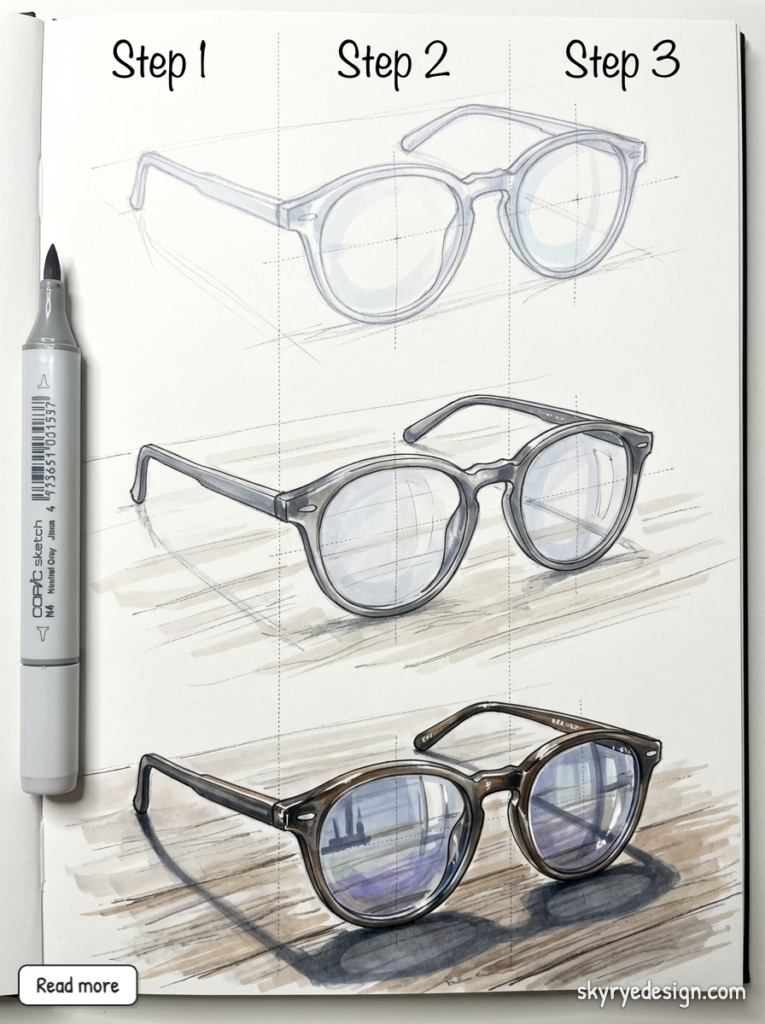
The two circular or rectangular lenses, the bridge between them, and the arms extending back. Draw the lenses slightly reflective — a small curved highlight in each one lifts the whole drawing.
41. A piece of fruit cut in half (kiwi, lemon, orange)
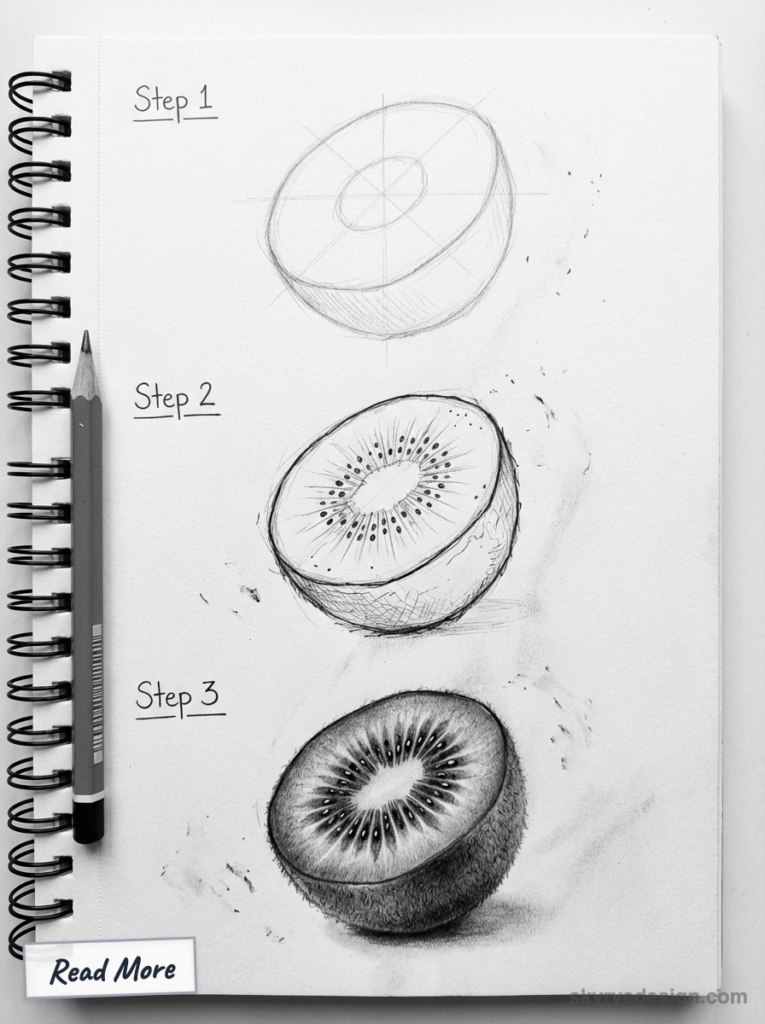
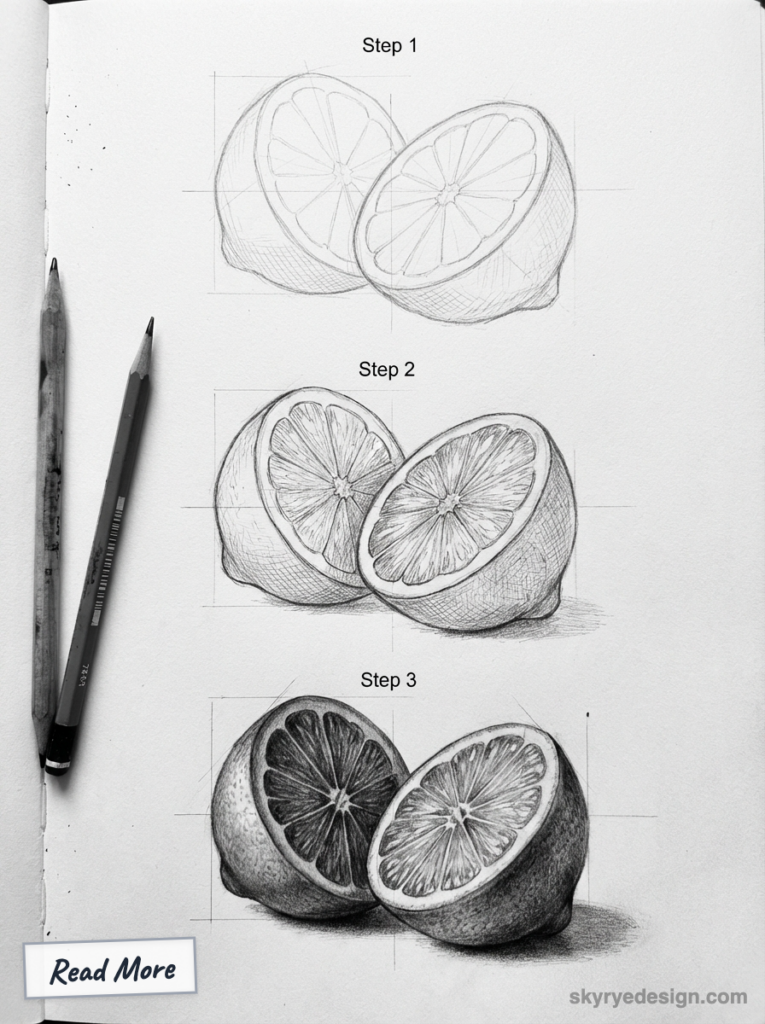
Cross-sections of fruit are almost mandala-like in their symmetry. The kiwi is particularly satisfying: the white core, the radiating green flesh, the small black seeds arranged around it.
42. A lit match
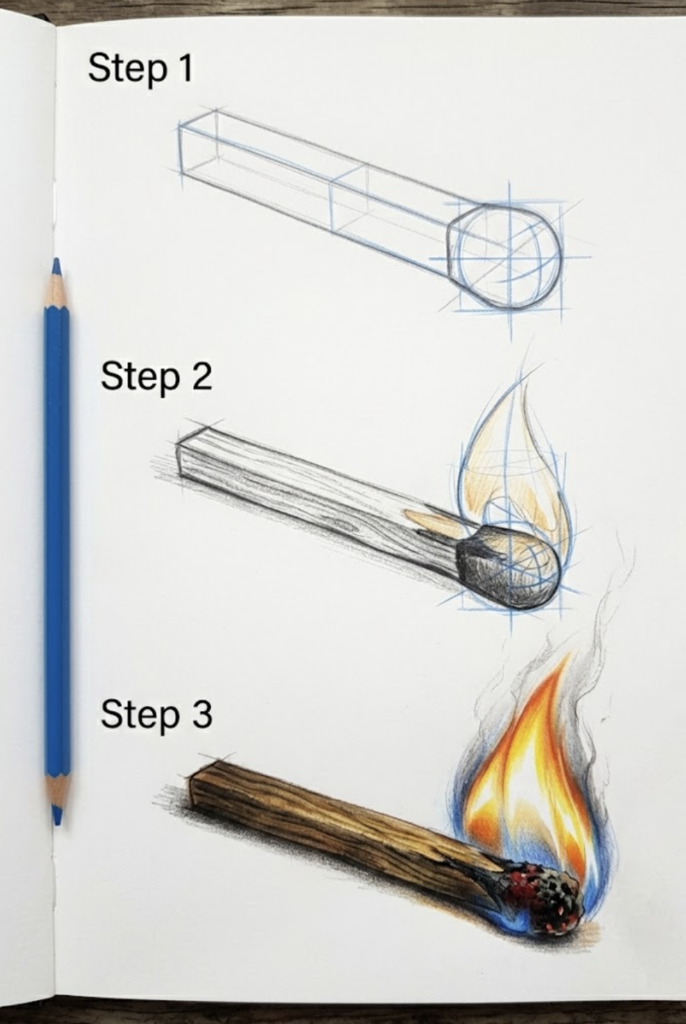
The thin wooden stick, the burnt black tip, the small teardrop flame. If you want atmosphere, add a thin wisp of smoke rising from a match that’s just been blown out.
43. A pair of old sneakers
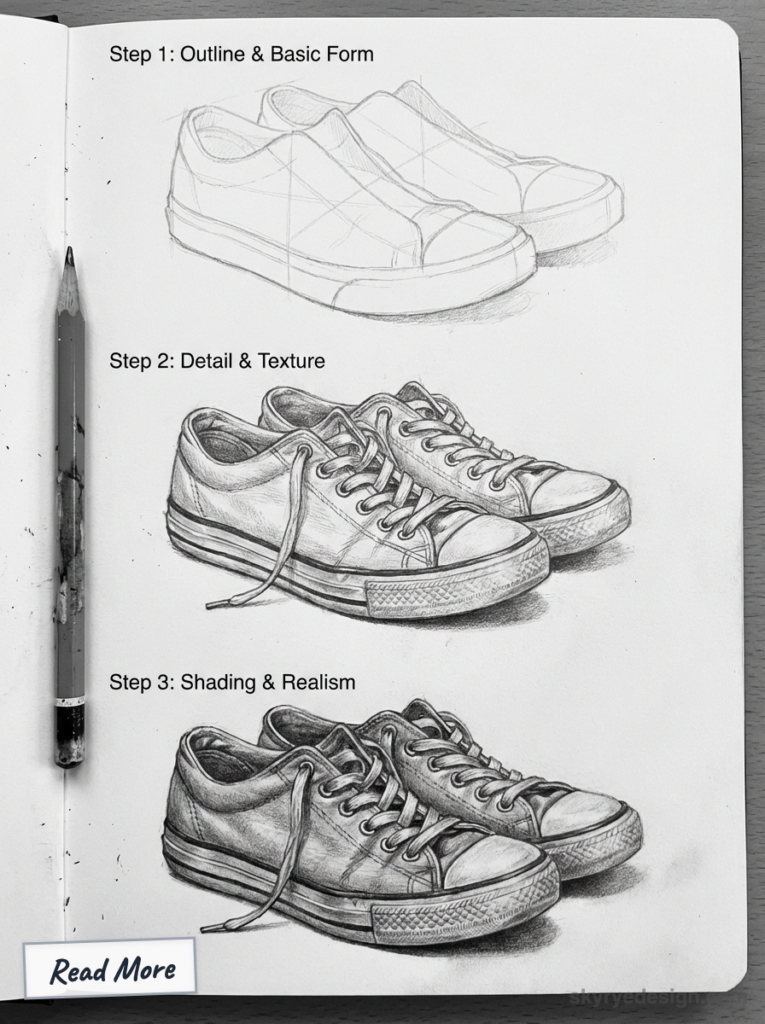
Worn, laced up, slightly scuffed at the toe. Old shoes have character — the crease lines, the worn sole edge, the slightly loose lace. More interesting than a pristine shoe.
44. A camera (film or digital)
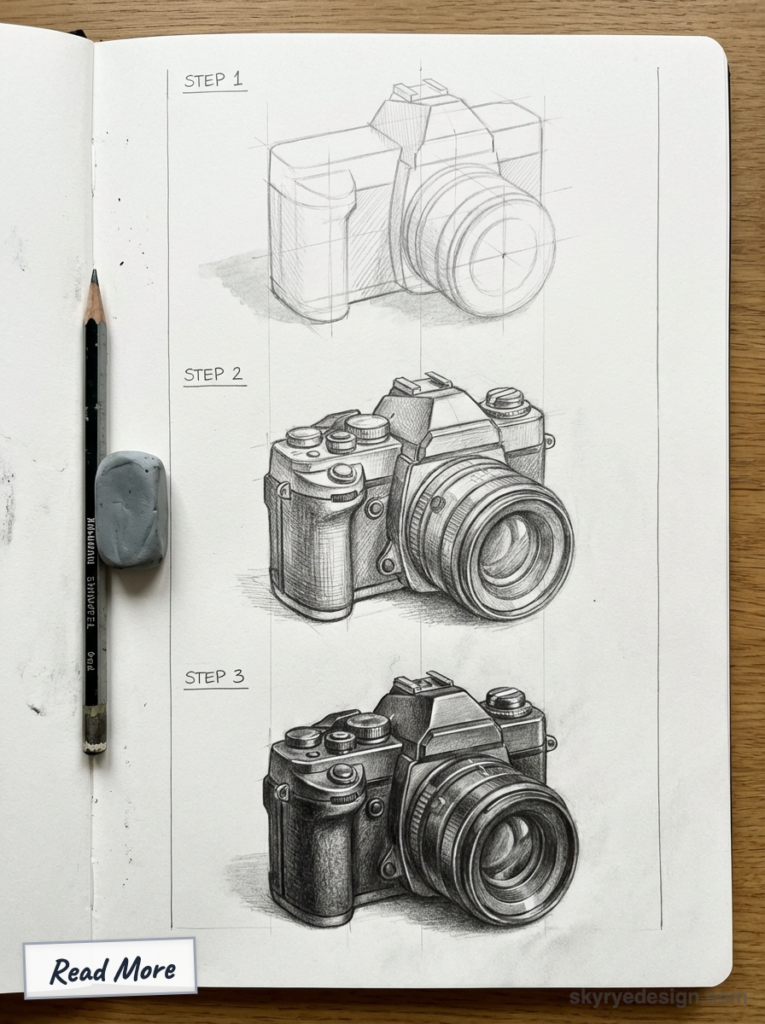
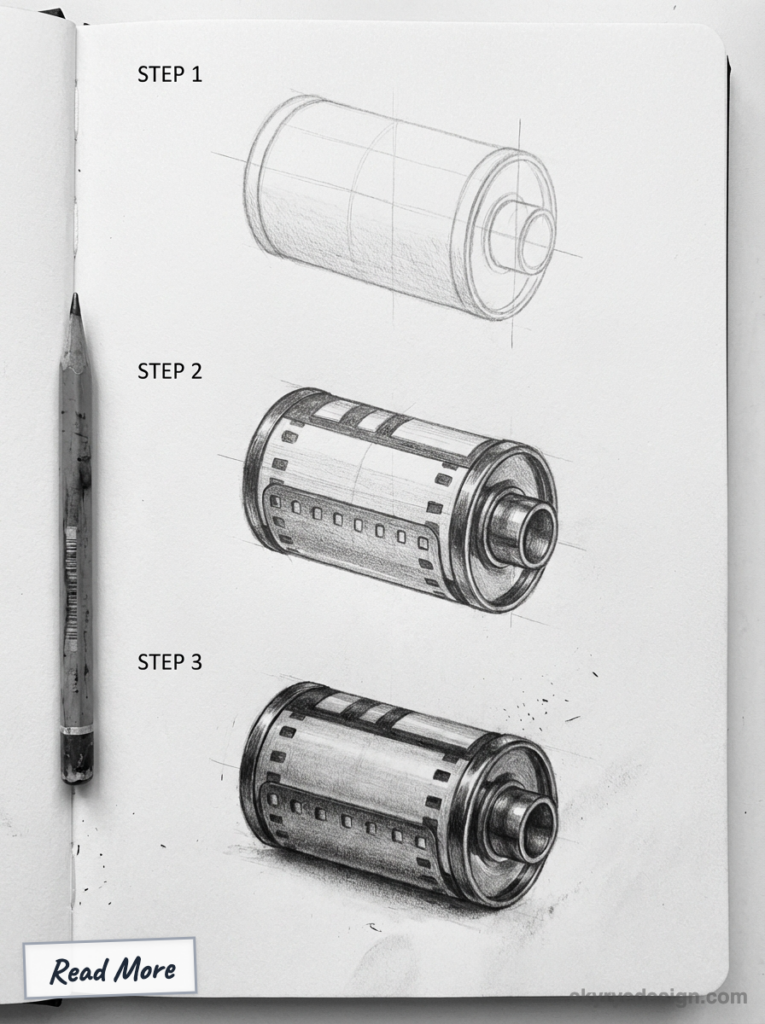
The body, the lens, the viewfinder, and the strap attachment points. Cameras have a satisfying geometric structure with enough detail to stay interesting for twenty minutes.
Architecture and Spaces
Buildings and interiors teach perspective without requiring formal lessons. The rules are forgiving when you’re drawing for interest rather than precision.
45. A doorway with interesting light
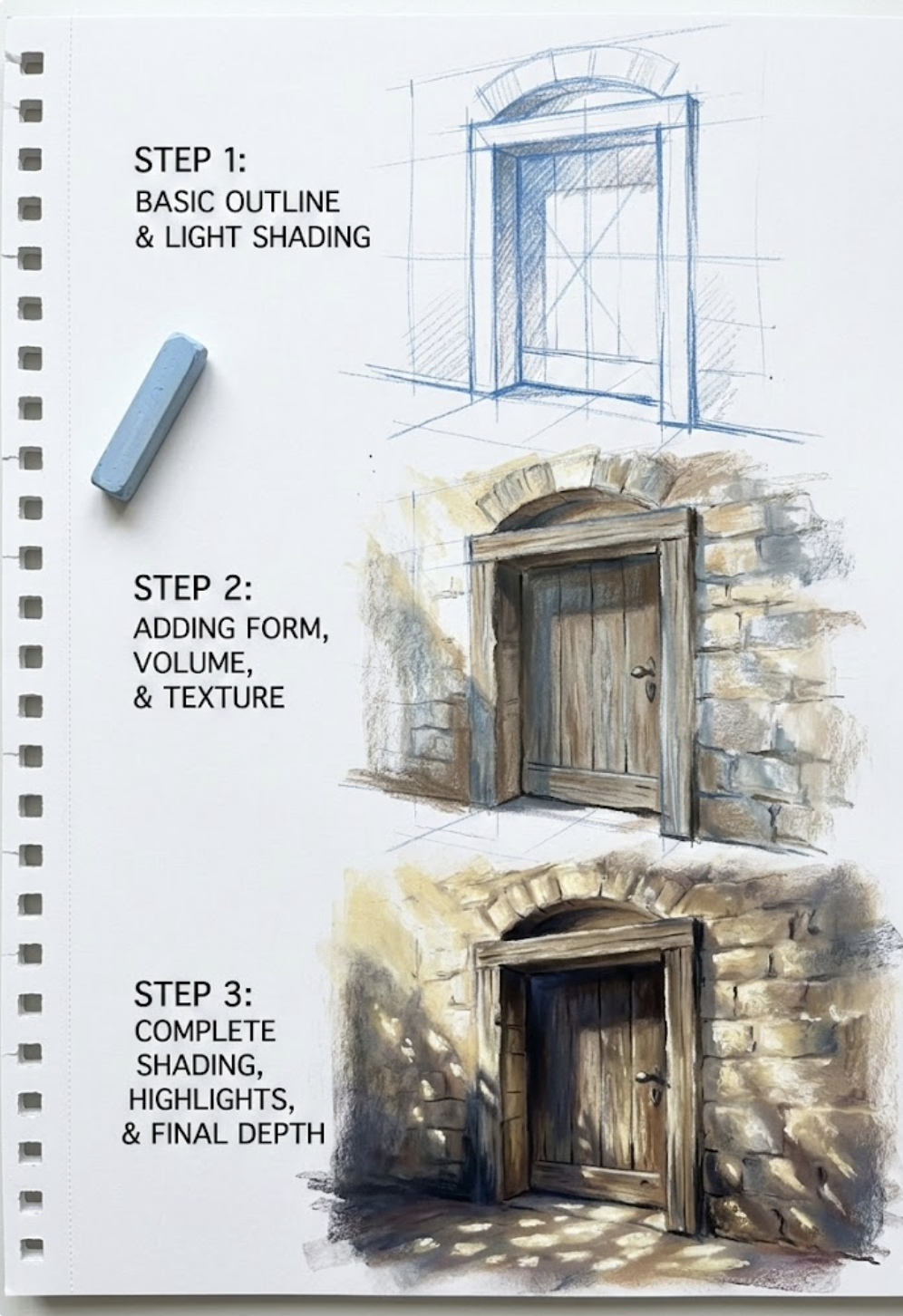
Draw the door frame, a partially open door, and the light or shadow it creates on the floor. The light coming through a gap is more interesting than the door itself.
46. A fire escape on an apartment building
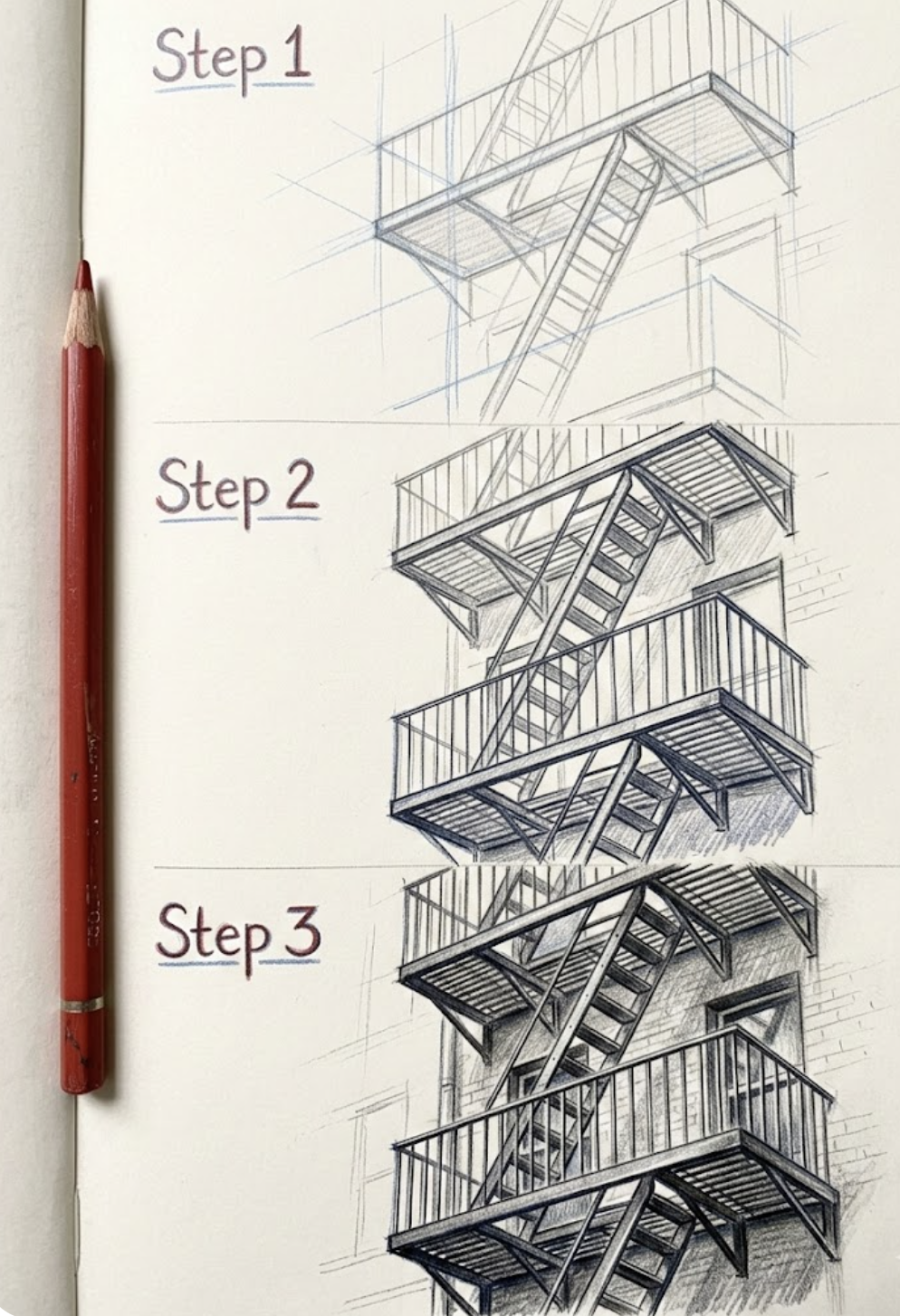
The horizontal walkways, the diagonal ladders between levels, and the brick wall behind it. Urban and graphic. The repetition of the fire escape structure is almost rhythmic to draw.
47. An arched window with panes
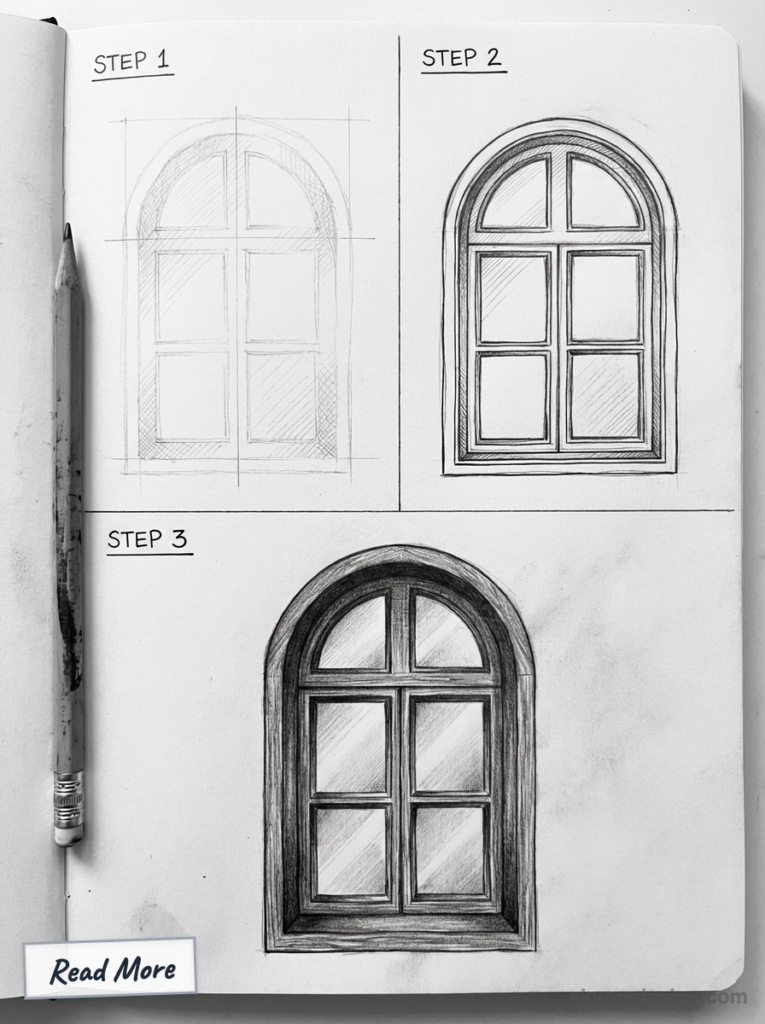
One large arch, divided into smaller rectangular panes. Add a windowsill below. Optionally add a plant or figure visible through the glass. Arched windows are architecturally satisfying.
48. A cozy reading nook
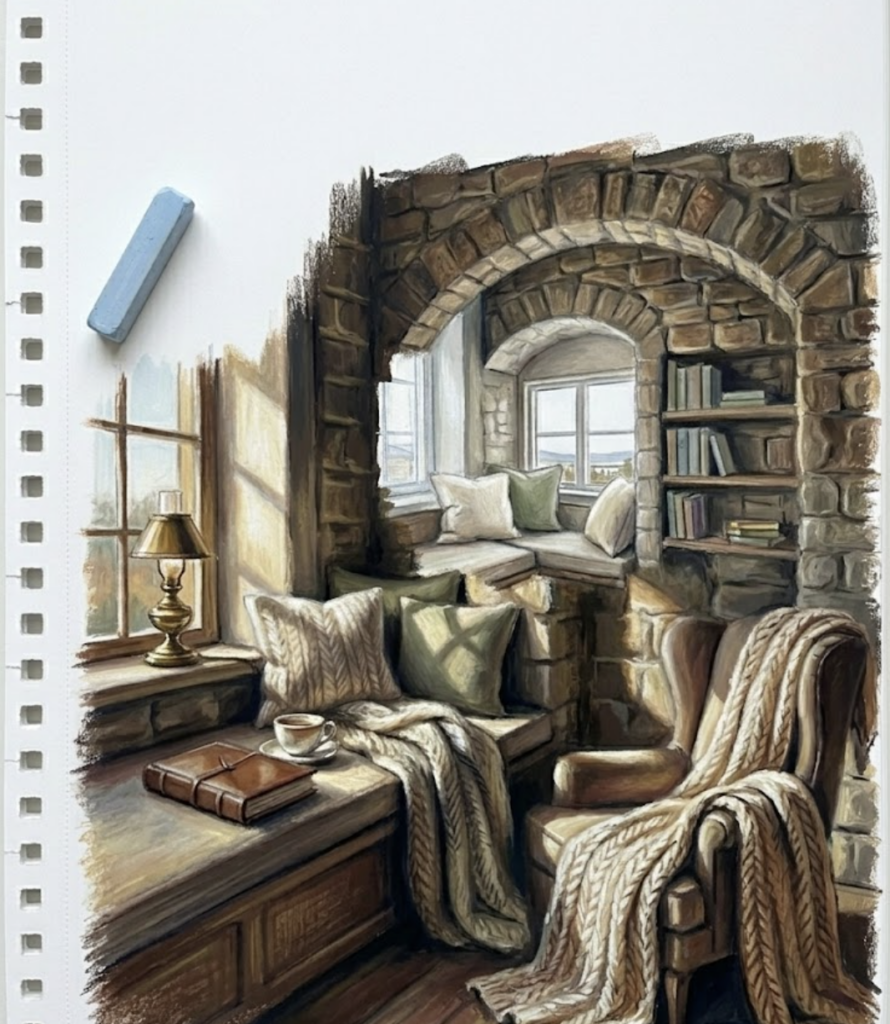
An armchair in a corner, a floor lamp, a small side table with a book, and a window with curtains. Interior vignettes like this can be as detailed or as loose as you want them to be.
49. Rooftops from above
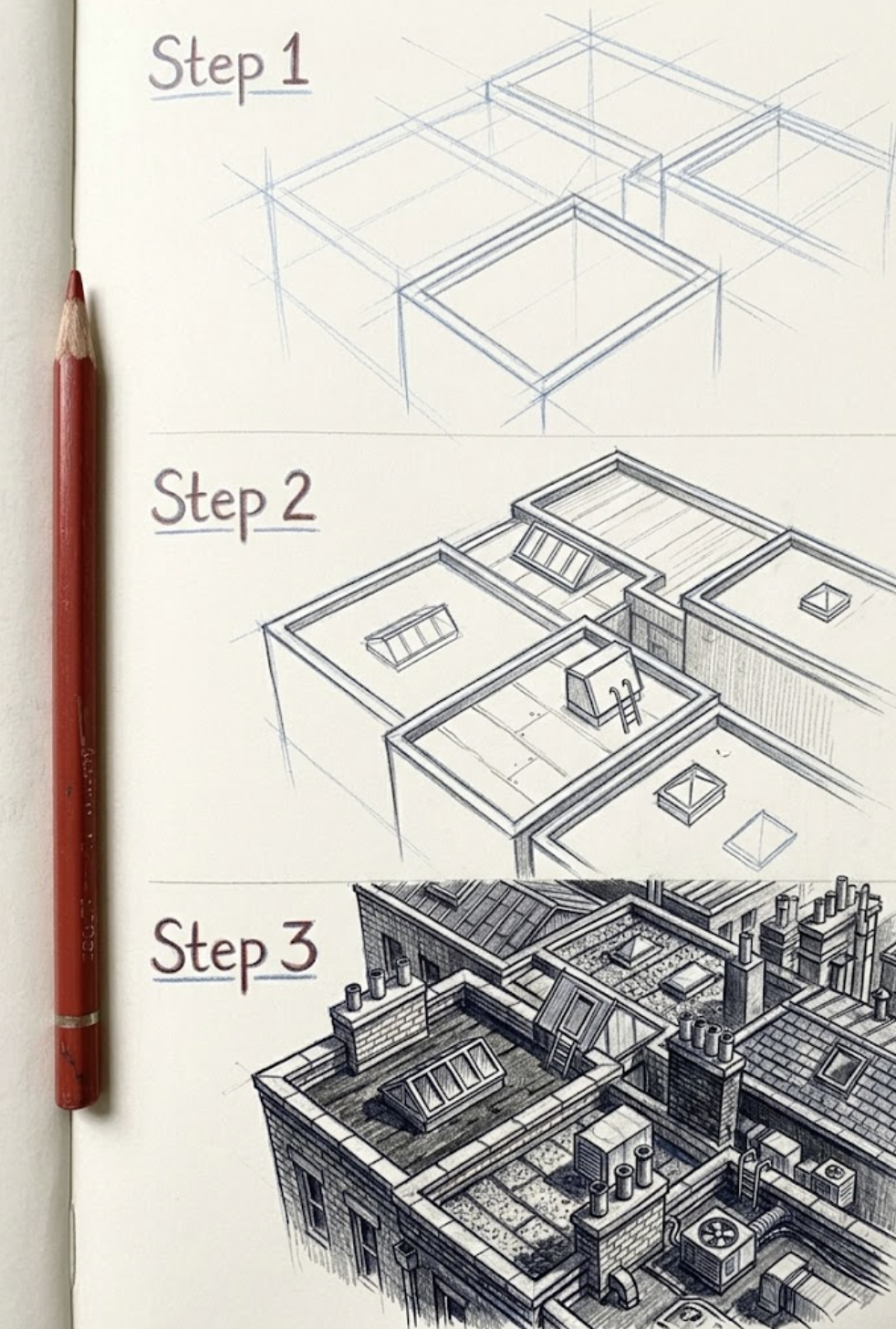
Imagine or find a reference to city rooftops viewed from a high point. Varied heights, water towers, chimneys, ventilation units — the irregular skyline of rooftops is endlessly variable.
50. A lighthouse at the edge of the rocks
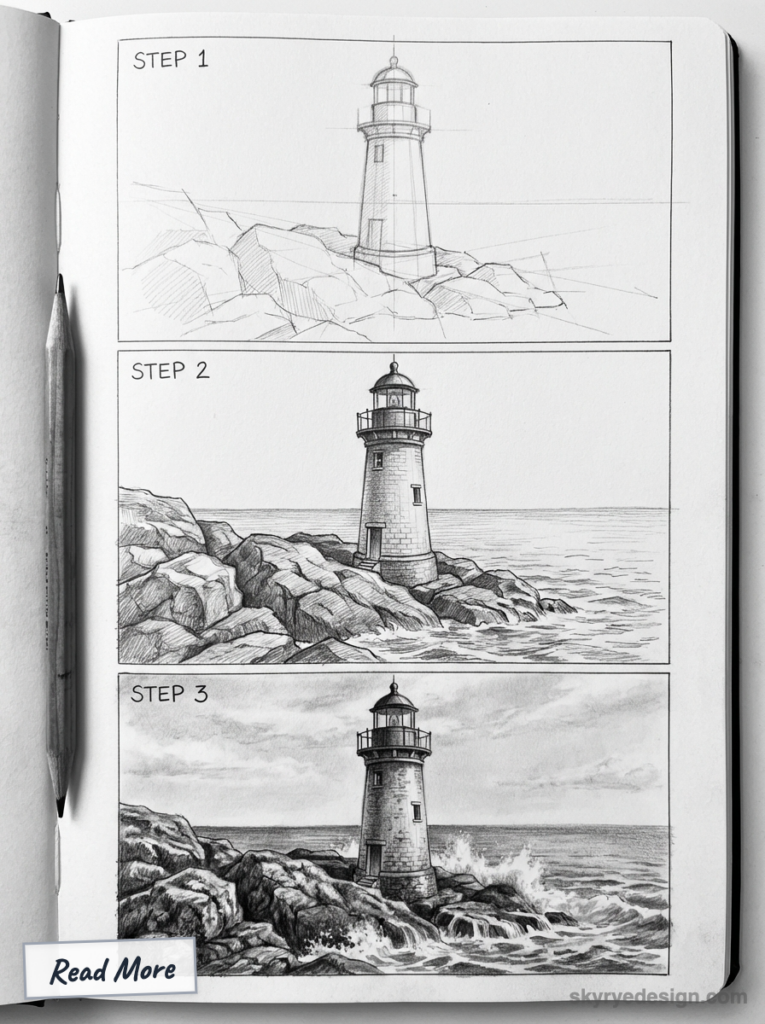
The tall cylindrical tower, the light room at the top, the keeper’s house below, and jagged rocks in the water. Strong horizontal/vertical composition with satisfying detail in the rocks.
51. A greenhouse with plants visible inside
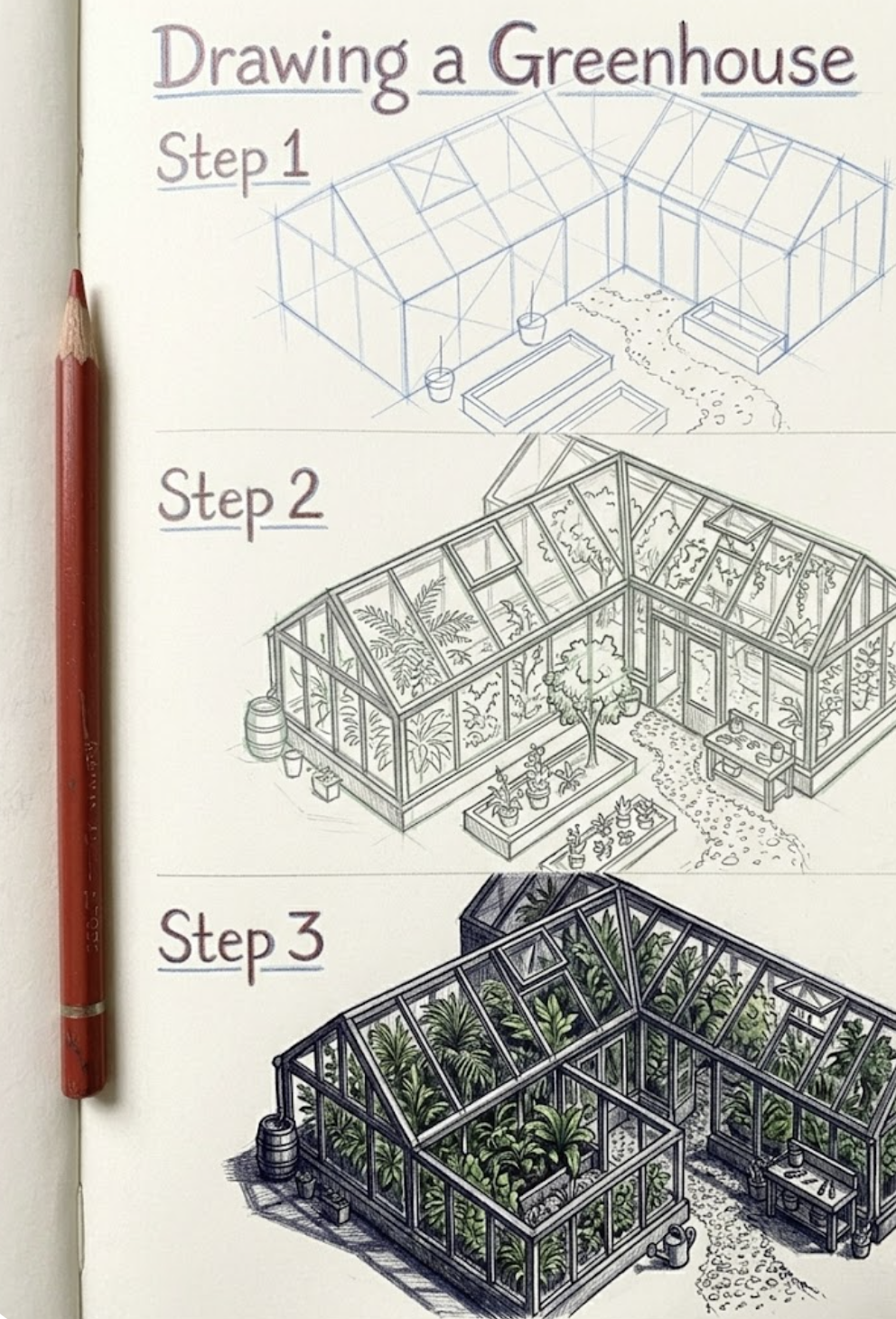
The angular glass-and-metal structure, with condensation implied on the glass, has vague plant shapes visible through it. The interplay of structure and organic growth makes this visually interesting.
52. Stairs going up or down
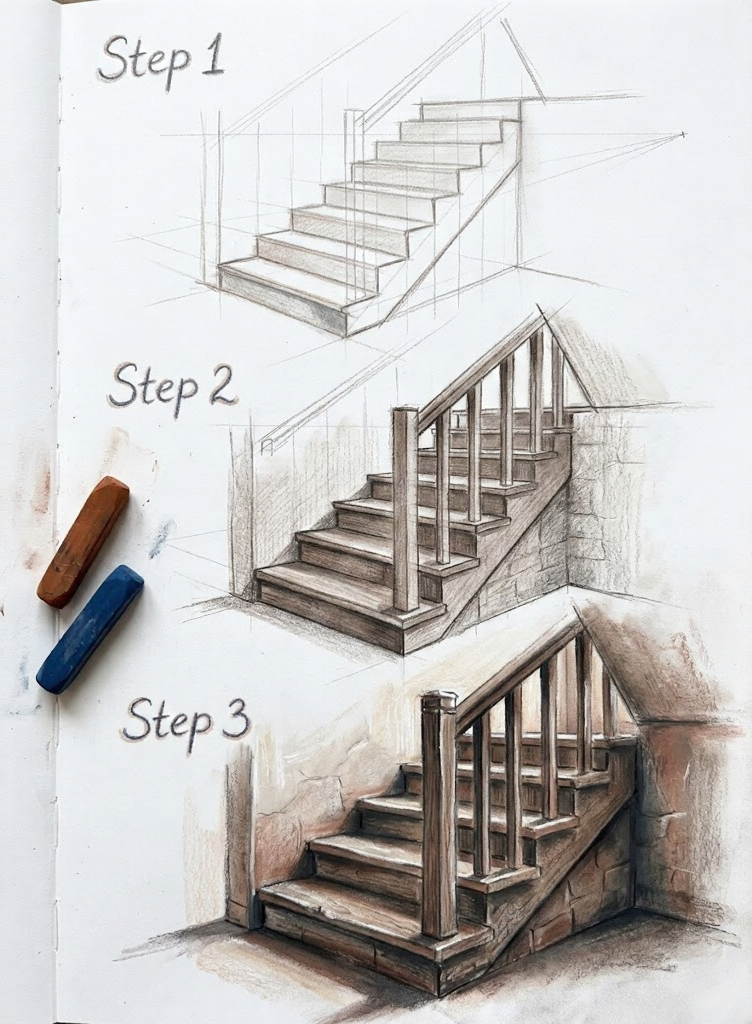
Just the stairs — no room around them. The angle of the steps, the handrail, and the way shadows fall between each tread. Stairs are a perspective exercise disguised as a simple subject.
53. A stone wall with moss
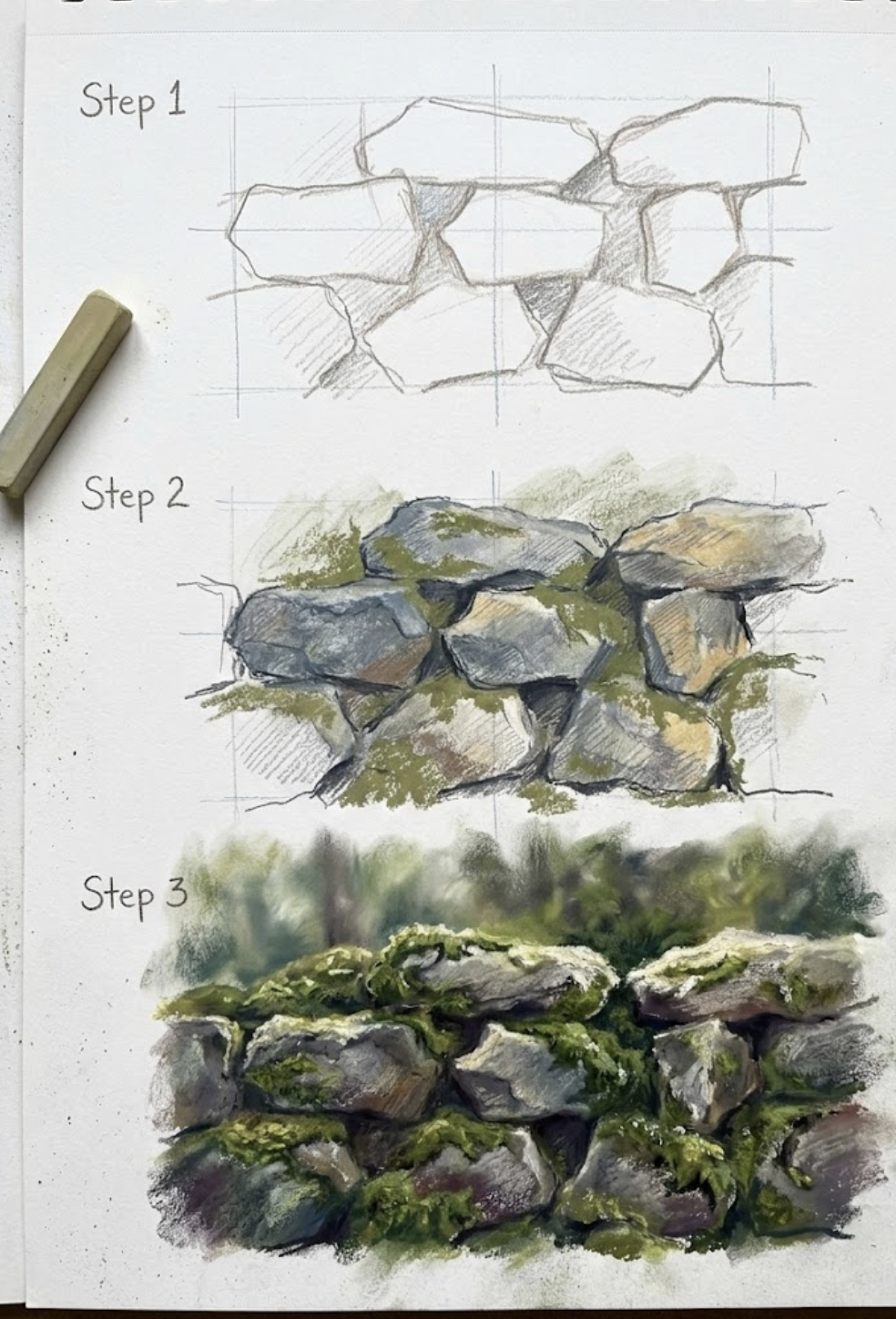
Roughly rectangular stones fitted together, gaps between them, patches of moss rendered as small, irregular dark shapes. Texture-heavy and meditative to draw.
Figures and Portraits
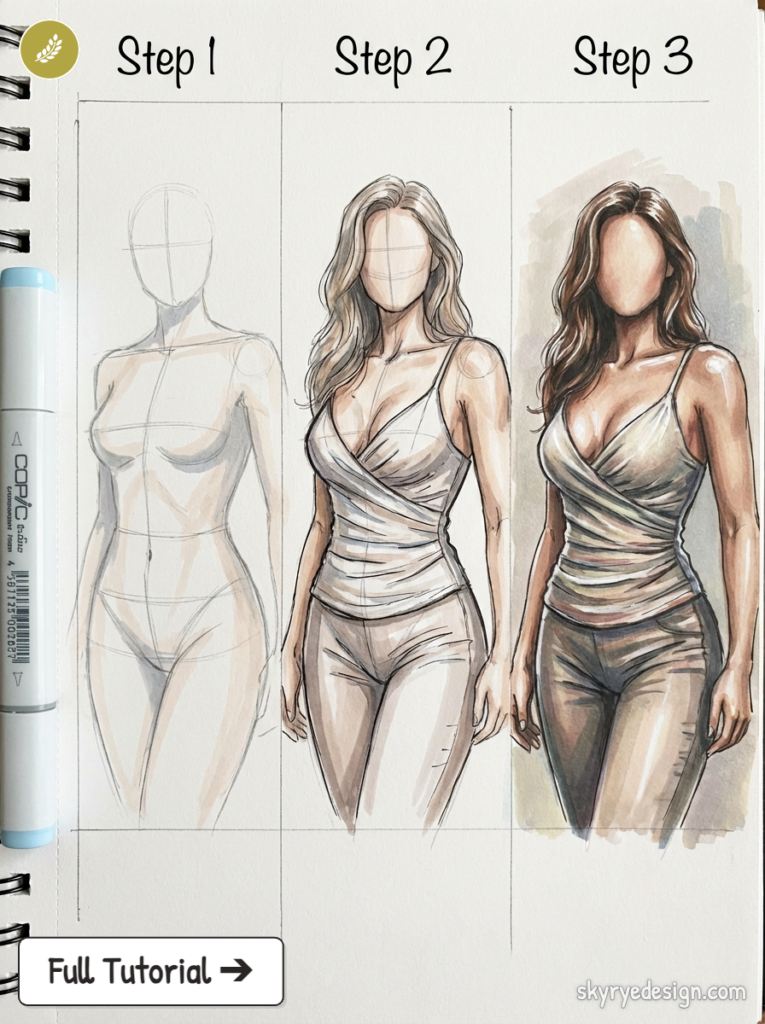
People are the hardest thing to draw and the most rewarding. These ideas lower the barrier to entry.
54. A figure from behind
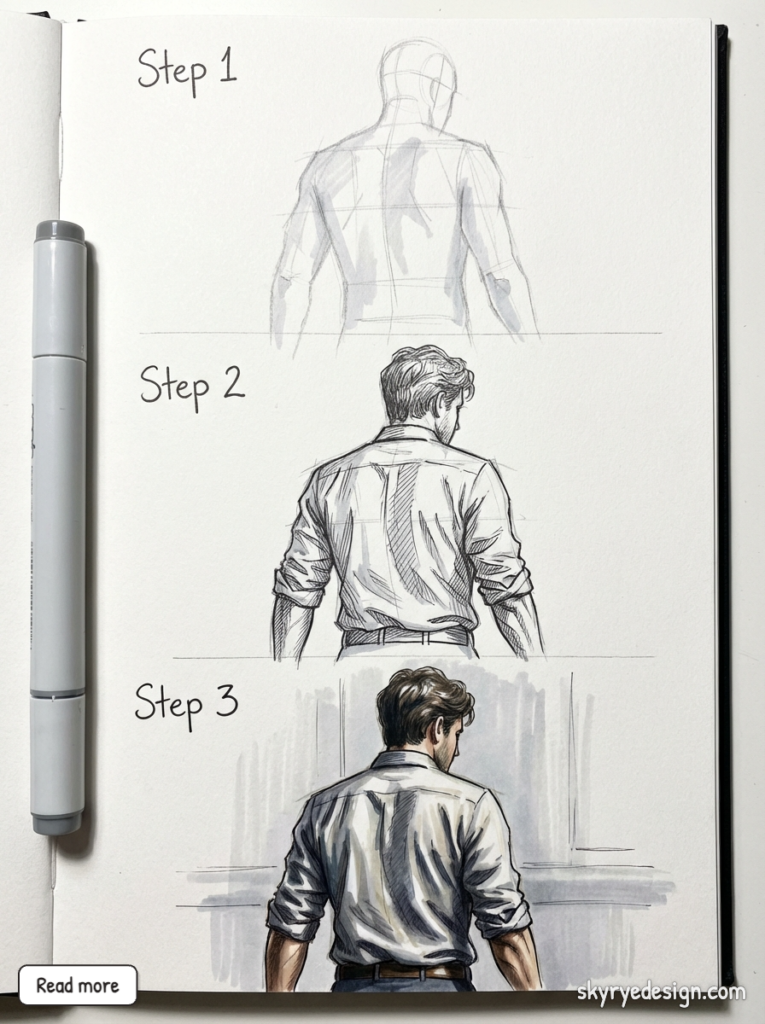
No face to get wrong. The silhouette of someone standing, sitting, or walking away. The shape of the back, the set of the shoulders, the way clothing drapes — all are more expressive than a face.
55. Hands in different positions
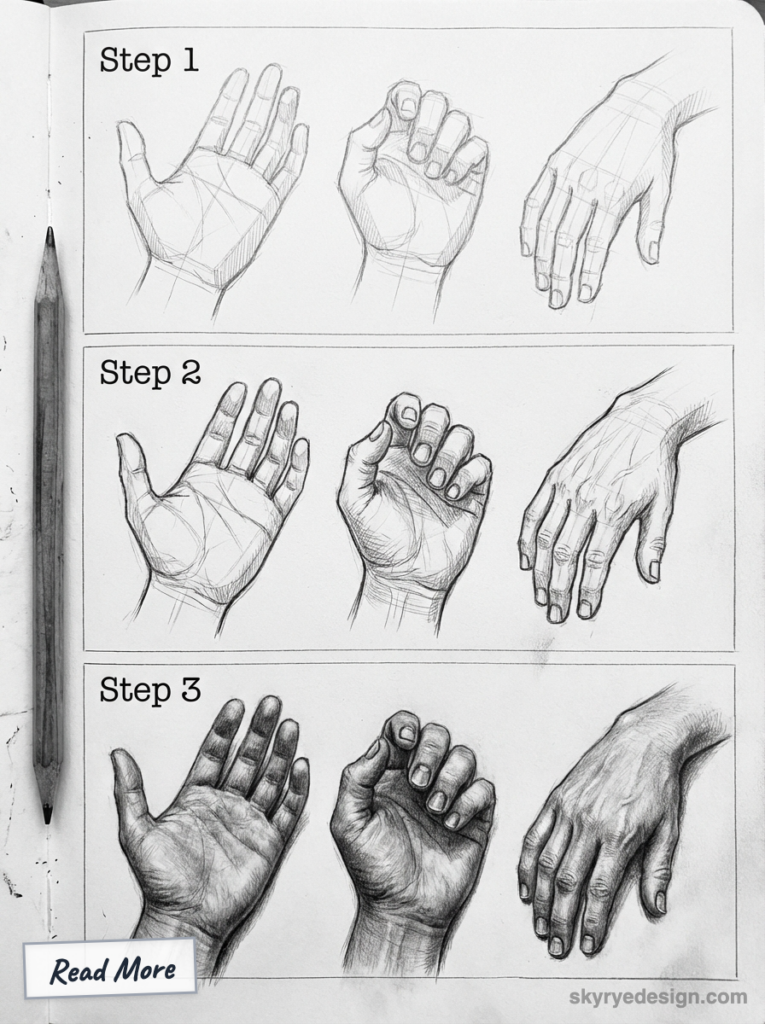
Your own non-dominant hand. Draw it holding a pen, flat on the table, making a fist, pointing. A page of hand studies is more useful than almost any other drawing exercise.
56. A profile silhouette
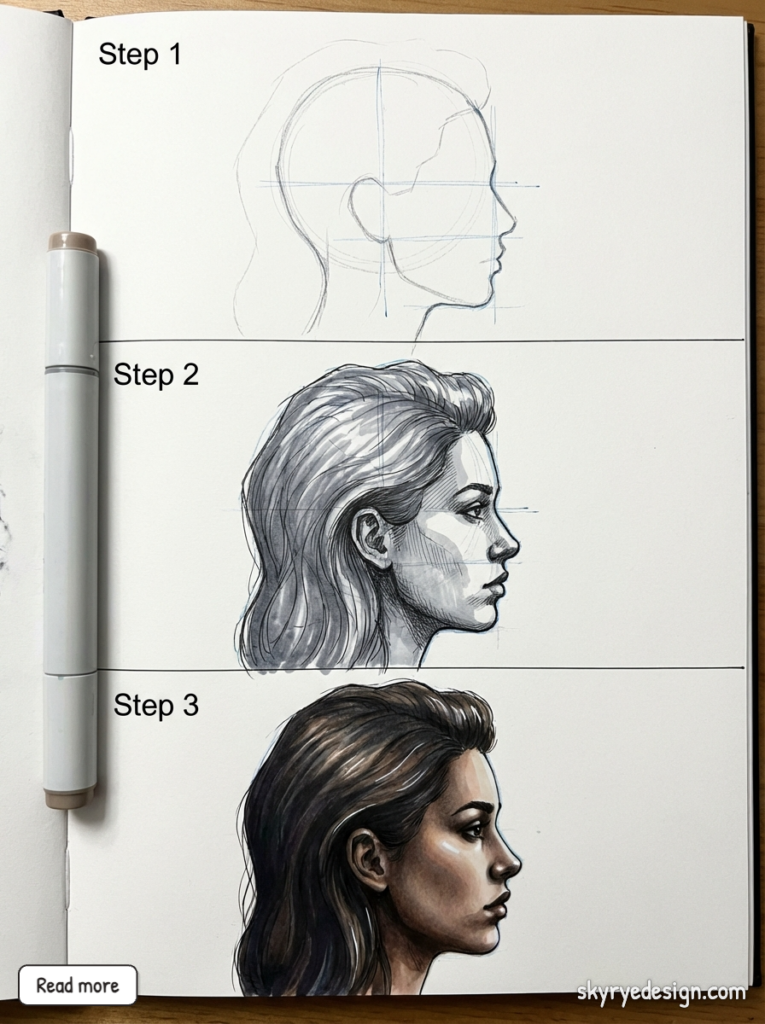
One clean outline of a head in profile. Fill it solid black or leave it as an outline. Add a detail inside — a landscape, a pattern, a night sky — if you want to get creative.
57. Feet in shoes or sandals
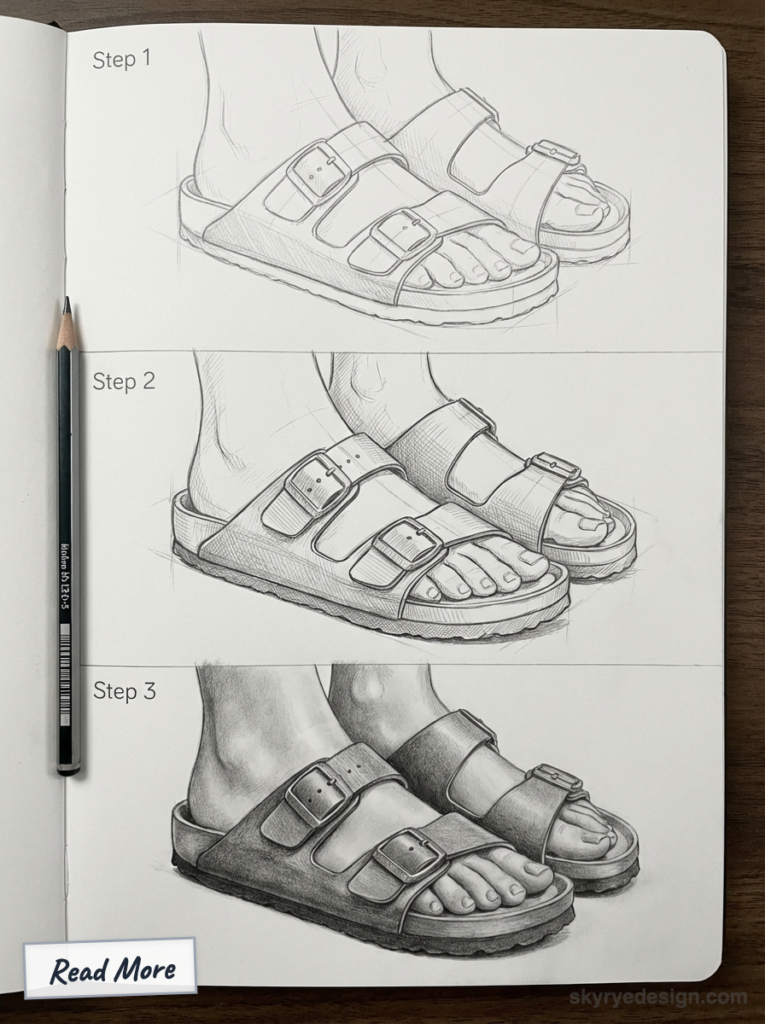
Feet in shoes are more forgiving than bare feet (no toe proportions to worry about). Draw them at an angle — a three-quarter view is more interesting than a straight-on frontal shot.
58. A figure reading in a chair
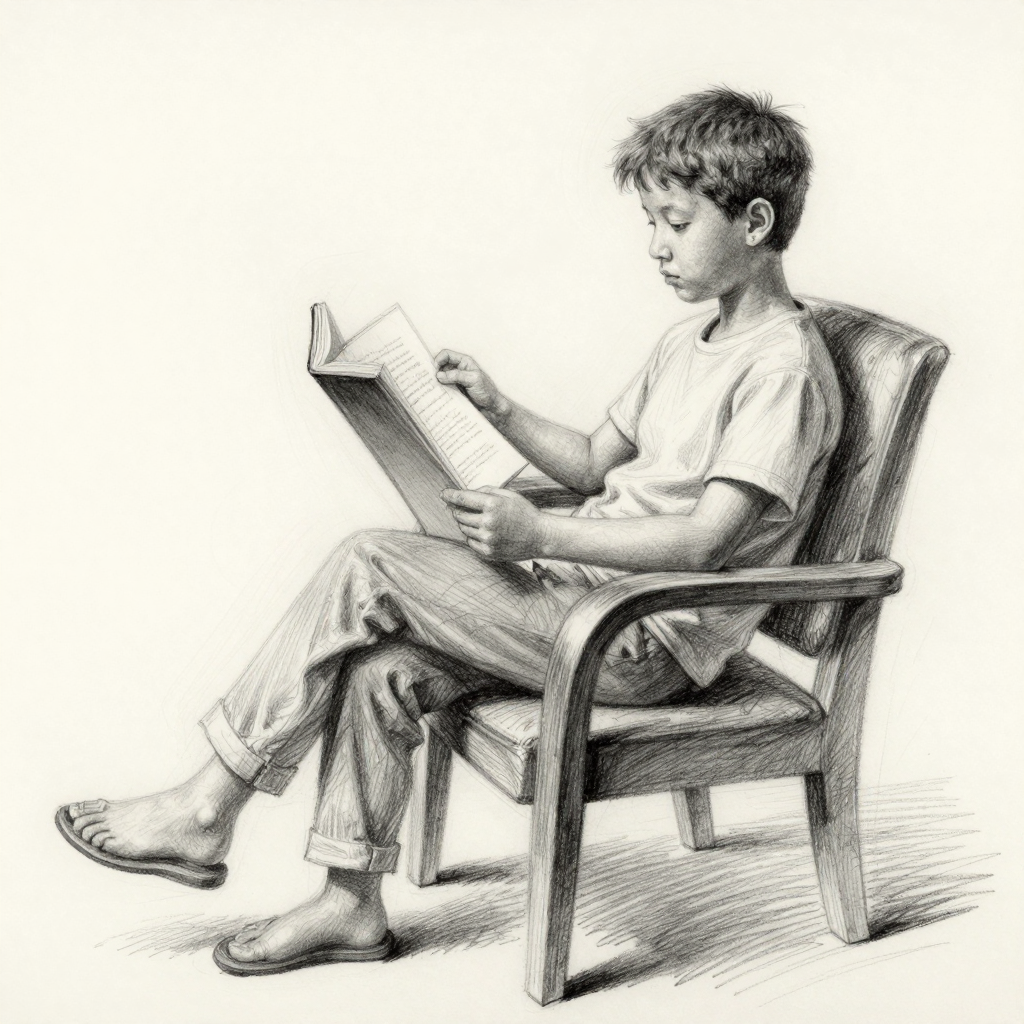
The slumped or curled posture of someone absorbed in a book. The face doesn’t matter — the body language tells the whole story. This is a gesture drawing exercise at its core.
59. Eyes with different expressions
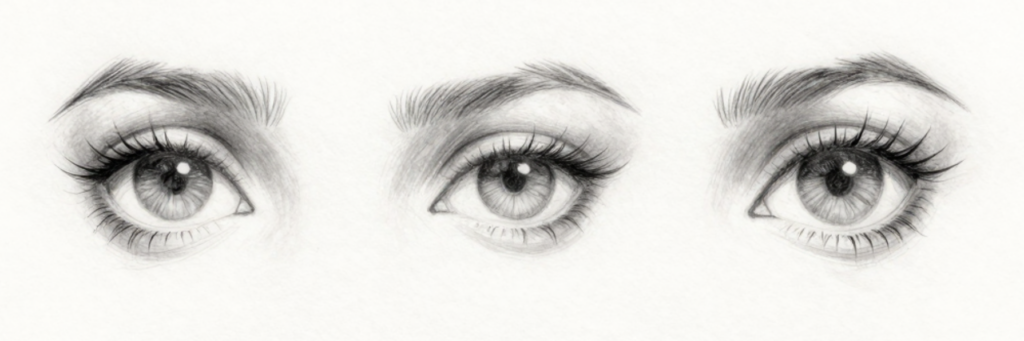
Draw a row of eyes across the page — surprised, sleepy, angry, amused, sad. The eyebrow position and the amount of white visible around the iris do most of the emotional work.
60. A pair of lips
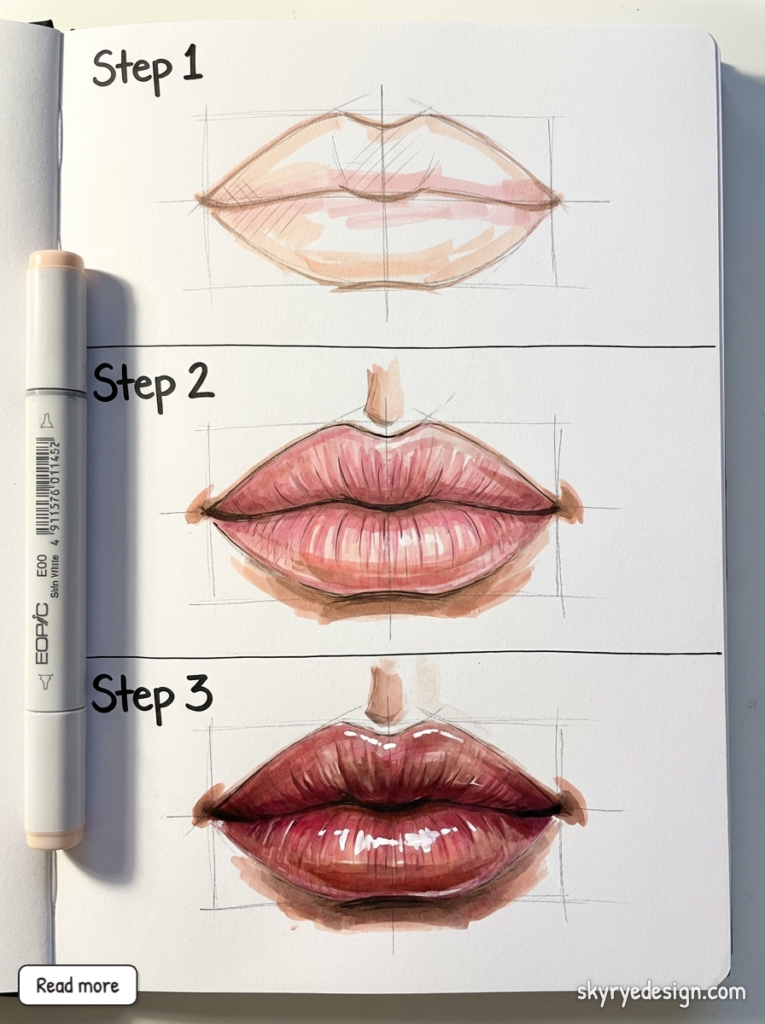
Front-on or at an angle. The Cupid’s bow of the upper lip, the fuller lower lip, and the slight shadow beneath. A lip study is twenty minutes of useful anatomy practice that doesn’t require drawing a full face.
Fantasy and Imagination
When you don’t want to observe anything, make something up. Imaginative drawing has different rules than observational drawing — mainly that there aren’t any.
61. A dragon curled around a mountain peak
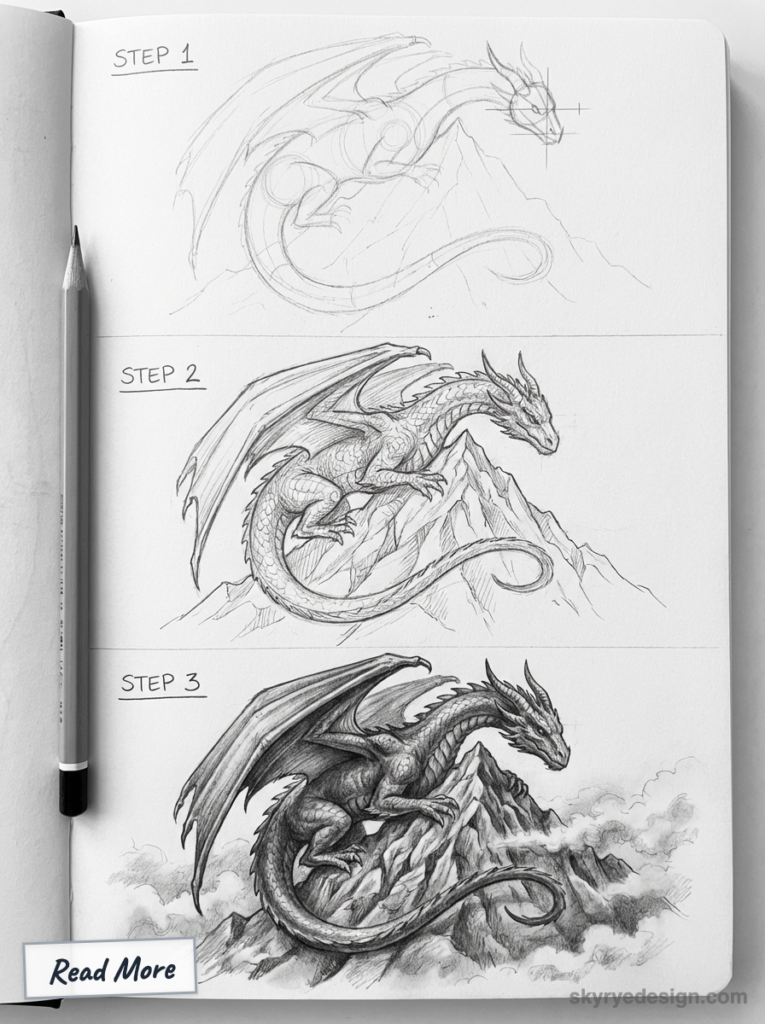
The mountain is a cone, the dragon’s body spiralling around it from base to summit. The tail hangs off one side, the head at the top surveying the view. Scale is the whole point.
62. An underwater city
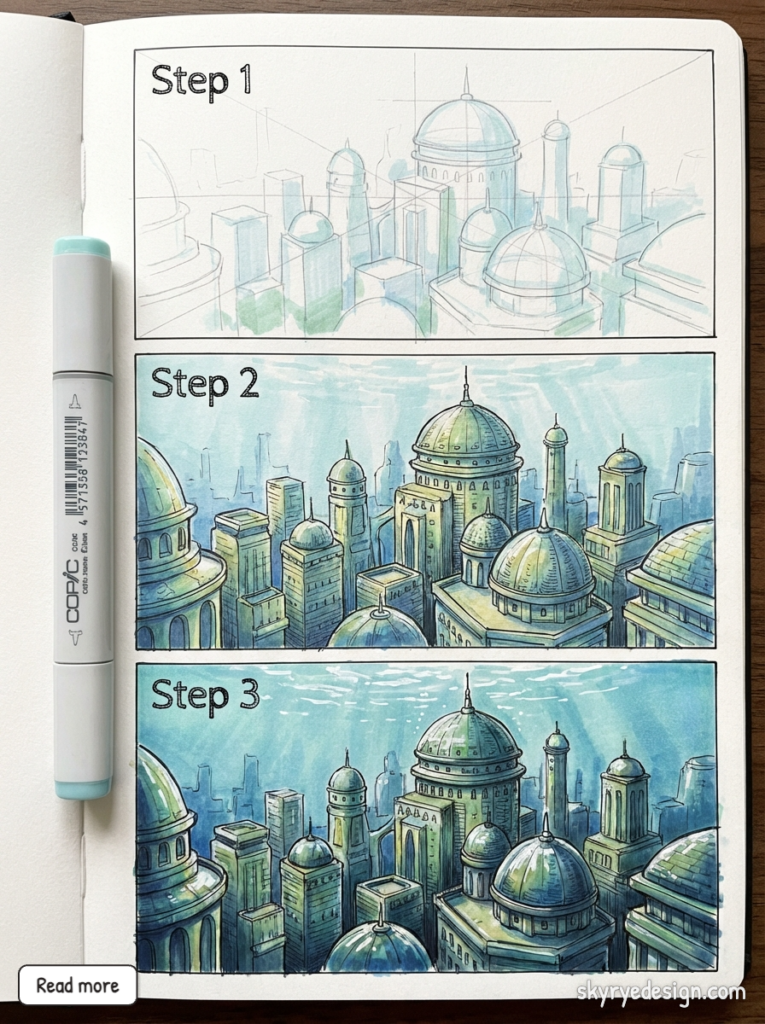
Buildings, but with coral growing on them. Fish swimming between towers. Floating lanterns instead of streetlights. Use the rules of architecture you know and apply them to an impossible environment.
63. A tiny door at the base of a tree
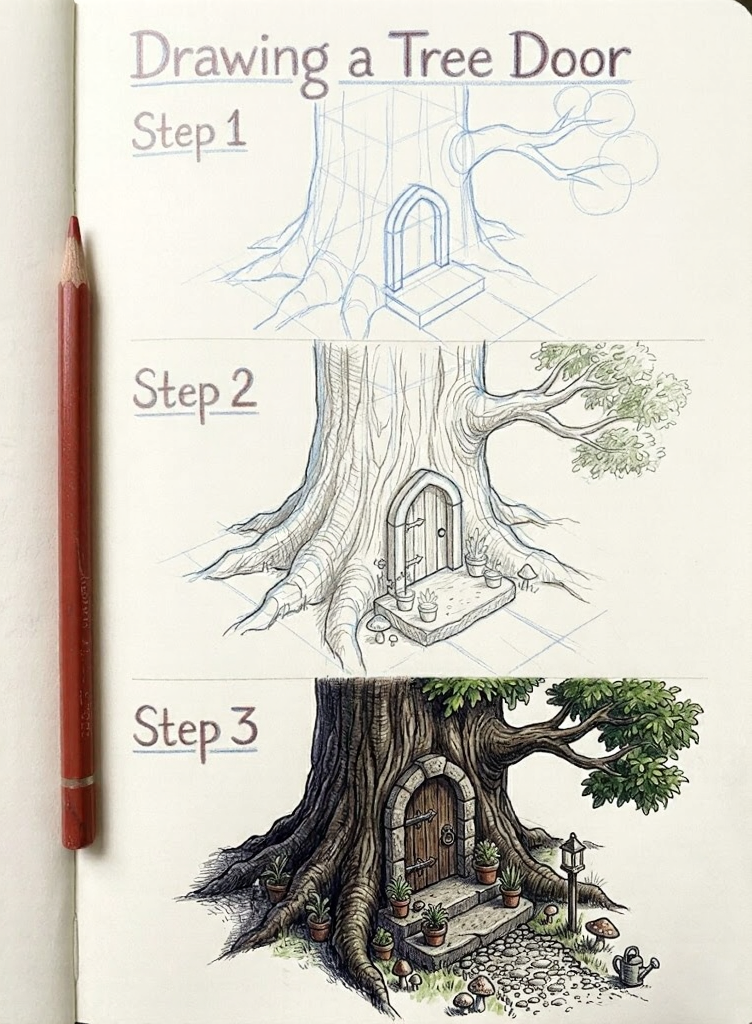
An old wooden door built into tree roots, complete with a brass knocker and light coming from under it. The miniature scale is implied by drawing a fallen acorn nearby.
64. A robot made entirely of household objects
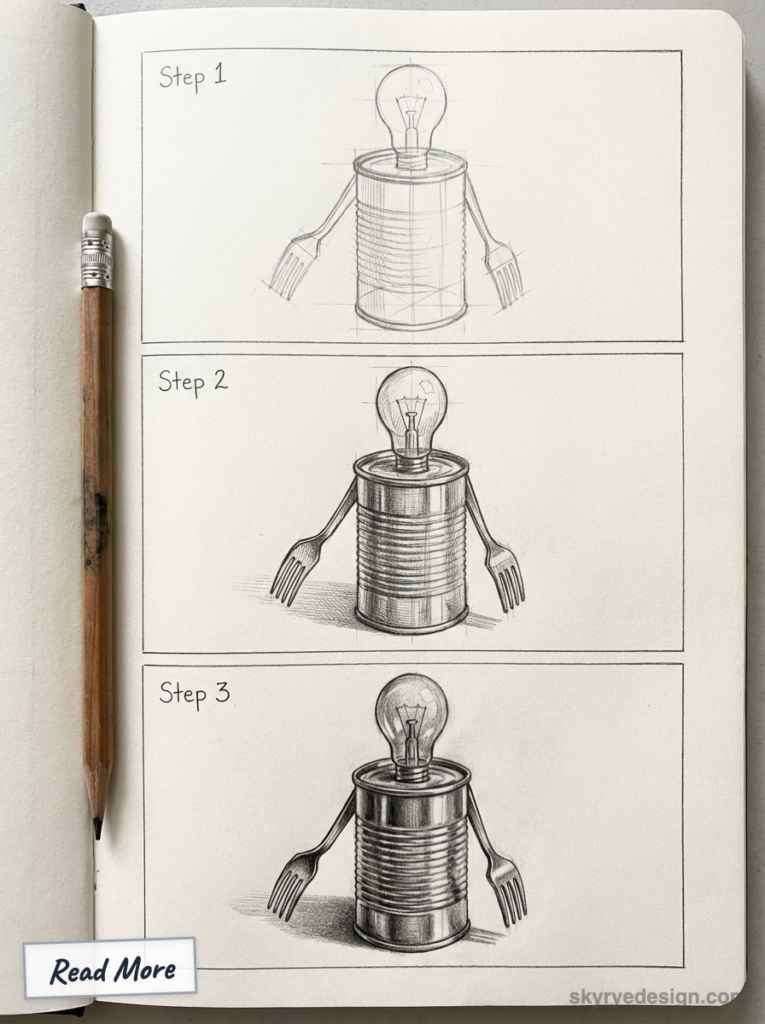
A coffee pot body, fork fingers, bottle cap eyes, and a colander helmet. Combine actual objects you can see around you into an absurd mechanical figure.
65. A map of an imaginary island
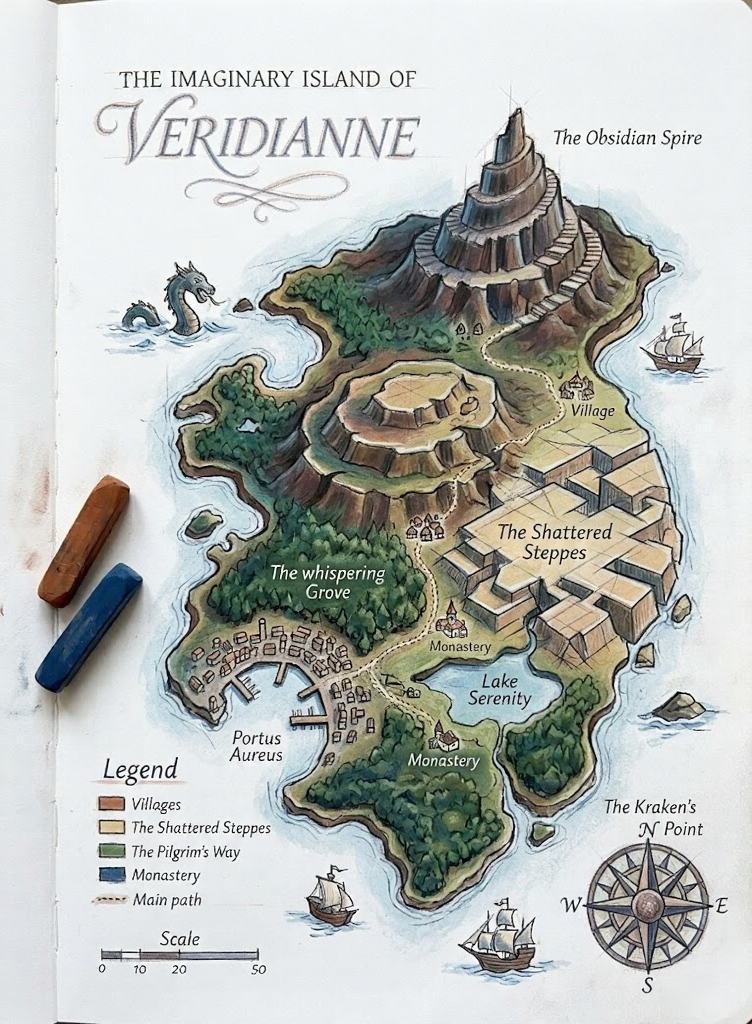
Irregular coastline, mountain symbols in the interior, a small forest, a castle, a port town, and dotted paths between them. Map-drawing is immediately absorbing and requires no artistic skill.
66. A spaceship design
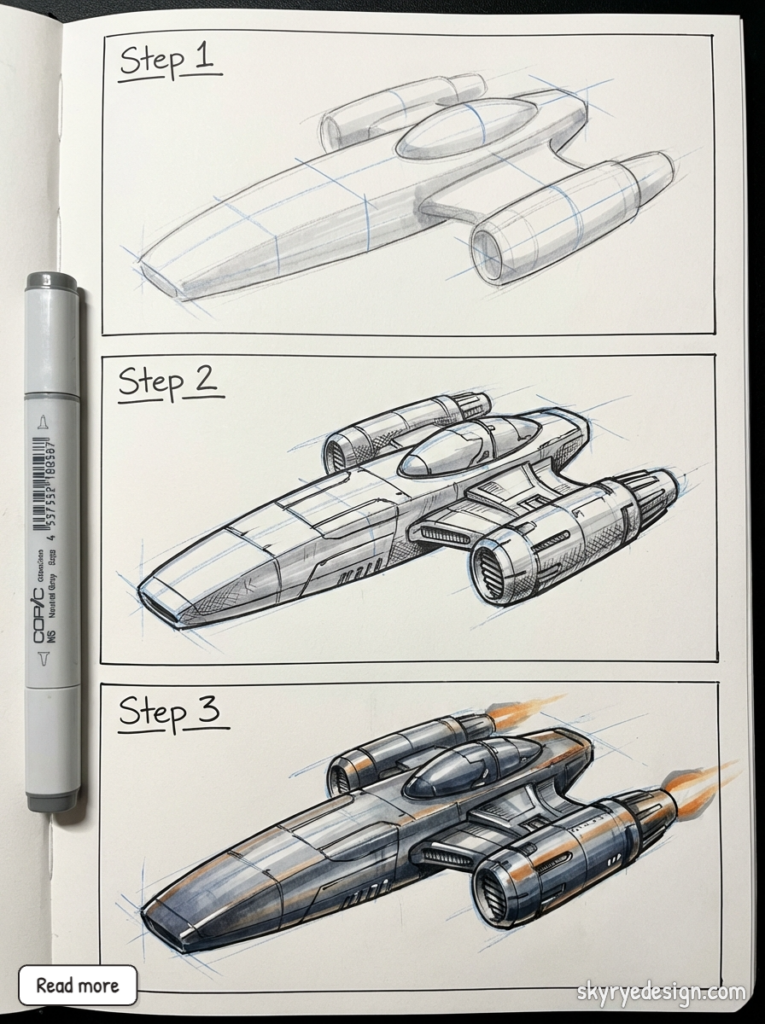
Not a generic rocket. Design something specific — a mining vessel, a luxury liner, a fighter. Give it panels, exhaust ports, and viewport windows. Engineering drawings are a form of drawing, too.
67. A creature that’s half animal, half plant
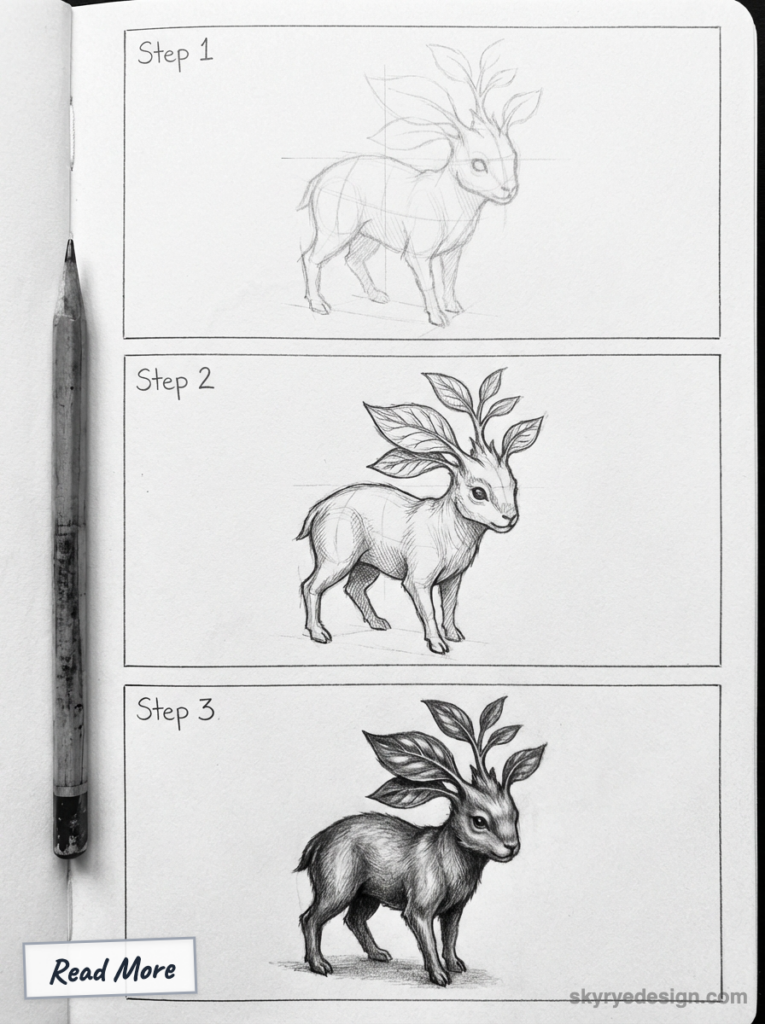
The hind legs of a deer, but with bark instead of fur. Antlers that branch into actual tree branches. Moss growing along the spine. Hybrid creatures combine known forms in unexpected ways.
68. A portal between two different worlds
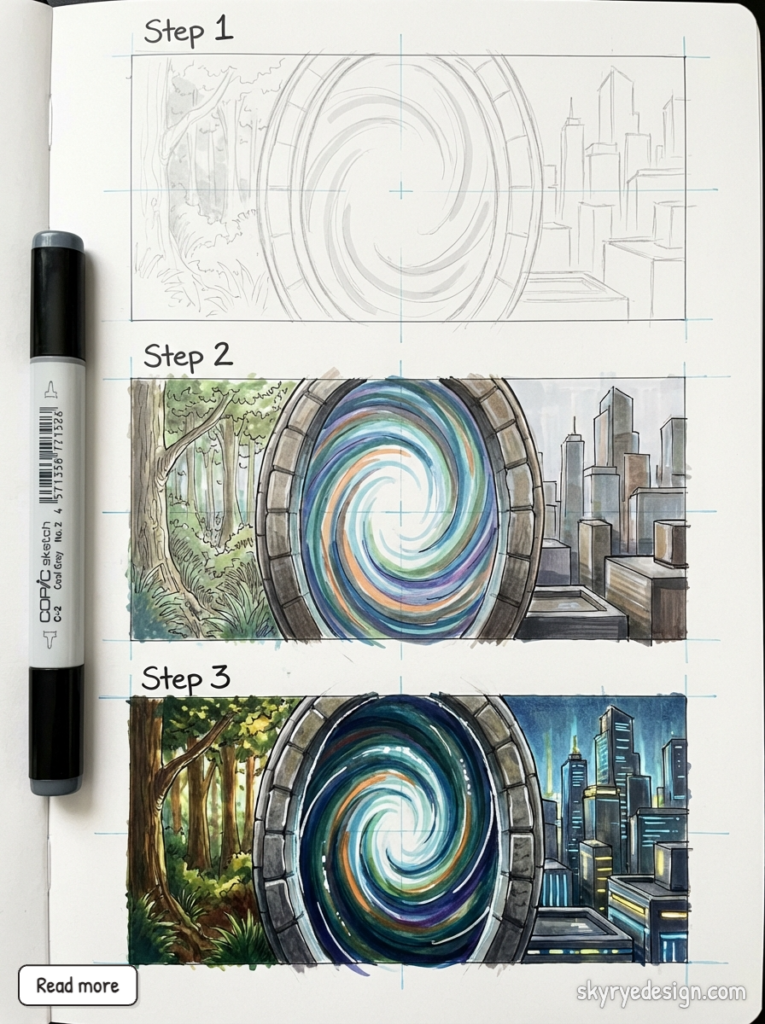
A circular frame, and through it — a different landscape, different light, different weather. Snow on one side, desert on the other. The contrast between the two worlds is the composition.
69. A ghost in an everyday situation
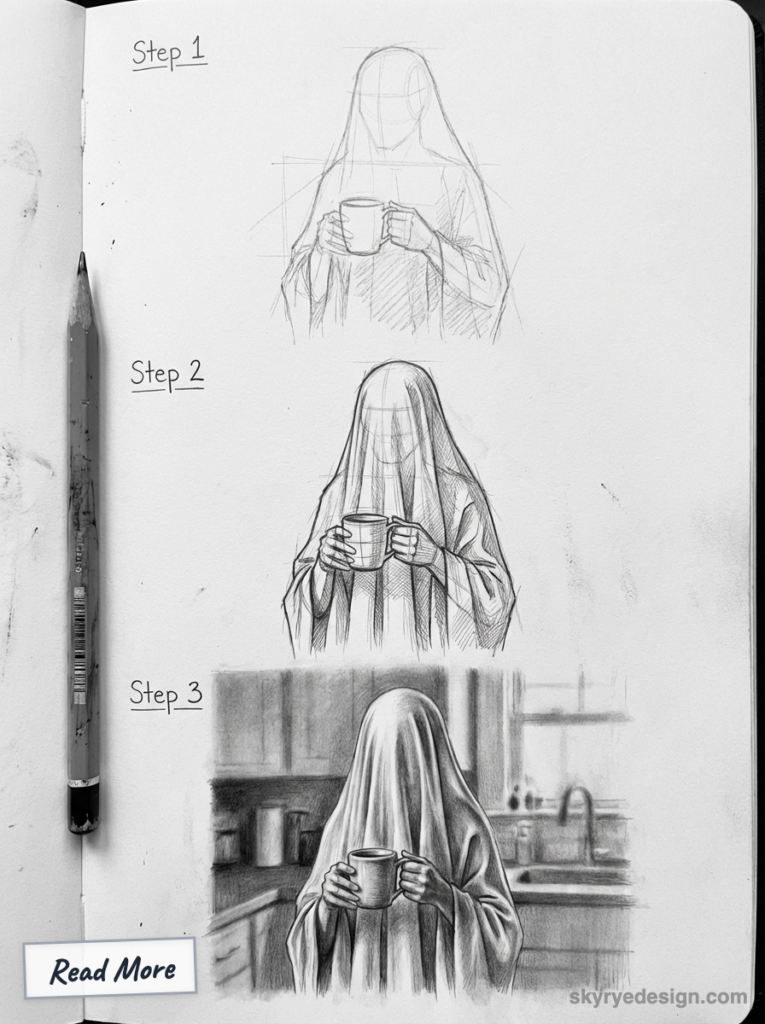
A ghost riding a bicycle, a ghost waiting in a queue, a ghost reading a newspaper. The humour is the concept — keep the drawing simple to let the absurdity land.
70. A cloud with a city on top
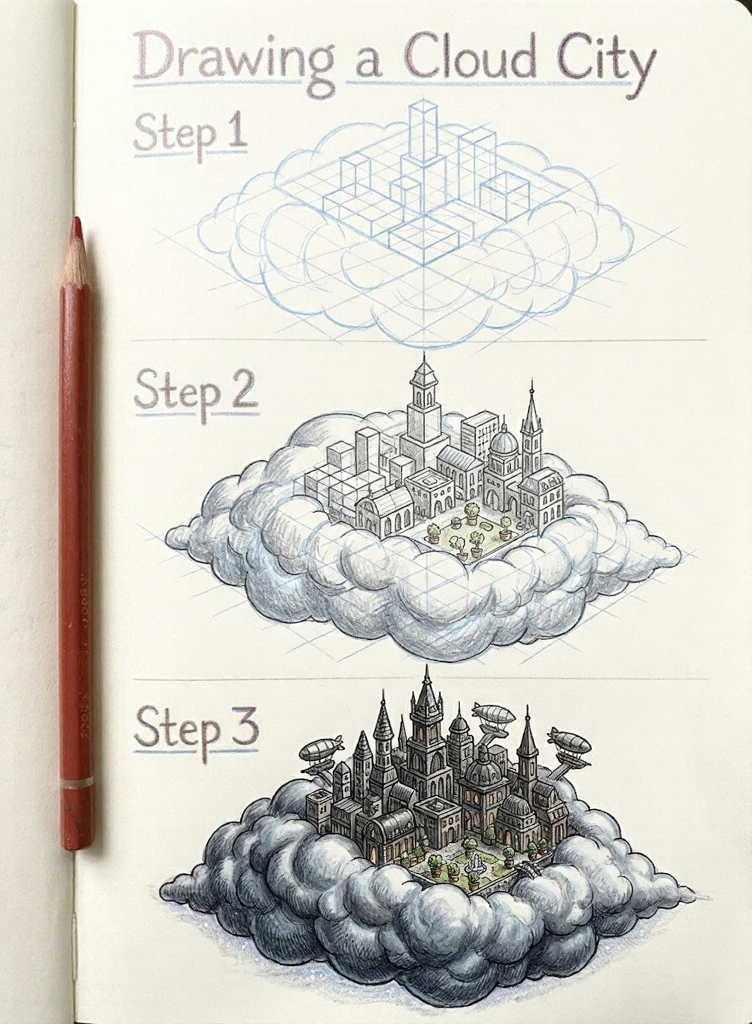
Fluffy base cloud, and built on top of it — towers, bridges, streets, tiny windows. The contrast between the soft cloud and the hard geometry of buildings is what makes it interesting.
Patterns and Abstract
No subject required. Pure mark-making.
71. A Zentangle panel
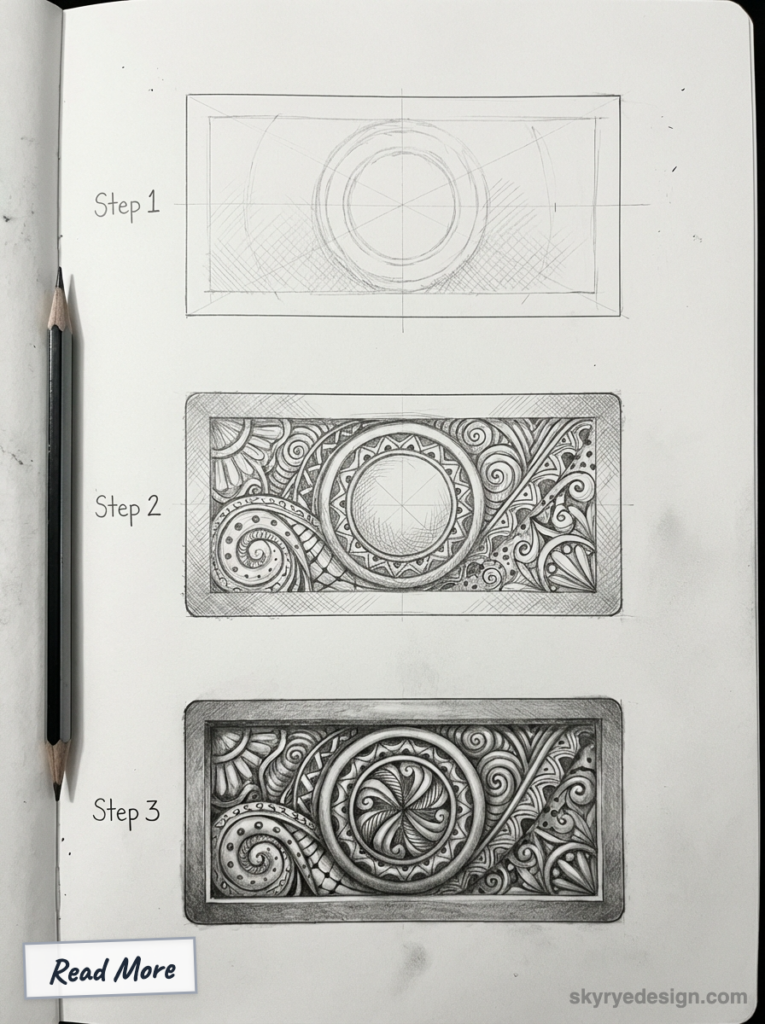
Pick a shape — circle, hexagon, irregular blob. Fill the interior with repeating patterns, each one contained in its own section. There are no rules, and it’s almost impossible to make it look bad.
72. A grid of tiny different textures
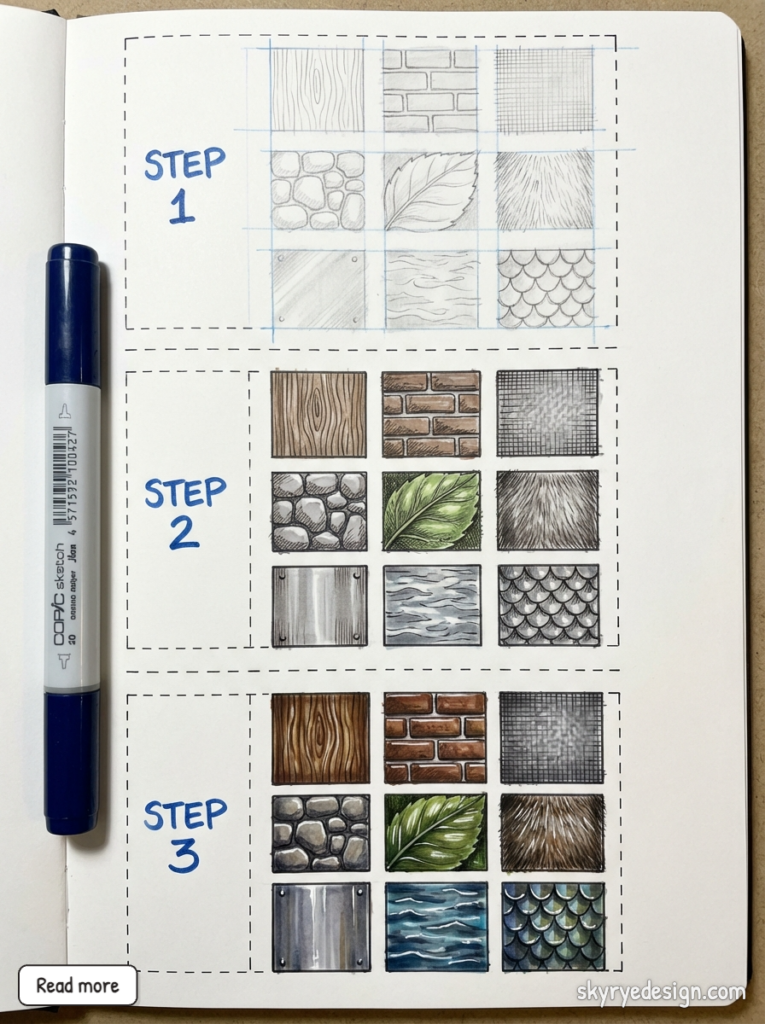
Divide a page into a 4×4 grid. Fill each square with a different texture — crosshatch, dots, wavy lines, scales, brick pattern, random scribble. A texture library you made yourself.
73. Concentric shapes
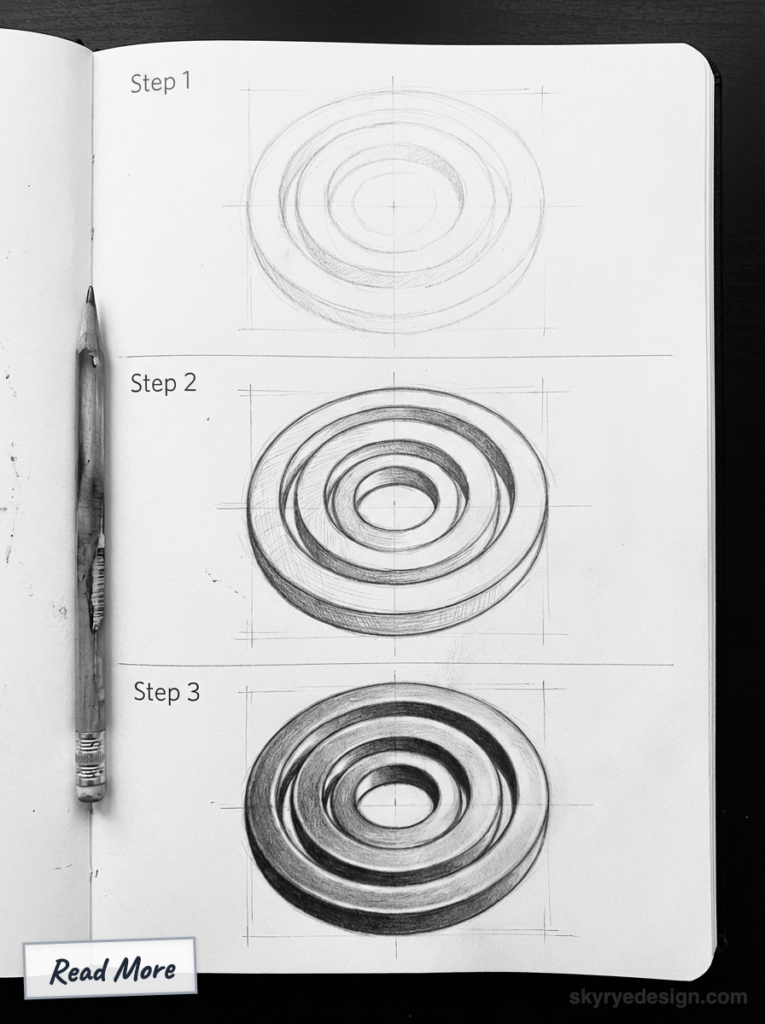
Draw a small square in the center of the page. Draw a larger square around it. Keep going until you reach the edges. Try it with circles. Try mixing shapes. The variation in spacing creates rhythm.
74. A repeating geometric tile pattern
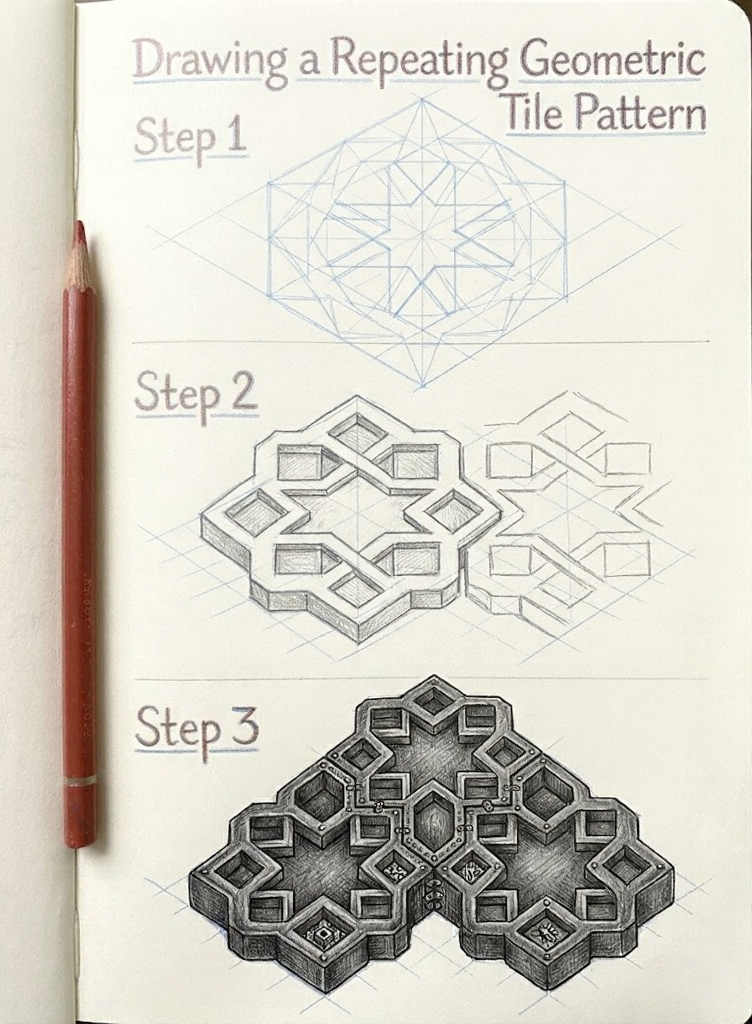
Design one tile unit — could be as simple as a triangle with a dot. Repeat it across the page in a grid, alternating orientation. This is how Islamic geometric art and ceramic design work.
75. Flowing ribbons or fabric
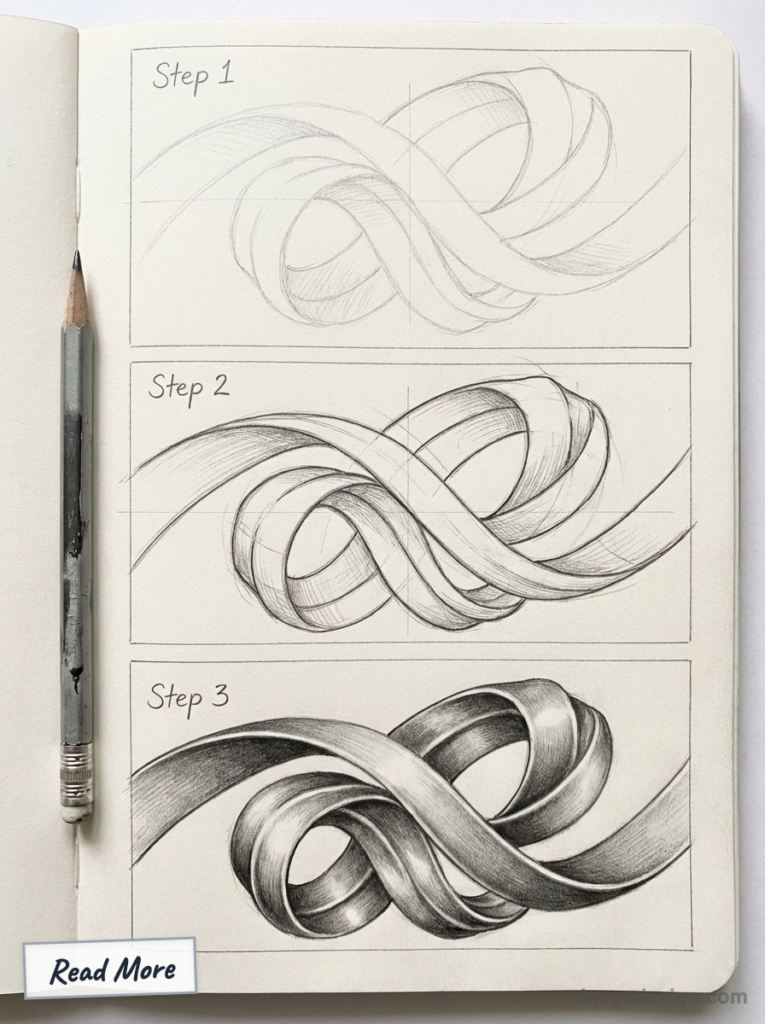
Curved, folded, overlapping. Fabric folds follow consistent rules — the tension points and the drape — but when you’re just playing, loose, flowing curves create satisfying movement.
76. Stippling: a gradient from dark to light
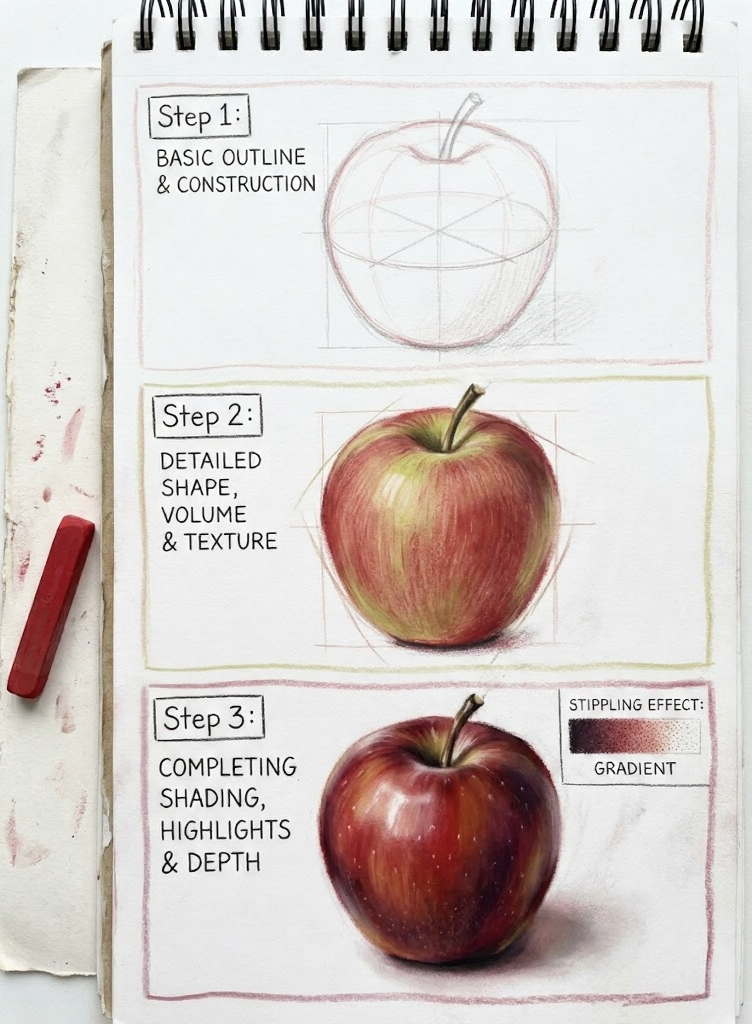
Just dots. Dense at one end, sparse at the other. The transition from black to white using nothing but dot density. Meditative and strangely satisfying.
77. A mandala from scratch
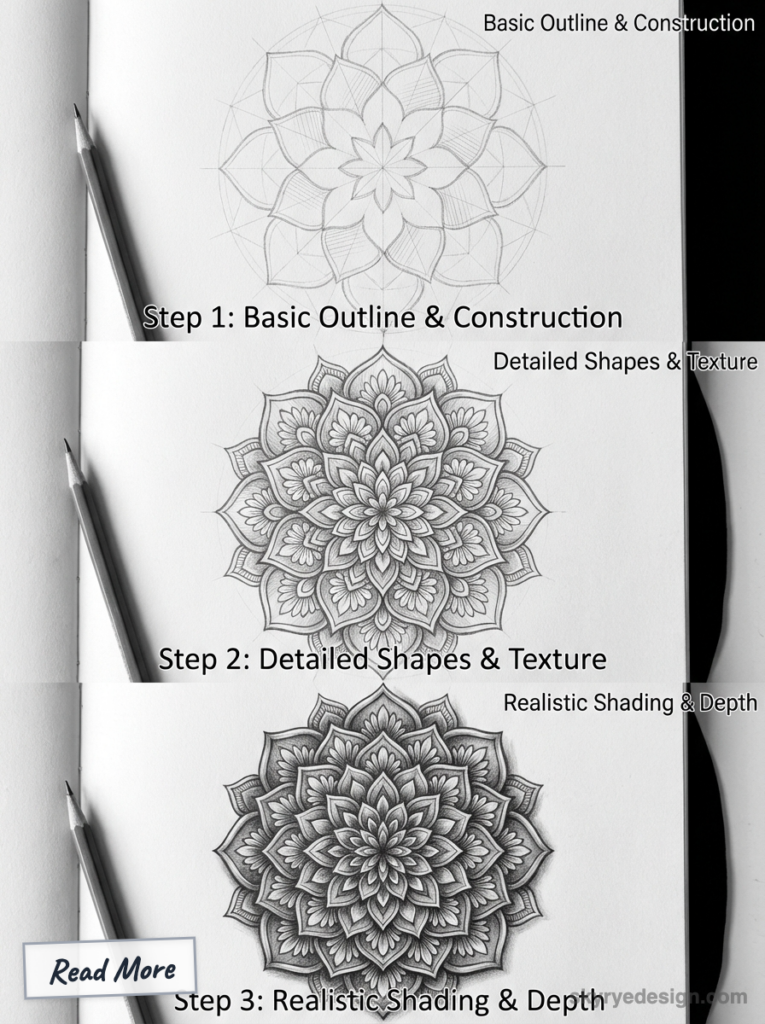
Start with a circle and a center point. Add rings of repeating elements — petals, triangles, dots — working outward. Keep each ring symmetrical. No two will ever look the same.
78. Letters as architecture
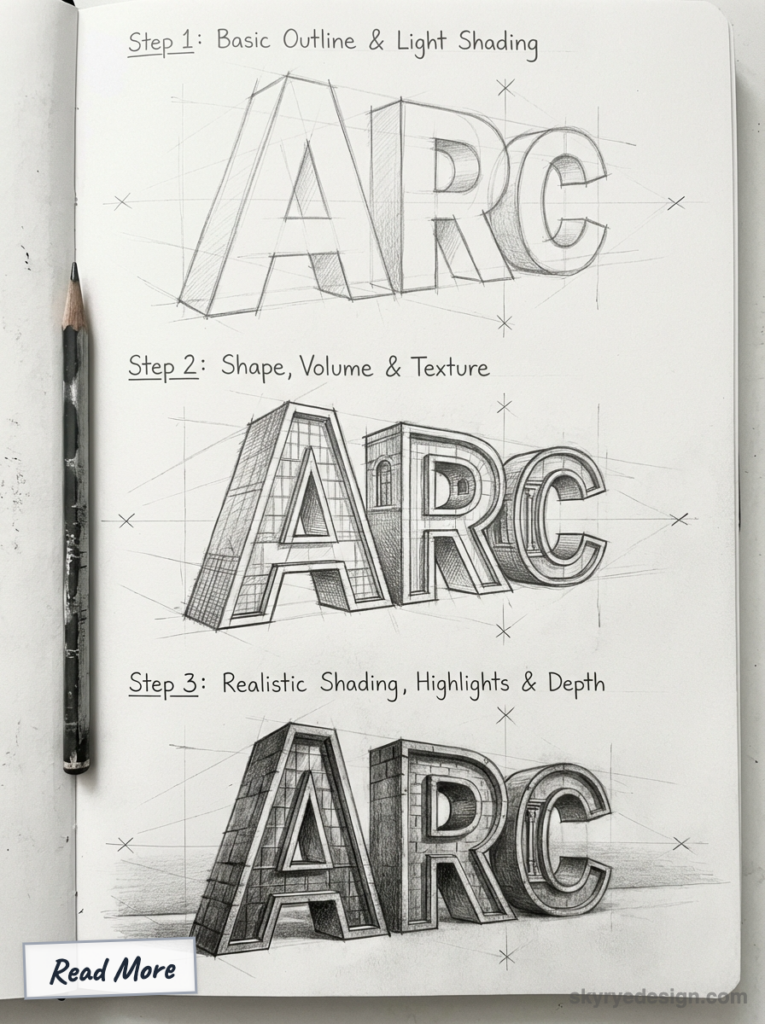
Take any word and draw each letter as if it were a building — windows, doors, structural elements. The letter’s shape becomes the building’s silhouette.
Seasonal and Holiday Ideas
Tied to a time of year, these give your drawing immediate context and purpose.
79. A jack-o’-lantern with an unusual expression
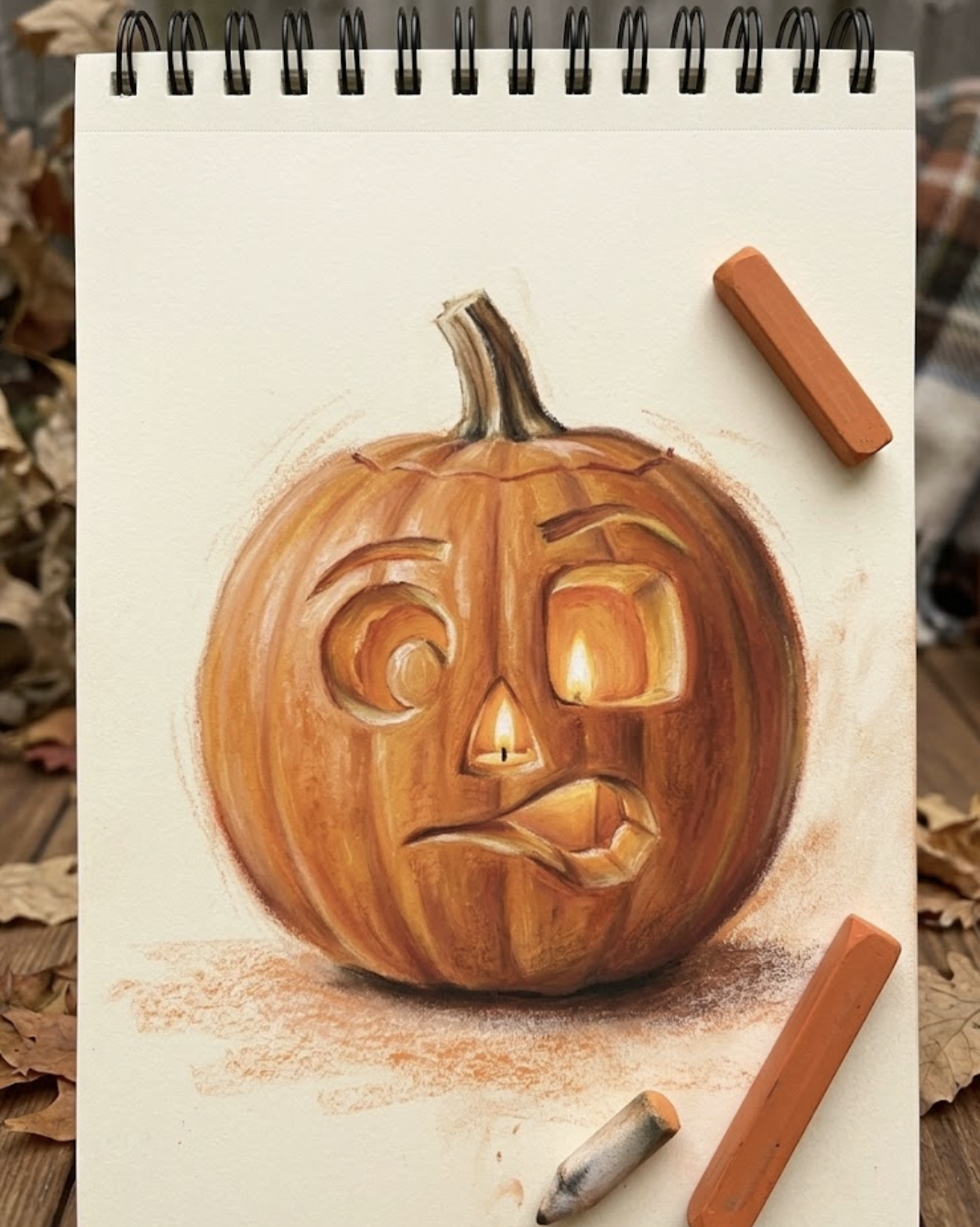
Not a standard triangle eyes and jagged mouth. Design something genuinely expressive — confused, sleepy, elegant, anxious. The carved face design is the entire challenge.
80. Snow falling on a city street at night
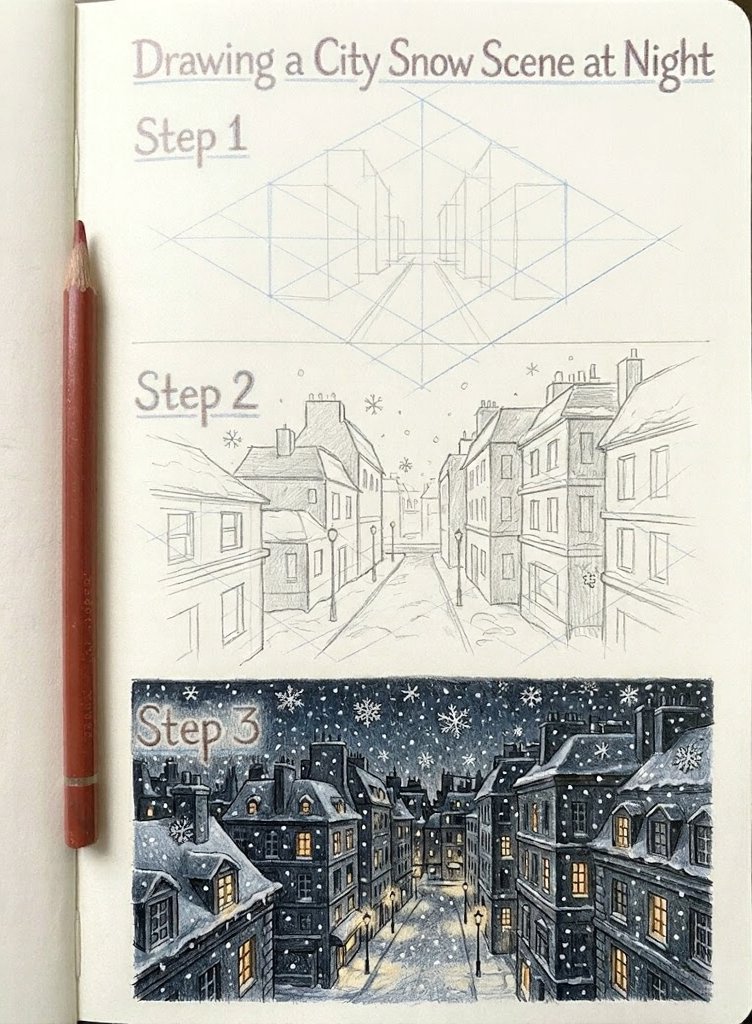
Dark background, white dots and lines for snow, streetlights with halos, lit windows in buildings. This works best with a white gel pen or pencil on dark paper.
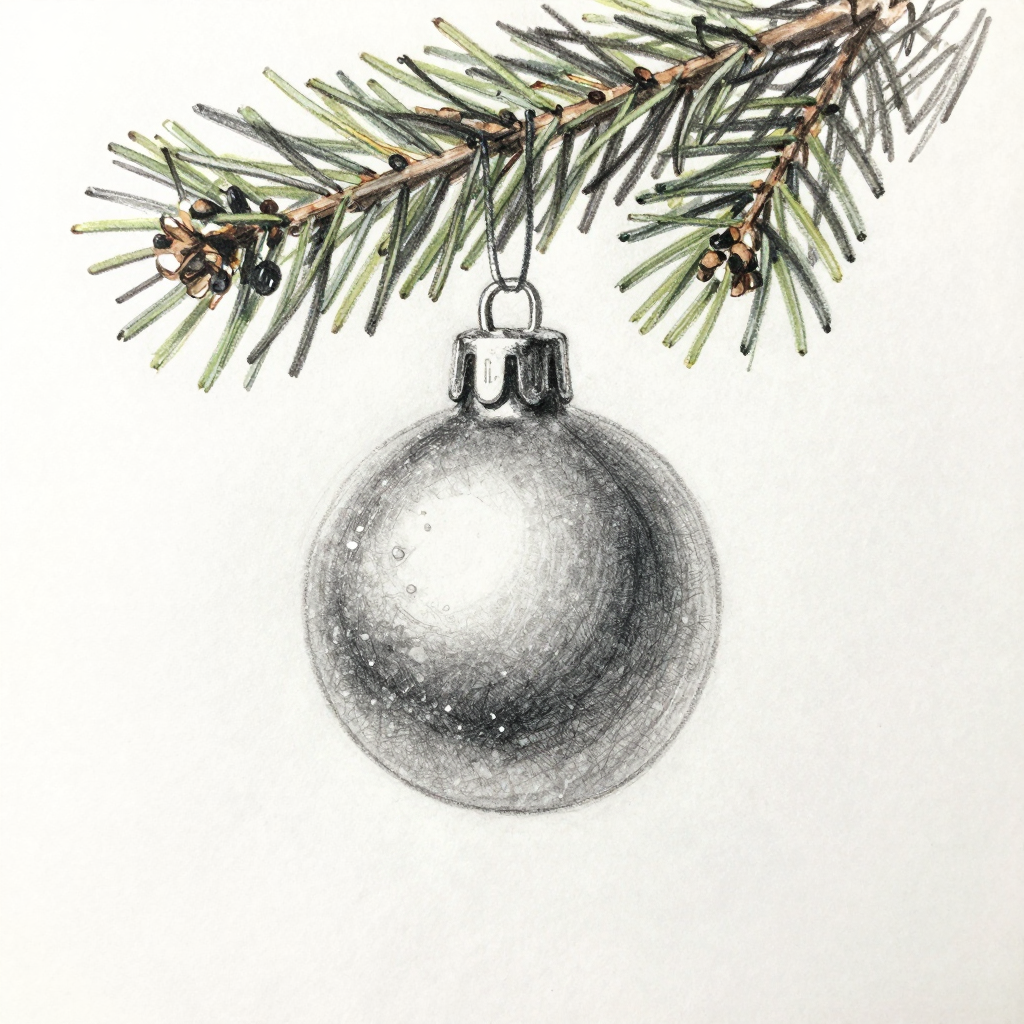
81. A single ornament on a Christmas tree branch
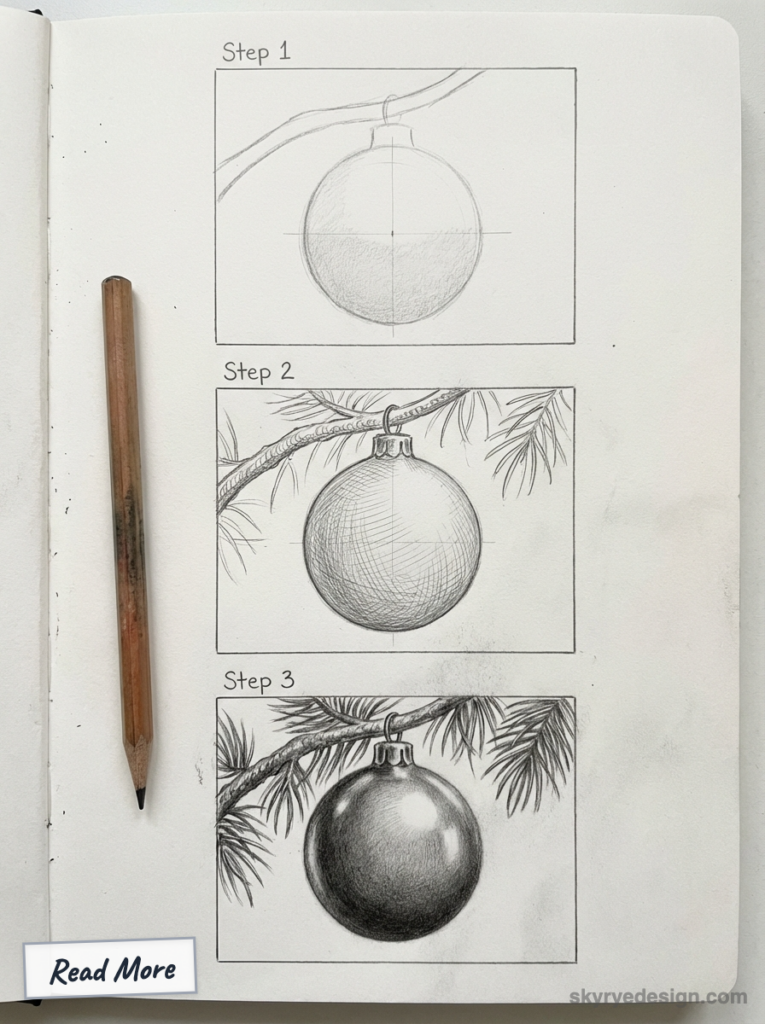
Just one — the branch, the ornament hanging from it, the reflection on the ornament’s surface. More restrained than a full tree and more interesting to look at.
82. A flower crown
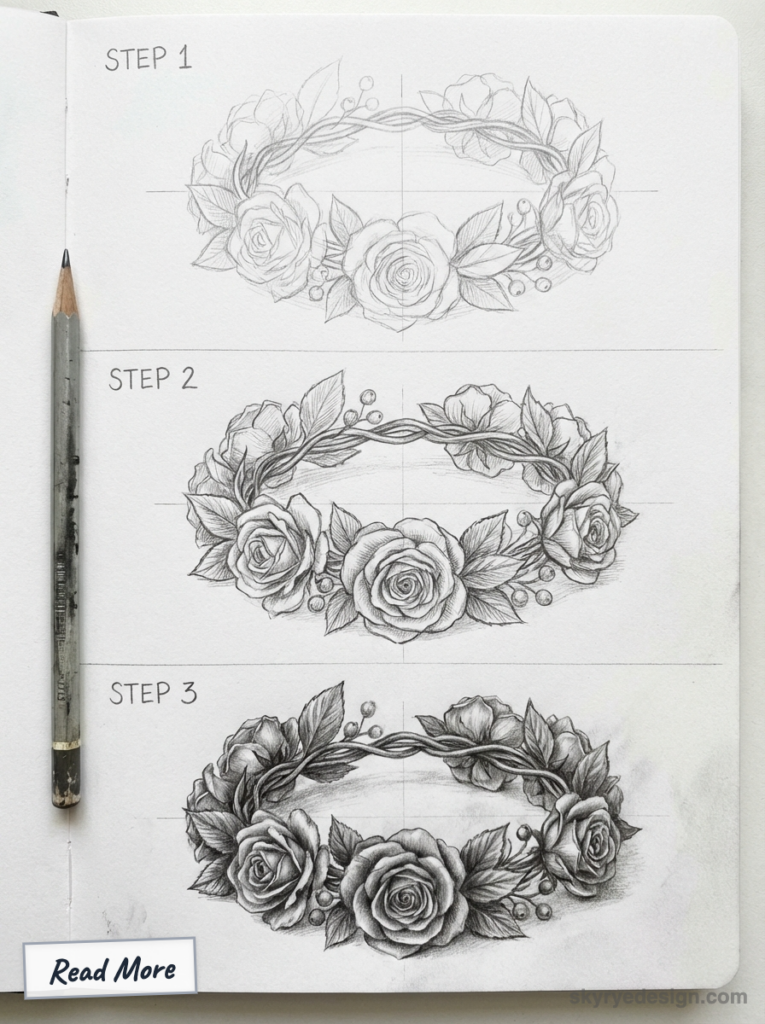
A circle of interwoven flowers and leaves. Start with the basic ring shape, then add flowers at intervals, then fill the gaps with leaves. Works as a standalone drawing or on a figure.
83. A firework burst in the night sky
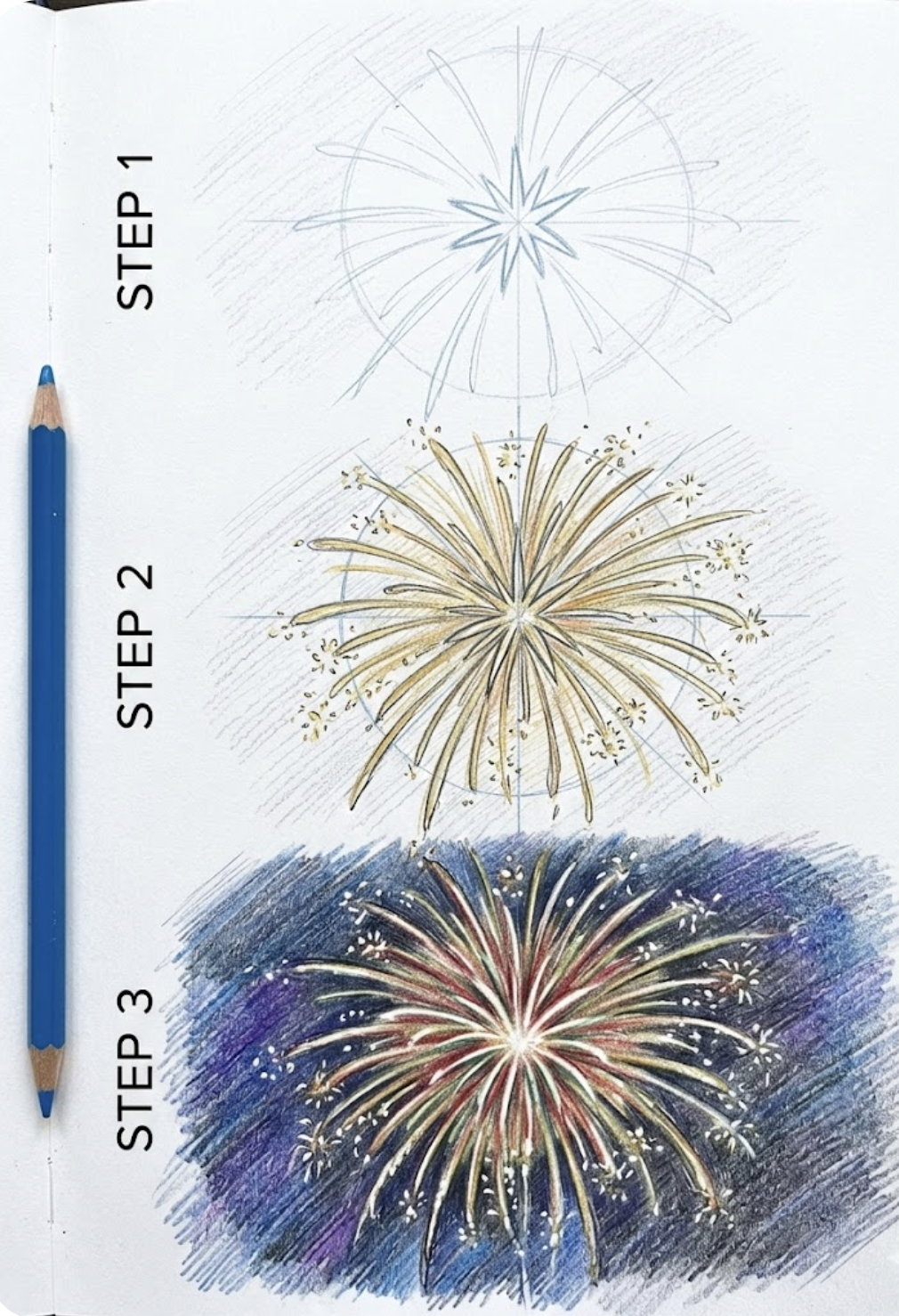
Radiating lines from a central point, with small dots or curls at the tips of each line. Overlap three or four bursts at different positions and sizes. Add a city silhouette below for context.
Challenges for When You Actually Want to Work
These aren’t quick doodles. These are for when you want to sit with something for an hour.
84. Your own face from memory
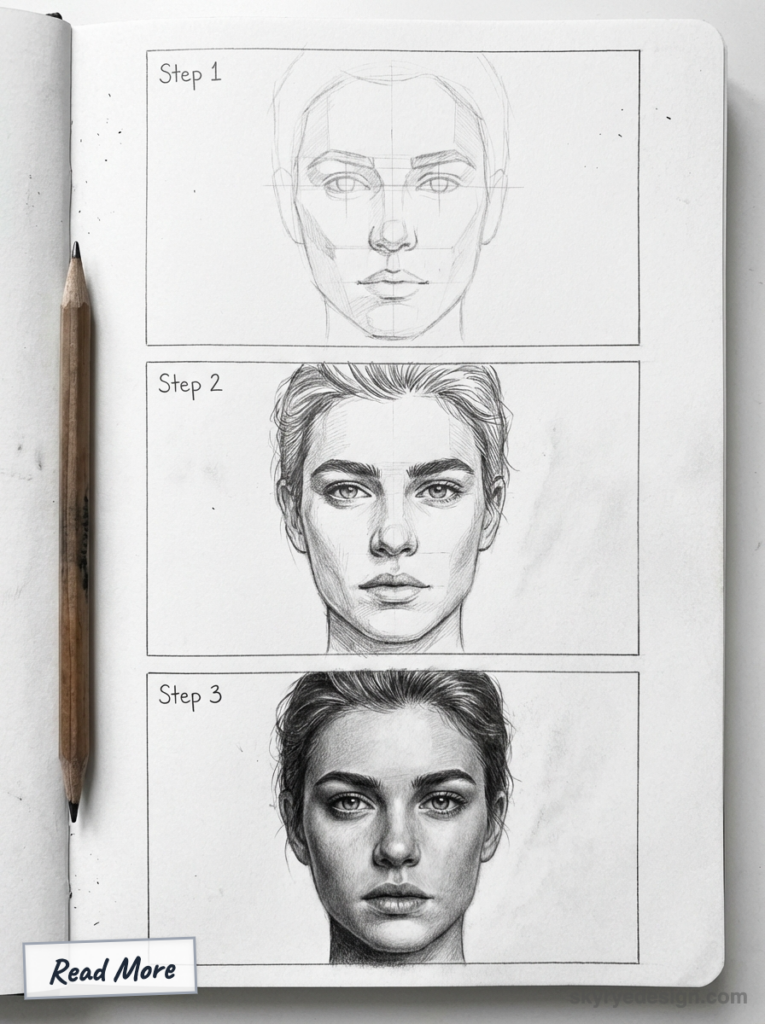
No mirror, no reference. Draw what you think your face looks like. The gap between this and your actual reflection will teach you a lot about how you see yourself — and how you observe in general.
85. A full figure in motion
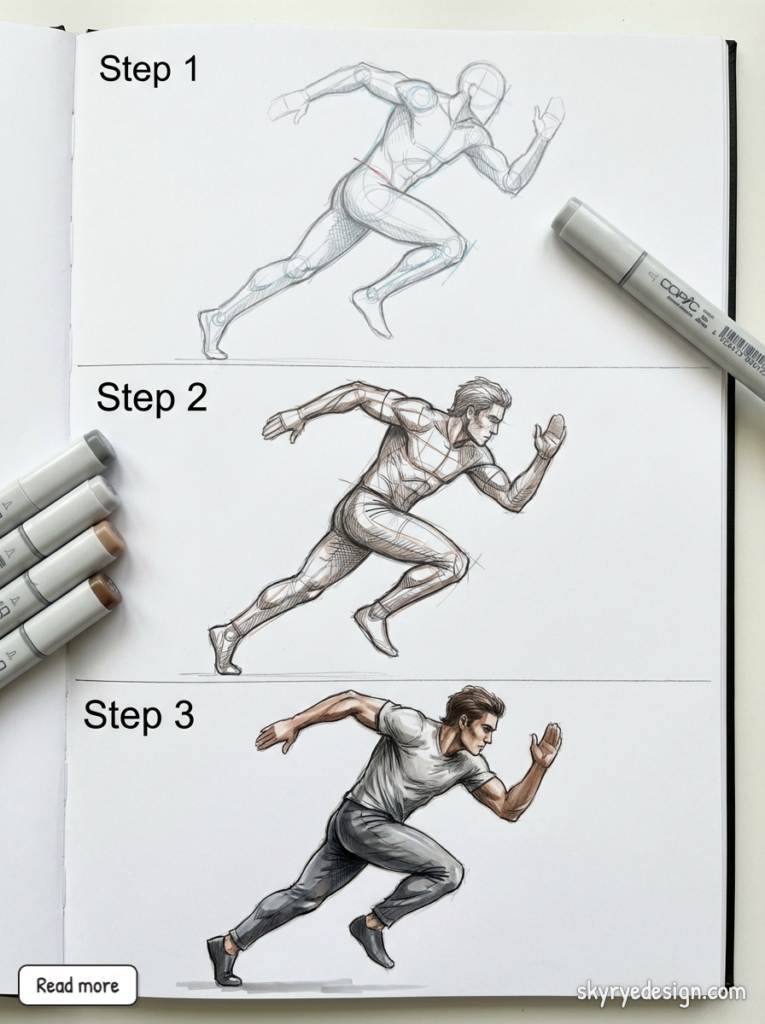
Running, jumping, dancing, falling. Movement is about capturing a moment between positions. Look at sports photography or action references. The pose should feel unstable — like it couldn’t hold this position a second longer.
86. An architectural interior in one-point perspective
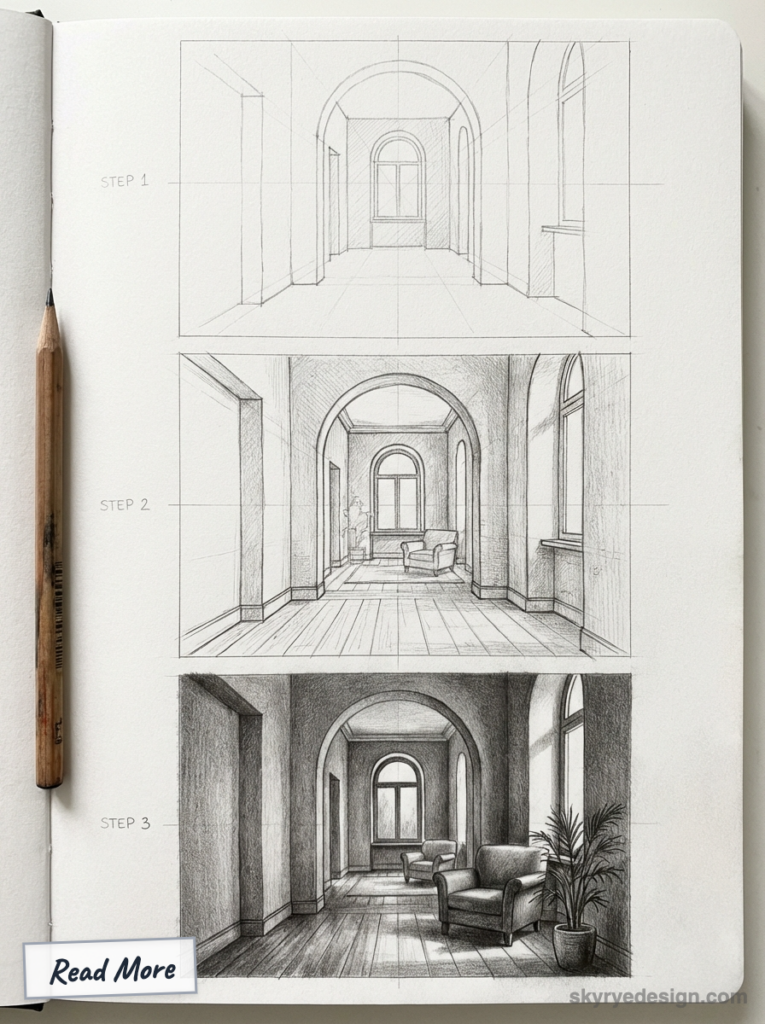
One vanishing point on the horizon line, all receding lines converging to it. Draw a hallway, a room, a long street. Perspective drawing clicks in your brain permanently once you do it once.
87. A self-portrait using only shadow shapes
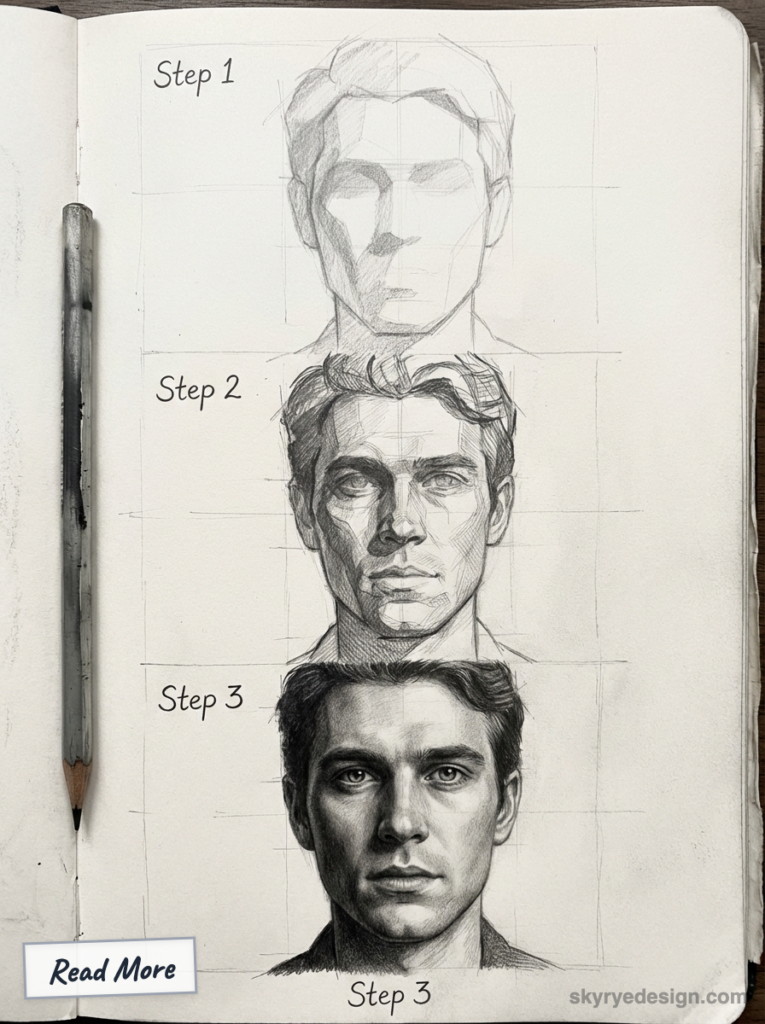
No outlines. Only the dark shapes of shadows on your face. Hold your phone flashlight at a strong angle to create dramatic shadows. Fill them in as solid shapes. The likeness emerges from contrast alone.
88. Draw the same object 10 different ways
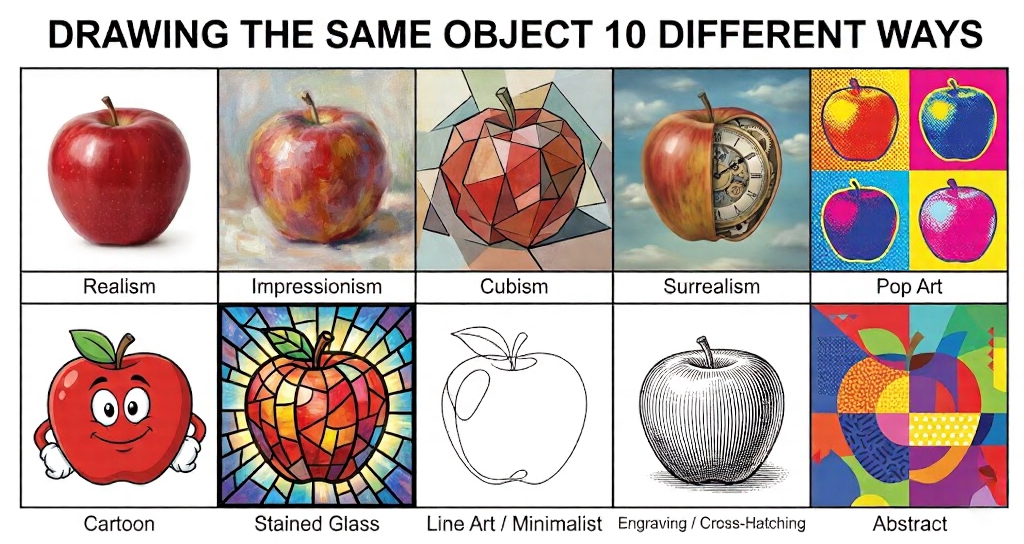
Pick anything — a shoe, a chair, a cup. Draw it in 10 different styles: realistic, cartoon, geometric, abstract, from above, from below, in one line, in only dots, huge, tiny. The constraint teaches flexibility.
89. A still life with three objects that go together
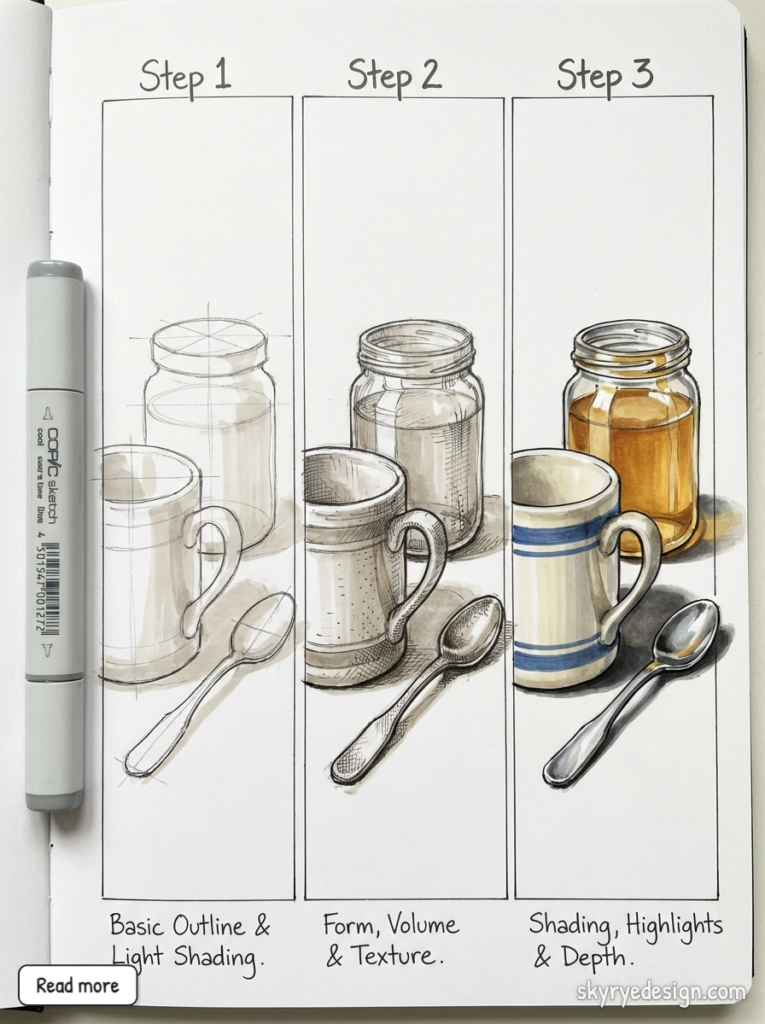
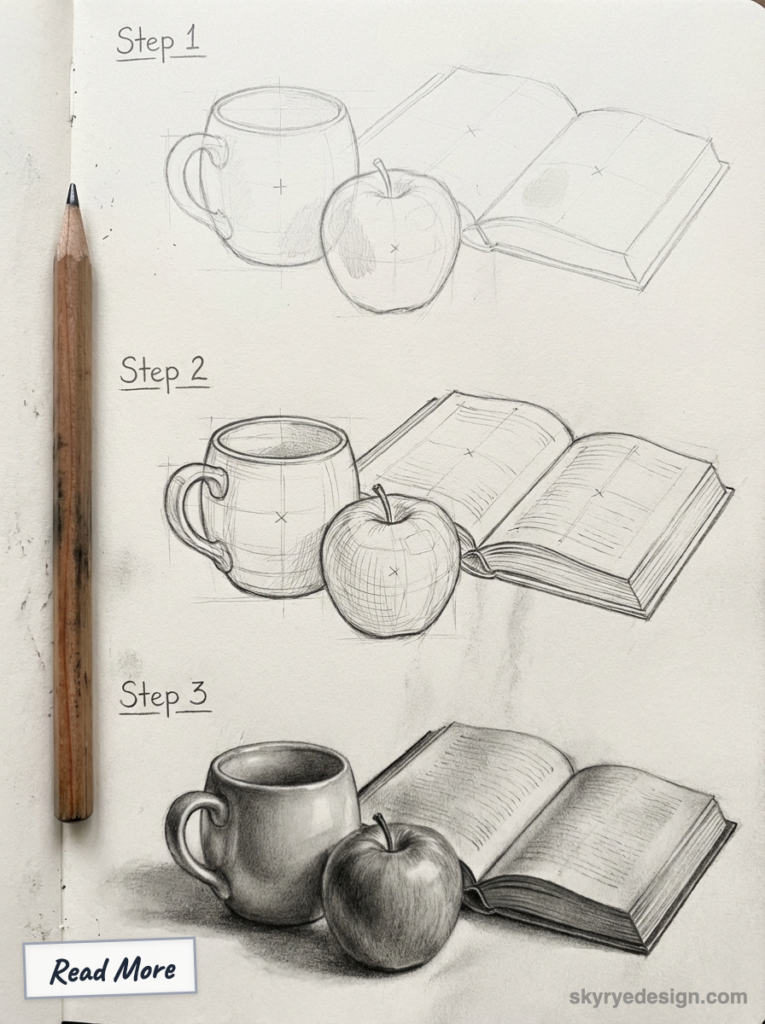
Three objects from around your space that have some connection — all related to coffee, all things you use in the morning, all gifts from the same person. The curation gives the drawing meaning.
90. Texture contrast study
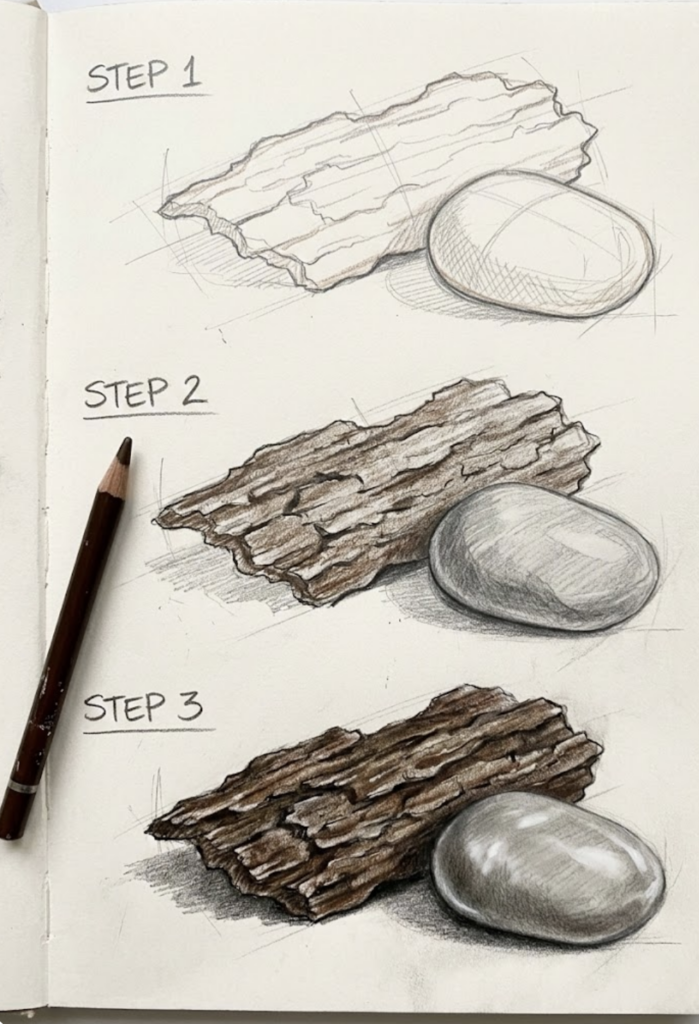
Draw two adjacent areas — one rough (brick, bark, fur) and one smooth (glass, water, polished metal). The contrast between how you render each surface is the whole exercise.
For When You Want Something Calming
91. Waves
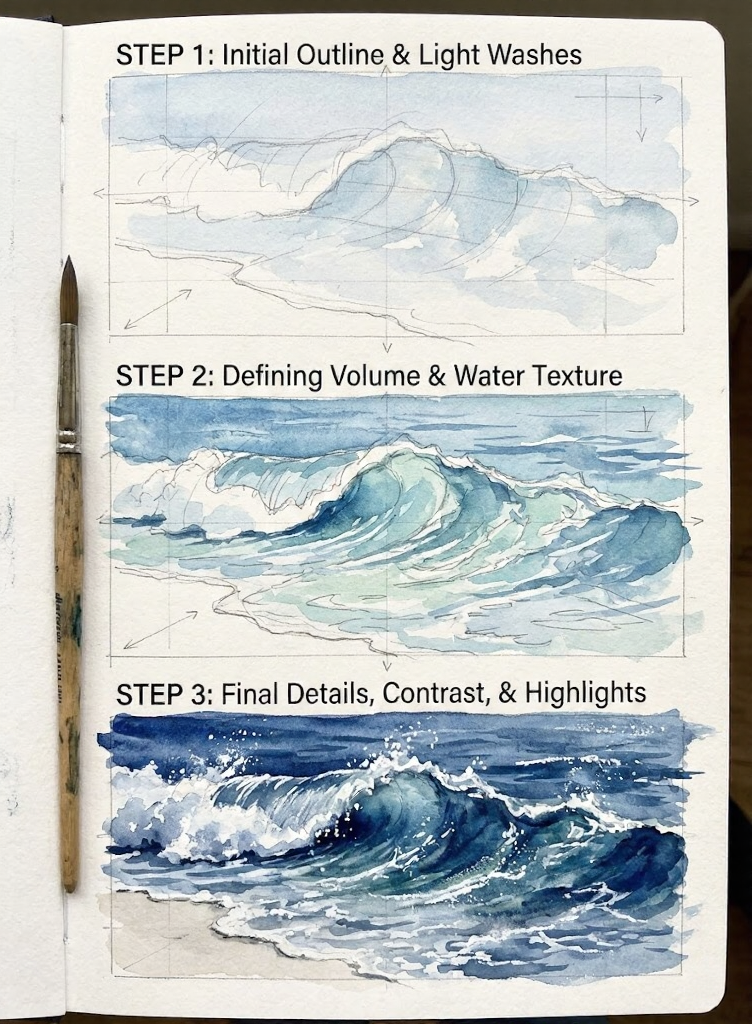
Just water. Horizontal lines at slightly different intervals, each one slightly curved. Where they overlap, darken slightly. No shore, no horizon — just the pattern of water. Hypnotic to draw.
92. Clouds
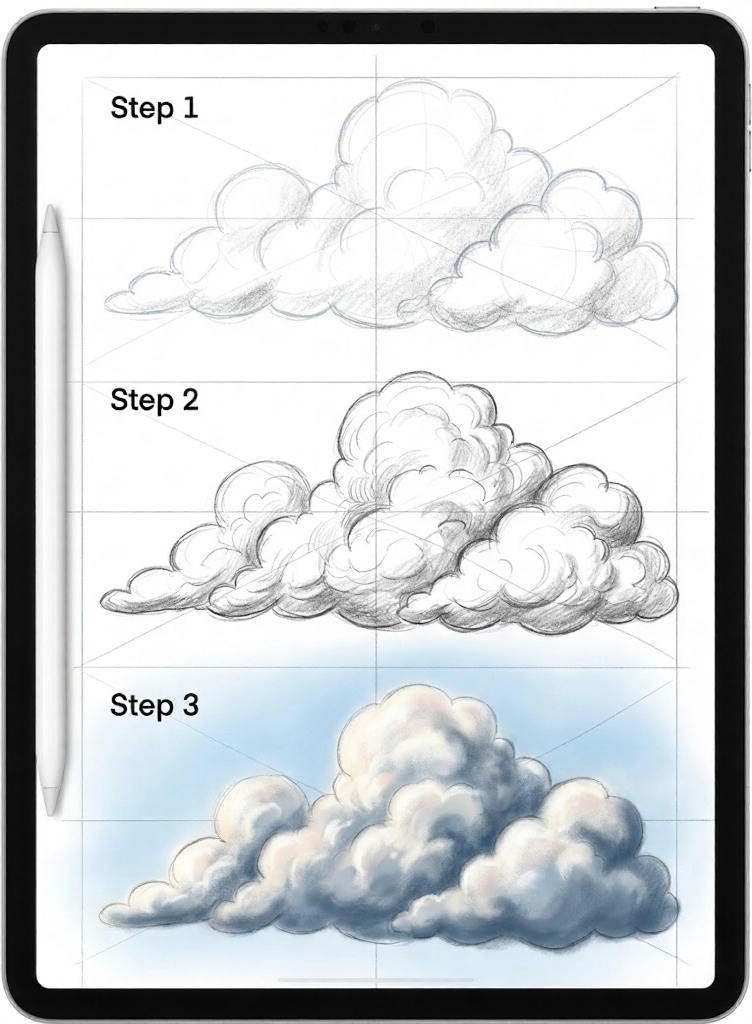
Soft, rounded forms against a blank or lightly shaded background. No hard edges. Build the cloud form with soft curved lines and light shading on the underside. Add a sun behind one if you want warmth.
93. Rain on still water
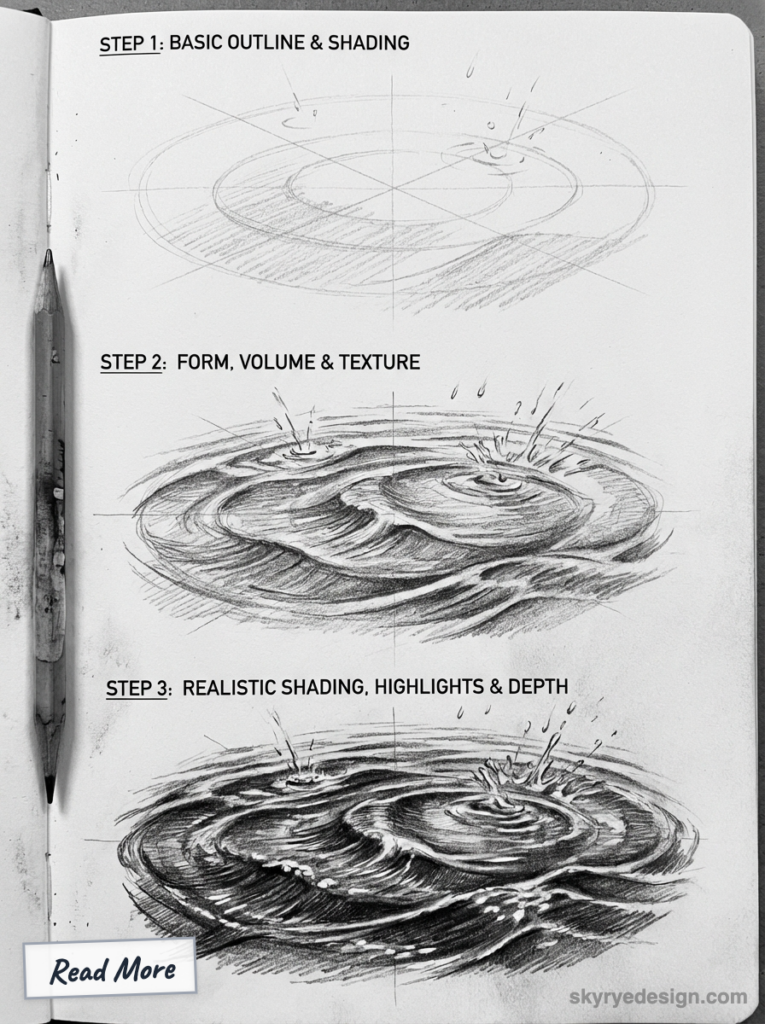
Rings expanding from drop impact points, overlapping each other. Vary the size — some fresh rings large and defined, others older and fading. This is a pattern drawing that teaches circles.
94. A forest floor
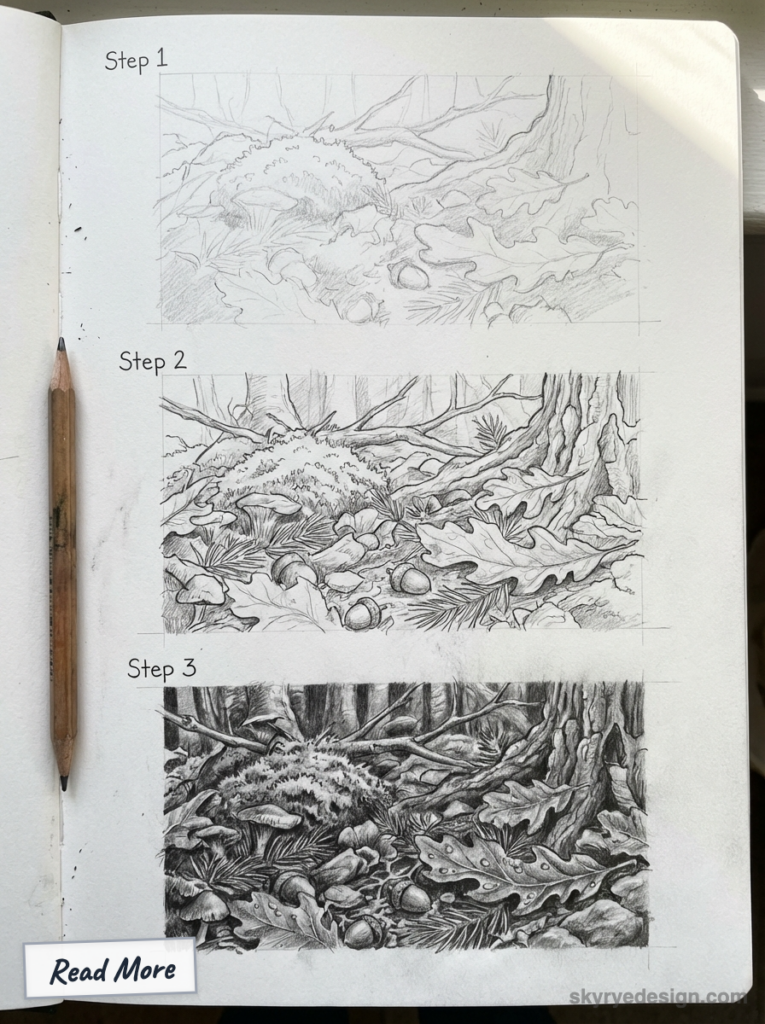
Fallen leaves, a few visible roots, small stones, patches of moss. No trees needed — just the ground. Looking down rather than forward is an unusual compositional choice that reads as contemplative.
95. Stars and constellations
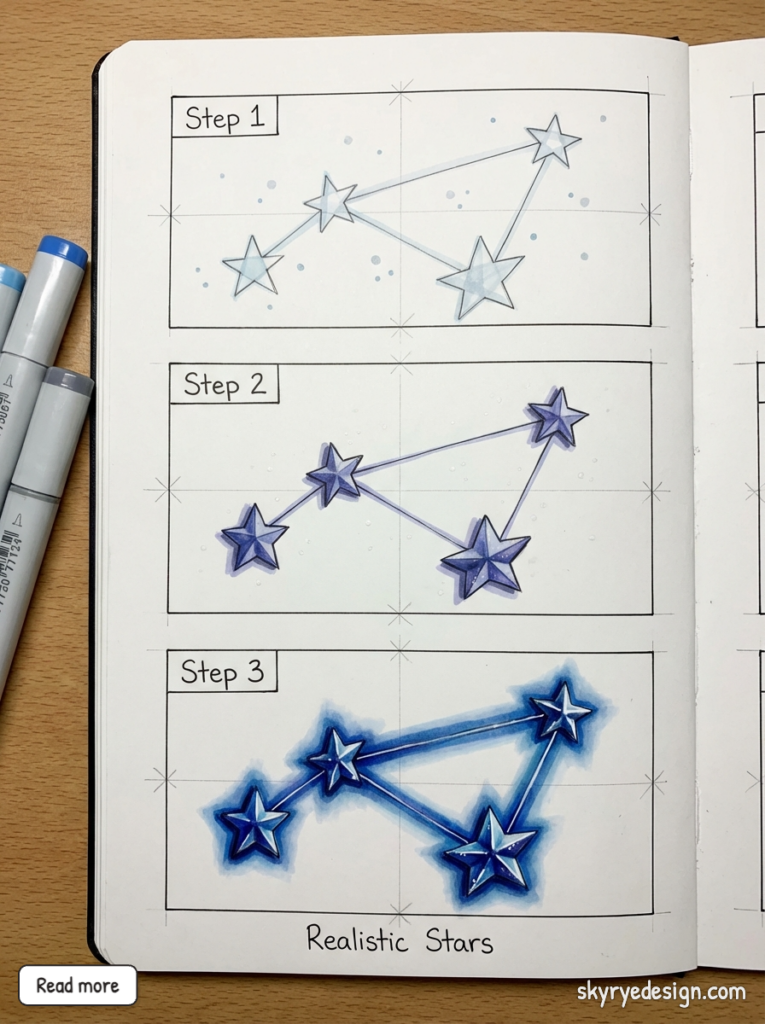
A field of small dots and crosses on a dark or white background. Connect some with thin lines into actual constellations. Add a few small nebula smudges for depth.
96. Stones and pebbles
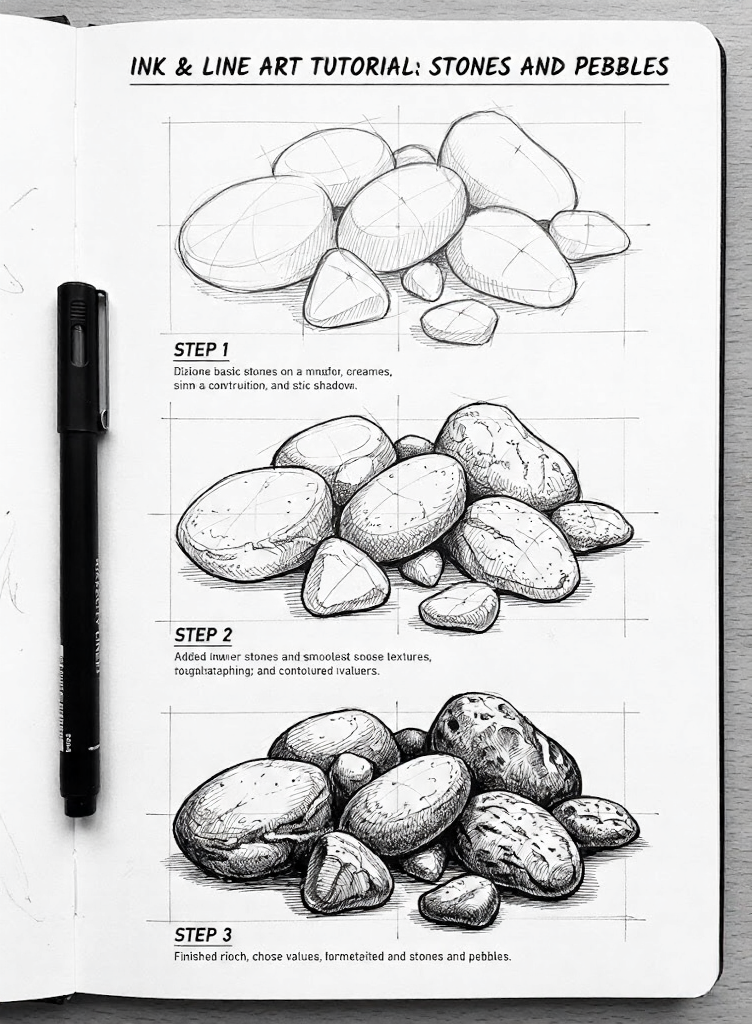
A collection of smooth, rounded stones, each one slightly different in shape and value. The challenge is making each one distinct with shading while keeping the grouping cohesive.
Things Around You Right Now
97. Whatever you can see from where you’re sitting
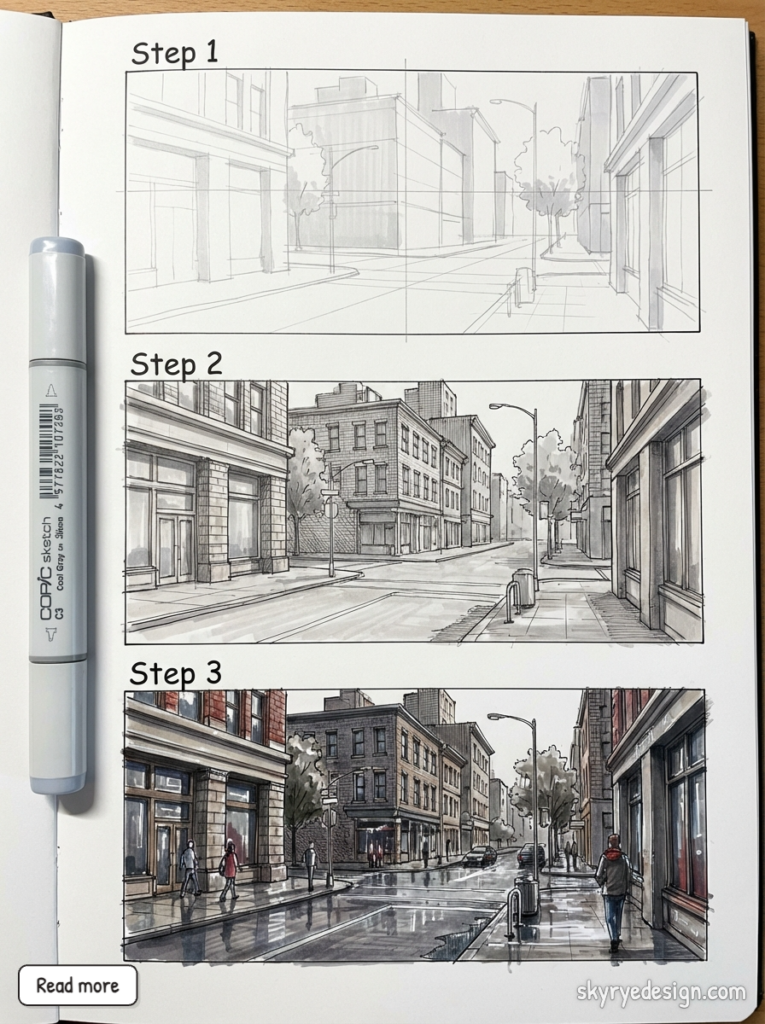
Don’t pick a subject — draw your view. Part of a chair back, a corner of a wall, a lamp, an open door. The unchosen composition is often the most interesting one.
98. The inside of a bag or drawer
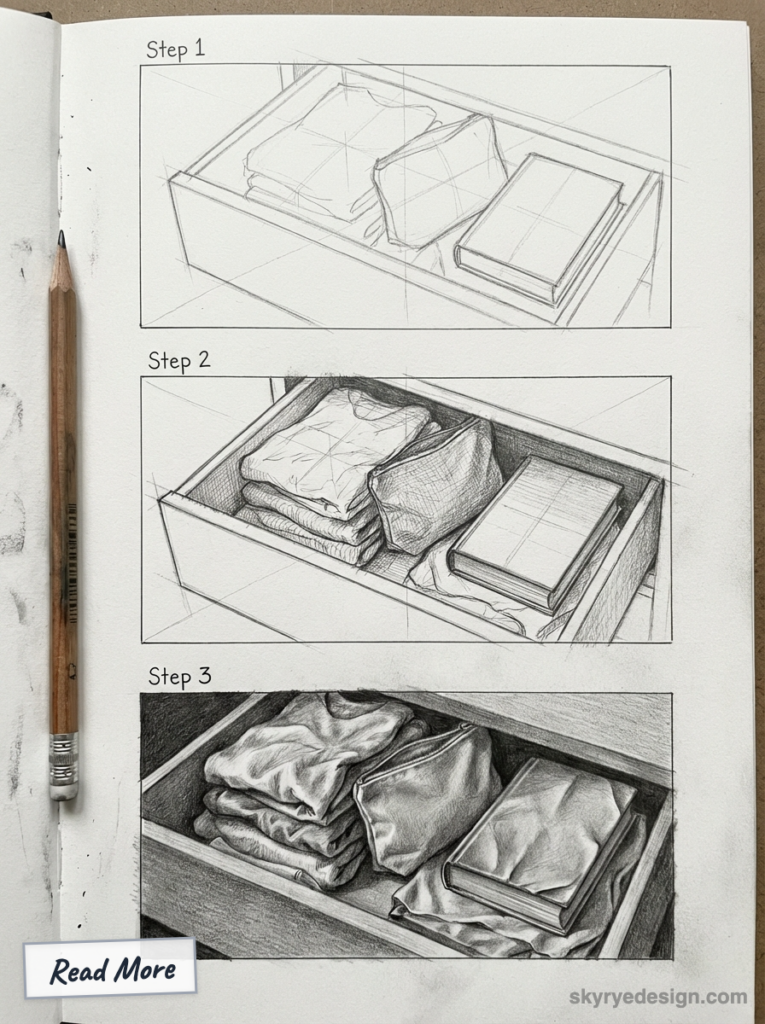
Open it, look inside, and draw what you see. The jumble of different objects at different depths and angles is a free still life arrangement that you didn’t have to set up.
99. Your feet from your seated position
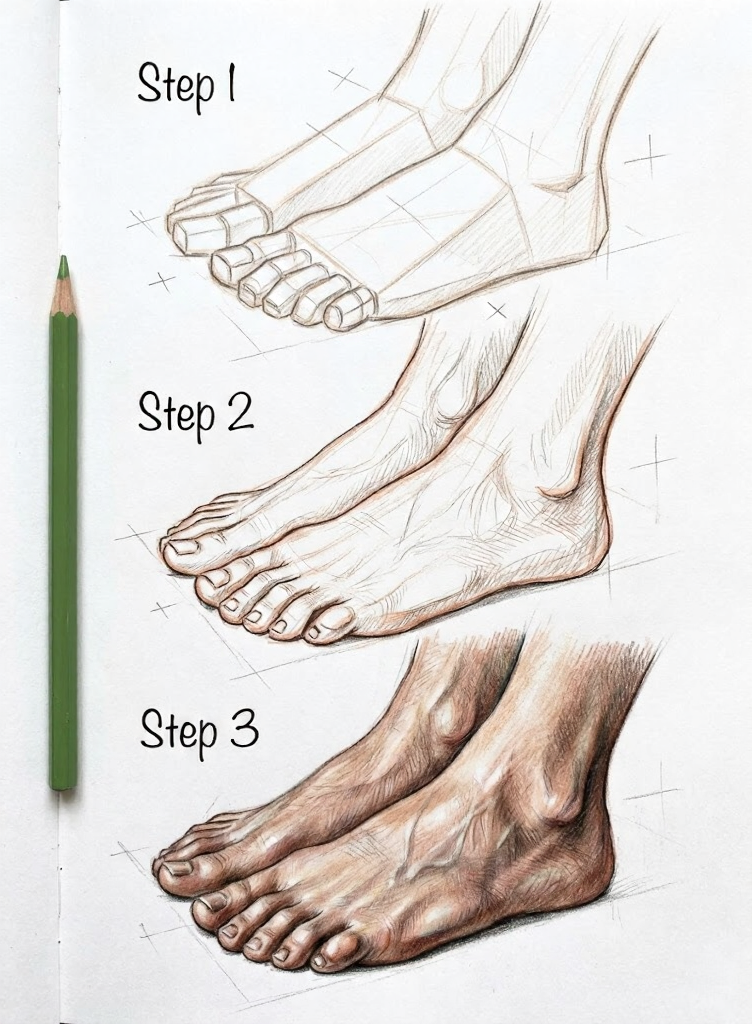
Look down. Draw what you see — knees in the foreground, feet further away, floor below. Foreshortening happens automatically when you draw what’s actually in front of you.
100. The pattern of light and shadow on the nearest wall
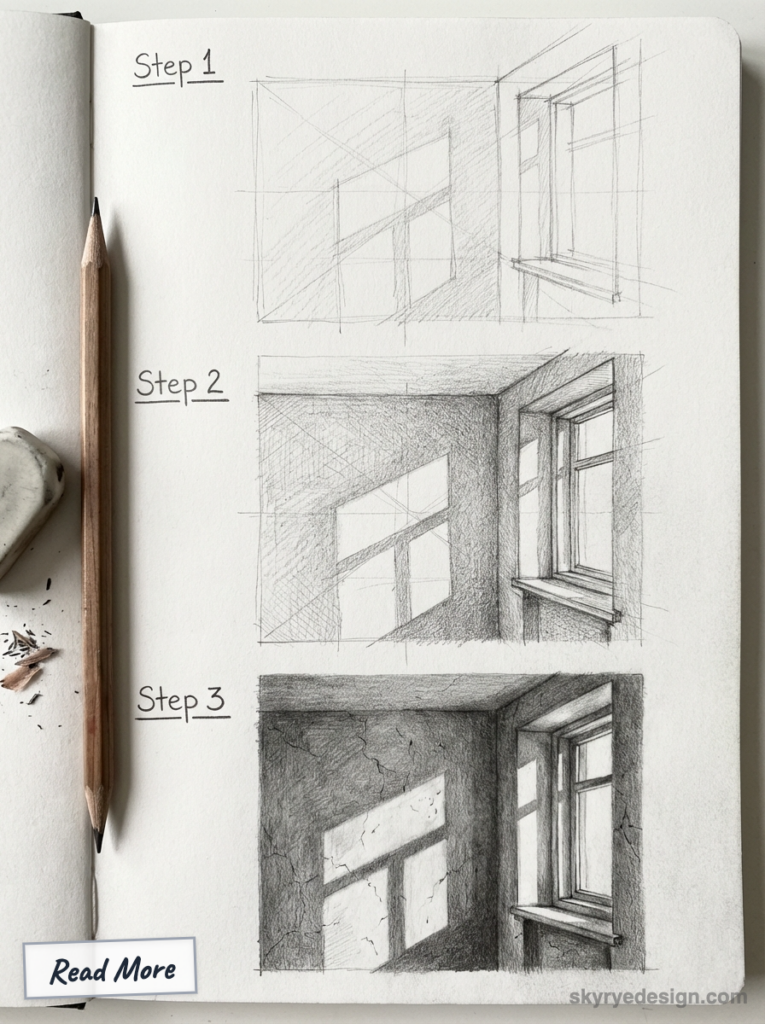
Just the shapes of light. Not the wall, not any objects — just where light falls and where shadow begins. This is pure observational drawing reduced to its most abstract.
Bonus: 10 More for When You’ve Done All 100
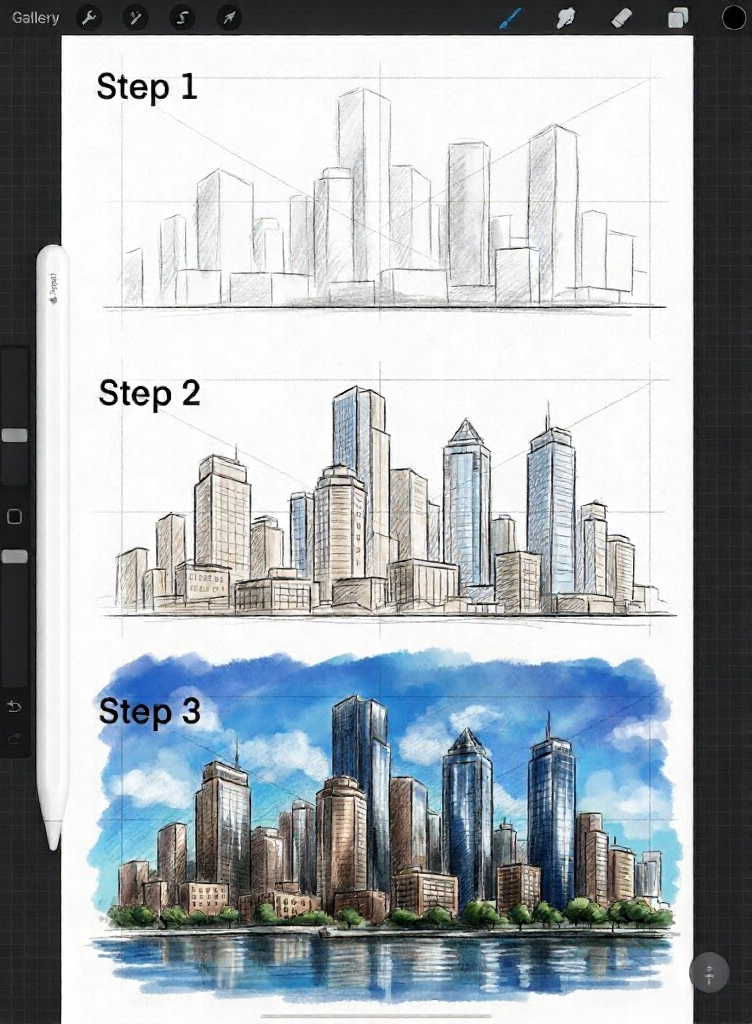
101. Your city’s skyline from memory
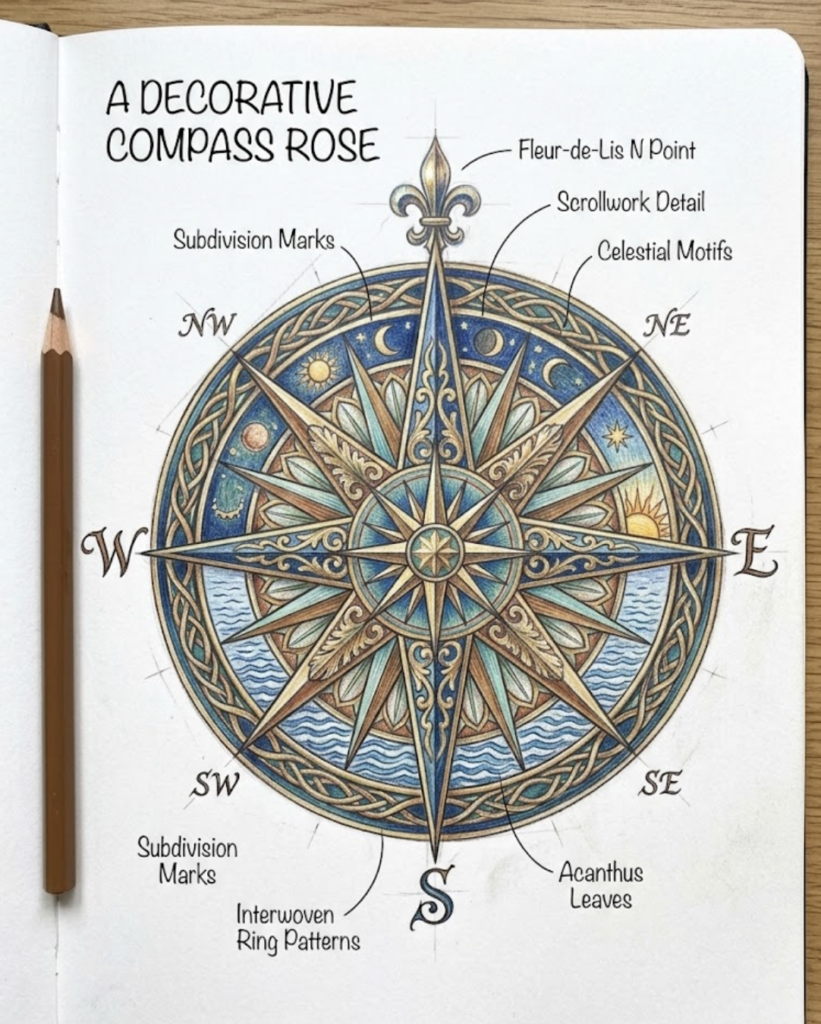
102. A compass rose with decorative detail
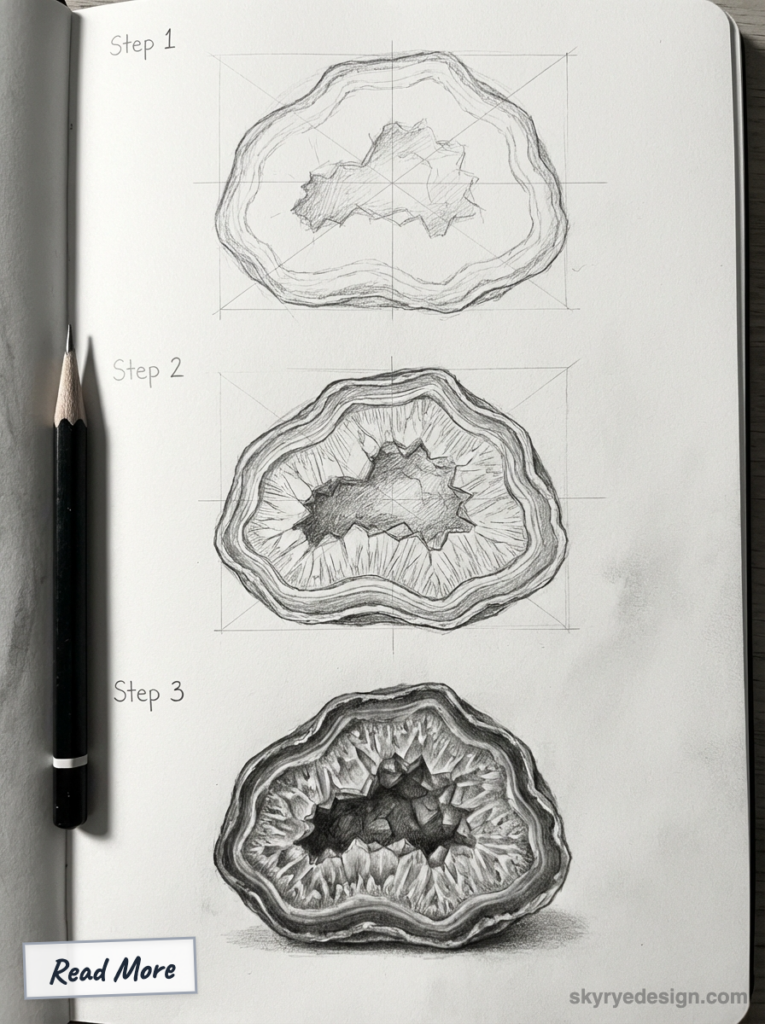
103. The cross-section of a geode
104. A hot air balloon with a patterned envelope
105. An antique key with an elaborate bow design
106. A skull with flowers growing through it
107. An hourglass half-empty
108. A paper boat on water
109. A vintage postage stamp design (make one up)
110. Whatever you were thinking about
For a more focused list of easy subjects, this guide to beach things to draw covers waves, shells, sandcastles, palm trees, beach umbrellas, and ocean animals.
FAQ
Q: What should I draw when I have no ideas?
A: Start with something in front of you — your hand, your coffee cup, whatever’s on your desk. Observational drawing removes the “what should I draw” problem entirely. You don’t need an idea when you have a subject. Draw whatever’s closest and most ordinary. Ordinary subjects drawn with attention are more interesting than spectacular subjects drawn carelessly.
Q: What are the easiest things to draw for beginners?
A: Anything with simple, distinct shapes: a mushroom, a candle, a coffee mug, a crescent moon. Avoid faces and hands to start — they have specific proportions that feel “wrong” when slightly off. Build confidence in geometric and organic shapes first, then work toward more complex subjects.
Q: How do I get better at drawing when I’m bored?
A: Bored drawing is actually one of the best ways to improve — low stakes means more experimentation. Pick one subject and draw it multiple times instead of drawing many different things. The third or fourth attempt at the same subject always reveals something the first didn’t. Repetition without pressure is how hand-eye coordination develops.
Q: What do artists draw when they have artist’s block?
A: Most working artists have a go-to unblocking practice: observational drawing of something immediate (their hand, a plant on the desk), a texture study, or a page of timed 30-second gesture sketches. The goal isn’t a good drawing — it’s getting the hand moving. Once it’s moving, the block usually dissolves.
Q: What should I draw on paper when bored at school or work?
A: Anything small and contained: a single eye, a tiny landscape in the corner of a notebook page, a geometric pattern, block letters. Small drawings that fit in a margin are low-commitment and surprisingly satisfying. The constraint of a small space forces economy of line.
Q: How long should I spend on a drawing when I’m just filling time?
A: Two minutes or two hours — both are valid. The mistake is spending twenty minutes on something and stopping because it doesn’t look right. Either commit to finishing it or set a strict time limit and stop when the timer goes off. Open-ended drawing sessions with no endpoint tend to end in frustration rather than satisfaction.
Conclusion
The blank page problem almost always solves itself the moment you put a mark on it. The first line doesn’t have to be the right line — it just has to exist.
Pick anything from this list. The mushroom, the sleeping cat, the one-point perspective hallway. Draw it badly if you have to. Draw it quickly if that’s all you have. The only drawing that teaches you nothing is the one that doesn’t happen.
Your sketchbook doesn’t care how good it looks. Fill it.
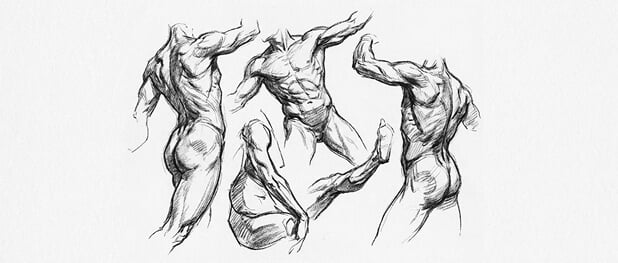
When you want something useful but not overwhelming, start with bullet journal doodle ideas before jumping into a full-page drawing. Tiny repeated icons are often enough to restart a bored drawing session.
If the drawing is meant as a gift, narrow the prompt into things to draw for your girlfriend: a flower, pet, shared place, tiny comic, or outfit portrait will feel more personal than a random subject from a list.
If you want a transport prompt with clear shapes, try a simple airplane drawing after your cars, robots, and spaceship sketches.
- 67.3Kshares
- Facebook0
- Pinterest67.3K
- Twitter0
- Reddit0