Private island design should start before the purchase, not after it. Price, jurisdiction, and ownership structure matter, but the bigger question is whether the island can support the architecture, utilities, access, reef protection, and operating model you have in mind.
- What should you know before buying a private island?
- The 5-site test for private island design
- Private island market demand is now design-led
- Legal constraints that shape private island architecture
- Private island design and investment returns
- Environmental rules for private island design
- Private island due diligence before design
- 6. Emerging Markets for Island Investments
- Operations, lifestyle, and long-term island value
- Quick Takeaways
- Sources and design references
- Conclusion
- FAQ
- What is private island design?
- What should a private island design brief include?
- What are the current market trends influencing private island investments?
- What legal factors should I consider when buying a private island?
- How can I assess the potential financial return on an island investment?
- What environmental and sustainability practices should I implement on my island property?
- What are the key considerations for financing and conducting due diligence on an island purchase?
What should you know before buying a private island?
Buying a private island isn’t just a real estate decision. Most buyers figure that out after they’ve committed.
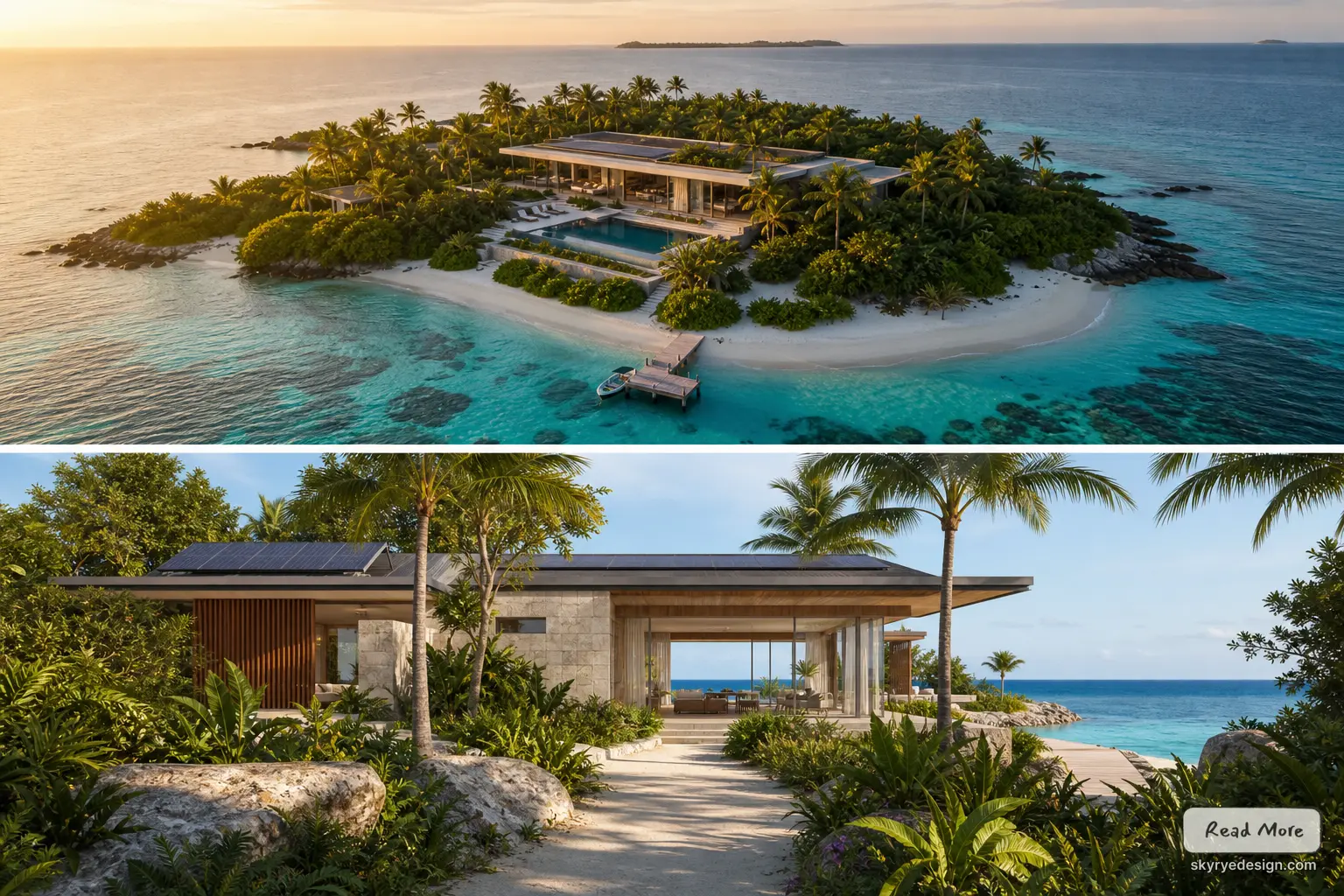
The real question isn’t affordability — it’s whether the site can support what you actually want to build there. Architecture, utilities, reef protection, how staff reach the property, how guests move around once they’re on it. That list gets long fast, and every item on it either works with the site or fights it.
A feasibility study comes before the villa drawings. Not after. Buildable land, shoreline setbacks, storm exposure, freshwater options, solar placement, waste handling, ownership structure — in some jurisdictions, sorting out title alone takes longer than the construction. Skip this step and you’re designing against conditions you haven’t tested yet.
When the systems conflict with the landscape, the island becomes an operations problem. When they work together, the architecture holds its value — and the place is actually liveable.
| Due diligence area | What to verify | Why it affects design |
|---|---|---|
| Ownership and build rights | Freehold, leasehold, concession terms, local ownership limits | Determines what can be built, sold, financed, or transferred later. |
| Coastal setbacks | Buildable land, shoreline rules, protected zones, storm exposure | Controls villa placement, guest circulation, and whether the design can stay low-impact. |
| Reef and water quality | Coral health, drainage paths, no-anchor zones, sediment risk | Shapes dock placement, runoff control, deck orientation, and activity planning. |
| Utilities | Solar, batteries, desalination, greywater, solid waste, backup power | Decides roof geometry, service routes, plant rooms, and operating cost. |
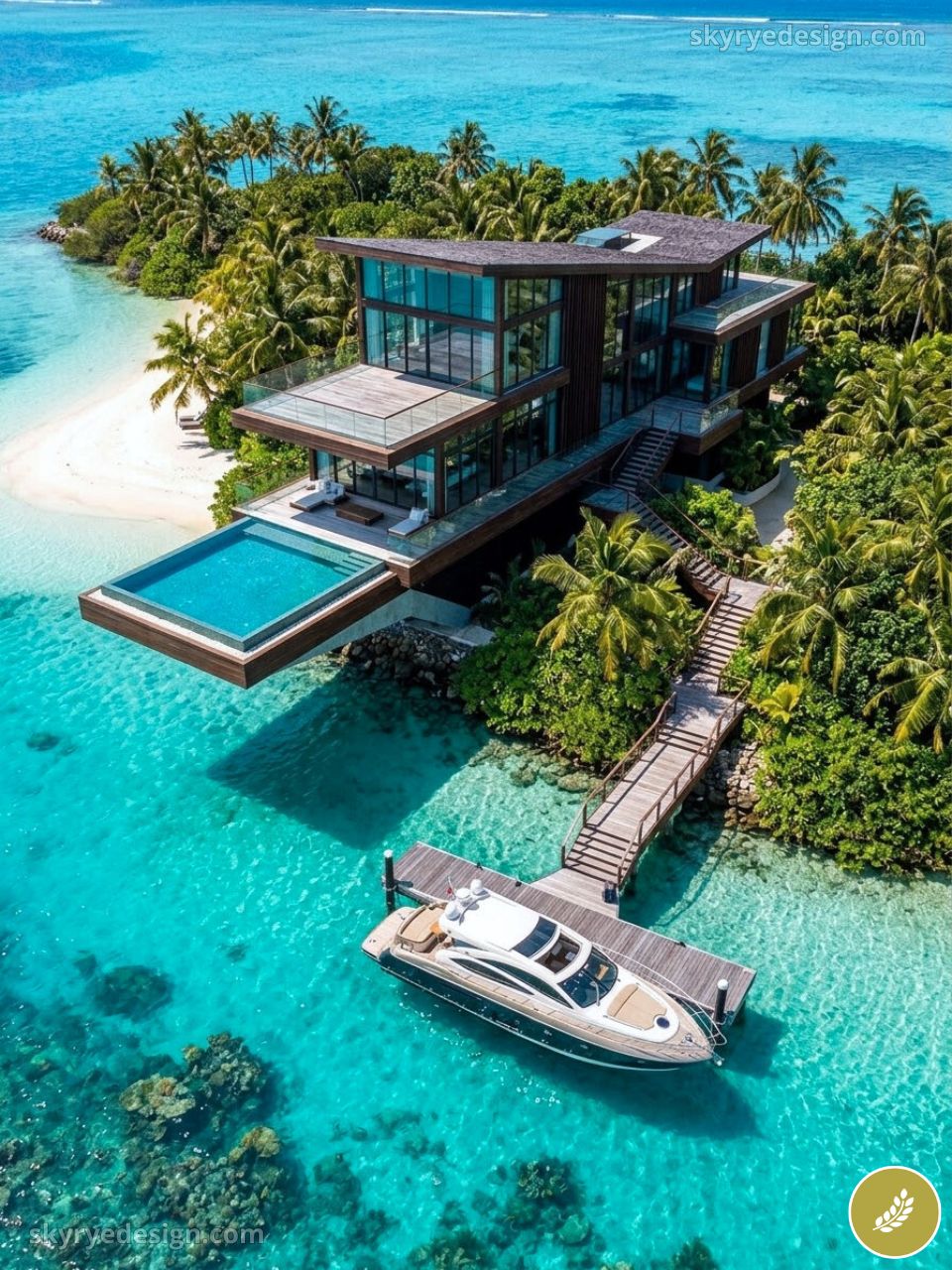
| Arrival and logistics | Dock depth, boat approach, helicopter feasibility, barge access | Affects material choices, construction sequence, and the first guest impression. |
The 5-site test for private island design
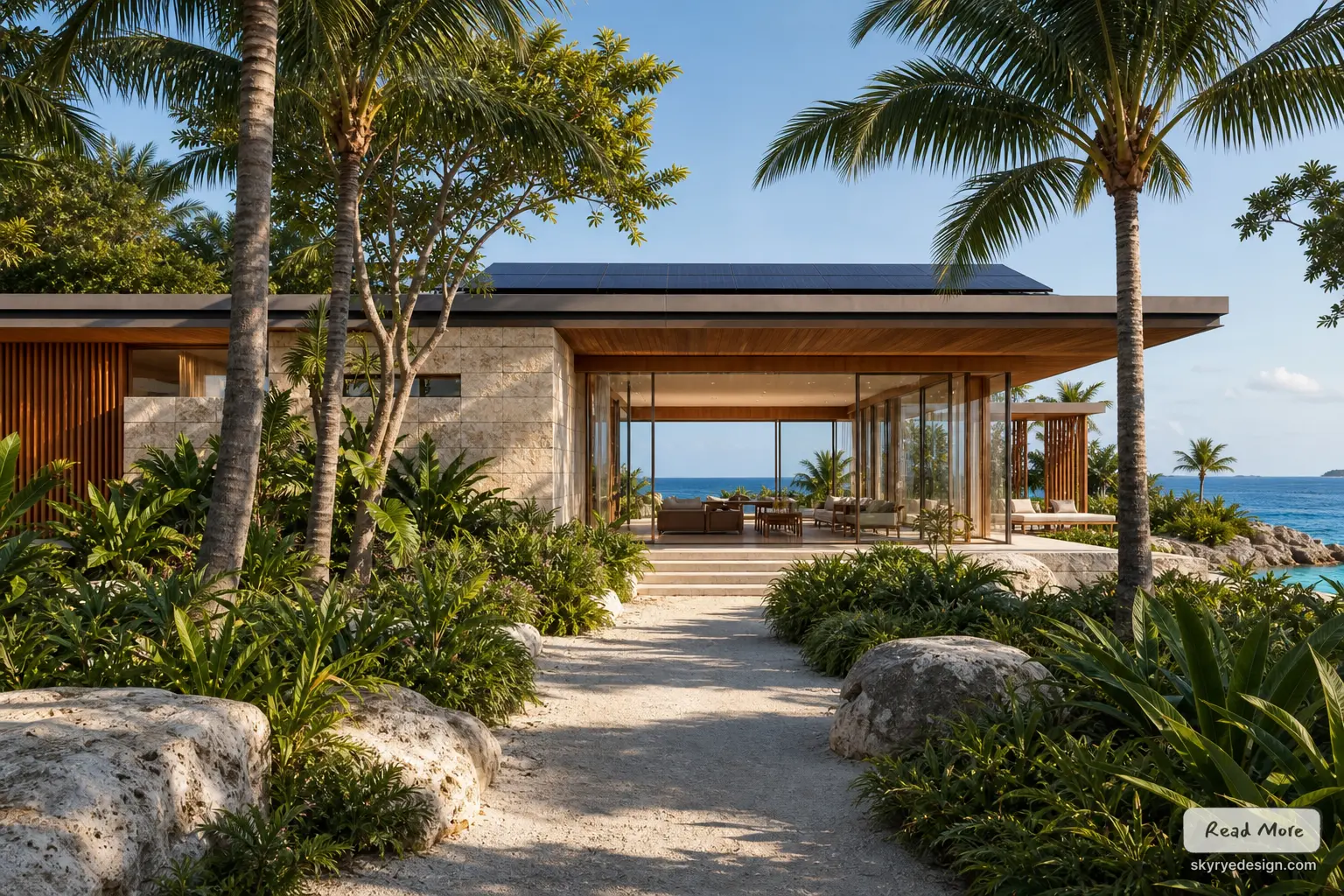
Before a private island design moves into renderings, test the site against five questions: where can you build without scarring the shoreline, how does water move after heavy rain, where can solar and batteries live without ruining the roofline, how do people arrive, and what should remain untouched? If any answer is vague, the design is not ready.
- Build lightly: place villas where the land already supports access, drainage, and foundations.
- Protect the reef: keep runoff, anchoring, and construction sediment away from coral and seagrass zones.
- Design the utilities: treat solar, batteries, desalination, greywater, and waste as architecture, not back-of-house clutter.
- Stage the arrival: dock, path, shade, wind, and first view should feel intentional.
- Leave a reserve: the most valuable part of the island may be the part you do not build on.
That question is: what do you actually build there?
I’ve looked at dozens of island development projects over the years, and the pattern is consistent. The ones that fail — financially, aesthetically, environmentally — almost always fail because the architectural concept came last, after the purchase. The ones that succeed started with design: a clear vision for how the built environment would sit on the island, how it would interact with the reef and the vegetation, how guests or residents would experience the transition between inside and outside, land and water.
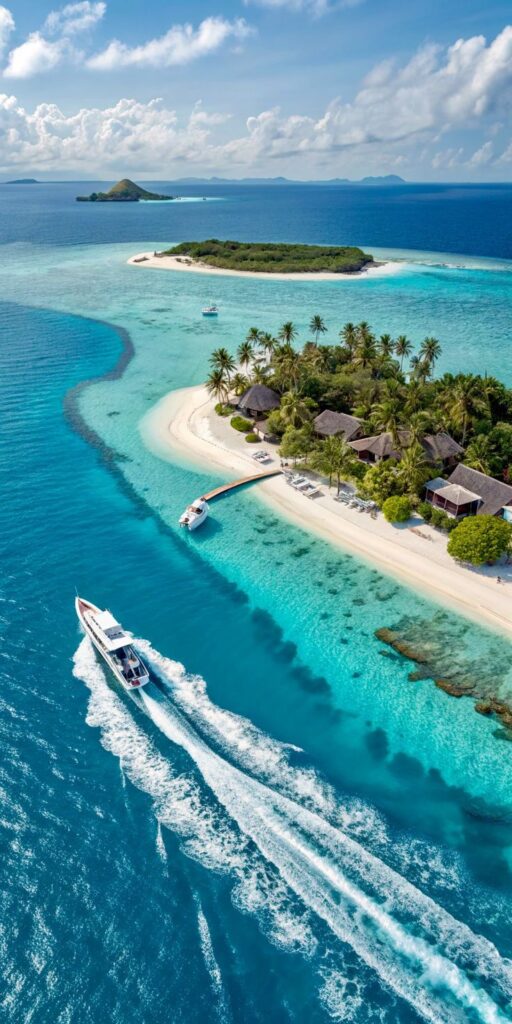
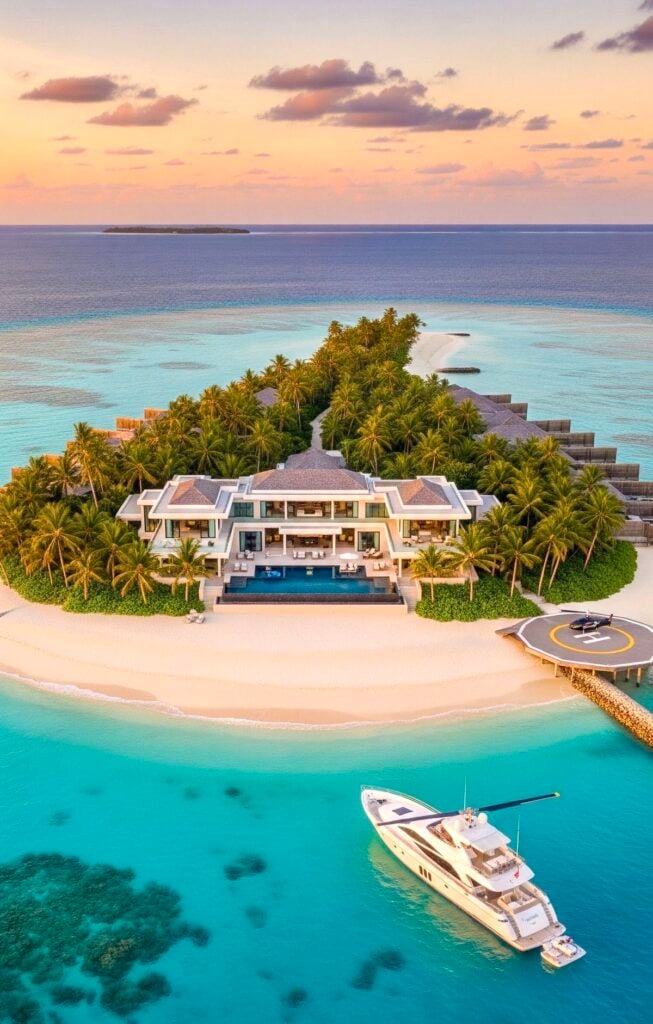
An island isn’t a plot of land with a sea view. It’s a total environment. The architecture has to respond to that — or it destroys it.
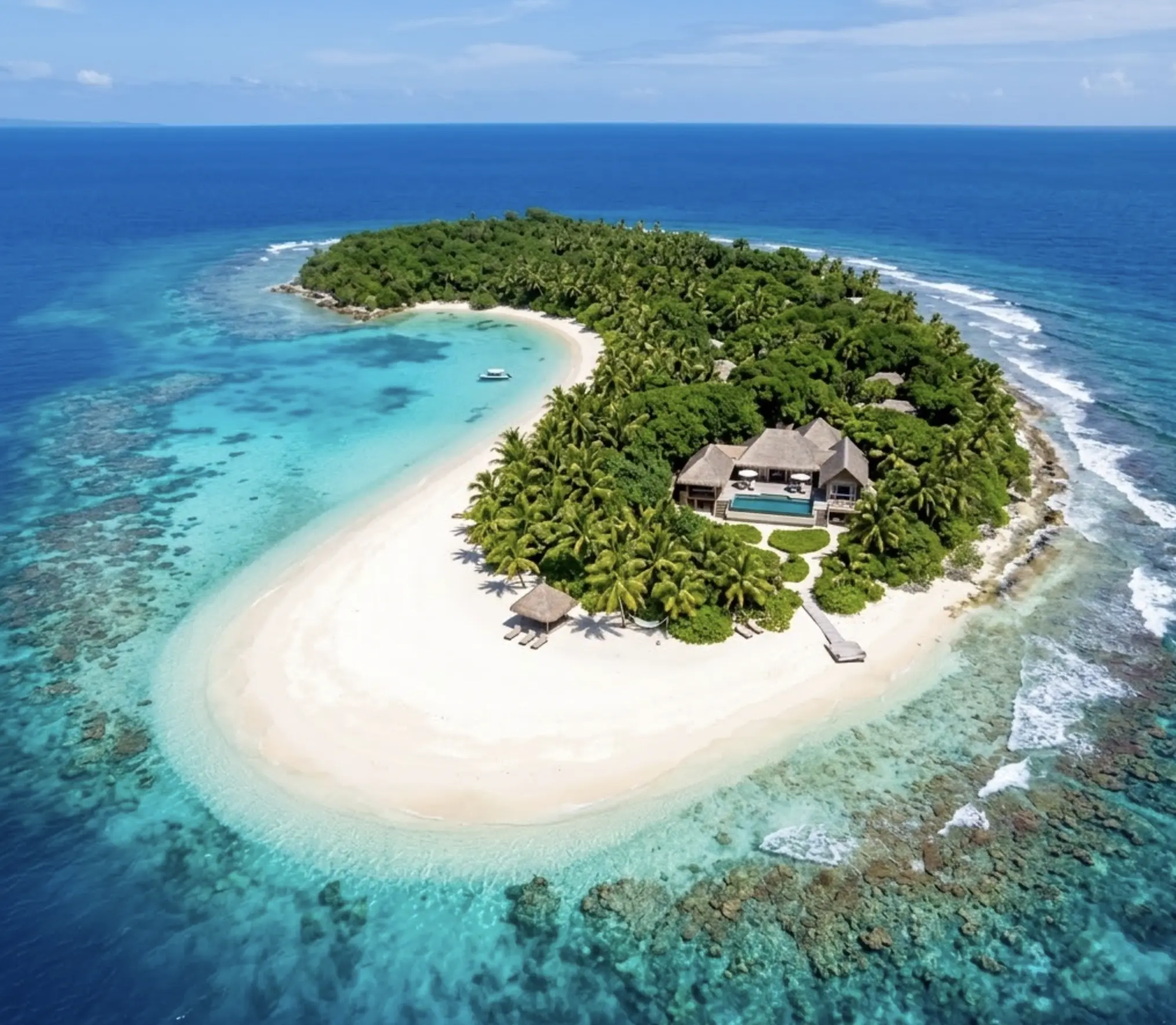
This guide is about the design and architectural decisions that serious island buyers need to make before they sign anything. For those at the stage of identifying which islands actually accommodate this kind of thoughtful development, Kepri Estates — Islands & Beaches specializes in matching buyers with coastal assets where the site conditions support high-quality architectural outcomes.
Private island market demand is now design-led
The private island market has shifted. A decade ago, the dominant buyer profile was the trophy collector — someone acquiring an island as the ultimate status asset, with development as a secondary consideration. In 2026, the dominant profile is different: investors who understand that the architectural and environmental quality of what gets built is the primary driver of both personal value and financial return.
The better way to read the market is not just “what does the island cost?” but “what will it cost to make the island livable without damaging what makes it valuable?” Private Island Market notes that undeveloped island projects often face construction costs far above mainland equivalents because materials, labor, weather delays, marine work, and permitting all become harder offshore. That is why design that responds to the landscape matters as much as the land price.
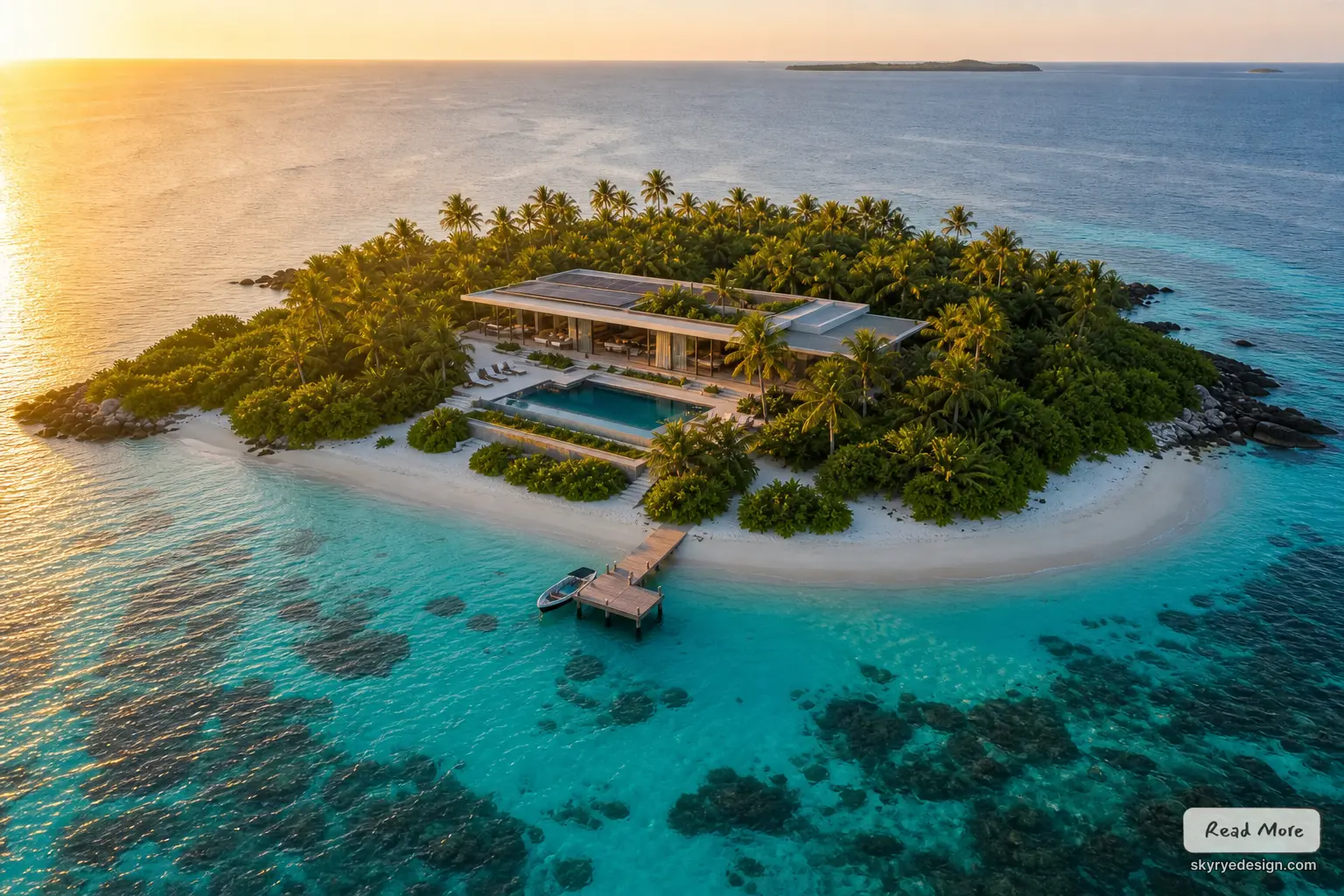
Three dynamics shaping current demand:
- Limited supply: No new islands are being created. The scarcity premium is real, but it only accrues to properties that are developed well. An island with poorly conceived construction loses value to environmental degradation; one with thoughtful architecture gains it.
- Tourism evolution: The luxury resort guest in 2026 has strong aesthetic expectations. The barefoot-luxury concept — high comfort, low visual footprint, architecture that feels grown from the landscape — only works when the planning, utilities, and guest flow are resolved before the first villa is drawn.
- Post-pandemic shift: High-net-worth buyers seeking genuine seclusion are increasingly sophisticated about what “self-sufficient” means in design terms — not just solar panels bolted onto a roof, but integrated systems that make sustainable living feel effortless rather than effortful.
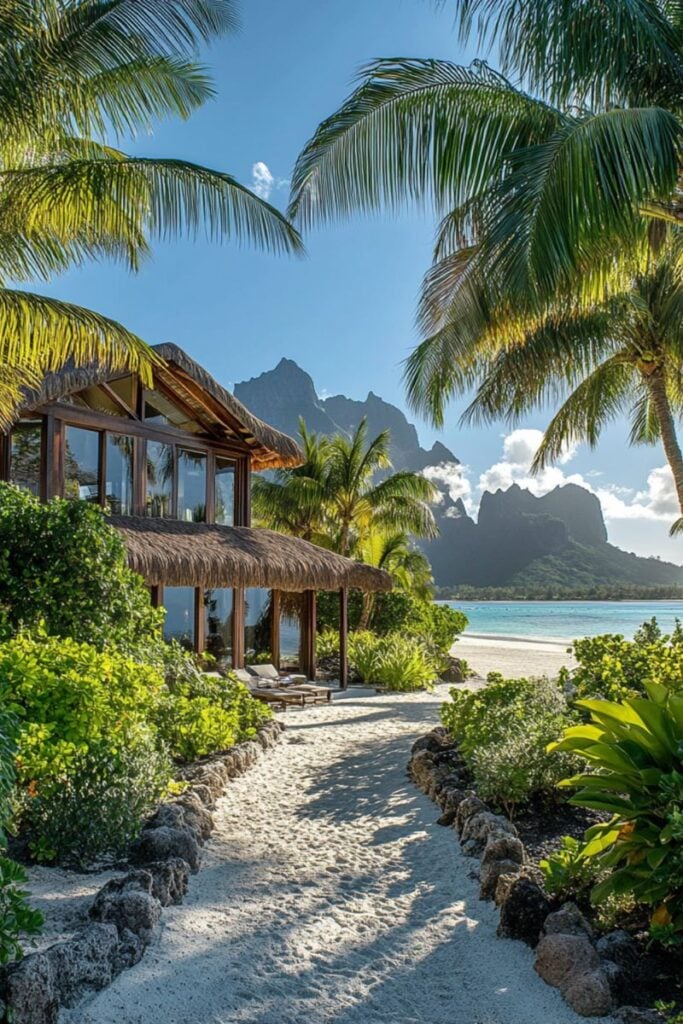
Legal constraints that shape private island architecture
Investing in an island is more complex than standard real estate, and the legal complexity has direct architectural implications. The constraints that govern what you can build are often more important than the constraints that govern what you can own.
- Freehold vs. leasehold: Caribbean jurisdictions frequently permit outright freehold ownership. Indonesia, Thailand, and much of Southeast Asia restrict foreign buyers to leasehold structures. This distinction matters architecturally because permanent, high-investment construction makes most sense on freehold land — a 30-year lease changes what development is financially rational.
- Coastal and marine regulations: The shoreline itself, and everything below the high-tide mark, is often governed by environmental protections entirely separate from land ownership. In many jurisdictions, building within 50–100 meters of the waterline requires environmental impact assessments. Reef proximity triggers additional restrictions. Understanding these constraints before developing a design concept is essential — not after.
- Zoning classification: An island zoned as agricultural land cannot legally host a resort without reclassification. Some of the most interesting undeveloped islands are zoned in ways that require multi-year regulatory processes before a shovel touches the ground. That timeline needs to be in the development plan from day one.
The implication for architects and designers: site selection and legal due diligence are not separate from the design process. The best island architects treat them as the first phase of design.
Private island design and investment returns
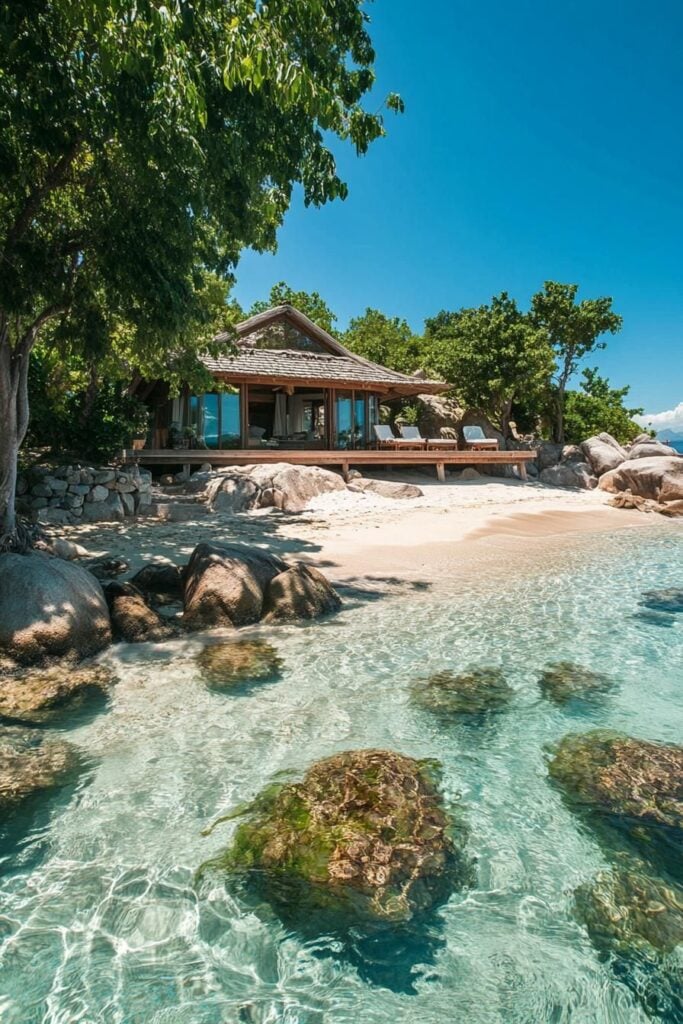
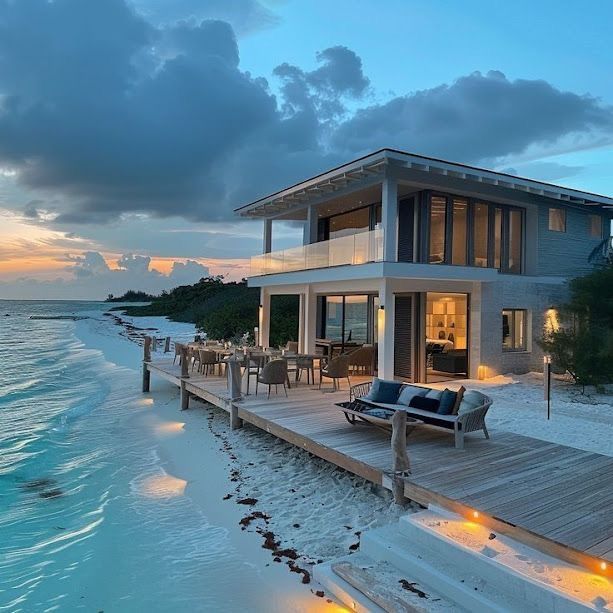
The financial case for island development is real, but it’s inseparable from the quality of the design. A well-conceived eco-resort on a properly selected island generates returns that generic development on the same site would never achieve.
- Hospitality premium: Luxury island resorts with strong architectural identity command nightly rates between $1,000 and $2,500. The properties at the top of that range — Soneva Fushi in the Maldives, Nihi Sumba in Indonesia, Necker Island in the BVI — share a specific characteristic: the architecture is as much of the product as the location.
- Capital appreciation: Caribbean island properties have averaged 5–7% annual appreciation over the past decade. Southeast Asian markets near Bali and Lombok offer steeper upside in areas where new infrastructure is reducing travel times. But in both markets, the appreciation multiplier for architecturally coherent, sustainably developed properties significantly exceeds the market average.
- The design cost reality: Thoughtful island architecture costs more upfront than generic construction. Site-specific foundation engineering, materials logistics, specialist contractors — these add 30–50% to mainland construction costs before the design premium. The return on that investment is real, but it requires patience and a development timeline measured in years, not months.
Environmental rules for private island design
This is where island architecture either earns its place or destroys what it was meant to celebrate. The ecological systems that make an island worth developing — the reef, the native vegetation, the freshwater table — are exactly what careless construction damages first.
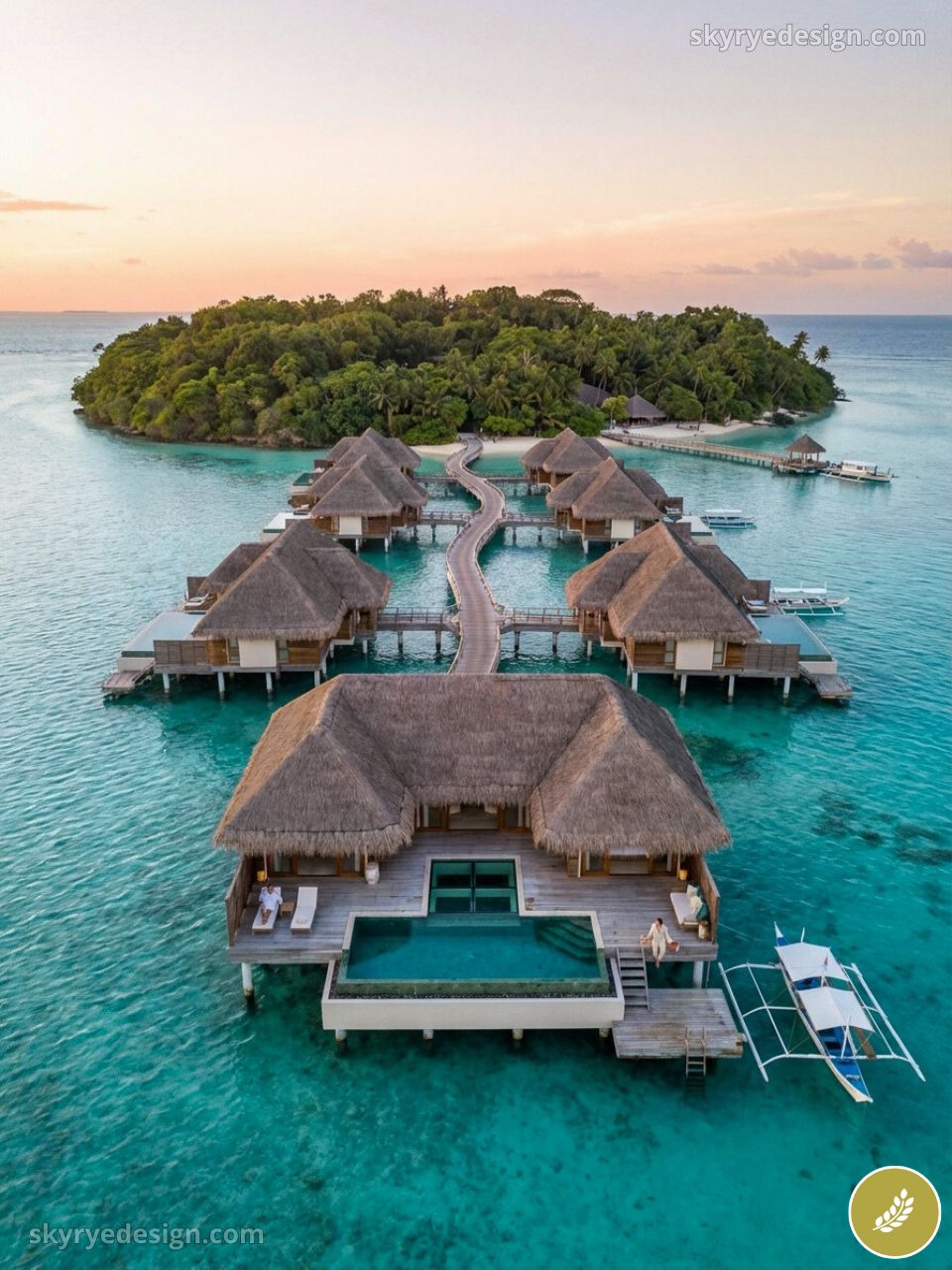
Designing around the reef, not over it
Any underwater work near a live reef needs silt curtaining. Non-negotiable, and usually the easy part.
The harder part is what happens after construction. How structures are sited, where drainage outlets, how walkways channel foot traffic — all of that determines how much runoff reaches the reef once the island is actually in use. One poorly graded path can undo a lot.
The better architects treat the reef as part of the design brief from day one. Villa orientations, deck angles, underwater viewing installations — positioned around where the coral is healthy and visible, not just wherever the views are convenient. That approach tends to produce better architecture anyway. The constraint focuses the design.
No-build and no-anchor zones are worth locking in early, before any contractor starts making assumptions about access routes. A degraded reef means worse snorkeling and diving. Worse snorkeling and diving means guests pay less, or go somewhere else. The environmental case and the financial case point in exactly the same direction.
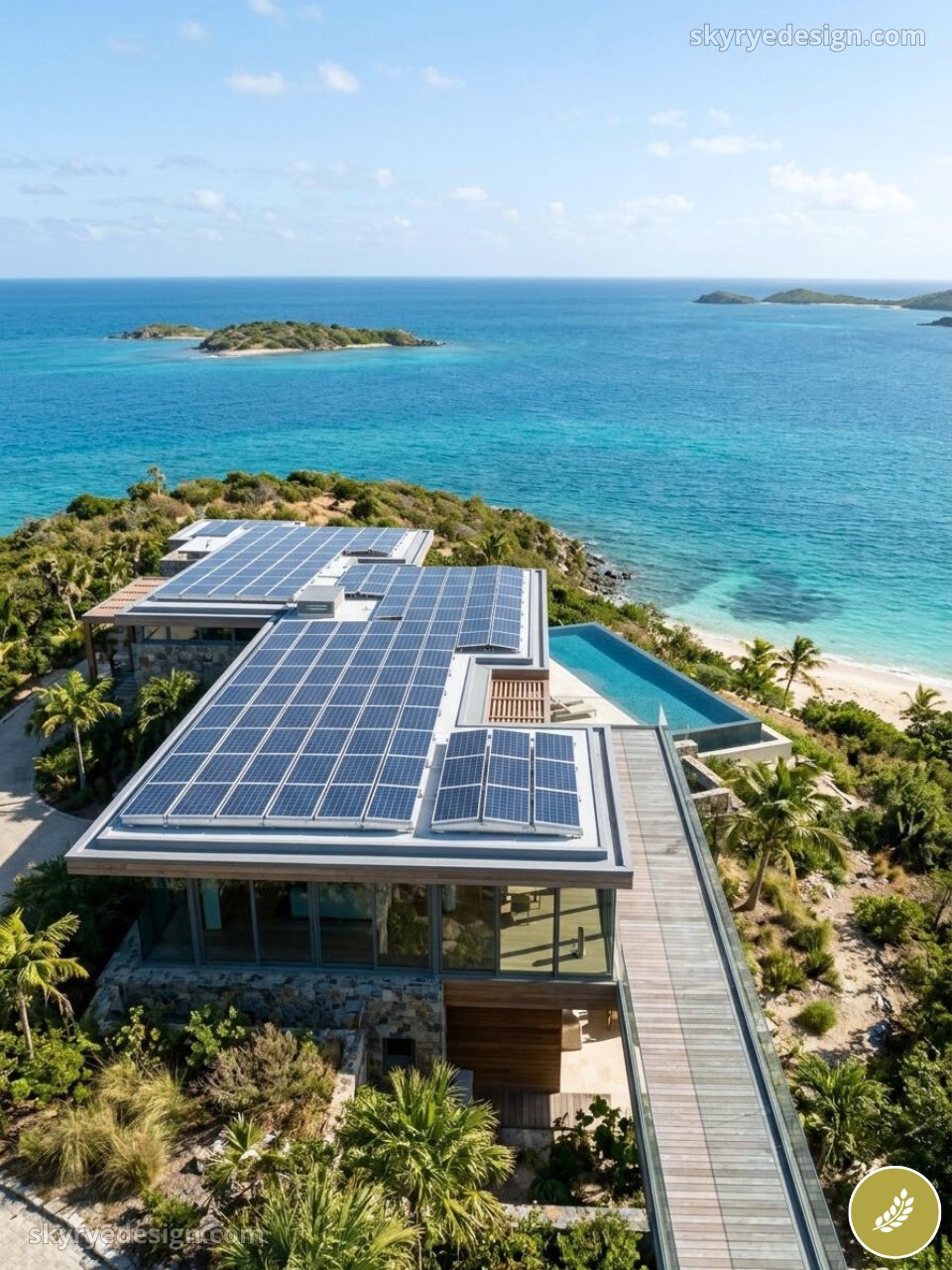
Integrating solar into the landscape
The problem with most island solar installations is visible before you even dock. Panels angled for generation with no relationship to the roofline. Inverter equipment in boxes sitting where the main approach has a clear sightline to them. It looks like someone made good energy decisions and bad architectural ones. Usually, that’s exactly what happened.
Designing around solar from the start changes the outcome completely. Roof geometry follows panel placement — 15 to 25 degrees, worked out during the structural phase, not bolted on after. Battery storage goes into the building rather than into a separate container that ends up next to the water tanks. The equipment disappears into the architecture because it was accounted for in the architecture.
Wind micro-turbines are site-specific. Where conditions support them, they add meaningful generation capacity. The siting matters: secondary structures, outside the primary view corridors. Done right, you barely notice them. Done wrong, they’re the first thing guests photograph for the wrong reasons.
Water and waste as design problems
A desalination system doesn’t have to look industrial. Greywater treatment can be integrated into landscaping that reads as entirely natural. Solid waste compaction and removal logistics can be designed into service routes guests never see.
These systems require architectural attention precisely because they’re invisible when done well and inexcusably visible when they’re not.
Private island due diligence before design
Financing and architectural concept aren’t separate conversations — though most buyers treat them that way until a lender asks a question they can’t answer.
Private equity, family offices, the specialist international banks that occasionally take island positions: they want a coherent development vision. A site with documentation. Not a parcel with potential.
A pre-acquisition feasibility study earns its cost before the deal closes. It stress-tests the development concept against what the site actually allows. It produces the documentation lenders ask for. And it tends to find things that belong in the price negotiation — foundation conditions, prevailing wind exposure, how deep the freshwater sits. Discovering those after signing is expensive. Discovering them before gives you something to work with.
Run the study during the purchase process. Not after.
Due diligence items with direct architectural implications:
- Geological survey: Foundation options, freshwater availability, shoreline stability over 25–50 years. These determine what structural systems are feasible and at what cost.
- Environmental assessment: Reef health, protected species presence, any prior development that left remediation obligations. These determine what can be built and where.
- Logistics analysis: The cost and reliability of getting materials to the site. Remote islands require either helicopter access for precision components or barge access for bulk materials. Both have architectural implications for what materials are practical to specify.
6. Emerging Markets for Island Investments
Different markets offer different architectural opportunities. The choice of region is partly a financial decision and partly a design decision.
| Region | Architectural Opportunity | Legal Structure |
|---|---|---|
| Indonesia | Balinese-influenced vernacular architecture; strong local craft tradition for timber and thatch work. High yield near Bali and Lombok. | Primarily Leasehold / Local Partnership. |
| Philippines | Palawan’s limestone geology creates dramatic site conditions; spectacular overwater villa possibilities. Strong tourism growth. | Specific Foreign Ownership Rules. |
| Caribbean | Established luxury resort precedents; sophisticated contractor base; hurricane-resistant construction well understood. | Often Freehold. |
Operations, lifestyle, and long-term island value
Legacy Building
The best island developments have a generational quality — they’re designed to be passed on, improved, and appreciated over decades rather than flipped in a market cycle.
This changes the design brief fundamentally. Materials are specified for longevity in marine environments. Structural systems are engineered for storm resilience. Landscaping is planted for a 20-year maturity horizon.
Community Engagement
Islands that employ local communities — in construction, hospitality operations, and ongoing maintenance — build something that generic resort architecture can’t: genuine local knowledge of the site, its seasonal patterns, its particular maintenance requirements. The best island managers are almost always people who grew up near the water. Designing staff housing, training facilities, and community spaces into the development plan isn’t philanthropy — it’s operational intelligence.
Quick Takeaways
- Design before purchase: A pre-acquisition architectural feasibility study transforms due diligence from a risk-reduction exercise into a value-creation one.
- Reef and solar are design problems: The environmental systems that make or break island ownership require architectural intention from day one, not retrofitting.
- The market rewards quality: The islands generating the highest per-key returns and the strongest appreciation are, consistently, the ones where someone cared deeply about how things were built.
Sources and design references
The design notes above are strongest when checked against real environmental and infrastructure constraints. These references are useful starting points for reef risk, coastal runoff, solar orientation, and island development costs.
- EPA: threats to coral reefs
- NOAA: land-based pollution and coral reefs
- U.S. EIA: solar panel tilt and latitude
- Private Island Market: island cost and development guide
Conclusion
Buying a private island without an architectural concept is like buying a canvas without knowing what you intend to paint. The land is only the beginning. What gets built on it — how it sits in the landscape, how it treats the reef, how it powers and sustains itself, how it makes people feel when they’re there — is where the real value is created or destroyed.
The architectural decisions are also the most permanent ones. Legal structures can be renegotiated. Financing can be restructured. But a villa sited in the wrong place, or a drainage system that runs toward the reef, or solar infrastructure that looks like an industrial accident — those mistakes outlast the original owners.
For investors at the stage of identifying islands where the site conditions genuinely support this level of architectural ambition, Kepri Estates — Islands & Beaches brings the regional expertise and coastal asset access to make that matching process serious rather than speculative.
FAQ
What is private island design?
Private island design is the planning of architecture, landscape, utilities, access, and environmental protection as one system. It is not just villa styling. A good plan decides where to build, what to leave untouched, how solar and water systems work, how guests arrive, and how the reef or shoreline stays protected.
What should a private island design brief include?
A private island design brief should include buildable zones, shoreline setbacks, reef and seagrass protection, access routes, dock or boat approach, solar and battery placement, desalination, greywater, staff housing, guest circulation, storm exposure, and the design language for villas and shared spaces.
What are the current market trends influencing private island investments?
The market has shifted from trophy acquisition toward design-led development. Properties with coherent architectural concepts and genuine sustainability credentials are outperforming the 8–12% average value growth seen across island real estate over the past decade. The highest-performing assets — those generating nightly rates of $1,000–$2,500 — share strong architectural identity as a core part of the product.
What legal factors should I consider when buying a private island?
Ownership structure, coastal regulations, marine protection zones, and zoning classification all have direct architectural implications — they determine what can be built, where, and on what timeline. Freehold is available in many Caribbean jurisdictions; Southeast Asian markets typically restrict foreigners to leasehold arrangements. Retain legal counsel with specific island transaction experience before developing any design concept.
How can I assess the potential financial return on an island investment?
Model both hospitality income and capital appreciation with realistic cost assumptions. Island construction runs 30–50% above mainland equivalents before the design premium. High-quality eco-resort development with strong architectural identity commands the rates that make the numbers work. A pre-acquisition architectural feasibility study ($15,000–$50,000) stress-tests the development concept against actual site constraints before capital is committed.
What environmental and sustainability practices should I implement on my island property?
Treat reef protection, solar integration, and water/waste management as design problems from the start rather than compliance checkboxes added later. Silt curtaining during construction, no-build zones around the reef perimeter, roof geometries designed around panel placement, and integrated greywater treatment all require architectural intention. Properties with verifiable sustainability credentials command measurable premiums in both sale and rental markets.
What are the key considerations for financing and conducting due diligence on an island purchase?
Standard mortgage financing is rarely available. Private equity, family offices, and seller financing are the most common structures. A pre-acquisition architectural feasibility study strengthens financing conversations by demonstrating a coherent development vision. Due diligence must include geological survey, environmental assessment, title search, and logistics analysis — each with direct implications for what’s architecturally feasible and at what cost.
- 303shares
- Facebook0
- Pinterest303
- Twitter0
- Reddit0