My first bicycle drawing looked like a shopping trolley that had been in an accident. Two misshapen circles, a frame that leaned drunkenly to one side, handlebars at completely different heights. I’d been drawing for years at that point. Bikes just broke something in my brain.
- What is the easiest way to draw a bike?
- Why Drawing a Bike Actually Feels Hard
- What You Need to Start
- The Geometry-First Method: Understanding Before Drawing
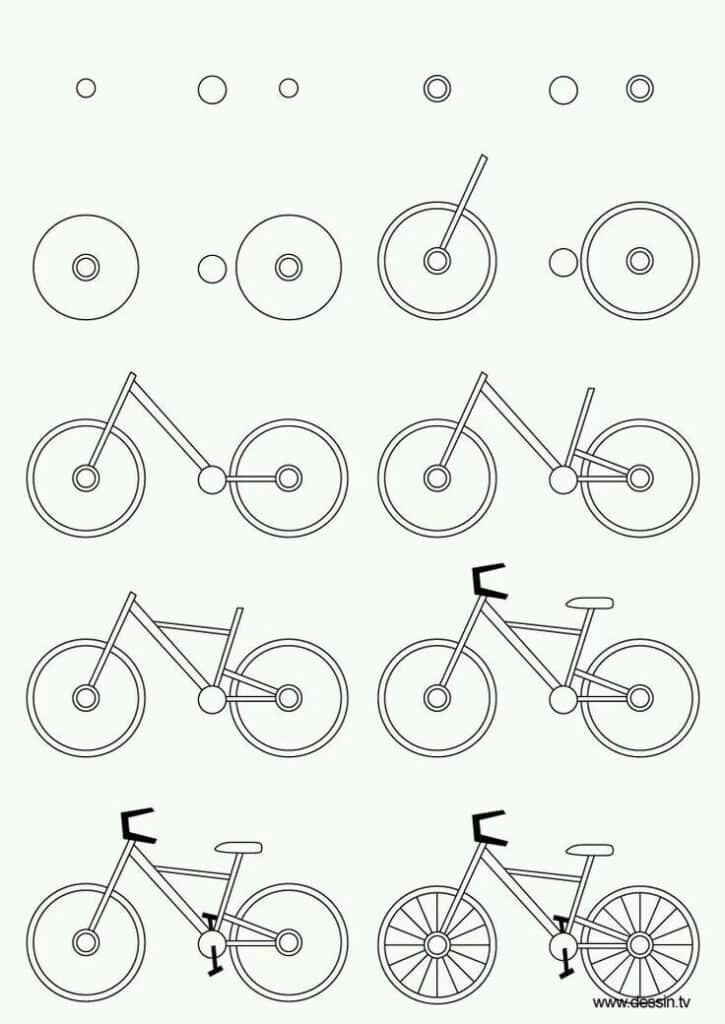
- How to Draw a Bike Easy: 10 Steps
- Step 1: Draw the two wheels
- Step 2: Draw the rear triangle
- Step 3: Complete the rear triangle
- Step 4: Add the front fork and head tube
- Step 5: Add the handlebars
- Step 6: Add the saddle
- Step 7: Add the bottom bracket, cranks, and pedals
- Step 8: Add the chain
- Step 9: Add spokes to both wheels
- Step 10: Clean up and add finishing details
- Drawing 4 Different Bike Types From the Same Foundation
- The 5 Mistakes That Make Bike Drawings Look Wrong
- Adding Shading and Depth to Your Bike Drawing
- Practice Routine: Getting Better Fast
- Frequently Asked Questions
- Q: How do you draw a bicycle step by step for beginners?
- Q: How do you make a bike drawing look realistic?
- Q: What is the easiest type of bike to draw?
- Q: How do you draw bicycle spokes without them looking messy?
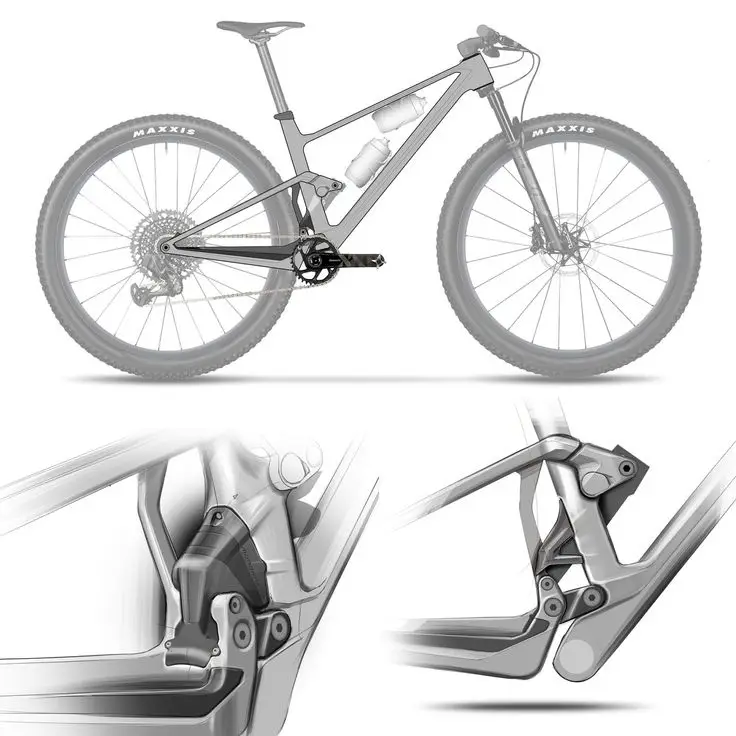
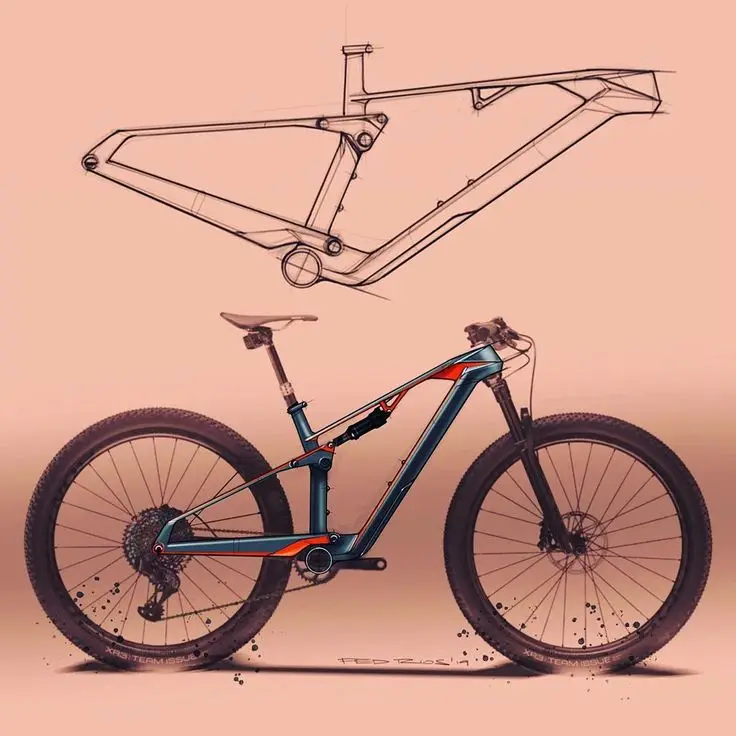
- Q: How do you draw a mountain bike vs a road bike?
- Q: Do I need to use reference photos when learning how to draw a bike?
- Where to Take Your Bike Drawing Next
The problem, I eventually figured out, wasn’t drawing ability. It was geometry anxiety. A bicycle looks simple — kids ride them, and anyone can describe one. But when you put pencil to paper, suddenly you’re dealing with two circles that need to be the same size, a diamond frame whose angles feel wrong, however you draw them, and a front fork that always comes out either jammed into the wheel or floating three inches away from it.
What is the easiest way to draw a bike?
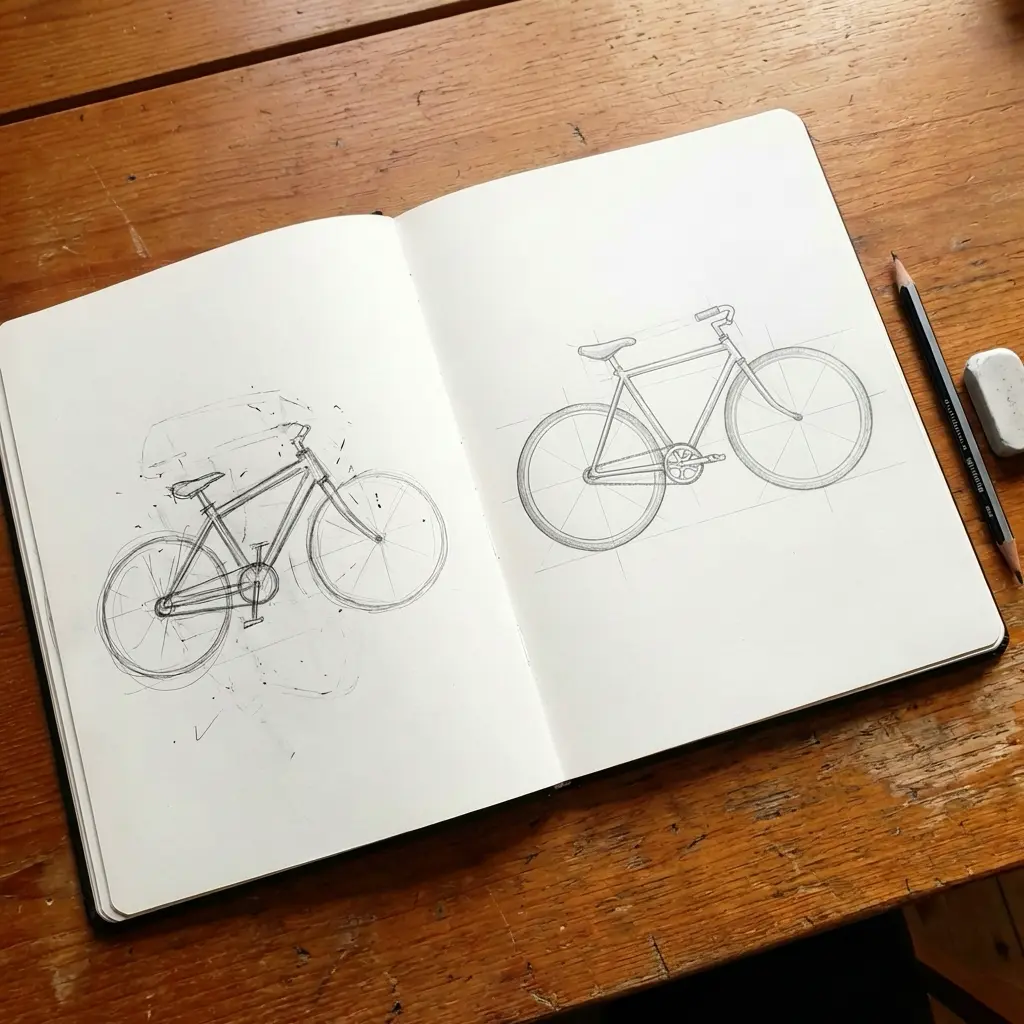
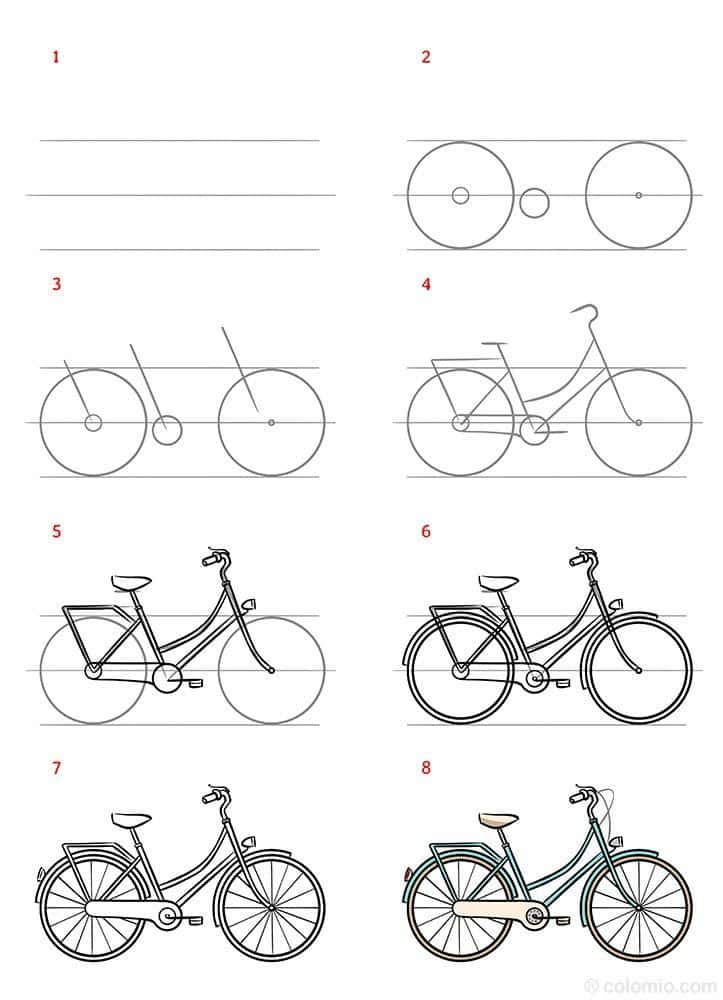
The easiest way to draw a bike is to build it from geometry before adding details. Start with two equal circles for the wheels, spaced about one wheel diameter apart. Mark each wheel center, because those axle points control the frame, fork, and chain placement. Next, draw the bicycle frame as two triangles: a larger front triangle and a smaller rear triangle that share the seat tube. Keep the seat tube nearly vertical, the top tube nearly horizontal, and the down tube on a steeper diagonal.
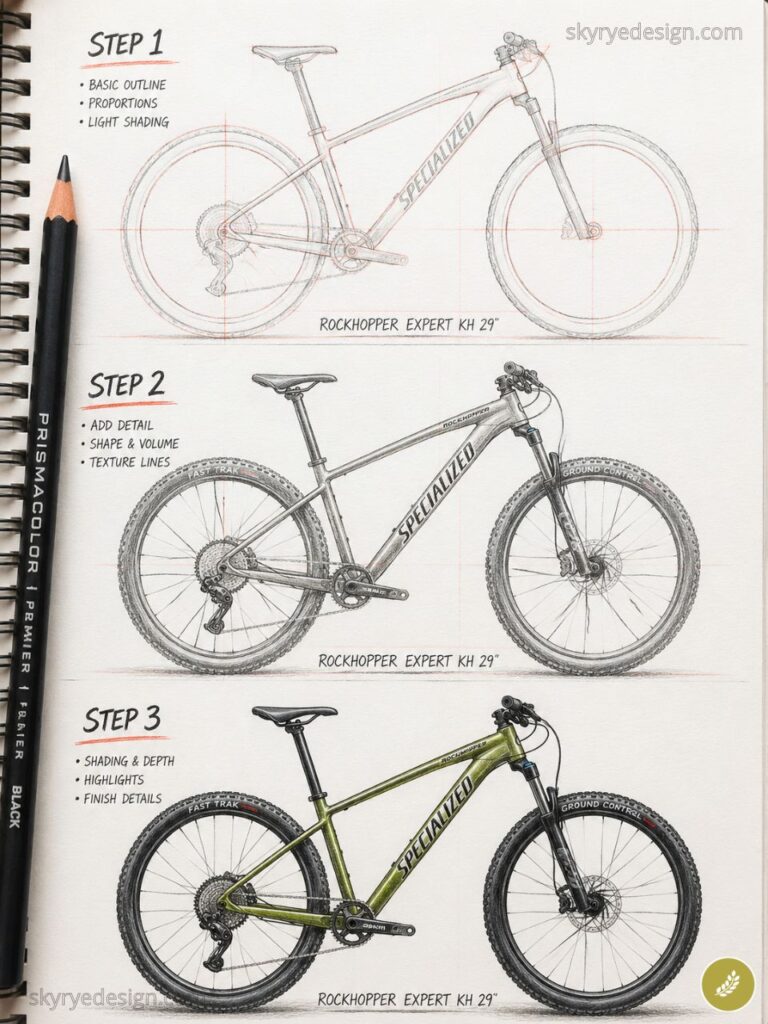
Add the front fork so it leans slightly forward, about 10-15 degrees from vertical, then add the saddle, handlebars, bottom bracket, pedals, chain, and a few light spokes. This method works because it solves proportion first, then lets the drawing read as a believable bicycle before small details are added.
| Bike part | Beginner mistake | Better rule |
|---|---|---|
| Wheels | Different sizes or too small | Use two equal circles; wheel diameter should roughly match the frame height. |
| Frame | All tubes drawn at similar angles | Seat tube nearly vertical, top tube nearly horizontal, down tube steeply diagonal. |
| Fork | Drawn straight vertical | Lean it forward about 10-15 degrees. |
| Spokes | Too many dark lines | Use 8-10 light spokes per wheel. |
| Chain | Missing or over-detailed | Use a thin double-line oval from chainring to rear hub. |
This guide shows how to draw a bike easy by fixing the part that usually goes wrong first: the geometry. We will build the bicycle from equal wheels, clear axle points, a diamond frame, a slightly forward fork, and only then the saddle, pedals, chain, spokes, and shading. That order matters. Once the structure feels right, the drawing stops looking like a symbol and starts looking like a bike.
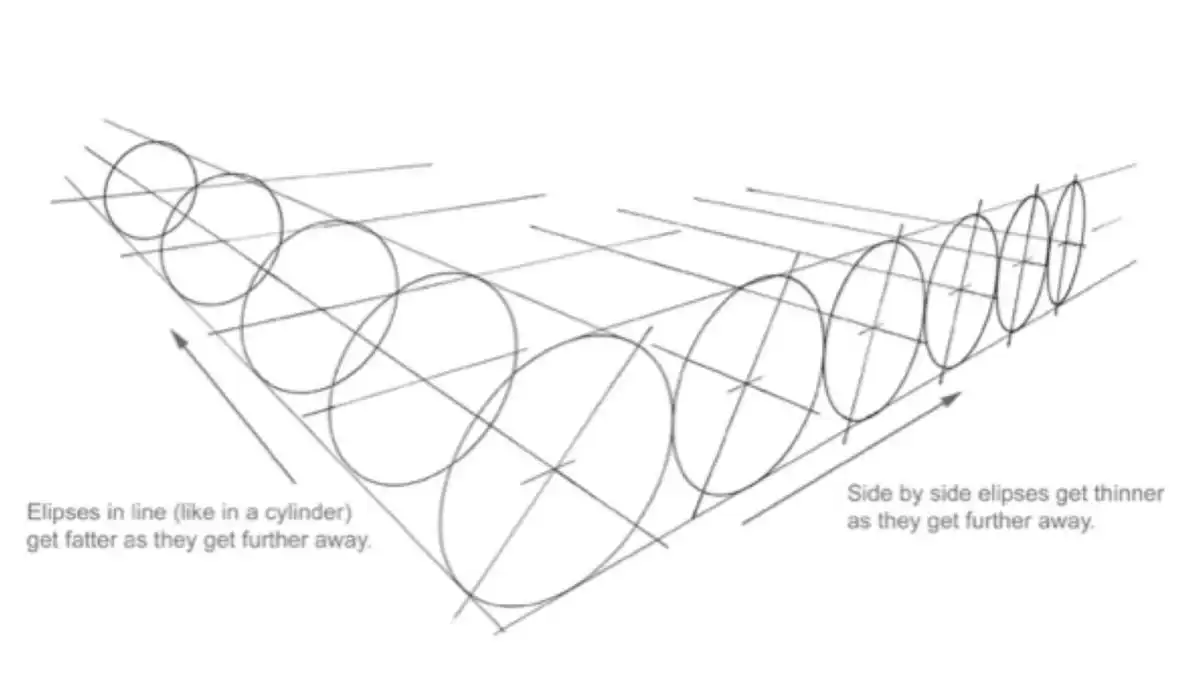
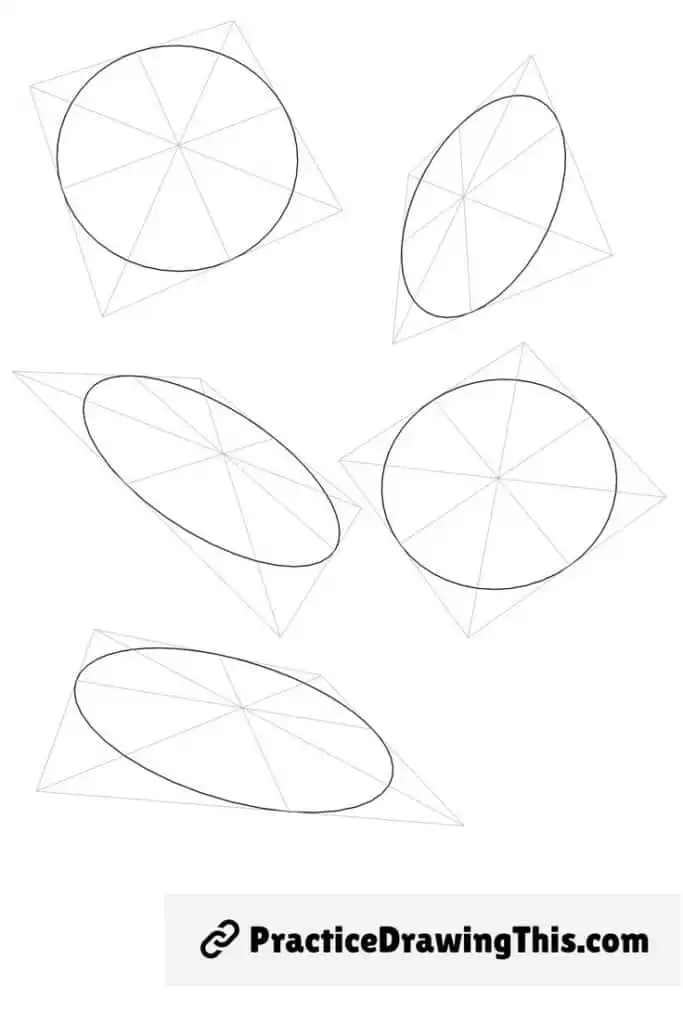
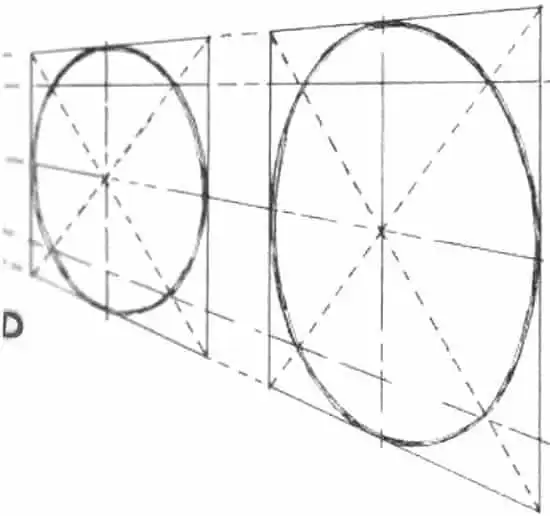
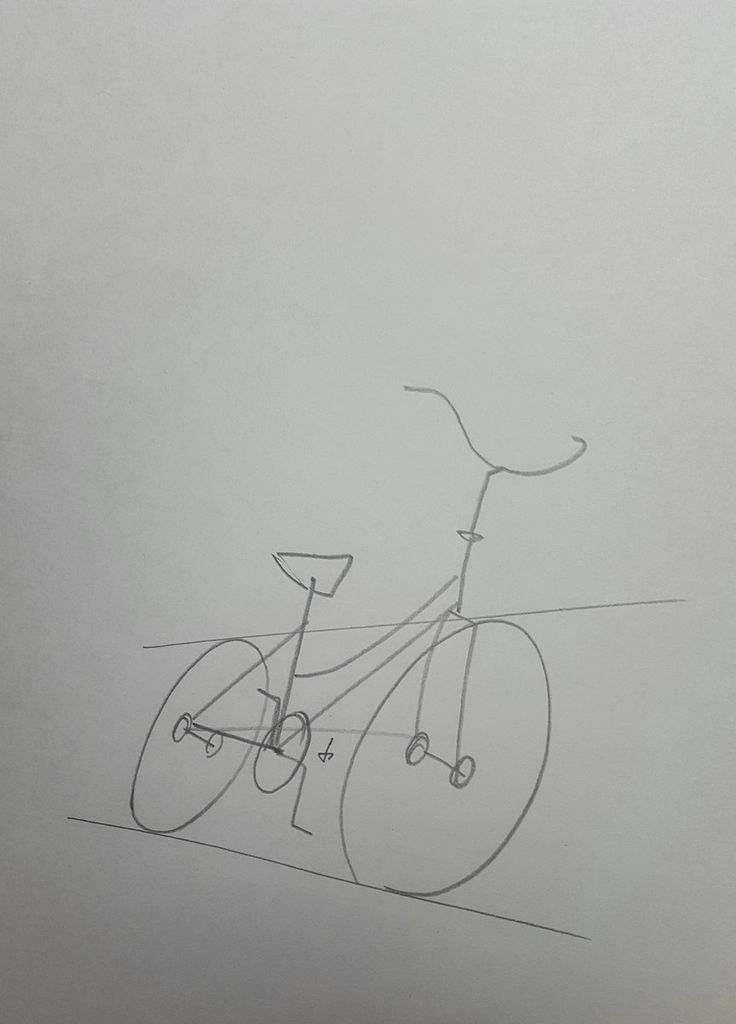
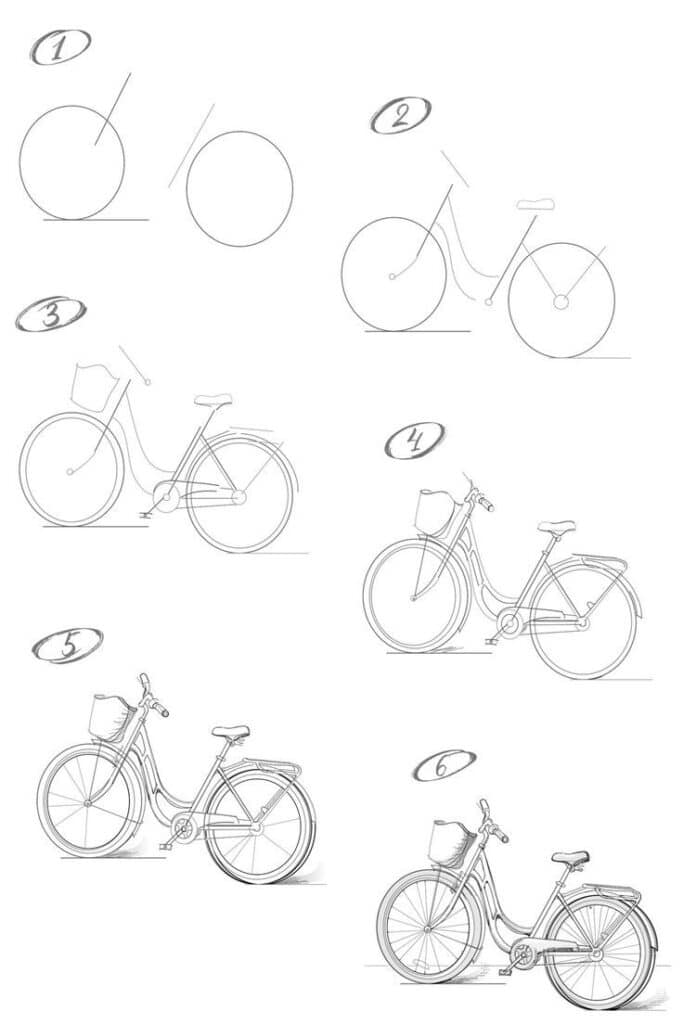
It’s really not difficult if you know how to use perspective techniques and correctly inscribe ellipses and set proportions. The same applies to drawing any vehicle or car with wheels: if they’re crooked, the entire drawing won’t be appealing.
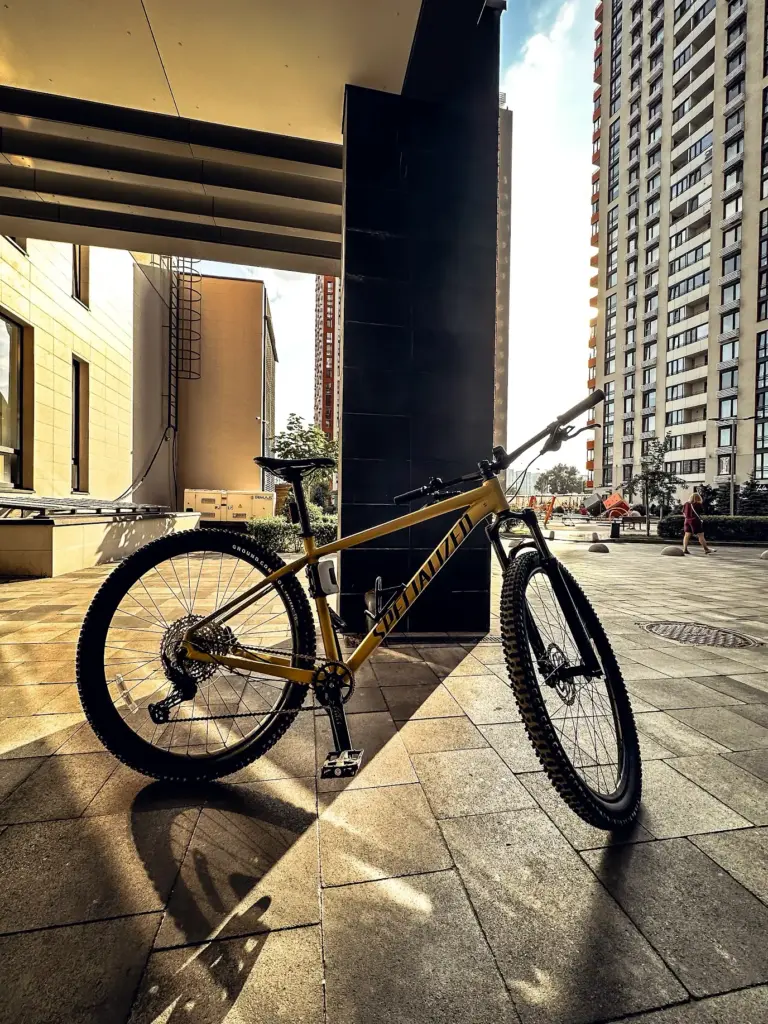
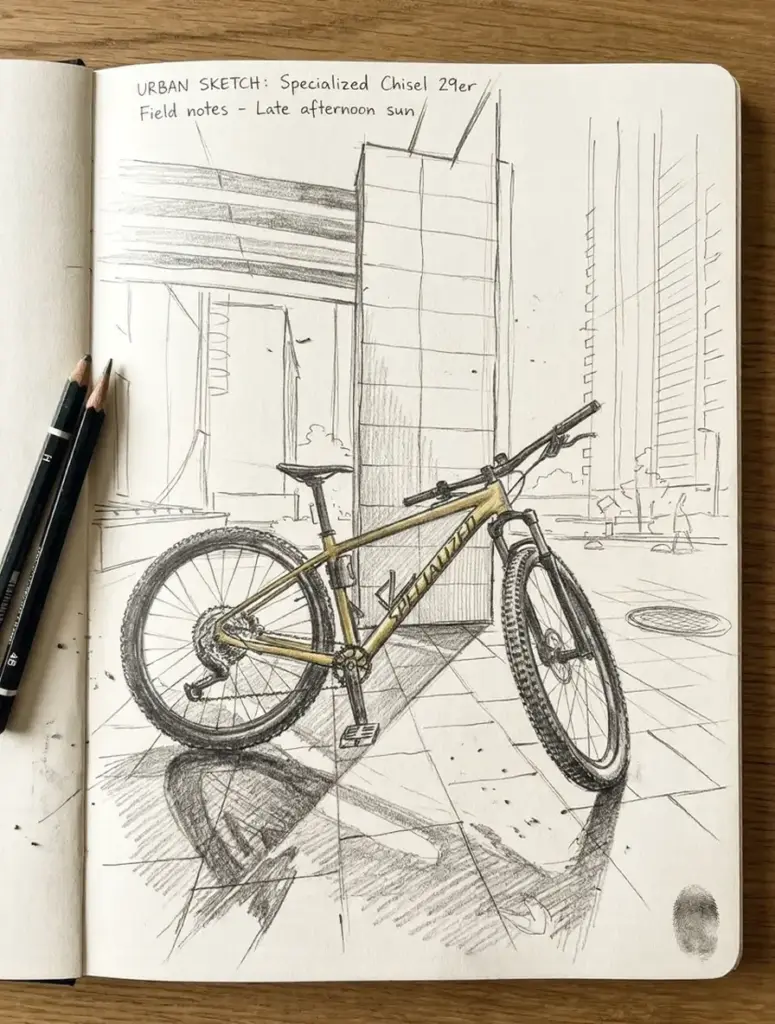
I’m a big fan of bicycles in general. My recent purchase at the end of the season was a Specialized ROCKHOPPER EXPERT KH 29. It’s gold, and to me, it’s simply beautiful, and its shape is an inspiration. Perhaps you have models you like; that would be a good reference to start with.
Why Drawing a Bike Actually Feels Hard
Before the steps: a quick explanation of the actual problem. Because if you understand why bikes trip people up, you’ll stop blaming your drawing ability and start solving the right problem.
The Diamond Frame Is Counterintuitive
A real bicycle frame is built around a diamond shape made of two triangles — the main triangle (top tube, down tube, seat tube) and the rear triangle (seat stays and chain stays). When you look at a real bike, this seems obvious. When you try to draw it from memory, the triangles come out wrong.
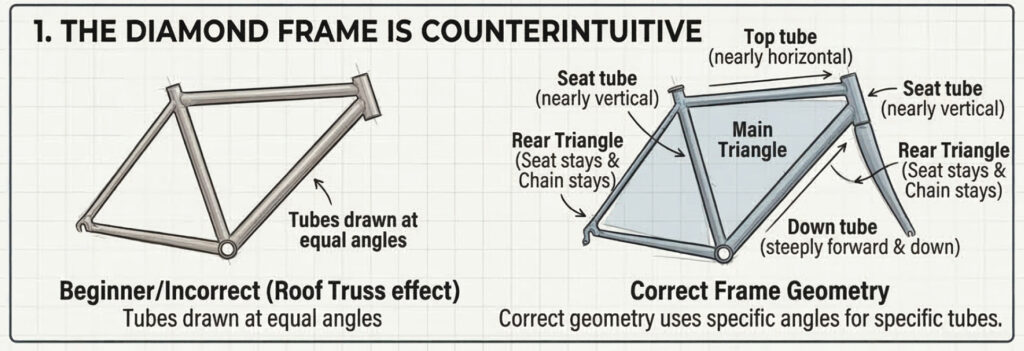
The reason: the seat tube is nearly vertical, the down tube angles forward and down steeply, and the top tube is nearly horizontal. Most beginners draw all three tubes at equal angles, which produces a frame that looks like a roof truss, not a bicycle. The fix is knowing which angle belongs to which tube, and we’ll cover that specifically in the steps.
The Wheels Are Bigger Than You Think
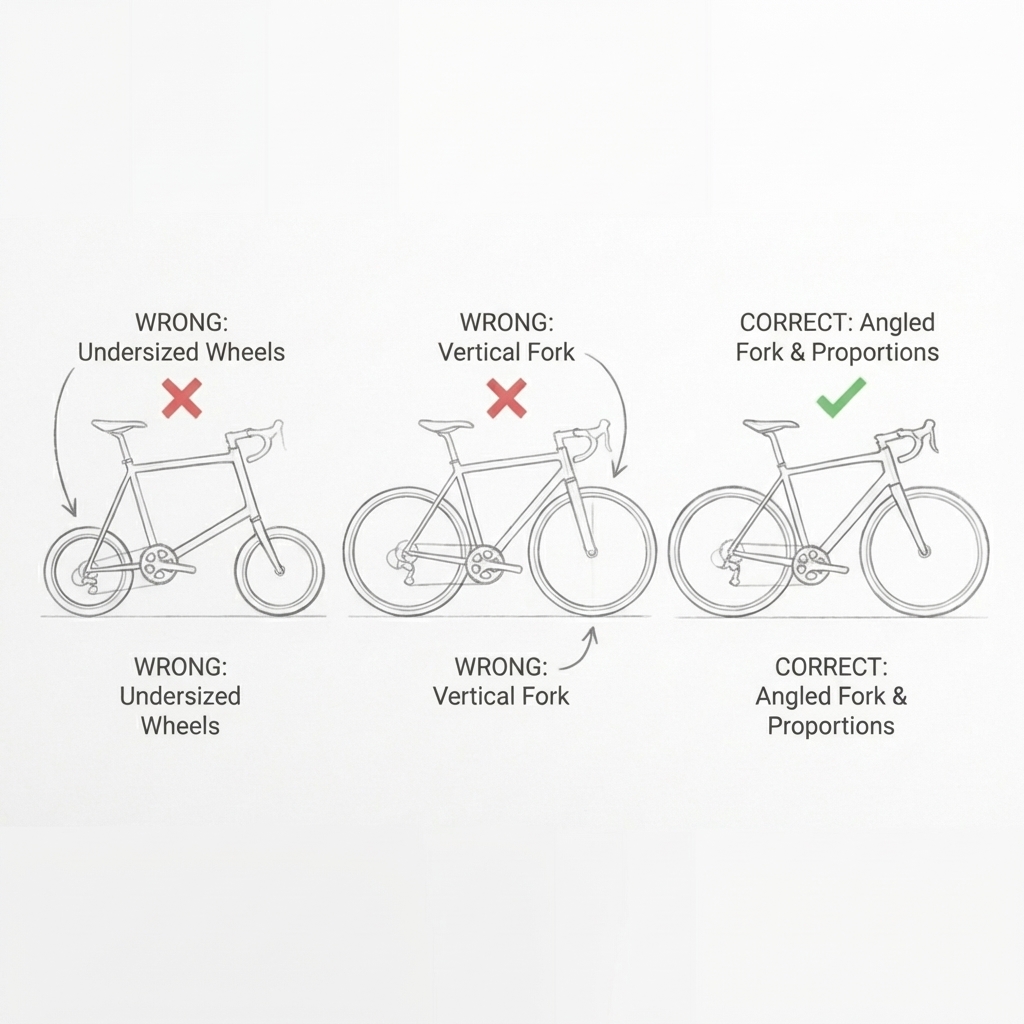
Beginners almost always draw their wheels too small relative to the frame. On a real road bike, the wheel diameter is roughly equal to the total height of the frame — the distance from the ground to the top tube. When your wheels are undersized, the bike looks toy-like regardless of how carefully you’ve drawn everything else.
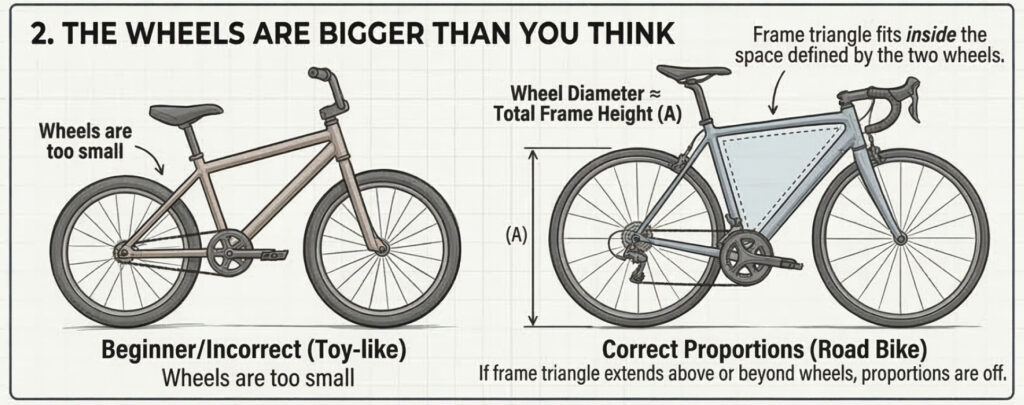
Rule of thumb: your frame triangle should fit inside the space defined by the two wheels. If your frame triangle extends above or beyond the wheels, your proportions are off.
The Front Fork Has a Specific Angle
The front fork on any real bicycle is not perpendicular to the ground. It angles forward — typically 10–15° forward of vertical.
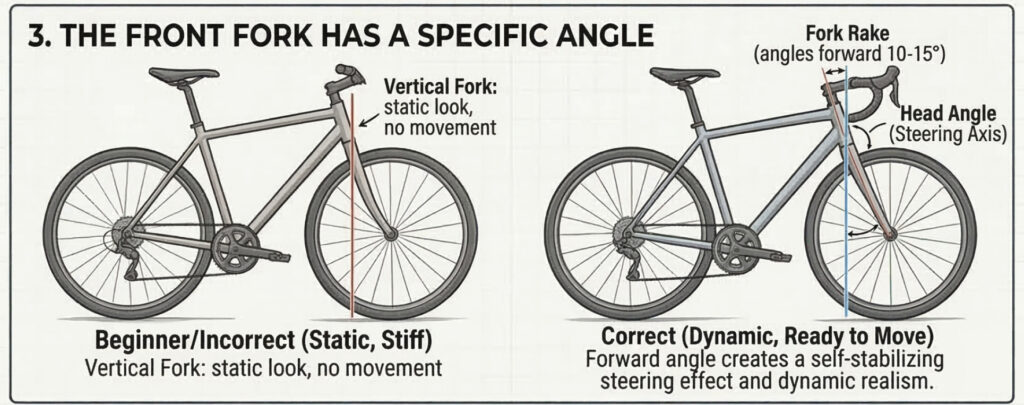
This is called the fork rake, and it’s what makes a bicycle track straight without the rider steering consciously. When you draw the front fork as a straight vertical line (which feels natural), the drawing looks static and stiff. Angle it forward just slightly, and the whole bike suddenly looks like it can move.
What You Need to Start
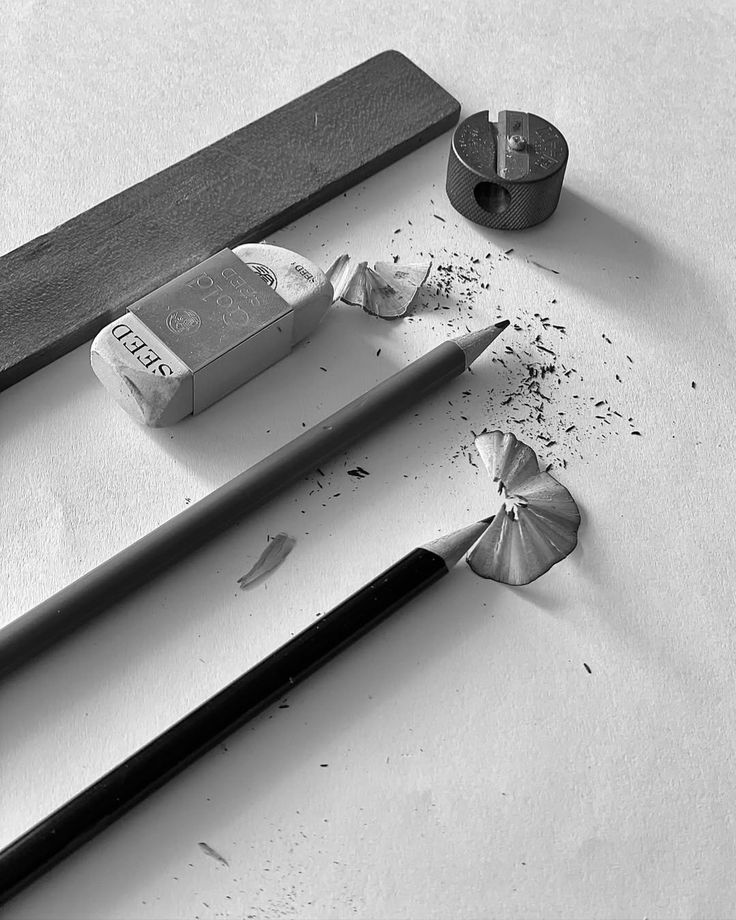
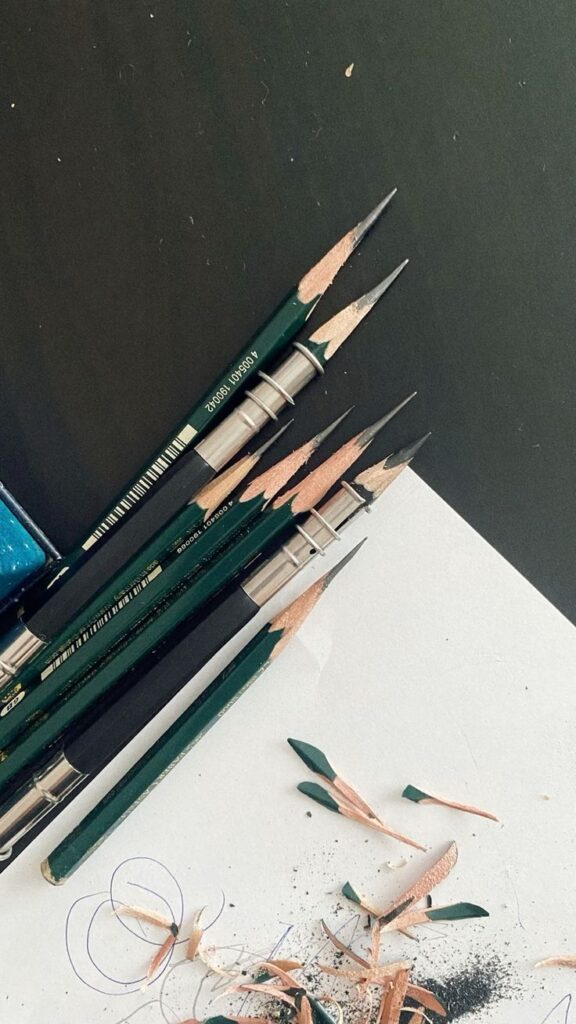
The method in this guide works with the most basic possible supplies. You don’t need specialist equipment.
For Pencil and Paper
- Any pencil, HB or 2B: HB for initial construction lines (lighter, easier to erase), 2B for final lines (darker, more expressive). A mechanical pencil like the Uni Kuru Toga keeps a consistent point without sharpening, which helps with the circular wheel construction.
- A good eraser: Staedtler Mars plastic or Pentel Hi-Polymer — both erase cleanly without smearing. The construction lines in the early steps get erased, so a clean eraser matters more than you’d think.
- Any paper: Printer paper works fine for practice. If you want a better surface for a finished drawing, Canson XL sketching paper (70lb/100gsm) is around $12 for a 100-sheet pad and holds pencil and light ink well.
Optional: a coin or small circular lid for tracing the initial wheel circles. There is absolutely nothing wrong with using a guide for the circles. The skill you’re building is understanding the bicycle’s geometry — perfect freehand circles can come later.
For Digital Drawing
The same method applies exactly in Procreate, Clip Studio Paint, or any vector tool. If you’re working digitally, set up a guide grid and use the circle/ellipse tool for the initial wheels — then continue from Step 3 freehand. The geometry principles don’t change.
The Geometry-First Method: Understanding Before Drawing
Before we go step by step, here’s the mental model that makes everything else easier:
A bicycle is two circles, two triangles, a vertical stick, and a T-shape. That’s it. Two circles = wheels. Two triangles = the main frame and rear triangle. Vertical stick = the front fork and head tube. T-shape = the handlebar. Everything else (saddle, pedals, spokes, chain) is detail layered on top of that skeleton.
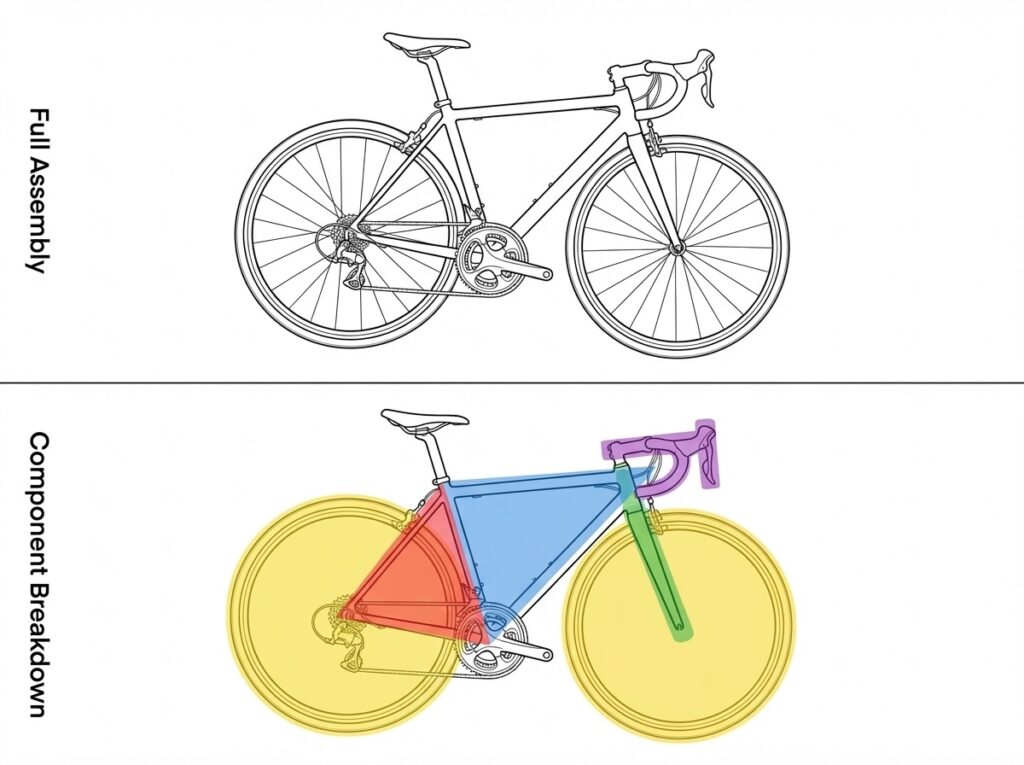
Once you can see those shapes in a bicycle, drawing one becomes an assembly problem rather than an artistic challenge. You’re placing known shapes in known relationships. That’s a solvable problem.
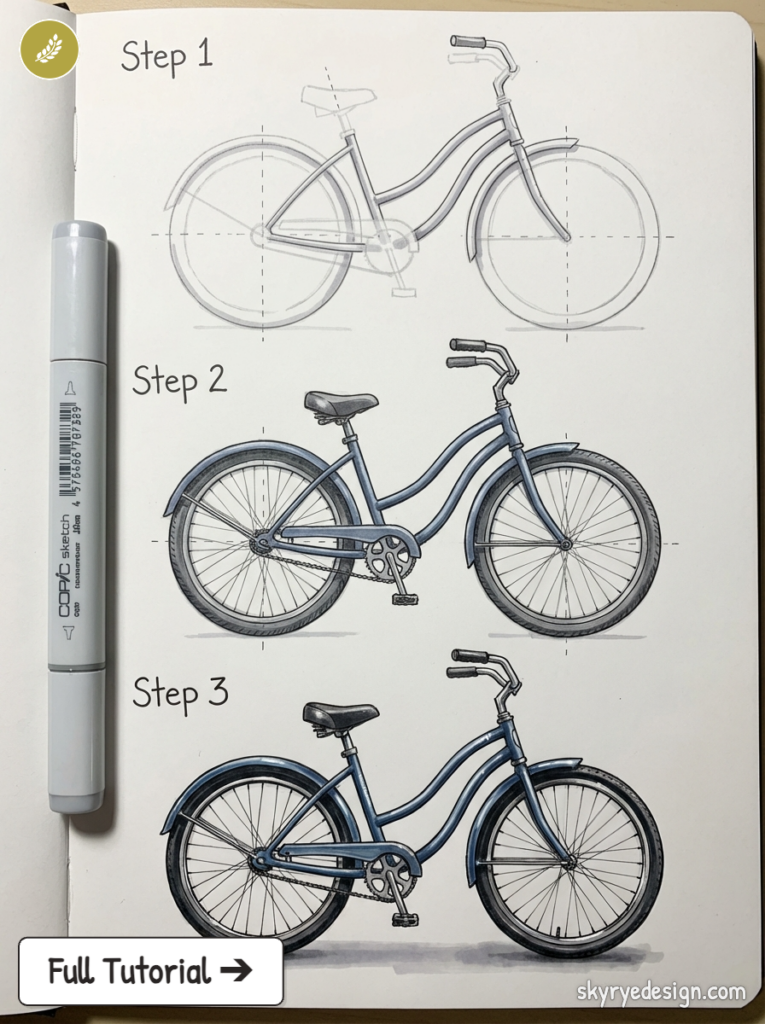
How to Draw a Bike Easy: 10 Steps
Step 1: Draw the two wheels
Draw two circles the same size, placed side by side with a gap between them roughly equal to one wheel diameter. These circles define the entire scale of your drawing — everything else is built relative to them.
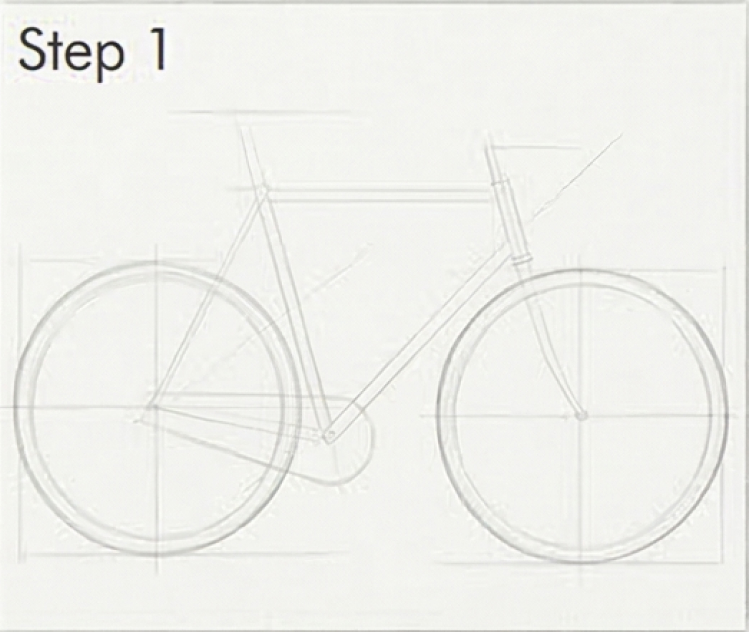
- Make both wheels the same size. On a standard bicycle, the front and rear wheels are identical.
- The gap between the wheels should be roughly one wheel-width. Too close and the frame looks cramped; too far and the bike looks stretched.
- Lightly mark the centre of each wheel with a small dot. These axle points are your anchor — you’ll return to them throughout the drawing.
✏ Pro tip: Use a coin, bottle cap, or small lid to trace both circles — this takes away the circle anxiety entirely. Match the size of both circles to the same object. Perfect freehand circles come with practice; understanding bicycle geometry comes from this guide.
Step 2: Draw the rear triangle
Find the centre dot of the rear (left) wheel. From that point, draw three lines going up and forward:
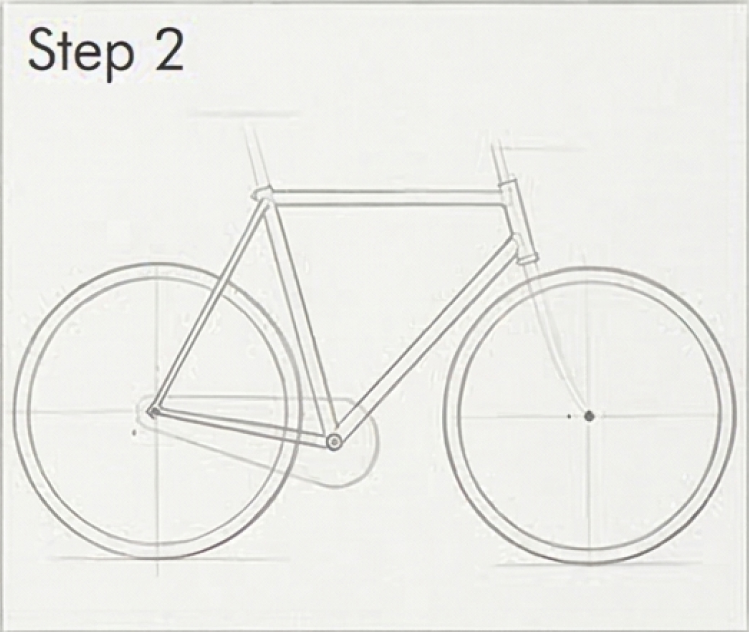
- One line going steeply upward at roughly 70° from horizontal — this is the seat tube. It should be nearly vertical, tilted just slightly backward.
- One line in the future and upward at roughly 45° — this is the down tube, running toward the front of the bike.
- One line going nearly horizontal from the seat tube top toward the front wheel area — this is the top tube.
These three lines form the main triangle. The seat tube and top tube meet at a 90° corner at the top (where the saddle will sit). The down tube connects the bottom of the seat tube area to the head tube above the front wheel.
✏ Pro tip: The most common mistake here: drawing all three tubes at equal angles. The seat tube should be nearly vertical. The top tube should be nearly horizontal. Only the down tube takes that steep diagonal angle. Get those two ‘nearly’ relationships right, and the frame looks immediately more correct.
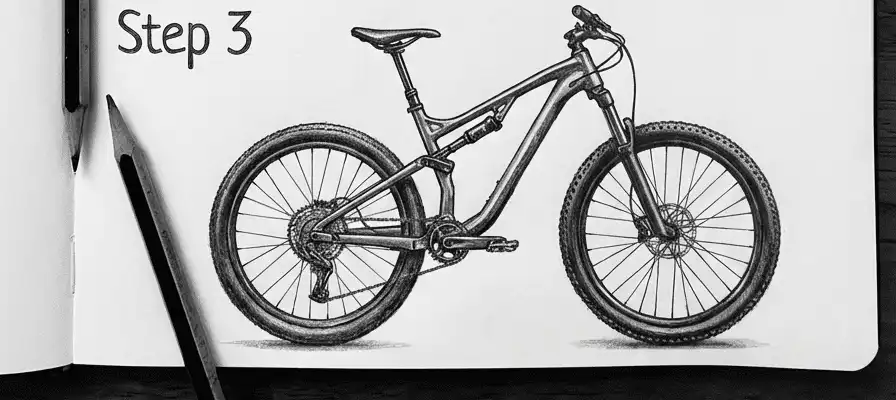
Step 3: Complete the rear triangle
From the top of the seat tube (where the saddle will be), draw two lines going back down to the rear wheel axle point. These are the seat stays — they run nearly parallel, framing both sides of the rear wheel at the top.
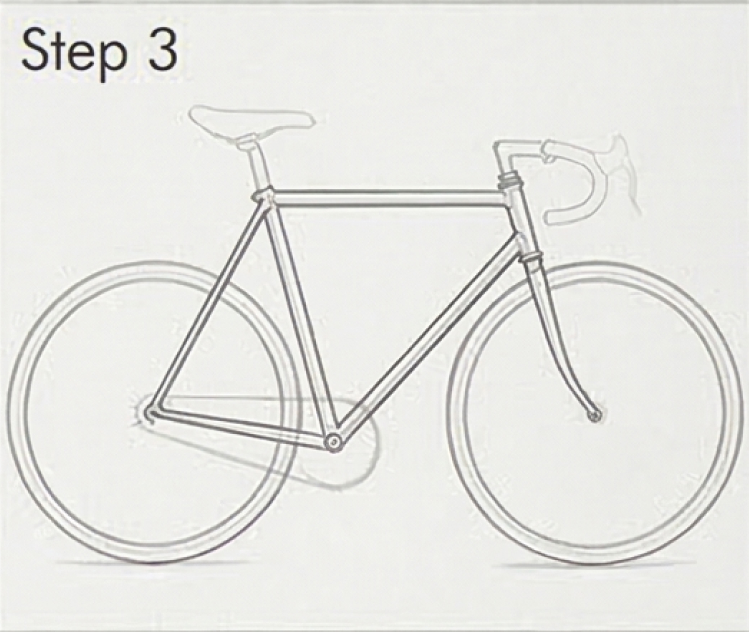
From the bottom of the seat tube (just above the rear axle), draw two more lines in the future slightly and back down to the rear axle. These are the chain stays — shorter, nearly horizontal.
Together, the seat stays and chain stays form the rear triangle. At this point, you have the classic bicycle diamond: one large front triangle and one smaller rear triangle sharing the seat tube as their common edge.
Step 4: Add the front fork and head tube
At the front end of the top tube and down tube, draw a short vertical section — this is the head tube, where the fork attaches to the frame. It’s only about 1/8 of the frame height.
From the bottom of the head tube, draw two lines going down to the front wheel axle. These are the fork blades. Key detail:
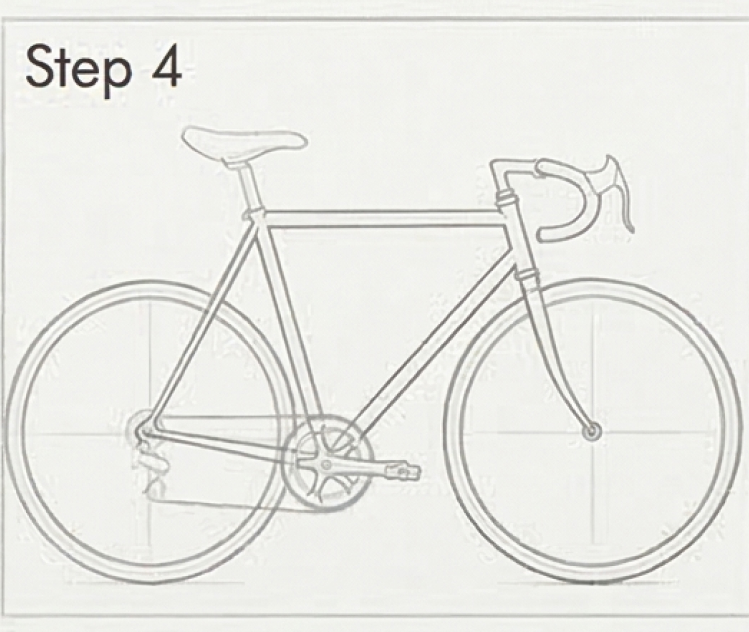
- Angle the fork forward slightly — about 10–15° forward of vertical. This makes the bike look dynamic rather than frozen.
- The fork blades should reach down to the front wheel axle exactly. If your fork centre point doesn’t meet the axle dot, adjust the angle.
- Add a small crown piece at the top where the two fork blades meet the steerer tube.
From the top of the head tube, draw a short line going upward — this is the steerer tube, which will connect to the stem and handlebars.
Step 5: Add the handlebars
From the top of the steerer tube, draw a short horizontal rectangle — this is the stem, connecting the steerer to the handlebar.
At the end of the stem, draw a horizontal bar extending equally to the left and right. The length should be equal to the head tube height on each side.
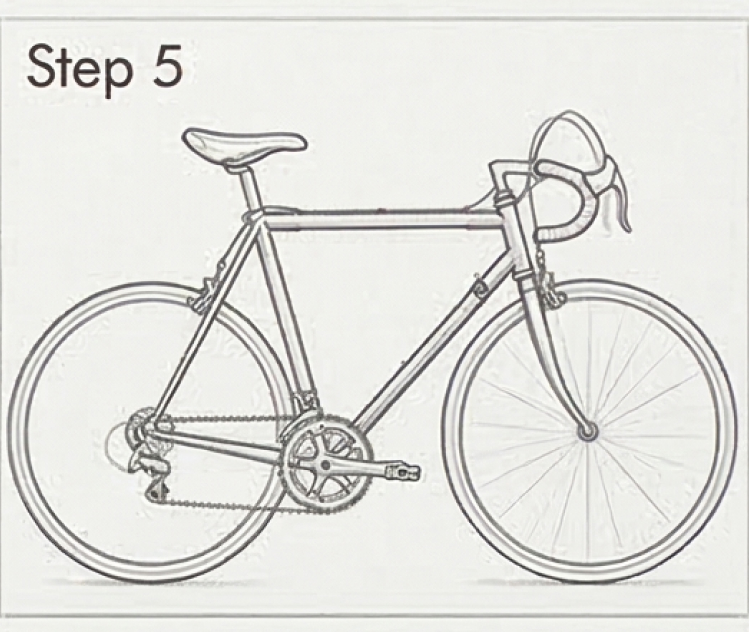
At each end of the handlebars, you have options depending on the type of bike you’re drawing:
- Road/racing bike: Curve the bars forward and down (drop bars). From each end, draw a curved line that goes forward, then drops down.
- Mountain bike / flat bar: Keep the horizontal bar straight, add small rectangular grips at each end, angled slightly downward.
- Cruiser/city bike: Curve the bars upward and back toward the rider — an easy visual shorthand for a relaxed riding style.
✏ Pro tip: The handlebar width you draw signals the bike type immediately. Wide flat bars = mountain bike. Narrow dropped bars = road bike. This is a fast way to make your drawing communicate the style of the bike without detailed labels.
Step 6: Add the saddle
At the top of the seat tube, draw the saddle. Keep it simple:
- Draw a narrow horizontal oval or slightly curved shape, roughly twice as wide as the seat tube.
- The saddle tilts slightly — nose (front) a little lower than the tail (back), or perfectly level. Both look natural.
- Under the saddle, draw a short ‘rails’ section — two thin parallel lines connecting the saddle to the top of the seat post.
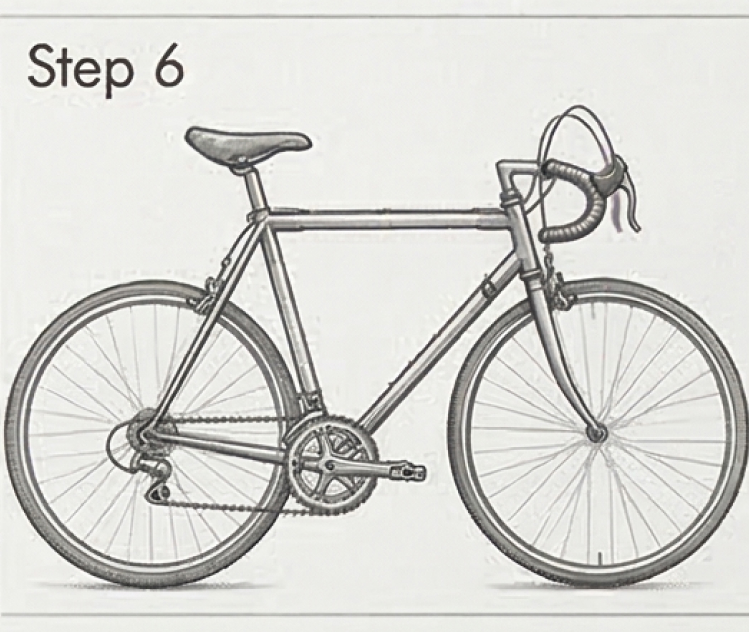
The saddle should sit slightly above and behind the main frame triangle, not inside it. If your saddle is positioned inside the triangle, the seat tube is too short, or the saddle is too far forward.
Step 7: Add the bottom bracket, cranks, and pedals
The bottom bracket sits at the lowest point of the main frame — the junction of the down tube, seat tube, and chain stays. This is where the pedal mechanism lives.
- Draw a small circle at the bottom bracket position — this represents the chainring (the large gear that the chain wraps around).
- From the centre of that circle, draw two ‘arms’ extending in opposite directions at roughly 180° — these are the crank arms. Each should be about 1/3 of the frame height in length.
- At the end of each crank arm, draw a small rectangle perpendicular to the arm — these are the pedals.
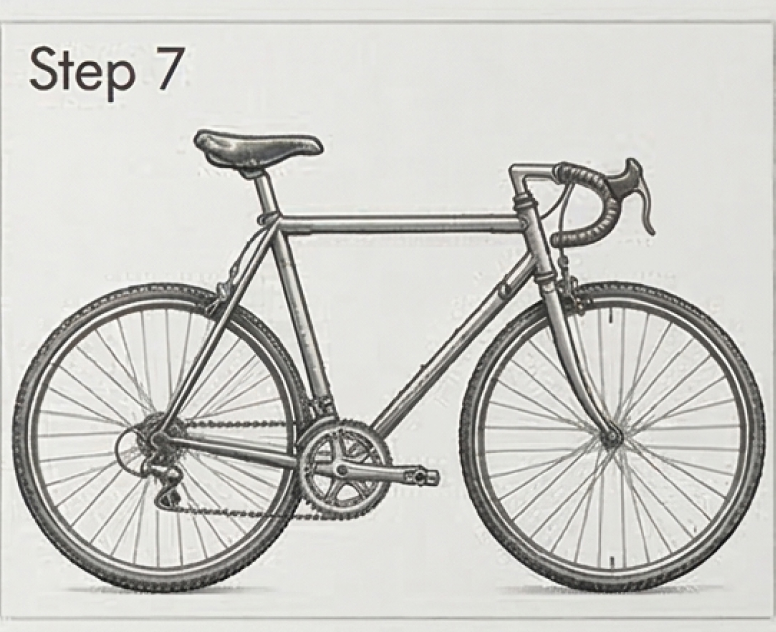
You only need to show both pedals if you want to. In a standard side-view drawing, one pedal is usually partially hidden behind the frame — you can draw the forward-facing one clearly.
✏ Pro tip: The chainring is the most important shape here for realism — that small circle at the bottom bracket immediately reads as ‘this bike has gears and a pedal mechanism.’ The pedal detail matters less than getting that circle in the right position.
Step 8: Add the chain
Draw the chain as a thin double line forming an elongated oval connecting the chainring (bottom bracket) to the rear wheel hub. The chain runs from the bottom of the chainring, back to the rear hub, and the return line runs just above — a classic ‘guitar pick’ oval shape seen from the side.
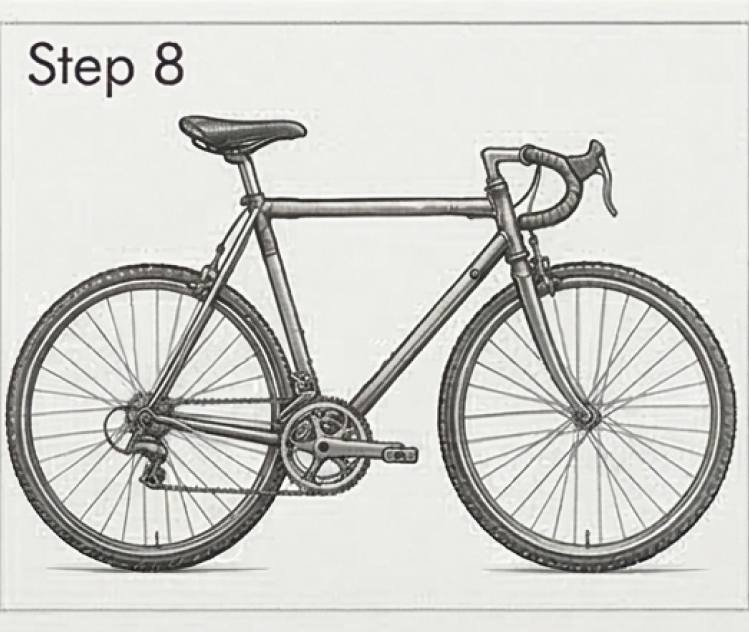
Keep the chain line thin and lightweight. It’s a supporting detail — it shouldn’t dominate the drawing. A single oval outline is enough; you don’t need to draw individual chain links at this scale.
Step 9: Add spokes to both wheels
Spokes are the detail that makes wheels look mechanical and real rather than like flat discs. You don’t need to draw every spoke — 8 to 12 per wheel is more than enough at sketch scale.
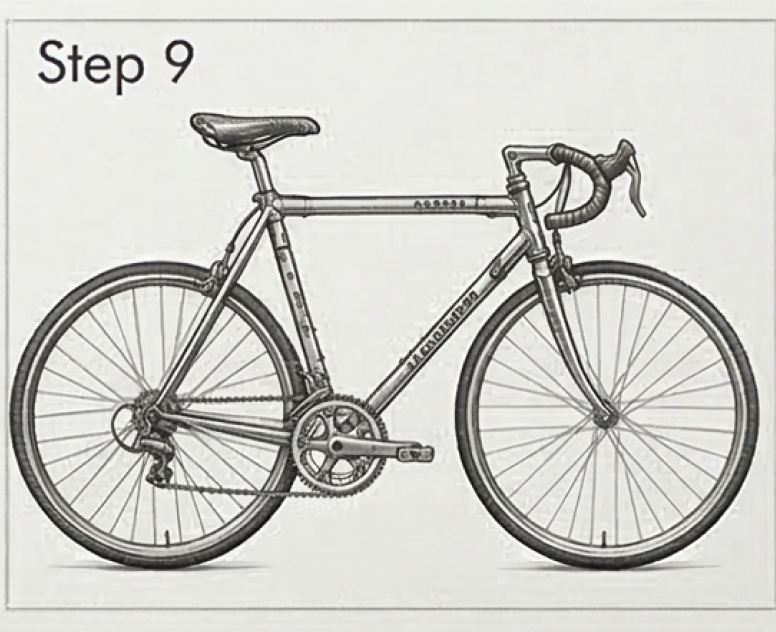
- From the centre dot of each wheel, draw evenly spaced lines radiating out to the rim.
- Stagger the spokes slightly — real bicycle spokes don’t all go straight from hub to rim, they cross. You can suggest this by drawing some spokes offset a few degrees from perfectly radial.
- Keep the spoke lines lighter than the rim and frame lines — use less pressure, or a harder pencil (HB rather than 2B).
✏ Pro tip: Drawing a full ring of spokes all the way around looks laborious and often muddy. Instead, draw spokes in the upper half of each wheel only, leaving the lower half lighter. This is how wheels are often drawn in animation and illustration — the lower half reads as spokes because the upper half establishes the pattern, and the eye fills in the rest.
Step 10: Clean up and add finishing details
Now go over your drawing with a firmer pencil (2B) or a fine-liner pen (Micron 01 is ideal) to define the final lines. Erase all the construction marks — the centre dots, the rough early lines, the guide marks.
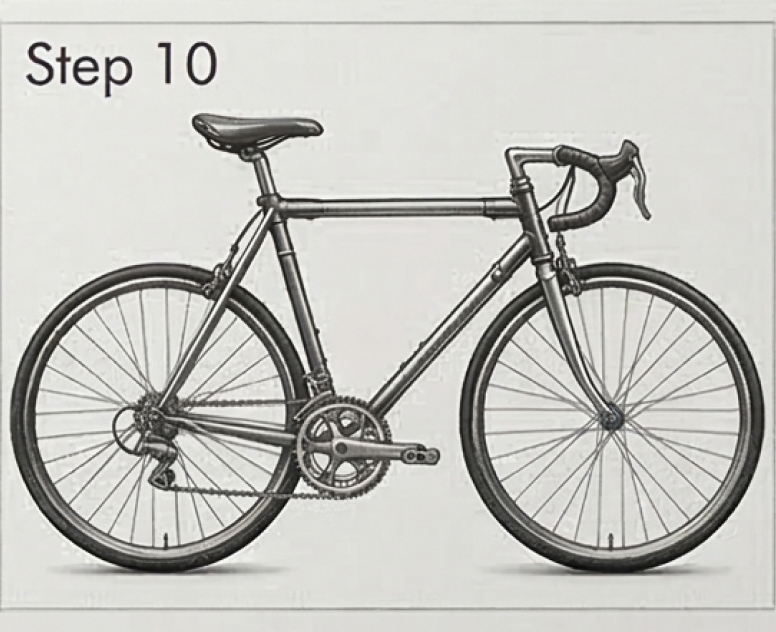
Finishing details worth adding:
- Valve stems: A tiny stem sticking out from the rim at one point on each wheel. Takes 3 seconds, adds immediate realism.
- Brakes: Two small curved ‘arms’ gripping the rim from above — visible at roughly 10 o’clock and 2 o’clock positions on each wheel.
- Seat clamp: A small ring or collar where the seat post enters the seat tube.
- Cable lines: One or two thin lines running from the handlebars down to the front fork and from the handlebars down to the rear brake area. Brake cables are the detail that makes experienced riders’ bikes look immediately more complete.
✏ Pro tip: Don’t add every detail simultaneously. Add one detail at a time and step back (literally — hold the drawing at arm’s length). If the drawing already reads clearly as a bicycle, and adding more makes it busier without making it better, stop. Knowing when to stop is half of drawing well.
Drawing 4 Different Bike Types From the Same Foundation
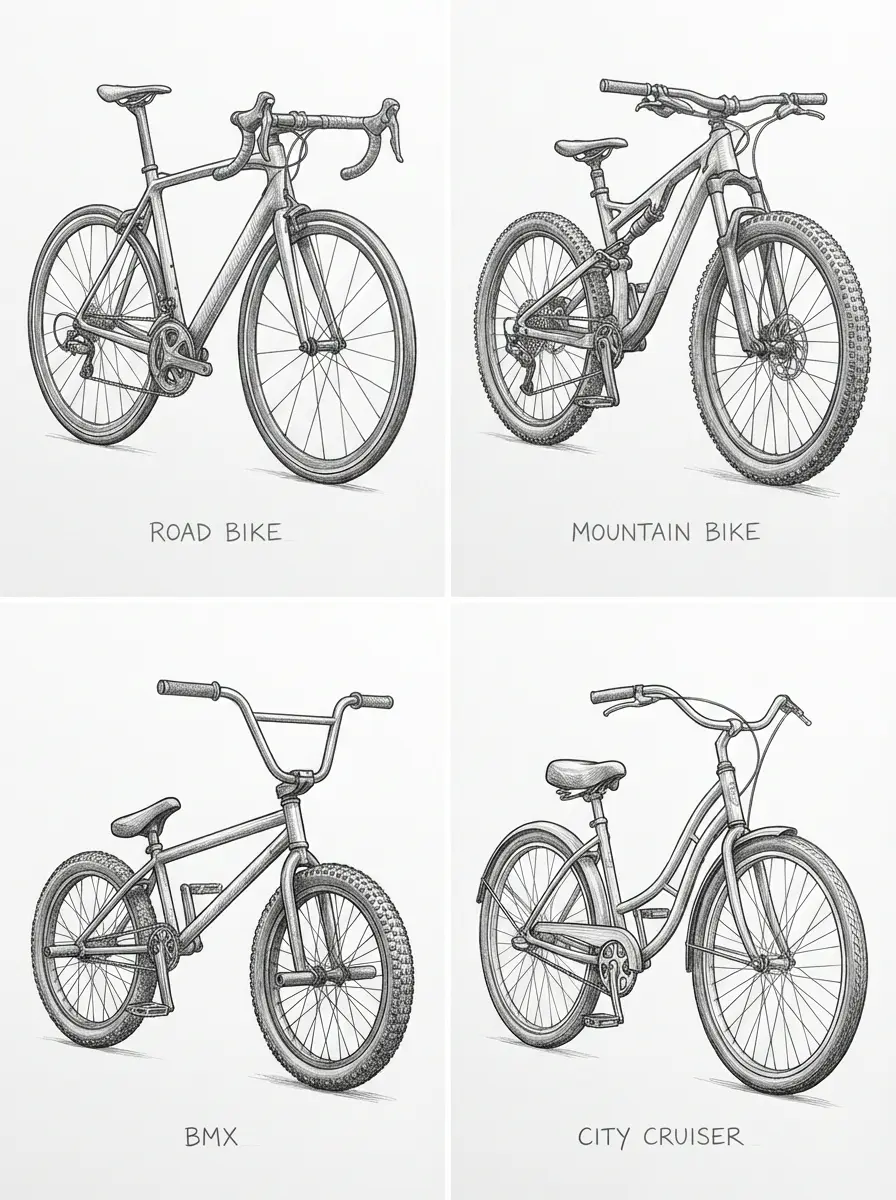
Once you have the base method, you can modify the silhouette to draw any bicycle. The wheel diameter, frame geometry, and handlebar shape do almost all of the visual work.
Road Bike
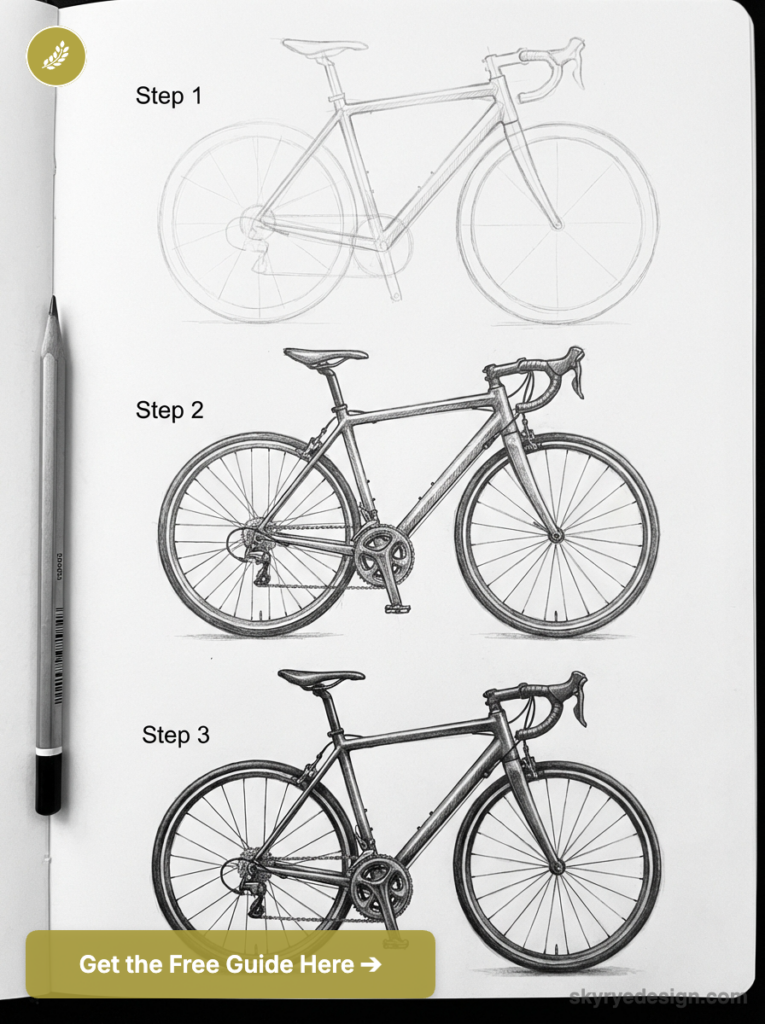
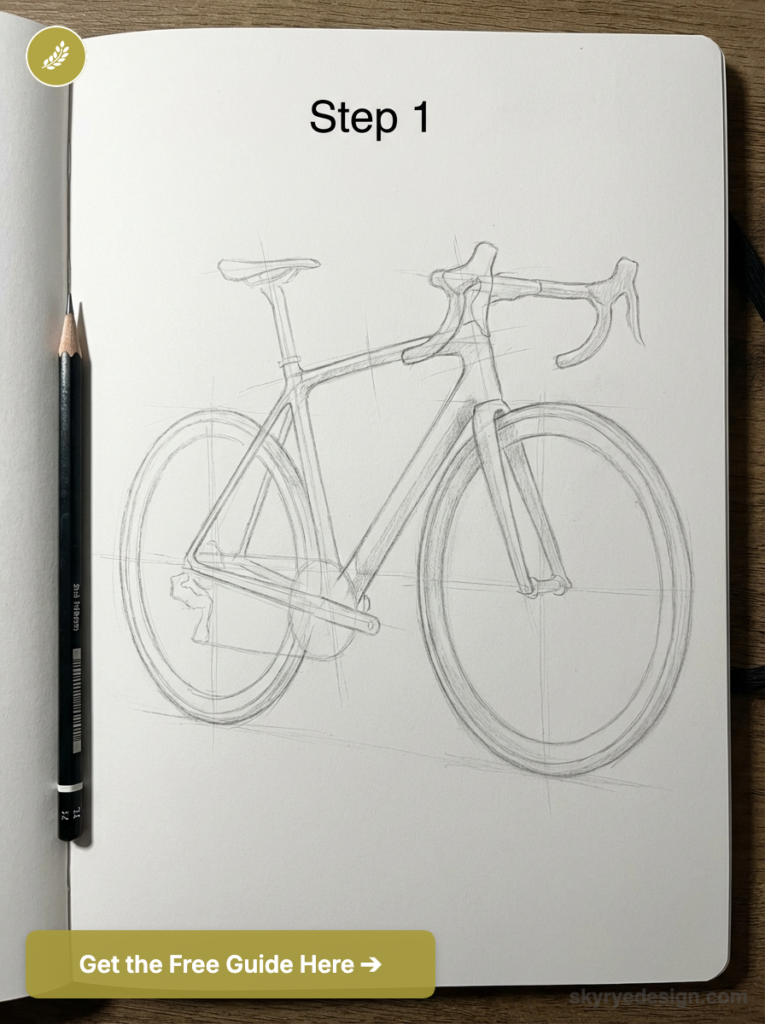
The most upright, elongated frame. The top tube is long and nearly horizontal. Saddle is high — often above the handlebar height. Tires are thin (draw them as a very narrow gap between the hub and rim). Drop handlebars curve forward and down. This is the Tour de France silhouette.
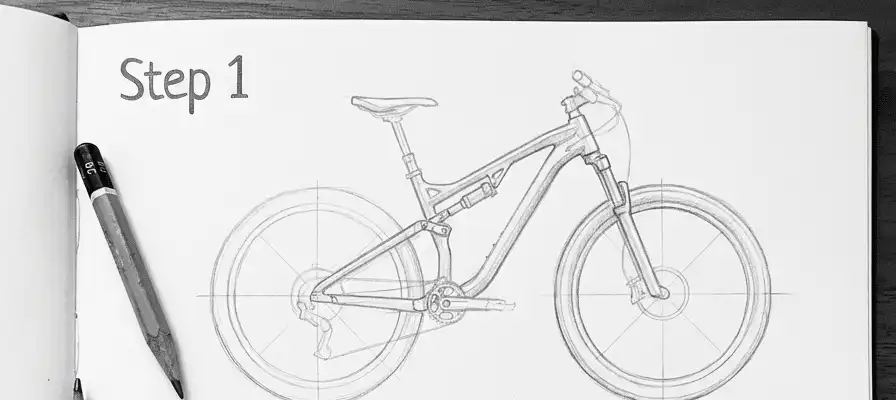
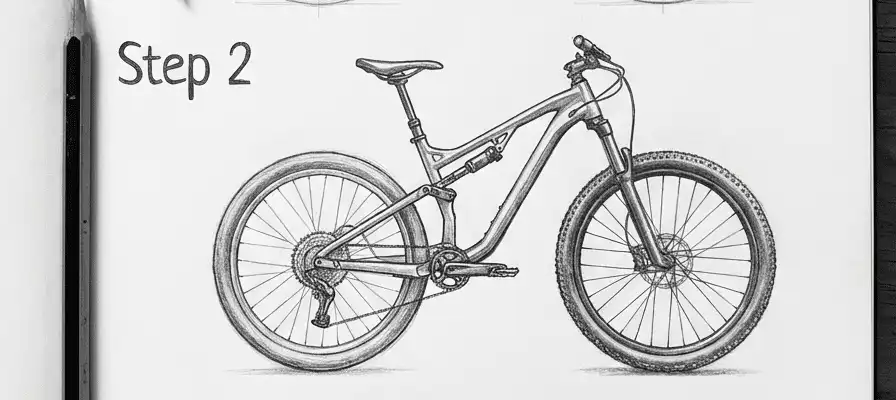
Mountain Bike
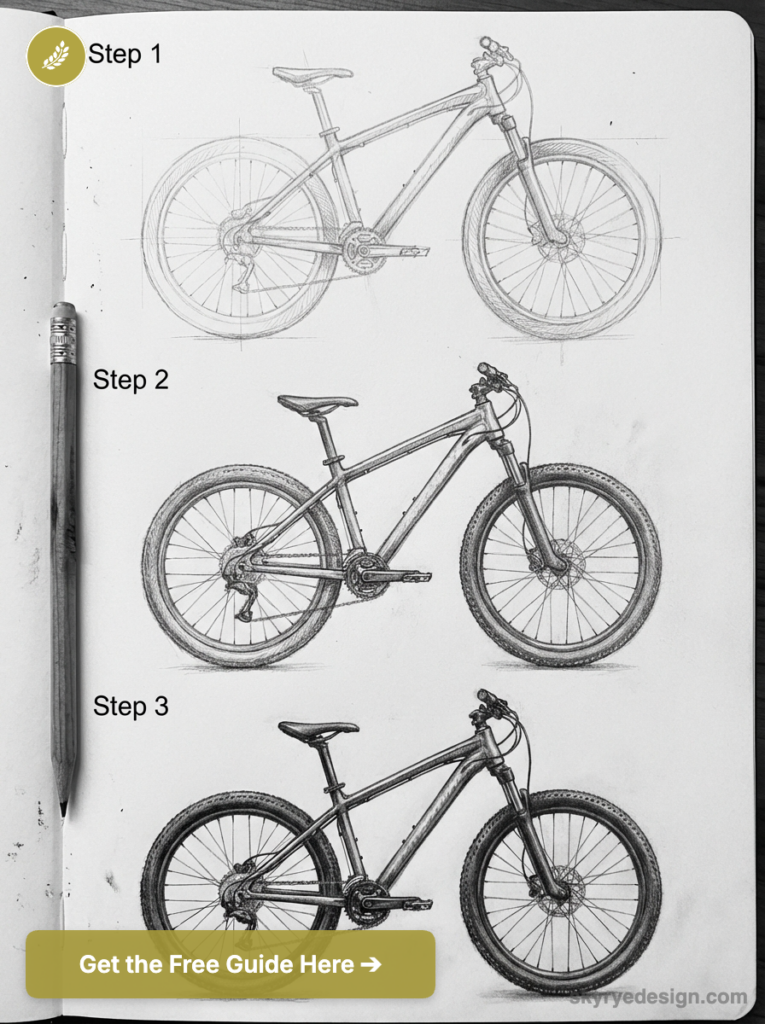
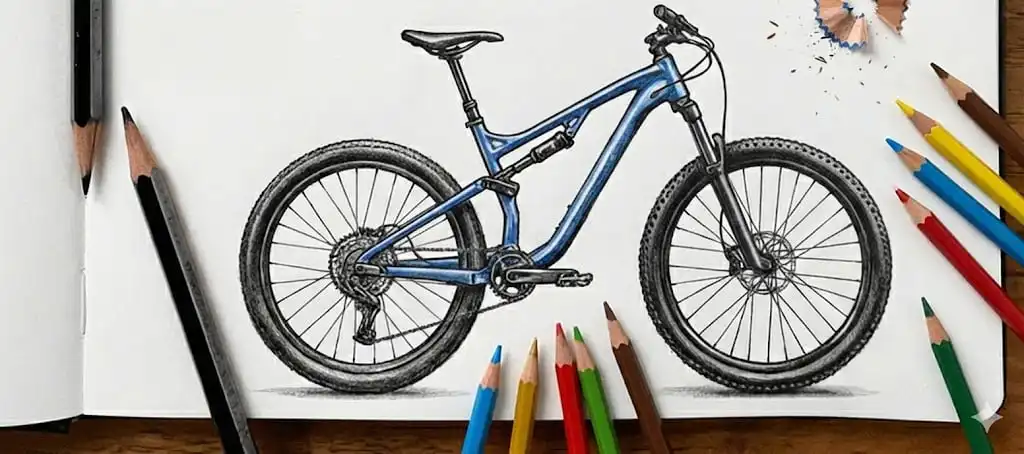
Stockier frame with shorter top tube and wider, knobbly tyres. Saddle and handlebars at similar heights. The front fork is noticeably thicker than a road bike — double the line weight on the fork blades and add a small boxy ‘suspension crown’ at the top. Flat bars, wide and straight.
BMX
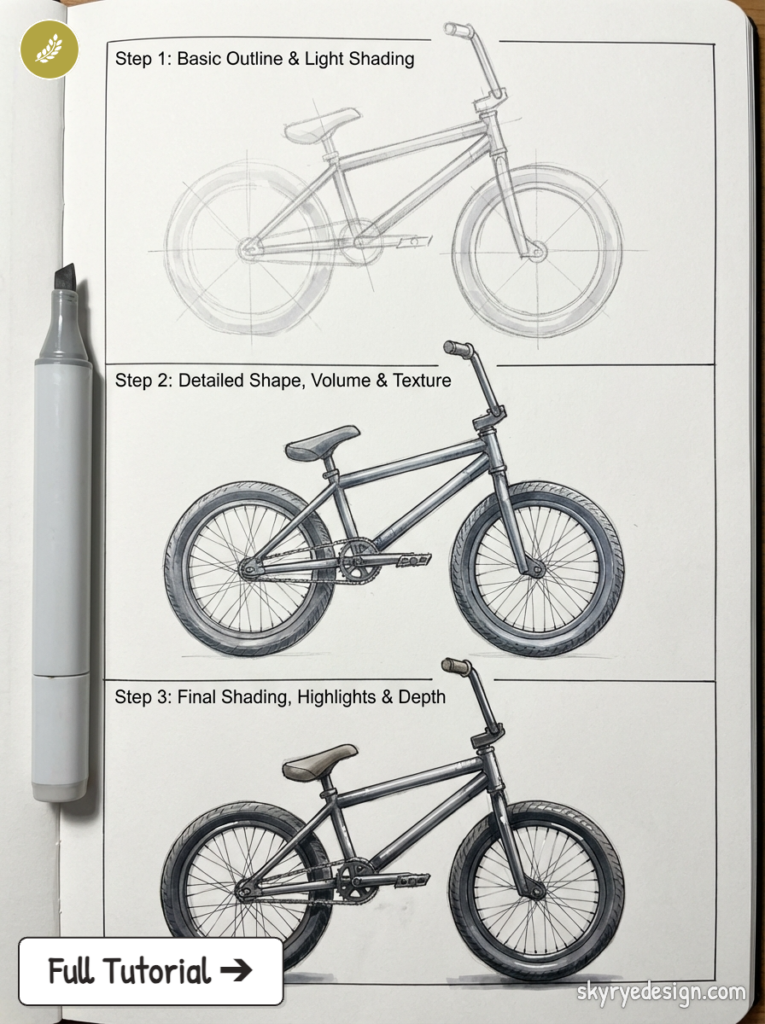
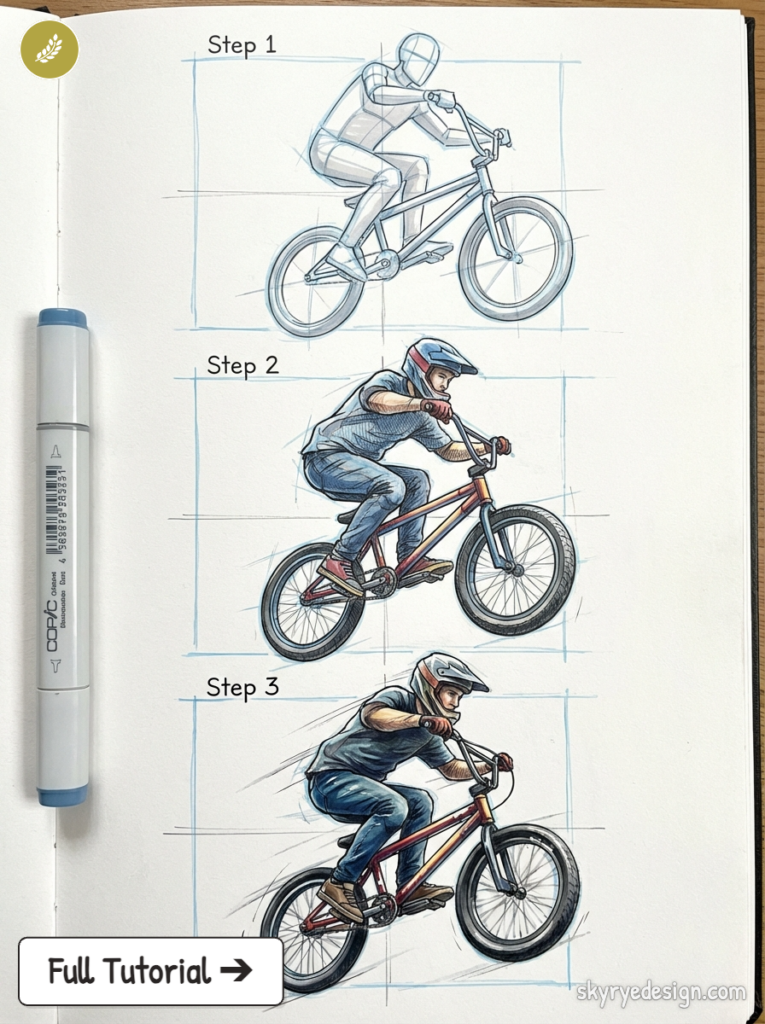
Small wheels — your wheel diameter should be maybe 60% of what you’d draw for an adult bike. Short, compact frame. Very short seat tube (low saddle, or no visible saddle). Flat handlebars raised on a tall stem. The frame shape is nearly square rather than the elongated diamond of a road bike.
City / Cruiser Bike
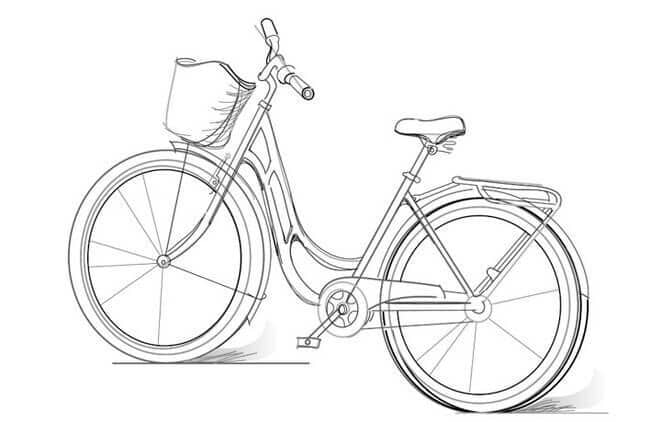
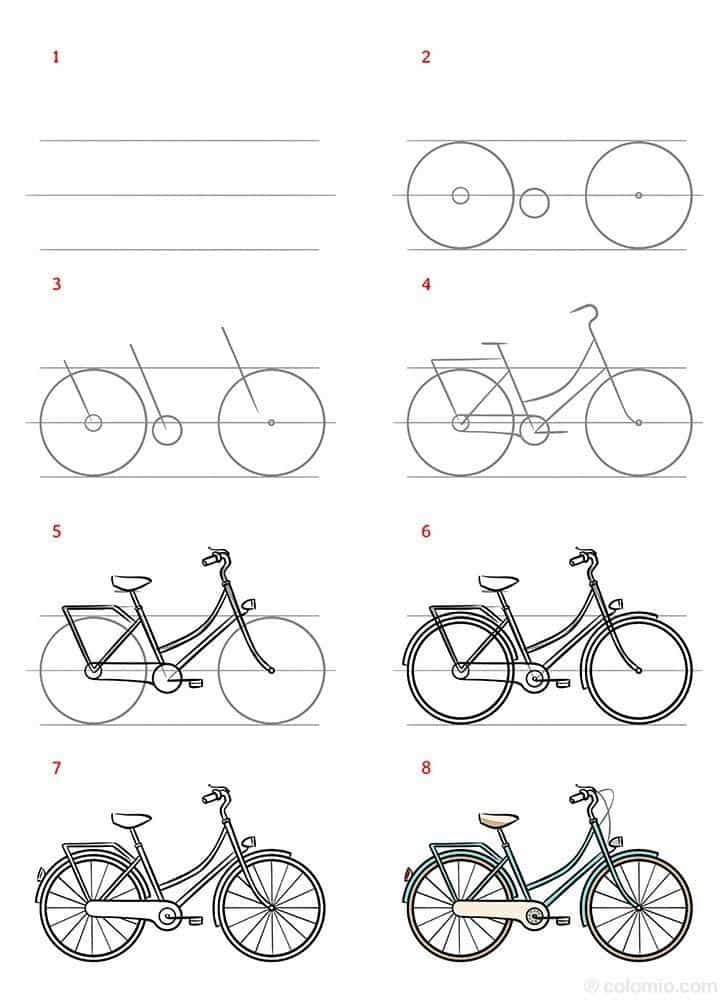
Tall, upright riding position. Curved top tube that sweeps down toward the rear wheel (classic ‘step-through’ frame). Fenders over both wheels (semi-circles just above each wheel). Swept-back handlebars. Often has a rear rack drawn as a flat rectangle above the rear wheel.
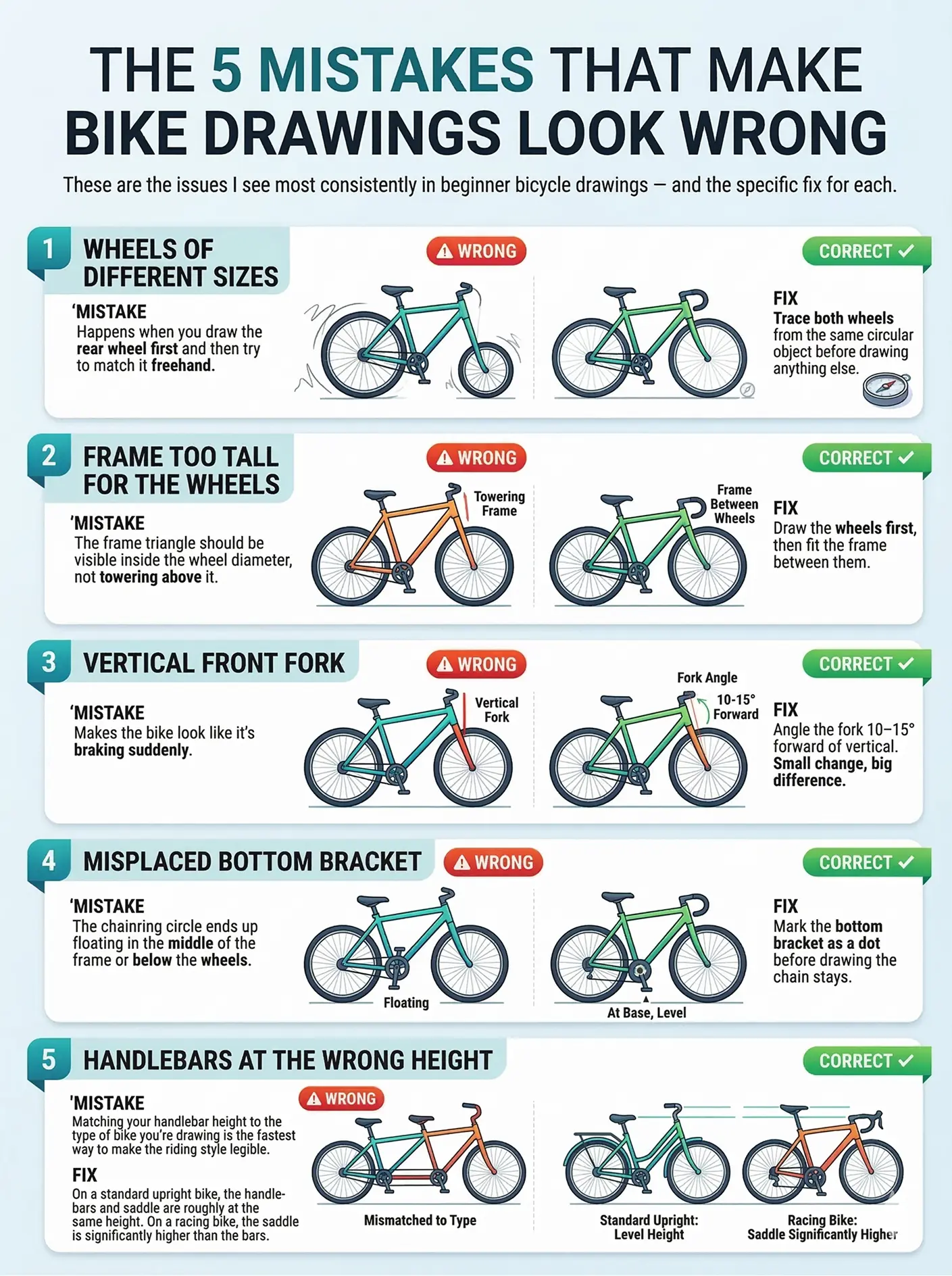
The 5 Mistakes That Make Bike Drawings Look Wrong
These are the issues I see most consistently in beginner bicycle drawings — and the specific fix for each.
- Wheels of different sizes: Happens when you draw the rear wheel first and then try to match it freehand. Fix: trace both wheels from the same circular object before drawing anything else.
- Frame too tall for the wheels: The frame triangle should be visible inside the wheel diameter, not towering above it. Fix: draw the wheels first, then fit the frame between them.
- Vertical front fork: Makes the bike look like it’s braking suddenly. Fix: angle the fork 10–15° forward of vertical. Small change, big difference.
- Misplaced bottom bracket: The chainring circle ends up floating in the middle of the frame or below the wheels. It should sit at the very base of the main triangle, level with or just above the centre of the wheels. Fix: Mark the bottom bracket as a dot before drawing the chain stays.
- Handlebars at the wrong height: On a standard upright bike, the handlebars and saddle are roughly at the same height. On a racing bike, the saddle is significantly higher than the bars. Matching your handlebar height to the type of bike you’re drawing is the fastest way to make the riding style legible.
Adding Shading and Depth to Your Bike Drawing
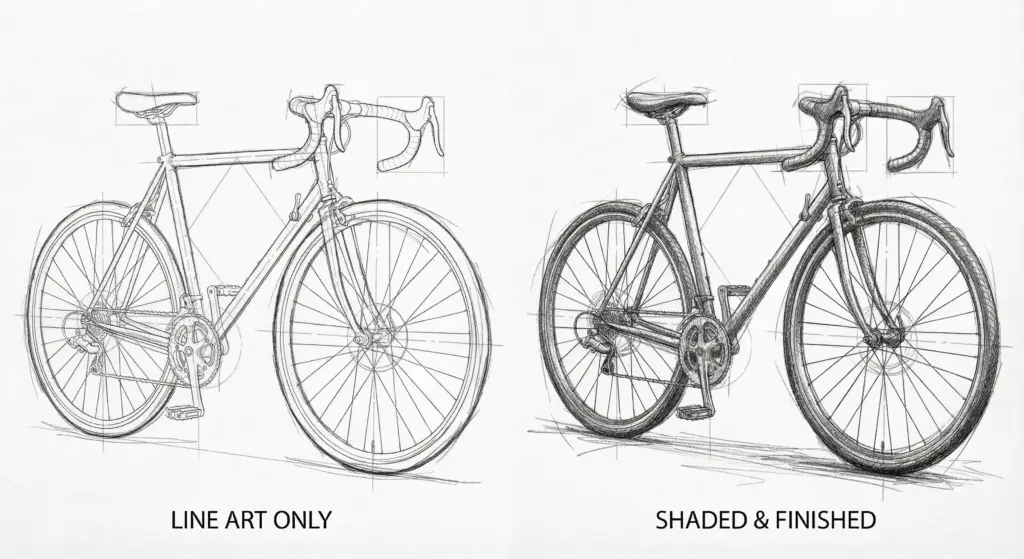
Once you have a clean line drawing, shading is what separates a flat diagram from a real illustration. For bicycle drawings, you need two types of shading: structural shading on the tubes and atmospheric shading on the wheels.
Shading the Frame Tubes
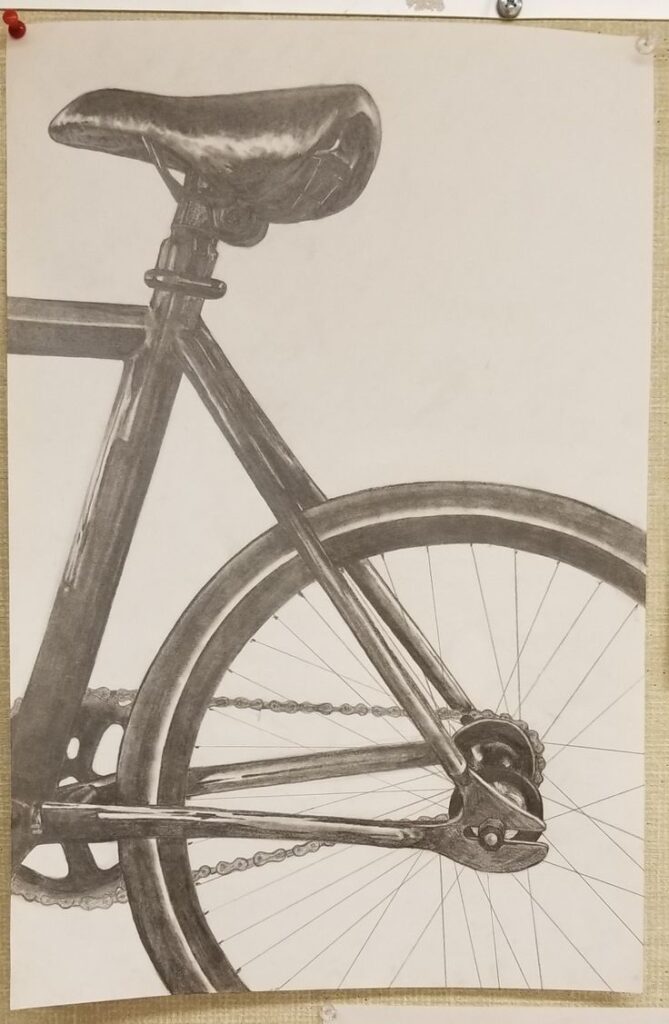
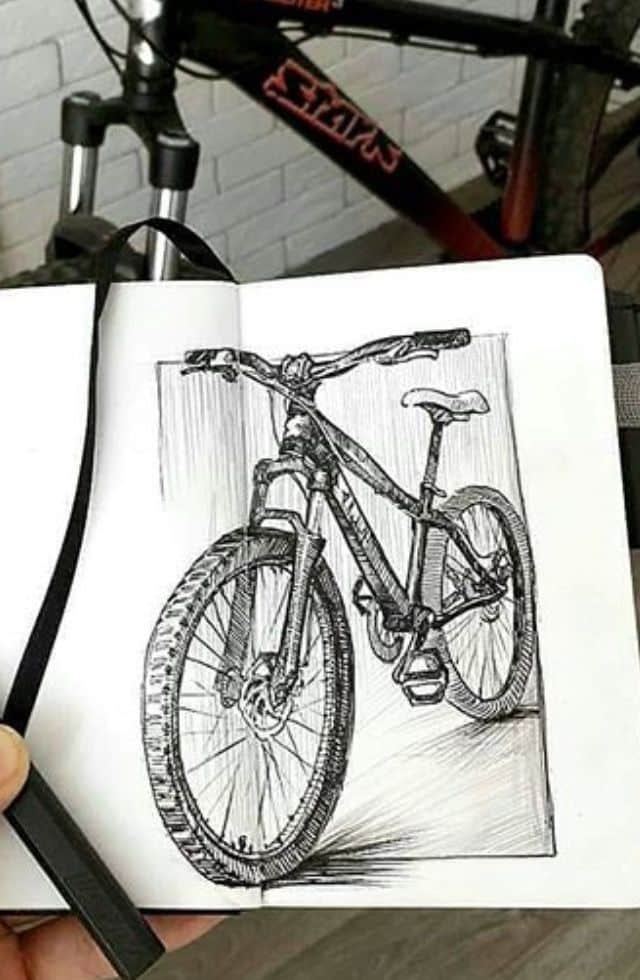
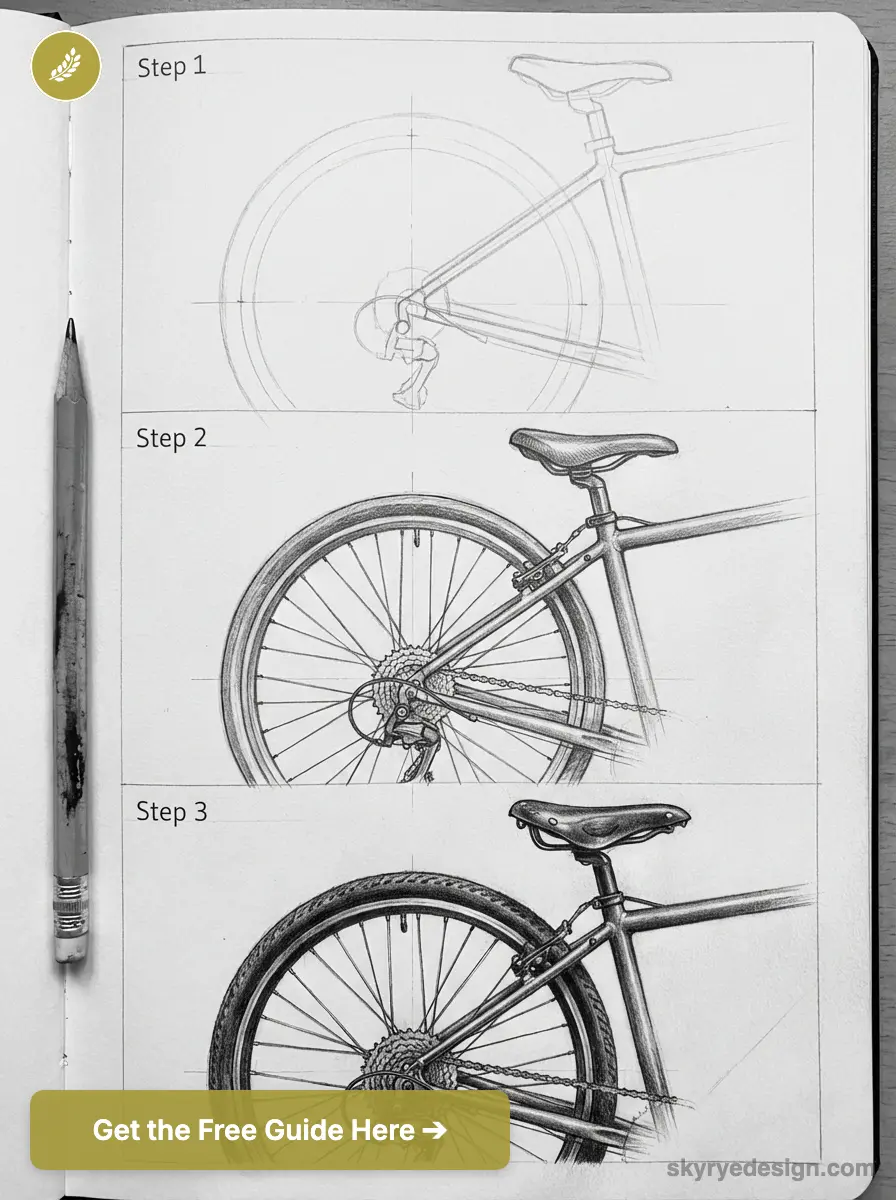
Bicycle frame tubes are cylinders. To shade a cylinder: pick one side as your light source (the left side is standard), and shade the opposite edge of each tube. Add a thin strip of slightly lighter tone just inside the shaded edge — this is the reflected light bounce, and it’s what makes tubes look genuinely round rather than just darker on one side.
For each frame tube: light side (no shading), transition area (light hatching), darkest zone (firm hatching at the far edge), reflected light (lighter strip at the very edge). This four-zone shading applies to any cylindrical form.
Shading the Wheels
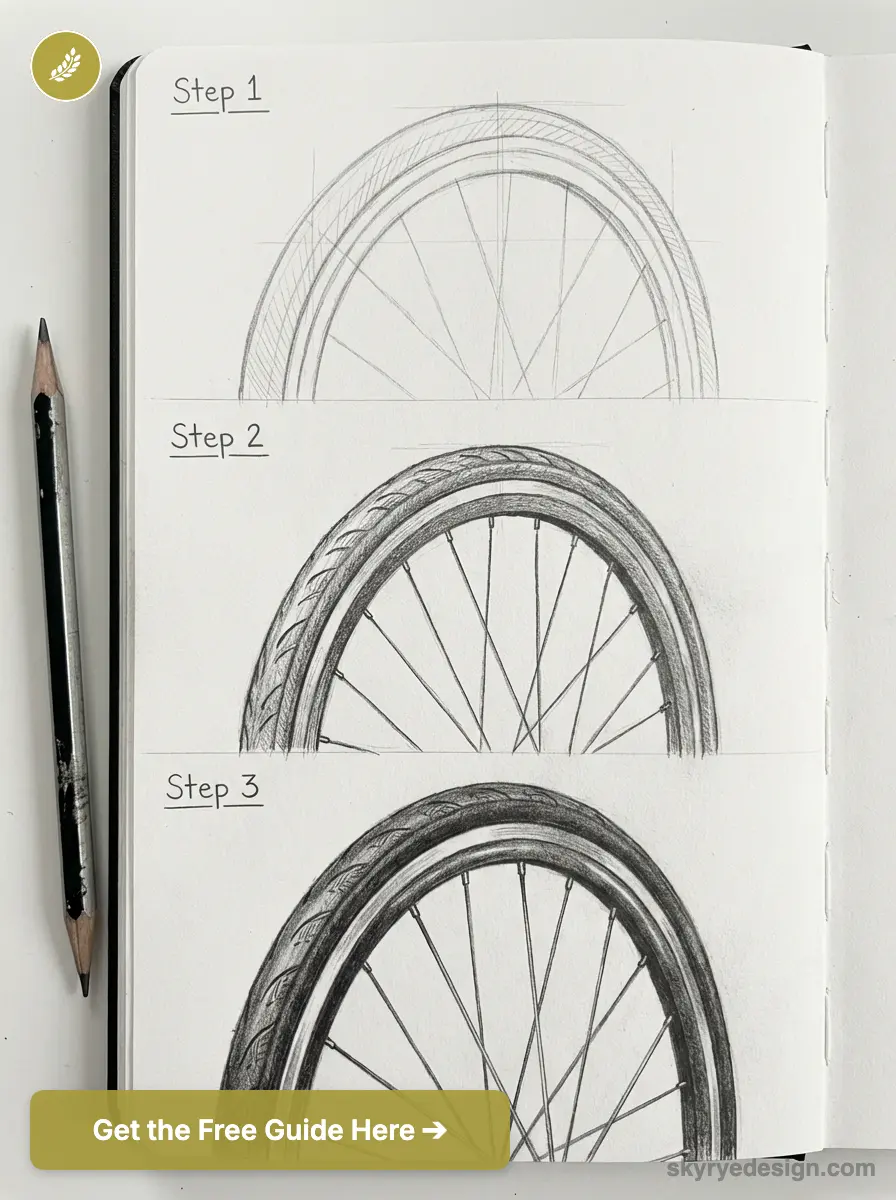
The rim is a thin torus — shade it as you would a ring. The tyre takes the most shading: a firm dark band at the contact point with the ground (the tyre bulges slightly flat here), graduating to a lighter tone at the top. The spokes stay unshaded — they’re metal rods catching specular highlights, so leaving them as light lines against a lightly shaded hub area is actually more realistic.
Cast Shadows
Add a cast shadow under the bike — an elliptical shadow on the ground directly below the bike’s contact points. This grounds the drawing and makes it feel solid. Keep it simple: a soft grey ellipse, lightest at the edges and slightly darker beneath the tyres.
✏ Pro tip: Before shading with pencil, decide your light source in one sentence: ‘light is coming from the upper left.’ Write it at the top of your page. Then every shading decision becomes simple — if it faces upper-left, it’s lighter; if it faces lower-right, it’s darker. Inconsistent light source is the number-one reason shaded drawings look wrong.
Practice Routine: Getting Better Fast
The fastest way to improve at drawing any specific subject is timed, focused repetition — not longer sessions, but more deliberate ones. Here’s a 15-minute practice structure that builds bicycle drawing fluency quickly:
- 5 minutes — wheel placement drill: Draw five pairs of wheels in different sizes across the page. No frame, no details — just two circles per pair, correctly proportioned and correctly spaced. This isolates the most foundational skill.
- 5 minutes — frame-only sketches: Using one pair of wheels from your drill, sketch three complete frames without any accessories. Vary the frame shape slightly each time — road bike geometry, MTB geometry, cruiser geometry. Focus on getting the seat tube vertical and the top tube near-horizontal.
- 5 minutes — detail sprint: Take your best frame sketch and add all details as fast as possible — handlebars, saddle, pedals, chain, spokes, valve stems. Don’t fuss. Speed forces you to prioritise the most essential details over perfectionism.
Doing this routine three to four times a week for two weeks builds more solid bicycle drawing ability than an occasional hour-long session. The short, focused repetition loop — draw, evaluate, repeat — is how visual memory actually builds.
Frequently Asked Questions
Q: How do you draw a bicycle step by step for beginners?
Start with two equal circles for wheels, placed one wheel-diameter apart. Mark the centre of each wheel. Draw the diamond frame between the wheels — seat tube nearly vertical, top tube nearly horizontal, down tube at a steep diagonal. Add the front fork angling slightly forward to the front axle. Add handlebars, saddle, chainring with pedals, and chain. Finish with spokes and minor details. That’s how to draw a bike easy in its cleanest form — geometry first, details second.
Q: How do you make a bike drawing look realistic?
Three things create realism more than any others: correct wheel proportions (the frame should fit inside the wheel diameter), a slightly forward-angled front fork (not vertical), and cylindrical shading on the frame tubes. Add a cast shadow under the contact points and brake cable lines, and the drawing reads as a real object rather than a diagram.
Q: What is the easiest type of bike to draw?
A city bike or cruiser is the most forgiving to draw because the frame is upright and symmetrical, the riding position is intuitive, and the curved step-through frame silhouette is very recognisable. BMX is the second-easiest because the compact frame and small wheels forgive proportional errors that would be obvious on a full-size road bike.
Q: How do you draw bicycle spokes without them looking messy?
Draw 8–10 spokes per wheel rather than trying to fill every gap. Use lighter pressure than your rim and frame lines — spokes should read as light, secondary elements. Only detail the upper half of each wheel fully; leave the lower half with fewer or shorter spokes. The eye interprets the pattern and completes the wheel.
Q: How do you draw a mountain bike vs a road bike?
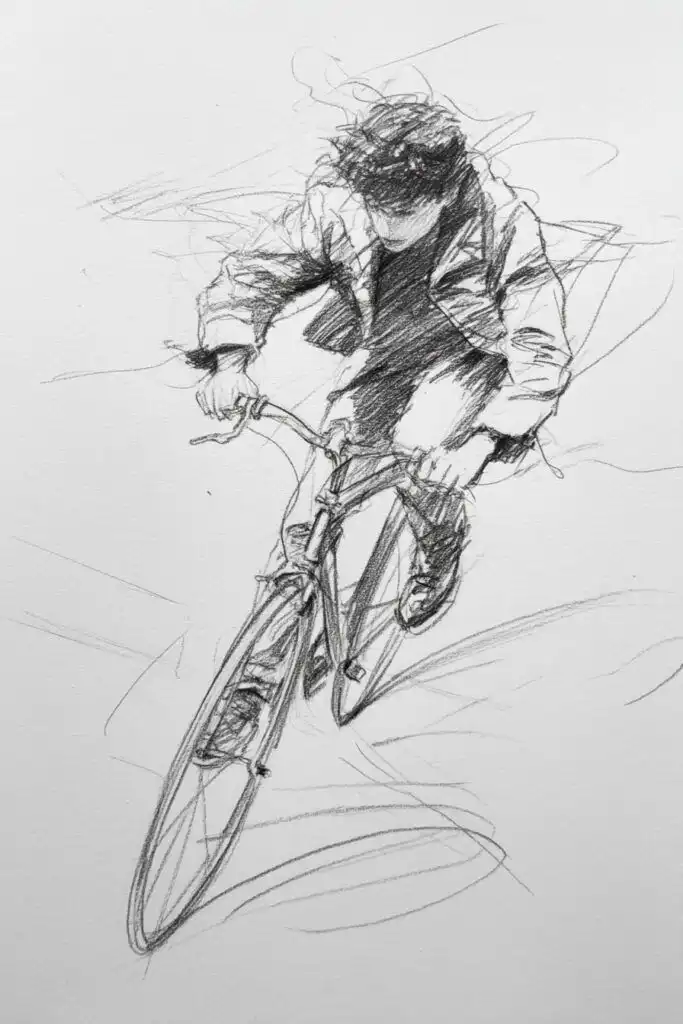
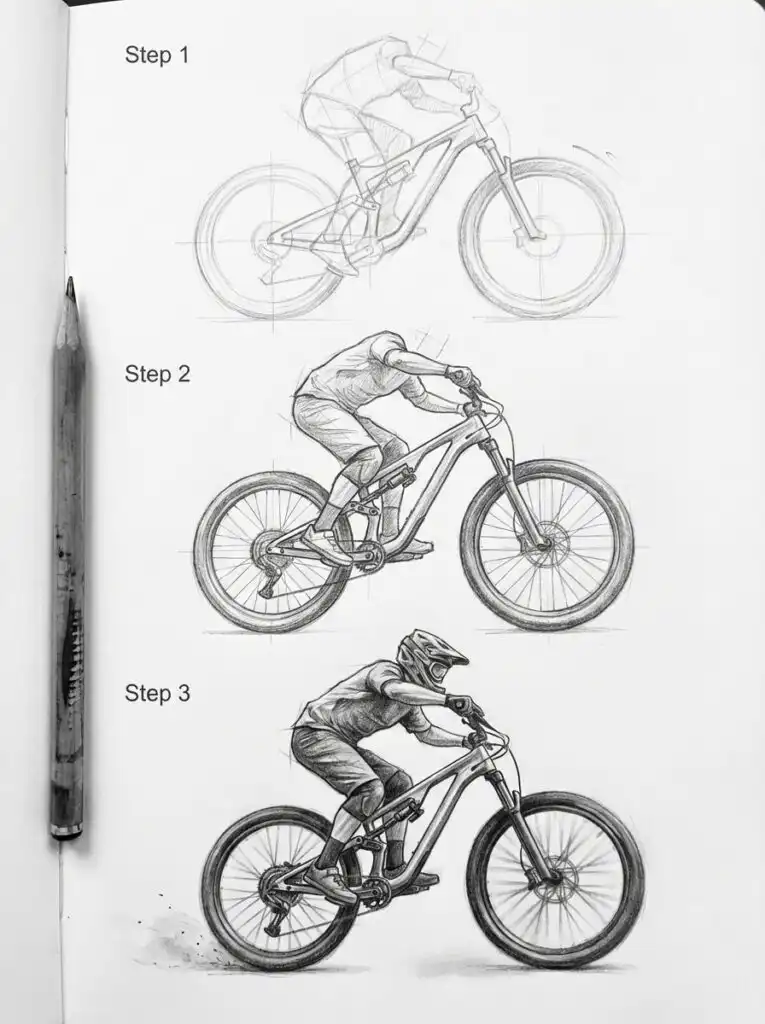
The key differences: mountain bikes have shorter top tubes, wider tyres, thicker fork blades, flat, wide handlebars, and similar saddle-to-handlebar height. Road bikes have longer top tubes, thin tyres, a saddle noticeably higher than the handlebars, and drop bars that curve forward and down. Get the handlebar shape and tyre width right, and the bike type is immediately recognisable without any other changes.
Q: Do I need to use reference photos when learning how to draw a bike?
Yes — for the first 20 or so bicycle drawings, use reference. Either a real bicycle, a photograph from directly side-on, or a clear manufacturer’s diagram. Drawing from observation rather than memory is not cheating — it’s how every professional artist learns to draw new subjects. Once you’ve drawn a bicycle from reference ten times, your visual memory of the proportions and geometry becomes reliable enough to draw from imagination.
Where to Take Your Bike Drawing Next
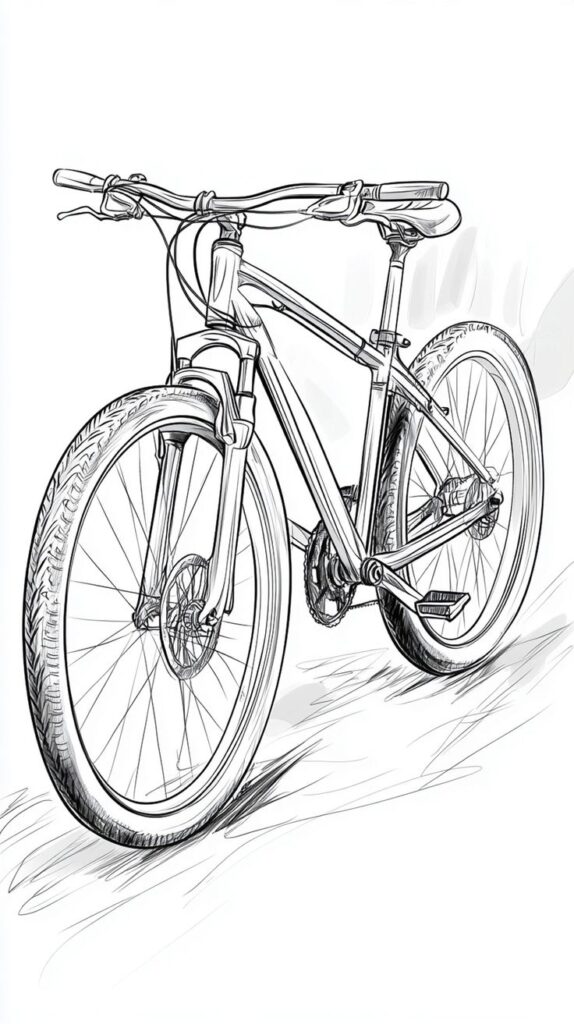
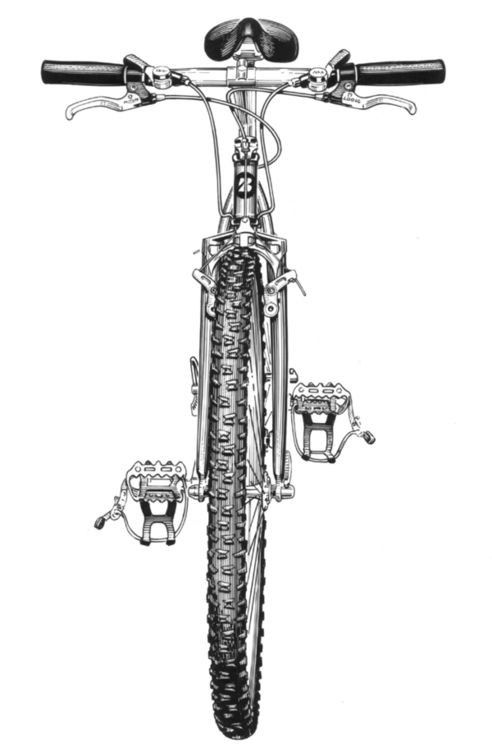
You now have the complete method for drawing a bicycle that looks correct — not as a lucky outcome, but as a repeatable process. Wheels define the scale. The diamond frame fits inside them. The front fork angles forward. Handlebars signal the bike type. Details layer on top.
The practice routine above will build how to draw a bike easily from a skill you have to think through to one you can do automatically. That shift — from deliberate to fluent — is what drawing practice is for.
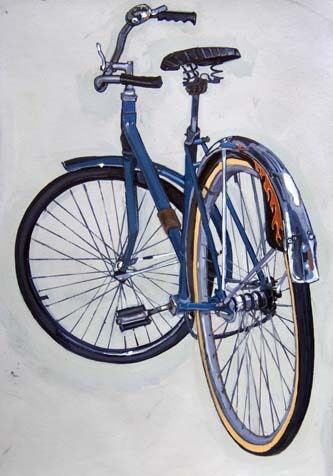
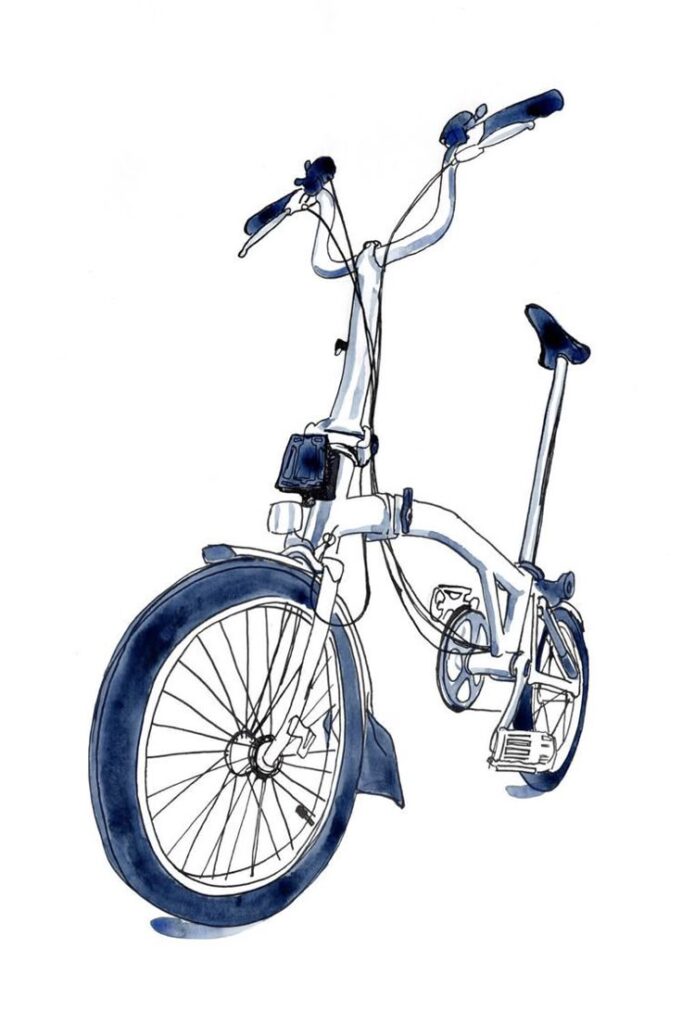
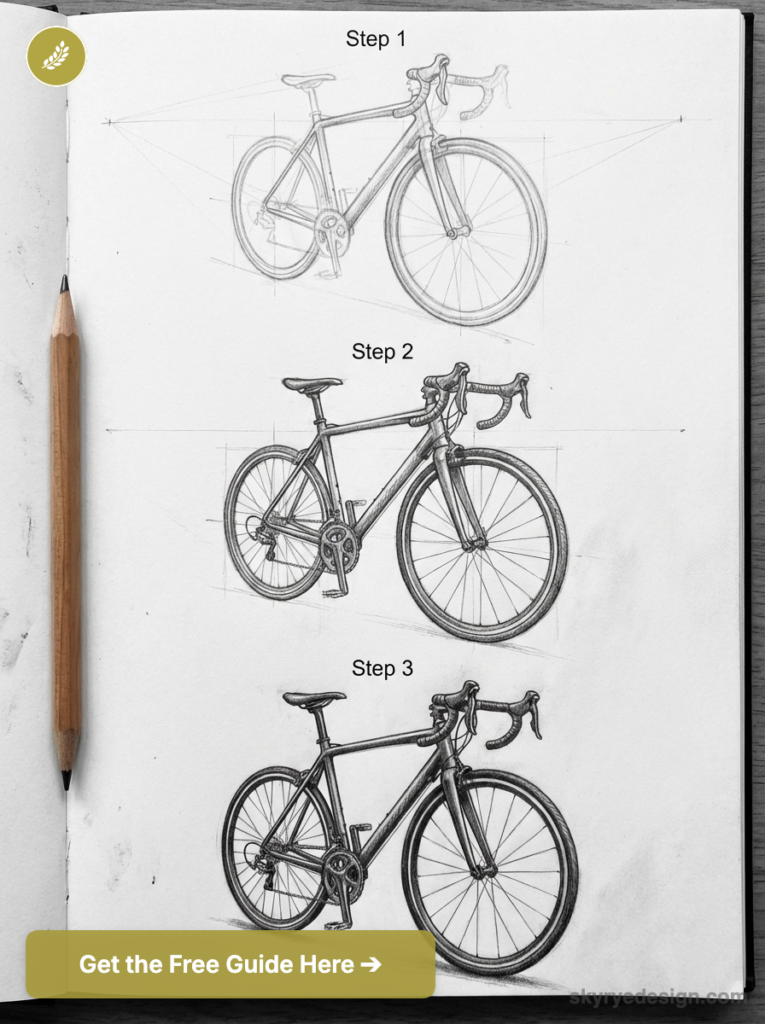
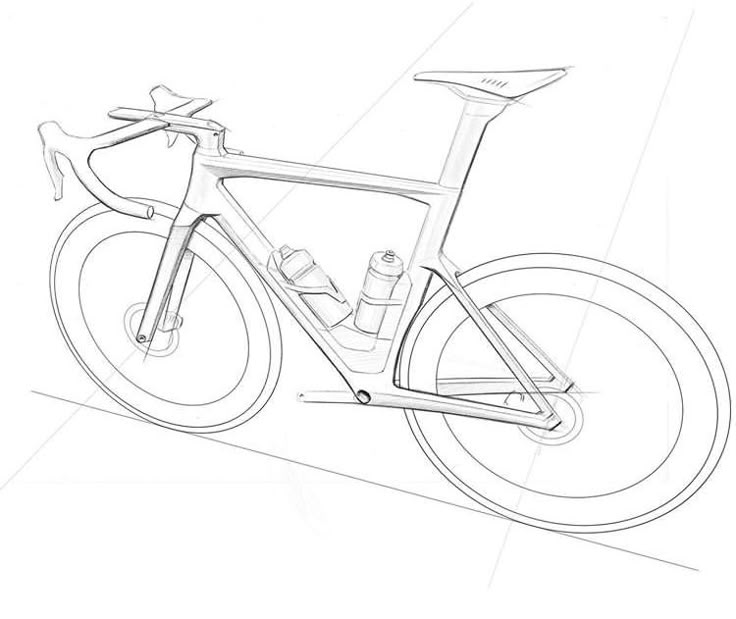
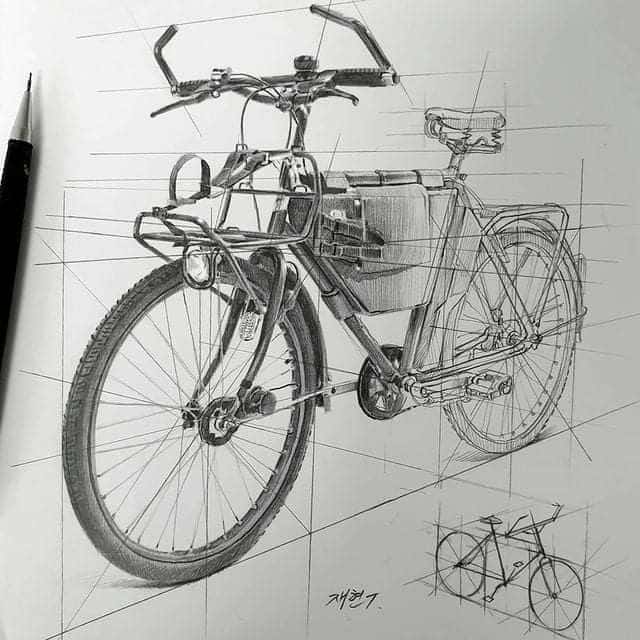
Once you’re comfortable with the side-view bicycle, try a three-quarter view — the front wheel foreshortens into an ellipse, and the frame starts to show real depth. That’s where bicycle drawing gets genuinely interesting.
For the next practice session, stay in the same vehicle-sketching cluster: compare this bicycle construction with mountain bike drawing, easy car drawing, and car drawing proportion tips. The subject changes, but the same habit keeps helping: place the big shapes first, then earn the details.


- 3.4Kshares
- Facebook0
- Pinterest3.4K
- Twitter0
- Reddit0