Why pallet garden ideas are worth trying
If you love the idea of a lush garden but feel limited by space or budget, pallet garden ideas give you a flexible place to start. With a single wooden pallet and a few simple supplies, you can build a vertical herb wall, a colorful flower display, or a compact lettuce patch that fits on a balcony or tiny patio.
Pallet gardens are especially useful if you rent or have a small outdoor area. You get the benefits of a garden without digging up the yard, and you can take your project with you if you move. Many pallet garden projects cost very little, particularly if you can source pallets for free or cheaply from local businesses or online marketplaces, and they can be built in an afternoon.
In this tutorial, you will explore unique pallet garden ideas, learn how to choose safe materials, and follow step‑by‑step instructions to build your own vertical garden that works for your space.
Choose the right pallet for gardening
Before you dive into specific pallet garden ideas, it helps to understand what kind of pallet you should use. Not all pallets are equal, and some are safer for plants and food than others.
Identify heat treated versus chemically treated pallets
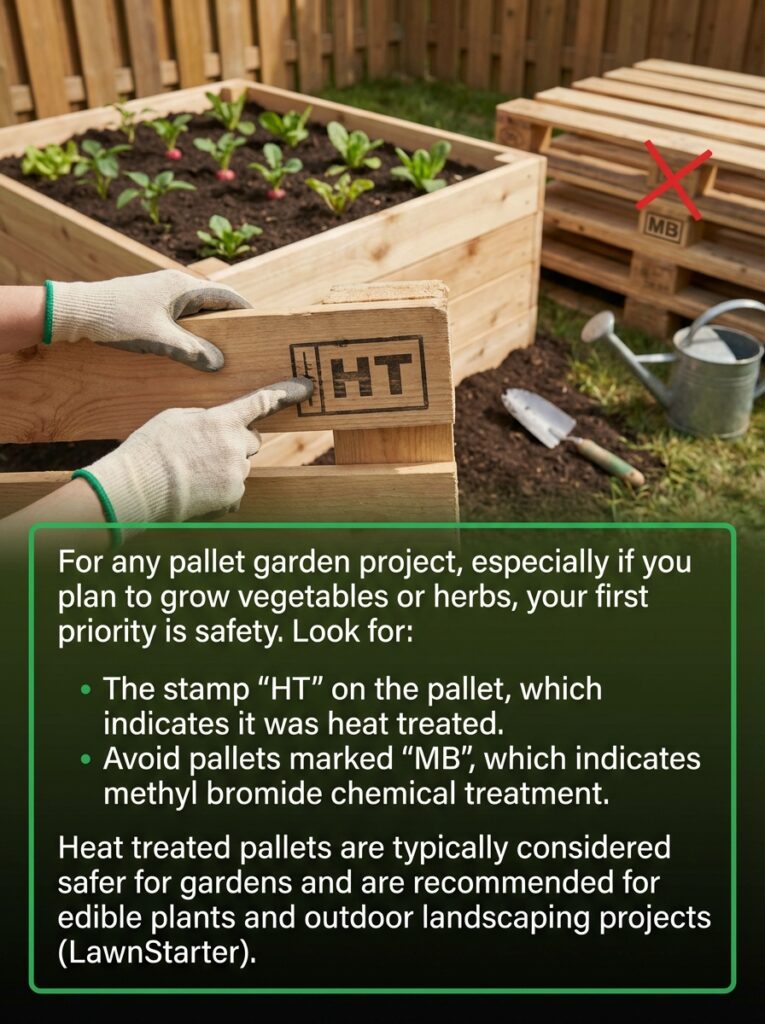
For any pallet garden project, especially if you plan to grow vegetables or herbs, your first priority is safety.
Look for:
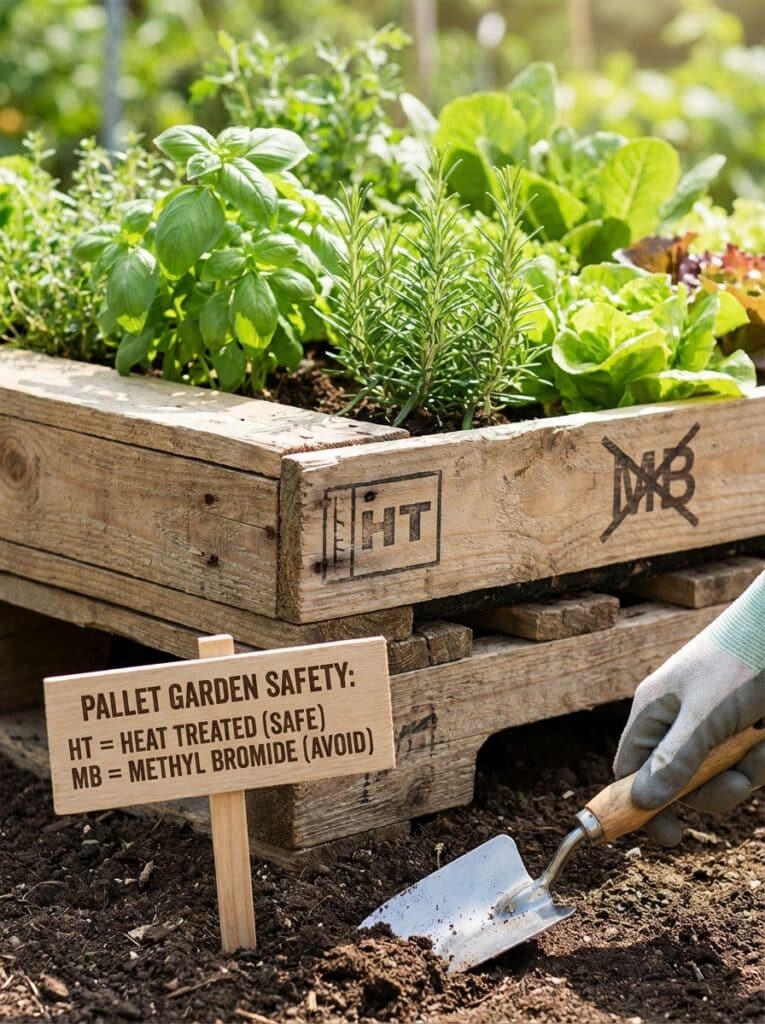
- The stamp “HT” on the pallet, which indicates it was heat treated.
- Avoid pallets marked “MB”, which indicates methyl bromide chemical treatment.
Heat treated pallets are typically considered safer for gardens and are recommended for edible plants and outdoor landscaping projects (LawnStarter).
Check condition and sturdiness
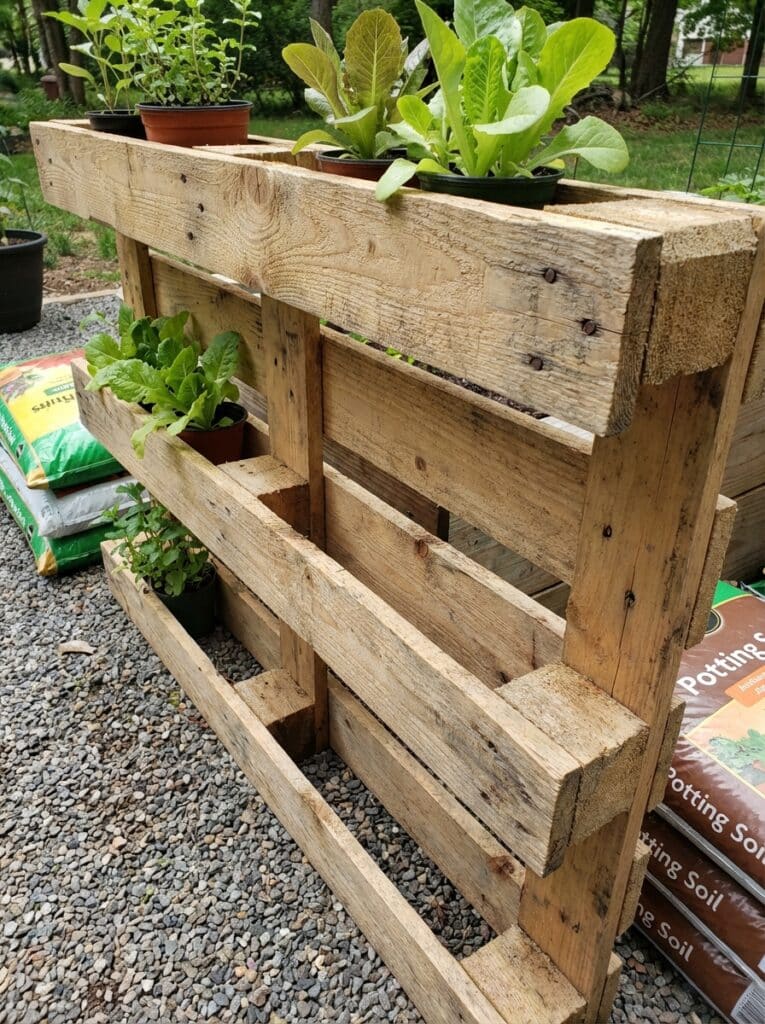
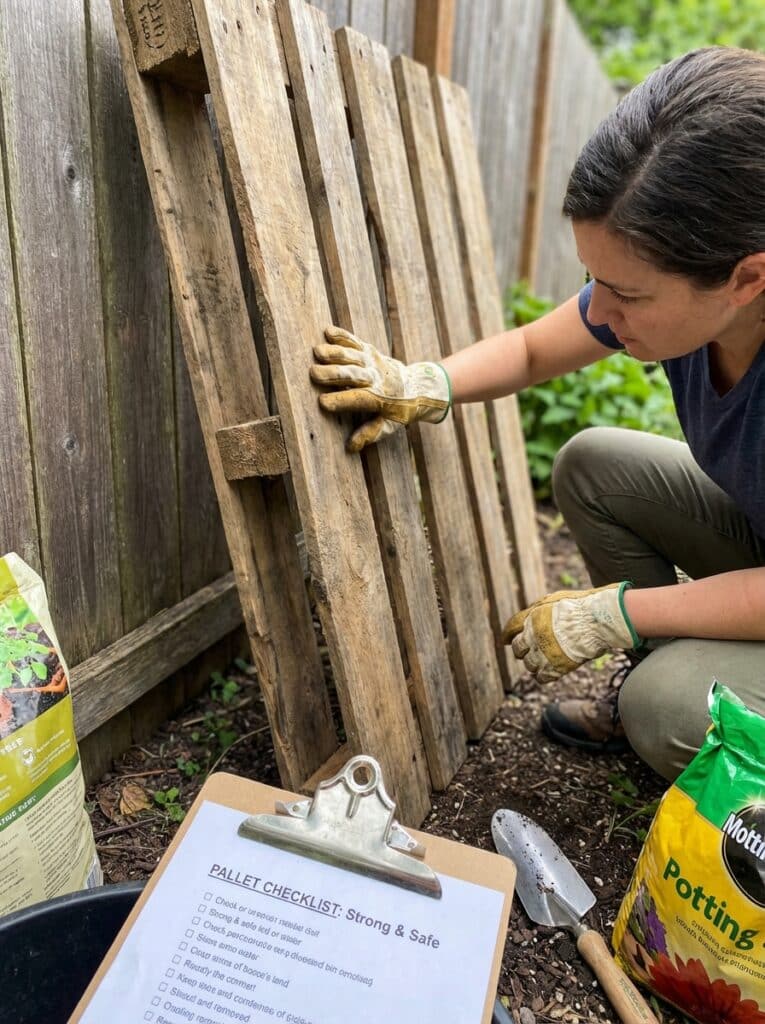
You want a pallet that is strong enough to hold soil and plants without twisting or breaking.
Check for:
- Solid, uncracked boards
- No significant rot, black mold, or soft spots
- Minimal warping
- Nails that are not sticking out in dangerous places
If you plan to create a full sized vertical lettuce or herb garden, remember that a pallet filled with soil becomes heavy. One full pallet vertical garden can hold about 160 liters of soil and support around 20 lettuce plants, plus herbs or flowers on the top and lower rows (Little Woolly Lamb). Sturdy construction matters.
Clean and prep your pallet
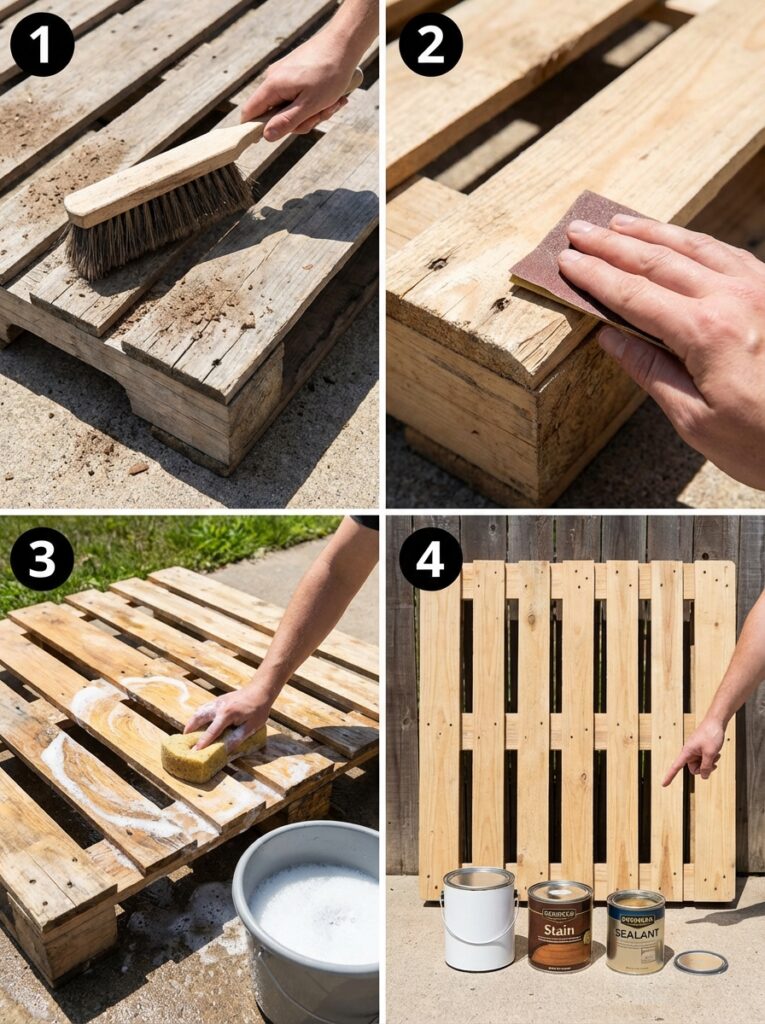
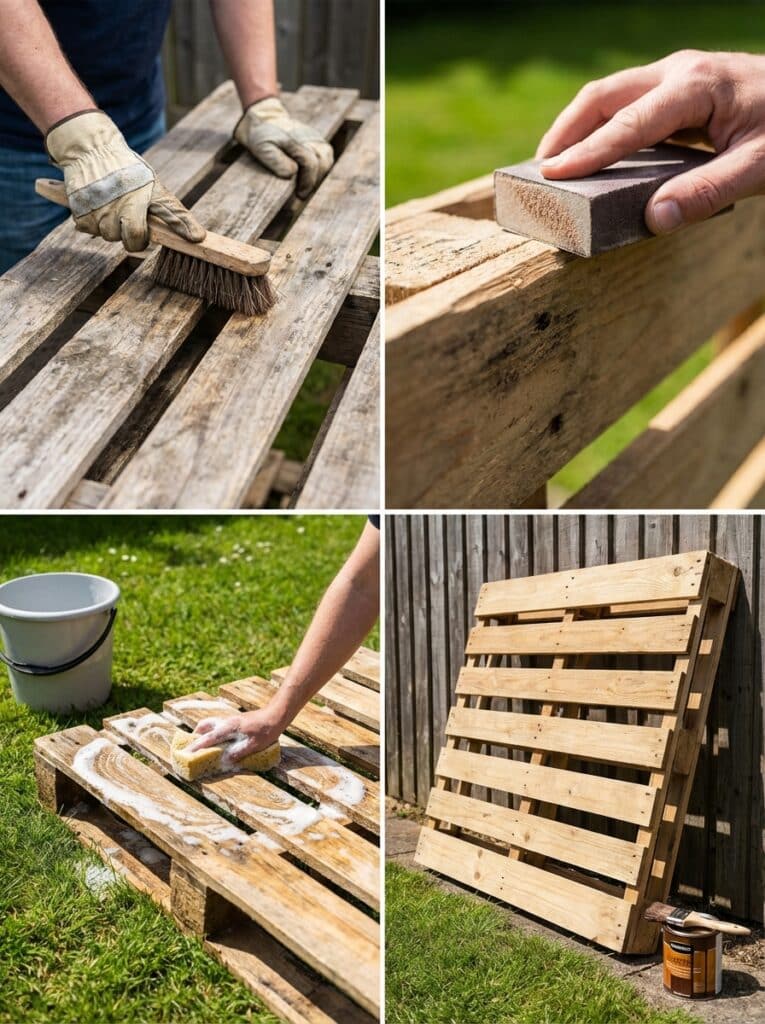
Once you have a suitable pallet:
- Brush off loose dirt and debris.
- Sand any rough edges or splinters that might snag your hands.
- Wash with mild soapy water and let it dry fully in the sun.
At this stage, you can also decide whether to paint, stain, or seal the wood. More on that in a moment.
Protect and finish your pallet wood
Pallet wood lives outside in the elements, so a little protection goes a long way. A well finished pallet will look better and last longer as a garden feature.
Decide whether to paint or stain

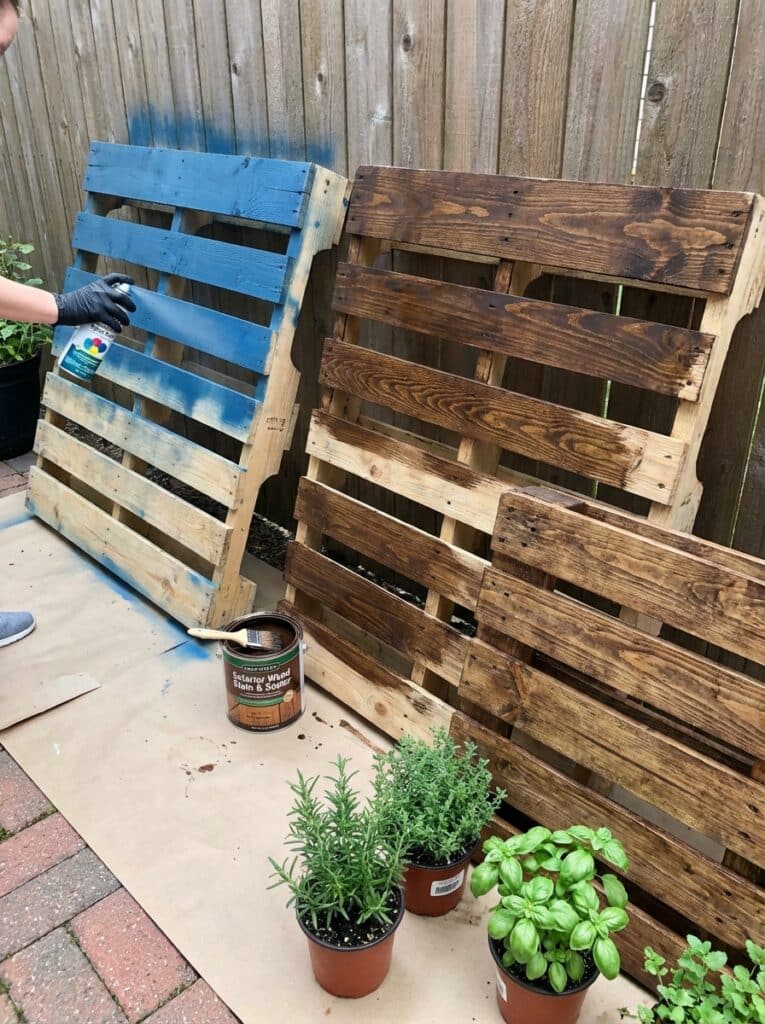
You do not have to paint your pallet, but a quick coat of paint or stain can turn a plain structure into a statement piece. For a pallet garden, you have a few options.
- Spray paint: Using indoor and outdoor spray paint is an optional step that adds color and dimension. It also adds a layer of protection to the wood and can make your pallet garden look more finished (Hearth and Vine).
- Exterior stain: Stain enhances the natural wood grain and, when paired with a good sealer, can help protect the pallet from moisture. Users who stained and coated their pallet lattice projects with spar varnish reported no warping under outdoor conditions (Reddit).
If you want a rustic look, a soft stain that lets the grain show through pairs nicely with herbs or succulents. If your outdoor area leans modern or colorful, paint the pallet in a bright shade and let your plants play the supporting role.
Add a protective coating against moisture
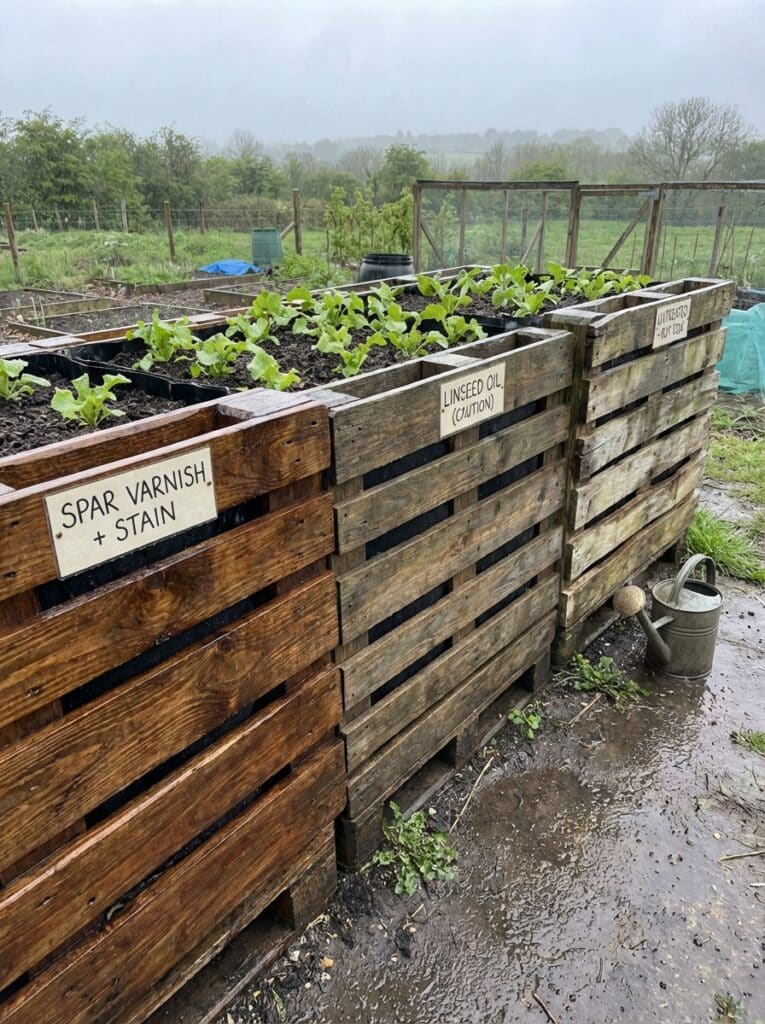
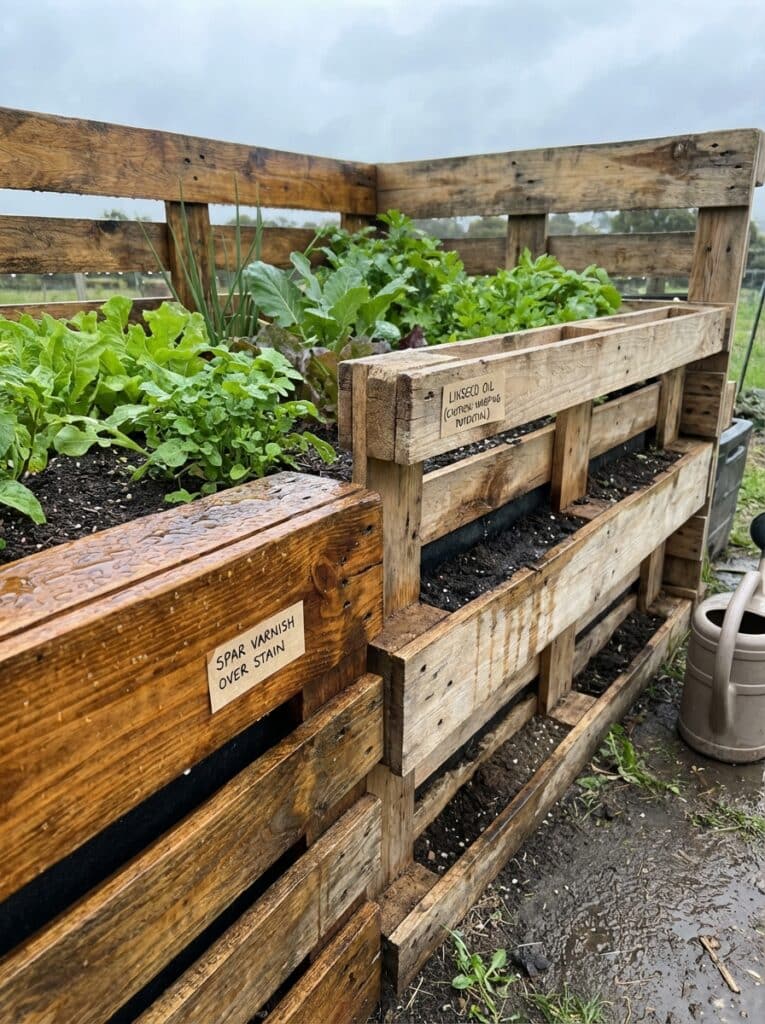
Outdoor pallet gardens live with constant moisture from watering and rain. Without protection, wood can swell, warp, and eventually rot.
Common protective approaches include:
- Spar varnish over stain: Some DIYers report that staining and then sealing pallet projects with spar varnish provided good protection from warping and weather (Reddit).
- Linseed oil with caution: Linseed oil can make pallet garden boxes more food safe, but users have noted that boxes treated only with linseed oil sometimes warped with frequent watering and exposure to rain (Reddit). You may want to pair linseed oil with another protective topcoat, especially in wet climates.
Whichever finish you choose, let the pallet dry thoroughly before you add fabric and soil.
Plan your pallet garden layout
Different pallet garden ideas suit different spaces, light conditions, and gardening goals. Before you start building, decide what you want your pallet garden to do.
Decide what you want to grow
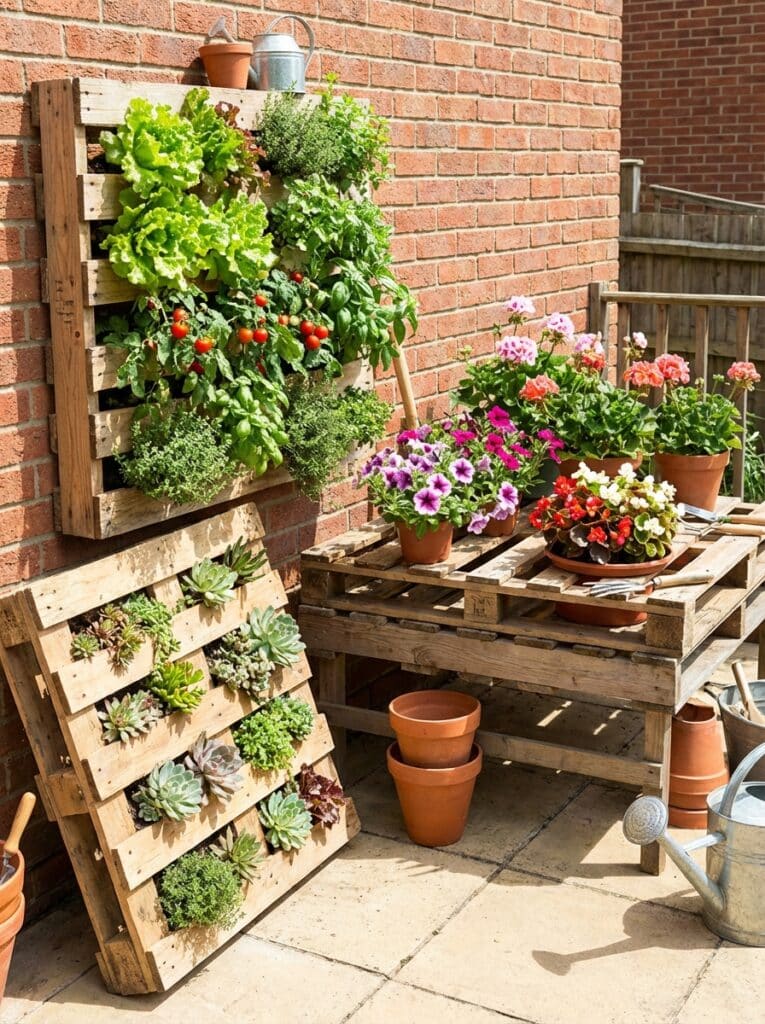
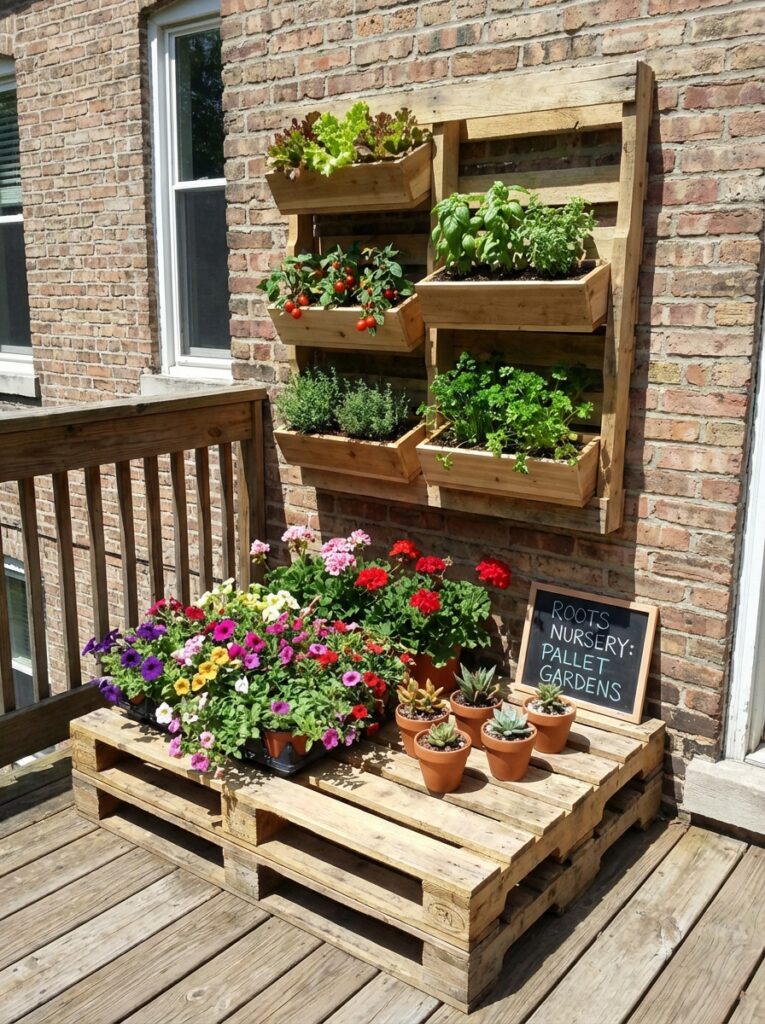
Pallet gardens are surprisingly flexible and work well with:
- Vegetables such as lettuce, greens, and compact varieties of tomatoes or peppers
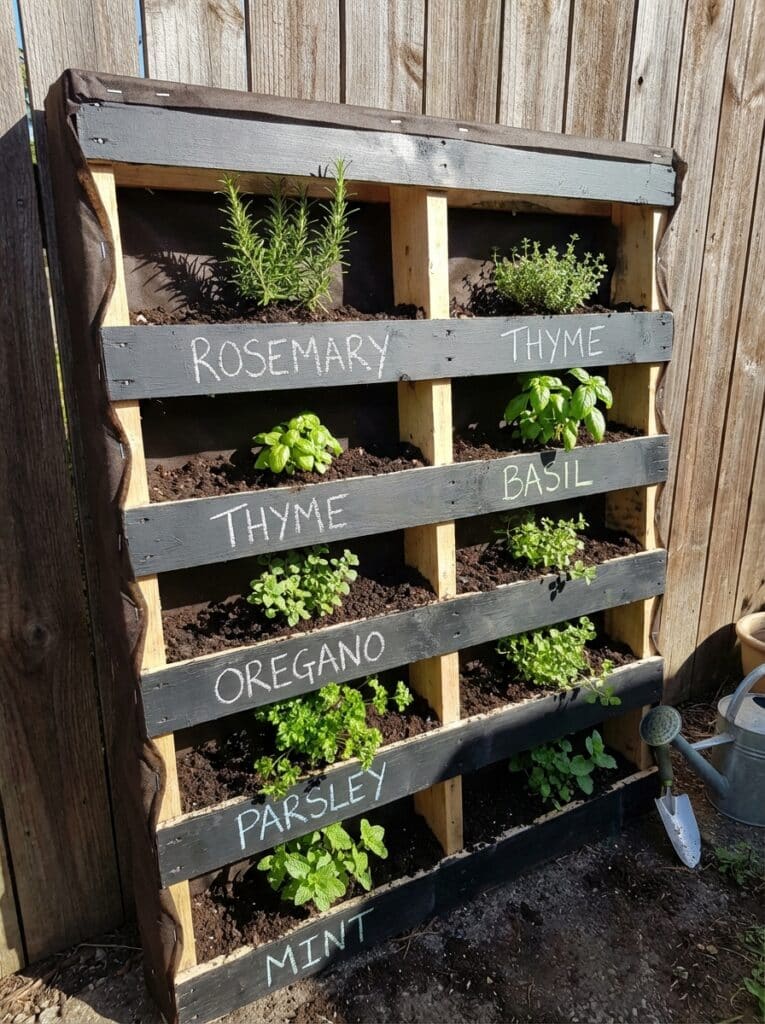
- Herbs including basil, thyme, oregano, parsley, and mint
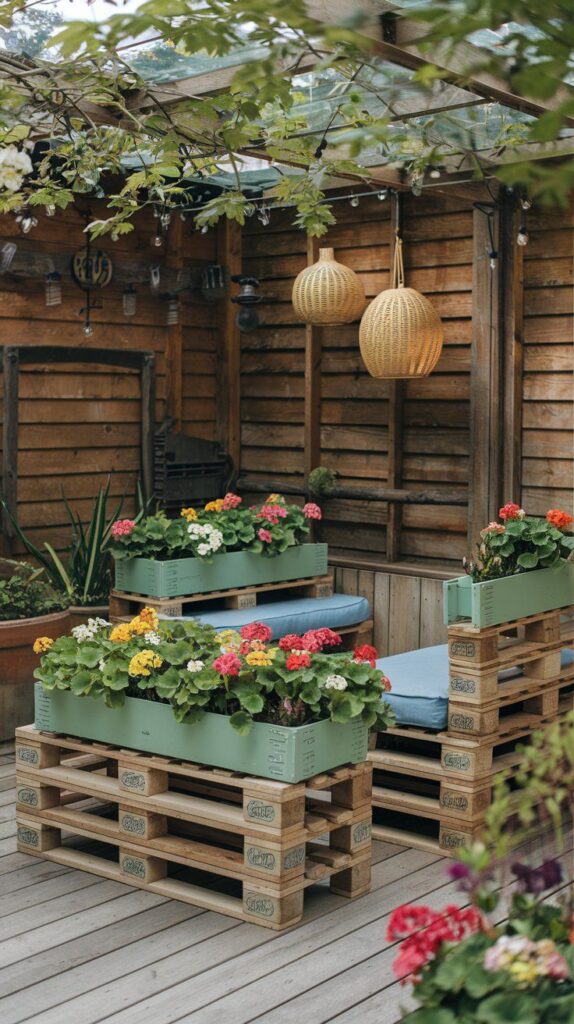
- Annual flowers such as petunias, geraniums, and wax begonias
- Succulents for a low maintenance, drought tolerant display
Pallet gardens are popular for growing vegetables, herbs, annual flowers, and succulents because they maximize space and allow you to surround yourself with many plants even in small areas (Roots Nursery).
Your plant choice will influence whether you go vertical, horizontal, or somewhere in between.
Match plant types to pallet styles
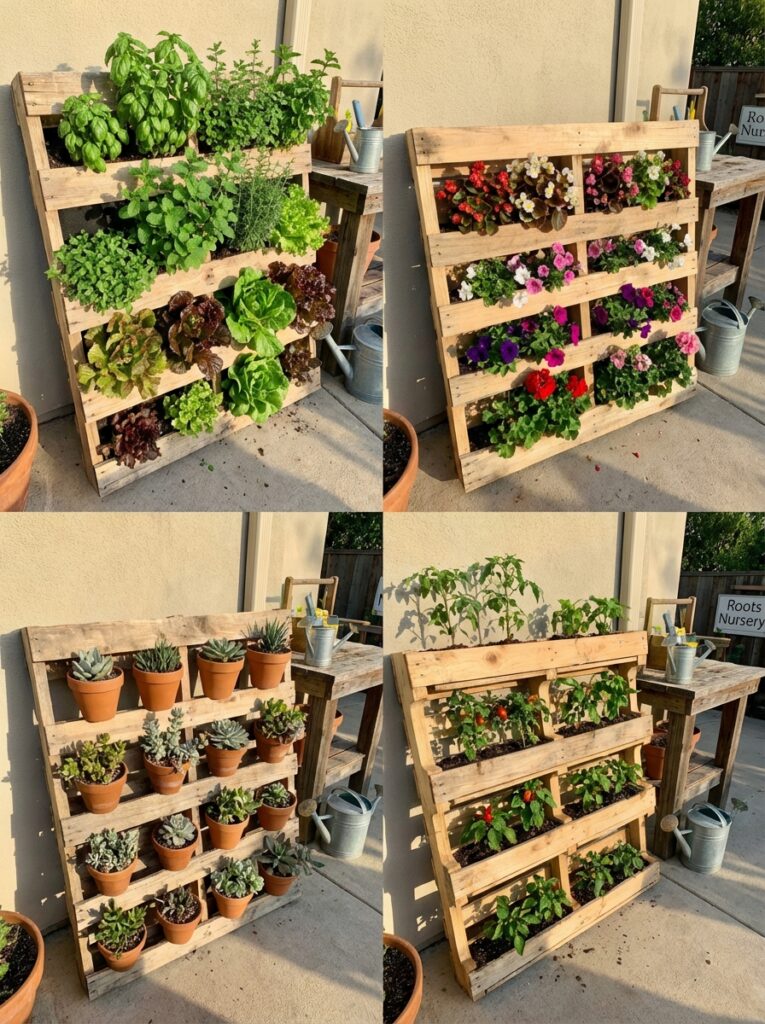
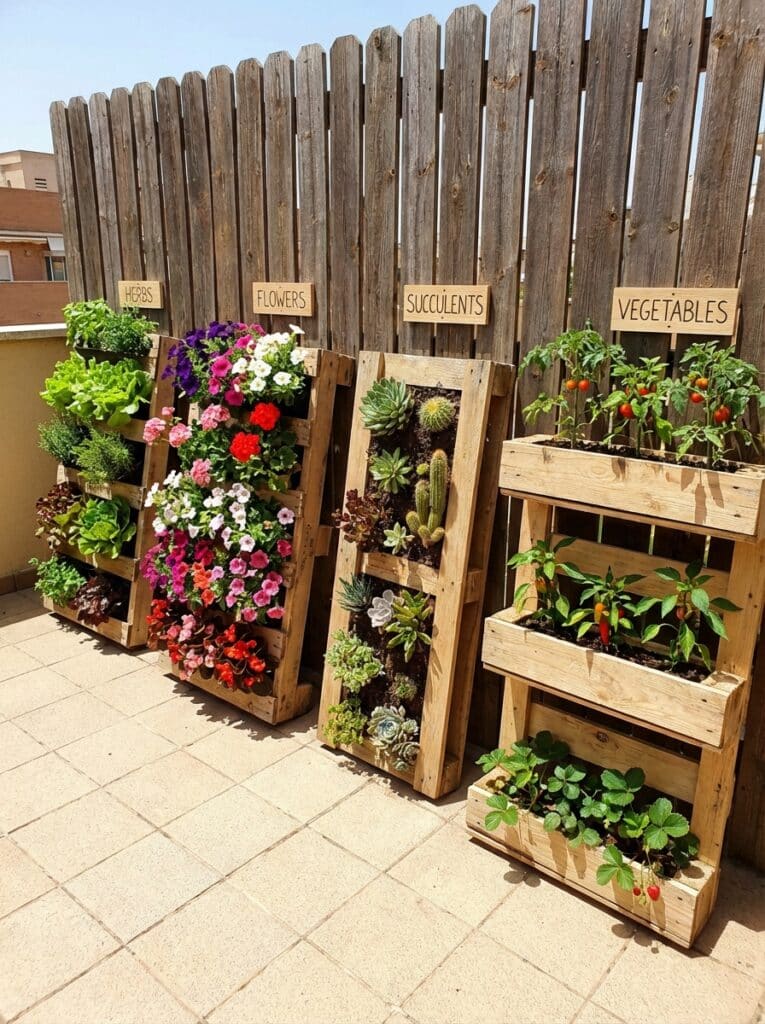
Here are some quick pairings that work well:
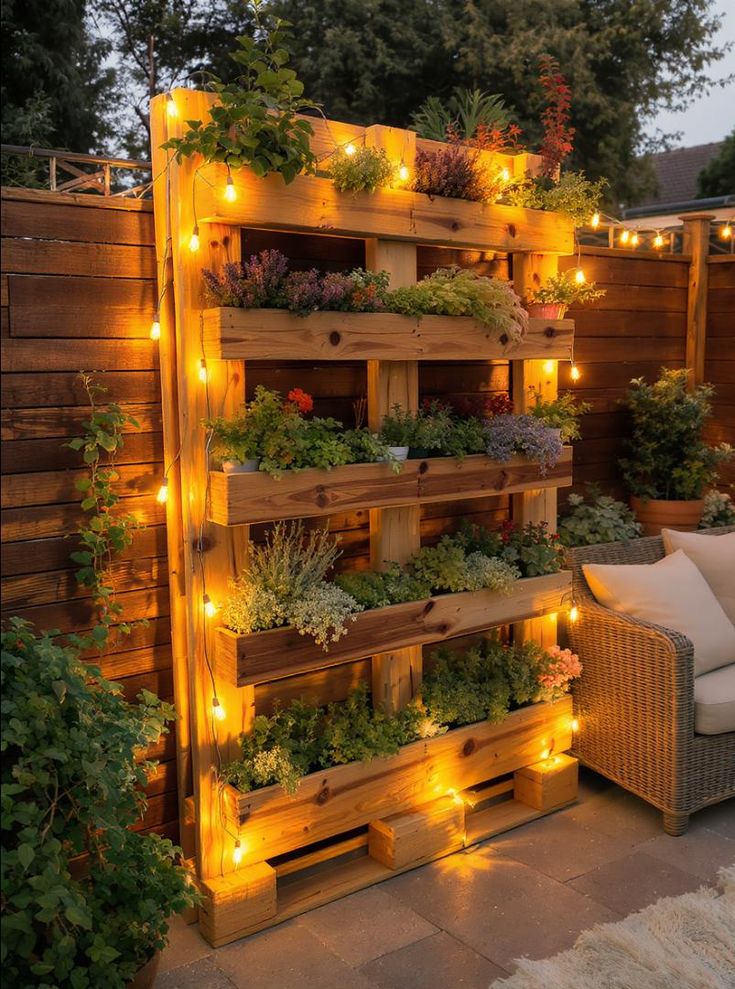
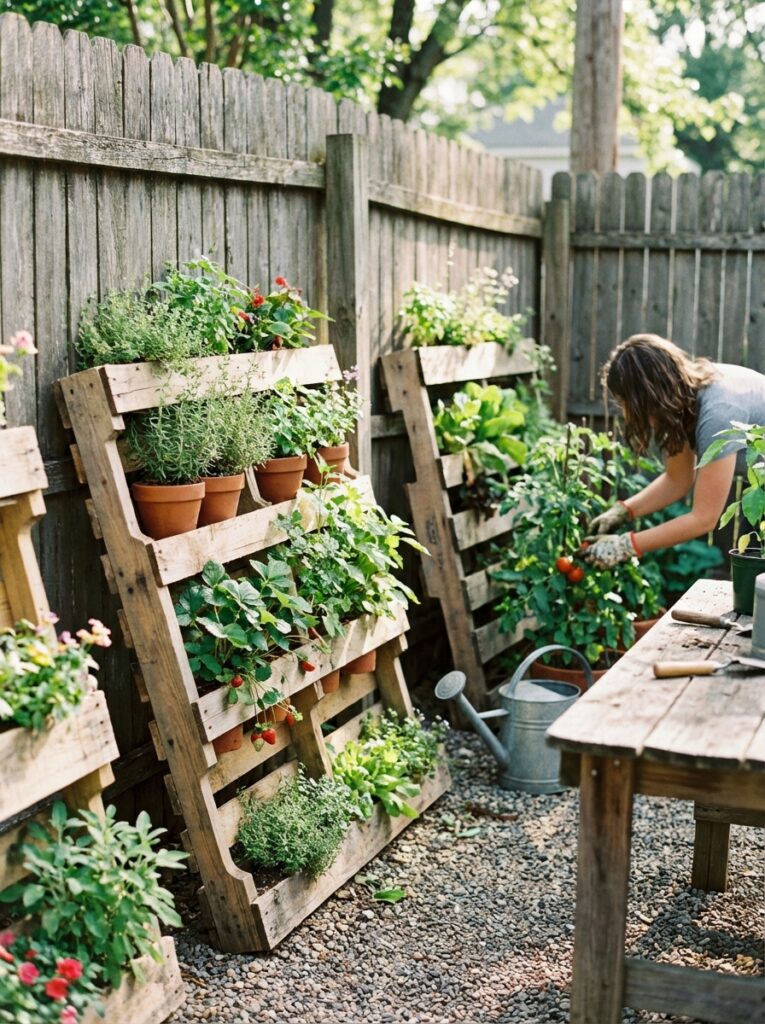
- Vertical herb or lettuce wall: Best for sunny balconies or fences, good airflow, and easy snipping while you cook.
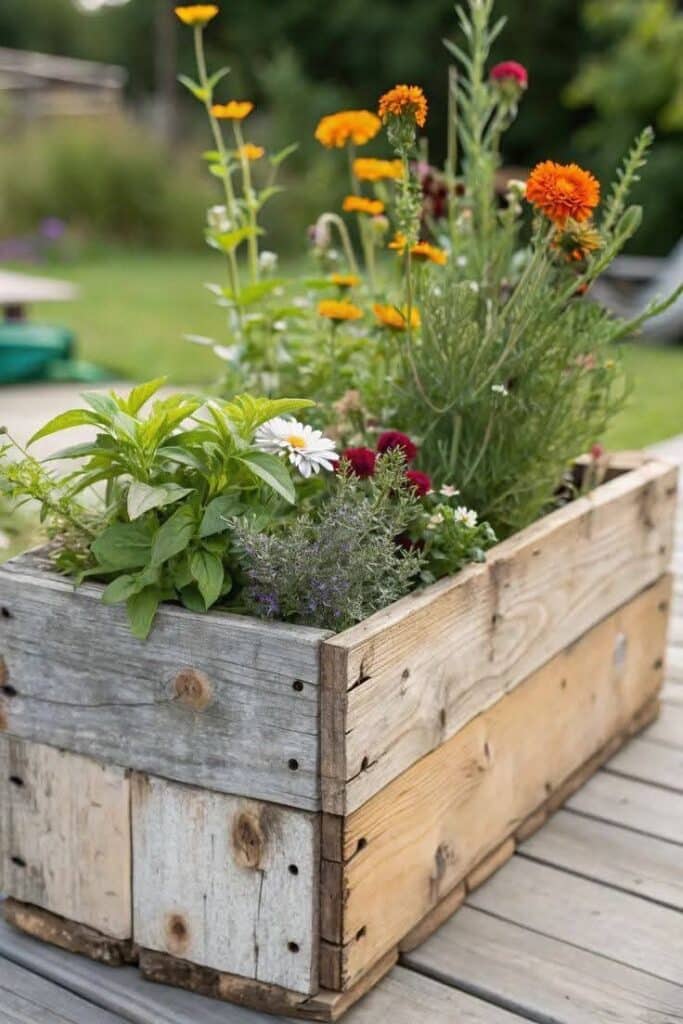
- Flower pallet with shallow pockets: Ideal for colorful accents, especially with shallow rooted annuals such as wax begonias, petunias, and geraniums (Roots Nursery).
- Succulent pallet garden: Great for both indoor and outdoor use, particularly if you want a low maintenance feature that looks good year round (Roots Nursery).
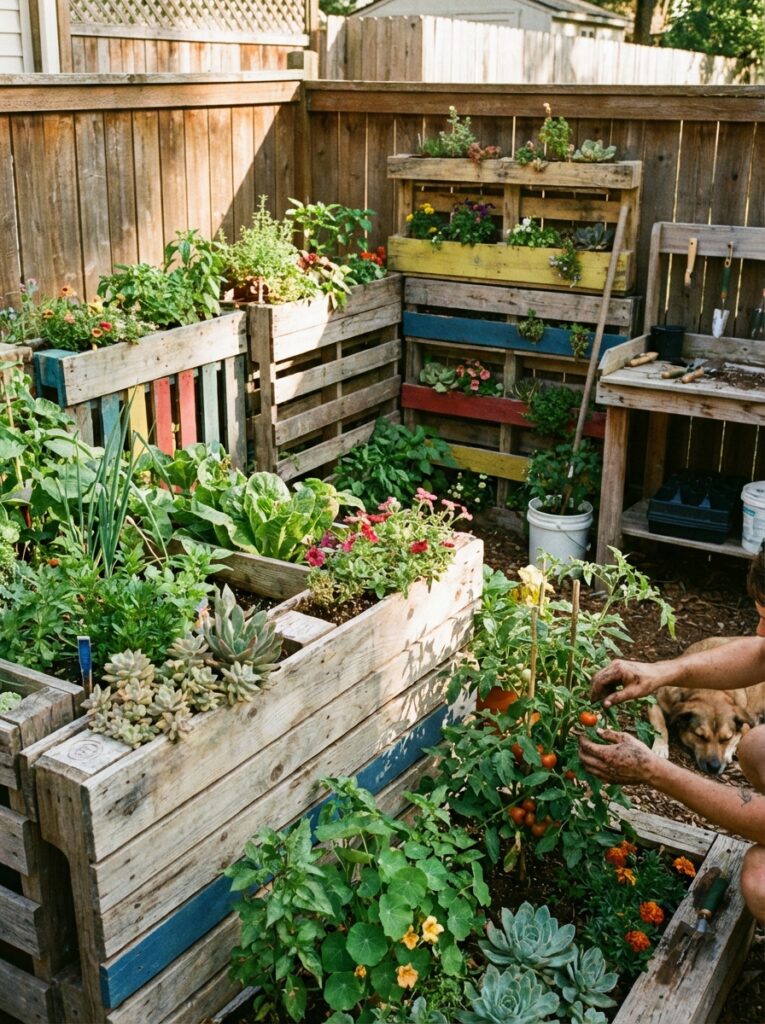
- Multi level vegetable pallet garden: A good option if you want to grow a surprising amount of produce in a small space, taking inspiration from multi level pallet displays used at Epcot’s Flower and Garden Festival (Roots Nursery).
Once you know what you want to grow, you are ready to build.
Build a basic vertical pallet garden
Many pallet garden ideas start with the same simple construction method. Once you know this foundation, you can adapt it for herbs, lettuce, flowers, or succulents.
Gather your materials and tools
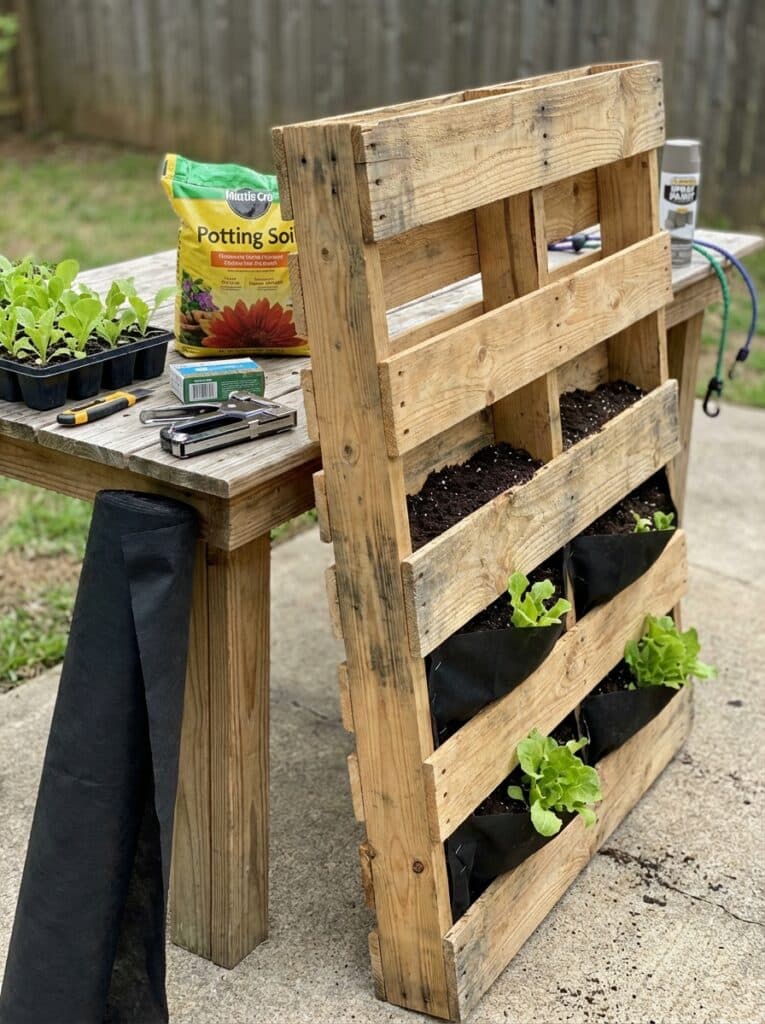
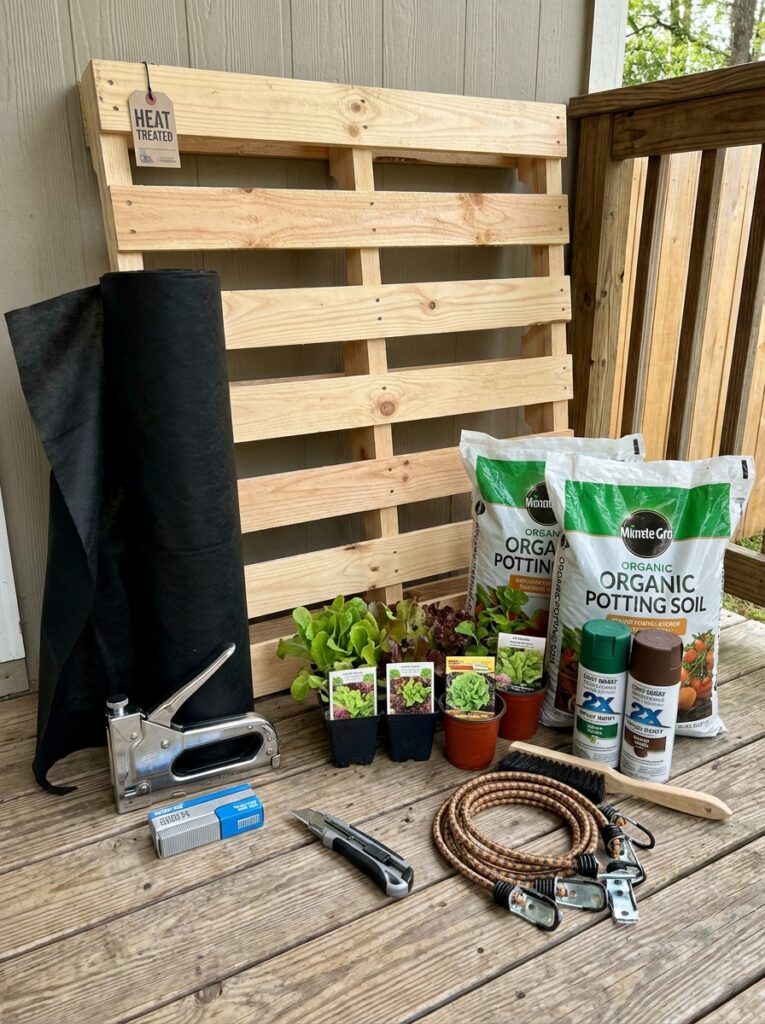
For a straightforward vertical pallet garden you will typically need:
- One clean, heat treated wooden pallet
- Landscaping fabric (enough to cover the back and sides)
- Staple gun and staples
- Utility knife or scissors
- Potting soil
- Plants or seeds
- Optional: spray paint or stain and sealer
- Optional: bungee cords or brackets for securing the pallet once filled
For vertical lettuce gardens, this basic material list is enough to build a functional and attractive setup in a few hours, plus time for the soil to settle (Little Woolly Lamb).
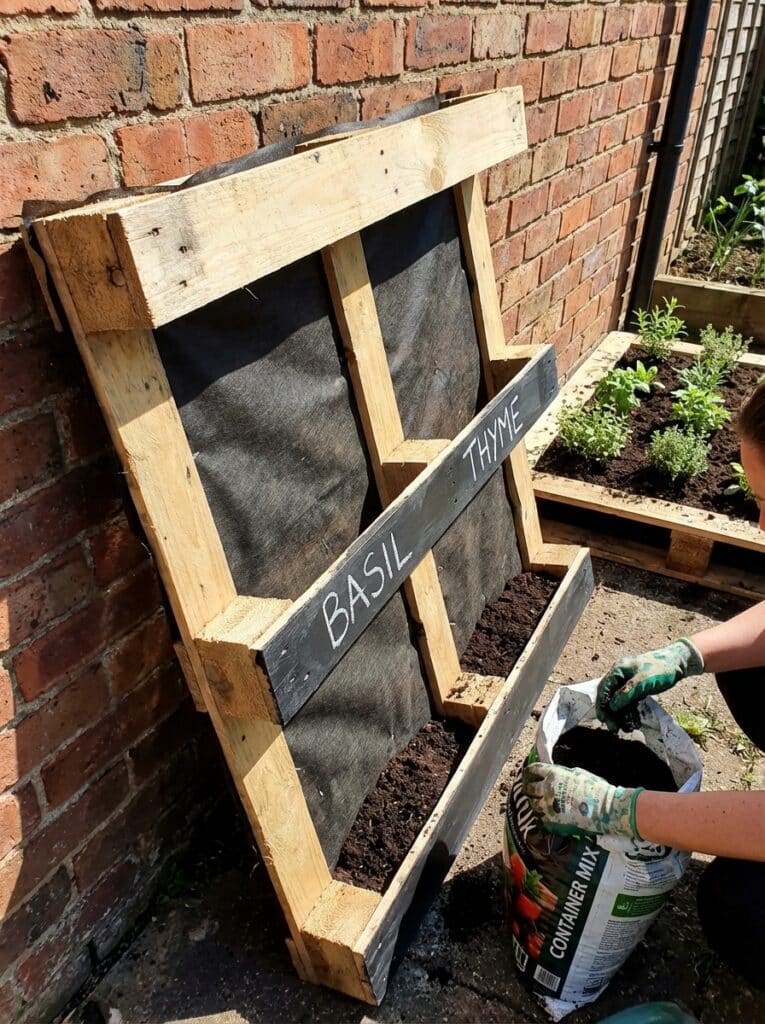
Line the pallet with landscaping fabric
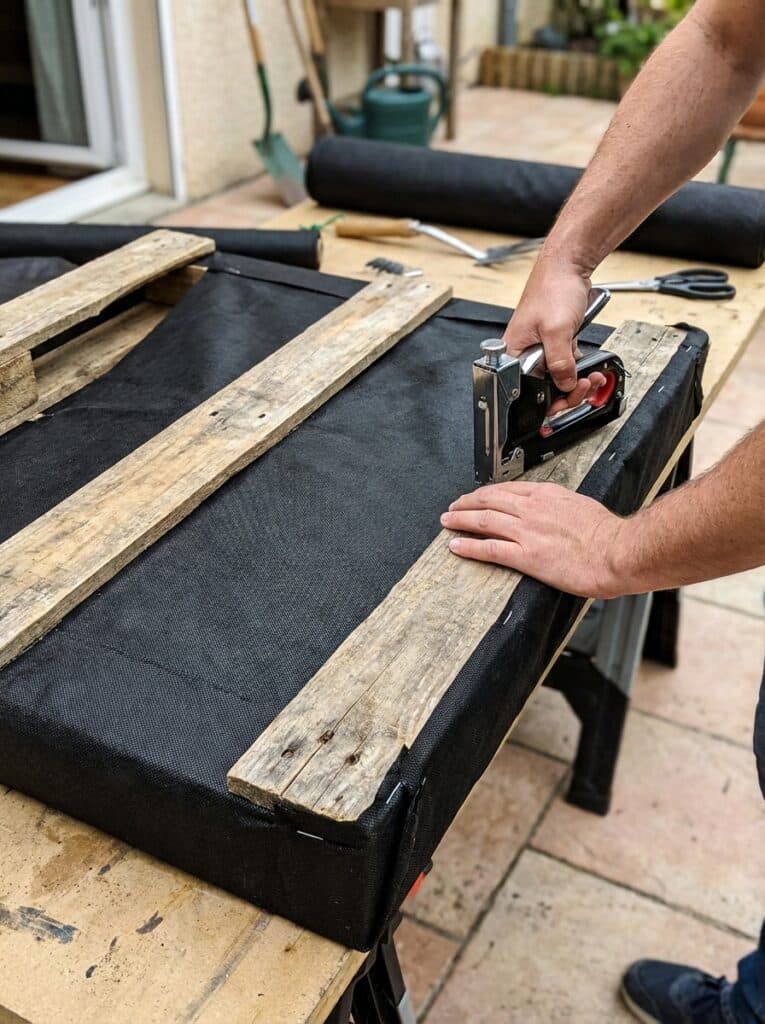
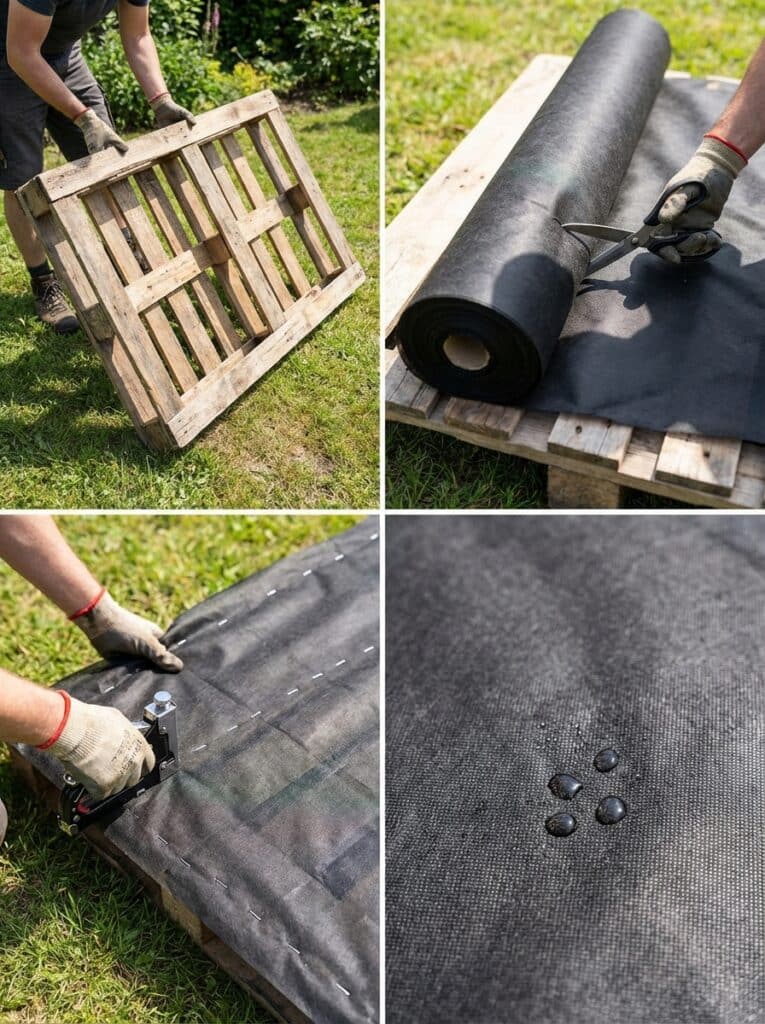
Landscaping fabric creates pockets that hold soil while still allowing excess water to drain. It is essential for most upright pallet garden ideas.
- Lay the pallet face down so that the back slats are facing up.
- Cut a large piece of landscaping fabric to cover the back, bottom, and sides.
- Stretch the fabric tightly across the back and wrap it around the edges.
- Use a staple gun to secure the fabric along all edges and in a grid pattern across the back.
The landscaping fabric is porous, which means water can seep through and drain. This helps your plants avoid waterlogged roots and keeps moisture levels in a healthy range (Hearth and Vine).
Fill with soil and let it settle
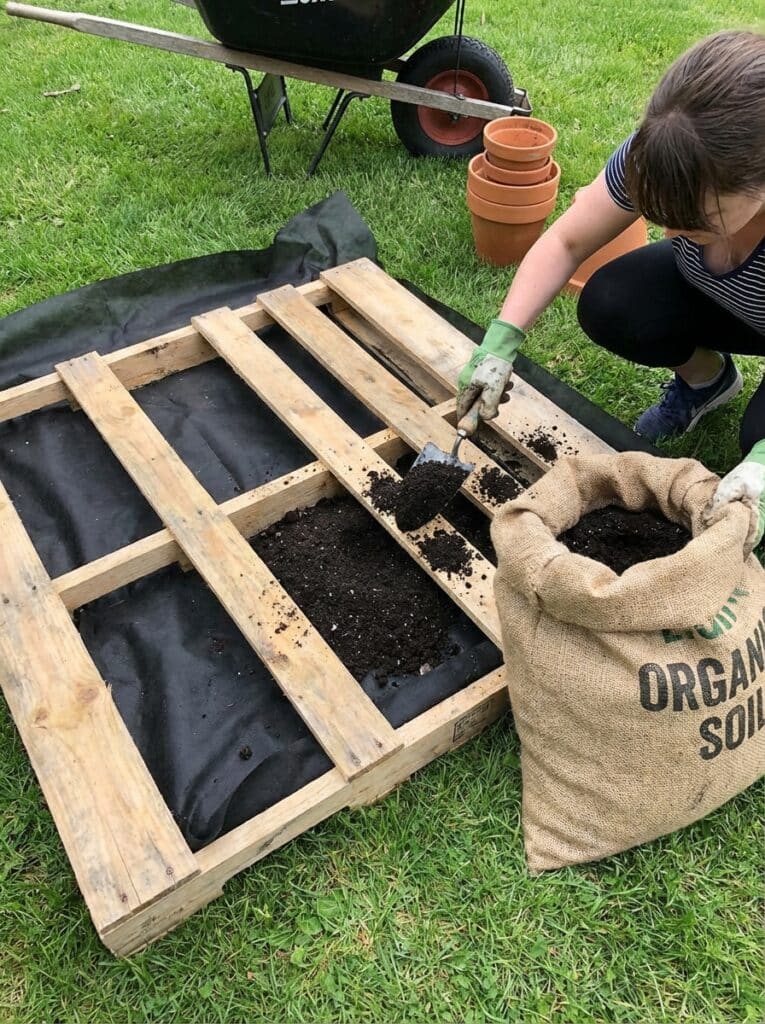
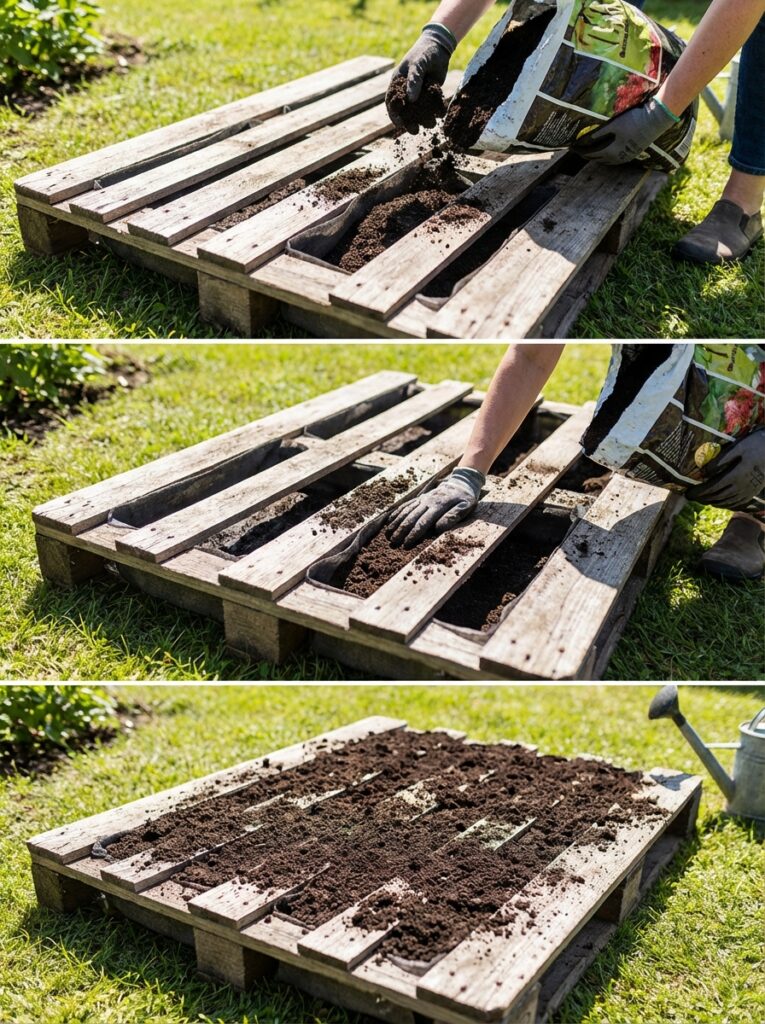
With the back and sides lined, you can start adding soil:
- Turn the pallet face up so the open slats are on top.
- Pour potting soil into the cavities, pressing it firmly into each section.
- Keep adding soil and packing gently until all spaces are filled.
If you are building a full sized vertical lettuce garden, remember that one pallet can hold about 160 liters of soil (Little Woolly Lamb). Filling and packing the soil carefully helps reduce settling later.
For many vertical designs, it helps to leave the pallet flat for a few days after filling. This gives soil time to settle and prevents big gaps from forming once you stand it upright. Some herb garden designs specifically recommend letting soil settle in a flat position before moving the pallet vertical to give roots more space and stability (Roots Nursery).
Add plants and position the pallet
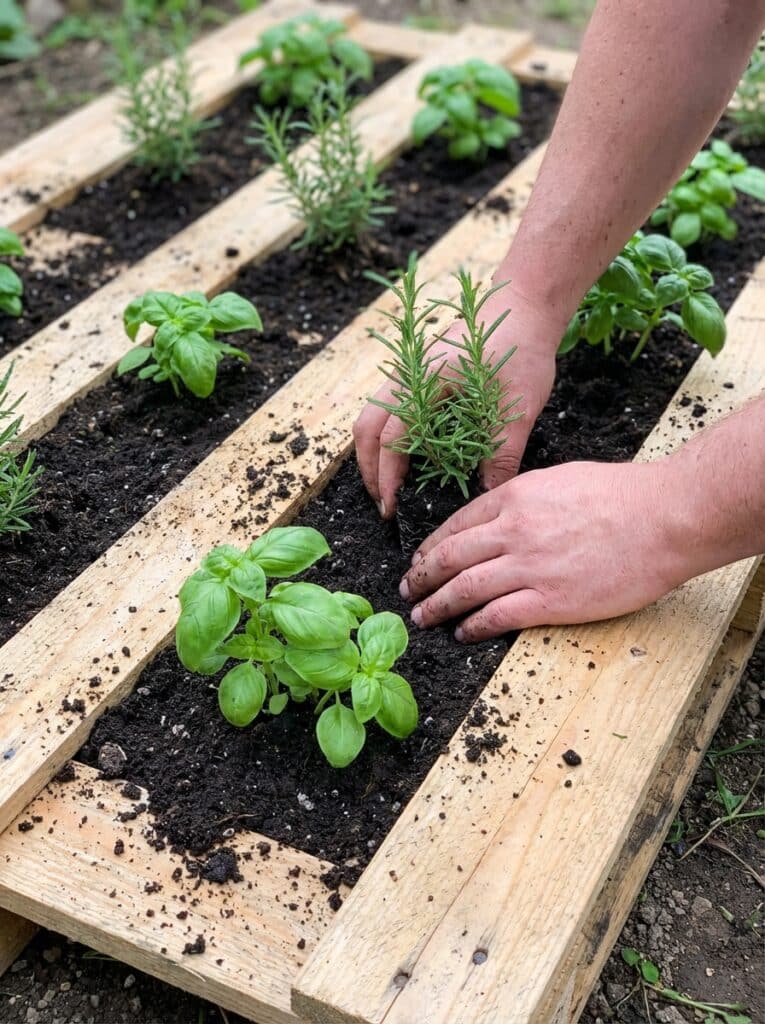
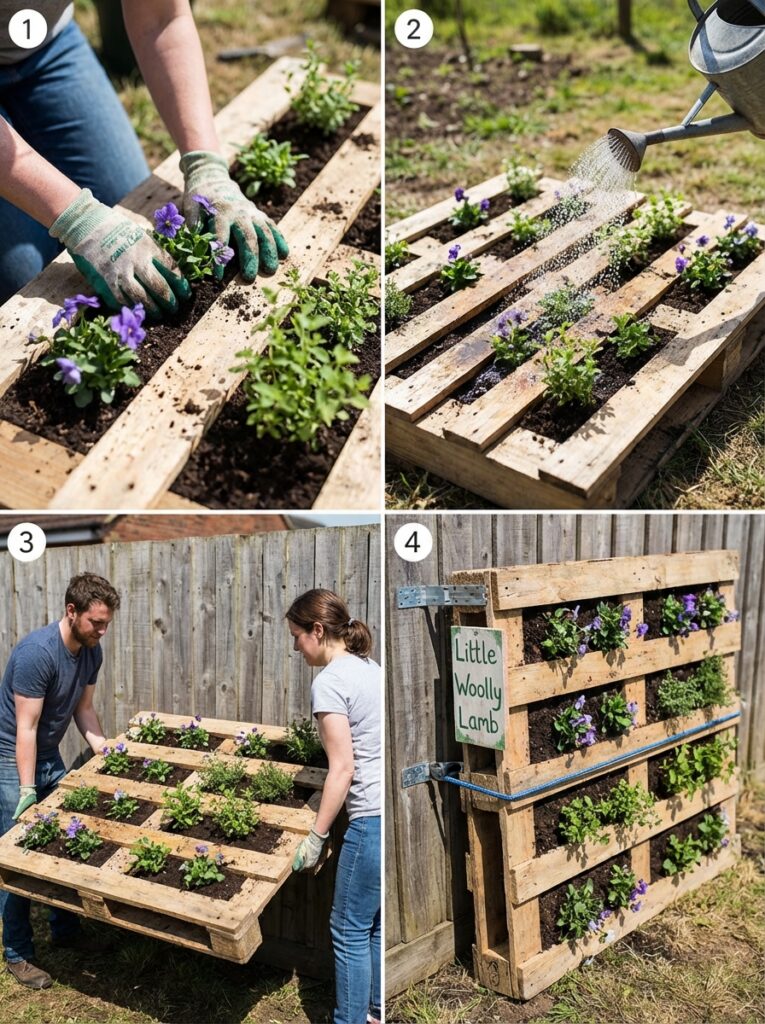
When the soil has settled:
- Plant your chosen herbs, flowers, lettuce starts, or succulents between the slats, tucking roots firmly into the soil pockets.
- Water gently so soil stays in place and roots make contact.
- Carefully raise the pallet to a vertical position.
- Secure it against a fence, wall, or railing with brackets, screws, or sturdy bungee cords, especially if you are working with a heavy, fully planted pallet (Little Woolly Lamb).
Now your base pallet garden is ready. From here, you can customize design, plant choice, and irrigation to suit your space.
Try a vertical herb pallet garden
If you love cooking with fresh herbs but have limited outdoor space, a vertical herb pallet garden is one of the most practical pallet garden ideas. You get quick access to flavor without sacrificing floor space.
Choose herbs that thrive in pallets
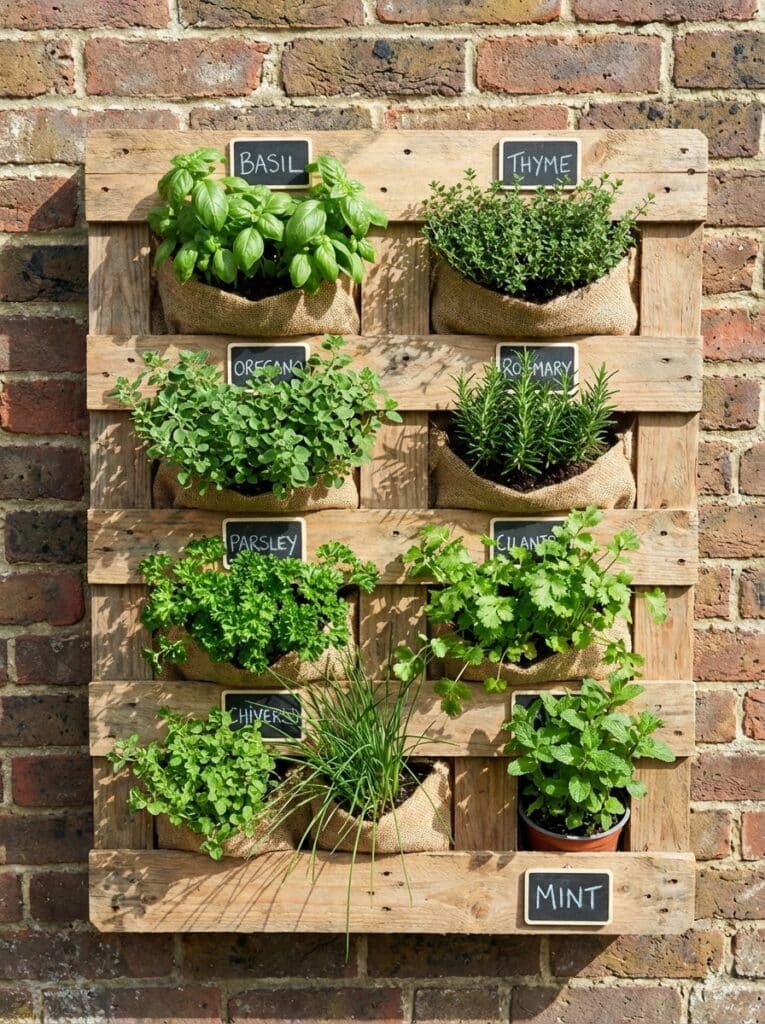
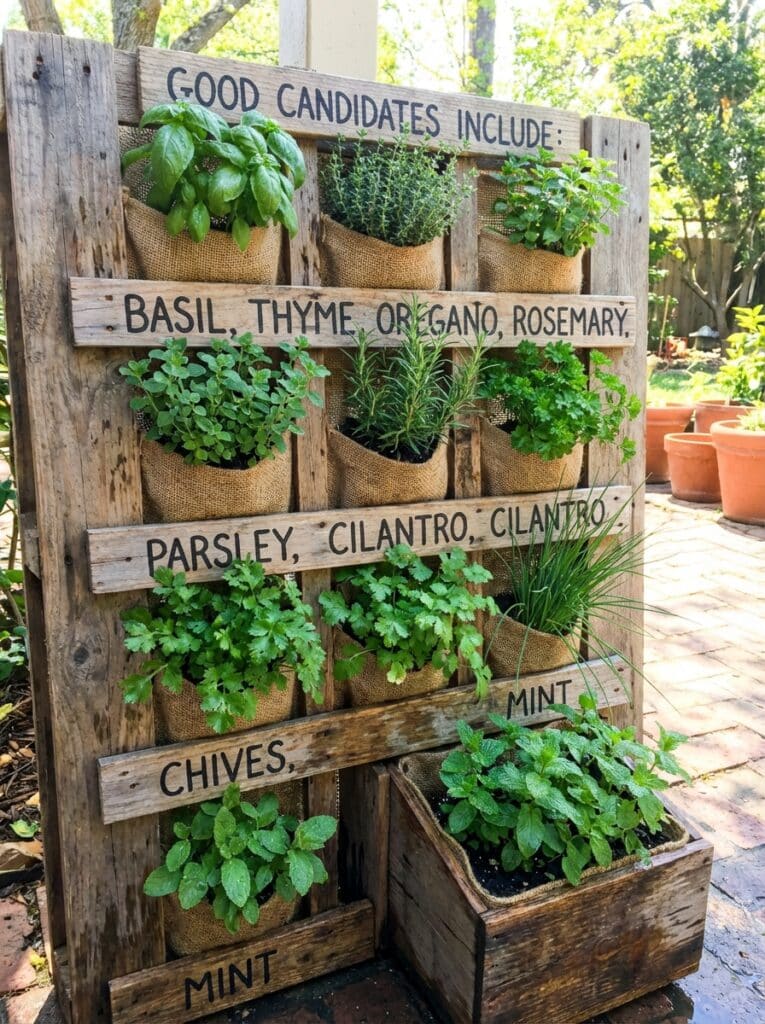
Good candidates include:
- Basil
- Thyme
- Oregano
- Rosemary (compact varieties)
- Parsley
- Cilantro
- Chives
- Mint (best kept in its own confined pocket so it does not spread too aggressively)
Vertical herb pallet gardens are often designed to allow generous soil pockets and good drainage, which your herbs will appreciate.
Build and label your herb wall
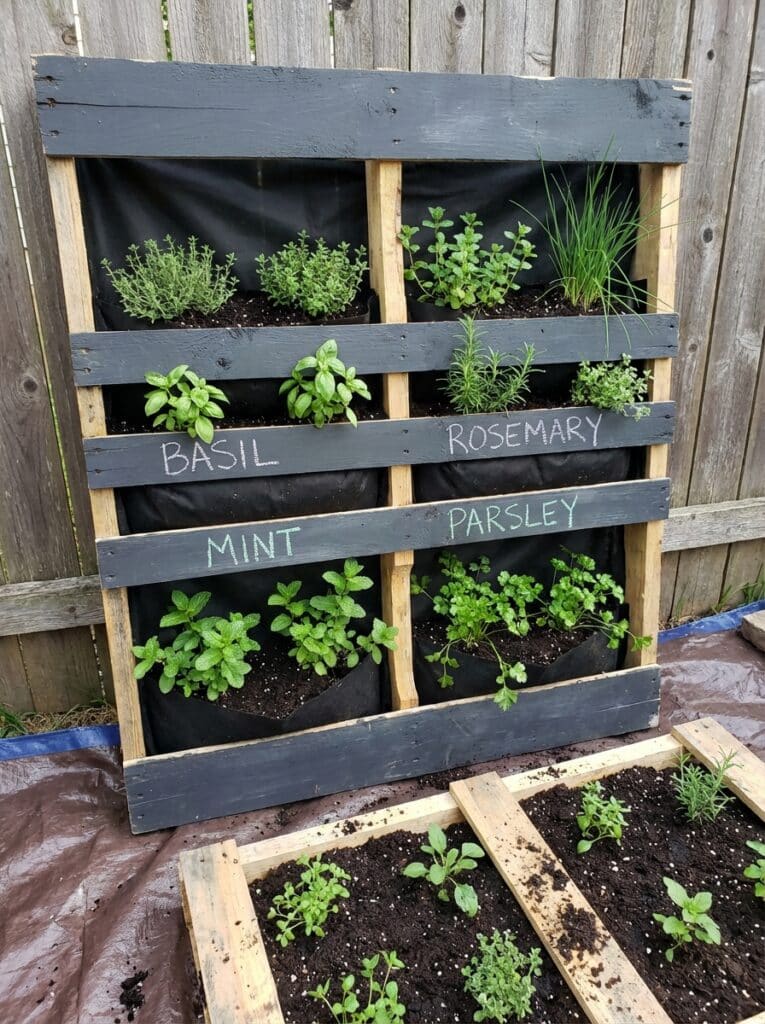
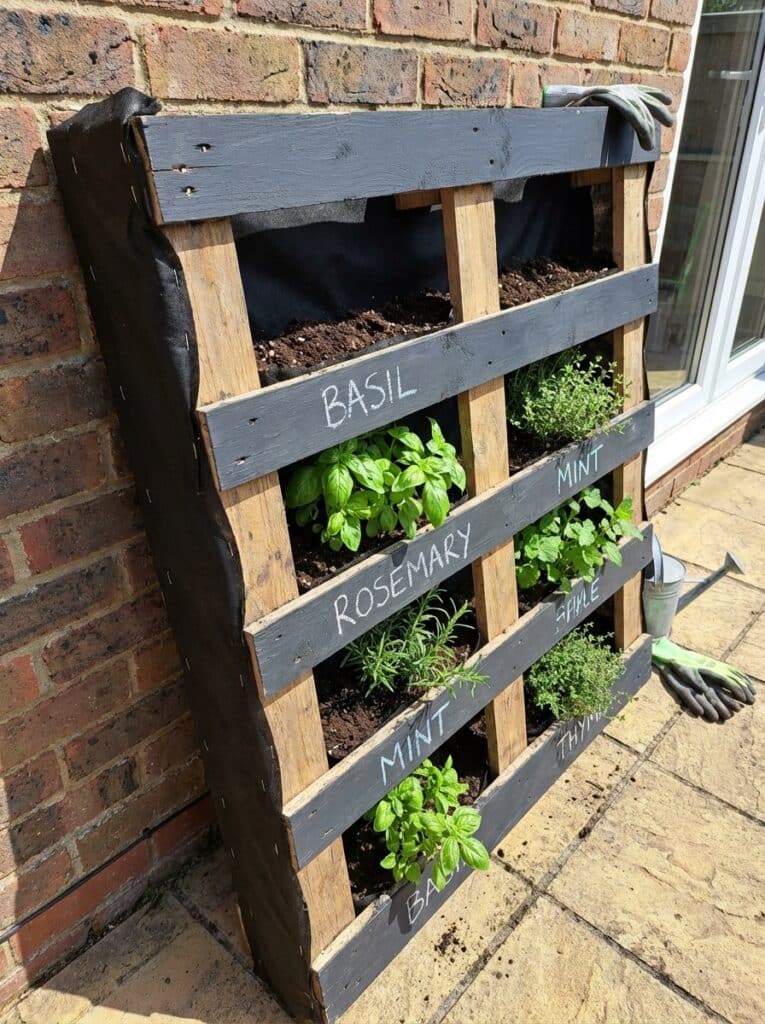
Follow the basic vertical pallet garden steps, then add herb friendly details:
- Line the back and sides with landscaping fabric and staple securely.
- Paint or stain the front slats if desired. Chalkboard paint on the front boards lets you label each herb directly on the pallet, which is a popular customization for herb gardens (Roots Nursery).
- Fill with high quality potting mix designed for containers.
- Plant herbs in sunny spots near the top and middle, and reserve shadier sections for parsley or mint.
Some designs lay the pallet flat after filling, then plant herbs on the horizontal surface, and only stand the pallet up once roots have begun to take hold. This approach gives your herbs more soil contact and can support stronger growth in a vertical format (Roots Nursery).
Maintain and harvest your herbs
To keep your herb pallet garden productive:
- Water when the top inch of soil feels dry. In hot weather you may need to water daily or every other day.
- Snip herbs often, which encourages bushier plants.
- Trim back any leggy growth and remove flowers from herbs like basil to keep leaves tender.
Because your herbs are at eye level, you will notice changes quickly, which makes it easier to catch pests or dryness before they become serious problems.
Build a vertical lettuce pallet garden
If you want a functional garden that also looks decorative, a vertical lettuce pallet garden is both practical and eye catching. It is one of the most efficient pallet garden ideas if you enjoy salads or leafy greens.
Design a productive lettuce wall
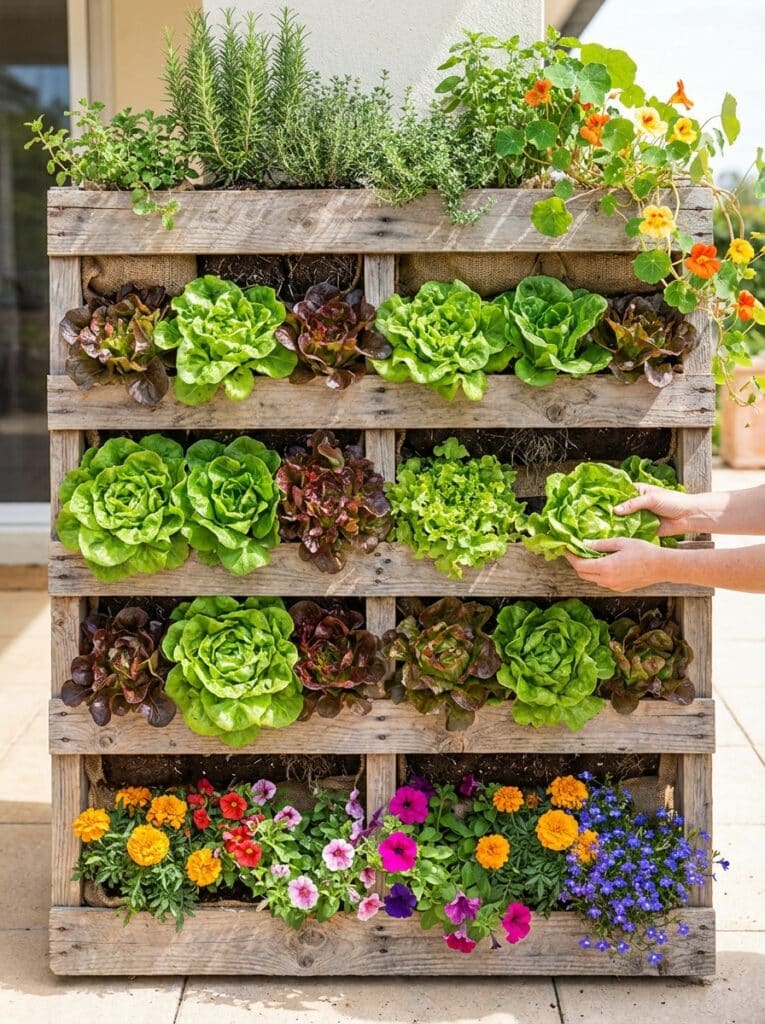
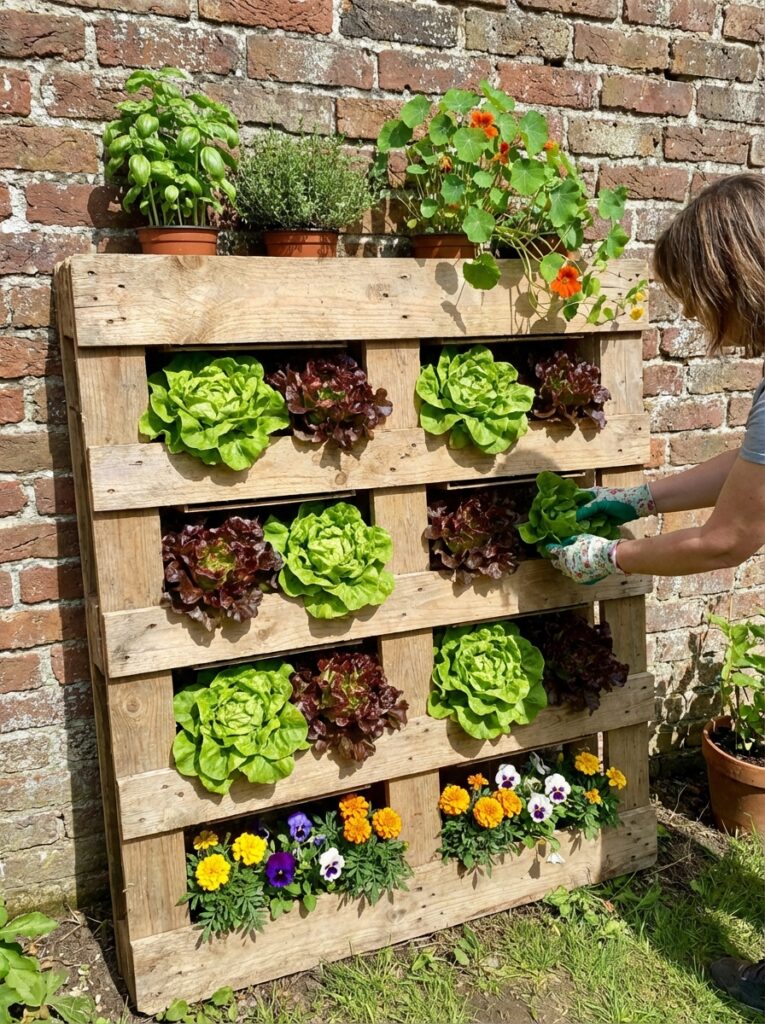
A full sized pallet can host a surprising amount of food. One documented vertical lettuce garden, built from a wooden pallet, used about 160 liters of soil and supported around 20 lettuce plants, plus additional spots for herbs or flowers on the top and lower rows (Little Woolly Lamb).
You can arrange plants like this:
- 4 or 5 horizontal rows of lettuce along the main slats
- Herbs or trailing flowers in the top pockets
- Colorful annual flowers on the very bottom row for visual balance
Lettuce is well suited to vertical gardening because you can harvest leaves gradually and allow the plant to regrow, which effectively multiplies your harvest.
Follow a lettuce friendly construction process
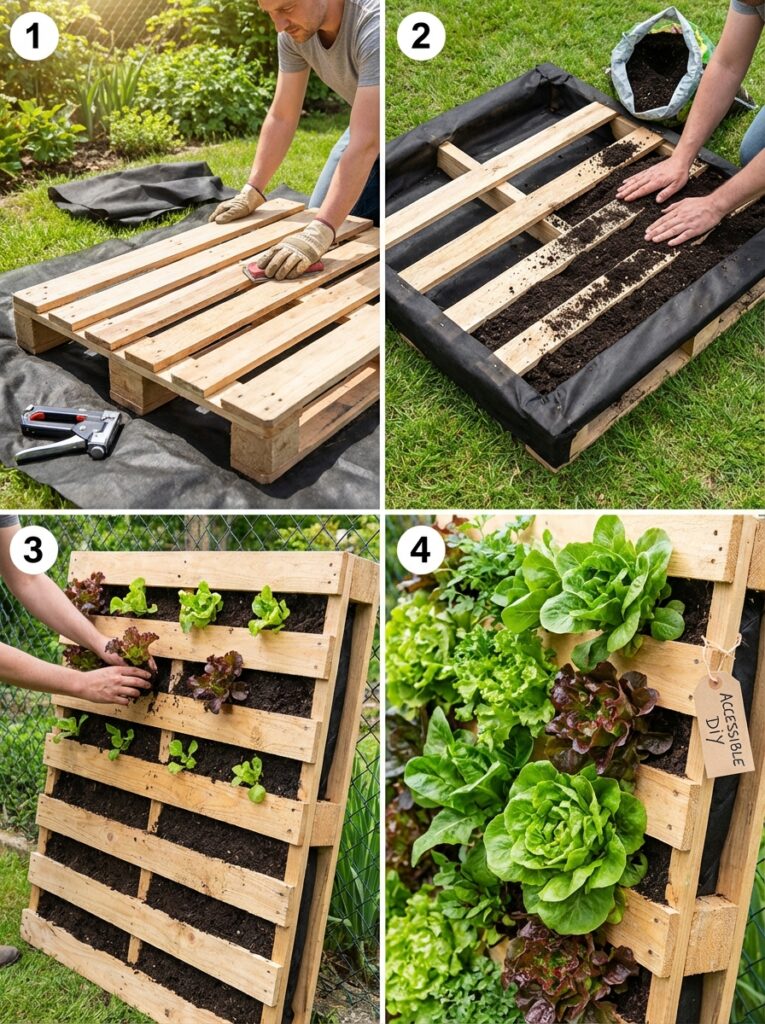
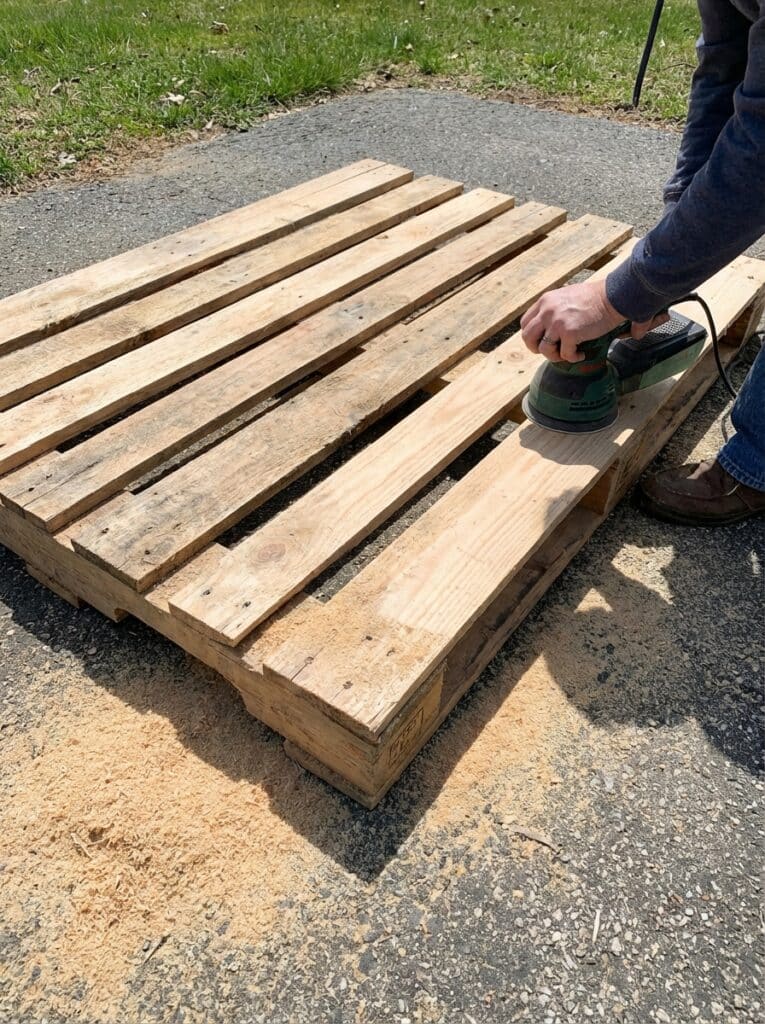
For a vertical lettuce garden, follow the standard pallet preparation steps with a few specific tweaks:
- Make sure the pallet is sanded well so there are no sharp splinters near your hands when you harvest.
- Line the back, bottom, and sides with landscaping fabric and staple thoroughly.
- Fill with a light, rich potting soil that drains well. Press soil firmly into each cavity.
- Leave the pallet flat for several days so the soil can settle. Add more soil as needed.
- Plant lettuce starts or seeds in staggered rows along each slat for a full, layered look.
The project itself can be assembled in a few hours, not counting the soil settling time, which makes it accessible even if you are new to DIY gardening projects (Little Woolly Lamb).
Set up a watering routine
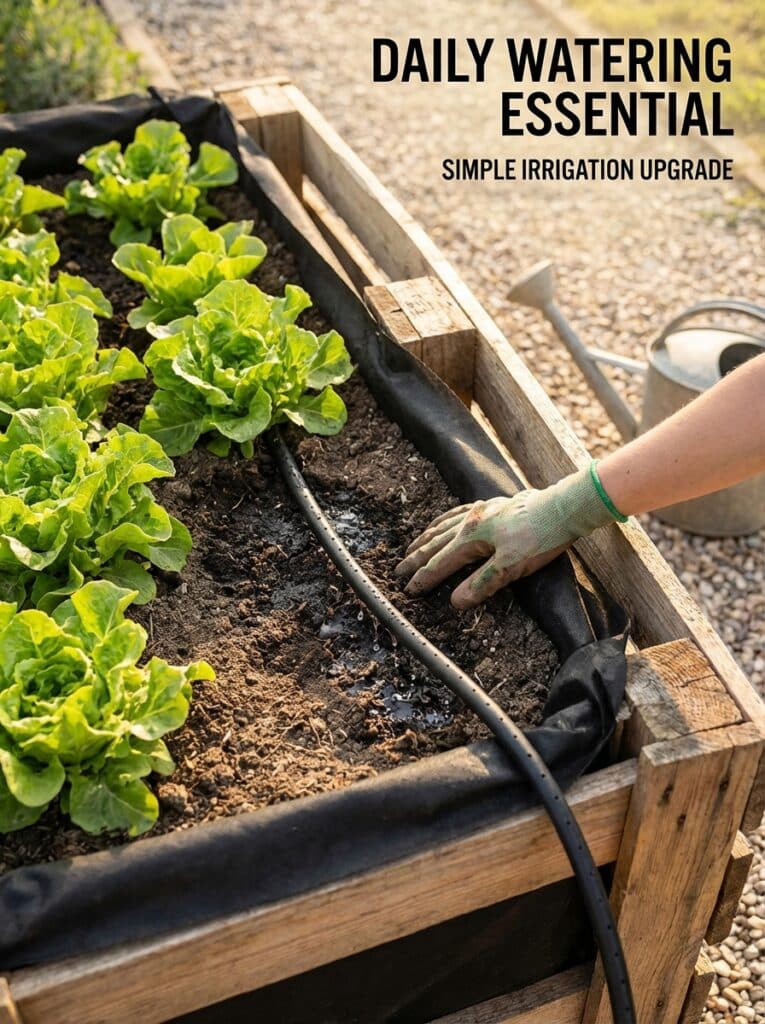
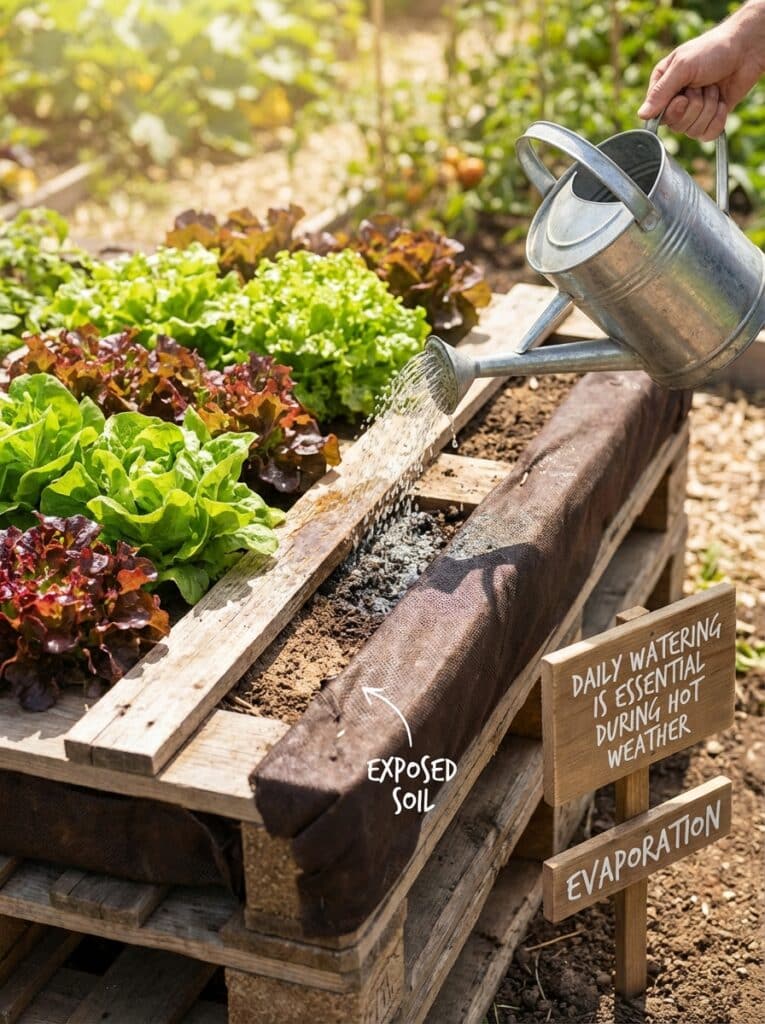
Because your lettuce pallet has exposed soil and breathable landscaping fabric, moisture evaporates quickly, especially in hot conditions. For this reason:
- Daily watering is typically essential during hot weather. The exposed soil dries rapidly through the fabric, so regular watering keeps lettuce from wilting or becoming bitter (Little Woolly Lamb).
- In cooler weather or after rain, you can reduce watering frequency. Always check soil moisture before watering to avoid overdoing it.
If daily hand watering feels tedious, consider a simple irrigation upgrade. A basic DIY system uses a plastic hose laid across the top of the pallet, with small holes drilled along its length, and the end sealed so water seeps evenly across the planter. This improves watering efficiency without a complicated setup (Little Woolly Lamb).
Create a succulent pallet garden
If you want low maintenance beauty with a sculptural feel, a succulent pallet garden is an excellent choice. Succulents tolerate drought, come in many shapes and colors, and look striking when packed tightly into a pallet frame.
Why succulents suit pallet gardens
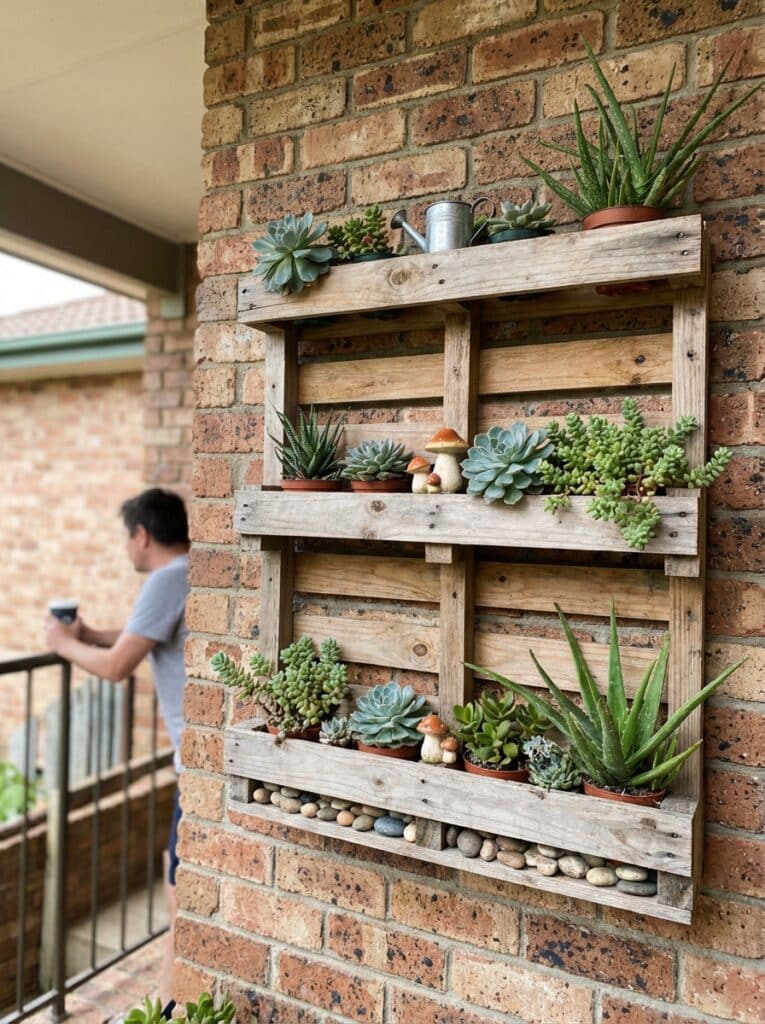
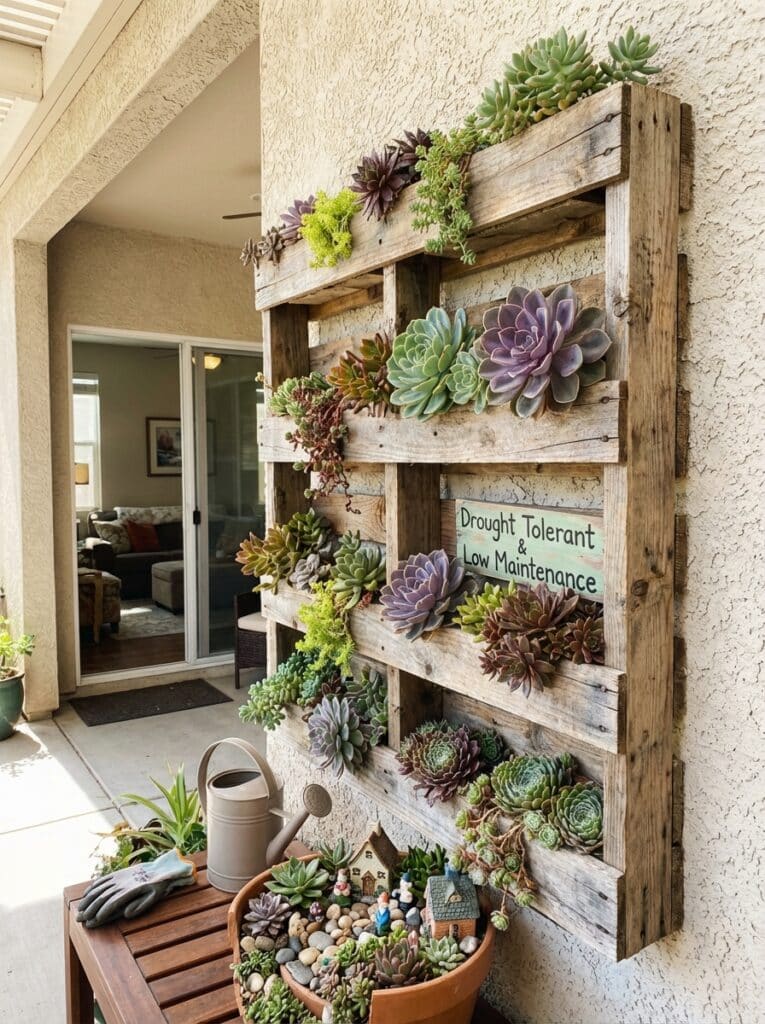
Succulent pallet gardens are praised for:
- Drought tolerance and low water needs
- Minimal maintenance once established
- Year round visual interest
- Suitability for indoor or outdoor settings, including small balconies and covered patios (Roots Nursery)
Some gardeners even use succulent pallets as fairy gardens or miniature landscapes, adding small figurines or pebbles to complete the scene.
Assemble a sturdy succulent display
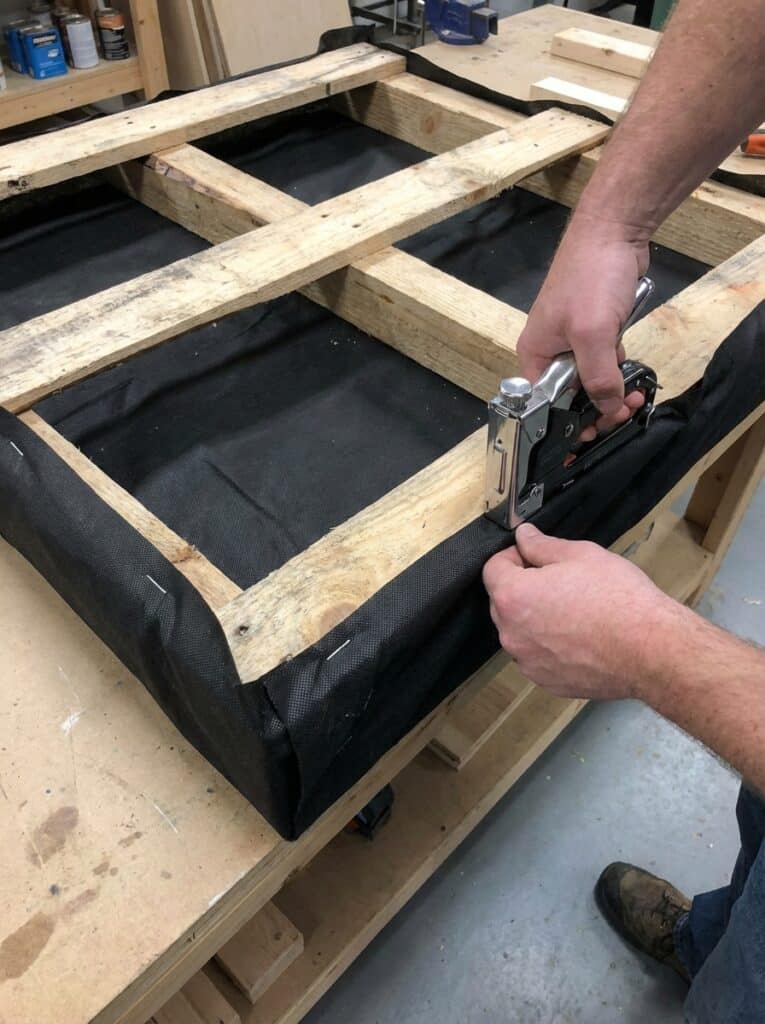
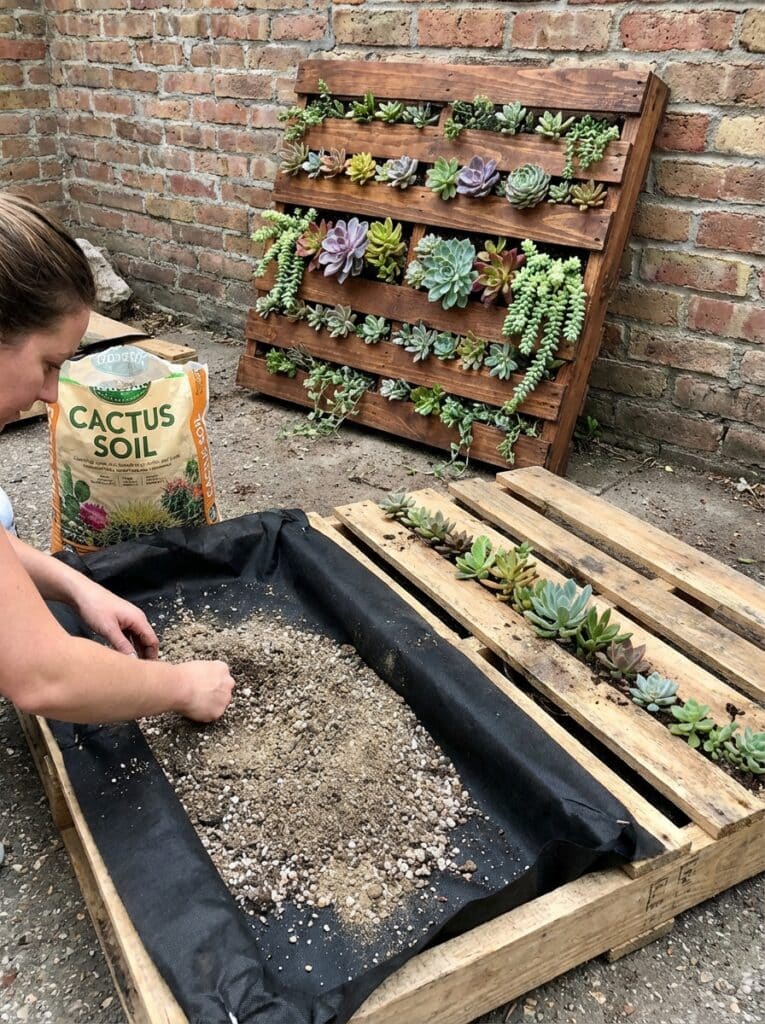
For succulents, follow a similar process to other vertical pallet gardens, with one key difference: you want extremely well draining soil.
- Line the back and sides of the pallet with landscaping fabric and staple securely.
- Fill with a gritty cactus and succulent mix or a blend of potting soil and sand.
- Plant succulents close together between the slats, tucking them tightly into the soil.
- Keep the pallet flat for several weeks until roots establish and plants anchor themselves.
- Once plants are secure, stand the pallet upright and lean it against a wall or fence.
Staining the pallet before planting can create a beautiful contrast between the rich wood and the varied colors of the succulents, and some gardeners find that stained pallets elevate the overall look of the display (Roots Nursery).
Care for your succulent wall
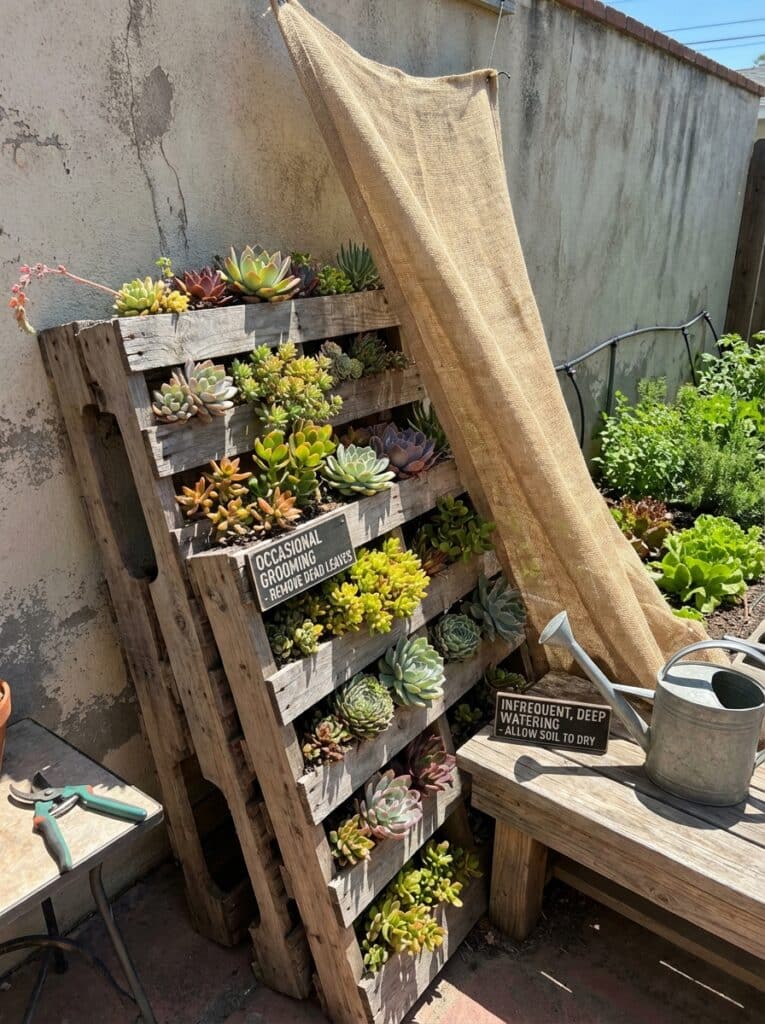
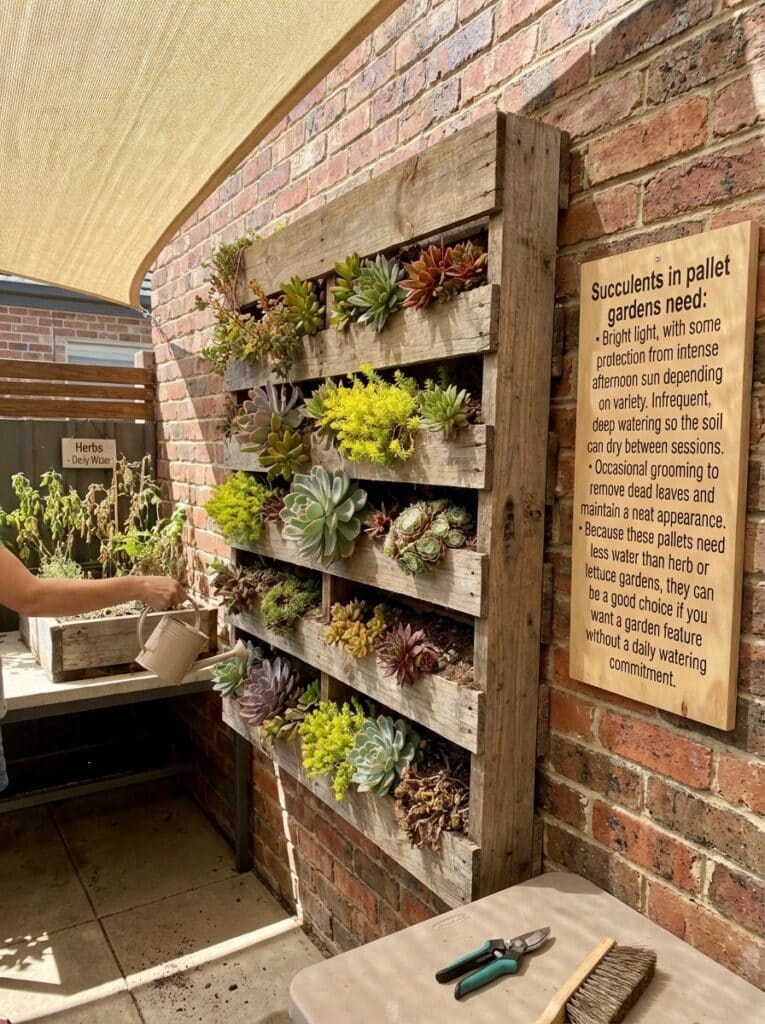
Succulents in pallet gardens need:
- Bright light, with some protection from intense afternoon sun depending on variety
- Infrequent, deep watering so the soil can dry between sessions
- Occasional grooming to remove dead leaves and maintain a neat appearance
Because these pallets need less water than herb or lettuce gardens, they can be a good choice if you want a garden feature without a daily watering commitment.
Design a colorful flower pallet garden
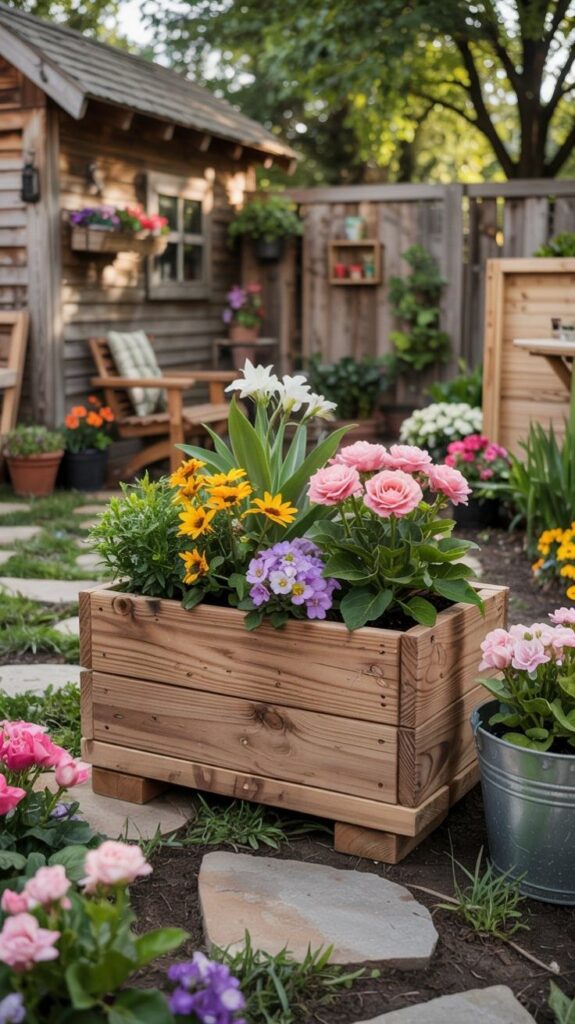
If you are primarily looking for visual impact, a flower focused pallet garden can add instant charm to a balcony, patio, or blank fence.
Choose shallow rooted annuals
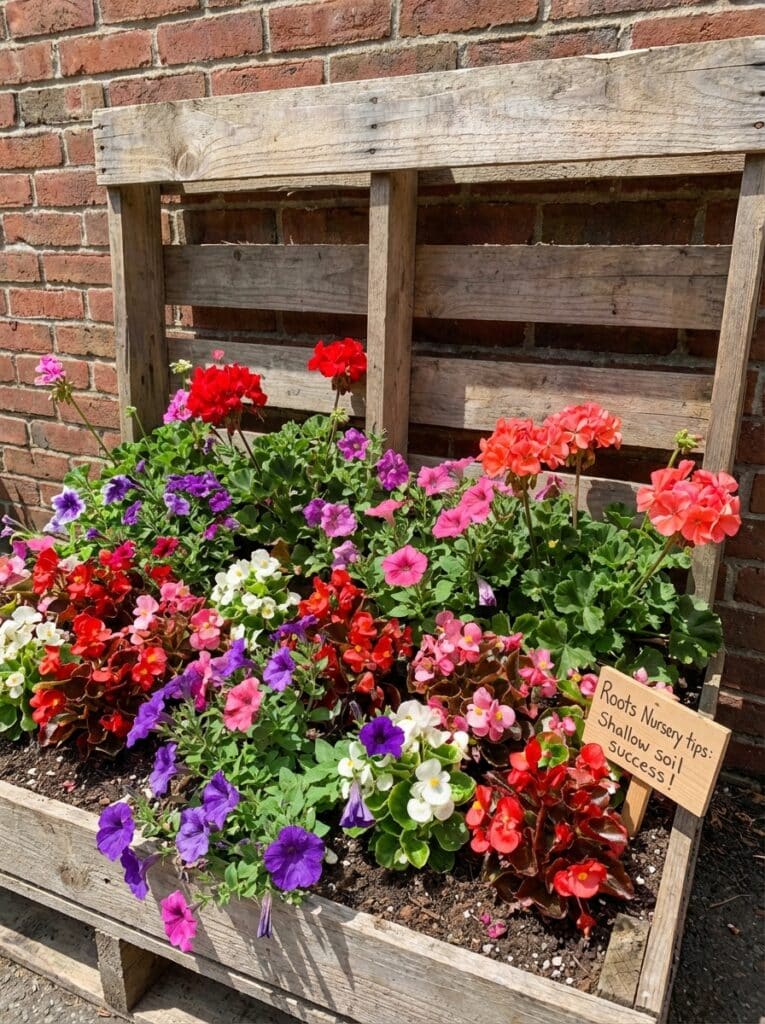
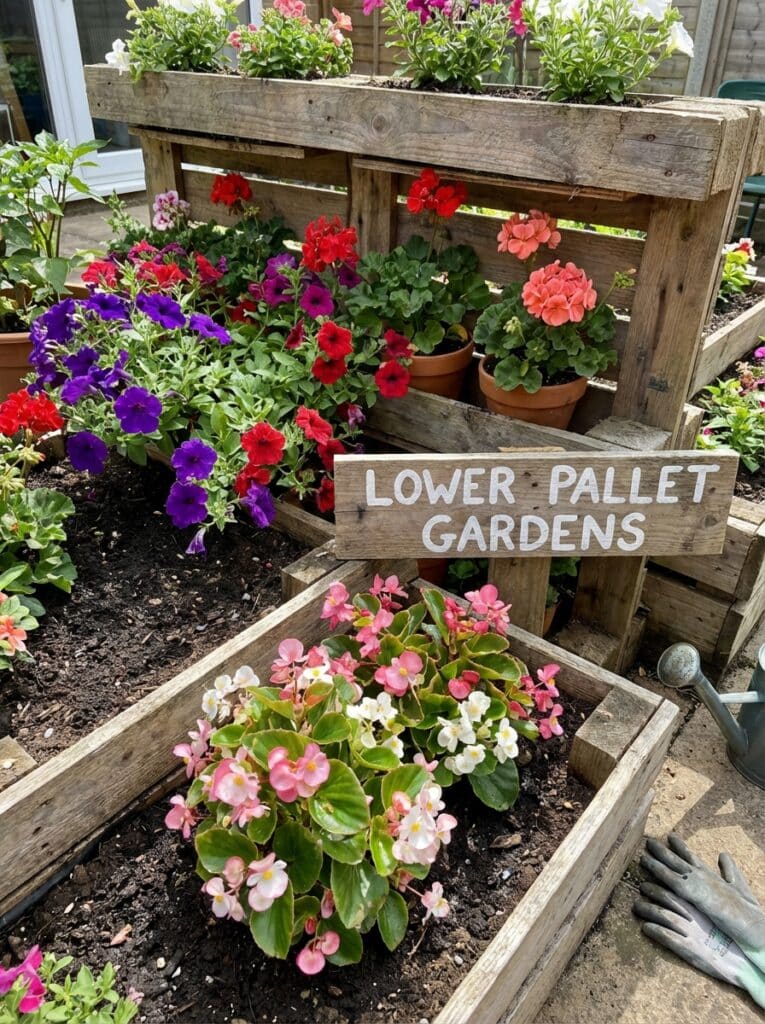
Flower pallet gardens thrive when you select plants that do well in shallow soil and containers. Excellent choices include:
- Wax begonias
- Petunias
- Geraniums
These annuals handle the limited root space of a pallet and reward you with lots of color if you provide appropriate sunlight, soil, and moisture (Roots Nursery).
Arrange flowers for maximum visual impact
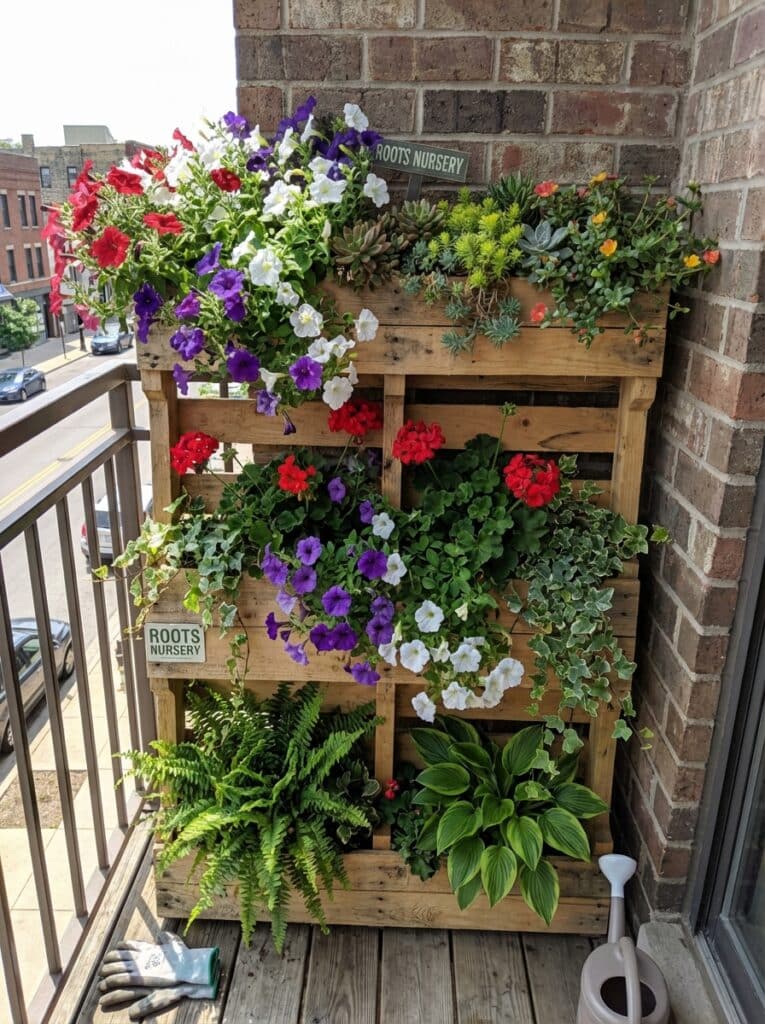
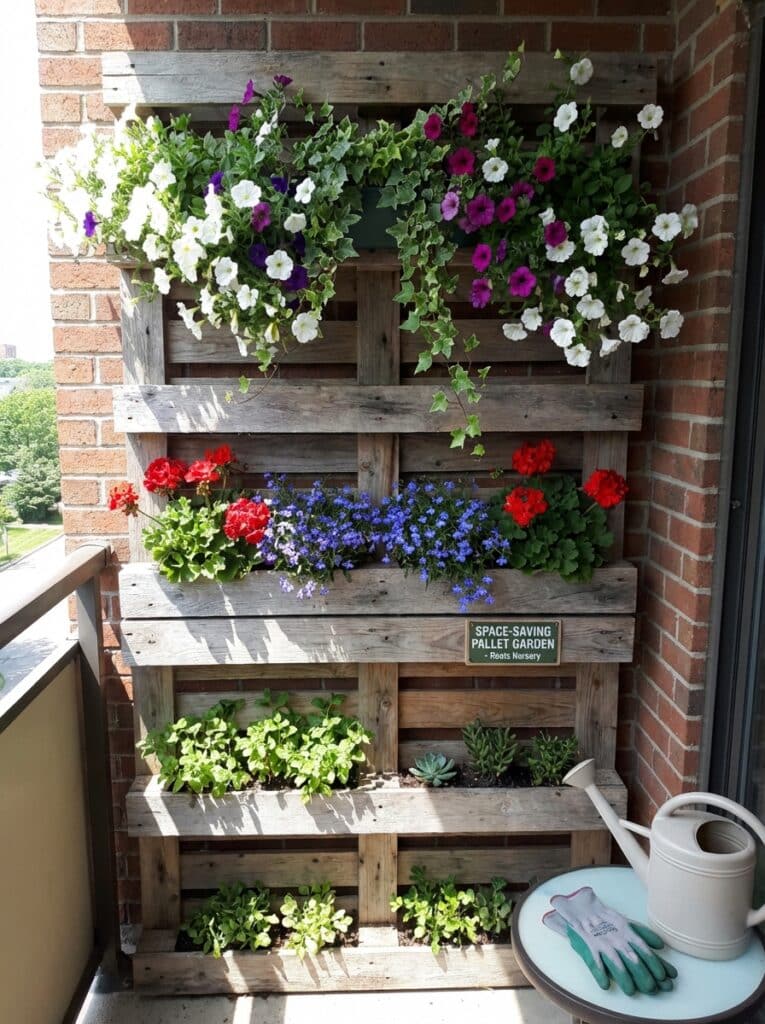
Consider these ideas when planting:
- Use trailing varieties like cascading petunias near the top so they spill over the edges.
- Mix complementary colors, for example, red geraniums with white and purple petunias.
- Place more drought tolerant varieties toward the top where soil may dry faster, and moisture loving plants toward the bottom.
Vertical pallet designs work especially well for apartment dwellers who want colorful, space saving floral displays. A single pallet can turn a plain railing or wall into a layered garden scene (Roots Nursery).
Explore other creative pallet garden projects
Beyond traditional vertical gardens, other pallet garden ideas can transform your space in functional ways.
Build a pallet herb rack with pots or boxes
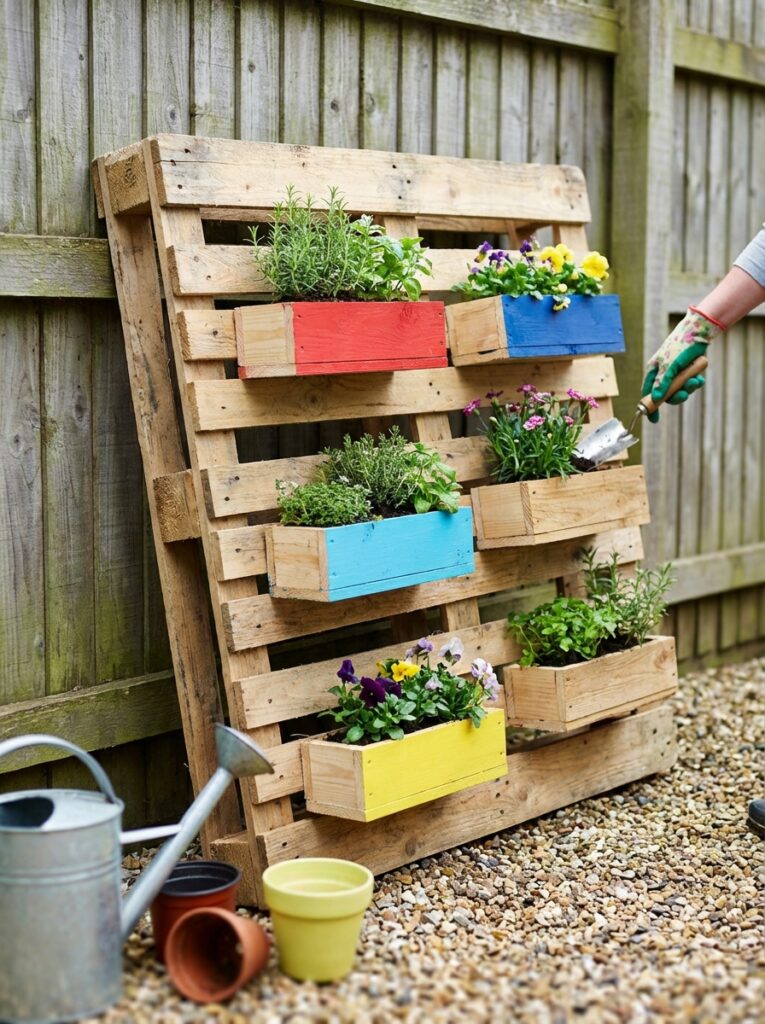
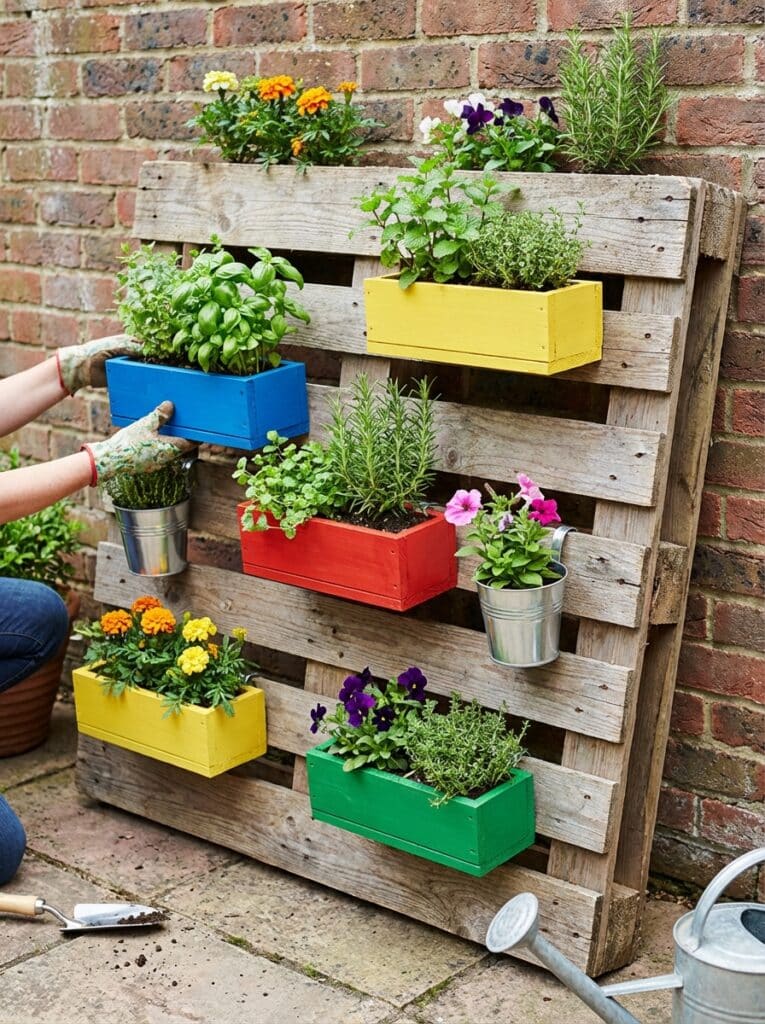
If you prefer moveable containers, you can use a pallet as a framework:
- Attach small planter boxes or pot holders to the front slats.
- Fill each with potting soil and herbs or small flowers.
- Paint each box a different color for a playful look, or keep them neutral for a more cohesive style.
This method lets you rearrange plants, replace individuals easily, and experiment with different combinations without disturbing the entire pallet.
A pallet wall can also become one of the most practical vertical gardening ideas for small spaces when you want herbs, trailing flowers, or salad greens close to the kitchen.
Try a freestanding pallet trellis

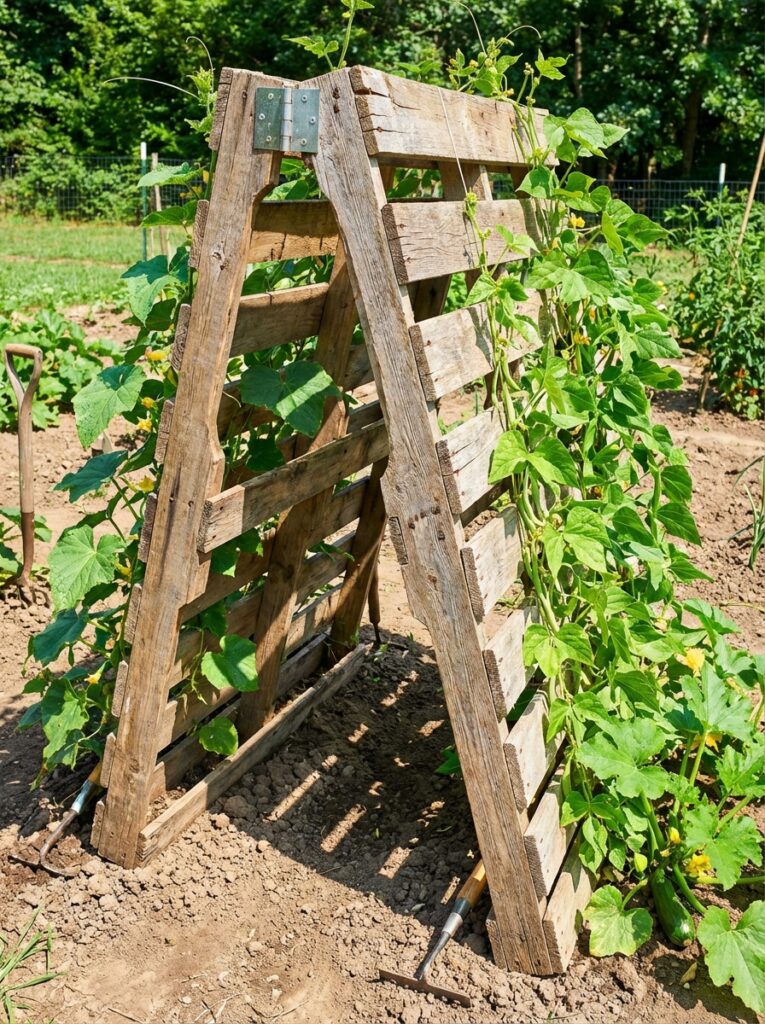
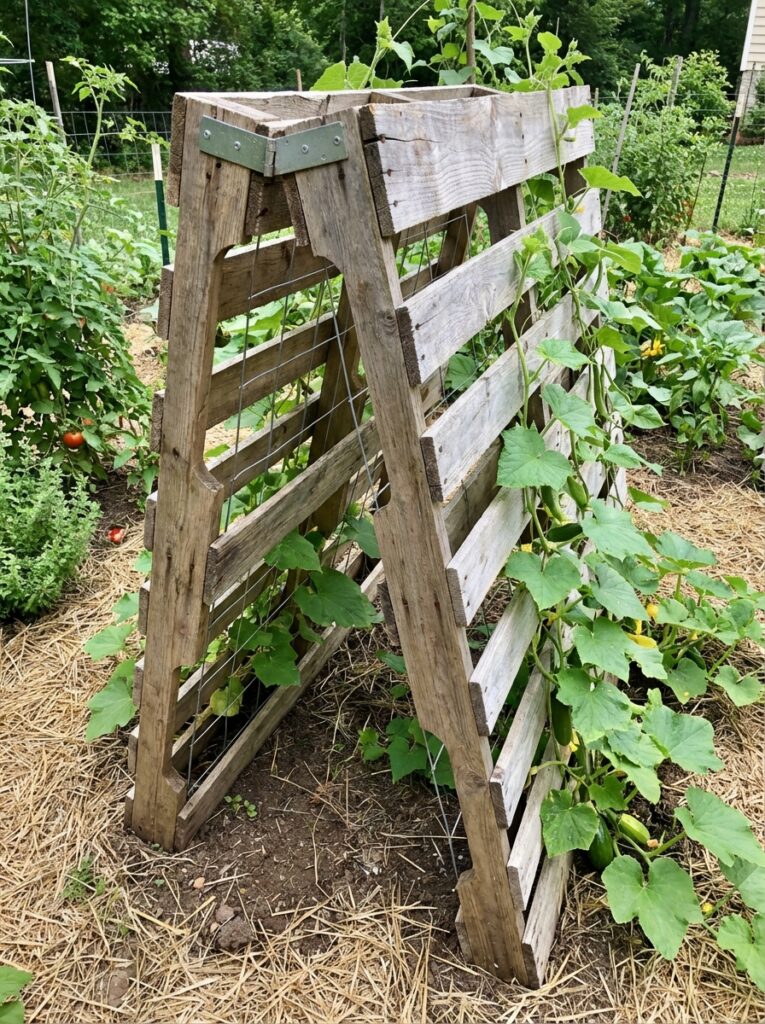
A simple freestanding pallet trellis can support vining plants like cucumbers, squash, or pole beans, and it is easier to build than it looks:
- Take two pallets and stand them upright, edges touching.
- Attach the top edges with a hinge so the pallets form an inverted V shape.
- Spread the bottoms apart slightly to create a stable A frame.
This freestanding pallet trellis provides a tall structure that is ideal for vining vegetables and fruits such as cucumbers, melons, pole beans, squash, tomatoes, and even raspberries (LawnStarter). Hinges for such a project generally cost between 7 and 40 dollars depending on type and quality.
You can plant at the base of each side and let vines climb up to form a living tunnel of greenery.
Frame a pathway or small bridge with pallets

If you have a longer outdoor space, you can expand your concept of pallet garden ideas to include walkways:
- Create a pathway by clearing and leveling the ground, then placing pallets side by side.
- Build a simple bridge across a small, dry section or decorative feature by anchoring pallets in place.
Project guides suggest that pallet packs, if you cannot find free pallets locally, are available online for about 14 dollars each, making this a relatively affordable way to add structure and charm to your yard or garden paths (LawnStarter).
While not planters in themselves, these features can anchor your pallet gardens and help them feel integrated into the landscape.
Add a pallet compost bin for garden waste
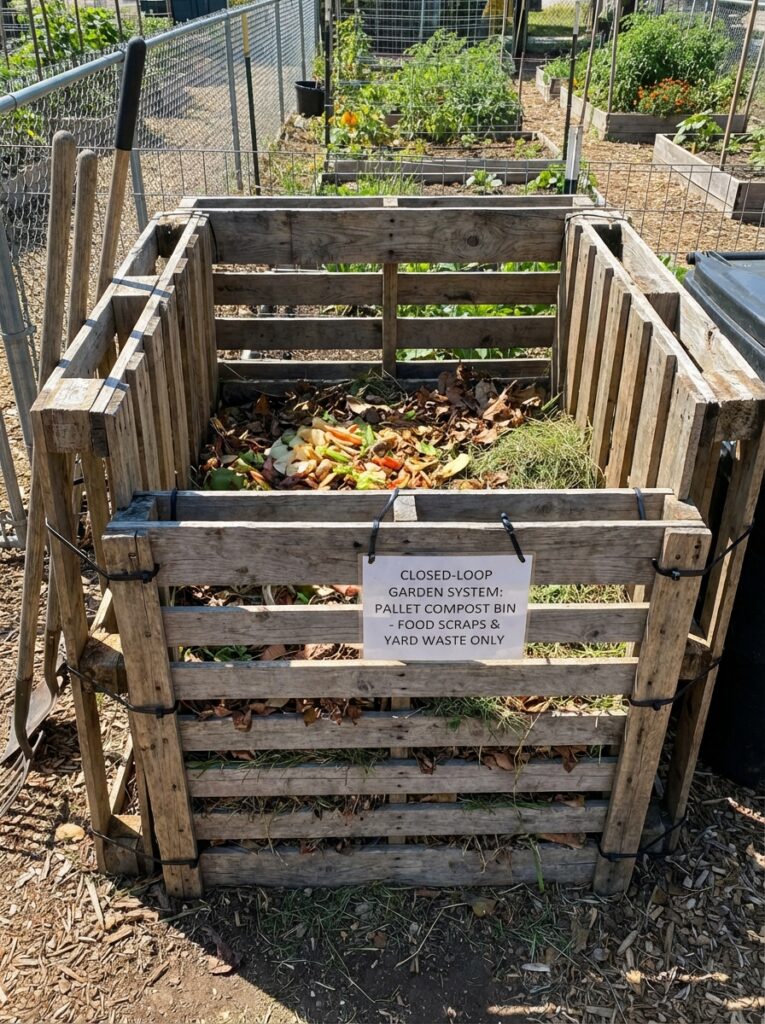
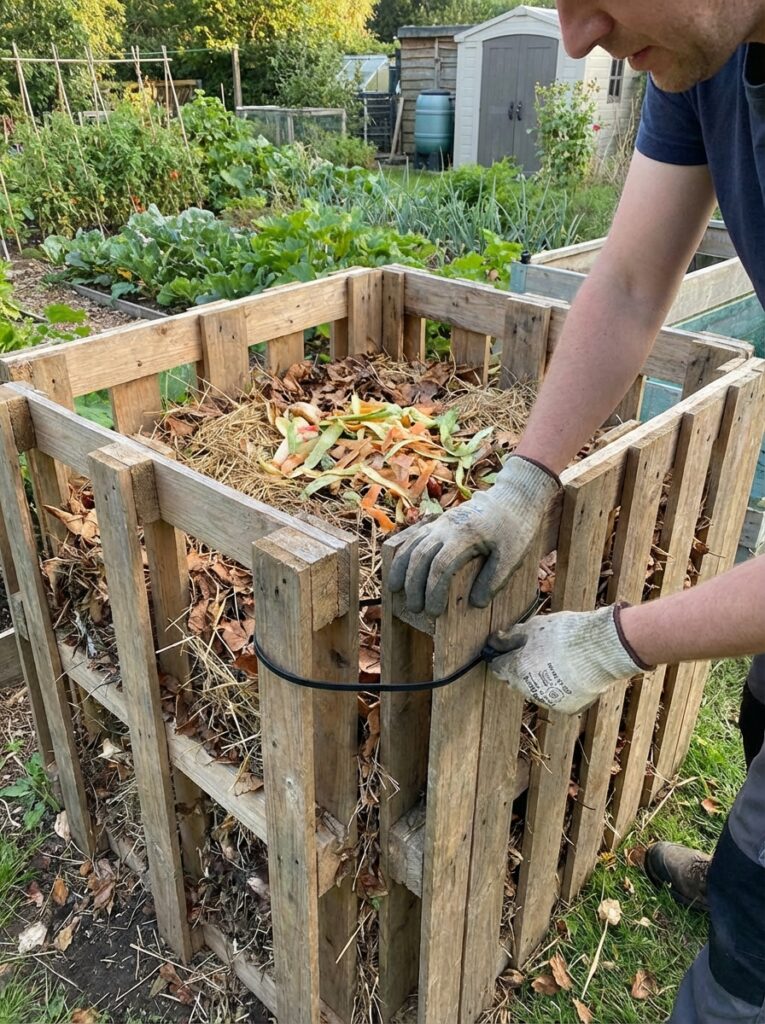
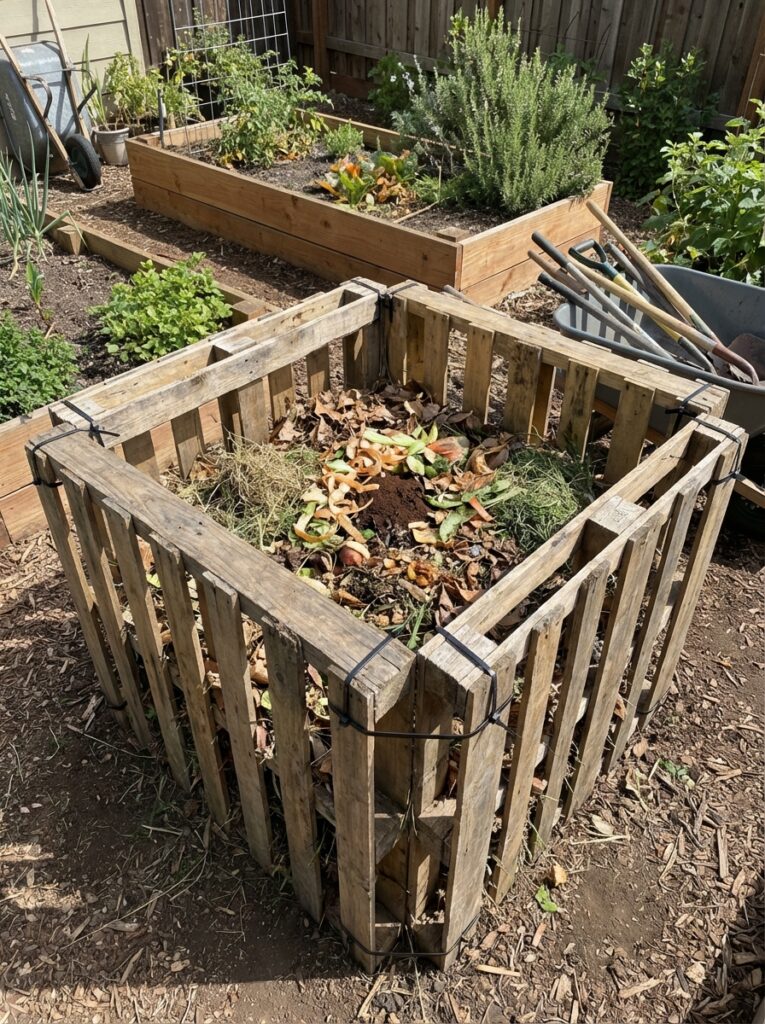
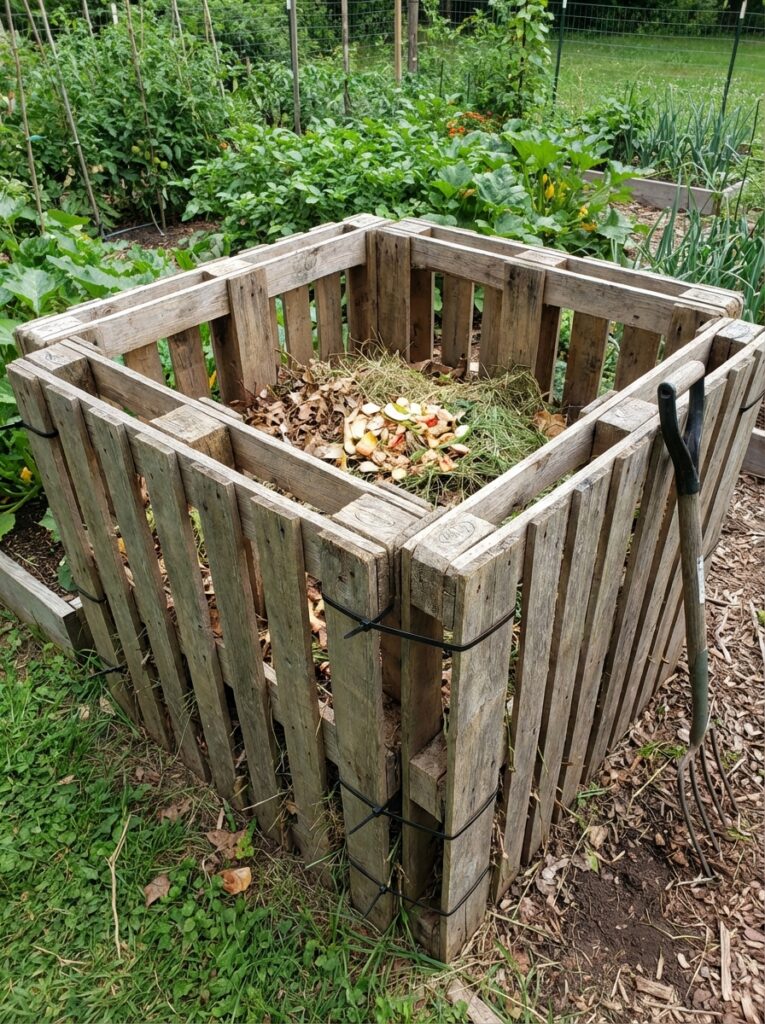
To close the loop on your garden system, consider turning extra pallets into a compost bin. A very simple design uses:
- Four wooden pallets
- Heavy duty zip ties
You can stand the pallets on edge to form a square and tie them together at the corners, which requires no tools and creates a beginner friendly compost bin that converts food scraps and yard waste into fertilizer (LawnStarter). Many local businesses give away pallets for free, so you may be able to build this at minimal cost.
Position this compost bin near your pallet garden so you can easily add spent plants or trimmings and later use finished compost to refresh your soil.
Maintain and water your pallet garden
Regardless of which pallet garden ideas you choose, consistent care helps your project thrive.
Set up an irrigation system that fits your routine
For small setups, you can simply:
- Water by hand with a hose or watering can
- Check soil moisture daily during hot weather
If your pallet garden is larger or in a hard to reach spot, consider:
- A basic drip system connected to a timer
- A DIY perforated hose system laid along the top of the pallet and sealed at the end
Vertical lettuce gardens especially benefit from efficient irrigation, since exposed soil dries quickly and daily watering may be needed in warm conditions (Little Woolly Lamb).
Protect plants through the seasons
Some pallet garden ideas can work across seasons with a few adjustments.
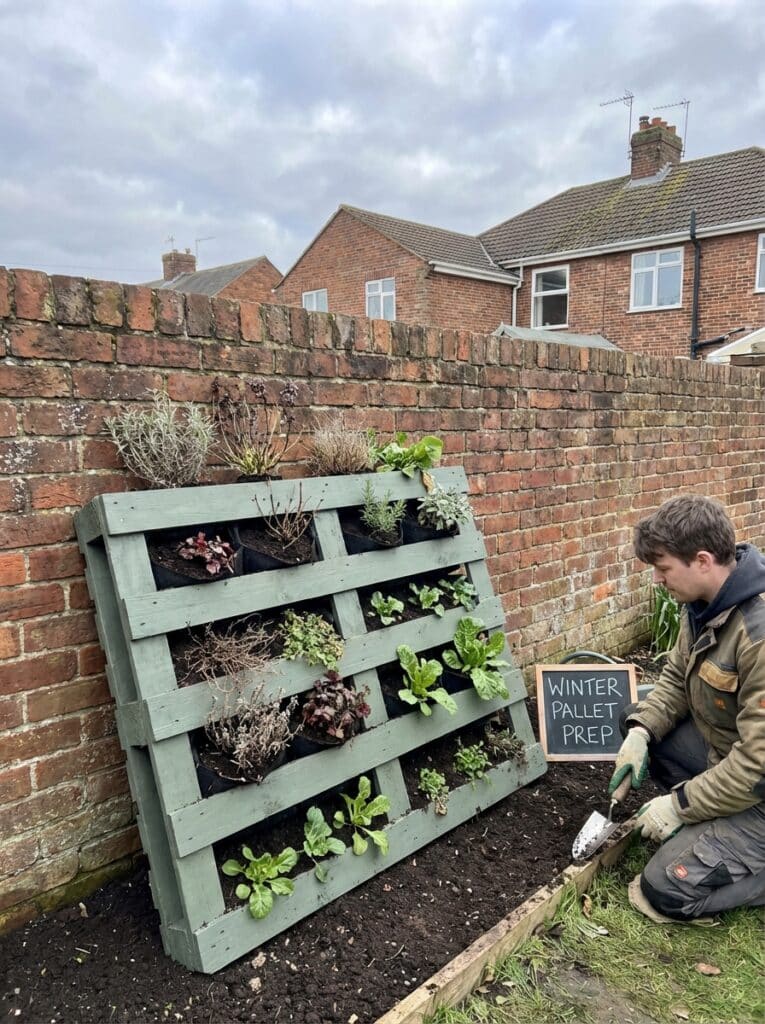
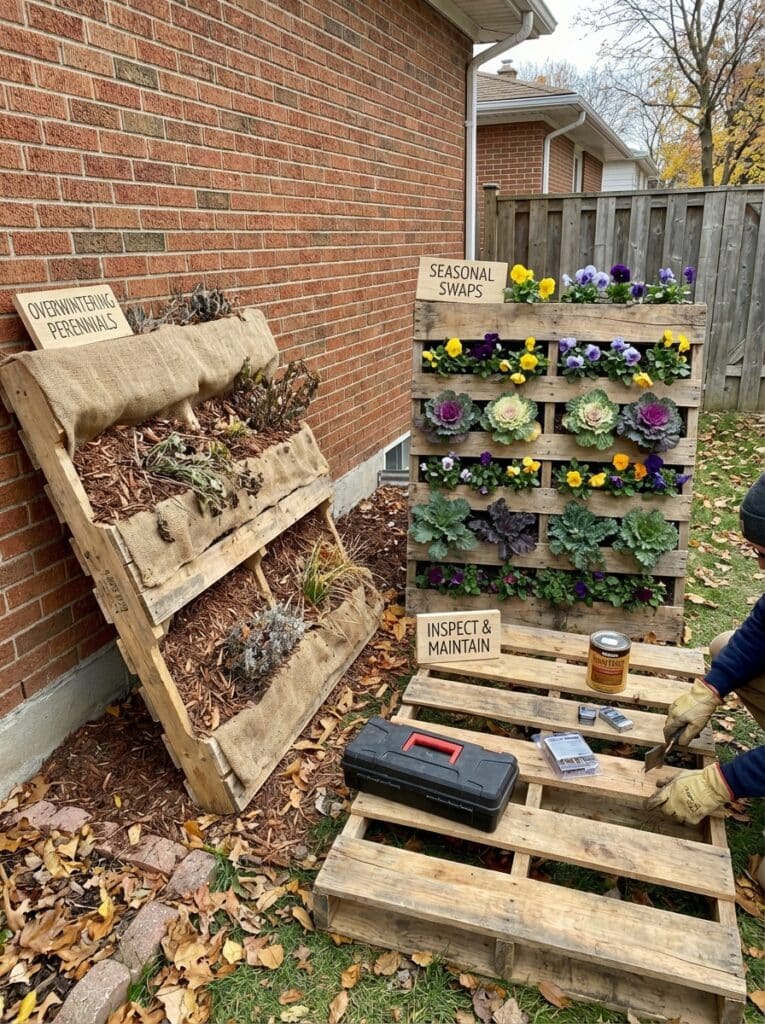
- Overwintering perennials: Perennial plants in a pallet garden can often survive winter if you move the pallet to a protected area, such as leaning it against a brick wall. The wall provides shelter and moderates temperature swings, which helps reduce plant loss in cold months (Hearth and Vine).
- Seasonal swaps: Replace summer annuals with cool season flowers or greens in fall. Your pallet structure stays in place while the plants change with the weather.
Inspect your pallet frame at the end of each season. Tighten staples, re secure any loose fabric, and apply an additional coat of protective finish if the wood looks dry or weathered.
Quick troubleshooting guide for pallet gardens
Use this mini reference when something in your pallet garden looks off.
| Symptom | Likely cause | Simple fix |
|---|---|---|
| Plants wilting quickly in heat | Soil drying too fast in vertical pockets | Water more frequently, consider a drip or perforated hose system |
| Soil washing out of slats | Fabric not secured tightly enough | Add more staples and reinforce with extra fabric along trouble areas |
| Wood warping or twisting | Inadequate protective finish, high moisture | Sand rough spots, apply stain plus spar varnish or similar exterior sealer |
| Herbs growing slowly or looking pale | Soil nutrients depleted | Top dress with compost or use a balanced liquid fertilizer occasionally |
| Plants rotting near base | Poor drainage or overwatering | Reduce watering, use better draining potting mix, check that fabric drains |
Pallet planters are light and flexible, while wooden sleepers garden projects work better when the bed, border or step needs more weight.
Frequently asked questions about pallet garden ideas
Are pallet gardens safe for growing food?
Pallet gardens can be suitable for growing herbs and vegetables as long as you choose heat treated pallets and avoid chemically treated ones. Look for pallets stamped “HT” and avoid any marked “MB”. Clean and finish the wood as needed, and consider lining soil touching surfaces with landscaping fabric or an additional barrier if you are concerned.
How long does it take to build a pallet garden?
Most basic pallet garden projects can be built in an afternoon. For example, a vertical lettuce garden made from a wooden pallet typically takes a few hours to construct, plus a few days for the soil to settle before standing it upright (Little Woolly Lamb). Succulent and herb pallets follow similar timelines, especially if you gather all materials ahead of time.
How often should you water a pallet garden?
Watering frequency depends on your climate, plant types, and exposure. Vertical lettuce gardens usually need daily watering in hot weather because soil in pallets dries quickly through the landscaping fabric (Little Woolly Lamb). Succulent pallets need far less, often only when the soil is completely dry. Check the top inch of soil regularly and adjust your schedule based on how quickly it dries.
What can you grow in a pallet garden besides herbs and lettuce?
You have many options. Pallet gardens are popular for growing vegetables, herbs, annual flowers, and succulents, and creative designs can support multi level vegetable displays that produce substantial harvests even in tight spaces (Roots Nursery). You can also grow shallow rooted flowers such as petunias and geraniums for color, or vining plants like beans and cucumbers on pallet trellises (LawnStarter).
How do you keep pallet wood from rotting in the garden?
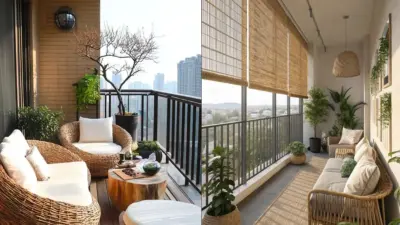
Using vertical pallet planters is an smart way to add lush greenery to a small balcony design without cluttering the floor space.
To keep pallet wood in good condition outdoors, start with sound, heat treated pallets and then add protection. Staining the wood and applying a sealer such as spar varnish can help prevent warping and weather damage, and some DIYers report good long term results with this method (Reddit). Check the structure annually, touch up finishes as needed, and make sure your pallet has good airflow and drainage so it does not sit in standing water.
If you are ready to experiment, start with one simple pallet garden idea that suits your space, such as a compact herb wall near your kitchen door. Once you see how much greenery you can grow in such a small footprint, you may find yourself planning your next pallet project before the first one is even finished.
- 317shares
- Facebook0
- Pinterest314
- Twitter3
- Reddit0