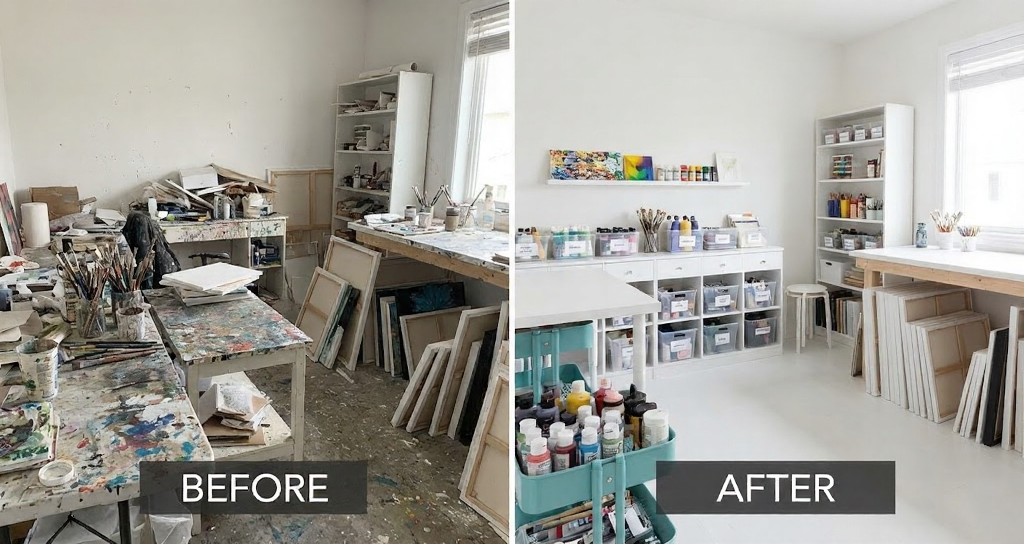
I spent three years convincing myself that my cluttered studio was “creative chaos.” Paint tubes scattered across every surface, brushes soaking in murky water for days, canvases stacked against walls in precarious towers, and a fine layer of dust settling over everything I wasn’t actively using. I told myself this mess was evidence of productivity, proof that real work was happening.
Then I lost a commissioned piece. Not metaphorically—I physically couldn’t find it. A completed 18×24 oil painting, somewhere in my own studio, vanished under the accumulated debris of months of working without cleaning. I spent four hours searching before discovering it wedged behind a shelf, slightly damaged from being pressed against rough wood.
That was my turning point. The commission delay cost me a client relationship. The damage required touch-up work. And the four hours of searching produced nothing but frustration and shame.
Here’s what I’ve learned since then: the “creative chaos” narrative is a myth that costs artists time, money, and their best work. A clean art studio isn’t about aesthetics or following rules—it’s about removing obstacles between you and the creative state where your best work happens.
This guide explores why studio cleanliness directly impacts creative output, how to establish sustainable cleaning practices, and when bringing in professional help makes sense for working artists.
These insights come from transforming my own practice, interviewing fellow artists about their workspace habits, and researching the cognitive science behind environment and creativity. The connection between clean spaces and creative flow is stronger than most artists realize.
The Science Behind Clean Spaces and Creativity
The relationship between environment and creative thinking isn’t just intuition—it’s documented in cognitive research.
Cognitive Load and Decision Fatigue
Every object in your visual field requires a small amount of mental processing. Your brain constantly monitors your environment, even when you’re focused on work. A cluttered studio means thousands of micro-decisions happening below conscious awareness: Is that tube of paint the one I need? Where did I put that palette knife? Should I deal with that pile of dirty rags?
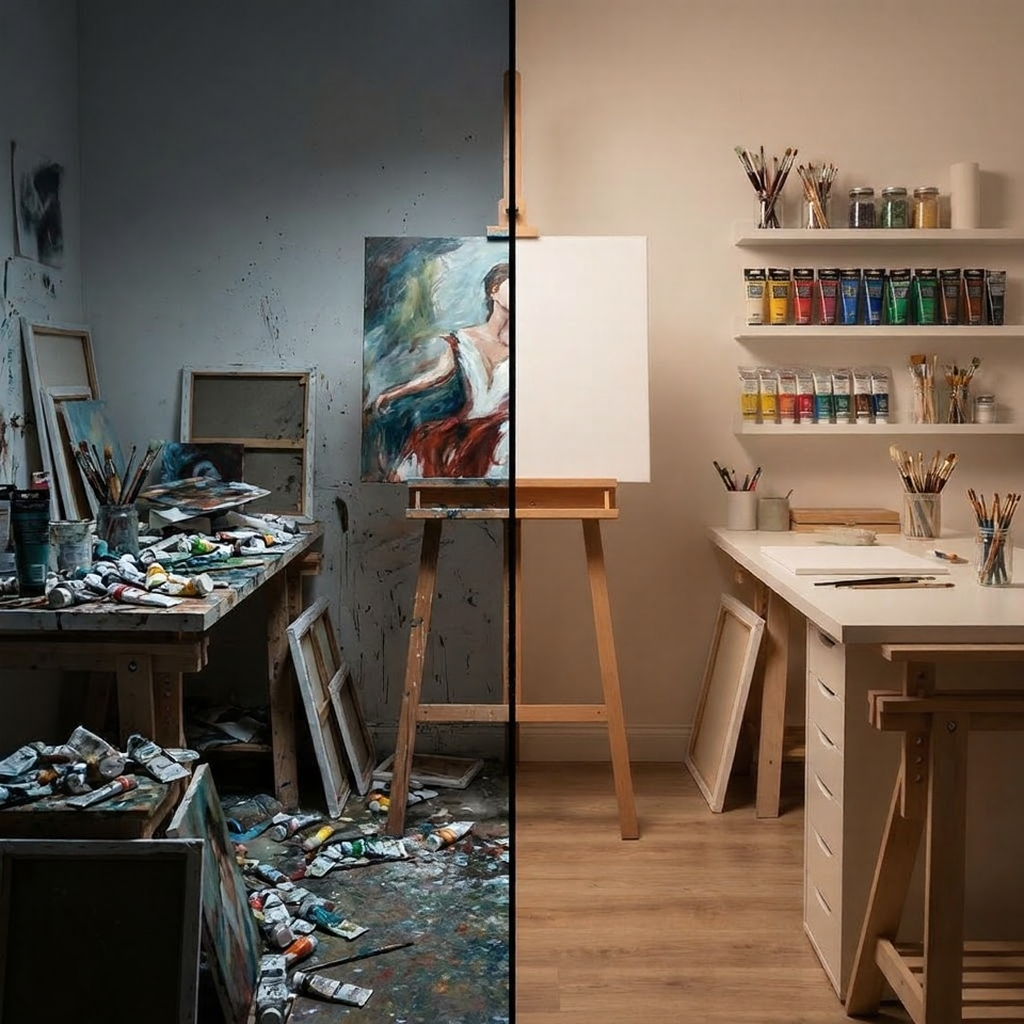
This background processing consumes cognitive resources that could fuel creative work. Researchers call this “cognitive load”—the total amount of mental effort being used. High cognitive load reduces available capacity for complex thinking, problem-solving, and creative exploration.
A clean studio reduces cognitive load. When tools have designated places, when surfaces are clear, when visual noise is minimized, your brain can direct more resources toward actual creative work.
The Zeigarnik Effect
Psychologist Bluma Zeigarnik discovered that incomplete tasks occupy mental bandwidth even when we’re not consciously thinking about them. That pile of brushes that needs cleaning, the spilled paint that needs addressing, the disorganized supply shelf—these unfinished environmental tasks create persistent mental tension.

Artists working in cluttered spaces carry the psychological weight of dozens of incomplete cleaning tasks. This background stress affects creative risk-taking, experimentation, and the willingness to start ambitious projects.
Completing environmental tasks—or better, preventing them from accumulating—frees mental space for creative courage.
Flow State Access
Psychologist Mihaly Csikszentmihalyi’s research on “flow states” reveals that environmental factors significantly impact our ability to enter deep creative focus. Distractions, whether physical objects or unresolved tasks, interrupt the delicate process of achieving flow.
A clean, organized studio removes friction from the creative process. When you can find supplies instantly, when nothing demands attention except your work, entering and maintaining flow becomes easier.
What “Clean” Actually Means for Working Artists
Studio cleanliness for artists differs from household cleanliness. The goal isn’t sterile perfection—it’s functional organization that supports creative work.

Working Clean vs. Spotless
A working studio will get dirty during active projects. Paint splatters happen. Dust accumulates. Materials spread across work surfaces. This is normal and expected.
The distinction is between productive mess (current project materials in active use) and accumulated clutter (old projects, forgotten supplies, debris that serves no purpose).
Working clean means:
- Current project materials are accessible and organized
- Completed projects are properly stored or delivered
- Supplies return to designated locations after use
- Surfaces get cleared between major project phases
- Deep cleaning happens regularly enough to prevent buildup
The 15-Minute Daily Practice
Many professional artists maintain studio cleanliness through brief daily habits rather than marathon cleaning sessions. The practice is simple: spend 15 minutes at the end of each work session returning the studio to baseline.
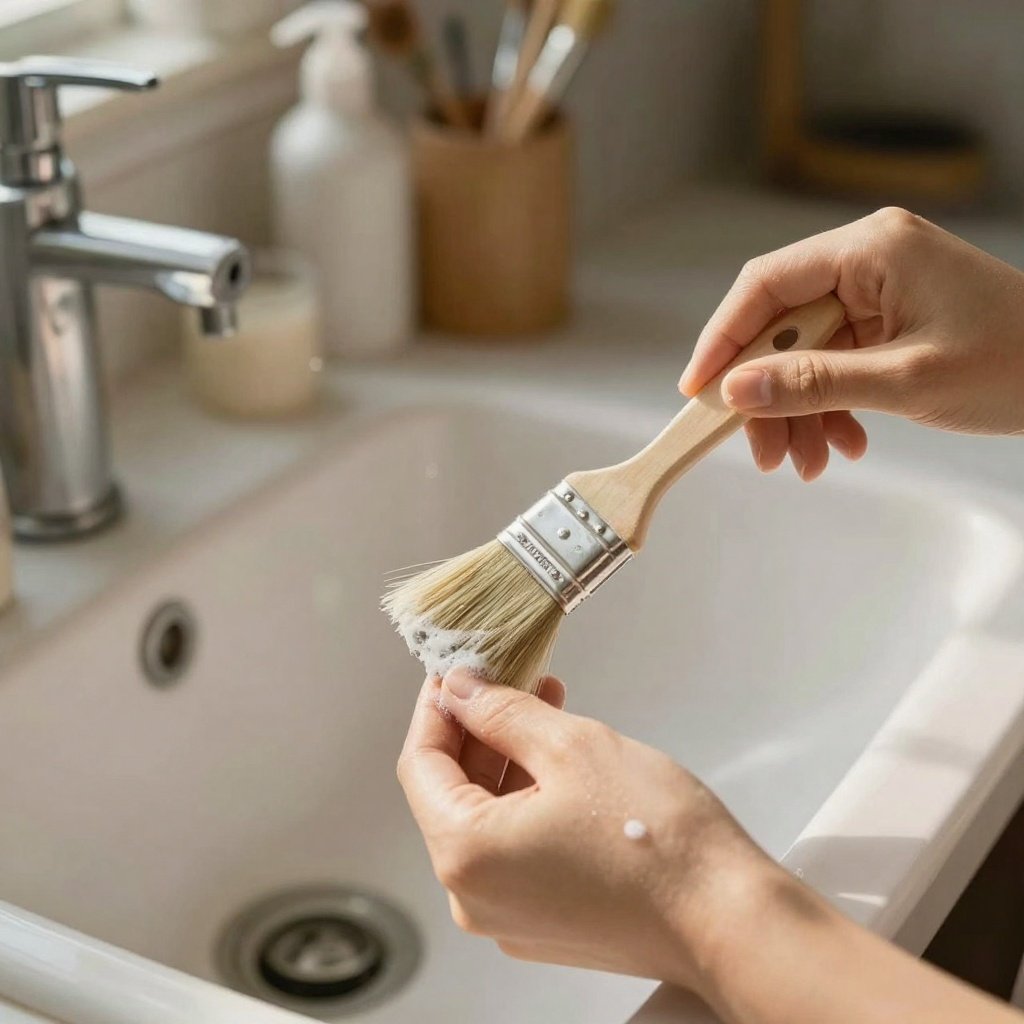
This includes washing brushes properly rather than leaving them to soak, capping paint tubes, clearing palette surfaces, returning tools to storage, and addressing any spills or debris from the day’s work.
Fifteen minutes daily prevents the accumulation that leads to overwhelming mess. It’s far easier to maintain cleanliness than to restore it after weeks of neglect.
Weekly and Monthly Rhythms
Beyond daily maintenance, effective studio management includes deeper periodic cleaning:
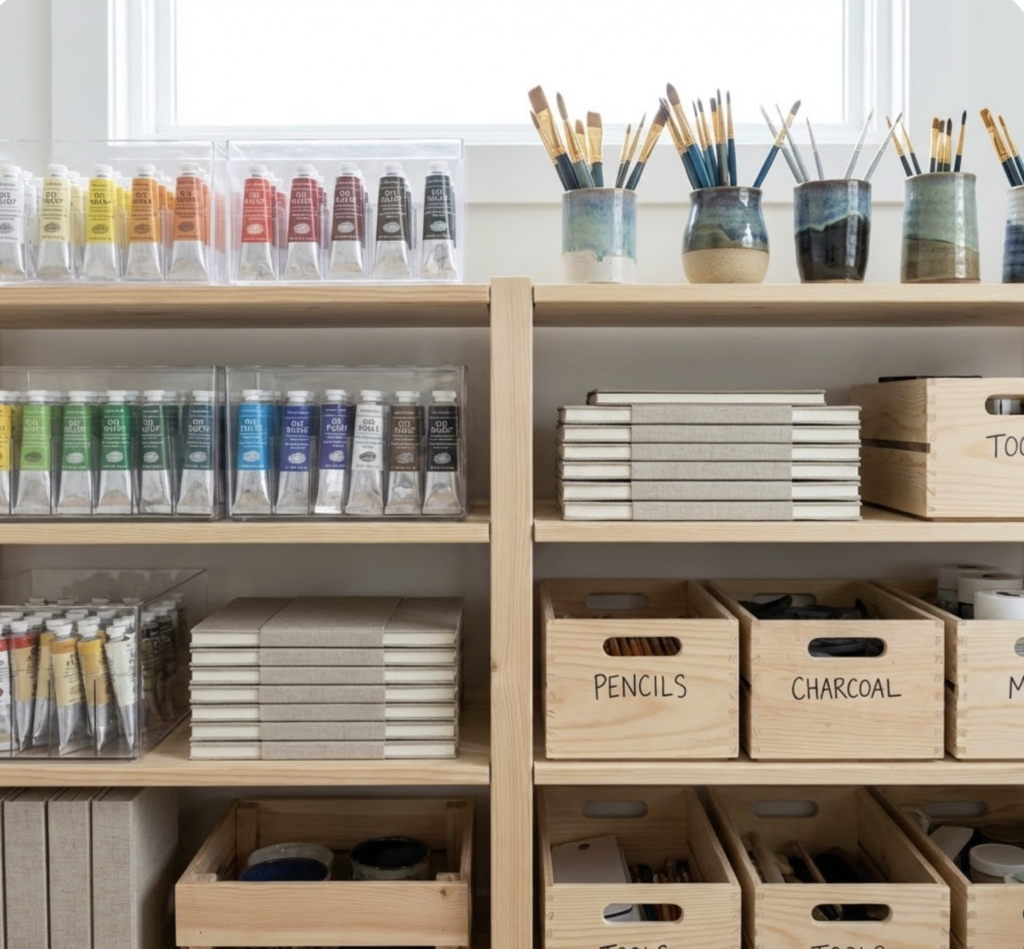
Weekly tasks:
- Wipe down all work surfaces
- Organize supply storage
- Remove trash and recycling
- Check ventilation systems and filters
- Assess inventory and note needed supplies
Monthly tasks:
- Deep clean floors, including under furniture and equipment
- Clean windows and light fixtures (proper lighting matters for color work)
- Organize reference materials and paperwork
- Address any deferred maintenance
- Evaluate what’s working and what needs adjustment
When Professional Cleaning Makes Sense
Some artists resist the idea of anyone else touching their workspace. The studio feels personal, and the thought of strangers moving things triggers anxiety. This resistance is understandable—but it often prevents artists from getting help they genuinely need.
The Time-Value Calculation
Professional artists face a straightforward economic question: Is your time better spent cleaning or creating?
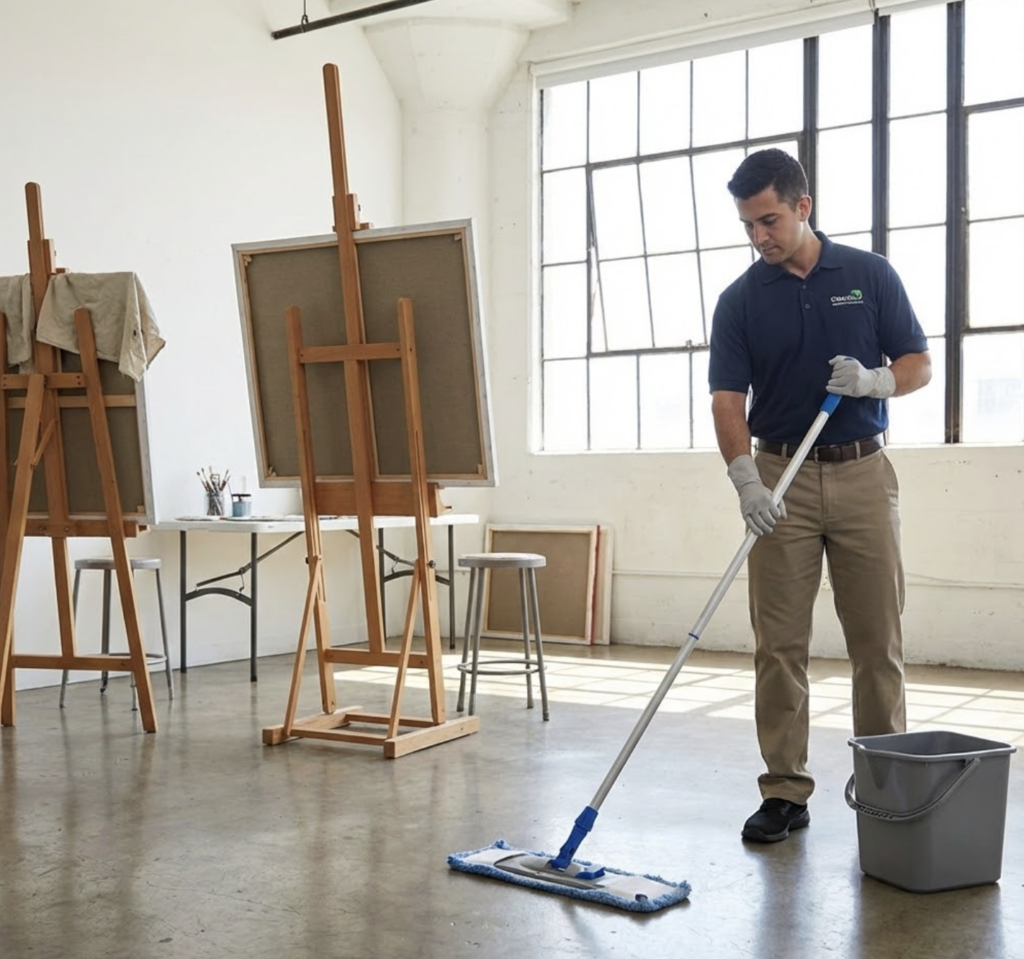
If you bill $50-100+ per hour for commissioned work, spending four hours on deep cleaning costs $200-400 in potential earnings. Professional cleaning services often cost less than this for comparable results—and they’ll do it faster and more thoroughly.
The math favors outsourcing cleaning for working artists. Time spent maintaining your studio is time not spent on revenue-generating creative work.
Specialized Cleaning Challenges
Art studios present cleaning challenges that standard household approaches don’t address:
Chemical residues: Solvents, fixatives, and certain paints leave residues that require specific cleaning approaches. Improper cleaning can spread rather than remove these substances.
Fine particle dust: Pastel, charcoal, and dry pigment work generates fine particles that standard dusting spreads into the air. Proper removal requires specific techniques and often HEPA filtration.
Delicate surfaces: Finished artwork, stretched canvases, and sensitive equipment need careful handling during cleaning. Inexperienced cleaning can damage work worth thousands of dollars.
Ventilation systems: Studios often have specialized ventilation that requires regular maintenance beyond normal household cleaning.
For artists dealing with these challenges, particularly those working in shared spaces or maintaining larger studios, professional help becomes practical rather than indulgent. Finding reliable cleaning services in Sydney or your local area who understand the specific needs of creative workspaces can transform your studio maintenance from constant struggle to handled problem.
What to Communicate to Cleaners
When working with professional cleaners, clear communication prevents problems:
Identify no-touch zones: Specify which areas, objects, or surfaces should not be moved or cleaned. Work in progress, drying paintings, and specialized equipment often fall into this category.
Explain material sensitivities: Some art materials react poorly to standard cleaning products. Water damages certain papers. Solvents can interact with some surfaces. Communicate what products are safe to use where.
Provide access information: If cleaners will work while you’re away, ensure they can access everything they need without disturbing restricted areas.
Establish ongoing communication: A good cleaning relationship improves over time as cleaners learn your specific needs and preferences.
Organizing for Creative Access
Cleanliness and organization work together. A clean but chaotic studio still impedes creative work; an organized but dirty space creates health concerns. Both elements matter.
The “Everything Has a Home” Principle
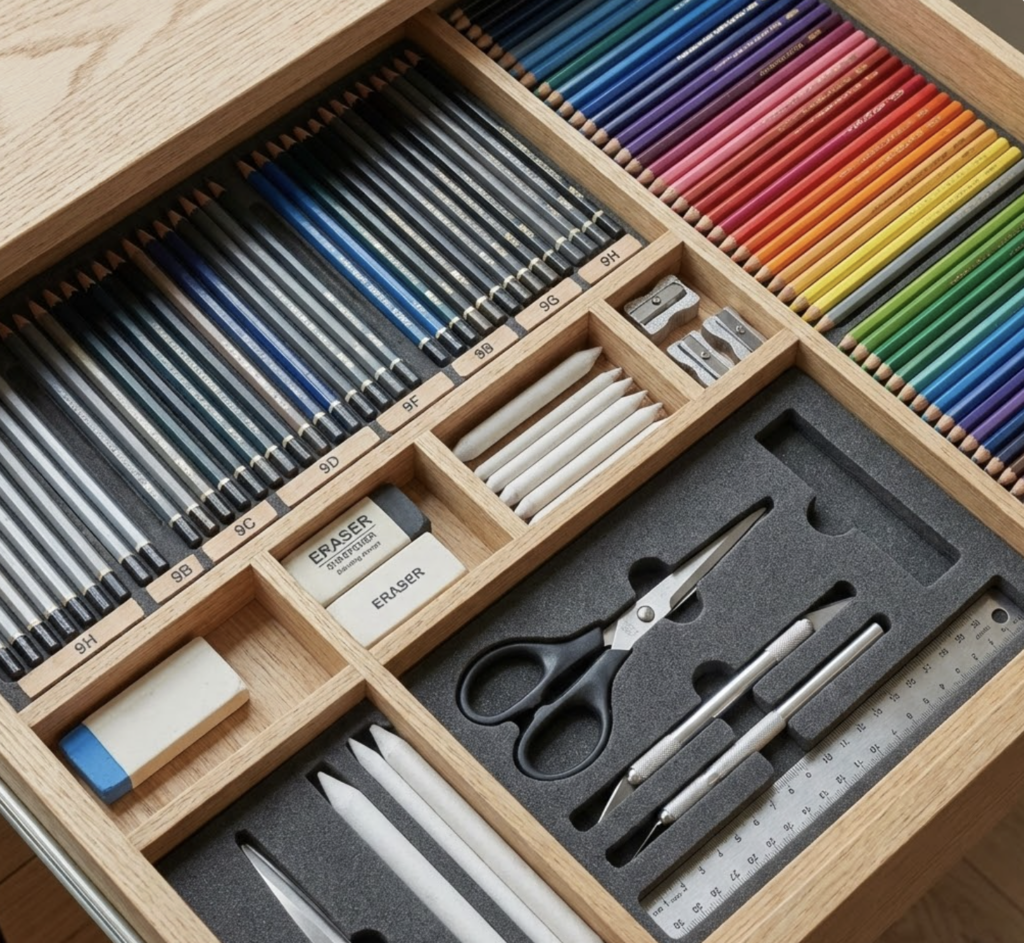
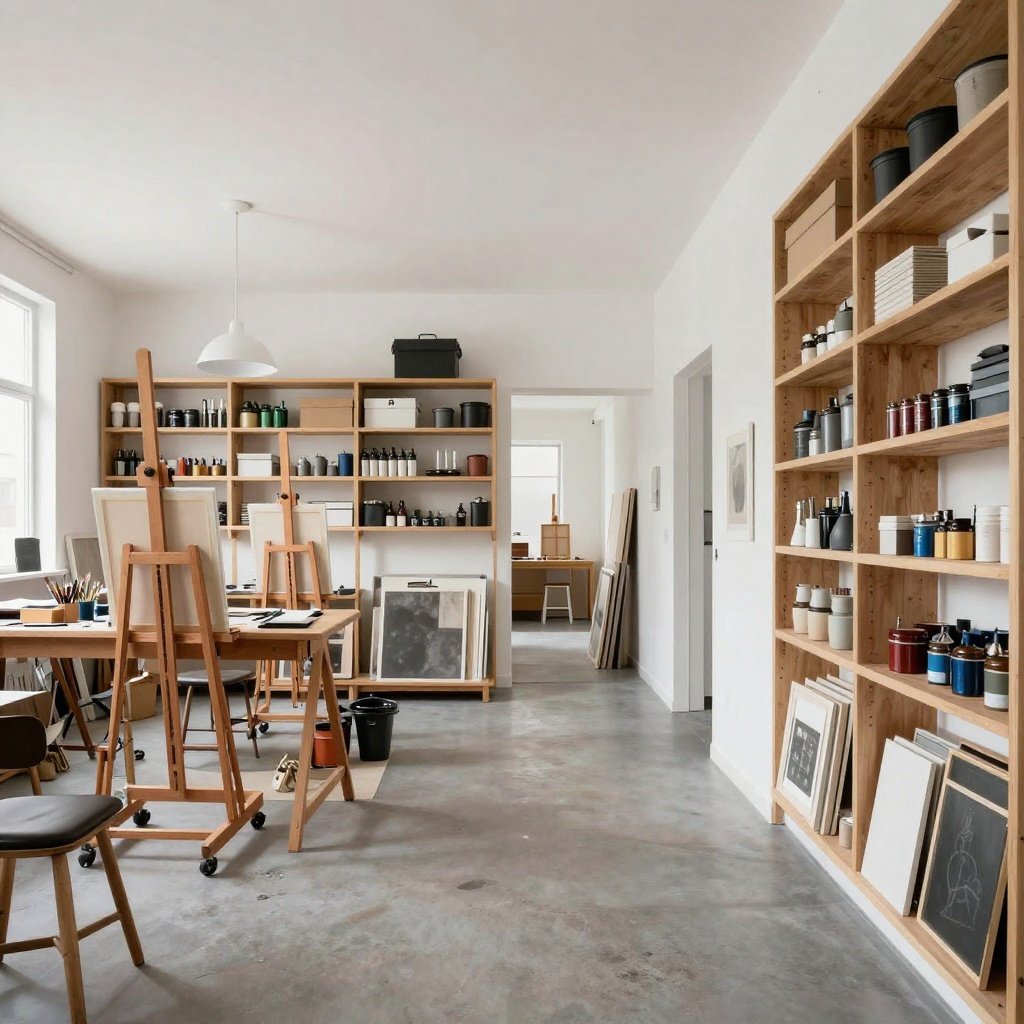
Every supply, tool, and material in your studio should have a designated storage location. This isn’t about rigid systems—it’s about knowing where things belong so returning them becomes automatic.
Effective organization principles:
- Store items near where they’re used
- Keep frequently used supplies most accessible
- Group related materials together
- Use clear containers when possible for visual identification
- Label storage that isn’t immediately obvious
Separating Active and Archive
Working studios accumulate reference materials, completed work, and supplies for projects not currently active. Without separation, this archive crowds into active workspace.
Create distinct zones:
- Active work area with current project materials only
- Supply storage with organized, accessible inventory
- Archive storage for completed work, reference materials, and inactive supplies
- Administrative area for business paperwork and planning
Physical separation prevents archive materials from creeping into active workspace and cluttering your creative environment.

FAQ
How often should I deep clean my art studio?
Most working studios benefit from monthly deep cleaning, with weekly light cleaning and daily tidying. Adjust frequency based on your work style—messy mediums like oil paint or pastel may require more frequent attention than cleaner practices like digital work or precise illustration.
Can a messy studio ever support creativity?
Some research suggests mild disorder can enhance certain types of creative thinking. However, there’s a significant difference between intentional creative disorder and accumulated neglect. If your mess is preventing you from finding supplies, damaging work, or creating stress, it’s hindering rather than helping creativity.
What cleaning products are safe for art studios?
Avoid harsh chemicals near artwork and supplies. Mild soap and water work for most surfaces. For floors, use products appropriate to your flooring type. Avoid aerosol sprays near drying artwork. When in doubt, test products in inconspicuous areas first.
How do I maintain cleanliness during intensive project periods?
Accept that active project phases will be messier than baseline. Focus on essential tasks: keeping pathways clear, maintaining ventilation, and preventing permanent damage. Schedule a thorough cleanup immediately after project completion—building this into your project timeline ensures it happens.
Is hiring cleaners worth it for a small home studio?
Even small studios benefit from periodic professional deep cleaning. You might not need weekly service, but quarterly or seasonal professional cleaning addresses buildup that daily maintenance misses. Consider your time value, the specialized challenges of your space, and your personal capacity for cleaning work.
Conclusion
The myth of creative chaos has cost artists countless hours of searching, damaged work, and unrealized creative potential. A clean art studio isn’t about conformity or suppressing creative energy—it’s about creating conditions where your best work can emerge without friction.
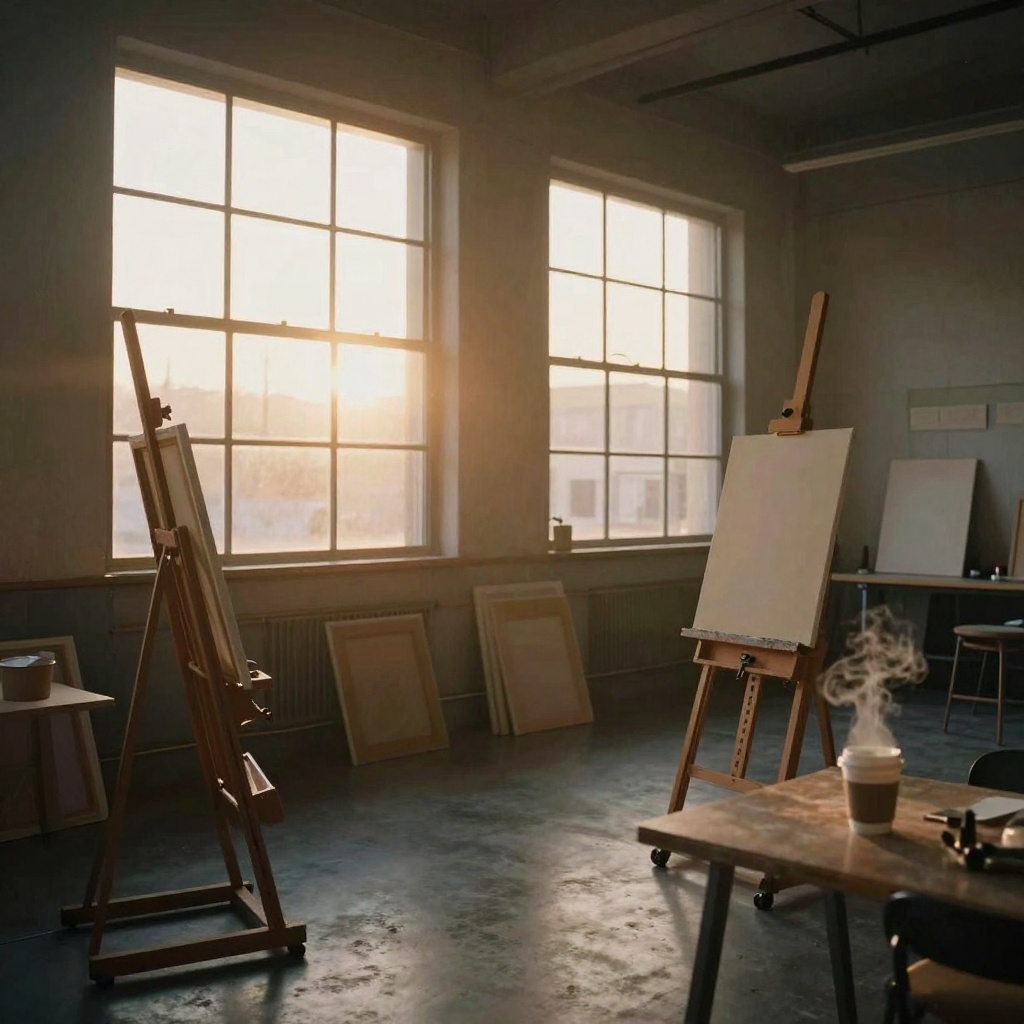
The science is clear: cluttered environments increase cognitive load, maintain psychological tension, and impede access to flow states. Clean, organized spaces free mental resources for actual creative work.
This week: Implement the 15-minute daily practice. At the end of each work session, spend fifteen minutes returning your studio to baseline. Notice how starting the next session in a clean space affects your creative entry.
This month: Address your studio’s accumulated clutter. Sort through supplies, properly store completed work, and clear surfaces that have become dumping grounds. Consider whether professional cleaning help would benefit your specific situation.
Ongoing: Build sustainable maintenance rhythms that prevent accumulation. The goal isn’t perfection—it’s a functional creative environment that supports rather than hinders your artistic practice.
Your creativity deserves a space that works for it, not against it. A clean studio isn’t the destination—it’s the foundation that makes everything else possible.
- 145shares
- Facebook0
- Pinterest145
- Twitter0
- Reddit0