I moved my art studio three times in five years, and the first move was a disaster. I wrapped canvases in bed sheets, tossed brushes into garbage bags, and stacked everything in the back of a rental van like I was moving furniture. Three paintings arrived with dents. An entire jar of cadmium red leaked through its “sealed” lid and ruined a box of drawings. My easel—the expensive one I’d saved months to buy—came out with a cracked leg.
The second move cost me less money and zero artwork. The difference wasn’t luck or better boxes. It was understanding that art supplies aren’t normal household items, and treating them like furniture guarantees damage.
Here’s what most artists learn too late: the time you invest in proper packing saves more than the cost of professional materials. A $15 roll of glassine paper protects paintings that took months to create. Strategic timing and organization cut moving costs more than any discount code. And knowing when to hire help versus when to DIY determines whether your studio arrives intact or in pieces.
This guide covers everything I’ve learned about relocating an art studio—on a budget, without sacrificing the safety of your work.
These strategies come from three personal studio moves plus helping fellow artists relocate their spaces. I’ve made the expensive mistakes so you don’t have to.
Planning Your Studio Move
Moving an art studio requires more planning than a typical household move. Start earlier than you think necessary.
Inventory Everything First
Before packing anything, document your entire studio:
Create a master list of every major item: easels, tables, storage units, lighting equipment, large tools. Note condition and any existing damage—this matters for insurance and for knowing what needs extra protection.
Photograph valuable work. Every finished piece, every work in progress. Document the condition before the move. If something arrives damaged, you’ll have proof of its pre-move state.
Categorize supplies by fragility. Brushes and pencils can handle some jostling; pastels and charcoals cannot. Glass jars of medium need different treatment than plastic tubes of paint. Wet canvases require completely different handling than cured work.
Timeline Strategy
Six weeks out: Start collecting packing materials. Free boxes work for books and non-fragile items, but invest in proper art-moving supplies for valuable work.
Four weeks out: Begin packing items you won’t need before the move—archived work, seasonal supplies, reference books, backup equipment.
Two weeks out: Pack everything except daily-use items. Your studio will feel bare, but you’ll avoid last-minute panic packing that causes damage.
Moving week: Final packing of essential items. Clean the old space. Prepare the new space if possible.
Packing Art Supplies Properly
Each category of art supplies needs specific handling. Generic packing advice doesn’t apply.
Canvases and Paintings
Cured oil and acrylic paintings:
Face two paintings together with glassine paper between them—painted surfaces should never touch anything except glassine. Wrap the pair in bubble wrap, then cardboard corner protectors. For valuable work, build a custom cardboard sandwich slightly larger than the canvas.
Uncured or recently finished work:
This is where artists make expensive mistakes. Wet or tacky paintings can’t be wrapped normally. Use canvas separators (cardboard frames that hold canvases apart) or build spacer boxes that protect the surface without touching it. If possible, avoid moving uncured work entirely—finish pieces early or wait until they’re fully cured.
Framed work with glass:
Tape an X across the glass with painter’s tape—if it breaks, the tape holds fragments together and protects the artwork beneath. Wrap in bubble wrap with extra padding on corners. Mark boxes “GLASS” and “THIS SIDE UP.”
Paints and Liquid Media
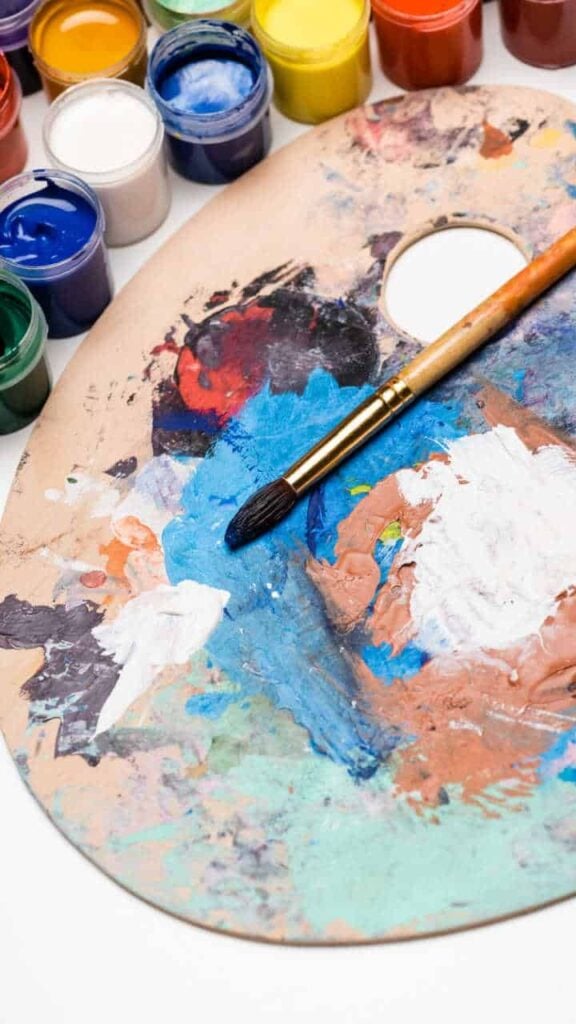
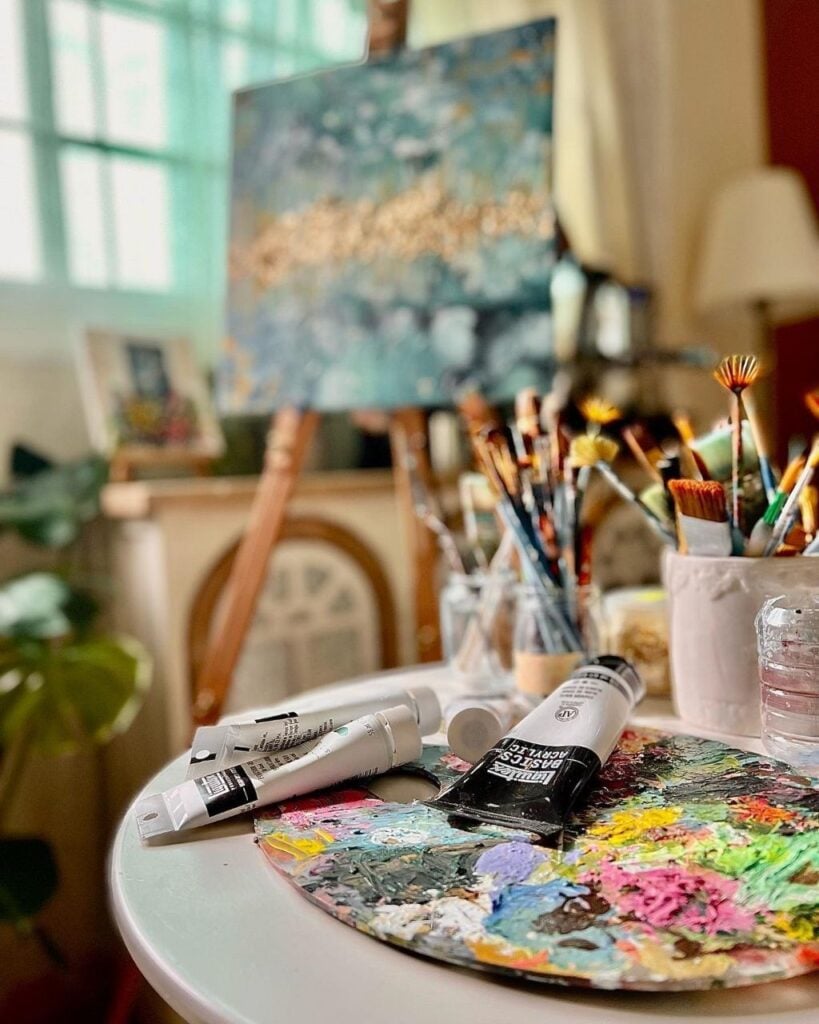
Seal everything twice. Wrap tape around jar lids. Place tubes in plastic bags before boxing. One leaking container can destroy an entire box of supplies.
Temperature matters. Oil paints, acrylics, and many mediums have temperature sensitivities. Don’t leave paint boxes in a hot vehicle overnight. If moving in winter, keep water-based media from freezing.
Transport separately if possible. Your most toxic or expensive media (cadmiums, cobalts, specialty mediums) deserve their own clearly-marked box that you personally supervise.
Brushes, Pencils, and Tools
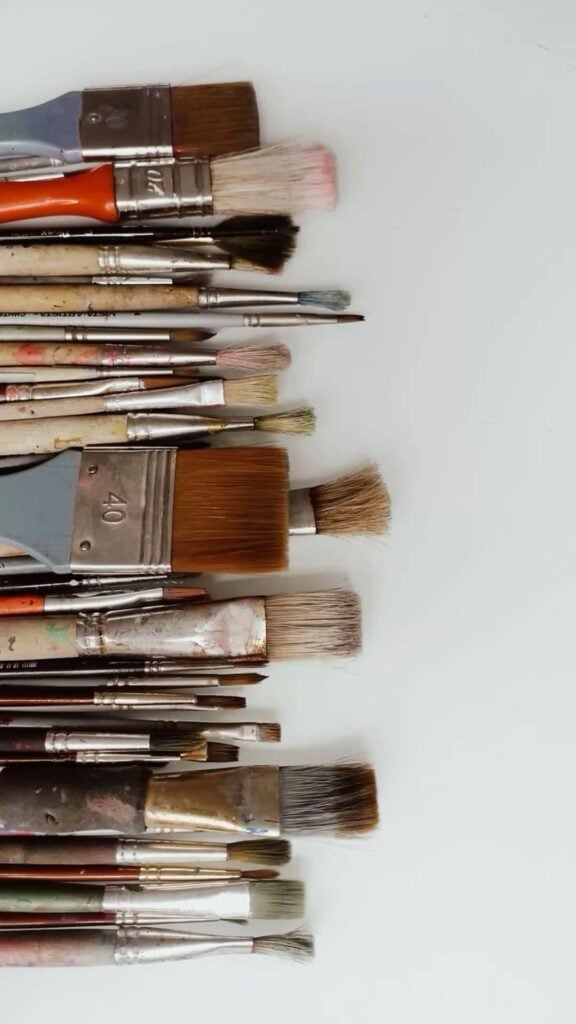
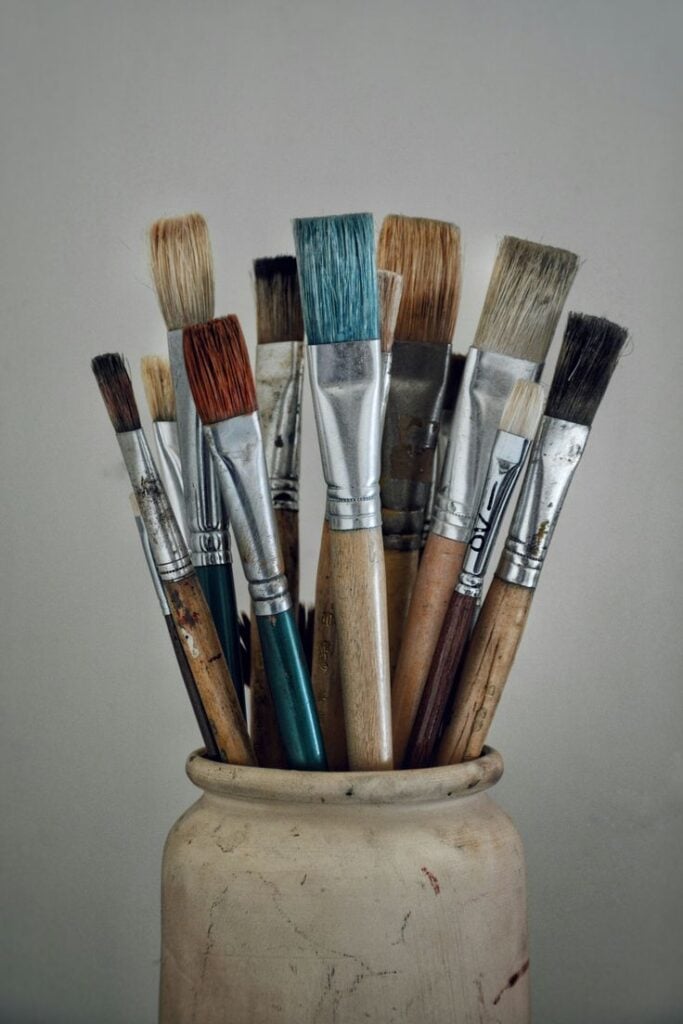
Brushes need shape protection. Wrap brush heads in tissue paper or use brush guards. Pack bristle-side-up in a container where they can’t get crushed.
Pastels and charcoals are fragile. Keep them in original packaging if possible. Wrap individual sticks in tissue for loose pastels. These shouldn’t be in boxes with heavy items.
Sharp tools need containment. Palette knives, X-acto blades, scissors—wrap blades and secure in rigid containers. A loose blade can slice through paintings during transport.
Moving Large Equipment
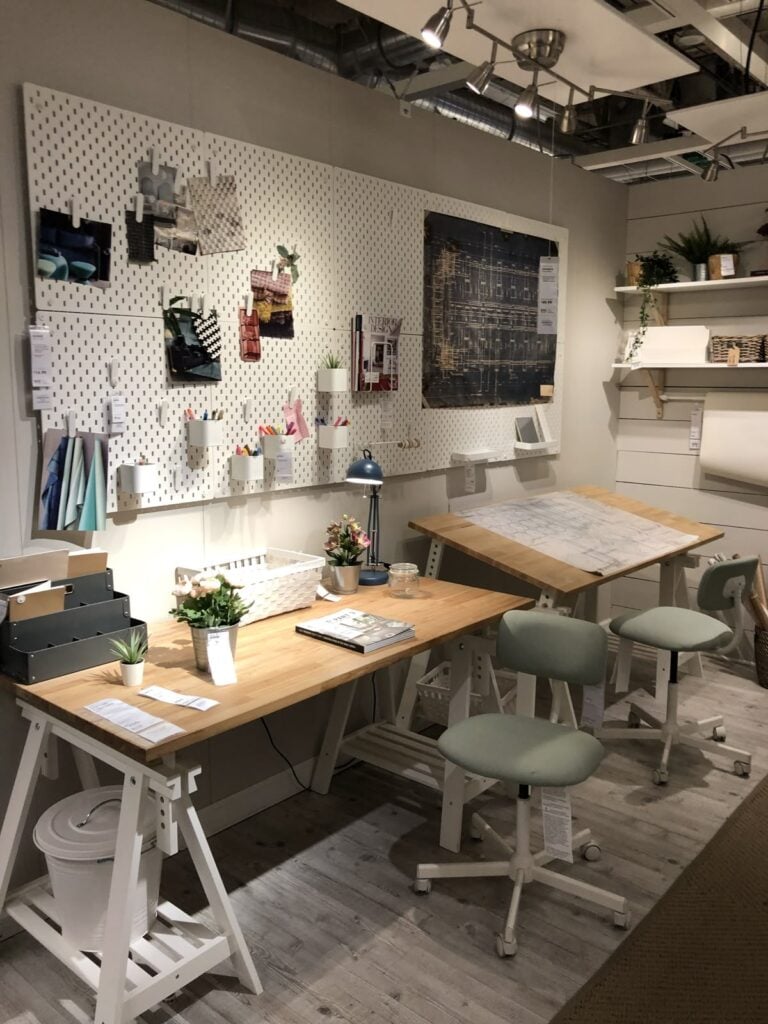
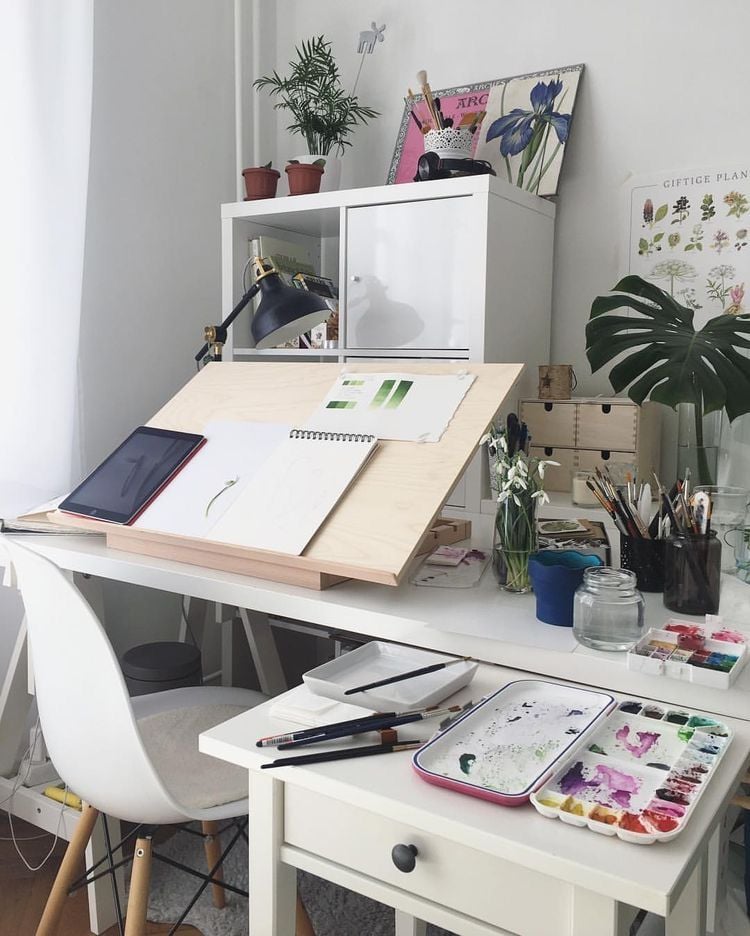
Easels, tables, and furniture require different strategies than packed boxes.
Easels
Disassemble if possible. Most easels break down into smaller components. Keep hardware in labeled bags taped to the main pieces.
Protect wooden surfaces. Wrap legs and cross-bars in moving blankets or bubble wrap. Wood scratches and dents easily during transport.
Don’t use easels as packing surfaces. Stacking boxes on an easel’s tray during the move seems efficient but risks damaging both the easel and the boxes.
Tables and Flat Storage
Remove drawers and shelves. Wrap them separately. Empty flat files completely—even a few sheets can shift and cause damage.
Protect surfaces obsessively. Your work table’s surface matters for future paintings. Cover with moving blankets, secure with tape, and don’t stack heavy items on top.
When to Hire Help
Here’s the honest calculation: your time has value, your artwork has value, and your body has value. Some moves genuinely require professional help.
Consider professional movers when:
- You have large, heavy items (printing presses, kilns, large flat files)
- You’re moving fragile equipment you can’t replace
- The distance or logistics exceed what you can safely handle alone
- You physically can’t lift what needs moving
If you’re relocating within a specific area, finding reliable local movers in Lexington, KY who understand how to handle fragile items can save both artwork and your back. Brief them on which items need special care—most professional movers will accommodate specific handling instructions if you communicate clearly beforehand.
DIY makes sense when:
- You’re moving a small studio with mostly packable items
- You have reliable help from people you trust
- The distance is short and you control the entire process
- Budget is extremely tight and you can invest time instead of money
Budget-Saving Strategies
Free and Cheap Packing Materials
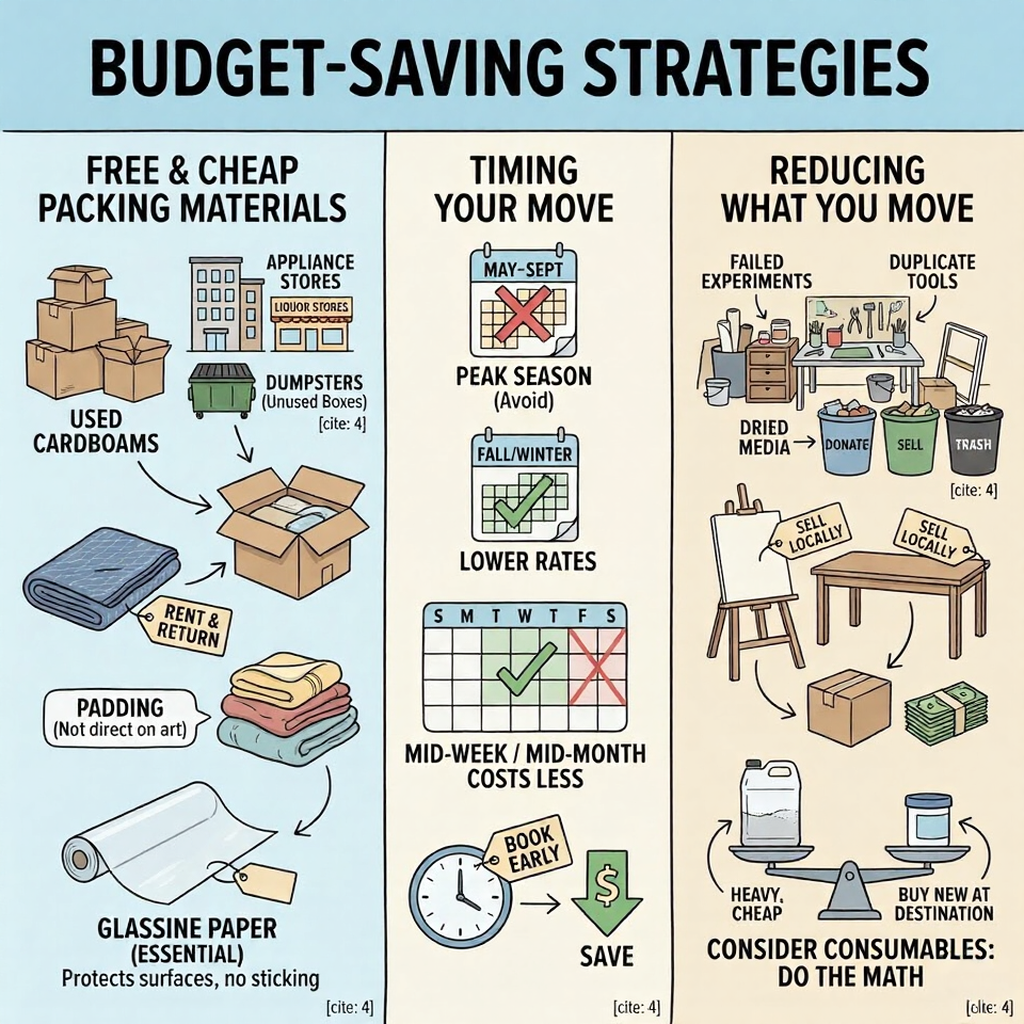
Cardboard: Appliance stores, liquor stores (sturdy boxes), and moving company dumpsters (unused boxes) offer free cardboard. For flat storage, break down large boxes into custom-sized painting protectors.
Bubble wrap alternatives: Moving blankets can be rented cheaply and returned. Old bedding and towels work for padding (though not for direct surface contact with artwork).
Glassine paper: This isn’t optional—it’s the one material worth buying new. It protects painted surfaces without sticking. Buy a roll; it’s inexpensive per square foot.
Timing Your Move
Avoid peak moving season (May through September). Rates for trucks and professional help drop significantly in fall and winter.
Mid-month and mid-week moves often cost less than end-of-month weekend moves, when demand peaks.
Book early. Last-minute moves cost more and offer fewer options.
Reducing What You Move
Purge before packing. Every artist accumulates supplies they’ll never use. Failed experiments, duplicate tools, dried-out media—donate, sell, or trash before paying to move it.
Sell unused equipment. That extra easel, the table you never liked, the lighting rig you upgraded from—sell locally before the move. Less to move means lower costs.
Consider consumables. Is it cheaper to move that half-empty gallon of gesso or buy new at your destination? Do the math on heavy, cheap items.
Setting Up Your New Space
Before Unpacking Art
Clean first. Dust, debris, and residue from previous tenants can damage artwork. Clean the entire space before bringing in your work.
Check climate conditions. Humidity and temperature affect paintings. Address any climate control issues before unpacking sensitive work.
Plan your layout. Know where major items will go before you start unpacking. Moving heavy equipment twice wastes time and risks damage.
Unpacking Strategy
Large equipment first: Easels, tables, storage units. Get the infrastructure in place.
Work surfaces second: You’ll need somewhere to unpack and examine artwork.
Supplies third: Organize as you unpack rather than dumping everything and sorting later.
Artwork last: Once the space is set up and clean, carefully unpack and inspect each piece.
FAQ
How far in advance should I start planning an art studio move?
Start six weeks before your move date for a small studio, eight to ten weeks for larger spaces with valuable work or heavy equipment. This timeline allows proper packing, sourcing materials, and handling unexpected complications.
What’s the single most important packing material for artists?
Glassine paper. It’s acid-free, doesn’t stick to painted surfaces, and protects artwork during transport. A $15-25 roll covers most studio moves and prevents damage that could cost hundreds to repair.
Should I move wet or uncured paintings?
Avoid it if possible. If you must move uncured work, use canvas separators or spacer boxes that protect the surface without touching it. Allow maximum drying time before the move and transport these pieces separately with climate control.
How do I find movers who understand art handling?
Ask specifically about experience with fragile or valuable items. Describe your needs (canvases, glass, heavy equipment) and gauge their response. Get references from other artists if possible. Brief any movers thoroughly before they handle artwork.
What’s the biggest mistake artists make when moving studios?
Rushing the packing. Last-minute packing leads to inadequate protection, which leads to damage. The artwork that took months to create deserves hours of proper preparation, not minutes of panic wrapping.
Conclusion
Moving an art studio doesn’t have to mean damaged work and blown budgets. The artists who relocate successfully share common habits: they start early, pack properly, and know when professional help is worth the cost.
Your artwork represents hundreds or thousands of hours of creative labor. Protecting it during a move isn’t excessive caution—it’s respecting your own work. The same attention to craft that goes into making art should go into moving it.
This week: If a move is coming, start your inventory. Document everything valuable. Begin collecting packing materials.
Before packing: Invest in glassine paper and proper supplies. The cost is minimal compared to repairing or replacing damaged work.
Moving day: Supervise your artwork personally. Know where fragile items are, how they’re packed, and where they’re going.
Your next studio is waiting. Get your work there safely.
- 316shares
- Facebook0
- Pinterest316
- Twitter0
- Reddit0