I got my first tattoo at twenty-three after eighteen months of talking myself out of it. Not because I was afraid of the needle—I was afraid of choosing wrong. A tattoo is an unusually permanent decision for someone in their twenties, and the pressure of that permanence made every design I considered feel simultaneously too personal and not personal enough. What finally broke the paralysis was a conversation with an artist who said something I’ve repeated ever since: ‘You’re not picking a picture. You’re picking a story that your skin will tell for the next fifty years. The picture just has to carry the story well.’
- The 15 Tattoo Ideas for Men: Full Breakdown
- 1. Lion with Crown — Strength, Leadership, and Inner Authority
- 2. Nautical Compass — Direction, Purpose, and Resilience at Sea
- 3. Viking Warrior — Heritage, Ferocity, and the Will to Endure
- 4. Wolf Howling at the Moon — Loyalty, Instinct, and the Wild Self
- 5. Phoenix Rising — Transformation, Survival, and Starting Over
- 6. Samurai Mask (Hannya) — Discipline, Honour, and the Hidden Face
- 7. Skull with Roses — Life and Death in the Same Frame
- 8. Biomechanical Sleeve — The Machine Beneath the Skin
- 9. Tribal Armband — Heritage, Structure, and the Band That Binds
- 10. Dragon Wrapped Around Sword — Power, Wisdom, and the Warrior's Path
- 11. Snake and Dagger — Duality, Danger, and the Sharp Edge of Change
- 12. Roman Gladiator — The Courage to Fight in Full View
- 13. Clock with Gears — Time, Mortality, and the Steampunk Aesthetic
- 14. Geometric Mandala — Sacred Geometry, Balance, and the Self as Centre
- 15. Eagle in Flight — Freedom, Vision, and Rising Above
- Choosing Your Style: Traditional, Neo-Traditional, Realism, and Blackwork
- Placement Guide: Where Each Design Works Best
- Finding the Right Artist: The Step Most People Skip
- Frequently Asked Questions
- Closing Thought: The Story Carries the Picture
That framing changed how I thought about tattoo design entirely. The fifteen ideas in this guide are selected not just because they look good—plenty of designs look good—but because each one has proven over decades or centuries to carry symbolic weight that remains true over time. Lion with crown tattoos still communicates the same thing they did thirty years ago. The phoenix still means what it always meant. That durability is worth as much as visual impact when you’re thinking about fifty years of wear.
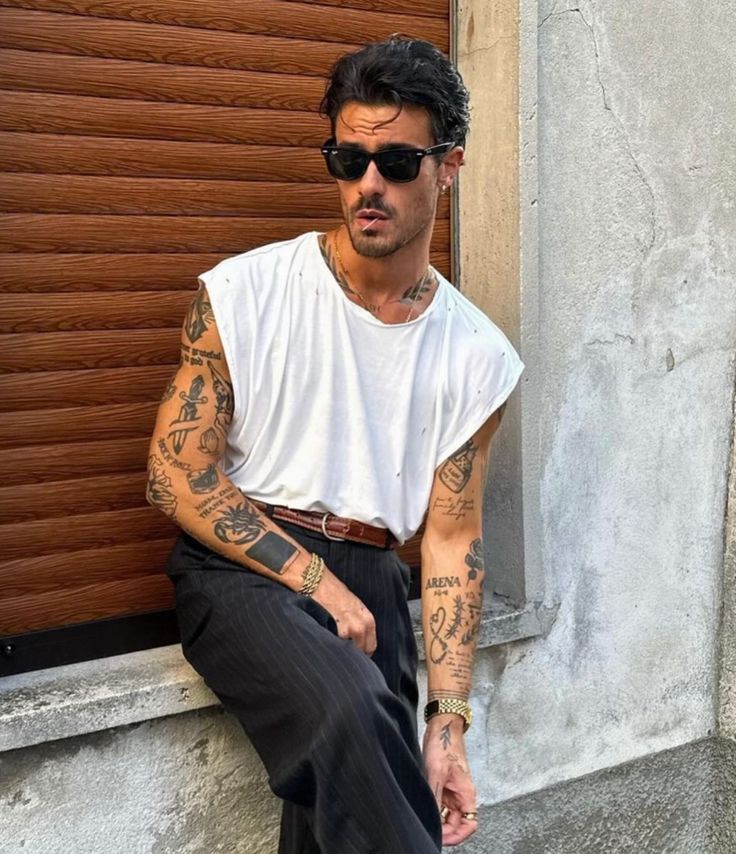
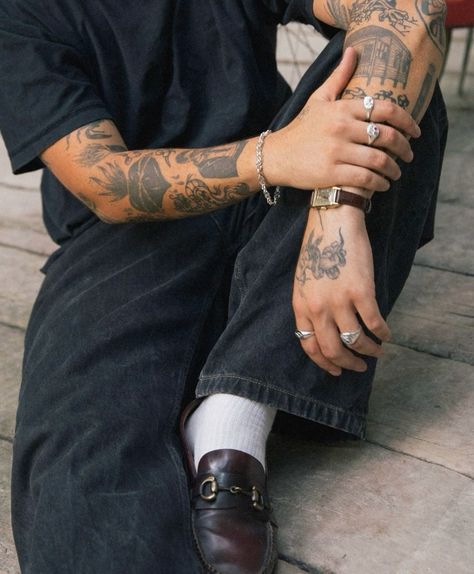
For each design, I’ve included what it actually symbolises, which styles and placements work best, what to watch for when finding an artist, and an image generation prompt so you can visualise the concept before committing to a consultation.
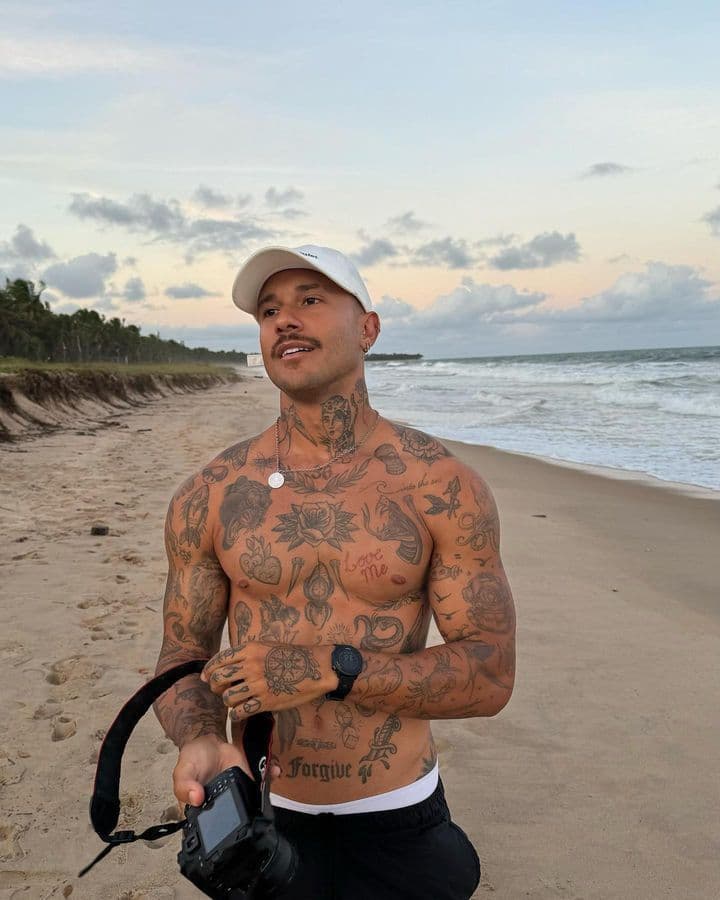
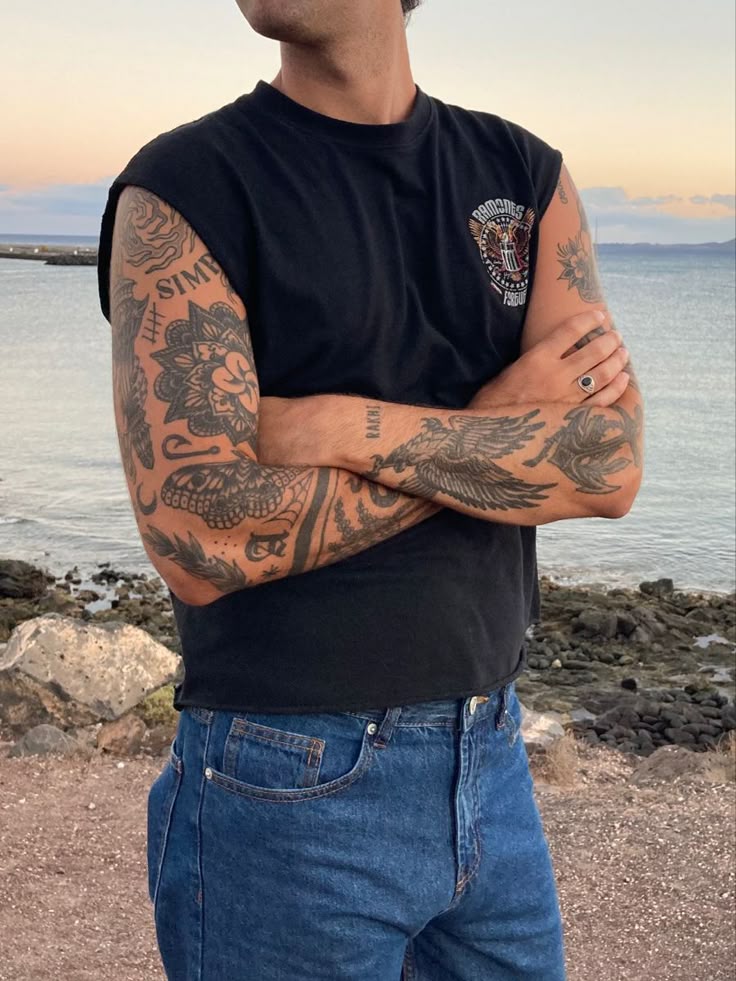
The 15 Tattoo Ideas for Men: Full Breakdown
1. Lion with Crown — Strength, Leadership, and Inner Authority
The lion with crown is one of the most enduring men’s tattoo subjects, and its longevity isn’t accidental. Few images communicate ambition and self-possession as economically as a crowned lion: the authority is in the crown, the power in the animal, and the combination suggests someone who leads from genuine strength rather than borrowed status.
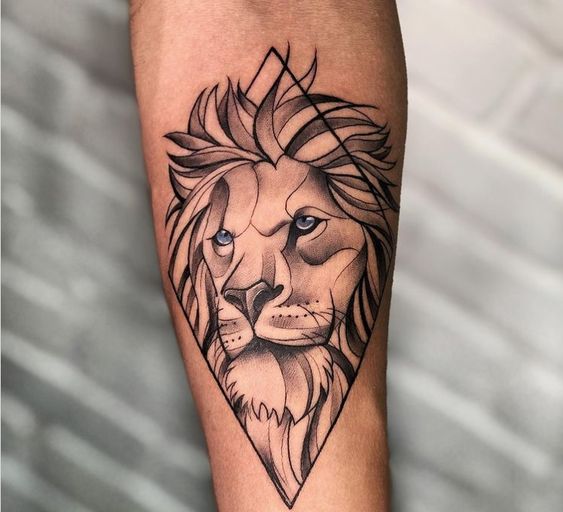
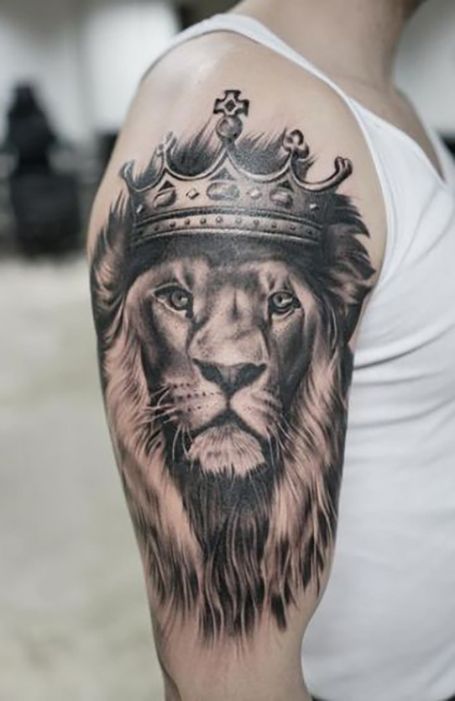
The design rewards serious artistic investment. A realistic lion with a detailed crown executed by an experienced portrait tattoo artist—Cesar Lopez (Miami), Nikko Hurtado (LA), or artists in their tradition—produces a piece that reads as portraiture rather than decoration. Placement matters: chest and upper arm give enough canvas for the mane structure, which is where lion tattoos succeed or fail. A compressed lion on a forearm loses the mane’s visual logic. A full chest piece has room to breathe.
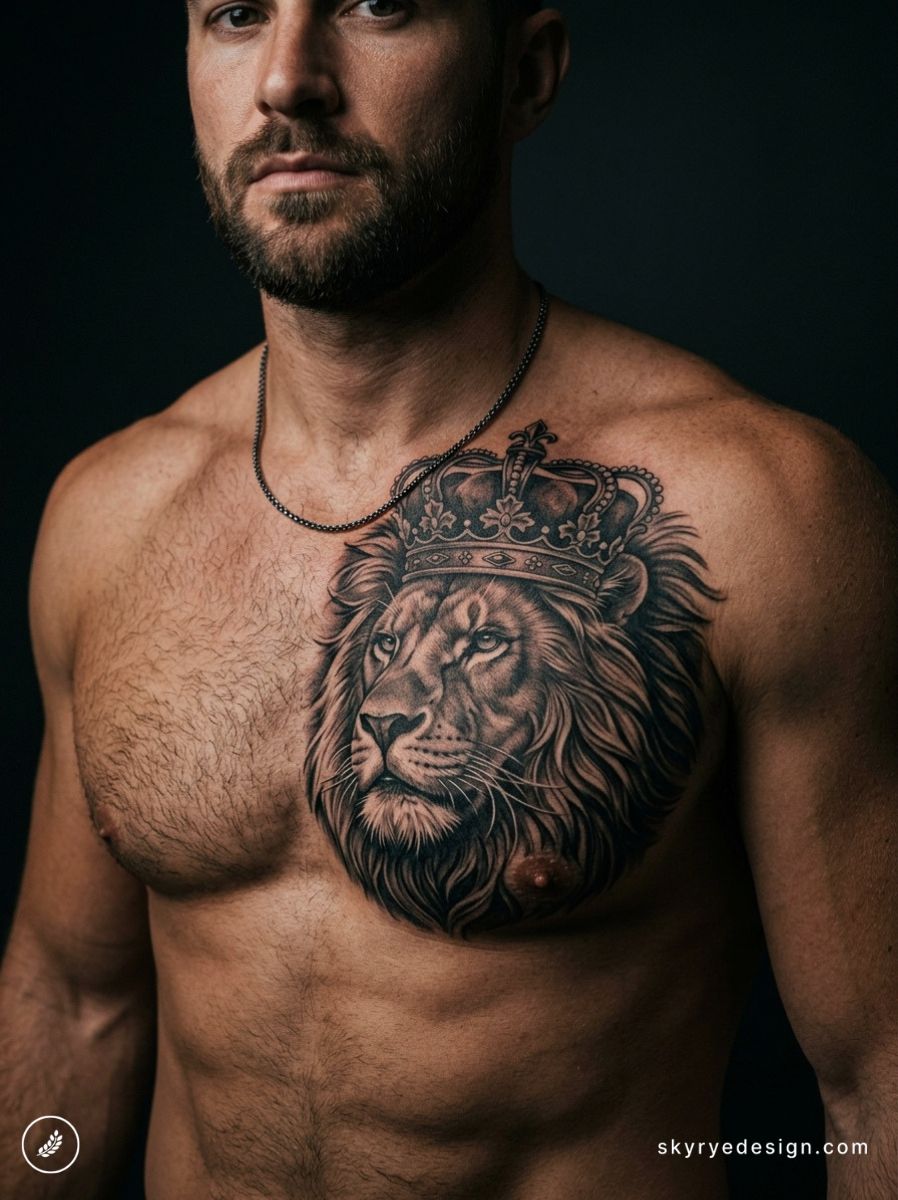
In terms of style, black and grey realism has become the standard for lion work and ages well because the depth is built through tonal relationship rather than colour. Traditional American lion tattoos with bold outlines and flat colour age equally well but read differently—more graphic, less painterly. Choose based on which aesthetic fits your existing tattoo approach, or where you intend to go.


Symbolism: strength, courage, authority, leadership. Best placement: chest, upper arm, back.
2. Nautical Compass — Direction, Purpose, and Resilience at Sea
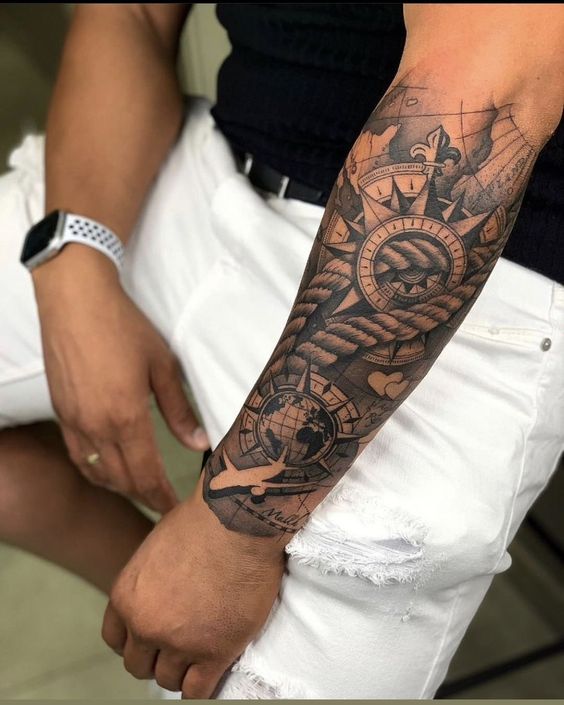
The compass has meant the same thing in tattoo culture since the 18th century: you know where you’re going, and you’ll find your way back. Sailors tattooed compasses specifically as talisman objects—literal navigation tools rendered permanently on skin, believed to prevent getting lost at sea. That protective intent carries into the contemporary tattoo even for people who’ve never set foot on a boat.
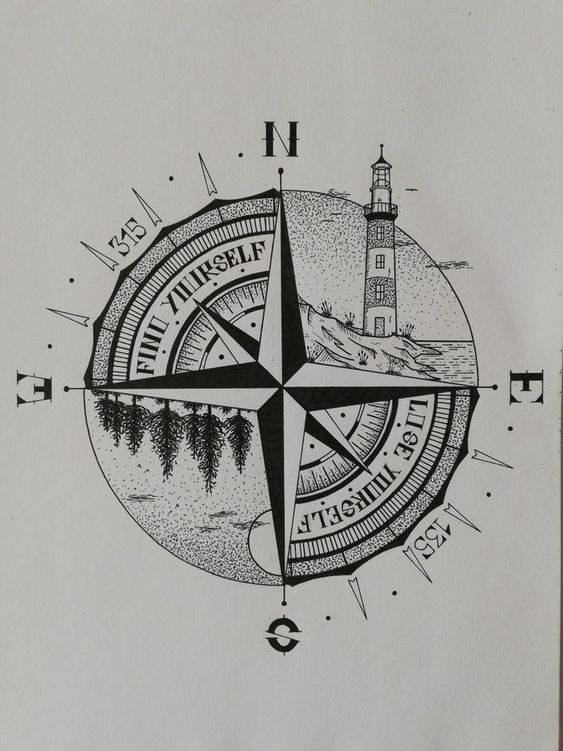
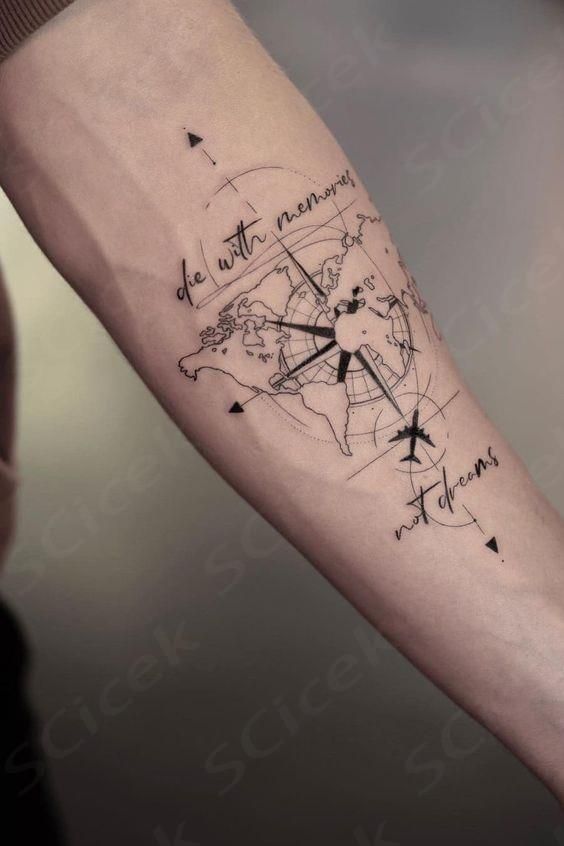
What makes compass tattoos particularly versatile is their compositional flexibility. A compass rose can work as a standalone piece at 8–10cm, or as an anchor element in a larger nautical composition incorporating rope, waves, an anchor, or a ship. The forearm is the classic placement for good reason—it’s visible to the wearer and reads clearly to others in the size range that suits a compass design.


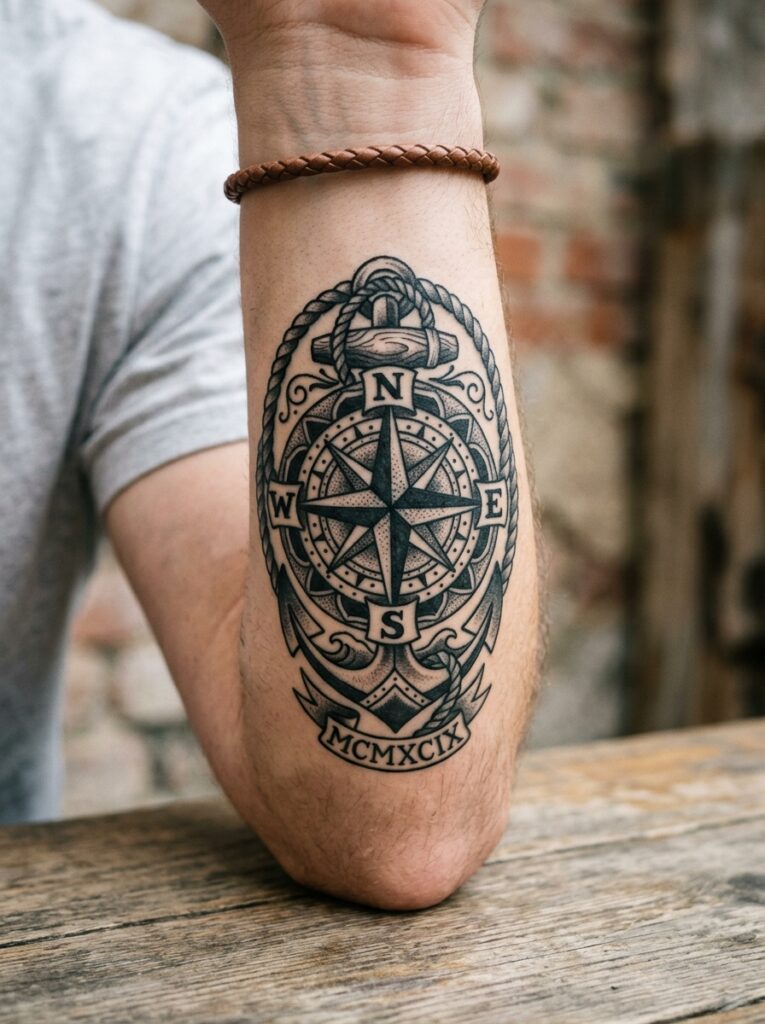
Style considerations: traditional Old School compass tattoos with bold outlines hold up best over time. Fine-line compass work is beautiful, fresh, but loses detail faster at this placement.
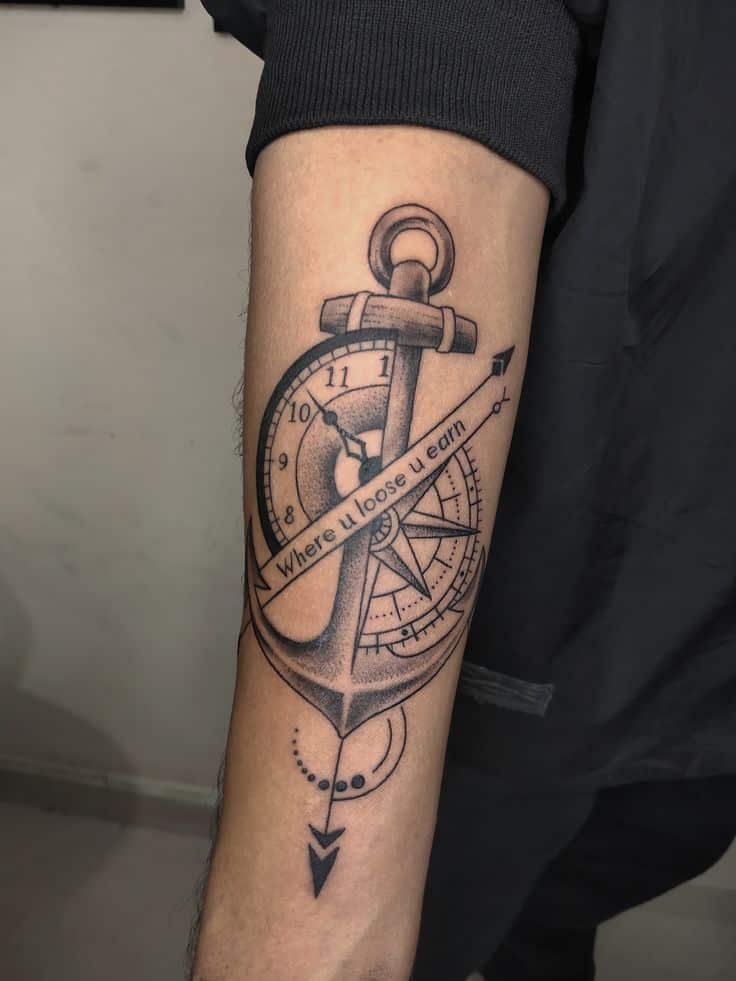
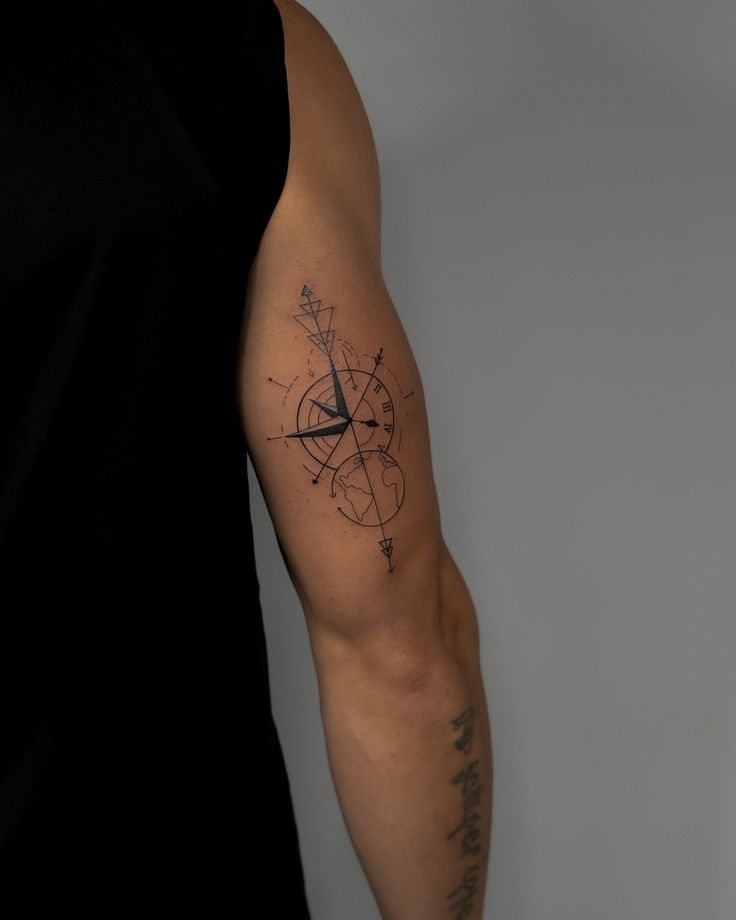
If you want the fine-line aesthetic, place it on the upper arm or back, where skin conditions are more forgiving. Geometric compass interpretations—where the rose points become triangular constructions—offer a contemporary take that bridges traditional symbolism with modern aesthetics.
Symbolism: guidance, direction, resilience, protection from getting lost. Best placement: forearm, chest, upper arm.
3. Viking Warrior — Heritage, Ferocity, and the Will to Endure
Viking warrior tattoos occupy a specific intersection of historical reverence and personal identity. At their best, they’re not simply ‘cool Norse imagery’—they’re deliberate connections to a documented worldview built around resilience, exploration, and death as an honourable conclusion to a life well fought. The visual language of Norse tattooing (knotwork, runic inscriptions, hammer motifs, Vegvisir compass symbols) has been developed seriously by artists like Peter Walrus Madsen (Denmark) and Gunnar Hilmarsson (Iceland) who research historical imagery alongside their tattooing practice.
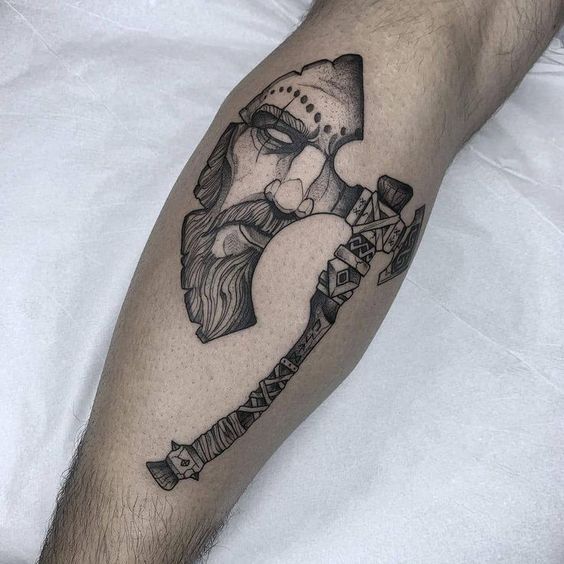
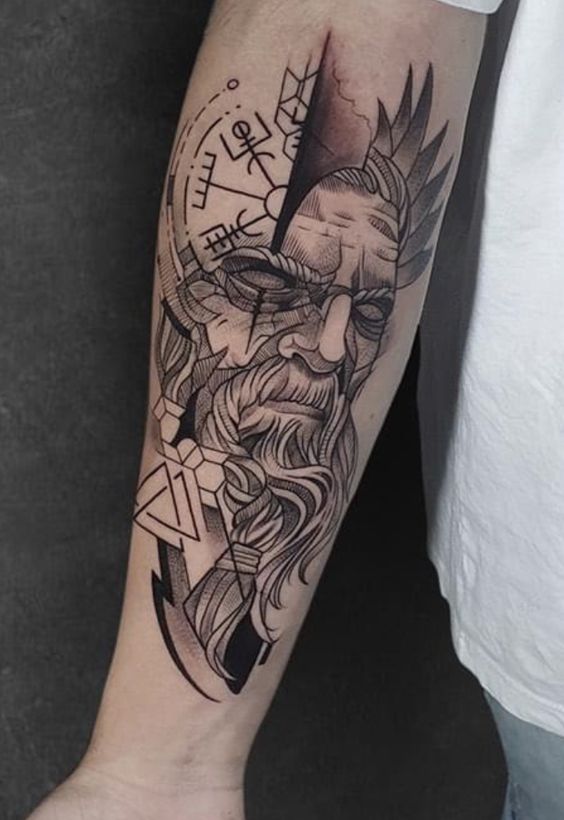
For men drawn to Viking warrior imagery: the design works best when it’s compositionally specific rather than generically ‘Viking.’ A detailed portrait of a helmeted warrior with a specific weapon, a Vegvisir surrounded by Elder Futhark runes with personal meaning, or a Yggdrasil (World Tree) composition with mythological figures—these carry more weight than a generic warrior silhouette.
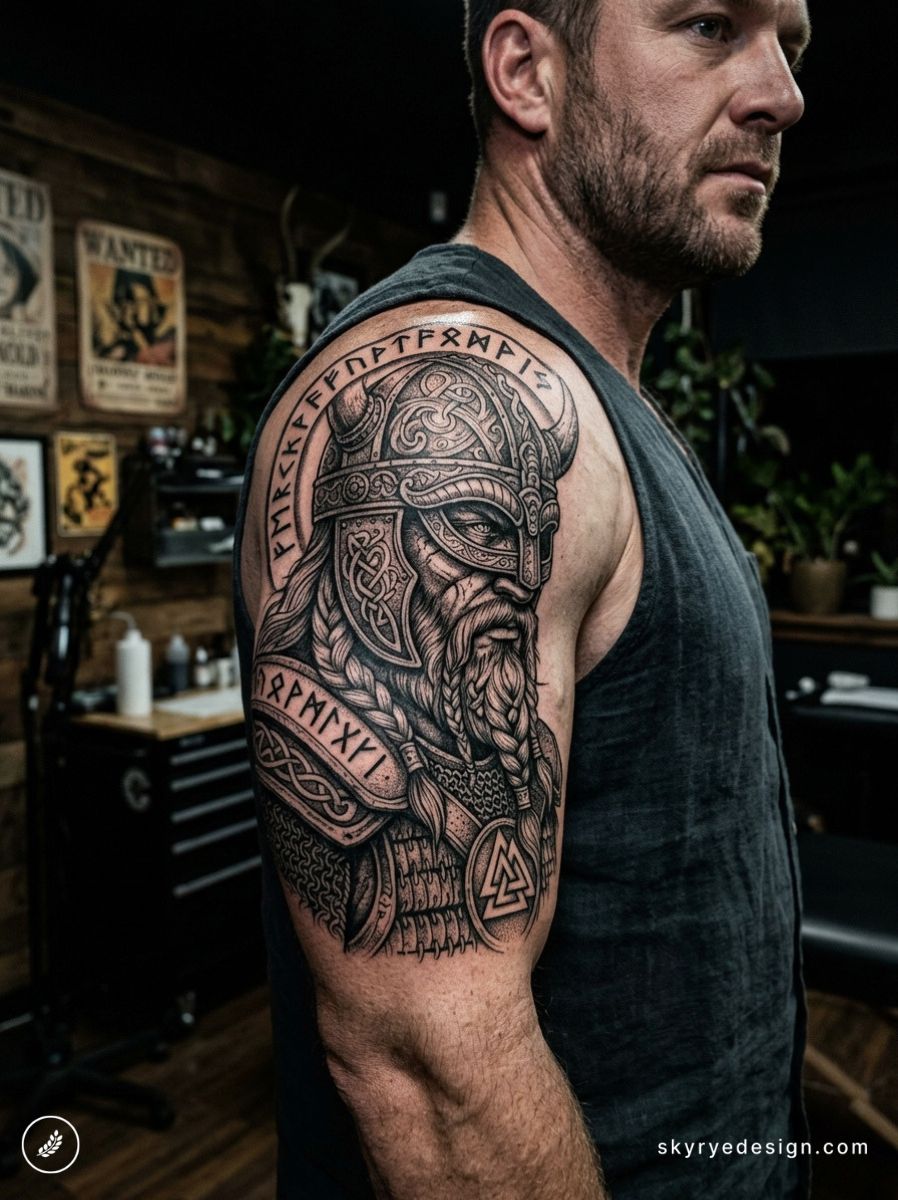
Placement: the upper arm and back are the natural homes for Viking warrior work because the scale allows the level of detail this imagery requires. A Viking warrior portrait compressed into 10cm loses the architectural complexity of the helmet and armour that makes the image read correctly.
Symbolism: strength, bravery, heritage, resilience, connection to Norse mythology. Best placement: upper arm, back, calf.
4. Wolf Howling at the Moon — Loyalty, Instinct, and the Wild Self
The howling wolf is tattooing’s shorthand for the version of yourself that operates outside social performance—the instinctive, loyal, territorial animal underneath the professional and public self. That’s why it resonates most strongly with people who feel a genuine tension between their social role and their internal experience.
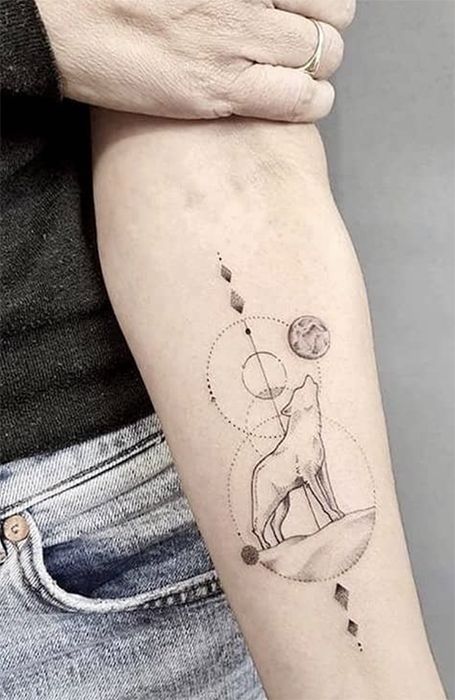
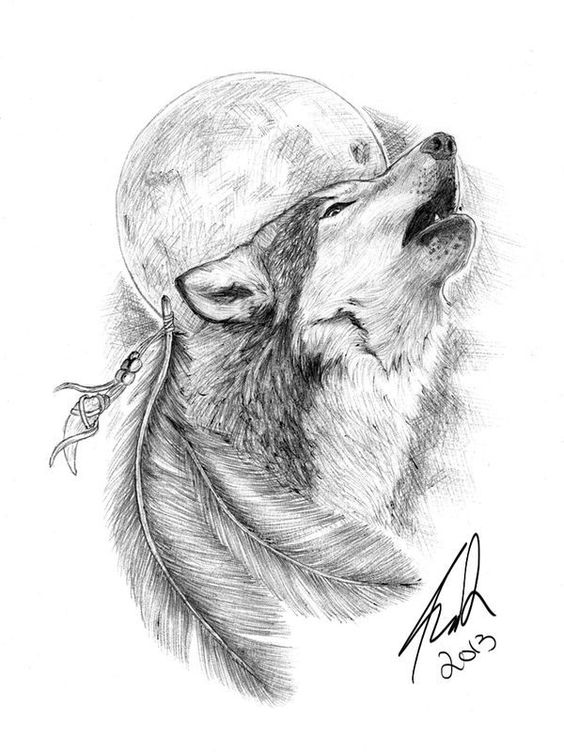
What separates good wolf tattoos from generic ones is anatomical attention. A wolf with domestic dog proportions (rounder muzzle, softer brow structure) reads as a husky, not a wolf. The artist needs to understand wolf anatomy specifically—the broader skull, the more pronounced brow ridge, and the narrower chest relative to the shoulders. This is where portfolio research matters: look for artists who’ve drawn wolves from life reference, not just other tattoos.
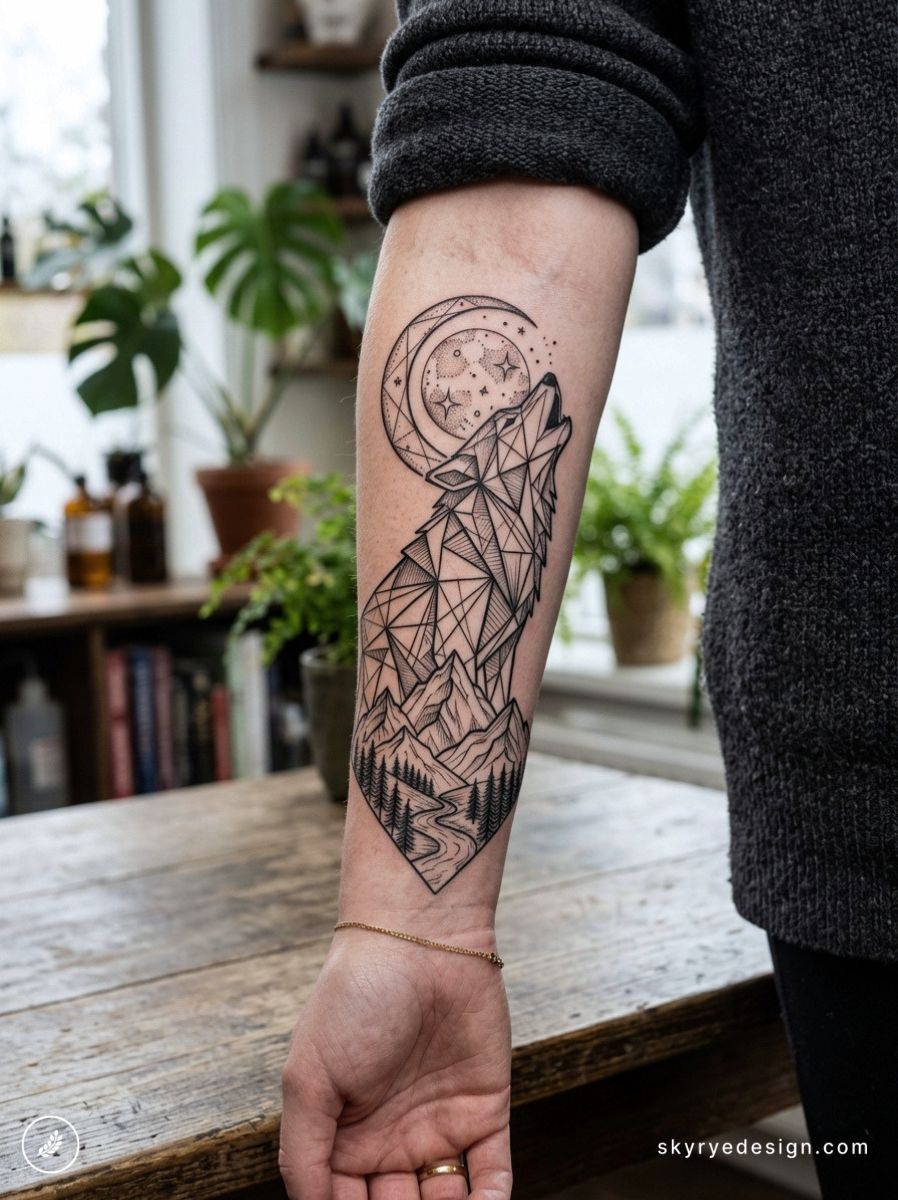
The moon integration is compositionally powerful but requires care. Geometric triangle-within-circle moon designs combined with wolves have been so widely reproduced on Pinterest that they’ve become visual shorthand for ‘generic wolf tattoo.’ If you want the moon element, work with your artist on a more original interpretation—a crescent moon, a full moon with atmospheric rendering, or a moon integrated into a landscape context rather than floating in isolation.


Symbolism: loyalty, pack bonds, intuition, freedom, connection to nature. Best placement: upper arm, forearm, chest.
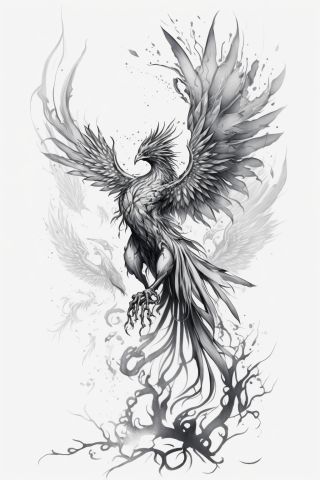
5. Phoenix Rising — Transformation, Survival, and Starting Over
The phoenix tattoo is one of the few designs where the meaning almost universally precedes the aesthetic decision. People get phoenix tattoos because something in their life has ended and something new has begun—a recovery, a loss survived, a version of themselves they’ve moved beyond. The mythological image of a bird that burns completely and rebuilds from its own ash is one of the most exact visual metaphors for human resilience that tattoo art has access to.
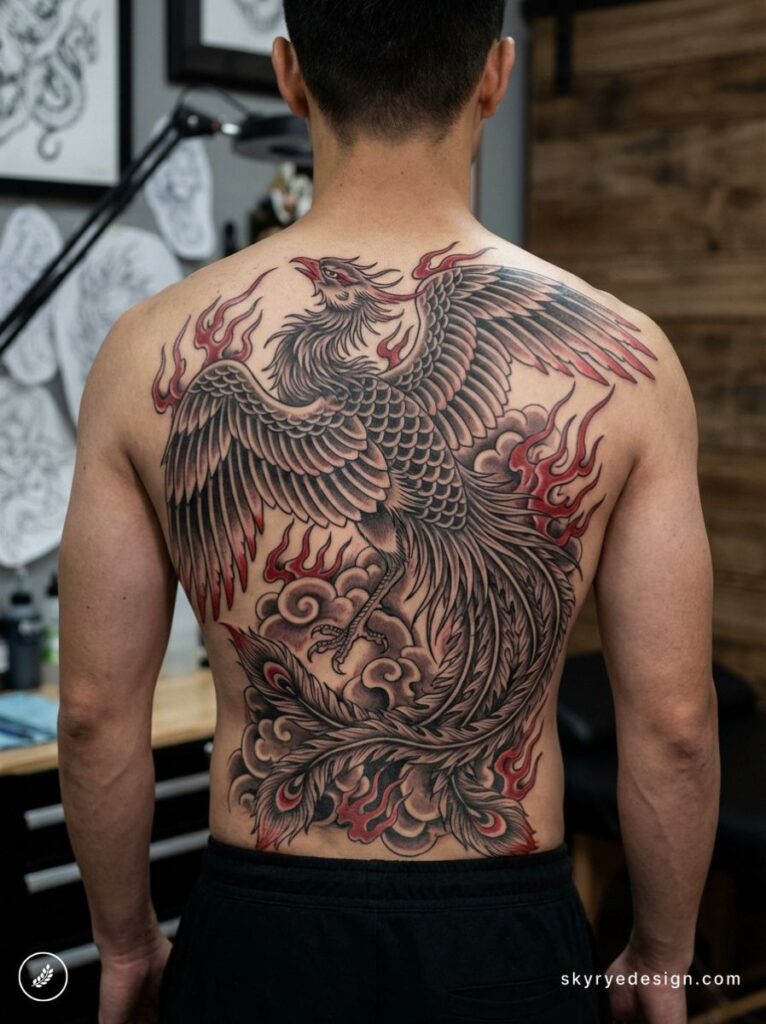
The design challenge is that phoenixes are compositionally complex—feathers, flames, the bird’s posture in flight or rising—and there’s significant variation in how different cultural traditions render the phoenix. The Japanese hō-ō (phoenix) is more elaborate and decorative than the Western or Egyptian versions, with distinct feather structure and colour palette. The Chinese fènghuáng is different again. Clarifying which tradition you’re drawing from helps your artist produce something more original than a generic ‘fire bird.’
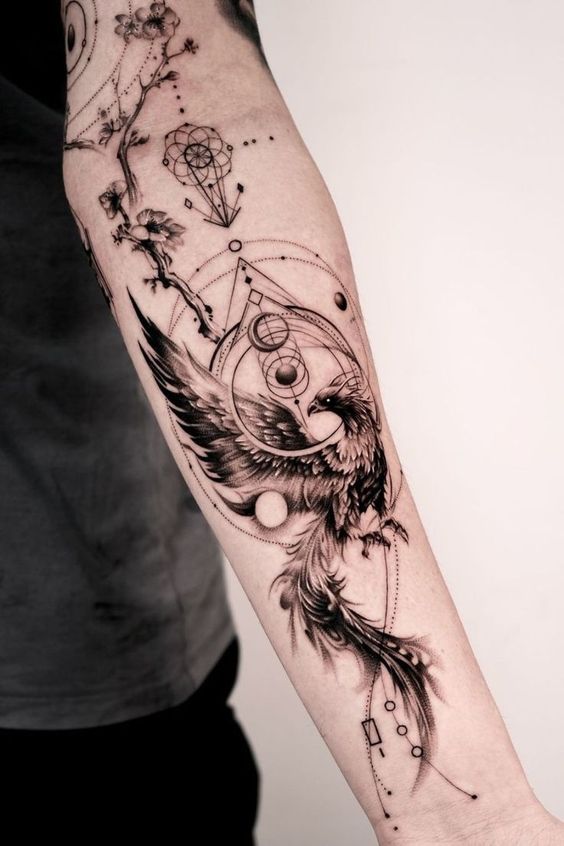
Back and chest are the natural placements for full phoenix compositions. The bird in full flight with spread wings needs the horizontal space of a back piece or the vertical space of a chest piece to render the wingspan correctly. A phoenix compressed onto a forearm loses the compositional logic that makes the image work.


Symbolism: rebirth, transformation, resilience, starting over after loss. Best placement: back, chest, upper arm.
| 🖊 Artist Tip PRO: For phoenix, wolf, and lion tattoos: spend time looking at reference images of the actual animals before looking at tattoo reference. Understanding what a real wolf looks like makes it immediately obvious which tattoo artists are drawing from life and which are copying other tattoos. The distinction in quality is significant. |
6. Samurai Mask (Hannya) — Discipline, Honour, and the Hidden Face
The samurai mask tattoo—often incorporating the Hannya demon mask from Japanese Noh theatre—is one of the most technically demanding subjects in men’s tattoo art, and one of the most rewarding when done correctly. The Hannya mask specifically carries a precise meaning in Japanese tradition: it represents a woman consumed by jealousy and obsession to the point of demonisation—a cautionary image about the destructive potential of uncontrolled emotion. Many Western wearers choose it more broadly for its visual power, but understanding the specific symbolism adds depth to the choice.
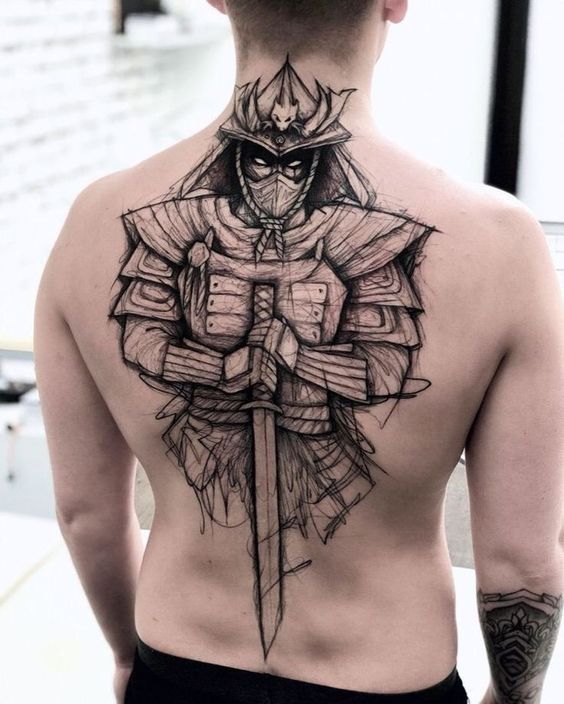
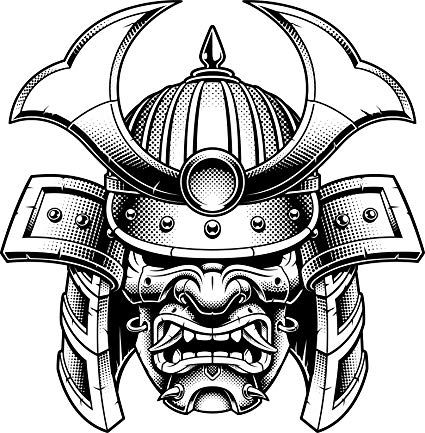
The samurai armour composition (mengu facial armour, kabuto helmet, lamellar breastplate) is a different design direction that speaks more directly to the warrior tradition—discipline, honour in battle, readiness to face death without flinching. Japanese artists like Horitoshi I and Hori Smoku have documented the artistic lineage of this imagery over decades.
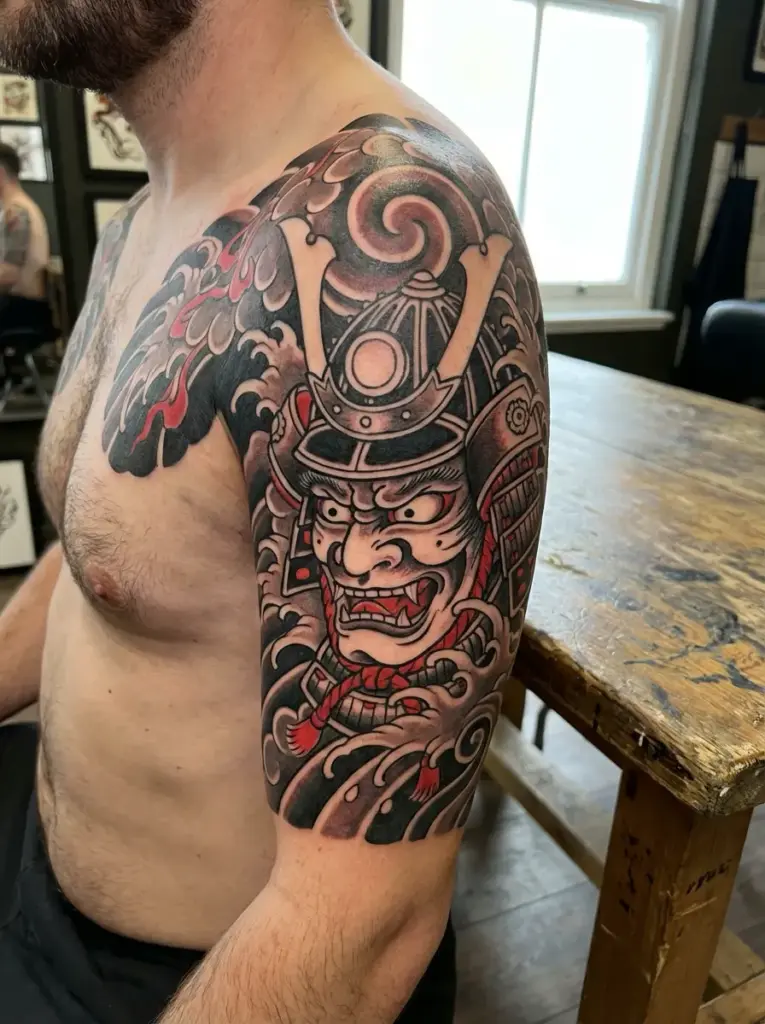
Either version requires an artist deeply familiar with Japanese tattooing conventions. The colour palette (red, black, gold), the line weight, the integration of wave or cloud background elements—all of these follow specific conventions that produce correct results when understood and produce generic results when ignored.
Symbolism: discipline, honour, the warrior ethos, controlled power. Best placement: back (full composition), upper arm, calf.
7. Skull with Roses — Life and Death in the Same Frame
The skull with roses tattoo is the most direct visual argument that beauty and mortality are the same conversation. It comes from memento mori—the Latin tradition of keeping death visible as a reminder to live fully—and has been a cornerstone of traditional tattooing since at least the early 20th century. Sailor Jerry and his contemporaries used skull and rose imagery repeatedly because it carried maximum symbolic density in a visually striking package.
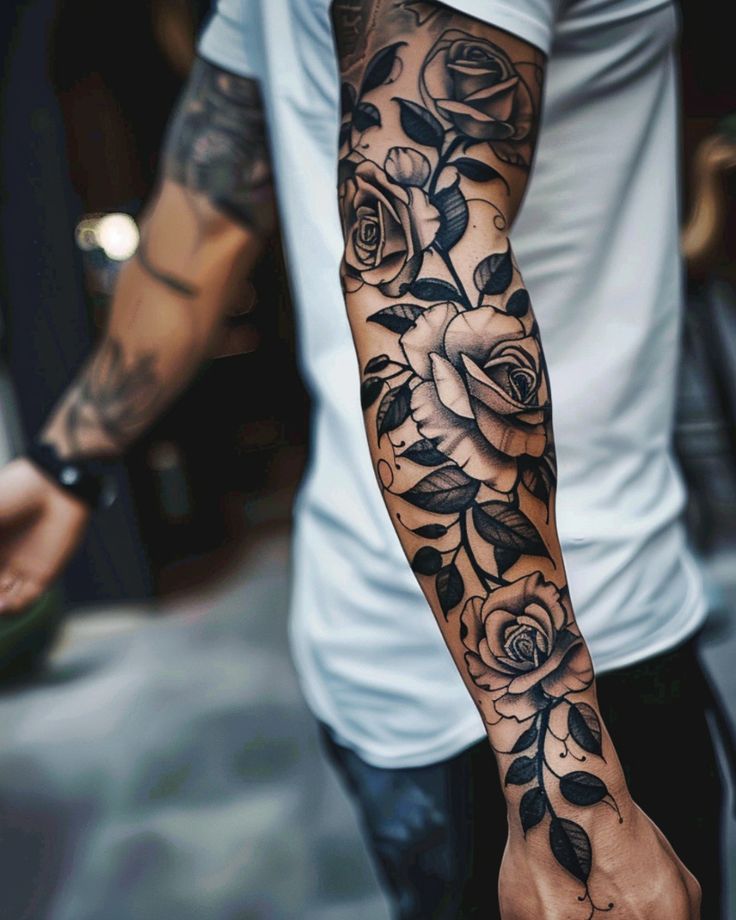
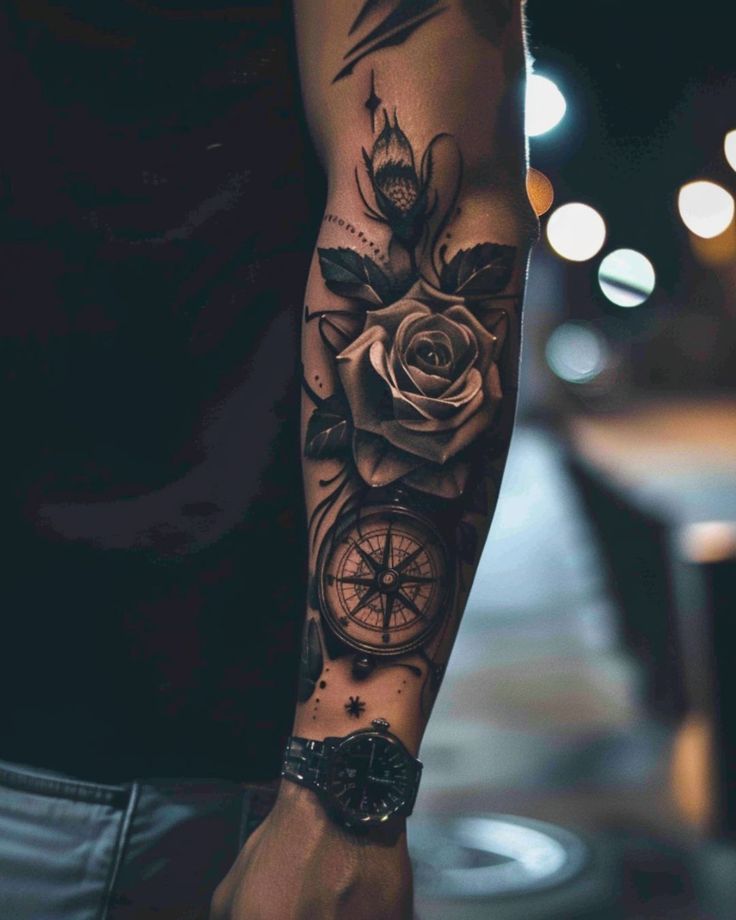
The traditional version—bold black outline, flat red roses, clean white skull, limited colour palette—is arguably the most durable tattoo design in this list. It was built to age. The lines are thick enough to hold their definition over decades; the colour palette doesn’t depend on subtle transitions that fade into muddiness. Artists who work in traditional American style (Bert Grimm’s lineage, Sailor Jerry’s successors) know exactly how to execute this design for maximum longevity.
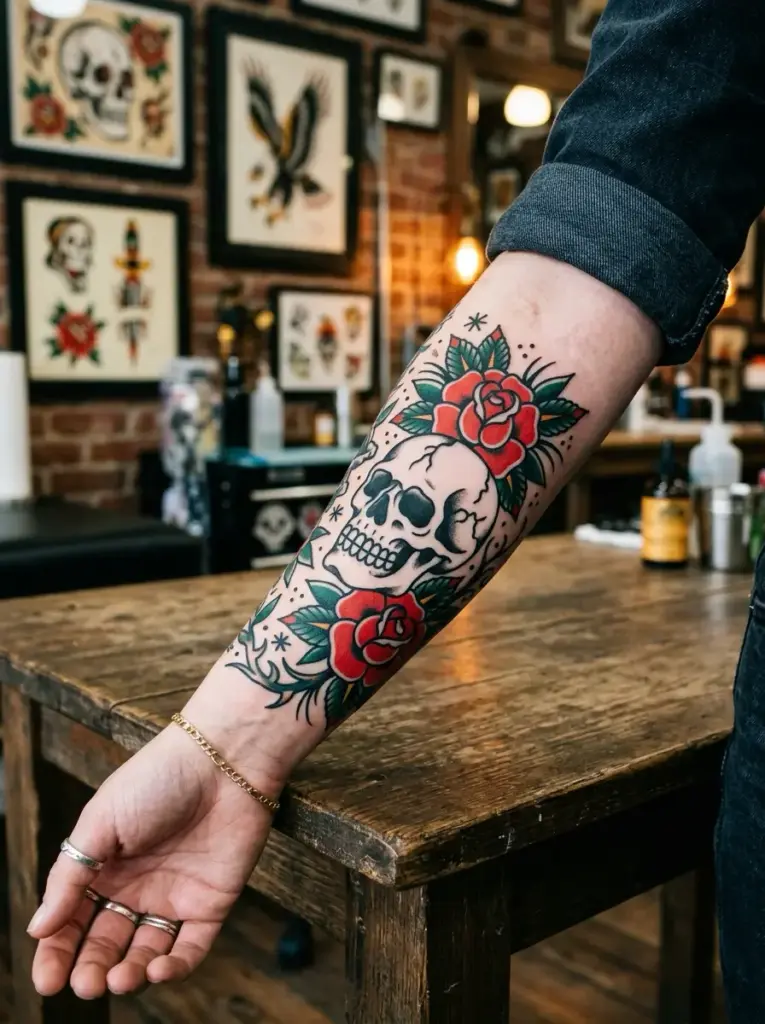
Contemporary realism takes the skull-and-rose composition into photographic territory: a three-dimensional skull with roses growing through the eye sockets, rendered in precise tonal gradients. Stunning fresh, more vulnerable to aging than the traditional version. Both are valid choices; the question is whether you prioritise immediate visual impact or 30-year durability.
Symbolism: the balance of life and death, memento mori, beauty and mortality. Best placement: forearm, chest, upper arm.
8. Biomechanical Sleeve — The Machine Beneath the Skin
Biomechanical tattooing was largely invented by H.R. Giger’s aesthetic—the same visual world that produced the Alien films—and the best biomechanical tattoo artists have studied his work seriously. The concept is that the human body is partially mechanical: remove a layer of skin and find gears, pistons, cables, and hydraulics rather than muscle and bone. Done with great artistic skill, a biomechanical sleeve creates the illusion of three-dimensional depth on flat skin.
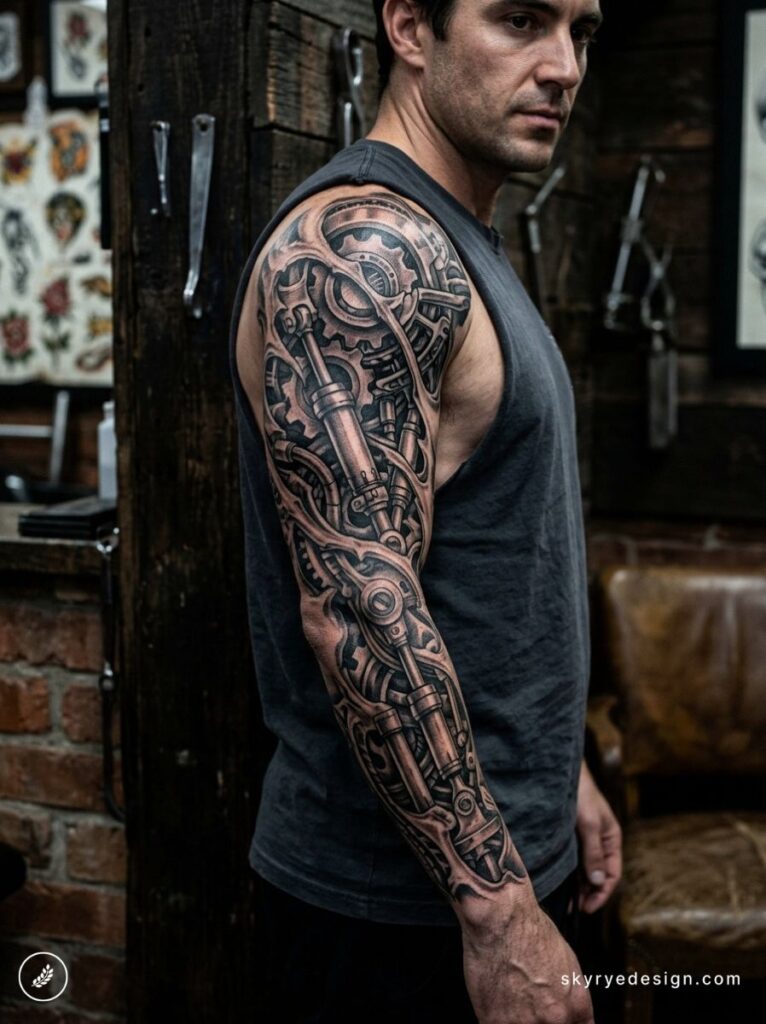
The technical demands are significant. Biomechanical work requires an artist who understands both mechanical drafting (the logic of how machines are built) and human anatomy (so the mechanical elements follow the contour logic of the arm beneath them). Artists like Paul Acker (Philadelphia) and Guy Aitchison (international) have built careers on this style specifically.
Colour versus black-and-white is the primary style decision. Colour biomechanical work—blue hydraulics, red exposed ‘muscle’ tissue, metallic silver for steel components—creates maximum visual impact but requires more maintenance as colour ages differently than black. Monochrome biomechanical work ages more consistently and can be just as visually striking if the tonal rendering is strong.
Symbolism: the intersection of human and machine, technology as identity, the body as system. Best placement: sleeve (arm), back panel.
9. Tribal Armband — Heritage, Structure, and the Band That Binds
Tribal armband tattoos are among the most structurally sound designs for the arm placement—the circular composition that wraps the limb follows the body’s natural geometry rather than working against it. Polynesian tribal work (Samoan pe’a tradition, Maori tā moko) was specifically designed for bodies in motion, which is why bold-line geometric tribal patterns have held their visual integrity on arms and legs for decades in ways that fine-detail work cannot.
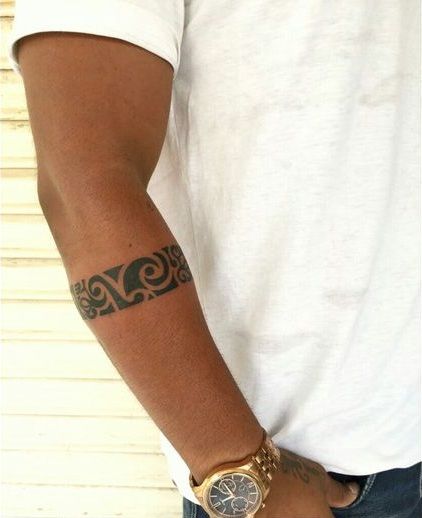
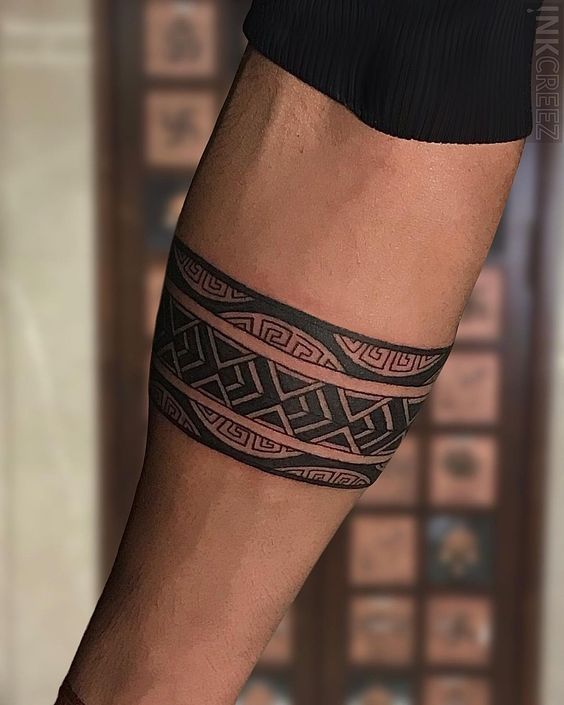
The cultural consideration here is the same as with any traditional cultural tattoo: specificity matters. A Samoan-style tribal armband that uses pe’a design elements has a specific cultural meaning in that tradition. Working with an artist who understands those meanings—and discussing whether you’re creating a culturally informed piece or a geometric design inspired by tribal aesthetics—produces a more honest result than simply copying existing work.
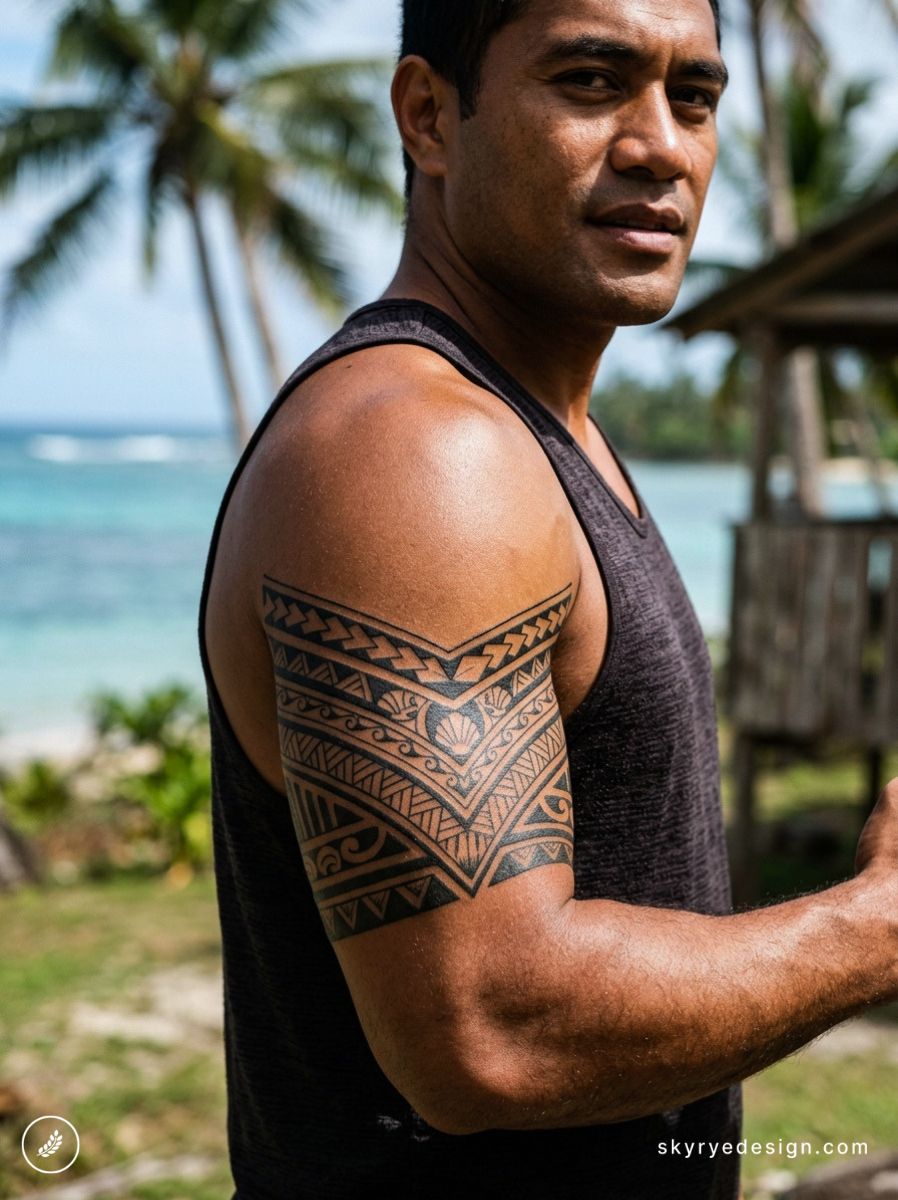
Contemporary geometric armband designs that take structural inspiration from tribal work without directly replicating cultural patterns are a legitimate alternative. Artists like Chaim Machlev (Berlin) have developed geometric armband approaches that reference the structural logic of tribal work while creating original compositions.
Symbolism: strength, community, heritage, structure. Best placement: upper arm (wrapping), forearm.
10. Dragon Wrapped Around Sword — Power, Wisdom, and the Warrior’s Path
The dragon wrapped around a sword is compositionally elegant because both subjects work together structurally: the dragon’s coiling body maps naturally to the sword’s vertical form, and the combination allows detailed work (dragon scales, sword engravings) within a composition that has clear visual direction. It’s a design that photographs well and reads clearly from a distance, which matters for placement on visible areas.
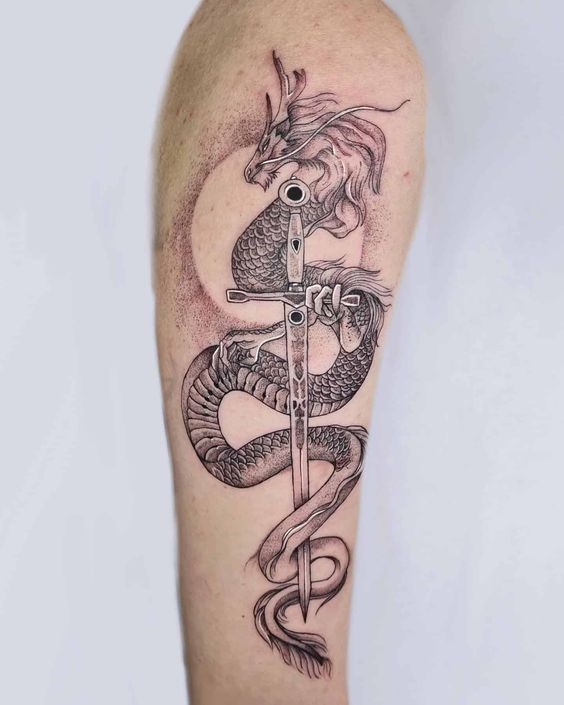
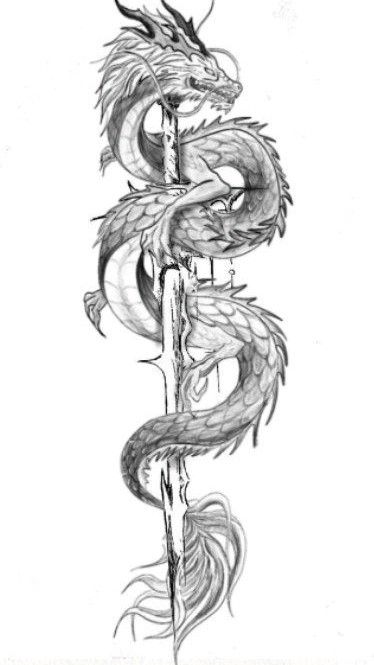
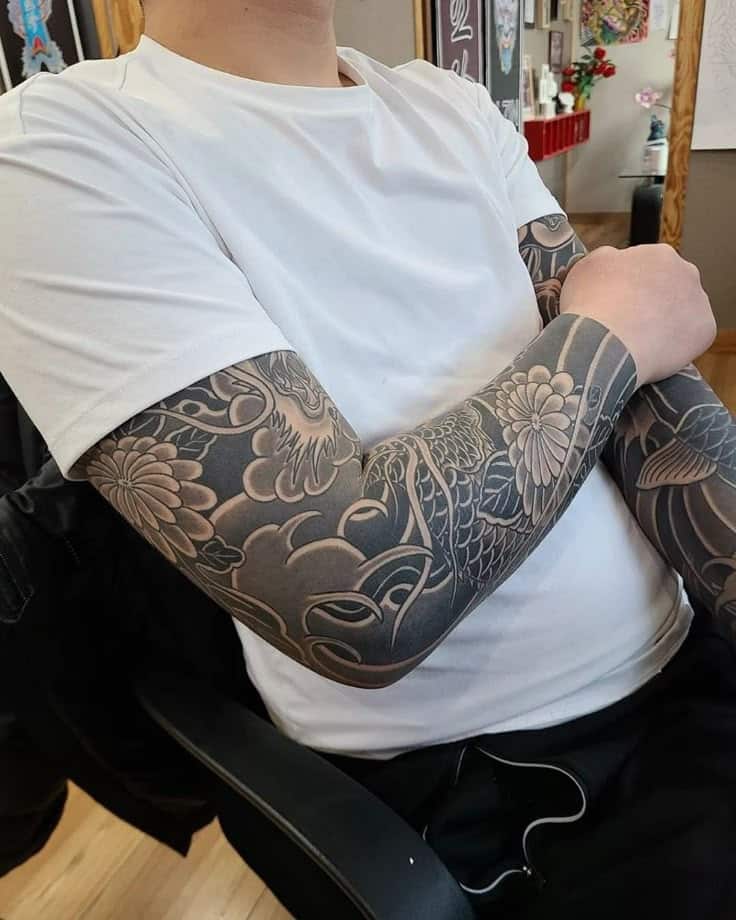
Eastern versus Western dragon traditions produce very different designs. Japanese and Chinese dragons are sinuous, serpentine, wise—associated with water, good fortune, and transformation. Western European dragons are more aggressive—wings, fire, and direct combat energy. Japanese traditional tattooing (irezumi) has centuries of dragon work to draw on; artists like Horiyoshi III have documented this tradition extensively.
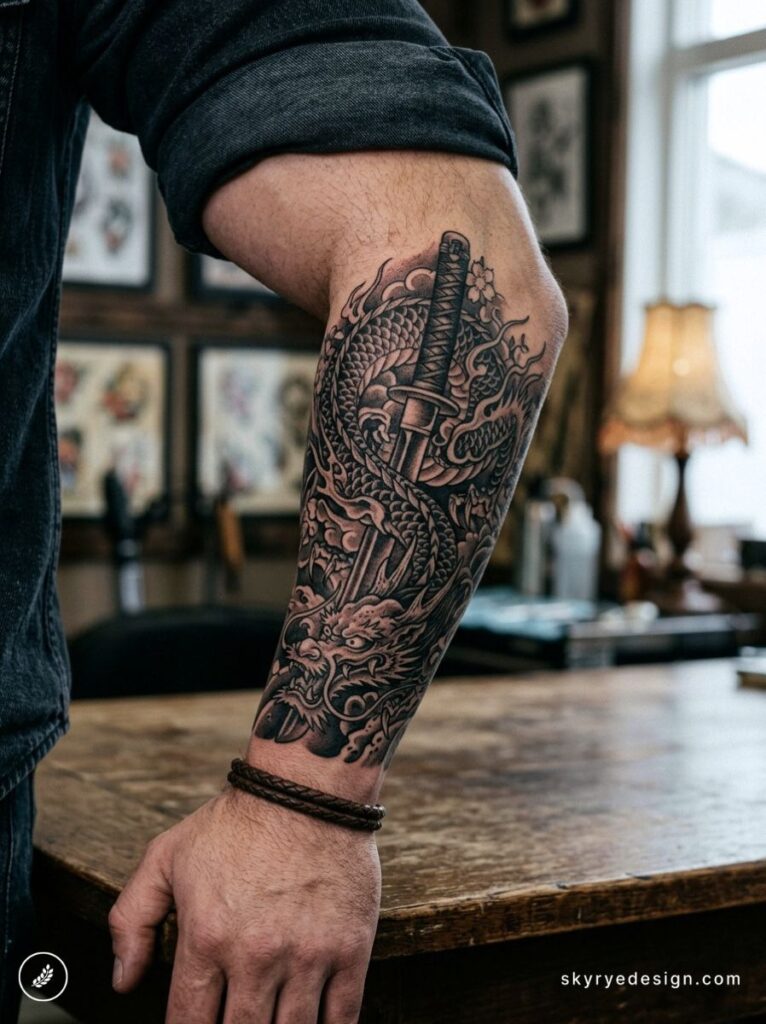
The sword integration is the compositional decision that defines the piece. A katana alongside a Japanese dragon creates cultural coherence. A European broadsword with a Western dragon follows a different but equally coherent tradition. Mixing the visual languages—Japanese dragon with a medieval broadsword—produces something that reads as inconsistent rather than eclectic.
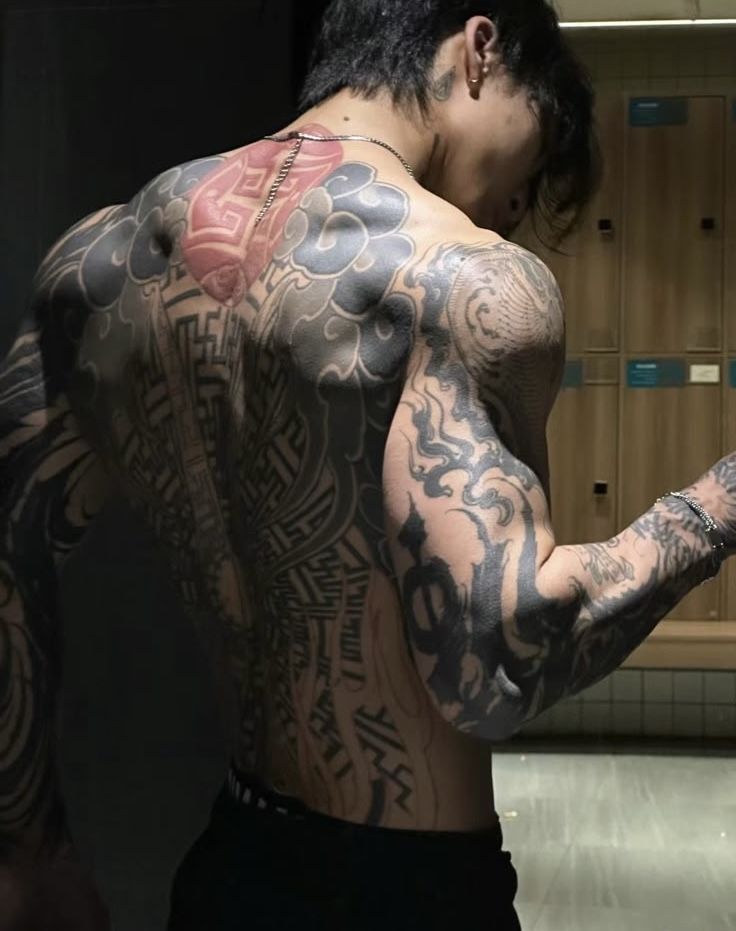
Symbolism: power, wisdom, the warrior’s honour, protection. Best placement: arm, back, chest.
11. Snake and Dagger — Duality, Danger, and the Sharp Edge of Change
The snake and dagger is one of tattooing’s most enduring compositions because it holds two opposing symbols in genuine tension: the snake (transformation, cyclical nature, the shedding of what no longer serves) and the dagger (decision, finality, the cut that separates one state from another). Together they produce an image about the necessary violence of real change—the idea that transformation isn’t gentle.
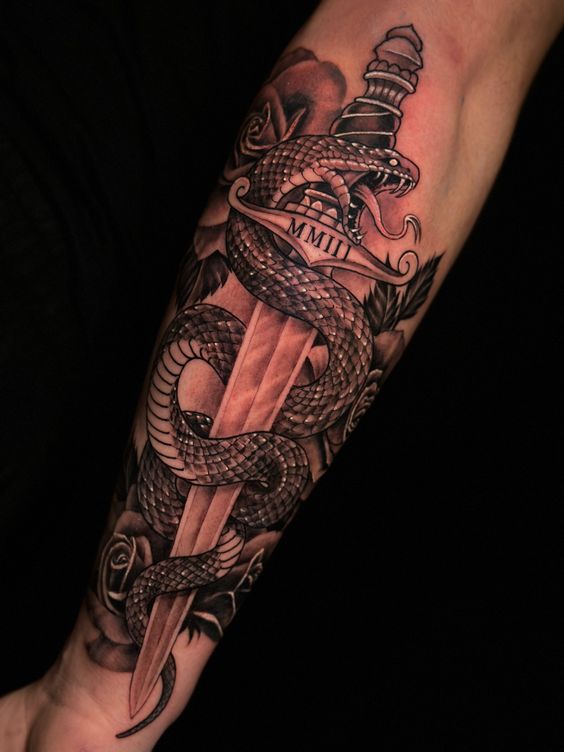
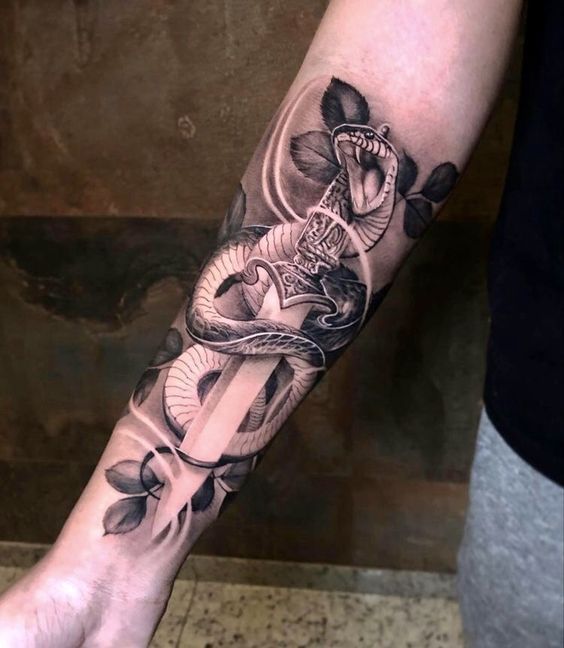
This is a design with deep roots in traditional American and traditional Japanese tattooing. The traditional American version features a dagger with a specific handle style (often ornate or jewelled), a snake coiling tightly around the blade, usually rendered in bold black and red.
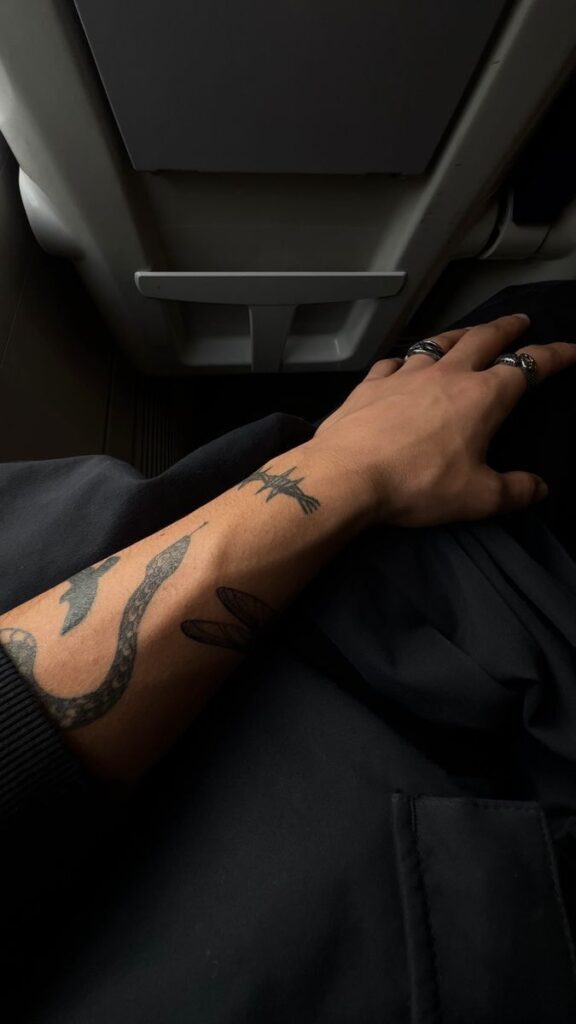
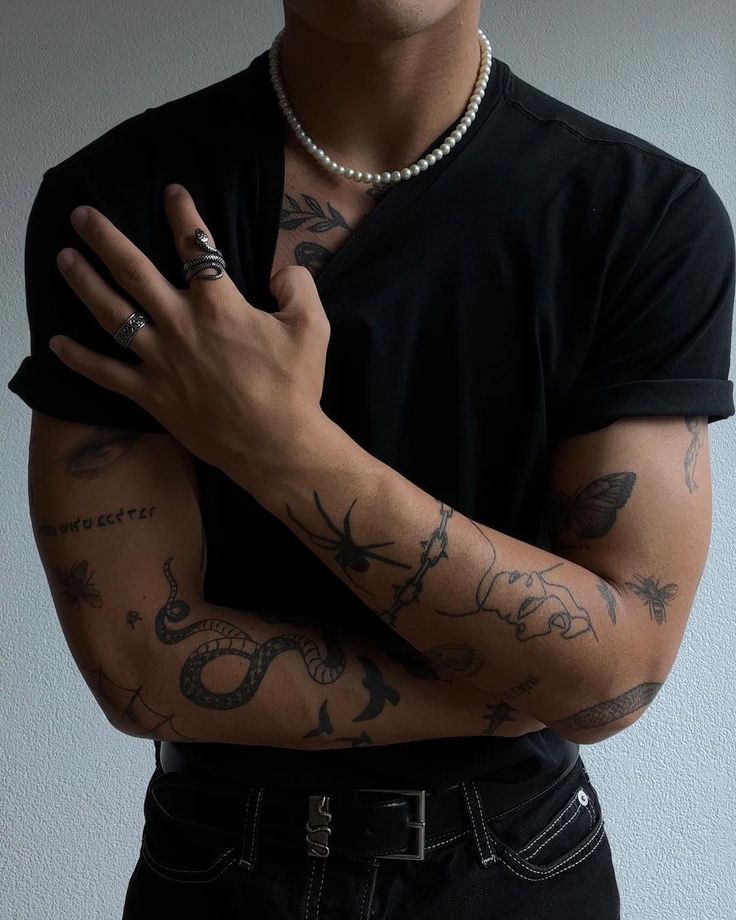
The Japanese version integrates the snake’s natural symbolism more directly—the snake as a protector deity (hebi) with the sword as a samurai weapon.
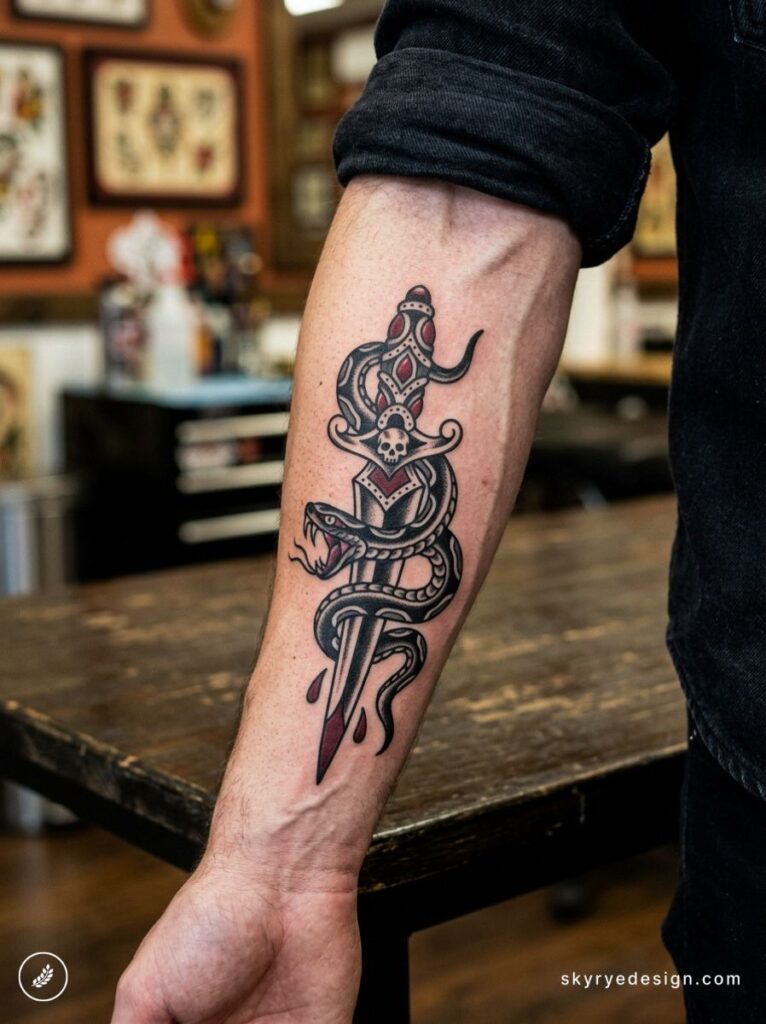
For placement: the forearm is classic for this composition because the dagger’s vertical form aligns with the arm’s length, and the snake’s coil reads clearly at this orientation. On the chest, the composition needs to adapt—typically the dagger points vertically up or down the sternum with the snake spiralling around it.
Symbolism: duality, transformation through decisive action, the balance of danger and wisdom. Best placement: forearm, calf, chest.
12. Roman Gladiator — The Courage to Fight in Full View
The Roman gladiator tattoo connects to one of history’s most specific forms of courage: fighting at maximum effort in front of a crowd that may call for your death if you lose badly. That’s a distinct kind of bravery from private resilience—it’s public, performative, and dependent on technique and will simultaneously. For men who identify with performing under pressure, facing public judgment, or competing, the gladiator carries specific resonance.
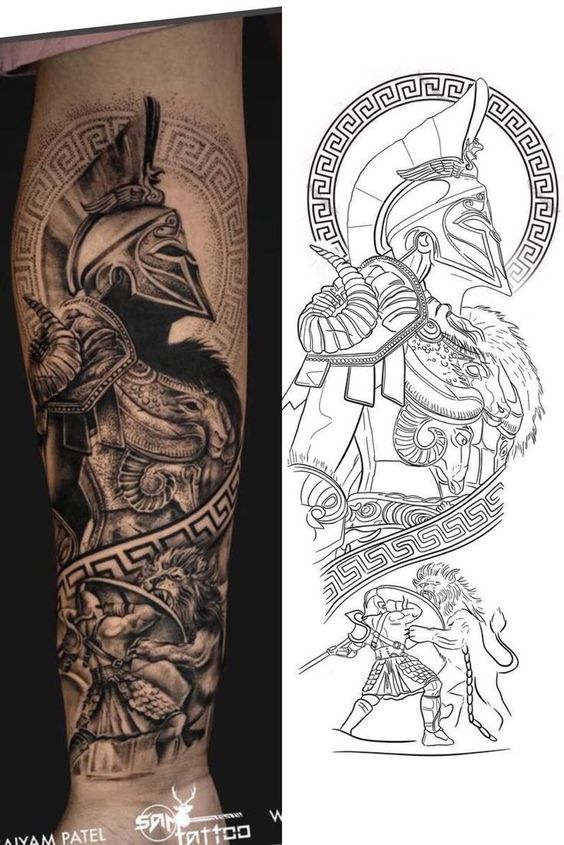
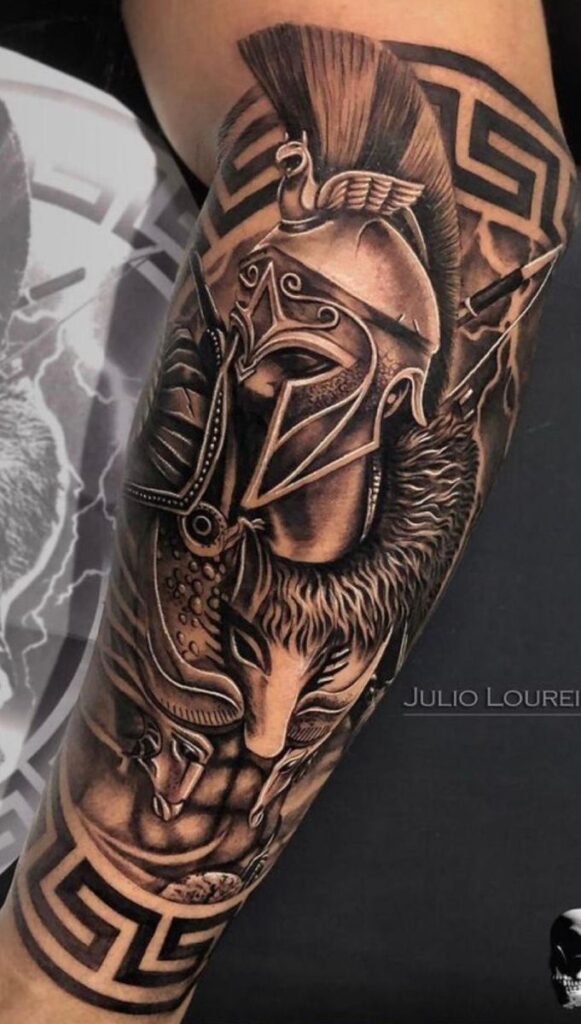
Compositionally, gladiator tattoos are strongest when they’re historically accurate rather than generically ‘warrior.’ Lorica segmentata armour, specific helmet types (galea, Thraex crested helmet, Samnite armour), accurate weapon types (gladius, sica, trident) all give the artist genuine historical detail to work with. Artists who’ve researched Roman military equipment produce designs that are recognisably Roman rather than generically ‘ancient warrior.’
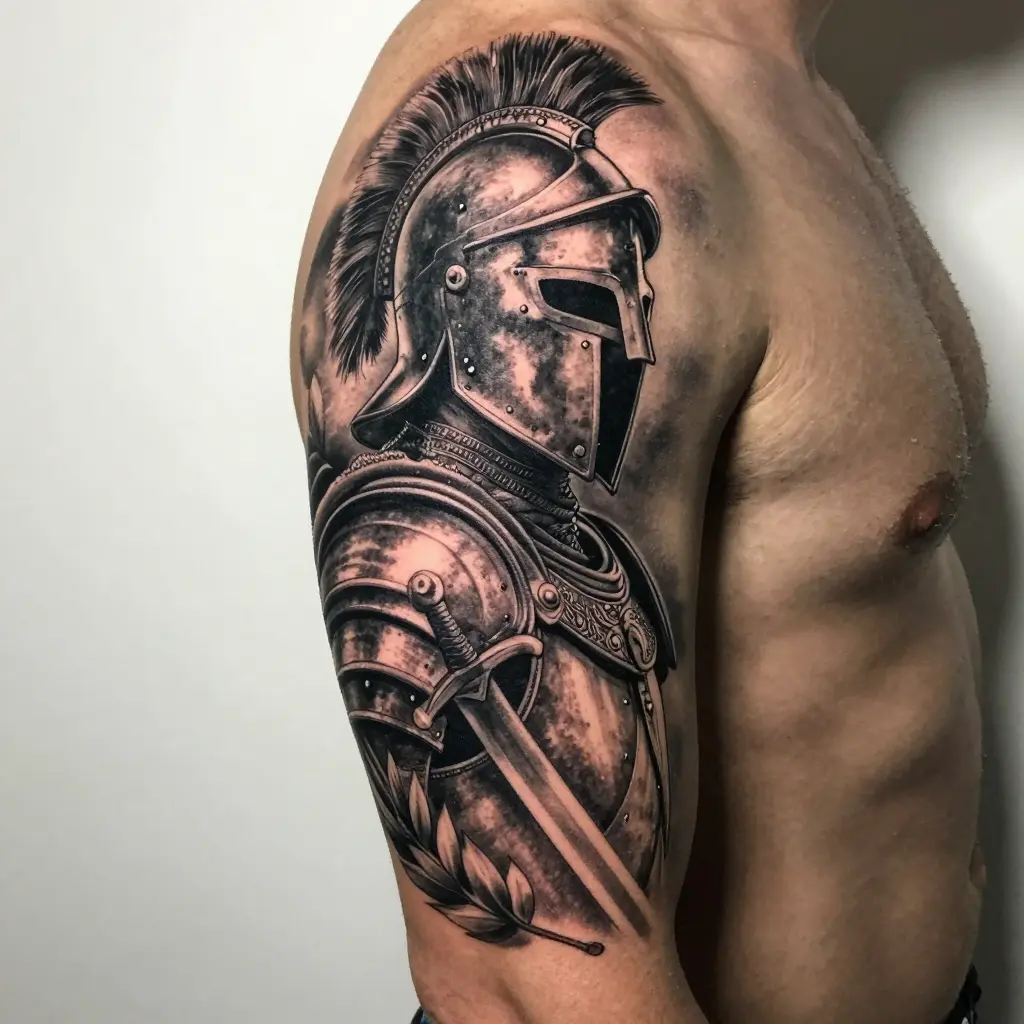
The Spartan warrior imagery (Corinthian helmet, hoplite shield) is related but distinct—a different military tradition, different aesthetic, different symbolic resonance. Clarifying which tradition you’re drawing from helps your artist produce something specific.


Symbolism: public courage, resilience under scrutiny, the will to fight and compete. Best placement: upper arm, chest, back.
13. Clock with Gears — Time, Mortality, and the Steampunk Aesthetic
The clock tattoo is memento mori in mechanical form—the gear-driven measurement of the time you have, permanently marked on your skin. Unlike a skull (which speaks to death as a destination), a clock speaks to time as a resource: it’s running, it’s measurable, and what you do with it is the only question worth asking.
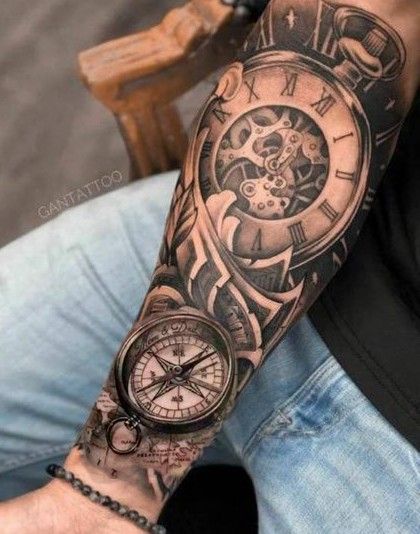
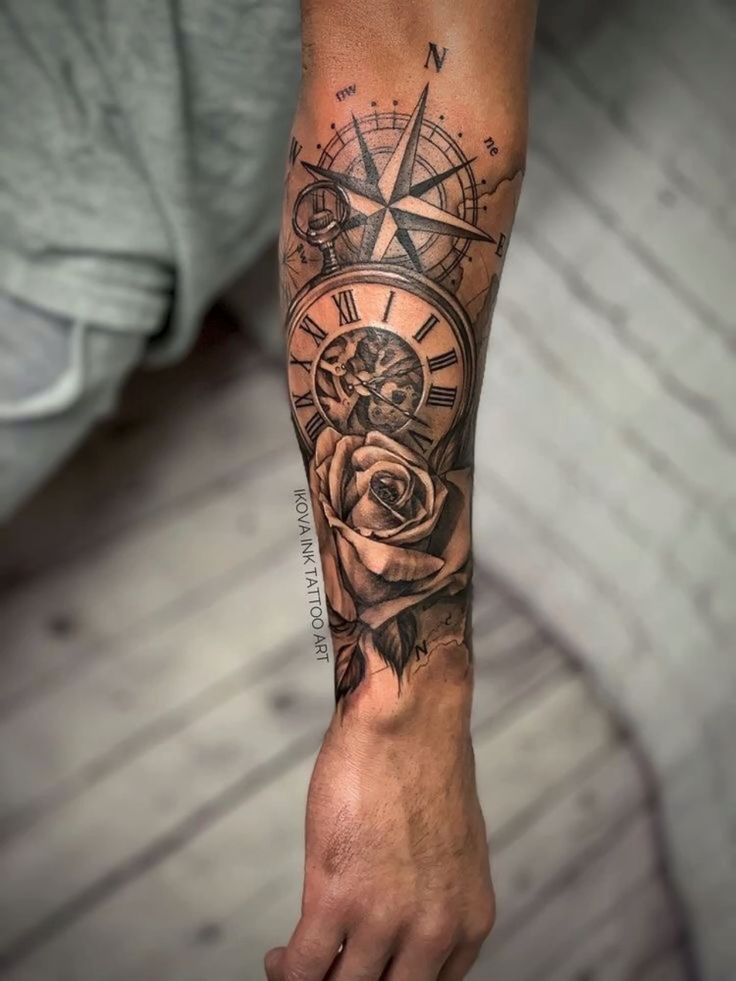
The steampunk direction—exposed gears, internal clockwork visible as if through a window in the skin, Victorian mechanical aesthetic—gained significant popularity in the early 2010s and has remained strong because it combines the conceptual weight of time symbolism with visual complexity that rewards extended looking. The challenge is that steampunk clock tattoos can become compositionally cluttered: gears, clock face, compass elements, hourglass, and roses all in one piece produce something that reads as noise rather than statement.
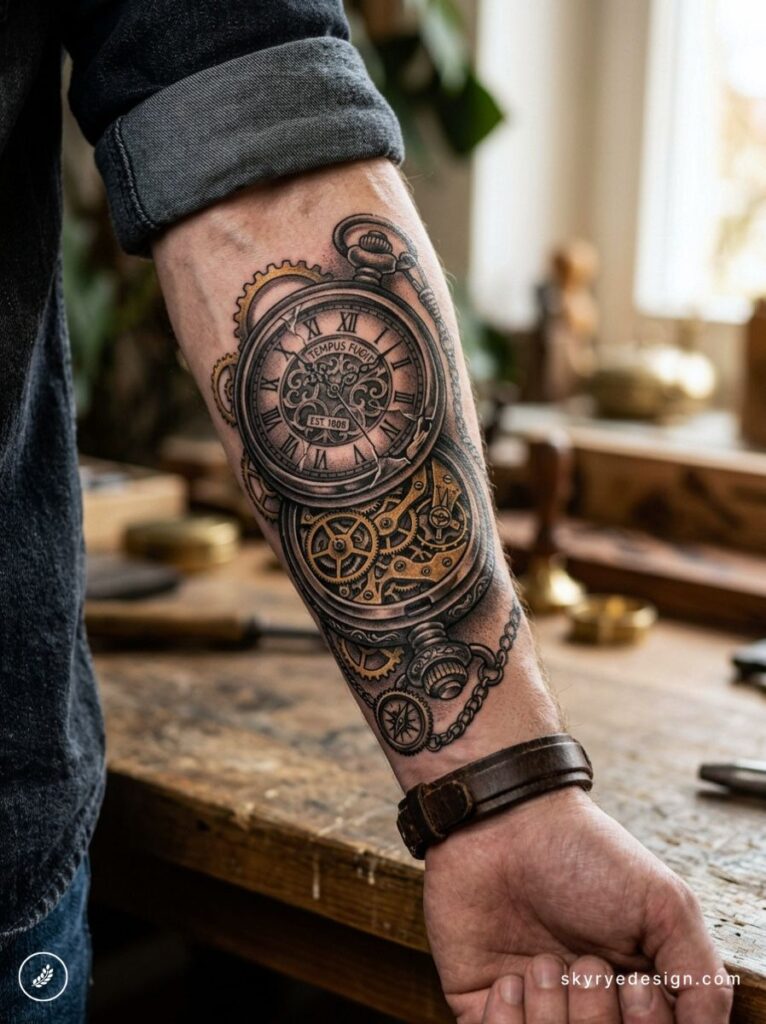
The strongest clock tattoo compositions have a clear focal element—typically a single well-rendered pocket watch or clock face—with mechanical detail subordinate to that focal point. Artists like Niki Norberg (Sweden) and Dmitriy Samohin (Ukraine) have produced exceptional clock and timepiece work in this style.
Symbolism: the passage of time, mortality, the urgency of living fully, the precision of personal values. Best placement: forearm, upper arm, chest.
14. Geometric Mandala — Sacred Geometry, Balance, and the Self as Centre
The geometric mandala is the most contemplative design in this list—a pattern that radiates outward from a centre point in perfect symmetry, representing the order that underlies apparent complexity. Mandala tattoos come from Tibetan Buddhist and Hindu traditions where the mandala is a tool for meditation and a visual representation of the cosmos. Contemporary geometric mandala tattooing has developed its own visual language that references sacred geometry without necessarily claiming specific religious meaning.
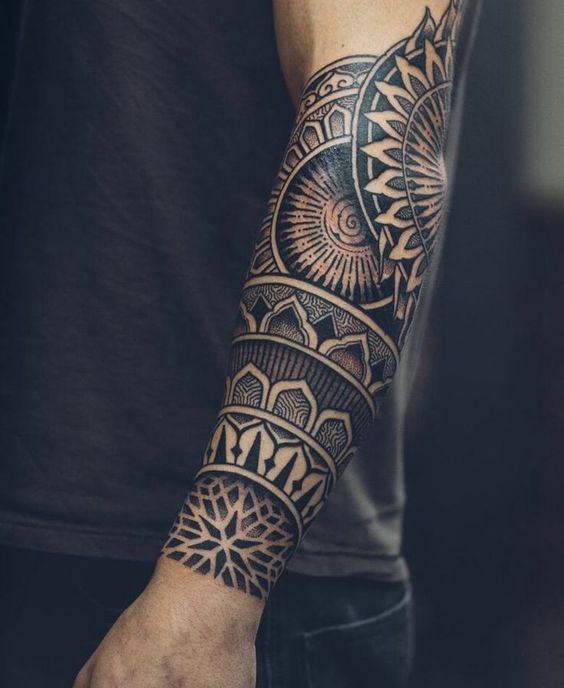
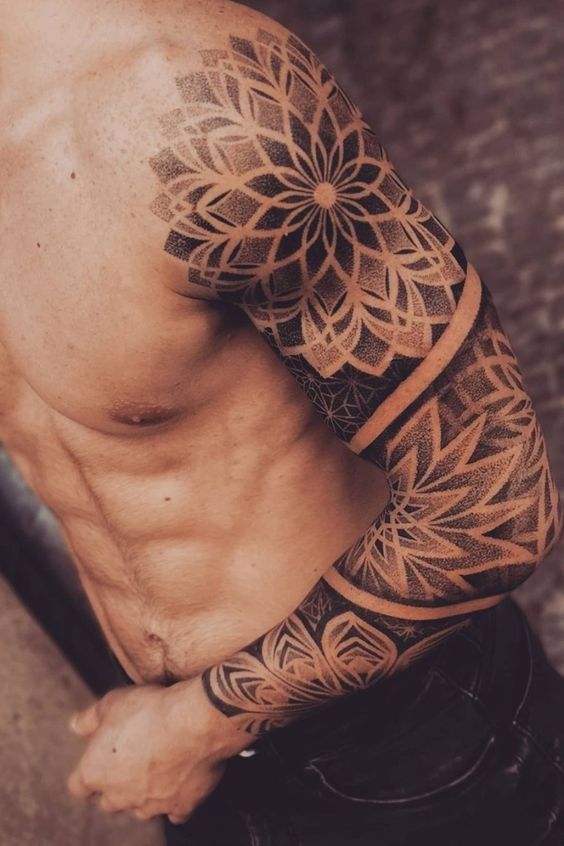
The technical challenge of mandala tattooing is the precision required. A mandala with slightly off-centre symmetry or inconsistent radial spacing reads as failed geometry rather than deliberate design. This is a style where artist selection matters enormously—look for portfolios that demonstrate perfectly executed circles, consistent radial symmetry, and clean line weight throughout the design. Artists like Nazareno Tubaro (Argentina) and Bang Bang (NYC) have produced exceptional geometric mandala work.
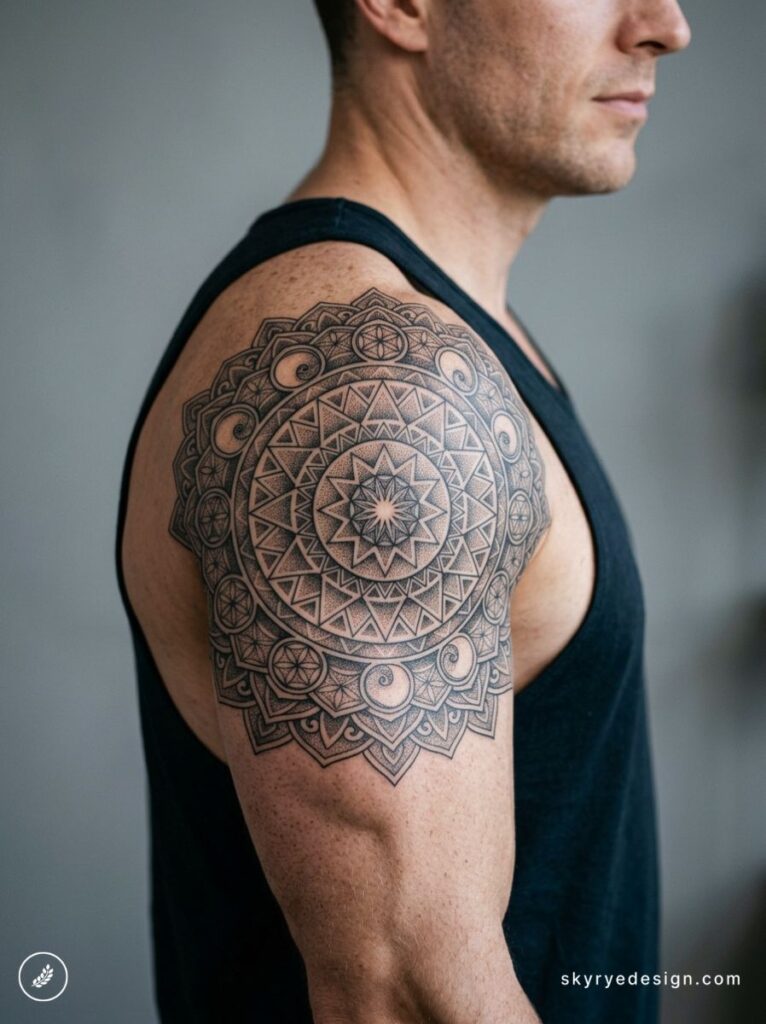
Placement: the shoulder (deltoid) is the most natural home for a geometric mandala because the rounded muscle form echoes the mandala’s circular structure. The sternum and upper back are also strong placements. Mandalas on the forearm work at a smaller scale but lose the visual impact of a larger piece.
Symbolism: balance, the universe as order, the self as centre, unity, and interconnectedness. Best placement: shoulder, upper back, sternum.
15. Eagle in Flight — Freedom, Vision, and Rising Above
The eagle in flight is one of the oldest and most cross-culturally consistent symbols in human history. In American tradition, it represents freedom and national identity.


In Native American traditions, it’s a messenger between the human world and the divine. In Roman tradition, it carried the souls of emperors to the gods. In German heraldry, it represents imperial power and precision. The wingspan-open, ascending eagle communicates aspiration and elevation in almost every cultural context.
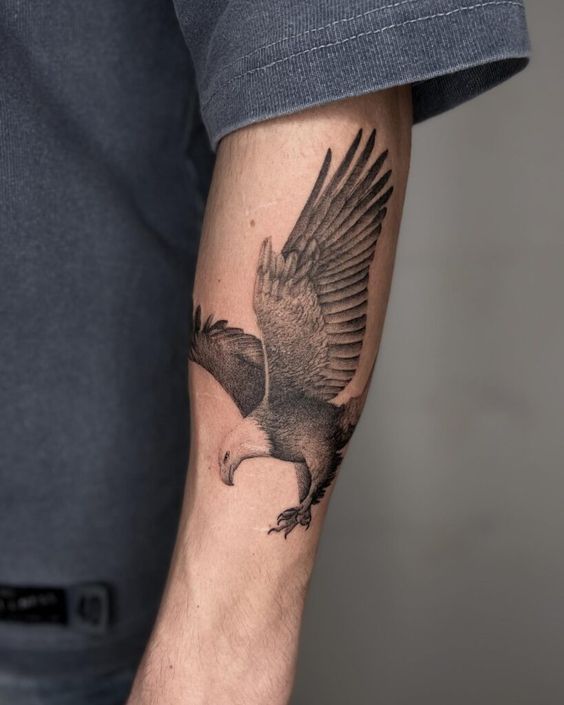
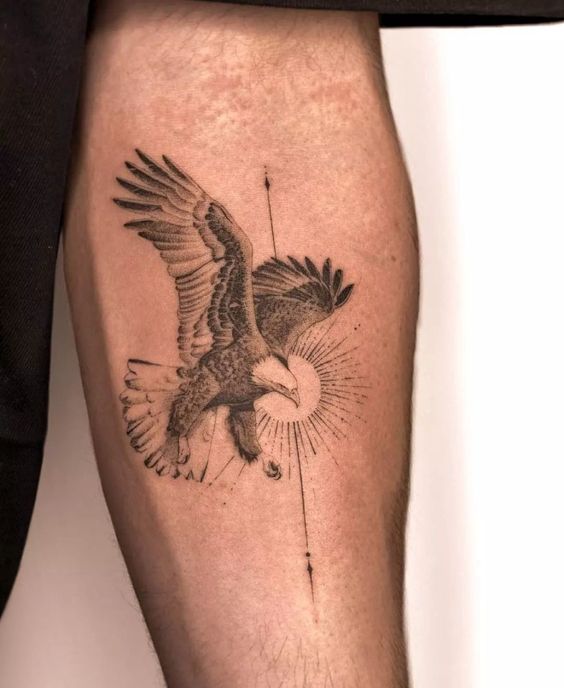
For tattoo purposes: the eagle’s wingspan creates a natural horizontal composition that suits chest placement (the wings spanning the pectoral muscles) or back placement (the full wingspan across the upper back). A well-executed chest eagle—wings spread, head turned in profile, talons extended—is one of the most compositionally powerful designs in men’s tattooing.
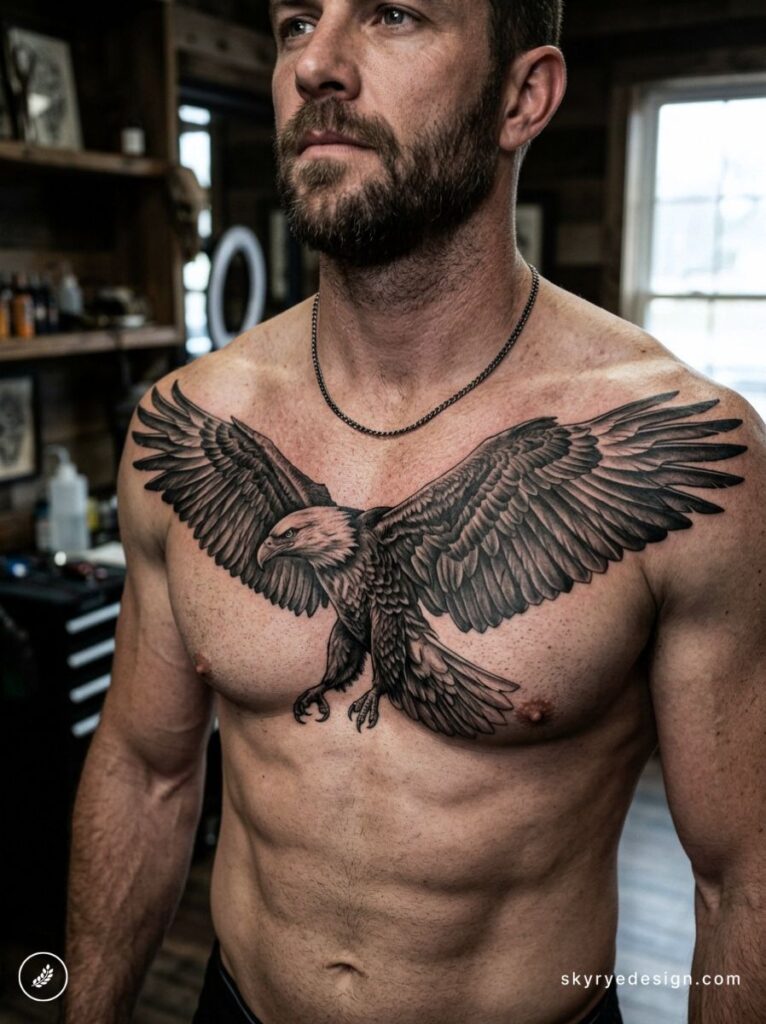
Style options are genuinely wide here. Traditional American bold-line eagles age exceptionally well. Japanese tradition renders eagles (karasu tengu) with specific feather structure and posture conventions.
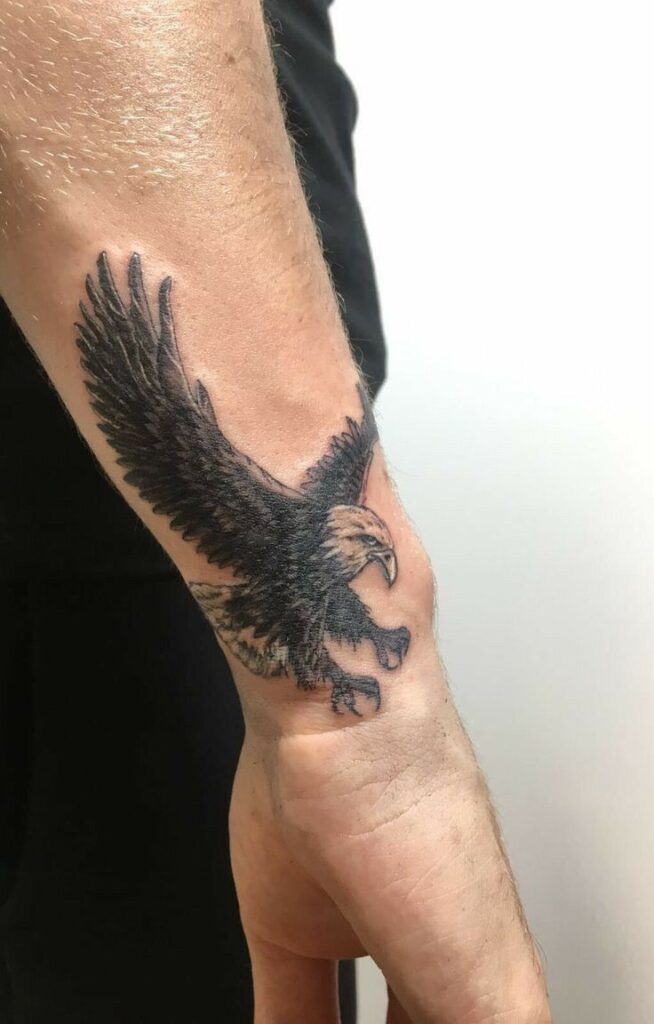
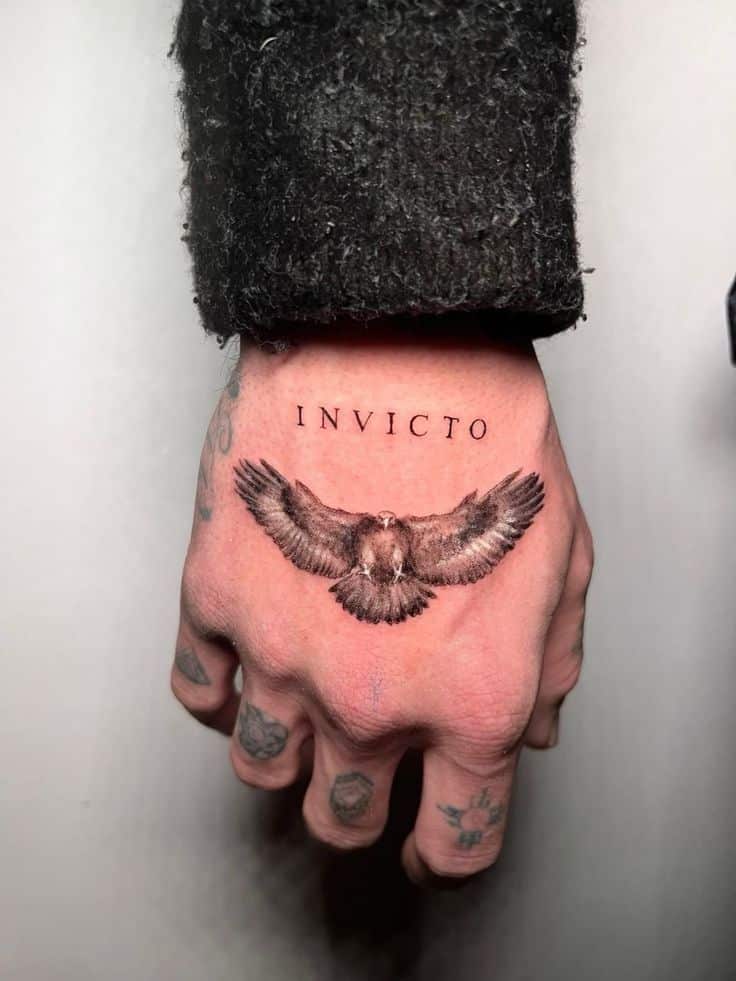
Realistic black and grey eagles can achieve near-photographic quality in the hands of artists like El Decks (Mexico). Each style communicates the same essential symbol through a different visual language.
Symbolism: freedom, vision, aspiration, the courage to rise. Best placement: chest (wingspan), upper back, upper arm.
Choosing Your Style: Traditional, Neo-Traditional, Realism, and Blackwork
The fifteen designs above can each be executed in multiple styles, and the style choice affects longevity, aesthetic character, and which artists can execute it well. Understanding the three main contemporary approaches helps you narrow both the design and the artist search.
Traditional American: Built to Last
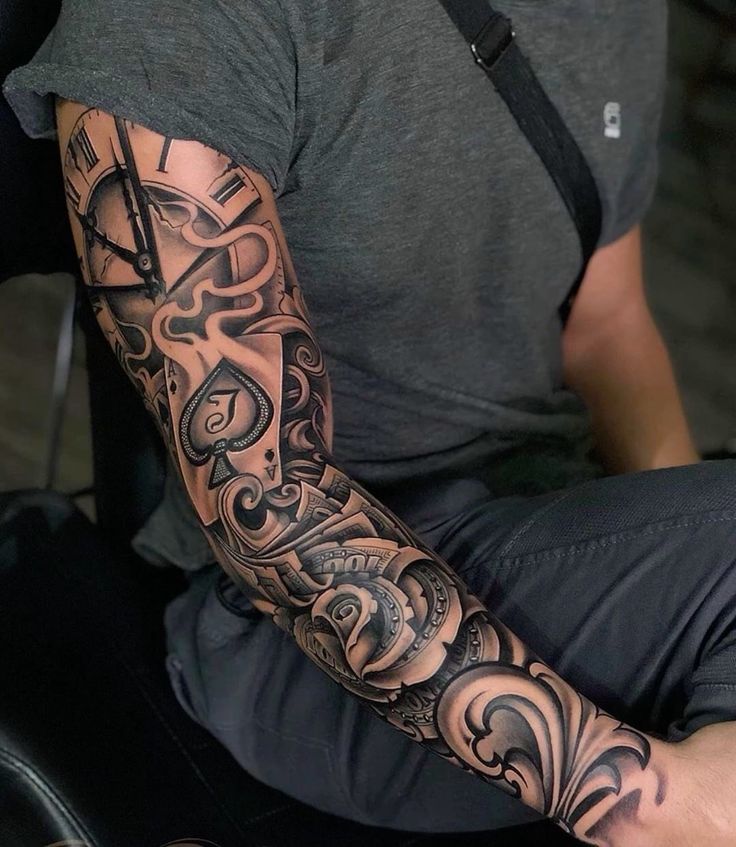
Traditional American tattooing—bold black outlines, flat primary colours, iconic imagery—was engineered for durability. The thick outlines hold their definition as ink spreads over decades; the limited colour palette doesn’t produce the muddy transitions that complex colour mixing can create over time. Lions, eagles, skulls, roses, and snakes all have established traditional American visual languages that are visually immediate and demonstrably long-lived.
If you want a tattoo that looks as good at year twenty as at year two, Traditional American is the style that best delivers that promise. It’s not nostalgia—it’s engineering.
Realism: Maximum Impact, More Maintenance
Realism tattoos achieve photographic quality in their best moments—a lion that looks like a wildlife photograph, a portrait that captures a specific face with emotional accuracy. The technical skill ceiling is higher than any other style, and the results at their best are extraordinary.

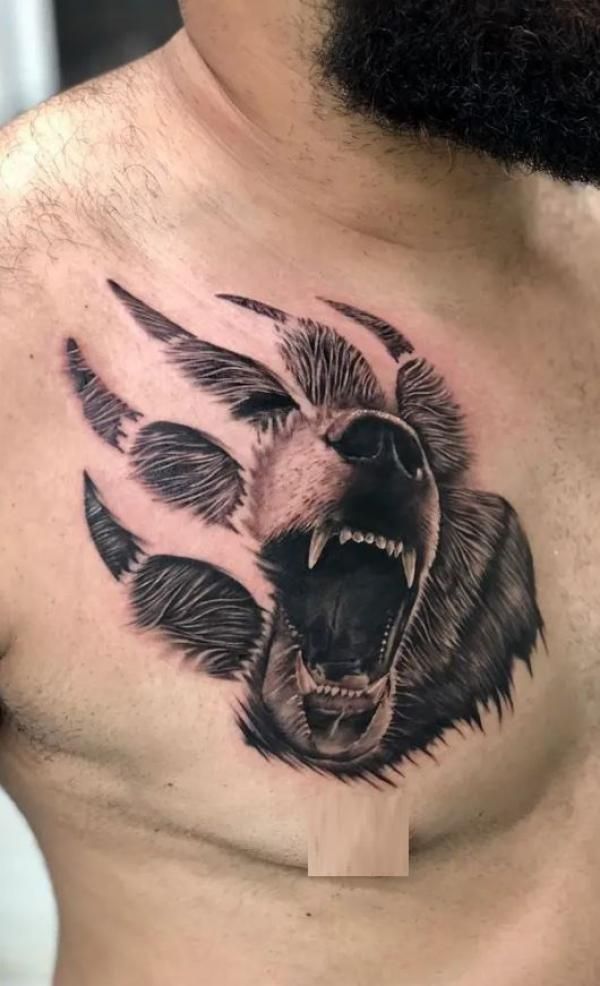
The honest trade-off: realism tattoos depend on subtle tonal gradients that soften over time as ink migrates in the skin. A realism tattoo typically needs a touch-up at 5–7 years to restore contrast and detail that has softened. This is standard practice and not a design failure—but it’s worth factoring into the lifetime cost calculation.
Blackwork and Geometric: Clean and Precise
Blackwork (designs built entirely from black ink, often with heavy solid fill areas) has become one of the most popular contemporary men’s tattoo approaches. The visual contrast is immediate and bold; the lack of colour means consistent aging without colour shift. Geometric work within the blackwork tradition—mandala structures, tribal-influenced patterns, sacred geometry—has a visual precision that photographs well and reads clearly in person.
The limitation: solid black fill is the most permanent thing you can put on skin. It’s significantly harder to modify or cover than linework, and removal is a longer process. Blackwork requires confidence in the design.
Placement Guide: Where Each Design Works Best
| Placement Reference by Design Lion with Crown → chest (primary), upper arm, backNautical Compass → forearm (primary), chest, upper arm Viking Warrior → upper arm, back, calf Wolf Howling at Moon → upper arm, forearm, chest Phoenix Rising → back (primary), chest, upper arm Samurai Mask → back, upper arm, calf Skull with Roses → forearm, chest, upper arm Biomechanical Sleeve → full arm sleeve, back panel Tribal Armband → upper arm (wrapping), forearm Dragon + Sword → arm, back, chest Snake and Dagger → forearm, calf, chest Roman Gladiator → upper arm, chest, back Clock with Gears → forearm, upper arm, chest Geometric Mandala → shoulder, upper back, sternum Eagle in Flight → chest wingspan (primary), upper back, upper arm |
Finding the Right Artist: The Step Most People Skip
The most common reason men end up with tattoos they’re ambivalent about is artist selection that prioritised convenience (nearest studio, shortest wait, lowest price) over fit (does this artist’s specific style match what I want this specific design to look like?). Tattoo artists are specialists. An artist who produces extraordinary traditional American work may produce mediocre realism, and vice versa. A geometric mandala specialist may have no experience with figurative work.
The research process: identify the style you want first, then find artists who specialise in that style specifically. Instagram is the most efficient tool—search style-specific hashtags (#blackandgreytattoo, #traditionaltattoo, #geometrictattoo) alongside your location. Look at healed work, not just fresh tattoos. Fresh ink always looks more vivid than it will look at 18 months; healed work shows how the artist’s technique holds over time.
The consultation is where you assess whether the artist engages seriously with your idea or just takes your reference and quotes a price. A good artist asks what the design means to you, suggests placement and sizing based on your anatomy, and flags design elements that won’t hold well long-term. These conversations reveal whether you’re working with a craftsperson or just a business.
Frequently Asked Questions
How much do men’s tattoos typically cost for these designs?
Prices vary significantly by artist, region, and design complexity. As a general range: a small to medium single-session tattoo (10–15cm) at a reputable studio runs $200–$500. A full sleeve from an experienced specialist is typically $2,000–$8,000+ over multiple sessions. Hourly rates for experienced artists range from $150–$400. The biomechanical sleeve, geometric mandala, and large phoenix or eagle compositions are the most time-intensive designs on this list. Don’t budget from the cheapest quote available—undercharging artists are typically underexperienced.
Which design from this list is best for a first tattoo?
Nautical compass, wolf howling at moon, or geometric mandala are strong first tattoo choices for men. All three work well at medium scale (12–15cm), have strong symbolism that tends to remain meaningful over time, and offer clear style direction that makes artist selection straightforward. The lion with crown and eagle in flight are also excellent but work best larger than most people want for a first piece. Avoid biomechanical sleeves and full back compositions as first tattoos—the commitment is substantial before you know how your skin responds and what the experience is like.
How painful are these placements?
Upper arm and forearm (the most common placements for this list) are consistently rated 4–6/10 by most people—uncomfortable but very manageable. Chest work is 5–7/10, with the sternum area significantly more intense. Back pieces are 5–6/10 for most of the back, with the spine area notably more intense. Ribs are the most painful area adjacent to these placements (7–9/10 consistently reported) and are not included in this list for that reason. Pain is highly individual; these are averages from community reports.
Should I choose black and grey or colour?
For most of the designs on this list, black and grey is the stronger long-term choice. Black and grey aging is predictable—contrast softens gradually and consistently. Colour ages more variably: yellow and orange fade fastest, black holds longest, blue and purple shift in tone over time. If colour is important to you, choose an artist who specialises in colour work specifically and uses high-quality pigments. The skull with roses, phoenix, and samurai mask are the designs on this list where colour has the strongest design logic.
How do I take care of a new tattoo?
First two weeks: wash 3–4 times daily with fragrance-free soap (Dove Sensitive), pat dry with clean paper towel, apply a thin layer of Aquaphor or Hustle Butter. Keep out of direct sun, avoid submersion in water, don’t pick at peeling skin. After two weeks: switch to a fragrance-free lotion (Lubriderm, Curel) applied twice daily. SPF 50 on any sun-exposed tattoo from week two onward—UV is the primary driver of fading over time. Follow your specific artist’s aftercare recommendations, as technique varies.
Closing Thought: The Story Carries the Picture
The artist’s advice that broke my first-tattoo paralysis—’you’re picking a story, not a picture’—holds for every design on this list. A lion with crown on someone who genuinely identifies with leadership communicates something. The same design on someone who chose it because it looked good on someone else’s arm communicates less.
The strongest tattoos on this list are the ones where the symbolism is true—where the wolf means something about loyalty to your actual people, where the phoenix corresponds to something you actually survived, where the compass reflects a genuine orientation toward direction and purpose. That match between meaning and image is what makes a tattoo hold its significance at year ten and year twenty, when the novelty has long faded and only the story remains.
Take the time to find the right design, the right artist, and the right placement. The permanence of the decision is exactly what makes it worth doing properly.
- 10.7Kshares
- Facebook0
- Pinterest10.7K
- Twitter0
- Reddit0