I almost got the wrong crystal tattoo. Not wrong in the sense that I changed my mind — wrong in the sense that I nearly booked the wrong artist for the style I actually wanted, and the result would have been unrecoverable.
Here’s what happened: I wanted a clear quartz cluster, fine line black and grey, something that looked almost architectural — precise facet lines, the play of light across flat geometric faces, clean and structural rather than soft or decorative. I found a reference image I loved, showed it to an artist whose portfolio was full of beautiful watercolour botanicals, and nearly booked the session.
The artist saved me by being honest: ‘This is a different skill set than what you’re seeing in my work. The way light hits a crystal face requires a specific approach to line weight and shading that I’d want more practice at before I did it on you.’ She recommended a colleague. I went to the colleague. The tattoo is exactly right. But that conversation taught me something: crystal tattoos look like one category, but they’re actually several completely different technical challenges depending on the style, the stone, and the artist’s specific strengths.
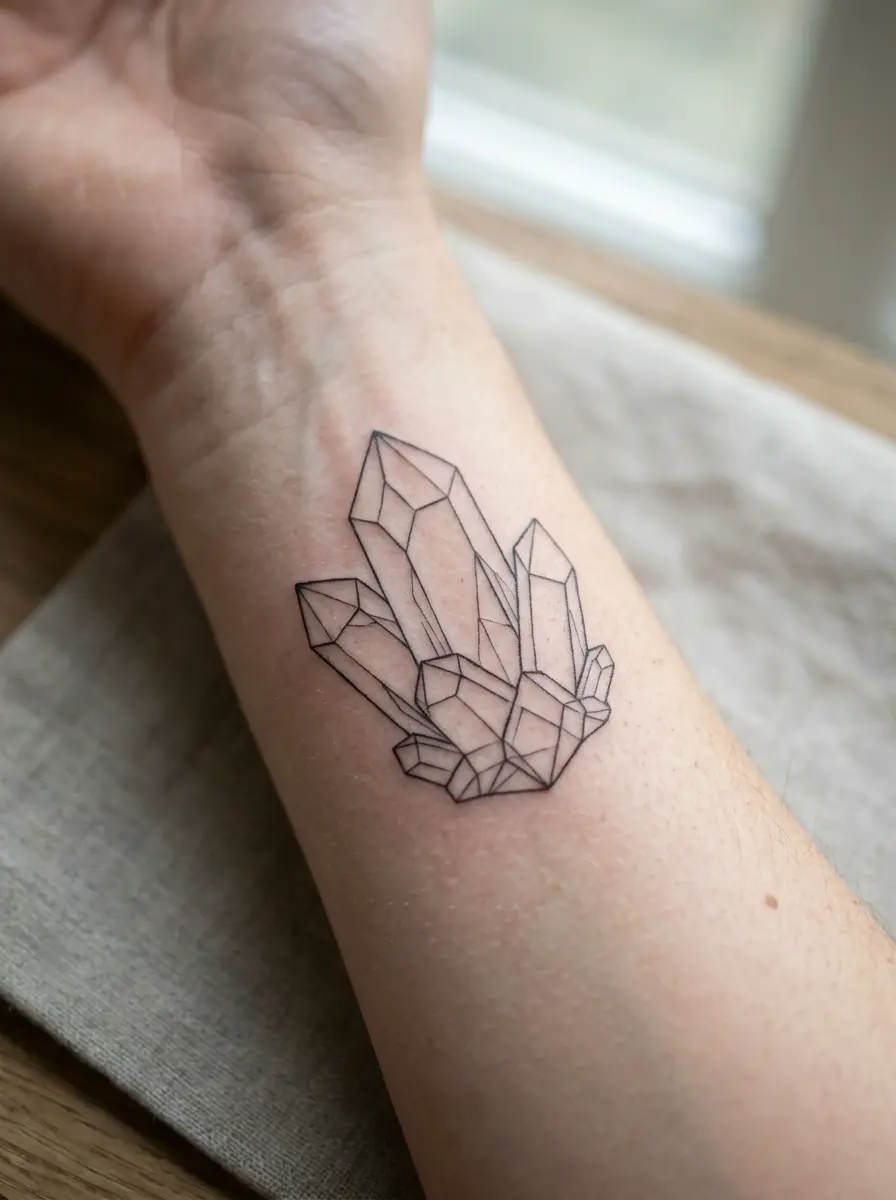
This guide covers all of it — the seven main styles, the most popular crystal types and what they mean, the placement logic that actually affects how the tattoo ages, the questions worth asking before you book, and the 2026 shifts in how artists are approaching crystal work.
Why Crystal Tattoos Work So Well on Skin
There’s a structural reason crystal tattoos have remained consistently popular while other tattoo trends cycle through and fade: the geometric faceted form of a crystal translates to skin better than almost any other natural subject.
Most natural subjects — flowers, animals, landscapes — rely on organic curves that are difficult to render in permanent ink without looking either too stiff (over-outlined) or too soft (under-defined). A crystal is naturally geometric. Its faces are flat planes. Its edges are straight lines. The faceted structure is inherently tattoo-friendly because straight lines hold their definition longer than organic curves, and flat planes shade cleanly without the complex colour transitions that make, say, a realistic portrait so technically demanding.
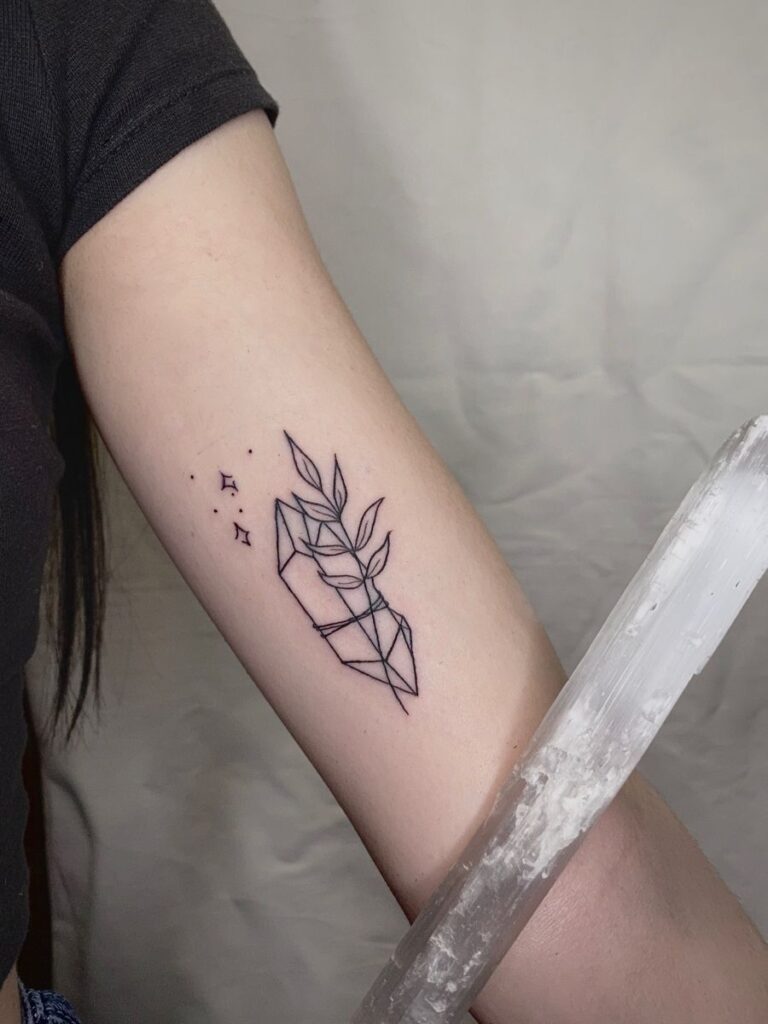
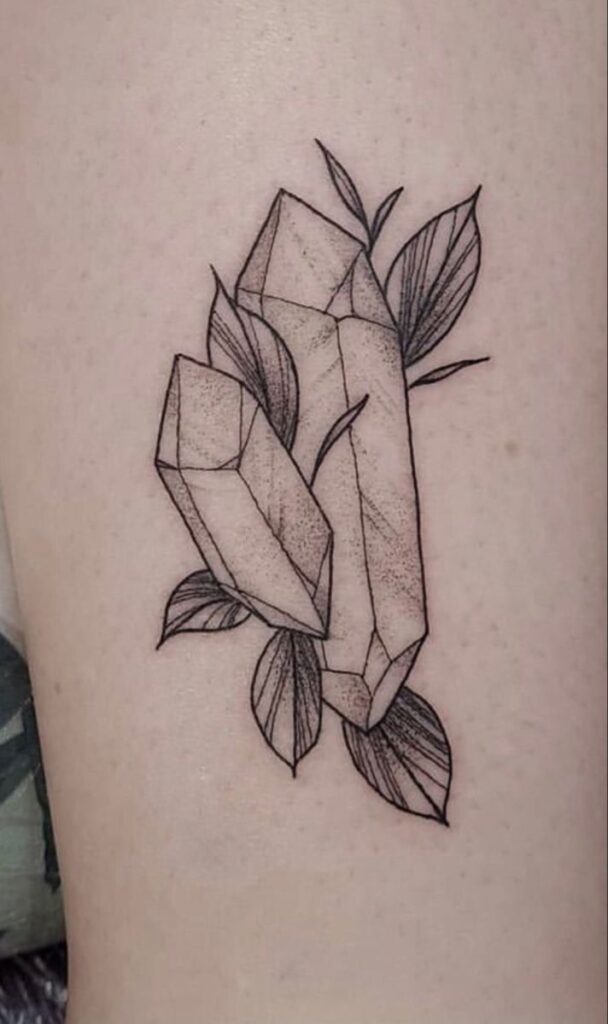
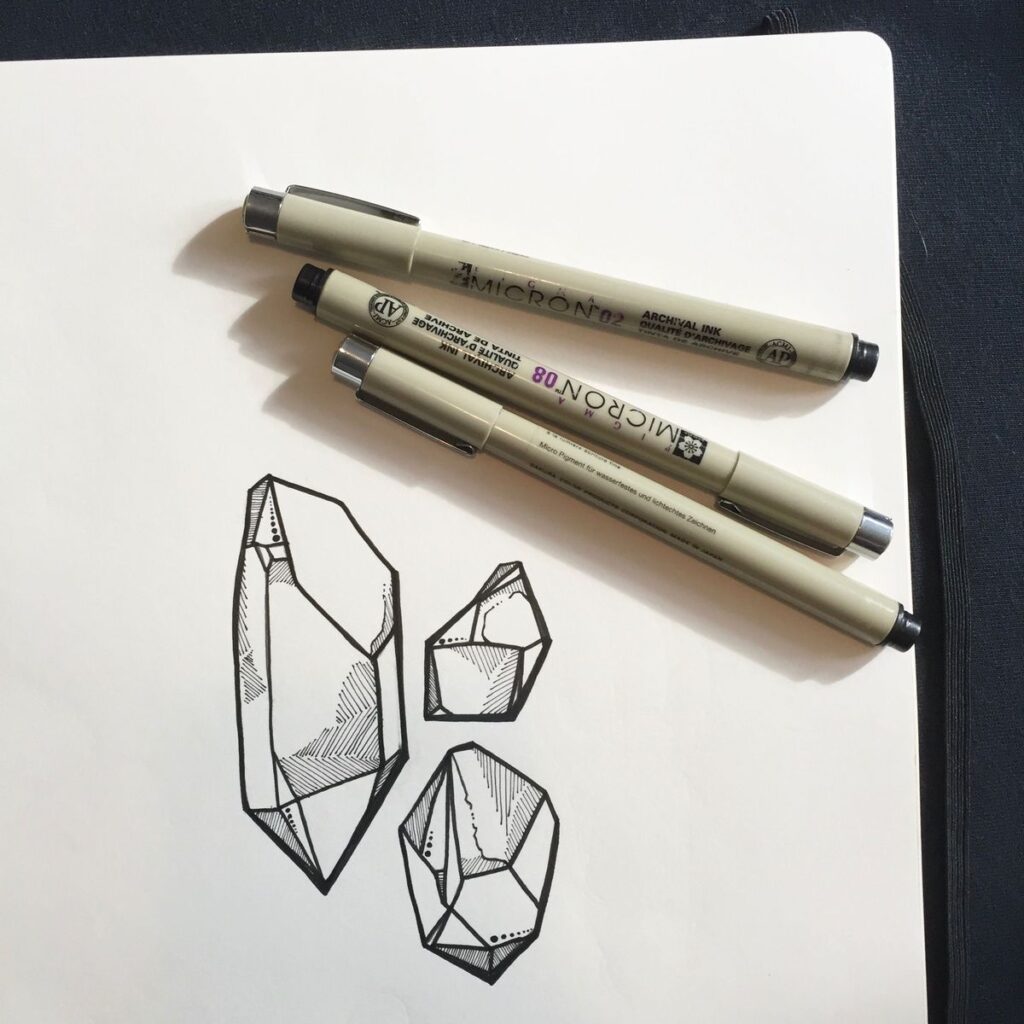
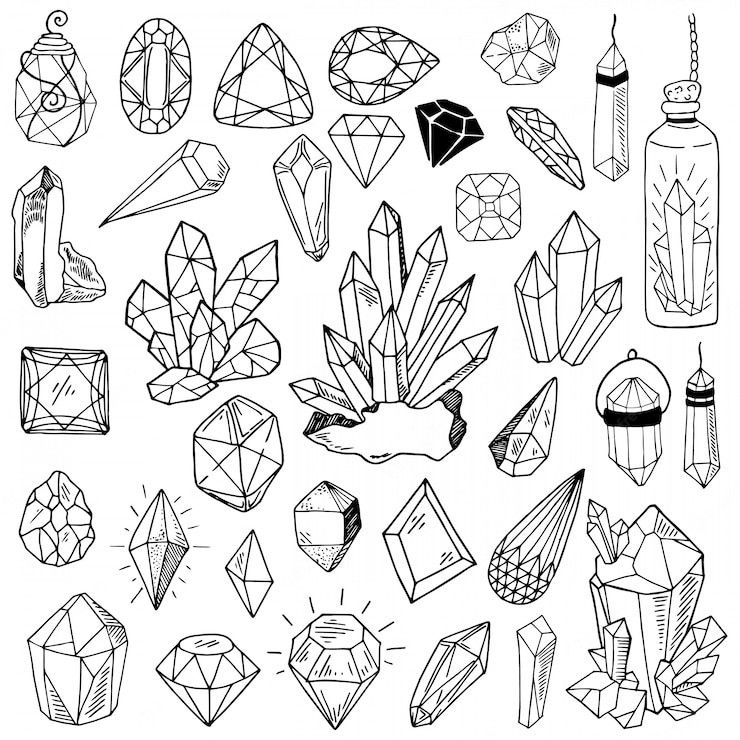
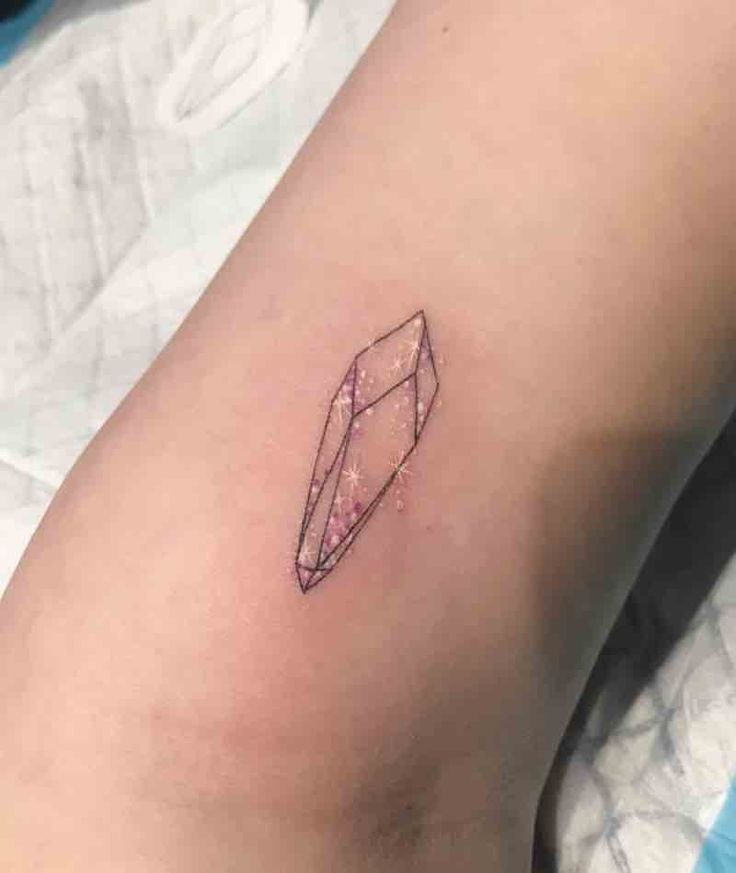
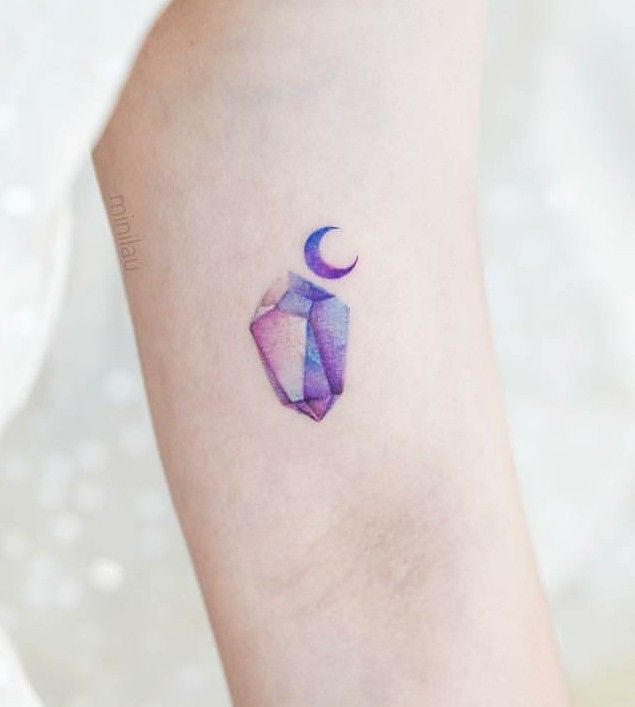
The other reason: crystals are simultaneously specific and personal. Choosing an amethyst rather than a clear quartz is a statement about meaning, not just aesthetics. The stone you choose carries its own symbolic weight — and that layer of intentionality is exactly what makes a tattoo feel considered rather than decorative.
✏ Artist note: Before booking, look specifically at your prospective artist’s existing crystal or geometric work — not their overall portfolio quality. Crystal tattoos require a specific understanding of how to render flat reflective surfaces and straight-edged geometry. A brilliant portrait artist may not have that specific skill set, and vice versa.
Crystal Types and Their Tattoo Meanings
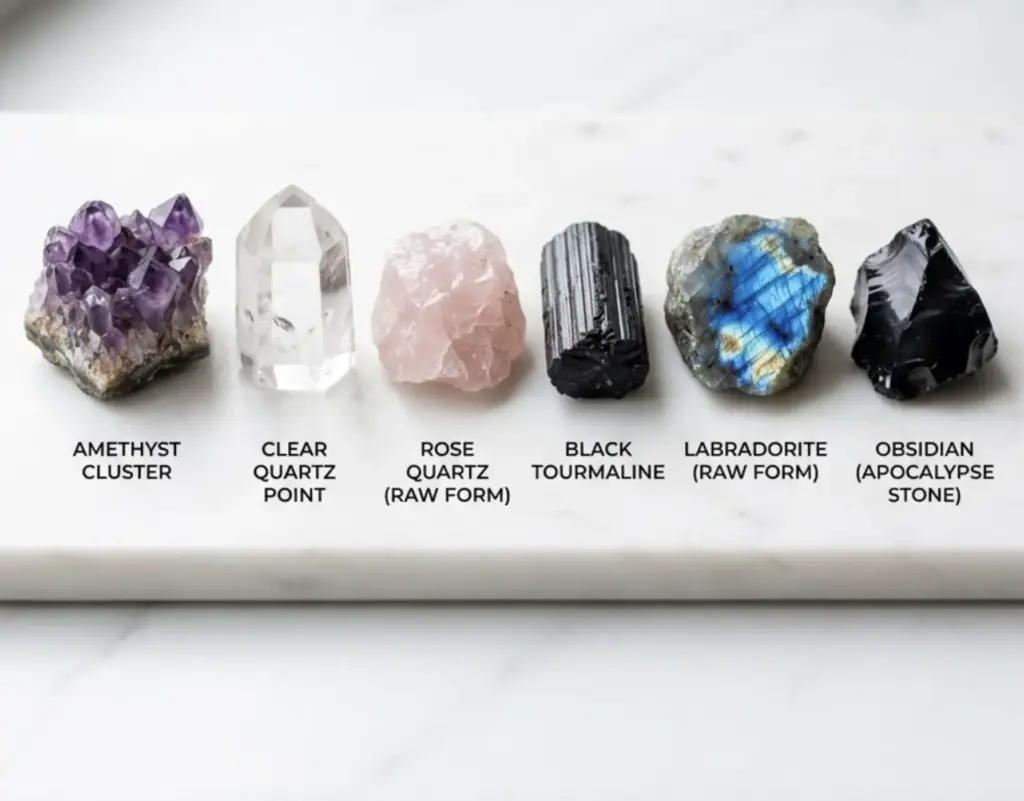
Amethyst — Intuition and Protection
Amethyst is the most tattooed crystal, and its visual form explains why: the distinctive hexagonal prismatic clusters are immediately recognisable and architecturally complex in a way that rewards detailed tattooing.
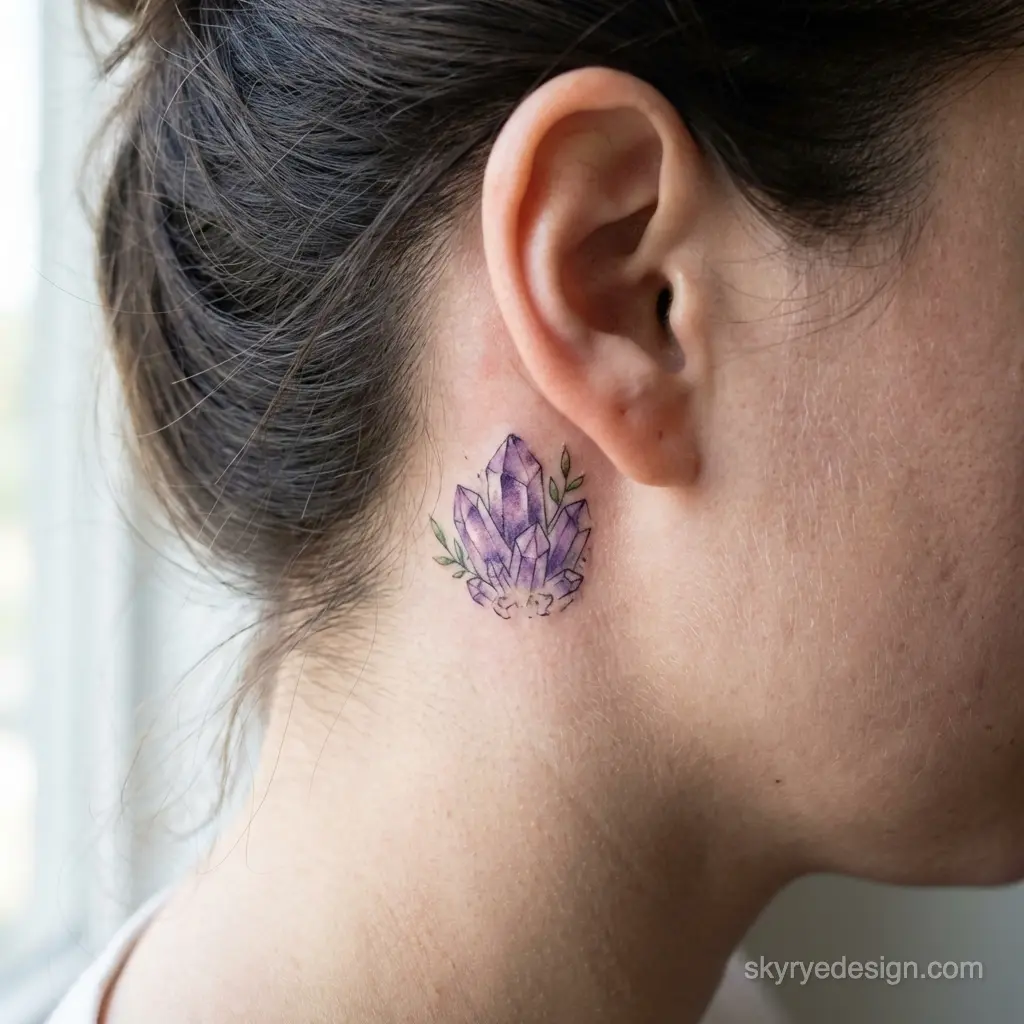
Deep purple gradients from almost-black at the base to pale lavender at the tips.
Meaning: intuition, calm, protection from negative energy, connection to higher awareness. The Ancient Greeks believed amethyst prevented intoxication — the name derives from the Greek ‘amethystos,’ meaning ‘not drunk.’ For tattoo purposes: works in every style from fine line through full colour realism.
Clear Quartz — Clarity and Amplification
Clear quartz is the most technically demanding crystal to tattoo well because its defining quality — transparency and the refraction of light through colourless crystal — has to be suggested entirely through white space, line weight variation, and grey shading rather than colour.
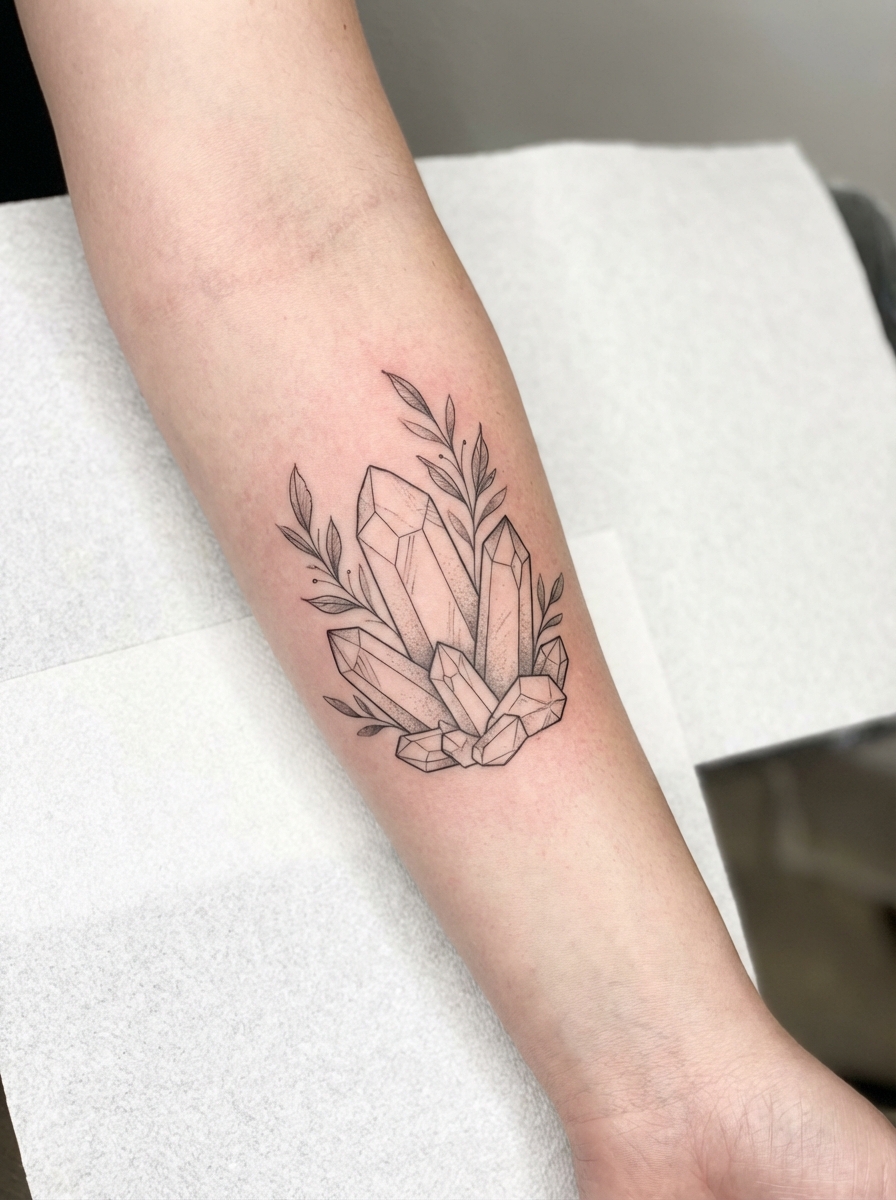
When executed correctly, a clear quartz tattoo has an almost glass-like quality.
Meaning: clarity of thought, amplification of intention, focus. Placement: Forearm and collarbone work best because the flat skin surface holds the precise geometry.
Rose Quartz — Love and Self-Compassion
Rose quartz raw form — rough-edged, pale pink, slightly translucent — translates beautifully to both watercolour and fine line styles. The soft pink tones work well in colour tattooing, and the raw, uncut form gives more organic edges than the strict geometry of faceted crystals.
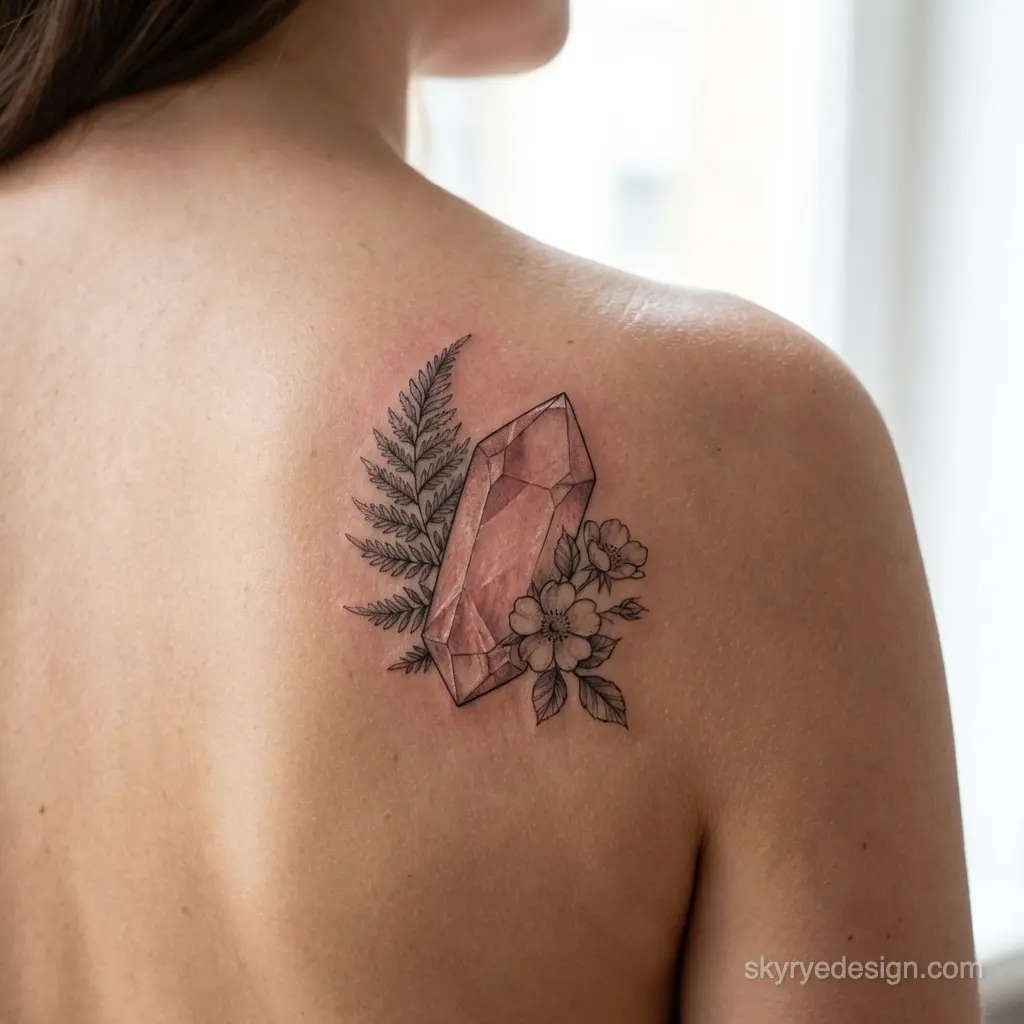
Meaning: unconditional love, self-compassion, emotional healing. Frequently combined with botanical elements — dried roses, eucalyptus, peonies — for a more layered composition.
Labradorite — Transformation and Magic
Labradorite is the crystal having a moment in 2026 tattooing. Its defining feature is labradorescence — a colour-shift quality where the stone appears to change from dark grey to vivid blue-green-gold depending on the light angle.
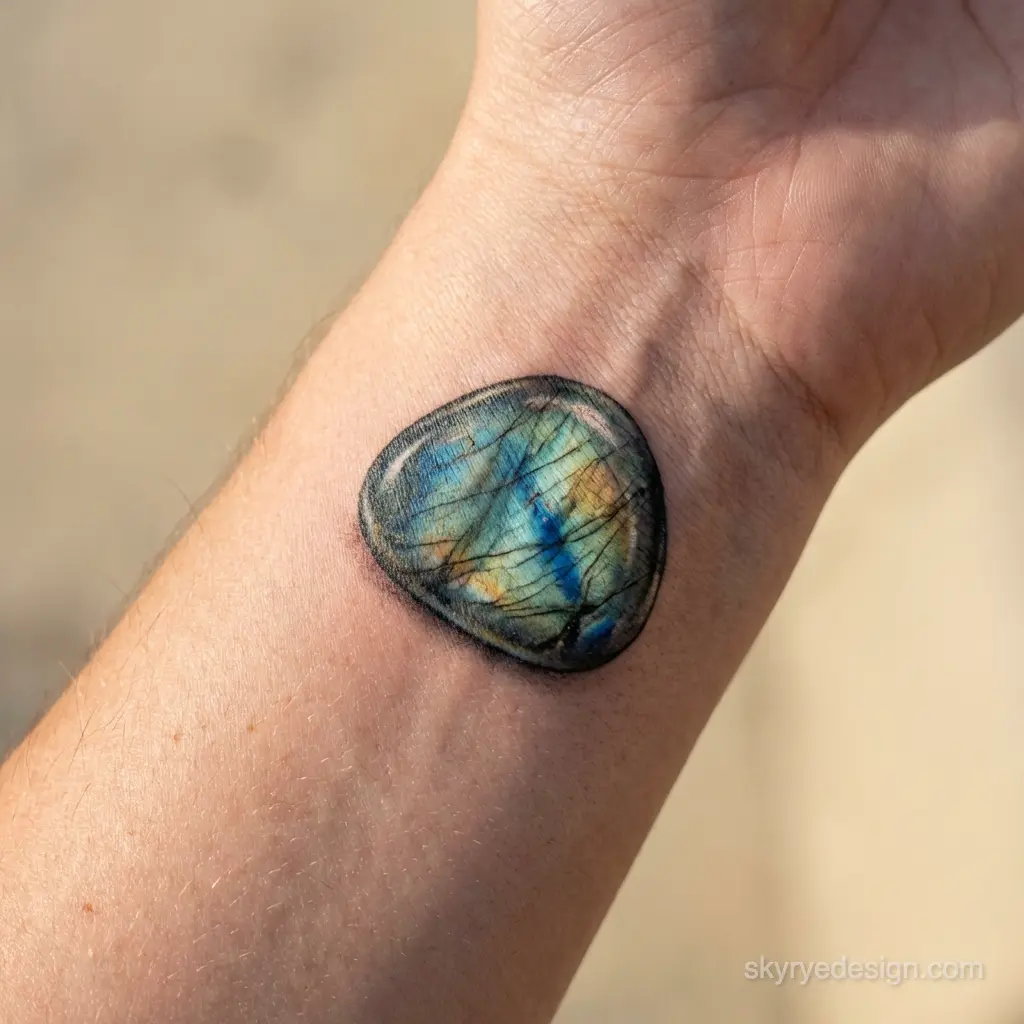
This iridescent quality is a genuine technical challenge for tattoo artists and a genuine opportunity for those who can execute it: the colour gradient effect requires advanced understanding of colour theory and layering.
Meaning: transformation, intuition, magic, the intersection of ordinary and extraordinary. Best in: colour realism or neo-traditional with metallic colour work.
Black Tourmaline and Obsidian — Grounding and Protection
Both black tourmaline (striated, rod-like crystal structure) and obsidian (smooth, volcanic glass with a conchoidal fracture surface) suit blackwork and geometric minimalist styles.
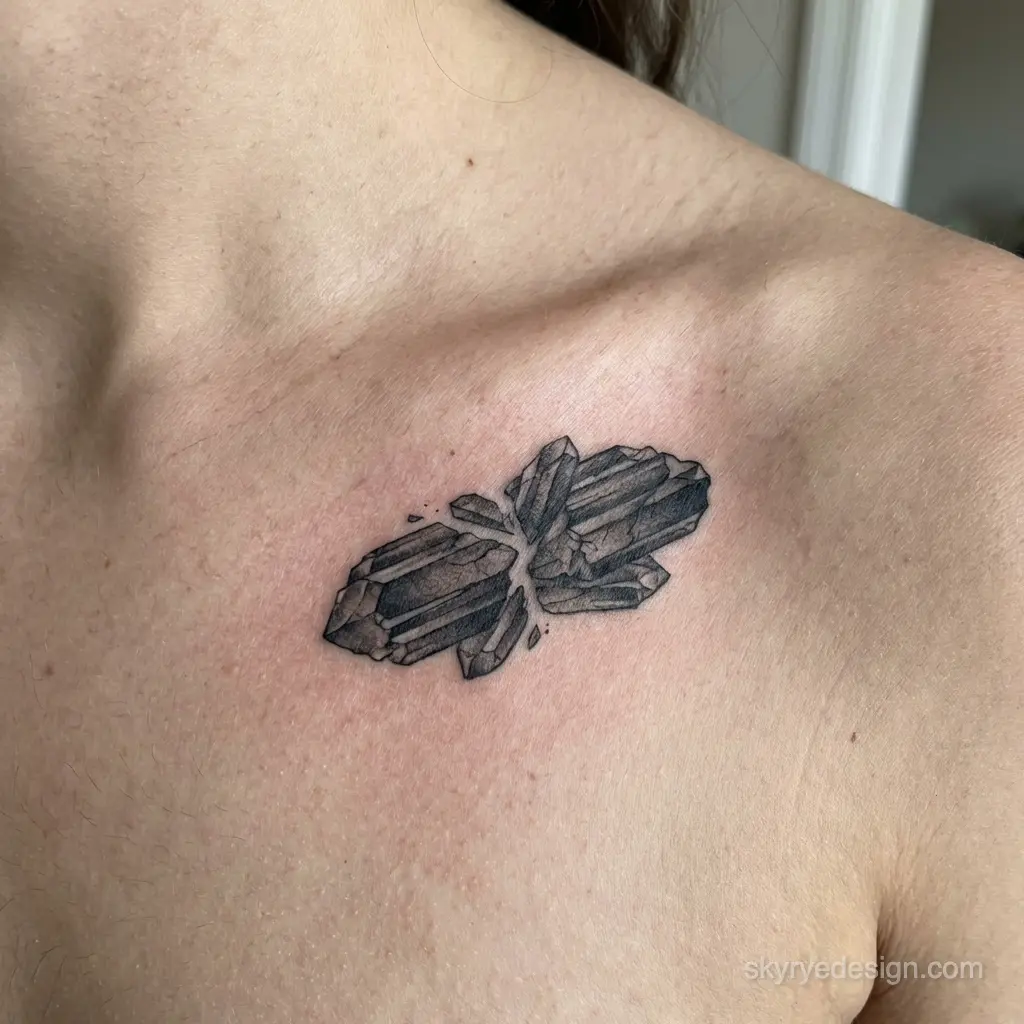
Their monochromatic nature means they don’t require colour work, making them excellent choices for artists and clients who prefer black and grey.
Meaning: grounding, protection, absorption of negative energy, and strength. Black tourmaline’s striated texture gives artists a strong graphic element to work with.
7 Crystal Tattoo Styles: Which Is Right for You
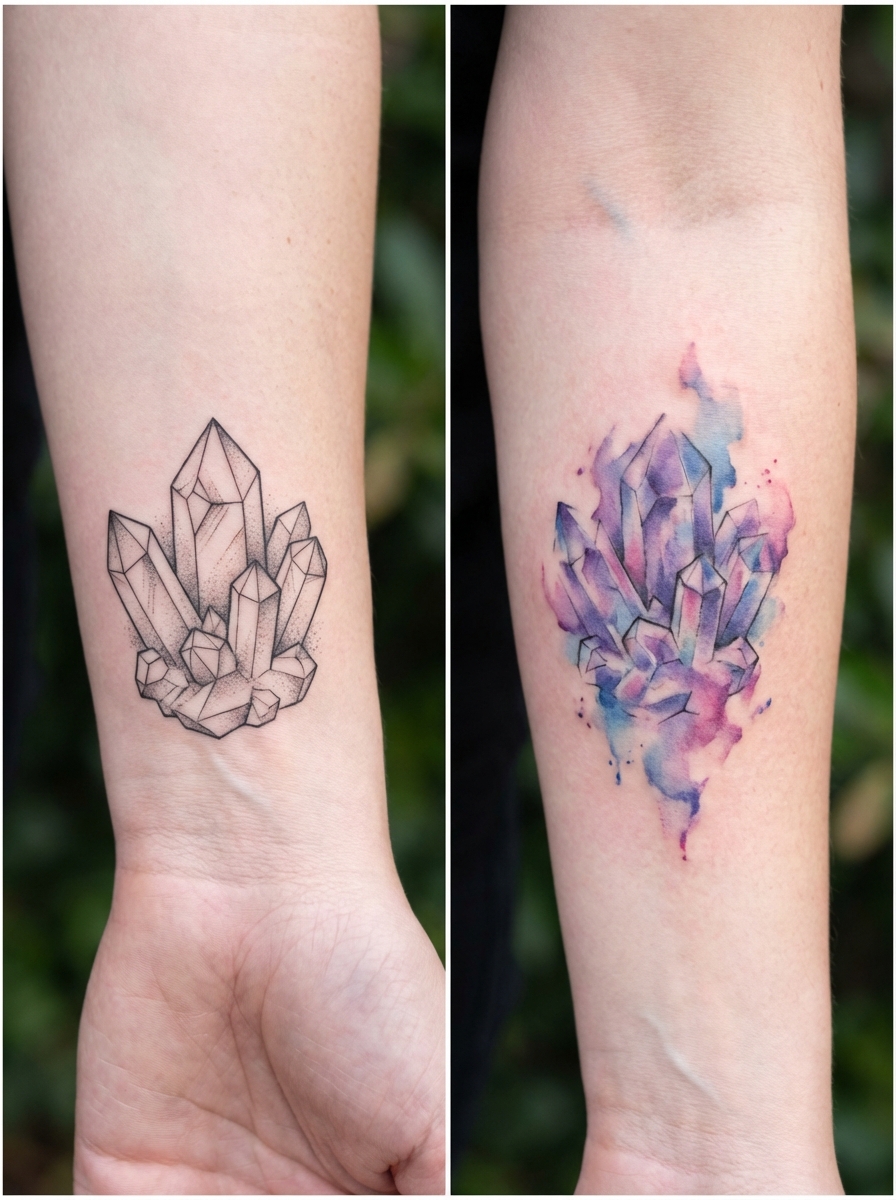
Fine Line Black and Grey
Vibe: Precise, architectural, modern — the most technically demanding and longest-lasting crystal style
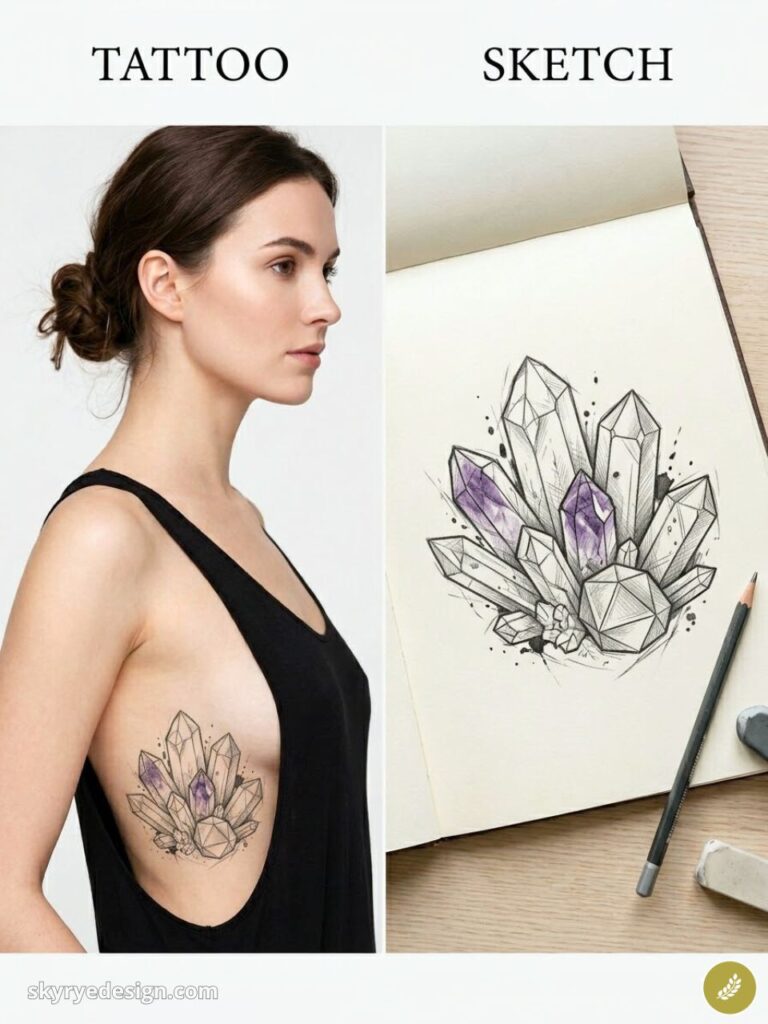
Best for: Clear quartz, tourmaline, amethyst — any crystal where facet geometry is the primary visual interest
Placement: Forearm, inner wrist, collarbone, sternum — flat surfaces that hold straight lines cleanly
Reference artist: Dr. Woo (LA), Sanghyuk Bang (@mr.k_tattoo Seoul) — both known for precise geometric linework
Watercolour
Vibe: Fluid, atmospheric, painterly — colour bleeds and soft edges suggest translucency without hard outlines
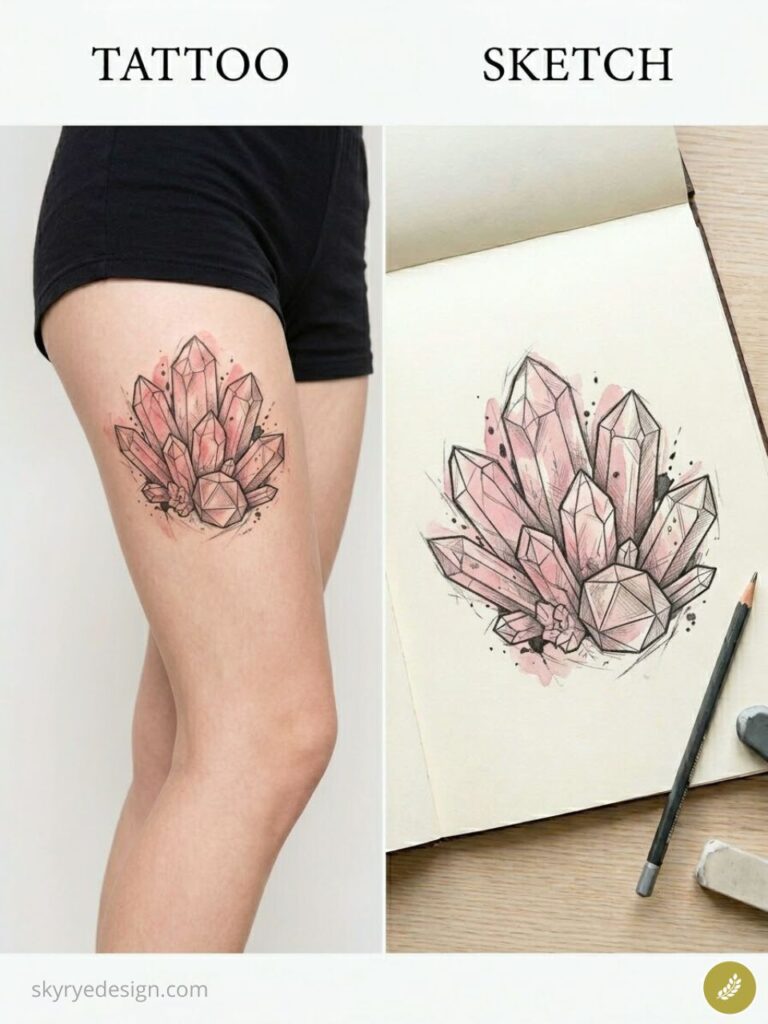
Best for: Rose quartz, amethyst, labradorite — stones where soft colour gradients are part of the visual quality
Placement: Upper arm, shoulder blade, thigh — larger areas where the colour field can breathe
Reference artist: Koray Karagozler (@koraykaragozler) — known for botanical and crystal watercolour work
Geometric Minimalist
Vibe: Clean, sacred geometry, architectural — crystals reduced to their essential geometric form
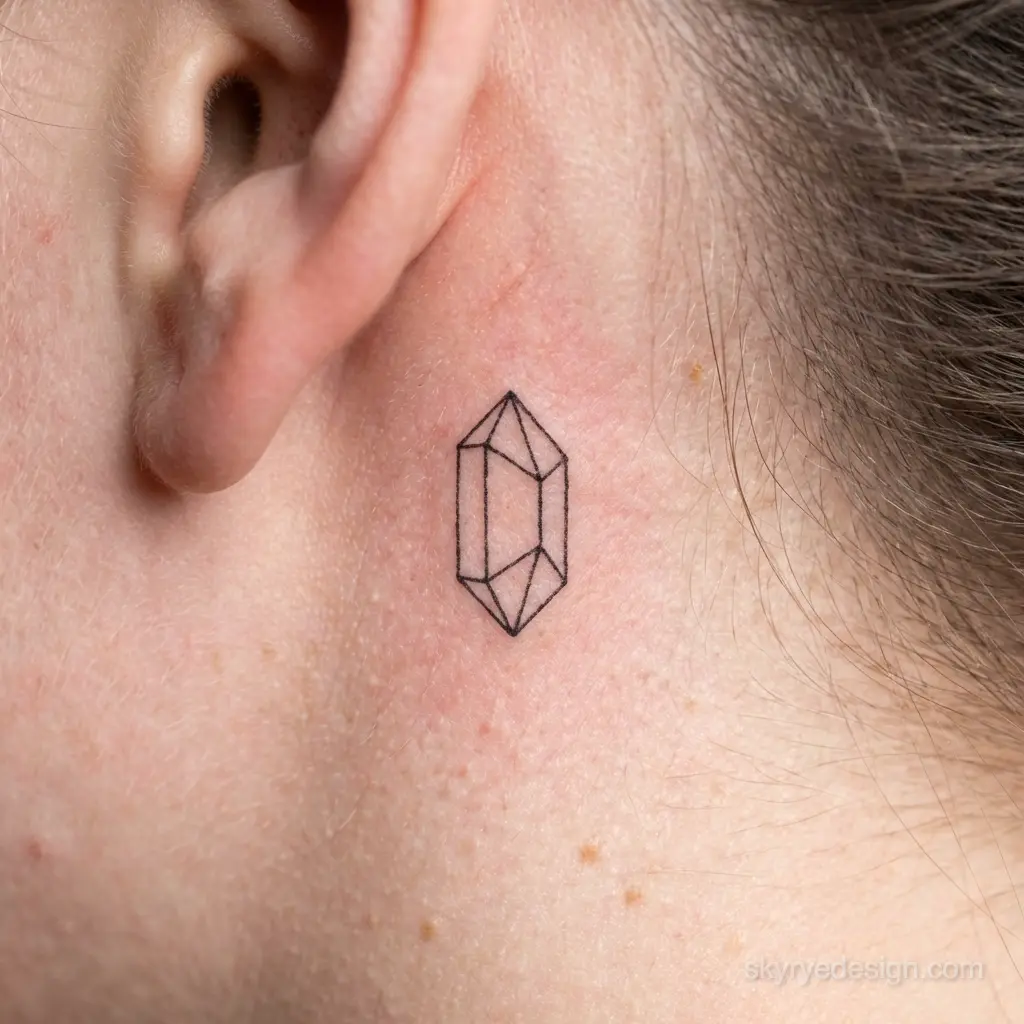
Best for: Clear quartz points, raw tourmaline, citrine — crystals with strong geometric silhouettes
Placement: Behind ear, ankle, wrist, finger — small precise placements; scales down well
Reference artist: Playground Tattoo (@playground_tat2) Seoul — geometric minimalist specialists
Realistic Colour
Vibe: Photorealistic, three-dimensional, jewel-like — the highest technical bar of all crystal styles
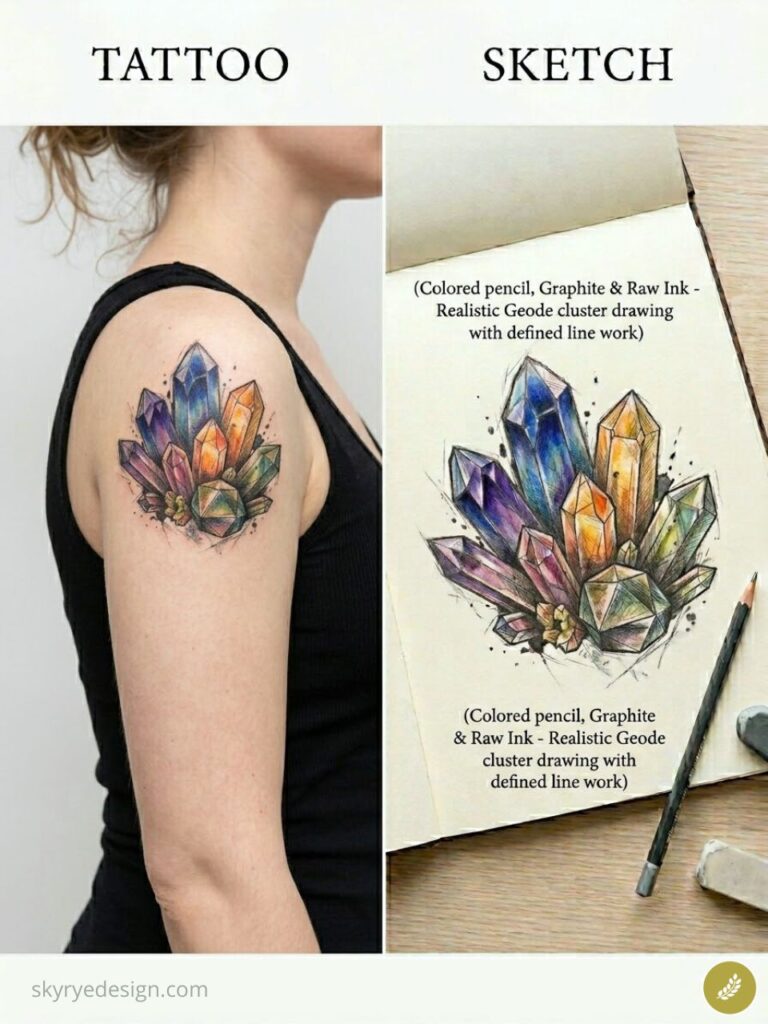
Best for: Labradorite, amethyst geode cross-sections, multi-coloured crystal clusters
Placement: Upper arm, thigh, back — large enough surfaces to contain the full tonal range required
Reference artist: Nastya Hontar (@nastya_tattoo) — known for translucent gemstone realism
Blackwork / Dotwork
Vibe: Bold, graphic, high-contrast — solid black fills and dot shading, no colour
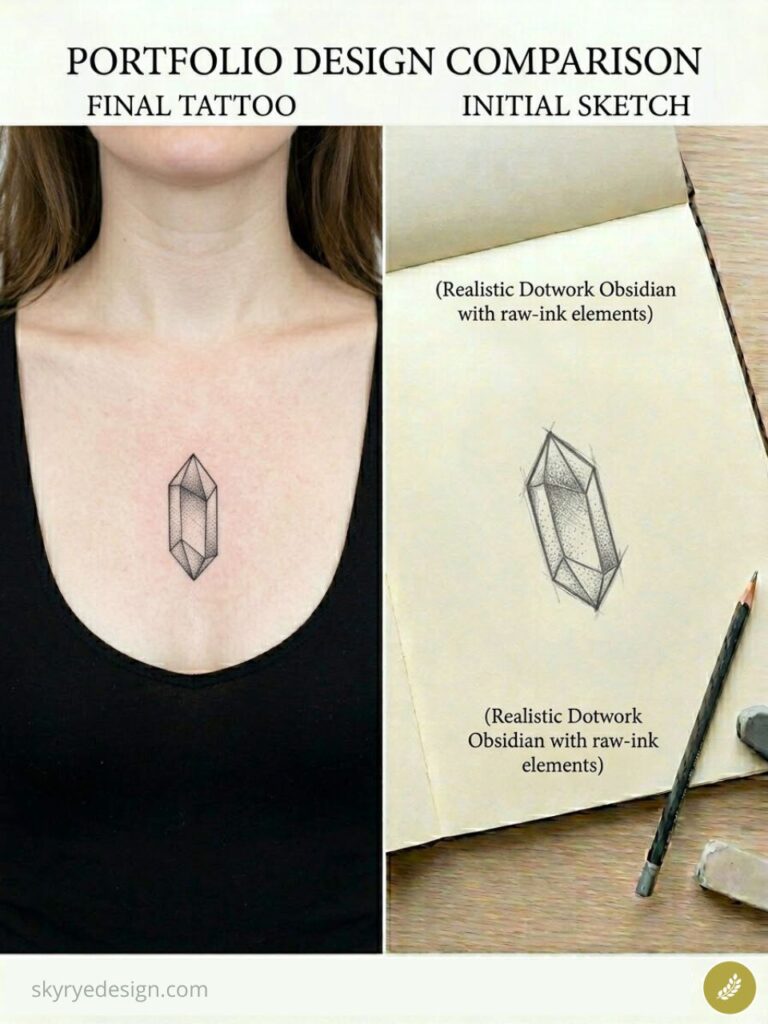
Best for: Obsidian, black tourmaline, dark amethyst, any crystal used as part of a larger dark composition
Placement: Forearm, upper arm, chest — works well at scale; holds definition as it ages
Reference artist: Roxx (@roxx_ttt) — blackwork specialist with strong geometric sensibility
Neo-Traditional
Vibe: Bold outlines, saturated colour, decorative — crystal as jewel or talisman within a composed design
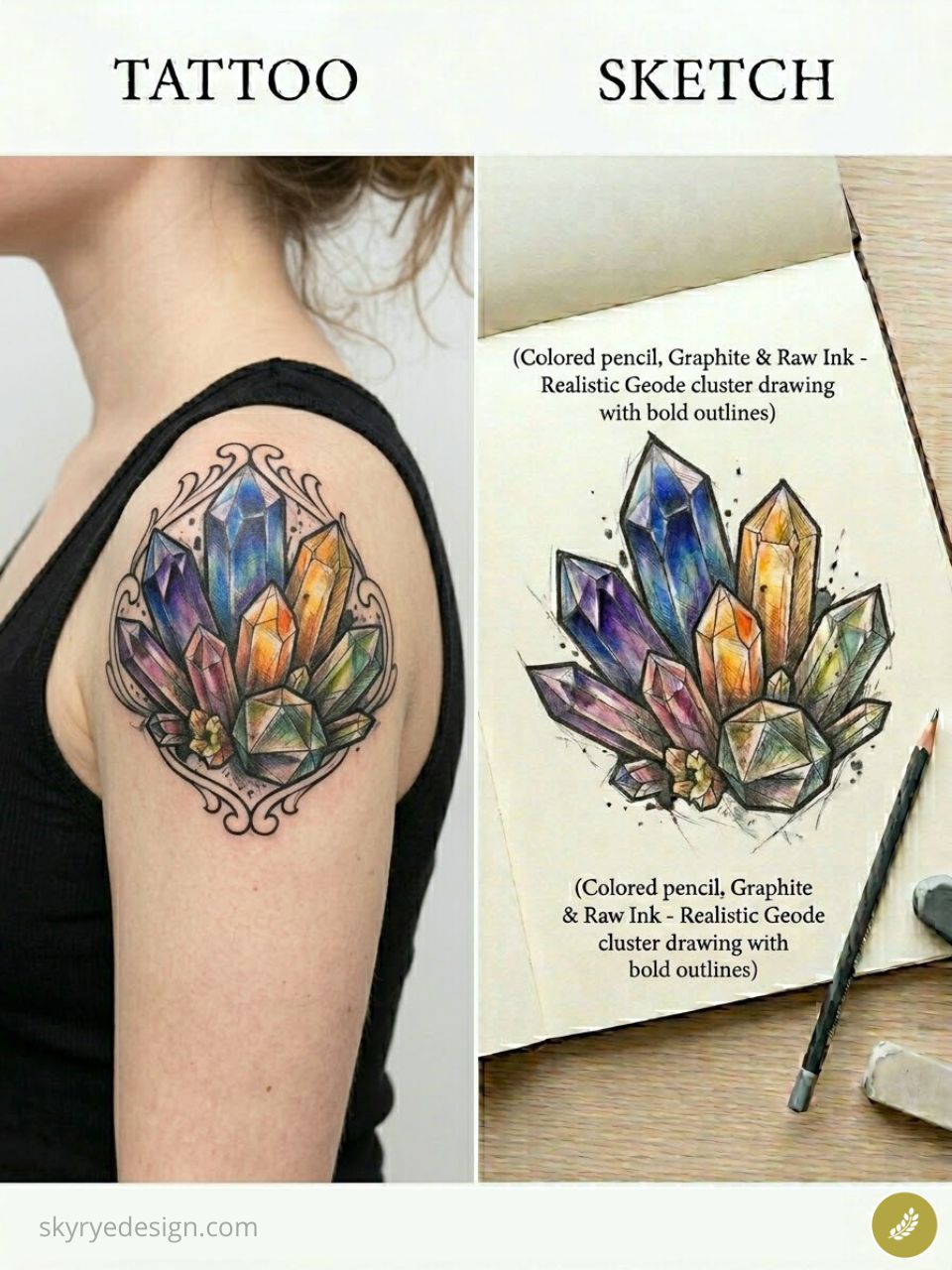
Best for: Amethyst, rose quartz, citrine — stones with strong colour associations and cultural symbolism
Placement: Upper arm, thigh, shoulder — suits medium-to-large scale compositions
Reference artist: Valerie Vargas (@valerievargas) — neo-traditional with strong colour and composition
Micro Realism
Vibe: Tiny, photographic detail, 2026 trending — miniature crystals that look three-dimensional at 2-3cm
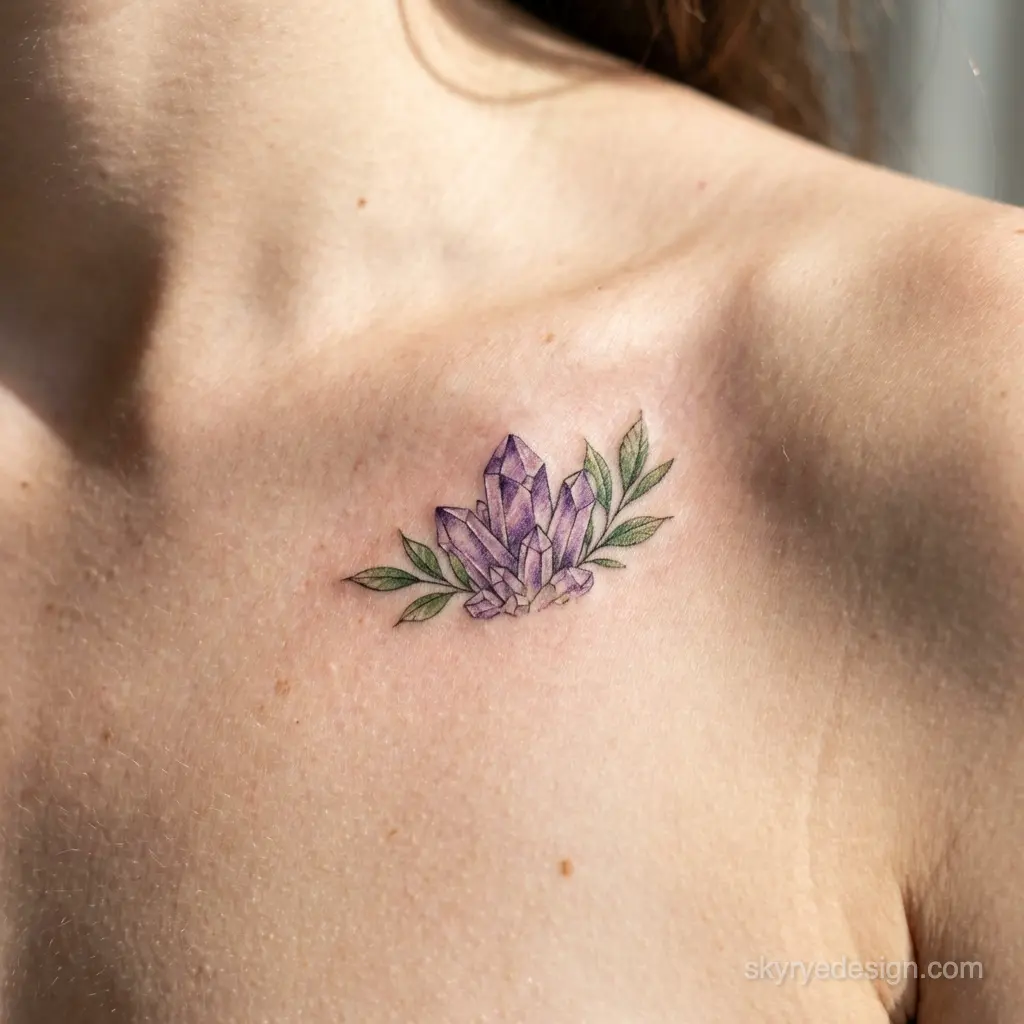
Best for: Single quartz point, small amethyst, raw labradorite chip — one specimen, rendered in miniature
Placement: Inner wrist, behind ear, ankle, collarbone — intimate placements that reward close examination
Reference artist: Inked Studios NYC — recommends micro realism for crystal subjects in 2026 trend reports
✏ Artist note: The 2026 shift worth knowing: liquid metal and chrome shading techniques are crossing over from Y2K revival work into crystal tattooing. Artists are using advanced white highlight placement and deep gradient shading to make clear quartz and labradorite appear genuinely metallic or glass-like on skin. If this is the quality you want, ask specifically about your artist’s experience with reflective surface rendering.
Placement Guide: Where Crystal Tattoos Work Best
Forearm and Inner Wrist
The flattest, most accessible surface for detailed crystal work. Fine line and geometric styles read most clearly here because there’s minimal surface curvature to distort the straight facet lines.
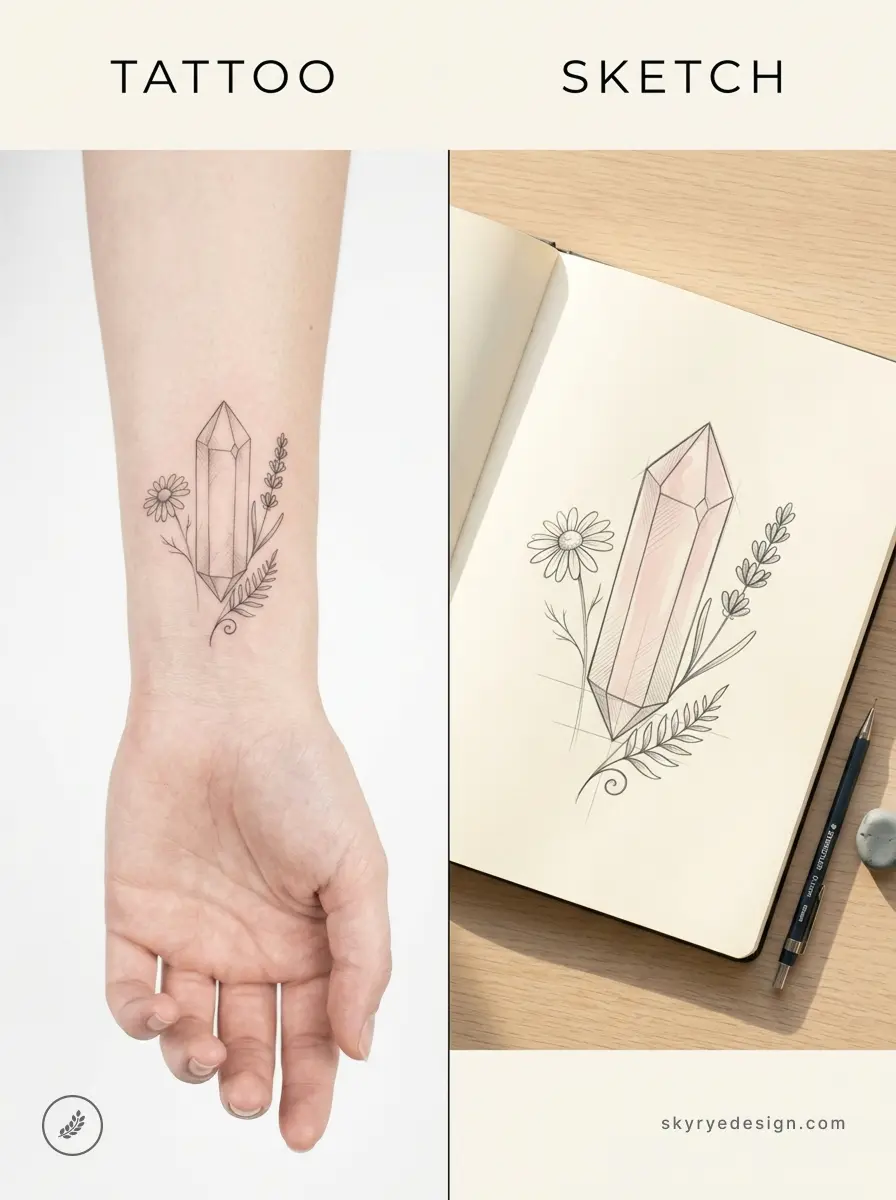
The inner wrist suits single crystal points at 3-5cm. The full forearm accommodates larger cluster compositions. Both placements are visible to the wearer — relevant if the stone’s meaning matters to daily awareness. Ageing: good. The forearm receives moderate sun exposure so SPF protection matters for colour work.
Collarbone and Sternum
Both suit elongated crystal compositions — a vertical quartz cluster following the collarbone line, or a symmetric crystal pair flanking the sternum.
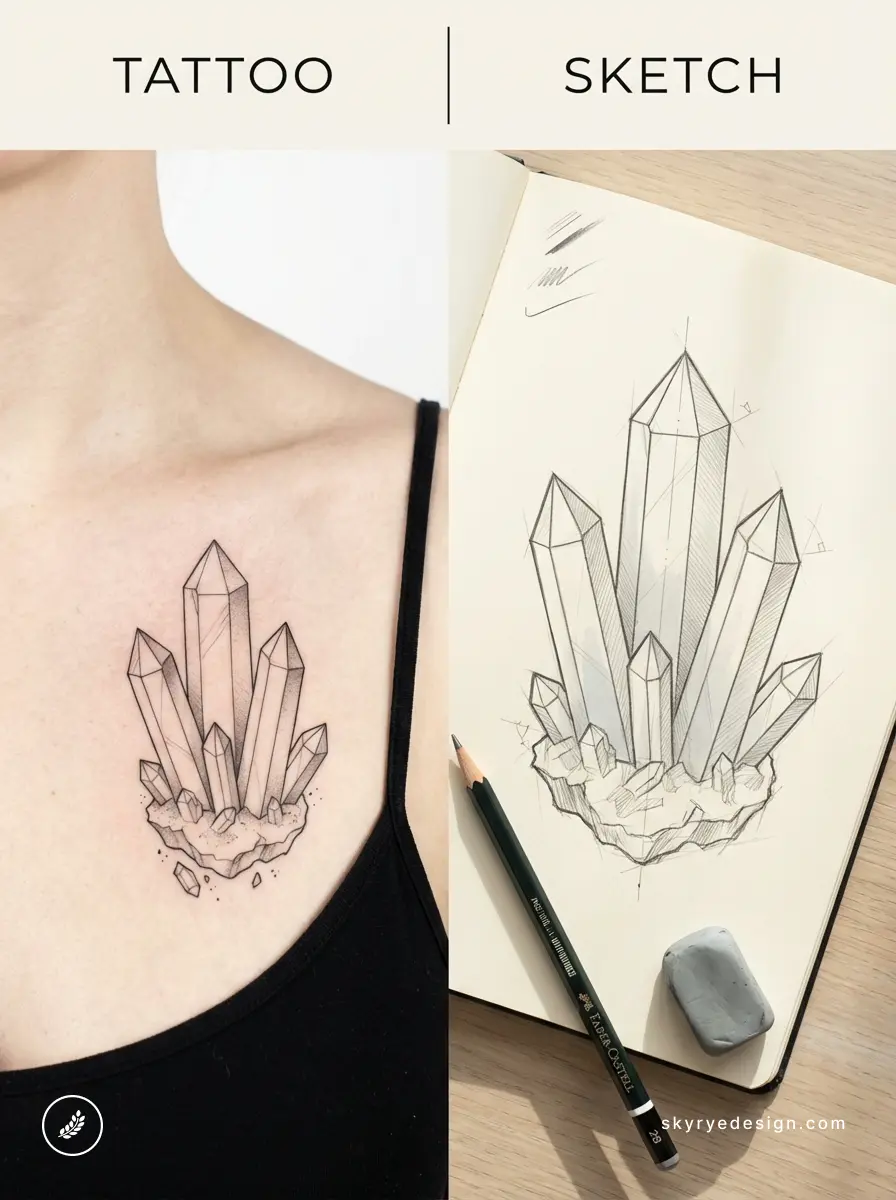
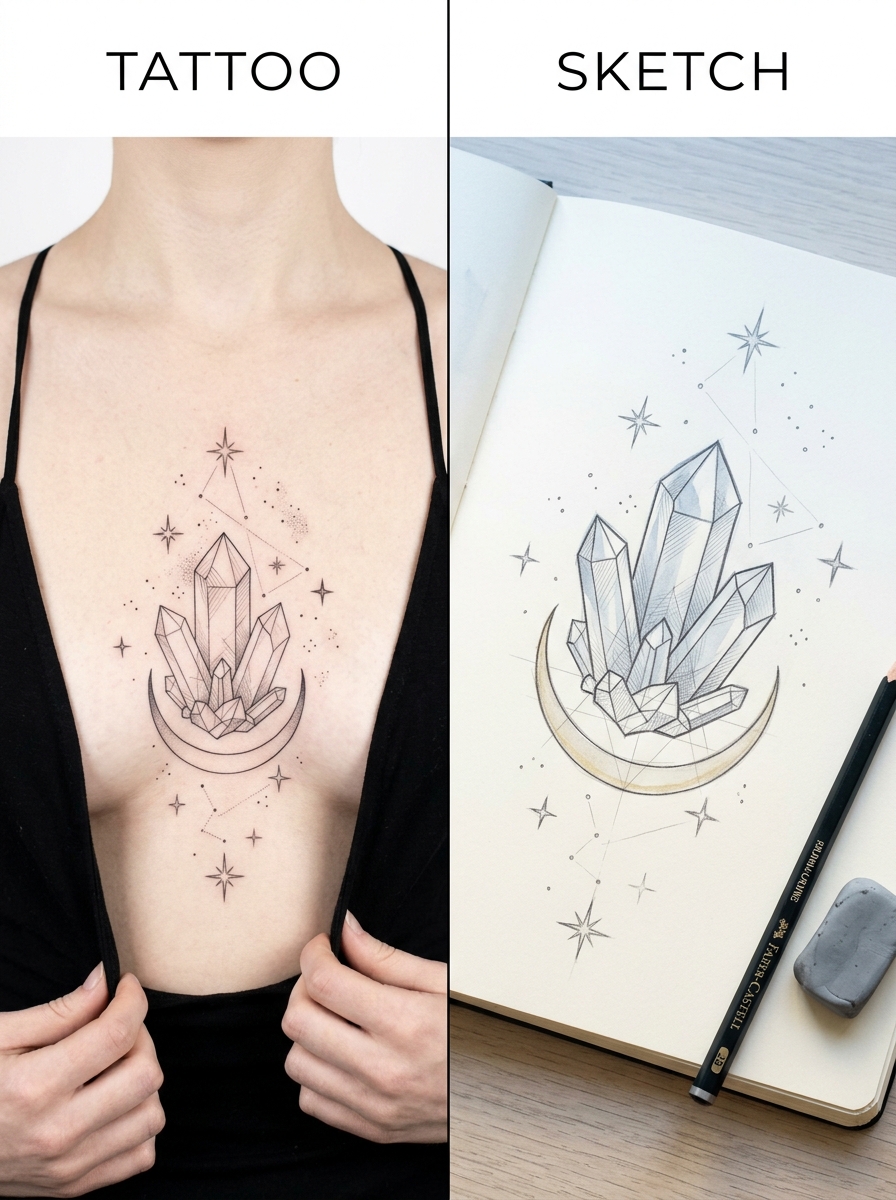
The flat skin surface across the upper chest holds fine line detail well. The sternum is a popular placement for compositions combining crystals with botanical or celestial elements. Pain level: moderate to high near the bone.
Upper Arm and Shoulder
The curved surface of the upper arm accommodates the largest crystal compositions and works with styles that require space — full colour realism, neo-traditional, and large blackwork pieces.
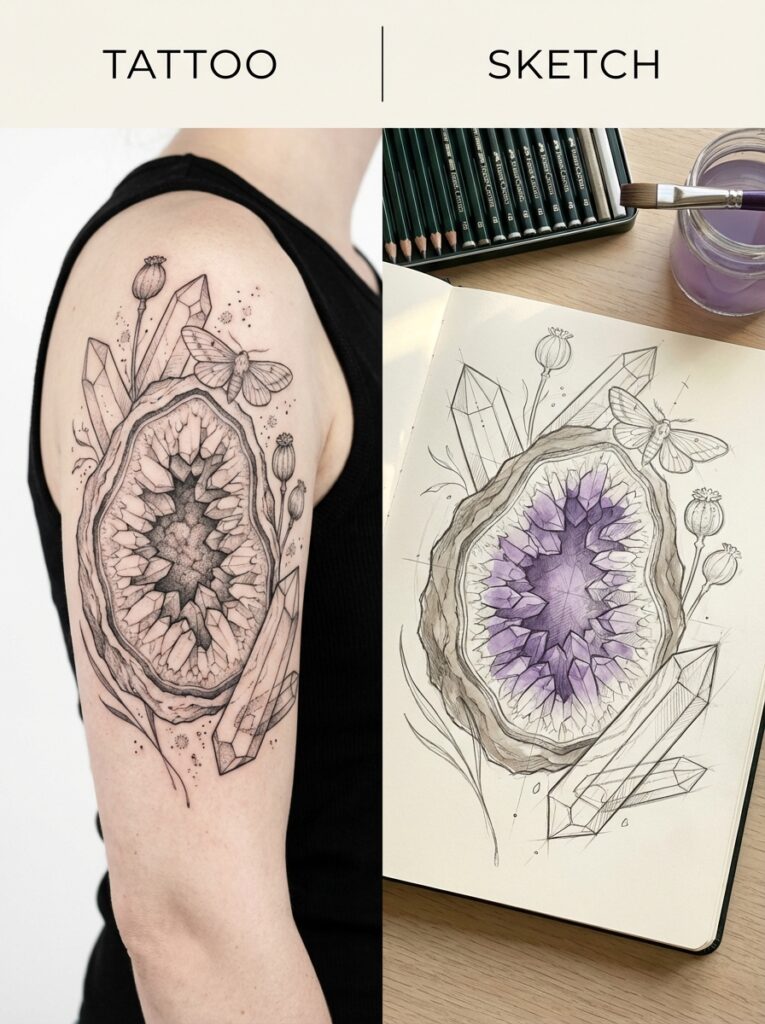
The shoulder’s natural contour can enhance a domed crystal form (amethyst geode cross-sections work particularly well here). Most forgiving placement for first crystal tattoos — heals reliably and ages well.
Ankle and Behind Ear
Both suit minimal geometric crystal points at 2-4cm. The ankle is slightly more exposed to friction from shoes and socks than most placements — avoid ultra-fine lines here.
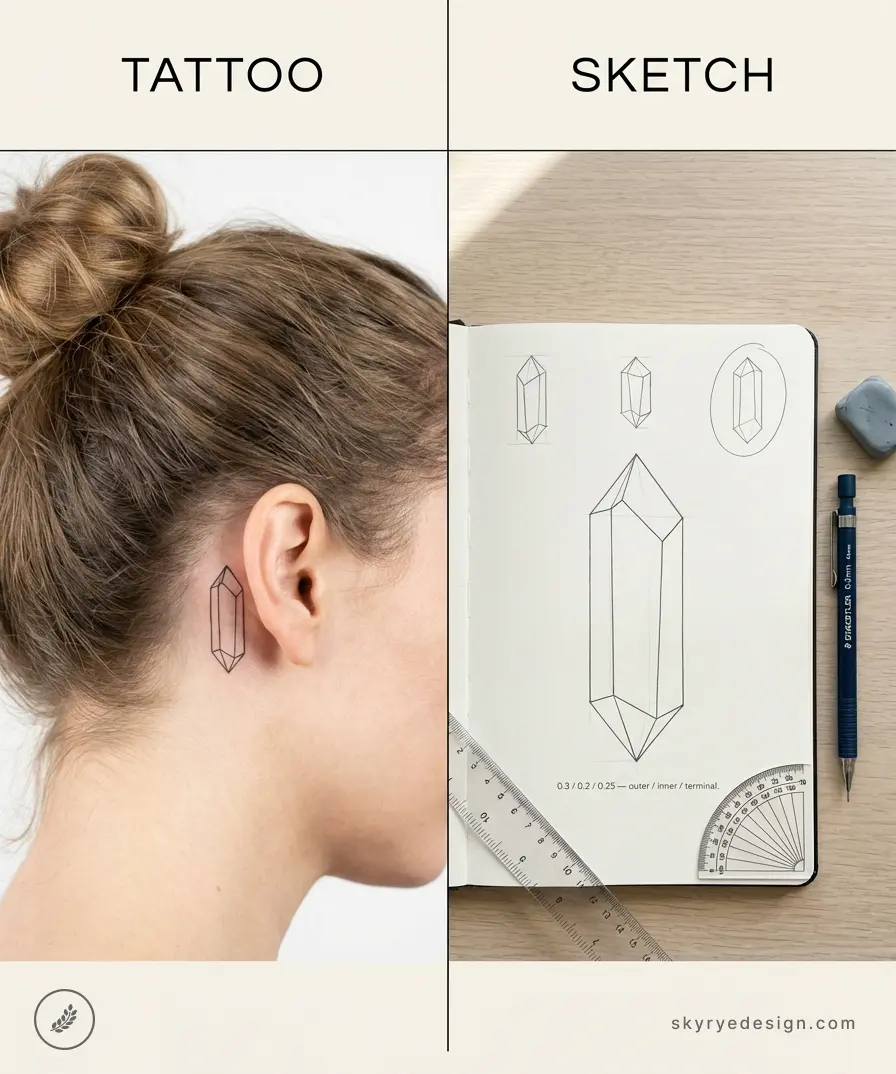
Behind the ear suits single crystal points in fine lines or minimalist geometric styles. Both placements have lower visibility in professional contexts, which matters for some clients. Pain level: high — both are close to the bone with thin skin.
Crystal Tattoo Combinations That Work
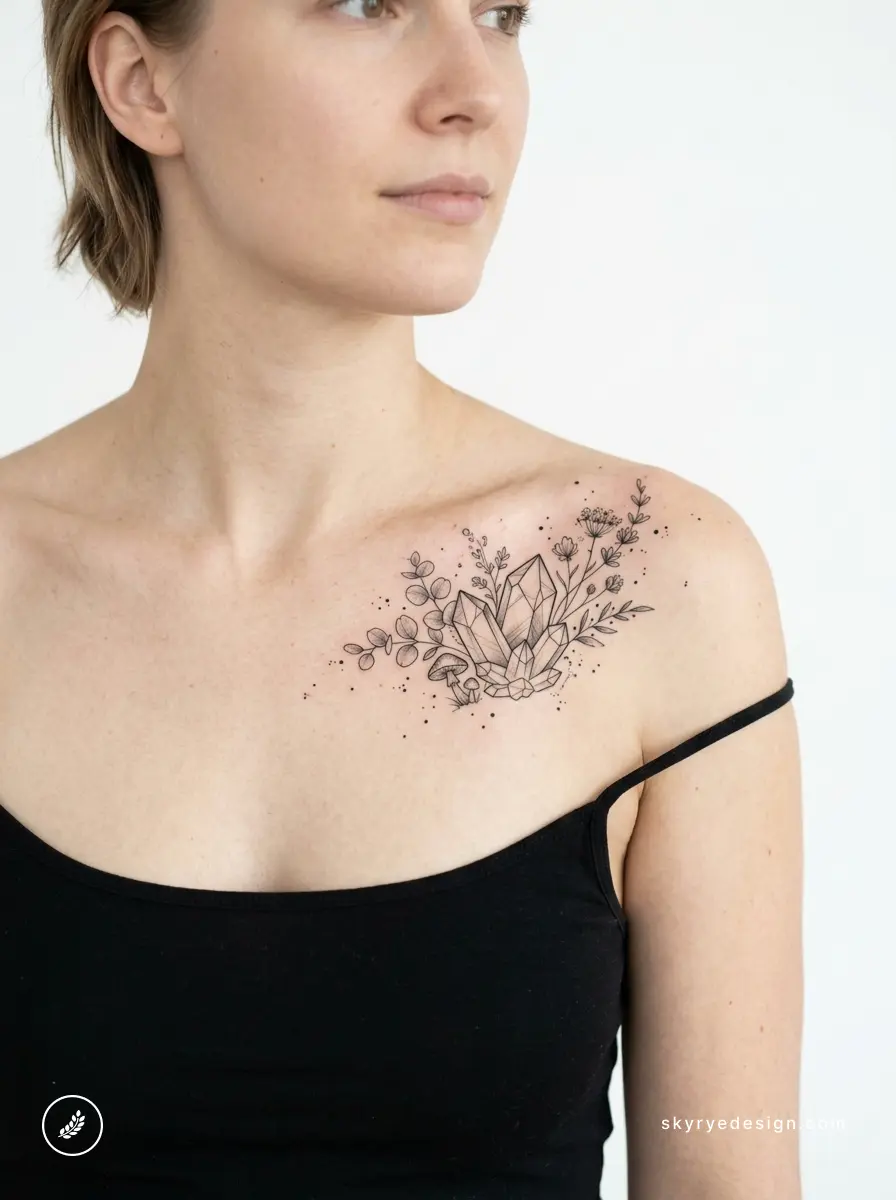
- Crystal + botanical: The most common and most successful combination. Wildflowers, dried herbs, eucalyptus, or mushrooms surrounding a crystal cluster. The organic forms of botanicals contrast with the geometric crystal structure in a way that reads as balanced rather than competing. Works in both fine line and watercolour styles.
- Crystal + celestial: Moon phases, star constellations, or a single crescent moon paired with an amethyst or clear quartz. The night-sky association reinforces the mystical quality of both elements. Popular as a collarbone or sternum composition.
- Crystal + skull: Dark academic aesthetic — a crystal growing from or embedded in a skull. Particularly strong in blackwork and neo-traditional styles. The contrast between the organic bone form and the geometric crystal structure is compositionally dramatic.
- Crystal + hand: An open hand holding a crystal, or a crystal emerging from a fist. References the act of holding a stone for its energy. Works well in realistic and neo-traditional styles as a medium-to-large forearm or thigh piece.
- Single crystal point (solo): The purest crystal tattoo — one quartz or tourmaline point, fine line, 4-6cm, on the inner wrist or forearm. Clean, timeless, scales well to skin ageing. The choice that looks best in ten years.
What to Tell Your Artist Before You Book
- The specific crystal species — not just ‘a crystal’ but amethyst, clear quartz, labradorite. This determines the colour palette, the facet geometry, and the shading approach.
- The style you want — show reference images in the specific style, not just images of the subject. ‘I want this crystal in this style’ is a clearer brief than ‘I like these crystals.’
- Whether you want it raw or faceted — raw/rough crystals have organic irregular edges. Faceted crystals (cut into geometric forms) have precise flat planes. These are different drawing problems.
- Any combination elements — botanicals, celestial, geometric backgrounds. Describe the full composition, not just the central crystal.
- Your timeline — large realistic and colour pieces may require multiple sessions. Book the full scope upfront rather than mid-session.
FAQ: Crystal Tattoos
Q: What does a crystal tattoo mean?
Meaning depends on the specific stone. Amethyst represents intuition and protection. Clear quartz symbolises clarity and amplification of energy. Rose quartz is associated with love and self-compassion. Black tourmaline and obsidian signify grounding and protection from negative energy. Labradorite represents transformation and the awareness of magic in everyday experience. Beyond specific stones, crystal tattoos broadly communicate a connection to natural energy and spiritual awareness.
Q: Where is the best placement for a crystal tattoo?
Forearm and inner wrist work well for smaller crystals and fine line styles — the flat surface holds geometric detail cleanly. Collarbone and sternum suit elongated crystal cluster compositions. Upper arm accommodates larger realistic pieces. Ankle and behind-the-ear are popular for minimal single-crystal designs. Avoid highly curved areas like fingers and ribs for detailed geometric work — the skin movement distorts fine lines over time.
Q: What tattoo style works best for crystals?
Fine line black and grey is the most technically precise style for capturing crystal facets. Watercolour works well for amethyst and rose quartz where translucency is part of the design. Geometric minimalist suits clear quartz and tourmaline. Blackwork is strong for obsidian and dark stones. Realistic colour requires an artist with specific experience in reflective surface rendering — it’s the most technically demanding style for crystal subjects and requires the most careful artist selection.
Q: Do crystal tattoos age well?
Black and grey fine line crystal tattoos age the best of all crystal styles — the geometric facet lines hold their crispness longer than organic subjects. Watercolour styles fade faster and need touch-ups after 5-8 years. Solid blackwork ages excellently. Colour realistic pieces depend on placement and sun exposure. Using SPF 50 on any exposed tattoo extends quality significantly.
Q: What is the most popular crystal for tattoos?
Amethyst is consistently the most requested crystal for tattoos — its distinctive purple hexagonal prismatic form is immediately recognisable and its associations with intuition and calm resonate widely. Clear quartz clusters are a close second. In 2026, labradorite has emerged as the trending choice because its iridescent colour-shift quality gives artists an opportunity to demonstrate advanced colour work that no other crystal subject requires.
Q: How long does a crystal tattoo take?
A simple fine line single crystal outline takes 1-2 hours. A medium detailed crystal cluster with shading takes 3-4 hours. A large realistic amethyst geode or full-colour piece can take 6-8 hours across one or two sessions. Watercolour crystal tattoos take longer than equivalent-sized black and grey work because the colour layering requires time and precision
- 26shares
- Facebook0
- Pinterest26
- Twitter0
- Reddit0