The apartment had good bones. High ceilings, original cornicing, generous proportions, three large south-facing windows. The owner had spent months selecting furniture, lighting, and textiles, and the result was a coherent, considered scheme. But every photograph taken in that apartment looked slightly wrong, and it took me a few minutes standing in the room to understand why. The floor was the wrong decade.
- The Floor as the Most Powerful Design Surface in a Room
- The Aesthetic Transformation: From Dated to Designer
- Structural and Functional Benefits: What Sanding Addresses
- Why Professionalism Matters: The Technical Case
- Choosing the Right Finish: A Design-Led Guide
- The Floor as Foundation: Why Sanding Is the Renovation That Changes Everything
- FAQ: Wood Floor Sanding and Interior Design
Orange-toned varnish, applied sometime in the late 1980s and never touched since, had yellowed and chipped into a surface that read as thoroughly domestic in the worst sense — the kind of floor you stop noticing because it is so obviously a background. Except it was not a background. It was the largest visible surface in the room, approximately 45 square metres of warm amber that contradicted every material decision that had been made above it. The furniture was contemporary. The lighting was warm-white. The floor was 1989.
Six days after a professional sanding team came through — stripping the old varnish to raw timber, screening to 120 grit, applying two coats of a low-sheen water-based lacquer in natural oak — the apartment looked architecturally coherent for the first time.
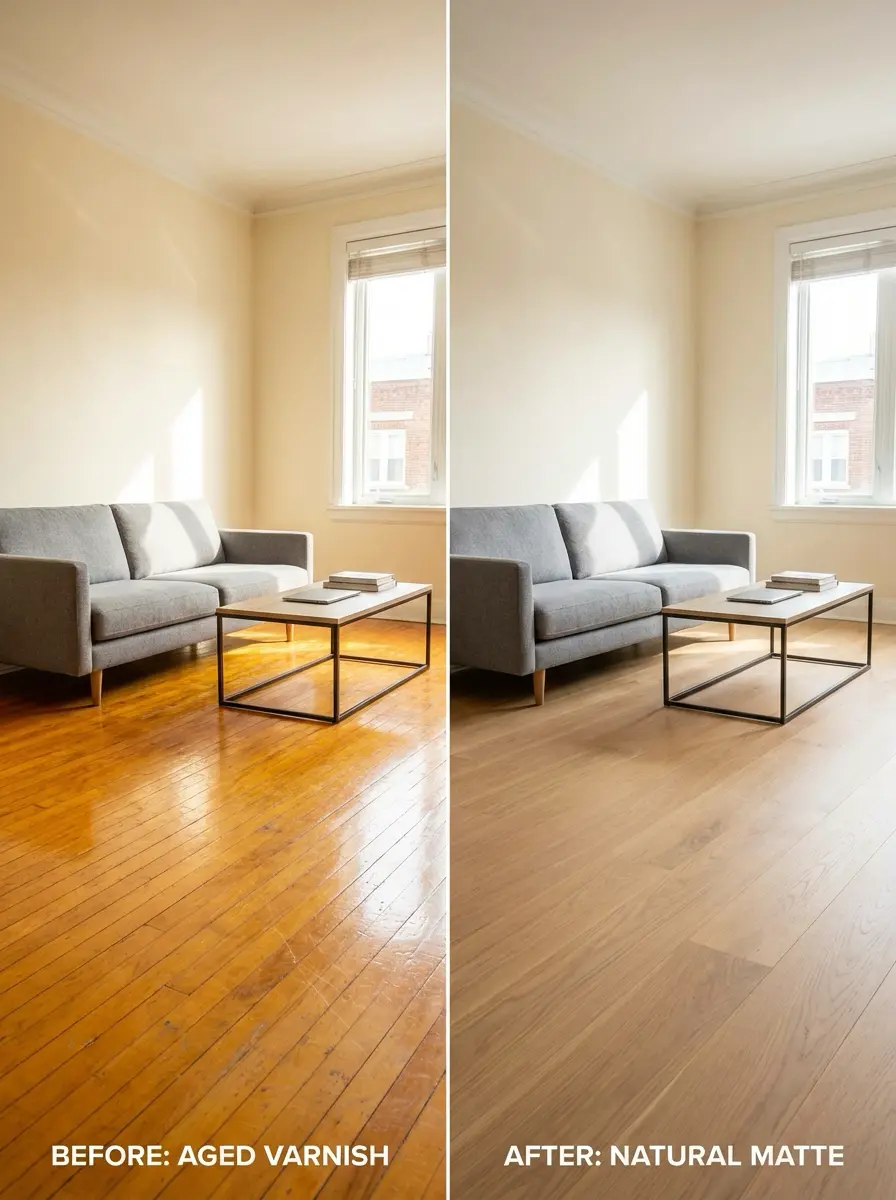
Nothing else changed. The same furniture in the same positions under the same lights, but the room now reads as a single designed space rather than a collection of good choices undermined by a bad floor. This is what floor sanding does when it is understood as a design intervention rather than a maintenance task.
The Floor as the Most Powerful Design Surface in a Room
Interior designers and architects understand something that homeowners often overlook: the floor is the single largest continuous surface in any room and the material against which every other design decision is evaluated. Wall colours, textiles, furniture finishes — all of these are perceived in relationship to what is on the floor. A floor that is the wrong colour, finish, or period reads as a contradiction that no amount of good selection above it can fully resolve.
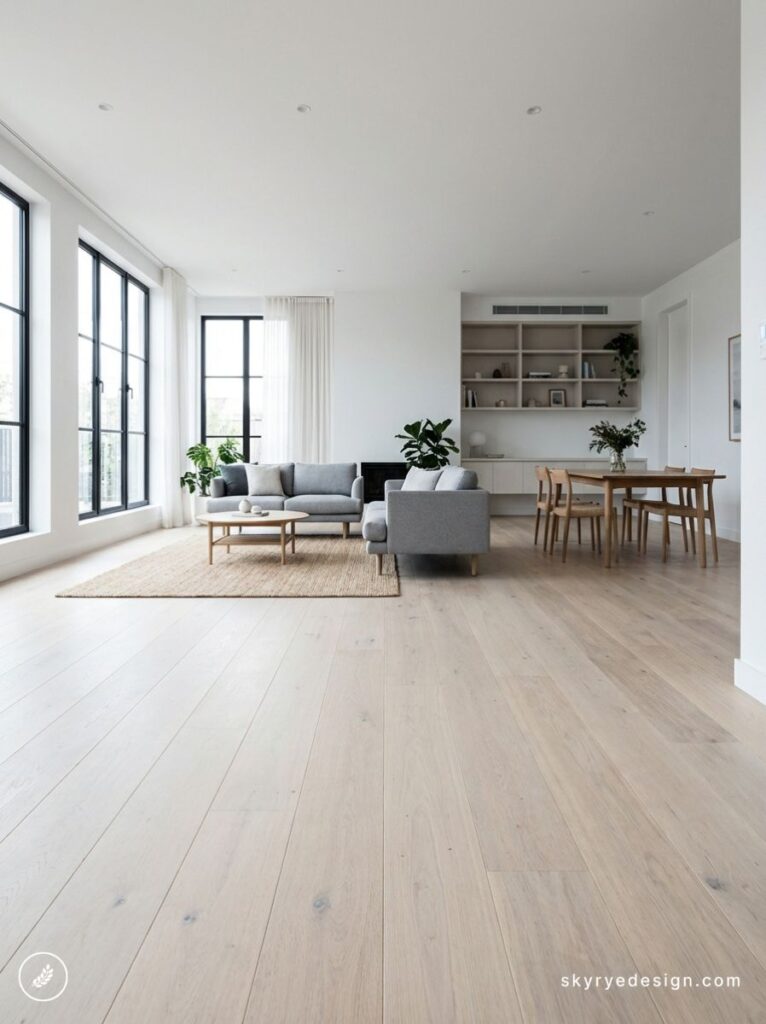
There is also a spatial logic to the floor that has no equivalent in other surfaces. The floor is the one element that connects every zone, every furniture grouping, every transition in a space. A skirting board can be painted and forgotten. A single wall can be ignored. The floor cannot be ignored — it is present in every sight line, every photograph, every moment of inhabiting the space. This is why professional floor sanding, properly specified and finished, produces a transformation that is disproportionate to its cost relative to other renovation interventions.
The case for sanding rather than replacing is also a design case, not just a cost case. Original timber floors — particularly wide-board oak, Victorian pine, and reclaimed hardwoods — carry a material quality that no engineered alternative can replicate. The grain patterns, the density of old-growth timber, the depth of colour that develops over decades: these qualities are in the floor already, waiting under the surface that accumulated use and poor finishing have covered. Sanding recovers them.
✏ Design note: When specifying a floor sanding project as part of a wider interior renovation, always schedule the floor sanding before any painting, wallpapering, or installation of fitted furniture. The sanding process produces fine dust despite modern extraction systems, and the floor needs to be completely settled before other finishes are applied. Planning sequence: floor sanding first, decorating second, furniture and textiles last.
The Aesthetic Transformation: From Dated to Designer
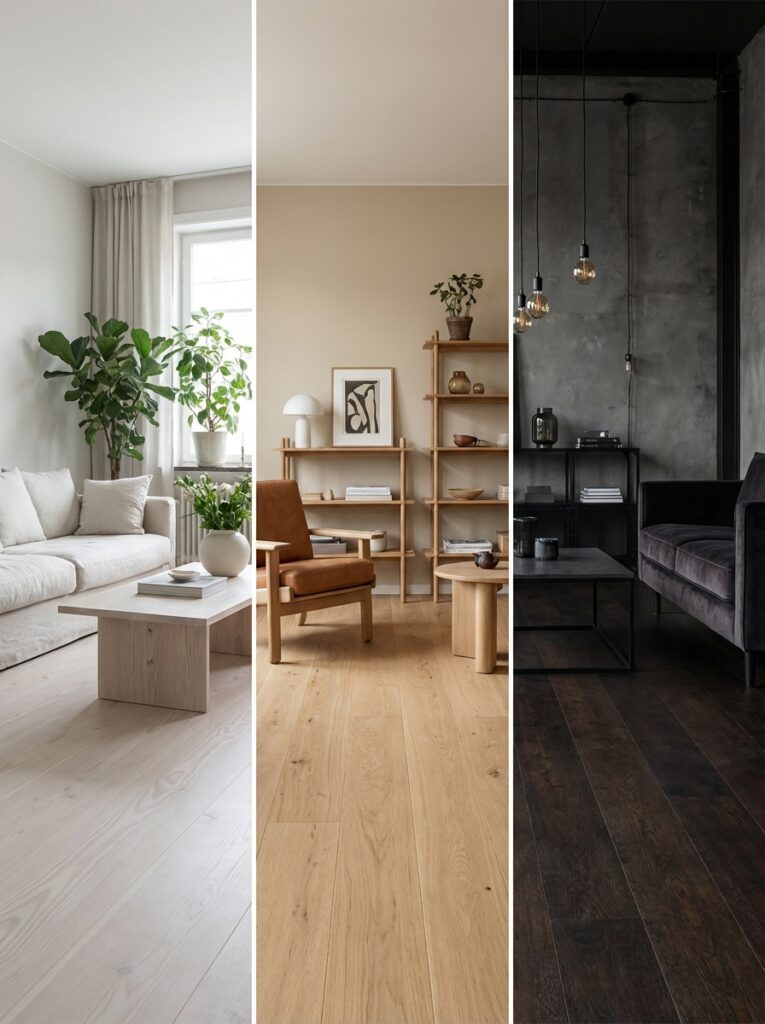
Wooden floors carry the aesthetic of the decade in which they were last finished as clearly as any other design choice. The orange-toned polyurethane of the 1980s, the high-gloss lacquer of the 1990s, the rustic-distressed look of the early 2000s — each is immediately readable as its period. Engaging professional sanding services is the only renovation intervention that allows you to strip the decades off a floor and replace it with a contemporary treatment of your choosing, without losing the material quality of the original timber beneath.
The Scandi-Minimalist Treatment
Sanding the floor to raw timber and applying a white-washed or light grey oil produces the characteristic Scandinavian aesthetic: light, airy, grain-visible but tonally neutral. White-washed floors visually expand rooms — particularly in north-facing rooms with limited natural light — by reflecting ambient light back into the space. The grain is preserved rather than obscured, maintaining the material honesty that is central to Nordic design. This treatment works particularly well with pale oak, ash, and Douglas fir.
Natural Minimalism — The Invisible Finish
The most sophisticated contemporary floor finish is often the one that appears to do least. Invisible-effect or natural-finish water-based lacquers protect the timber without altering its colour or adding the warm amber cast of oil-based finishes. The floor reads as wood in its most honest state, neither warmed nor cooled by the finish, just protected. This treatment works at its best on mid-tone oak and walnut, where the natural colour range of the grain provides sufficient visual interest without any additional tonal manipulation.
Dark and Dramatic — Espresso and Ebonised Stains
At the other end of the palette, deep espresso and ebonised stains applied over sanded timber produce a floor that reads as a bold design element rather than a neutral ground. Dark floors elevate furniture and create a sense of richness that lighter treatments cannot achieve. They require careful colour specification of walls and textiles — dark floors with mid-tone walls and carefully selected pale upholstery is the formula that most consistently produces a sophisticated result. This treatment suits older properties with high ceilings where the dark floor does not compress the perceived room height.
Structural and Functional Benefits: What Sanding Addresses
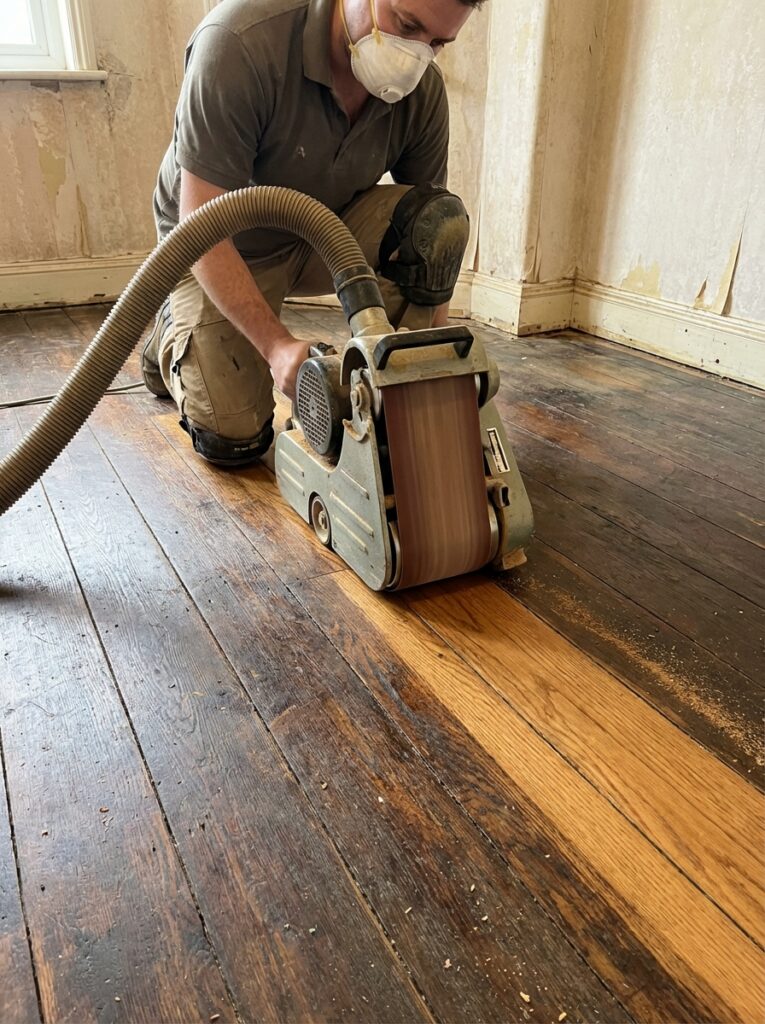
The design transformation is the visible case for floor sanding. The structural and functional case is less visible but equally significant. Wood is a hygroscopic material — it absorbs and releases moisture in response to its environment, and over years of this movement, combined with foot traffic, furniture loading, and UV exposure, the surface condition of an unprotected or poorly protected floor degrades in ways that are both aesthetic and structural.
Levelling and Safety
High-traffic areas develop ‘traffic lanes’ — zones where the finish is worn through, the surface is contaminated with ingrained dirt, and the timber fibres can begin to splinter. Professional sanding removes these zones entirely, levelling the boards and removing hazardous splintering that creates a risk for bare feet, pets, and small children. It also addresses ‘cupping’ — where the edges of boards ride higher than their centres due to moisture differential — which creates an uneven, potentially trip-hazardous surface.
Deep Cleaning at the Cellular Level
No surface cleaning regime can remove the dirt, grime, and biological material that works its way into the pores of an unprotected or degraded timber surface over years. Sanding physically removes the contaminated top layer of the wood entirely — a genuine deep clean that chemical cleaning cannot replicate. For allergy sufferers, this is significant: trapped dust mites, pet dander, and particulate matter embedded in the timber surface are removed completely rather than redistributed.
Property Value
Freshly sanded and finished original hardwood floors are consistently cited by estate agents as one of the highest-return-on-investment interior renovations available. The phrase ‘original polished floorboards’ in a property listing signals quality, period character, and a well-maintained home in a way that no alternative flooring material replicates. Buyers who see sanded and finished original boards read the property as higher quality across the board — the floor sets the quality baseline against which the rest of the property is measured.
Why Professionalism Matters: The Technical Case
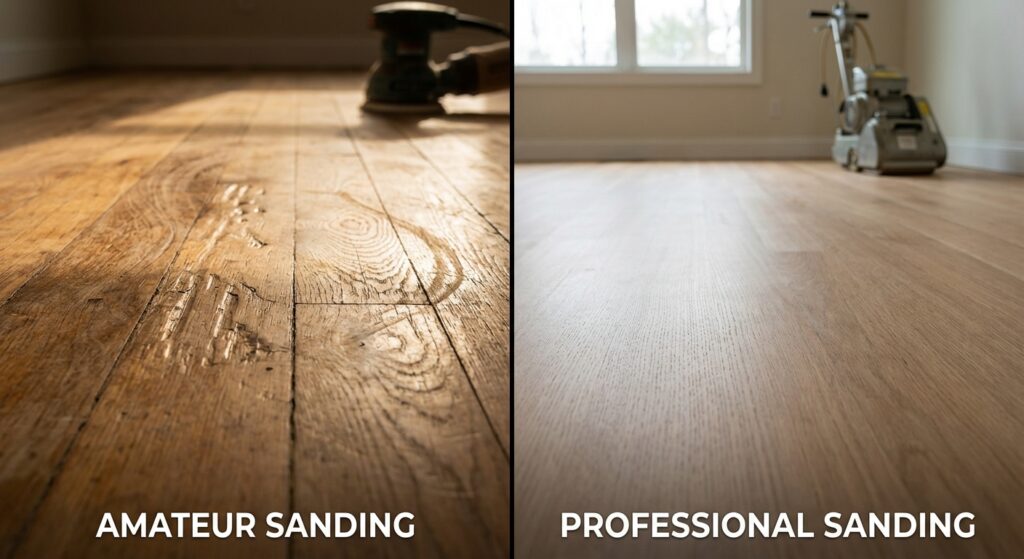
The hire-shop drum sander is available to anyone, and the price difference between hiring it and commissioning a professional appears compelling on paper. In practice, floor sanding is a skill that requires training, experience, and the right equipment sequence to produce a result that will hold up once the finish is applied. Choosing professional wood flooring services means the finish amplifies quality rather than amplifying errors. Marks that are invisible in raw timber become obvious under even a single coat of lacquer, and only trained technicians know how to avoid them.
The specific errors that untrained sanding produces: chatter marks (regular ripple patterns where the machine was not moved at consistent speed), cross-grain scratching from incorrect grit sequencing (jumping from 40 grit to 120 grit without the intermediate grits leaves deep scratches that the finer paper cannot fully remove), swirl patterns from orbital sanders used incorrectly, and edge inconsistency where the wall-adjacent areas — sanded with a smaller edge sander — do not match the centre of the room in finish quality.
Professional equipment uses continuous belt technology with integrated HEPA dust extraction systems that capture approximately 99% of airborne particles. The quality difference is not subtle — it is the difference between a floor that looks professionally finished and one that looks like it was sanded by someone who watched a tutorial. For a surface that will be present in the room for the next fifteen years, the professional specification is the only justifiable approach.
✏ Design note: When hiring a floor sanding professional, ask specifically about their grit sequence for your timber species. A correct sequence for oak typically runs: 40 grit (to cut through old finish), 60 grit, 80 grit, 100 grit, 120 grit screen (final preparation before finish). Skipping intermediate grits is the most common shortcut that leads to visible scratching under the finish coat. Any professional who cannot articulate their grit sequence clearly is a professional worth reconsidering.
Choosing the Right Finish: A Design-Led Guide
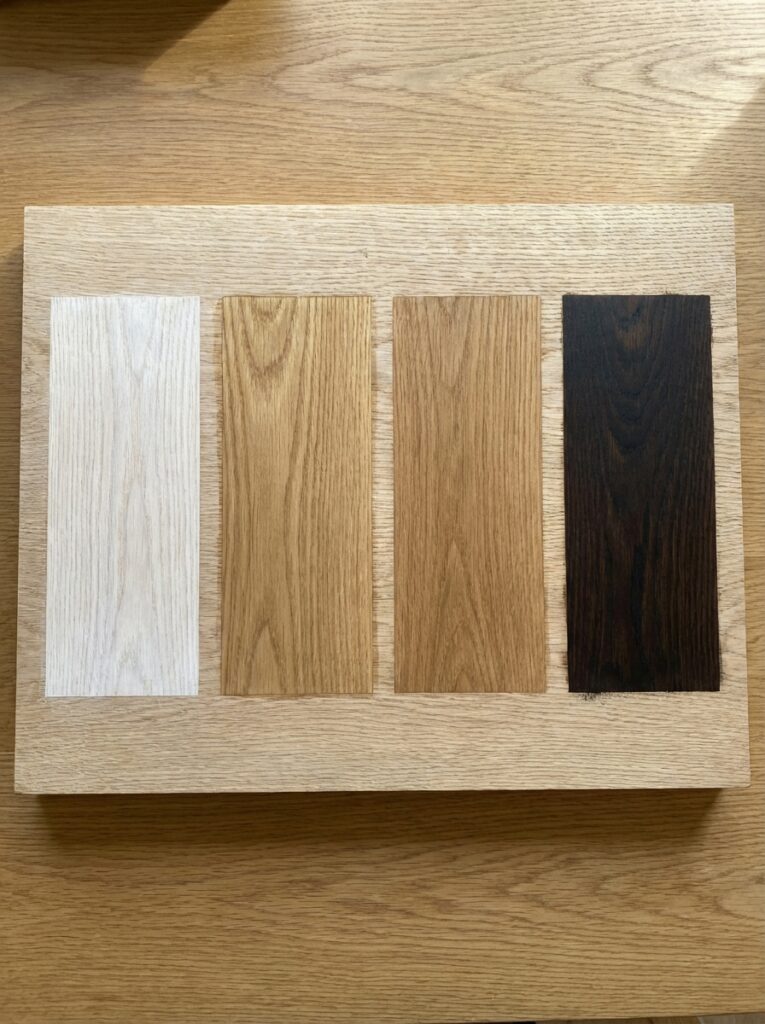
The finish applied after sanding determines how the floor ages, how it performs in daily use, and how it reads in the room. The technical evolution in floor finishes over the past decade means the compromises of the past — between durability and appearance, between protection and ambering — have been largely resolved.
Water-Based Lacquer — Natural Finish
Aesthetic: Clear coat that enhances the natural grain without adding warmth or amber cast. Available in matte (3-5% sheen), satin (20-30%), and semi-gloss (40-50%). The matte specification is the contemporary standard for high-end residential work.
Durability: Very high. Hard surface film resists scuffing and moisture. Expected lifespan 10-15 years in normal residential use before refinishing is required.
Best for: Contemporary and minimalist interiors, pale oak and ash floors, spaces where colour accuracy and the absence of ambering over time are priorities.
Design note: Matte water-based lacquer in natural finish is the most architect-specified floor finish in contemporary residential design. It disappears visually, letting the timber read as itself. Low-VOC formulations are now standard — drying time between coats is 2-4 hours.
Hardwax Oil — Penetrating Matte Finish
Aesthetic: A matte, tactile surface that feels like bare wood — because the oil penetrates into the grain rather than forming a surface film. Produces a warm, organic appearance with no plastic-like quality.
Durability: Good. Penetrating finishes are more susceptible to water spotting and surface abrasion than lacquer, but offer the advantage of easy spot-repair — scratched or worn areas can be re-oiled locally without sanding the whole floor.
Best for: Scandinavian and natural minimalist interiors, family homes where the ability to spot-repair is valued, homes with dogs or high shoe-change frequency.
Design note: Hardwax oil requires periodic maintenance re-oiling (every 1-3 years in high-traffic areas) but produces a quality of surface that is distinctly warmer and more tactile than lacquer. Specify Osmo Polyx-Oil or Rubio Monocoat for the highest-quality results.
White or Grey Wash Oil
Aesthetic: A pigmented oil that deposits a light white or grey tone into the grain while leaving the grain texture fully visible. The result reads as aged or driftwood-toned timber rather than painted.
Durability: Moderate — same maintenance requirements as clear hardwax oil, with the additional consideration that the pigment in the wash can be affected by aggressive cleaning.
Best for: Scandinavian, coastal, and light-filled contemporary interiors, rooms with limited natural light where a lighter floor tone significantly affects perceived brightness.
Design note: The shade of wash must be specified carefully in relation to the wall colour — a cool grey wash on a warm-walled room can read as a colour clash. Test on a 0.5 square metre sample in situ before committing.
Stain Plus Lacquer — Dark Tonal Treatment
Aesthetic: A penetrating stain applied to the raw sanded timber to shift its colour — from mid-brown to espresso, ebonised, or any point in between — then sealed with a compatible lacquer topcoat.
Durability: High, once the lacquer topcoat is applied. The stain is permanent — it cannot be lightened without full re-sanding.
Best for: High-design residential and hospitality interiors, properties with high ceilings and generous proportions, schemes where the floor is intended as a bold design element rather than a neutral ground.
Design note: Staining irreversibility is the most important consideration in the specification decision. Always test the stain colour on a concealed area of the floor (under a fixed piece of furniture) and view it under the room’s actual lighting conditions before proceeding.
The Floor as Foundation: Why Sanding Is the Renovation That Changes Everything
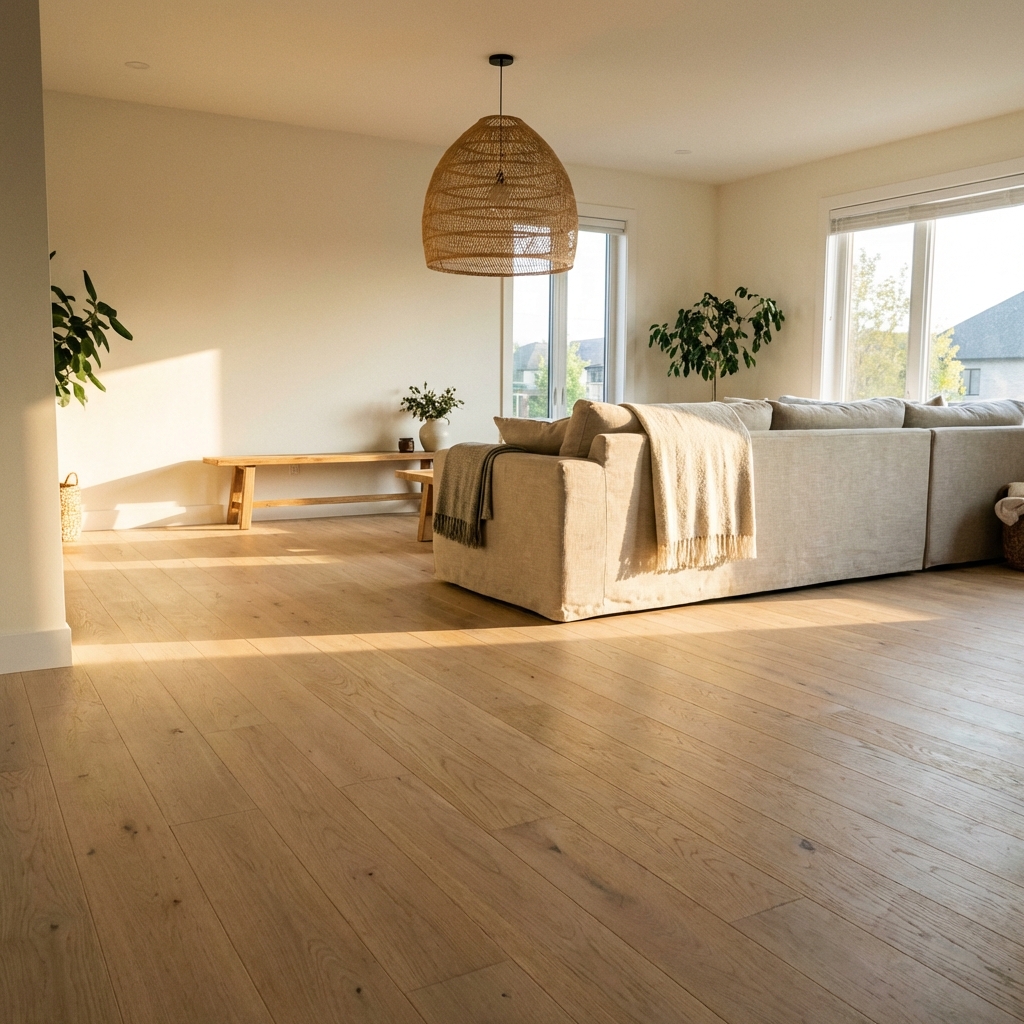
The apartment I began with is not an unusual story. In my experience working on interior schemes, the floor is consistently the element that most dramatically affects the overall reading of a space — and it is consistently the element that homeowners are most likely to overlook or defer. The assumption is that floors are permanent, that replacing them is prohibitively expensive, and that working around a dated floor is the more practical approach.
None of that assumption holds up to scrutiny. Original hardwood floors are renewable — sanding removes approximately 1-2mm per treatment, and a solid board of 18-22mm can be sanded five to eight times over its lifetime. The cost of a professional sanding and finishing project is typically 20-35% of the cost of equivalent new flooring, with the additional advantage that the original boards are frequently higher-quality, older-growth timber than anything available new at any price point.
The design case is even clearer. Sanding returns the floor to its potential — to the material that the builder or craftsman chose for the property decades ago, now revealed and protected rather than buried under the accumulated aesthetic choices of intervening tenants and owners. A correctly sanded and finished original floor is not a renovated floor. It is the original floor, made contemporary. That distinction matters for how the room reads, for how long the work lasts, and for the property’s value to the next occupant who will live with your specification.
FAQ: Wood Floor Sanding and Interior Design
Q: How often should wooden floors be sanded?
A solid hardwood floor of 18-22mm thickness can be sanded 5-8 times over its lifetime, removing approximately 1-2mm per treatment. Most well-maintained residential floors need professional sanding every 10-15 years. High-traffic areas can be maintained between full sandings with a screen-and-recoat service (light abrading and recoating) every 3-5 years.
Q: Can all wooden floors be sanded?
Solid hardwood at 18mm+ thickness is ideal. Engineered timber can be sanded if the veneer is 3mm or more. Thin parquet veneers, structurally compromised floors, and pre-1986 properties with asbestos-containing adhesives require specialist assessment before sanding. A professional should check remaining board thickness and structural condition before any work begins.
Q: What is the difference between water-based lacquer and hardwax oil?
Water-based lacquer forms a protective film on the surface — hard, clear, low-maintenance, does not yellow over time. Hardwax oil penetrates the grain — matte, tactile, easier to spot-repair but requires periodic maintenance re-oiling. Lacquer for durability and low maintenance; hardwax oil for warmth and tactile quality. Most contemporary high-end residential work specifies matte water-based lacquer in natural finish.
Q: How long does floor sanding take?
A single room (20-30 square metres): one to two days. A whole-house project (100-150 square metres): three to five days. Modern HEPA extraction captures approximately 99% of airborne dust, making the process significantly less disruptive than older methods. Return to room: within 24 hours for water-based lacquer, 48-72 hours for hardwax oil.
Q: What stain colours work best for a contemporary interior?
In 2025-2026: white-washed and grey-washed oils for Scandinavian and minimalist aesthetics; natural/invisible-effect lacquers for letting the timber speak; deep espresso and ebonised stains for bold contemporary interiors. Orange-toned varnishes are the treatment most associated with dated interiors and are the most commonly replaced finish in floor sanding renovation projects.
- 5shares
- Facebook0
- Pinterest5
- Twitter0
- Reddit0