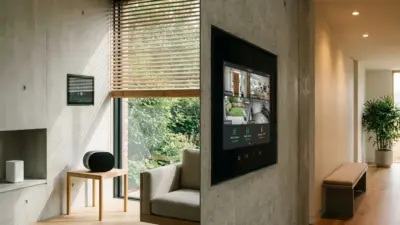
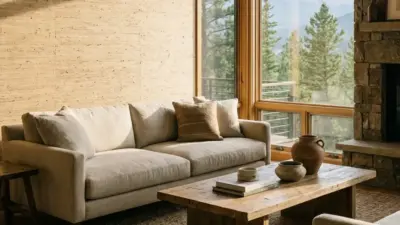
A client once showed me two mood boards side by side. The first was all clean lines, concrete surfaces, and matte black fixtures — unmistakably 2024. The second was warm oak paneling, arched doorways, and hand-thrown ceramics — the kind of room that looks like it’s been lived in for generations. She wanted both. Her designer told her to pick one.
That designer was wrong.
The real challenge in interior design isn’t choosing between modern and timeless — it’s understanding how they amplify each other when done right. A room that leans entirely into a trend looks dated within five years. A room that refuses to evolve feels like a museum. The spaces that genuinely work — the ones you walk into and immediately want to stay — are almost always a deliberate blend of both.
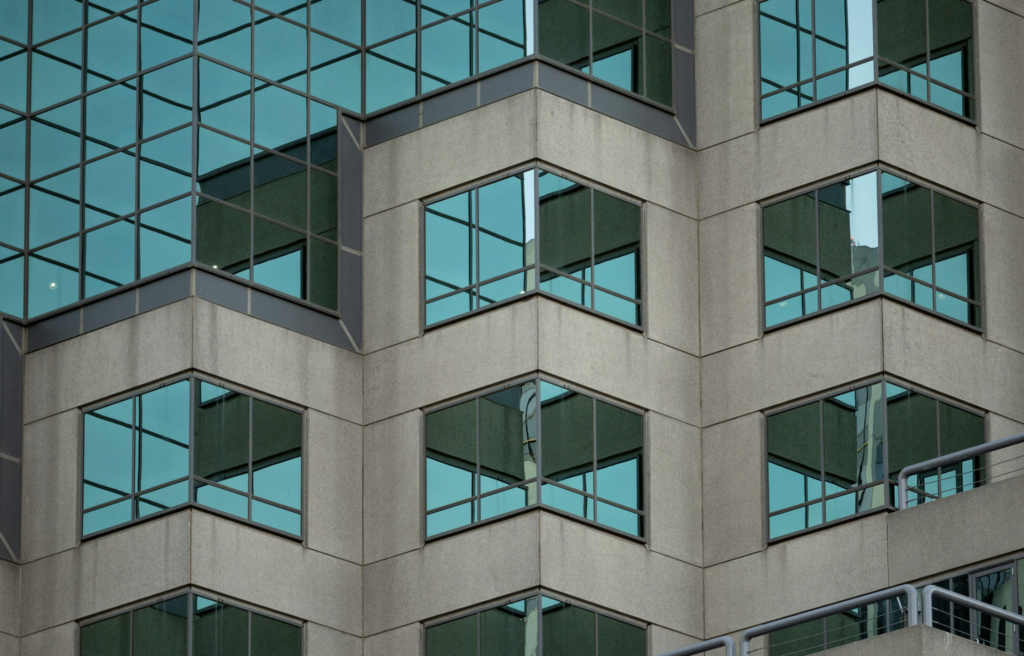
Here’s how to get that balance right, without ending up with a confused mess halfway between two styles.
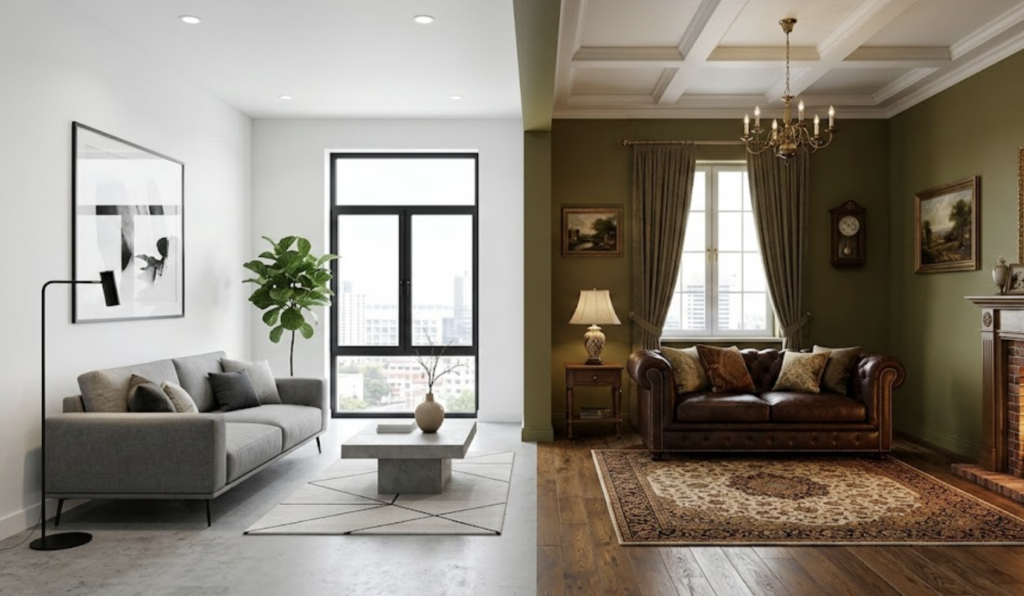
The Appeal of Modern Design
Modern design earns its popularity honestly. Clean lines and open layouts don’t just look good in photographs — they genuinely change how a space feels to live in. Remove the clutter, lower the visual noise, and something interesting happens: the room becomes easier to think in.
I’ve noticed this consistently in spaces that embrace contemporary principles well. The deliberate restraint — every piece chosen with purpose, nothing included out of habit or obligation — creates a kind of calm that heavily decorated rooms rarely achieve. Faye Toogood’s residential projects do this particularly well: furniture that looks almost primitive in its simplicity, but reads as quietly sophisticated in person.
Function as a Feature
Beyond aesthetics, modern design treats spatial function as a design element in itself. Modular walls, furniture that converts between uses, rooms that shift from workspace to living space without renovation — these aren’t gimmicks. They’re responses to how people actually live now. A 2026 apartment doesn’t need a dedicated dining room; it needs a table that seats twelve when necessary and disappears when it doesn’t.
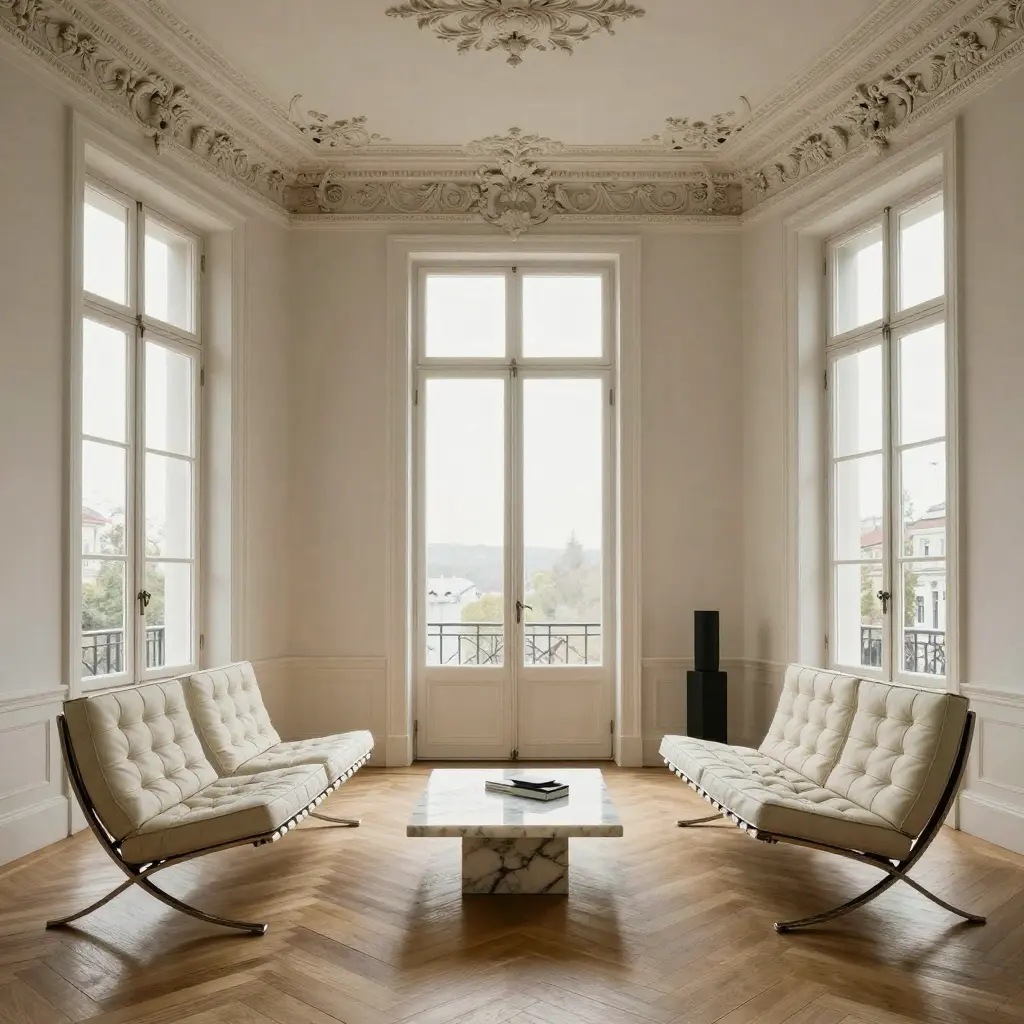
Brands like Muuto and HAY have made this adaptability beautiful. Their pieces don’t apologize for being useful — they lead with utility and arrive at elegance through it.
The Obsolescence Problem
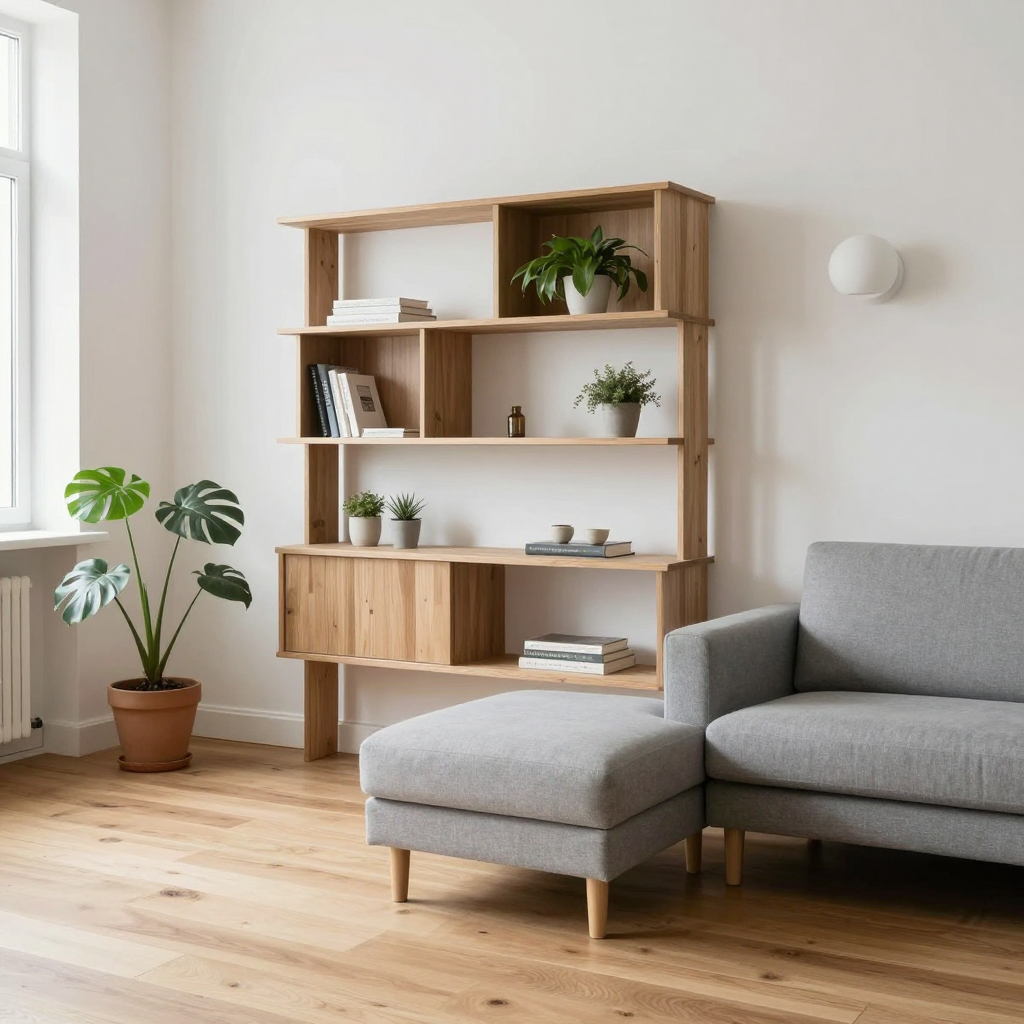
Here’s the honest issue with contemporary design: some of it ages badly. The terrazzo everything of 2019. The millennial pink of 2017. The open-plan kitchen that felt liberating until you realized cooking smells now reach every room in the house. Trends accelerate, and purely trend-driven interiors can feel exhausting to live inside once the novelty fades.
This is precisely where timeless design offers something modern can’t: a foundation that doesn’t require replacement every few years.
Color as a Modern Tool
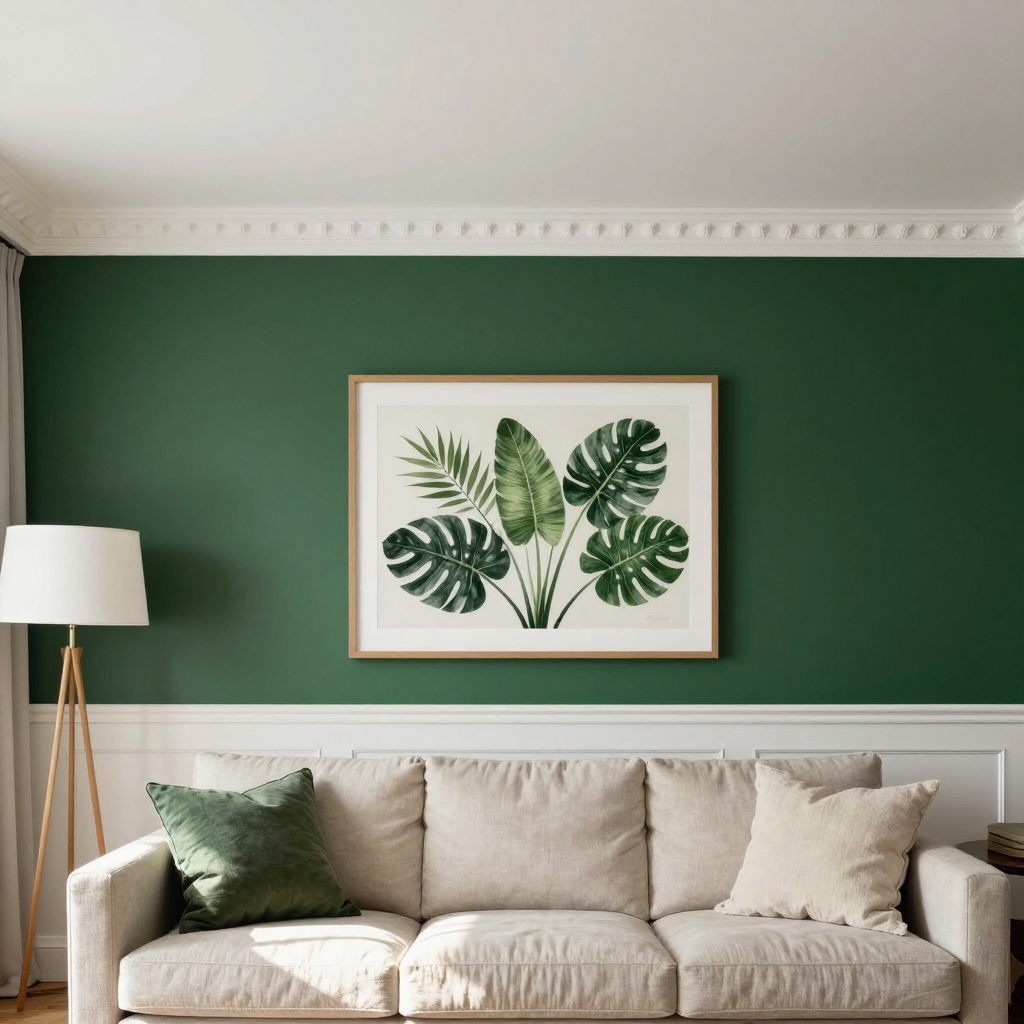
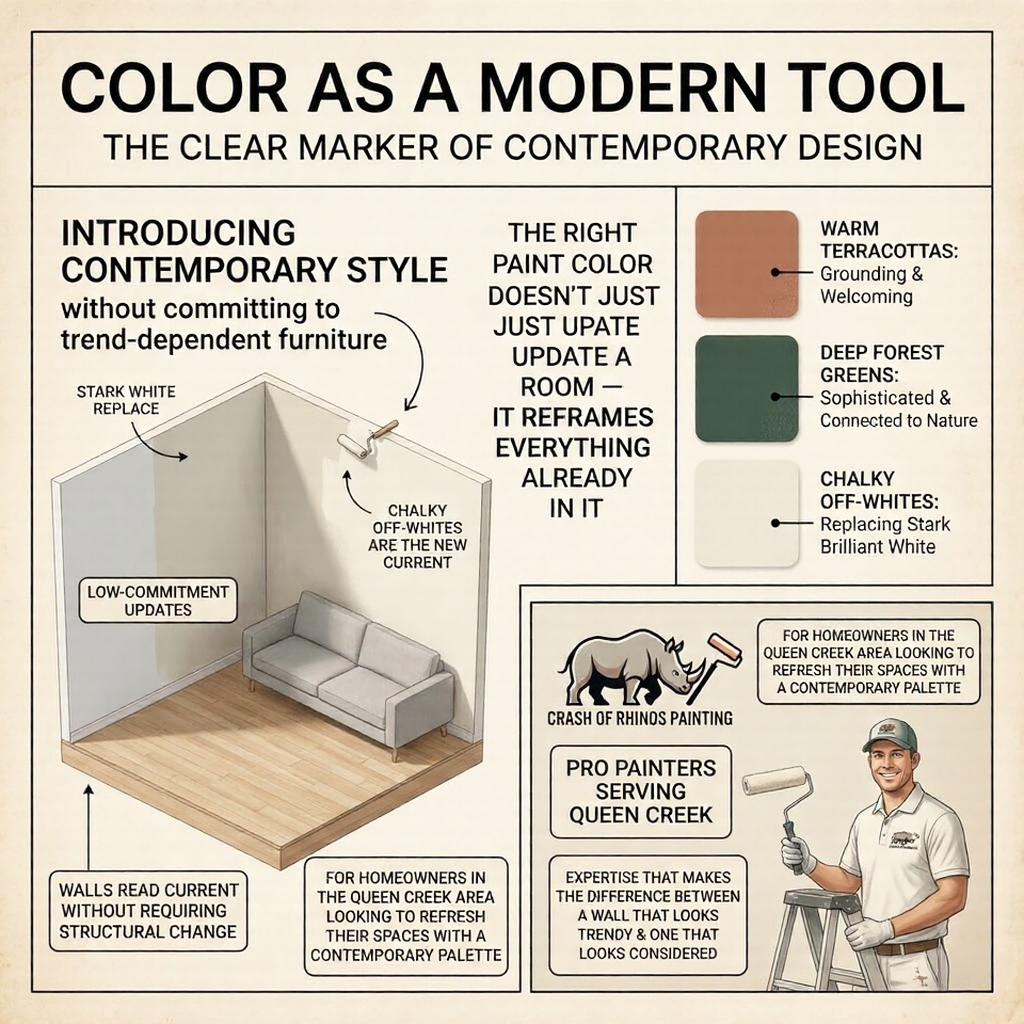
One of the lowest-commitment ways to introduce contemporary style without committing to trend-dependent furniture is through color. Updated palettes — warm terracottas, deep forest greens, the chalky off-whites that have replaced stark brilliant white — read as current without requiring structural change.
What Makes a Design Actually Timeless
Timeless is a word that gets overused to the point of meaninglessness. But there’s something real behind it. Walk into a 1920s Craftsman home that’s been well maintained, and it doesn’t feel old — it feels settled, assured, and completely at ease with itself. That quality is what timeless design actually means: an aesthetic confidence that doesn’t depend on the current moment to justify itself.
Materials That Age Well
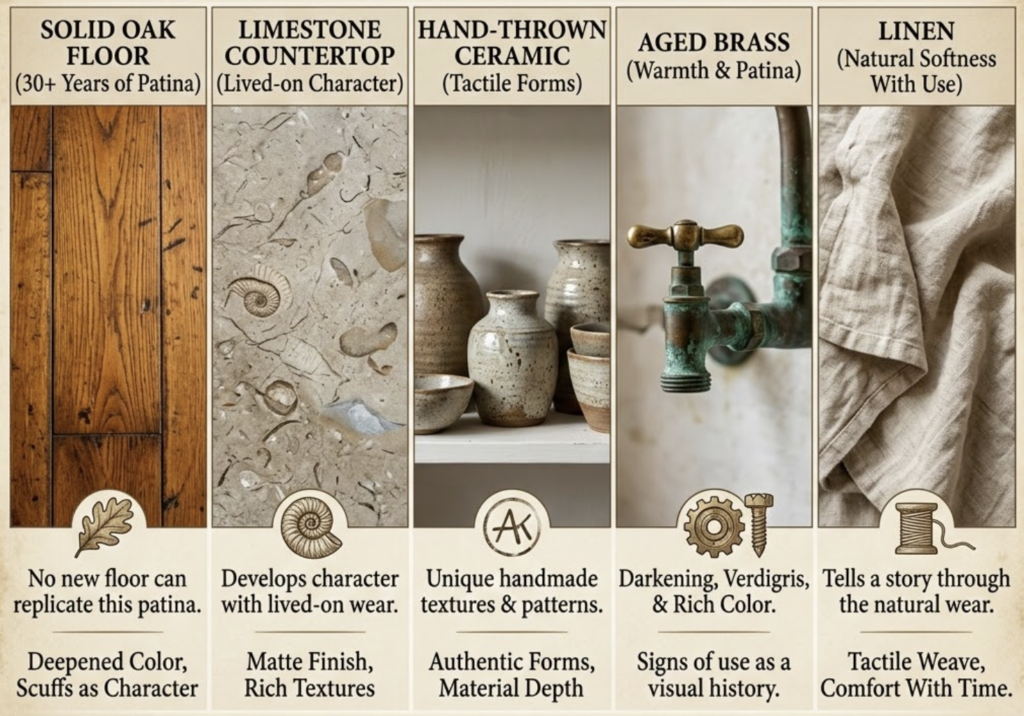
The clearest marker of timeless design is material choice. Solid oak, limestone, hand-thrown ceramic, aged brass, linen — these materials don’t just hold up physically. They improve. An oak floor with thirty years of use has a patina that no new floor can replicate. A limestone countertop that’s been lived on develops character. These materials tell a story through their wear, which is the opposite of trend-driven design, where wear signals obsolescence.
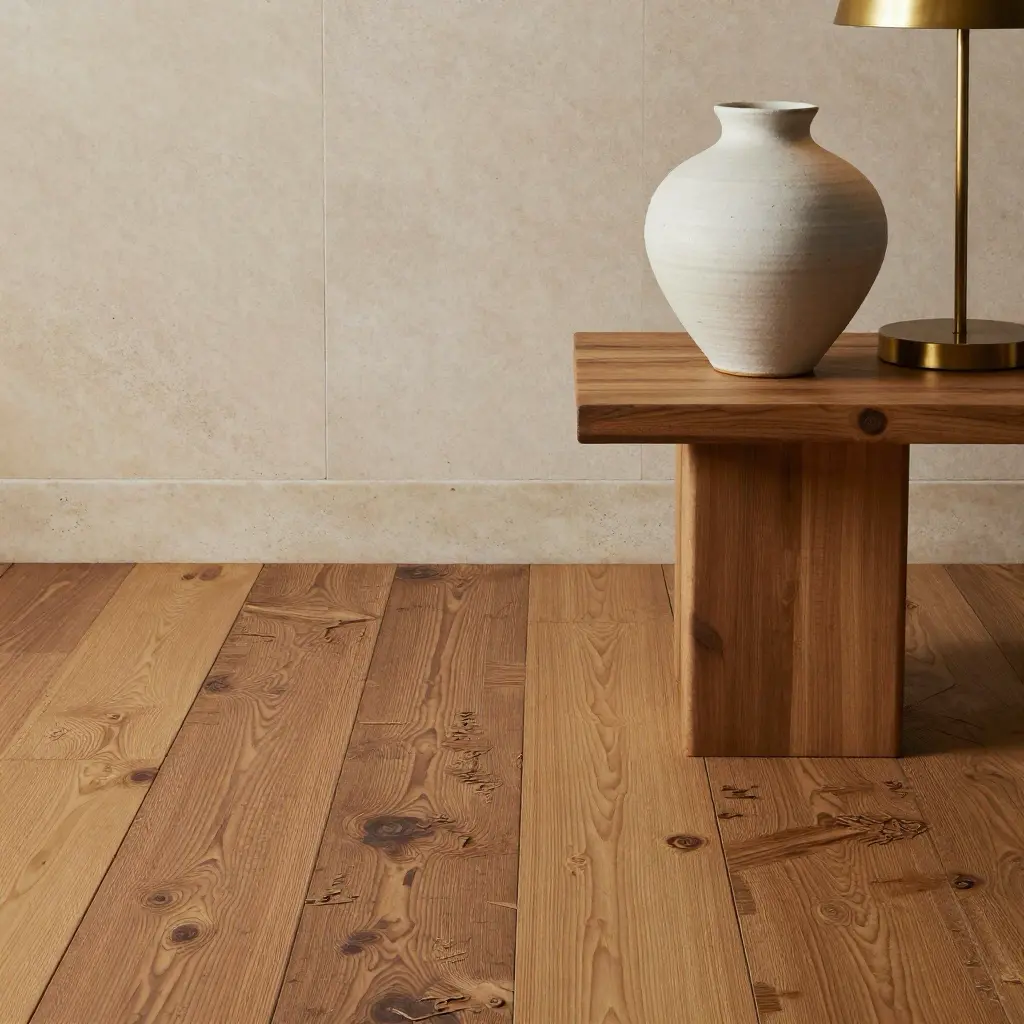
This is where the investment logic of timeless design becomes clear. The upfront cost of quality materials is higher. The long-term cost — replacement, updating, and refreshing — is dramatically lower.
Architectural Features as Anchors
Arched doorways. Ceiling moldings. Window proportions that prioritize light over frame. Wainscoting. Fireplaces as room centers rather than afterthoughts. These architectural elements are the bones of timeless interiors, and they’re why old buildings with good bones are so easy to design around — the structure itself does significant work.
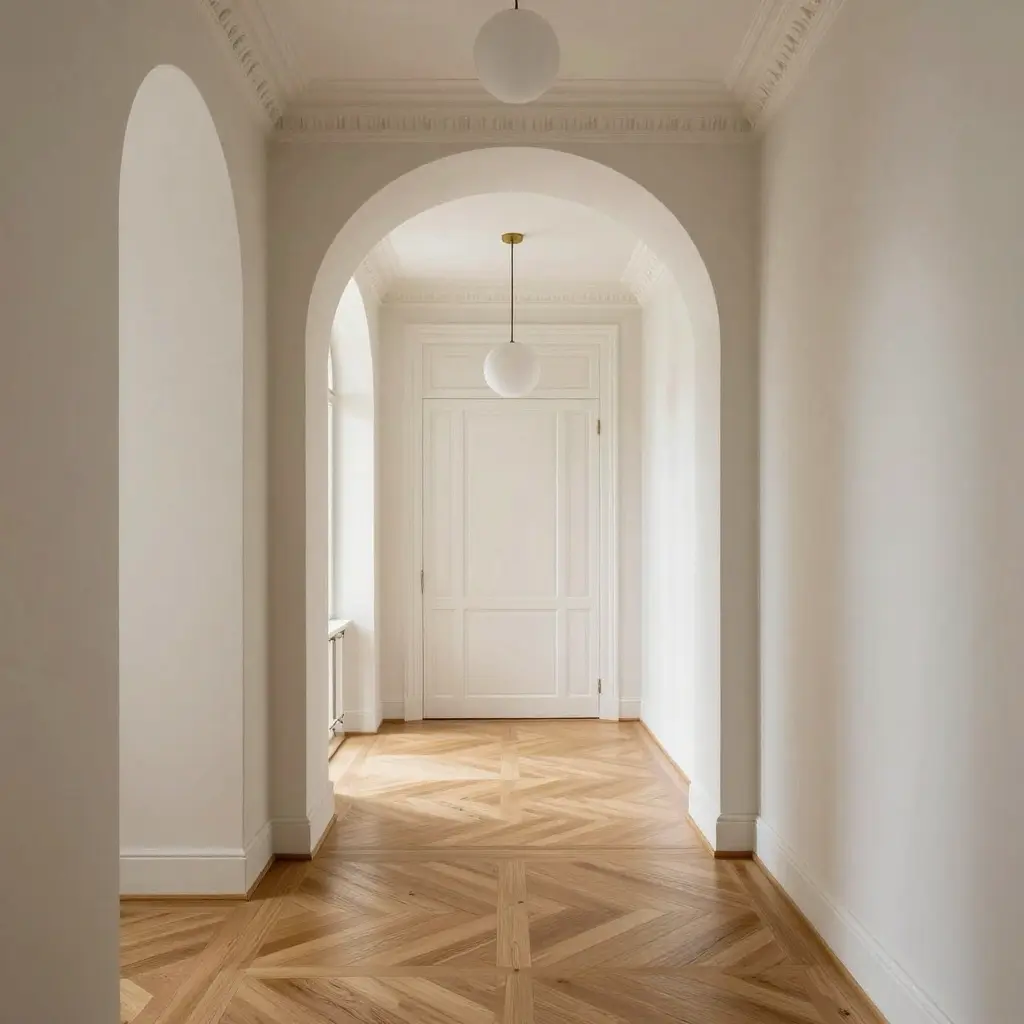
Designers like Axel Vervoordt have built entire careers around this principle: strip a space to its architectural essentials, use restraint with everything added, and let the bones speak. The result looks effortless because the effort went into the structure, not the decoration.
The Nostalgia Question
Does timeless design risk becoming a prison? It’s a fair challenge. A room that’s too reverent toward historical precedent can feel static — preserved rather than lived in, a stage set rather than a home. The answer isn’t to abandon timeless principles but to hold them lightly. Historical influence should inform rather than dictate. Use the proportions of traditional architecture without recreating it wholesale. Favor the quality of classic materials without insisting on period-accurate sourcing.
The Art of Balance: Where Modern Meets Timeless
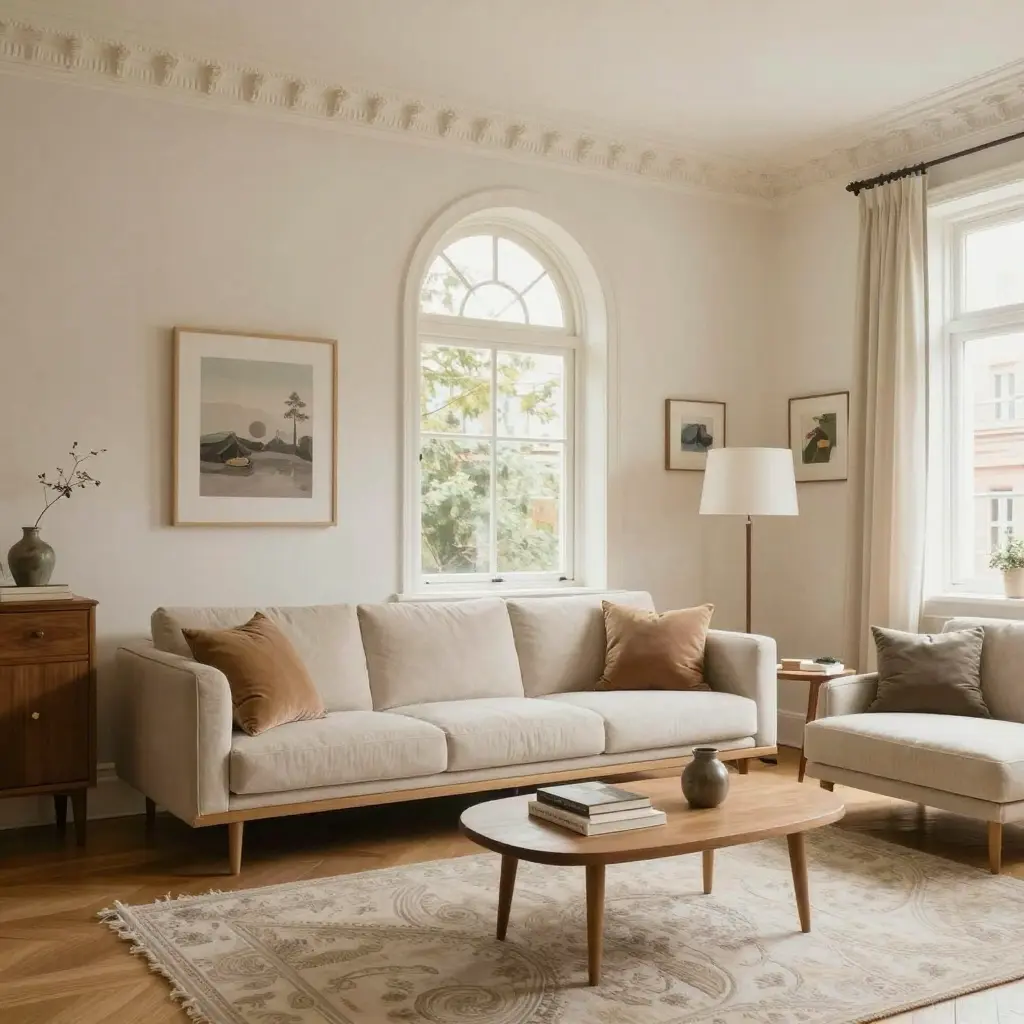
The real skill isn’t choosing a side — it’s knowing which battles to fight with each one. Timeless design works best as structure: the bones of the space, the material palette, the architectural decisions that will still read as correct in twenty years. Modern design works best as an accent: the lighting fixture you love right now, the artwork that feels current, the textile that reflects this particular cultural moment.
The Mid-Century + Victorian Example
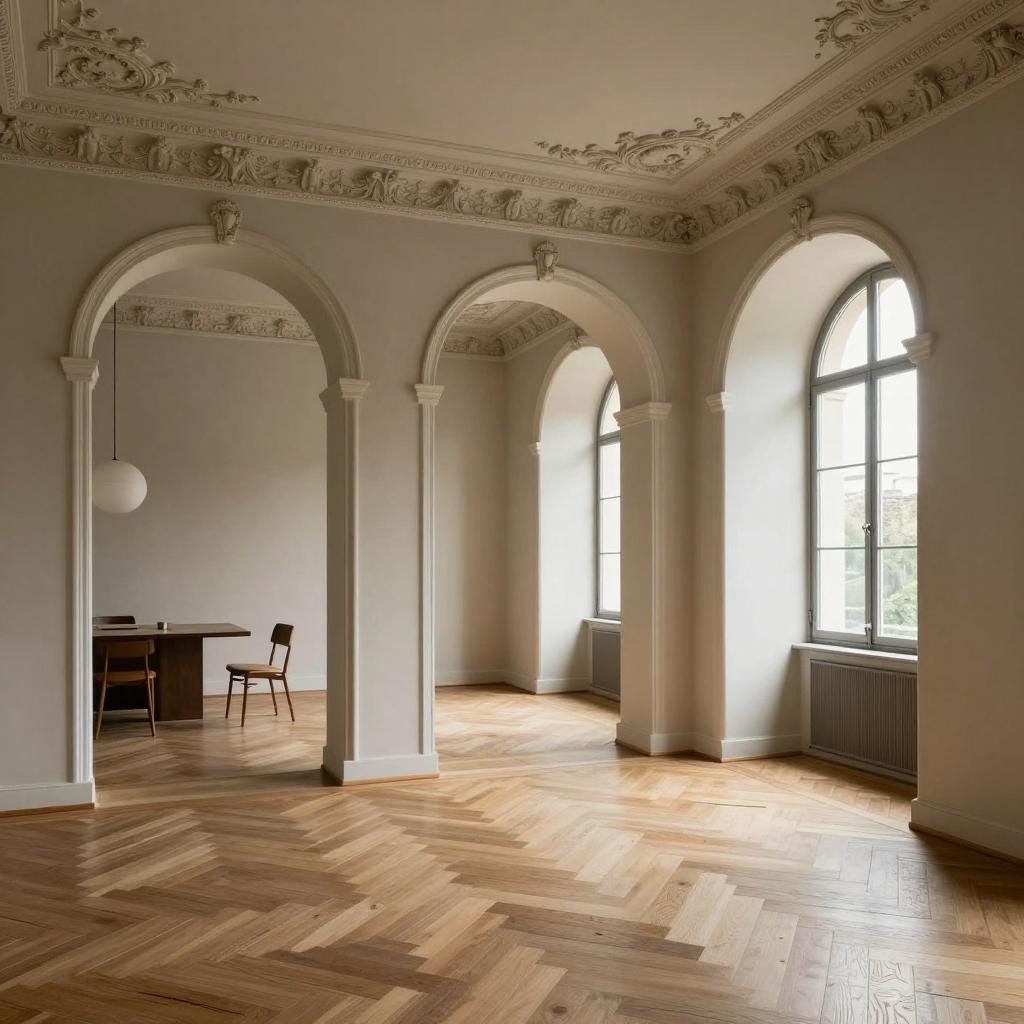
Consider a room where Knoll Barcelona chairs — mid-century modern classics — sit beneath elaborate Victorian cornice molding. The old resonates with craft and permanence; the modern speaks to function and clarity. Neither compromises the other. In fact, the contrast makes both more legible: the ornate ceiling reads as more impressive against the restrained furniture, and the clean lines of the chairs read as more considered against the decorative backdrop.
This isn’t accidental. Rooms that work this way are deliberately orchestrated, not decoratively improvised.
Contrast as Composition
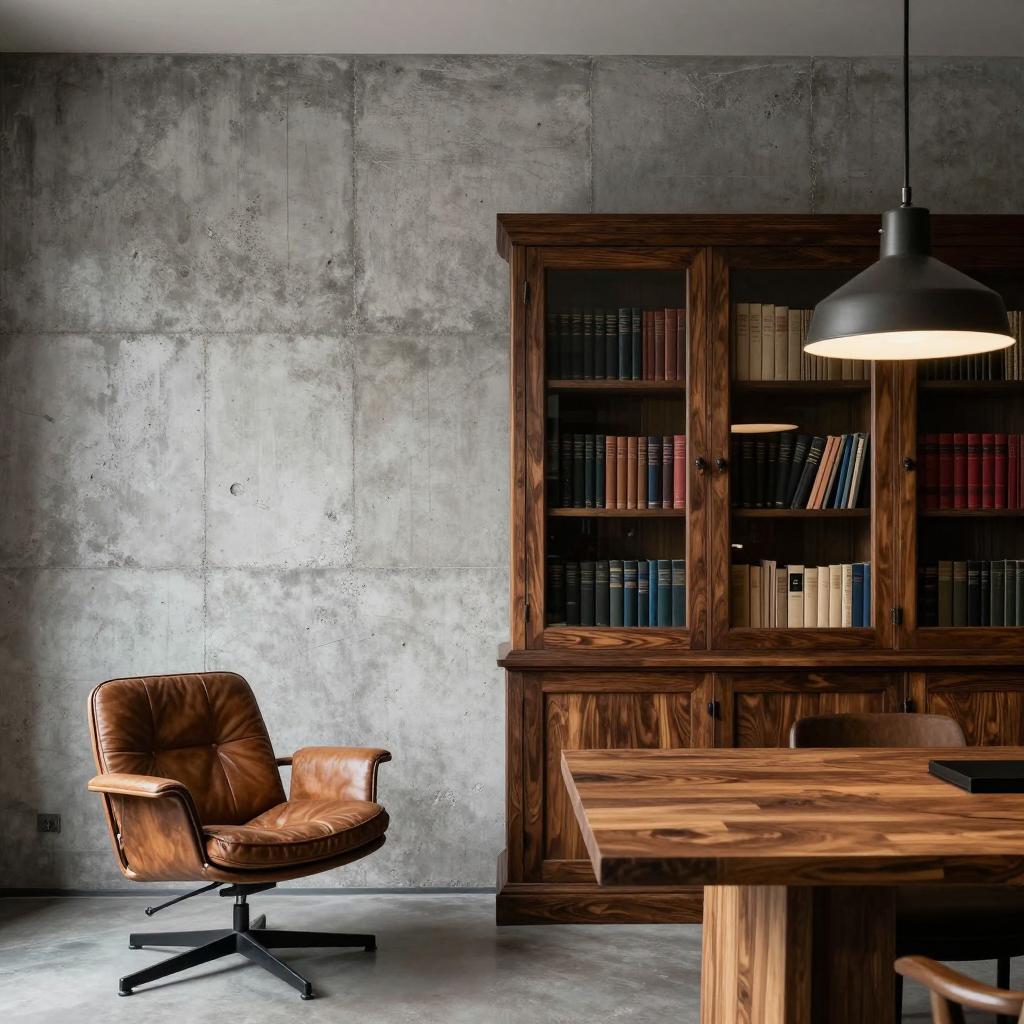
A single minimalist sculpture placed in an ornate setting. A raw concrete wall behind a mahogany library. A modern pendant light hanging in a room with traditional paneling. These pairings work because they create productive tension — each element is made more interesting by the presence of its opposite. The eye moves between them, finding the relationship rather than cataloguing each piece individually.
I’ve noticed that the spaces most people describe as ‘interesting’ or ‘hard to put your finger on’ almost always contain this kind of deliberate contrast. It’s the design equivalent of a conversation between two different people rather than one person talking to themselves.
What Not to Mix
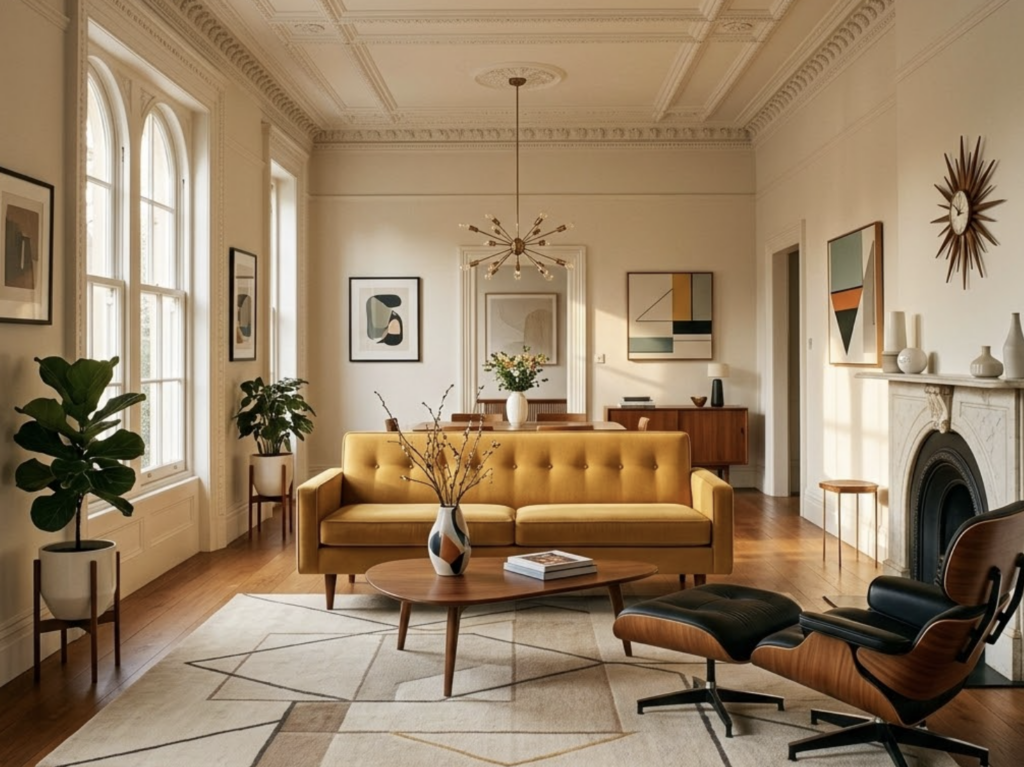
Not all combinations work. The tension that makes contrast interesting requires genuine commitment to each style — a half-hearted gesture toward traditional design paired with half-hearted modernism produces neither the character of the old nor the clarity of the new. The failure mode is equivocation: trying to soften the contrast until it disappears, ending up with something beige in every sense.
The rule of thumb: be bold with one, restrained with the other. If the bones of the space are classical, let the furnishings be confidently modern. If the architecture is clean and contemporary, let one or two significant traditional pieces carry real weight.
Building Spaces That Last
The client with the two mood boards ended up with a home that borrowed from both. Arched doorways and oak flooring are the foundation. Muuto furniture and contemporary textiles as the living layer. New paint colors that bridged the historical bones and the modern pieces without flattening either.
She didn’t have to choose. She had to think more carefully than if she’d picked a side.
That’s the real ask of balancing modern and timeless design: not less decision-making, but better decision-making. Every choice should be legible. The traditional elements should be there because they offer something permanent and material-honest. The modern elements should be there because they reflect how you actually live now. Nothing should be there just because it was fashionable when you went shopping.
A room built that way — with historical confidence and contemporary honesty — doesn’t need to be updated. It just needs to be lived in.
- 13shares
- Facebook0
- Pinterest13
- Twitter0
- Reddit0