Industrial design degree requirements have evolved rapidly in recent years, driven by the demand for professionals who are both creatively innovative and technically proficient. Understanding these requirements is essential whether you’re exploring undergraduate programs or considering a transfer, as it helps you navigate the right curriculum, portfolio expectations, and skill development. Below, you will find a curated list of prominent industrial design programs in the United States, along with specific insights into what each school requires. By understanding the expectations up front, you will be better prepared for a competitive admission process and long-term success in the field.

Discover Key Requirements
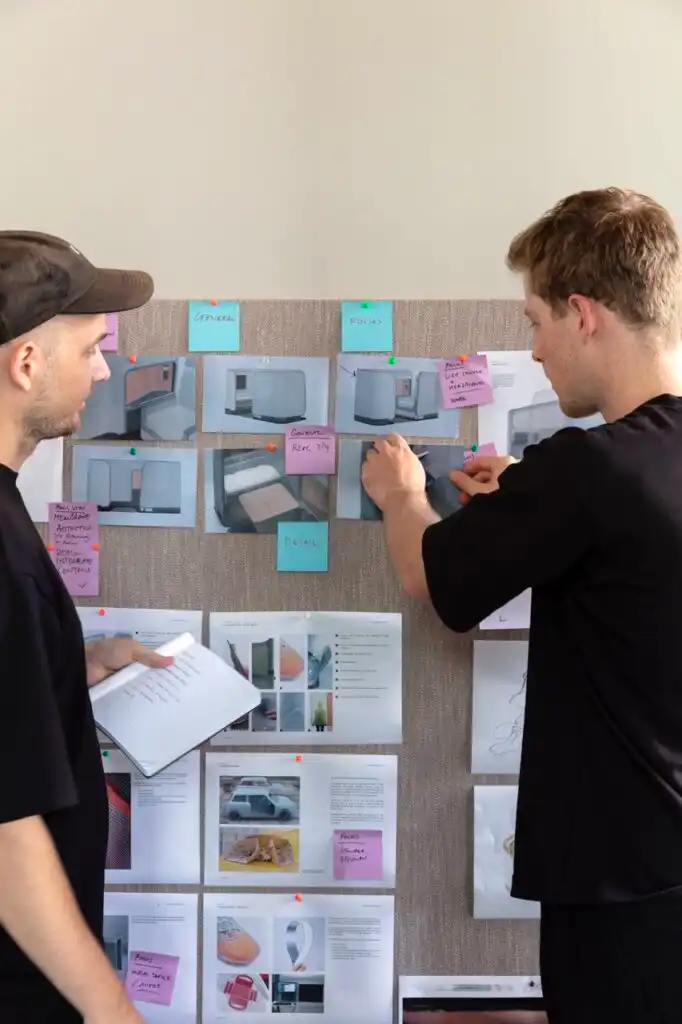
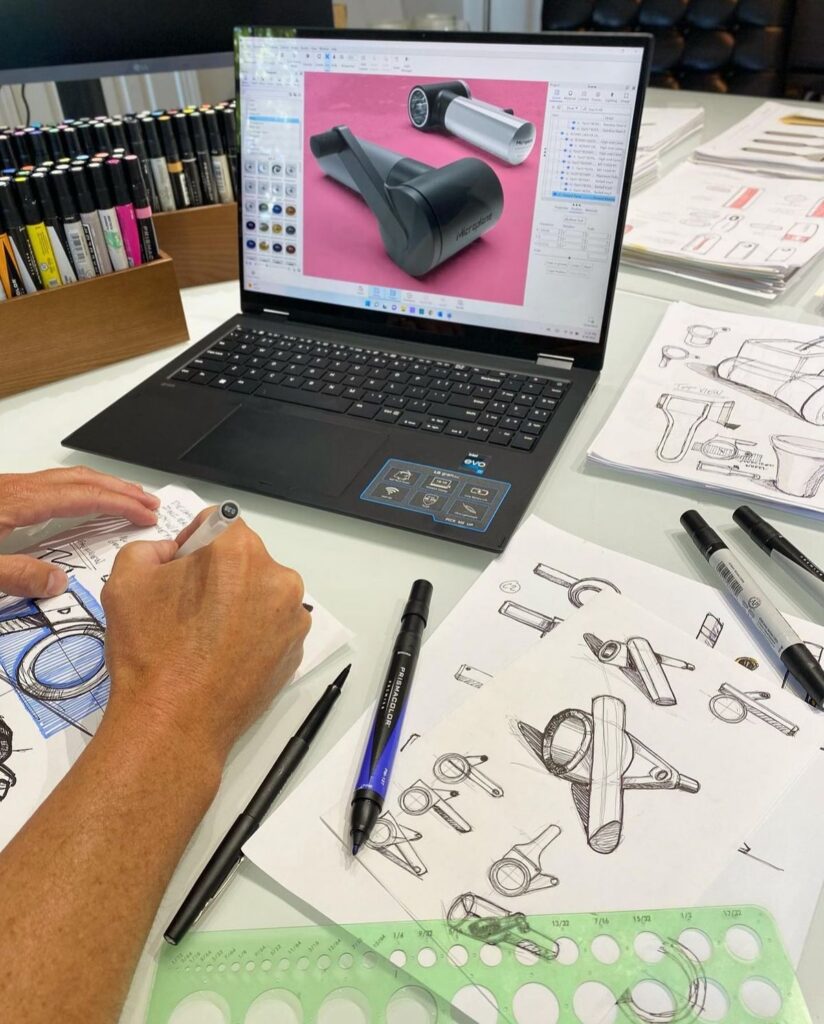
When considering any industrial design degree, you will typically need to fulfill basic entrance requirements—like a high school diploma or equivalent—before tackling program-specific criteria. Many programs place a strong emphasis on demonstrating your artistic abilities, design thinking, and systematic approach to problem-solving. A portfolio often serves as tangible proof of your potential. You may also need to show your versatility across multiple media, such as 3D mockups, sketches, and digital renderings.
Below is an overview of some leading programs that illustrate diverse industrial design degree requirements. These schools each offer distinct experiences, but their core expectations often overlap. Think of this list as a roadmap to help you align your interests, skills, and career goals with the best academic home.
James Madison University Program
James Madison University (JMU) hosts an industrial design major under its School of Art, Design, and Art History (SADAH). The degree is structured as a Bachelor of Science in Art with a major in Industrial Design, and it integrates art, design, and various support courses.
Admission Portfolio
- You must submit a portfolio via SlideRoom to demonstrate your artistic abilities and unique approach to design (James Madison University).
- The portfolio should highlight your technical proficiency in both 2D and 3D media. Avoid including copied or overly derivative work—your originality and creativity are critical.
- Continuous exploration is encouraged. Make sure you include sketches, prototypes, and case studies that detail your process.
Attendance at Portfolio Feedback Day
- JMU strongly recommends attending an in-person or virtual Portfolio Feedback Day on select dates—such as October 11 and 18, 2025, or January 24 and 31, 2026—before submitting your final application (James Madison University).
- For applicants seeking merit scholarships, attending one of these sessions is required. This gives you direct faculty feedback and allows the department to gauge your adaptability and potential.
Degree Requirements
- You will complete at least 78 credit hours of major-specific coursework, 42 of which focus on industrial design subjects (James Madison University).
- Core classes can include subjects such as sculpture and form, drawing, history, systems thinking, engineering basics, and marketing or business fundamentals.
Key Program Features
- Curriculum fosters both conceptual thinking and practical skill-building.
- Emphasizes a blend of creative ideation, technical craftsmanship, and contextual research
- Encourages broad exposure to art and design-related disciplines, preparing you for a fast-evolving industry.
If you are looking for a balanced program that merges artistic exploration with solid technical grounding, JMU’s industrial design track could be a strong fit.
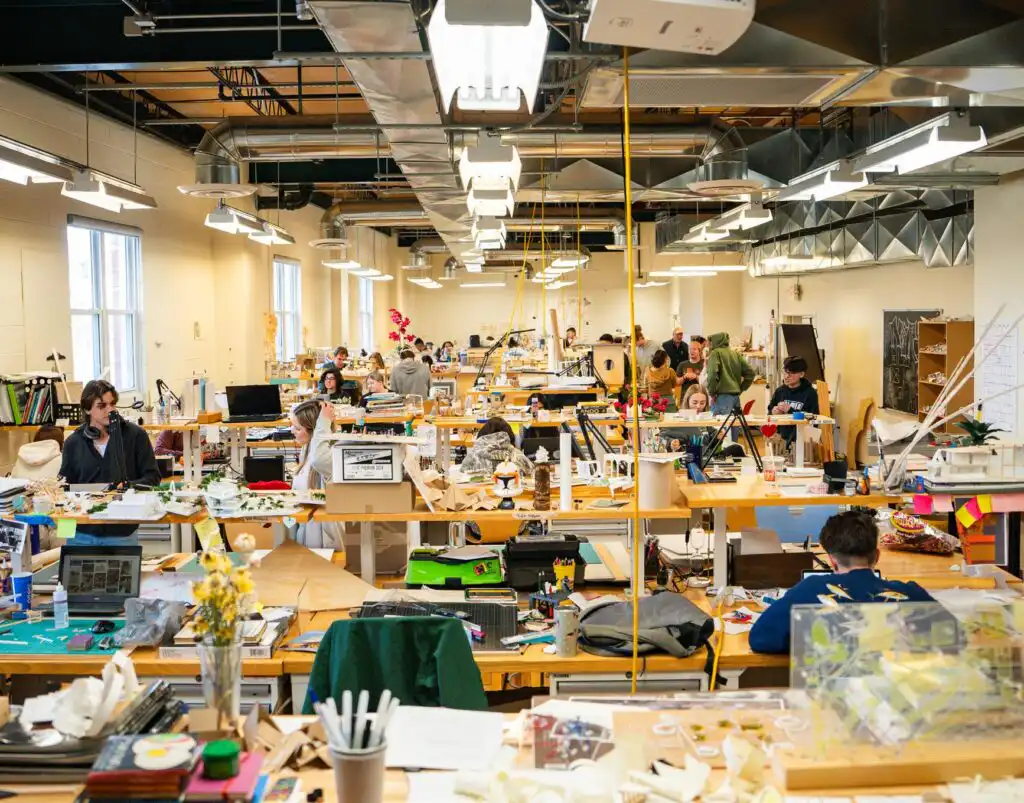
Iowa State University Program
Iowa State University offers a four-year Bachelor of Industrial Design (BID) program, accredited by the National Association of Schools of Art & Design (NASAD). It is the only industrial design program in Iowa as of 2025 and is well-regarded for connecting product design with influences from business and engineering.
Pre-Professional Core Design Program
- You start with a foundational year in the Core Design Program. This year introduces design principles, drawing, and 2D or 3D composition (Iowa State University).
- Successful completion of this pre-professional phase allows you to apply for the professional BID program.
Portfolio Development
- Though the initial phase is open to admitted students in the College of Design, some portfolio review may be required to advance into the industrial design specialization.
- Presenting thorough concept sketches and prototypes is key. Showing how you iterated on an idea, gathered feedback, and refined the outcome will strengthen your chances.
Professional BID Curriculum
- You spend three years in professional-level coursework focusing on research, ideation, material science, and usability.
- Two of three experiential components are required: study abroad, internship, or a sponsored industry project. This ensures hands-on exposure to real-world design.
Studio Spaces and Emphasis Areas
- Iowa State provides individual studio spaces for BID students in the Armory building. This environment fosters collaboration and easy access to faculty.
- You can tailor your curriculum through guided electives, connecting design methods to engineering, marketing, or entrepreneurial pursuits.
If a structured approach with a robust first-year core appeals to you, Iowa State’s BID program offers a clear, step-by-step path into industrial design.

Georgia Tech Curriculum
Georgia Tech’s Bachelor of Science in Industrial Design program provides a blend of artistic creativity and technical rigor, ideal for students interested in research, form development, and product manufacturing processes.
Studio Sequence and Sequential Coursework
- After introductory design classes, you will progress through six sequential studio courses focused on core industrial design tasks (Georgia Tech Catalog).
- Each studio builds on the last, covering sketching, form making, user research, product validation, and issues in manufacturing or environmental impact.
Academic Performance Standards
- All required industrial design courses must be completed with a grade of C or higher to move on. Missing this benchmark can cause a one-year delay since studio courses start only in the fall (Georgia Tech Catalog).
- Up to 9 credit hours can be pass/fail, but only for free electives, not for major classes.
International Plan
- Georgia Tech fosters global awareness by offering an International Plan option. You can spend two full terms studying industrial design abroad, gain proficiency in a second language, and complete coursework covering international design practices (Georgia Tech Catalog).
- This plan does not alter core degree requirements, so you must still fulfill all standard industrial design coursework.
Program Outcomes
- Graduates are prepared for professional practice or advanced degrees, often collaborating with engineers, business strategists, or startup teams.
- You develop clear communication skills, engineering literacy, and a thorough understanding of the design process from concept to production.
For a technologically progressive learning environment that encourages global experience, Georgia Tech stands out. Expect rigorous, methodical training that positions you at the intersection of design innovation and engineering feasibility.
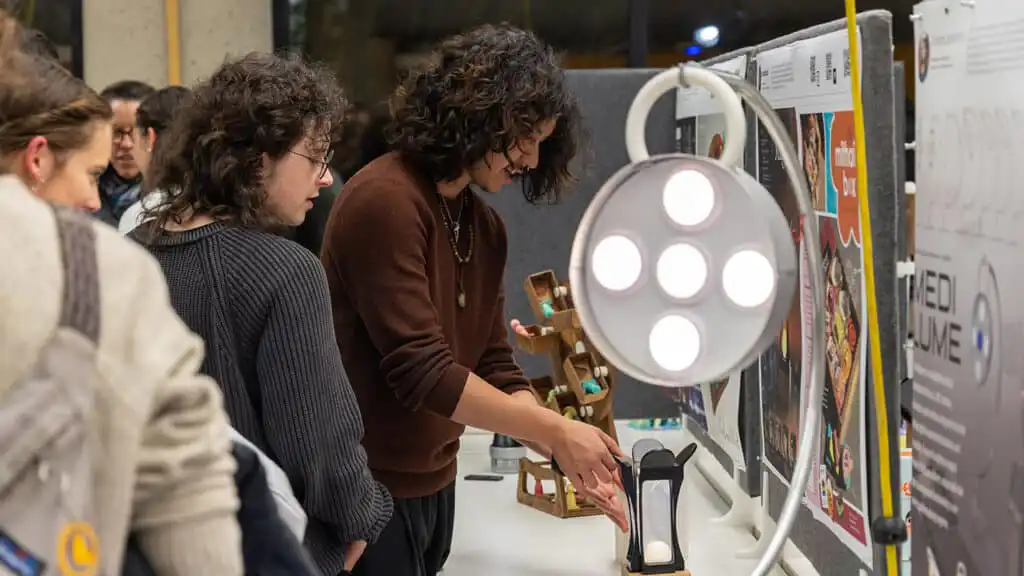
Cal State Long Beach Path
California State University, Long Beach (CSULB) is a popular choice for students transferring from community colleges or other four-year institutions. While the timeframe to complete the industrial design program can vary, CSULB provides a well-recognized curriculum with a focus on hands-on experience.
Program Length
- Some students report taking three to four years to finish the coursework after transferring, depending on transfer credits and scheduling (Reddit).
- If you do not meet certain prerequisites on time or need extra semesters for complex studio courses, it can extend your total study period.
Portfolio-Driven Admission
- Though each Cal State may set unique portfolio requirements, your admission often hinges on showing completed design projects and strong foundational skills.
- Emphasizing creativity, research, and iteration in your portfolio can be especially valuable, since the faculty looks for problem-solving abilities and a sense of form.
Why Choose CSULB
- It offers a competitive cost-to-value balance for those seeking an in-state public institution.
- The program’s location near major design firms and industries can facilitate networking, internships, and potential job opportunities.
If you are balancing cost considerations and looking for a public university with a robust network, CSULB may align with your educational path. Just be prepared for a highly structured studio sequence that might lengthen your timeline if you do not follow prerequisites in lockstep.
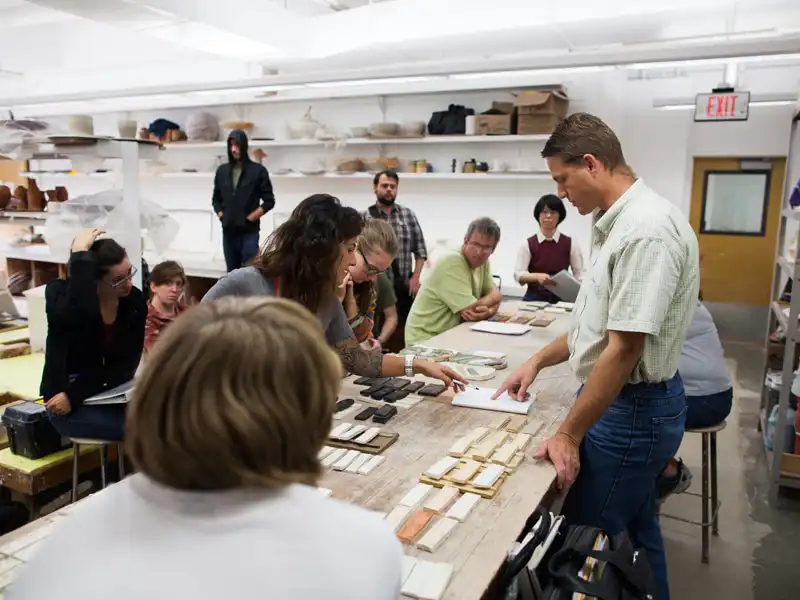
San Francisco State Option
San Francisco State University (SFSU) also presents an avenue for industrial design aspirants, though it is known for a slightly shorter total program length compared to some other institutions. However, the decision between SFSU and other schools often comes down to program features versus time to graduation.
Program Duration Versus Curriculum Breadth
- Some prospective students weigh a shorter timeframe at SFSU against broader course offerings at other schools like Cal State Long Beach (Reddit).
- You might finish faster at SFSU, but it is always worth comparing the range of electives, internship connections, and lab facilities.
Admissions Focus
- Emphasis is on meeting general university requirements and demonstrating an aptitude for design fundamentals.
- As with most industrial design programs, you should show your process work—research, thumbnail sketches, user testing—rather than relying solely on a polished final product.
Advantages
- Proximity to the Bay Area’s design and tech hubs can present you with internship or collaborative project opportunities.
- SFSU’s environment encourages exploration across different design disciplines and fosters a sense of community among design students.
When you value a more streamlined route to your degree or seek strong industry exposure in the Bay Area, SFSU may be a good match.
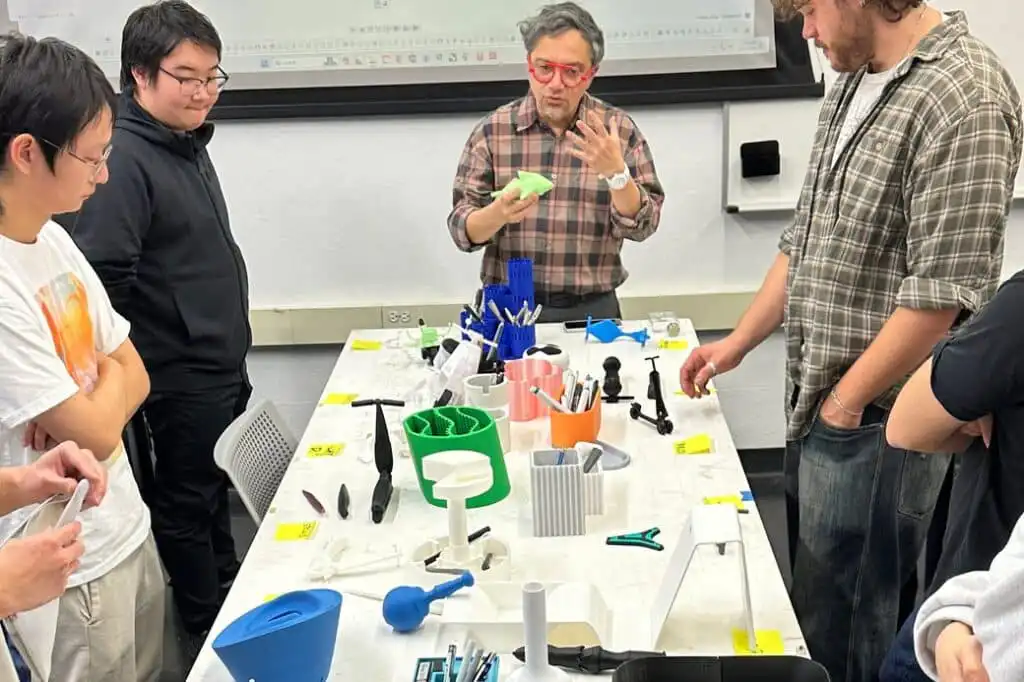
Transfer And Program Duration
Transfer students play a key role in many industrial design programs, particularly in California. If you already have an associate degree or general education credits, you could potentially shorten the time to complete a bachelor’s. However, it is crucial to confirm whether your credits will be recognized.
Community College Pathway
Students often transfer with foundational drawings and design courses. In some cases, a strong portfolio plus essential prerequisites can land you in advanced standing.
Keep in mind that advanced studio courses must often follow a particular sequence, which might limit how quickly you can progress.
Program Length Considerations
Industrial design programs are hands-on and iterative. You cannot always insert yourself mid-sequence without meeting each studio’s specific outcomes.
Some students find it ultimately takes four to five years to earn their degree, including time after transferring, if they need to catch up on certain design or fabrication classes (Reddit).
Balancing the appeal of a particular university’s resources with the reality of program length is essential. If industry-leading lab spaces and deeper electives matter more to you, a longer timeline might be worthwhile.
Strengthen Your Application Portfolio
For most industrial design degree requirements, your portfolio is one of the clearest reflections of your readiness. Strive to show the quality of your ideas and how you develop them. Here are some vital considerations:
Highlight One Solid Case Study Over Many Incomplete Pieces
Admissions teams often prefer seeing a well-documented project that showcases research, sketching, prototyping, and iteration. Focus on the depth of thinking and the steps you took to solve a specific design problem. According to admissions advice shared by industrial design forums, a single comprehensive case study can be more compelling than multiple fragmented samples (Reddit).
Demonstrate Versatility And Exploration
Including different media—digital renderings, 3D-printed prototypes, and sketches—illustrates your adaptability. Institutions want to see that you are willing to experiment and refine your approach over time. Your portfolio should reveal how you tackle visual, functional, and technical aspects of a project.
Show The Process Beyond The Final Product
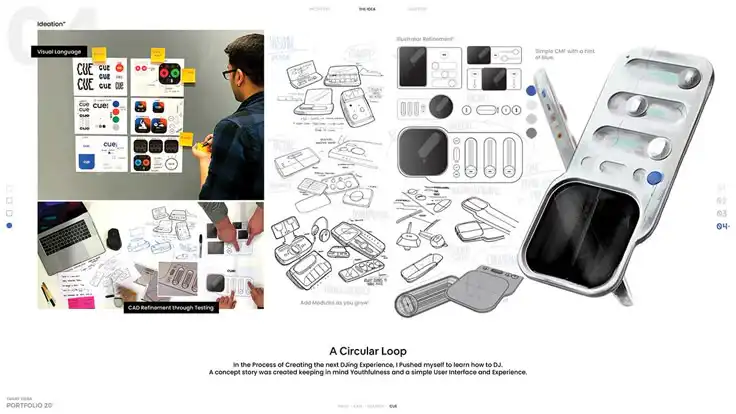
The best portfolios reflect thorough thinking, research, and problem-solving. It is not just about a polished end design. Instead, document critical brainstorming sessions, user interviews, and the iterative steps that led you to the final concept (Reddit). Demonstrate how you gathered feedback and integrated it back into your work.
Keep It Simple And Accessible
Your portfolio’s presentation matters almost as much as the content itself. Admissions committees often have limited time to evaluate each submission. Avoid gated or overly complex navigation. Instead, present a straightforward interface that allows reviewers to view your projects efficiently. This can include:
- Clear, minimal layout with intuitive menus.
- High-quality images, renderings, or photographs of prototypes.
- Logical sectioning that follows the design process.
- Brief, punchy descriptions rather than large blocks of text.
Leverage Portfolio Feedback Sessions
Some universities, such as James Madison University, offer feedback days where prospective students can show their work and receive advice before formally applying (James Madison University). This feedback helps you refine weak spots, clarify your storytelling, and confirm whether the program matches your career goals. If an official feedback event is not available, consider reaching out to faculty or attending open houses to gather insights.

| Requirement / Program | James Madison University | Georgia Tech | Iowa State University | Cal State Long Beach | San Francisco State University |
|---|---|---|---|---|---|
| Duration | ~4 years (standard BS) | ~4 years (standard BS) | 4 years (1-year core + 3-year professional phase) | ~4 years (BS program) | ~4 years (BS program) |
| Total Credits / Units | 78 credits in art/design & related courses (42 in Industrial Design courses) | ~130 credit hours total | ~133–134 credits total | ~120 semester units total | 59 major units + general education (~120 units total) |
| Portfolio Requirement | Required for admission to core/upper-level courses | Not required for admission; strong portfolio recommended; must pass studio courses with minimum grade | Portfolio review for transfer/advanced studio | Portfolio review required before junior/senior studio | Not required for admission; foundation courses first |
| Core Structure / Focus | Interdisciplinary design, art history, theory, studios, electives | Sequential studio design + technical & theory courses | Core Design year + professional curriculum, electives & internships | Pre-Design foundation + studio + electives | Foundation + core design + CAD/visualization + electives |
FAQs
How important is a portfolio for the industrial design degree requirement?
A portfolio is often the central requirement for admission into an industrial design program. While grades and test scores matter, the portfolio allows the admissions committee to assess your creative process, technical skills, and problem-solving approach. A single, well-developed project can sometimes carry as much weight as multiple smaller pieces.Can I transfer into an industrial design program after community college?
Yes. Many universities accept transfer students who have completed foundational coursework in design, drawing, or engineering. However, ensure your credits align with the receiving institution’s curriculum. Transfer students might need extra time to complete sequential studio courses.Should I apply to multiple industrial design programs at once?
Applying to multiple programs increases your chances of acceptance and helps you compare financial aid packages or scholarship opportunities. Because each school has unique focus areas and requirements, it is wise to apply to a range of institutions that fit your career interests.Do all programs require an in-person portfolio review?
Not all. Some schools allow you to submit your portfolio online (via platforms such as SlideRoom). Others (like JMU) recommend or require portfolio feedback sessions, which can be virtual or on campus. Check each school’s guidelines to confirm.How long does it typically take to complete an industrial design degree?
Most industrial design bachelor’s programs are structured as four-year degrees for first-year students. Transfer students often finish in three years, but any delays in meeting studio prerequisites or taking required core courses can add extra semesters. Some students take up to five years total.
Pursuing a well-structured industrial design program can open the door to a range of creative and technical roles—from product designer to innovation strategist. By learning the specific industrial design degree requirements of each school you consider, you significantly improve your chances of acceptance and future career success. Keep refining your portfolio, prioritizing schools that align with your personal design philosophy, and embracing each new opportunity to iterate on your ideas. This data-driven, methodical approach helps ensure that, once admitted, you can thrive in your chosen field with clarity and confidence.
- 29shares
- Facebook0
- Pinterest29
- Twitter0
- Reddit0