Business casual has become the default dress code for offices, startups, client meetings, and hybrid work environments—but it’s also one of the most misunderstood styles for men.
Is it jeans or no jeans? Blazers or sweaters? Sneakers or dress shoes?
If you’ve ever stood in front of your closet wondering whether your outfit looks professional enough without being overdressed, you’re not alone. This guide breaks down exactly what a business casual men’s outfit means today—and how to get it right every time.
By the end of this article, you’ll know:
- What business casual actually means in 2026
- The essential pieces every man should own
- Outfit formulas that work across industries and seasons
- What to avoid (the mistakes that quietly ruin your look)
- How to adapt business casual for hybrid and remote work
What Is Business Casual for Men? (Modern Definition)
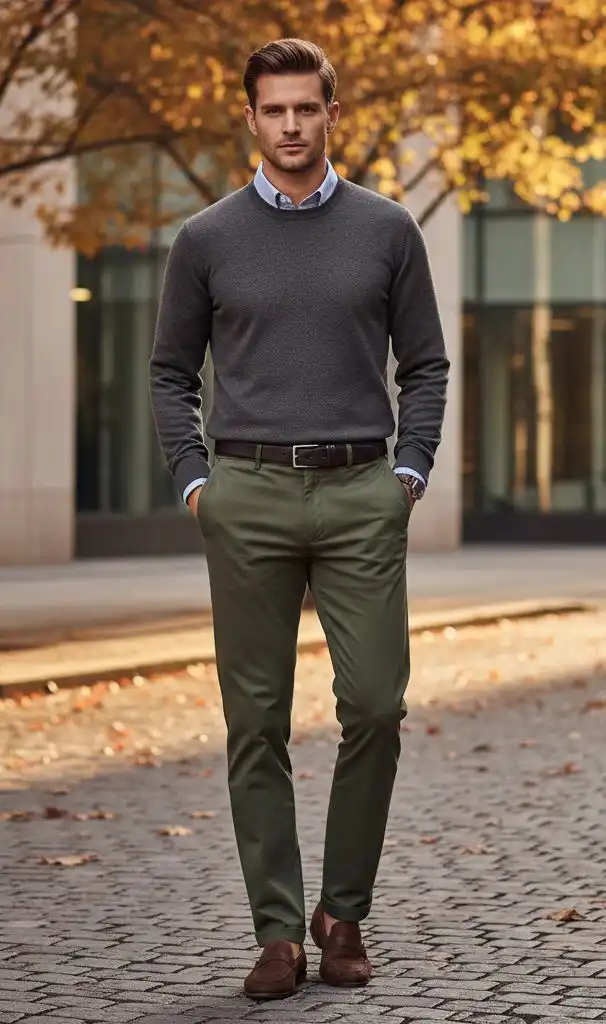
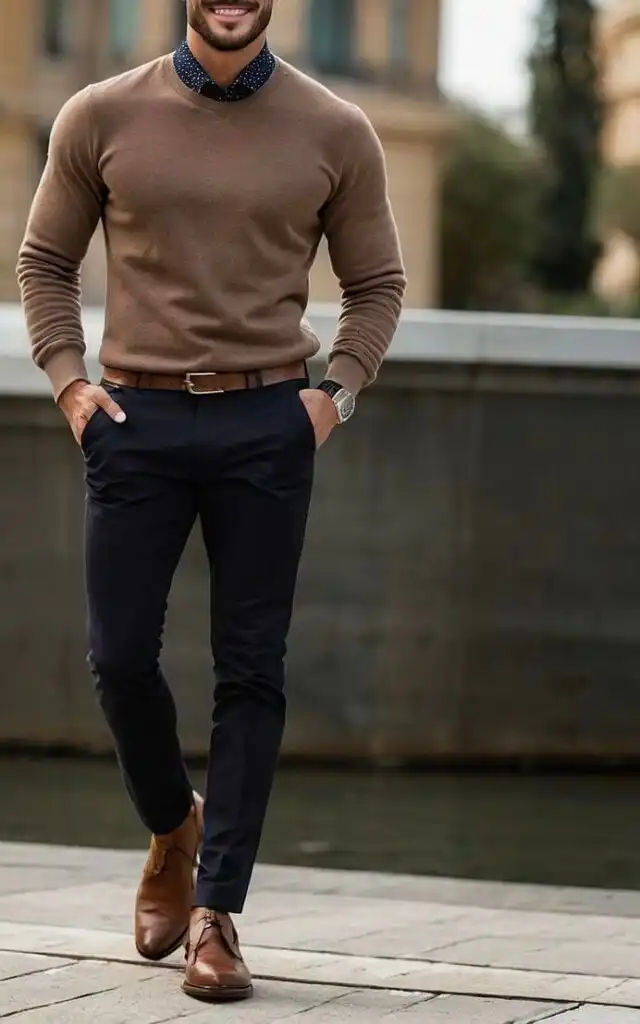
Business casual is a professional dress code that blends traditional office wear with relaxed, modern elements. The goal is to look polished, intentional, and work-appropriate—without the rigidity of a full suit.
At its core, business casual means:
- Clean lines
- Neutral or muted colors
- Structured pieces paired with relaxed fabrics
- No extremes (too formal or too casual)
Think:
Dressier than weekend wear, more relaxed than a suit.
What’s changed in recent years is flexibility. Today’s business casual allows for:
- Tailored jeans (in some workplaces)
- Knit polos and performance fabrics
- Minimalist sneakers (in creative or tech environments)
But context still matters. A finance office and a startup don’t define “business casual” the same way—which is why understanding the rules matters more than memorizing outfits.
Business Casual vs Smart Casual (Clear Difference)
One of the most common points of confusion is the difference between business casual and smart casual.
Business Casual
- Workplace-first
- Professional baseline
- Designed for meetings, presentations, and daily office wear
Examples:
Chinos, button-down shirt, leather shoes, blazer or sweater
Smart Casual
- Social-first
- More expressive
- Often worn after hours or in creative environments
Examples:
Dark jeans, t-shirt with blazer, loafers or clean sneakers
Rule of thumb:
If you’re dressing for work, default to business casual. If you’re dressing around work, smart casual may apply.
Core Business Casual Pieces Every Man Needs

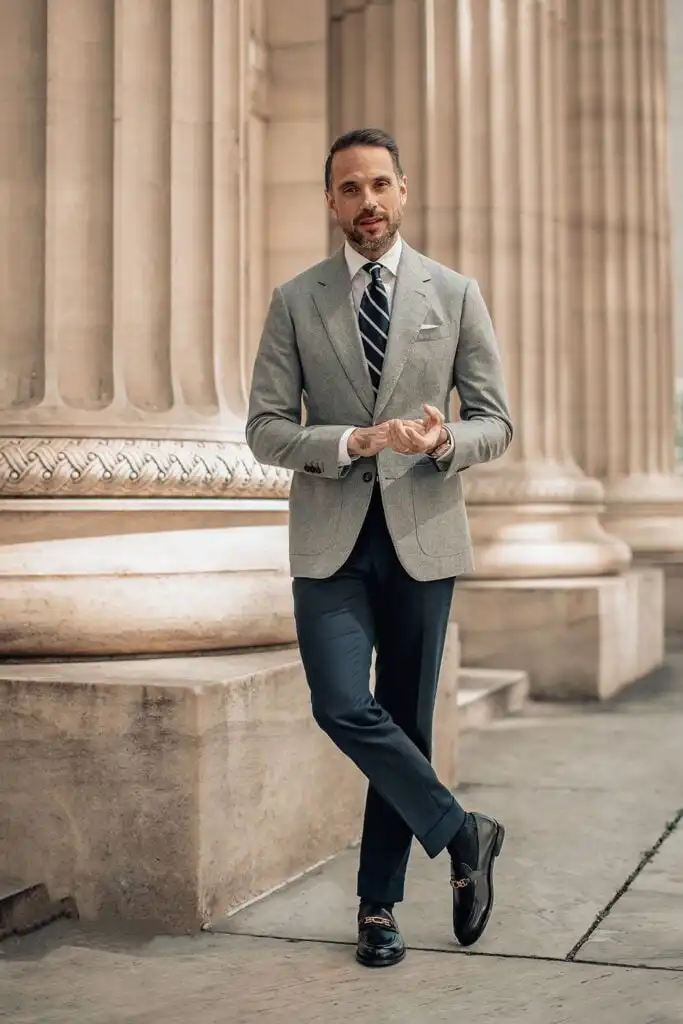
Instead of chasing trends, build a business casual wardrobe around versatile staples. These items mix easily, last longer, and work across multiple settings.
1. Shirts: Polished but Approachable
Your shirt sets the tone for the entire outfit.
Best options:
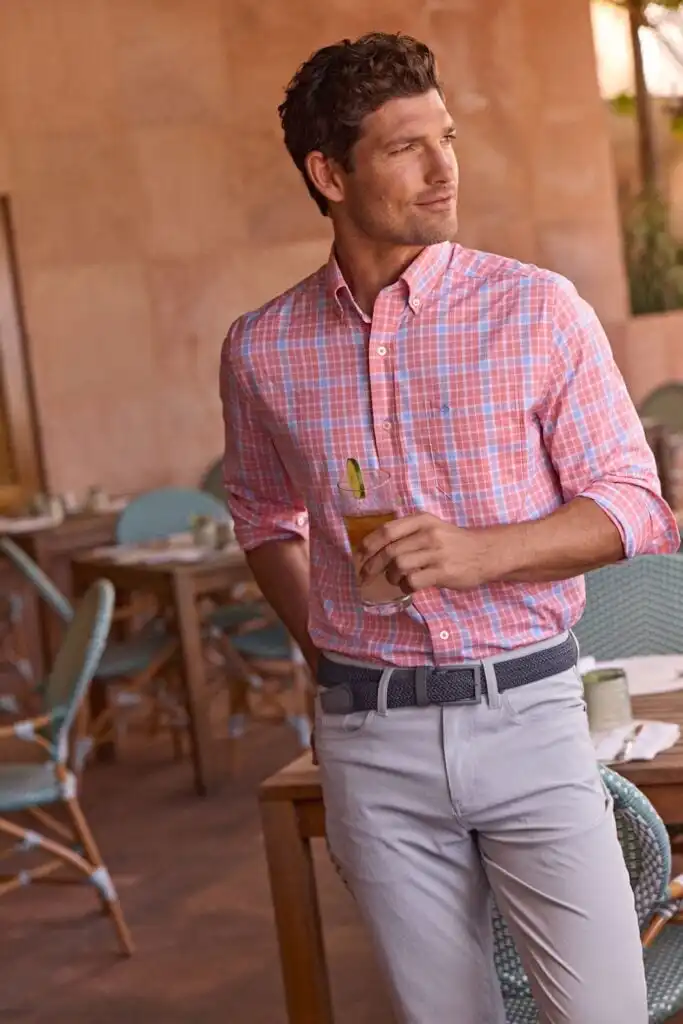
- Button-down shirts (Oxford, poplin, twill)
- Subtle patterns (checks, micro-stripes)
- Knit polos (modern alternative to dress shirts)
Colors that always work:
- White
- Light blue
- Navy
- Soft gray
- Muted earth tones
Avoid:
Loud prints, graphic logos, wrinkled fabrics, overly slim or oversized fits.
2. Pants: Structure Without Stiffness
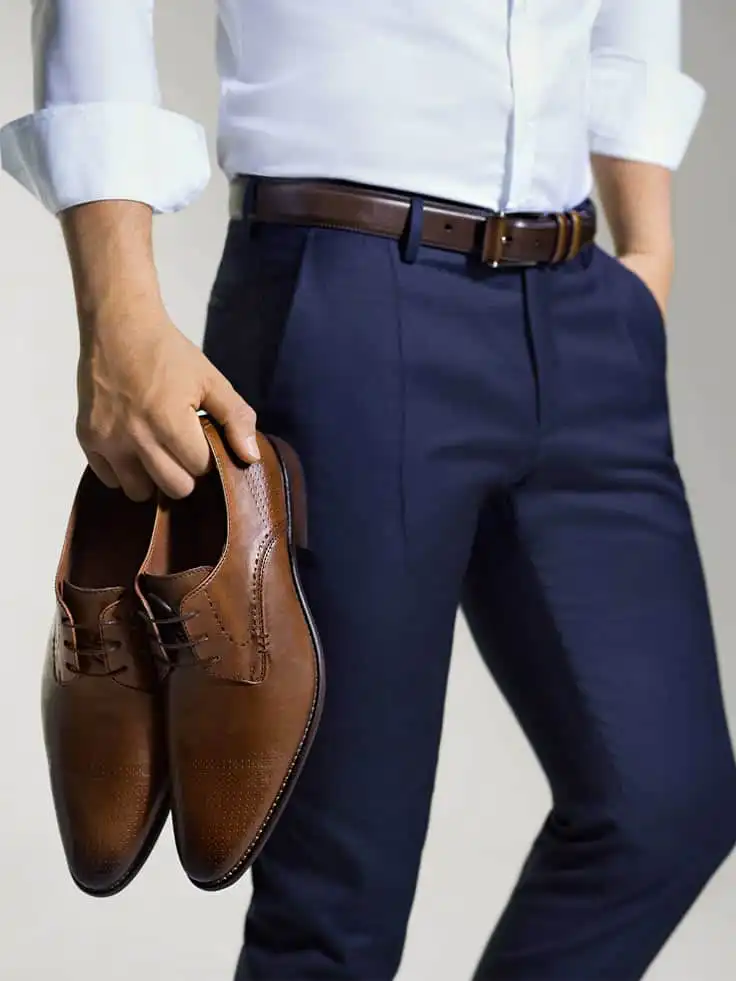
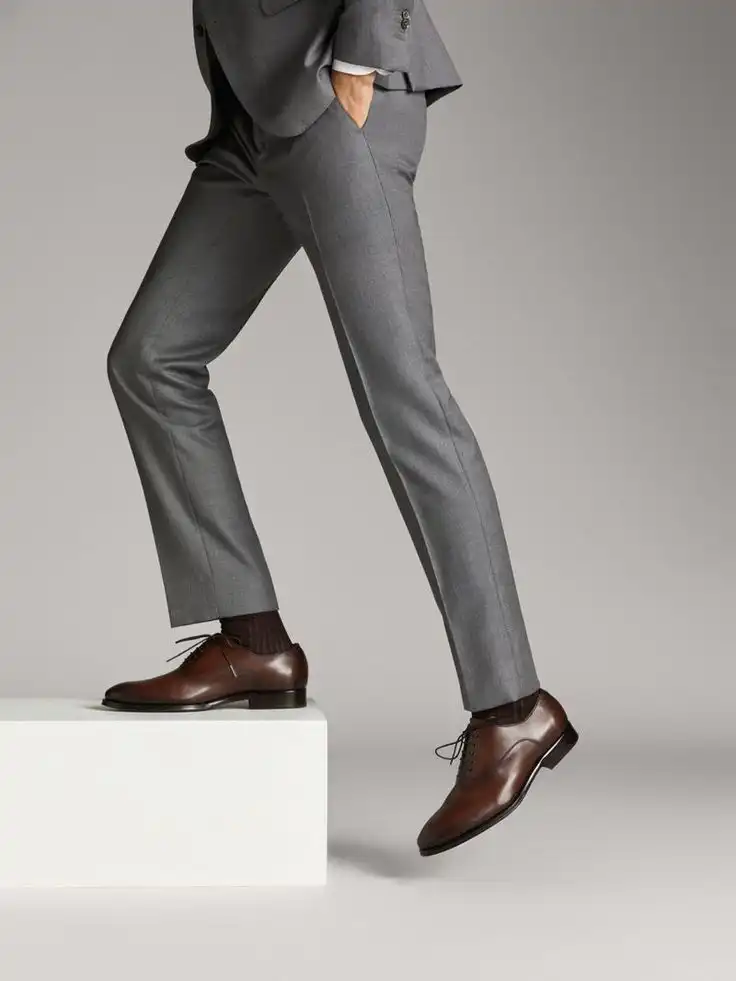
Pants anchor your look. In business casual settings, fit and fabric matter more than brand.
Go-to options:
- Chinos (slim or tailored fit)
- Dress trousers in relaxed fabrics
- Dark, tailored jeans (only if your workplace allows)
Safe colors:
- Navy
- Charcoal
- Khaki
- Olive
- Dark brown
Avoid:
Distressed denim, joggers, overly tight pants, visible wear.
3. Shoes: Where Most Men Get It Wrong

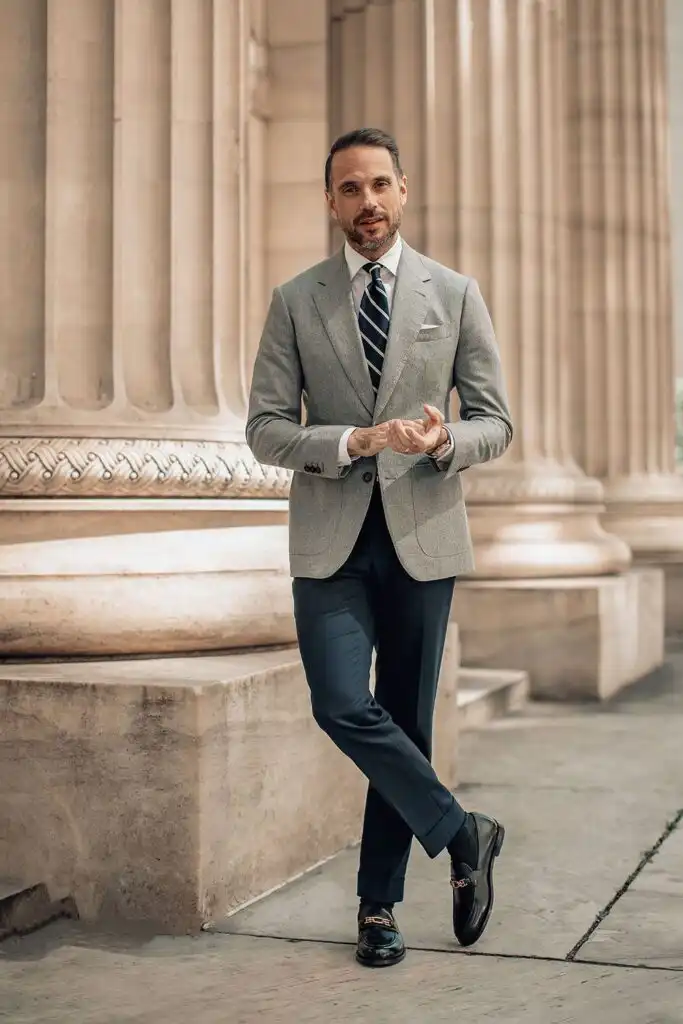
Shoes are the fastest way to upgrade—or ruin—a business casual outfit.
Best choices:
- Loafers
- Oxfords or Derbies
- Chelsea boots
- Monk straps
Material matters:
Stick to leather or suede. Clean, polished, and understated always wins.
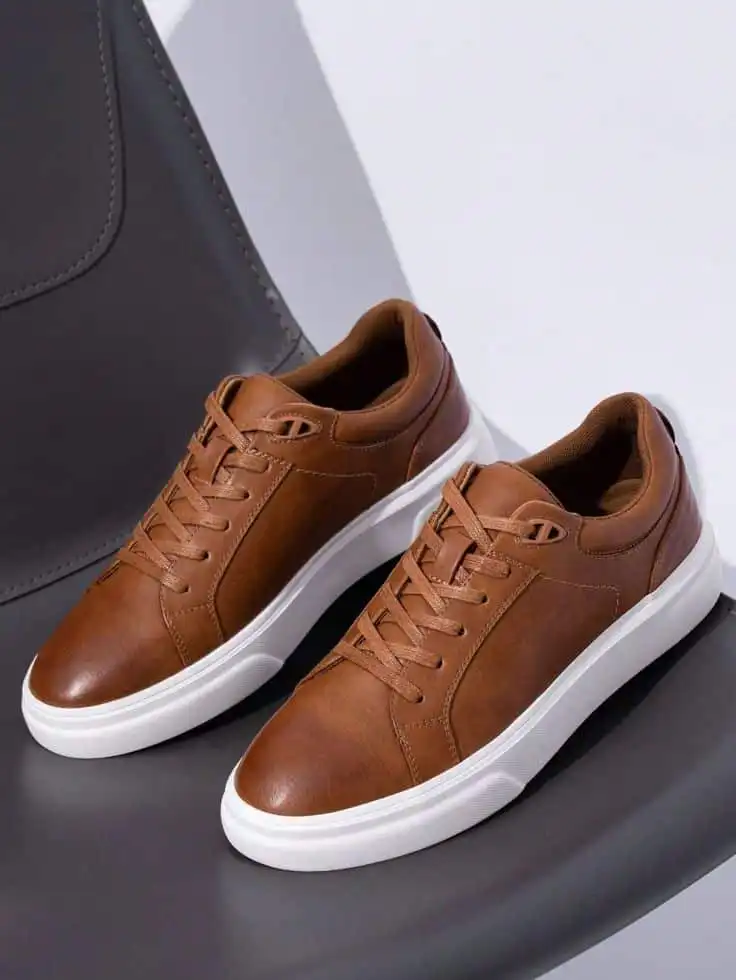
Sneakers?
Only in casual offices—and only if they’re:
- Minimal
- Neutral (white, gray, black)
- Immaculately clean
4. Layers: Blazers, Sweaters, and Jackets
Layering separates “acceptable” from “sharp.”
Top options:
- Unstructured blazers
- Lightweight sweaters
- Cardigans
- Casual sport coats
Tip:
If your outfit feels too casual, add a blazer. If it feels too formal, swap the blazer for a knit layer.
Business Casual Outfit Ideas (By Situation)
Everyday Office
- Button-down shirt
- Chinos
- Leather loafers
- Optional sweater or blazer
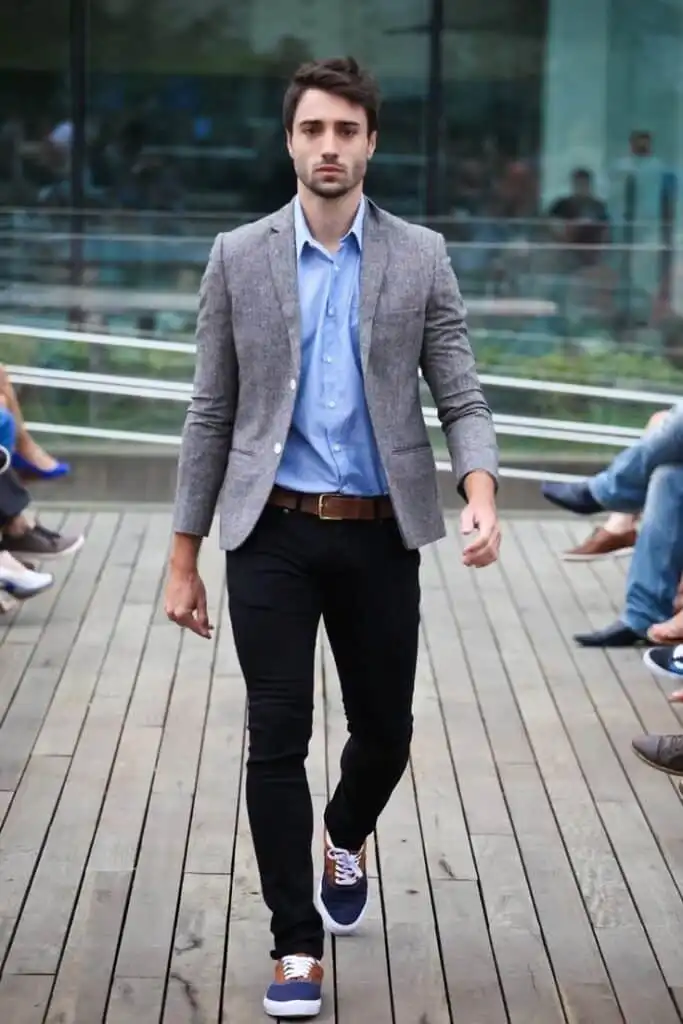
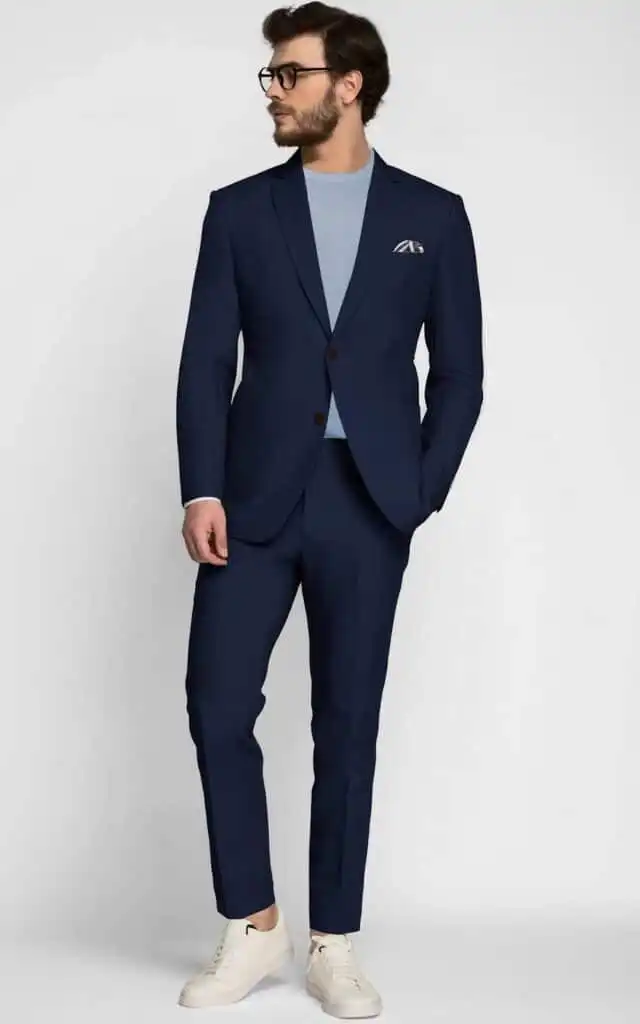
Client Meetings
- Crisp dress shirt
- Tailored trousers
- Blazer
- Dress shoes
Creative or Tech Office
- Knit polo
- Dark chinos or jeans
- Clean sneakers or suede loafers
- Lightweight jacket
Business Casual in Summer
- Breathable fabrics (linen blends, cotton)
- Short-sleeve button-downs (tailored)
- Loafers or unlined shoes
Business Casual in Winter
- Wool trousers
- Merino sweaters
- Chelsea boots
- Structured outerwear
What NOT to Wear (Common Business Casual Mistakes)
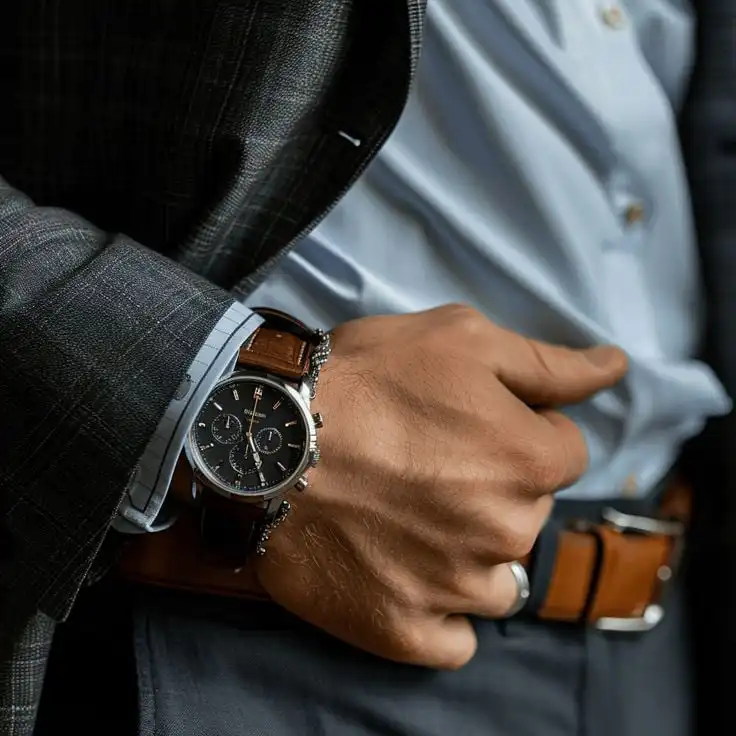
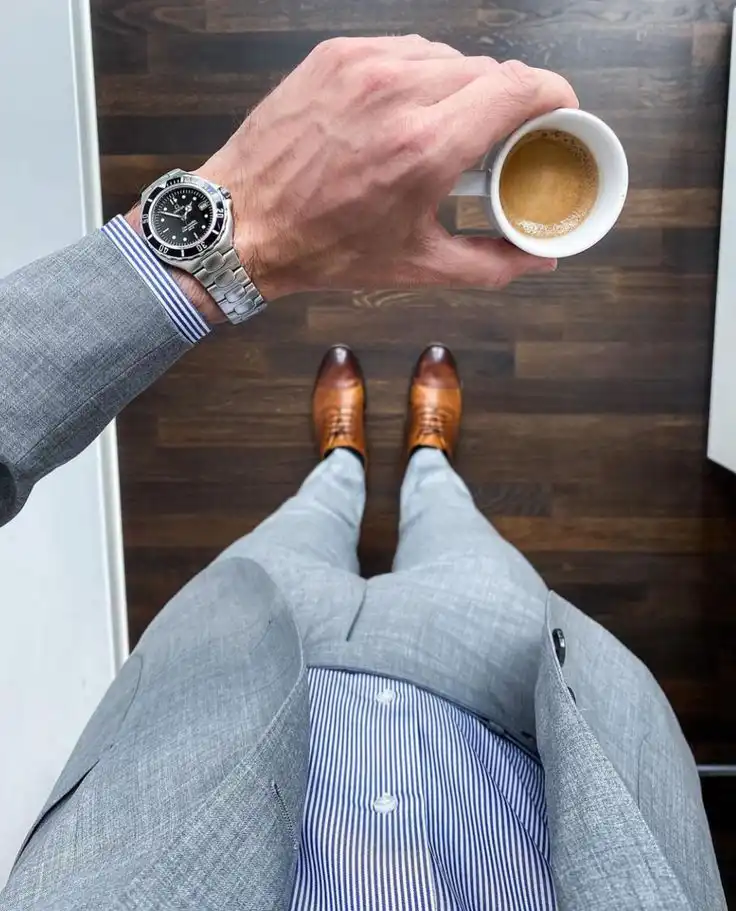
Many business casual mistakes aren’t obvious—but they’re noticeable.
Avoid these at work:
- Graphic tees or slogans
- Hoodies and sweatshirts
- Athletic shoes
- Flip-flops or sandals
- Wrinkled or faded clothing
- Overly loud colors or patterns
If you’re unsure about an item, ask:
“Would I feel confident wearing this in front of leadership or a client?”
If the answer is no, skip it.
Business Casual for Hybrid & Remote Work

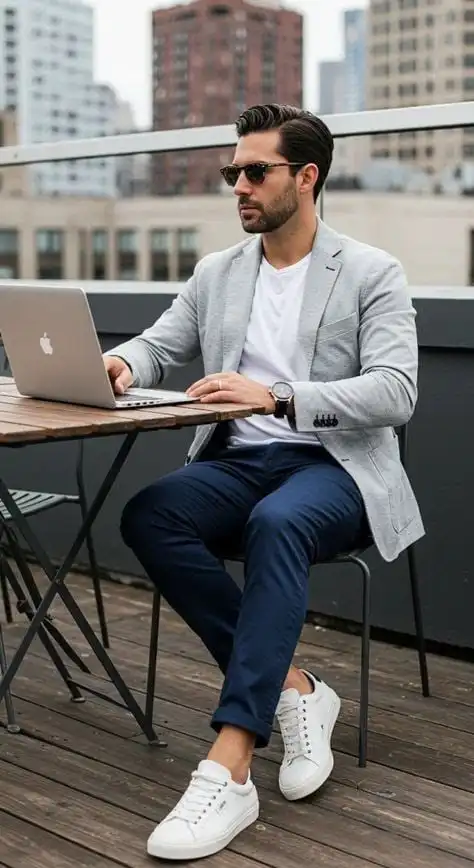
Work-from-home hasn’t eliminated business casual—it’s just changed how it’s applied.
For Video Calls
- Solid-colored shirts
- Collared tops
- Avoid busy patterns
- Structured layers (blazer, cardigan)
For Flexible Offices
- Dress for your most important meeting, not your most casual task
- Keep one “elevated” outfit ready for in-person days
Pro tip:
Consistency builds credibility. Looking sharp—even when it’s optional—still matters.
Build a Business Casual Outfit in 5 Minutes (Checklist)
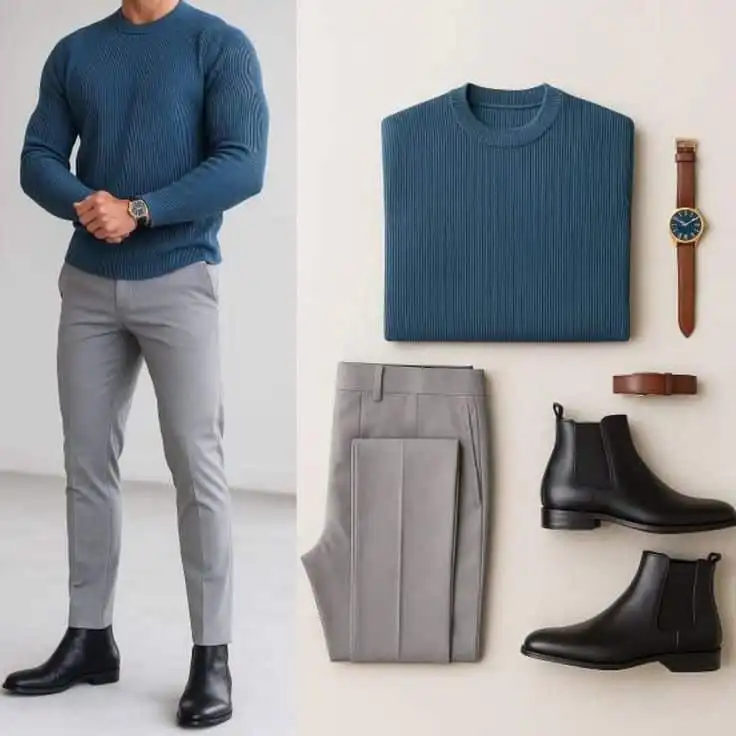
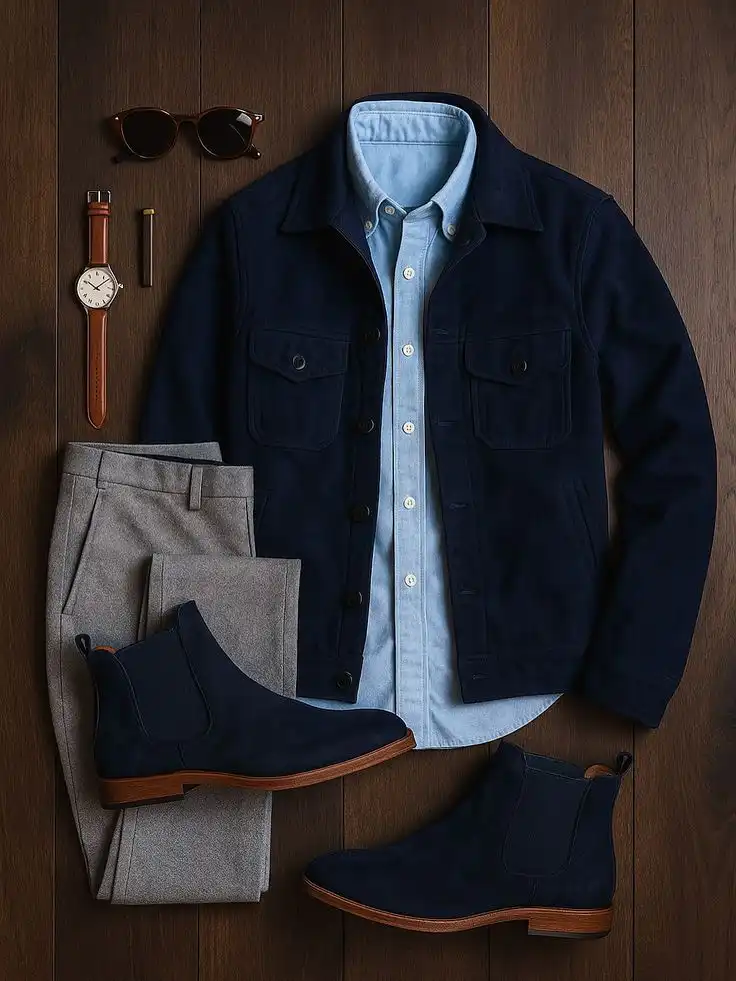
Use this quick formula when you’re short on time:
- Neutral pants (chinos or trousers)
- Clean, fitted shirt
- Leather shoes
- One structured layer
- Minimal accessories (belt, watch)
If each item is intentional, the outfit works.
FAQs: Business Casual Men’s Outfit
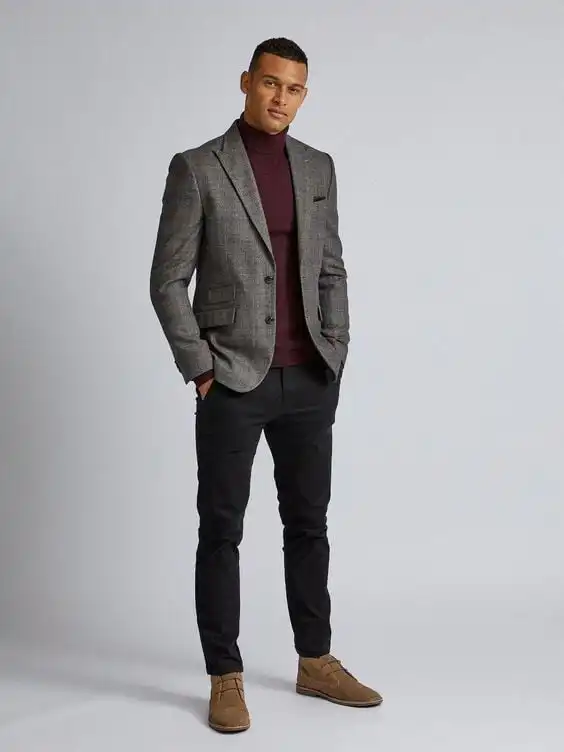
Can men wear jeans in business casual?
Yes—but only dark, tailored jeans without distressing, and only if your workplace allows it.
Are polo shirts business casual?
Modern knit polos can be business casual when paired with structured pants and proper shoes.
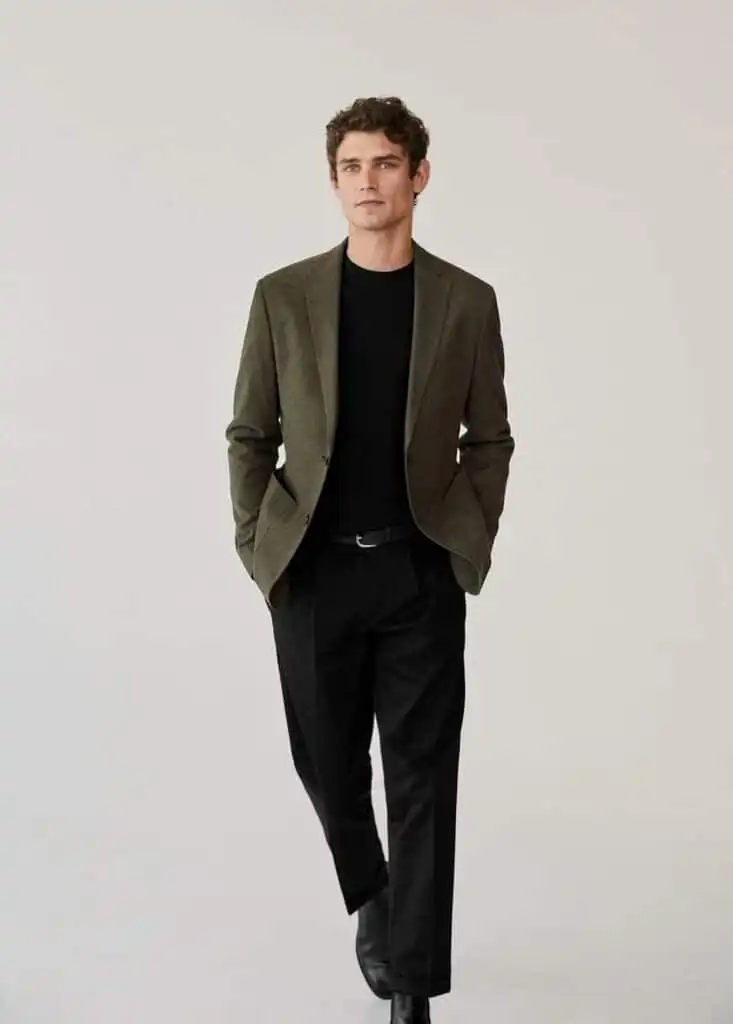
Do I need a blazer for business casual?
Not always, but it’s one of the easiest ways to elevate your look.
Are sneakers acceptable?
Only in casual or creative environments—and they must be clean and minimalist.
What’s the safest business casual outfit?
Button-down shirt, chinos, leather loafers, and a light blazer.
Final Thoughts: Business Casual Is About Intent
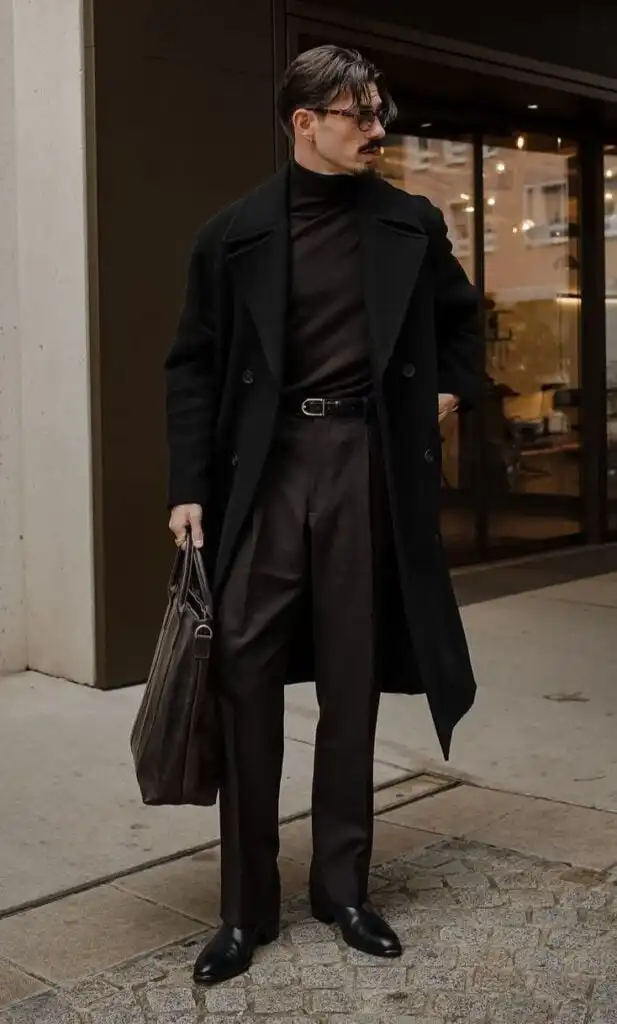
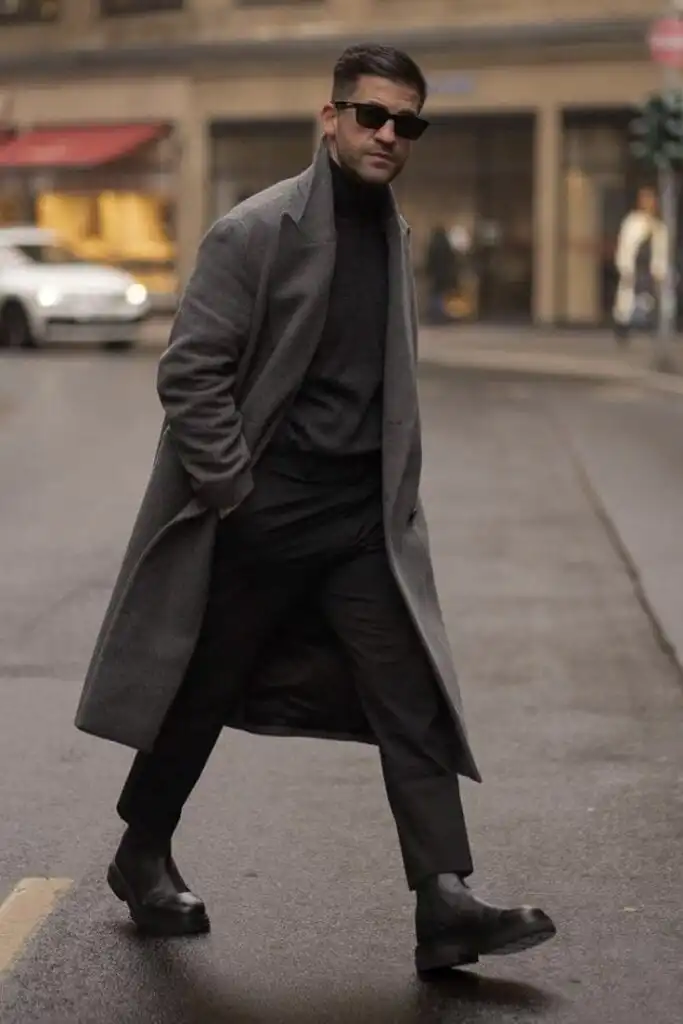
A great business casual men’s outfit isn’t about following strict rules—it’s about balance.
When your clothes fit well, feel comfortable, and align with your environment, you project confidence without trying too hard. That’s the real goal of business casual.
Build a wardrobe around quality basics, understand your workplace culture, and dress with intention. When you do, business casual stops being confusing—and starts working for you.
References
- SHRM — Business Dress Codes Explained: https://www.shrm.org/resourcesandtools/tools-and-samples/toolkits/pages/dress-code.aspx
- GQ — Business Casual Style Guide: https://www.gq.com/story/business-casual-guide-for-men
- 230shares
- Facebook0
- Pinterest230
- Twitter0
- Reddit0