
The Mercedes Vision Iconic is a show car, not a production model. Mercedes-Benz announced it on October 14, 2025, in an official press release.
This article looks at what the design shows: its proportions, materials and lighting. It does not cover range, power, price or launch timing, because none are confirmed for this car.
The vision behind the Vision Iconic
Concept cars let a brand test ideas in public before any production decision. Reading the Vision Iconic that way keeps the focus on design direction rather than on a car you might buy.
Three questions help when evaluating any concept. What does it borrow from the past? What does it propose for the future? Which parts are pure styling, and which depend on technology that is still in research?
Design philosophy: a glimpse into tomorrow
The design can be read as a deliberate look back. Many recent cars favor smooth, minimal surfaces, while the Vision Iconic leans into chrome, ornament and formal proportions.
Exterior: 1930s references, modern lighting
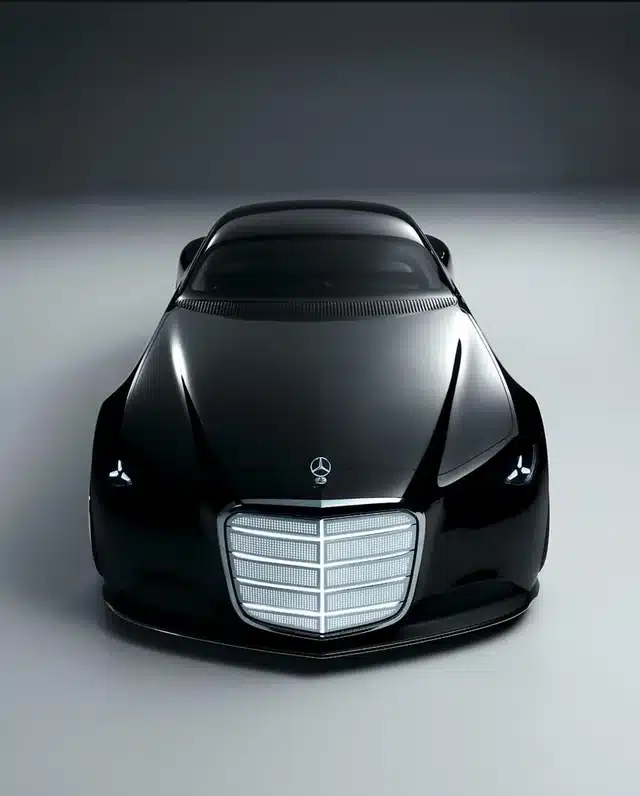
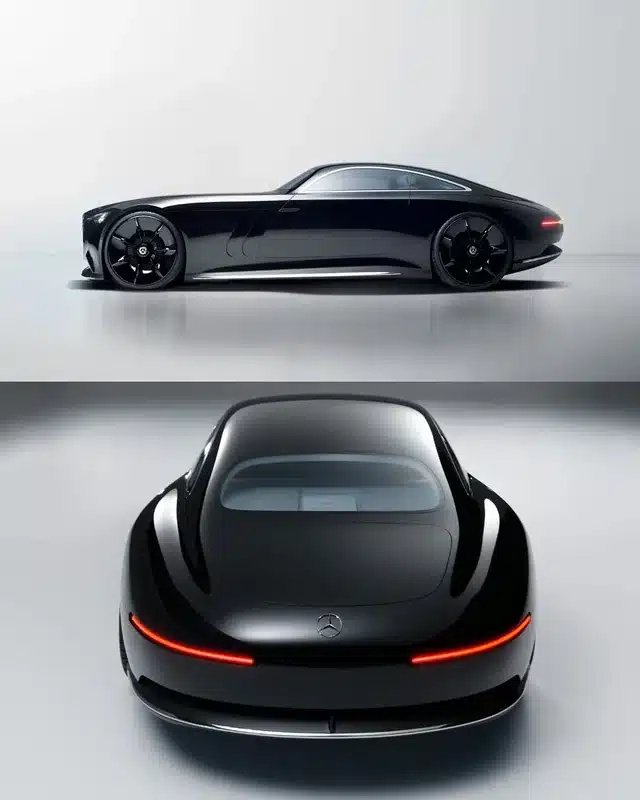
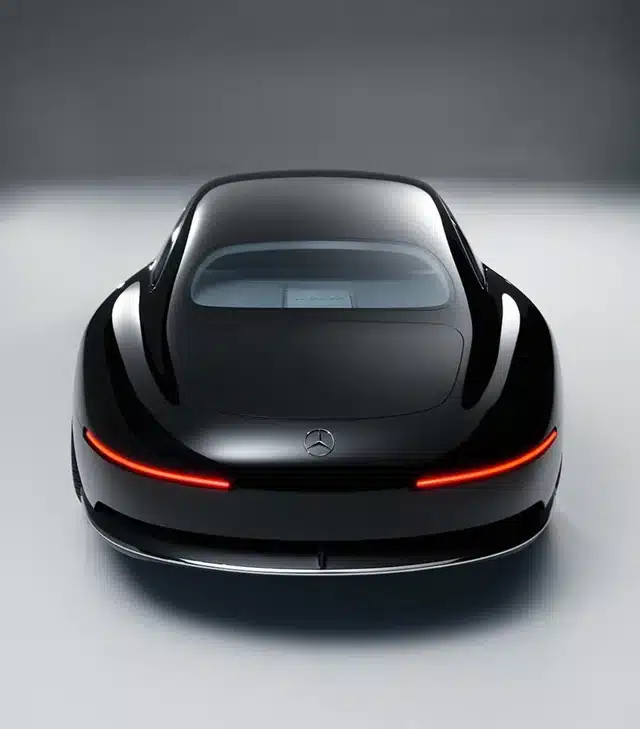
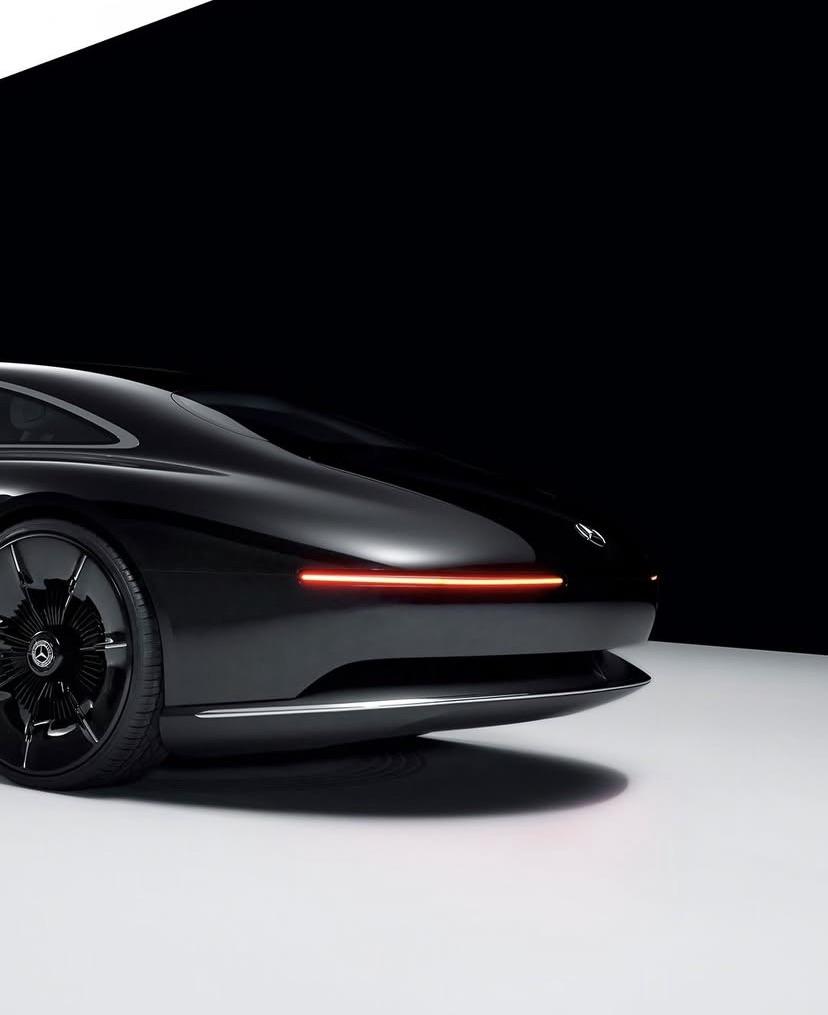
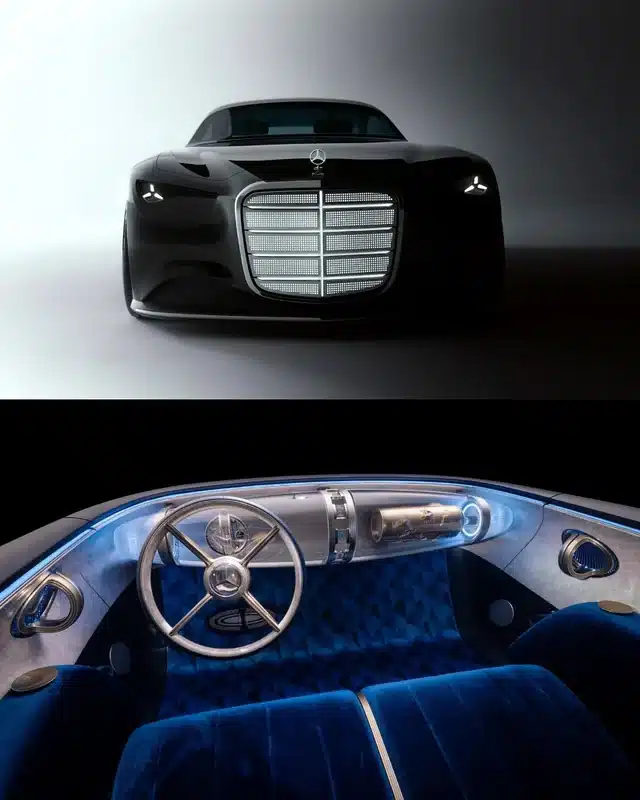
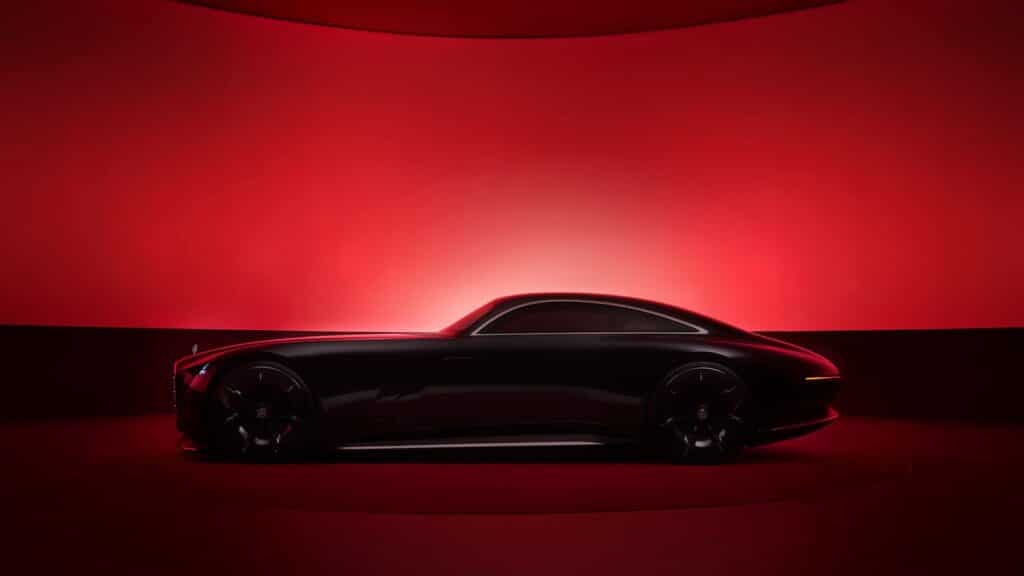
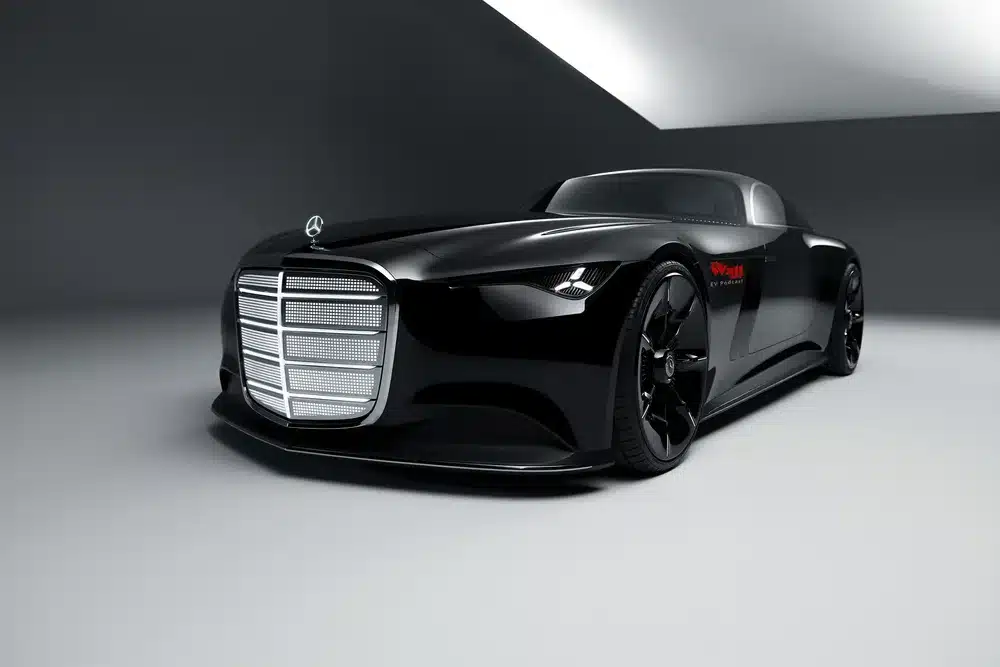
Mercedes-Benz says the exterior evokes 1930s luxury cars. Key elements include a long hood, a chrome-framed smoked-glass grille, contour lighting and an illuminated standing star.
The long hood sets the proportion. It moves visual weight forward and gives the car a stately stance, a classic way to signal luxury.
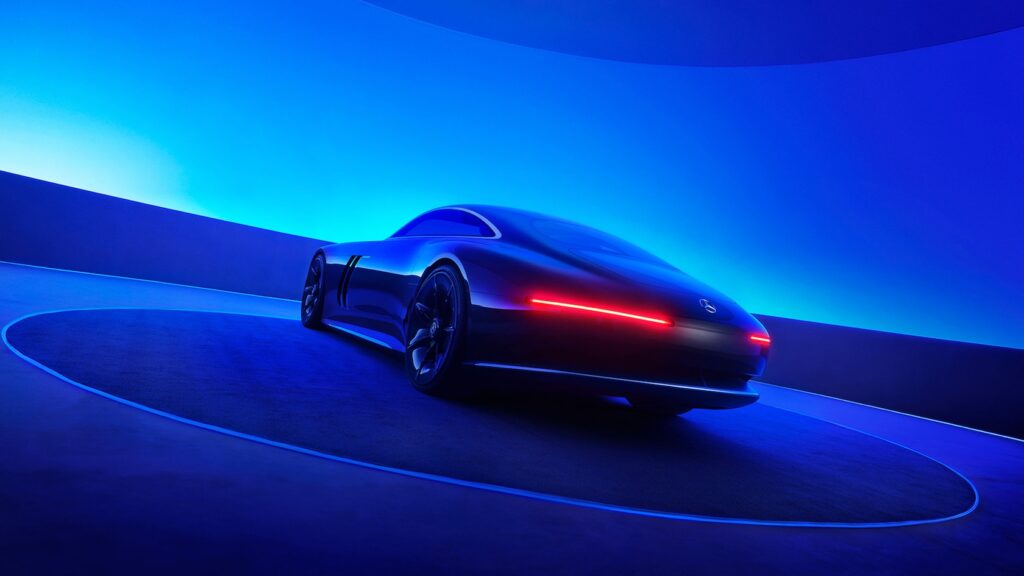
Design analysis: lighting does much of the modernizing work. The grille lighting draws attention to the car’s face, while smoked glass changes how its chrome surround reads.
A useful rule for judging lighting on any concept: it should clarify the form, not decorate it. Good contour lighting follows a car’s main lines instead of adding new ones.
Interior: Art Deco in a modern cabin
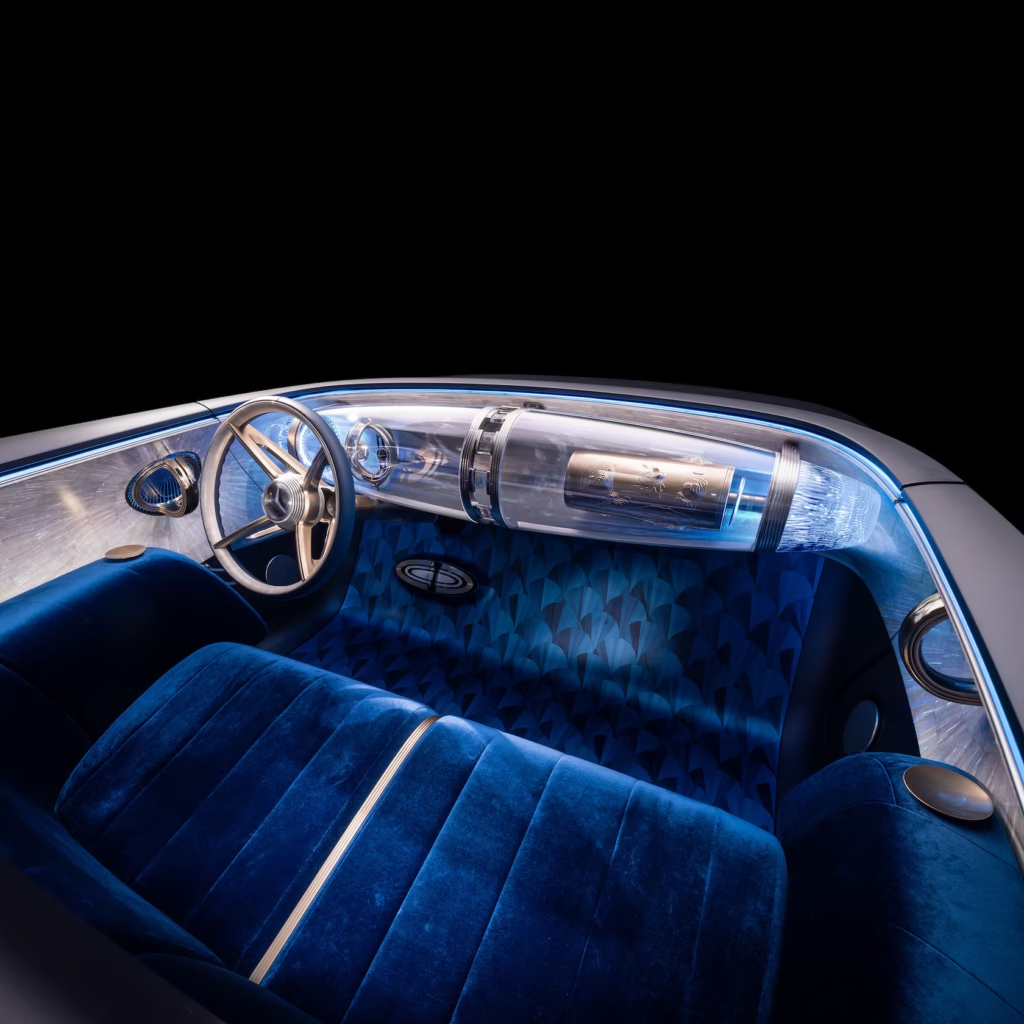
Inside, Mercedes-Benz describes an Art Deco influence. The centerpiece is a floating glass structure called the “Zeppelin,” which combines analog and digital displays.
Mixing the two is a readability choice as much as a styling one. In general interface design, analog elements give fixed reference points, while digital areas can change with context.
The listed materials are a blue velvet front bench, brass accents and straw marquetry. Together they set up a material rhythm: velvet absorbs light, brass reflects it, and marquetry adds fine pattern between them.
As a comparison outside this concept, the same layering of texture and finish is common in custom interior design.
The approach stands out against the large, uniform screen panels found in many recent cabins. Distinct materials can mark distinct zones, which makes a space easier to read at a glance.
Outside cars, simple home design ideas that are functional and stylish often rely on the same principle: clear zones and a limited palette.
Technology under the hood and beyond
Mercedes-Benz also discusses research themes alongside the car, including solar paint and neuromorphic computing. In general terms, neuromorphic computing refers to chips modeled on how the brain processes signals.
Powertrain: research themes, not specs
No production powertrain figures are given here, and none should be inferred from a show car. In general terms, solar paint means using a vehicle’s painted surfaces to collect solar energy. How far that research could go is not established.
Autonomous driving: a future direction
Level 4 automated driving is discussed as a future direction, not as a feature of this car. On the widely used SAE scale, Level 4 means a system handles all driving within defined conditions without a human fallback.
For designers, the interesting question is how automation might shift a cabin’s priorities. A front bench, for instance, reads as social and lounge-like rather than driver-focused. That is our interpretation, not a stated purpose.
Computing and interfaces: what is known
Assess the computing ideas separately from the visible interface. A concept can make a persuasive display without proving how its software will behave in daily driving.
Visually, the Zeppelin structure raises a practical question: how should information move between analog and digital elements? As a comparison outside this concept, that is the kind of problem 3D motion graphics services address when planning motion in interfaces.
Sustainability: separating research from claims
A luxurious finish alone does not establish a lower environmental impact. Assessing a production car would require evidence about sourcing, manufacturing energy, repair and end-of-life treatment. Material appearance cannot answer those questions.
Design direction vs. what remains unconfirmed
| Design direction | What remains unconfirmed |
|---|---|
| Long-hood, 1930s-inspired proportions | Whether any production model will use this shape |
| Solar paint as a research theme | Whether it will reach any production car |
| Level 4 automation as a future direction | Timing, regulation and real-world capability |
| Art Deco cabin with velvet, brass and marquetry | Which materials, if any, will appear in production cars |
| Neuromorphic computing as a research theme | How or whether it will be used in vehicles |
Rethinking the driving experience
A show car cannot tell you how a future model drives. It can show an intended mood. Here, formal proportions, warm materials and a bench seat point toward calm comfort rather than sporty aggression.
Mood in any interior comes from light, color and texture working together. As a comparison outside this concept, similar thinking appears in guides on how scent and sound affect the vibe of a room.
Impact on the automotive landscape
The concept’s wider interest lies in its contrast with current trends. It argues that luxury can still mean ornament, craft and heritage references, alongside or instead of large screens and minimal surfaces.
For other designers, the lesson is about balance. Historical references work best when one clearly modern element, here lighting and glass, keeps them from tipping into pastiche.
The road ahead: production and availability
As a show car, the Vision Iconic presents ideas rather than a product plan. Read its themes as signals of direction, not commitments.
No production or availability timeline is confirmed, so no dates should be assumed for any of its research themes.
Beyond the car: Mercedes’ broader vision
Without guessing at corporate strategy, the concept shows a clear design stance: heritage-led luxury paired with forward-looking research.
That pairing treats the brand’s history as a design resource. New technology stays in the research column, while the styling does the talking today.
Balancing craft with new technology is a challenge in many fields. As a comparison outside this concept, see 3D printing: rethinking the future of making things for one example.
Conclusion
The Mercedes Vision Iconic concept is a show car built on 1930s and Art Deco references, sharpened by modern lighting and glass. Its value for readers lies in how it balances proportion, material and readability.
Try a quick comparison. Place an image of the Vision Iconic beside a 1930s luxury car and a current electric sedan. Note where each puts visual weight, how much chrome or glass it uses, and how lighting defines its outline.
Then compare interiors the same way. Count the main materials and check whether each zone is easy to read at a glance.
Frequently asked questions
What is the Mercedes Vision Iconic?
It is a Mercedes-Benz show car announced on October 14, 2025. Its design draws on 1930s luxury cars outside and Art Deco styling inside.
Is the Vision Iconic a production car?
No. Mercedes-Benz presents it as a show car, and no production model, price or release date is confirmed.
What kind of powertrain does the Vision Iconic use?
No production powertrain specifications are confirmed. Solar paint appears only as a research theme.
What level of autonomous driving does the Vision Iconic point to?
Level 4 is discussed as a future direction. It is not a capability of a car you can buy.
What makes the interior of the Vision Iconic unique?
It pairs Art Deco styling with a floating glass “Zeppelin” display structure and materials such as velvet, brass and marquetry.
How does the Vision Iconic address sustainability?
Its research themes should be assessed separately from a production car’s environmental performance. Appearance and material richness alone do not demonstrate lower impact.
How could the Vision Iconic impact the automotive industry?
Its influence is hard to judge yet. As a design statement, it offers heritage-led ornament and craft as an alternative to screen-heavy minimalism.
- 15shares
- Facebook0
- Pinterest15
- Twitter0
- Reddit0