Last year I spent three days trying to find a track for a short documentary I was editing. The brief was specific: warm, slightly melancholic, acoustic — something that felt lived-in rather than stock. I went through four licensing libraries, bought two tracks that turned out to be wrong in the edit, and eventually paid a composer friend to produce something custom. Total time and money spent: significant. The track plays for forty seconds under a voiceover.
- Why 2026 Is the Year AI Music Becomes a Production Tool, Not a Novelty
- Vocal Song Generators: Text, Lyrics, and Complete Tracks
- 1. Text to Song AI – From Words to Finished Songs in One Step
- 2. Suno – Big, Vocal‑Driven AI Anthems
- 3. Udio – Iterative Song Craft for Producers
- 4. Soundraw – Tailored Instrumentals for Video and Ads
- 5. NanoMusic.AI – Monetizable, “Release‑Ready” Tracks at Scale
- 6. Boomy – Instant Songs for Social and Streaming
- 7. Mubert – Endless AI Music Streams
- 8. AIVA – Orchestral Scores and Classical Compositions
- 9. Beatoven – Music That Follows Your Edit
- 10. Loudly and Soundful – Creator‑Friendly Beat and Track Makers
- How to Choose the Right Tool for Your Workflow
- The Production Value of AI Music in 2026
- FAQ: AI Music Generators
I ran the same brief through Text to Song AI in late 2025. First output, ninety seconds, vocals included, acoustic warmth, exactly the mood. Not perfect — I would not have used it without some adjustment to the arrangement — but closer to what I needed in thirty seconds than anything I found in three days of searching. The gap between AI music tools twelve months ago and AI music tools now is not incremental. It is categorical.
The question in 2026 is no longer whether AI music generators work. They work. The question is which one matches your workflow, your output type, and your licensing needs — because the ten tools that matter most are genuinely different from each other in their strengths, their interfaces, and what they are built to produce.
This guide covers all ten, with the specific use case each serves best, and the framework for choosing between them based on what you actually make.
Why 2026 Is the Year AI Music Becomes a Production Tool, Not a Novelty
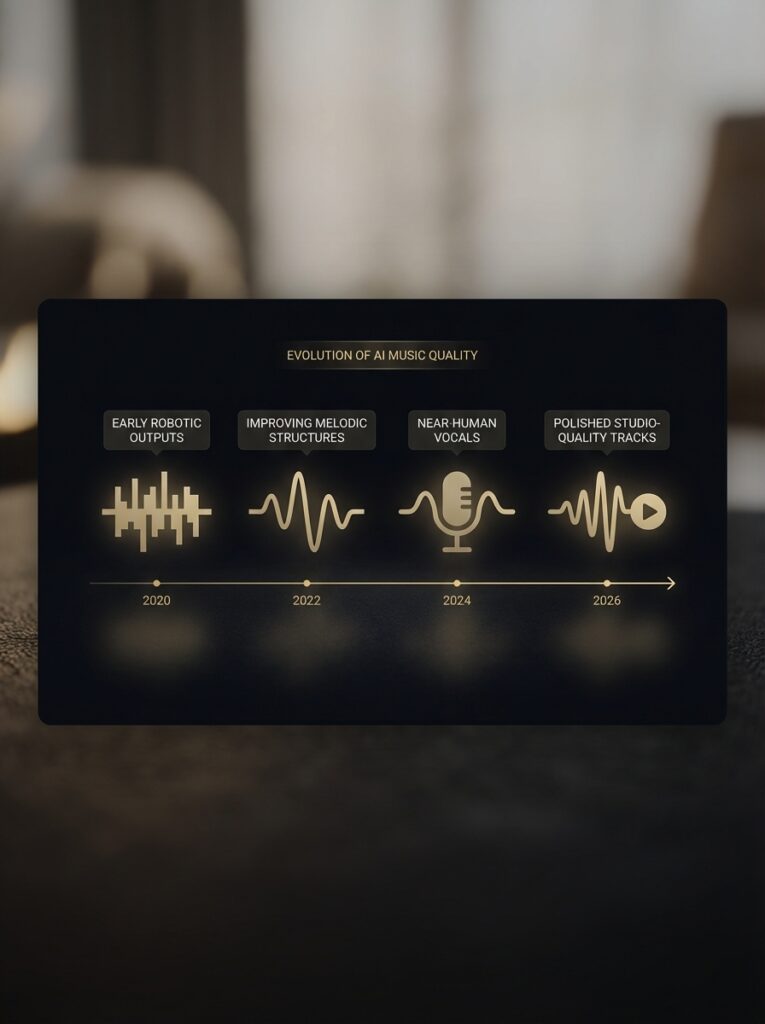
The shift happened at the model architecture level. Early AI music generators (2020-2022) treated composition and production as separate problems — one model generated a melody, another applied instrumentation, and another added effects. The seams were audible. By 2024, multimodal models trained on enormous volumes of fully produced music could generate composition, arrangement, mixing, and mastering simultaneously. The result is tracks that emerge already mixed, at streaming-standard loudness, without the post-processing work that made earlier AI music output impractical for production use.
Vocal quality followed. The uncanny valley of AI singing — the specific robotic flatness that made AI voices identifiable as synthetic — narrowed substantially through 2025. The best current models (NanoMusic.AI, Suno, Text to Song AI) produce breath, phrasing, and pitch variation that listeners routinely mistake for human performance in blind tests. This is not universal — AI vocal quality varies significantly by genre, and some styles remain more convincing than others — but the ceiling has risen enough that vocal-driven AI tracks are viable for commercial distribution.
For working creators — YouTubers, podcasters, indie developers, filmmakers, social content producers — this matters practically. The alternative to AI music is not professional music production; it is expensive licensed stock tracks, the recurring cost of music subscription services, or the time cost of sourcing music from multiple libraries. AI music generators that produce royalty-free, commercially licensable output in seconds have changed the economics of every production pipeline that needs background music.
Vocal Song Generators: Text, Lyrics, and Complete Tracks
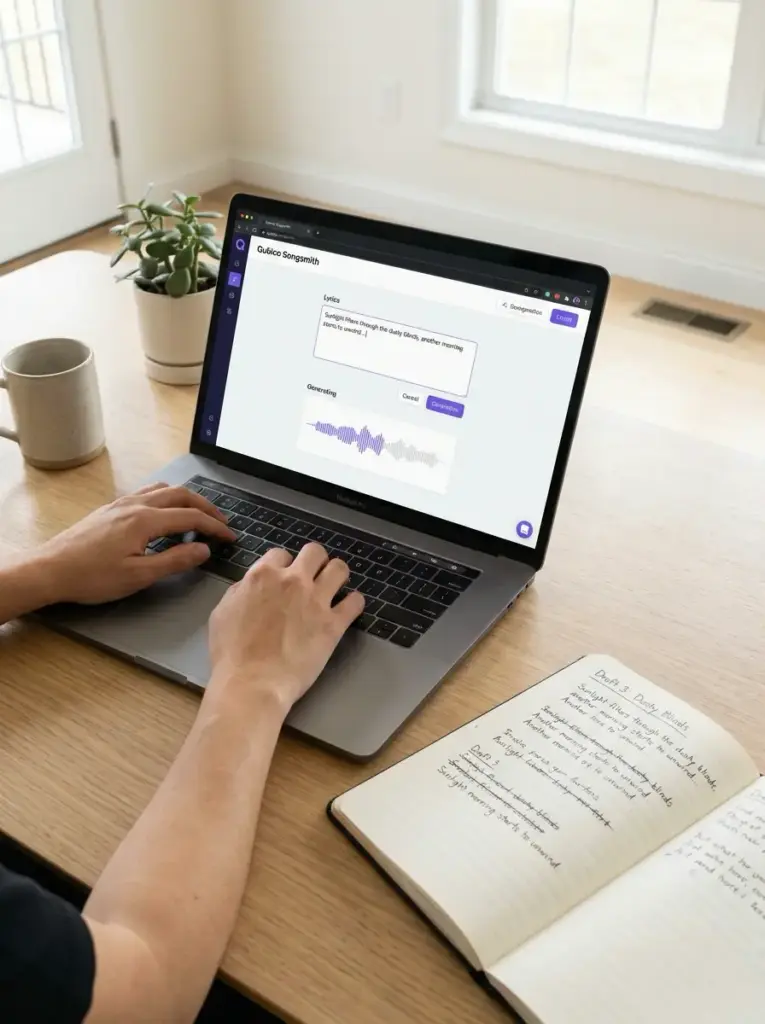
The most dramatically improved category in AI music over the past 18 months is vocal song generation — tools that take text input and return a complete, vocalled, produced track. These are not karaoke backing tracks with an AI voice layered on top. The current generation produces composition, arrangement, and vocals as an integrated output.
1. Text to Song AI – From Words to Finished Songs in One Step
Text to Song AI is built around a very straightforward promise: type what you hear in your head and get back a complete song with vocals, melody, and arrangement. You can paste full lyrics or write a short description of the track you want—genre, mood, energy—and the system handles composition, singing, and production for you.
The output doesn’t feel like a rough sketch. Tracks come out with natural‑sounding vocals, balanced mixes, and enough polish that you can drop them directly into videos, podcasts, or playlists without extra engineering work. If you want professional‑sounding songs without diving into complex tools, this is a very easy first stop.
2. Suno – Big, Vocal‑Driven AI Anthems
Suno is the platform people mention when they talk about AI songs that feel “radio‑ready.” It excels at generating full pieces with lyrics, harmonies, and instrumental backings that span everything from modern pop and rock to heavier or more experimental genres.
You describe the scenario or story you want—anything from a breakup ballad to a high‑energy club track—and Suno returns finished songs that often sound surprisingly close to major‑label releases. It’s a strong fit when you care about emotional vocals and cinematic drama.
3. Udio – Iterative Song Craft for Producers
Udio targets creators who like to shape songs over multiple passes. It can generate complete vocal tracks from text, but its strength is in how easily you can extend, revise, and re‑arrange what it gives you.
You might begin with a short chorus, then ask Udio to build verses, alternate bridges, or new endings until the structure feels right. With its clean, modern sound and flexible workflow, it’s appealing for producers who see AI as a collaborator rather than a one‑click button.
4. Soundraw – Tailored Instrumentals for Video and Ads
Soundraw is built squarely for video editors, marketers, and brands that need a steady stream of adaptable background music. Instead of focusing on vocals, it focuses on customizable instrumentals you can match to scenes, durations, and pacing.
You choose genre, mood, and length, then tweak structure inside the interface so your track actually fits the cuts and emotional beats of your edit. For intros, product demos, explainers, and social ads, it’s a much more flexible solution than looping the same stock track again and again.
5. NanoMusic.AI – Monetizable, “Release‑Ready” Tracks at Scale
NanoMusic.AI positions itself as an end‑to‑end production engine: you type an idea, paste lyrics, or pick a mood, and it writes, sings, and produces a track that’s ready to monetize. Unlike tools that mainly generate loops or bare instrumentals, NanoMusic focuses on complete songs with verses, choruses, bridges, harmonies, and polished vocals baked in.
Its engine is tuned for human‑like singing: it emphasizes breath, phrasing, and emotion so that listeners often can’t tell the voice is synthetic. Under the hood it supports 40‑plus genres, from trap and K‑pop to jazz and bossa nova, and each style aims to capture the real production signatures and groove of that genre rather than just applying a generic “filter.” Tracks are delivered at streaming‑standard loudness, and paid users get full commercial rights plus stem exports for vocals, drums, bass, and more—making NanoMusic particularly attractive if you want to release AI‑generated songs on platforms or license them for campaigns.
6. Boomy – Instant Songs for Social and Streaming
Boomy is designed for speed and accessibility. You pick a style, click generate, and within seconds you have a full track you can adjust, title, and even distribute to streaming platforms.
It’s aimed more at experimentation and fun than hyper‑detailed sound design, but that’s exactly what many users want. If you like the idea of turning quick ideas into shareable songs, or you just need fresh background tracks for streams and short‑form content, Boomy makes that process almost effortless.
7. Mubert – Endless AI Music Streams
Mubert takes a slightly different approach from traditional “one song at a time” generators. It’s built to deliver continuous AI‑generated audio streams you can tailor to different use cases: focus playlists, workout sessions, gaming, or live broadcasts.
You configure genre and intensity, then let the system produce an endless flow of algorithmic music that fits that profile. For app developers, co‑working spaces, or long‑form streamers who need non‑stop, rights‑safe background music, this can be more practical than generating thousands of individual tracks.
8. AIVA – Orchestral Scores and Classical Compositions
AIVA is one of the more established names in AI composition, with a focus on orchestral and cinematic music rather than mainstream pop.
You can guide structure, instrumentation, and emotional arc, and AIVA returns full pieces with strings, brass, and other traditional elements that work well for film, games, and trailers. It’s not the go‑to for lyric‑driven songs, but if you need sweeping scores or refined classical‑style works, it fills that niche extremely well.
9. Beatoven – Music That Follows Your Edit
Beatoven AI is built around the idea that the music should follow your story. You upload a video, mark emotional segments or transitions, and the platform generates tracks that match those shifts in tone and intensity.
Instead of cutting stock music to fit your timeline, you get cues that were composed for your specific pacing. For documentary makers, YouTubers, and agencies working on narrative content, this can save a lot of time while improving how tightly music and visuals line up.
10. Loudly and Soundful – Creator‑Friendly Beat and Track Makers
Loudly and Soundful round out the list as creator‑focused platforms that give you more hands‑on control over the arrangement.
Loudly lets you explore different genres, stems, and loops to assemble tracks that still feel personal while using AI to guide composition and sound design. Soundful, meanwhile, leans into royalty‑free music for content creators, giving you clear licensing and a simple way to generate tracks that won’t trigger copyright problems on major platforms.
How to Choose the Right Tool for Your Workflow
[Image prompt: A decision-tree style infographic for AI music tool selection — starting from ‘What do I need?’ branching to: Vocal song (Text to Song AI, Suno), Iterative production (Udio), Orchestral score (AIVA), Video-synced music (Beatoven), Continuous stream (Mubert), Royalty-free background (Soundraw, Soundful), Commercial release (NanoMusic). Clean minimal infographic design on light background. [Qubico/z-image, architectural photography style]]
The ten tools above are not interchangeable. Each has a specific production context where it outperforms the alternatives — and knowing which context matches your workflow saves the time of testing all ten.
Choose by Output Type
- Complete vocal songs from text or lyrics: Text to Song AI (fastest path to polished output), Suno (maximum emotional impact), Udio (most creative control over structure)
- Instrumental background music: Soundraw (video-specific adaptation), Mubert (continuous streams), Loudly/Soundful (royalty-free creator licensing)
- Cinematic and orchestral scores: AIVA — the only tool in this list with a specifically classical and film-score focus
- Video-synced cues that follow scene transitions: Beatoven — purpose-built for this specific use case
- Commercially releasable tracks with stem exports: NanoMusic.AI — the most complete commercial release pipeline in the comparison
Choose by Licensing Need
- Personal and non-commercial use: Free tiers on most tools are sufficient — Boomy and Mubert are the most accessible free options
- YouTube and social content: Soundful and Loudly provide the clearest royalty-free licensing for platform-specific use
- Commercial distribution and streaming release: NanoMusic.AI, Boomy (paid), and Suno/Udio paid tiers explicitly grant commercial rights — always confirm the specific plan
✏ Creator note: Test any AI music tool with a specific brief before committing to a paid plan. Describe the exact track you need — genre, mood, energy, approximate length, vocal or instrumental — and generate three to five outputs. If none of them require significant revision to be usable in your actual production context, the tool works for your workflow. If all of them require substantial work, a different tool may be a better match regardless of reputation or feature list.
The Production Value of AI Music in 2026
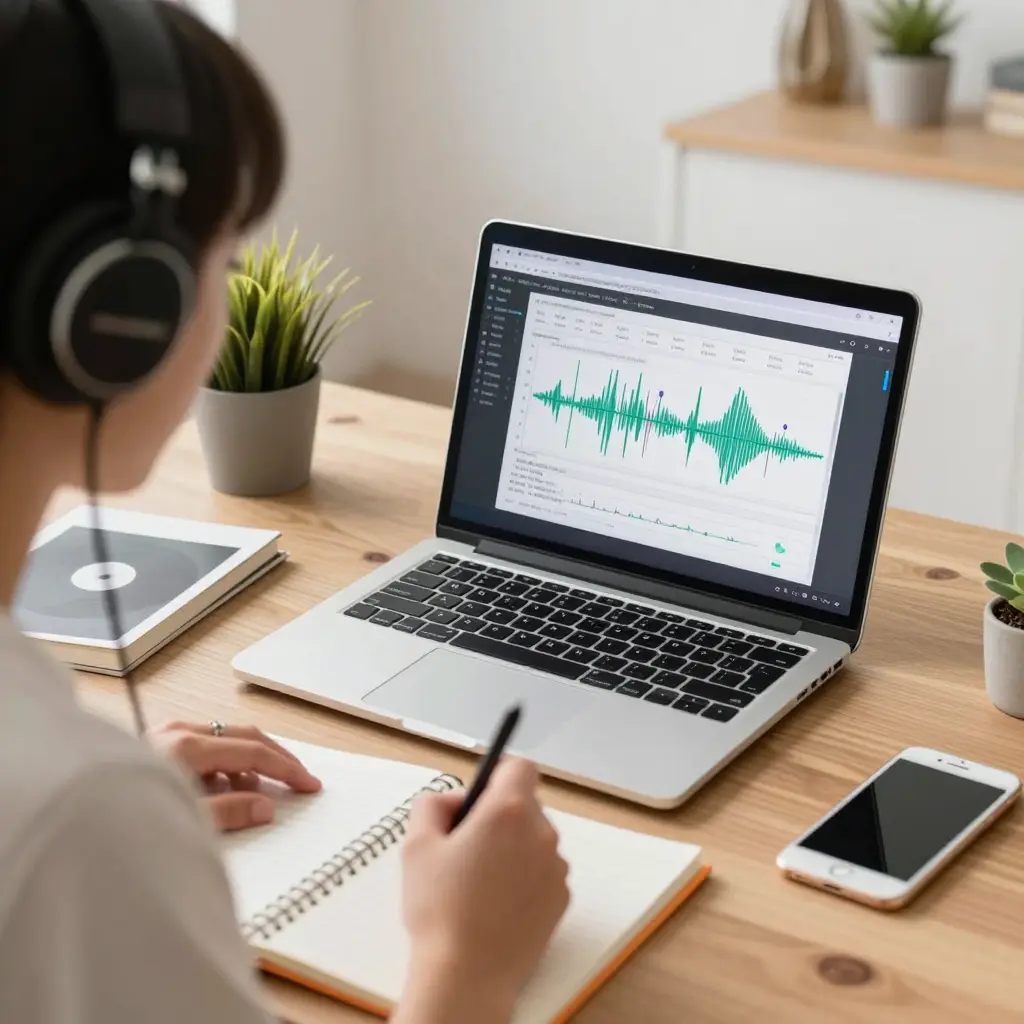
The three days and the wrong licensed tracks were the last time I searched music libraries the hard way. That is not because AI music is always better — it is because the ratio of time to usable output has shifted enough that AI is now the correct first step in any music search, not the last resort.
The tools above collectively cover every production use case that working creators face in 2026. Text to Song AI and Suno handle the vocal song use case that was previously inaccessible without a composer or a singer. AIVA and Beatoven handle the cinematic and video-sync use cases that previously required expensive custom composition. Mubert and Soundraw handle the background and stream use cases that previously meant managing stock music licenses across multiple platforms.
What the best AI music generators in 2026 share is that they are no longer asking you to accept robotic output as a compromise. The compromise has narrowed to the point where for most production contexts — social content, documentary background, podcast intro, game score — the best AI output is not a compromise at all. It is the track you would have wanted if you had the budget to commission it.
FAQ: AI Music Generators
Q: What is the best AI music generator in 2026?
Use-case dependent: for vocal songs from text, Text to Song AI (fastest path to polished output) and Suno (maximum emotional impact). For orchestral scores: AIVA. For video-synced music: Beatoven. For commercial release with stem exports: NanoMusic.AI. For continuous background streams: Mubert.
Q: Can AI-generated music be monetized?
Yes, on paid plans from most tools. NanoMusic.AI and Boomy explicitly grant commercial rights for paid users with streaming distribution. Suno and Udio grant commercial rights on paid tiers. Free tiers almost always restrict commercial use — confirm the specific plan before building a distribution workflow around any tool.
Q: How does Text to Song AI work?
Paste full lyrics or describe the track — genre, mood, energy. The model handles composition, arrangement, and vocals simultaneously, returning a complete mixed track at streaming-standard quality in a single pass. No separate instrumental generation and vocal layering — it comes out as one integrated finished track.
Q: What AI music tool is best for video creators?
For video-synced music that follows scene transitions: Beatoven — upload your video, mark emotional moments, receive cues composed for those specific points. For royalty-free instrumentals to trim to an edit: Soundraw. For Content ID-safe YouTube publishing: Soundful and Loudly.
Q: Is AI-generated music legal?
Legal to use under each platform’s licensing terms. The unresolved question is at the platform level — whether training on copyrighted music constitutes infringement — not the user level. Practically: use platforms that grant explicit commercial or royalty-free licenses, and never assume all AI output is freely usable without checking the specific plan terms.
- 2shares
- Facebook0
- Pinterest2
- Twitter0
- Reddit0