Artist marketing is not about shouting louder or posting everywhere. It is about making your work easy to understand, easy to trust, and easy to buy. If your portfolio, social media, email list, pricing, and art show materials all point buyers toward one clear next step, promotion starts to feel less random.
This guide focuses on practical artist marketing for painters, illustrators, designers, and visual creators who want more sales without turning every post into a sales pitch. The goal is simple: help the right people recognize your work, remember it, and know what to do when they want to buy.
How to market your art without feeling pushy
To market your art without feeling pushy, build a repeatable system: define the kind of work you sell, show it in a consistent visual style, send people to one portfolio or shop page, collect emails from interested buyers, and talk about your process between sales posts. Promotion works best when it feels like a useful trail, not a sudden demand.

| Marketing piece | What it should do | Simple check |
|---|---|---|
| Portfolio | Show your strongest work and buying path | Can a stranger understand what you sell in 30 seconds? |
| Social media | Build recognition and send viewers somewhere useful | Do posts repeat your style, process, and offer? |
| Email list | Keep warm buyers close | Can people join before they are ready to buy? |
| Pricing | Reduce hesitation | Are sizes, editions, commissions, and shipping clear? |
| Events | Create trust through real contact | Do booth materials lead people back to your website? |
Build a clear artist brand before you promote
Before you spend time on ads, collaborations, or daily posting, define what people should remember. Your artist brand is not only a logo. It is the subject matter, mood, color range, materials, story, and buying experience around the work. If your paintings are quiet botanical studies, your marketing should not sound like a tech launch.
Start with your art style, then tighten the visual system around it: profile image, portfolio layout, product photos, captions, and packaging. A simple brand identity can help, but only if it supports the artwork instead of competing with it.
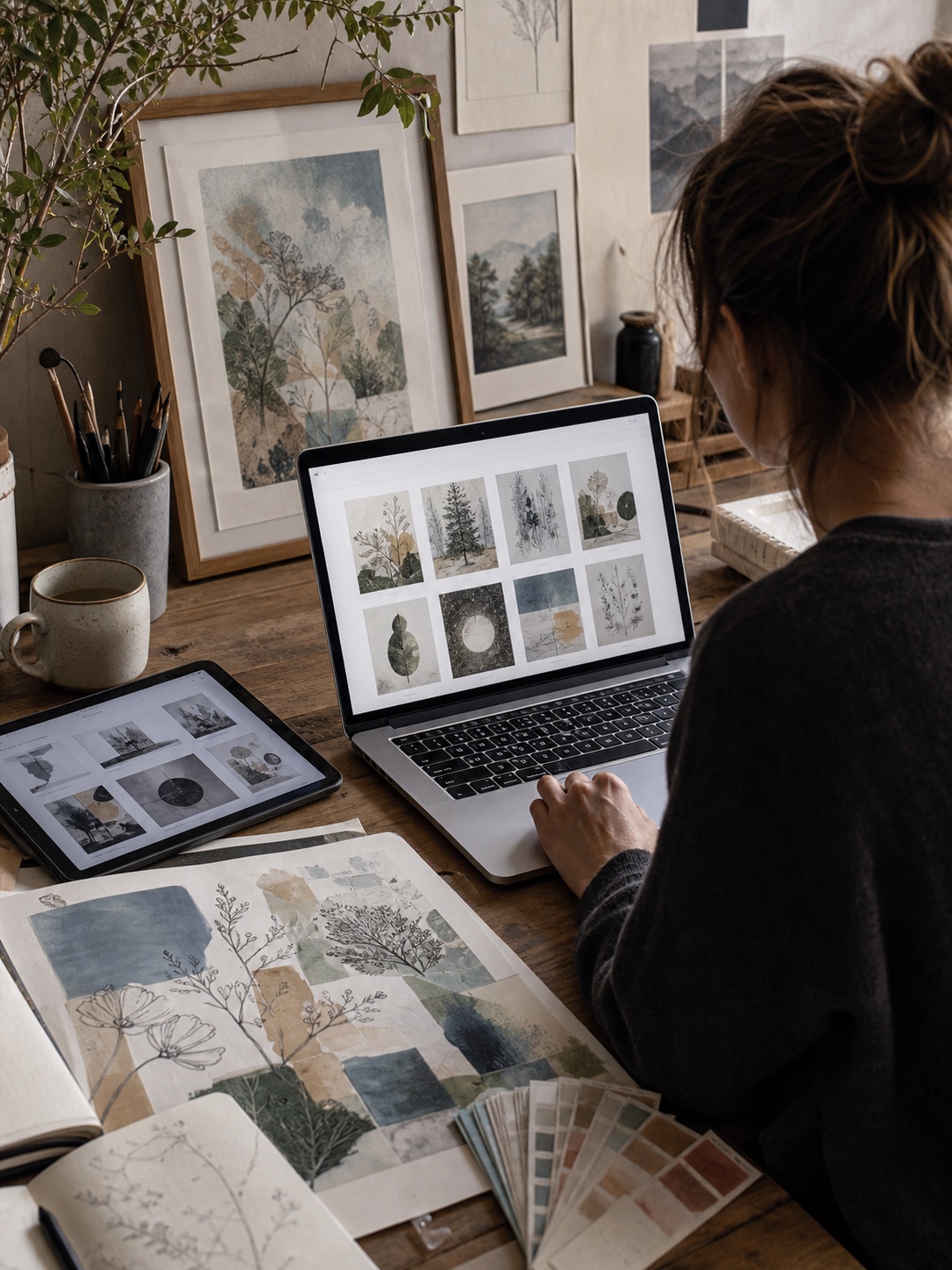
Make your portfolio the center of the sales path
Social platforms are useful, but your portfolio or shop should be the stable place where buyers land. Keep it focused: strongest pieces first, clean photos, dimensions, materials, price or inquiry steps, commission notes, and a short artist statement. The best art portfolio websites make the work feel considered before the visitor reads a single paragraph.
If you sell originals, prints, or commissions, remove uncertainty. Say whether a piece is available, how shipping works, whether frames are included, and how a buyer should contact you. A collector who has to guess will usually leave.
Use social media marketing for artists with a repeatable rhythm
Social media marketing for artists works when the audience sees enough repetition to recognize your work. Rotate between finished artwork, process shots, detail crops, studio notes, framing or packaging, collector questions, and soft sales reminders. Tools and templates can help you plan posts, especially if you use Instagram post templates or collect visual ideas on Pinterest aesthetic boards.
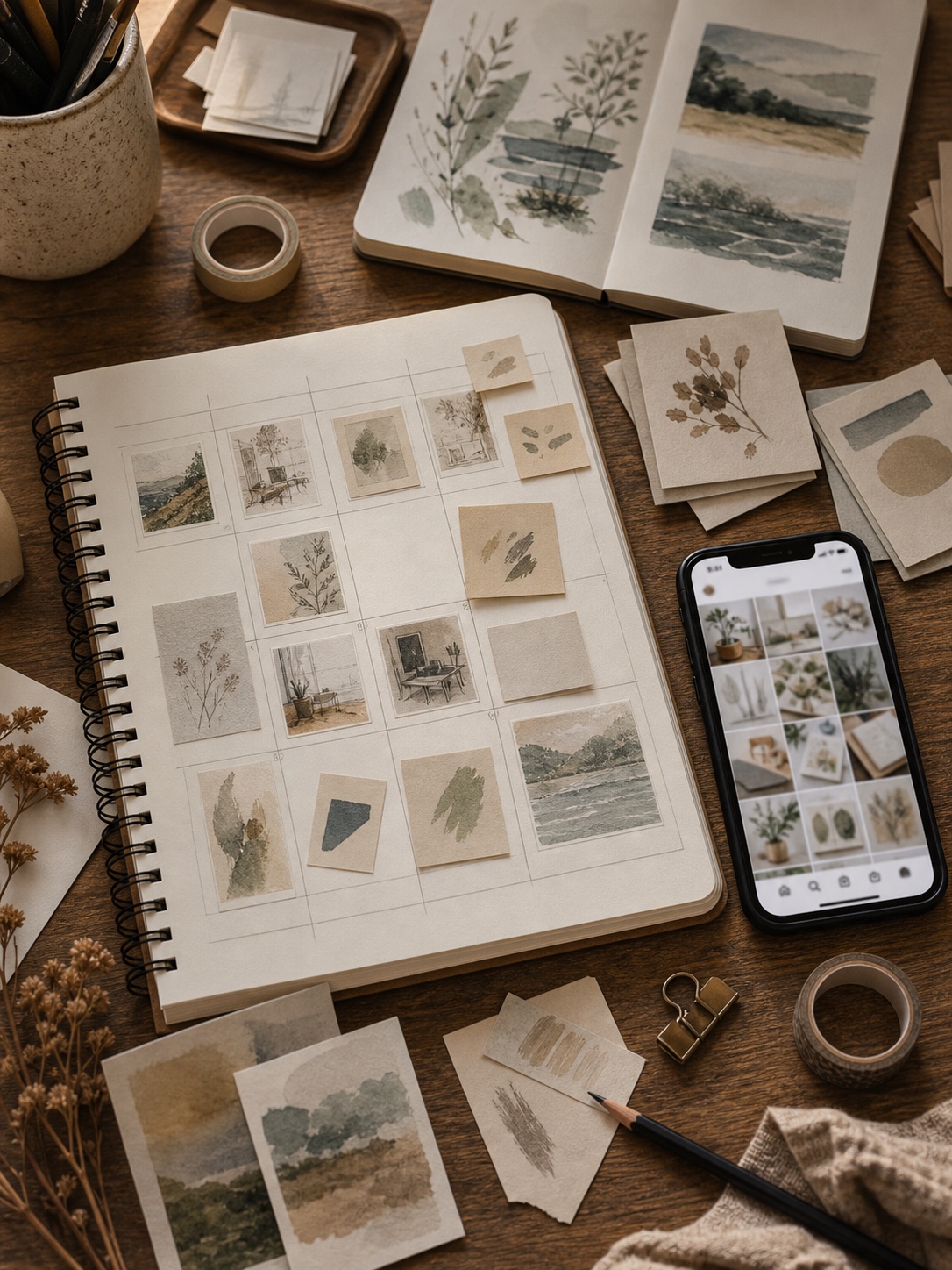
Keep the captions concrete. Instead of saying a piece is meaningful, explain the paper, scale, pigment, reference, mistake you corrected, or framing decision. Specific details build trust faster than polished hype.
Use email marketing to reach serious buyers
Email marketing gives artists a quieter channel for people who already care. Invite visitors to join for studio updates, new originals, print drops, commissions, or show announcements. A short monthly note is enough if it includes useful context and one clear link back to the work.
For the mechanics, this email marketing guide is a useful outside reference, and the SBA marketing and sales guide is a good reminder that marketing should connect to a real sales process, not only visibility.
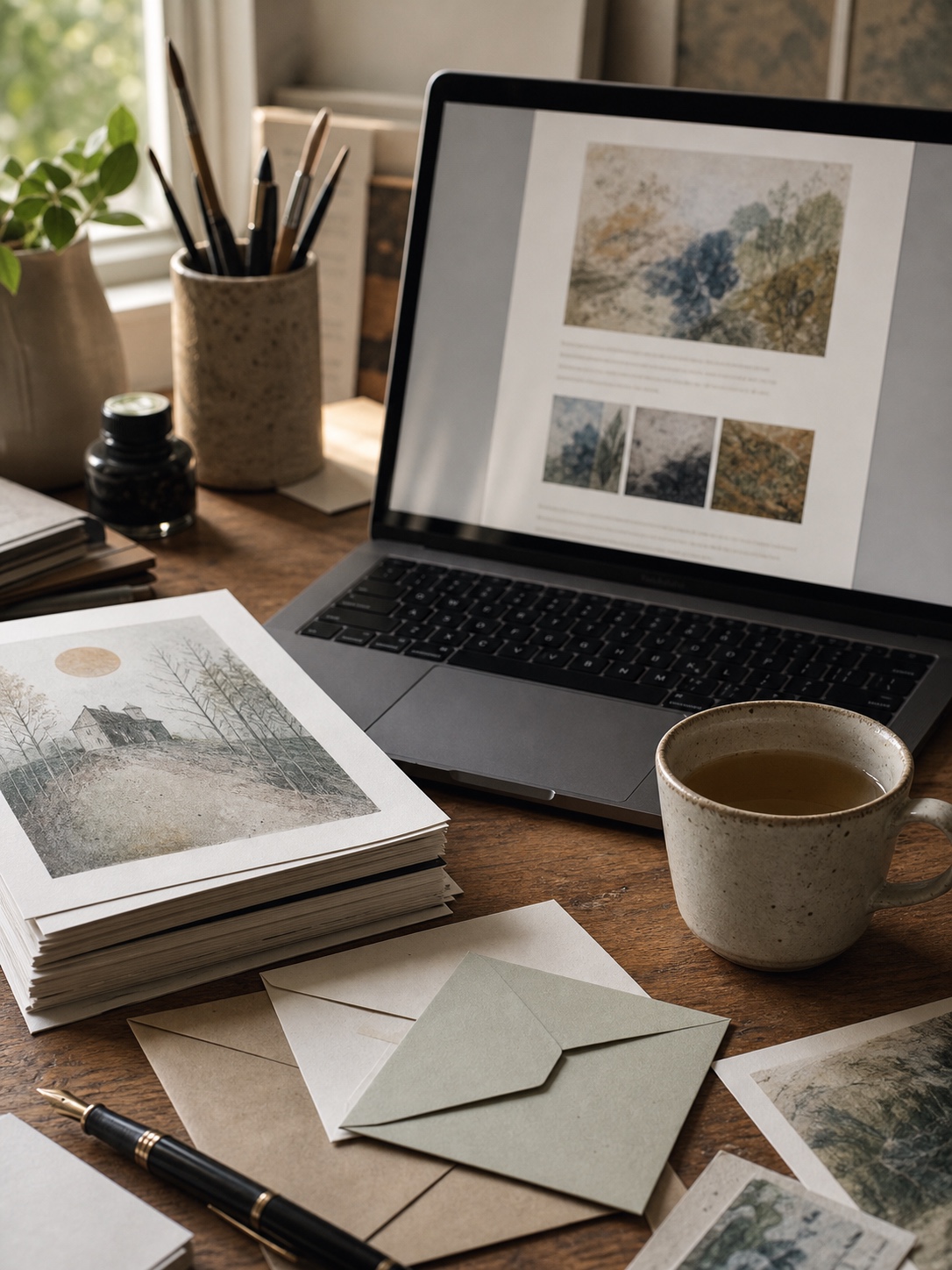
Price and package your art so buying feels safe
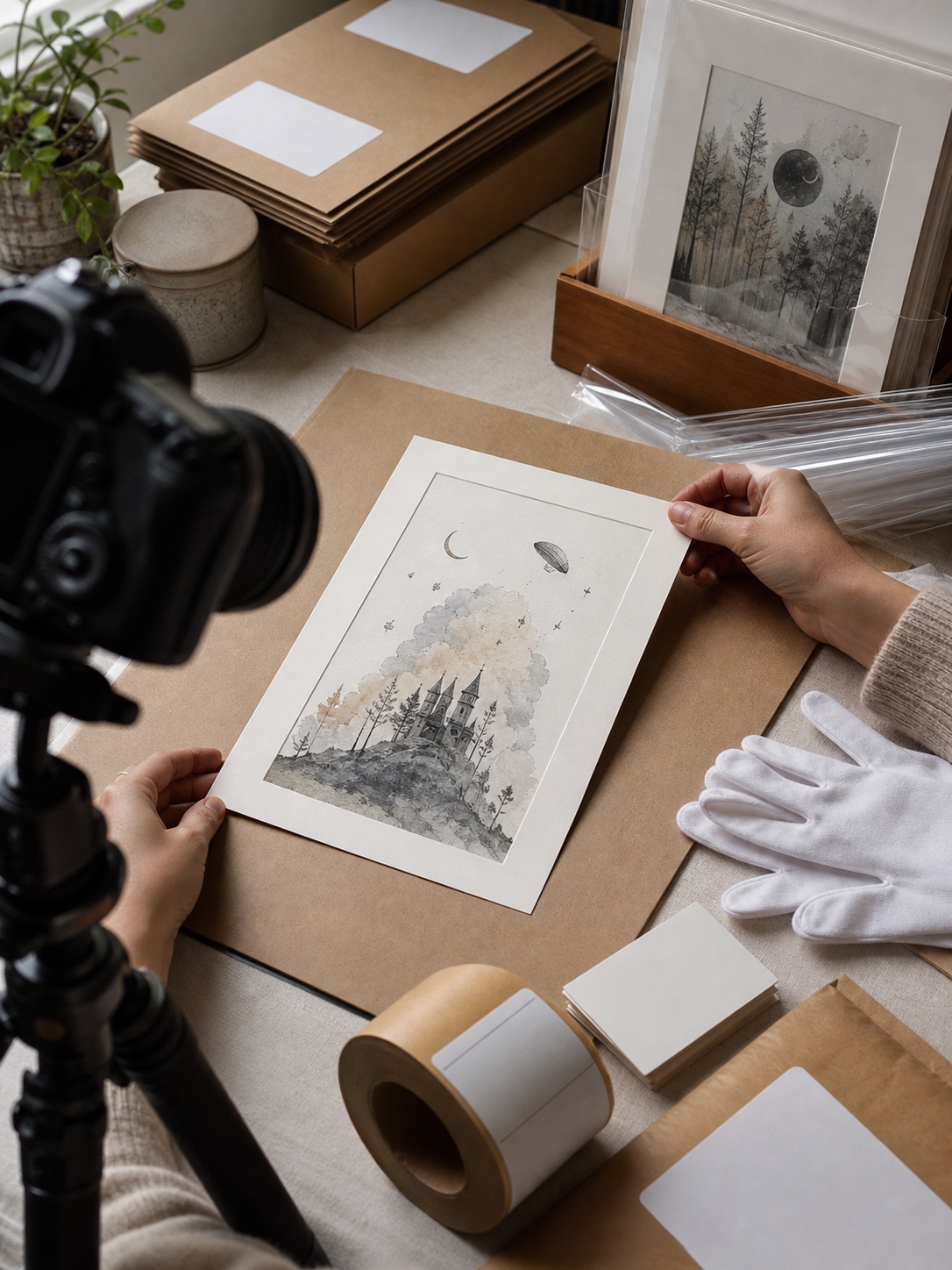
Many artists lose sales because the artwork is strong but the buying details are vague. List dimensions, medium, edition size, framing, shipping region, processing time, and return or damage policy where appropriate. If you sell prints online, photograph the print, paper edge, packaging, and scale next to a real object.
If you are still comparing platforms, resources like Gelato’s guide on how to sell art online can help you think through products, fulfillment, and online sales options. Use outside advice as a checklist, then adapt it to your own margins and workflow.
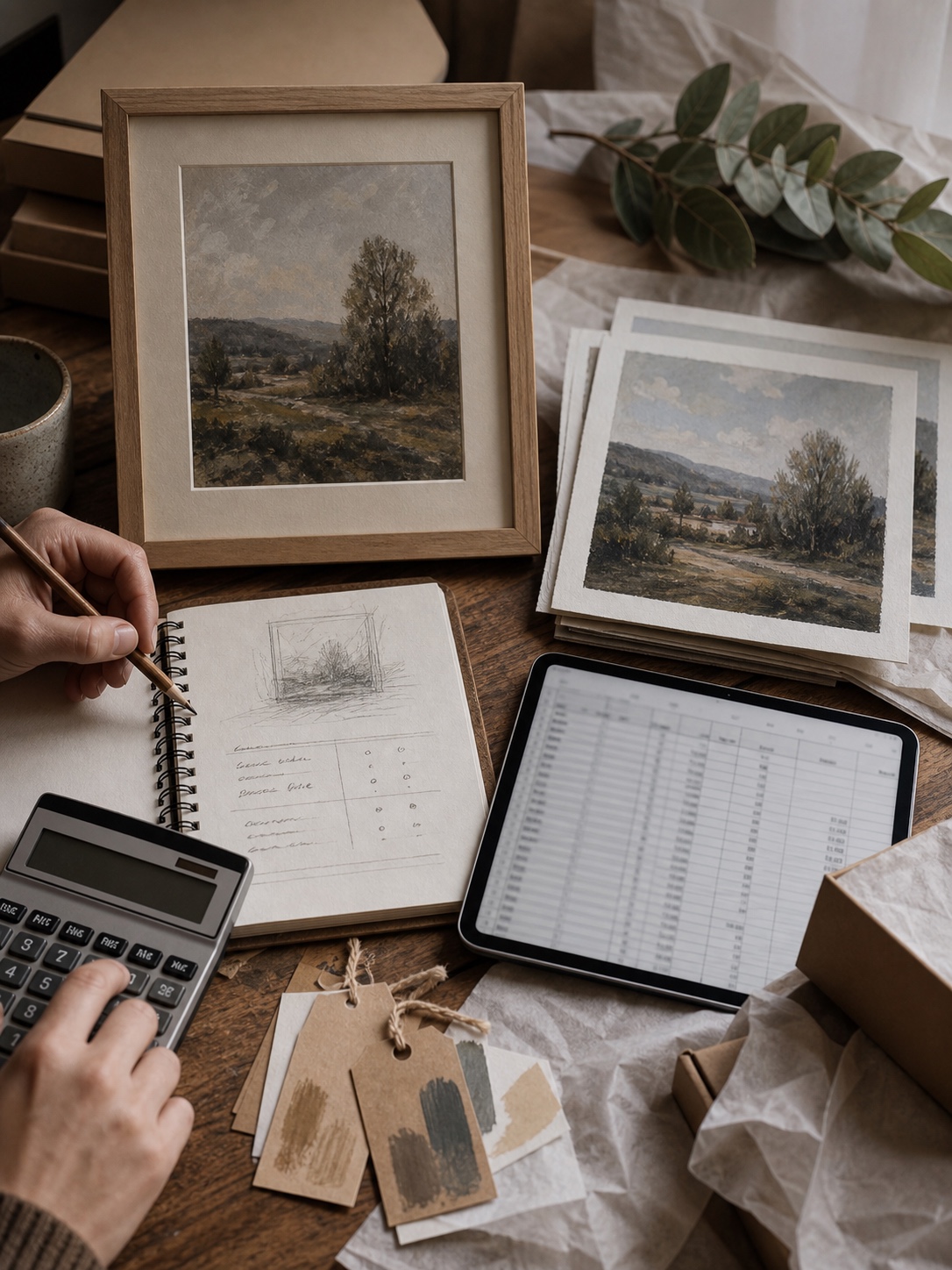
Collaborate without handing away your audience
Collaborations can work well when the audience overlap is real. Look for artists, curators, newsletter writers, local shops, interior designers, or creators whose viewers already care about the kind of work you make. Avoid vague exposure deals. Agree on the deliverables, timing, credit, links, image usage, and how each side will measure success.
If a collaboration includes paid promotion, gifted products, or affiliate links, follow disclosure rules. The FTC disclosure guide for social media is worth reading before you start outreach.
Use art shows as trust builders, not one-off events
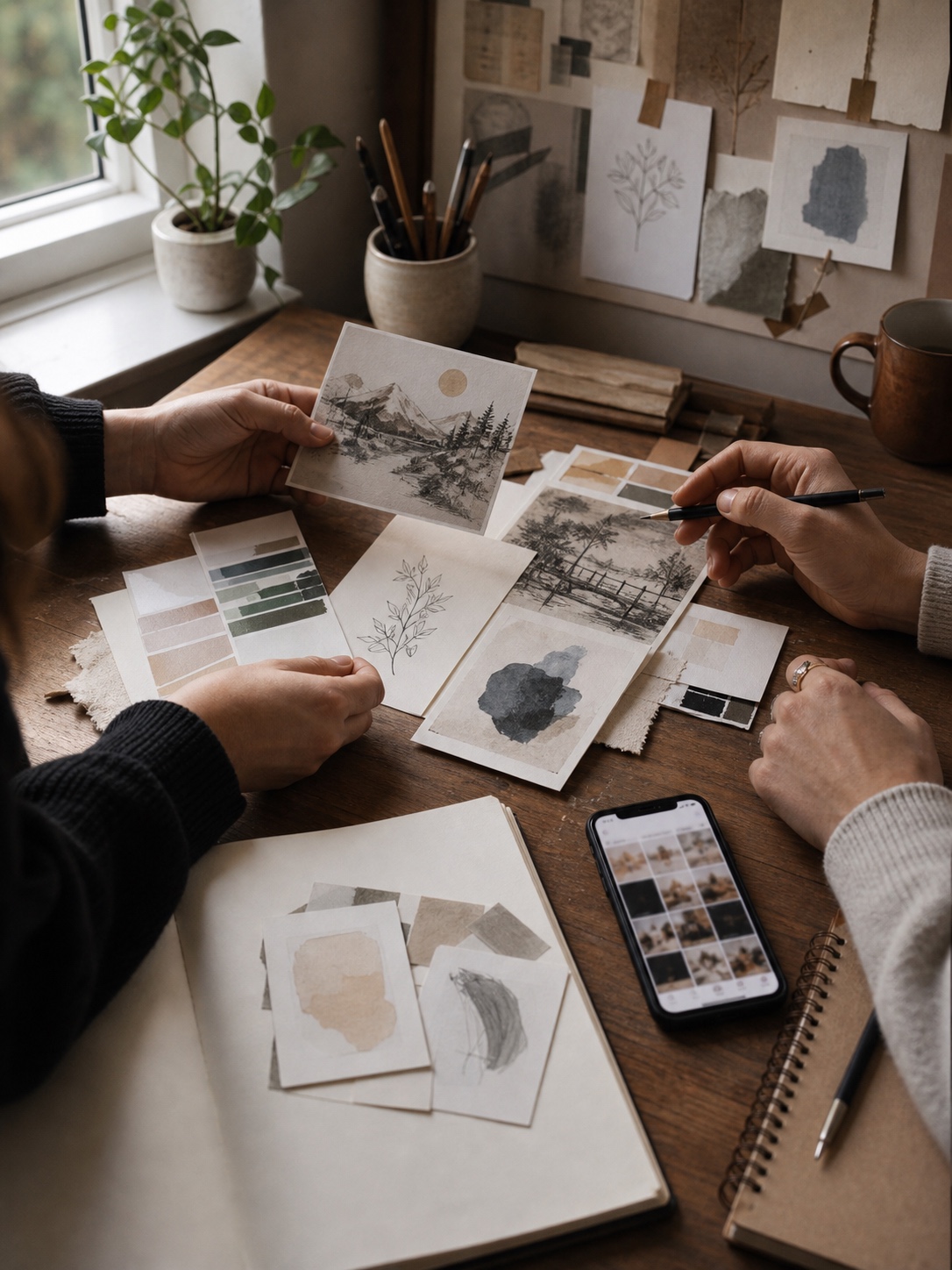
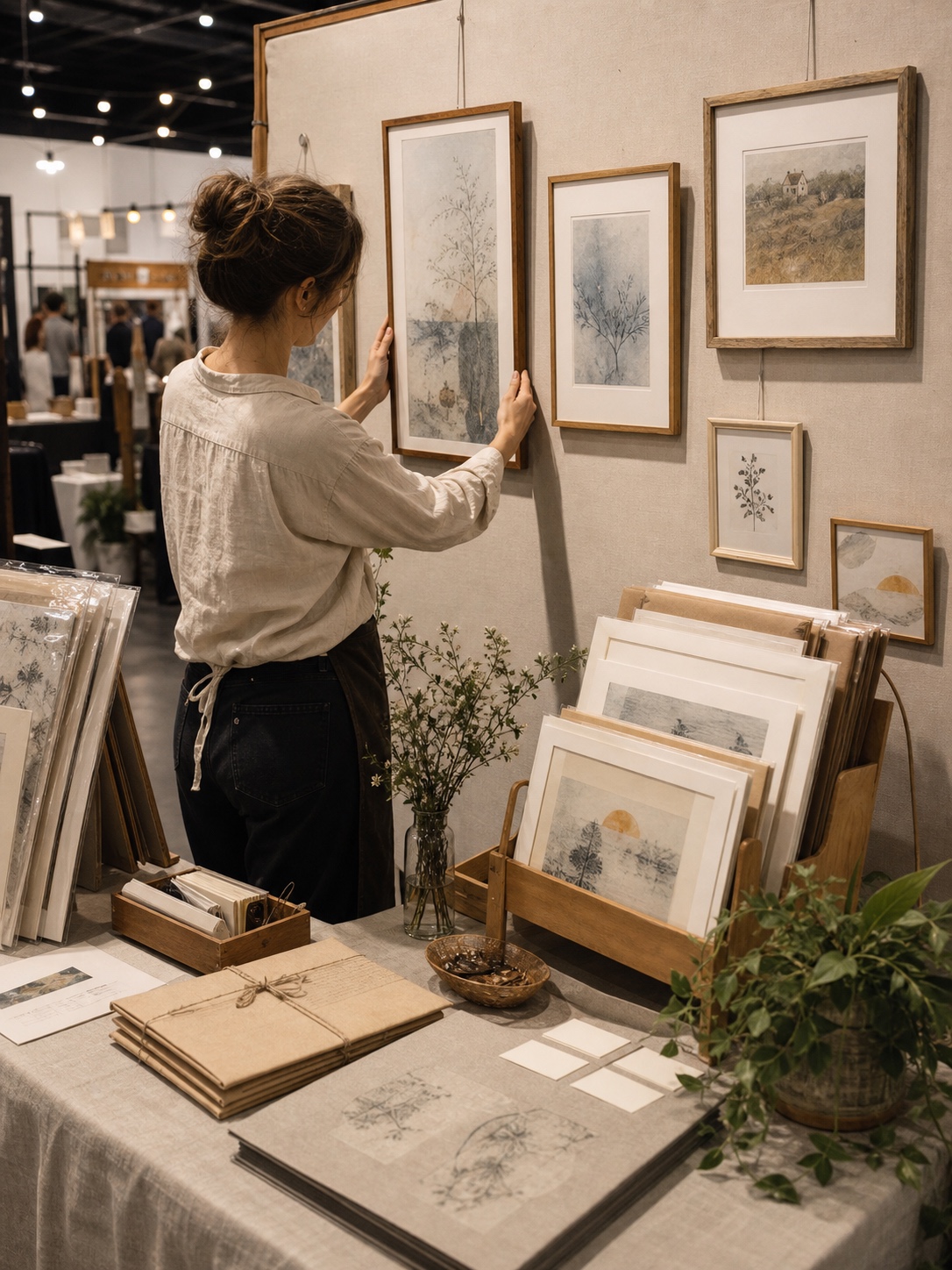
Art shows, pop-ups, and exhibitions still matter because buyers can see scale, texture, and finish in person. Treat the booth like a small landing page: best work at eye level, simple price labels, a visible email signup, cards with your website, and packaging that feels intentional.
After the event, follow up quickly. Send a short email with the pieces people asked about, a link to available work, and a note about commissions. You can also study art magazines, Canva alternatives, and banner design techniques for better promotional layouts.
Create a simple monthly artist marketing plan
A useful monthly plan does not need to be complicated. Pick one sales goal, one audience, one offer, and one main channel. Then support it with portfolio updates, social posts, email, and a few targeted conversations. If the month is about commissions, do not bury that message under unrelated posts.
- Week 1: refresh portfolio images and update availability.
- Week 2: post process content and invite email signups.
- Week 3: send a short collector email with one clear offer.
- Week 4: follow up, review clicks or inquiries, and adjust the next offer.
For polish, use a restrained logo maker tool only after your artwork direction is clear, and keep a concise artist resume or CV ready for galleries, applications, and press requests.
Artist marketing FAQ
Q: What is artist marketing?
A: Artist marketing is the practical system you use to help the right people find, understand, trust, and buy your work. It includes your portfolio, artist statement, social media, email list, pricing, product photography, art shows, and the path from first impression to purchase.
Q: How do I market my art if I am a beginner?
A: Start with one clear body of work, a simple portfolio page, and one repeatable content habit. Share finished pieces, process images, size and material details, and the story behind the work. Beginners do not need every platform; they need consistency and a clear way for buyers to ask about prices or buy.
Q: What is the best social media marketing for artists?
A: The best social media marketing for artists shows the work clearly and trains people to recognize your style. Use process posts, finished artwork, detail shots, studio notes, collector stories, and short videos. Avoid posting only when you have something to sell; build trust between launches.
Q: How can artists sell more art online?
A: Artists sell more art online when the buying path is simple. Use strong artwork photos, clear prices or inquiry steps, edition details, shipping notes, and a portfolio that loads quickly. Then use social media and email to send people back to that page instead of scattering attention everywhere.
Q: Do artists still need email marketing?
A: Yes. Email is useful because it reaches people who already asked to hear from you. Social platforms can change reach overnight, but a collector email list lets you announce new work, shows, commissions, print drops, and studio updates without relying only on an algorithm.
Q: How often should artists promote their work?
A: Promote lightly and often. A simple rhythm is one useful post, one process note, one finished artwork, and one soft sales reminder each week. During a launch or exhibition, increase the frequency, but keep the posts specific so they feel helpful rather than repetitive.
Final takeaway
The strongest artist marketing is steady, specific, and easy to follow. Show the work clearly, explain the buying path, keep warm buyers close through email, and use social platforms to build recognition instead of chasing every trend. Small, repeatable actions will do more for sales than a burst of promotion every few months.
- 130shares
- Facebook0
- Pinterest130
- Twitter0
- Reddit0