

Ever felt that itch to create, but don’t know where to start? Maybe you’ve always wanted to draw but felt intimidated, or perhaps you’re an experienced artist looking for fresh ways to keep your skills sharp. Whatever your background, a daily drawing practice is one of the most rewarding habits you can cultivate. It’s not just about making pretty pictures; it’s about observation, problem-solving, mindfulness, and a fantastic way to unwind.
Think of it this way: just like a musician practices scales or an athlete trains daily, artists benefit immensely from consistent effort. Even just a few minutes a day can lead to incredible growth, not to mention a deeper appreciation for the world around you. You don’t need fancy supplies – a simple pencil and a piece of paper are perfect. The goal isn’t perfection; it’s consistency and exploration. Embracing this habit can reduce stress, boost your creativity, and significantly improve your artistic skills over time.
This guide will walk you through 8 daily drawing ideas designed to spark your imagination and help you build a fun, sustainable art routine. Get ready to unleash your inner artist and discover the joy of putting pencil to paper every single day!
1. The “Object of the Day” Challenge
One of the simplest and most effective ways to kickstart your daily drawing habit is by picking a single “Object of the Day.” This exercise is fantastic because it eliminates decision fatigue. You don’t have to wonder what to draw; the object chooses you (or you choose it from your immediate surroundings).
How it works: Every day, look around your home, office, or wherever you happen to be. Spot an ordinary object. It could be your coffee mug, a houseplant, your car keys, a book, a pen, or even a piece of fruit. The key is to pick something you can observe directly.
Why it’s great:
- Accessibility: You always have objects around you. No need to go hunting for inspiration.
- Observation Skills: This challenge forces you to really look at something. You’ll notice details you’ve never seen before: the way light hits a surface, the texture of a fabric, the subtle curves and angles. It’s a fundamental lesson in visual perception.
- Focus on Form: Drawing a single object helps you concentrate on basic shapes, proportions, and how they interact. Don’t worry about making it perfect; focus on understanding its structure.
- Building Confidence: Successfully drawing an everyday item, no matter how simple, provides a small win that encourages you to keep going.
Tips for success:
- Vary your objects: Don’t draw the same mug every day (unless you’re trying to master that mug!). Challenge yourself with different shapes, materials, and complexities.
- Experiment with angles: Try drawing the object from above, below, or from different sides. This helps you understand perspective.
- Pay attention to light and shadow: Notice where the light source is coming from and how it creates highlights and shadows. This adds depth and realism to your drawing.
- Time yourself: If you’re short on time, set a timer for 5-10 minutes. This helps you work quickly and not get bogged down in details, focusing on the essence of the object.
- Don’t erase too much: Embrace your lines and imperfections. They are part of the learning process.
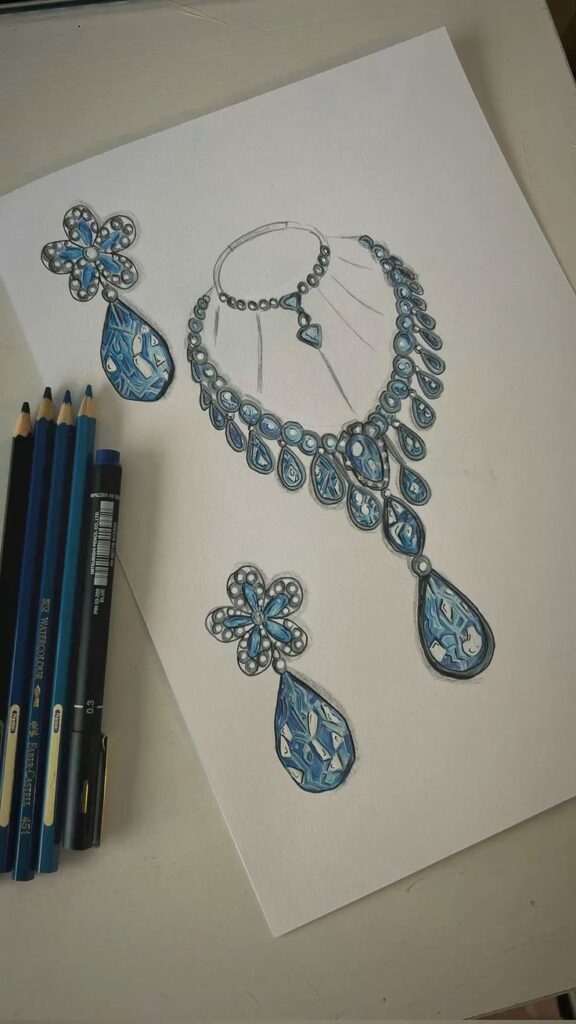
Imagine drawing your favorite teacup one day, then a peculiar rock you found on a walk the next, followed by an intricate piece of jewelry. Each day offers a new challenge and a new opportunity to refine your skills. You might be surprised at how much beauty and complexity you find in the mundane.

2. Quick Gesture Drawings
Gesture drawing is an incredibly powerful exercise that focuses on capturing the essence, movement, and form of a subject in a very short amount of time. It’s less about accuracy and more about energy and flow. This technique is often used for figure drawing, but it can be applied to almost anything that moves or has a dynamic quality.
What it is: These are rapid sketches, usually lasting from 30 seconds to a few minutes. The goal is to capture the overall pose, motion, and weight of the subject, rather than intricate details. You’re trying to feel the pose, not just see it.


Why it’s great:
- Loosens you up: If you tend to be too tight or precise in your drawings, gesture drawing is a fantastic way to break free and develop a more fluid hand.
- Improves observation speed: You learn to quickly identify the most important lines and shapes that define a form.
- Develops a sense of movement: It trains your eye to see and interpret motion, which is crucial for dynamic compositions.
- Reduces overthinking: The time constraint forces you to make quick decisions and trust your instincts.
- Versatile: You can gesture draw people, animals, dancers, sports figures, or even trees swaying in the wind. Anything with a dynamic form. For example, if you’re interested in drawing dynamic figures, check out some action pose drawing ideas to get started.
How to practice:
- Find moving subjects: People walking in a park, kids playing, pets lounging, even online videos of animals or dancers are great sources. Freeze-frame options can be helpful too.
- Use a timer: This is crucial. Start with 30-second gestures, then move to 1-minute, 2-minute, and 5-minute sketches.
- Focus on the “line of action”: This is the imaginary line that conveys the main direction of movement or energy in the pose. Start with this line.
- Draw with your whole arm: Don’t just use your wrist. Make large, sweeping strokes to capture the overall shape.
- Don’t lift your pencil too much: Try to keep your pencil on the paper, letting the lines flow from one part of the body to another.
- Embrace messiness: These aren’t meant to be finished pieces. The beauty is in the raw energy.
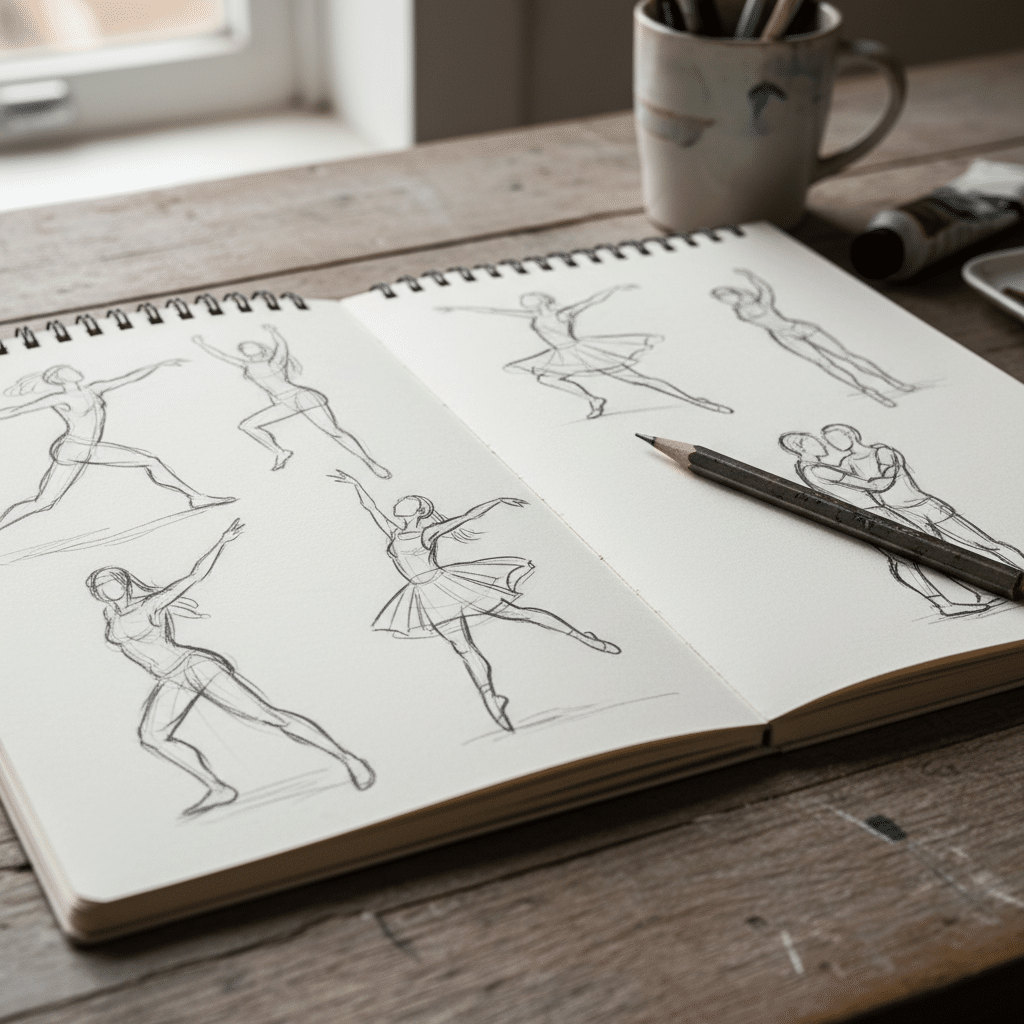
Gesture drawing is a skill that translates to all other forms of drawing, making your work feel more alive and less stiff. It’s a fantastic exercise to start or end your daily drawing session.
3. Nature Sketching and Plant Studies
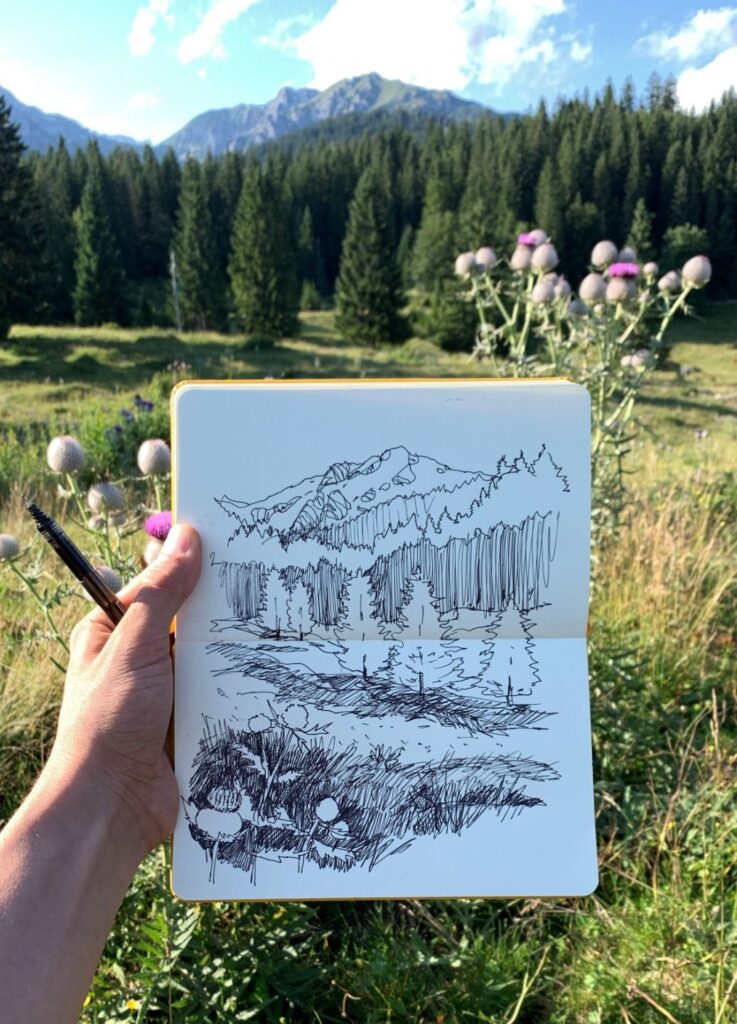
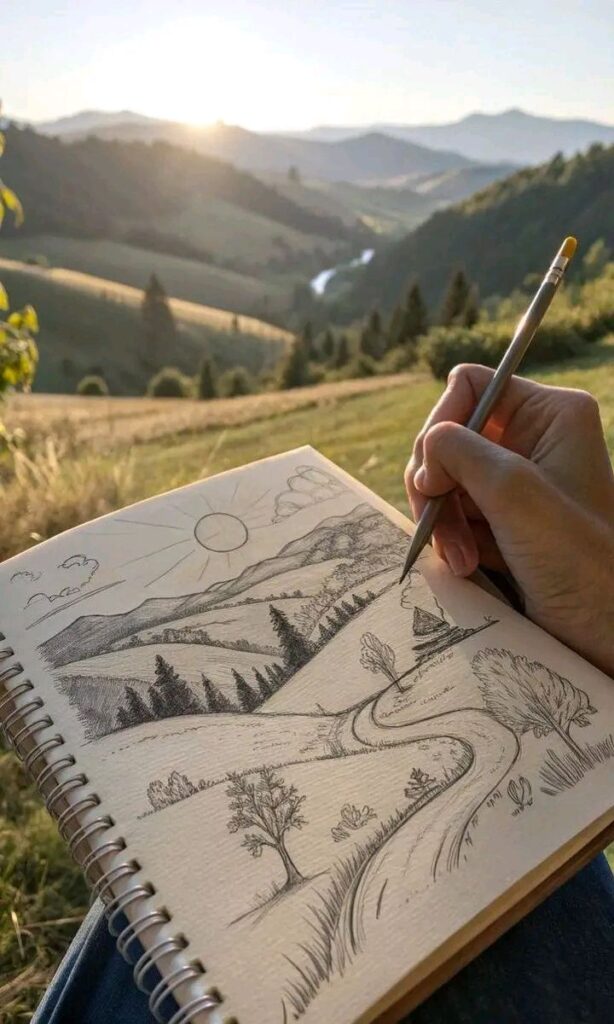
Stepping outside with a sketchbook can be incredibly therapeutic and creatively stimulating. Nature provides an endless source of inspiration, from intricate leaves to majestic trees, delicate flowers, and sprawling landscapes. This idea encourages you to connect with the natural world through your art.
Why it’s great:
- Abundant subjects: Nature is everywhere, even in urban environments. A single blade of grass, a flowerpot, or a distant tree can be your subject.
- Teaches organic forms: Unlike man-made objects with straight lines and predictable geometry, nature is full of organic, irregular shapes, textures, and patterns. Drawing these helps you develop a more fluid hand and an eye for natural variations.
- Improves detail work: Observe the veins on a leaf, the texture of bark, or the petals of a flower. These small details offer great practice in rendering.
- Relaxing and mindful: Spending time in nature, focusing intently on a subject, can be a deeply calming and meditative experience. It’s a wonderful way to practice mindfulness.
- Color studies: If you’re working with colored pencils or watercolors, nature is the ultimate teacher for color palettes and light effects.
How to get started:
- Find your spot: Head to a park, your backyard, a local garden, or even just look out your window.
- Choose your subject: Start simple. A single leaf, a twig, a small flower, or a patch of grass is perfect. Don’t try to draw an entire forest at once.
- Observe closely: Before you even draw, spend a few minutes just looking. What are the dominant shapes? How do the forms overlap? Where does the light hit? What kind of textures do you see?
- Focus on sections: If your subject is complex (like a bush), pick a small section to focus on. You don’t have to draw everything.
- Capture textures: Use different line weights and shading techniques to convey the rough bark of a tree, the soft petals of a rose, or the smooth surface of a stone.
- Experiment with different tools: A fine-liner pen can capture delicate details, while a soft pencil can create lush textures and shadows.
Drawing nature helps you appreciate the beauty and complexity of our world and trains your eye to see the subtle nuances that often go unnoticed. It’s a perfect way to find art inspiration in everyday life.
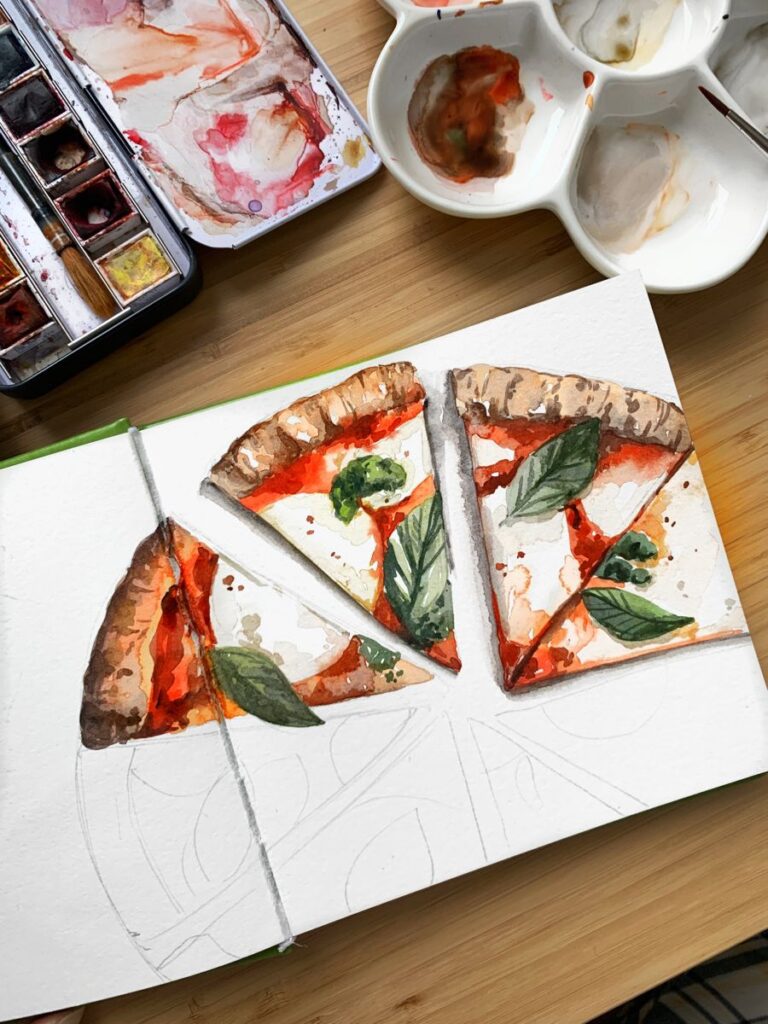
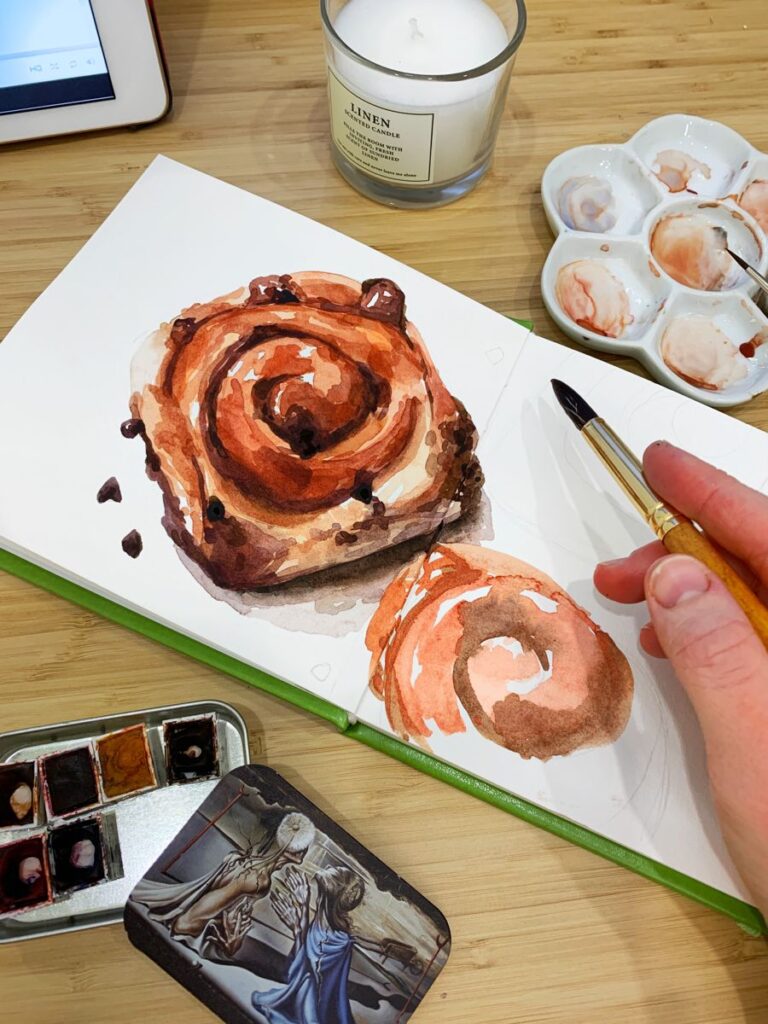
4. Food Illustrations: Drawing Your Meals
Who doesn’t love food? It’s not just for eating; it’s also a fantastic subject for drawing! The “Food Illustration” challenge involves drawing your meals, snacks, or even individual ingredients. This is a delightful way to practice still life drawing with subjects that are readily available and often colorful and appealing.
Why it’s great:
- Always available: You eat every day, so you always have a subject! No need to set up elaborate still lifes.
- Practice with texture and shine: Food offers a vast array of textures – the crust of bread, the smooth skin of an apple, the fluffy cloud of whipped cream. You can also practice rendering reflections on shiny surfaces like a glass of water or a glazed pastry.
- Color exploration: Food comes in a dazzling spectrum of colors. This is an excellent opportunity to experiment with color theory, blending, and creating appetizing hues.
- Adds a personal touch: Drawing your own meals turns them into small moments of art, reflecting your daily life and tastes.
- Mindful eating (and drawing): Taking the time to draw your food can make you more aware of what you’re eating and appreciate its presentation.
How to approach it:
- Start before you eat: If you can resist, take a few minutes to sketch your meal before you dig in. The steam might even add a cool effect!
- Focus on composition: How is the food arranged on the plate? What angles look most appealing? Think about positive and negative space.
- Simplistic or detailed: You can go for a quick, gestural sketch of your breakfast bowl or a detailed rendering of a gourmet dish. Both are valid.
- Pay attention to lighting: Natural light is usually best for food photography and drawing. Notice how light and shadow define the shapes and textures of your food.
- Don’t forget the surroundings: Include a bit of the plate, cutlery, tablecloth, or even the condensation on a glass to add context.
- Special challenge: Try drawing a specific item, like learning how to draw a cupcake with a cherry, to focus on a fun, singular subject.
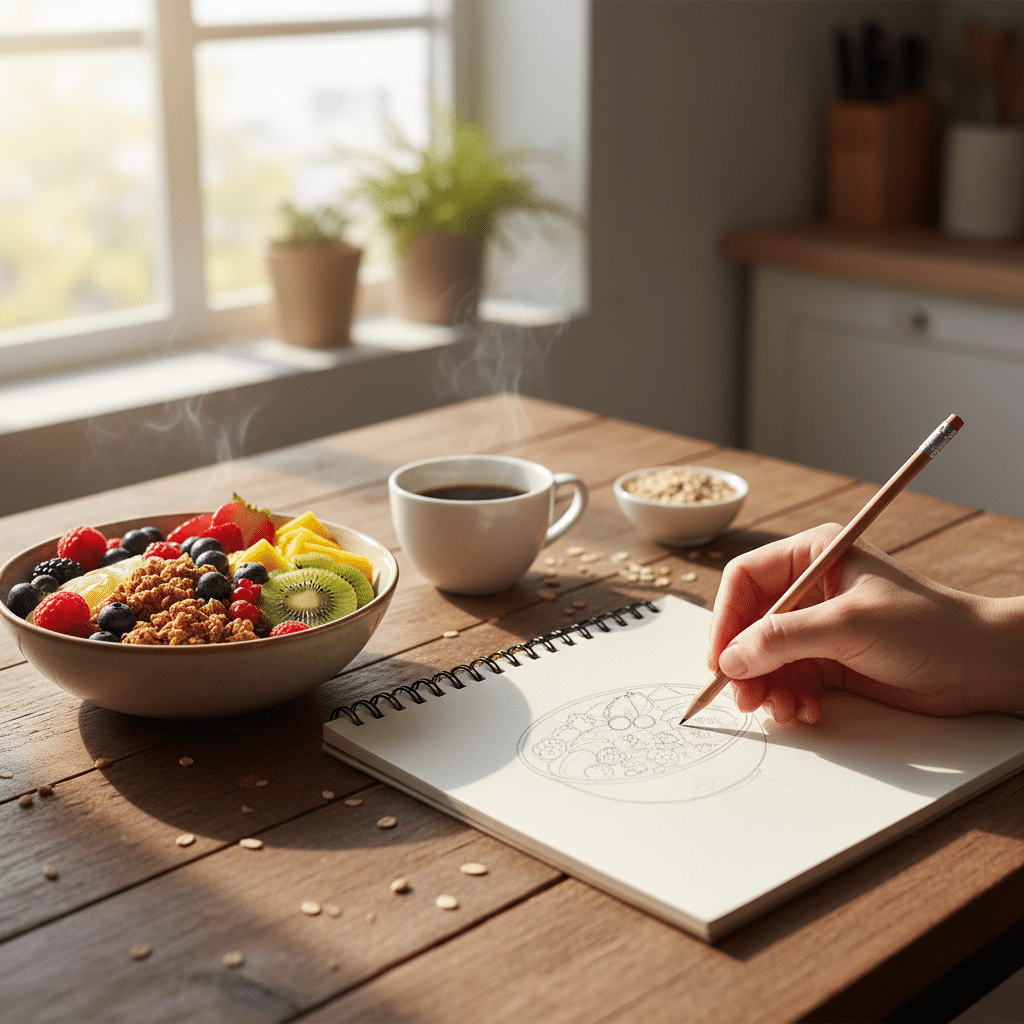
This practice not only hones your drawing skills but also encourages you to find beauty in the everyday ritual of eating. You might even impress your dining companions!
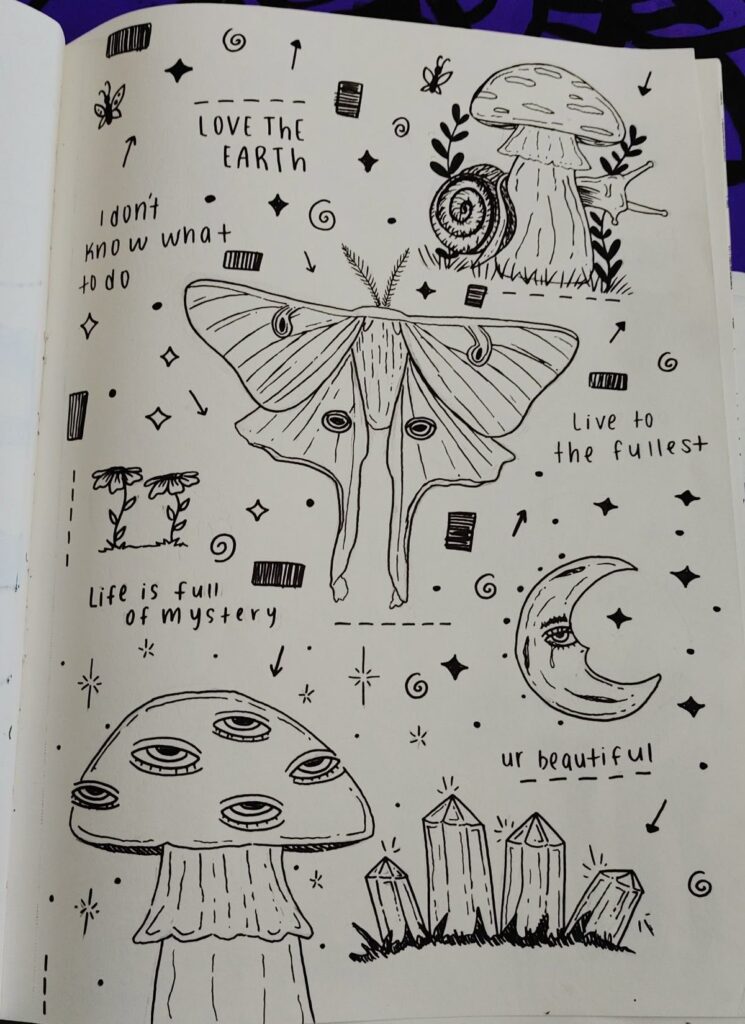
5. Character Design & Whimsical Doodles
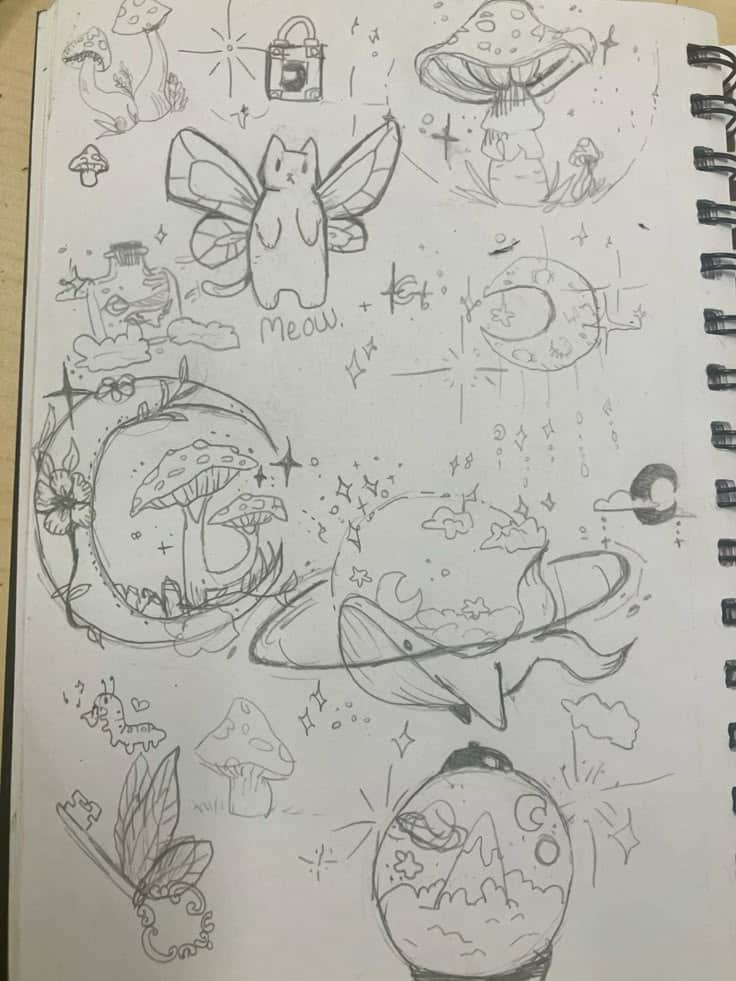
Sometimes, you just want to let your imagination run wild. This daily drawing idea is all about tapping into your inner child and creating characters, creatures, or abstract doodles without any pressure to be realistic or technically perfect. It’s a wonderful way to explore storytelling and pure creativity.
What it involves: Spend time inventing small characters – maybe a grumpy cloud, a happy piece of toast, or an alien with three eyes. Or simply doodle abstract patterns, shapes, and lines, letting your hand guide you without a predetermined outcome.
Why it’s great:
- Boosts imagination: This exercise is a direct channel to your creative wellspring. There are no rules, no right or wrong.
- Develops storytelling: Even a simple character can tell a story through its expression, pose, or context.
- Stress relief: Doodling is a well-known method for de-stressing and improving focus. It allows your mind to wander while your hands are busy.
- Experiment with styles: Try different visual languages – cartoonish, whimsical, abstract, geometric.
- No pressure: This isn’t about creating a masterpiece. It’s about play and discovery.
Ideas to get you started:
- Emotional faces: Draw a series of simple faces expressing different emotions: joy, anger, surprise, confusion.
- Animal hybrids: What if a cat had wings? Or an elephant had a fish tail? Mix and match to create absurd and fun creatures.
- Everyday objects with personalities: Give a mug eyes and a mouth. What does it feel like?
- Monster mash-up: Design a small, friendly monster or a silly villain.
- Abstract patterns: Start with a random shape or line and see where it takes you. Fill the page with repeating motifs, organic blobs, or intricate geometric designs.
- Use prompts: If you get stuck, use a random word generator to give you a noun, adjective, or verb, and try to draw a character inspired by it (e.g., “sleepy toaster,” “dancing mushroom”).
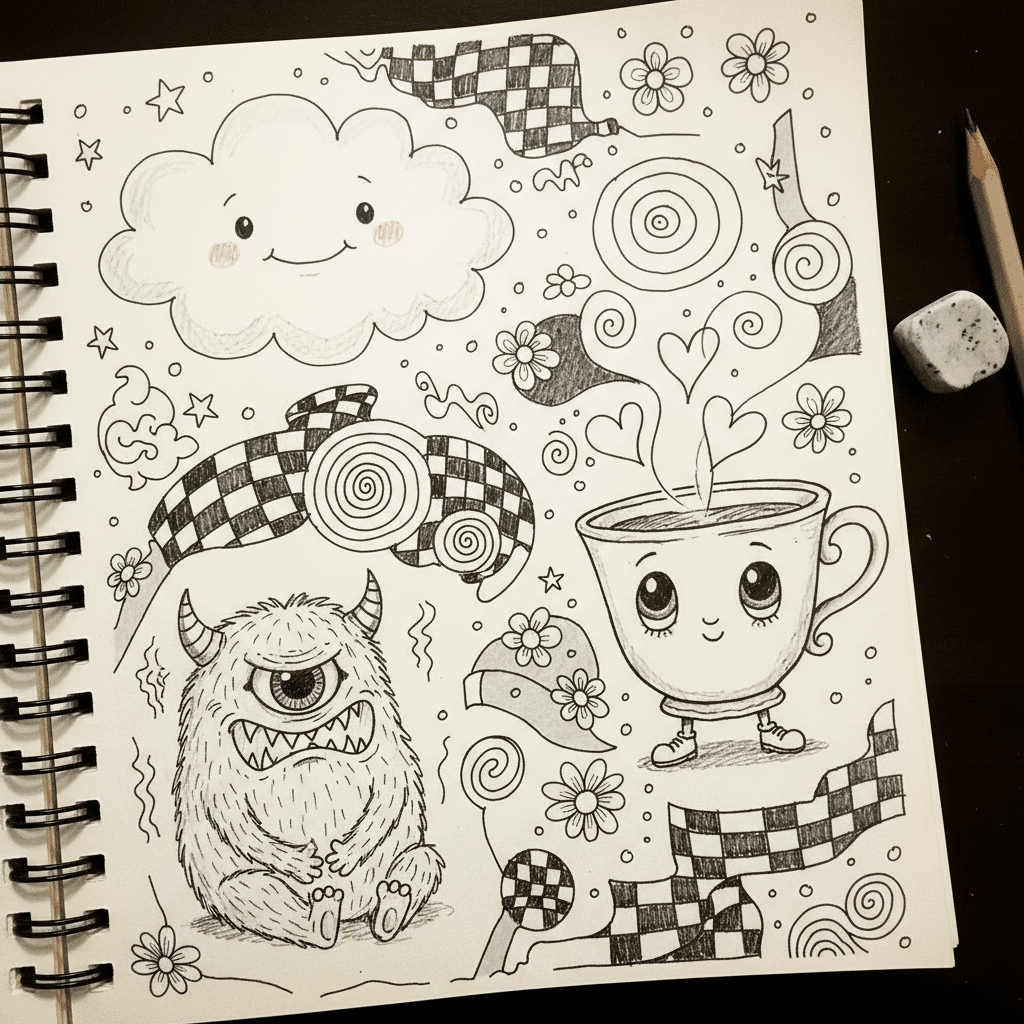
This is an excellent way to keep your creative muscles limber and remind yourself that art doesn’t always have to be serious. Plus, you might stumble upon a character that becomes a recurring motif in your personal artwork!
6. Architectural Details & Urban Sketching
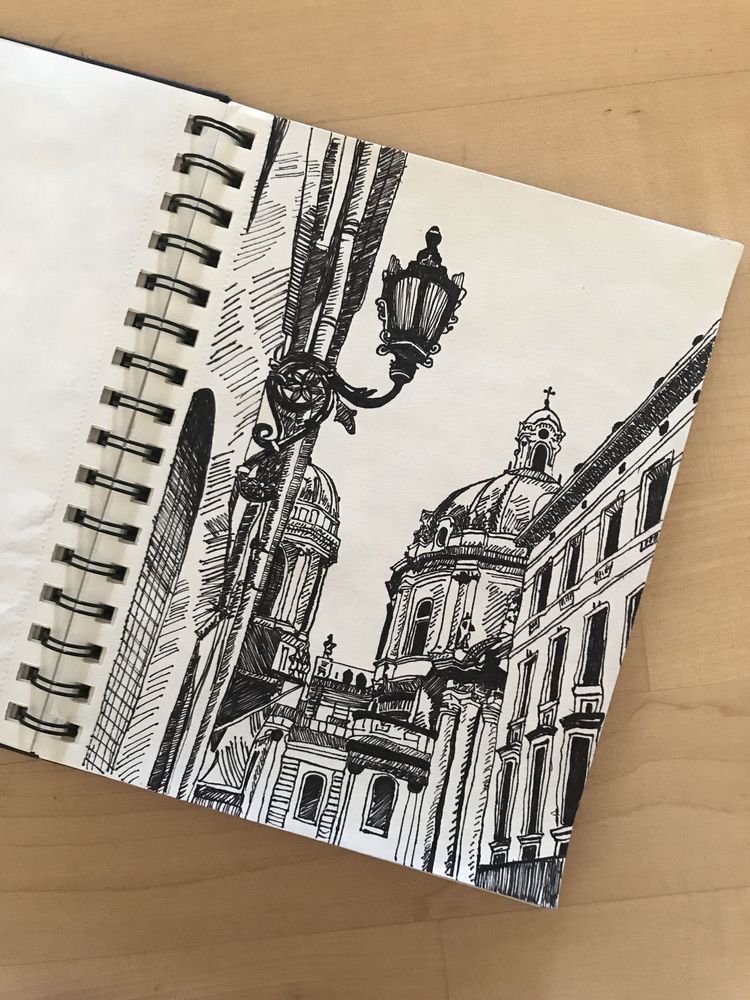
For those who love structure, perspective, and the intricate details of man-made environments, architectural sketching and urban drawing are a fantastic daily practice. This involves drawing buildings, cityscapes, windows, doors, street furniture, or any element of the built environment.
What it involves: Focus on capturing the lines, forms, and textures of buildings and urban landscapes. This could be a grand facade, a quaint window, a lamppost, or even just the corner of a room.
Why it’s great:
- Mastering perspective: Buildings are ideal subjects for practicing one, two, and three-point perspective, which are fundamental drawing skills.
- Learning about structure and form: You’ll develop an eye for how things are constructed and how different components fit together.
- Texture practice: Brickwork, wood grain, glass, metal – urban environments are rich in varied textures that challenge your rendering skills.
- Composition skills: Deciding what to include and exclude in a cityscape helps you refine your compositional eye.
- Observation of light: Notice how sunlight and shadows play across buildings, revealing their forms and adding drama.
- Sense of place: Urban sketching creates a visual journal of the places you visit or inhabit, capturing their unique character.
Tips for success:
- Start with simple elements: Don’t try to draw an entire skyscraper on your first attempt. Begin with a single window, a doorway, or a bench.
- Focus on lines: Use a ruler if you need to, but also practice freehanding straight lines. Pay attention to how lines converge towards vanishing points.
- Break it down into shapes: See buildings as combinations of rectangles, squares, and triangles.
- Consider the setting: Include elements like trees, streetlights, or even a few tiny figures to give a sense of scale and atmosphere.
- Draw what’s opposite you: If you’re sitting in a coffee shop, draw the building across the street. If you’re at home, sketch a piece of furniture or the corner of a room.
- Embrace imperfections: Urban sketching isn’t about photographic realism. A wonky line can add character and show your hand.
- Explore interior design elements: Even indoors, you can focus on specific details like a unique chair, a patterned rug, or the intricate details of a light fixture. This also helps you understand elements of texture in interior design.
Architectural drawing sharpens your precision and understanding of spatial relationships, making it a highly rewarding daily practice.

7. Expressive Hand Studies
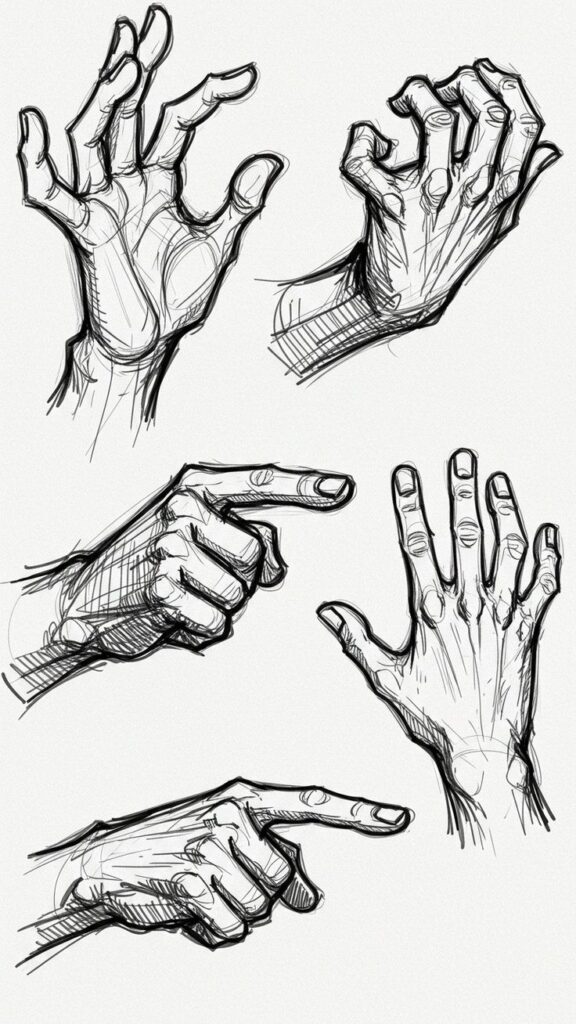
Hands are often considered one of the most challenging subjects to draw, and for good reason! They are incredibly complex, capable of an enormous range of poses, gestures, and expressions. This daily drawing idea focuses specifically on studying your own hands.
Why it’s great:
- Always available: You have two hands, always with you! You can draw them anytime, anywhere.
- Mastering complex forms: Hands are a mini-masterclass in anatomy, bone structure, muscles, and folds of skin. Drawing them will drastically improve your understanding of organic forms.
- Conveying emotion: Hands are surprisingly expressive. Drawing them in different gestures can convey mood, action, and personality without needing an entire figure.
- Improving observation: You’ll learn to see the subtle shifts in planes, the way tendons stretch, and how light falls on intricate surfaces.
- Boosts problem-solving: Getting proportions and foreshortening right in hands requires careful observation and spatial reasoning.
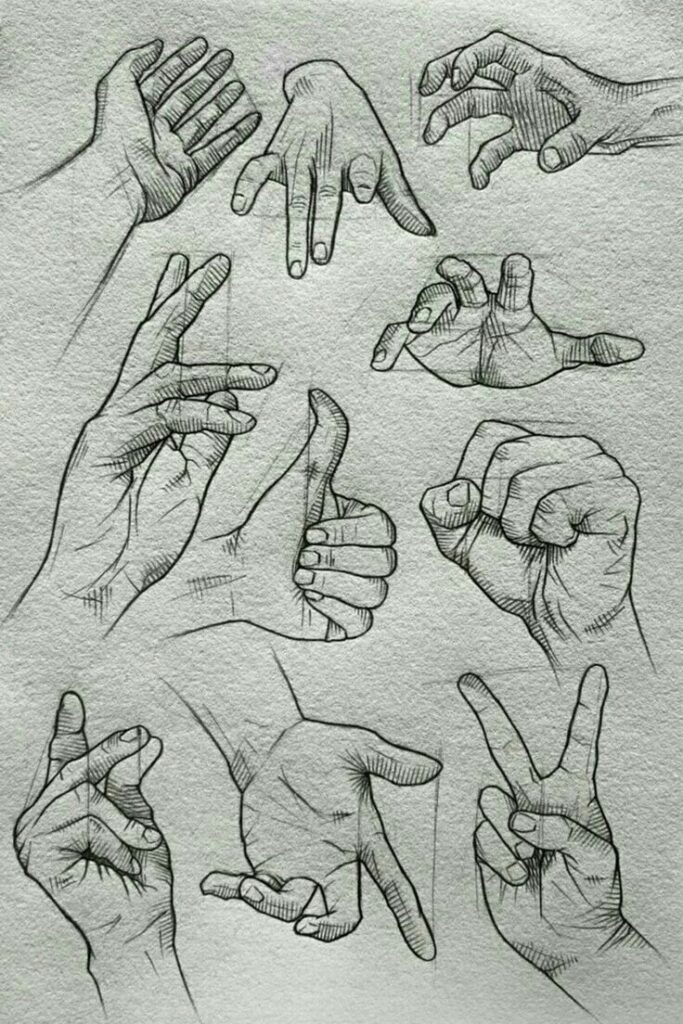
How to approach it:
- Start simple: Begin by drawing your hand flat on a surface, palm down. Then try palm up. These are good starting points.
- Break it down: Think of the hand as a collection of simpler shapes: a palm block, cylindrical fingers, and knuckle spheres. Build from these basic forms.
- Focus on negative space: Look at the shapes of the spaces between your fingers or between your hand and the surface it rests on. This can help with accuracy.
- Experiment with poses:
Fist clenched Holding an object (a pen, a cup, a phone) Pointing Relaxed and open * Making a specific gesture (like a “thumbs up” or “peace sign”)
- Pay attention to creases and wrinkles: These add character and realism, especially as hands age.
- Study the knuckles: Notice how they protrude and how the skin folds around them.
- Use references: While drawing your own hand is great, occasionally look at photos of hands by other artists or in photography to see how others capture them. For more general figure drawing resources, consider exploring guides on body drawing.
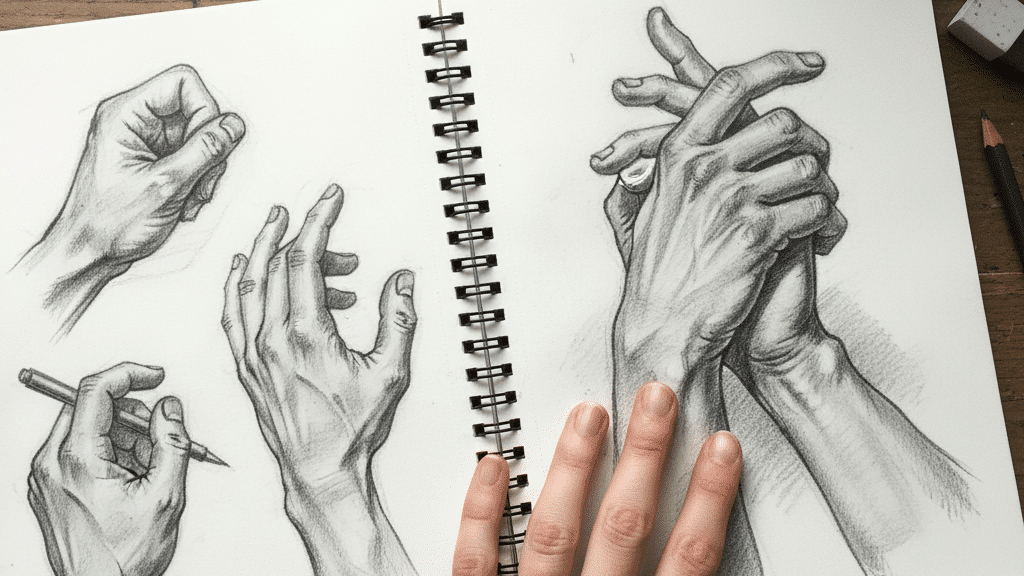
Don’t be discouraged if your first few attempts aren’t perfect. Hands are notoriously difficult. The consistent practice of drawing them will yield significant improvements in your overall drawing ability.
8. Recreate a Personal Photo or Reference Image
Sometimes, the best inspiration is right in front of you – on your phone, in an old photo album, or from a reliable online reference source. This daily drawing idea challenges you to pick a photograph and try to render it in your own style.
Why it’s great:
- Ready-made composition: A photo already has a pre-set composition, lighting, and subject matter, saving you the initial planning stage.
- Practice translating 3D to 2D: You’re taking a flat image and re-interpreting it into another flat image, which is a great exercise in understanding form and perspective.
- Focus on specific elements: You can choose a photo specifically to practice drawing textures, faces, animals, landscapes, or whatever skill you want to improve.
- Personal connection: Drawing your own photos (of family, pets, travel, etc.) adds a layer of personal meaning to your artwork. If you have some cute cat wallpapers, drawing a feline friend could be a fun project.
- Learning from professionals: If you use professional photography as a reference, you can learn a lot about light, shadow, and composition from the original photographer’s choices.

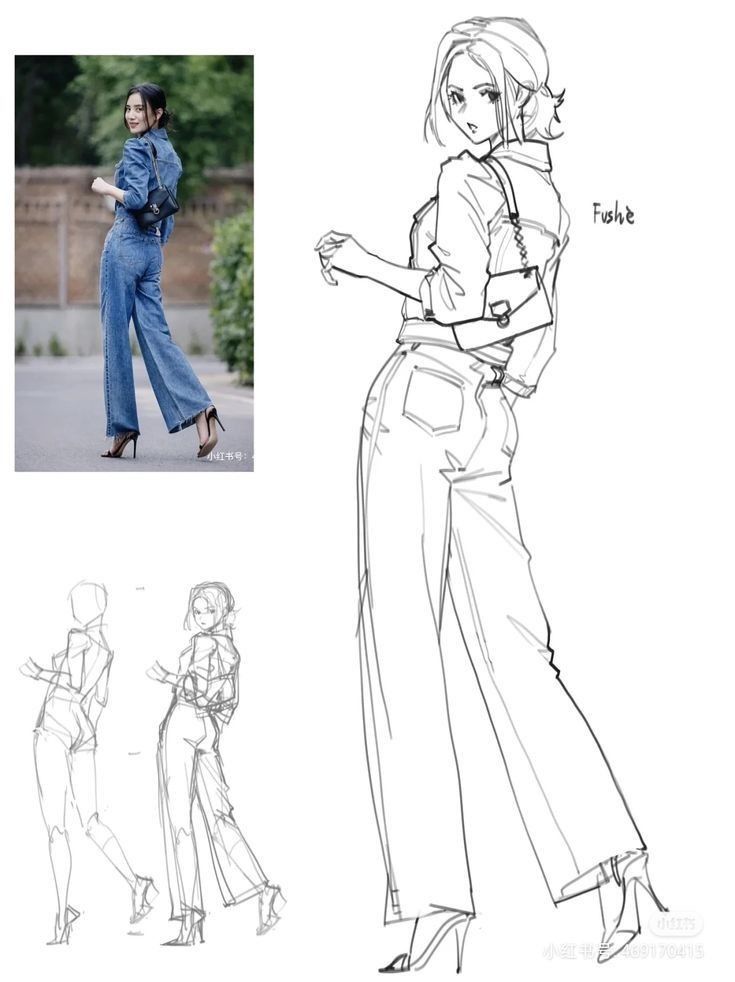
How to make it effective:
- Choose wisely: Pick a photo that genuinely interests you and that aligns with a skill you want to develop. Don’t pick something overwhelmingly complex if you’re just starting out.
- Simplify first: Before diving into details, do a quick sketch to break the photo down into basic shapes and identify the main light and shadow areas.
- Don’t trace: The goal isn’t to perfectly copy, but to interpret. Use the photo as a guide, not a crutch. Try to understand why things look the way they do.
- Focus on light and shadow: Photos are excellent for studying how light interacts with objects. Pay close attention to the darkest darks, lightest lights, and mid-tones.
- Experiment with your medium: Try different pencils, pens, or even digital brushes to see how they capture the feeling of the photo.
- Don’t be afraid to change things: You’re the artist! If you don’t like a background element or want to adjust a color, go for it. This isn’t just about replication; it’s about artistic interpretation.
- Draw animals: If you love animals, grab a picture of your pet. Or, if you’re looking for something specific, a guide on easy dog drawing can be a good starting point.
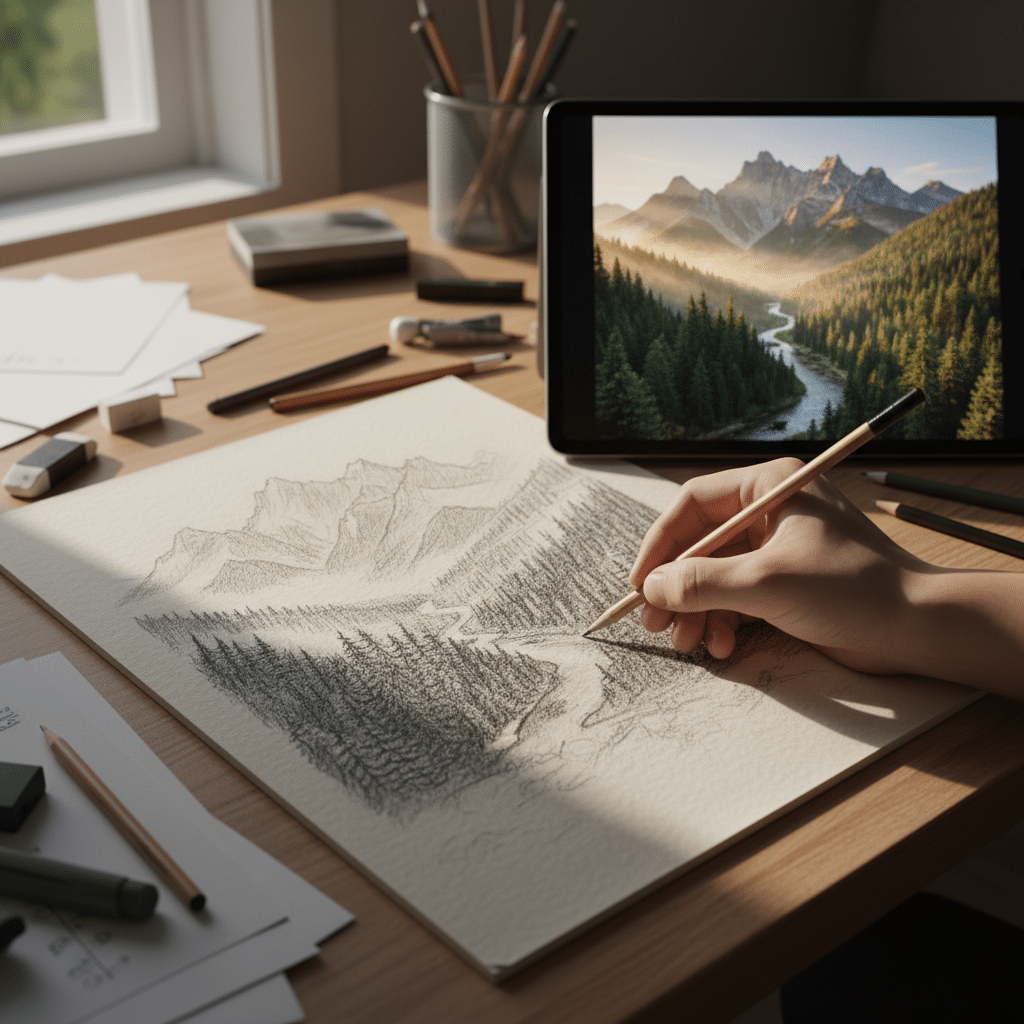
Using reference photos is a time-honored practice that helps artists learn to see and translate the world around them. It’s an invaluable tool for growth.
Unleash Your Creativity, One Line at a Time
Embarking on a daily drawing journey is one of the most rewarding commitments you can make to yourself and your creative spirit. It’s not about being “good” at drawing; it’s about showing up, observing, experimenting, and finding joy in the process. Each of these 8 daily drawing ideas offers a unique pathway to artistic growth, helping you build confidence, sharpen your observational skills, and unleash your imagination.
Remember, consistency trumps intensity. A small sketch every day is far more beneficial than sporadic, hours-long drawing sessions. Don’t let the fear of making mistakes hold you back; every line, every smudge, every “failed” drawing is a valuable lesson. Your sketchbook is your personal playground, a safe space for exploration and expression.
So, grab your favorite pencil and a piece of paper. Pick one of these ideas and just start. You might be surprised at how much you discover about the world, and about yourself, with just a few strokes a day.
What are you waiting for? Your artistic journey begins now!
- 2.6Kshares
- Facebook0
- Pinterest2.6K
- Twitter0
- Reddit0