Key Takeaways
- Ceramic coatings provide long-lasting protection for automotive paint, shielding against UV rays, oxidation, minor scratches, and chemical contaminants.
- The hydrophobic nature of ceramic coatings makes water and grime bead off, reducing cleaning time and maintenance frequency.
- Proper preparation, including thorough washing, decontamination, and polishing, is essential for optimal adhesion and durability.
- Applying the coating in a controlled environment and following the manufacturer’s instructions ensures professional-grade results.
- Post-application care, including gentle washing and avoiding harsh chemicals, prolongs the life and performance of the coating.
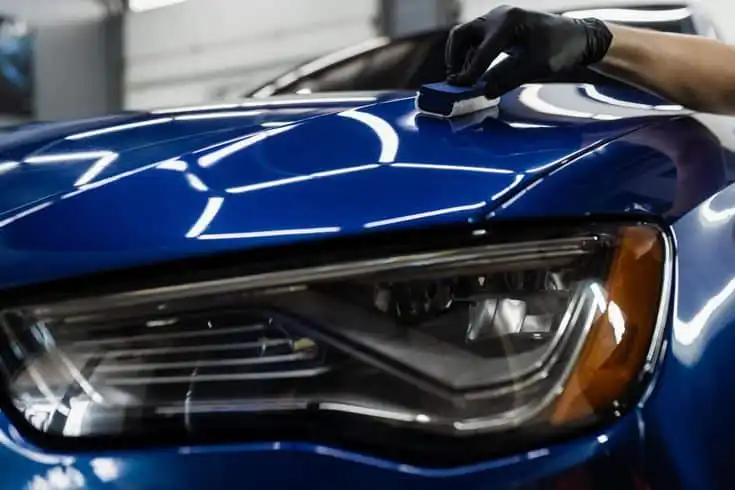
Protecting your car’s paint and maintaining a showroom shine isn’t just for professionals. With the right approach and proper technique, you can achieve a long-lasting, glossy finish on your own. Whether you want better scratch resistance or reduced maintenance, applying ceramic coating at home is a cost-effective way to keep your vehicle looking new. If you’re looking for professional services, you can also explore ceramic coating for cars in Orlando, FL, for expert help and guaranteed results.
Ceramic coatings have gained significant popularity among car owners who prioritize preservation, protection, and aesthetics. They provide an added layer of durability against weather, road salts, and chemical exposures, ensuring your car maintains its vibrancy. By following this comprehensive guide, you’ll understand the entire process, from material selection to post-application maintenance, for optimum results.
It’s critical to note that proper preparation and application technique are necessary for professional-grade protection. This article breaks down the steps, tools, and common pitfalls to give you confidence and clarity throughout the project.
Understanding Ceramic Coating
Ceramic coatings are liquid polymers engineered to bond directly with automotive paint, forming a robust shield against environmental damage. Unlike traditional waxes and sealants, ceramic coatings use nanotechnology to penetrate the paint surface on a molecular level. The result is a hydrophobic, glossy, and highly durable finish that resists stains, water spots, and fading caused by sun exposure.
Benefits of Ceramic Coating
- Enhanced Protection: Guards against UV rays, oxidation, minor abrasions, and chemical contaminants.
- Hydrophobic Qualities: Water and grime bead off the surface, making the car easier to wash and less likely to stain.
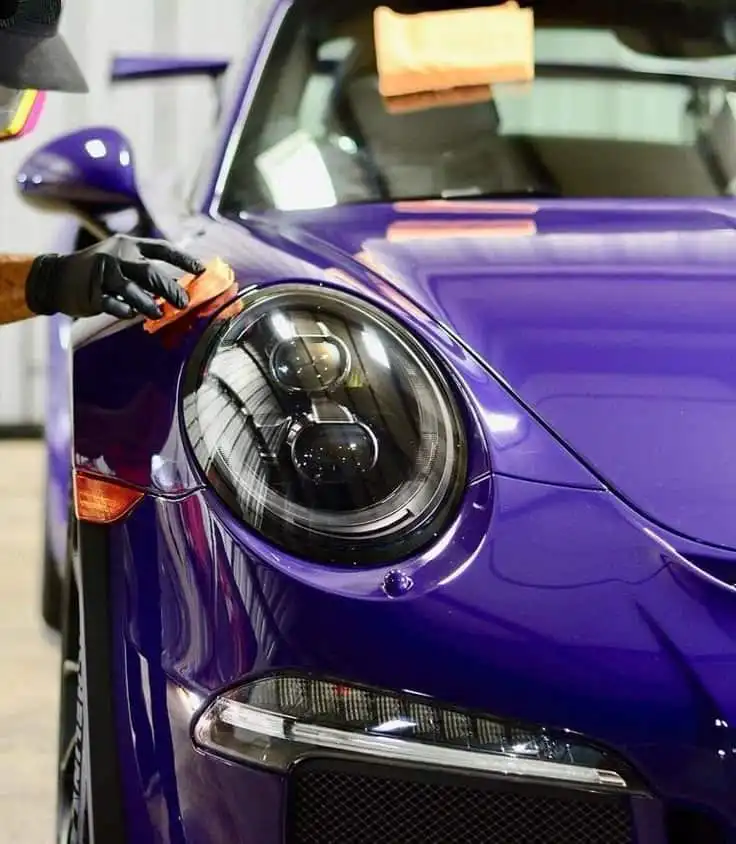
- Elevated Appearance: Deepens gloss and improves the clarity of your vehicle’s exterior.
- Long-Term Investment: Well-maintained ceramic coatings can last for several years, reducing the need for frequent detailing.
Essential Tools and Materials
Gathering the correct materials ensures a smooth and effective application process. Here’s what you’ll need for optimal results:
- High-quality ceramic coating kit
- Microfiber towels (multiple)
- Applicator pads or suede cloths are included with your kit
- Clay bar or clay mitt for paint decontamination
- pH-neutral car wash soap
- Isopropyl alcohol (IPA) solution for paint preparation
- Protective gloves
Preparation Steps

- Wash the Car Thoroughly: Use the two-bucket method and a pH-neutral soap for initial cleaning. This reduces the risk of swirl marks and ensures all contaminants are removed from the surface.
- Decontaminate the Paint: Spray on iron remover to dissolve embedded brake dust and industrial fallout. Finish with a clay bar to create a smooth, contaminant-free base.
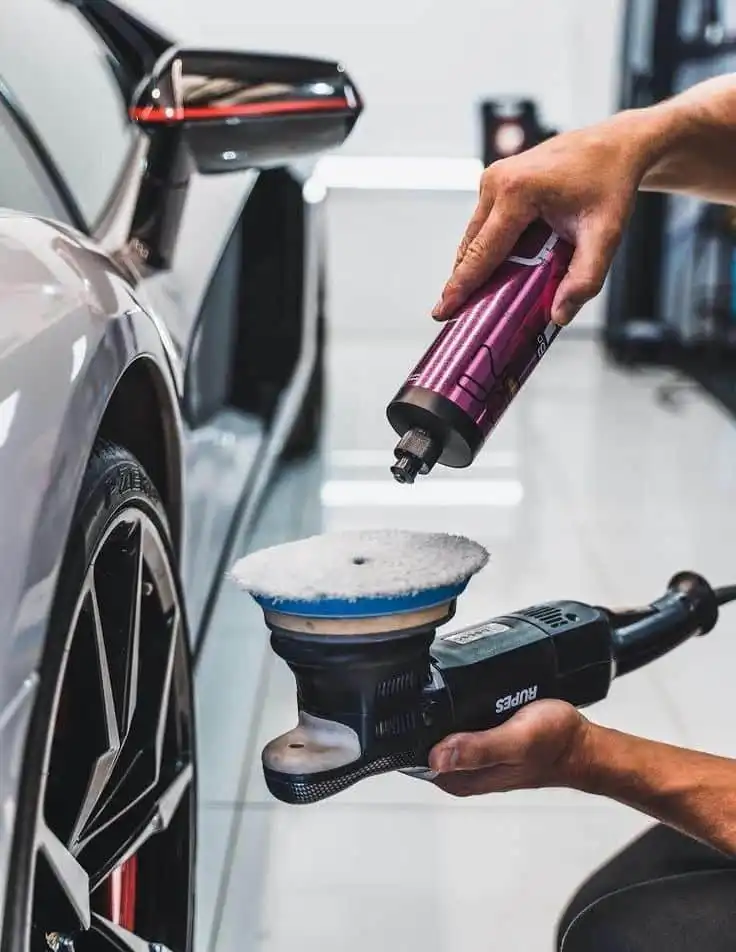
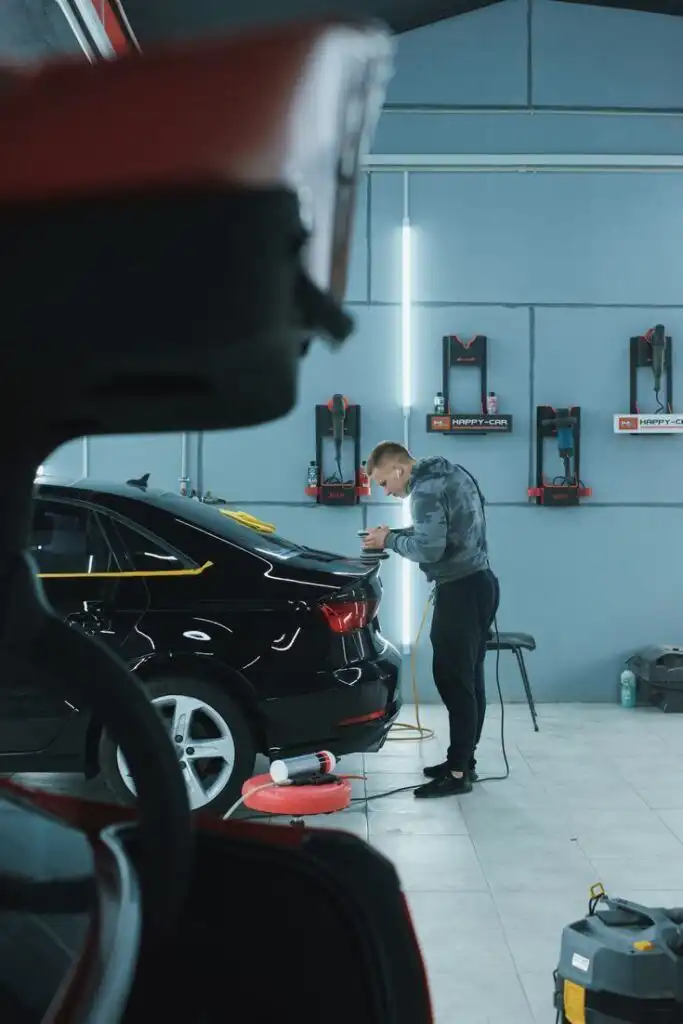
- Polish the Paint (Optional): If your car’s paint has micro-scratches or swirl marks, use a dual-action polisher with a fine polish. Those searching for automotive ceramic coating near me often take this step to enhance clarity and facilitate more effective adhesion of the coating.
- Final IPA Wipe Down: Apply an isopropyl alcohol solution using a microfiber towel to remove any polish residue, oils, or remaining contaminants.
Application Process
- Choose the Right Environment: Select a shaded, enclosed, and dust-free area with temperatures ideally between 50°F and 70°F for consistent results.
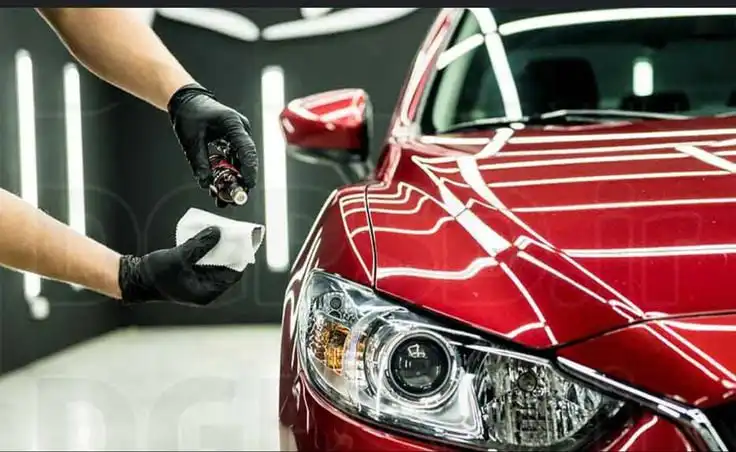
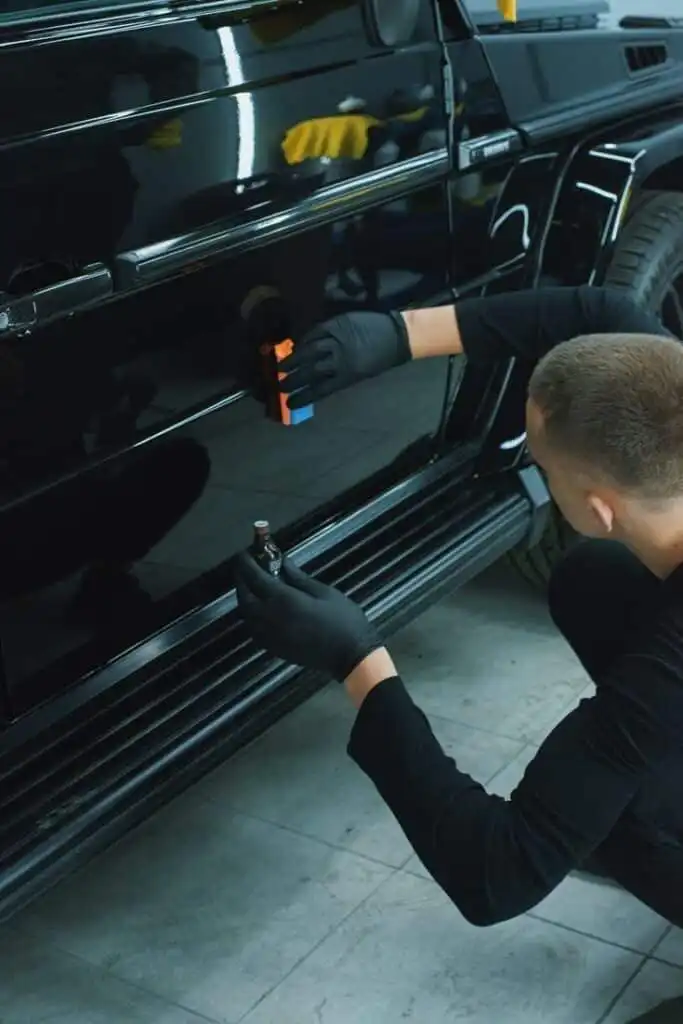
- Apply the Coating: Pour a few drops of ceramic liquid onto the applicator pad. Work in small sections, spreading the product in overlapping, crosshatch strokes for full coverage.
- Wait for Flash Time: Allow the coating to “flash” and turn hazy (this typically takes 30 seconds to a few minutes; check your product instructions for specifics).
- Buff Off Excess: Using a clean, dry microfiber towel, gently buff off the residue to prevent streaks and achieve a glass-like finish.
Post-Application Care
- Initial Curing: Keep the vehicle dry and away from dust and debris for at least 24 hours after application.
- Full Curing: Avoid washing or exposing the car to harsh chemicals or bad weather for at least 7 days, allowing the ceramic coating to cure completely.
Maintenance Tips
- Always use pH-neutral soaps when washing your car.
- Hand-wash rather than use automated car washes, especially those with brushes that can mar the finish.
- Apply a ceramic spray sealant after routine washes to maintain the car’s hydrophobic and protective properties.
Common Mistakes to Avoid
- Neglecting Preparation Steps: Skipping the clay bar treatment or IPA wipe-down can lead to poor product adhesion and diminished lasting power.
- Applying in Direct Sunlight: Working in sunlight can cause premature curing, resulting in streaks or high spots that are difficult to remove.
- Excess Product Usage: Apply only a thin, even layer; overuse can cause unevenness and make buffing difficult.
Final Thoughts
Ceramic coatings offer a high-value solution for protecting your vehicle while enhancing its appearance. Whether applied at home or professionally, the key to success lies in proper preparation, precise application, and diligent maintenance. By investing time and care into the process, you’ll enjoy a durable, glossy finish that reduces cleaning efforts, maintains your car’s paint quality, and preserves its resale value. With consistent upkeep, a ceramic-coated vehicle remains a head-turning, showroom-worthy ride for years to come.
- 0shares
- Facebook0
- Pinterest0
- Twitter0
- Reddit0