
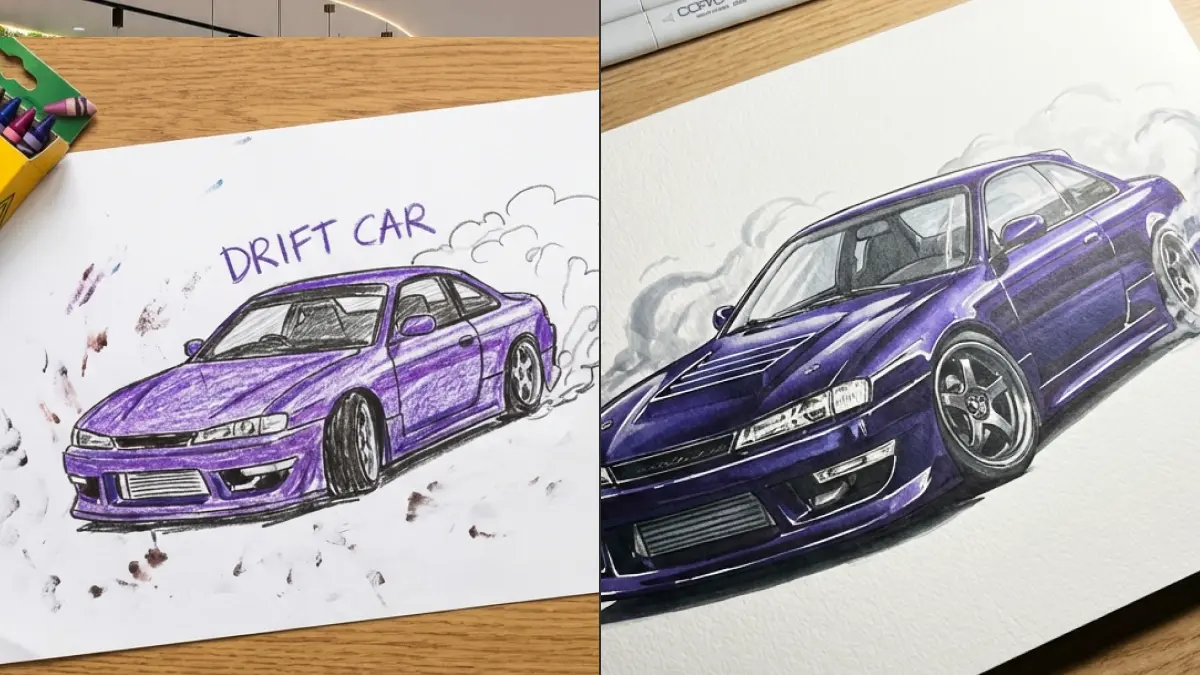
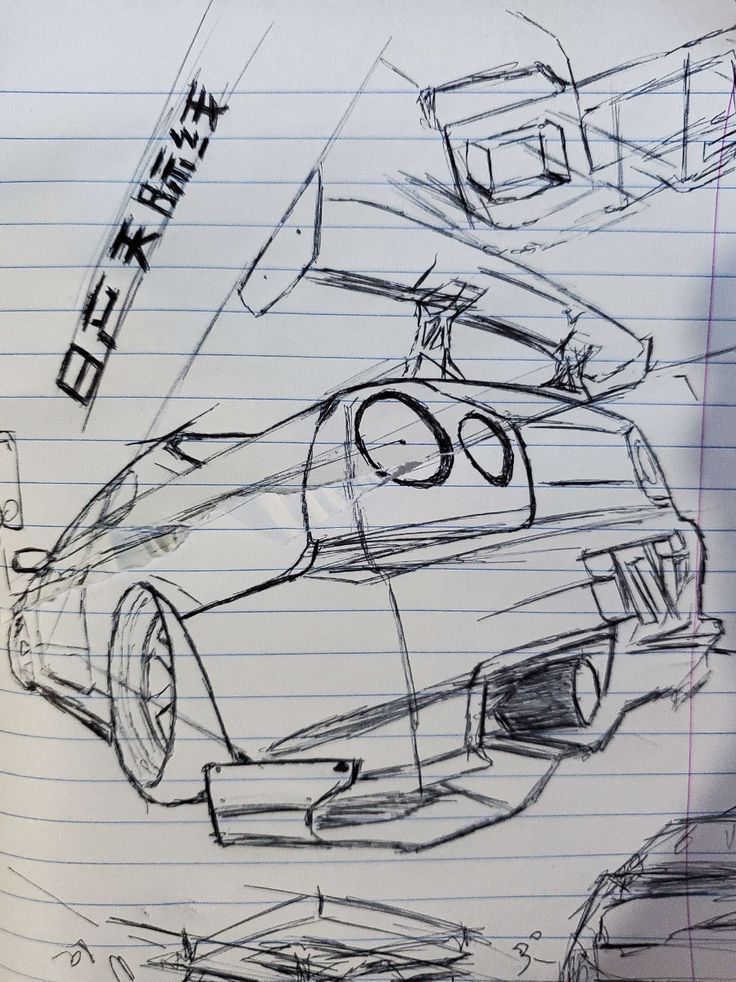
My first drift car drawing looked like an angry iguana sitting in a shoebox. I’d watched fifteen minutes of Formula Drift, grabbed a pencil, and produced something that vaguely suggested a vehicle in distress. The wheels were too small. The body sat too high. There was no sense of weight, no attitude, no smoke. It looked like a car drawn by someone who had heard cars described but never actually seen one.
The problem wasn’t that I couldn’t draw. It was that I didn’t yet understand what makes a drift car look like a drift car — the specific combination of stance, proportion, angle, and motion that separates a drawing that reads as ‘drifting’ from one that reads as ‘car, slightly crooked.’
That gap is exactly what this guide closes. We’ll work through a drift car drawing of a Nissan Silvia S14 in seven steps, from construction lines to finished colour. By the end, you’ll understand not just how to draw a drift car but why each decision works.
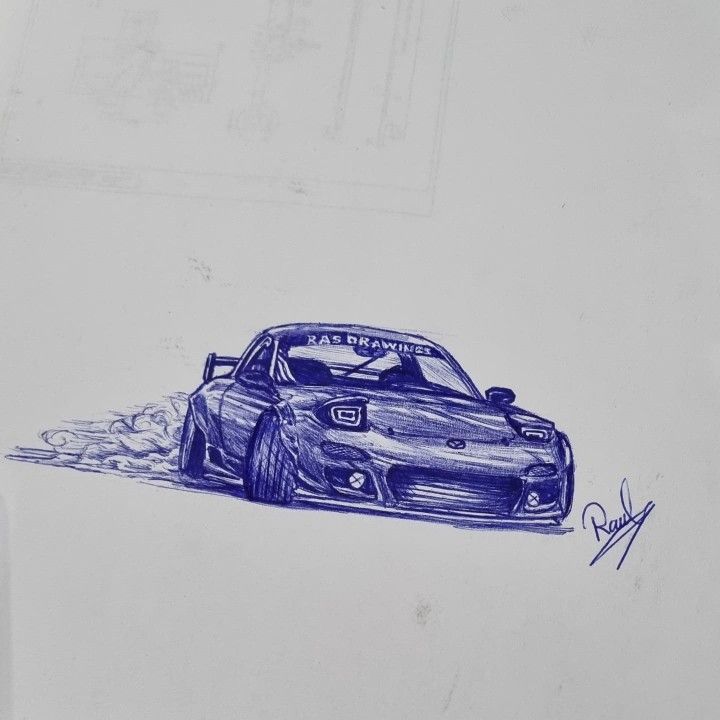
I remember being deeply impressed by the film The Fast and the Furious: Tokyo Drift, which perfectly captured Japanese street racing culture and the dynamics of the Japanese automobile industry. After choosing a superb reference from the film—a 1997 Mazda RX-7, one of the characters’ cars—I struggled with getting the wheels to rotate correctly, but two-point perspective helped.
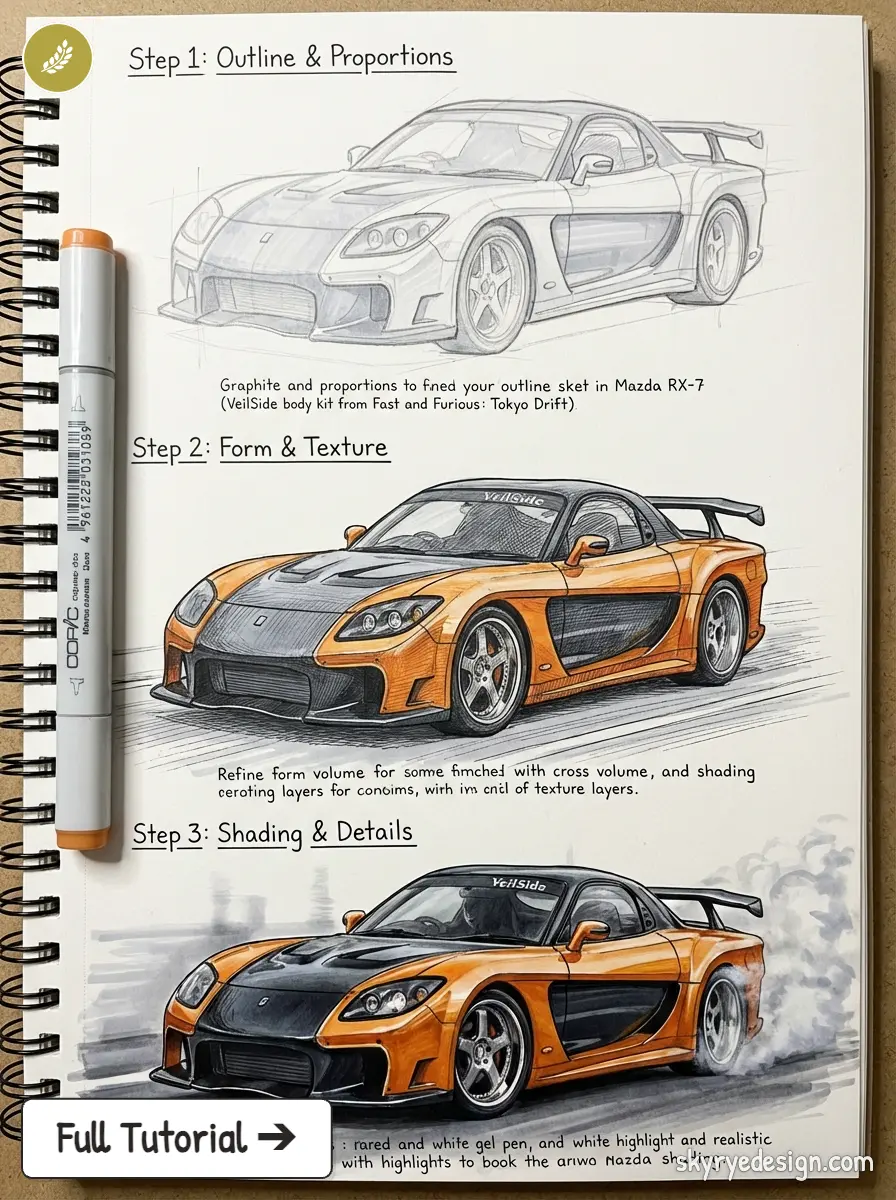
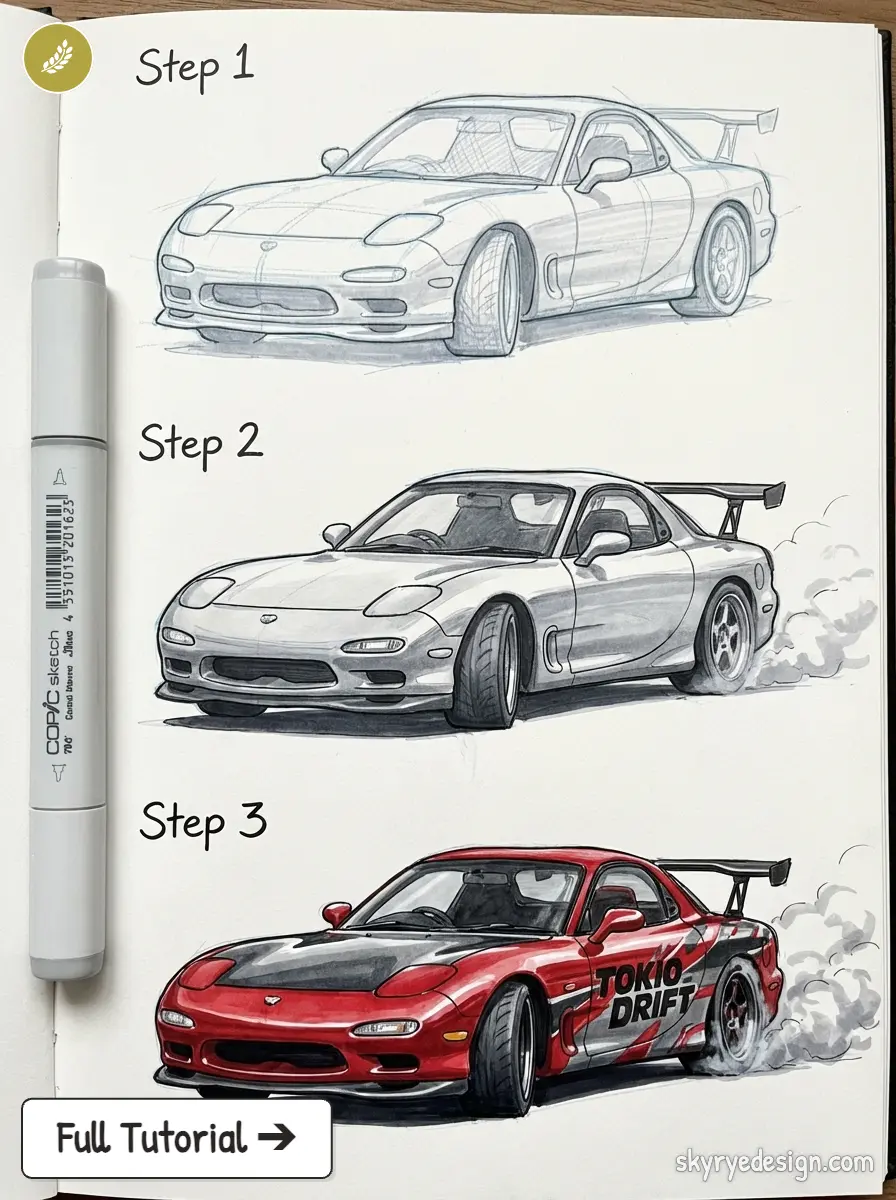
What Makes a Drift Car Look Like a Drift Car
Before touching pencil to paper, you need to understand the visual logic of drifting. Drift car drawing isn’t a regular car drawing with smoke added. The entire geometry of the image is different.
In a standard car drawing, the vehicle is level, symmetrical, and static. In a drift drawing, everything is rotated. The car’s body is angled relative to its direction of travel. The front wheels point opposite to the direction the rear is swinging. The body rolls toward the outside of the corner. Smoke trails from the rear tyres in a specific, physics-consistent direction. Get these relationships wrong and the car looks parked at an awkward angle. Get them right and the image has physical logic — a sense of real forces acting on a real machine.
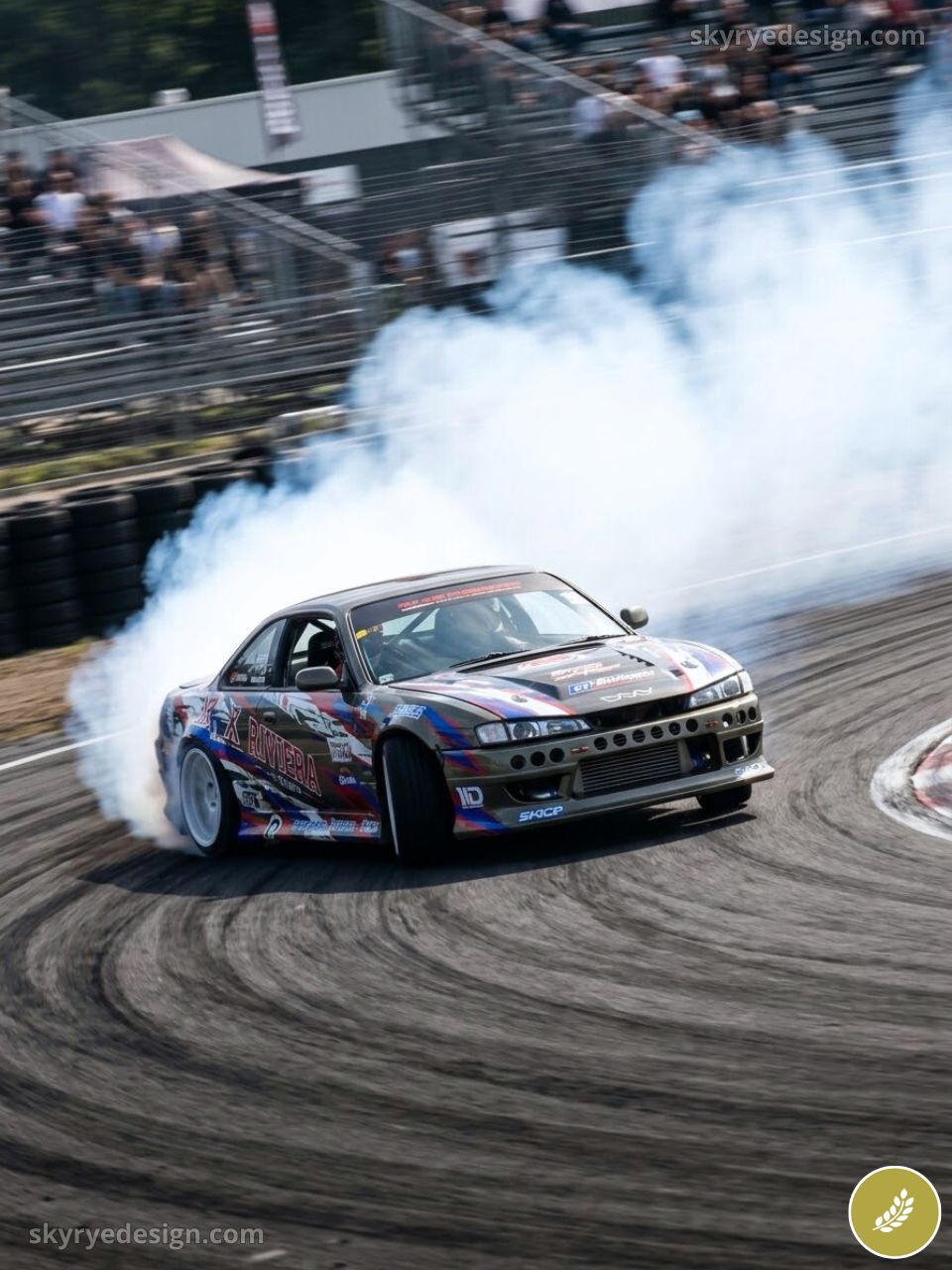
The Core Models and Why They Draw Differently
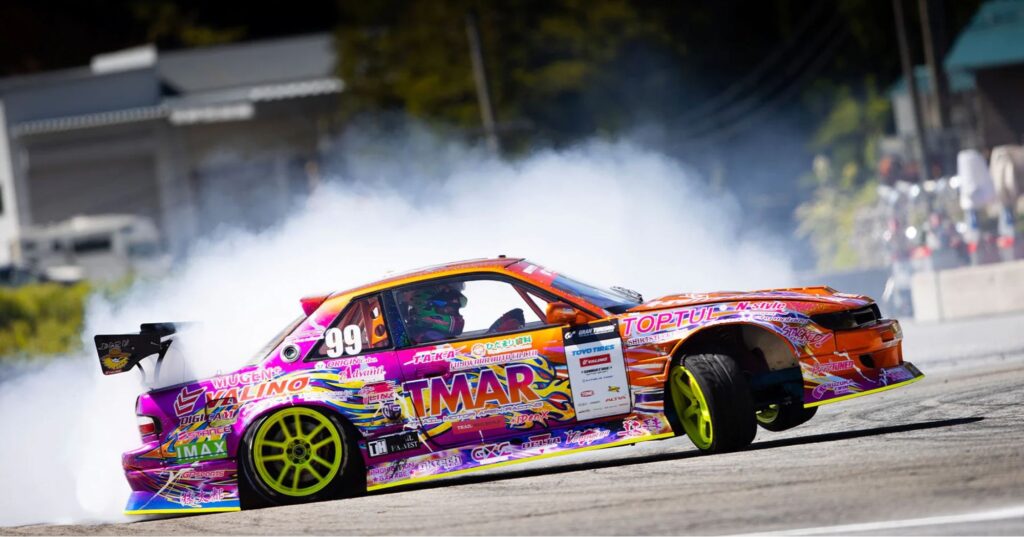
- Nissan Silvia S13/S14/S15. Long bonnet, low roofline, aggressive body kits. The S14 Kouki has a distinctive wide-mouth front end that’s immediately recognizable — and immediately wrong if you misread the proportions. The wheel arches flare significantly over stock.
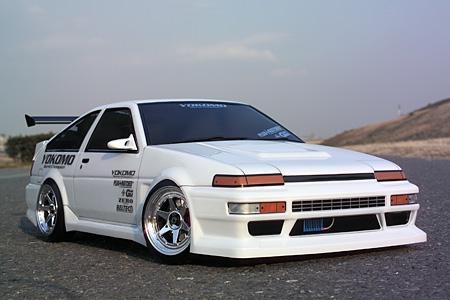
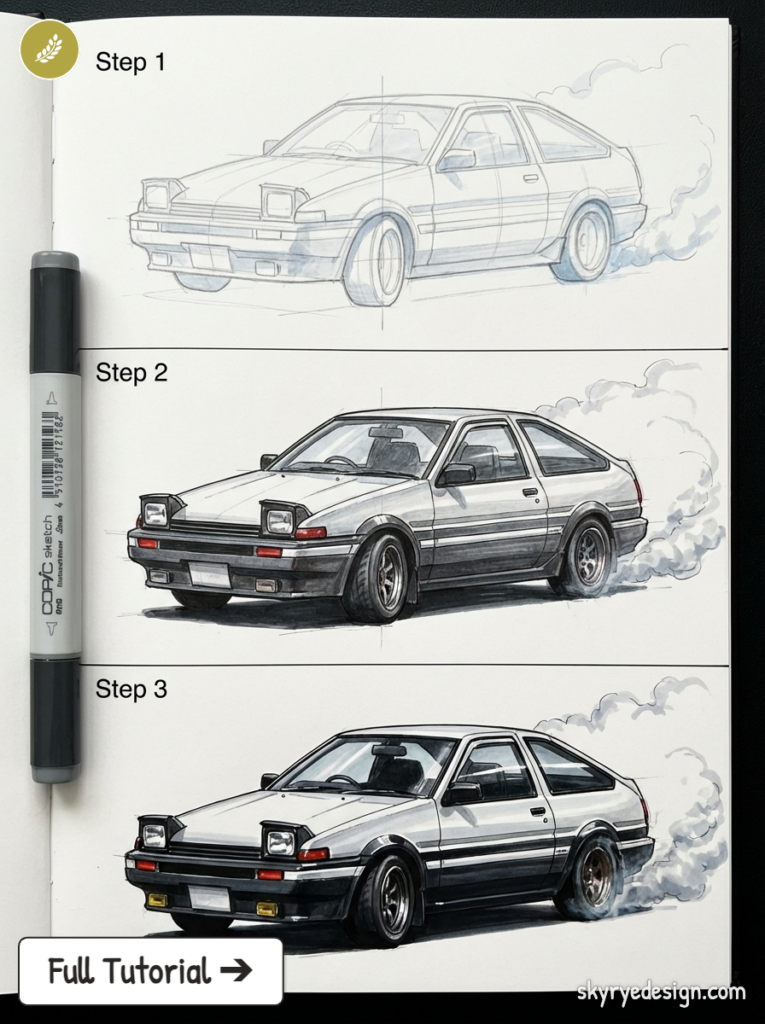
- Toyota AE86 (Hachi-Roku). Boxy, upright greenhouse, classic fastback or notchback silhouette. The angles are more angular and honest than modern cars. Popularised by Initial D — your audience will be particularly critical of proportion errors.
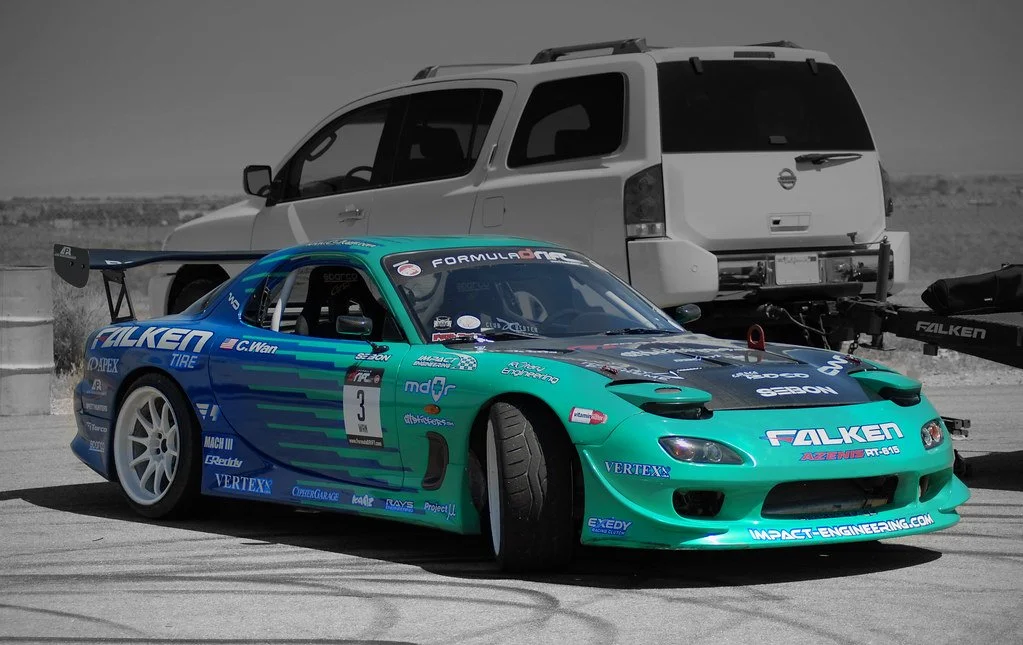
- Mazda RX-7 FD3S. Pop-up headlights, dramatically long bonnet, near-fastback roofline. One of the most beautiful silhouettes in Japanese car culture — and one of the hardest ones to get right.
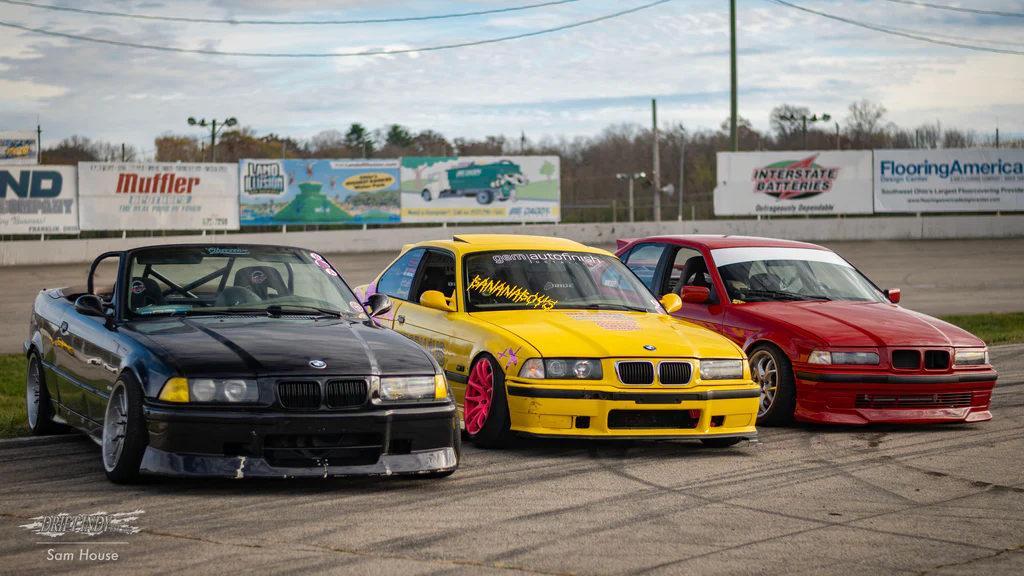
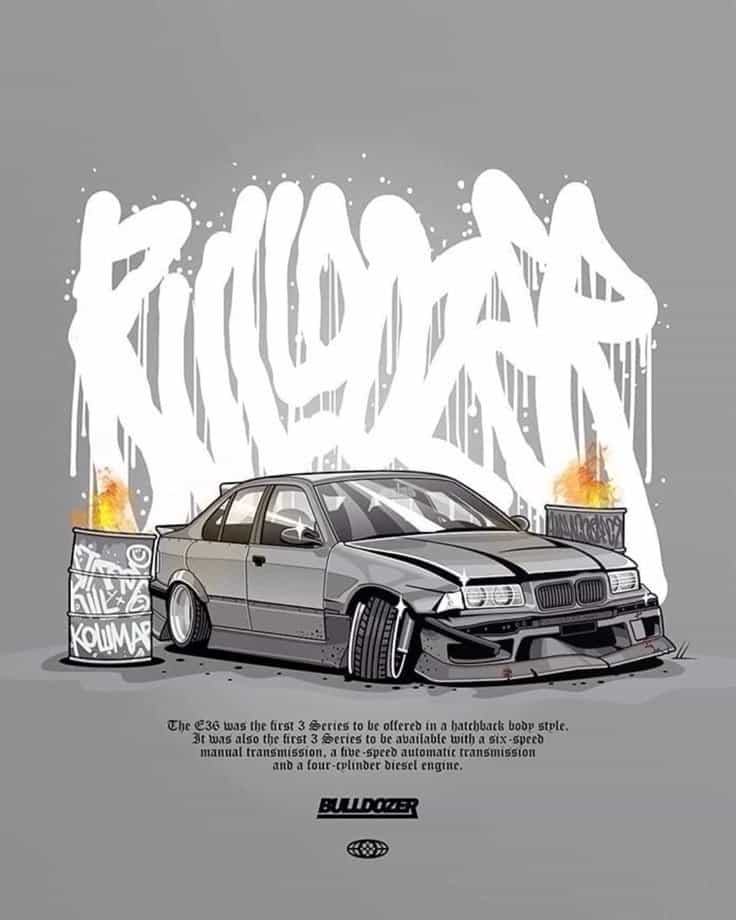
- BMW E36/E46. European proportions — longer wheelbase, more formal greenhouse, flatter bonnet line than Japanese equivalents. The BMW E36/E46 is increasingly common in European and American drift culture.
Tools: What Actually Makes a Difference
The materials you use matter more than most beginners realise. Start with quality drawing pencils in multiple grades — they give you the range from ghost-light construction lines to definitive shadow. Build up the rest gradually as your skills develop.
| Tool | Why you need it |
| HB / 2H pencil | Initial proportions and construction lines — light, easy to erase |
| 2B / 4B pencil | Shading wheel wells, underbody shadows, body contours |
| 0.05mm fineliner | Final crisp outlines, tyre tread, decal lettering, vent slats |
| Kneadable eraser | Lifting graphite cleanly, creating highlight streaks on panels |
| Copic Marker C1–C5 | Grey-scale shading, smoke rendering, tinted windows (~$7–9 each) |
| Brush markers (Copic / Winsor & Newton) | Flat colour fills on body panels — fire red, electric blue, matte black |
| White gel pen (Uni-ball Signo) | Specular highlights on glass, chrome wheels, wet tarmac reflections |
| Bristol board 250gsm | Smooth surface for markers + pencil — prevents bleed-through |
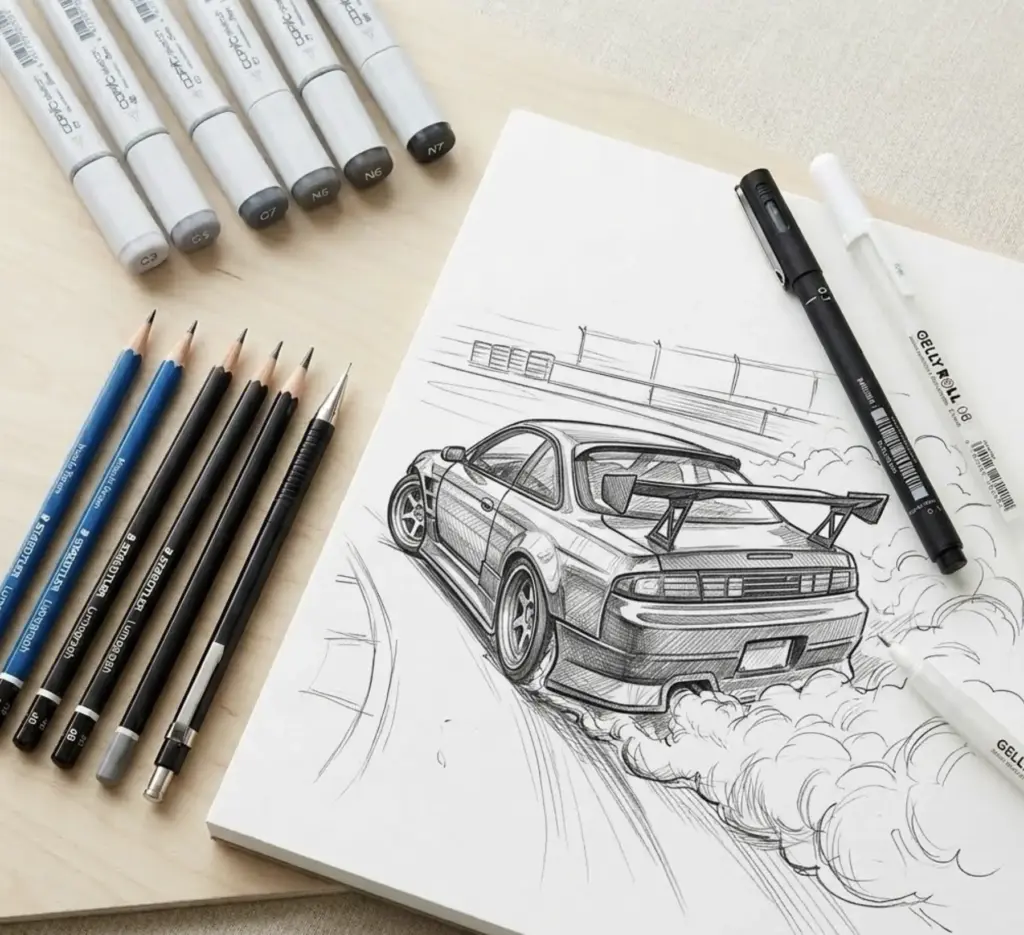
Bristol board is the one non-negotiable. For shading details — wheel wells, underbody shadow, the gap between bumper and bodywork — a set of Copic grey markers (C1, C3, C5) is the single biggest upgrade available. They cost around $7–9 each but last years and produce quality that pencil on smooth paper simply can’t replicate.
Reference: The Step Nobody Wants to Do
The fastest way to improve is to look longer before you draw. Most beginners dramatically underestimate how specific each model’s proportions are — the roofline height difference between an S14 and an AE86 is significant. The exact relationship between wheel diameter and wheelarch opening is distinctive per model.
Build a reference photo folder before every drawing session. Collect three-quarter front, three-quarter rear (where most drift action reads), pure side profile, and straight-on front. The three-quarter rear is where your drawing will spend most of its visual weight — collect at least five good references from this angle before starting.
For motion specifically, watch Formula Drift or D1GP footage and pause mid-drift. Study the body roll direction, the front wheel angle, how far the rear has stepped out. A 30-degree drift angle reads very differently from a 60-degree one. Know which one you’re drawing.
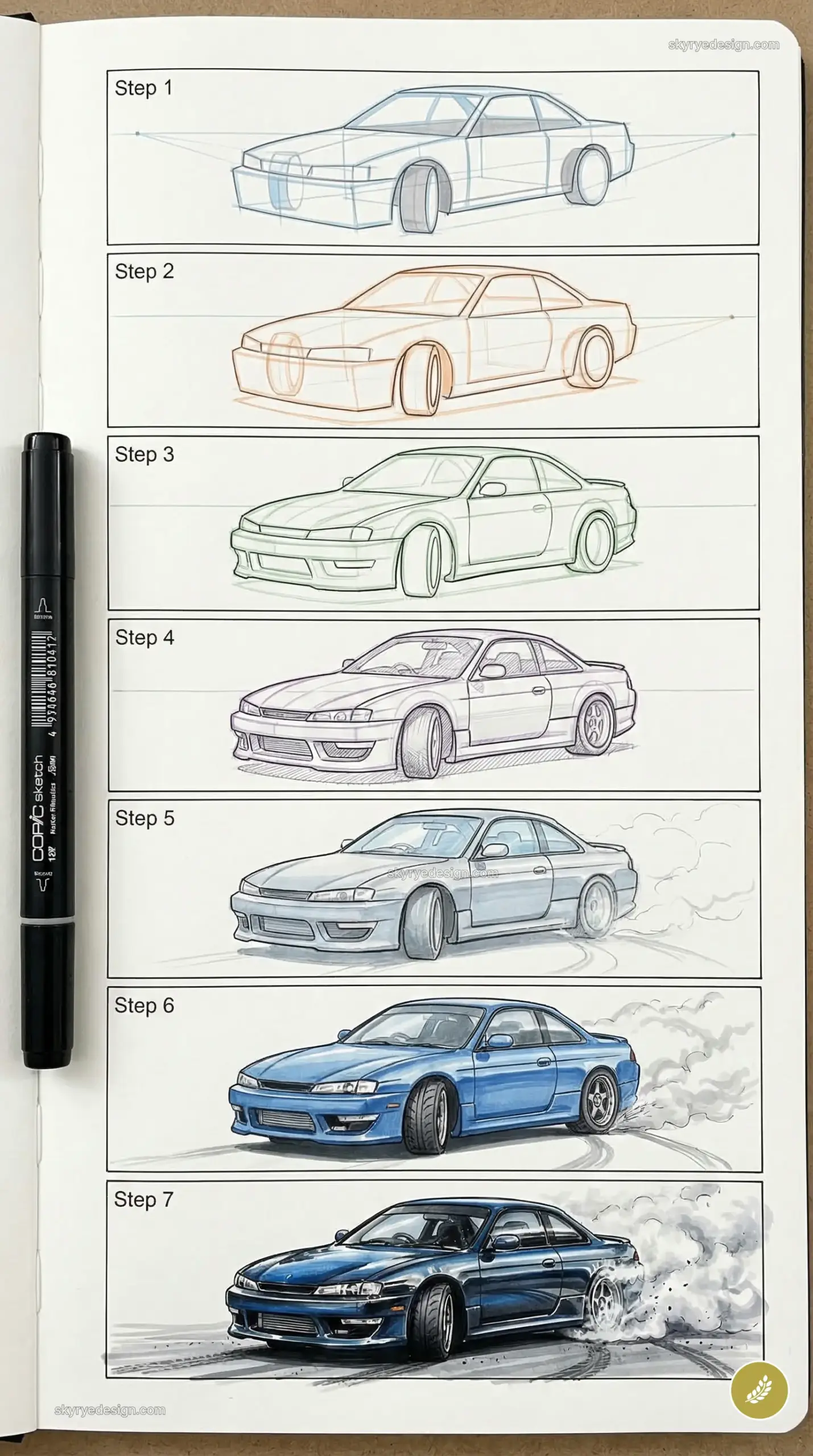
How to Draw a Drift Car: 7 Steps
We’re drawing a Nissan Silvia S14 in three-quarter rear view, mid-drift. This is the most satisfying and demanding composition — it shows the action, the car’s character, and the smoke simultaneously.
Step 1: Establish the Ground Plane and Drift Angle
Draw a horizontal line across the lower third of your page — your ground plane. Everything above it is a car, everything below is tarmac. Set two vanishing points well outside your page boundary.
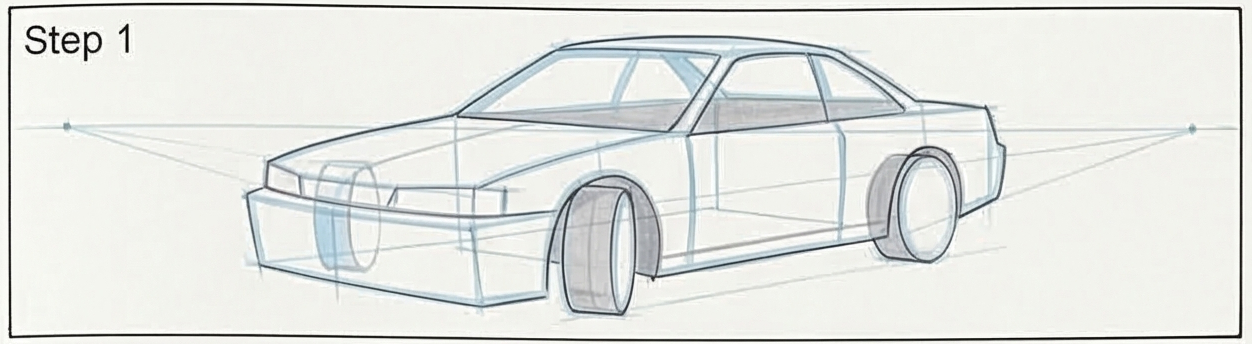
The car’s body angles toward one point; the direction of travel toward another. Sketch the car’s body angle relative to the direction of travel. For mid-angle drift: 35–45 degrees. Draw this as a single spine line — every subsequent line in the drawing derives from it. Lighter is better at this stage.
Step 2: Block the Body Mass
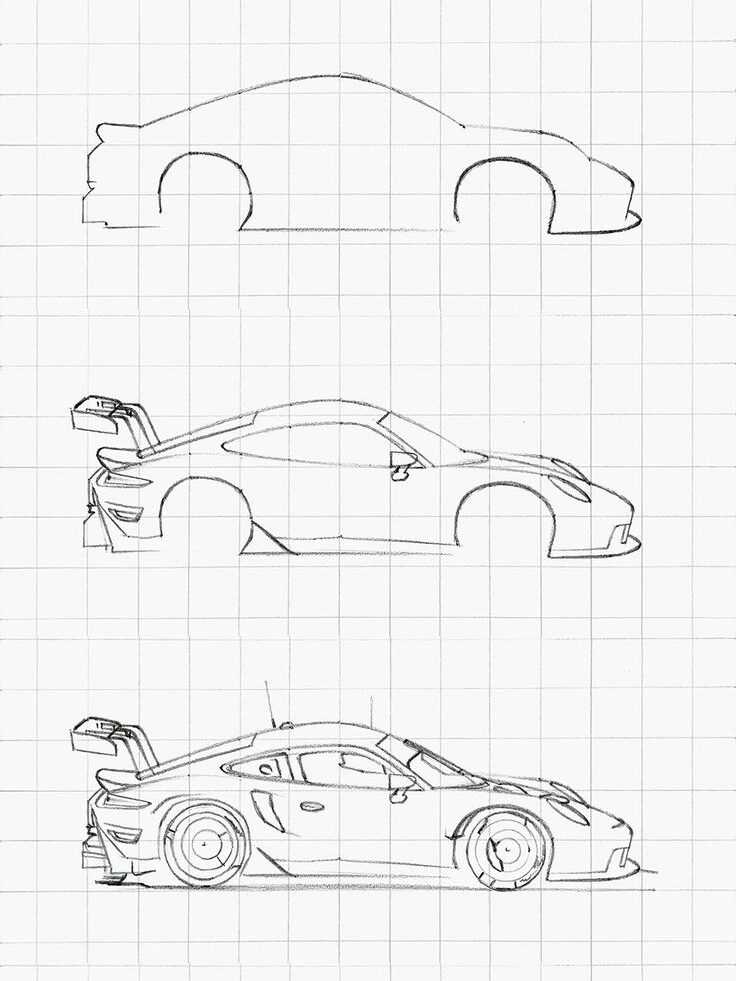
Using your drift angle as the spine, block in the body volume — a low, wide rectangle for the main body, a slightly narrower rectangle for the greenhouse. The S14’s roofline sits at roughly 55% of the car’s total height from ground to roof apex.
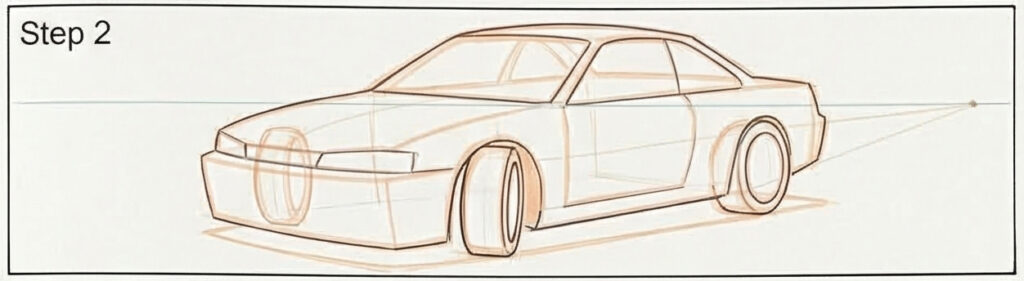
Tilt the top of the body rectangle 3–5 degrees toward the viewer — body roll. Subtle, but it makes an enormous difference. A perfectly vertical greenhouse reads as parked. A slightly tilted one reads as alive. Mark wheel centre positions. The S14 has a 2,525mm wheelbase — at 1:20 scale, that’s approximately 125mm on paper. The wheel diameter is roughly 40% of the car’s height from ground to roofline.
Step 3: Wheels and Stance
Drift cars run stretched tyres on wide wheels — low sidewall, wheel filling the arch aggressively. Draw rear wheels as full circles, sitting low in the wheel arch, with a minimal gap between the tyre crown and arch lip.
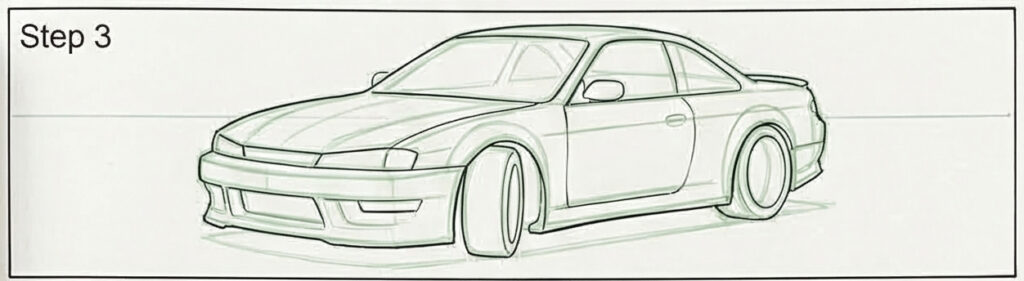
Front wheels are steered hard into the drift — turned toward the inside of the corner even as the car travels sideways. In a three-quarter rear view, you’ll see the front tyre at a significant angle, showing the full tread face depth. Rear tyres are spinning under power. At the contact patch, draw a few broken lines rather than a clean, defined edge — the spin implied, not explicit.
Step 4: Body Kit and Character Lines
The S14 Kouki’s defining features: wide front bumper with integrated lip, flared wheelarches, side skirts, rear bumper with diffuser. Work front to rear, systematically.
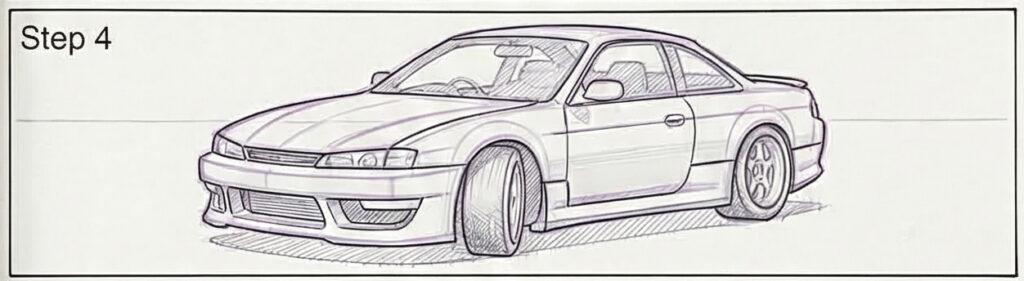
Find the distinctive form — the 2–3 character lines that define the model. The S14’s main character line runs from the front wheel arch to the rear door, rising slightly. Get that line right, and the body panels follow naturally. Body kit elements add visual weight low to the ground, reinforcing the aggressive planted stance that a drift car needs to read correctly.
Step 5: Smoke, Tyre Marks, Motion Lines
This is where a car drawing becomes a realistic motion scene. Smoke from the rear tyres trails behind and to the outside of the drift — it follows the arc of the car’s path, not a straight line back. Draw smoke with layered, irregular curves — varying thickness and density, denser near the tyre and diffusing as they trail. Avoid perfectly even, rhythmic waves.
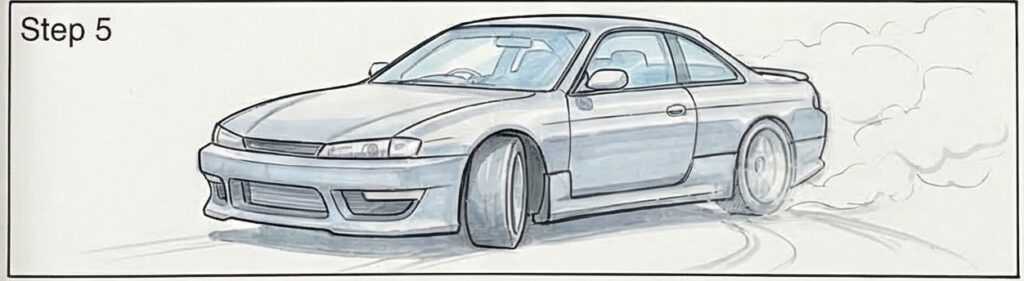
For dynamic lines and speed: 4–6 parallel lines behind the car’s body, slightly curved, that fade and break as they extend.Vary motion lines’ weight deliberately — heavier near the car, lighter and broken as they trail. This mimics how motion blur reads in photography and gives the drawing photographic logic.
Step 6: Inking
Go over final lines with a fineliner. Use 0.05mm for fine detail — tyre tread, vent slats, decal outlines — and 0.3–0.5mm for the main body silhouette.Vary line weight deliberately: heavier outlines where the car meets the background, lighter lines for panel breaks and interior surface detail.
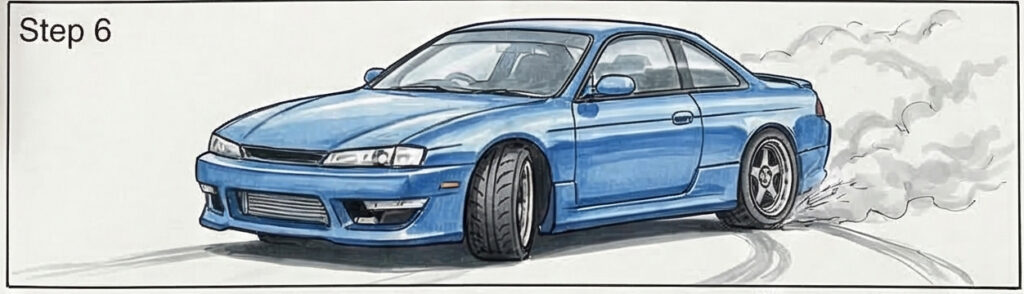
This hierarchy gives the drawing depth before any colour is applied. Ink smoke with irregular, varied strokes — no two lines are the same weight or length. For tyre marks, use a rougher, slightly broken line to suggest tarmac texture.
Step 7: Colour, Shading, and Highlights
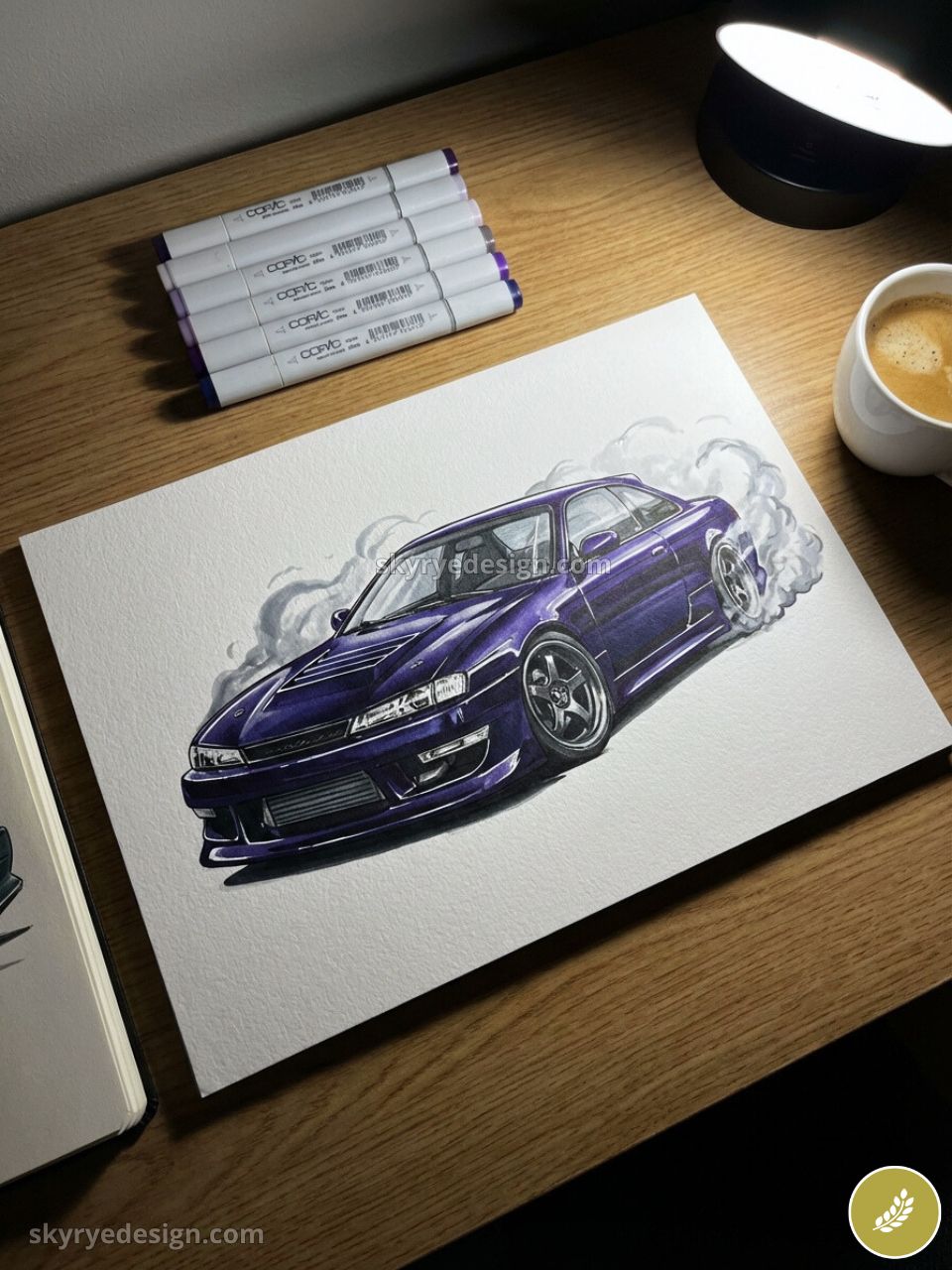
Lay down the base colour first across each panel zone. Classic S14 drift colours: midnight purple, bright red, competition white. Use markers for flat fill areas. For color choice and gradient work at panel edges, use coloured pencils to blend into the marker base.
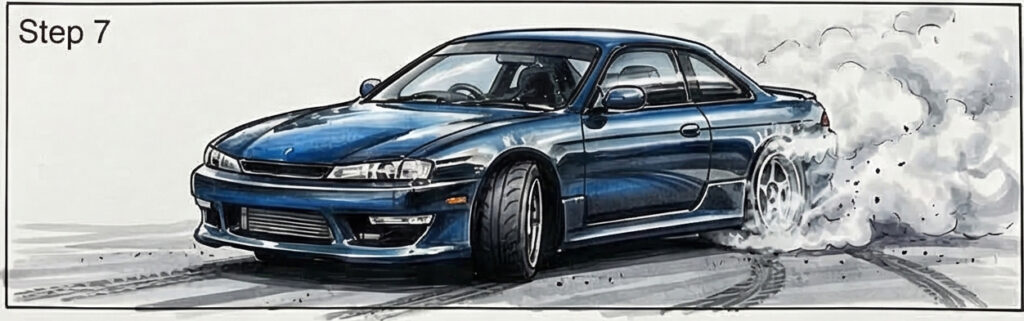
Add shading with Copic greys: C3 under the car and inside wheelarches, C5 for the deepest shadows — underside, darkest part of the tyre sidewall. The shadow under the car is the single most important shading element. It grounds the car on the tarmac. Render the drift effects smoke in layers: Copic W1 or C1 for the main volume, slightly darker at the base. Leave white paper at the smoke’s outer edges for a natural fade.
Finally: white gel pen. A hard horizontal stripe across the top of each body panel. A curved highlight on each tyre sidewall. A bright spot on the headlights and wheel centre caps. These white accents are the difference between student-level and finished.
Three Drift Art Styles Worth Studying
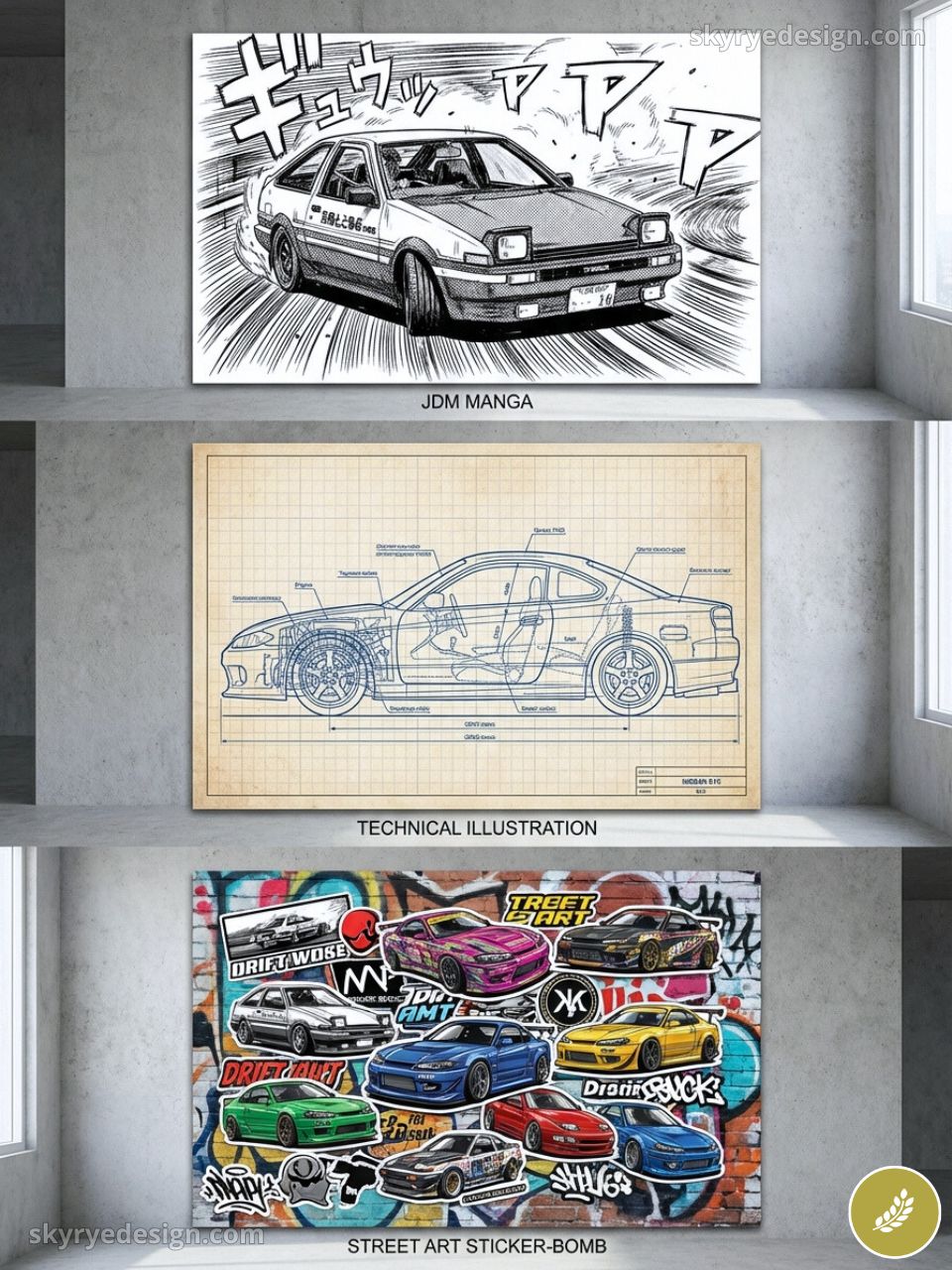
JDM Manga Style
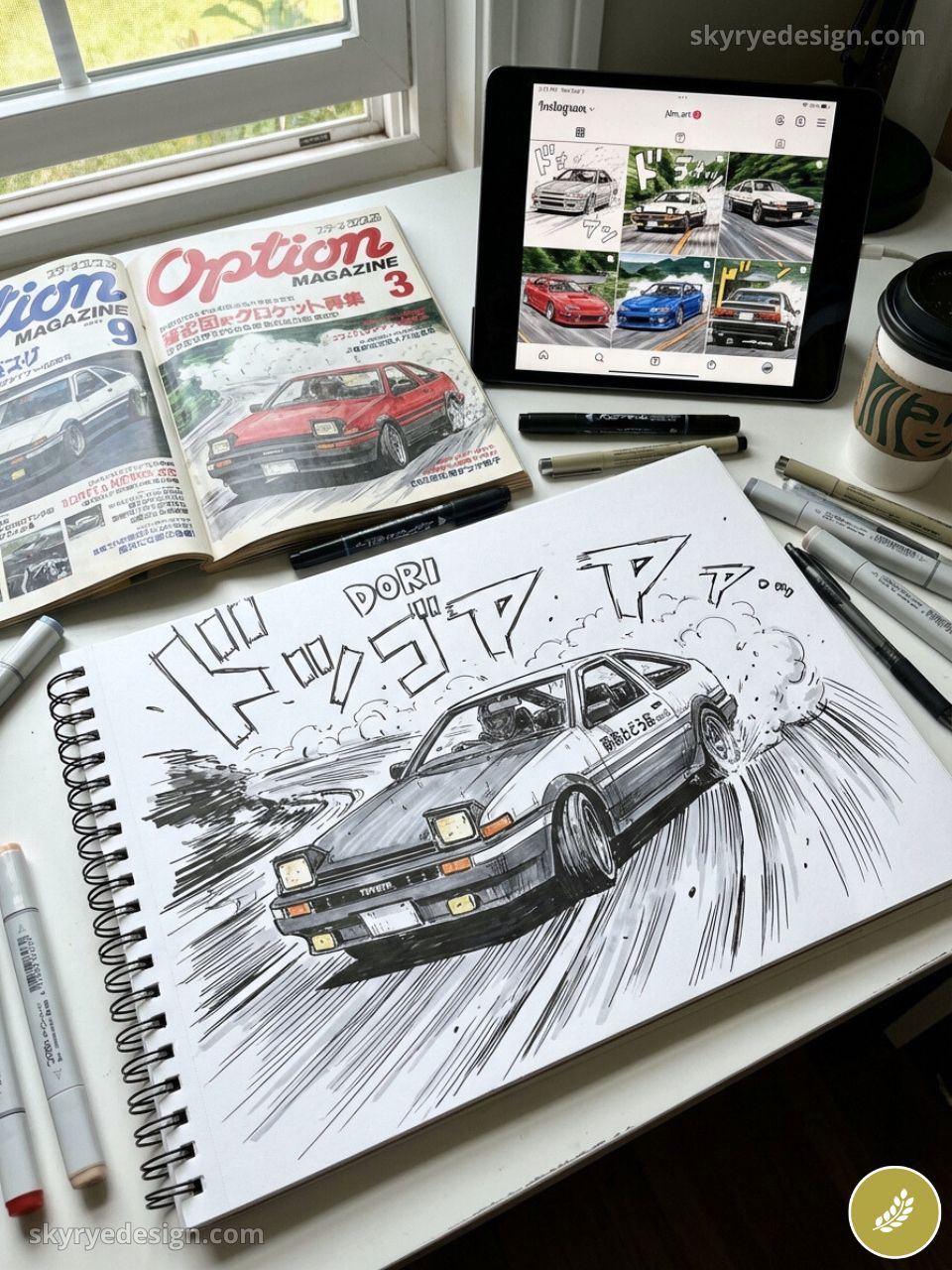
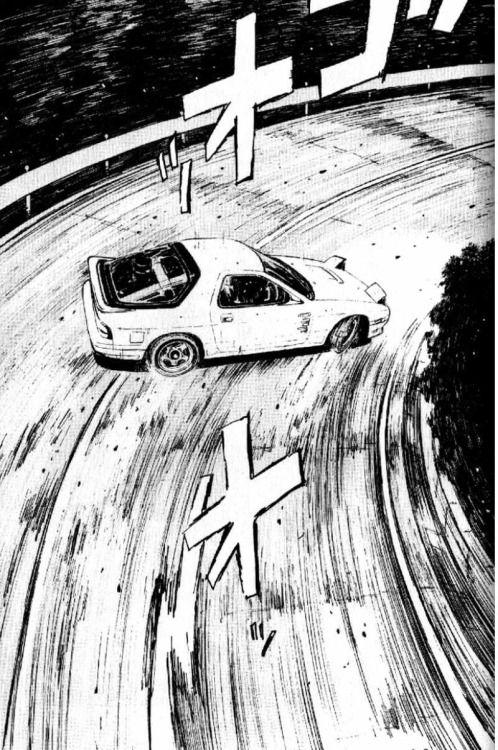
Derived from Initial D and Option Magazine — bold outlines, exaggerated perspective, speed lines that almost overwhelm the car, and smoke rendered as flat white graphic shapes. Cars are often slightly caricatured: stretched lower bodies, compressed glass areas. The energy comes from deliberate distortion, not accuracy.
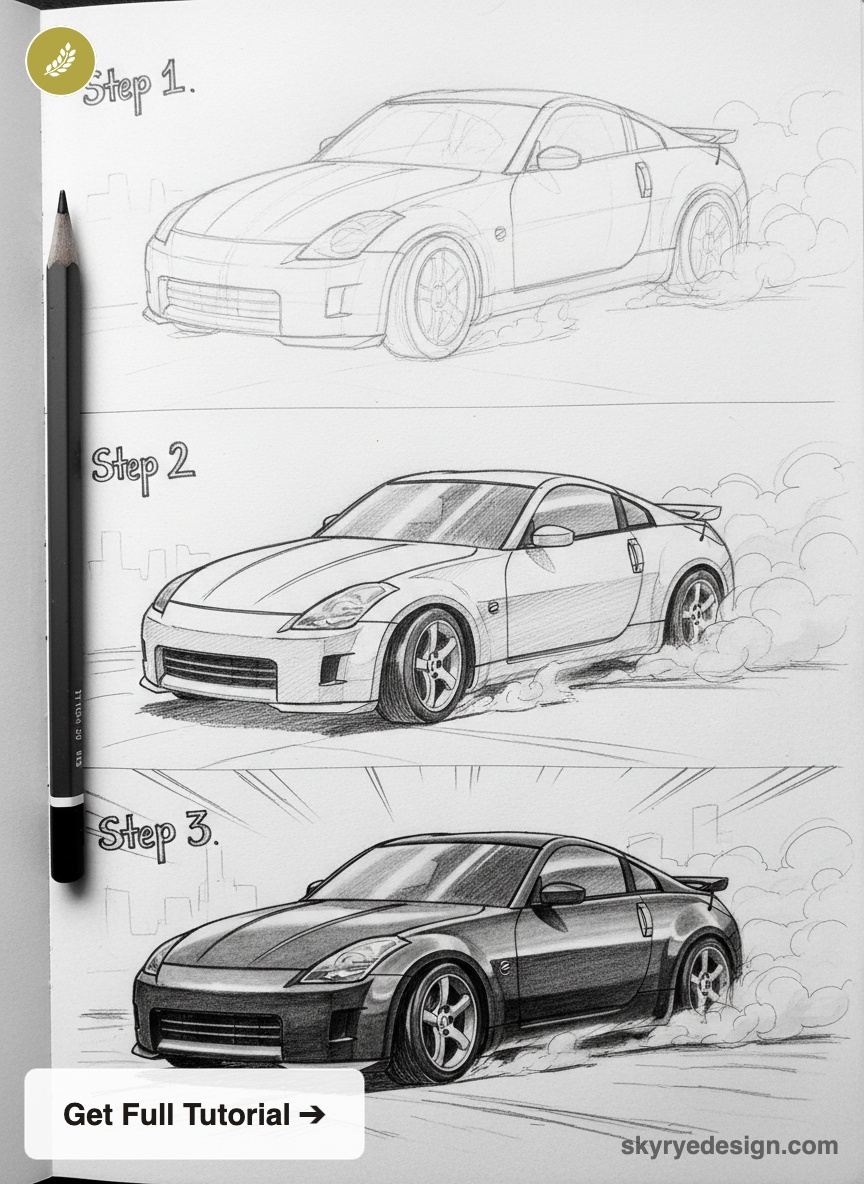
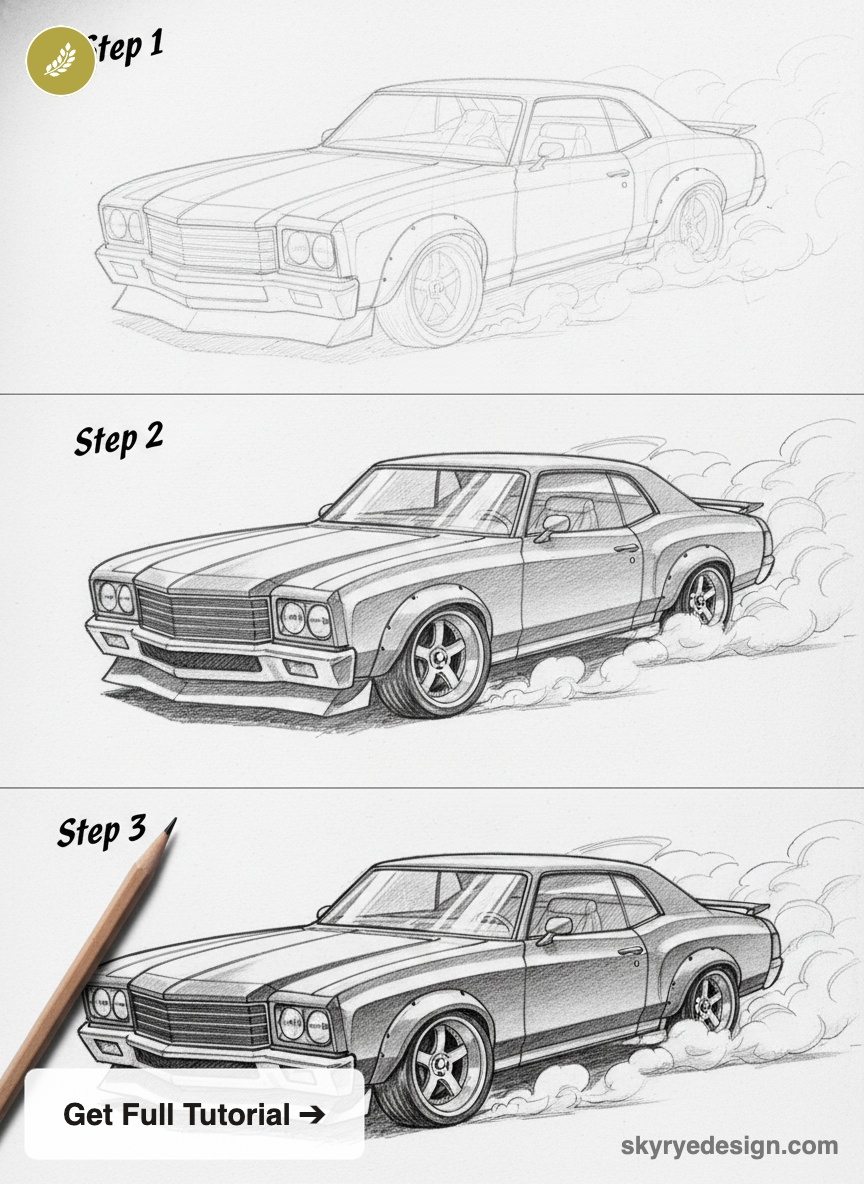
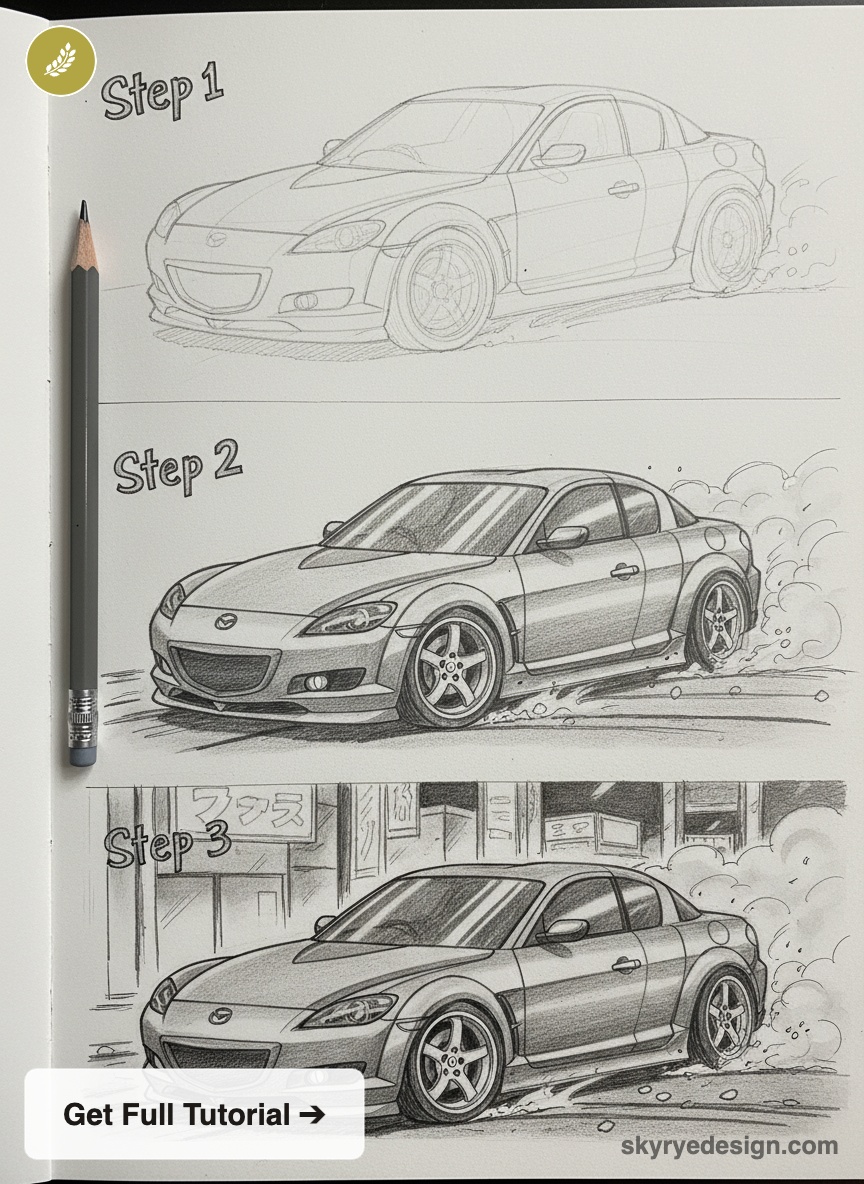
Technical Illustration Style
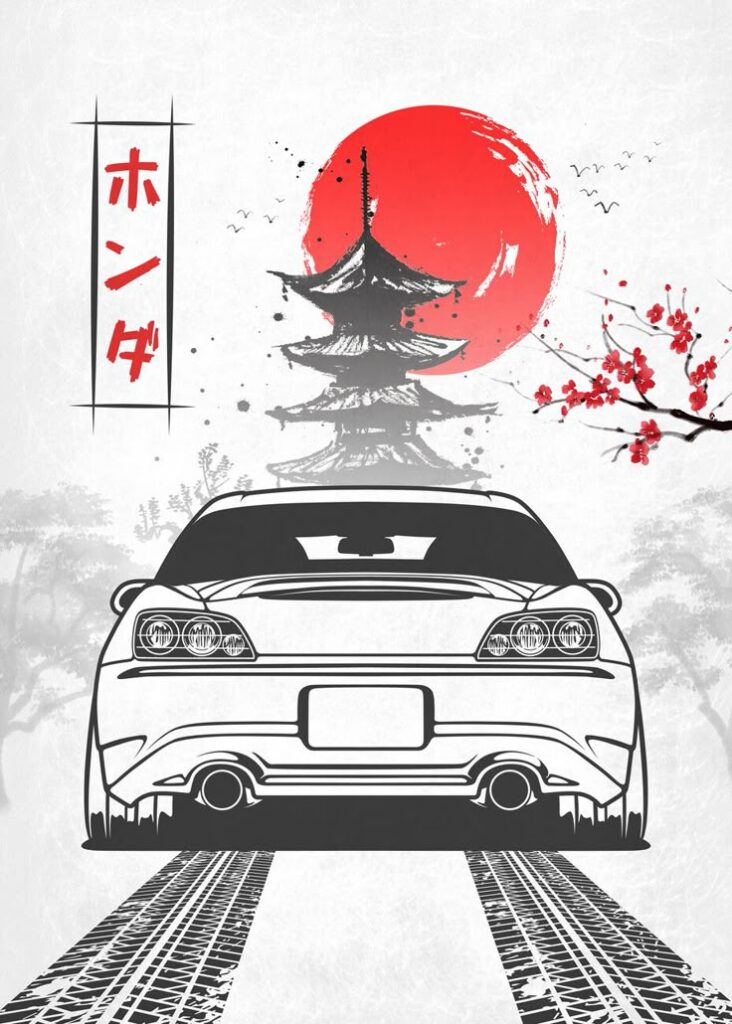
Closer to automotive design sketching — accurate proportions, clean line weight hierarchy, sophisticated rendering of metallic surfaces and glass. Motion effects are restrained. This style transfers directly to professional portfolio work and sits closest to what premium automotive brands commission.
Street Art / Sticker Bomb Style
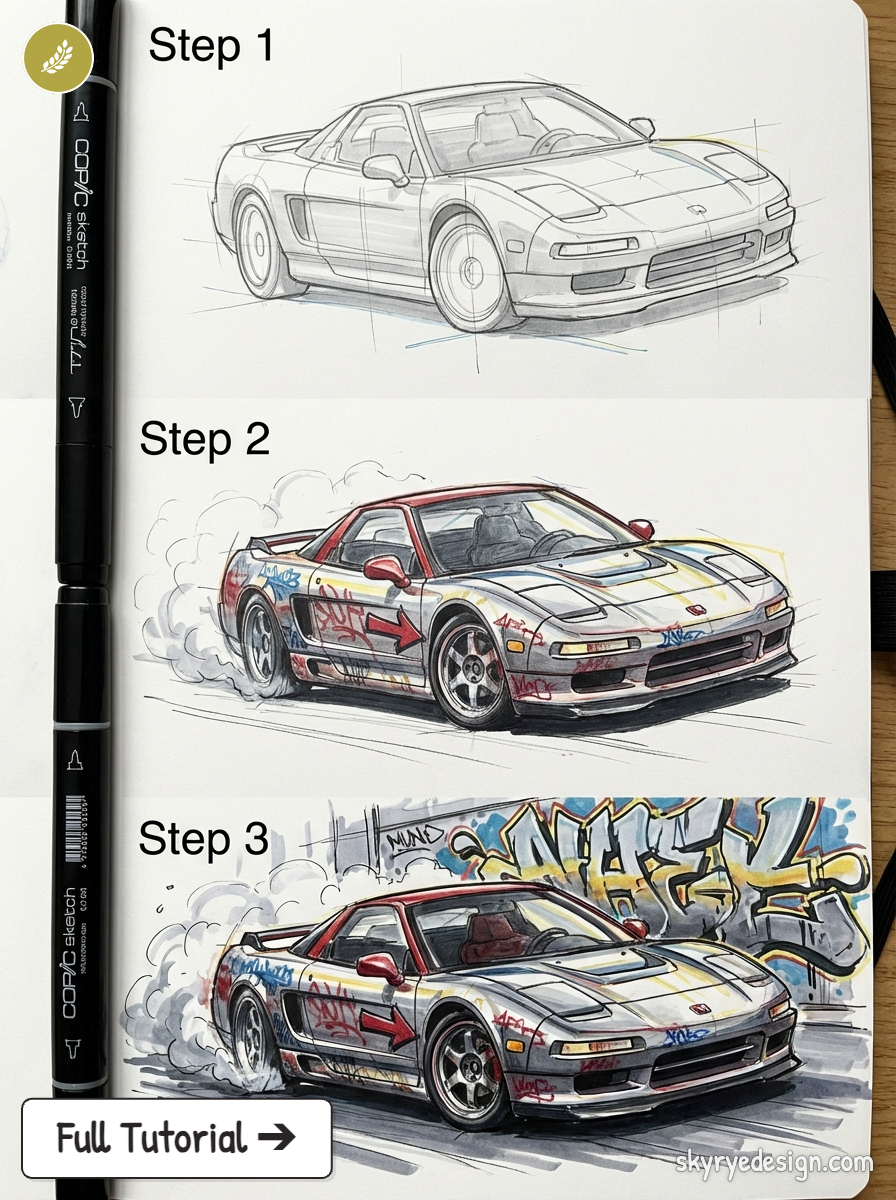
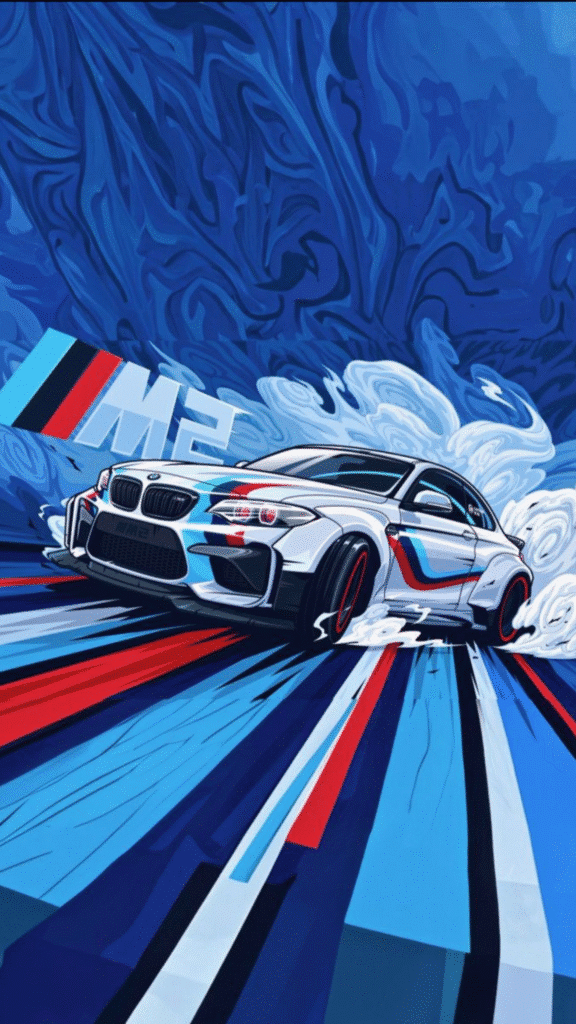
Bold flat colours, heavy outlines, often incorporating typography and graphic elements alongside the car. The drift effects in this style are graphic rather than realistic — hard-edged speed lines, geometric smoke, saturated body colours.
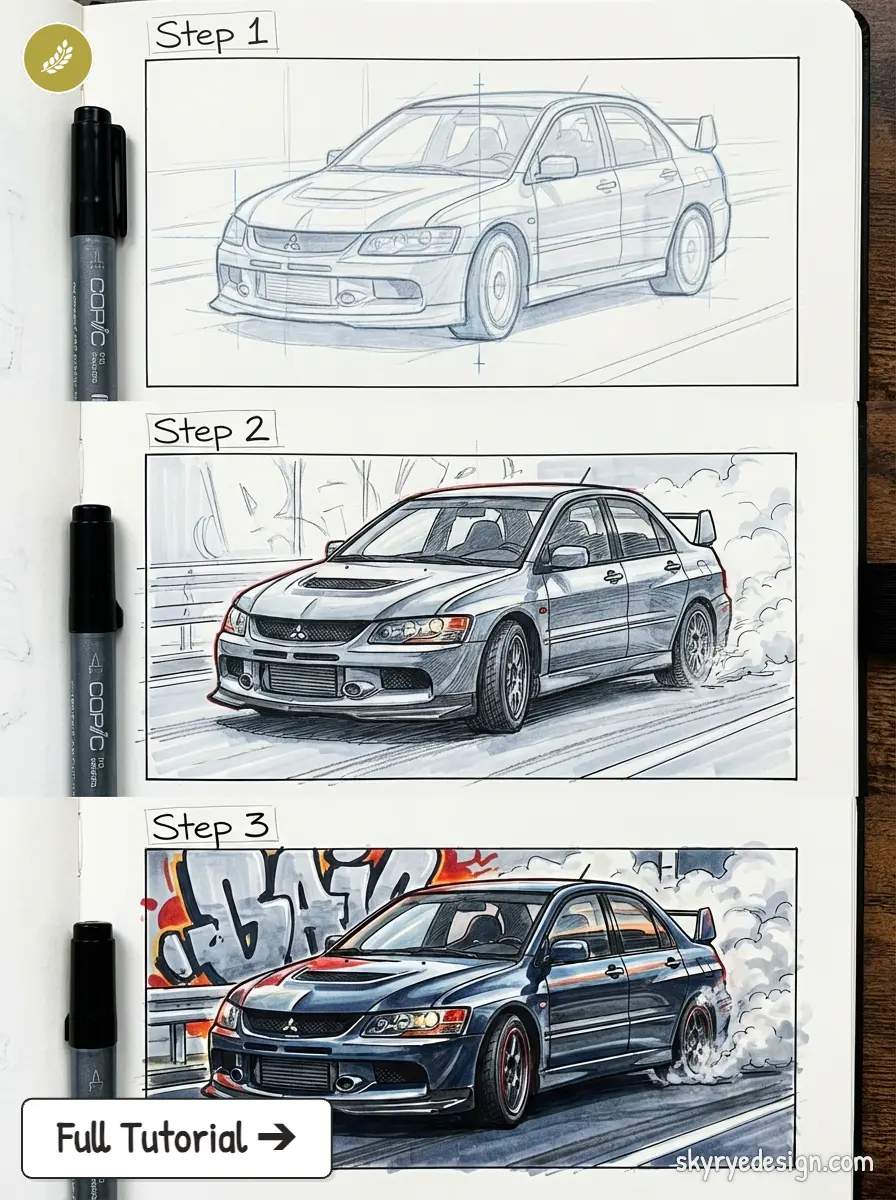
Particularly well-suited to digital illustration and merchandise applications.
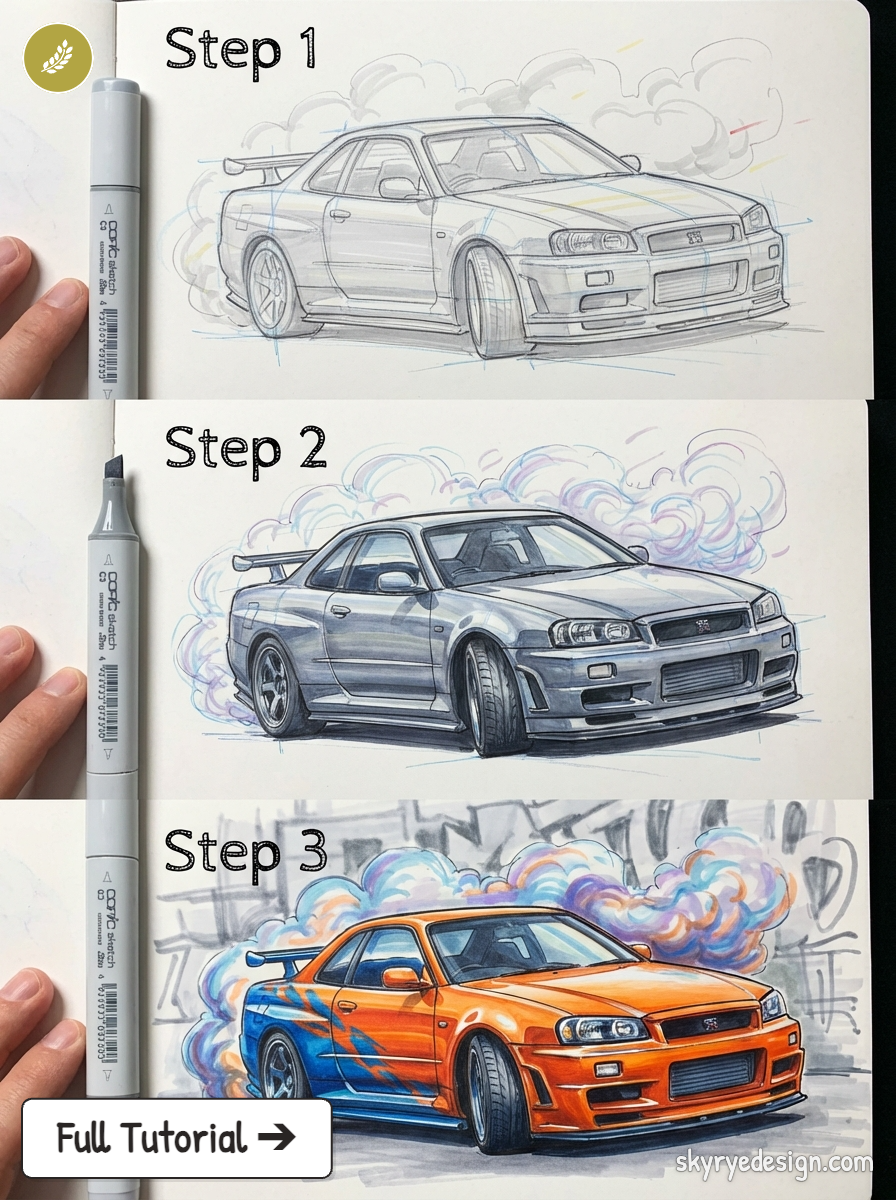
FAQ: Drift Car Drawing
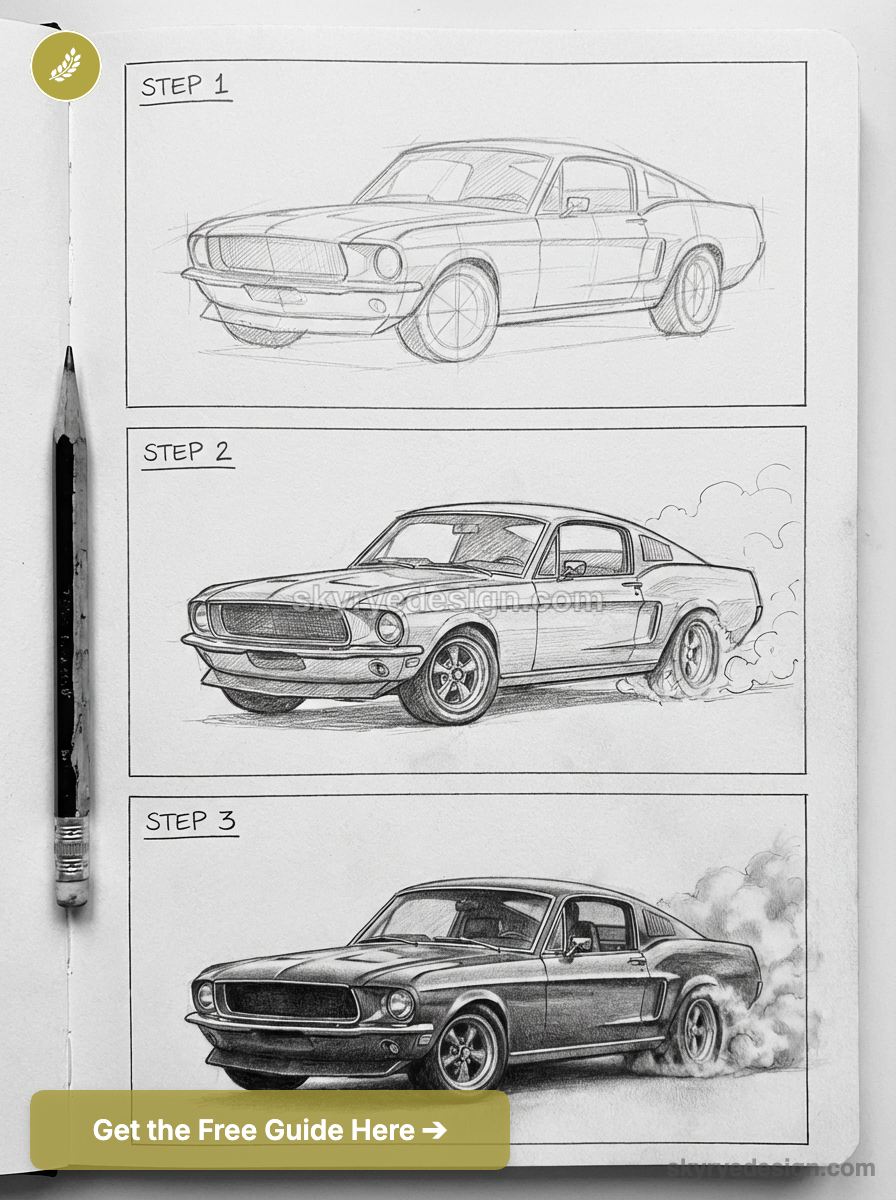
What’s the easiest drift car to draw for beginners?
The Toyota AE86 in side profile. Its boxy, angular silhouette has fewer complex curves than modern cars, making proportion errors easier to spot and correct.
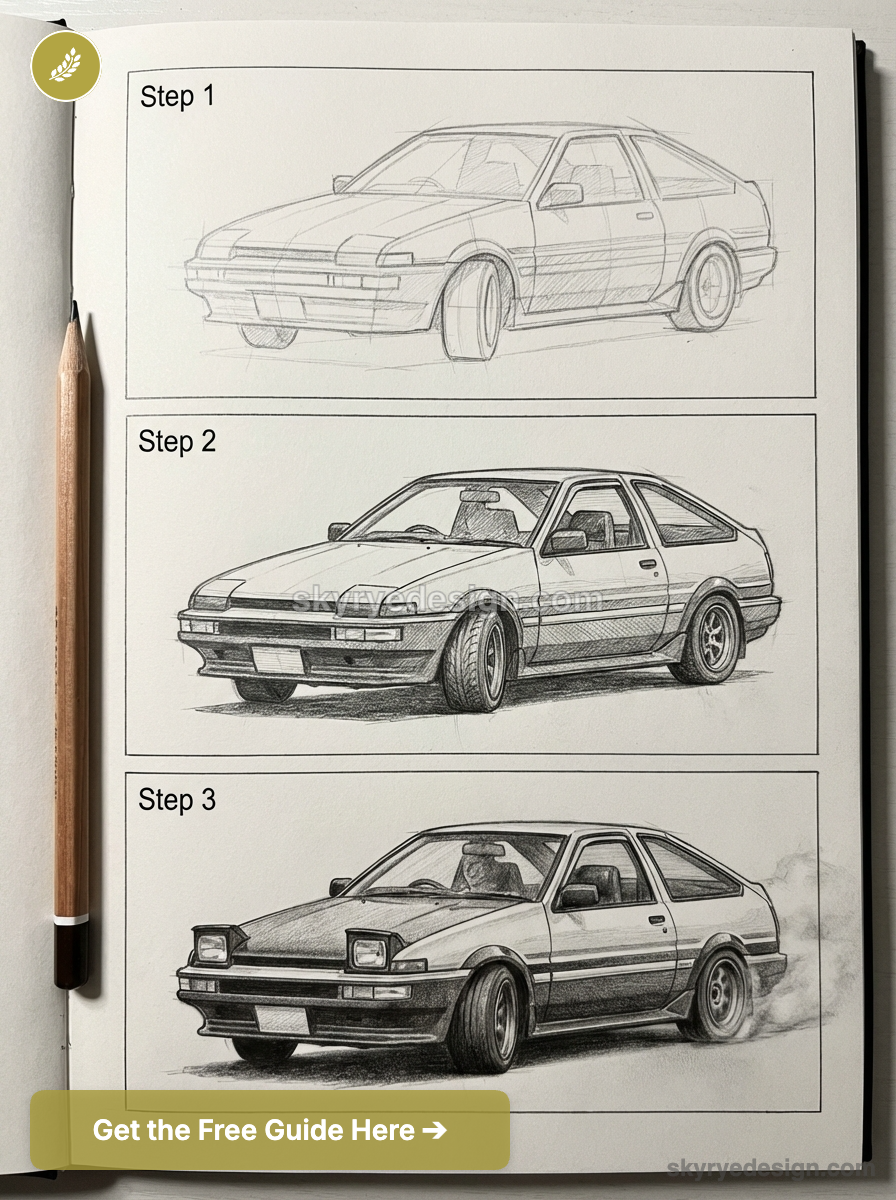
The wheelarches are near semicircles, the roofline is almost flat, and the main body is close to a rectangle. Once you can draw a convincing AE86 in profile, three-quarter views of more complex models become significantly more approachable.
How do I make smoke look convincing?
Irregular lines and layered density. Real smoke is denser at the source and diffuses rapidly. Draw overlapping curved strokes varying in thickness and length, denser near the tyre contact point and progressively lighter as they trail away. Leave white paper showing through the outer edges of the smoke volume. A light warm grey wash over the whole area, with white gel pen highlights pulled back through it, creates convincing volumetric depth.
How do I get the drift angle right?
Establish the car’s body angle on paper before drawing any detail — and make the direction of travel a visible reference line. The body-to-travel angle in a drift ranges from 20 degrees at entry to 60+ degrees at extreme mid-corner. Most drawings read best at 35–45 degrees. Every other element — wheel angles, smoke direction, tyre marks — must be geometrically consistent with those two reference lines.
What paper is best for drift car drawing with markers?
Bristol board at 250–300gsm. Smooth enough for clean marker application, heavy enough to resist warping, robust enough for repeated erasing. Standard sketchbook paper bleeds and feathers with markers — it ruins fine detail regardless of drawing quality.
Can I draw drift cars digitally?
Yes. Procreate on iPad with Apple Pencil is the most common digital workflow at the hobbyist level. For coloring pages and reference material, the automotive illustration communities on Pinterest and DeviantArt are the most substantial free resources available.
How do I improve faster?
Draw the same car from the same angle every day for two weeks. Repetition reveals where you consistently make proportion errors — and once you can see the errors, correcting them becomes deliberate. After two weeks on one model and one angle, structural understanding transfers to other models significantly faster. Always check copyright guidelines if you’re using reference photography you didn’t shoot yourself and plan to publish the work commercially.
Your First Drift Car Drawing Won’t Be Your Best
And that’s exactly as it should be. The angry iguana in a shoebox still exists in an old sketchbook. I kept it because looking at it helps me understand how much the understanding of proportion, stance, and motion compounds over time.
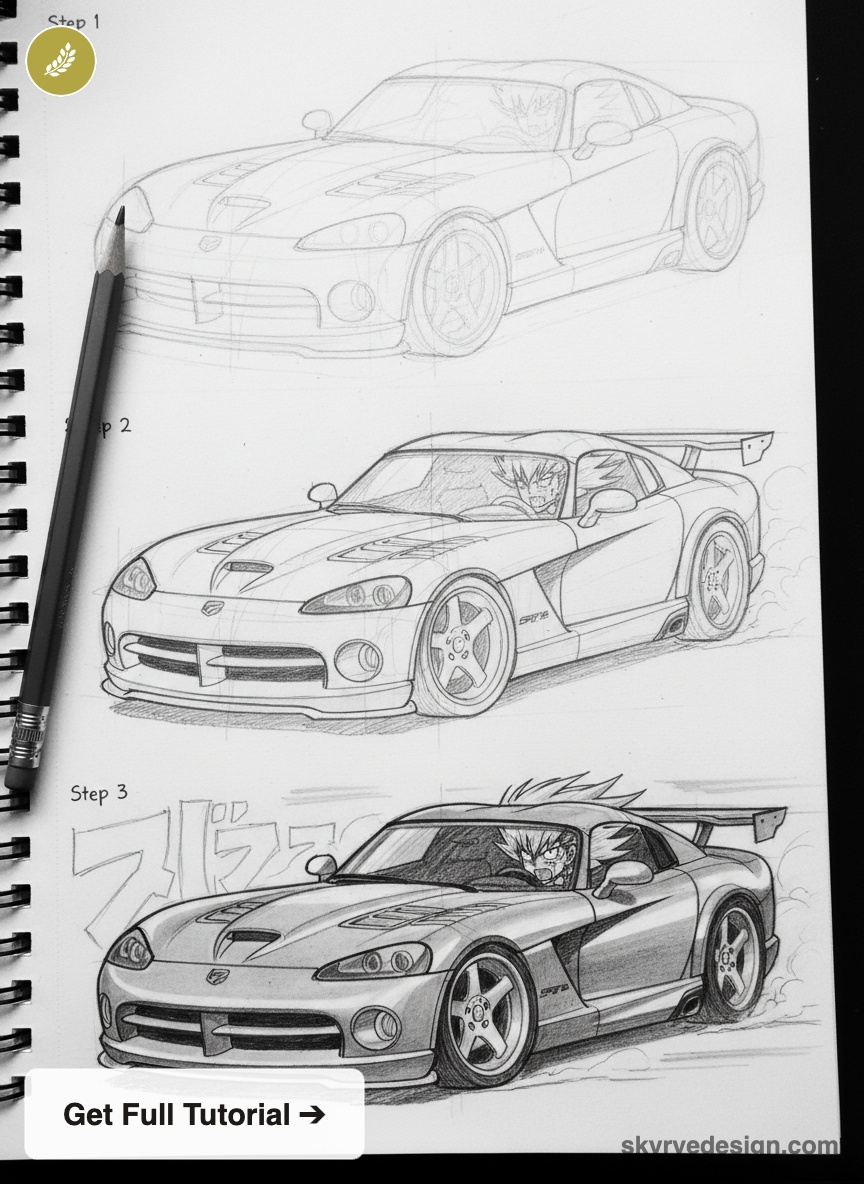
Drift car drawing is genuinely difficult — it asks you to solve perspective, proportion, motion, and material rendering simultaneously. Most tutorials don’t say that because it sounds discouraging. But knowing it’s difficult means your early struggles aren’t a sign you’re doing something wrong. They’re a sign you’ve chosen something worth getting good at.
Work through the seven steps above with one car, one angle, until it feels automatic. Then change the model. Then change the angle. The understanding builds faster than it feels like it is.
- 106shares
- Facebook0
- Pinterest103
- Twitter3
- Reddit0