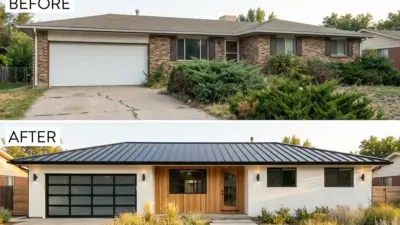
The renovation assessment I was brought in for was a 1960s ranch house that the owners had been maintaining carefully for fifteen years. New windows, re-pointed brickwork, remodelled kitchen — genuinely careful stewardship. The brief was to evaluate whether the exterior could support a design refresh without major structural work. Standing in the driveway looking up at the roof, the answer was obvious before I had checked a single detail.
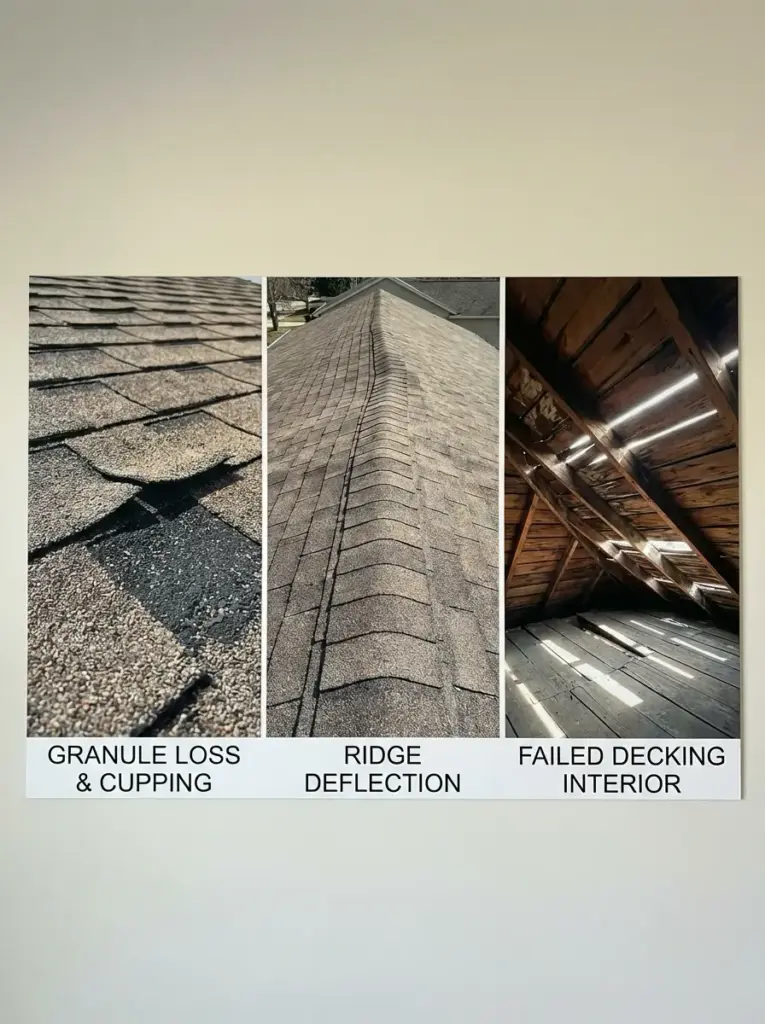
The asphalt shingles had granule loss across the entire south-facing plane — the gutters were filled with the mineral aggregate that had simply been washing off for years. Several shingles were cupped at the edges. There was a visible deflection in the ridge line that suggested decking movement underneath.
The roof was approximately 28 years old. Every design decision we made about the exterior would ultimately read against this failing envelope. New cladding, new paint, new landscaping — all of it would be undermined by a roof that communicated deferred maintenance to anyone standing at street level.
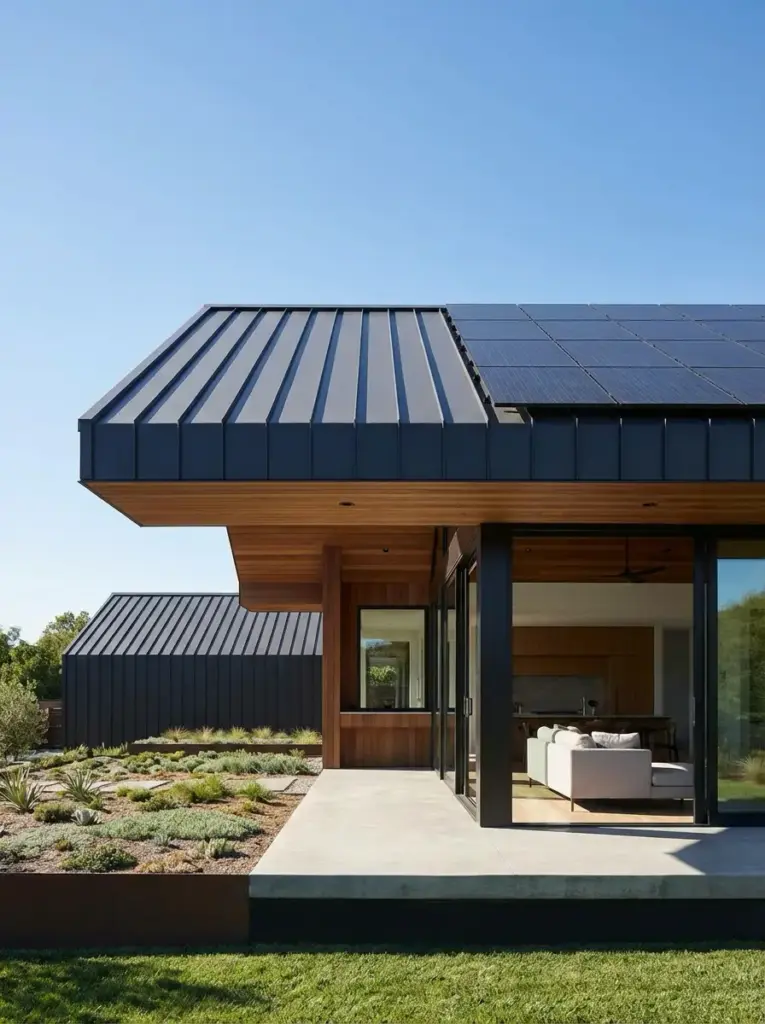
Roof replacement is rarely presented as a design decision, but it always is one. The roof accounts for a significant portion of a building’s visible exterior surface and communicates the maintenance standard of the property more immediately than almost any other element. Understanding when a roof has reached the end of its design life — and what material specifications best serve the building’s architectural intent — is as much a design problem as a maintenance one.
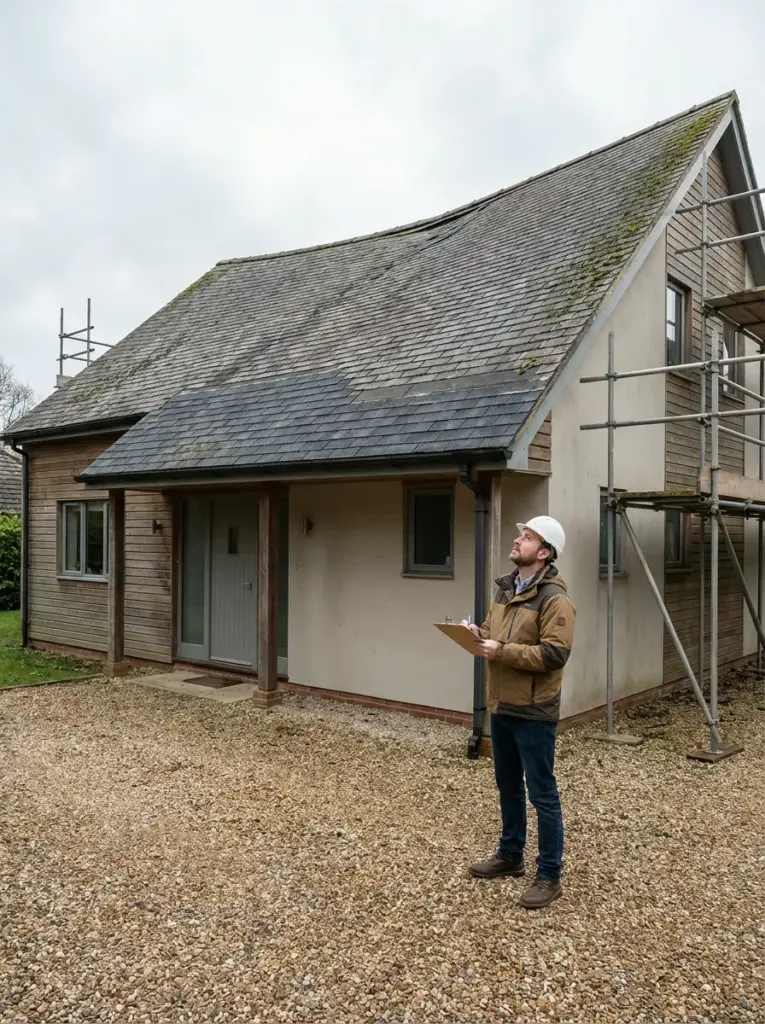
Understanding Roof Lifespan: What the Material Determines
The first question in any roof assessment is whether the material has reached the end of its designed service life. This is a specification question before it is an inspection question — the material choice made at installation determines the replacement horizon, and that horizon should inform every maintenance and renovation decision made during the building’s life.
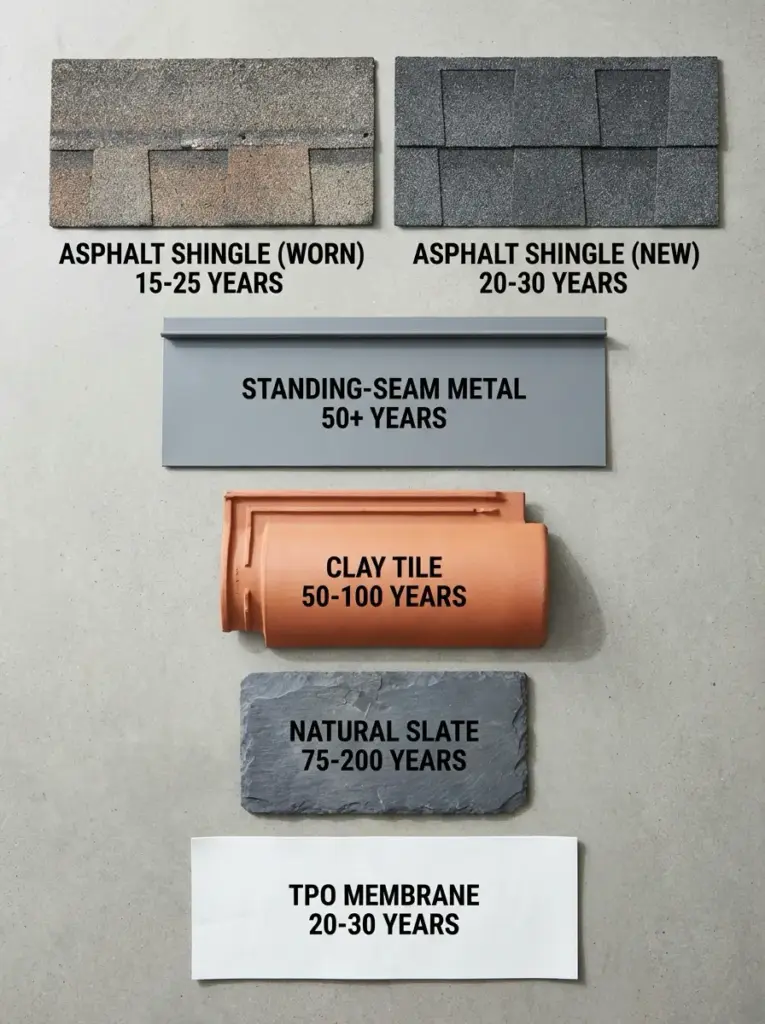
According to data from Roofer’s Guild, most residential roofs last somewhere between 25 and 50 years, though this range reflects the wide variation between material types rather than a single universal benchmark. An asphalt shingle roof at 28 years is approaching the end of its design life. A natural slate roof at 28 years is in its early middle age. Using a single lifespan figure without material context is one of the most consistent errors in roof assessment.
Asphalt Shingles — Standard
Lifespan: 20-30 years. Accelerated by UV exposure, poor attic ventilation, and freeze-thaw cycling.
Design role: The most cost-accessible roofing option, available in a wide range of colours and profiles. Limited architectural ambition — works best on conventional pitched roofs where texture and scale expectations are moderate.
Failure sign: Granule loss in gutters and downspouts, curling or cupping at shingle edges, visible bare spots. Once granule loss is widespread, the protective layer is compromised and UV degradation accelerates rapidly.
Specification note: If specifying a replacement for a property where design quality matters, consider stepping up to architectural (dimensional) shingles rather than re-specifying standard three-tab. The difference in cost is modest; the difference in visual quality and lifespan is significant.
Standing-Seam Metal — Steel or Aluminium
Lifespan: 40-70 years. Highly resistant to UV degradation and impact; requires minimal maintenance relative to other materials.
Design role: The strongest contemporary choice for design-forward residential and light commercial. The clean, linear geometry of standing-seam panels reads as a deliberate architectural decision — it is the material most often specified when the roof is intended as a visible design element rather than a background condition.
Failure sign: Fastener corrosion at penetrations, sealant failure at flashings, oil-canning (slight waviness in flat panel areas). Actual panel failure before 40 years is uncommon; most failures occur at connection and flashing details.
Specification note: Colour specification is critical — Kynar-coated steel in charcoal, weathered zinc, or matte black reads as architecture; galvanised silver reads as agricultural. Confirm the coating specification and its warranty period before committing.
Clay and Concrete Tile
Lifespan: 50-100 years for clay; 30-50 years for concrete. The tile itself is extremely durable — most failures occur in the underlayment, which typically needs replacement every 20-25 years.
Design role: Strong regional and stylistic associations — Mediterranean, Spanish Colonial, and Mission Revival architecture. The visual weight and texture of tile reads as substantial and permanent, which suits certain property types and climates very well.
Failure sign: Cracked or broken individual tiles (often replaceable without full replacement); underlayment failure visible as interior moisture despite intact surface tiles; ridge or hip mortar crumbling.
Specification note: When assessing a tile roof, distinguish between tile condition and underlayment condition. A roof with sound tiles but failed underlayment requires underlayment replacement, not full retiling — this is significantly cheaper and preserves any heritage tile that cannot be sourced new.
Natural Slate
Lifespan: 75-150 years for genuine quarried slate. Some quarries produce slate with 100+ year service records on buildings currently in use.
Design role: The premium roofing material for high-design residential and heritage properties. The colour variation and surface texture of natural slate is irreproducible in synthetic alternatives. When a property warrants slate, no other material delivers the same combination of longevity and visual quality.
Failure sign: Delamination (slate splitting along its grain, producing loose tiles), nail failure (iron nails corrode; copper nails last the life of the slate), and flashing failure. A qualified slate specialist can usually extend a slate roof’s life significantly with targeted repairs.
Specification note: Always commission a specialist slate inspection before specifying replacement — genuine old-growth Welsh or Vermont slate is effectively irreplaceable and a functioning slate roof in repairable condition should be preserved rather than replaced.
✏ Specification note: When assessing a property with an unknown roof installation date — common in renovation assessments — check the attic decking rather than the roof surface. The decking will show the accumulated water staining pattern of any historical leaks, and its condition (particularly any soft spots, rot, or visible daylight) gives a more reliable assessment of envelope integrity than the surface material alone.
Reading Failure: What the Roof Is Telling You
Roof failure does not announce itself dramatically in most cases. It accumulates — small indicators that individually seem manageable but collectively describe a system approaching the end of its functional life. Reading these indicators as a system rather than as isolated problems is what separates a maintenance assessment from a design assessment.
Surface-Level Indicators
- Granule loss (asphalt): check the gutters immediately below each roof plane. Significant granule accumulation — the mineral aggregate that coats asphalt shingles — indicates that the protective layer is failing across the surface, not just at isolated points.
- Cupping and curling: shingles curl at the edges (cupping) when moisture absorption causes differential expansion between top and bottom surfaces. This is typically irreversible — once shingles cup, they cannot recover their flat profile and wind uplift resistance is reduced.
- Moss and lichen growth: indicates sustained moisture retention, which accelerates substrate decay. More significant as a symptom than a cause — the moisture that allows biological growth is the same moisture working into the decking below.
- Patchy or mismatched areas: multiple repair patches in mismatching shingle colours or profiles indicate a history of repeated spot repairs. Each patch represents a previous failure point, and the underlying condition that caused each failure may still be active.
Structural and Systemic Indicators
- Ridge deflection: the ridgeline should be straight in plan and elevation. Any visible bow or sag indicates movement in the decking, rafters, or ridge board beneath. This moves the assessment from roofing into structural territory.
- Plane sagging between rafters: visible as irregular dips in the roof surface when viewed at a raking angle. Indicates decking failure (typically from sustained moisture) and will continue to worsen.
- Daylight in the attic: any visible daylight through the decking requires immediate action — this is not a deferred maintenance situation. Water, pests, and thermal loss are all entering the building through the same openings.
- Interior water staining: staining on ceilings or upper walls is evidence of past or present water infiltration. Multiple stain locations suggest systemic rather than localised failure.
The Repair vs Replace Decision
The architectural rule of thumb: when repair cost reaches approximately 30% of full replacement cost, replacement is the more defensible specification. This threshold accounts for the fact that patch repairs on aging substrate rarely restore the full performance of the original installation and often expose adjacent areas to accelerated failure as the repaired sections are stressed differently from the surrounding material.
The Cost Framework: Thinking Beyond the Invoice
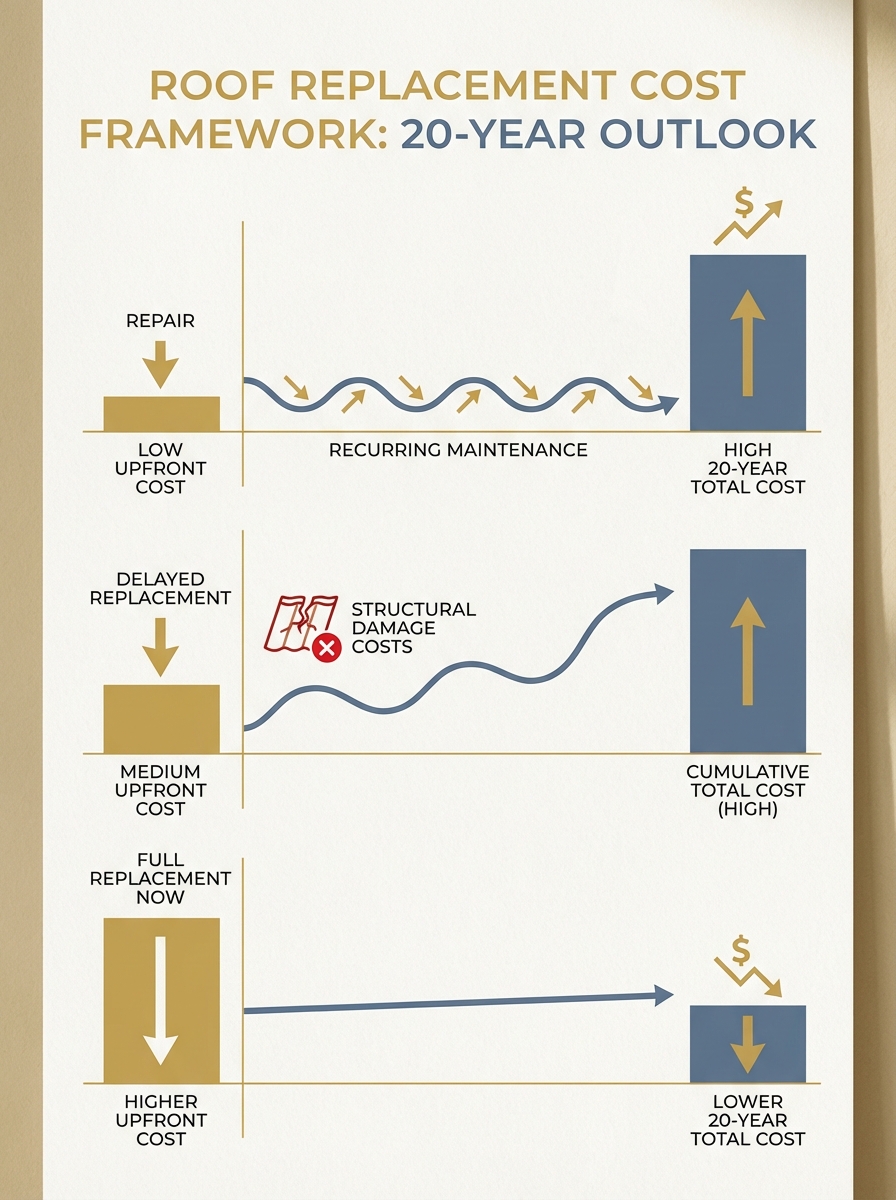
The cost question in roof specification is always a total-cost-of-ownership question, not a single-invoice question. A homeowner who defers a necessary replacement by five years through repeated repairs typically pays more over that period than the replacement would have cost — and arrives at the replacement with additional structural damage costs that the deferral generated.
According to Forbes, full roof replacement typically ranges from $6,700 to $80,000 depending on roof area, pitch complexity, and material specification, with an average cost of about $11,500 for a standard-sized home. From a specification perspective, this average figure covers mid-range material choices on a typical footprint — it is a useful baseline for initial budget conversations but should be developed into a proper specification before being relied upon for project planning.
Material Cost vs Lifespan Value
The relationship between material cost and lifespan is not linear, which means higher-specification materials often represent better long-term value despite higher upfront cost. A standing-seam metal roof at $18,000 that lasts 60 years costs $300 per year of service life. An asphalt shingle roof at $10,000 that lasts 25 years costs $400 per year of service life — and requires replacement twice in the same period, with two rounds of installation cost, two rounds of disruption, and two rounds of material waste.
The Hidden Cost of Deferral
Every year a failing roof remains on a building, the cost of the eventual replacement increases. Water infiltration damages the decking and requires its replacement. Moisture in the wall cavity generates mould remediation costs. Thermal performance degrades, increasing energy costs. In the worst cases, structural damage to rafters or interior finishes adds costs that dwarf the roof replacement itself. The deferral calculus only makes financial sense when the roof is genuinely in the repair phase of its life, not when it has entered the replacement phase.
The Design Value of Replacement
For any property where architectural quality matters, a new roof delivers design value that extends beyond waterproofing. The choice of material — its colour, texture, profile, and scale — can resolve longstanding mismatches between design intent and actual envelope condition. A standing-seam metal roof on a contemporary house, a clay tile on a Mediterranean-influenced property, or a natural slate on a heritage building each communicates design intentionality that the previous failing roof was actively undermining. The investment is in the building’s architectural coherence as much as its weather resistance.
✏ Specification note: When advising clients on roof replacement timing, frame the decision in terms of two numbers: the current annual maintenance cost and the projected replacement cost. If the annual maintenance cost represents more than 5% of the replacement cost, the repair phase has ended and the replacement phase has begun. This ratio is more informative than the absolute repair cost, which varies too much between properties to serve as a universal threshold.
Making the Specification: Material, Timing, and the Renovation Sequence
When the decision to replace has been made, the specification process involves three concurrent decisions: material selection, timing within the renovation sequence, and the scope of associated work that the replacement creates access for.
Material Selection Within Architectural Context
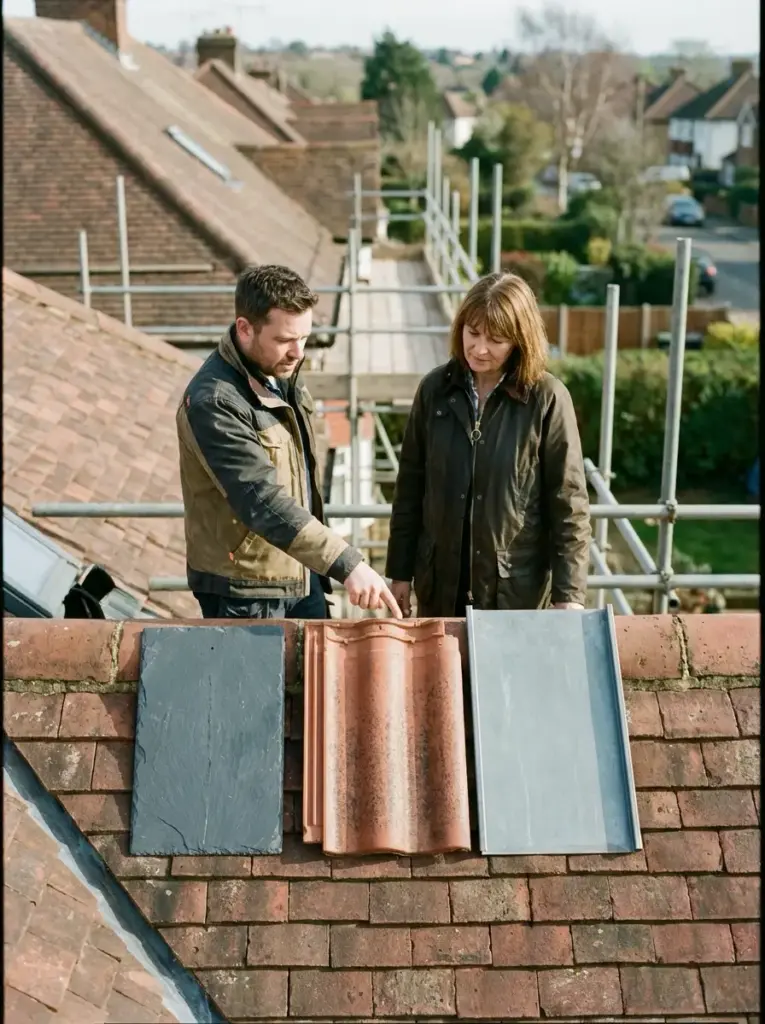
The correct material is the one that best serves the building’s architectural character, performance requirements, climate context, and budget. These factors are sometimes in tension — a heritage property might warrant natural slate that the budget cannot accommodate, in which case a high-quality architectural asphalt or synthetic slate is the defensible second choice. Never specify a material primarily for cost if it will actively undermine the architectural quality of the building — the cheapest shingle on a house with architectural ambitions reads as a specification failure visible from the street for the next 25 years.
Renovation Sequence
Roof replacement should always be specified before other exterior work — before painting, before cladding replacement, before window installation. The roof replacement process creates risk of incidental damage to adjacent work, and any moisture infiltration during the installation phase will affect adjacent elements. The correct sequence: roof first, then fascia and soffit, then cladding, then windows, then painting. Each stage creates a watertight condition that protects the stages below it.
Access Opportunities
A roof replacement creates access to the attic space and the top of the wall cavity that is not otherwise available without significant disruption. Any insulation upgrades, ventilation improvements, or structural assessments of the roof framing should be scheduled concurrently with the replacement rather than as separate future projects. The marginal cost of adding attic insulation during a roof replacement is small; the cost of adding it later, after the new roof is installed, is significantly higher.
FAQ: Roof Replacement for Architects and Homeowners
Q: How long do different roofing materials last?
Asphalt shingles 20-30 years; architectural asphalt 30-50 years; standing-seam metal 40-70 years; clay tile 50-100 years; natural slate 75-150 years; TPO/EPDM membrane 20-30 years. Most residential roofs last somewhere between 25 and 50 years depending on material and maintenance. Climate significantly affects actual lifespan relative to manufacturer specifications.
Q: What signs indicate replacement rather than repair?
Replacement is indicated when: the roof has reached material design life; repairs occur more than twice per year; visible failure signs span multiple areas (widespread granule loss, ridge deflection, daylight in attic); or repair cost reaches approximately 30% of replacement cost. An independent structural assessment is recommended before the final specification decision.
Q: How much does full roof replacement cost?
According to Forbes, $6,700-$80,000 depending on area, pitch, and material, with an average of $11,500 for a standard home. Material is the primary variable: architectural asphalt $4-8 per square foot installed, standing-seam metal $12-25, natural slate $20-40. Higher-specification materials typically deliver better cost-of-ownership over their full service life.
Q: Does roof replacement increase property value?
Consistently yes. A new roof recovers 60-80% of its cost in appraised value and reduces buyer negotiation. From an architectural perspective, a correctly specified new roof also resolves the mismatch between design intent and envelope condition — the single most immediate signal of a property’s maintenance standard to any prospective buyer or assessor.
- 1share
- Facebook0
- Pinterest1
- Twitter0
- Reddit0