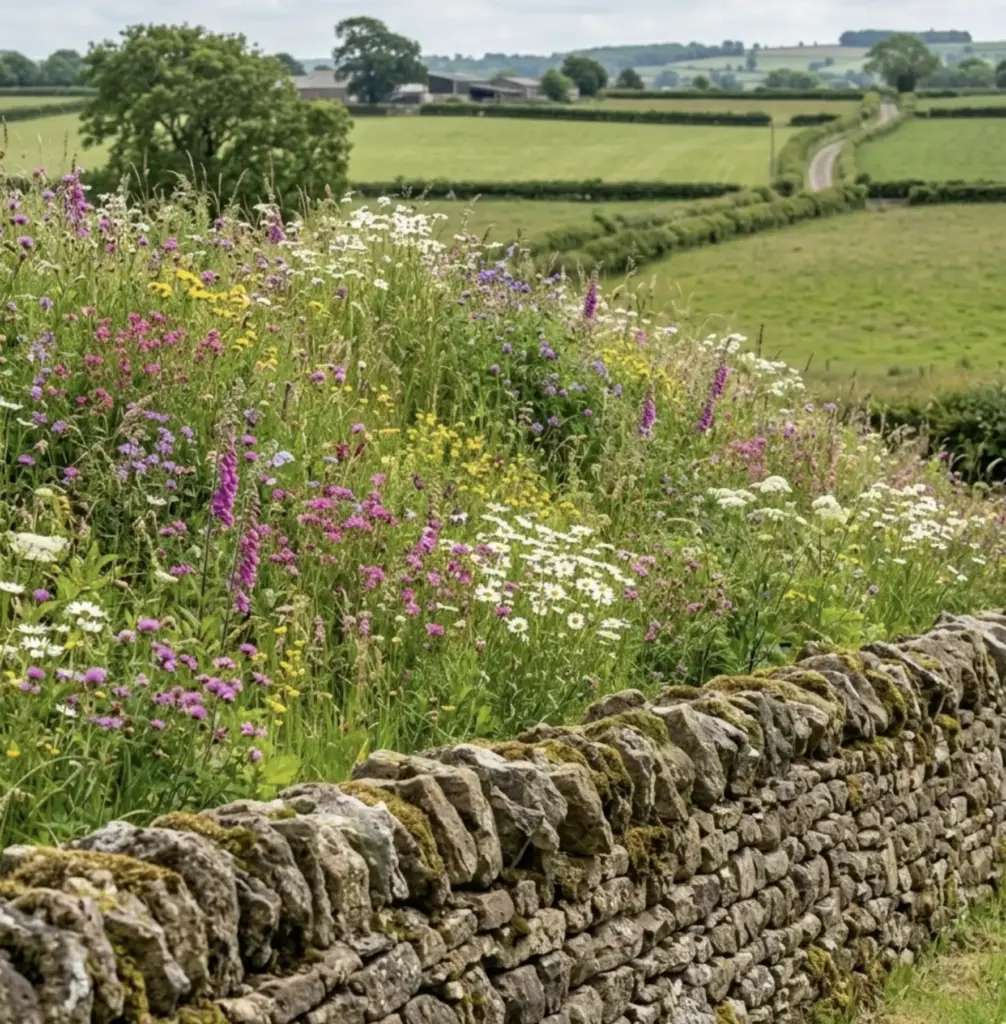
The first time I visited a completed off-grid rural build in the Scottish Borders, I spent twenty minutes walking the site looking for the mechanical plant. The owner smiled. There was a 2,500-litre bunded oil tank concealed behind a dry-stone wall continuation that read as a garden boundary, not a utility enclosure.
The septic treatment plant was a metre underground beneath a wildflower meadow that had established over one growing season. The solar array sat on a north-facing barn roof, invisible from the house’s main approach. Nothing broke the view to the valley.
- Orientation as the First Engineering Decision
- Concealing the Infrastructure: Oil Tanks, Plant Rooms, and Drainage
- Energy Systems That Disappear
- Materials That Age Into the Landscape
- Planning: Designing With the Constraint, Not Against It
- FAQ: Designing Autonomous Rural Homes
- How do I hide a heating oil tank without violating regulations?
- Can solar panels be kept off the main house without losing generation efficiency?
- What's the best way to conceal a sewage treatment plant?
- How do I choose between an air source heat pump and oil heating for a rural build?
- What planning documents support a rural application with significant infrastructure?
- The Invisible House
That project redefined what I understood premium rural design to mean. Not the most expensive finishes. Not the largest floor area. But the discipline of making a fully autonomous, technically complex building appear to sit in its landscape as if it simply grew there, as if it needed nothing from the world beyond its boundary.
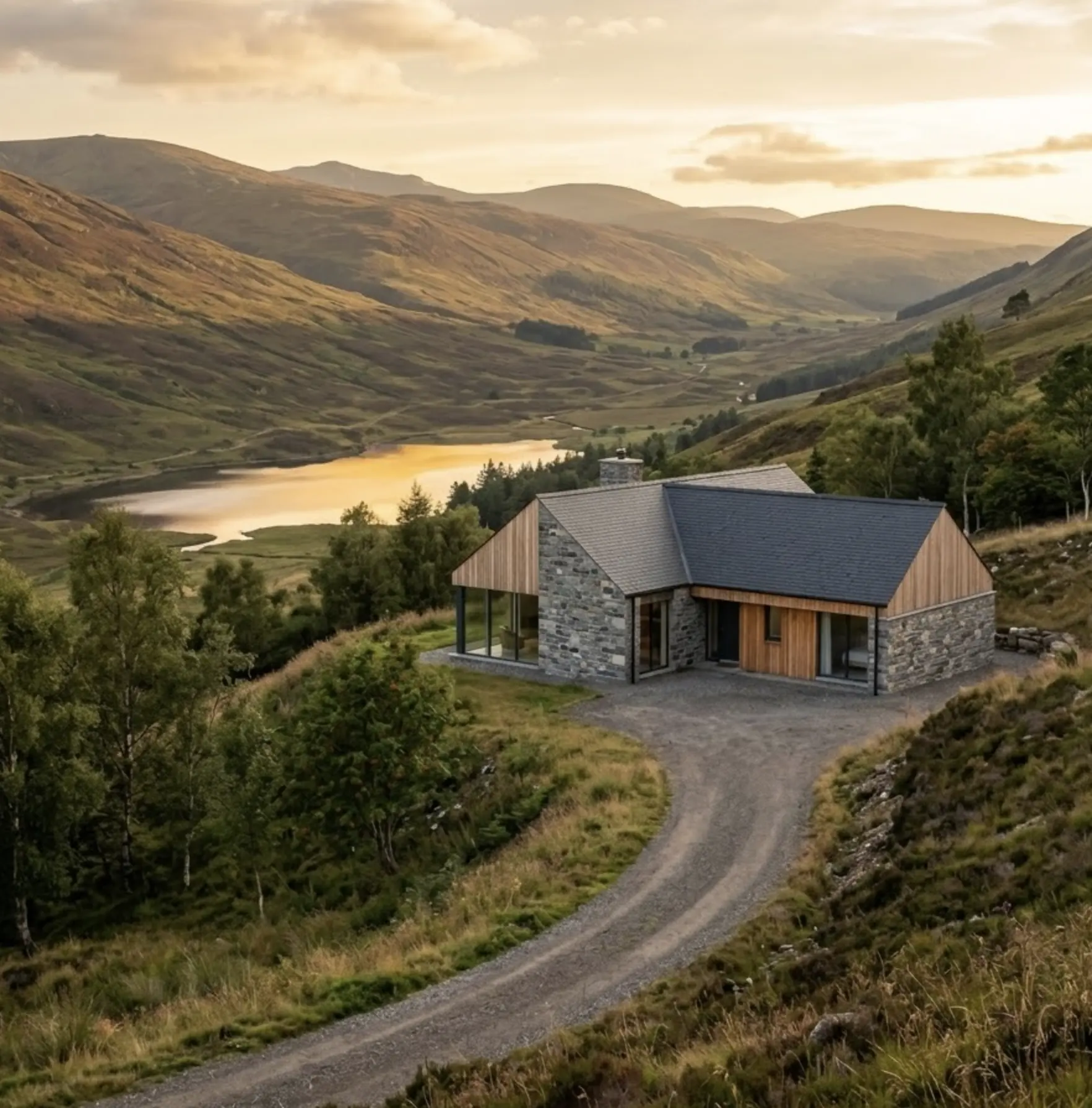
This is the central challenge of off-grid luxury design in 2026: complete technical independence from mains infrastructure, with zero visual evidence of that independence. Here’s how the best architects are solving it.
Orientation as the First Engineering Decision
Before any system is specified, before a single pipe is sized, the position and orientation of the building itself is the most consequential engineering decision on a rural site. It’s also the one most often treated as a purely aesthetic choice.
South-facing orientation in northern climates isn’t a stylistic preference — it’s passive heating infrastructure. A well-oriented rural home with correctly specified glazing ratios can reduce active heating demand by 20–30% before a boiler or heat pump is even switched on. I’ve noticed that the projects which integrate solar gain most effectively are the ones where the architect treated orientation as structural, not decorative: building form, roof pitch, overhang depth, and glazing placement all derived from sun path analysis rather than added to an existing geometry.
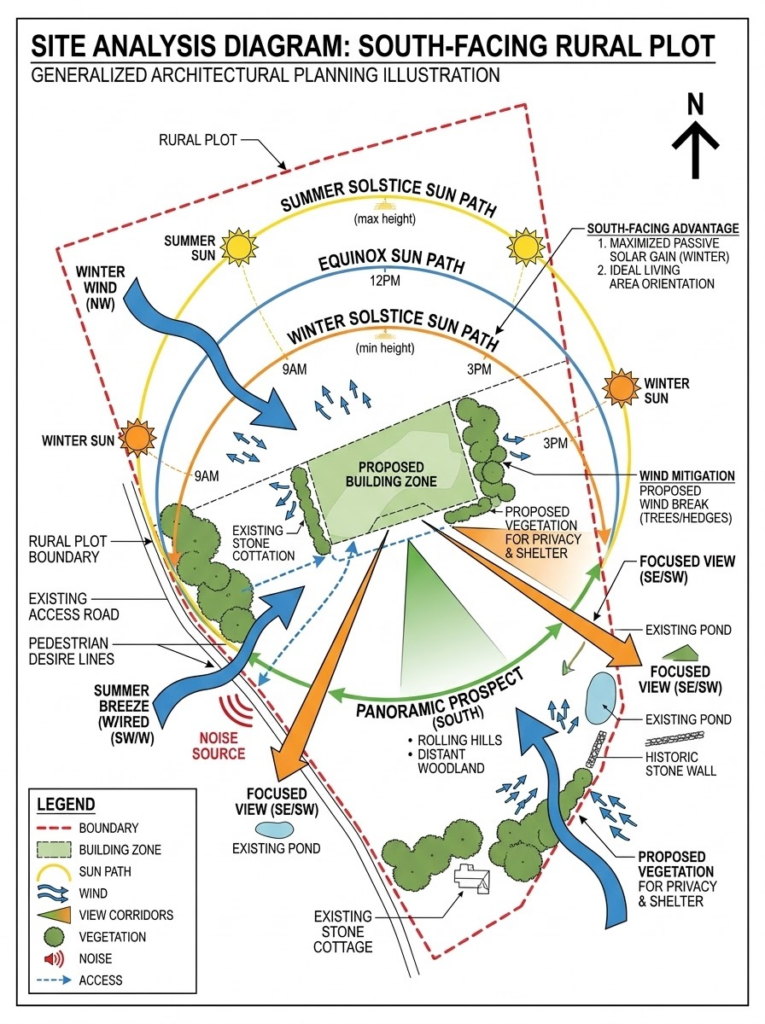
Wind matters equally and is less discussed. Prevailing wind exposure on an open rural site can increase heat loss through infiltration by 15–25% compared with a sheltered urban plot. Strategic placement of outbuildings, mature planting, or landform — used as a windbreak rather than incidental landscape — is invisible engineering at its most elegant. The barrier looks like a garden. It functions like insulation.
The best rural orientations solve both simultaneously: the primary façade faces south for solar gain, the long axis runs perpendicular to prevailing wind to minimize exposure, and the landscape is shaped — berms, walls, planted screens — to shelter without enclosing.
Concealing the Infrastructure: Oil Tanks, Plant Rooms, and Drainage
The infrastructure gap between rural and urban areas is vast. No mains gas. Frequently no mains drainage. Sometimes no reliable mains water. A rural home must generate, store, and process everything it consumes — and do so with systems that are physically large, mechanically significant, and conventionally ugly.
The design challenge is treating each of these systems as an architectural problem from day one, not an afterthought resolved by the services engineer after the building is designed.
Heating Oil Storage: The Tank as Landscape Element
Oil-fired heating remains the dominant solution for rural properties beyond gas network reach — reliable, high heat output, and compatible with the high-performance boilers that meet 2026 efficiency standards. Bunded oil tanks — double-walled vessels with a secondary containment layer — are now the regulatory standard in most UK jurisdictions, providing protection against leaks that could contaminate ground or surface water.
The visual problem is real: a 2,500-litre tank is approximately the size of a small car, and most suppliers deliver them in the utilitarian green or black that reads as industrial equipment rather than garden architecture. The design solutions that work treat tank placement as site planning, not installation:
- Integrate the tank enclosure into the boundary wall system — dry-stone, timber, or gabion — so it reads as perimeter rather than object
- Sink the tank below finished grade where soil conditions allow, with a flush access hatch flush-set in paving or planted with sedum
- Position on the delivery approach route so the fuel tanker never has to enter the primary view corridor from the house
- Use tank colour specification (most reputable suppliers offer non-standard finishes on request) to match the enclosure material
- Use tank colour specification to match the enclosure material — suppliers like QuickTanks offer bunded tanks in non-standard finishes specifically for visually sensitive rural installations
The constraint that determines everything else: the tank must be accessible for delivery (typically a 4-metre approach clearance for the tanker hose), must have 760mm separation from building openings under UK regulations, and must be visible for periodic inspection. Design within those constraints, not around them.
Septic Systems and Treatment Plants
Mains drainage is absent from the majority of UK rural sites beyond village boundaries. The modern equivalent — a packaged sewage treatment plant — is a buried unit approximately 1.5 metres in diameter and 2 metres deep, discharging treated effluent to a soakaway or watercourse.
In my experience, the projects that handle this most elegantly place the treatment plant uphill from the soakaway in the area least visible from the primary outdoor living spaces, then use the disturbed ground above it as the location for productive planting — an orchard, a kitchen garden, a wildflower meadow. The connection between the effluent nutrient load and the planting vigour above it is genuine, and the result is a feature garden growing from infrastructure that would otherwise be an eyesore.
Water Supply: Boreholes as Architecture
Where mains water is unavailable, a borehole — drilled 40–120 metres to reach a reliable aquifer — is the rural equivalent. The wellhead above ground is typically a 150mm diameter casing rising 300mm above finished grade: genuinely minimal, easily concealed within a planting bed or flush-set cover plate.
The pump house that conditions and pressure-balances the supply is more significant — roughly the footprint of a garden shed. The best rural architects integrate this into the utility cluster alongside the mechanical plant room, locating the whole assembly in a single outbuilding that reads as agricultural vernacular: a stone or timber structure that belongs to the site’s agricultural history rather than appearing as a modern services intrusion.
Energy Systems That Disappear
The appetite for rural sustainability has shifted from aspiration to expectation. As building in the countryside often goes hand in hand with a desire for sustainability, the question is no longer whether to incorporate renewable technology but how to do so without the visual grammar of a utility installation.
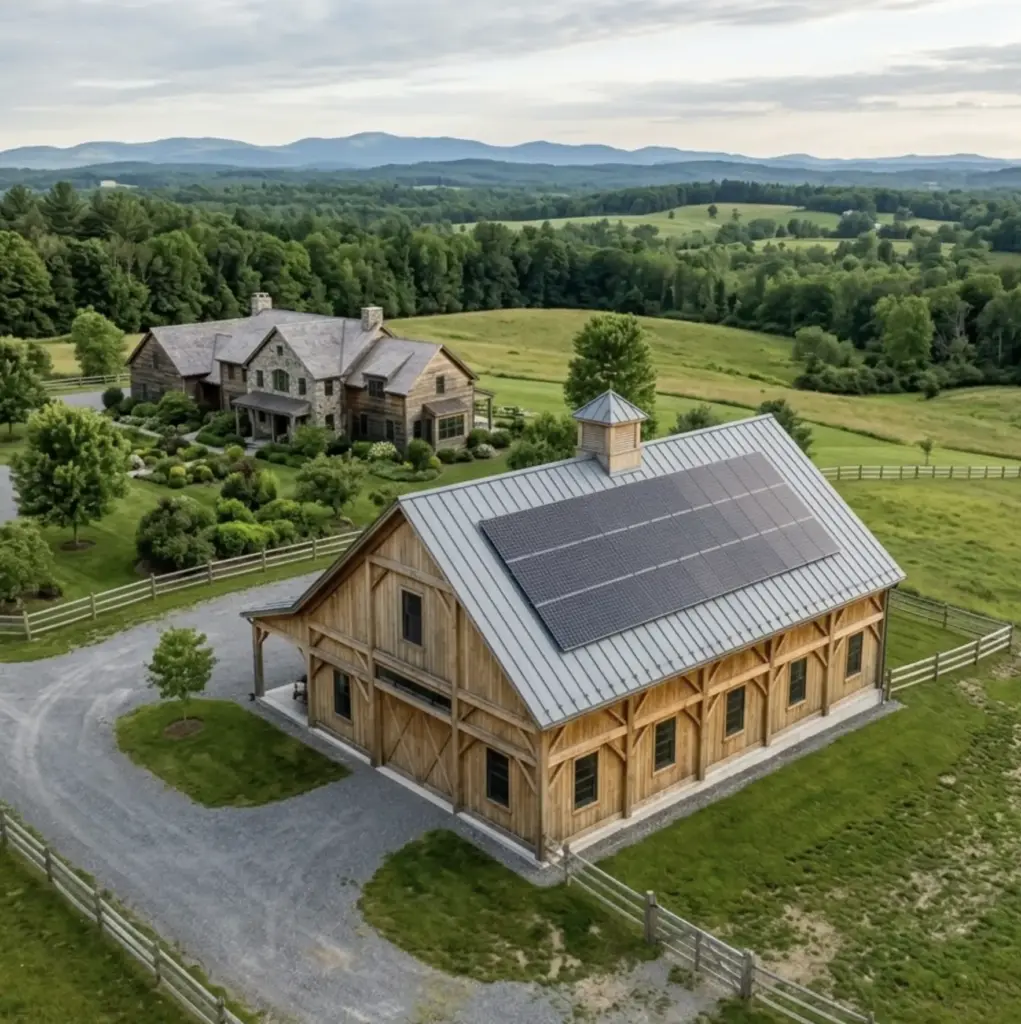
Solar panels on the primary south-facing roof of the main house are the obvious first instinct. They are also, almost always, the wrong answer on a premium rural build. Visible panels on the principal elevation — however technically efficient — read as apparatus rather than architecture. The solution that preserves visual integrity without sacrificing generation capacity:
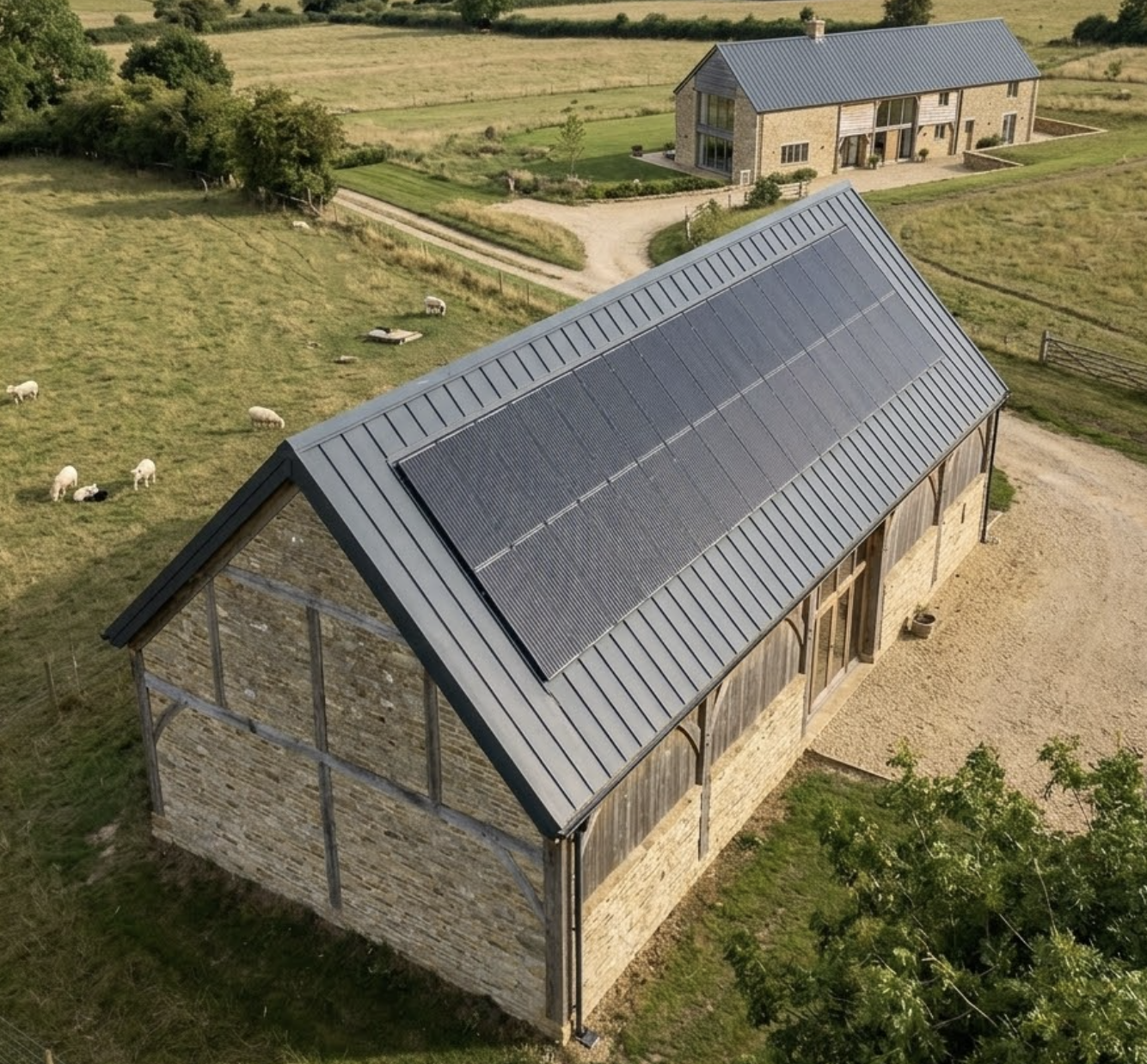
- Relocate the array to an outbuilding roof — barn, garage, plant room — where it faces the same solar aspect but sits outside the primary view corridor from house and landscape
- Specify integrated solar roofing products (Sunroof, Tesla Solar Roof) on secondary structures where the panel-as-tile aesthetic is genuinely resolved
- Use the ground plane — a meadow or orchard area — for a ground-mounted array screened by native hedgerow, which doubles as habitat creation for planning purposes
Air Source Heat Pumps: The Unit That Needs to Breathe
Air source heat pumps — now the default low-carbon heating specification for rural new builds — require outdoor units with unobstructed airflow. The unit itself (Mitsubishi Ecodan, Vaillant arotherm+, or equivalent at £8,000–£15,000 installed) is roughly the size of a large chest freezer. It needs 500mm clearance on all sides and must not be enclosed in a way that recirculates exhaust air.
The architectural solution is a purpose-designed plant enclosure — louvred timber, steel mesh with climbing plants, or a continuation of the boundary wall material — that provides visual screening on three sides while maintaining airflow on the fourth. Detailed correctly, the enclosure reads as a garden structure. Detailed incorrectly, it draws attention to exactly what it’s trying to hide.
Battery Storage and Plant Rooms
A rural home with solar generation needs battery storage to shift daytime generation to evening demand. Current lithium battery systems (Tesla Powerwall 3 at £8,500, or the SolarEdge Home Battery at £6,000) are wall-mounted units roughly the size of a large fuse board — genuinely small and easily accommodated within a dedicated plant room.
The plant room itself deserves architectural attention. A single, well-designed space consolidating heating plant, battery storage, pressure vessel, controls, and mechanical ventilation is both more efficient (reduced pipework runs) and more maintainable than systems distributed across multiple locations. It also creates a single concealment problem rather than several.
Materials That Age Into the Landscape
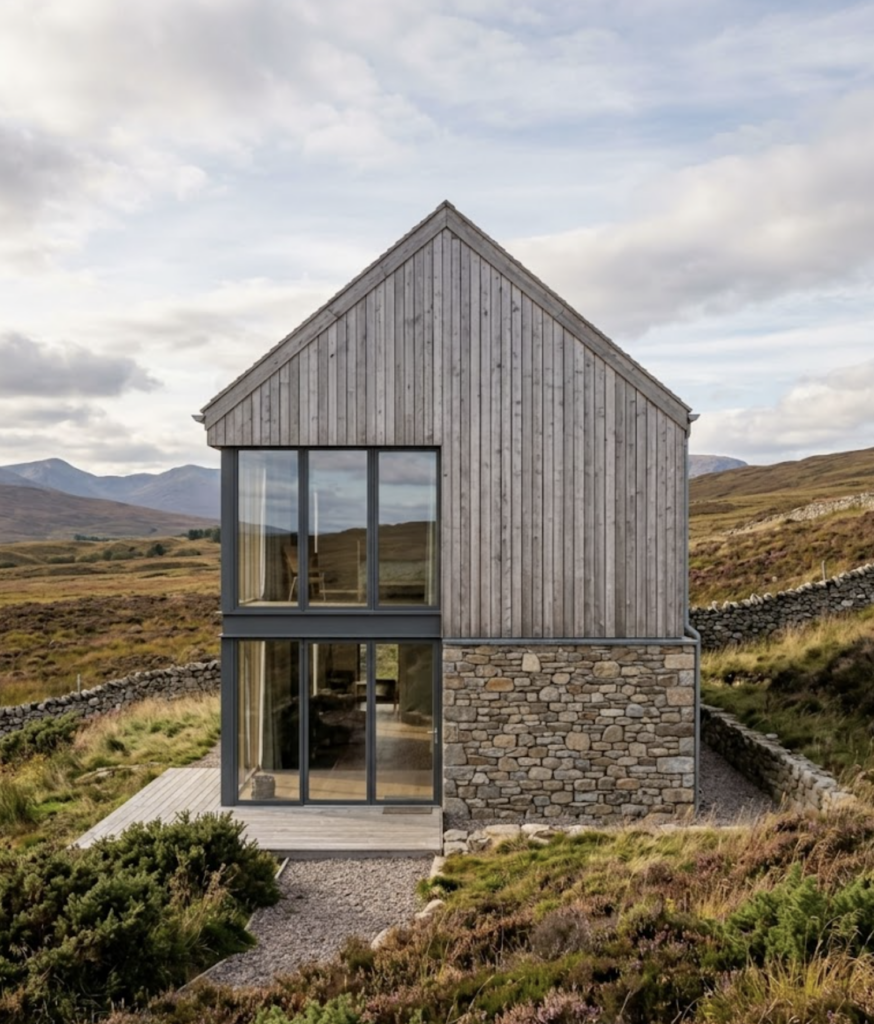
The material question in rural design is inseparable from the engineering question, because rural homes must withstand exposure to the elements in ways that suburban construction rarely faces. Wind-driven rain, UV exposure, freeze-thaw cycling, and the biological action of mosses and lichens will test every external material choice within a decade.
The materials that resolve both the durability and aesthetic requirements simultaneously are the ones with a history in the landscape. Natural stone — particularly local stone that matches the geological character of the area — weathers in ways that read as permanence rather than decay. Untreated larch and Douglas fir cladding silver to the grey-green tone of the surrounding moorland within two to three years, at which point the building begins to visually recede into its setting rather than standing out from it.
I’ve noticed that the rural projects that age most gracefully are the ones where the architect specified for the ten-year appearance, not the day-one photograph. Fresh larch is honey-coloured and conspicuous. Aged larch is the colour of a dry-stone wall in winter. The building that will photograph least impressively on completion day is often the one that will look most inevitable a decade later.
Roofing as the Fifth Façade
In hilly or upland settings, the roof is visible from above — from the hillside behind the house, from neighbouring elevated ground, from approaching roads. The conventional Welsh slate that reads as traditional and contextual from the front elevation can read as a flat grey rectangle from above. Sedum roofing on lower-level elements (garages, plant rooms, link structures) resolves this: it reads as ground from above, as architecture from the front, and contributes to drainage attenuation simultaneously.
Standing-seam metal — zinc, pre-patinated copper, or Corten steel — offers a material that handles pitch change, curved geometries, and solar integration without the visual weight of tile or slate. At £80–£120/m² installed, it carries a cost premium but a lifespan that exceeds conventional roofing by 30–40 years in exposed rural conditions.
Planning: Designing With the Constraint, Not Against It
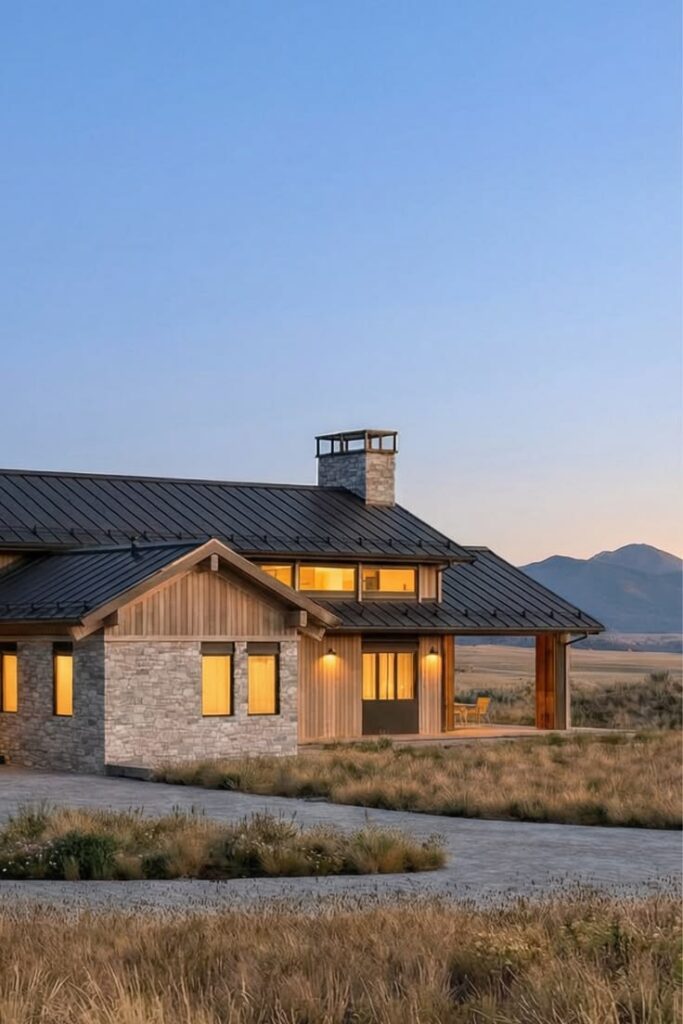
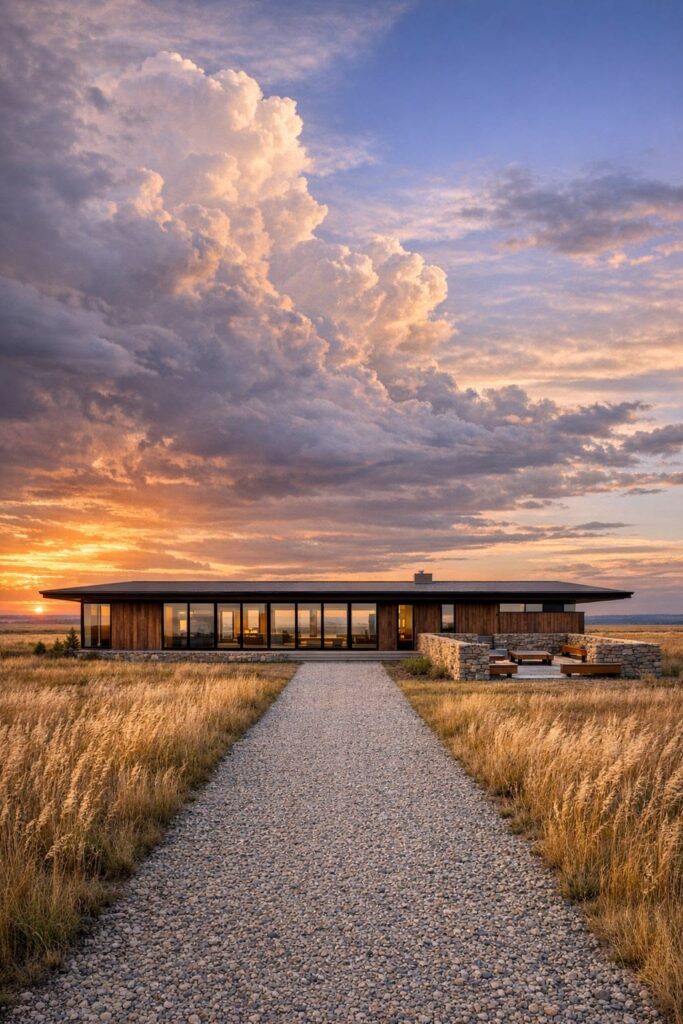
Rural planning in the UK operates under a presumption against development outside settlement boundaries, with AONB, Green Belt, and National Park designations adding further layers of restriction. The projects that navigate this most successfully treat the planning constraint as a design brief rather than an obstacle.
Designs that demonstrate genuine landscape integration — through orientation, material choice, landform, and the concealment of infrastructure — are materially stronger planning applications than those that simply minimize built footprint. A planning authority is more likely to support a proposal that can show, through detailed landscape visualisations, how the completed building will appear from key viewpoints after ten years of weathering, than one that simply claims to be ‘sympathetic to its setting.’
The infrastructure concealment strategies described above aren’t just aesthetic choices — they’re planning arguments. A bunded tank integrated into a dry-stone wall, a treatment plant concealed beneath productive planting, a solar array on an outbuilding rather than the primary roof: each of these is a documented response to landscape impact that strengthens the application narrative.
FAQ: Designing Autonomous Rural Homes
How do I hide a heating oil tank without violating regulations?
Integrate the enclosure into existing boundary elements — a dry-stone wall extension, a timber screen, or a gabion structure that reads as garden architecture. The tank must maintain 760mm separation from building openings and remain accessible for delivery (4m hose reach clearance). Sinking the tank below grade with a flush access cover is permitted where soil conditions allow. Specify a non-standard colour finish from your supplier to match the enclosure material.
Can solar panels be kept off the main house without losing generation efficiency?
Yes — an outbuilding roof with the same solar aspect (typically south-facing at 30–45 degrees) delivers identical generation per panel. The distance from house to outbuilding adds modest cable run cost but no generation penalty. Ground-mounted arrays screened by native hedgerow work equally well on sites with sufficient land. The visual benefit — keeping the principal elevation free of apparatus — is worth the modest additional installation complexity on any premium rural build.
What’s the best way to conceal a sewage treatment plant?
Locate it in the area of least visual significance, uphill from the soakaway discharge. Use the disturbed ground above the buried unit for productive planting — an orchard, kitchen garden, or wildflower meadow grows vigorously over the nutrient-rich discharge zone. The entire system disappears beneath a landscape feature. Access for the annual desludge service (typically a tanker visit once per year) requires a 3m width approach route — plan this into the circulation layout from the start.
How do I choose between an air source heat pump and oil heating for a rural build?
Air source heat pumps are the preferred specification for new rural builds in 2026 — lower running costs, eligible for government incentives, and compatible with underfloor heating systems that maximise their efficiency. Oil-fired systems remain the more pragmatic choice for remote sites with very high heating demand (large floor areas, exposed locations, older fabric in renovation projects) where the lower flow temperature of heat pumps would require significantly oversized emitters. Many rural architects now specify a hybrid system: heat pump as primary, oil-fired backup for the coldest weeks.
What planning documents support a rural application with significant infrastructure?
A Landscape and Visual Impact Assessment (LVIA) is the most persuasive document — it models the completed building from agreed viewpoints at years one, five, and ten, demonstrating how weathering and planting establishment reduce visual impact over time. A Design and Access Statement that specifically addresses infrastructure concealment (showing tank locations, plant room positions, solar array placement relative to view corridors) demonstrates the level of landscape thinking that planning officers respond to positively. Pre-application consultation with the local planning authority before finalising these documents is always worth the time investment.
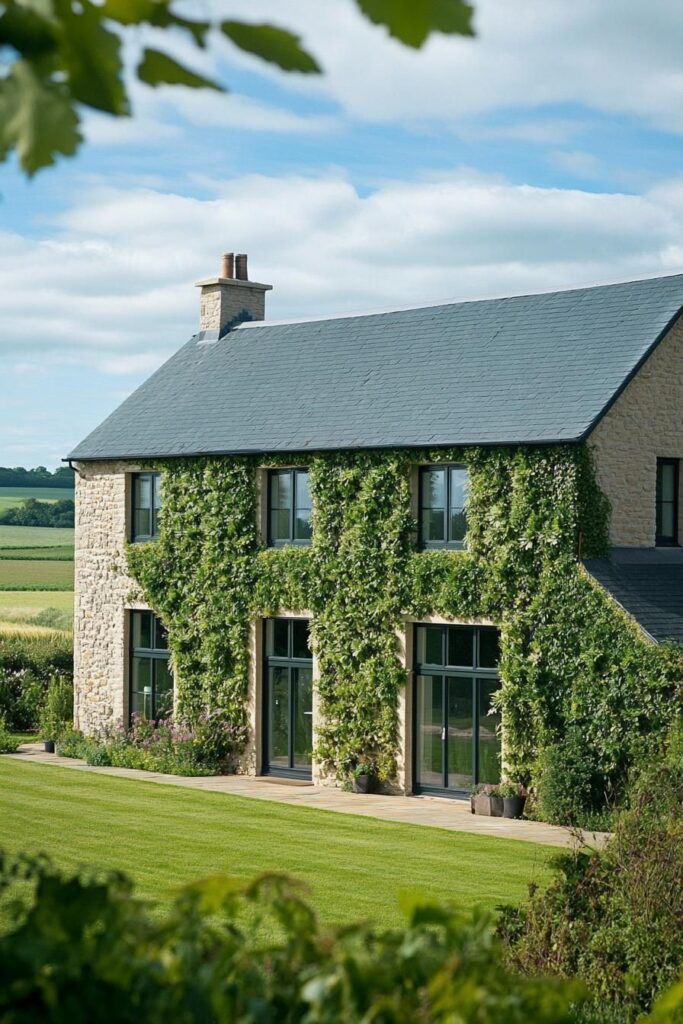
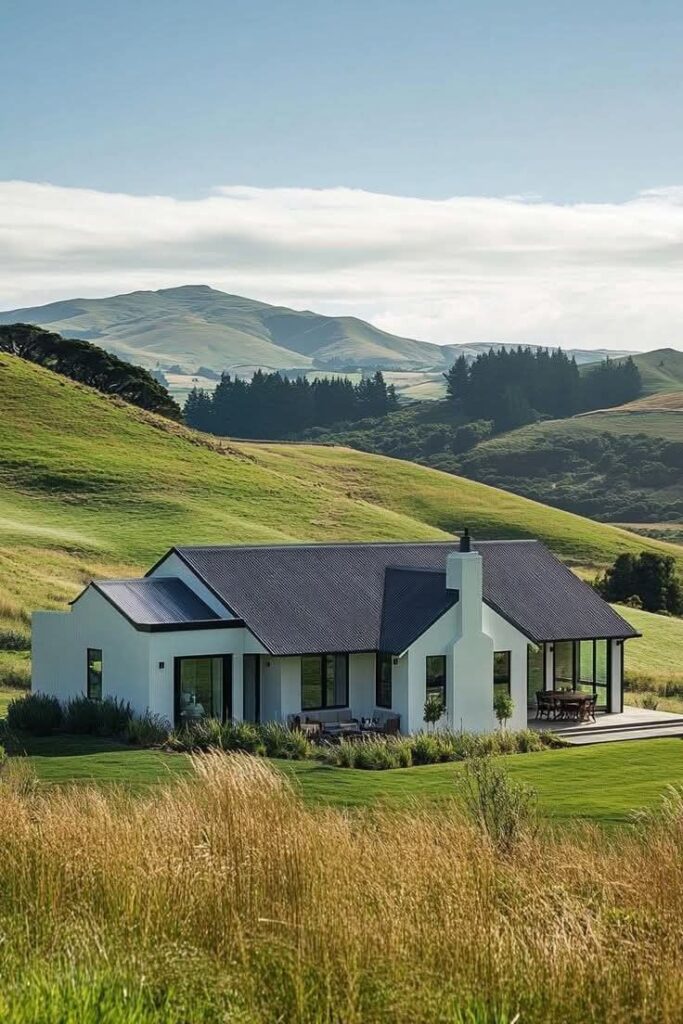
The Invisible House
The paradox at the heart of autonomous rural design is that the more technically complex and self-sufficient a building becomes, the more it should appear to need nothing. Complete energy generation. Independent water supply. On-site waste treatment. All of it invisible — not concealed hastily after the fact, but designed into the site plan from the first sketch.
The houses that achieve this are not the ones with the highest specification equipment or the most expensive finishes. They’re the ones where the architect spent the most time thinking about where things go — and why they should never be seen.
That Scottish Borders project I mentioned at the start: it runs entirely off-grid, heats 320 square metres to 21°C in January, generates more electricity than it uses in summer, and treats all its wastewater on site. From the track approaching it, it looks like a farmhouse that has always been there. That’s the standard.
- 11shares
- Facebook0
- Pinterest11
- Twitter0
- Reddit0