The coffee table is not just furniture; it is the central hub dictating movement. A poorly placed table blocks pathways, while the right choice establishes clear, logical walking routes around your sofa and chairs.
This piece acts as a physical anchor for your conversation zone. It gathers seating arrangements together to create an intimate and functional space for social interaction.
The empty space surrounding the table is as important as the object itself. You must find a balance that allows movement without feeling disjointed.
Getting the scale right: height and proportion matter
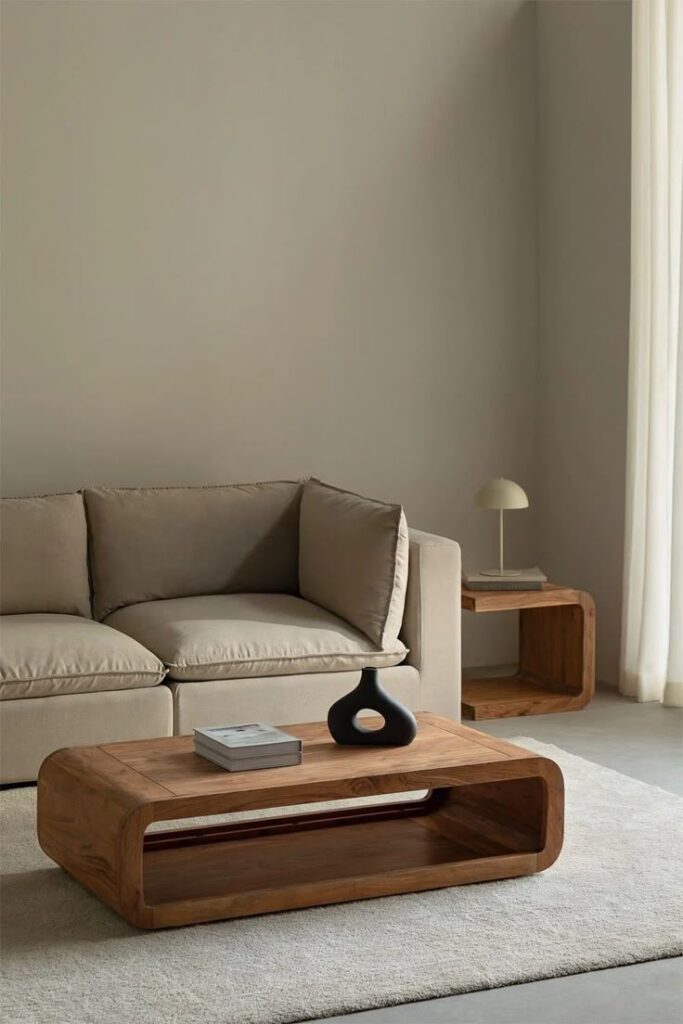
Many homeowners make mistakes with height, but the rule is simple. The table surface should sit at the same height as your sofa cushions or slightly lower.
This is not just about aesthetics; it is fundamentally a matter of ergonomics. You should never have to lean down excessively just to set down a glass. The gesture must remain comfortable and natural.
Follow a simple rule for length: the table should be about two-thirds of your main sofa’s length. This ensures a harmonious visual balance.
Now that the basics of layout and proportions are set, the room’s true character plays out through the table’s shape and material.
Beyond the basics: using shape and material to set the tone
Finding a shape that complements your layout
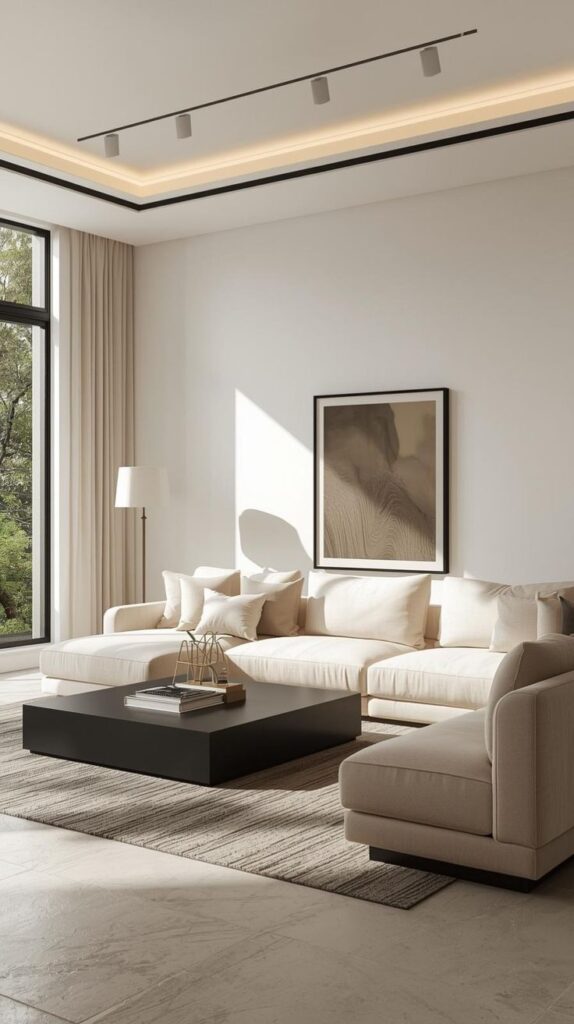
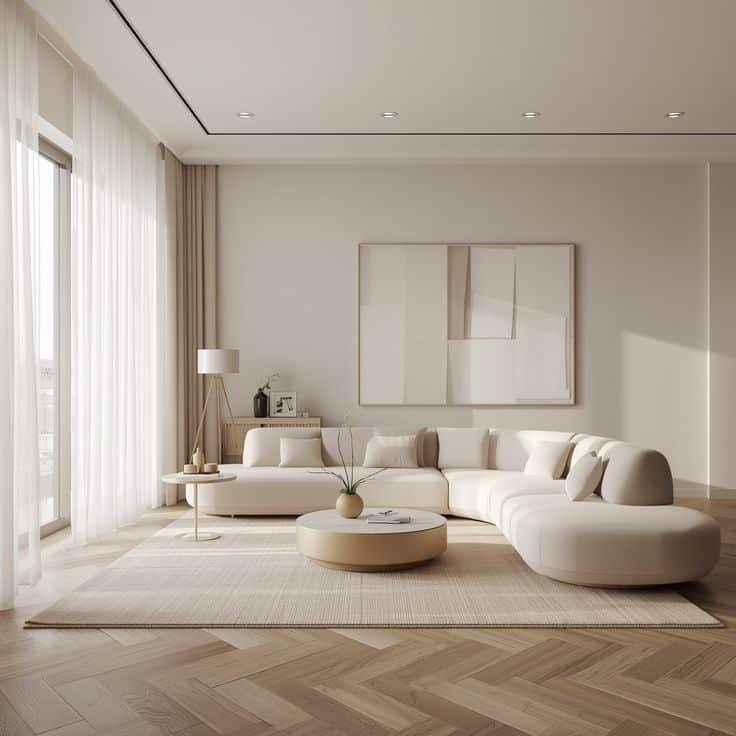
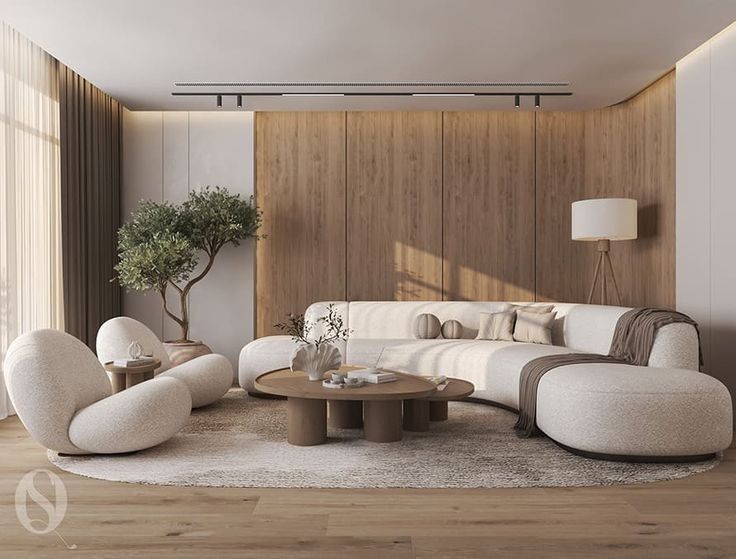
Your shape must directly respond to the seating configuration. A corner sectional or long sofa works best with a rectangular or oval table so the surface remains accessible from everywhere.
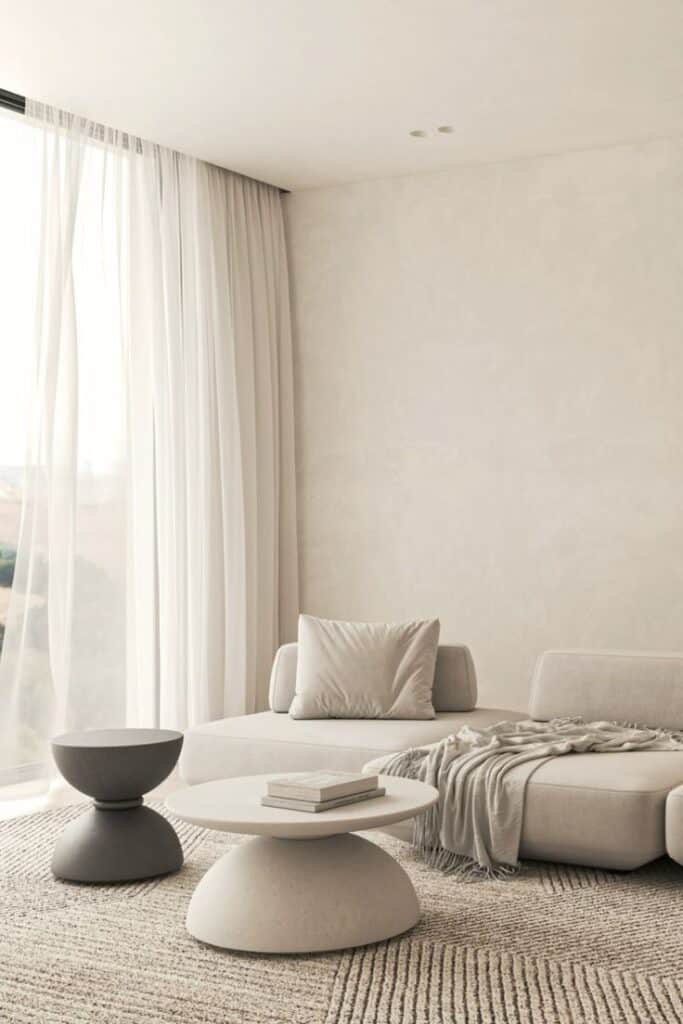
The round table is the ideal solution for small spaces or compact layouts. Its curves soften the lines of the room and facilitate easier circulation.
Do not be afraid to step outside the box. An asymmetrical or geometric shape can become a strong piece that breaks the monotony of a square room.
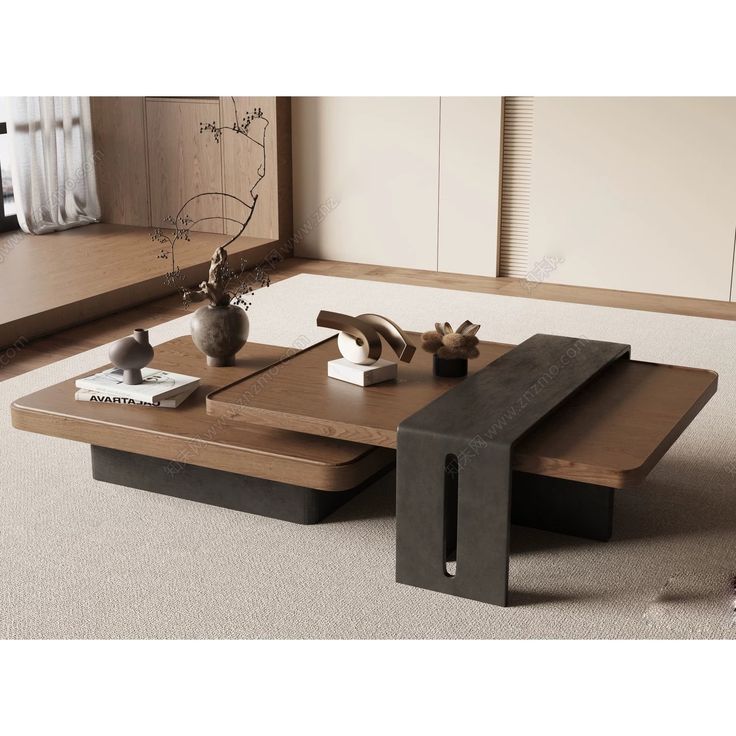
How material choices define the room’s character
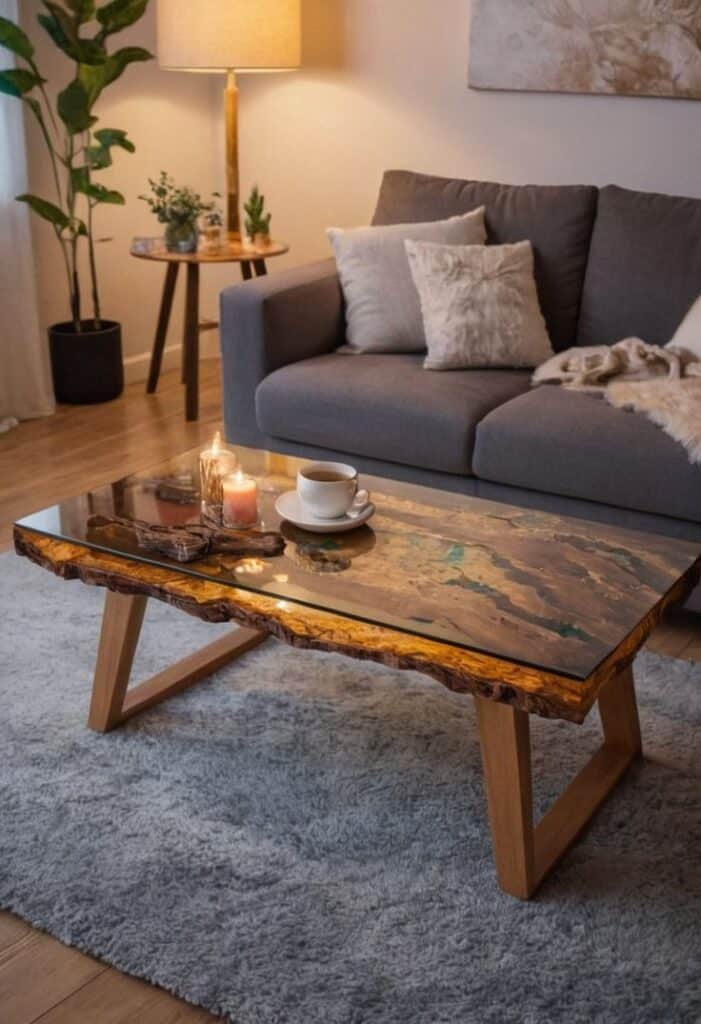
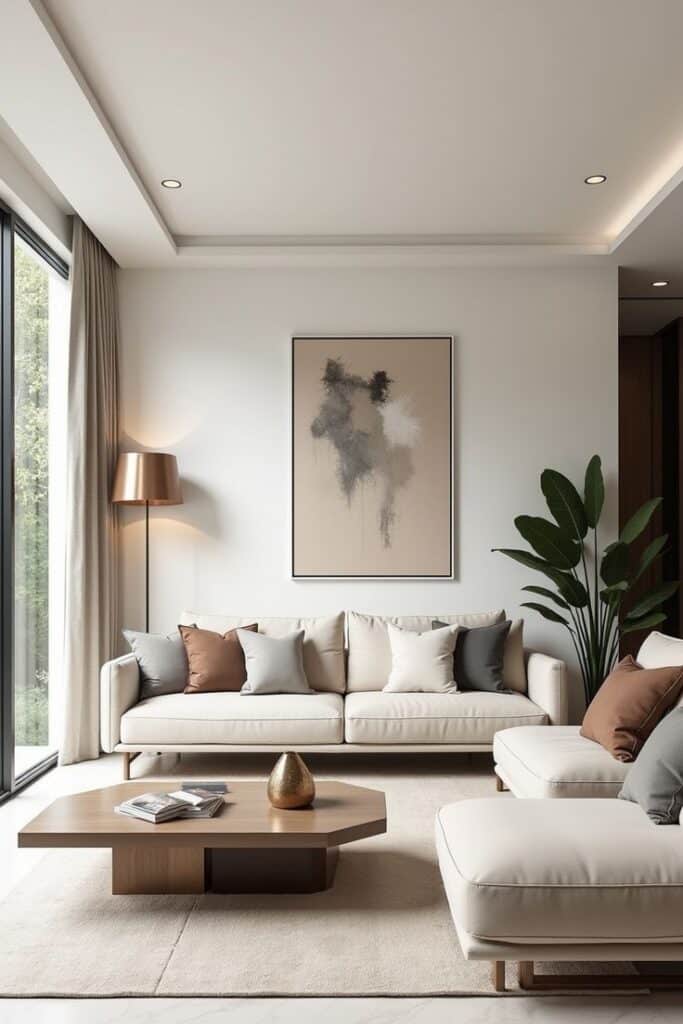
Material choice goes far beyond simple durability. It acts as the primary mood setter; solid, dark wood anchors the room in a traditional, grounded style.
In contrast, a glass or lucite table visually lightens the space. This is the perfect choice to reveal a bold rug.
Review the table below to understand how different materials impact the overall feel of your living room.
| Material | Visual Effect | Best For… | Keep in Mind |
| Sintered Stone | Textured & sophisticated | Modern minimalist looks | Shows fewer scratches than marble |
| Solid Wood | Warm & grounding | Classic or rustic schemes | Can feel visually heavy |
| Glass | Light & airy | Small spaces or showing off rugs | Needs frequent cleaning |
| Metal | Edgy & industrial | Loft-style or contemporary rooms | Can feel cold to the touch |
Once you have the right piece, it is about making it live. A coffee table is both a storage solution and a canvas for your personal style.
From clutter to curated: making your table work for you
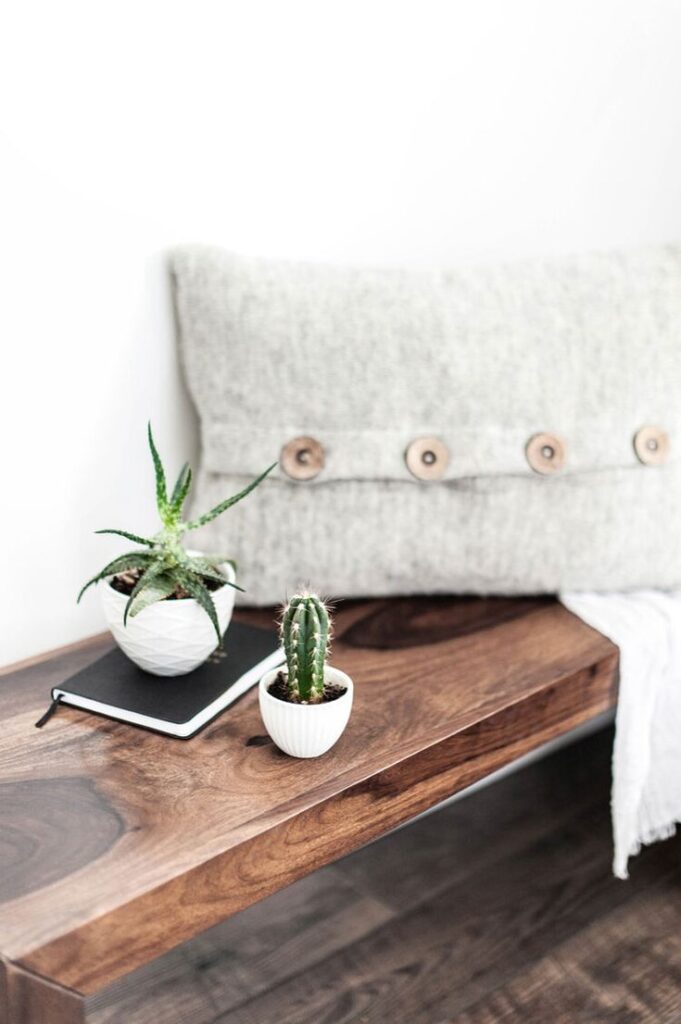

The underrated power of smart storage
Your coffee table plays a major role in fighting daily clutter. A model with a lower shelf, drawers, or an integrated chest is a major asset for hiding remotes, magazines, and everyday items.
This frees the top surface for the essential: decoration and daily use. It is the key to an organized and serene space.
Consider these functional options to maximize utility.
- Clever Coffee Table Solutions
- Lift-top tables that double as a desk or dining surface.
- Nesting tables for flexible surface area when you need it.
- Ottomans with hidden storage for blankets and cushions.
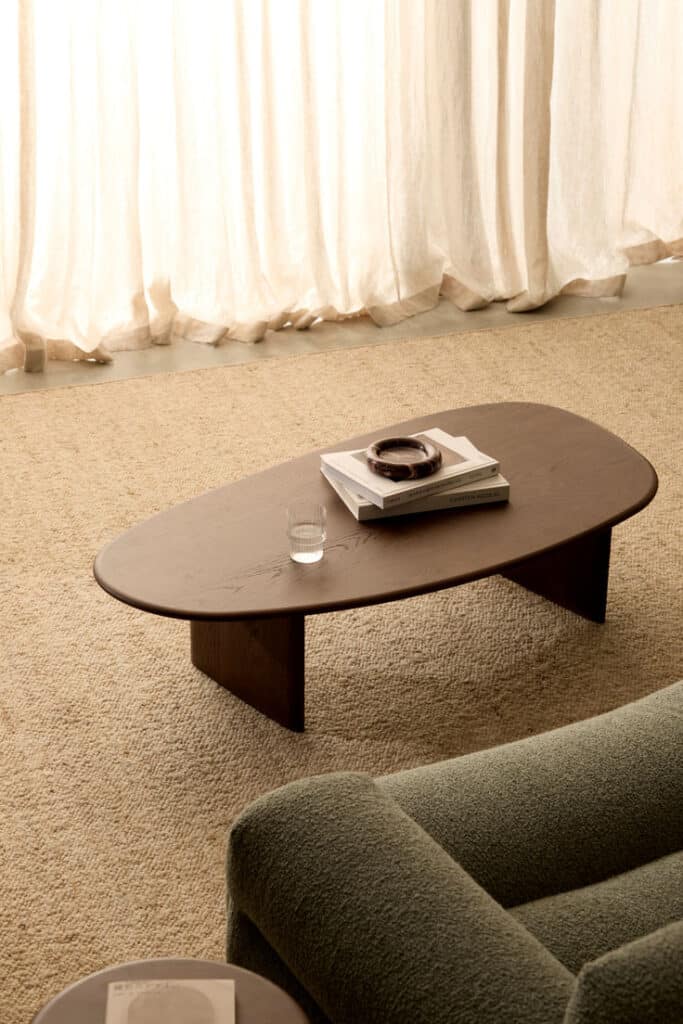
Turning your surface into a style statement
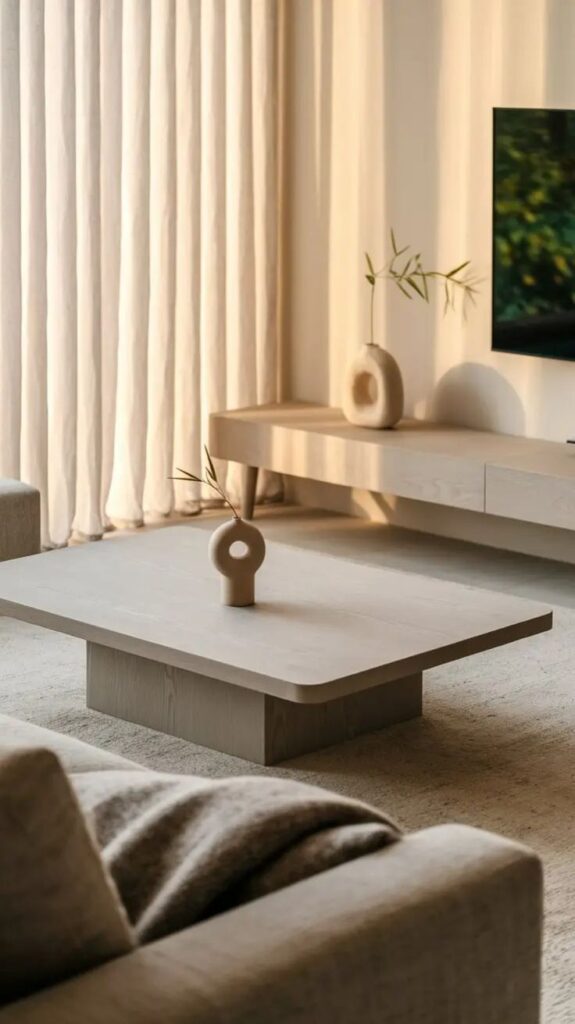
View the table surface as a mini-stage to express your personality. It is the ideal place to display items that tell a story: art books, travel souvenirs, or a unique sculpture.
Use the tray trick. It allows you to group small items like candles and coasters so the whole look seems intentional and not messy.
A well-chosen piece can become the focal point. Exploring modern coffee table designs is often the first step to transforming a living room.
The essential takeaway: a coffee table serves as the living room’s central anchor, defining traffic patterns and visual balance. Beyond aesthetics, the right choice transforms a disjointed area into a cohesive, functional gathering space. For perfect harmony, the ideal piece measures exactly two-thirds of the sofa’s length. Explore coffee table designs by Fusion Furniture.
Do you struggle with a living room that feels cluttered or disjointed, even after arranging your main furniture pieces perfectly? The solution often lies in smart coffee table living room design, which serves as the underrated anchor that defines both the traffic flow and the visual harmony of your space. We will provide actionable steps on selecting the right scale, shape, and storage options to transform this functional item into a curated focal point.
- The Unseen Anchor: How a Coffee Table Defines Your Space
- Beyond the Basics: Using Shape and Material to Set the Tone
- From Clutter To Curated: Making Your Table Work For You
The Unseen Anchor: How a Coffee Table Defines Your Space
A Coffee Table Is Your Living Room’s Traffic Controller
Most homeowners treat it as a dumping ground, but your coffee table living room design actually dictates traffic flow. A bad table blocks the way. Conversely, a smart choice creates logical paths around your sofa and armchairs.
Think of it as the anchor for your conversation zone, pulling scattered seating together. Using statement coffee tables effectively gathers your lounges to build a functional, intimate space for chatting.
Yet, the empty floor space matters just as much as the timber itself. You need that balance to allow movement without the room feeling disjointed.
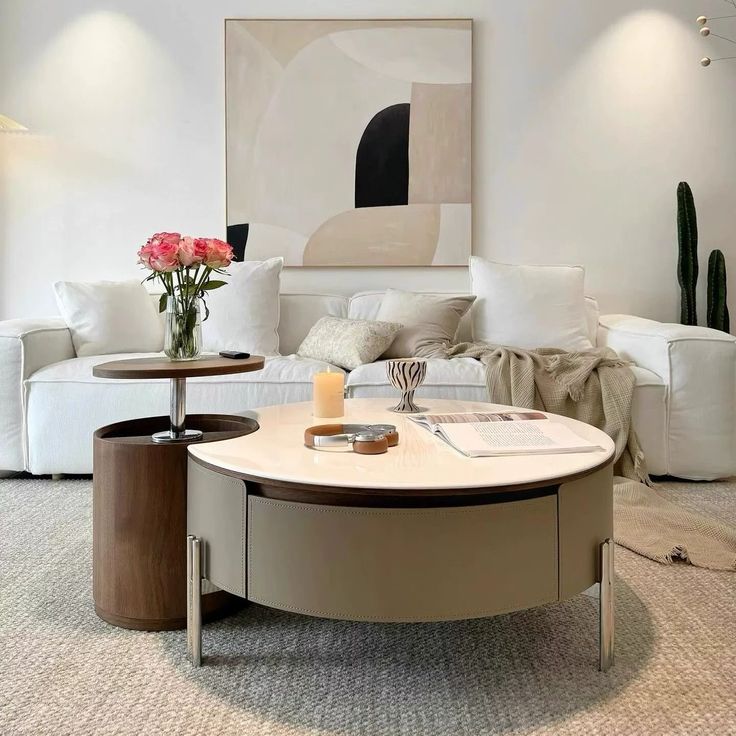
Getting the Scale Right: Height and Proportion Matter
The biggest blunder we see involves height, which ruins the vibe instantly. Keep the table surface level with your sofa cushions, or perhaps slightly lower, never higher.
This isn’t just about aesthetics; it is about ergonomics. You shouldn’t have to hunch over or reach up awkwardly just to set down a drink. The gesture needs to feel completely natural and effortless every single time.
For length, aim for a piece that spans roughly two-thirds of your main sofa. This ratio guarantees a harmonious visual balance that feels grounded.
Beyond the Basics: Using Shape and Material to Set the Tone
Now that we’ve nailed the layout basics, the real character of the room comes down to playing with form and finish.
Finding a Shape That Complements Your Layout
Your table shape must talk to your seating. For sprawling corner lounges, rectangular or oval options work best, keeping the surface accessible from every seat.
In tighter spots, round tables are lifesavers. Their curved edges soften hard lines and make moving through the space much easier.
Don’t fear asymmetric shapes. They act as strong focal points, breaking the monotony of square rooms.
How Material Choices Define the Room’s Character
Material selection drives your room’s vibe, not just durability. Solid, dark timber instantly anchors a space, leaning into a traditional aesthetic.
Conversely, glass or lucite makes the room breathe—the smartest play to highlight a bold rug.
To help you choose, including coffee tables that define a room, here is how materials influence visual weight.
| Material | Visual Effect | Best For… | Keep in Mind |
| Sintered Stone | Textured & sophisticated | Modern minimalist looks | Shows fewer scratches than marble |
| Solid Wood | Warm & grounding | Classic or rustic schemes | Can feel visually heavy |
| Glass | Light & airy | Small spaces or showing off rugs | Needs frequent cleaning |
| Metal | Edgy & industrial | Loft-style or contemporary rooms | Can feel cold to the touch |
From Clutter To Curated: Making Your Table Work For You
Most living rooms suffer when the centrepiece becomes a graveyard for remotes and unread magazines. You can fix this instantly. A table featuring a bottom shelf or deep drawers hides that daily clutter, stopping your space from feeling chaotic.
By clearing the decks, you reclaim the top surface for actual living and decoration. This simple shift is often the only difference between a messy room and a serene sanctuary.
Clever Coffee Table Solutions
- Lift-top tables that double as a desk or dining surface.
- Nesting tables for flexible surface area when you need it.
- Ottomans with hidden storage for blankets and cushions.
Turning Your Surface Into A Style Statement
Don’t leave your table naked; treat it as a canvas for your personal story. This is exactly where you should display those heavy art books, travel souvenirs, or a unique sculpture that sparks conversation.
Here is the trick designers use: place a tray to group small items like candles and coasters. It makes a collection of random objects look intentional rather than just messy.
The right furniture choice acts as the room’s visual anchor. Browsing modern coffee table designs is the smartest move to finally pull your living area together.
Your coffee table is the unsung hero of the living room. Whether you choose a sculptural statement piece or a practical storage solution, this single item anchors your entire space. Don’t underestimate its power to define traffic flow and showcase your personality. It is time to give this centerpiece the attention it truly deserves.
FAQ
How much clearance space do I need around a coffee table?
To ensure a comfortable flow of traffic, you should aim for a clearance of at least 45 centimetres (about 18 inches) around all sides of the table. This distance allows you to move freely through the room without bumping into furniture while keeping the table accessible from the seating area.
Regarding the distance from the sofa specifically, a gap of 40 to 50 centimetres is ideal. This spacing ensures that drinks and books are within easy reach, yet provides enough legroom for you to sit down and stand up comfortably.
How high should a coffee table be compared to the sofa?
For the best ergonomic balance, your coffee table should be the same height as your sofa cushions or slightly lower, typically falling between 40 and 45 centimetres. A table that is significantly higher than the seat can feel imposing and makes the simple act of setting down a glass feel unnatural.
If you have a low-profile, modern sofa, ensure your table matches that scale to maintain clear sightlines. Conversely, a higher, traditional sofa requires a taller table to prevent the arrangement from looking disjointed.
Which coffee table shape is best for a small living room?
Round or oval tables are the most effective choices for compact spaces because they lack sharp corners, which facilitates smoother circulation around the room. The curved edges allow for easier movement in tight walkways and prevent painful knocks against shins.
Visually, round tables can save approximately 20% to 25% of floor space compared to rectangular options. Their organic shape also helps to soften the linear look of a room, making a small area feel more open and less cluttered.
How do I choose the right material for my living room aesthetic?
The material you choose acts as an anchor for the room’s atmosphere; solid wood brings warmth and a sense of permanence, making it perfect for rustic or traditional spaces. In contrast, glass or acrylic tables are excellent for showcasing rugs and keeping the room feeling light and airy.
For a more contemporary or industrial edge, consider metal or sintered stone. These materials are durable and add texture, but keep in mind that they can feel visually heavier, so they work best when balanced with softer textiles nearby.
How can I style a coffee table without it looking cluttered?
The key to a curated look is using a tray to group smaller items like remotes, coasters, or candles, which transforms loose clutter into a deliberate display. Grouping objects in odd numbers, such as threes, is a classic design trick that creates visual interest and balance.
Furthermore, ensure you leave enough negative space—ideally about one-third of the surface—to maintain functionality. If you find yourself running out of room, opt for a table with a lower shelf or hidden storage to keep the top surface clean and serene.
- 3shares
- Facebook0
- Pinterest0
- Twitter3
- Reddit0