Most conversations about healthy indoor air start with gadgets: a purifier here, a humidity monitor there. Those help, but the biggest decisions are made much earlier, on the drawing board. The materials you specify, the way you lay out a space, and the finishes you choose all affect how the air in a room will feel to breathe for years. If you are designing or renovating a home, air quality is not an accessory to add at the end. It is a series of choices made along the way.

Finishes carry more than color
Every material in a room has an afterlife in the air. Fresh paint, new cabinetry, adhesives, sealants, and some engineered wood products can release volatile organic compounds (VOCs). The familiar “new” smell may accompany some emissions, but odor alone is not a reliable guide to what is in the air.
In a tightly sealed, energy-efficient home, pollutants have fewer accidental escape routes, which makes planned ventilation even more important. Specify low-VOC or zero-VOC paints where they meet the project’s durability needs, and look for certified low-emission wood products when the budget allows. These labels are useful filters, not guarantees of zero emissions. Give newly finished rooms time to air out before full occupancy. The visual result can stay the same while the room becomes easier to live in.

Textiles are beautiful dust reservoirs
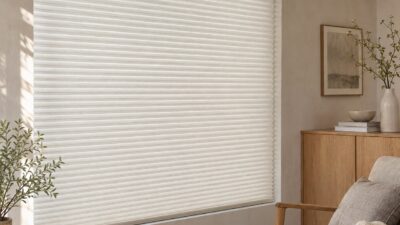
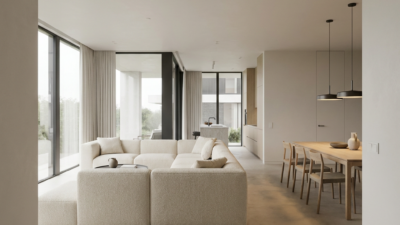
Soft furnishings give a room warmth, but they also catch dust, dander, and allergens. Deep-pile rugs, heavy drapery, and large areas of upholstery can hold particles that are disturbed whenever someone sits down, draws a curtain, or walks across the floor.
This is not an argument against texture. It is an argument for intentional texture. Mix in removable, washable covers, choose rugs that can actually be cleaned, and leave some hard-surface zones that are easy to wipe down. A room can feel layered and soft without becoming difficult to maintain.

Layout is ventilation
Good airflow is a design decision long before it becomes a mechanical one. Bathrooms and kitchens generate moisture and pollutants every day, so they need exhaust that genuinely vents outside, not into an attic or a closed cavity. Their layouts should help damp or polluted air leave instead of letting it drift into adjoining rooms.
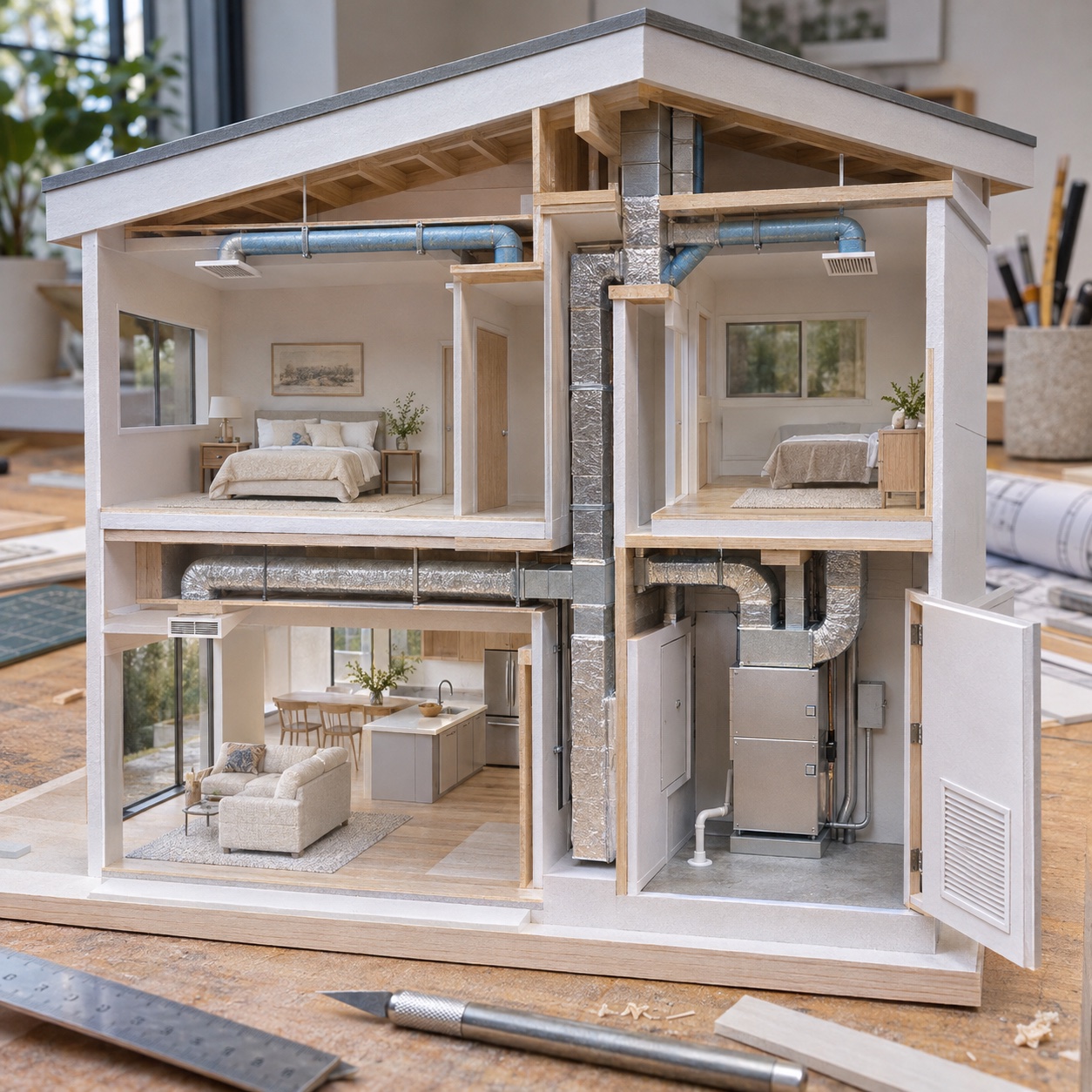
Open-plan spaces move air freely, but they can also carry cooking particles and odors farther. A properly sized, well-placed range hood earns its keep here. Even furniture placement matters. A beautiful console pushed against a return grille can disrupt the circulation on which the whole system depends. Mark vents and service access on the plan before arranging built-ins or large furniture. Designing around the air’s path is invisible in photographs and obvious in daily life.

The system behind the walls
Behind every well-designed home is the part no one sees: the ductwork and HVAC equipment that move air from room to room. Like anything hidden, the system is easy to forget until there is a problem. Dust or renovation debris can settle inside ducts. In humid conditions, leaks, poor insulation, or drainage problems can create damp surfaces where microbial growth becomes possible.
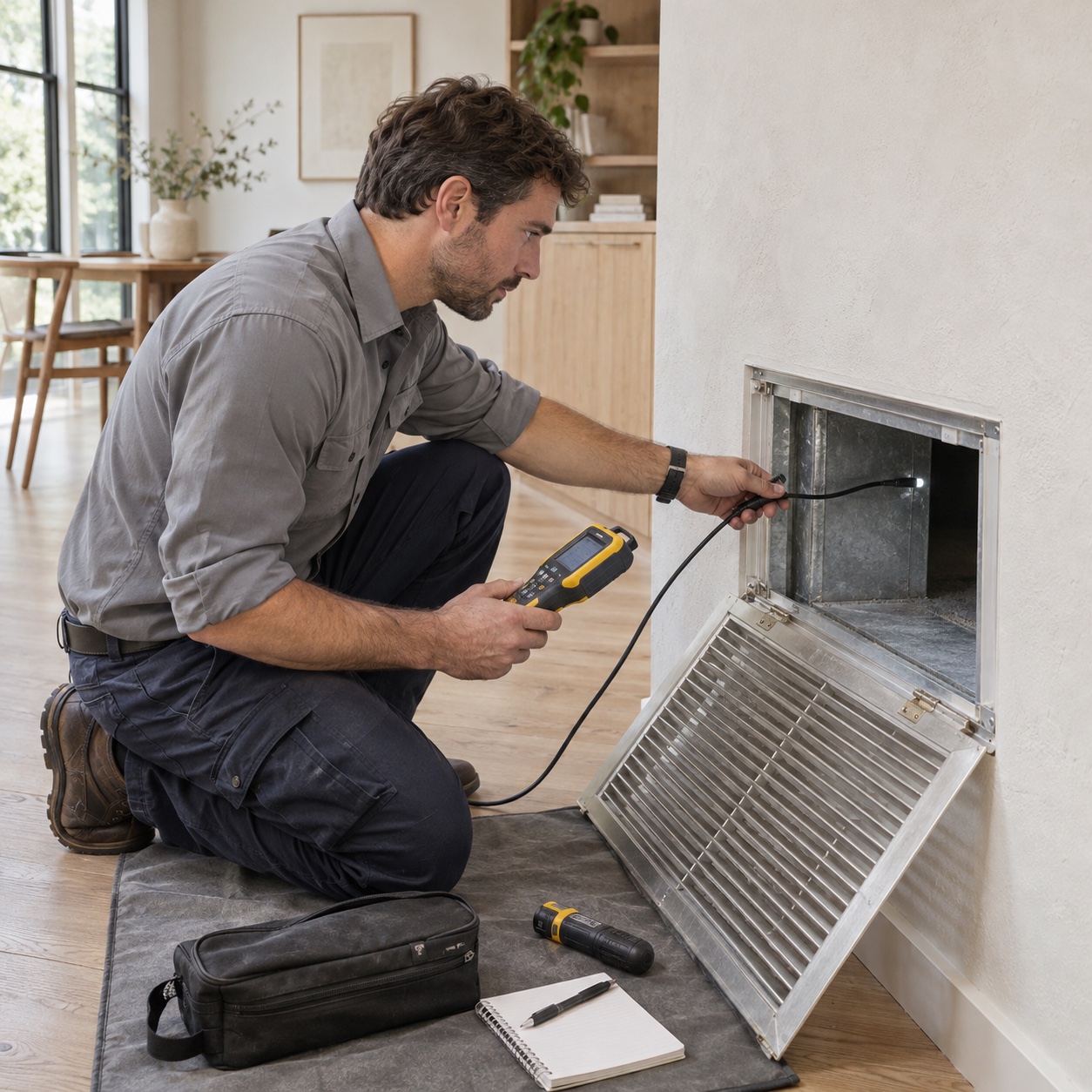
None of this means every duct system needs cleaning on a fixed schedule. A light coating of household dust is normal, and cleaning is not a substitute for regular maintenance or moisture control. Inspection should drive the decision. Cleaning may be warranted when there is substantial contamination, a pest infestation, or debris being released into rooms. If mold is suspected, the moisture source needs attention first; otherwise, the problem is likely to return.
Where design hands off to a professional
Plenty of this stays within a homeowner’s or designer’s control: material specifications, textile choices, clear vents, accessible filters, and a layout that supports exhaust. Sealing ductwork correctly, diagnosing airflow problems, and dealing with established mold inside a system are jobs for a qualified specialist. The real fix is finding and correcting the source, not simply cleaning the visible symptom.
When choosing a company, look past marketing claims. Confirm any license required for mold work in your state, and check whether duct-cleaning work follows applicable NADCA standards. A reputable provider should inspect first, explain what it found, and say when cleaning is unnecessary.
For readers in humid regions, Houston-based Air Quality Express offers a useful example of the services to compare. Its website identifies the company as a licensed Texas mold remediation business and describes an approach that starts with the moisture source. Its services include routine air duct cleaning and specialized mold work, but cleaning should still depend on the condition of the system, not the calendar. Wherever you live, verify current credentials before hiring anyone to work on the part of your home you cannot see.
Beauty you can breathe
The best-designed rooms are not only the ones that photograph well. They are the ones that feel effortless to inhabit: the light is right, the proportions are calm, surfaces are practical to maintain, and nothing in the air nags at you.
That feeling is not luck. It comes from dozens of small, early decisions about what goes into a space and how air moves through it. Treat air quality as part of the design brief from the start, and the result is a home that looks as good as it feels to breathe in.
- 0shares
- Facebook0
- Pinterest0
- Twitter0
- Reddit0